Monthly Archives: January 2016

Film Music 101: Compilation Score

Unlike an original film score, which is composed specifically for the film, the compilation score consists of background music that is assembled entirely from pre-existing material.

Graduateposter67

Copyright © 1967 by Embassy Pictures

Using Simon & Garfunkel songs for the score had a big impact on later film music

Compilation scores really took off in the mid-1960s after the 1967 film The Graduate featured a score consisting entirely of Simon & Garfunkel music (including “The Sound of Silence” and “Mrs. Robinson.”).  Compilation scores can also be known as pop scores if the pre-existing music consists of pop songs.
MV5BNDYyMDgxNDQ5Nl5BMl5BanBnXkFtZTcwMjc1ODg3OA@@._V1_SX640_SY720_

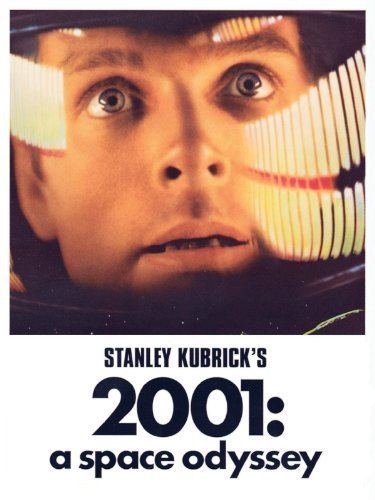
Another example of the compilation score is 2001: A Space Odyssey (1968). Most infamously, Stanley Kubrick rejected composer Alex North’s original score at the last minute and retained the film’s temp track (consisting of classical pieces) as the film’s final score.


The advent of compilation scores led older film composers to bemoan the growing belief that the classic film score (as created in the 1930s) was “dead and buried.” While this appeared to be true for a time (as compilation scores became exceptionally popular), original film scores never fully stopped being created, they were merely placed on the back burner for a decade or so until John Williams stepped up with his earth-shattering score for Star Wars (1977).

Become a Patron of the blog at patreon.com/musicgamer460

Check out the YouTube channel (and consider hitting the subscribe button)

See also:

Film Music 101: Borrowing

Film Music 101: Arranger

Film Music 101: Anempathetic sound

Film Music 101: Empathetic Sound

Film Music 101: Foley

Film Music 101: Mickey Mousing

Film Music 101: “Stinger” Chords

Film Music 101: Dubbing

Film Music 101: Diegetic vs. Non-Diegetic Music

Film Music 101: Underscore

Film Music 101: Sidelining

Film Music 101: “Test” Lyrics

Film Music 101: The First Film Score

Don’t forget to like Film Music Central on Facebook 🙂

James Horner talks The Perfect Storm (2000)

220px-Perfect_storm_poster

James Horner talks The Perfect Storm (2000)

In 2000, Wolfgang Petersen directed The Perfect Storm, a biographical disaster film that recounts the true story of the Andrea Gail, a fishing vessel lost with all hands during the “Perfect Storm” of 1991.

In the film, George Clooney plays Billy Tyne, captain of the Andrea Gail, a commercial fishing boat. Needing money, Tyne convinces his crew to join him on one last fishing trip, even though it’s already very late in the season. They proceed past their usual fishing grounds on the Grand Banks of Newfoundland and gain a large catch in the Flemish Cap. But just as the ship is fully loaded with fish, the ship’s ice machine breaks, making it imperative for the Andrea Gail to race back to port with their catch before it spoils.

However, in their absence, the “Perfect Storm” has been developing in the waters between the ship and the port. The “Perfect Storm” evolved from a nor-easter that absorbed the remnants of Hurricane Grace (briefly a category 2 hurricane) and ultimately became a small hurricane in its own right. The storm generated huge waves, with one buoy off Nova Scotia measuring one wave at 100.7 feet.

1513781404_xl

Learning of this storm, Tyne and the crew have a choice: wait out the storm (but lose their catch and all potential profits), or risk the storm and make for home as quickly as possible. Not wanting all their work to be for nothing, the decision is made to head for home and they sail into the storm. Even though this film is based on a true story, everything that happens after the Andrea Gail’s final radio contact is pure speculation since the ship (and the crew) has never been found.

Nevertheless, the film makes an effort to portray how the ship’s last hours might have gone: the ship is mercilessly battered by gigantic waves before finally capsizing and sinking, taking all hands down with it (except for rookie fisherman Bobby Shatford who briefly escapes to the surface before being carried away by the swells).

la-tormenta-perfecta-foto-critica

I have a love-hate relationship with movies based on true events, especially the ones where you know going in that the outcome won’t be good (like watching Titanic, that story has to end badly). I say love-hate because, while I love watching the movie and seeing the drama play out, deep down I hate knowing that, despite everything, the characters are doomed to failure and (in some cases) certain death. For me, it’s hard to cheer on characters that I know will die by the end of the story. That being said, The Perfect Storm, while heart-wrenching, is still told extremely well.

The score was composed by James Horner, and in this interview he discusses how he “created emotion” with this score, because so much of this story is driven by emotion and raw passion.

See also:

James Horner Star Trek II: Wrath of Khan

James Horner talks Aliens (1986)

James Horner talks Field of Dreams (1989)

James Horner talks The Rocketeer (1991)

James Horner scoring Braveheart (1995)

James Horner talks A Beautiful Mind (2001)

James Horner talks Windtalkers (2002)

James Horner talks Avatar (2009)

James Horner talks The Amazing Spider-Man (2012)

Film Composer Interviews A-H

Film Composer Interviews K-Z

Become a patron of the blog at: patreon.com/musicgamer460

Check out the YouTube channel (and consider hitting the subscribe button)

Don’t forget to like Film Music Central on Facebook 🙂

Film Music 101: Underscore

In film music, the underscore refers to music that specifically accompanies a scene with dialogue.

The underscore functions in much the same way as underlining a piece of text: it’s meant to emphasize a particular piece of dialogue and tell the audience: THIS is important, you should really pay attention to this scene!

download

A very good example of underscore can be found in Aragorn’s speech at the Black Gate in Lord of the Rings: Return of the King (2003).

This moment takes place on the cusp of the final action climax of the trilogy: Sauron’s army is pouring out of Mordor, the Army of the West is outnumbered 100 t0 1, and the men are rightfully scared. But, as Aragorn reassures them, this is no time to break the vows they have sworn, this is the time to stand and fight!

Return of the King: Stand Men of the West!

Drno1

Bond…James Bond.

Another example can be found in the first James Bond film Dr. No (1962) during a calypso party at a restaurant in Jamaica. The scene opens with the party in progress and the music continues while Bond (Sean Connery) talks with Felix Leiter (Jack Lord). In this scene, the music doesn’t so much increase the drama as it provides a contrast with the cheery mood of the crowd (they are talking about the criminal Dr. No and how to get onto his island Crab Key to investigate).

Dr. No: Calypso Party Scene

Thanks again for checking out Film Music Central, have a great day!

Don’t forget to like Film Music Central on Facebook 🙂

Become a Patron of the blog at patreon.com/musicgamer460

Check out the YouTube channel (and consider hitting the subscribe button)

See also:

Film Music 101: Sidelining

Film Music 101: “Test” Lyrics

Film Music 101: The First Film Score

Film Music 101: Borrowing

Film Music 101: Arranger

Film Music 101: Anempathetic sound

Film Music 101: Empathetic Sound

Film Music 101: Foley

Film Music 101: Montage

Film Music 101: Compilation Score

Film Music 101: Leitmotif

Film Music 101: Orchestration and cues

Film Music 101: “Stinger” Chords

Film Music 101: Dubbing

Film Music 101: Diegetic vs. Non-Diegetic Music

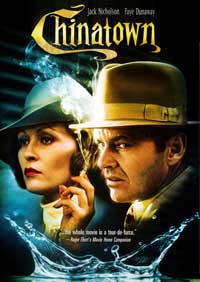
Jerry Goldsmith talks Chinatown (1974)

chinatown-movie-poster-1974-1010433311

Chinatown is one of those post-Golden Age of Hollywood movies that perfectly emulates that lost era of filmmaking. Starring Jack Nicholson and directed by Roman Polanski, the film tells the story of private investigator J.J “Jake” Gittes (Nicholson) who is hired by a woman calling herself Evelyn Mulwray (Faye Dunaway), ostensibly because her husband Hollis is having an affair with another woman and she wants the evidence. But the story is fake and Jake finds himself entangled in a story that is more complex and tragic than anything he could have ever imagined.


The score for this neo-noir film was composed by legendary composer Jerry Goldsmith (1929-2004). Goldsmith composed AND recorded the film’s music in only ten days, after the producer rejected an earlier score from composer Philip Lambro at the last minute. The score was nominated for an Academy Award (though it didn’t win). The score is notable for containing several haunting trumpet solos performed by Uan Rasey, that perfectly encapsulate that era of old Hollywood.

Please enjoy Goldsmith’s thought on this amazing score and if you haven’t had a chance to see the movie, I encourage you to give it a try (but I feel obliged to warn you, the plot twist is rather shocking).

See also:

Jerry Goldsmith talks The Sand Pebbles (1966)

Jerry Goldsmith talks about Alien (1979)

Jerry Goldsmith talks Lionheart (1987)

Film Composer Interviews A-H

Film Composer Interviews K-Z

Become a Patron of the blog at patreon.com/musicgamer460

Check out the YouTube channel (and consider hitting the subscribe button)

Like Film Music Central on Facebook at www.facebook.com/filmmusiccentral

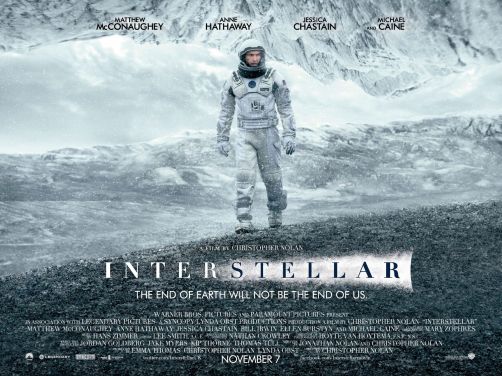
Hans Zimmer talks Interstellar (2014)

Interstellar

Question, who watched Interstellar when it came out? *hand shoots up* Who thought it was awesome? *hand shoots up again* Who freaked out when Matt Damon accidentally blew himself out of an airlock into the void of space never to be seen again? (I liked this movie, can you tell?)

Hans Zimmer talks Interstellar (2014)

The plot of Interstellar is rather complicated at certain points but the main gist is as follows: in the future (no year is ever specified), the Earth has suffered from a string of blights that has rendered most crops ungrowable. When the film opens, corn is the major food supply of the world and even that is quickly growing vulnerable. As a result, the world has suffered a major technological regression.

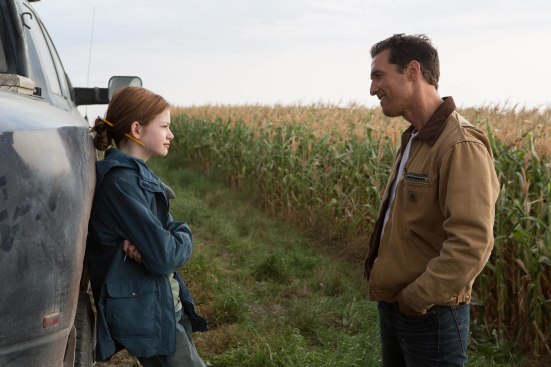
interstellar3-xlarge

There appears to be no TV, no Internet, no advanced medical equipment (it is openly stated that MRI machines are not available anymore), and man’s great technological achievements (such as landing on the Moon) are regarded as mere propaganda, not historical fact. To put it bluntly, the Earth is one generation away from being uninhabitable and it will mean the extinction of the human race…unless we can find a new home, and the story continues from there. (I will have to write about this movie in full some time in the future).

INTERSTELLAR

The score of this magnificent film was composed by film music giant Hans Zimmer (born 1957). Zimmer is responsible for such great scores as: The Last Samurai (2003), The Lion King (1994), Gladiator (2000), The Dark Knight Trilogy (2005-2012) and Inception (2010) (and these are just a few, he’s a prolific composer).

In this interview, Hans Zimmer talks about how he developed the score for Interstellar, including how they decided to use an organ. Please watch and enjoy.

See also:

Film Composer Interviews A-H

Film Composer Interviews K-Z

Don’t forget to like Film Music Central on Facebook 🙂

Film Music 101: “Test” Lyrics

When a film needs to have a song written for it, the composer (or group of composers) will create what are known as “test” lyrics while the melody is being put together.

As a general rule, test lyrics bear little to no resemblance to the final version, they’re really intended as a tool to help guide the song writers in putting the verses together (in a sense, test lyrics are similar to the temp track created for a film, see The Temp Track for details).

Once the final lyrics are completed, the test lyrics are thrown out and never seen by the public…not usually. There is one notable exception, where the test lyrics became so popular that the writers kept them as the final version.

I’m talking about the song “Gaston” from Disney’s Beauty and the Beast (1991)

gbzymisjno0x2gvbvqv9

There’s a reason those lyrics are particularly silly…

It turns out that when the writers for this movie were putting the songs together, the song that turned out to be “Gaston” was originally planned to be completely different. What it was supposed to be we will never know, because the writers became so attached to the test lyrics, that they decided to just keep them and thus, “Gaston” was born.


“Gaston” – Beauty and the Beast

Please enjoy the wonderful silliness that is this song. It’ll be interesting to see if the live remake contains a song like this one (or if it will have any songs at all!). Enjoy! Thank you for all of the likes and comments, you guys are awesome!

You can become a patron of the blog at patreon.com/musicgamer460

Check out the YouTube channel (and consider hitting the subscribe button)

For more Film Music 101, see also: Film Music 101

See also:

Film Music 101: The First Film Score

Film Music 101: Borrowing

Film Music 101: Arranger

Film Music 101: Anempathetic sound

Film Music 101: Empathetic Sound

Film Music 101: Foley

Film Music 101: Montage

Film Music 101: Compilation Score

Film Music 101: “Stinger” Chords

Film Music 101: Dubbing

Film Music 101: Diegetic vs. Non-Diegetic Music

Film Music 101: Underscore

Film Music 101: Sidelining

Film Music 101: Orchestration and cues

Film Music 101: Leitmotif

Don’t forget to like Film Music Central on Facebook 🙂

Thoughts on Underworld: Evolution (2006)

Years before the cinematic world witnessed the rivalry between vampires and werewolves in the Twilight series (2008-2012), a war was already ongoing in the world of Underworld (2003) and Underworld: Evolution.

Selene_(Underworld)

Selene

  687460-michael_corvin_heals                                                                     

                                Michael Corvin

In both films, the story follows the vampire Selene (Kate Beckinsale) as she initially hunts down the Lycans (werewolves) that she believes killed her family. The truth however, is that it was a vampire named Viktor who actually killed her family AND turned her into a vampire, and discovering this truth forces Selene to go on the run. At the end of the first film, Selene is in the company of a man named Michael Corvin (Scott Speedman), a distant descendant of Alexander Corvinus (Derek Jacobi), the first immortal and the father of the progenitors of the vampire and lycan races.

Alexanderc

 Alexander Corvinus

Marcustorch

                                                                                       Markus

It is revealed that Michael Corvin is actually a hybrid, both vampire AND lycan (because he was bitten by a lycan named Lucian and later by Selene), but he initially rejects this, until he discovers he can no longer eat human food and is almost captured (again).

Meanwhile, the vampire progenitor Markus (Tony Curran) has re-awoken and is hell bent on finding his brother William (Brian Steele) the first lycan, who has been locked away in a secret prison for over 800 years. It turns out that Selene possesses part of the key to opening William’s prison, as her human father built the place before being murdered by Viktor.

tumblr_mu27hsECcj1sjuk9jo1_1280

Markus and William reunited at last

Ultimately, Markus succeeds in obtaining the keys to his brother’s prison (killing his father in the process) and letting his brother loose. But before he dies, Alexander tells Selene to drink from his blood, giving her stronger healing abilities and making her much stronger than before. Michael is believed to be dead after Markus impaled him, but it turns out he was only regenerating and together Michael and Selene take on the two powerful brothers. After a vicious battle, both progenitors are killed and the world is saved. As the movie ends, Selene discovers that the sunlight no longer burns her skin (as it normally should for a vampire), raising the possibility of a whole new life she could spend together with Michael.

The score for this action-packed film was composed by Marco Beltrami (born 1966), a composer noted for his work in the horror genre (Mimic (1997), Resident Evil (2002), and The Woman in Black (2012)). Other notable scores include Blade II (2002), I, Robot (2004), World War Z (2013) and the remake of Ben-Hur (2016).

Unfortunately, movies like Underworld: Evolution often get overlooked because some feel that an action movie can’t possess a score worth noticing. While this is sometimes true (i.e. the score of Van Helsing in 2004), Underworld: Evolution does have a few themes that are worthy of mention. My favorite would have to be the final cue, called “The Future.” This is the moment when Selene holds her hand out to the sunlight and realizes that it doesn’t burn anymore.

Underworld: Evolution- The Future

Another cue of note is “Patricide” when Markus kills his father Alexander.

Underworld: Evolution- Patricide

If you haven’t seen the Underworld films before, I highly recommend the first two in the series (I admit I haven’t seen the one that came out in 2012). I hope you enjoyed this look at Underworld: Evolution!

Become a Patron of the blog at patreon.com/musicgamer460

Check out the YouTube channel (and consider hitting the subscribe button)

Don’t forget to like Film Music Central on Facebook 🙂

Film Music 101: Sidelining

In film music production, sidelining refers to when musicians appear onscreen in a film or television production. They will usually appear with their musical instruments, though they may or may not actually play on them.

Sidelining has occurred a lot over the course of history, so I will only select a few examples to show here.

The_Jazz_Singer_1927_Poster

The Jazz Singer-1927

During the famous scene where Al Jolson sings, a small orchestra is seated behind him. This movie is often considered the first “talkie” (that is, a film with synchronized sound).

Gone_With_The_WindP33P20026

Gone With the Wind– 1939

During the Confederate ball scene, there is a band on stage.

It’s almost not fair to include this movie since it’s about a group of musicians, but I couldn’t resist!

The Blues Brothers-1980

Practically any movie with live music in it is considered an example of sidelining, so there are too many examples to count. Another good example comes from Mission Impossible: Rogue Nation (2015) during the scene in the opera house.

For more Film Music 101, see also: Film Music 101

Don’t forget to like Film Music Central on Facebook 🙂
See also:

Film Music 101: “Test” Lyrics

Film Music 101: The First Film Score

Film Music 101: Borrowing

Film Music 101: Arranger

Film Music 101: Anempathetic sound

Film Music 101: Empathetic Sound

Film Music 101: Foley

Film Music 101: Montage

Film Music 101: Compilation Score

Film Music 101: Leitmotif

Film Music 101: Orchestration and cues

Film Music 101: “Stinger” Chords

Film Music 101: Dubbing

Film Music 101: Diegetic vs. Non-Diegetic Music

Film Music 101: Underscore

Michael Kamen talks Robin Hood: Prince of Thieves (1991)

Michael Kamen- Robin Hood: Prince of Thieves

1991’s Robin Hood: Prince of Thieves was one of my favorite movies growing up. I never tired of watching the fearless Robin Hood (played very well by Kevin Costner in my opinion) finally defeat the vile Sheriff of Nottingham (played by the late Alan Rickman, RIP), to rescue his true love, the lady Marian (Mary Elizabeth Mastrantonio)

Robin-Hood-Prince-of-Thie-001

Marian and Robin

As I grew older, however, I found myself more and more drawn to the music of this film, and how it enhanced the drama on the screen (as all good film scores do). Michael Kamen gives a relatively short talk about the score, how he developed it, and there’s some neat insight into the recording process. I was so sad to learn that this gifted composer died in 2003. Please enjoy.

You can become a patron of the blog at patreon.com/musicgamer460

See also:

Film Composer Interviews A-H

Film Composer Interviews K-Z

Don’t forget to like Film Music Central on Facebook 🙂

*Everything is copyright to Warner Bros.

When silence speaks volumes: The chariot race in Ben-Hur (1959)

Film composers have the difficult task of choosing music that correctly fits the intended mood of a particular scene or action sequence. But on a rare occasion, the composer will make the decision to give a scene no music at all, because doing so would actually detract from the moment.

b-h-stones_horiz_a

Credit to Metro-Goldwyn-Mayer (MGM)

A good case in point comes in William Wyler’s 1959 epic Ben-Hur. Scored by film composing legend Miklos Rozsa (1907-1995), the film broke a record for winning 11 Oscars at the Academy Awards, a feat that has never been surpassed (though Titanic and Return of the King have since matched it).

Rozsa’s score contains a number of musical moments: the “Overture” (covered in Soundtracks); the “Rowing of the Galley Slaves”; “Parade of the Charioteers”; and the ever beautiful “Nativity.” However, what many consider the action climax of the film, the chariot race in Part II, has no music at all after the initial “Parade of the Charioteers.”

Rozsa considered for a long time whether or not he should give the actual race any music, but he quickly determined that the action itself would be “music” enough.

02-Chariot-Race-Ben-Hur

The chariot race of Ben-Hur was an event over two years in the making. Not only did the race track have to be built from the ground up, but also the horses had to be trained to run in groups of three and four, the various stunts had to be planned out, and the chariots had to be built and tested to make sure they would hold up under stress. Once everything was ready and the cameras were rolling, the entire race was filmed in one take. The production had become so expensive that it was only possible to do the entire race once.

The entire clip runs for about ten minutes, but it is well worth it to watch all the way through. One moment in particular that always stands out to me comes at 5:35 when Ben-Hur’s (Charlton Heston) horses (in white) and Messala’s (Stephen Boyd) horses (the blacks) are running stride for stride down the track. And on a quick side note, the moment when Ben-Hur nearly falls out of his chariot was NOT scripted. The jump over the fallen chariot was planned, but Heston’s stunt double refused to wear a harness, insisting that he could ride the jump without it (oh was he ever wrong).

Please watch the race here: Ben-Hur Chariot Race and note the complete lack of music, diegetic or otherwise until the race is over. In my opinion, the true test of a film composer’s talent comes when they have to decide when NOT to use the music. Enjoy!

Check out the YouTube channel (and consider hitting the subscribe button)

Don’t forget to like Film Music Central on Facebook 🙂
See also:

When the music says everything: The “Lepers!” scene from Ben-Hur (1959)

“Overture” from Ben-Hur by Miklos Rozsa

Miklos Rozsa conducts Ben-Hur suite (1979)

*Everything is copyright to MGM Studio