Category Archives: Interview

Jerry Goldsmith talks Chinatown (1974)

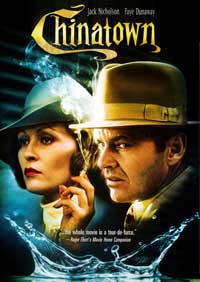
chinatown-movie-poster-1974-1010433311

Chinatown is one of those post-Golden Age of Hollywood movies that perfectly emulates that lost era of filmmaking. Starring Jack Nicholson and directed by Roman Polanski, the film tells the story of private investigator J.J “Jake” Gittes (Nicholson) who is hired by a woman calling herself Evelyn Mulwray (Faye Dunaway), ostensibly because her husband Hollis is having an affair with another woman and she wants the evidence. But the story is fake and Jake finds himself entangled in a story that is more complex and tragic than anything he could have ever imagined.


The score for this neo-noir film was composed by legendary composer Jerry Goldsmith (1929-2004). Goldsmith composed AND recorded the film’s music in only ten days, after the producer rejected an earlier score from composer Philip Lambro at the last minute. The score was nominated for an Academy Award (though it didn’t win). The score is notable for containing several haunting trumpet solos performed by Uan Rasey, that perfectly encapsulate that era of old Hollywood.

Please enjoy Goldsmith’s thought on this amazing score and if you haven’t had a chance to see the movie, I encourage you to give it a try (but I feel obliged to warn you, the plot twist is rather shocking).

See also:

Jerry Goldsmith talks The Sand Pebbles (1966)

Jerry Goldsmith talks about Alien (1979)

Jerry Goldsmith talks Lionheart (1987)

Film Composer Interviews A-H

Film Composer Interviews K-Z

Become a Patron of the blog at patreon.com/musicgamer460

Check out the YouTube channel (and consider hitting the subscribe button)

Like Film Music Central on Facebook at www.facebook.com/filmmusiccentral

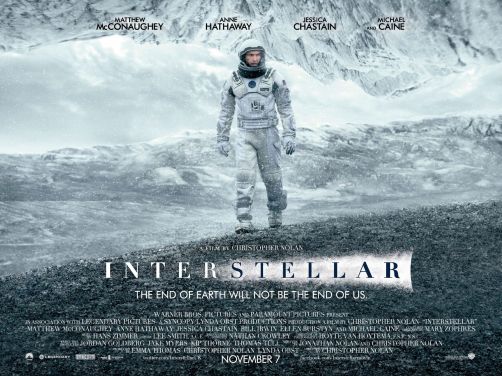
Hans Zimmer talks Interstellar (2014)

Interstellar

Question, who watched Interstellar when it came out? *hand shoots up* Who thought it was awesome? *hand shoots up again* Who freaked out when Matt Damon accidentally blew himself out of an airlock into the void of space never to be seen again? (I liked this movie, can you tell?)

Hans Zimmer talks Interstellar (2014)

The plot of Interstellar is rather complicated at certain points but the main gist is as follows: in the future (no year is ever specified), the Earth has suffered from a string of blights that has rendered most crops ungrowable. When the film opens, corn is the major food supply of the world and even that is quickly growing vulnerable. As a result, the world has suffered a major technological regression.

interstellar3-xlarge

There appears to be no TV, no Internet, no advanced medical equipment (it is openly stated that MRI machines are not available anymore), and man’s great technological achievements (such as landing on the Moon) are regarded as mere propaganda, not historical fact. To put it bluntly, the Earth is one generation away from being uninhabitable and it will mean the extinction of the human race…unless we can find a new home, and the story continues from there. (I will have to write about this movie in full some time in the future).

INTERSTELLAR

The score of this magnificent film was composed by film music giant Hans Zimmer (born 1957). Zimmer is responsible for such great scores as: The Last Samurai (2003), The Lion King (1994), Gladiator (2000), The Dark Knight Trilogy (2005-2012) and Inception (2010) (and these are just a few, he’s a prolific composer).

In this interview, Hans Zimmer talks about how he developed the score for Interstellar, including how they decided to use an organ. Please watch and enjoy.

See also:

Film Composer Interviews A-H

Film Composer Interviews K-Z

Don’t forget to like Film Music Central on Facebook 🙂

Michael Kamen talks Robin Hood: Prince of Thieves (1991)

Michael Kamen- Robin Hood: Prince of Thieves

1991’s Robin Hood: Prince of Thieves was one of my favorite movies growing up. I never tired of watching the fearless Robin Hood (played very well by Kevin Costner in my opinion) finally defeat the vile Sheriff of Nottingham (played by the late Alan Rickman, RIP), to rescue his true love, the lady Marian (Mary Elizabeth Mastrantonio)

Robin-Hood-Prince-of-Thie-001

Marian and Robin

As I grew older, however, I found myself more and more drawn to the music of this film, and how it enhanced the drama on the screen (as all good film scores do). Michael Kamen gives a relatively short talk about the score, how he developed it, and there’s some neat insight into the recording process. I was so sad to learn that this gifted composer died in 2003. Please enjoy.

You can become a patron of the blog at patreon.com/musicgamer460

See also:

Film Composer Interviews A-H

Film Composer Interviews K-Z

Don’t forget to like Film Music Central on Facebook 🙂

*Everything is copyright to Warner Bros.

James Horner talks Star Trek II: The Wrath of Khan

Star-Trek-II-The-Wrath-of-Khan-theatrical-poster

It is always invaluable to hear a composer speak about why he created a film score in a certain way. Just imagine if it had been possible to videotape Beethoven or Mozart speaking about THEIR works.

Resources like this become all the more valuable (and poignant) when the composer passes away suddenly. While many of the greats (including James Horner) have passed on, at least we have a portion of their thoughts set down and recorded.


In this interview, James Horner (who is greatly missed) talks about his thought process behind writing the genius score for one of the greatest Star Trek films of all time. After the critical failure of Star Trek: The Motion Picture, director Nicholas Meyer wanted to create a totally different feel and sound for the sequel. The director had a particular vision of “Horatio Hornblower in space,” which inspired Horner to create a distinctly nautical sound in the music for The Wrath of Khan.

star-trek-soundtracks-1-1367508911-view-0

The score is also more heavily based on leitmotif’s, with very few “hummable” themes, a direct contrast to Goldsmith’s score for The Motion Picture (think of Ilia’s Theme or the Klingon’s Theme). There are a few subtle homages to Goldsmith’s score for The Motion Picture however: during Khan’s surprise attack, Horner employs the “blaster beam” which was used in the previous film as a notable sound effect for the V’Ger alien.

Horner’s score for The Wrath of Khan is widely considered to be the greatest score found in a Star Trek film, though some prefer Eidelman’s score for The Undiscovered Country. Again, I hope you enjoy listening to this interview from the late, great, James Horner.

See also:

James Horner talks Aliens (1986)

James Horner talks Field of Dreams (1989)

James Horner talks The Rocketeer (1991)

James Horner scoring Braveheart (1995)

James Horner talks The Perfect Storm (2000)

James Horner talks A Beautiful Mind (2001)

James Horner talks Windtalkers (2002)

James Horner talks Avatar (2009)

James Horner talks The Amazing Spider-Man (2012)

Film Composer Interviews A-H

Film Composer Interviews K-Z

Become a Patron of the blog at patreon.com/musicgamer460

Check out the YouTube channel (and consider hitting the subscribe button)

Don’t forget to like Film Music Central on Facebook 🙂

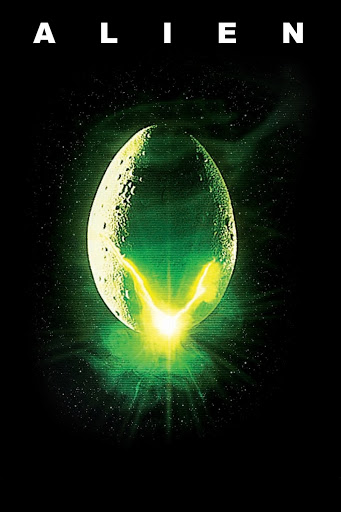
Jerry Goldsmith talks Alien (1979)

Jerry Goldsmith talks Alien (1979)

A look inside Goldsmith’s thought process when he created the score for the ever-terrifying Alien (for a sense of contrast, keep in mind that he composed Alien in the same year as Star Trek: The Motion Picture!!) In fact, if you listen closely, some say that you can hear some of the same minor themes in both films. Primarily listen to the music early in Alien when the camera is panning through the empty corridors of the Nostromo and compare to the music in the scene where Spock is stealing a thruster suit rather late in the film.

   *Alien credit to Bill Gold
See also:

Film Composer Interviews A-H

Film Composer Interviews K-Z

Become a Patron of the blog at patreon.com/musicgamer460

Check out the YouTube channel (and consider hitting the subscribe button)

Don’t forget to like Film Music Central on Facebook 🙂