Tag Archives: Star Wars

My Thoughts on: Star Wars: Return of the Jedi (1983)

Until the release of The Force Awakens (2015), Return of the Jedi stood as the definitive conclusion to the Star Wars saga. And what a conclusion it had to be, there were multiple loose ends to tie up: Han Solo had to be rescued from Jabba the Hutt; Luke needed to reconcile/accept the fact that his father was Darth Vader; the Rebel Alliance needed to defeat the Imperial fleet and most importantly, the Emperor needed to be defeated.

It might seem strange that the Emperor would choose to build another Death Star (considering what happened to the first one), but then again I can only presume that this one had been modified to have no weaknesses like before, that’s why it had to be destroyed before it was completed.
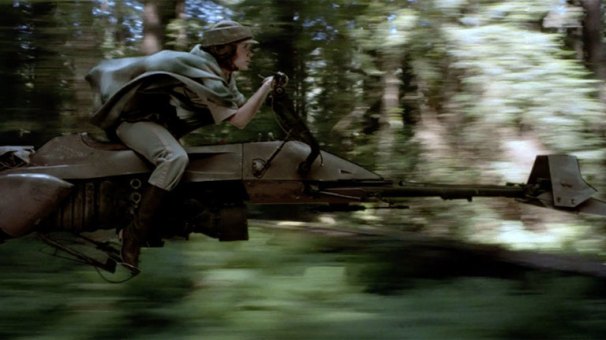
databank_speederbike_01_169_c4204c29

Return of the Jedi Speeder Chase (1983)

For a long time Return of the Jedi was my favorite Star Wars film: it has the speeder chase, Ewoks, and it also has that final confrontation between Luke, Vader and the Emperor. I know some people don’t like the Ewoks, but I love them, they’re cute (The scene between Leia and Wicket is awesome). I have a goal to visit the forest they used for filming the speeder chase, it looks absolutely gorgeous!.

Return of the Jedi- The Emperor’s Throne Room (1983)

The final duel comes at the climax of the movie. While the Rebel Alliance attempts to put their plans into motion, Luke has turned himself in to Vader and is taken to see the Emperor. Considering this is the first movie to have the Emperor in the flesh, he’s quite menacing (the eerie music accompanying him helps with that impression a great deal). The Emperor insists that Luke is on the edge of falling to the Dark Side of the Force and that he is already a servant to him (which Luke denies). The whole time, Luke’s light saber is kept in plain sight, tempting Luke to try and take it and strike the Emperor down. While Luke resists for a while, he inevitably gives in and the duel commences.

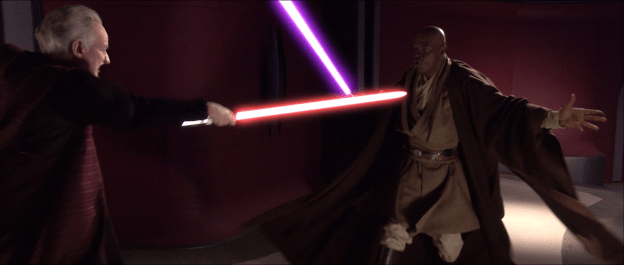
As with the Cloud City duel, Vader is portrayed by Bob Anderson, with a number of different camera angles used during the fight (to great effect I might add). There’s an interesting moment towards the end, when Luke has vaulted up onto a catwalk and is looking down at Vader. Someone (I wish I could say who to give proper credit, but I honestly don’t remember) pointed out that this mirrors the situation at the conclusion of the Mustafar duel in Revenge of the Sith, where Obi-Wan has the high-ground above Anakin, but Anakin jumps anyway and that’s when he loses. Now that Luke is in the same position as Obi-Wan was, Vader has seemingly learned his lesson and instead of jumping up after him, he throws his lightsaber instead.

Now, the big moment in this duel is when Luke finally snaps and attacks Vader in a fury when the Dark Lord threatens his sister (who we all know to be Leia). However, this detail had NOT been established when the script was written. All Lucas had written for this point was “Vader taunts Luke/Luke snaps and attacks.” They’d always put off exactly WHAT Vader does to cause this issue, and finally it got down to the wire and they had to come up with a reason, and as they considered what Vader could possibly say that would get Luke to go off, and finally the light bulb went off as they realized “Leia is his sister and Vader threatens Leia!” That’s right, up until that moment, Leia had NOT been identified as Luke’s sister, and I’m tempted to say that the only reason she was identified as such is because they needed a reason for Luke to snap. That being said, I’m still not entirely convinced that Vader knew that Leia was Luke’s sister. In the dialogue, he only discovers that a sister exists and refers to her strictly in the abstract as “she.” He may never have made the connection that Leia and Luke’s sister were one and the same.

maxresdefault

Return of the Jedi- Final Duel (1983)

Return of the Jedi- Final Duel (Soundtrack Version) (1983)

One moment in the duel that I’ve heard get a lot of flak is the very end, when Vader 1) discovers that Luke has a twin sister and 2) teases that he’ll get her to join the Dark Side if he won’t, inciting Luke’s fury. The problem (people argue) is, considering how powerful Vader came across in Empire Strikes Back, how is it that Luke can suddenly overpower him? It does seem odd, and for a while I couldn’t answer this argument at all, until I gave it some thought. There are several ways to solve this puzzle, and I’ll list a few here:

Solution #1: Vader’s lightsaber skills aren’t what they used to be. Yes I know how he came across in Empire Strikes Back, but in that duel Luke wasn’t fully trained and he certainly didn’t have control of his emotions (which is key if you’re going to engage in a duel with a Sith Lord). If you think about it, it’s really been close to 20 years since Vader has faced an equally powerful and skilled opponent, his fighting skills had to have deteriorated over time.

Solution #2: Vader’s connection to the Force (which helps his fighting abilities) is severely weakened. If we (reluctantly) assume that the midichlorians are canon, then Vader can’t possibly have as strong a connection to the living Force as he used to. By my calculations, the only human parts of Vader left are his torso and his head, which would have severely decreased his midichlorians, and thus his ability to use the Force.

Solution #3: Vader is not fully committed to killing Luke. Vader seemingly has no problem with potentially killing Luke in Empire Strikes Back; as he tells the Emperor “He will join us or die.” But now, in Return of the Jedi, it’s become obvious that Vader is torn between his son and his duty to the Emperor. This emotional conflict (which Luke can sense) is throwing Vader off, influencing his fighting abilities.

Solution #4: Luke is simply more powerful in the Force than Vader. Being his son, this is certainly possible, and unlike Vader, Luke has only lost a hand at this point. Also, he is fully engaging in the Dark Side of the Force and his fury has magnified his abilities many times over.

Any of these could be viable solutions (or a combination of all four), and therefore I have no trouble with Luke overwhelming Vader at the end. This is really the first moment where the music plays into a lightsaber duel in the same way that “Duel of the Fates” and “Battle of the Heroes” will in the prequel films. The chorus is eerie and foreshadowing: by attacking Vader in anger, Luke is basically throwing himself off of a cliff into the Dark Side, and if he’d cut off Vader’s head instead of his hand, there would’ve been no going back. The Emperor knows this, that’s why he pushes Luke to finish the job. But for once, the Emperor has gravely miscalculated. The last time he tried this (pushing Anakin to kill Dooku), he was able to succeed because Anakin had no blood connection to Dooku, in fact, he had every reason in the world to kill him. But with Luke…he’s asking Luke to kill his own father, and that’s something the Jedi can’t do, no matter what Vader has done.

Of course the Emperor responds by trying to kill Luke with Force Lightning, and the sight of his own son being tortured finally snaps Anakin back into existence and he throws the Emperor down the core shaft, where he (presumably) dies (but I have my own theories about that which I’ll discuss another time, especially now in the wake of The Rise of Skywalker).

To summarize the ending, Luke and Anakin make their way to the shuttle, but the former Sith Lord has been too badly injured and makes a last request to see Luke “with his own eyes”, leading to an all too brief reunion between father and son. I honestly wasn’t sure what to think when Luke went through the motions of taking the helmet and mask off. Considering how terrifying Vader looked (and sounded), there was no telling what might be found underneath the mask. I thought Sebastian Shaw’s brief performance as the redeemed Anakin was good though. The final touch on this scene that I’ll mention is, just after he dies, there is a final refrain of the Imperial March, plucked out on a harp. It’s fitting and symbolic of how Anakin was finally brought back to the Light Side of the Force.

Return of the Jedi- ORIGINAL ending (1983)

Now, the ending of Return of the Jedi…well, I have a lot to say (I probably need to make a separate post on my feelings regarding the various changes). I for one, liked the original ending with the cute Ewok sound. True, what John Williams created to replace it is also good, but I didn’t feel the change was necessary. I did like how Luke looked back and saw the ghosts of Obi-Wan and Yoda with Anakin appearing to join them (I still think it was wrong to put Hayden Christensen in that scene, but at least they didn’t put Ewan McGregor in Obi-Wan’s place too). And at the very end, all the heroes are together, celebrating, the Empire has been overthrown…or has it?

For over thirty years the impression was given that the Empire was dead and the good guys had won. But now, with the Expanded Universe being discarded and a new Star Wars Universe coming out instead, we know this isn’t true. The victory at Endor was not total, and it now seems that the fight is far from over.

I still like watching Return of the Jedi, even though Empire Strikes Back is now my favorite, and I hope that someday, somehow, I can watch the original cut of this film again. Hope you enjoyed this, I know it ran a little long (but then again I had a lot to say, lol).

*all images are the property of 20th century Fox/Walt Disney Studios

Become a patron of the blog at patreon.com/musicgamer460

Check out the YouTube channel (and consider hitting the subscribe button)

See also:

Star Wars Episode I: The Phantom Menace (1999)

Star Wars Episode II: Attack of the Clones (2002)

Star Wars Episode III: Revenge of the Sith (2005)

Star Wars, the one that started it all! (1977)

Star Wars Episode V: The Empire Strikes Back (1980)

My Thoughts on: Solo: A Star Wars Story (with spoilers!) (2018)

Rogue One: A Star Wars Story, My Thoughts!!

My Thoughts on: Star Wars: The Rise of Skywalker (2019)

Don’t forget to like Film Music Central on Facebook 🙂

My Thoughts on: Star Wars (1977)

I have to start this post with a significant piece of irony: everyone knows that the Star Wars franchise is now owned by Disney, but did you know that it was almost that way from the beginning? Believe it or not, when George Lucas created Star Wars, he initially thought of it as a Disney film and took the story to Disney (back in 1976)…and Disney turned him down!! Over thirty years later, they bought the entire franchise from Lucas for a sweet $4 BILLION dollars (of course no one could’ve foreseen that before the movie premiered in May of 1977).

e948_classic_star_wars_movie_posters1

Star Wars (1977) was a cinematic revolution on multiple levels. Along with the release of Jaws (1975), Star Wars introduced Hollywood to the concept of a “blockbuster”: a single film on a relatively small budget that brings in HUGE profits (Hollywood still exists on this model today). The film also proved revolutionary in the realm of special effects; raising the bar so high that hitherto successful stop-motion films fell flat in the wake of this phenomenon (an example being Sinbad and the Eye of the Tiger (1977)). Using what was then state of the art technology, George Lucas created lightsabers, huge starships that filled the screen, lasers that blew up planets and fantastic droids of all shapes and sizes. (of course many of these practical effects were ruined by the later updates, but that’s a discussion for another time).

The original Star Wars is responsible for introducing audiences worldwide to a “galaxy far, far away” and the adventures of Luke Skywalker, who finds himself thrust into a life of adventure after two droids crash land on his home planet. Not only that, but old Obi-wan “Ben” Kenobi reveals that he was once a Jedi Knight, the same as Luke’s father. According to Ben, Luke’s father was betrayed by a fellow Jedi named Darth Vader and murdered! As if these revelations weren’t enough, Luke must also rescue Princess Leia and safely deliver the plans for the dread Death Star battle station into Rebel hands before the Imperial fleet discovers the location of the hidden base (wow, there’s a lot going on!) Then there’s the climactic battle to destroy the Death Star, the nefarious Darth Vader on the prowl in his specially designed fighter, and the question of whether the base can be destroyed in time!

Star Wars Original Trailer (1977)

The cast was a mixture of old stars and complete strangers. Among the notable actors appearing were Alec Guinness as Obi-Wan Kenobi and Peter Cushing as Grand Moff Tarkin. The three principal leads went to complete strangers: Mark Hamill as Luke Skywalker, Harrison Ford as Han Solo and Carrie Fisher as Princess Leia.

Of course, for me, the film music scholar, Star Wars also gave composer John Williams the chance to create some legendary music.Keep in mind that prior to Star Wars, science fiction music was largely considered to sound “futuristic” and “alien”, as in the complete opposite of a traditional orchestra (check out the soundtrack for Forbidden Planet on YouTube and you’ll see what I mean). From the minute the overture sounds at the beginning, you just KNOW that this film is something different. And truthfully, it’s somewhat wrong to call Star Wars “science fiction”, “space opera” is really the preferred way to describe this genre, both musically and visually.

Absolutely no one expected Star Wars to do very well at the box office, 20th Century Fox was essentially going out on a limb by agreeing to distribute the film at all. In fact, Lucas convinced himself that the film was going to bust and even told Steven Spielberg (who was working on Close Encounters of the Third Kind (1977)) that his film would surely blow Star Wars out of the water. And then the movie came out…and the movie world has never been the same since. It blew away all expectations and made a killing at the box office (my dad remembered the original film played at the local cinema for well over a YEAR after release). I remember, being rather young, asking my dad just how successful the first Star Wars was (since he saw it in theaters the first time). He put it to me like this: the original film (he said) was so profitable, that George Lucas, and Hamill, Ford and Fisher could have retired then and there and been set for life. It’s a pretty accurate statement, but I for one am glad that Lucas kept going because otherwise we wouldn’t have gotten The Empire Strikes Back.

I wish I could remember the first time I saw this movie, I can’t even tell you how old I was, but I can imagine that I sat there, bug-eyed, as this huge drama played out in front of me. I was fortunate in that my parents had recorded a copy of the original, unaltered Star Wars on a VHS tape, and so that was the version I knew first.

Trivia time!!!

There’s a very good reason why James Earl Jones dubbed over David Prowse as Darth Vader: Prowse has an exceptionally noticeable Welsh accent that, unfortunately, makes him sound the complete opposite of menacing. Allegedly, Prowse had no idea he’d been dubbed over until he watched the premiere of the film.

Darth Vader as voiced by David Prowse

Peter Cushing/Tarkin’s boots pinched his feet horribly so he wore them only when a full body shot was absolutely required. Any other time that he is on camera and his feet are not visible…he’s wearing slippers.

Right up until the first day of filming, Luke was still known as “Luke Starkiller”

Obi-Wan was NOT supposed to die in the original script. He was supposed to make it off the Death Star with everyone else and help begin Luke’s proper training with Yoda in the next installment. What happened is, Lucas looked at the outline of the story and realized that for the rest of the film and a big chunk of the (intended) sequel, Obi-Wan had absolutely nothing to do so, in an 11th-hour decision, Lucas decided to kill the character off (a decision that Guinness was not pleased with).

As strange as it might look, that is a real sword fighting style that Obi-Wan is using against Darth Vader.

This is the only Star Wars film (prior to The Force Awakens) where the Emperor does not appear in some way or another (Tarkin makes a few passing comments about the Emperor dissolving the Imperial Senate, but that is all).

*all images belong to either 20th century Fox/Walt Disney Studios

Don’t forget to like Film Music Central on Facebook!

See also:

My Thoughts on: Star Wars: The Rise of Skywalker (2019)

My Thoughts on: Solo: A Star Wars Story (with spoilers!) (2018)

Rogue One: A Star Wars Story (2016), My Thoughts!!

My Thoughts on: Star Wars: The Empire Strikes Back (1980)

Empire_strikes_back_old

It is not often that a sequel surpasses the original, and yet the prevailing opinion is that The Empire Strikes Back, released on this day in 1980, did exactly that. Set an unspecified amount of time after the original Star Wars (now known as A New Hope), Empire Strikes Back finds the Rebel Alliance holed up on the ice planet of Hoth while the Imperial fleet, led by Darth Vader, searches for them (and for Luke Skywalker in particular, as he delivered the killing blow to the Death Star).

This film features several plot lines. The first is Luke’s continuing journey to becoming a Jedi, now under the tutelage of the ancient Jedi master Yoda (Frank Oz) on the swamp planet of Dagobah. The other follows Han Solo, Princess Leia, Chewbacca and C-3PO has they flee in a damaged Millennium Falcon from Darth Vader.

And speaking of Vader, the Dark Lord of the Sith’s role is greatly expanded compared to the previous film. Whereas the first film had Grand Moff Tarkin (Peter Cushing) and the vague threat of the Emperor, this film places Vader as the sole villain to be feared. And unlike the first film, where he releases the arrogant Imperial officer from a throat choke (at Tarkin’s demand I might add), the Vader in Empire Strikes Back shows no such mercy, killing an Admiral AND a Captain in the course of the film.

6ae4d-luke-vs-vader-cloud-city

Of course The Empire Strikes Back is also known to possess one of the greatest cinematic twists of all time: the shocking revelation that, far from killing Luke’s father, Vader IS Luke’s father!! (It was so shocking in fact, that when shown the page of dialogue, James Earl Jones was convinced that Vader had to be lying).

How could they keep something that big so secret for so long? Simple: they lied to everybody about the twist. What I mean is, when everyone was given their script, Lucas and company put in a fake page of dialogue for that moment (to prevent the true secret being leaked). Hamill was not told the truth until right before it was time to film the scene (allegedly Prowse wasn’t told at all and had a totally different dialogue that Jones dubbed over, but this is disputed). According to the fake dialogue, the pivotal moment read as Vader saying “You don’t know the truth, Obi-Wan killed your father!” Now, you have to admit, even if it was fake, that’s a pretty earth-shattering twist!

The other best-known moment (or I should say sequence of moments) from this film would be the lightsaber duel between Luke and Vader in the depths of Cloud City. The director stated that, regarding Cloud City, he wanted to create an idea of Heaven and Hell, with the white exterior of the city among the clouds symbolizing Heaven, and the freezing chamber deep in the city representing Hell. If you compare this duel to any of the duels in the prequel trilogy or The Force Awakens, one big difference should jump out at you: for most of the duel, there is no music whatsoever. The only sounds you hear in the opening are lightsaber hits and Vader’s breathing.The lack of music serves to raise the tension (I believe), as Vader is placed as this really powerful foe that (according to Yoda and Obi-Wan) Luke is NOT ready to face.

The Empire Strikes Back: Cloud City Duel (1980)

vaderemp

When the villain is introduced like that, you know you’re in trouble

Furthermore, Vader, at the start, is only fighting Luke with one hand, he doesn’t even need to use both hands to block Luke’s attacks (in effect, he’s toying with him).

Now, regarding this fight, there’s a little known fact that you should know: that is NOT David Prowse in the Vader suit. It was going to be, but Prowse kept snapping the practice blades during rehearsal and finally they said “You’re out.” He was replaced by Bob Anderson (1922-2012), an Olympic fencer and and a legendary fight choreographer (he trained everyone from Errol Flynn to Viggo Mortensen and then some in sword fighting). Now, Anderson was nowhere near the height or bulk of Prowse, so the director had to resort to some cinematic trickery to make you unaware that someone else was playing Vader. The key element was shooting Vader at high or unusual angles, to make it look like he was the same size. That’s why in the opening part, the camera is looking UP at Vader, who is standing on top of the stairs. There are also a number of shots where you don’t see Vader’s whole body in the frame. All of this would be repeated for the final duel in Return of the Jedi (1983).

The Empire Strikes Back “Imperial March” (1980)

Musically, this film is best known for introducing “The Imperial March” aka “Darth Vader’s theme.” This is possibly the most famous Star Wars theme ever created, and it has come to represent total evil. (For more on the “Imperial March”, see “The Imperial March” by John Williams ).

Of the seven Star Wars films released to date, Empire Strikes Back is the one I invariably end up watching the most (I also highly recommend the NPR radio drama of this story). That’s all for now, enjoy the rest of the weekend!

*all images are now the property of Walt Disney Studios/or possibly 20th Century Fox still

Become a patron of the blog at patreon.com/musicgamer460

Check out the YouTube channel (and consider hitting the subscribe button)

See also:

Star Wars Episode I: The Phantom Menace (1999)

Star Wars Episode II: Attack of the Clones (2002)

Star Wars Episode III: Revenge of the Sith (2005)

My Thoughts on: Solo: A Star Wars Story (with spoilers!) (2018)

Rogue One: A Star Wars Story (2016)

Star Wars (1977)

Star Wars Episode VI: Return of the Jedi (1983)

My Thoughts on: Star Wars: The Rise of Skywalker (2019)

Don’t forget to like Film Music Central on Facebook 🙂

Star Wars Episode III: Revenge of the Sith (2005)

Alright, admit it: from the moment the prequel trilogy started, THIS is the movie you were waiting for. Everyone wanted to see Anakin make his final transformation into Darth Vader, and oh boy, did this film deliver!

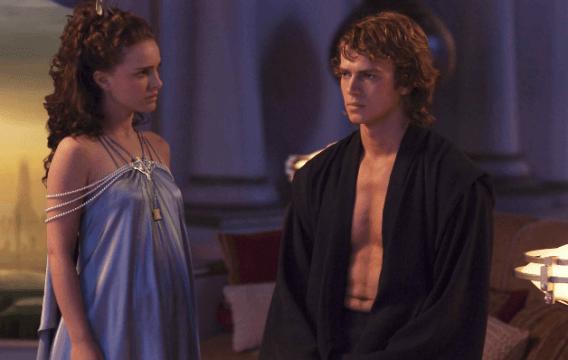
This entire film is a giant climax of sorts, because there’s precious few moments when there isn’t some action of some kind going on. The tragic thing is, things start out so well for Anakin and secret wife Padme at the start of the film: Anakin returns to a hero’s welcome after saving the Chancellor (he also killed Count Dooku in cold blood but since Palpatine was the only witness, he doesn’t mention that part), he finds out Padme is pregnant AND, not long after, he’s informed by Palpatine that he wants him (Anakin) to be his representative on the Jedi Council.

Padme-Anakin-2

Anakin (in typically arrogant fashion) believes that this means he’s also being promoted to the rank of Master, since traditionally only Jedi Masters sit on the council, but while a seat is granted to him, his dreams of glory are shattered when the promotion is not given (even though Obi-Wan assures him that it will come soon enough). Anakin has been thoroughly manipulated by both sides (Jedi and Palpatine) at this point, and is growing increasingly tired of it. Palpatine is aware of this and uses Anakin’s frustration and growing mistrust to finally push him over the edge (where he’s been teetering ever since Attack of the Clones).

Palpatine’s gambit is impressive: he admits EVERYTHING to Anakin, that he’s a Sith Lord, that he knows about Padme being his wife and furthermore, that he can prevent her from dying in childbirth (Anakin has been having recurring dreams about Padme dying, similar to what happened right before his mother died).

Anakin draws his lightsaber and almost kills Palpatine on the spot (in fact, during this moment, I was practically begging Anakin to do exactly that, even though I knew it wasn’t going to happen), but he needs to do “the right thing” so he leaves to inform the Jedi, who try to arrest Palpatine, who kills them all (ultimately with Anakin’s help) and from this point on the Jedi are doomed/royally screwed.

Revenge of the Sith “The Jedi Purge”

But as agonizing as Anakin’s turn to the dark side is (that scene with the younglings in the temple KILLS me every time), it’s what comes after that is the real highlight of the film: Anakin and Obi-Wan’s final confrontation on Mustafar. There’s actually something of an urban legend regarding that final duel and the entire sequence in fact. The story goes that Steven Spielberg happened to be visiting the set that day and Lucas asked him, half-seriously, if he wanted to direct this scene. And allegedly, Spielberg accepted (without taking credit) and that’s supposedly why the entire Mustafar duel is so freaking awesome. I don’t know if it’s true (but I’d kind of like it to be).

akojghcwpph6kmdnwd7v

Revenge of the Sith “Battle of the Heroes” (2005)

The music for the Mustafar duel was dubbed “Battle of the Heroes” and is just amazing (Williams really outdid himself there). The moment when Obi-Wan finally realizes that there is no way to pull Anakin back from the dark side and that he MUST kill him, is just so heart-wrenching to watch. Of course, in the end, Anakin’s arrogance is what does him in. Even though Obi-Wan warns him that he (Obi-Wan) has the high ground (and therefore the advantage), Anakin leaps anyway and loses the rest of his natural limbs as a result. I still find the burning scene difficult to watch (I know people criticize Christensen’s performance, but I really think he nailed it here).

ywcuymizu1h01

And finally, I have to talk about that “transformation” scene when Anakin finally becomes recognizable as Darth Vader (in the armor and helmet). This scene, if you think about it, is really the lynch pin that ties the prequels into the original story. Everything that has happened has been slowly building up to this moment, and it’s really perfectly done.

Revenge of the Sith “Anakin becomes Darth Vader” (2005)

And quick question, did anyone else geek out just a little bit when the newly rebuilt Darth Vader spoke and it was James Earl Jones’ voice? That little detail also helped to tie things together, and was an excellent choice. Also, the birth of Padme’s twins answers the age-old question of whether Luke or Leia is older, and the answer is: Luke!!!

Revenge of the Sith is often called the best film in the prequel trilogy and I absolutely agree with that assessment. What did you think of the conclusion to the prequel trilogy? Let me know what you think in the comments below!

*film poster is the property of Walt Disney Studios

Check out the YouTube channel (and consider hitting the subscribe button)

See also:

Star Wars Episode I: The Phantom Menace (1999)

Star Wars Episode II: Attack of the Clones (2002)

Rogue One: A Star Wars Story, My Thoughts!!

Star Wars, the one that started it all! (1977)

Star Wars Episode V: The Empire Strikes Back (1980)

Star Wars Episode VI: Return of the Jedi (1983), the saga concludes (or does it?)

A Random Thought on “The Force Awakens”

Star Wars: The Last Jedi: The Good

Star Wars: The Last Jedi- The Bad

Star Wars: The Last Jedi-The Ugly

Don’t forget to like Film Music Central on Facebook 🙂
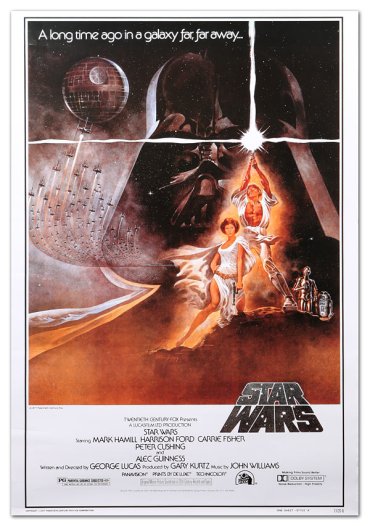
Star Wars Episode I: The Phantom Menace (1999)

It was the film announcement heard ’round the world: George Lucas was returning to the realm of Star Wars to create a prequel trilogy to the original films. Given that this took place just before social media really took off (no Twitter, no Facebook, not even YouTube), excitement was at a fever pitch, with everyone speculating on how the origins of Anakin Skywalker/Darth Vader, Obi-Wan Kenobi and others would be shown.

I remember being over the moon excited about this. I’d always been jealous that my parents had gotten to see the original Star Wars movies in the theater, and now (as I saw it), here was my chance to see a new Star Wars film on the big screen, just like they did so many years ago.

Jar_Jar_meets_Jedi.png

“What’s this?” “A local.”

The Phantom Menace (if I understand the timeline correctly), takes place just over 20 years before the Battle of Yavin (the climax of Episode IV). The Republic rules the galaxy, but corruption is starting to take over. While escorting the young Queen of Naboo (Natalie Portman) to the galactic capital Coruscant, Jedi Qui-Gon Jinn (Liam Neeson) and his Padawan Obi-Wan Kenobi (Ewan McGregor) encounter an extremely Force-sensitive boy named Anakin Skywalker on the planet Tatooine (and he ultimately ends up leaving with them after helping the group secure the parts to fix their ship by winning a podrace). Ultimately, Naboo is saved from the vile Trade Federation, Anakin becomes Obi-Wan’s apprentice, and Senator Palpatine is now the Supreme Chancellor of the Republic, all in all it sounds like a great story, but was it really?

Screen-Shot-2015-09-02-at-4.04.49-PM

I still debate this question to myself from time to time. Considering that I was only 11 when I saw this film in the theater, I couldn’t understand for a long time why people didn’t like this film. My thinking was “It’s Star Wars, so it’s automatically awesome!” And yet, as time went on, I found myself preferring to watch the original trilogy over the prequels. What happened?

I don’t think there will ever be a universal consensus, but for The Phantom Menace there is one element that everyone agrees they hate: Jar Jar Binks. Of course *I* thought he was funny…until I grew up, and the humor got old after the 12th viewing. I know Jake Lloyd (the child actor who played Anakin) has received a lot of flak for his performance, but for goodness’ sake he was what, 9 years old? Given everything he had to work with, I think he did a great job in the role.

Snapshot_2

Episode I: The Phantom Menace “Duel of the Fates” (1999)

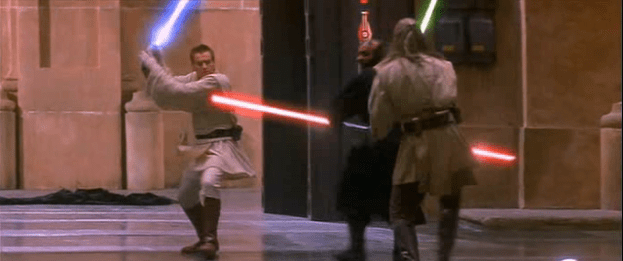
Problems aside, the lightsaber duel (accompanied by “Duel of the Fates”) at the climax of the film was beyond awesome in my young eyes. Darth Maul was beyond terrifying, and it was really all well done. I remember gasping in horror when Qui-Gon got impaled too, I did NOT see it coming and I really wanted Qui-Gon to live. Looking back, the lightsaber duel between Maul, Qui-Gon and Obi-Wan remains one of the few highlights in a film that hasn’t aged terribly well (especially where some of its CGI effects are concerned).

It goes without saying that the rest of the score was equally as amazing (in seven movies there hasn’t been a bad Star Wars score yet and I don’t think there ever will be).

I think only time will tell how good (or bad) The Phantom Menace really was.

Don’t forget to like Film Music Central on Facebook 🙂

Check out the YouTube channel (and consider hitting the subscribe button)

For more Star Wars see also:

Star Wars Episode II: Attack of the Clones (2002)

Star Wars Episode III: Revenge of the Sith (2005)

Rogue One: A Star Wars Story, My Thoughts!!

Star Wars, the one that started it all! (1977)

Star Wars Episode V: The Empire Strikes Back (1980)

Star Wars Episode VI: Return of the Jedi (1983), the saga concludes (or does it?)

A Random Thought on “The Force Awakens”

Star Wars: The Last Jedi: The Good

Star Wars: The Last Jedi- The Bad

Star Wars: The Last Jedi-The Ugly

*film poster is the property of Walt Disney Studios

Star Wars Episode II: Attack of the Clones (2002)

Up first (in terms of dates): 14 years ago today, Episode II: Attack of the Clones, launched into theaters and (correct me if I’m wrong) is considered the weakest film in the prequel trilogy, largely due to the clunky, unnatural, and at times downright awkward “romantic” moments between a teenaged Anakin Skywalker (now played by Hayden Christensen) and an adult Padme Amidala (Natalie Portman).

I was happily oblivious to all of these flaws when I saw this movie in the theater (I was only thirteen at the time, what did I know about good or bad dialogue? I was just excited to see Star Wars in the movie theater). But now that I’m older, I (somewhat reluctantly) have to agree that this isn’t the best entry in the series (Hayden Christensen’s acting isn’t THAT bad though).

Episode II takes place about ten years after Episode I and the extremely Force-strong boy from Tatooine has grown up into an exceptionally moody Padawan, still mentored by the ever-exasperated Obi-Wan Kenobi (Ewan McGregor). A state of civil war is brewing in the Republic, as the Separatist movement, led by Count Dooku (Christopher Lee), threatens the peace. The Jedi are oblivious to the fact that Chancellor Palpatine (Ian McDiarmid) is actually the Sith Lord Darth Sidious, and that he has been manipulating galactic events for years. Anakin has grown to view the chancellor as a trusted advisor, and is also struggling with his growing feelings for the now-Senator Amidala.

For all the movie’s flaws, how cool is it that Christopher Lee plays a former Jedi?? And how awesome is it that Yoda is revealed as a bad-ass fighter! (It’s CGI-ed to death but it’s still pretty cool I think).

The Clone Wars themselves are only mentioned twice in the original Star Wars film (Luke: “You fought in the Clone Wars?” and in the Leia recording: “…Years ago you served my father in the Clone Wars…”) but we really knew nothing else about them. Now this movie was allegedly going to show us what the Clone Wars were all about, which excited many. Unfortunately, while there are some pretty impressive moments (the revelation that the clones are the predecessors of Storm troopers comes to mind, along with the impressive-as-always lightsaber battles), the story is really bogged down by way too much CGI, a weird as heck romance subplot, and a shade too much politics.

Musically though, the film is great. John Williams returned once again to score the film and I firmly believe his music made the film better than it might have been otherwise. One of my favorite moments comes at the end of the film (right before the scene showing Anakin and Padme getting married in secret): the Jedi are watching the clone troopers arrive on Coruscant and Yoda sternly reminds them all that the fight is far from over because “begun, the Clone Wars have” and then, you hear IT, a clear refrain of the Imperial March (aka “Darth Vader’s theme”). Williams only used a clear rendition of that theme once in The Phantom Menace (when Yoda tells Obi-Wan “grave danger do I fear in his training”), but Anakin’s “good” theme was otherwise built on a rendition of the March placed in a major key (the original is in minor). Now though, as the clone ships land (clearly an early version of Star Destroyers), the camera pans over the assembled troopers and a loud rendition of the Imperial March plays, and there is no mistaking it. The Jedi don’t know it yet, but the final seeds have been sown for their annihilation.

(Incidentally, if anyone was curious: Yoda trained Dooku, Dooku trained Qui-Gon, Qui-Gon trained Obi-Wan and Obi-Wan trained Anakin).

Have a good day!

*all images are the property of 20th Century Fox/Walt Disney Studios

Check out the YouTube channel (and consider hitting the subscribe button)

Don’t forget to like Film Music Central on Facebook 🙂

A Random Thought on “The Force Awakens”

star-wars-force-awakens-official-poster

Property of Disney

So considering Star Wars: The Force Awakens came out almost two months ago, I’m fairly certain we’ve all seen it at least once by now (I’ve seen it twice myself). As I eagerly began to discuss the film with my friends, I began to notice a trend in the comments people were making about John William’s score. To get to the point, a lot of the people I talked to didn’t think it was very good.

I know everyone can have their own opinion, but I feel this is something I should address, so here goes: I don’t believe that Williams’ score for The Force Awakens is any weaker than the earlier Star Wars scores. I do admit that Williams hasn’t created the equivalent of “The Imperial March” from The Empire Strikes Back…but I don’t think the film called for such a musical statement.

Here’s my take on the music (and the film in general): As we are being introduced to a new generation of Star Wars characters, The Force Awakens was very much about “passing the torch.” Rey is now flying the Falcon, Kylo Ren is the new bad guy, etc. In that vein, a good chunk of the characters and situations are echoes of what was found before: The First Order is an echo of the old Empire, the Resistance is the Rebellion, etc, and so on. Because all of these things and characters are “echoes” of the original, it makes sense that the music would not be as intense as before, not yet at any rate. Keep in mind that “The Imperial March” was not introduced until The Empire Strikes Back. I firmly believe that Williams has a few musical surprises up his sleeve (unfortunately we have to wait until the end of 2017 to find out what they are.)

See also: Film/TV Reviews

Check out the YouTube channel (and consider hitting the subscribe button)

Don’t forget to like Film Music Central on Facebook 🙂

Film Music 101: Dubbing

David-Prowse-as-Darth-Vader-in-Star-Wars-Episode-IV

Imagine Darth Vader with a thick Welsh accent…

In the world of films and film music, dubbing is the process whereby a new soundtrack is added to an already completed film. This could mean adding dialogue, sound effects or music.

Dialogue might have to be dubbed in if the original recording was deemed unsuitable. Most (in)famously, David Prowse’s performance as Darth Vader was dubbed over by James Earl Jones (allegedly without Prowse’s knowledge, though this has been disputed).
Sound effects can be dubbed in to create a desired mood in a particular scene. Screwball comedies often did this by dubbing in slapstick sound effects to emphasize comedic falls or double takes.

Music, both diegetic and non-diegetic, might have to be dubbed in if the original recording was damaged in some way or the director becomes unsatisfied with the initial result. For example, say a movie originally features a certain diegetic song playing on the radio. If the director changes their mind and wants a different song, the editors would go back and dub in a new song, so that the audience would never be able to tell that a new song was added in.

Become a Patron of the blog at patreon.com/musicgamer460

See also:

Film Music 101: Diegetic vs. Non-Diegetic Music

Film Music 101: Underscore

Film Music 101: Sidelining

Film Music 101: “Test” Lyrics

Film Music 101: The First Film Score

Film Music 101: Borrowing

Film Music 101: Arranger

Film Music 101: Anempathetic sound

Film Music 101: Empathetic Sound

Film Music 101: Foley

Film Music 101: Montage

Film Music 101: Compilation Score

Film Music 101: Leitmotif

Film Music 101: Orchestration and cues

Film Music 101: “Stinger” Chords

Don’t forget to like Film Music Central on Facebook 🙂

Film Music 101: Leitmotif

In film music (and classical music, especially opera), a leitmotif is “a short, constantly recurring musical phrase, that is associated with a particular person, place, or idea.”

The most famous user of leitmotif in 21st century Hollywood would have to be composer John Williams in the seven Star Wars scores (1977-ongoing)

(for more on the leitmotifs of Star Wars see: The Empire Strikes Back or, Everyone has a Theme! Part One: Leitmotif and “The Imperial March” and The Empire Strikes Back Part Two!: Han and Leia in Love and Yoda!! )

Leitmotifs can be found in many films, for example, in the Star Trek franchise there is a popular theme known as the “Enterprise motif,” this is the fanfare of rising fourths that occurs almost every time the Enterprise appears on the screen (this is especially true in the original series and in the Next Generation films).

The concept of leitmotif (which roughly translates to “leading motive”) predates the creation of film by several decades and is closely associated with the late-Romantic composer Richard Wagner (though Wagner did NOT invent the concept himself as some have claimed)

RichardWagner

Wagner’s operatic music had a HUGE influence on modern film music

In Wagner’s famous cycle of operas known as Der Ring des Nibelungen (The Ring of the Nibelungs, aka “The Ring Cycle”), Wagner created an entire series of leitmotifs to represent specific characters or themes in the story.

For example, the hero Siegfried is represented by a leitmotif known as “Siegfried’s Horn Call,” seen here below:

Siegfried_leitmotif

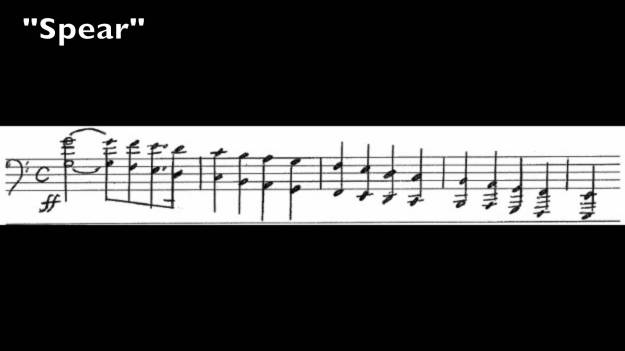
Another important motif represents the god Wotan’s spear:

maxresdefault

Other motifs represent: Fire, The Rhine, The Ring, and Sleep

Whatever the context, leitmotifs are an integral part of a film score (when they are used), and they provide an interesting connection to the world of 19th century opera.

Don’t forget to like Film Music Central on Facebook 🙂

Become a Patron of the blog at patreon.com/musicgamer460

Check out the YouTube channel (and consider hitting the subscribe button)

See also:

Film Music 101: “Stinger” Chords

Film Music 101: Dubbing

Film Music 101: Diegetic vs. Non-Diegetic Music

Film Music 101: Underscore

Film Music 101: Sidelining

Film Music 101: “Test” Lyrics

Film Music 101: The First Film Score

Film Music 101: Borrowing

Film Music 101: Arranger

Film Music 101: Anempathetic sound

Film Music 101: Empathetic Sound

Film Music 101: Foley

Film Music 101: Montage

Film Music 101: Compilation Score

The Empire Strikes Back or, Everyone has a Theme! Part One: Leitmotif and “The Imperial March”

Empire_strikes_back_old

The Empire Strikes Back
Released: May 21, 1980
Director: Irvin Kershner
Music by: John Williams
*All music is the property of Lucasfilm

The Empire Strikes Back is considered by many to be the greatest movie of the original Star Wars trilogy and it’s no wonder. The film contains battles both on land (Hoth) and in space (the Millennium Falcon vs. Star Destroyers), a terrifying villain (Darth Vader), moments of comedy (C3PO) and one of the biggest twists in the history of film. It also features a gorgeous score composed and conducted by John Williams, a film composer who has been working in Hollywood since the 1950s and is solely responsible for some of the greatest film scores of all time.


For his work on The Empire Strikes Back, Williams began with the musical themes he had established for the original Star Wars and used it as a starting point for the sequel. Two themes were already set in stone:

Luke’s Theme/The Force

Leia’s Theme

As the role of Darth Vader was being greatly expanded from his first appearance, Williams concluded that Vader would need a theme to match. This lead to the creation of “The Imperial March,” a theme that is now synonymous, not just with Star Wars and Darth Vader, but with anything evil in nature.

Darth Vader’s Theme/The Imperial March

These themes, and how they are used, derive from a technique created for opera, known as leitmotif. Leitmotif was made popular by the Romantic composer Richard Wagner in his famous series of “Ring” operas.

Leitmotifs, by nature, are meant to evoke a particular character and are played whenever a specific character is seen on stage OR when they are mentioned by another character. This happens a great deal with “The Imperial March”, and not just in The Empire Strikes Back.

Starting with The Phantom Menace, echoes of “The Imperial March” are heard towards the end of the film when Yoda (reluctantly) gives Obi-Wan permission to train Anakin. (specifically: when Yoda says “Nevertheless, grave danger do I feel in his training”)

The theme grows stronger in Attack of the Clones, but again is heard primarily at the end of the film when the Clone fleet is seen landing in Coruscant, announcing the start of the Clone Wars.

Finally, in Revenge of the Sith, the theme is finally heard in full when Anakin turns to the Dark Side and is dubbed Darth Vader by the new Emperor Palpatine. (The theme can be heard in snippets throughout the latter half of the film, but fully comes out when Vader is being placed into his armor, particularly when the mask slips into place).

Part Two will explore the theme of Han and Leia’s love and the theme of Yoda. Until next time!

Become a Patron of the blog at patreon.com/musicgamer460

Check out the YouTube channel (and consider hitting the subscribe button)

Don’t forget to like Film Music Central on Facebook 🙂

See also:

Film/TV Reviews

The Empire Strikes Back: “The Imperial March” by John Williams