Category Archives: Films

Rotwang or, what mad scientists will do for love

This post is a part of the Movie Scientist Blogathon hosted by Silver Screenings and Christina Wehner

There are mad scientists, and then there’s Rotwang.

Rotwang (Rudolf Klein-Rogge) is a scientist and one of the primary antagonists of the 1927 silent film Metropolis (directed by Fritz Lang). All of his life he’s been in a rivalry with Joh Fredersen (Alfred Abel), the “Master of Metropolis” because years ago they both loved the same woman, Hel. And even though Hel chose Joh, married him and bore his child (Freder), Rotwang has lived all his years since then convinced that Hel should have been his.

tumblr_njtqtjYIXf1unt4w0o1_400

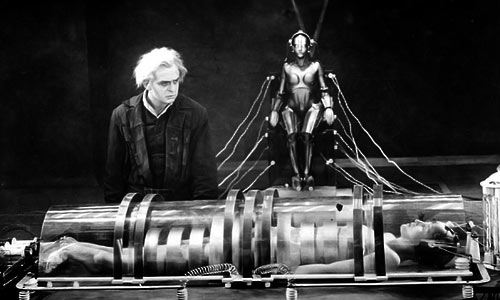
When Joh (reluctantly) comes to visit Rotwang to try and determine what the workers are up to in the catacombs below the city, Rotwang reveals a secret: he has found a way to “resurrect” Hel, and this time she will be his alone! “Hel” is revealed to be a robot with a feminine body (I believe in the end she was meant to resemble Hel, but the process was not finished).

How exactly Rotwang created the robot is not known, but we do find out that Rotwang sacrificed a hand in the process (replacing it with an artificial limb, to Joh’s horror). The science seen here in Metropolis would be categorized as “soft science” (the processes shown are scientific in nature, but the how and why are left unexplained)
metropolis_still

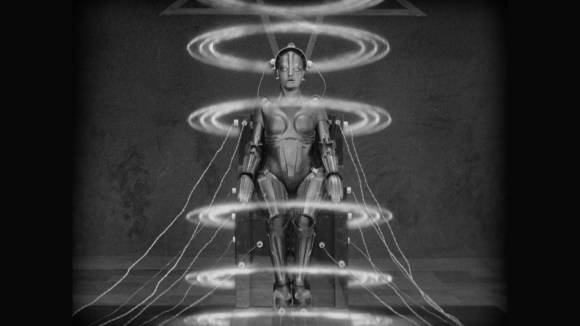
And speaking of science, the entire scene where Maria’s likeness is transferred to the robot is unbelievably brilliant (it makes it hard to believe that this was done in 1927). To create this scene, the film had to be exposed multiple times to create the illusion of multiple rings of light.
Metropolis

Once Rotwang’s robot is turned loose upon the city, the increasingly unstable scientist becomes infatuated with the captured Maria and eventually convinces himself that Maria is actually Hel come back to life. He pursues Maria across the city, culminating in a chase across the roof of a cathedral. Maria’s love Freder finally intervenes and at the climax, Rotwang falls to his death. To the bitter end he believes he is pursuing his beloved Hel.

Next to Dr. Frankenstein, Rotwang is one of my favorite movie scientists. While he is unquestionably brilliant, he is also certifiably insane (and may have always been so, one wonders why Hel rejected him). He’s so convinced that this robot will serve to replace his lost love, the intensity of his passion is terrifying.

Rotwang is a memorable movie scientist, and a good addition to this blogathon, I hope you enjoyed!

Don’t forget to like Film Music Central on Facebook 🙂

Become a Patron of the blog at patreon.com/musicgamer460

See also:

Gottfried Huppertz: The composer behind Metropolis

*All of the images are property of the film studio

Deja Vu: Comparing the Klingon theme in Star Trek: The Motion Picture and Star Trek: First Contact

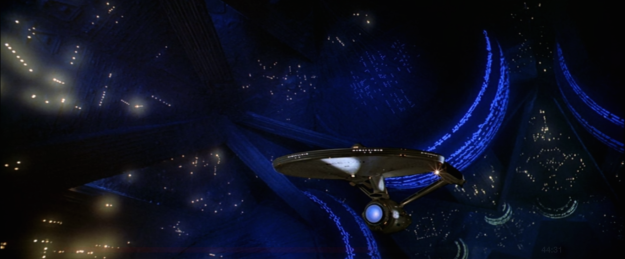
Star Trek: The Motion Picture has had a bad reputation for years, and some of it is rightfully deserved. The pacing is way off (compared to the later films), the acting is…less than ideal at some points, and the mysterious V’Ger is so large as to border on the absurd (in the original version, the size was given as being larger than our own solar system (80 AUs, it was later dubbed over to 8, which is still very massive).

1_QTeQF_1FtK4uPfT-RzYZ7Q

But one component of the film that I will defend to the death is Jerry Goldsmith’s score. Goldsmith introduced musical themes that have remained with the series (at least in the prime universe) ever since. One such theme is the “Klingon theme” that is heard at the beginning of the film when three Klingon ships move in to attack the mysterious cloud passing through their territory. (The theme begins around 0:09 seconds, listen for the brass)

Star Trek: The Motion Picture “Klingon Battle”

This theme set the tone for the Klingons as they would now appear in the Star Trek film universe (this is also the first time we see “proper” Klingons with the distinctive ridges on their foreheads). Brass, horns and trumpets in particular, have long been associated with war and other martial endeavors (as that is where those instruments evolved) and by utilizing them, Goldsmith is reminding the listener that Klingons are a martial race, they always attack first, ask questions later.

star-trek-first-contact-jean-lu-picard-borg-alfre-woodard-patrick-stewart

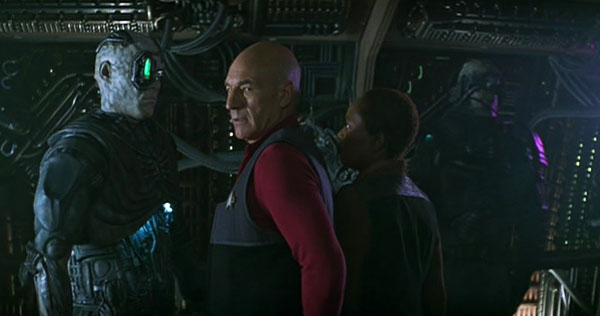
Fast forward almost twenty years to 1996 and the events of Star Trek: First Contact. The Federation’s ultimate nemesis, the Borg, are making another attempt to conquer and assimilate the human race, and all resources are being pulled together to stop this menace. In the midst of the battle, we come across the Defiant (the starship from Deep Space 9) commanded by everyone’s favorite Klingon, Worf (Michael Dorn joined Deep Space 9 after Next Generation went off the air). No sooner does Worf pop up, and the music heard is definitely the same Klingon theme played in The Motion Picture back in 1979 (considerably sped up, but the same theme regardless). The theme begins around 2:25.

Star Trek: First Contact “Klingon Theme”

I will always love how composers reuse musical themes from one film to the next (I also can’t believe it took me as many years as it did to catch this particular example).

Become a Patron of the blog at patreon.com/musicgamer460

Don’t forget to like Film Music Central on Facebook 🙂

Film Music 101: Who owns the music?

In exploring the world of film music, I must now broach one of the sad truths about the industry: film composers do not own their work.

That’s right, once a score is complete, the entire piece belongs not to the composer, who created it, but to the film studio instead. In fact, once the score is done, the studio can do whatever it wants with that score. It can be reused in other films, it can be altered, edited or…destroyed.

It’s actually happened, believe it or not. Back in the 1960s, Maurice Jarre composed the score for the epic Doctor Zhivago. Some time later, Jarre wanted to look at part of the score, so he dutifully asked the studio if he could see it. But as it turns out, when the studio looked, it was discovered that the original score, the master copy, had been destroyed long since when the studio had previously cleaned house! Thankfully, the composer and a team of musicians were able to reconstruct the score by collecting various orchestral editions of the music, but if the score to a great epic like Doctor Zhivago met this fate, what on earth has happened to the scores of ordinary films? I shudder to think of what the studios might have done over the years.

Film scores are almost impossible to see with your own eyes. The studios are (understandably) protective of their property, and will usually only grant permission to other composers or researchers (such as myself) to see the music (and usually there are strict guidelines as to what you can do with it). This is why when music from movies is published in say, a piano book, it’s always in a simplified arrangement. You will never, EVER, find a bound version of a complete film score. In a perfect world, I would create a project devoted to digitizing film scores into an archive (and maybe someday I will get the chance). Until that day… -Bex

For more Film Music 101, see here

You can become a patron of the blog at patreon.com/musicgamer460

Check out the YouTube channel (and consider hitting the subscribe button)

Like Film Music Central on Facebook here

Music as Emotional Expression: Equilibrium (2002)

Not too long ago, I had a slight obsession with dystopian films and literature (to be fair, I still do, just not as much). In my search for films on this topic, I stumbled across Equilibrium (2002) while I was in high school. Imagine every dystopian book you’ve ever read or heard of: 1984, We, The Giver, Fahrenheit 451, etc. Now combine them all into one and that gives you a rough idea of the world in Equilibrium.

220px-Equilibriumposter

In this world, all emotion is forbidden (because it leads to unbalance, war, famine, etc.) and the world is seemingly a utopia as a result. There is no violence, no crime, no…anything! This is because anything that can cause emotion (books, music, art, pets, even the view from a window) are forbidden as well. All of the clothes are in neutral shades of white, beige or black. And to ensure that no emotions are felt, all people are subjected to a dose of medicine taken at a certain hour, that blocks all emotional responses. Failure to take ones “dose” results in being arrested and sentenced to death by incineration (a fate that has already befallen the protagonist’s wife before the story opened).

equilibrium-unpopular-city

The hero turns out to be John Preston (Christian Bale), a high-ranking Cleric and the father of two children. After busting a cell of “sense offenders” (people who refuse to take the “dose” and thus feel emotions), Preston is forced to execute his partner (Sean Bean) when he sees him saving a book of poems instead of destroying it. And after Preston accidentally misses his “dose,” he begins to feel emotions for the first time and his whole life is turned upside down.

Music plays a huge role in this film (Klaus Badelt assembled the score). When the story begins, the music is kept to the bare minimum (like during an action or fight scene). There is initially no background music (aside from generic diegetic music). But as Preston slowly begins to discover his emotions, the music begins to emerge and change the dynamic of the story. There is a pivotal moment when, in the midst of busting another group of “sense offenders,” Preston notices a record player. Ordering everyone out, he puts on a record that plays Beethoven’s 9th symphony and the music thunders through the room (as it does through Preston’s mind).

Equilibrium – Preston hears the 9th Symphony

Then, in one of my favorite moments, Preston wakes up early one morning around sunrise and hears rain falling against the window (which is covered over with paper). Now curious, he slowly tears the paper away to reveal a beautiful sunrise as a quick summer rain falls. The music begins to swell once again as Preston, perhaps for the first time in his life, appreciates the beauty of a sunrise.

Equilibrium – Sunrise

But the most powerful moment comes when Preston arrives too late to save a “sense-offender” woman that he has come to love. As a Cleric, he has the power to stop the execution, but once she is locked inside the death chamber, it’s too late and Preston can only watch powerless as she dies in front of him. He manages to walk out calmly, but then collapses in agony on the steps as emotions finally spill out of him. The music is so powerful here, swelling, bursting, describing a man dealing with emotions he does not know how to handle or express.

Equilibrium – The Execution

While Equilibrium has gotten less-than-favorable reviews in the past, I love how the film uses music to trace Preston’s journey from unfeeling Cleric to loving father. It’s definitely worth sitting through (and listening to) at least once.

See also: Film Soundtracks A-W

Check out the YouTube channel (and consider hitting the subscribe button)

Don’t forget to like Film Music Central on Facebook 🙂

*All images and clips are the property of the film studio

Muppet Treasure Island (1996)

Muppet_Treasure_Island_poster

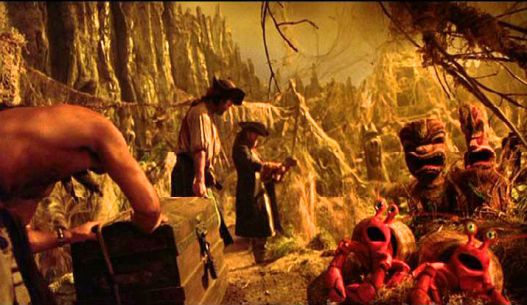
Like the Muppet’s Christmas Carol before it, Muppet Treasure Island tells the story of Jim Hawkins and Long John Silver with the Muppet twist: Captain Smollet is Kermit the Frog; Fozzie Bear is Squire Trelawney Jr.; Mr. Arrow is Sam the Eagle (his character is a total opposite from the book version); the pirates are an assortment of Muppets; Silver has a pet lobster named Polly; Gonzo and Rizzo play Jim’s two friends and, oh yes, Miss Piggy plays BenjaminGunn, marooned on the titular Treasure Island by Captain Flint after Smollet left her waiting at the altar. The film was directed by Brian Henson, the son of Jim Henson, the late creator of the Muppets.

Aside from the original Muppet Movie, this was my favorite film to feature the Muppets growing up. The songs and music are funny and serve to keep the story moving along. The instrumental score was composed by Hans Zimmer (no wonder I love listening to it so much), with additional music by Harry Gregson-Williams. Zimmer certainly did not skimp on musical quality. The opening instrumental melody (before Billy Bones’ narration begins) is just splendid, with a driving horn theme that is reminiscent of sea songs and old films about the high seas.

My favorite songs by far are:

Shiver_My_Timbers

“Shiver My Timbers” : This is the opening song set during the prologue where Billy Bones narrates how Captain Flint brought all of his treasure onto the island, and once it was buried, killed all of the pirates so that only he would know where the treasure was hidden (Billy Bones the first mate, stayed behind on the ship so his life was spared). I just love the men’s chorus as they sing this song, it’s driving, it’s good music.

Propirate

“Professional Pirate” : After kidnapping Jim and revealing himself as a pirate, Long John Silver (and company) sing of the virtues of being a pirate in an attempt to convince young Hawkins into joining them. Tim Curry’s great singing voice is put to good use here and this is a great musical number.

Boom_shakalaka

“Boom Shakalaka” : It turns out that Treasure Island is also the home of a tribe of wild boars (led by Spa’ am, get it?) who have made Miss Piggy their Queen (but of course), and “Boom Shakalaka” is the song they sing to summon her big entrance on an Asian elephant (how an Asian elephant got onto a Caribbean island I shall never know). Boom-Shakalaka is also her name among the tribe.

Cabinfever

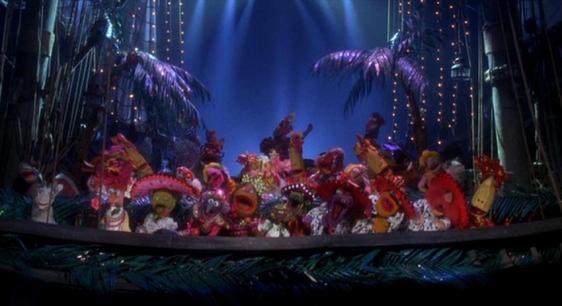
“Cabin Fever” : After the voyage to Treasure Island has begun, the Hispaniola is becalmed at sea for almost a week, and the bored-out-of-their-minds crew goes slightly nuts, performing a song and dance routine about how crazy they have all become. It’s pure Muppet hilarity (notably, Silver, Hawkins, Smollett and Arrow are all absent from this number).

Even if you’ve never seen a Muppet movie before, Muppet Treasure Island is a great place to start. At 20 years old, this movie has lost none of its charm.

You can become a patron of the blog at patreon.com/musicgamer460

See also: Film/TV Reviews

Don’t forget to like Film Music Central on Facebook 🙂

Balto “Heritage of the Wolf”

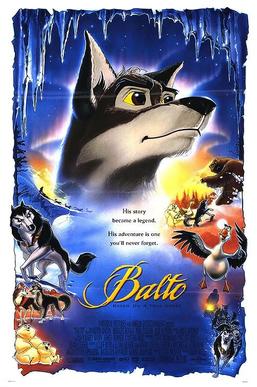
1995 was a very good year for James Horner. In that year alone, he composed the scores for: Jumanji, Braveheart, Casper, Jade, Balto and Apollo 13. “Heritage of the Wolf” from Balto (1995) remains one of my favorite musical moments. Balto recounts the true story of how vital diphtheria medicine had to be relayed from Nenana to Nome, Alaska by rail and then by sled dog, to combat an outbreak of the illness. Being an animated film, the story does take some liberties with the events (for instance, it was multiple teams of sled dogs, not just the one), but the overall event is true (and there IS a statue of Balto in Central Park, I went there myself in 2009).

Balto_movie_poster

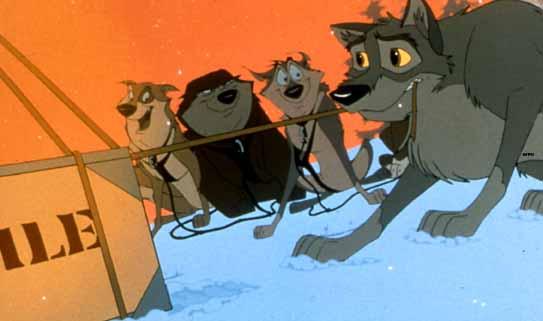
In the film, Balto (voiced by Kevin Bacon) is a Siberian Husky/wolf hybrid, ostracized by the rest of the dogs because he’s a “half-breed” and unwilling to embrace his wolf side. Determined to help, Balto has set out after the missing sled team that was supposed to bring the medicine back to Nome. After a series of events (this film will eventually have a post all to its own), Balto has found the team and the medicine, but has plunged off a cliff (with the medicine box) and his current fate is unknown.

165146_1600x450

As the cue starts, Balto’s friends listen at the door as the other dogs discuss the fact that the children of Nome are likely doomed if the medicine does not arrive soon (there’s no time to send another team). All hope seems to be abandoned as the lights of Nome are one by one turned out. However, Jenna, a female husky (and in love with Balto) has not given up and is dragging out a lantern and creates an artificial aurora by placing the light behind shards of glass (a trick Balto showed her earlier), hoping the light will guide Balto home.

“Heritage of the Wolf” Film Version

“Heritage of the Wolf” Soundtrack Version

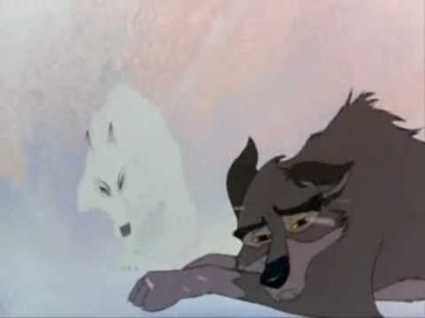
Meanwhile, Balto is shown to be alive, dragging himself out of the snow. This is the main part of the cue, and the part I love the most. Balto is at rock bottom right now, he believes the medicine is gone and that he’s failed. But then, a white wolf appears in front of him (later sequels establish that this is his mother), and invites him to “become a wolf” by howling, but Balto refuses, and the wolf walks away. But then, Balto realizes that the medicine is intact and he remembers the advice his friend gave before he left “A dog, cannot make this journey alone. But maybe…a wolf can.” Inspired, Balto turns in the direction of the wolf and sets one paw down into the print (it matches perfectly). Realizing and finally accepting that he has been a wolf all along, Balto rears up and howls, drawing the white wolf back to him.

hqdefault

For the moments where Balto faces the white wolf, Horner repeats the same melody in strings over and over, it changes registers on almost every iteration. And when it peaks in the high strings (listen to the moment when the wolf turns to walk away), it always makes my eyes tear up. The timbral changes reflect the changing mood of the scene. First: despair (low and almost minor); second, hope (a change to major as the wolf appears); third, denial (a slide back to minor as the wolf walks away, melody high in strings); realization (a mix of major and minor, the ensemble plays together); decision (firm major key, melody in horn).

There’s a few more minutes of music beyond this, but that’s a discussion for another time. For now, I’ll leave you with the triumphant moment where Balto finally finds himself.

Become a patron of the blog at: patreon.com/musicgamer460

Check out the YouTube channel (and consider hitting the subscribe button)

For more Disney and other animated film soundtracks, see here

Don’t forget to like Film Music Central on Facebook 🙂

*All images are the property of the film studio, and are only being used for illustration

Film Music 101: Borrowing

Borrowing is a tricky subject to discuss in the world of film music. Almost all composers do it, but hardly anyone will talk about it (officially that is). And that’s a shame because borrowing is one of the most interesting things to look at in a film score (or group of scores).

Borrowing is what happens when a composer takes a theme from another score (usually one of their previous works, but not always) and places it in the score they’re presently working on. There are many reasons why this might need to happen. A composer might be working on several scores in a single year (i.e. James Horner in 1995) and instead of creating a wholly original score for each film, it might be more convenient to borrow and re-use several themes, particularly if the music fits in the new film.

As a general rule of thumb, if a composer scores at least two films in the same year, it’s likely you can listen to both soundtracks and find at least several identical cues.

Jerry Goldsmith talks about Alien

Star Trek: The Motion Picture and Alien (both from 1979) both provide a good example as well. In this case, the similarity is slight, but unmistakable. First, watch Alien and listen to the music in the opening of the film (after the opening title), when the camera is panning around the empty ship. Then, go to Star Trek: The Motion Picture and fast forward to the scene where Spock steals a spacesuit. It’s the exact same music!

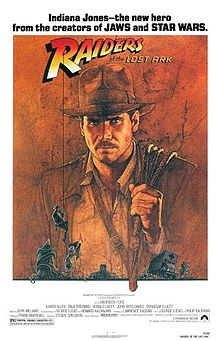
John Williams is equally guilty in my opinion. While not identical, compare Princess Leia’s theme from Star Wars (1977) to Marian’s theme in Raiders of the Lost Ark (1981); they are suspiciously similar.

220px-Raiders

Elmer Bernstein (of The Ten Commandments (1956) and The Magnificent Seven (1960) fame) borrowed a fragment of his Magnificent Seven theme and placed it in the opening for The Great Escape (1963) (it can be heard during the opening credits).

But why doesn’t anyone talk about this if everyone does it? Well…while borrowing is a fact of musical life (classical composers have been doing it for centuries), many (outside the industry) view the practice as tantamount to “cheating.” The feeling is that it’s not right to re-use parts of a film score because it “cheapens” the new product. Of particular irritation are the moments when composers borrow themes that they did not originally create. For this reason (I believe), composers choose not to talk about this process very often (though that’s not to say they never talk about it, I just don’t think they discuss it enough).

First of all, I need to point out that this is NOT plagiarism. Once a theme has been written, it belongs to the studio and NOT the artist. So if a composer needs to borrow a certain theme that another composer created, they are free to use it. Case in point: John William’s theme for Superman: The Movie (1978) being reused in Superman Returns (2006) (the first attempt at rebooting the franchise). Also, in a similar vein, John William’s main theme for Jurassic Park (1993) makes a prominent reappearance in Jurassic World (2015).

Become a patron of the blog at patreon.com/musicgamer460

Don’t forget to like Film Music Central on Facebook 🙂

*all images are the property of their respective film studios, they are only being used for illustration

See also:

Film Music 101: Arranger

Film Music 101: Anempathetic sound

Film Music 101: Empathetic Sound

Film Music 101: Foley

Film Music 101: Montage

Film Music 101: Compilation Score

Film Music 101: Leitmotif

Film Music 101: “Stinger” Chords

Film Music 101: Dubbing

Film Music 101: Diegetic vs. Non-Diegetic Music

Film Music 101: Underscore

Film Music 101: Sidelining

Film Music 101: “Test” Lyrics

Film Music 101: The First Film Score

Film Music 101: Orchestration and cues

A Random Thought on “Star Trek: Nemesis” (2002)

Having the music of Jerry Goldsmith on the brain (yesterday being his birthday), I couldn’t help but think about one of his final film scores: Star Trek: Nemesis (2002). Billed from the outset as the final adventure of the Star Trek: The Next Generation cast (most of whom had been in their roles since 1987), there was a heightened sense of excitement as the release date for this film approached. Everyone wanted to see what would happen, how would the series end, etc. And then the film came out…

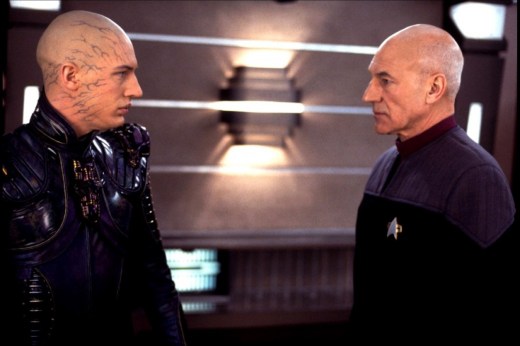
star-trek-nemesis-tom-hardy-patrick-stewart

I was only 14 when I saw Nemesis for the first time, and I remember loving it just as much as Insurrection. But as I grew older, I began to read that Star Trek: Nemesis had been rather poorly received, that it was even considered the worst of the films (a strong statement given that Star Trek V: The Final Frontier usually receives that dubious distinction). But what hurt me the most was the criticisms I heard about Jerry Goldsmith’s score for Nemesis. People were saying that this film was “not his best effort” and that the themes were “overly simplistic.”

With all due respect, anyone who says these things about a work of Jerry Goldsmith does not understand how the man worked. By 2002, Goldsmith had been working in Hollywood for over fifty years, his skills honed into a finely tuned art. He knew, more than anyone else I suspect, what kind of music Star Trek: Nemesis needed. Since this film marked the end of an era (the reboot not being planned yet), Goldsmith created a score that was intentionally somber. Of course the music ends on a hopeful note, but the tone is meant to be sad; the long-running adventure is finally ending, companions are parting ways, all of this should evoke a sense of impending loss.

NEMESIS_SCREENSHOT_3

And as for the themes being overly simplistic…listen to the soundtrack album, or even part of the album, without dialogue or sound effects, and try to tell me that the music is “simplistic.” (I particularly recommend “Ideals” from the soundtrack).

Maybe I’m just biased because I grew up watching Star Trek: The Next Generation…but I hear nothing wrong in the scores Goldsmith created. Just some random thoughts.

*Film poster is the property of Paramount and is only being used for illustration

See also: Film/TV Reviews

Become a Patron of the blog at patreon.com/musicgamer460

Check out the YouTube channel (and consider hitting the subscribe button)

Like Film Music Central on Facebook at www.facebook.com/filmmusiccentral


Dimitri Tiomkin talks Giant (1956)

MPW-44556

Credit to Bill Gold

Dimitri Tiomkin talks Giant (1956)

When I first stumbled across this video, I thought I was imagining things. Dimitri Tiomkin (1894-1979) is one of those composers that you don’t necessarily expect to find with a recorded interview. He worked during the late Golden-Age of Hollywood, coming to California after the stock market crashed in 1929, and getting his big break by scoring Lost Horizon in 1937.

In this video, Tiomkin is interviewed and talks about film music and his score for the James Dean picture Giant (1956). Giant follows a single Texas family over the course of a quarter-century, from the 1920s until the post-World War II era. It was also the final film to star James Dean, who tragically died in a car accident before the film’s release.

This is probably one of the oldest interviews of this type that I will ever find, and it provides an invaluable look into classic Hollywood film music. I firmly believe that in order to appreciate film music  being made now, we must look at what has come before, so on that note, I hope you enjoy listening to Tiomkin discuss his work.

You can become a patron of the blog at patreon.com/musicgamer460

See also:

Film Composer Interviews A-H

Film Composer Interviews K-Z

Don’t forget to like Film Music Central on Facebook 🙂

A Random Thought on “The Force Awakens”

star-wars-force-awakens-official-poster

Property of Disney

So considering Star Wars: The Force Awakens came out almost two months ago, I’m fairly certain we’ve all seen it at least once by now (I’ve seen it twice myself). As I eagerly began to discuss the film with my friends, I began to notice a trend in the comments people were making about John William’s score. To get to the point, a lot of the people I talked to didn’t think it was very good.

I know everyone can have their own opinion, but I feel this is something I should address, so here goes: I don’t believe that Williams’ score for The Force Awakens is any weaker than the earlier Star Wars scores. I do admit that Williams hasn’t created the equivalent of “The Imperial March” from The Empire Strikes Back…but I don’t think the film called for such a musical statement.

Here’s my take on the music (and the film in general): As we are being introduced to a new generation of Star Wars characters, The Force Awakens was very much about “passing the torch.” Rey is now flying the Falcon, Kylo Ren is the new bad guy, etc. In that vein, a good chunk of the characters and situations are echoes of what was found before: The First Order is an echo of the old Empire, the Resistance is the Rebellion, etc, and so on. Because all of these things and characters are “echoes” of the original, it makes sense that the music would not be as intense as before, not yet at any rate. Keep in mind that “The Imperial March” was not introduced until The Empire Strikes Back. I firmly believe that Williams has a few musical surprises up his sleeve (unfortunately we have to wait until the end of 2017 to find out what they are.)

See also: Film/TV Reviews

Check out the YouTube channel (and consider hitting the subscribe button)

Don’t forget to like Film Music Central on Facebook 🙂