Category Archives: Terms

Film Music 101: The Temp Track

Occasionally, while putting a film together, the director might wish for the composer to emulate a specific style of music. To that end, a temp track will be assembled to go with the rough cut of the film, to give the composer an idea of what the director wants.

A temp track is essentially a temporary soundtrack, someone in the technical department has found sound recordings that match the style the director wants and they’ve paired it up with the film. To give a few examples, part of the soundtrack from Ben-Hur (1959) was used as a temp track for Star Wars (1977), excerpts from a Howard Shore piece were used for Gangs of New York (2002) and, most (in)famously, 2001: A Space Odyssey used a temp track assembled from Strauss waltzes, Also Sprach Zarathustra by Richard Strauss and Atmospheres by Ligeti.

2001: A Space Odyssey is so notable because director Stanley Kubrick actually REJECTED the score composer Alex North had created in favor of the temp track! Think about it, many of the scenes in that film are iconic because of the selections of classical music, but we (the audience) were never meant to hear it like that!

Interesting to consider what might have been…
Become a Patron of the blog at patreon.com/musicgamer460
Check out the YouTube channel (and consider hitting the subscribe button)

See also:

Film Music 101: Foley

Film Music 101: Montage

Film Music 101: Mickey Mousing

Film Music 101: Compilation Score

Film Music 101: Leitmotif

Film Music 101: Orchestration and cues

Film Music 101: “Stinger” Chords

Film Music 101: Dubbing

Film Music 101: Diegetic vs. Non-Diegetic Music

Film Music 101: Who owns the music?

Film Music 101: Underscore

Film Music 101: Sidelining

Film Music 101: “Test” Lyrics

Film Music 101: The First Film Score

Film Music 101: Borrowing

Film Music 101: Arranger

Don’t forget to like Film Music Central on Facebook 🙂

Film Music 101: Orchestration and cues

Of all the components that go into creating a film score, few are more important than orchestration.

Orchestration is the process whereby a musical theme is transformed into a full-fledged orchestral score. When a composer is hired to create a score for a specific film (like John Williams for Star Wars) they begin the process by watching rough cuts of the film (or storyboards, depending upon how far along the film is in production) and getting a sense of the story the director wants to be told. From there, the composer will go to the studio, sit at the piano and begin to sketch out various musical themes.

The musical themes of a film score are organized into cues. So if you looked at the score for Star Wars you might see “Cue 1: Main Title, Cue 2: Princess Leia, etc.” A film will tend to have about 20-80 cues.

Once the main draft of the score is finished, it is written in what musicians call a piano score, meaning everything is written (for now) for the piano. So, the Imperial March (which has been discussed before on this blog), would look something like this:

It looks like the theme you know, and on the piano it would even sound like the theme you know from The Empire Strikes Back, but your ears would tell you it’s not quite the same, the depth of the orchestra is still missing. So, the next step is to send the piano score off to an orchestrator (or sometimes a team of orchestrators): musicians/composers who are tasked with fleshing out the piano score into a full sized orchestral piece. Generally the composer will leave notes for when certain instruments should have certain themes, for example there might be a note saying “Horns should have main theme at measure 20” or something of that nature. Some composers (for example the late Jerry Goldsmith or even further back Bernard Herrmann) did the composing AND the orchestration all on their own. But with all the demands on a composer’s time, it is now far more common for the music to be orchestrated by someone else.
Once the process is completed, the final score now resembles something like this:
Quite a difference, isn’t it? It’s amazing how complex the world of film music really is, hope you enjoyed it!
Become a Patron of the blog at patreon.com/musicgamer460
See also:

Film Music 101: “Stinger” Chords

Film Music 101: Dubbing

Film Music 101: Diegetic vs. Non-Diegetic Music

Film Music 101: Underscore

Film Music 101: Sidelining

Film Music 101: “Test” Lyrics

Film Music 101: The First Film Score

Film Music 101: Borrowing

Film Music 101: Arranger

Film Music 101: Anempathetic sound

Film Music 101: Empathetic Sound

Film Music 101: Foley

Film Music 101: Montage

Film Music 101: Compilation Score

Film Music 101: Leitmotif

Check out the YouTube channel (and consider hitting the subscribe button)

Don’t forget to like Film Music Central on Facebook 🙂

Film Music 101: Anempathetic sound

Since yesterday I talked about empathetic sound in movies, today I thought it was only fitting to talk about the opposite: anempathetic sound.

As one might guess, anempathetic sound is when the music or sound effects in a movie stand in direct contrast to what is actually happening on the screen. For example, say you’re watching a horror movie and the upcoming victim is going about their day and say they turn on some music and a bright, chipper song is now playing (this would be diegetic music, see the first Film Music 101 post for the definition). Suddenly, the killer/monster strikes! While the victim dies a horrible, gruesome death, the happy song keeps playing on and on, indifferent to the plight of the victim.

Anempathetic sound does not have to occur solely with music however. In Hitchcock’s immortal classic Psycho, the famous shower scene takes place with the sound of running water playing continuously throughout. Even after the character is dead, the sound of water continues to play, also indifferent to the fact that a young woman was just murdered.

Never saw it coming, poor thing….

Become a Patron of the blog at patreon.com/musicgamer460

Check out the YouTube channel (and consider hitting the subscribe button)

Don’t forget to like Film Music Central on Facebook 🙂

See also:

Film Music 101: Foley

Film Music 101: Montage

Film Music 101: Compilation Score

Film Music 101: Leitmotif

Film Music 101: Orchestration and cues

Film Music 101: “Stinger” Chords

Film Music 101: Dubbing

Film Music 101: Diegetic vs. Non-Diegetic Music

Film Music 101: Underscore

Film Music 101: Sidelining

Film Music 101: “Test” Lyrics

Film Music 101: The First Film Score

Film Music 101: Borrowing

Film Music 101: Arranger

Film Music 101: Empathetic Sound

The term I’d like to discuss today is empathetic sound

Empathetic sound occurs when the music or sound effects in a film create a mood that matches the action taking place on the screen.
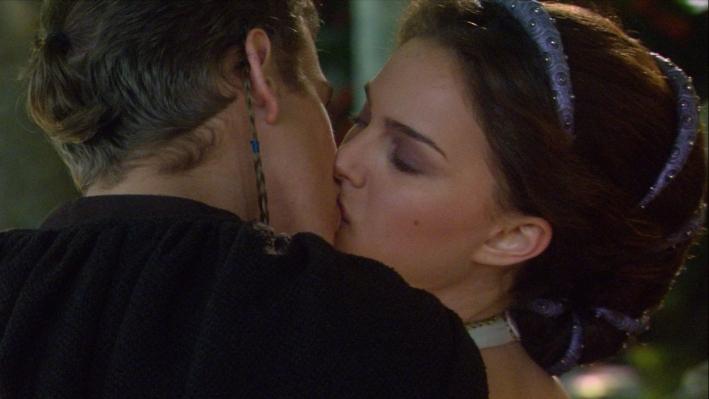
So an easy example of this would be in any love scene ever created for Hollywood. You’ve probably seen the set up at least a hundred times: the guy or the girl has just said something deeply meaningful; they turn and slowly look into each others eyes; and just as they lean in to kiss…the strings in the orchestra swell up and create this deeply romantic moment as they finally kiss and acknowledge their love! (Don’t believe me? Just go to Youtube and look up famous love scenes from movies, I dare you.)

From The Adventures of Robin Hood (1937)…
to Attack of the Clones (2002) and beyond…it’s always the same!
Another good example is action sequences. For the music to be empathetic, the music needs to be fast paced, frenetic, and truthfully rather choppy to match up to the action. The Marvel movies tend to have great examples of empathetic sound in their fight scenes (and also good examples of anempathetic sound, but that’s a post for another day). A really good example comes from Marvel’s The Avengers (2012).

Picture the scene during the battle in New York when all the Avengers are standing back to back in a circle and the camera pans around to look at each of them. The music is clearly projecting “hero mode” because the stars are basically in what i like to call their “heroic pose moment.”

All the heroes in one shot!


Become a Patron of the blog at patreon.com/musicgamer460

Check out the YouTube channel (and consider hitting the subscribe button)

Don’t forget to like Film Music Central on Facebook 🙂

See also:

Film Music 101: “Stinger” Chords

Film Music 101: Dubbing

Film Music 101: Diegetic vs. Non-Diegetic Music

Film Music 101: Underscore

Film Music 101: Sidelining

Film Music 101: “Test” Lyrics

Film Music 101: The First Film Score

Film Music 101: Borrowing

Film Music 101: Arranger

Film Music 101: Anempathetic sound

Film Music 101: Foley

Film Music 101: Montage

Film Music 101: Compilation Score

Film Music 101: Leitmotif

Film Music 101: Orchestration and cues

Film Music 101: Diegetic vs. Non-Diegetic Music

In movies there are two kinds of music: diegetic and non-diegetic.

Diegetic music refers to music that occurs onscreen, in the universe created by the movie. A great example is seen in Mission Impossible: Rogue Nation (which came out in the summer of 2015). Without spoiling too much, Ethan Hunt (Tom Cruise) ends up fighting some bad guys in the staging area of the Vienna Opera House while a performance of Puccini’s last opera Turandot is going on below (see the picture).
Throughout the fight, you can hear the performance going on and this serves as the “background music” to the drama happening onscreen.

Non-Diegetic music, by contrast, refers to music that is being played by an offscreen source, namely an orchestra, and most film music is considered to be non-diegetic. To record the music, the film plays on a screen while the orchestra records and it looks rather similar to the image below.
 
And there you have it, a little look into some of the terminology of film music. Expect another installment next week! Hope you enjoyed it.
Become a Patron of the blog at patreon.com/musicgamer460
Don’t forget to like Film Music Central on Facebook 🙂
See also: