The King and I “Shall We Dance?” (1956)

One of the major plot points of The King and I is the king’s desire to have Siam viewed as a modern country, in large part to prevent foreign powers (like the British) from attempting to seize the country and make it a protectorate/colony. Toward this end, the story builds toward a grand ball where the king receives a British delegation that ultimately goes over very well. After the ball, the King and Anna continue to talk, and the discussion turns toward how women like her view dances like this. This is the start of “Shall We Dance?” and it’s one of my most favorite show tunes. Anna starts the song while the king watches in typical puzzlement.

We’ve just been introduced,
I do not know you well,
But when the music started
Something drew me to your side.
So many men and girls,
Are in each others arms.
It made me think we might be
Similarly occupied.

Shall we dance?
On a bright cloud of music, shall we fly?
Shall we dance?
Shall we then say “Goodnight and mean “Goodbye”?
Or perchance,
When the last little star has left the sky,
Shall we still be together
With are arms around each other
And shall you be my new romance?
On the clear understanding
That this kind of thing can happen,
Shall we dance?
Shall we dance?
Shall we Dance?

During the song, Anna begins to dance, and the king demands she teach him how as well.  As Anna teaches the king to dance, the song reprises, but it gradually becomes much more intimate, especially when the king catches on to the correct way to hold your dancing partner. The final instrumental reprise of the song is a beautiful moment when the king sweeps Anna around the ballroom. It’s a beautiful moment, and one I still dream of experiencing myself at times.

I like this song so much, it is, for me, the perfect expression of how a girl like me feels at a dance. When you’re dancing with a young man you’ve just met, anything seems possible, a quick meeting could turn into a romance just like that, you never know! And it’s also a perfect feel-good moment between Anna and the king. Whatever relationship there is between them peaks during this song and it is just perfectly executed.

What do you think about “Shall We Dance?” Let me know your thoughts in the comments below and have a great day!

See also:

The King and I “The March of the Siamese Children” (1956)

Become a Patron of the blog at patreon.com/musicgamer460
Check out the YouTube channel (and consider hitting the subscribe button)

Film Soundtracks A-W

Don’t forget to like Film Music Central on Facebook 🙂

My Thoughts on: Midsommar (2019)

*some minor spoilers may have gotten out without me realizing it

Where do you start with a film like Midsommar? I’ve been puzzling over that ever since I got home.  See, Midsommar was nothing like what I expected going in.

In fact, I think it was better.

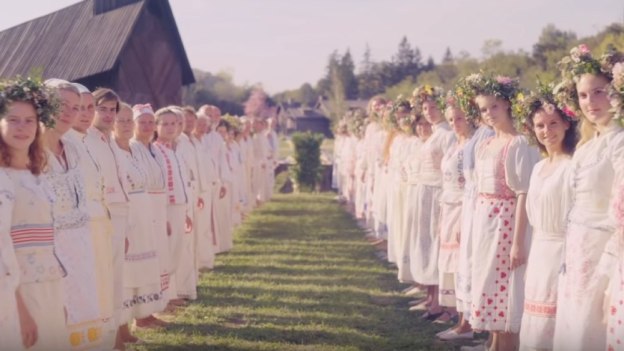
The biggest thing that surprised me about Midsommar was how much it resonated with me. I did not expect to identify so closely with Dani (Florence Pugh), who travels to Sweden with her boyfriend and his friends to see the titular festival. Dani really does remind me of me, especially early in the film when she talks about her fears of driving away her boyfriend Christian (Jack Reynor). I’ve had near identical conversations in my brain at times, and from that point on, no matter what happened, I was firmly in Dani’s corner for the rest of the story.

vsgryxtcd7chs5vdhobo.jpg

And what a story. I admit I was afraid going in because Midsommar was described as belonging to the horror genre, a film genre that most of you know by now I try to avoid whenever possible. But this…this isn’t like any horror film I’ve ever seen before. There’s a few scary moments to be sure, but nothing like what I expected.

As for how to describe the story…honestly I’m still not sure if I can put it into words. On the strength of one viewing, I’d have to say a lot of Midsommar is about Dani finding herself as she’s immersed in this strange and yet oddly wonderful world deep in the Swedish countryside. I say that, despite knowing that there are some parts of this village’s life that deeply disturb me (for spoiler reasons I won’t say what they are). But apart from those, I found myself drawn to how the villagers live together. Unlike some stories, I feel like the villager’s actions are 100% genuine, there’s no evil entity in the shadows, no monsters to be fed (well, not in the conventional sense), just villagers living the life that has always worked for them.

02midsommar-facebookJumbo.jpg

My favorite part of Midsommar is watching how Dani slowly, very slowly, begins to grow (the Maypole scene was superb) and learn to deal with her emotions. She goes through a lot in this story, and it was absolutely cathartic to see her end up in what is arguably the perfect support network (unlike before where she was largely left alone with her emotions).

Overall, Midsommar is one of the best films I’ve seen so far this year. It drew me in, it held me, and it certainly didn’t feel 2 1/2 hours long. If you get the chance, go see Midsommar in theaters while you can, you won’t regret it.

What do you think about Midsommar? Let me know your thoughts in the comments below and have a great day!

See also:

Film Reviews

Become a Patron of the blog at patreon.com/musicgamer460

Check out the YouTube channel (and consider hitting the subscribe button)

Don’t forget to like Film Music Central on Facebook 🙂


My Thoughts on: The Terror (season 1)

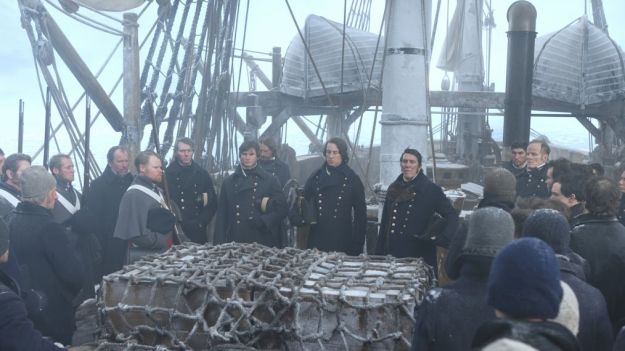
I was initially inclined to avoid The Terror because the premise didn’t seem to be the kind of story I would be interested. However, once I saw the entire season was up on Hulu, I decided to give it a try and I’m glad I did. The Terror, befitting its name, is terrifying.

The Terror is based on a 2007 novel by Dan Simmons and sets out to explain what really happened to Sir John Franklin’s doomed Arctic expedition, which set off in HMS Terror and HMS Erebus to find the legendary Northwest Passage and was never seen or heard from again. The story is largely based on what is believed to have happened to the expedition (the ships got caught in the ice, eventually they started to walk south, and ultimately they all died, and in all likelihood they suffered from lead poisoning).

TERROR_101_am_1121_0316-RT-1014x570.jpg

However, woven in-between the facts is a supernatural narrative that I found surprisingly believable. Deep down, I know monsters like the Tuunbaq aren’t real, and yet…the Arctic, especially as it appeared in the late 1840s, was so remote and so icy that it feels like the sort of place the last of the supernatural monsters would have survived. After all, man had swarmed everywhere else, it makes sense that monsters native to these cold, foreign areas, would still survive long past time time other monsters disappeared.

I really liked the inclusion of the Inuit in the story’s narrative. The Inuit’s accounts of Franklin’s expedition were derided for many years, especially their accounts of cannibalism, because of course there’s no way proper British sailors would revert to savage actions like that (read heavy sarcasm here). In The Terror however, the writers really sought to portray the Inuit properly, contrasting their ability to survive in the snowy wilderness with the complete inability of the British to survive this hostile environment (contrast Silna/Lady Silence with any of the British characters).

TERROR_107-nive-nielsen-lady-silence-1200x707.jpg

One thing that surprised me is how the character of Sir John Franklin (Ciarán Hinds) departs/dies relatively early in the season. For some reason, as the leader of the expedition, I thought he would be around much longer, but the show does not suffer in his absence.

Honestly, I enjoyed first season of The Terror a lot more than I thought I would when I started the first episode. If you haven’t seen it, I highly recommend it, because it will leave you spellbound until the bitter end.

What did you think of the first season of The Terror? Let me know your thoughts in the comments below and have a great day!

See also:

TV Reviews

Become a Patron of the blog at patreon.com/musicgamer460

Check out the YouTube channel (and consider hitting the subscribe button)

Don’t forget to like Film Music Central on Facebook 🙂

My Thoughts on: Three Outlaw Samurai (1964)

As I’ve mentioned once or twice here on the blog, I’m a big fan of Japanese cinema, particularly samurai films. Today, after several previous attempts, I finally got to watch Three Outlaw Samurai, directed by Hideo Gosha, one of the samurai films I have in my collection. The film is, apparently, an origin story for a Japanese television series of the same name.

Three Outlaw Samurai reminds me a little bit of Harakiri, in that part of the story deals with the seeming futility of trying to change the system. See, most of the film revolves around the farmers of a certain area trying to appeal for better living conditions, going so far as to draft a petition for the lord to read when he passes through. However, the magistrate of this area wants it all hushed up and the titular samurai, at various points in the story, end up in the middle of the conflict.

image-w1280.jpg

I mentioned futility because it feels like the story is leading up towards a meeting with the lord, where the petition will be presented and things will get better for the farmers. However, when the moment comes, when the samurai presents the farmers with the petition and urges them to run after the lord, they do nothing. And in frustration, the samurai who brought the petition to them throws it down and walks away. My initial reaction was to say “Well what was the point of that?” So much revolved around getting that petition and it ultimately does nothing. But then I considered that maybe the point they were trying to make is that societal change can only occur if the people really want it. After suffering great losses at the magistrate’s hands, the people are too scared to come forward now. In other words, they’re just not ready to make a lasting push for change. Recognizing this, the samurai move on to other adventures.

If you like samurai films, you will enjoy Three Outlaw Samurai. One detail I really like about it is that the one samurai is played by Tetsuro Tamba, who also played “Tiger” Tanaka in You Only Live Twice. I also enjoy watching how the three very different samurai come together and interact. One is rather cynical, he’s seen and done it all; one loves food and is described as a “country bumpkin samurai”; while the third is a rather spoiled samurai who likes his luxuries. They’re so different, and yet they end up meshing very well by the end of the story.

If you’ve seen Three Outlaw Samurai, what do you think about it? Let me know your thoughts in the comments below and have a great day!

See also:

Film Reviews

Become a Patron of the blog at patreon.com/musicgamer460

Check out the YouTube channel (and consider hitting the subscribe button)

Don’t forget to like Film Music Central on Facebook 🙂

My Thoughts on: Corpse Bride (2005)

I’m fourteen years late to the party, but I’ve finally been able to watch Tim Burton’s Corpse Bride, a film I’d seen clips of but never watched all the way through until recently. I’m kind of surprised I put it off this long, because I’ve been a fan of stop-motion animation for years and this film is one of the best examples made in the last 20 years.

image.jpg

The story revolves around the misadventures of Victor van Dort (Johnny Depp), a shy man who is meant to be marrying Victoria Everglot (Emily Watson) the next day. Except, while practicing his wedding vows in the wood, Victor suddenly finds himself married to an undead bride named Emily (Helena Bonham Carter), who is determined to make the marriage stick despite the fact that she’s, well, dead, and he isn’t!

While a lot of Corpse Bride is hysterically funny, particularly some of the sequences in the Land of the Dead, there is much that is deadly serious and, in keeping with Tim Burton’s style, quite dark. For example, Victoria’s parents are clearly terrible people who have no concept of love, not even for their own child. Victor’s parents aren’t much better, they’re far too focused on moving up in society. And then there’s the story of Emily, the titular Corpse Bride. Her story is so sad: a mysterious man convinced her to grab her family fortune and run away with him to elope. All well and good, except he killed her and ran off with the money! Poor Emily died before she really had a chance to live, and it makes me so sad just thinking about it.

corpse3.jpg

And then there’s Lord Barkis Bittern, quite possibly one of the most despicable villains I’ve ever seen. Just from the way he struts around, you know he’s up to no good, but he’s actually far worse than you think. Once it comes out that he’s the one who killed Emily all those years ago (and he would’ve done the same to Victoria except she doesn’t have any family money), the expectation is that something terrible should happen to him as punishment. And oh boy, does Tim Burton ever deliver. After mistakenly drinking poison while mocking Emily, Bittern ends up dead as a doornail and is dragged off screaming to the Land of the Dead, to a hopefully gruesome fate. I’ve rarely seen a comeuppance more fitting.

Another thing that makes Corpse Bride a lot of fun to watch is the awesome soundtrack provided by Danny Elfman (who has collaborated numerous times with Tim Burton). Elfman also plays Bonejangles, the singing skeleton who tells Victor the story of Emily. And speaking of music, I absolutely love the duet that Victor plays with Emily, not only is it beautiful music, the animation that goes with it is simply flawless.

If you haven’t seen Corpse Bride, it really is worth watching. Even though the film is 14 years old, the stop-motion animation holds up very well, and I’m already looking forward to watching it again.

What do you think of Corpse Bride? Let me know your thoughts in the comments below and have a great day!

See also:

Animated Film Reviews

Become a Patron of the blog at patreon.com/musicgamer460

Check out the YouTube channel (and consider hitting the subscribe button)

Don’t forget to like Film Music Central on Facebook

Oliver & Company “Good Company” (1988)

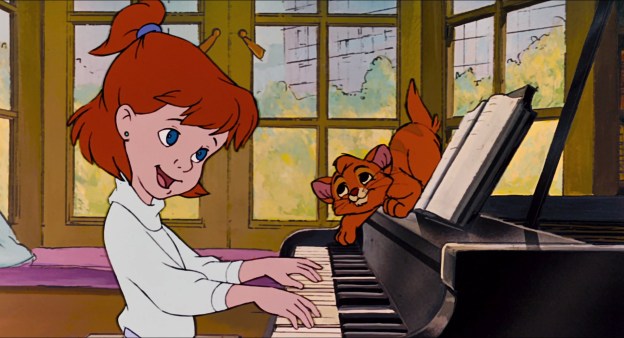
As with the Oliver Twist story that inspired this film, our feline Oliver finds himself taken in by a wealthy family after a robbery attempt goes bad. More specifically, Oliver is happily adopted by Jenny Foxworth, who is feeling very lonely since her parents have just let her know they won’t be home from an international trip in time for her birthday. If Jenny seems familiar, that’s because she was originally supposed to be Penny from The Rescuers (1977) who, if you remember, was adopted at the end of the film. An early concept was for Oliver & Company to pick up and continue Penny’s story, but the idea was eventually abandoned.

In “Good Company,” Jenny takes great delight in spoiling her new pet, getting Oliver a collar, and taking him around the park, much to the increasing jealousy of the family poodle Georgette.

You and me together we’ll be
Forever you’ll see
We two can be good company
You and me
Yes, together we two
Together, that’s you
Forever with me
We’ll always be good company
You and me
Yes, together we’ll be

(Instrumental break)

You and me together we’ll be
Forever, you’ll see
We’ll always be good company
You and me
Just wait and see

“Good Company” is the literal definition of a feel-good Disney moment. It’s simply heartwarming to watch Oliver and Jenny enjoy being with each other as they have fun throughout the day. Of course, being a Disney film, you know this won’t last (not if the jealous Georgette has anything to say about it), but it’s fun to enjoy it for now.

What do you think about “Good Company”? Let me know your thoughts in the comments below and have a great day!

See also:

Oliver & Company “Why Should I Worry?” (1988)

Disney/Dreamworks/Pixar/etc. Soundtracks A-Z

Become a patron of the blog at: patreon.com/musicgamer460

Check out the YouTube channel (and consider hitting the subscribe button)

Don’t forget to like Film Music Central on Facebook

Lady and the Tramp “He’s a Tramp” (1955)

Most Disney films that have a romance sub-plot tend to follow the following pattern (in broad strokes): guy meets girl; they fall initially clash; they fall in love; they have a potentially relationship ending fight; they reaffirm their love and live happily ever after.

“He’s a Tramp” comes not long before Lady and Tramp have the aforementioned fight. Having ended up in the pound after trying to chase chickens with Tramp, Lady ends up finding out a lot more about Tramp. According to one sultry canine (voiced by Peggy Lee), Tramp is a notorious womanizer, and Lady is far from the first to succumb to his charms.

He’s a tramp, ba boom boom
But they love him
Breaks a new heart
Ev’ry day
He’s a tramp
They adore him
And I only hope
He’ll stay that way
He’s a tramp
He’s a scoundrel
He’s a rounder
He’s a cad
He’s a tramp
But I love him
Yes, even I
Have got it pretty bad


You can never tell
When he’ll show up
He gives you
Plenty of trouble
I guess he’s just a
No ‘count pup
But I wish that he
Were double

He’s a tramp
He’s a rover
And there’s nothing
More to say
If he’s a tramp
He’s a good one
And I wish that I
Could travel his way

Finding out that she’s not even Tramp’s first love is naturally heartbreaking for Lady, who is taken home shortly thereafter. This song actually went over my head when I was little. I realize now that Tramp is being described as someone who is a rogue, unfaithful, etc., everything that Lady doesn’t want to hear about someone she’s just fallen in love with. This nearly leads to the end of Lady and Tramp’s relationship, but thankfully Tramp proves himself in the end.

What do you think about “He’s a Tramp”? Let me know your thoughts in the comments below and have a great day!

See also:

Lady and the Tramp “The Siamese Cat Song” (1955)

Lady and the Tramp “Bella Notte” (1955)

Disney/Dreamworks/Pixar/etc. Soundtracks A-Z

Become a patron of the blog at: patreon.com/musicgamer460

Check out the YouTube channel (and consider hitting the subscribe button)

Don’t forget to like Film Music Central on Facebook

Remembering James Horner: The Magnificent Seven (2016)

Unbelievably, tomorrow will mark four years since we lost composer James Horner in a plane crash. I established the Remembering James Horner Blogathon to celebrate his beautiful film scores and in my own small way keep his memory alive.

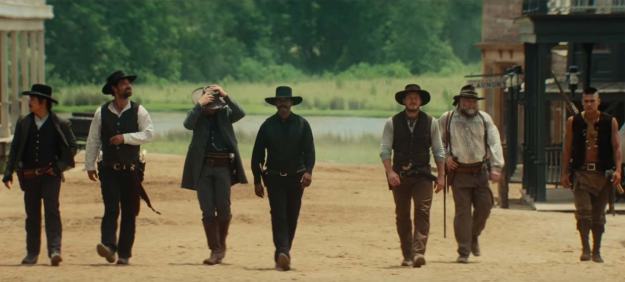
For this year’s blogathon, I decided to look at one of Horner’s final works, his score for the 2016 remake of The Magnificent Seven. There’s actually a pretty sad story behind this score. You’ll note the film was released in 2016, after Horner had passed away. Well, he’d been attached to score the film, but at the time of his death, the impression was the score hadn’t been started. But then, when his things were being cataloged in his old studio, someone discovered the entire store written and saved on his computer. It turns out that Horner had secretly scored the entire film as a surprise for the director, but of course had never gotten the chance to tell him about it. Now technically this score isn’t 100% Horner’s work. Simon Franglen was brought in to adjust and tweak the score after it was discovered, but I believe the vast majority remains Horner’s original work, the last of his scores to ever be released.

The-Magnificent-Seven-2016.jpg

The soundtrack for The Magnificent Seven features Horner working at his peak, as always. Since this is a Western, there’s a noted “twang” in the strings, with I believe a mix of guitar thrown in to emphasize the Old West setting.

I was actually against this film at first (being a huge fan of the original), even after Horner’s passing, until I listened to the soundtrack in preparation for the blogathon and realized that Horner had taken the time to quote Elmer Bernstein’s original theme for The Magnificent Seven (1960). You can hear it particularly in “Volcano Springs” and in other places, but it isn’t quoted in full until the end credits. I love that Horner took the time to quote that iconic melody, since it really doesn’t feel like a “Magnificent Seven” film without it, not to me at any rate. This shows me that Horner, at some level, wanted to connect this film back to the iconic 1960 film, which is something he didn’t have to do, but I’m glad he did.

Horner definitely put his own stamp on this film score. I normally wouldn’t think of hearing drawn out vocals in a Western (“Street Slaughter”), but Horner makes it work as only he can (he was known for using drawn out vocals in his film scores, Troy is a good example).

It makes me sad, even now, that this was James Horner’s last film score, but I’m glad it was found in time to be used for the film. I honestly think this score is one of the best parts of the film, it sounds beautiful.

What do you think of the remake of The Magnificent Seven and its score? Does the fact that this is James Horner’s final film score change your impression of it in anyway? Let me know your thoughts in the comments below and have a great day! Be sure to check out the official recap page of the blogathon to see the other entries as they’re posted.

See also:

Remembering James Horner: Troy (2004)

The magic of James Horner: Casper (1995)

Remembering James Horner: Star Trek II: The Wrath of Khan (1982)

The 4th Annual Remembering James Horner Blogathon has Arrived!

Become a patron of the blog at: patreon.com/musicgamer460

Check out the YouTube channel (and consider hitting the subscribe button)

Don’t forget to like Film Music Central on Facebook


Rock-a-Doodle “Sun Do Shine” (1991)

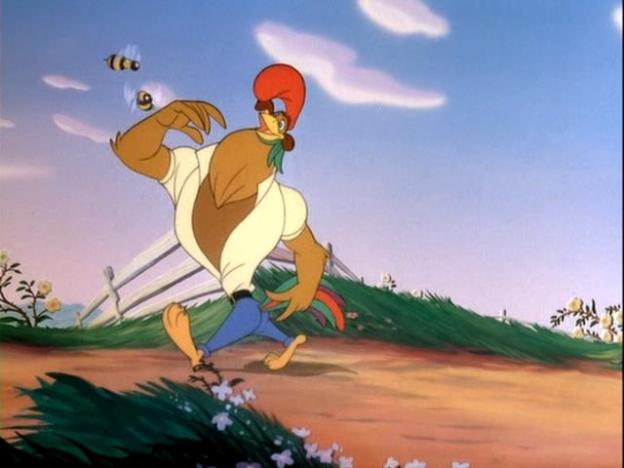
I still have mixed emotions when I think about Rock-a-Doodle. On the one hand, I remember liking this film quite a lot when I was little. On the other hand, I also remember certain scenes in this film traumatizing me. Somewhere in the middle of these recollections are my love of the songs in this film. For all the problems that this film has (and it has quite a few), the songs are an undeniable bright spot. And the brightest spot of all (no pun intended) is the opening song of the film “Sun Do Shine.” Actually, this song is so bright that I almost feels it gives a false impression as to how the rest of the film will go.

You see, “Sun Do Shine” is extremely bright and cheery, introducing us to an idyllic farm overseen by the golden-voiced Chanticleer (Glen Campbell), a rooster who summons the sun each morning and keeps rain away simply with the power of his voice. The entire setting is super idyllic, which really should be our first clue that things will soon go horribly wrong (and boy do they ever!)

Cock-a-doooooooooooo-hoo-hoo-hoo-hoo!

Woah! Yodele-eeeeeeeee-heeeeee!

Cockadoo what a day
The sun is shinin’ brightly
Cockadoo sunny day
Down here on the farm
Cockadoo stay away
You big ol’ wet ol’ rain cloud
Or I’ll cry out loud with this voice of mine


Sun do shine
(Sun do shine, sun do shine, sun do shine)
Sun do shine
(Sun do shine, sun do shine, sun do shine)
Sun do shine
(Sun do shine, sun do shine, sun do shine)

Well, my daddy taught me how to sing
And that’s why this voice means everything

Sun do shine, you better shine
(You better shine)

(repeats several times)

In case it wasn’t obvious, Glen Campbell based Chanticleer’s performance on Elvis Presley (it becomes even more obvious later on when the rooster becomes known as “the King” in the big city).

“Sun Do Shine” serves to introduce us to the major animal characters on the farm, including the ones that will help Edmond bring Chanticleer back. Me personally, I like this song, I especially like the beginning when the camera zooms toward Chanticleer as he sings.

What do you think about “Sun Do Shine”? Let me know your thoughts in the comments below and have a great day!

See also:

Rock-a-Doodle “Never Let Him Crow” (1991)

Rock-a-Doodle “The Owls’ Picnic” (1991)

Disney/Dreamworks/Pixar/etc. Soundtracks A-Z

Become a patron of the blog at: patreon.com/musicgamer460

Check out the YouTube channel (and consider hitting the subscribe button)

Don’t forget to like Film Music Central on Facebook

Lady and the Tramp “Bella Notte” (1955)

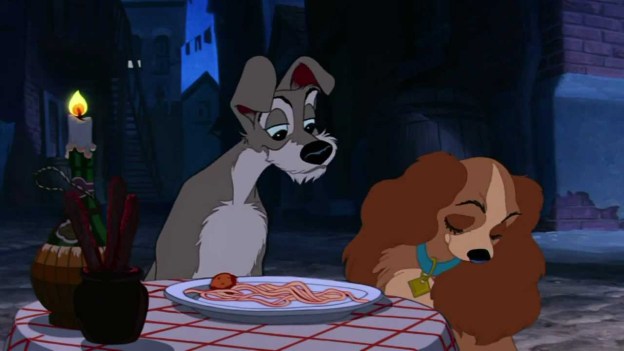
Apart from “The Siamese Cat Song,” I think one of the most memorable scenes from Lady and the Tramp is “Bella Notte” when Lady and Tramp have a romantic spaghetti dinner while the chefs serenade them. Unbelievably, the iconic “spaghetti kiss” almost didn’t happen because Walt Disney was inclined to cut the moment out. Thankfully for us, he changed his mind.

This is the night
It’s a beautiful night
And we call it bella notte

Look at the skies
They have stars in their eyes
On this lovely bella notte

Funnily enough, even though Lady and Tramp are dogs, for years this scene was my idea of the perfect date (up to and including having my own version of a “spaghetti kiss.”) It’s simple, it’s romantic, and who wouldn’t like being serenaded under the stars?

So take the love of your loved one
You’ll need it about this time
To keep from falling like a star
When you make that dizzy climb

For this is the night
And the heavens are right
On this lovely bella notte

After all the bad things that happened to Lady with Aunt Sarah and her devilish cats (who are never seen again as far as I know), this scene provides a nice breather for our canine heroine (which is good because things are about to get bad again in a little bit).

What do you think of “Bella Notte”? Let me know your thoughts in the comments below and have a great day!

See also:

Lady and the Tramp “The Siamese Cat Song” (1955)

Lady and the Tramp “He’s a Tramp” (1955)

Disney/Dreamworks/Pixar/etc. Soundtracks A-Z

Become a patron of the blog at: patreon.com/musicgamer460

Check out the YouTube channel (and consider hitting the subscribe button)

Don’t forget to like Film Music Central on Facebook