Tag Archives: Disney

Peter Pan “Following the Leader” (1953)

*note, this song refers to Native Americans as Indians and “Injuns” which is politically incorrect now, but was considered okay then.

Peterpan-disneyscreencaps-3374.jpg

Now that Wendy and her brothers have safely arrived in Neverland and met the Lost Boys, it’s time to set off on the adventures Peter promised them. While Peter takes Wendy to meet the mermaids, John and Michael and the Lost Boys set off to locate the Indian tribe (with John assuming the role of leader). As the Lost Boys march off, they sing a song about “following the leader.”

Following the leader, the leader, the leader
We’re following the leader
Wherever he may go

Tee dum, tee dee, a teedle ee do tee day
Tee dum, tee dee it’s part of the game we play
Tee dum, tee dee, the words are easy to say
Just a teedle ee dum a teedle ee do tee day

Tee dum, tee dee, a teedle ee do tee dum
We’re one for all, and all of us out for fun
We march in line and follow the other one
With a teedle ee do a teedle ee do tee dum

vlcsnap-204945.png

Following the leader, the leader, the leader
We’re following the leader
Wherever he may go
We’re out to fight the Injuns, the Injuns, the Injuns
We’re out to fight the Injuns
Because he told us so

Tee dum, tee dee a teedle ee do tee day
We march along and these are the words we say:
Tee dum, tee dee, a teedle de dum dee-day
Oh, a teedle ee dum a teedle ee do tee day

Oh, a teedle ee dum a teedle ee-do-tee-day

hqdefault.jpg

The boys traveling through Neverland is like any adventure you ever dreamed of having as a child. They cross rivers, swing down vines and unwittingly pass by several animals (a hippo, monkeys, a rhinoceros and even a large bear). Neverland is full of all kinds of terrain, from the jungle, to the savannah and ending in a forest filled with pine trees.

The song comes to an abrupt end when John discovers a pair of “Indian tracks” in the middle of a clearing. Looking back, it seems obvious that this was a trap for the Lost Boys from the start because how else could their be two footprints side-by-side? If someone is walking normally, one footprint should be in front of the other. But instead they’re next to each other like someone was just standing still. Clearly this is meant to be a trap to delay the Lost Boys until the tribe can close in and capture them (which they do).

I’ve always liked “Following the Leader,” it’s a fun interlude before the drama with Captain Hook and Tiger Lily. What do you think of this song? Let me know your thoughts in the comments below and have a great day!

See also:

My Thoughts on: Peter Pan (1953)

Peter Pan “You Can Fly!” (1953)

Peter Pan “What Made the Red Man red?” (1953)

Peter Pan “The Elegant Captain Hook” (1953)

Disney/Dreamworks/Pixar/etc. Soundtracks A-Z

Become a Patron of the blog at patreon.com/musicgamer460

Check out the YouTube channel (and consider hitting the subscribe button)

Don’t forget to like Film Music Central on Facebook 🙂

The Legend of Sleepy Hollow “Katrina” (1949)

In The Legend of Sleepy Hollow, Ichabod Crane is the awkward yet likable enough school teacher in the village of Sleepy Hollow. He leads a contented life teaching the children while shamelessly flirting with most of the women in town when, one day…he happens to notice the beautiful Katrina van Tassel. Katrina is described as the most beautiful woman in town and she has every unmarried man in Sleepy Hollow wrapped around her finger (without even trying). Naturally Ichabod promptly falls head over heels for the young heiress (though the narrator states he’s equally interested in her fortune as much as her looks), but the short song about Katrina indicates that she’s not as innocent as she looks:


Oo oo oo oo
Ah ah ah ah ah ah ah
Once you have met that little coquette Katrina
You won’t forget Katrina
But nobody yet has ever upset Katrina
That cute coquette Katrina
You can do more with Margaret or Helena
Or Anne or Angelina
But Katrina will kiss and run
To her a romance is fun
With always another one to start
And then when you’ve met that little coquette Katrina
You’ve lost your heart

130.jpg

Katrina is described as “that little coquette,” meaning she loves to flirt. There’s nothing wrong with that, but a later line forebodes that Ichabod’s quest for Katrina’s hand will end badly: “but Katrina will kiss and run/To her a romance is fun/With always another one to start…” I take this line to mean that Katrina has no problem playing with men’s feelings and doesn’t take declarations of love seriously, which can be hurtful if the person expressing those feelings is genuine. And believe me Katrina is taking full advantage of men’s feelings for her, like having them assemble a picnic or carrying all of her packages. It IS funny though to see how quickly Ichabod is smitten by Katrina: one look and he puts a chicken on his head and starts eating his hat!

What do you think of “Katrina”? Let me know your thoughts in the comments below and have a great day!

See also:

The Legend of Sleepy Hollow “Headless Horseman” (1949)

The Adventures of Ichabod and Mr. Toad (1949)

Disney/Dreamworks/Pixar/etc. Soundtracks A-Z

Become a Patron of the blog at patreon.com/musicgamer460

Check out the YouTube channel (and consider hitting the subscribe button)

Don’t forget to like Film Music Central on Facebook 🙂

The Legend of Sleepy Hollow “Headless Horseman” (1949)


In Disney’s The Legend of Sleepy Hollow (sometimes billed as The Adventures of Ichabod), the story follows lanky schoolmaster Ichabod Crane as he attempts to woo the beautiful (and very rich) Katrina van Tassel, to the increasing chagrin of Brom Bones, the town hero. In truth, Katrina is only paying attention to Ichabod to make Brom work harder to secure her affections, but neither man knows this.


Things come to a head when a Halloween party is held at the van Tassel residence. After being upstaged by Ichabod most of the evening, Brom notices that Ichabod is superstitious (he throws salt over his shoulder after spilling some) and decides to use this knowledge to his advantage. He gathers the company around and begins to sing the story of the Headless Horseman, a terrifying ghost reputed to wander Sleepy Hollow.

Just gather ’round
and I’ll elucidate
on what goes on outside when it gets late.
Long about midnight,
The ghosts and banshees,
They get together for their nightly jamboree. 
There’s things with horns and saucer eyes
some with fangs about this size.

Oh When the spooks have a midnight jamboree,
they break it up with fiendish glee.
Ghosts are bad,
but the one that’s cursed
is the Headless Horseman,
he’s the worst.

ich37.jpg

Ichabod pays rapt attention to the song, his terror growing with every verse. “Headless Horseman” is considered one of the darkest songs ever created for a Disney film (right up there with “Hellfire” from The Hunchback of Notre Dame). According to Brom (performed by Bing Crosby), the Headless Horseman rides one night each year to search for a new head. However, if you can cross the bridge at the end of the Hollow, you’ll be safe from the Horseman’s power.

Now, if you doubt this tale is so,
I met that spook just a year ago.
Now, I didn’t stop for a second look,
but made for the bridge that spans the brook.
For once you cross that bridge, my friends,

The ghost is through, his power ends.

So, when you’re riding home tonight,
make for the bridge with all your might.
He’ll be down in the Hollow there.
He needs your head.
Look out! Beware!

Of course we’re meant to find Ichabod’s terror funny because, so far as we know, Brom is making this story up. After all, there’s no such thing as ghosts…or is there? Given how Ichabod’s encounter with the Horseman plays out, it seems possible that Brom might have been telling the truth after all (but that’s a story for another time).

Personally, I don’t remember being scared by this song as a kid (though I don’t think I saw this particular film very often), but I can see how it would be scary for some. Brom can look quite menacing when he chooses and he brings all his talent to bear on scaring Ichabod before he leaves the party. If I heard a song like that, I’d be nervous about riding home in the dark too.

What do you think of the song “Headless Horseman”? Let me know your thoughts in the comments below and have a great day!

See also:

The Legend of Sleepy Hollow “Katrina” (1949)

The Adventures of Ichabod and Mr. Toad (1949)

Disney/Dreamworks/Pixar/etc. Soundtracks A-Z

Become a Patron of the blog at patreon.com/musicgamer460

Check out the YouTube channel (and consider hitting the subscribe button)

Don’t forget to like Film Music Central on Facebook 🙂

Moana “I am Moana” (2016)

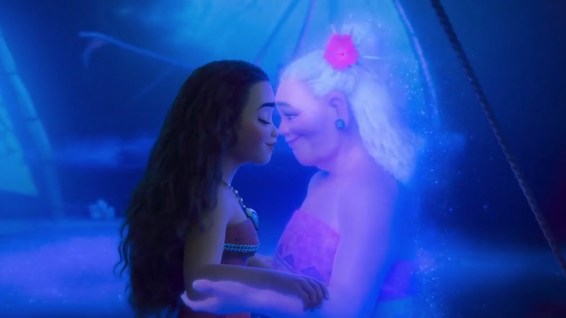
Like many animated Disney films, there comes a point in Moana when it seems like all hope is lost. The first encounter with Te Ka ended in near catastrophe; the boat is badly damaged; worst of all, Maui has abandoned Moana and the quest to restore the Heart of Te Fiti entirely. However unlike earlier films, where the hero/heroine simply steels themselves and keeps on going, Moana has a heart to heart with the spirit of her grandmother and admits that she can’t do this, the ocean needs to choose someone else. And her grandmother agrees! The Heart is given back to the ocean and Moana is told that she can leave for home whenever she wants. This moment is huge because how often do you see a Disney heroine saying “I can’t do it” in this way? Oh granted other Disney heroines have had their down moments, but none of them have so thoroughly set up the idea that the quest won’t be completed like this one has.

maxresdefault.jpg

But of course, since this IS Disney, Moana hesitates to return home, though she doesn’t understand why. Wanting to help her granddaughter, Grandma Tala has a song to help her discover, at long last, who she really is:

I know a girl from an island
She stands apart from the crowd
She loves the sea and her people
She makes her whole family proud

Sometimes, the world seems against you
The journey may leave a scar
But scars can heal and reveal just
Where you are

The people you love will change you
The things you have learned will guide you
And nothing on Earth can silence
The quiet voice still inside you

And when that voice starts to whisper,
“Moana, you’ve come so far”
“Moana, listen”
“Do you know who you are?”


This is it, the pivotal moment for our heroine: Moana must reach down inside herself and discover who she really is.

Who am I?
I am a girl who loves my island
I’m the girl who loves the sea
It calls me

I am the daughter of the village chief
We are descended from voyagers
Who found their way across the world
They call me

Screen-Shot-2016-11-15-at-11.14.45-AM.png

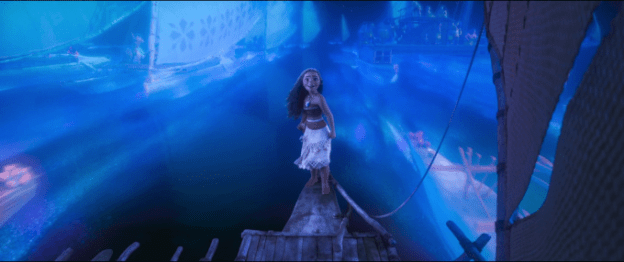
As Moana acknowledges her lineage and her continuing connection to the ocean, suddenly on the horizon she sees dozens of ships approaching. It’s her ancestors who used to sail the oceans, including the one we saw in “We Know the Way.” They acknowledge each other and Moana finally understands that she is a wayfinder like her ancestors before her, this is who she is and always has been!

I’ve delivered us to where we are
I have journeyed farther
I am everything I’ve learned and more
Still it calls me

And the call isn’t out there at all
It’s inside me
It’s like the tide
Always falling and rising
I will carry you here in my heart
You remind me
That come what may
I know the way
I am Moana!

Now completely encouraged, Moana dives after the Heart of Te Fiti, repairs her boat and heads back to the island to face off with Te Ka one more time.

I love “I am Moana” it literally makes me cry every time I listen to it. Discovering your identity is such an important moment and it’s stirring to hear Moana fully embrace who she is. In this song are echoes of two earlier pieces: “Where You Are” and “How Far I’ll Go.” It’s great to hear portions of earlier melodies come together into something new. But please let me know what you think about “I am Moana” in the comments below and have a great day!

Become a Patron of the blog at patreon.com/musicgamer460

Check out the YouTube channel (and consider hitting the subscribe button)

Don’t forget to like Film Music Central on Facebook 🙂

See also:

Moana “Where You Are” (2016)

Moana “How Far I’ll Go” (2016)

Moana “How Far I’ll Go (reprise)” (2016)

Moana “We Know the Way” (2016)

Moana “You’re Welcome” (2016)

Moana “Shiny” (2016)

Moana “Know Who You Are” (2016)

Disney/Dreamworks/Pixar/etc. Soundtracks A-Z

The Aristocats “Scales and Arpeggios” (1970)

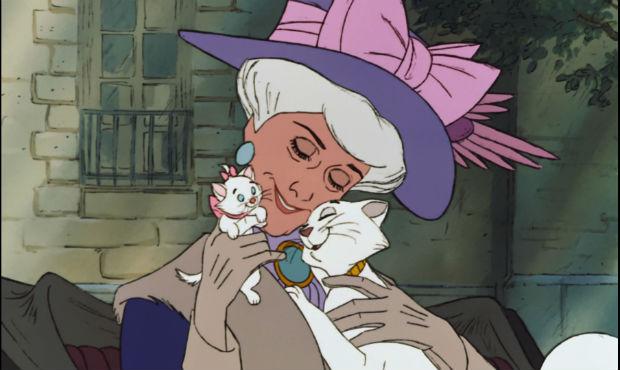
While Edgar is plotting how to get rid of Madame’s cats so he can be the sole inheritor of her fortune, Duchess (Eva Gabor) is making sure her three children; Marie (Liz English), Toulouse (Gary Dubin) and Berlioz (Dean Clark) focus on their lessons. Specifically, Toulouse works on his painting while Marie and Berlioz study the piano and singing (Marie sings, Berlioz plays). Duchess is determined to see her children grow up into refined aristocats and is horrified at the idea of them behaving like common alley-cats (Toulouse idolizes them).

“Scales and Arpeggios” is a simple song that genuinely sounds like something a music student would be asked to perform. It begins with solfege syllables (do re mi fa so la ti) and evolves into a lesson on why students should focus on scales and arpeggios, some of the basic building blocks of music:

Do mi so do do so mi do
Every truly cultured music student knows
You must learn your scales and your arpeggios
Bring the music ringing from your chest
And not your nose
While you sing your scales and your arpeggios

If you’re faithful to your daily practicing
You will find your progress is encouraging
Do mi so mi do me so mi fa la so it goes
When you do your scales and your arpeggios

Do mi so do do so mi do (Repeat)
Though at first it seems as though it doesn’t show
Like a tree ability will bloom and grow

If you’re smart you’ll learn by heart what every artist knows:

You must sing your scales and your arpeggios!!

aristocats-03.JPG

During the song, Toulouse decides to get in on the act (having finished with his painting) and jumps down to the piano much to Berlioz’s annoyance (since his brother’s paws are still covered in paint). While Marie and Duchess sing a duet, the brothers quickly begin a musical ‘argument’ that ends with each insistently pounding out their own melody on the piano.

I freely admit, as a kid I loved to sing along with this particular song (I fancied myself to be just like Marie) and I enjoyed trying to hit the high notes at the very end. It’s a short and sweet song that shows Duchess and her children in their element as cultured felines, and is also the last normal activity they experience before Edgar arrives with their specially prepared supper (which has been thoroughly laced with sleeping pills. I’m still not sure if Edgar planned to overdose them so they never woke up or just wanted them to sleep long enough that they could be dumped in the middle of nowhere).

Do you like “Scales and Arpeggios”? Let me know your thoughts in the comments below and have a great day!

See also:

Disney/Dreamworks/Pixar/etc. Soundtracks A-Z

The Aristocats “The Aristocats” (1970)

Become a Patron of the blog at patreon.com/musicgamer460

Check out the YouTube channel (and consider hitting the subscribe button)

Don’t forget to like Film Music Central on Facebook 🙂

The Aristocats “The Aristocats” (1970)

I often feel like the animated Disney films made during the 1970s get overlooked far too often as they’re made after the passing of Walt Disney and before the Disney Renaissance began. However, there were several animated gems made during this era and The Aristocats is one of them (it also has the distinction of being the last film project approved by Disney himself before his death in 1966). Set in Paris in the year 1910, The Aristocats follows a family of high-class felines that live with Madame, a retired opera singer. When Edgar, the family butler, learns that the cats will inherit the estate before he does, the disgruntled servant kidnaps the cats and abandons them in the French countryside, leading the cats into an adventure to get back to Paris and their home.

The titular song was performed by Maurice Chevalier, a legendary French singer and performer, who was actually talked out of retirement to do the song (his final contribution to the film industry as he died in 1972). The song describes all the advantages “aristocats” possess (‘aristocat’ being an obvious play on aristocrat) over ‘common’ cats and ends with the cats out with Madame on a carriage ride.

Which pet’s address
Is the finest in Paris?
Which pets possess
The longest pedigree?
Which pets get
To sleep on velvet mats?
Naturellement! The aristocats!

Which pets are blessed
With the fairest forms and faces?
Which pets know best
All the gentle social graces?
Which pets live
On cream and loving fats?
Naturellement! The aristocats!

The song plays out while we’re treated to the opening credits, as well as animations of the cats that will appear later in the film.

aristocats-disneyscreencaps.jpg

They show aristocratic bearing
When they’re seen
Upon an airing
And aristocratic flair
In what they do
And what they say!
Aristocats are never found
In alleyways or hanging around
The garbage cans where
Common kitties play, oh no!
Which pets are known
To never show their claws?
Which pets are prone
To hardly any flaws?
To which pets
Do the others tip their hats?
Naturellement! The aristocats!

I’ve always found it interesting that the film points out the year as 1910, as there aren’t many Disney films that specify a year. Perhaps I’m being morbid, but every time I see that date, I always remember that it was only a few years before the start of World War I, when the glitz and glamour of the 19th century disappeared. The year is also a reminder that this is a time of great change (even before the war began). For instance, while Madame is riding in a carriage, her lawyer drives up in a car (albeit a primitive one).

Also, fun piece of trivia: Hermione Baddeley, the voice of Madame, is also the voice of Auntie Shrew in The Secret of NIMH (1982) (another Disney credit includes Ellen in Mary Poppins (1964)).

I like “The Aristocats,” it’s a fun little song that provides a good opening to the film and I hope you enjoy listening to it. Let me know what you think of this song in the comments below and have a great day!

See also:

Disney/Dreamworks/Pixar/etc. Soundtracks A-Z

Become a Patron of the blog at patreon.com/musicgamer460

Check out the YouTube channel (and consider hitting the subscribe button)

Don’t forget to like Film Music Central on Facebook 🙂

The Hunchback of Notre Dame “Topsy Turvy” (1996)

I have mixed feelings about “Topsy Turvy.” While it’s a funny song to be sure, I can’t really get into it because I know what’s going to happen to Quasimodo at the end. Nevertheless, I should still look it over.

maxresdefault.jpg

The song takes place during the Feast of Fools, based on a real-life yearly celebration held once a year during the Middle Ages (particularly in France). The Feast of Fools was held on around the Feast of the Circumcision (January 1st) and in fact the song lyrics even mention that the day of the feast is January 6th (“On the 6th of January”). Quasimodo has wanted to attend this event for years but of course Frollo, being the cruel man he is, won’t let him as he’s raised his ward to believe he’s nothing more than a monster who doesn’t belong among people (and letting him attend the celebration might reveal the lie). Now 20 years old, Quasimodo lets his gargoyle friends talk him into sneaking out to attend anyway just as the celebration is getting underway.

The festival starts with a seemingly solemn procession inviting all to attend:

Come one, come all
Leave your looms and milking stools, 
Coop the hens and pen the mules
Come one, come all
Close the churches and the schools 
It’s the day for breaking rules
Come and join the Feast of…FOOLS!!!

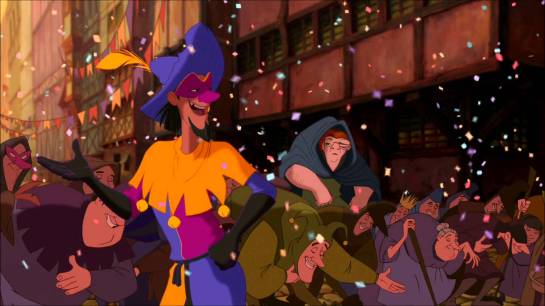
With the arrival of Clopin (the same Clopin we meet at the start of the film), the song goes from semi-serious to very silly and stays there for the rest of the song. Having never been around so many people in all his life, Quasimodo is immediately overwhelmed and unfortunately his discomfort draws the mischievous attention of Clopin (I don’t think there’s anything malicious in his behavior, he just wants to have some fun at Quasimodo’s expense).

maxresdefault (1).jpg

Once a year, we throw a party here in town
Once a year, we turn all Paris upside down
Every man’s a king and every king’s a clown 
Once again it’s Topsy Turvy Day

It’s the day the devil in us gets released (Good is bad and best is worst and west is east)
It’s the day we mock the prig and shock the priest (On the day we think the most of those with least)
Everything is topsy turvy
At the Feast of Fools

Topsy Turvy; Everything is upsy-daisy

Topsy Turvy; Everyone is acting crazy

Dross is gold and weeds are a bouquet
That’s the way on Topsy Turvy Day!

It’s while trying to get away from Clopin’s unwanted attention that Quasimodo accidentally stumbles into Esmeralda’s tent while she’s getting ready for her dance. Expecting to be reviled, Quasimodo is stunned when the beautiful gypsy simply shoos him away with a “No harm done” and a smile (and also complimenting his “mask” as she doesn’t realize that’s how he really looks).

Just before Esmeralda begins her dance, Frollo arrives in the most ominous looking carriage I’ve ever seen. Up until this point, you can almost enjoy the song but once he arrives that’s when you remember, oh yea, Quasimodo isn’t supposed to be out here, if Frollo catches him there’s going to be big trouble! But for now, Quasimodo is safely hidden and Clopin draws attention to the stage:

Come one, come all
Hurry, hurry; here’s your chance
See the mystery and romance 
Come one, come all
See the finest girl in France 
Make an entrance to entrance
Dance la Esmeralda…
Dance!

I have always loved this part of the scene when Esmeralda appears to dance in her beautiful red dress. Everyone is entranced with her, especially Quasimodo, Phoebus (who answers with an enthusiastic “Yes sir!” when Frollo mutters “Look at that disgusting display) and, though he hides it well, Frollo himself (ewwwww).

Technically the song continues after Esmeralda’s dance into the search for the new King of Fools but I’ve always regarded that scene as separate from the rest of the song (and I’ve already covered what happens in Disturbing Disney #20).

In conclusion, “Topsy Turvy” is a fun little song that serves to relax the audience before things get really twisted with the King of Fools incident. What do you think about this song? Let me know your thoughts in the comments below and have a great day!

See also:

Disney/Dreamworks/Pixar/etc. Soundtracks A-Z

The Hunchback of Notre Dame “The Bells of Notre Dame” (1996)

The Hunchback of Notre Dame “Out There” (1996)

The Hunchback of Notre Dame “God Help the Outcasts” (1996)

The Hunchback of Notre Dame “Heaven’s Light/Hellfire” (1996)

The Hunchback of Notre Dame “The Court of Miracles” (1996)

Become a Patron of the blog at patreon.com/musicgamer460

Check out the YouTube channel (and consider hitting the subscribe button)

Don’t forget to like Film Music Central on Facebook 🙂

The Hunchback of Notre Dame “Heaven’s Light/Hellfire” (1996)

d-hevaen-2

Beginning with Pocahontas in 1995, Disney films began to slowly put twists on the traditional “happily ever after” ending. In the case of The Hunchback of Notre Dame, while Quasimodo clearly has feelings for Esmeralda, she ultimately falls in love with Phoebus, the one-time captain of Frollo’s guards. Before that happens though, the idea that Quasimodo and Esmeralda might end up together is teased in “Heaven’s Light” which takes place after the bell ringer helps the beautiful gypsy escape the cathedral.

Under Frollo’s “instruction,” Quasimodo has grown up believing that he will never find love, that no one would ever want him. But Esmeralda has proven that to be not true, so for the first time in his life, he’s dreaming of love:

So many times out there
I’ve watched a happy pair
Of lovers walking in the night
They had a kind of glow around them
It almost looked like Heaven’s light

I knew I’d never know
That warm and loving glow
Though I might wish with all my might
No face as hideous as my face
Was ever meant for Heaven’s light

But suddenly an angel has smiled at me
And kissed my cheek without a trace of fright

I dare to dream that she
Might even care for me
And as I ring these bells tonight
My cold, dark tower seems so bright
I swear it must be Heaven’s light

Thus encouraged, Quasimodo returns to ringing the bells for the evening service and the scene transitions to Frollo in his chambers at the Palace of Justice. Accompanied by the strains of the Confiteor, a penitential prayer, Frollo addresses himself to the Virgin Mary in a prayer of his own. As pure as Quasimodo’s song of love was only moments ago, Frollo’s is the complete opposite. This is the prayer of a hypocrite, one of sees the faults in everyone but not his own.

d-hell-5.png

The Hunchback of Notre Dame “Hellfire” (1996)

Confiteor Deo Omnipotenti (I confess to God almighty)
Beatae Mariae semper Virgini (To blessed Mary ever Virgin)
Beato Michaeli archangelo (To the blessed archangel Michael)
Sanctis apostolis omnibus sanctis (To the holy apostles, to all the saints)

Beata Maria, You know I am a righteous man
Of my virtue I am justly proud

Beata Maria
You know I’m so much purer than
The common, vulgar, weak, licentious crowd

Then tell me, Maria
Why I see her dancing there
Why her smold’ring eyes still scorch my soul

I feel her, I see her
The sun caught in her raven hair
Is blazing in me out of all control

Like fire, Hellfire, This fire in my skin
This burning, Desire, Is turning me to sin

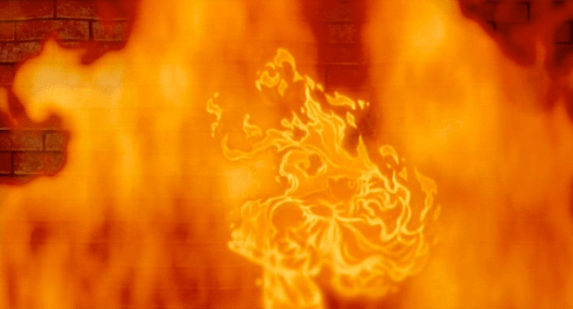
It took me so many years to understand everything that was happening in this sequence (I can tell you as a child the subtext went completely over my head). Basically, in the midst of his prayers, Frollo can’t get over the fact that he’s physically attracted to Esmeralda (a very beautiful woman). In his mind, he’s above this kind of desire (or at least he should be) and it’s driving him insane that he feels this way. Incidentally, the animation of Esmeralda dancing in the flames nearly didn’t make it into the film, as it initially appeared that she was nude (that’s why you can clearly see the outline of her dress in the fire).

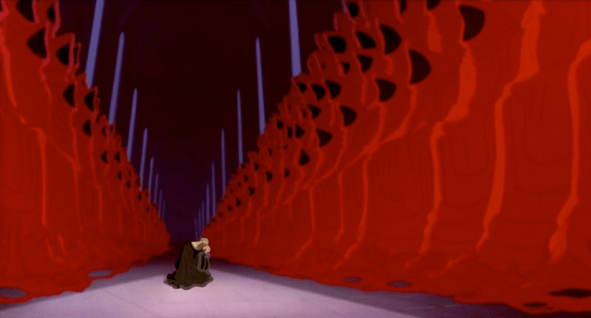
And having acknowledged his descent into sin, Frollo is seemingly confronted by a hall full of heavenly judges in red robes. Pleading these desires aren’t his fault, the judges answer back Mea Culpa (It IS my fault). Again, we have to remember Frollo’s one weakness: above all else he fears being condemned to Hell and in his mind the blame lies squarely on Esmeralda.

Protect me, Maria
Don’t let the siren cast her spell
Don’t let her fire sear my flesh and bone
Destroy Esmeralda
And let her taste the fires of Hell!
Or else let her be mine and mine alone

maxresdefault

This is one of the more twisted motivations any Disney villain has ever had. If Esmeralda can’t (or won’t) be his, he’ll destroy her. This is a messed up situation on any level and it gets even worse when a guard reports that Esmeralda has escaped the cathedral which is actually a really big deal. This means that Frollo likely sent the guard to fetch the gypsy and bring her back to his chambers to do who-knows-what to her!! Is it any wonder this is regarded as the darkest film of the Disney Renaissance?

“Hellfire” has gone down in history as the ultimate Disney Villain song and I don’t see any reason to disagree. But what do you think? Let me know your thoughts on “Heaven’s Light” and “Hellfire” in the comments below and have a great day!

See also:

Disney/Dreamworks/Pixar/etc. Soundtracks A-Z

The Hunchback of Notre Dame “The Bells of Notre Dame” (1996)

The Hunchback of Notre Dame “Out There” (1996)

The Hunchback of Notre Dame “Topsy Turvy” (1996)

The Hunchback of Notre Dame “God Help the Outcasts” (1996)

The Hunchback of Notre Dame “The Court of Miracles” (1996)

Become a Patron of the blog at patreon.com/musicgamer460

Check out the YouTube channel (and consider hitting the subscribe button)

Don’t forget to like Film Music Central on Facebook 🙂
The Hunchback of Notre Dame “The Bells of Notre Dame” (1996)

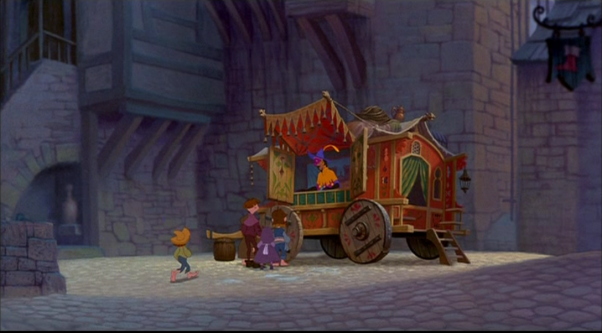
As far as openings of a Disney movie go, The Hunchback of Notre Dame is pretty dark from the beginning, though you initially don’t think so. The song begins with Clopin gathering children to his stall to tell them the story of the mysterious bell ringer who lives in the towers of the cathedral.


Morning in Paris, the city awakes
To the bells of Notre Dame
The fisherman fishes, the bakerman bakes
To the bells of Notre Dame
To the big bells as loud as the thunder
To the little bells soft as a psalm
And some say the soul of the city’s
The toll of the bells
The bells of Notre Dame

You know things are going to be interesting though, when Clopin begins his story with “It’s a tale, a tale of a man…and a monster…” The story then flashes back twenty years to a group of gypsies who are sneaking into Paris.

d-q-mom-3.png

Dark was the night when our tale was begun
On the docks near Notre Dame

Four frightened gypsies slid silently under
The docks near Notre Dame

But a trap had been laid for the gypsies
And they gazed up in fear and alarm
At a figure whose clutches
Were iron as much as the bells, the bells of Notre Dame

Judge Claude Frollo longed to purge the world of vice and sin,

And he saw corruption everywhere, except within

The verses here are interspersed with excerpts from the Latin mass, Kyrie Eleison (Lord have mercy) and Dies Irae (Day of Wrath). This is one detail that I’ve always loved about the score for The Hunchback of Notre Dame, the connection to the mass, which back in the time this film was set in was a big deal in people’s daily lives.

The story is already dark enough: the gypsies are captured and arrested for no other crime than being gypsies, but then it gets worse. A soldier notices the bundle the woman is carrying and Frollo assumes it’s stolen goods when a quick check would have revealed it’s just a baby. Instead, Frollo (the best example of a hypocrite you’ll find in any Disney film) callously demands the bundle be taken away which prompts the woman to run for her life with her baby with the strains of Dies Irae in the background. It’s a pulse-pounding sequence as the woman dodges and leaps through the snowy streets of Paris with Frollo close behind on his black horse (he’s the villain so naturally it’s a black horse).

This chase leads to one of the most shocking moments in any Disney film (so shocking that I’m still contemplating adding it to the Disturbing Disney series). First, at the steps of the cathedral, Frollo seizes the baby, causing the mother to fall back and hit her head on the stone steps, killing her instantly. Then, when Frollo realizes he’s holding a baby, one he deems a ‘monster’ because of its deformities, he spots a well in the square and rides over to drop the baby in!! Let me repeat that: the villain of the film was clearly attempting infanticide (in a Disney film) and was only stopped because the archdeacon intervened!

I love the interchange between the archdeacon (David Ogden Stiers) and Frollo. The latter obviously feels no guilt for what has happened and his callousness infuriates the priest.

Frollo_The_Bells_of_Notre_Dame.png

Archdeacon: (singing) See there the innocent blood you have spilt
On the steps of Notre Dame
Frollo: I am guiltless. She ran, I pursued.
Archdeacon: Now you would add this child’s blood to your guilt
On the steps of Notre Dame?
Frollo:  My conscience is clear
Archdeacon: You can lie to yourself and your minions
You can claim that you haven’t a qualm
But you never can run from nor hide what you’ve done from the eyes
The very eyes of Notre Dame

And for one time in his life of power and control, 

Frollo felt a twinge of fear for his immortal soul

There’s actually a double meaning in the archdeacon’s last line. “The eyes of Notre Dame” doesn’t just refer to the eyes of the sculptures covering the cathedral. It can also refer to Our Lady, meaning the Virgin Mary (who is greatly revered in Roman Catholicism). This last portion of the song sets up Frollo’s one weakness, if you can call it that. Above all else, he fears going to Hell when he dies. That’s why he accepts the punishment of raising Quasimodo for the rest of his days (though I’m sure keeping him locked up in the bell tower was not what the archdeacon had in mind).

“The Bells of Notre Dame” provides a beautifully crafted introduction to the film, one of the best in the Disney Renaissance. What do you think about it? Let me know your thoughts in the comments below and have a great day!

See also:

Disney/Dreamworks/Pixar/etc. Soundtracks A-Z

The Hunchback of Notre Dame “Out There” (1996)

The Hunchback of Notre Dame “Topsy Turvy” (1996)

The Hunchback of Notre Dame “God Help the Outcasts” (1996)

The Hunchback of Notre Dame “Heaven’s Light/Hellfire” (1996)

The Hunchback of Notre Dame “The Court of Miracles” (1996)

Become a Patron of the blog at patreon.com/musicgamer460

Check out the YouTube channel (and consider hitting the subscribe button)

Don’t forget to like Film Music Central on Facebook 🙂
The Emperor’s New Groove “Perfect World” (2000)

Emperor Kuzco from The Emperor’s New Groove might just be the most spoiled rotten Disney character ever created. This is exemplified by the opening song of the film in which we get to see a day in the life of the adolescent emperor.

There are despots and dictators
Political manipulators
There are blue bloods with the intellects of fleas
There are kings and petty tyrants
Who are so lacking in refinements
They’d be better suited swinging from the trees

He was born and raised to rule
No one has ever been this cool
In a thousand years of aristocracy
An enigma and a mystery
In Meso American History
The quintessence of perfection that is he

who-are-so-lacking-in-refinements.jpg

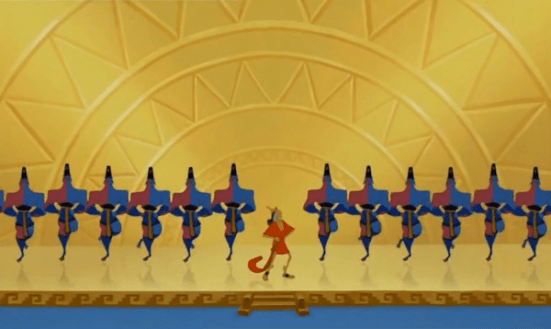
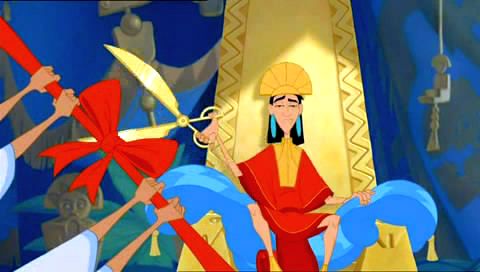
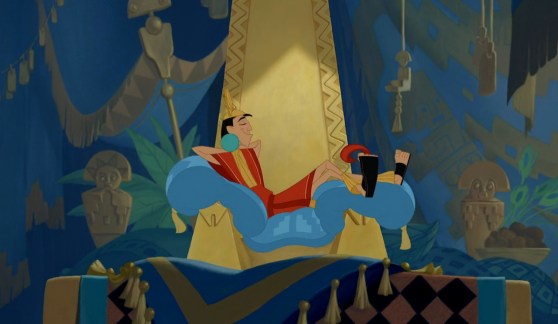
Kuzco literally has everything you can imagine done for him. Examples include: being carried in a throne up the stairs; having an entirely new hallway created on the spot when he wants to go a different way; a full course banquet delivered (and fed to him by servants) at the snap of his fingers; and of course, he has his own personal singer (Tom Jones) to perform his “theme song” which is what “Perfect World” is meant to be. The gist is simple: everything revolves around Kuzco and the emperor loves it. And really, who wouldn’t love being spoiled and pampered around the clock? I can’t think of another Disney character who comes close to being this indulged (if you think of an example please let me know in the comments below).

He’s the sovereign lord of the nation
He’s the hippest dude in creation
He’s a hep cat in the emperor’s new clothes
Years of such selective breeding
Generations have been leading
To this miracle of life that we all know

What’s his name?
Kuzco, Kuzco (That’s his name)
Kuzco (He’s the king of the world)
Kuzco, Kuzco (Is he hip or what?)
Kuzco (Ya)

1_Fotor-1.jpg

Even before the song is over, however, there are signs that having his every whim indulged from infancy has created a…less than healthy mindset shall we say? In one of my favorite comedic moments in any Disney film, the song is literally brought to a screeching halt when Kuzco bumps into an elderly man (who admittedly is trying to get out of the way when he sees the emperor coming). Instead of apologizing or just carrying on, Kuzco pouts and whines “You threw off my groove!” This prompts a guard to come by, grab the poor guy by the scruff of his neck and toss him out the window, before Kuzco glares at the singer and quips “You were saying?” The song resumes immediately and it becomes clear that all of this is happening, not because they want to do this, but because everyone wants to avoid being thrown out the window when the emperor gets upset!

He’s the sovereign lord of the nation
He’s the hippest cat in creation
He’s the alpha, the omega, a to z
And this perfect world will spin
Around his every little whim
‘Cos this perfect world begins and ends with (Kuzco: Me)

What’s his name?
Kuzco, Kuzco, Kuzco
Kuzco (That’s his name)
Kuzco, Kuzco (Is he hip or what)
kuzco (Don’t you know he’s the king of the world?)
Kuzco-(oh ya)-oooo (ow!)

Of course, Kuzco’s behavior during the song doesn’t come close to preparing the audience for the lengths he’s willing to go to get what he wants (like demolishing an entire village for a swimming pool with less than a day’s notice), but it still does an admirable job setting up the character.

One note I like to share about this song: the first verse makes reference to “Mesoamerican history” which sounds great except…the term refers to Mexico and Central America. The Emperor’s New Groove takes place in Peru which is firmly in South America. In the grand scheme of things it’s a minor nitpick, but I like to point it out when I get the chance.

What do you think of “Perfect World”? Let me know your thoughts in the comments below and have a great day!

See also:

Disney/Dreamworks/Pixar/etc. Soundtracks A-Z

Become a Patron of the blog at patreon.com/musicgamer460

Check out the YouTube channel (and consider hitting the subscribe button)

Don’t forget to like Film Music Central on Facebook 🙂