Tag Archives: John Williams

Film Music 101: Borrowing

Borrowing is a tricky subject to discuss in the world of film music. Almost all composers do it, but hardly anyone will talk about it (officially that is). And that’s a shame because borrowing is one of the most interesting things to look at in a film score (or group of scores).

Borrowing is what happens when a composer takes a theme from another score (usually one of their previous works, but not always) and places it in the score they’re presently working on. There are many reasons why this might need to happen. A composer might be working on several scores in a single year (i.e. James Horner in 1995) and instead of creating a wholly original score for each film, it might be more convenient to borrow and re-use several themes, particularly if the music fits in the new film.

As a general rule of thumb, if a composer scores at least two films in the same year, it’s likely you can listen to both soundtracks and find at least several identical cues.

Jerry Goldsmith talks about Alien

Star Trek: The Motion Picture and Alien (both from 1979) both provide a good example as well. In this case, the similarity is slight, but unmistakable. First, watch Alien and listen to the music in the opening of the film (after the opening title), when the camera is panning around the empty ship. Then, go to Star Trek: The Motion Picture and fast forward to the scene where Spock steals a spacesuit. It’s the exact same music!

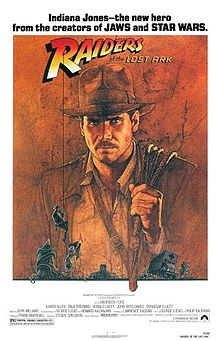
John Williams is equally guilty in my opinion. While not identical, compare Princess Leia’s theme from Star Wars (1977) to Marian’s theme in Raiders of the Lost Ark (1981); they are suspiciously similar.
220px-Raiders

Elmer Bernstein (of The Ten Commandments (1956) and The Magnificent Seven (1960) fame) borrowed a fragment of his Magnificent Seven theme and placed it in the opening for The Great Escape (1963) (it can be heard during the opening credits).

But why doesn’t anyone talk about this if everyone does it? Well…while borrowing is a fact of musical life (classical composers have been doing it for centuries), many (outside the industry) view the practice as tantamount to “cheating.” The feeling is that it’s not right to re-use parts of a film score because it “cheapens” the new product. Of particular irritation are the moments when composers borrow themes that they did not originally create. For this reason (I believe), composers choose not to talk about this process very often (though that’s not to say they never talk about it, I just don’t think they discuss it enough).

First of all, I need to point out that this is NOT plagiarism. Once a theme has been written, it belongs to the studio and NOT the artist. So if a composer needs to borrow a certain theme that another composer created, they are free to use it. Case in point: John William’s theme for Superman: The Movie (1978) being reused in Superman Returns (2006) (the first attempt at rebooting the franchise). Also, in a similar vein, John William’s main theme for Jurassic Park (1993) makes a prominent reappearance in Jurassic World (2015).

Become a patron of the blog at patreon.com/musicgamer460

Don’t forget to like Film Music Central on Facebook 🙂

*all images are the property of their respective film studios, they are only being used for illustration

See also:

Film Music 101: Arranger

Film Music 101: Anempathetic sound

Film Music 101: Empathetic Sound

Film Music 101: Foley

Film Music 101: Montage

Film Music 101: Compilation Score

Film Music 101: Leitmotif

Film Music 101: “Stinger” Chords

Film Music 101: Dubbing

Film Music 101: Diegetic vs. Non-Diegetic Music

Film Music 101: Underscore

Film Music 101: Sidelining

Film Music 101: “Test” Lyrics

Film Music 101: The First Film Score

Film Music 101: Orchestration and cues

A Random Thought on “The Force Awakens”

star-wars-force-awakens-official-poster

Property of Disney

So considering Star Wars: The Force Awakens came out almost two months ago, I’m fairly certain we’ve all seen it at least once by now (I’ve seen it twice myself). As I eagerly began to discuss the film with my friends, I began to notice a trend in the comments people were making about John William’s score. To get to the point, a lot of the people I talked to didn’t think it was very good.

I know everyone can have their own opinion, but I feel this is something I should address, so here goes: I don’t believe that Williams’ score for The Force Awakens is any weaker than the earlier Star Wars scores. I do admit that Williams hasn’t created the equivalent of “The Imperial March” from The Empire Strikes Back…but I don’t think the film called for such a musical statement.

Here’s my take on the music (and the film in general): As we are being introduced to a new generation of Star Wars characters, The Force Awakens was very much about “passing the torch.” Rey is now flying the Falcon, Kylo Ren is the new bad guy, etc. In that vein, a good chunk of the characters and situations are echoes of what was found before: The First Order is an echo of the old Empire, the Resistance is the Rebellion, etc, and so on. Because all of these things and characters are “echoes” of the original, it makes sense that the music would not be as intense as before, not yet at any rate. Keep in mind that “The Imperial March” was not introduced until The Empire Strikes Back. I firmly believe that Williams has a few musical surprises up his sleeve (unfortunately we have to wait until the end of 2017 to find out what they are.)

See also: Film/TV Reviews

Check out the YouTube channel (and consider hitting the subscribe button)

Don’t forget to like Film Music Central on Facebook 🙂

Before John Williams, there was…Korngold!

Korngold2

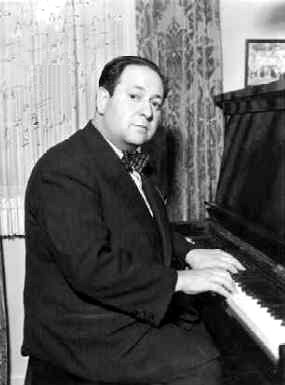
People have asked me before who my favorite film composer is. And I usually answer with “Jerry Goldsmith” or “James Horner” because it’s true, their scores rank among my absolute favorites. But…if I were to be completely honest, the film composer I love the most, above all others, is Erich Wolfgang Korngold.

Adventures of Robin Hood Suite

If film music were a religion, Korngold would be a god, that is the influence his work made in the industry. And yet…for all that, there are many people who have no idea who this man is! I can understand that, since he passed away in 1957. His film score output is relatively small…but when you look at the scores he did, especially compared to his concert and operatic output, this man was a genius!

download

The composer at work

He truly was a genius, a prodigy in fact. The story goes that the young Korngold was brought to play before the great Gustave Mahler (1860-1911) and after hearing his piece the aging composer declared “A genius!” At one time, Korngold was the toast of Vienna, even performing before the Emperor’s Court. He loved opera, and his 1920 opera Die Tote Stadt made him an international success at the age of 23.

Captain Blood Main Theme

Korngold actually came into film music quite by chance. In the early 1930s, Warner Bros. needed an arrangement of Mendelssohn’s “An Overture to A Midsummer Night’s Dream” for a film based on Shakespeare’s play of that name. Someone brought up Korngold’s name, and he was invited to come to California to do the work. Intrigued, Korngold accepted, did the score and went back to Vienna. He was asked to do another score, Captain Blood (1935), again agreed, but then returned because another opera was nearing completion. Just at this time though, Hitler was rising to power (and keep in mind, Korngold was Jewish). Just before Austria was joined to Germany, Korngold received an invitation to score The Adventures of Robin Hood (1938) and the composer did not want to accept. He asked some of his friends and one finally told him to “take it as a sign from God and go!” So he went…and the next week Austria joined Germany and Korngold did not see his home again until after the end of the Second World War.

Since he had to reside in the United States for the time being, Korngold passed the years by working in Hollywood (he found it enjoyable work, as he saw great similarities between film and opera).

robinhood

During the war years, Korngold composed: The Adventures of Robin Hood (1938); The Private Lives of Elizabeth and Essex (1939); The Sea Hawk (1940); The Sea Wolf (1941); King’s Row (1942); and Deception in 1946. After 1946, Korngold did not write film music ever again.

At last, after the war, he was able to return home, but to his unending sorrow, he discovered that the times had changed greatly in the years he had been gone, and his music, once hailed as genius, was now considered old-fashioned and “boring.” The knowledge broke his heart, and he died in 1957 at the age of 60.

While in Hollywood, Korngold was treated as no composer has been, before or since. Because he was already a composer of such renown, he was allowed to, among other things, dictate his own contract. He could choose to score whatever films he wished, and however many (or few) he wished. And one of the biggest impacts came from Korngold’s request to have solo credit (meaning having only his name appear on the credit page for the music). This was unheard of at the time: go and look at the credits as they appear in any movie before The Adventures of Robin Hood and you will see, if the music is credited at all, it is one line in a page full of other credits. Korngold changed that.

And the reason Korngold is so special to me? It was by listening to his music, I mean really listening to it, that I realized that film music really could (and did) stand on its own, by its own merits. Listening to those film scores is what pushed me to specialize in film music, and I have never regretted it.

Overture to The Sea Hawk

Overture to Star Wars

In the title of this post, I linked John William’s name to that of Korngold. I did this because William’s style has been referred to as “neo-Korngoldian,” meaning he writes in a manner similar to Korngold’s, but reinvented for this era. In fact, listen to Korngold’s overture for The Sea Hawk (1940) and then the overture for Star Wars (1977) and hear for yourself the similarities: a loud brass fanfare followed by a romantic melody in strings (it’s not a coincidence).

If you have a favorite Korngold score, I would love to hear about it! Have a great day!

Become a patron of the blog at patreon.com/musicgamer460

Check out the YouTube channel (and consider hitting the subscribe button)

Don’t forget to like Film Music Central on Facebook 🙂

Film Music 101: Leitmotif

In film music (and classical music, especially opera), a leitmotif is “a short, constantly recurring musical phrase, that is associated with a particular person, place, or idea.”

The most famous user of leitmotif in 21st century Hollywood would have to be composer John Williams in the seven Star Wars scores (1977-ongoing)

(for more on the leitmotifs of Star Wars see: The Empire Strikes Back or, Everyone has a Theme! Part One: Leitmotif and “The Imperial March” and The Empire Strikes Back Part Two!: Han and Leia in Love and Yoda!! )

Leitmotifs can be found in many films, for example, in the Star Trek franchise there is a popular theme known as the “Enterprise motif,” this is the fanfare of rising fourths that occurs almost every time the Enterprise appears on the screen (this is especially true in the original series and in the Next Generation films).

The concept of leitmotif (which roughly translates to “leading motive”) predates the creation of film by several decades and is closely associated with the late-Romantic composer Richard Wagner (though Wagner did NOT invent the concept himself as some have claimed)

RichardWagner

Wagner’s operatic music had a HUGE influence on modern film music

In Wagner’s famous cycle of operas known as Der Ring des Nibelungen (The Ring of the Nibelungs, aka “The Ring Cycle”), Wagner created an entire series of leitmotifs to represent specific characters or themes in the story.

For example, the hero Siegfried is represented by a leitmotif known as “Siegfried’s Horn Call,” seen here below:

Siegfried_leitmotif

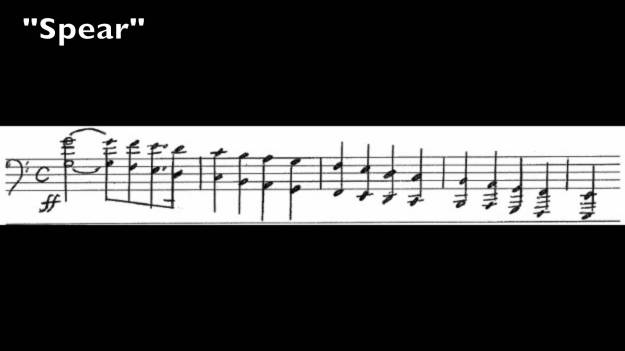
Another important motif represents the god Wotan’s spear:

maxresdefault

Other motifs represent: Fire, The Rhine, The Ring, and Sleep

Whatever the context, leitmotifs are an integral part of a film score (when they are used), and they provide an interesting connection to the world of 19th century opera.

Don’t forget to like Film Music Central on Facebook 🙂

Become a Patron of the blog at patreon.com/musicgamer460

Check out the YouTube channel (and consider hitting the subscribe button)

See also:

Film Music 101: “Stinger” Chords

Film Music 101: Dubbing

Film Music 101: Diegetic vs. Non-Diegetic Music

Film Music 101: Underscore

Film Music 101: Sidelining

Film Music 101: “Test” Lyrics

Film Music 101: The First Film Score

Film Music 101: Borrowing

Film Music 101: Arranger

Film Music 101: Anempathetic sound

Film Music 101: Empathetic Sound

Film Music 101: Foley

Film Music 101: Montage

Film Music 101: Compilation Score

The Empire Strikes Back or, Everyone has a Theme! Part One: Leitmotif and “The Imperial March”

Empire_strikes_back_old

The Empire Strikes Back
Released: May 21, 1980
Director: Irvin Kershner
Music by: John Williams
*All music is the property of Lucasfilm

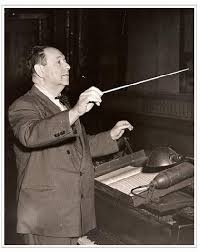
The Empire Strikes Back is considered by many to be the greatest movie of the original Star Wars trilogy and it’s no wonder. The film contains battles both on land (Hoth) and in space (the Millennium Falcon vs. Star Destroyers), a terrifying villain (Darth Vader), moments of comedy (C3PO) and one of the biggest twists in the history of film. It also features a gorgeous score composed and conducted by John Williams, a film composer who has been working in Hollywood since the 1950s and is solely responsible for some of the greatest film scores of all time.


For his work on The Empire Strikes Back, Williams began with the musical themes he had established for the original Star Wars and used it as a starting point for the sequel. Two themes were already set in stone:

Luke’s Theme/The Force

Leia’s Theme

As the role of Darth Vader was being greatly expanded from his first appearance, Williams concluded that Vader would need a theme to match. This lead to the creation of “The Imperial March,” a theme that is now synonymous, not just with Star Wars and Darth Vader, but with anything evil in nature.

Darth Vader’s Theme/The Imperial March

These themes, and how they are used, derive from a technique created for opera, known as leitmotif. Leitmotif was made popular by the Romantic composer Richard Wagner in his famous series of “Ring” operas.

Leitmotifs, by nature, are meant to evoke a particular character and are played whenever a specific character is seen on stage OR when they are mentioned by another character. This happens a great deal with “The Imperial March”, and not just in The Empire Strikes Back.

Starting with The Phantom Menace, echoes of “The Imperial March” are heard towards the end of the film when Yoda (reluctantly) gives Obi-Wan permission to train Anakin. (specifically: when Yoda says “Nevertheless, grave danger do I feel in his training”)

The theme grows stronger in Attack of the Clones, but again is heard primarily at the end of the film when the Clone fleet is seen landing in Coruscant, announcing the start of the Clone Wars.

Finally, in Revenge of the Sith, the theme is finally heard in full when Anakin turns to the Dark Side and is dubbed Darth Vader by the new Emperor Palpatine. (The theme can be heard in snippets throughout the latter half of the film, but fully comes out when Vader is being placed into his armor, particularly when the mask slips into place).

Part Two will explore the theme of Han and Leia’s love and the theme of Yoda. Until next time!

Become a Patron of the blog at patreon.com/musicgamer460

Check out the YouTube channel (and consider hitting the subscribe button)

Don’t forget to like Film Music Central on Facebook 🙂

See also:

Film/TV Reviews

The Empire Strikes Back: “The Imperial March” by John Williams

The Empire Strikes Back Part Two!: Han and Leia in Love and Yoda!!

*All music shown is the property of Disney and Lucasfilm, I own nothing.

Empire_strikes_back_old

“I love you….I know…” One of the most remembered lines from the Star Wars universe came moments before Han Solo was frozen in carbonite by the evil Darth Vader. Leia finally realizes that she loves the scoundrel of an ex-smuggler and he reveals that he’s known it pretty much all along.

(On a side note, Han’s response was a complete ad-lib by Harrison Ford, as they had tried numerous takes using the generic “I love you too” and it just wasn’t working out.)

The music heard immediately before this line (when Han and Leia share a brief kiss) is the culmination of a theme that has been building since early in the film when the two are seen arguing in the ice caverns of Hoth.

Musically, this love theme is remarkably similar to Leia’s original theme (as heard in the first film):

Notice that both begin with large leaps from the first note to the second, using a pickup note. Both can also be divided into two sections, with the second section featuring a leap as well. The primary difference is that whereas the love theme drops down a whole step after the initial leap, the original Leia theme keeps going up. It’s almost like an inversion of the original theme, where the music now moves downward instead of up.

Of course Empire Strikes Back is also where we get to meet Yoda, the diminutive (size matters not!) and slightly eccentric Jedi Master who reluctantly agrees to train Luke in the ways of the Force. Yoda’s theme, a quiet melody for woodwinds, is first heard after Yoda is walking back to his hut and inviting Luke to follow. Of course at this point we have no idea that this is actually Yoda (or maybe we do, but Luke certainly doesn’t).

The theme is a perfect match for the ancient Jedi Master. It exudes a quiet confidence, the exact opposite in fact of the “Imperial March.” This theme really comes out in full when Yoda demonstrates what the Force can do when he successfully raises Luke’s sunken X-Wing from the swamp.

Become a Patron of the blog at patreon.com/musicgamer460
Check out the YouTube channel (and consider hitting the subscribe button)
Don’t forget to like Film Music Central on Facebook 🙂
See also:

The Empire Strikes Back: “The Imperial March” by John Williams

The famous Imperial March a.k.a Darth Vader’s theme. This music never fails to send a chill down my spine. What’s interesting is the contrast between the main “Imperial March” that everyone knows and the softer “B” melody, that’s played in the middle. The woodwinds create an unbelievable sense of tension that sets the listener up for the return of the primary “A” melody which quickly modulates into a different key.

The theme is first heard in The Empire Strikes Back when we cut away from the Rebel base to get our first look at the Imperial fleet, but it is also notably used to herald Vader’s arrival in the ruins of Hoth base, and as the remaining heroes rush for the Millennium Falcon, the camera repeatedly comes back to Vader striding through the ice caverns.
Later on in the film, during the climactic lightsaber duel between Luke and Vader on Cloud City, the theme comes back rather menacingly as Vader begins to use the Force to hurl objects at Luke to distract him.
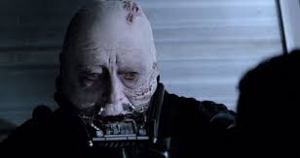
Though there are other instances after this one, I would like to highlight one final time we hear the Imperial March and that is, ironically enough, at the end of Vader’s death scene at the end of Return of the Jedi. Just after Vader/Anakin dies, listen very carefully to the music in the background.
Right there on the harp, is the last iteration of the melody, so soft you can barely hear it, and nothing like the strident march first heard in The Empire Strikes Back. Fitting for a villain who was successfully brought back to the side of good.

See also: Film Soundtracks A-W

Become a Patron of the blog at patreon.com/musicgamer460

Check out the YouTube channel (and consider hitting the subscribe button)

Don’t forget to like Film Music Central on Facebook 🙂