Yearly Archives: 2016

The Fellowship of the Ring “The Ring Goes South/Fellowship Main Theme” (2001)

After the 9 members of the Fellowship of the Ring are assembled at the conclusion of the Council of Elrond, preparations are made for the group to leave Rivendell on their dangerous quest. (As a refresher, the Fellowship consists of: Frodo, Sam, Merry, Pippin, Gandalf, Gimli, Legolas, Boromir and Aragorn).

Arwen and Aragorn (who are very much in love, despite Elrond’s wishes) make a final farewell, but it is not a happy one. We will learn later that Elrond has pressured Aragorn into dismissing Arwen’s love, to encourage her to travel across the sea when her father makes his last journey (if Arwen were to stay in Middle Earth with Aragorn, they would never see each other again). Aragorn is also confronted (by Elrond) regarding his destiny: he is the last surviving member of the royal bloodline of Numenor; he and he alone could unite the realms of men and become King, but Aragorn swears he does not want this destiny, he has never wanted it.
FrodoBilboSting

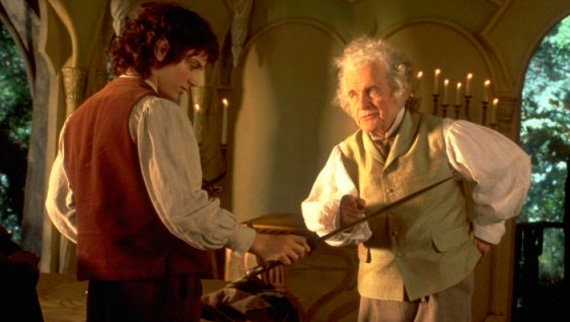
Elsewhere, Frodo and Bilbo have their last moment together and Bilbo has some gifts for Frodo: his old mithril shirt (that can repel any blow) is given to him to wear secretly under his clothes. Frodo is also given Bilbo’s elven sword Sting, which (like all Elven blades) will glow blue whenever orcs are close by (it’s curious then, that Legolas’s daggers don’t glow blue as well). As Frodo goes to put the mithril shirt on, Bilbo catches a glimpse of “his” old Ring, and he pleadingly asks to hold it one last time. When Frodo draws away however, Bilbo has a frightening “Gollum” moment that scares them both (and reveals that the Ring still has a very strong grip on the old hobbit). Guilt-ridden that his Ring has placed Frodo in this mess, Bilbo apologizes for everything that’s happened, and the two say farewell.

The Fellowship of the Ring “The Ring Goes South” (Film Scene) (2001)

11_wrg

Now comes the moment the Fellowship departs, crossing the bridge that leads out of Rivendell. As they do, a theme begins to build, starting with a single French horn, and slowly building in intensity. We have actually heard snippets of this theme before, beginning when Aragorn first takes the four hobbits “into the Wild.” It is the main theme of the Fellowship and now we are to hear it in full, in all its glory, along with the famous “Fellowship passing by” scene. It’s a grand moment, but sadly very short-lived, as the music immediately begins to die away after the climax and the scene moves on.

There are some gorgeous scenic views in this short sequence, and it never fails to impress me that the entire trilogy was filmed in New Zealand; it’s the perfect setting for Middle Earth (and I fully plan on visiting the country some day if I ever get the chance).

See also: Film Soundtracks A-W

You can become a patron of the blog at patreon.com/musicgamer460

Check out the YouTube channel (and consider hitting the subscribe button)

For more Fellowship of the Ring, see also

The Fellowship of the Ring “The Shire” (2001)

The Fellowship of the Ring “The Wood Elves/Passing of the Elves” (2001)

The Fellowship of the Ring “The Treason of Isengard” (2001)

The Fellowship of the Ring “A Knife in the Dark” (2001)

The Fellowship of the Ring “Flight to the Ford” (2001)

The Fellowship of the Ring “Many Meetings” (2001)

The Fellowship of the Ring “The Bridge of Khazad-Dum” (2001)

The Fellowship of the Ring “Lothlorien” (2001)

The Fellowship of the Ring “In Dreams” (2001)

Don’t forget to like Film Music Central on Facebook 🙂

*all images are the property of New Line Cinema

The Lion King “The Circle of Life” (1994)

Part of what makes The Lion King so spectacular is the gorgeous animation and renderings of the African landscape. The film’s iconic sunrise opening remains a beautiful moment, even 20 plus years after the film’s initial release. The opening song “The Circle of Life” is a perfect combination of traditional African music and Western song. The opening “call” is from the Zulu language and translates to:

“Here comes a lion father, oh yes it’s a lion!/We’re going to conquer/A lion and leopard come to this open place.”

more-to-see-than-can-ever-be-seen

After this initial verse, the scene alternates between various animals found in Africa (cheetahs, rhinoceros, elephants, ostrich, antelope, etc) all awakening and beginning a mass journey towards what is ultimately revealed as Pride Rock. This visual of animals assembling to celebrate the birth of a new Prince is reminiscent (and likely inspired by) the opening scene of Bambi (1942) where all the animals of the forest gather to greet the newly born Bambi.

I love the next verse:

From the day we arrive on the planet
And blinking, step into the sun
There’s more to see than can ever be seen
More to do than can ever be done

There’s far too much to take in here
More to find than can ever be found
But the sun rolling high
Through the sapphire sky
Keeps great and small on the endless round

It’s a perfect summation of life, there is so much to do/see/touch/experience, that even living life to the absolute fullest, we still couldn’t experience all of it, which is amazing when you think about it.

maxresdefault

I love the sweeping view of the landscape when Zazu flies up to Mufasa

It’s the Circle of Life
And it moves us all
Through despair and hope
Through faith and love

Till we find our place
On the path unwinding
In the Circle
The Circle of Life

Up at Pride Rock, King Mufasa (James Earl Jones) is awaiting the arrival of Rafiki, a mandrill who serves as an advisor to the king and also presents the new Prince to the animals of the Pride Lands whenever a new one is born. The newborn Simba is absolutely adorable and somewhat bewildered by everything going on around him. Rafiki pronounces his blessing and proceeds to take the lion cub out to the ledge so that all the animals can see him and bow in homage. It’s a wonderful moment, and this remains one of my favorite Disney songs.

I hope you enjoy “The Circle of Life,” let me know your thoughts in the comments below!

Become a Patron of the blog at patreon.com/musicgamer460

Check out the YouTube channel (and consider hitting the subscribe button

For more Lion King, see also:

The Lion King “Be Prepared” (1994)

The Lion King “Hakuna Matata” (1994)

The Lion King “Can You Feel the Love Tonight” (1994)

The Lion King “Under the Stars” (1994)

The Lion King “To Die For” (1994)

The Lion King “King of Pride Rock” (1994) Pt. 1

The Lion King “King of Pride Rock” Pt. 2 (1994)

For more great Disney songs and films, check out the main page here

Don’t forget to like Film Music Central on Facebook 🙂

The Fellowship of the Ring “Many Meetings” (2001)

After barely (and I mean barely) escaping the clutches of the Black Riders, Frodo awakens after several days in the hidden valley of Rivendell, home of Elrond (Hugo Weaving), the near-legendary son of Earendil, brother to Elros (the first king of Numenor and Aragorn’s distant ancestor), and the father to three children: Elladan, Elrohir and Arwen (Liv Tyler, more on her later).

The visual introduction to Rivendell is stunning, but I am sad to report that the location (with all the waterfalls) does not exist in real life, making Rivendell one of the few locations not to be completely based in a real-life environment. The musical backdrop is full of tranquil choral voices which highlight the fact that Rivendell is a place where one can find peace of mind, no matter what they’ve gone through (and recently Frodo has gone through quite a lot).

As the name of this piece implies, many meetings take place in this scene: Frodo is reunited with Sam, Merry and Pippin, who are all overjoyed to see Frodo recovered, but, to Frodo’s joy, there is one more meeting (more like a reunion), as he sees a considerably aged Bilbo sitting and working on his book (appropriately, there’s a brief refrain of “The Shire” at this moment). The two sit and talk for a while, and Frodo finally accepts that, however much he wanted to be like Bilbo as a child, his own adventure was turning into something completely different.


Keep in mind now that Frodo (at this stage) believes his part in the story is ending. The Ring, so far as he knows, should be safe in Rivendell, therefore he and Sam and the others should be ready to go home to the Shire before long. Unfortunately, the hobbits are soon to discover that they aren’t going home any time soon.

LOTR Fellowship of the Ring 177

Meanwhile, Elrond and Gandalf have been holding their own meeting and Elrond lays out the cold, hard truth: the Ring cannot possibly stay in Rivendell, not with Sauron AND Saruman looking for it. Between the two forces Rivendell would fall sooner or later, and it’s not really up to the Elves to fix the situation anyway. After living in Middle-Earth for thousands of years, most of the Elven peoples are leaving, heading across the Sea to the Undying Lands. Someone else will have to resolve the situation with the Ring.

Gandalf believes he has a solution then “It is in Men, that we must place our hope.” But Elrond is dubious (and in his mind rightfully so). You see, he was there, 3000 years ago, when Isildur defeated Sauron and cut the Ring from his hand. Elrond took the Numenorean prince into the heart of Mount Doom and begged him to destroy the Ring on the spot, and end evil for all time. But even in those few minutes of possessing the One Ring, Isildur’s heart had been corrupted and he refused. Ever since, Elrond has lost faith in any “strength” that Men may possess.

tumblr_inline_n8ox2w4A301rnrk68

A council is being called and delegations from all corners of Middle Earth are arriving: we see Boromir (Sean Bean), riding in from Gondor; Legolas (Orlando Bloom) from the Woodland Elves in Mirkwood; Gloin and Gimli (John Rhys-Davies) to represent the dwarves. Together, hopefully, they will be able to decide what to do with the One Ring.

Tauriel In LOTR

Howard Shore hit the nail on the head when he wrote the music for “Many Meetings.” The piece functions in the same way that “Lothlorien” does after the Moria scenes, since Rivendell immediately follows the frantic chase in “Flight to the Ford.” Now that the danger is (temporarily) passed, everyone has a chance to breathe and relax and the music encourages this feeling. Truthfully, I could listen to this music for several hours and not find it boring. I also love how everything in Rivendell seems to be infused with a golden light (in a similar vein, Lothlorien is predominately silver), and everything feels warm and very much alive.

That’s all for me today, I am beginning to feel better, but still not quite 100%. I hope you enjoyed “Many Meetings”

You can become a patron of the blog at: patreon.com/musicgamer460

Check out the YouTube channel (and consider hitting the subscribe button)

See also: Film Soundtracks A-W

For more Fellowship of the Ring, see also:

The Fellowship of the Ring “The Shire” (2001)

The Fellowship of the Ring “Shadow of the Past” (2001)

The Fellowship of the Ring “The Wood Elves/Passing of the Elves” (2001)

The Fellowship of the Ring “The Treason of Isengard” (2001)

The Fellowship of the Ring “A Knife in the Dark” (2001)

The Fellowship of the Ring “Flight to the Ford” (2001)

The Fellowship of the Ring “The Ring Goes South/Fellowship Main Theme” (2001)

The Fellowship of the Ring “The Bridge of Khazad-Dum” (2001)

The Fellowship of the Ring “Lothlorien” (2001)

The Fellowship of the Ring “In Dreams” (2001)

Don’t forget to like Film Music Central on Facebook  🙂

*all images are the property of New Line Cinema 
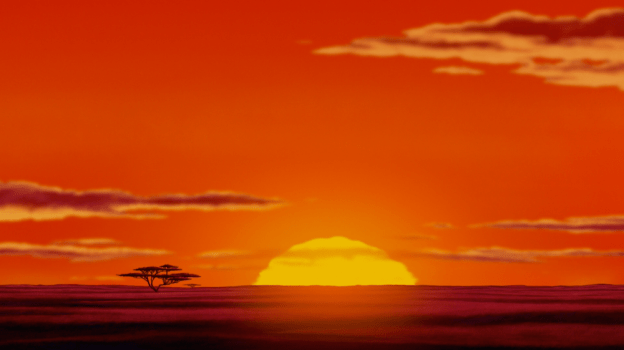
The Lion King “Hakuna Matata” (1994)

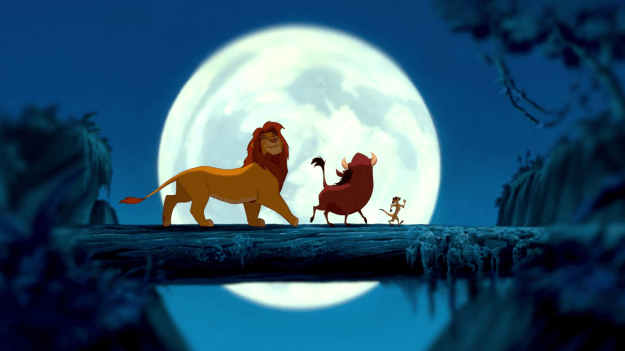
Driven from his home in the Pride Lands, Simba finds himself in a lush oasis (separated from his home by a wide desert). But he is not alone: this place is already home to a meerkat named Timon and a warthog named Pumbaa (they’d found Simba passed out not far away and brought him back with them).

Horribly guilt-ridden, Simba doesn’t want to stay, but Timon and Pumbaa persuade them to change his mind by teaching him a new lesson “You have to put the past behind you…when the world turns its back on you, you turn your back on the world!” All of this can be summarized in the two word motto the pair use: “Hakuna matata” which means “No worries.” It’s also the title of the song the pair sing to introduce Simba to his new home and their way of life.

Hakuna Matata, what a wonderful phrase!
Hakuna Matata, ain’t no passing craze
It means no worries for the rest of your days
It’s our problem-free philosophy
Hakuna Matata!

I love “Hakuna Matata.” It’s a hilariously funny Disney song and the perfect way to lighten the mood after the darkness and despair of the wildebeest stampede. Timon and Pumbaa are the perfect comedy relief, a pair of wonderful characters. As a kid, I loved singing along with this particular track, and even now, thinking of it makes me smile.

YoullLoveEm

Abiding by the rule of “hakuna matata”, Timon and Pumbaa don’t let anything bother or upset them. No one bothers them and they don’t bother anybody else. We also find out why Pumbaa in particular separated himself from the world.

Why, when he was a young warthog…
When I was a young warthog!

He found his aroma lacked a certain appeal
He could clear the Savannah after every meal
I am a sensitive soul
Though I seem thick-skinned
And it hurt that my friends never stood downwind
And oh, the shame!
He was ashamed!
Thought of changing my name!
Oh, what’s in a name!
And I got downhearted!
How did you feel?
Every time that I…

Hey, Pumbaa! Not in front of the kids!
Oh, sorry.

Hakuna Matata! What a wonderful phrase!
Hakuna Matata, ain’t no passing craze
It means no worries for the rest of your days
Yeah, sing, kid!
It’s our problem-free…
philosophy!
Hakuna Matata!

It looks like Pumbaa used to live in the Pride Lands, however, being particularly flatulent, no one wanted to be around the poor warthog, and an embarrassed Pumbaa retreated to the oasis. Another verse was going to tell Timon’s story, but the song was already running long so that verse was cut.

One big change that Simba has to get used to is a new diet: the oasis, while a lush place, is home to no other wild life, no antelope, zebras or hippos, not anything that Simba is used to eating. As Timon says “Kid, if you’re going to live with us, you have to eat like us.” And what do Timon and Pumbaa eat? Grubs!! (Bugs and worms, that is). Simba is grossed out by the idea, but he finally tries one and finds….it’s not so bad!

Hakuna.matata4

Now comes one of my favorite visual moments in the film. During a montage representing the passing of time, Simba transforms from a cub, to a young adult, to a fully grown adult lion with a beautiful mane. The adult Simba has fully embraced “hakuna matata” and is seemingly content to live out the rest of his days in this isolated paradise. And Timon and Pumbaa are thrilled to have a friendly lion that’s looking out for them, and not at all interested in eating them.

But Simba’s quiet, carefree life is about to come to an emphatic end when a person out of his past makes an unexpected appearance (oh who could it possibly be!!)

Become a patron of the blog at: patreon.com/musicgamer460

Check out the YouTube channel (and consider hitting the subscribe button

For more Lion King see also:

The Lion King “Be Prepared” (1994)

The Lion King “Can You Feel the Love Tonight” (1994)

The Lion King “I Just Can’t Wait to be King” (1994)

The Lion King “The Circle of Life” (1994)

The Lion King “Under the Stars” (1994)

The Lion King “To Die For” (1994)

The Lion King “King of Pride Rock” (1994) Pt. 1

The Lion King “King of Pride Rock” Pt. 2 (1994)

And for more great Disney songs and films, check out the main page here: Disney Films & Soundtracks A-Z

Don’t forget to like Film Music Central on Facebook 🙂

The Fellowship of the Ring “A Knife in the Dark” (2001)

095ac-weathertop

The Fellowship of the Ring “A Knife in the Dark” (Soundtrack Only) (2001)

After Strider brings the four Hobbits to the former watchtower of Amon Sul (also known as Weathertop in the book), he gives all of them swords and then (predictably), leaves to have a look around. What happens next never fails to boggle my mind.

Keep in mind that everyone is aware that the Black Riders are hot on their trail and they do NOT want to be discovered by them. Why then, would they think it was a good idea to make an open campfire that could be seen for miles away? Frodo, jolting awake, discovers the fire and stamps it out, but it’s too late, the Riders have discovered them and converge on Weathertop.

It’s only now that the music really gets going. As the Hobbits run into the ruined watchtower, swords drawn, the strings take a spin-chilling leap into the upper register. I like to think that if the sensation of the hair on the back of your neck standing up was translated into sound, it would sound exactly like that. I also call this “Creepy-crawly music.”

Of course Frodo is the first to see the Black Riders appearing out of the darkness (in a moment that I absolutely love). The way they move in near unison, levelling their swords at the hobbits, it’s just scary! And the music does everything it can to heighten the tension, reinforcing that these Black Riders are really bad news.

The hobbits don’t stand a chance of course: Sam is blown away, Merry and Pippin are quickly knocked aside, leaving Frodo face to face with the leader of the Black Riders (a figure later named as the Witch King of Angmar). He knows that Frodo has the Ring, and he’s determined to get it. Terrified, Frodo slips the ring on and discovers what the Riders really look like. Instead of faceless black figures, the Riders are transformed into white, ghostly wraiths, skeletal shadows of the men they once were.

Weathertop-Nazgûl

All wear crowns on their head, and the leader looks almost handsome (in a ghostly way). I imagine that in life the Witch King had a silver tongue and knew how to be persuasive. I say that because at first he tries to coax/coerce Frodo into giving him the Ring, using all of his will to draw the ring within a finger’s length of his hand. But Frodo’s strength is greater than he realized and when Frodo is able to draw his hand back, the enraged Witch King takes the more direct approach: he stabs Frodo in the shoulder with his dagger.

Aragorn_nazgul

But before the Witch King can finish the job, here comes Strider!! And he’s come prepared for battle, not only does he have his sword, but also a flaming torch (the Black Riders aren’t fond of fire). Strider single-handedly wipes out (or scares off) the Riders, using his torch to set one on fire, out-dueling another and ending the fight by throwing the torch straight into the head of the last remaining Rider. The danger is gone, for now anyways, but there’s a big problem: the Morgul Blade has critically wounded Frodo. The only way to save him now is to get him to Rivendell as fast as possible. The chase is on!

“A Knife in the Dark” is not one of the biggest musical cues in The Fellowship of the Ring (it’s certainly not as memorable as, say, “The Shire”), but it fulfills its purpose in making the scene on Weathertop as terrifying as possible.

That’s all from Middle Earth!

See also: Film Soundtracks A-W

You can become a patron of the blog at patreon.com/musicgamer460

Check out the YouTube channel (and consider hitting the subscribe button)

For more Lord of the Rings, see also:

The Fellowship of the Ring “The Shire” (2001)

The Fellowship of the Ring “Shadow of the Past” (2001)

The Fellowship of the Ring “The Wood Elves/Passing of the Elves” (2001)

The Fellowship of the Ring “The Treason of Isengard” (2001)

The Fellowship of the Ring “Flight to the Ford” (2001)

The Fellowship of the Ring “Many Meetings” (2001)

The Fellowship of the Ring “The Ring Goes South/Fellowship Main Theme” (2001)

The Fellowship of the Ring “The Bridge of Khazad-Dum” (2001)

The Fellowship of the Ring “Lothlorien” (2001)

The Fellowship of the Ring “In Dreams” (2001)

Don’t forget to like Film Music Central on Facebook  🙂

*all images are the property of New Line Cinema
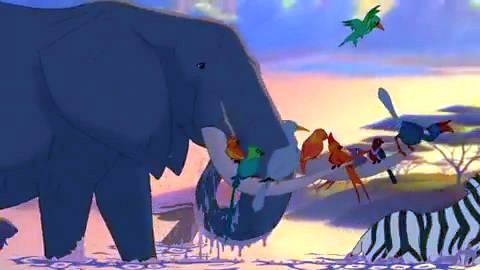
The Lion King “Be Prepared” (1994)

In case you hadn’t noticed, I love talking about Disney villains. The more devious they are, the better I like them, and there are few more devious, more conniving and more loathsome than Scar, Mufasa’s evil brother in The Lion King (1994).

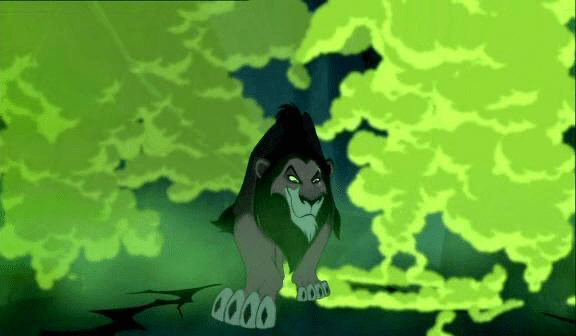
Scar (voiced to perfection by Jeremy Irons) holds an eternal grudge that Mufasa is King of Pride Rock instead of him, and when the birth of Simba makes it certain that he’ll never be king, Scar decides to take matters into his own hands. First, he simply tries to get rid of Simba by tricking him into visiting the elephant graveyard (which also happens to be the home of the hyenas, and a place Mufasa had warned the young cub to never go).


After Mufasa saves Simba and Nala in the nick of time, the battered hyenas reconvene in their lair and are joined by a disappointed Scar. The cubs had been perfectly set up to be killed, but the hyenas still blew it. However, as the hyenas are quick to point out, there wasn’t much they could do against Mufasa, did Scar expect them to kill him too?

Be_Prepared_Hyenas.png

Shenzi, Banzai and Ed: continuing a long tradition of smart villains having dumb henchmen

Well as a matter of fact, yes that’s precisely what Scar wants. He proceeds to lay out his plan, which is the basis of “Be Prepared” (one of my favorite villain songs ever!!)

Before I get started with the song itself though, I have something of a bombshell to drop. I’ve heard two versions of how this song was recorded, but they both equal the same thing: that is NOT Jeremy Irons’ voice once the song begins (not for all of it at least). The first version of the story I heard is that Jeremy Irons DID record a portion of the song, but threw his voice out after the line “You won’t get a sniff without me!” And the rest was subsequently recorded over by Jim Cummings. However, I later read an article about dialogue dubbing and Jim Cummings told the story of how he recorded the ENTIRE “Be Prepared” song because the final product was simply not that good, so they asked him to dub it over. As Cummings has no reason to lie, I’m inclined to believe that this version of the story is probably the true one. Who knew?

I know that your powers of retention
Are as wet as a warthog’s backside
But thick as you are, pay attention!
My words are a matter of pride

It’s clear from your vacant expressions
The lights are not all on upstairs
But we’re talking kings and successions
Even you can’t be caught unawares!

So, prepare for the chance of a lifetime
Be prepared for sensational news
A shining, new era
Is tiptoeing nearer
And where do we feature?
Just listen to teacher

I know it sounds sordid
But you’ll be rewarded
When at last, I am given my dues
And injustice deliciously squared
Be prepared!

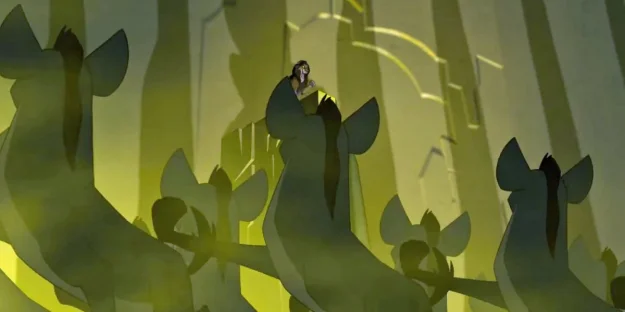
Anyways, back to the song. Scar has apparently been planning this for years, looking for his best opportunity to take Mufasa (and now Simba) out of the picture, leaving him as king. Scar won’t be able to do it alone though, he needs the help of the hyenas, and he has the perfect inducement for them to join him: “Stick with me” he says “And you’ll NEVER go hungry again!” The hyenas are thrilled, and in a shocking moment, the camera reveals that there are actually HUNDREDS of hyenas, all cheering “Long live the king!”

It’s great that we’ll soon be connected
With a king who’ll be all time adored
Of course, quid pro quo, you’re expected
To take certain duties on board

The future is littered with prizes
And though I’m the main addressee
The point that I must emphasize is
You won’t get a sniff without me!!!

With an army of hyenas at his command, the odds are squarely in Scar’s favor. And speaking of Scar, the conniving lion is promising these hyenas the moon, telling them everything they’ve ever wanted to hear. They’ll have more food then they’ve ever had before, but they’d better stick with him or they won’t get anything!

lion-king-be-prepared

It all sounds good, except what Scar is proposing will destroy the balance of the Pride Lands. The hyenas aren’t aware of this though, so they happily pledge allegiance to King Scar, rejoicing in all the food they are about to enjoy.

So prepare for the coup of the century
Be prepared for the murkiest scam (Oooh… la, la, la!)
Meticulous planning (We’ll have food!)
Tenacity spanning (Lots of food!)
Decades of denial (We repeat!)
Is simply why I’ll (Endless meat!)

Be king, undisputed
Respected, saluted
And seen, for the wonder I am
Yes, my teeth and ambitions are bared
Be prepared!


The song ends in a grand display of flames and hyenas, all laughing over their impending victory (“Be Prepared” is the recurring theme of this song, as well as its title). Scar clearly loves to put on a good show, and he talks a really good game. And deep down, I’m sure Scar truly believes that he’ll be the best king ever. And the whole time I watched this in the theater (20 + years ago), I was thinking that there’s no way Scar was going to get away with this. That somehow, Mufasa was going to figure it out and put a stop to everything (I was five, I was really naive). Of course Scar’s plan is going to work, otherwise there wouldn’t be much of a plot *sighs.*

“Be Prepared” is a great Disney villain song, relatively short and to the point. It establishes Scar as one of the more despicable Disney villains (I mean plotting to kill your own brother and nephew is pretty dastardly) and is all around really enjoyable. I hope you like listening to it.

Become a Patron of the blog at patreon.com/musicgamer460

Check out the YouTube channel (and consider hitting the subscribe button

For more great Disney songs and films, check out the main page here: Disney Films & Soundtracks A-Z

For more of The Lion King, see also:

The Lion King “Hakuna Matata” (1994)

The Lion King “Can You Feel the Love Tonight” (1994)

The Lion King “The Circle of Life” (1994)

The Lion King “Under the Stars” (1994)

The Lion King “To Die For” (1994)

The Lion King “I Just Can’t Wait to be King” (1994)

The Lion King “King of Pride Rock” (1994) Pt. 1

The Lion King “King of Pride Rock” Pt. 2 (1994)

Don’t forget to like Film Music Central on Facebook 🙂

*all images are the property of Walt Disney Studios

The Fellowship of the Ring “Lothlorien” (2001)

In the wake of Gandalf’s unexpected demise, the Fellowship is understandably devastated. Howard Shore has flipped an emotional switch musically and we’ve gone from full-on battle mode to deep mourning. And why not, Gandalf was a dear friend and counselor, they were clearly counting on his help the closer they came to Mordor.

tumblr_inline_myvglctzBR1rnrk68

All of the Fellowship are scene in mourning and we see various ways grief can manifest itself: anger (Gimli), shock (Legolas), simple tears (Sam, Merry and Pippin). But the most painful one of all is Frodo; when he looks back and the tears are streaming down his face, that is the look of someone who has lost a part of himself. The music here is simple and effective in conveying how deep an impact this had on everyone.

tumblr_inline_ml09d54jGf1qz4rgp

But the mourning period is cut short. Aragorn reminds everyone that nightfall is coming soon, and then the orcs will swarm the countryside looking for them. If they have any hope of surviving to the next day, they need to reach the woods of Lothlorien in the distance.

The Fellowship of the Ring “Lothlorien” (Soundtrack only) (2001)

The moment the Fellowship enters the forest, you know this is a special place, though not in the same way that Rivendell was special. Rivendell was a haven, whereas Lothlorien is more a place of power, a very deep power. The background is full of chants and an almost oriental feel with what is either a lute or a sitar in the background. The elves of Lothlorien appear out of nowhere and the initial meeting does not go smoothly. The leader of the group, Haldir, can sense the evil in the One Ring and doesn’t want them to enter any further into the forest. Aragorn manages to vouch for the entire group and they are taken into the heart of Lothlorien, to Caras Galadhon “The heart of Elvendom on Earth, realm of the Lord Celeborn and Galadriel, Lady of Light.”

caras-galadhon

The Fellowship of the Ring “Entering Lothlorien” (Film Scene) (2001)

Once they reach the Elven city, the music changes again, as we are greeted by the sight of enormous trees, with dwellings on every branch. And it’s here as they climb the neverending staircase that I noticed something. Listen to the choir as they climb up; doesn’t that pattern of chords sound familiar? I wasn’t sure where I’d heard it before, so I began searching the rest of the soundtrack. That’s when I got back to “Shadow of the Past” (our first visual introduction to Mordor post-Prologue”) and I gasped. The chord pattern for Lothlorien and Mordor are IDENTICAL. Different instruments to be sure, but the same chords nevertheless.

The Fellowship of the Ring “Caras Galadhon” (Film Scene) (2001)

Caras_Galadhon_1

This is HUGE, and it took me several days to process what exactly this meant. Consider what we learn about Galadriel. She too has a ring of power (Nenya, the Ring of Adamant), and is quite likely the most powerful Elf still living in Middle-Earth, and quite possibly one of the oldest. If anyone possessed the power to successfully claim the One Ring and rule Middle Earth AND defeat Sauron in the process, it would probably be Galadriel. And I think this is why Howard Shore chose to use the same chords for both locations, as a subtle reminder that, however beautiful Lothlorien is, it has the potential to become a second Mordor.

Celeborn_and_Galadriel_on_the_Stairs.png

Musical revelations aside, the music continues to build in beauty until the Fellowship is assembled at the topmost platform below a staircase. And from that staircase comes a couple that practically glows with their own light (I love that moment when Celeborn and Galadriel appear and take each other’s hand). The music slowly descends as the rulers of Lothlorien descend to meet the Fellowship, with the winds fading into the background as Galadriel’s face is revealed (showing Frodo that she is the one he heard in his head earlier).

I absolutely love the scenes set in Lothlorien, it’s the perfect “calm moment” after Moria and the last restful moments we see before the breaking of the Fellowship. And one last thought: Cate Blanchett was the perfect casting choice for Galadriel, as she nails the part.

See Also:

The Fellowship of the Ring “The Shire” (2001)

The Fellowship of the Ring “Shadow of the Past” (2001)

The Fellowship of the Ring “The Wood Elves/Passing of the Elves” (2001)

The Fellowship of the Ring “The Treason of Isengard” (2001)

The Fellowship of the Ring “A Knife in the Dark” (2001)

The Fellowship of the Ring “Flight to the Ford” (2001)

The Fellowship of the Ring “The Bridge of Khazad-Dum” (2001)

The Fellowship of the Ring “Many Meetings” (2001)

The Fellowship of the Ring “The Ring Goes South/Fellowship Main Theme” (2001)

The Fellowship of the Ring “In Dreams” (2001)

See also: Film Soundtracks A-W

Check out the YouTube channel (and consider hitting the subscribe button)

Don’t forget to like Film Music Central on Facebook 🙂

*all images are the property of New Line Cinema
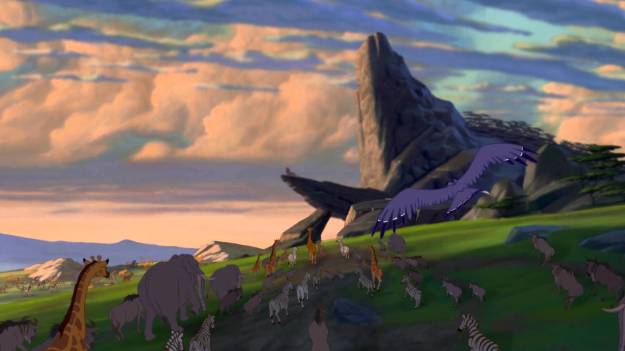
TCM Summer Under the Stars 2016: Anne Baxter as Nefretiri in The Ten Commandments (1956)

This post is part of the 2016 TCM Summer Under the Stars Blogathon hosted by Journeys in Classic Film

ANNE BAXTER

Nefretiri when we first meet her

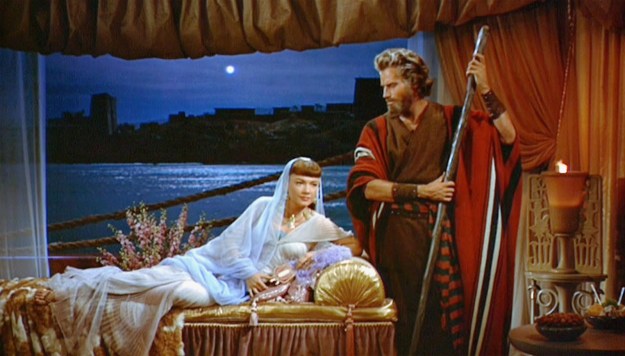
Anne Baxter starred in many films, but the role I will always know her for is her portrayal of Nefretiri in The Ten Commandments (1956). She actually auditioned for the role of Sephora, Moses’ wife, but it was felt she was more suited to the role of the Egyptian throne princess.

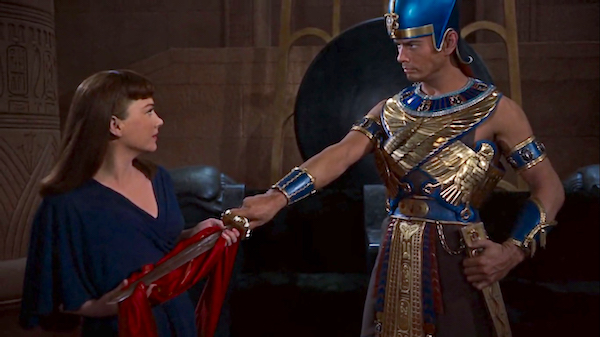
Nefretiri is already head over heels in love with Prince Moses when we first meet her. As Moses is returning in triumph from yet another military victory (this time over the Ethiopians), Nefretiri feels that nothing will stop Seti, the Pharoah, from naming Moses his heir (and thus allowing the two to marry, because Nefretiri can only marry a future Pharaoh). She believes this in spite of the fact that Seti HAS a son, Rameses, and he would definitely prefer to be Pharaoh over Moses. But Nefretiri makes it clear from the start that she loves Moses, and could never love Rameses.

ten-commandments-11

Nefretiri is so beautiful and so determined to have what she wants, that she doesn’t really know when to let go. In fact, a large part of her role (especially in part 2 of the film) centers around the fact that she cannot let go of her love for Moses, not when he was outed as being a Hebrew and condemned to exile, not even after he returns to Egypt as a prophet for the Hebrew God of Israel. Even the revelation that Moses is married and a father himself doesn’t stop her. Either Moses comes to her whenever she wants, or she will make sure the Hebrews never leave Egypt.

TenCommand3_003Pyxurz

All those years later, though Moses has changed, Nefretiri has not

Nefretiri’s selfish desires prove to be her undoing, as it is her final plot to harden Rameses’s heart against letting the Hebrews go that leads to the final plague on Egypt: the death of every firstborn. Despite her pleas to Moses to stop it from happening, her son dies in her arms.


I loved watching Nefretiri growing up because of the beautiful gowns she wore. As I got older, and learned how to appreciate performances in film, I grew to love Baxter’s portrayal of Nefretiri even more, because she is something of a tragic figure, in a way. All those years living in the palace, Nefretiri is used to getting whatever she wants, whenever she wants. And if someone says no, all she has to do is smile and use her beauty, and all opposition melts away.

ten-stainedwithblood

She can never get over the fact that she had to marry Rameses instead of Moses. She wasn’t content to be Queen of Egypt either. When the opportunity presented itself, she HAD to be Moses’ again, one way or the other, even though this had now become impossible. And because of her narrow minded desire, she lost her son (who she clearly loved), her husband really hates her (he nearly killed her except he had to admit he was unable to kill Moses) and all she has left are bitter memories.

Anne Baxter used all of her skills to bring Nefretiri to life on the silver screen and it is a performance I continue to enjoy to this day. I hope you enjoyed reading about her role in The Ten Commandments. Have a good day!

Become a Patron of the blog at patreon.com/musicgamer460

*all images are the property of Paramount Pictures

Don’t forget to like Film Music Central on Facebook 🙂

John Barrymore in Beau Brummel (1924)

*This post is part of the Second Annual Barrymore Trilogy Blogathon hosted by In the Good Old Days of Classic Hollywood

beau_brummel_xlg

Beau Brummel is a 1924 silent film released by Warner Bros. Studios starring John Barrymore and Mary Astor. The film depicts the life of the British dandy Beau Brummell (1778-1840), an iconic figure in Regency England and at one time a friend of the Prince Regent, later King George IV. The film was a remake of a version released in 1913 and was then remade in 1954. The film’s story was based on an 1890 play written by Clyde Fitch.

As far as I know, Beau Brummel is the first silent film I ever watched. I’d grown interested in the genre after reading a history of cinema in college and was trying to find a way to watch some silent films on my own. Then I remembered that Turner Classic Movies (at that time) showed silent films late at night on the weekends. So one night I stayed up late and turned the TCM channel on and it just happened to be Beau Brummel. I was completely hooked: the music and the techniques of silent cinema were all fascinating to me. I’ve enjoyed silent films ever since.
005-john-barrymore-theredlist

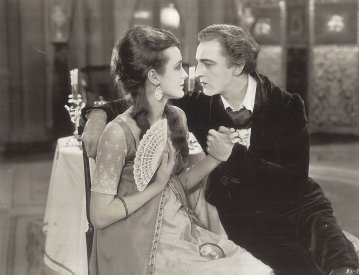
John Barrymore and Mary Astor

Legendary actor John Barrymore (grandfather of Drew Barrymore) plays the title role and he played the role admirably (if not completely seriously). There’s one story that says that Barrymore and Willard Louis (who played the Prince of Wales) would tell dirty jokes instead of saying their lines, thinking that it wouldn’t matter since it was a silent film. However, they forgot to take deaf audience members into account that could read their lips and know what they were REALLY saying (oops!)
Beau Brummel (1924) -Full Film

As I said earlier, the film follows the life of Beau Brummell, who goes from being a regular soldier to one of the closest friends of the Prince Regent. This places him in the highest social circles in London and he quickly becomes THE person who decides what is fashionable. However, there’s a wrinkle. At the beginning of the story, Margaery (Mary Astor), who was in love with Beau, was forced by her family to marry Lord Alvanley. Beau decides he will seek revenge against society using his charm, wit and his good looks, and thus becomes a dandy.

john_barrymore

This all seems to work out relatively well until Beau oversteps himself and causes a tremendous quarrel with the Prince Regent, who promptly ends their friendship. Without the Prince’s support, Beau (heavily in debt from his high living) is forced to flee England and live in poverty with his one remaining servant. After Margaery’s husband dies, she comes and begs him to marry her, but an embittered Beau refuses (though he clearly loves her). When the servant attempts to make amends with the Prince Regent, who is now King George IV (behind his master’s back, so that they both could return to England), Beau dismisses him and some time later ends up in the hospital of a debtor’s prison, out of his mind with an illness and near death.

It was the ending of this film that I loved so much because it was very well done. As Beau lays dying, far away in England, Lady Margaery is also close to death. And as she dies, her youthful spirit rises from her body (using the double-exposure technique) and departs, appearing soon after in Beau’s chamber. Beau himself, seeing her spirit, dies soon afterward and their two spirits, now young again, are reunited for eternity!

I (unfortunately) haven’t seen much of John Barrymore’s work, so I can’t say for certain if Beau Brummel is among his better (or worse) performances, but I know I enjoyed it very much, so if you haven’t seen it, I recommend it.

Enjoy the Barrymore Trilogy Blogathon!!

Don’t forget to like Film Music Central on Facebook 🙂


The Fellowship of the Ring “The Treason of Isengard” (2001)

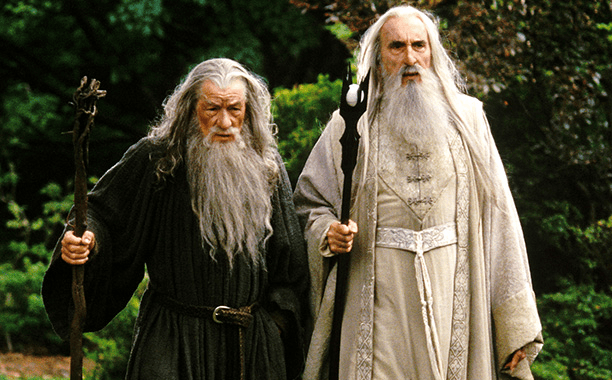
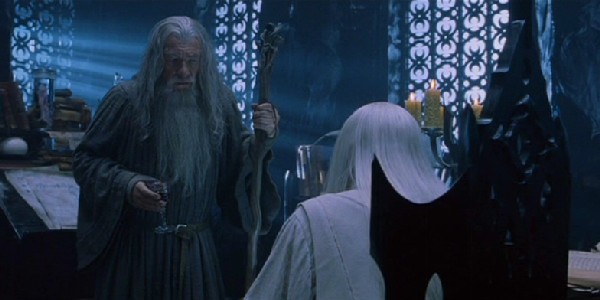
After confirming the terrible truth: that Frodo’s ring is none other than the One Ring that Sauron has been desperately seeking all these years, Gandalf rides as quick as he can to Isengard, to consult with Saruman the White (Christopher Lee), the head of the order of wizards and one who has studied Sauron and his works for several ages of history.

If there was one actor born to play Saruman, it was Christopher Lee. Years ago, he actually met and talked with Professor Tolkien himself. And according to the story I heard, Lee had Tolkien’s blessing to play Gandalf should a film adaptation ever be made and that (I think) is why he auditioned for at first for the role of Gandalf. However, Peter Jackson already had Ian McKellen in mind for the part and offered Lee the role of Saruman instead. I think it worked out just fine the way it did.

Saruman is a very complex character, one that can wear many masks. He’s had everyone believing for years that he still has the best interests of Middle Earth at heart, but in truth, he was corrupted a long time ago. The music we first hear as Gandalf rides into Isengard is already rather martial, full of trumpets and brass (perhaps a very early hint of the army Saruman is going to build and let loose in The Two Towers).

The Fellowship of the Ring “The Treason of Isengard” (Soundtrack only) (2001)

04_g_s

Now that he knows (from Gandalf) that the Ring of Power has been found, Saruman can spring his plans into motion. There has already been one big red flag: Gandalf learns that Saruman has been using the Palantir (a magical seeing stone) in the Tower of Isengard to spy on Sauron’s movements. This is very dangerous because not all of the seven Palantirs are accounted for, and when Gandalf’s hand brushing against the stone reveals an echo of Sauron, it confirms that the Dark Lord has at least one stone in his possession. But it gets worse…

The Fellowship of the Ring “Saruman the White” (Film Scene) (2001)

Saruman casually lets Gandalf know that the Nine Ringwraiths (initially known to us as the Black Riders) are on the move, and by this time have surely reached the Shire. A panicked Gandalf heads for the door, but Saruman blocks his way by commanding all the doors to shut. It then comes out that Saruman already knows of Gandalf’s plans to have Frodo take the Ring to a place of relative safety, and that he *knows* it cannot work. Just how far Saruman has fallen is demonstrated by this exchange:

“Against the power of Mordor, there can be no victory. We must join him him. We must join with Sauron, Gandalf. It would be wise, my friend.”

“Tell me, “friend,” when did Saruman the Wise abandon reason for madness??”

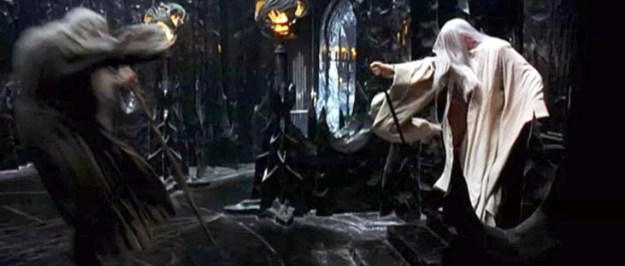
As expected, Gandalf completely rejects this despicable offer to turn traitor and join the forces of evil (did Saruman really think anything else would happen?) and the enraged wizard attacks with his magic staff. What follows is a brief battle between the two elderly wizards (a phenomenal fight considering the age of the actors at the time), but Saruman is able to wrest Gandalf’s staff away and uses both to pin the wizard to the ground. This is one scene where the music does not particularly stand out (as it does in “The Wood Elves” for instance). Rather, it functions more to highlight certain moments, like the fight between Gandalf and Saruman, or Gandalf’s initial approach to Isengard.

gandalf-vs-saruman

The music does becomes rather ominous at this point though, highlighting Gandalf’s dire situation, powerless in Saruman’s grasp:

“I gave you the chance to aid me willingly, but you have elected the way of PAIN!!”

With this, Gandalf is thrown up into the air, straight up the tower, and the music explodes upward with him. It is implied that Gandalf is being smashed against the high ceiling of the tower (given that the screen cuts to black immediately), but I suspect Saruman used a magic trick or spell to send Gandalf straight through the ceiling to the roof platform above, where we find him later.

“The Treason of Isengard” is a good introduction to Saruman the White, but this is only a preview of the larger role he will play in the next film. I hope you enjoyed it, have a great weekend!

See also: Film Soundtracks A-W

Become a patron of the blog at: patreon.com/musicgamer460

Check out the YouTube channel (and consider hitting the subscribe button)

See also:

The Fellowship of the Ring “The Shire” (2001)

The Fellowship of the Ring “Shadow of the Past” (2001)

The Fellowship of the Ring “The Wood Elves/Passing of the Elves” (2001)

The Fellowship of the Ring “A Knife in the Dark” (2001)

The Fellowship of the Ring “Flight to the Ford” (2001)

The Fellowship of the Ring “Many Meetings” (2001)

The Fellowship of the Ring “The Ring Goes South/Fellowship Main Theme” (2001)

The Fellowship of the Ring “The Bridge of Khazad-Dum” (2001)

The Fellowship of the Ring “Lothlorien” (2001)

The Fellowship of the Ring “In Dreams” (2001)

Don’t forget to like Film Music Central on Facebook  🙂

*all images are the property of New Line Cinema