Yearly Archives: 2017

Soundtrack Review: Ben-Hur (1959)

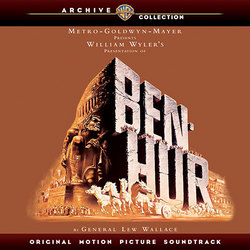
Longtime readers of this blog know that I am a huge fan of composer Miklos Rozsa’s film scores. Rozsa (1907-1995) was a titan of film music and his epic score for Ben-Hur (1959) remains a benchmark that few have ever equalled (let alone surpassed).
13255

I am pleased to announce that Tadlow Music is releasing a completely new recording of this 157 minute score on October 3rd, one that will feature previously unrecorded music. The music has been recorded by the City of Prague Philarmonic and is conducted by Nic Raine.

If you haven’t seen the 1959 epic, it is NOTHING like the travesty that came out in 2016 (in fact, forget that movie even exists). The 1959 version of Ben-Hur is still considered to be one of the greatest films ever made, winning a record 11 Academy Awards (a feat that has only been equaled twice and NEVER surpassed) as it tells the story of a Judean prince (played brilliantly by Charlton Heston) whose life is thrown into turmoil at the same time that a strange carpenter begins preaching a new message to the people.

When you listen to this soundtrack, I highly recommend starting with the Overture. While it may seem strange now for a film to have an “overture” like an opera, back in the day it was fairly common for an epic film to start with a musical overture of some kind (there was also intermission music and exit music) that would play as the audience took their seats.

Another track that I absolutely recommend is the “Parade of the Charioteers” (this is usually preceded by a series of fanfares). This is the music that precedes the climactic chariot race (where Ben-Hur and Messala settle their differences once and for all) and is rightly considered one of the greatest sequences ever put on film. Curiously, the race itself has no music, something I’ve talked at length about.

Another track that I must recommend is the music that accompanies the “Lepers!” scene. As I’ve said previously, this scene features some amazing musical work, as Rozsa must convey with music alone that something terrible has happened to Ben-Hur’s mother and sister without the audience actually seeing what it is.

Truthfully, I could recommend this entire soundtrack, as it is a beautiful masterpiece, whose importance to film music cannot be overstated. In fact, parts of the score were used as temporary music for Star Wars (1977) (and it is said you can still hear its influence in certain places). If you want to hear some fantastic music, please pick up this new recording when it comes out in October. My thanks to The Krakower Group for making this information available.

Become a Patron of the blog at patreon.com/musicgamer460

Check out the YouTube channel (and consider hitting the subscribe button)

Don’t forget to like Film Music Central on Facebook 🙂 Have a great day!

Soundtrack Review: Teen Wolf (2011-present)

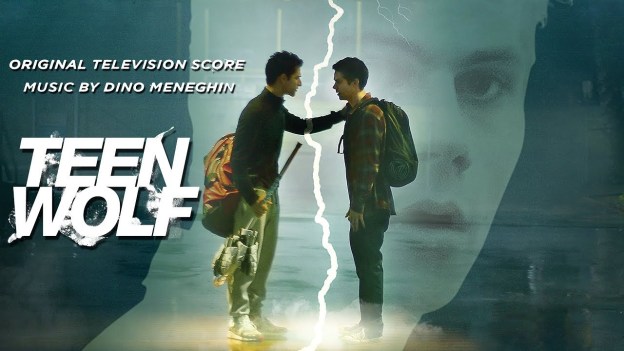
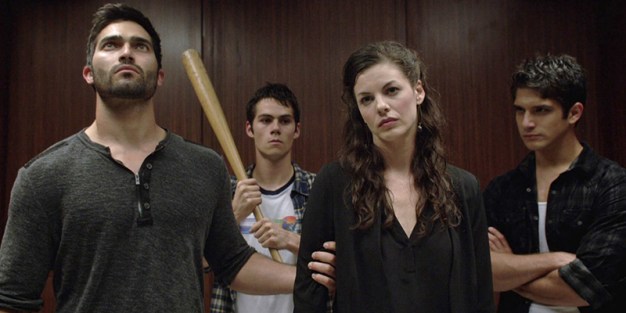
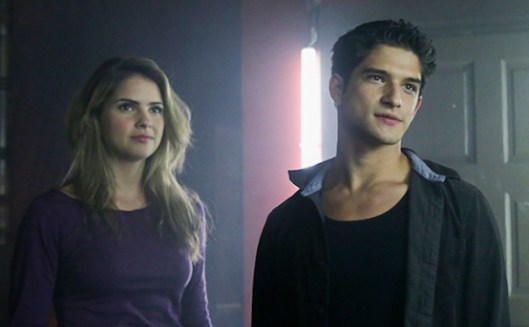
Teen Wolf is an American television series that airs on MTV (the final season is currently airing). It is loosely based on the 1985 Teen Wolf film and tells the story of Scott McCall (Tyler Posey), a teenager who is bitten by a werewolf and must learn to live with the consequences. The soundtrack is composed by Dino Meneghin, who has worked on the series since its premiere in 2011 (which has really allowed for the musical themes to develop). The soundtrack for Teen Wolf was released on September 15th, so be sure to check it out!

teen-wolf-310-theoverlooked-01

In listening to any television soundtrack, I like to start with the main title. This sets the tone for any series and is usually a good indicator of what you’re going to get (that’s why McCreary’s theme for Constantine is one of my favorites). The main title for Teen Wolf is largely what I expected for a series of this kind: fast-paced, frenetic, a blend of symphonic instruments and electronic sounds, with a firm drum beat as well. I say this is what I expected, but that does not make it a bad thing. This is a show aimed at young adults after all, so the sound is right for that audience.

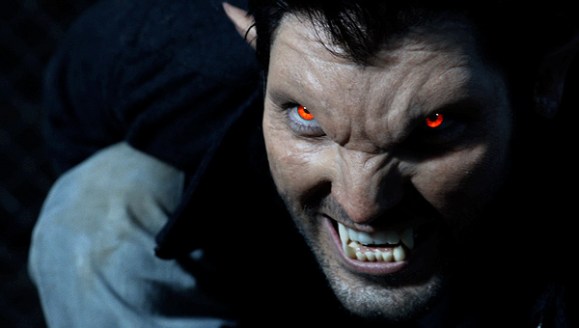
The next piece I listened to was “Hellhound” and for a few seconds I wondered if the track had been mislabeled. It starts out very soft and quiet, not what you’d expect. And then, out of nowhere, there’s a HUGE crash of drumbeats and you finally have the feeling of something menacing going on. It was still more melodic than I expected for the track title, but I enjoyed listening to it.

2x06_Derek_chasing_Kanima

Of all the tracks I heard, “Fear Defeated” might be my favorite (with the main title running a close second). The track begins with an eerie sort of sound, followed by a strange clanking noise. I think this might be a mallet dragged over xylophones, or better yet, it may be the xylophone bars themselves clanked together to make a really creepy sound. The music then shifts into a dark and at times triumphant symphonic quality that I really enjoyed listening to. It really felt like the music you might hear in a movie, not a television show.
One thing I’ve taken away from listening to these recent television soundtracks is that the nature of television scoring has really changed from the early years. In some high-quality productions (most notably Game of Thrones), the music is so complex and thematic that it really stands on the same level as film music. But even in smaller (compared to GoT) productions, the music is now more symphonic, more nuanced and I couldn’t be happier. Whether it be television or film, music is often the make or break ingredient in any production.

teen-wolf-mtv.jpg

I hope you enjoyed this short look into the music of Teen Wolf, the soundtrack is available now if you’d like to hear it in full. My thanks to The Krakower Group for making the soundtrack available for review.

See also:

TV Soundtracks

Become a Patron of the blog at patreon.com/musicgamer460

Check out the YouTube channel (and consider hitting the subscribe button)

Don’t forget to like Film Music Central on Facebook 🙂

Anastasia “Once Upon a December” (1997)

The glittering world of the Russian Imperial Family came crashing down almost 100 years ago, when Tsar Nicholas II abdicated, he and his family were arrested, and later summarily executed. The ultimate fates of the Tsar, his wife, their four daughters, Olga, Tatiana, Maria and Anastasia, and the crown prince Alexei were left unknown for decades, which gave rise to rumors and stories that some of the family had survived after all. The most well known story is that of Anastasia, the youngest daughter of Nicholas II. Rumors persisted for decades that the Grand Duchess had survived execution and was out there in the world somewhere. While ultimately disproven when the family’s remains were discovered in 1991, the story continued to be told both on screen and on stage.

Don Bluth’s 1997 film Anastasia is one such recounting. It imagines a world where, while attempting to flee on a train with her grandmother Marie (played to perfection by Angela Lansbury), Anastasia falls and strikes her head, losing all memory as well as being left behind. Not knowing who she is, she grows up in poverty, with half-remembered songs and images her only clues as to where she came from. Anastasia is a musical film (and is sometimes confused for a Disney film) and my favorite song has to be “Once Upon a December.”


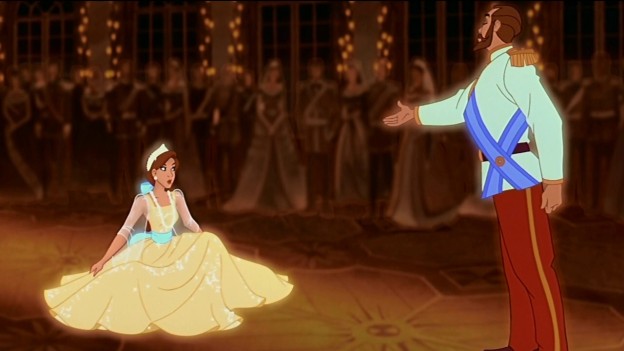
In it, Anastasia is exploring an abandoned palace while looking for Dmitri (a former servant boy who is now working with a con man to find a “fake” Anastasia to claim a large reward) and she reminisces over her fragmented memories.

Dancing bears, painted wings,

Things I almost remember.

And a song someone sings,

Once upon a December.

Someone holds me safe and warm,

Horses prance through a silver storm,

Figures dancing gracefully,

Across my memory

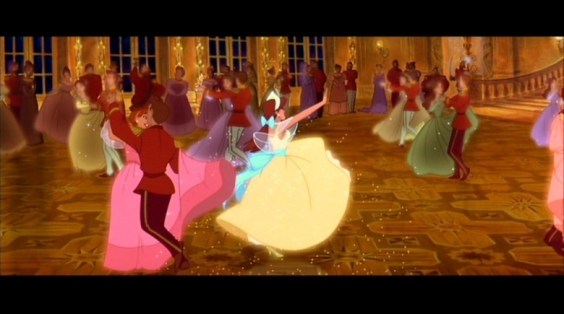
Anastasia’s words conjure up a spectral ball as ghostly figures descend from the ceiling to take part in a dance, all dressed in the finery and glamour of the lost Imperial Russia. The royal family comes to “life” as well, with Anastasia’s four sisters dancing around her before finding partners. Anastasia, in the meantime, transforms into the grown-up princess she should have become, dancing with a partner of her own while her father strides onto the dance floor, all bowing to him (while her mother and brother wait in the background. As the song winds down, Anastasia and Nicholas share a brief dance before the magic is shattered and the figures vanish.

Someone holds me safe and warm.

Horses prance through a silver storm.

Figures dancing gracefully.

Across my memory..

Far away,long ago.

Glowing dim as an ember,

Things my heart used to know,

it yearns to remember.

And a song someone sings,

Once upon a December

anastasia-once-upon-a-december-the-russian-princess-11842641-780-435

I like to think of this song (and the scene as a whole) as being an homage of sorts to the old world of royalty, balls, and Imperial courts that was irrevocably broken after the First World War. It was an age of palaces, princes and princesses, nobles beyond count that had lasted for over a thousand years, and it will never come again, except in our memories.

This scene really is one of the best in the film, and I hope you enjoy watching and listening.

For more awesome animated songs (Disney and otherwise), check out the awesome main page here

Become a Patron of the blog at patreon.com/musicgamer460

Check out the YouTube channel (and consider hitting the subscribe button)

Don’t forget to like Film Music Central on Facebook 🙂

My Thoughts on: Atomic Blonde (2017)

For the first time in what feels like months (and I think it literally has been months) I got to go see a movie in theatres and the selection was Atomic Blonde!! I’ve been intrigued by this movie since I saw the first preview and it did not disappoint!

hero_4102_FPF_00241RV2

In brief, Atomic Blonde takes place in November 1989, a few days before the Berlin Wall came down (literally). The plot revolves around attempts to recapture “The List”, a piece of microfilm that contains the names of every field agent currently working in the Soviet Union (if it falls into the wrong hands numerous operations would be compromised). Top MI6 agent Lorraine Broughton (Charlize Theron) is brought in to retrieve The List and to assassinate an operative known only as Satchel. Satchel has been working as a double agent for the Soviets for years. Lorraine’s primary contact in Berlin is David Percival (James McAvoy), a fellow British agent who has gone more than a little mental in the years he’s worked in Berlin.

I loved McAvoy’s performance as Percival. From the moment we meet him, there’s an immediate suspicion that he could be Satchel, the double agent. Numerous hints are given to suggest that he is secretly undermining Lorraine and it is seemingly confirmed when Percival shoots a man (who memorized the List) that they are trying to smuggle out of East Berlin (he ultimately drowns when the car he and Lorraine are in crashes into a river).

And then there’s Charlize Theron in a complete badass role as Lorraine Broughton. She is intense from beginning to end and I loved every minute of it. I can see why people made comparisons between her character and John Wick (though even without the comparison I enjoyed the character).

You can tell that this story is adapted from a graphic novel (The Coldest City). I’m certain some of the scenes (like Lorraine emerging from a bathtub of ice) are taken straight from the pages of the story, and the fight scenes play out like they were taken straight from a comic story (they’re super-intense, with lots of high-intensity action and almost zero pauses).

The biggest thing I want to talk about is the twists that come at the end of the story (WARNING: MAJOR SPOILERS TO FOLLOW). So as I said, almost the entire film is spent building up our expectation that Percival is actually a double agent. Except when the climax comes, it’s turned around and revealed that LORRAINE is Satchel, she is the one who has been feeding intel to the Russians, she needed to kill Percival to cover her tracks. That was Twist #1.

28atomic-web1-superJumbo

THEN, the story goes to Paris, where Lorraine (now speaking with a Russian accent), is meeting with a Soviet spy (who we met earlier in Berlin) who is revealed to be her handler. Having been informed of her “true” allegiances to the British, the Soviet leaves her to be disposed of by a professional hit squad (they even ask if she would be so kind as to step onto the tarp so her death will not make a mess in the hotel room). But Lorraine fights them off and before killing the Soviet spy, reveals that all the intelligence she’s given to the Soviets over the years has been FALSE. So she’s actually a fake double agent. That was Twist #2.

atomic-blonde-movie-sofia-boutella-

And the big kicker? The moment my jaw smacked the floor and my brain exploded? After being debriefed on all of this (the film bookends around Lorraine recounting all of this to MI6 and a CIA Agent) and agreeing that “none of this ever happened,” Lorraine heads to a private jet where she meets up with the CIA Agent. A montage reveals how she manipulated recordings and other evidence to show the British what they wanted to see and in actuality she’s American CIA (has been the entire time!!!). The CIA Agent who helped debrief her is waiting on the plane and she says (in an American accent) “Let’s go home.” And THAT Was Twist #3 (which came in the final sixty seconds of the film)!

072617atomicblonde_640x360

Those three twists led me to rethink EVERYTHING I had seen throughout the movie, because knowing that Lorraine is actually American CIA calls into question every motive and decision she made. And as the title of this post implies, I did NOT see any of these twists coming (which makes them the best kind of twists).

All in all, I liked Atomic Blonde. It was, as the saying goes, “a good popcorn film.” Sorry it took so long to get this review out, my life has been crazy for the last several months, but I’m glad you are sticking with me. Later!

Become a Patron of the blog at patreon.com/musicgamer460

Check out the YouTube channel (and consider hitting the subscribe button)

See also: Film/TV Reviews

Don’t forget to like Film Music Central on Facebook 🙂

Soundtrack Review: BoJack Horseman (2014-present)

bojack-horseman-poster

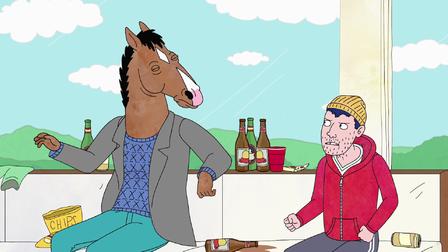
Well this is…different. I’ve never really watched BoJack Horseman, but I’ve heard enough of my friends talking about it that I decided it was worth checking out the soundtrack. If you haven’t seen it, the story takes place in an alternate world (largely in the Los Angeles and Hollywood area) where humans live side by side with tailless anthropomorphic animals. BoJack (voiced by Will Arnett) is the washed-up star of a 90’s sitcom called Horsin’ Around and seeks to re-ignite his stardom via a tell-all autobiography. The series is a satire of Hollywood and celebrity culture.

I sampled several pieces of the soundtrack that was composed by Jesse Novak and the music makes it pretty clear that this is not your typical show. Oddly enough, I found myself drawn to “BoJack’s Theme” which I can only describe as a quirky mesh of synthesizer, drums and brass that has a rather jazz-like tone to it. It’s actually pretty catchy in that I feel that it is growing on me.

e3b64097d06c6a9965901079426853d3931aa4a1

“Seaport” also heavily employs synthesizer, and actually reminded me of a short theme from an anime (one of those scenes were the camera is pulling back and showing the viewer a landscape).

I was pleasantly surprised to find several songs on the soundtrack as well, the two I came across were “I Will Always Think of You” and “Back in the 90’s.” Now I haven’t seen any episodes of the show, but it sounds like these are being sung by BoJack (please correct me if I’m wrong on this detail). I say I was pleasantly surprised because, well, most television soundtracks don’t have songs (You’re The Worst is another wonderful exception). “I Will Always Think of You” is actually a really nice song, it’s a duet between a male and female singer, and it really puts me in mind of a classic love song circa the 1950s/60s (this reminds me of something Sinatra might have crooned back in the day).

All together, the soundtrack for BoJack Horseman turned out to be full of many pleasant surprises. Season 4 premiered on Netflix on September 8th, so if you haven’t checked out the series, I officially recommend it and I also recommend checking out the soundtrack. My deepest thanks to The Krakower Group for making this soundtrack available so I could review it. I hope you enjoyed this brief look into the music of BoJack Horseman.

See also:

TV Soundtracks

Become a Patron of the blog at patreon.com/musicgamer460

Check out the YouTube channel (and consider hitting the subscribe button)

Don’t forget to like Film Music Central on Facebook 🙂

Soundtrack Review: American Assassin (2017)

I was fortunate enough to be able to experience the soundtrack for the upcoming film American Assassin, due to be released next week in theaters. Directed by Michael Cuesta, American Assassin follows the rise of Mitch Rapp, a CIA black ops recruit, after losing his parents in a car accident and his girlfriend to a terrorist attack shortly after they were engaged.

The soundtrack was composed by Steve Price and is simply amazing. This review will look at several pieces from the soundtrack, to give you an idea of what is to come. The opening track is titled “The Proposal” and begins with a quiet melody, partially played on piano. This is later mixed with a cello; it is simple but romantic at the same time. The twist comes halfway through the track: the music suddenly turns dark (emphasized by very low tones on the piano) and the tension is slowly turned up as the mood turns from light and happy to dark and unsure. Even though the film hasn’t come out yet, the music allows me to visualize what is likely happening: Mitch has just proposed to his girlfriend (or maybe he is getting ready for it), when, according to the music, something terrible happens.

The fifth track is titled “Plutonium” and is not so much a melody as it is a cluster of sound  waves that rise and fall in volume. The opening moments are dripping with menace (appropriate for plutonium, which can be deadly in the wrong hands), and for most of the track there is no motion in the sound, but this begins to change toward the end. I don’t mean to imply that lack of motion is a bad thing because it isn’t. Sometimes the soundtrack just needs to convey the threat of something, it doesn’t necessarily have to move the audience along, so to speak.

The tenth track is titled “I Trusted You” and it might just be my favorite in the soundtrack. The first minute is pure frenetic energy, but then it slides back into a contemplative mode, as if the scene began with a burst of action and then tapered off, perhaps into dialogue. I loved the mix of energy between the different instruments, and how seamlessly it transitioned from action to drama (fast-paced to slow-paced, it’s a slight oversimplification, but it gets my point across).

And that is my brief preview into the music for American Assassin. I absolutely loved everything I heard and I believe Steve Price has done a magnificent job. I apologize deeply for not getting these music reviews out sooner, the dissertation has taken over a large chunk of my life and I was forced to place these reviews on the back burner. But now I promise that if I blog on nothing else for the near future, I will get some reviews out to you every week. I hope you enjoyed this one, there’s plenty to come I promise. My thanks to The Krakower Group for making the soundtrack of American Assassin available. Have a good weekend everyone!

Become a Patron of the blog at patreon.com/musicgamer460

Check out the YouTube channel (and consider hitting the subscribe button)

See also: Film Soundtracks A-W

Don’t forget to like Film Music Central on Facebook 🙂

The Masque of the Red Death: “The Dance of Death” (1964)

I came across Roger Corman’s The Masque of the Red Death completely by accident several years ago when I was browsing through Netflix for something interesting to watch. While I generally don’t like horror, I do like Vincent Price very much, so I figured a film with Price in it couldn’t be THAT bad, so I gave it a try. The film is based on Edgar Allan Poe’s short story of the same name and tells the story of Prince Prospero (Price), a Satanist who invites several dozen nobles and their wives to stay in his castle while the Red Death ravages the countryside.

He promises that as long as they stay inside the castle they are safe, but in reality Prospero knows that everyone is doomed…except for him of course. As he explains to a terrified Francesca (played by Jane Asher, she is a peasant girl that Prospero kidnapped at the start of the film), he (Prospero) has made a deal with Satan himself: in return for delivering all of these souls to Hell via the Red Death, not only will Prospero be spared from the plague, but a high seat in Hell is reserved for him (Prospero has previously denied the existence of God and Heaven and therefore believes that ruling in Hell is the best thing to hope for).

masque-of-the-red-death-5

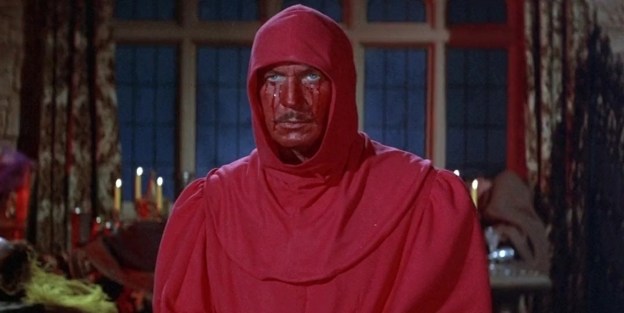
From left to right: Prospero, Red Death and Francesca

For the film’s final ball scene, Prospero had commanded that nobody was to wear red (as it would be in bad taste). But, unknown to everyone, the living symbol of the Red Death has slipped into the castle and his presence lures Prospero into his Black Room. The Prince mistakenly believes that he is meeting with an ambassador of Satan who has come to “reward” him for his services (a claim the Red Death does not deny until Francesca is safely out of the castle where her lover Gino is waiting for her). As Prospero and the Red Death come back to the dancers, Death announces “It’s time for a new dance to begin…the Dance of Death!”

masque-of-the-red-death

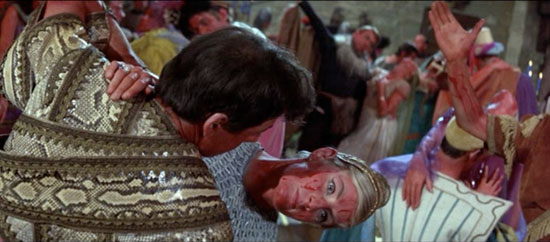
Upon these words, the scene of mirthful dancing and partying is changed into a danse macabre. One by one, each pair of dancers becomes coated in red “blood” (the symbol of infection with Red Death) and begin a halting, staggering ballet. It’s never been quite clear to me if they’re already dead or not, but it is an unforgettable scene. I draw this moment to your attention because of the haunting melody that begins with the first transformation. As the camera slides up and down the figure of the first pair, a sad woodwind melody begins. It continues at a leisurely pace as Prospero and Death walk among them (Prospero is amused by all of it). But once Francesca is sent away, Death finally reveals that the Prince is very mistaken in his beliefs as he informs Prospero that “Death has no master.”

When Prospero protests that “there is no God (because Satan “killed” him)” Death replies “He (Satan) does not rule alone. And your pact with him will not save you.” Prospero finally reaches out to see the face underneath the mask only to find…his own. As Death had earlier told him “There  is no face of Death, until the moment of your own death.” Seeing his own face reveals that it is Prospero’s time to die, a fate that the Prince tries to flee. And once he starts to run, the leisurely melody turns into an almost frantic march as the dancers swarm Prospero, looks of rage on their bloody faces. And at every opening…there is Death waiting with open arms. Finally, in a lumbering climax, all of the dancers fall dead on the floor, all but Prospero….and Death. Terrified, Prospero flees to the Black Room and locks the door, but Death is already inside. With the Prince cornered, Death delivers one of the most haunting lines I have ever heard: “Why should you be afraid to die? Your soul has been dead for a long time.” And with one touch…Prospero is dead.

This scene remains my favorite of the film, and if you haven’t seen it before, I hope you enjoy it. Let me know what you think about it in the comments below.

Become a Patron of the blog at patreon.com/musicgamer460

Check out the YouTube channel (and consider hitting the subscribe button)

See also: Film Soundtracks A-W

Don’t forget to like Film Music Central on Facebook 🙂

Disturbing Bluth #2: The Secret of NIMH: Dragon the (Demon) Cat

Part of the reason it took me so long to get started on this film is I had a difficult time deciding where to start. In fairness, the entire film could be considered one long disturbing moment. But since I had to start somewhere, I decided to go with something easy: Dragon, the unholy possessed demon cat owned by Farmer FitzGibbons.

The Secret of NIMH: Dragon’s first appearance (1982)

Dragon is the first antagonist introduced to the story, and the cat’s entrance is…memorable to say the least. In context, Mrs. Brisby is on her way home after receiving some medicine from Mr. Ages (also an escapee from NIMH, but she doesn’t know that yet) when she comes across a crazy crow (Dom DeLuise) tangled up in some yarn that he was trying to bring back to his nest. Being a nice mouse, Mrs. Brisby decides to help him get free, but when Jeremy (that’s the crow) starts singing about his future “Ms. Right”, she admonishes him to be quiet because “there’s a cat nearby.” And if you haven’t seen this movie before, you might be forgiven for thinking “Oh, it’s a cat, what’s so scary about a cat?”

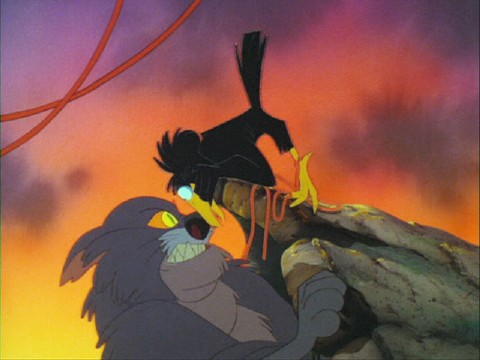
Take a look at the picture below, and know that Don Bluth can turn ANYTHING into a disturbing terror (also observe Jeremy’s wide-eyed look of terror as he realizes he’s nose-to-nose with a cat):

Jeremy-NIMH

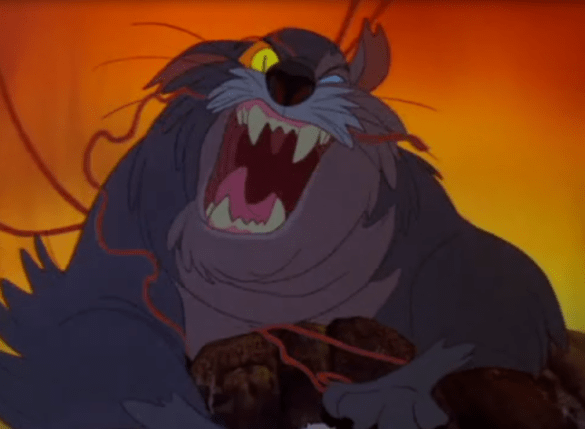
Yes, THAT is a cat, but he sure doesn’t look like one does he? Here’s a slightly better view:

Dragon_the_cat

*points up* THIS is a CAT?!?

Dragon is a fat, seemingly mangy farm cat, blind in one eye (that’s the weird blue one, the yellow is his normal eye), and he has a vicious streak a mile wide. What really makes Dragon disturbing besides his appearance? He doesn’t even meow, when he first goes to attack Jeremy, he ROARS like some strange monster!!

This scene (like so many others) messed me up as a kid. It scared me because I’d see Dragon creeping closer and poor Jeremy is just oblivious and the tension build-up is almost unbearable.

I also have to give credit to Jerry Goldsmith’s incredible score (his first for an animated film) for helping to make this scene even more terrifying and disturbing, especially in the build-up to Jeremy coming face to face with Dragon.

While Dragon does appear later on in the film, this is his most menacing appearance by far. But this is nothing compared to other disturbing characters in this story (I’m not sure if I’ll cover The Great Owl next or start in on the rats, Jenner and Brutus are both getting their own sections).

Let me know your thoughts on Dragon, did he scare you when you were younger? Did he disturb you? Let me know in the comments below 🙂

Become a Patron of the blog at patreon.com/musicgamer460

Check out the YouTube channel (and consider hitting the subscribe button)

See also:

Disturbing Don Bluth #1: The Secret of NIMH (Overview and Trivia)

Don’t forget to like Film Music Central on Facebook 🙂

Disturbing Bluth #1: The Secret of NIMH (Overview and Trivia)

I can’t help but feel that I need to apologize for taking so long with this, even though I promised ages ago that it would be starting soon (life has been a little crazy since then). Nevertheless, here I go with a brief overview of the first film in this sister series to Disturbing Disney: The Secret of NIMH (1982)

9822

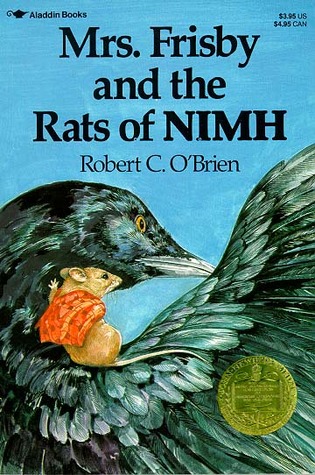
The film was based on the 1971 children’s book Mrs. Frisby and the Rats of NIMH, by Robert C. O’Brien. In broad strokes the plot is largely the same as the film: the widowed mother of a family of mice must figure out how to keep her home safe from the farmer’s plow while her youngest son recovers from pneumonia. She is advised to ask for help from a colony of rats living in the nearby rosebush and discover that they (along with her late husband Jonathan) are actually escaped laboratory rats experimented on by the National Institute of Mental Health (NIMH).

For the movie, Mrs. Frisby becomes Mrs. Brisby to avoid being sued by Wham-O (the company who makes Frisbees) over a similar sounding name. The thing is, by the time the decision was made to change the name to Brisby, all of the actors had already recorded their lines. So…the editors manually edited the voice track to make it sound like Brisby and not Frisby. However, it is not completely perfect: listen closely to The Great Owl’s lines, you can almost hear the original pronunciation of the name.

The voice cast contains some acting greats. The previously mentioned Great Owl was voiced by the legendary actor John Carradine (the father of David, Keith and Robert Carradine). The cranky Auntie Shrew was voiced by Hermione Baddely, better known as Madame in The Aristocats (1970). Derek Jacobi (whose film accomplishments are too many to count) is the voice of Nicodemus, the elderly leader of the rats. Dom DeLuise (aka Tiger the cat in An American Tail) is Jeremy the crow. Wil Wheaton (in his film debut) plays Martin, Mrs. Brisby’s oldest son. And Shannen Doherty (of Charmed fame) is also making her debut as the voice of Teresa, the oldest daughter.

This series will break down the more disturbing scenes (and characters) in the film, and I’m looking forward to sharing it with you.

Check out the YouTube channel (and consider hitting the subscribe button)

You can become a patron of the blog at patreon.com/musicgamer460

Don’t forget to like Film Music Central on Facebook 🙂

Disturbing Disney #15: Night on Bald Mountain from Fantasia (1940)

*note: I’m only covering the “Night on Bald Mountain” segment, not the “Ave Maria” that follows

Fantasia-bald-mtn-itself

When I originally conceived of the Disturbing Disney series, I always planned on including Night on Bald Mountain from the finale of Fantasia (1940). It is well known that this segment is considered to be one of the darkest pieces of animation that Disney ever produced. But, and this might surprise you, it is also one of the few “disturbing” pieces that didn’t scare me as a child.

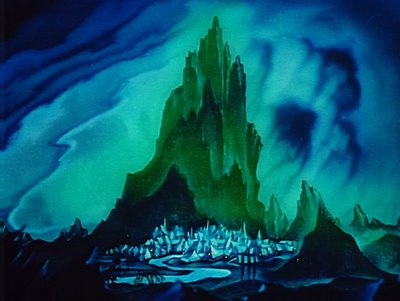
Let me explain: if you haven’t seen the original Fantasia film, Night on Bald Mountain is based on the symphonic poem of the same name (and earlier referred to as St. John’s Eve on Bald Mountain) by Modest Mussorgsky, with an arrangement created by his friend Nikolay Rimsky-Korsakov. The segment takes place one night in an unnamed country village surrounded by mountains. The highest peak is revealed to actually be the massive body of Chernabog, a terrifyingly huge black winged demon, who uses his evil powers to summon all the dead spirits, witches and other lesser demons to attend him and perform for his pleasure. After wreaking havoc all night long, Chernabog goes toward the village itself, only to be stopped by the distant church bells chiming for Matins, signalling the arrival of dawn, and the end of Chernabog’s power for the night.

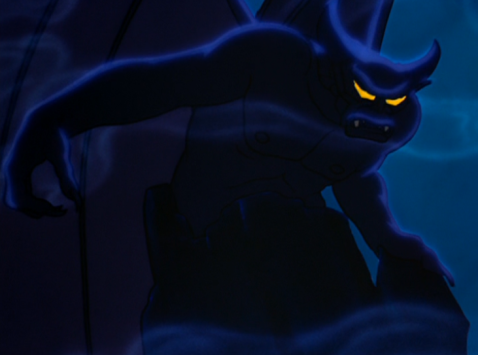
As I mentioned earlier, Night on Bald Mountain did not scare me as a child. I thought long and hard about it, trying to remember how I felt watching Chernabog reveal himself, but I cannot find a single memory where I quivered in terror. If anything, I was almost in awe of what I was seeing. I mean just look at the creature below:

Chernabog_6

Chernabog is rightly considered a masterpiece of Disney animation. He’s a perfect example of the intensive labor that went into Golden Age Disney animation. In the opening minute, when Chernabog shrugs his wings open, you can feel the weight behind the motion, even though he’s nothing more than a drawing on the screen.

Now, on to the disturbing elements of this piece (and they are many). First of all, as I said before, this is considered to be one of the darkest (if not THE darkest) animations that Disney ever produced, because never before has such raw evil been depicted. In fact, in the earliest stages, Chernabog was intended to be Satan himself (and referred to as such) but such a blatant religious statement was deemed….unwise (that’s my assumption anyway). Even though he’s named differently, it’s not hard to view Chernabog as the Devil (he’s got horns, wings, big glowing eyes, if he were red instead of black he’d be a perfect likeness to traditional images of Satan).

film8_2

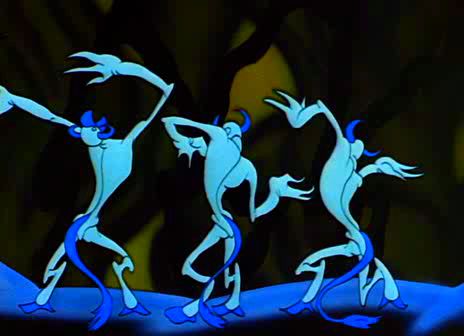
Aside from being pure evil, what also makes Chernabog himself disturbing is his sheer size: he’s so large that his wings are viewed as a literal mountain top! Full size humans (I would assume) could stand on his palm with plenty of room to spare. Not that you would WANT to of course, at one point, the demon creates fire dancers that dance on his palms before being cruelly twisted into barnyard animals and finally morphed into blue demons that frantically dance to please their master.

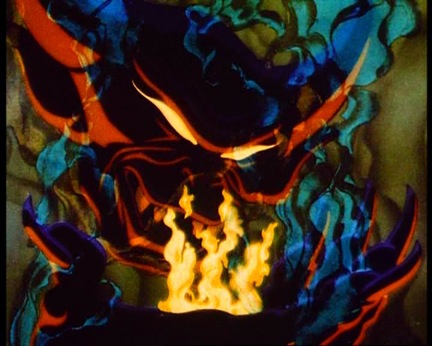
Chernabog_fire

Other disturbing elements include the various ghouls and skeletons that fly through the air when summoned. There are skeletons riding skeletal horses (a reference to the Danse Macabre), ghouls with glowing eyes, witches on brooms and other strange figures. By the final chaotic minutes of the piece, the disturbing factor is ramped up: there are harpies flying straight up to the screen (revealing they were topless in a blink-and-you’ll-miss-it moment), skulls and weird masks, all moving in a frantic blur.

Funnily enough, even though Fantasia was released almost 80 years ago, Disney still receives complaints from parents of children traumatized by this particular segment. If you have young children, I would definitely be wary of letting them see this segment too soon, but don’t hide it forever either.

And that’s just a glimpse of my thoughts on Chernabog and Night on Bald Mountain, I hope you enjoy watching the segment in the above link. Let me know YOUR thoughts in the comments below.

Become a Patron of the blog at patreon.com/musicgamer460
Check out the YouTube channel (and consider hitting the subscribe button)

For more Disturbing Disney, check out the main page here 

See also:

Disturbing Disney #1: The Coachman in Pinocchio (1940)

Disturbing Disney #2: The truth of Pleasure Island in Pinocchio (1940)

Disturbing Disney #3: Escaping Monstro from Pinocchio (1940)

Disturbing Disney #4: Dumbo loses his mother (1941)

Disturbing Disney #5 The death of Bambi’s Mother

Disturbing Disney #6: Faline vs. the dogs (1942)

Disturbing Disney #7: Cruella wants to do WHAT??

Disturbing Disney #8: The Whale Who Wanted to Sing at the Met (from Make Mine Music, 1946)

Disturbing Disney #9: Dr. Facilier’s Fate (The Princess and the Frog, 2009)

Disturbing Disney #10: The rat in Lady and the Tramp (1955)

Disturbing Disney #11: Clayton’s Death in Tarzan (1999)

Disturbing Disney #12: The Bear from The Fox and the Hound (1981)

Disturbing Disney #13: “Smoking them out” in The Fox and the Hound (1981)

Disturbing Disney #14: The Salt Trap in The Jungle Book (1994)

Disturbing Disney #16: King Triton destroys Ariel’s grotto

Disturbing Disney #17: Ratigan becomes a monster in The Great Mouse Detective

Disturbing Disney #18: The Queen’s assignment for her Huntsman

Disturbing Disney #19: Cinderella’s dress is destroyed (1950)

Disturbing Disney #20: Quasimodo is crowned ‘King of Fools’ (1996)

Don’t forget to like Film Music Central on Facebook 🙂