Monthly Archives: September 2021

Around and Around We Go: Talking with Composer Tom Salta about Deathloop (2021)

Just recently I had the chance to speak with composer Tom Salta about his work on the hit video game Deathloop. Salta is an award-winning composer, who writes music for film and television as well as video games. Aside from Deathloop, his past work in video games includes work on Wolfenstein: Youngblood, the HALO games, and Prince of Persia: The Forgotten Sands, just to name a few.

For Deathloop, Tom Salta had to create music for a world where the player controls Colt, an assassin tasked with killing a series of targets before a time loop activates at midnight, undoing any progress made. With that premise in mind, I was very excited to speak with Tom Salta about his work on this game.

I hope you enjoy our conversation about Deathloop!

How did you get started as a composer?

Now that’s a loaded question! [laughs] Back in 1990 when I started on my professional path, I never imagined getting into composing, no less composing for video games. I started in the music industry fully intent on becoming a famous record producer. My first shot in the big leagues was going on tour with Bobby Brown as keyboard tech and sound designer. After touring for several years, I spent the ‘90s working in the studio on almost every kind of music you could imagine for a variety of both up and coming and major artists. In 2001, there was a paradigm shift in the music industry and in the world. High speed internet became widely available and music piracy took over. No one was buying music anymore. Mainstream artists were becoming “manufactured” by huge labels and I felt creatively restricted in the area of pop music. All my dreams and aspirations of becoming a record producer started to crumble.

At the same time, the original Xbox was released and a game called ‘Halo’ redefined the first-person shooter. I was also an avid gamer since the ‘70s but it wasn’t until 2001 that the music in games started to resonate with me. And then one day, a day that I still vividly remember, I had an epiphany… “That’s it! Video game music! It combines the two things I love the most… music and games! But where do I start?”

It was a difficult transition… Imagine throwing away fifteen years of experience in music and starting over in a new industry entirely with absolutely no connections. Scary to say the least. After a lot of dead ends, I got the crazy idea that my best chance of being noticed was to go through music licensing channels, rather than trying to start as a composer. So, I created a new moniker for my artist persona, “Atlas Plug” (Atlas is Salta backwards) and created an entire album on my own of big beat electronica that would be perfectly suited for licensing in games, television and film. I connected with a publisher who represented the album and before I even finished, Microsoft heard it and wanted to license four songs in a new game called Rallisport Challenge 2. And that is where it really all started. That year, my debut album “2 Days or Die” took the industry by storm with every track being licensed in games, television, and film.

At the same time, I signed with an agent and began getting opportunities to pitch myself as a composer in games. My first original score was a PC adventure game called “Still Life”. Shortly after that, I established myself as a composer when I was hired to score major titles like Ghost Recon Advanced Warfighter and Need For Speed Underground 2.


How did you get involved with Deathloop and what did you think about the game’s time loop premise?

I was approached to work on Deathloop by the audio director that I had just finished working with on Wolfenstein Cyberpilot. When I heard about the unusual time loop mechanism and even more unusual music style, I was definitely intrigued.

How involved were the game’s directors/producers in collaborating with you on the game’s soundtrack? Were you given a lot of direction or was a lot of it left up to you?

I would say it was a healthy combination of both. Initially I was provided with a very comprehensive 50-page brief that described everything about the game. The audio director was also very specific about the late ‘60s aesthetic he was going for, although he knew that we were entering into uncharted territory with some of it.

I’m a big fan of collaborations so we had many emails back and forth and I did lots of my own research and explorations into potential musical approaches. After several weeks of experimentation, the signature sound of the score began to emerge.

I’ve read that this game was inspired by the Swinging Sixties, how did that inspiration play into the game’s soundtrack? 

Deathloop has a wide array of inspirations, including, but not limited to, the swinging sixties. The music of one of the fictional targets (visionaries), Charlie Montague, was definitely inspired by the swinging sixties and in particular, the superhero cartoon music back then, especially the original Batman series that I used to watch after school as a kid. That was a lot of fun to create.


On a related note, with the 60’s pop art style engulfing the game world, how much of the music was Inspired by films like James Bond.

The late ‘60s James Bond music was definitely an ingredient in the overall recipe of the score’s style, especially in key areas where I had to bring out the ‘secret military base’ vibe. The sixties were a very colorful time and so I had a lot of fun channeling that period in a myriad of ways.


What type of instruments are used in this score, I wasn’t expecting a game called Deathloop to sound like this but I absolutely love it. Also, do I hear a theremin in the mix?

[laughs] Yes, you certainly do. You can’t do ‘60s sci-fi and not use a theremin, right? [laughs] The approach I took for creating the palette for this score was imagining that I found a room of musical instruments that was locked up for fifty years. Then I would take those instruments and create a ‘60s inspired score through my own modern lens.

You’ll hear instruments such as Rhodes, Wurlitzer, Hammond B3, Farfisa, Clavinet, Mellotron, Electric Harpsichord, Marimba, Vibes, Orchestra, Guitars, Bass, Drums and lots of other sixties inspired ear candy.

I noticed that there is a separate track/theme for each of Colt’s targets and those themes sounded strikingly similar to me. What went into creating the music for each of the targets and did their themes have anything to do with how each needs to be approached in a specific order to ultimately beat the game?

Yes, they should sound similar as they are all based on the same composition. In fact, they were supposed to be even more similar than they are now.

The original idea was to have a single suite of music (Exploration, Fight and Escape) for all targets and then just introduce one or two different elements to identify the character. Eventually, some of the target tracks evolved to be more unique arrangements of the same music. But they are all structurally identical.

The differences between the arrangements for each visionary are based around the instruments used that would come to represent each of them. So, for example, Aleksis (the arrogant eccentric) featured some sophisticated jazz styles, Harriet (the ruthless, yet pious mystic) features a dark church bell and eerie gothic choirs, and your theremin makes an appearance for Wenjie Evans, the program founder who studied supernatural phenomena.


How much of a role does the time loop play in the music? For instance, Andrew Prahlow, the composer of Outer Wilds, another video game that features a time loop, mentioned that he crafted music that begins to speed up and become more insistent the closer the player got to the loop restarting. Does anything of that nature occur in the music of Deathloop?

Yes, but instead of the tempo changing, the music gets livelier. This parallels the activity of the island’s inhabitants since all the partying really gets going in the evening. Each of the four main areas of the island of Blackreef have their own musical suite. The Exploration phase of each of those suites has four different arrangements based on the four different time periods… midnight, morning, afternoon and evening.


How much time did you have to work on Deathloop? Were you brought in early in the process of game development or late?

I worked on the score for six months, starting in January 2020 and ending in June. I suppose it was somewhere in between but there was still over a year of development after I finished.


Do you have a favorite piece in the score?

I’d probably have to pick the main theme, “Welcome to Blackreef.” It was an interesting journey getting there though. The original theme idea proposed to me was to create a very mysterious theme, more in the spirit of the 1961 classic “Mysterious Island” and the “Lost” series. The audio director really liked the theme but about a month into the score, I began to feel that it didn’t quite match the vivacious personality of the game. So I secretly began working on a new theme. I wanted something catchier and, well… loopable. [laughs] Eventually I found the four chords and three notes I was looking for and spent a week putting the final touches on it. Once I had a finished version, I sent it over. Naturally, the audio director wasn’t quick to just replace what we had, but several weeks later he agreed that it worked better for the game and so, that became the new theme that most of the score is based on.

I hope you enjoyed reading this interview and I’d like to say thank you to Tom Salta for taking the time to speak with me about Deathloop.

See also:

Composer Interviews

Become a Patron of the blog at patreon.com/musicgamer460

Check out the YouTube channel (and consider hitting the subscribe button)

Don’t forget to like Film Music Central on Facebook 🙂

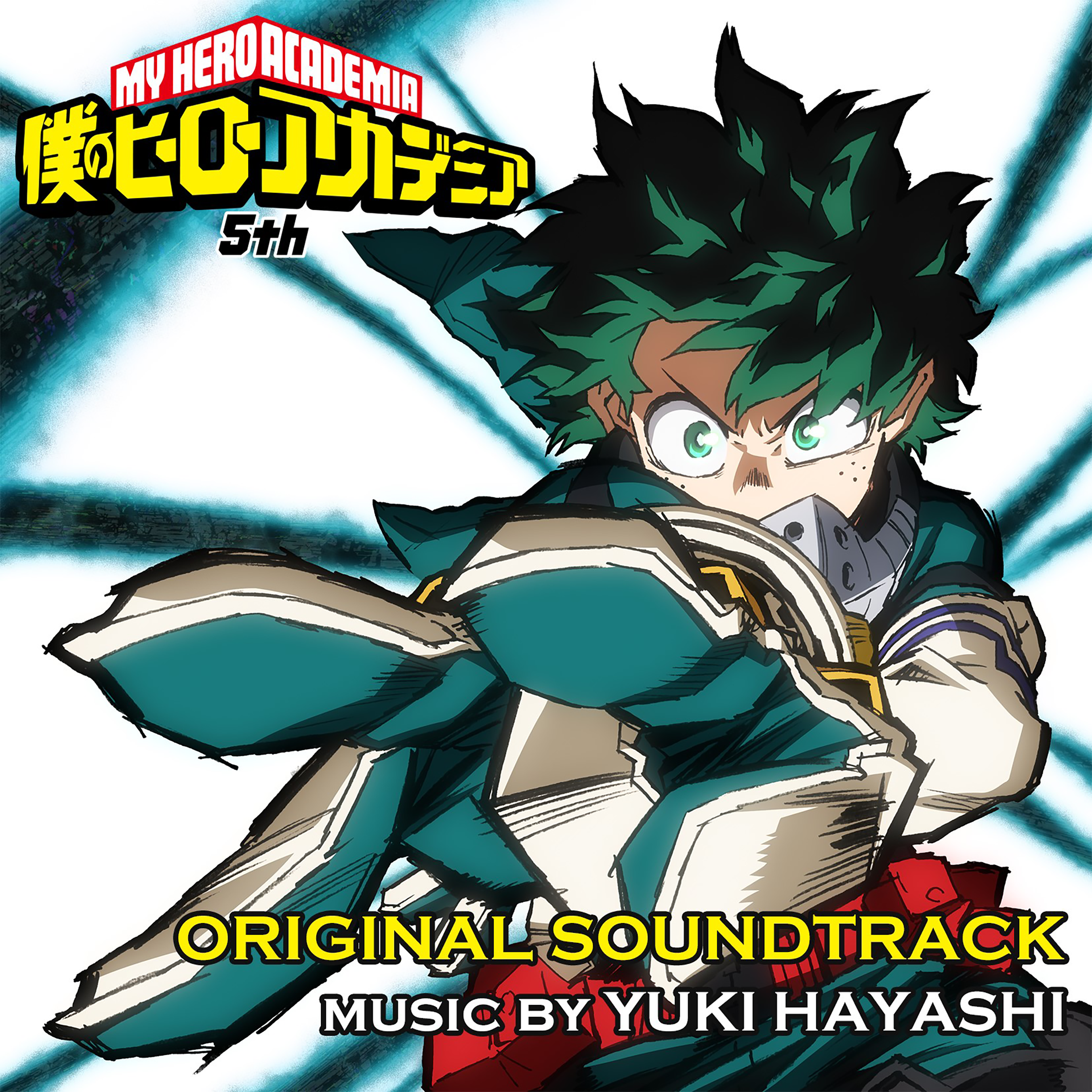
Soundtrack News: My Hero Academia Season 5 Soundtrack Available Now

Milan Records has announced the release of MY HERO ACADEMIA: SEASON 5 (ORIGINAL SERIES SOUNDTRACK) with music by composer and arranger YUKI HAYASHI (My Hero Academia: Heroes RisingPretty CureStrawberry Night).

 Available everywhere now, the album features music written by Hayashi for the fifth season of the critically acclaimed, hugely popular anime series. In addition to the season five soundtrack, Hayashi has scored all four previous seasons of the hit anime television series as well as three corresponding film installments, My Hero Academia: Two Heroes, My Hero Academia: Heroes Rising and My Hero Academia: World Heroes’ Mission.

Yuki Hayashi was born in Kyoto in 1980. Being an active member in a men’s rhythmic gymnastics team in his early years spawned his interest in BGM while selecting songs to complement performances. This led him to begin teaching himself music composition while at university, despite not having a background in music itself. After graduating, Yuki acquired the basics of track making under house techno DJ and sound-maker Hideo Kobayashi and started producing his first range of music accompaniments for dance sports. His experience as a rhythmic gymnast has enabled Yuki to intuitively incorporate an eclectic range of music and produce a unique sound, empowering scenes from TV drama, animation and film.

MY HERO ACADEMIA: SEASON 5 (ORIGINAL SERIES SOUNDTRACK)

TRACKLISTING –

  1. Go, Plus Ultra
  2. So Classmate Were Born Of Worthy Competition
  3. Successor
  4. A VS B
  5. “Quirk”DON-PACHI Great exchange
  6. What To Inherit
  7. The Mission Of The Stealth Hawk
  8. Different Ability Liberation Army
  9. My Villain Academia
  10. Second Coming
  11. Gigantomachia
  12. Mine Woman
  13. TOGA’s nature
  14. Symbol Of Fear
  15. I Don’t Kill My Friends
  16. RE DESTRO
  17. Paranormal Liberation Front
  18. Sound of the Holidays
  19. Sound of the Holidays inst Ver

See also:

Become a Patron of the blog at patreon.com/musicgamer460

Check out the YouTube channel (and consider hitting the subscribe button)

Don’t forget to like Film Music Central on Facebook 

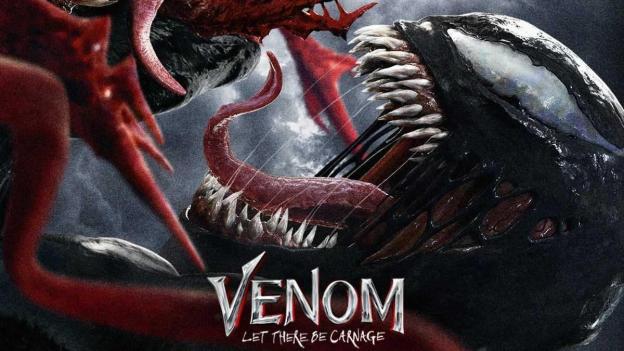
Soundtrack News: Venom: Let There Be Carnage Soundtrack Releasing October 1

Sony Music Masterworks has announced the October 1 release of VENOM: LET THERE BE CARNAGE (ORIGINAL MOTION PICTURE SOUNDTRACK) with music by award-winning composer Marco Beltrami (ScreamResident EvilA Quiet Place). Available to preorder now, the album features score music written by Beltrami for the highly anticipated sequel to the 2018 worldwide box office hit film Venom.

Of the soundtrack, composer Marco Beltrami had the following to say:

“Because of COVID restrictions, we had to change the way we worked on processing acoustical sounds. Where we’d normally work with live musicians to create source material, here we had musicians record at home and then re-amp them at Sony. In addition, we worked with feedback looping to create some of the aggressive tones for Carnage. The film presented a lot of fun musical challenges, from a unique enhanced brass theme for Venom, to the altered woodwind theme for Carnage and Shriek, to a slightly bluesy feel for Eddie. Overall, in spite of those COVID restrictions, I feel very lucky we were able to still record many of the orchestral sessions at Sony and have it come out sounding so good!”

ABOUT VENOM: LET THERE BE CARNAGE

Tom Hardy returns to the big screen as the lethal protector Venom, one of MARVEL’s greatest and most complex characters. Directed by Andy Serkis, the film also stars Michelle Williams, Naomie Harris and Woody Harrelson, in the role of the villain Cletus Kasady/Carnage.

VENOM: LET THERE BE CARNAGE (ORIGINAL MOTION PICTURE SOUNDTRACK) TRACKLISTING –

1. St. Estes Reform School (Extended)
2.Cletus’ Cell
3.Eddie Draws
4.Brock’s Revival
5.Lucky Slaughterhouse
6.Ann’s News
7.Take the Hit
8.Postcard From the Edge
9.No Touching!
10.Eddie Hangs on the Line
11.Lethal Rejection
12.Carnage Unleashed
13.Mulligan Visits Eddie
14.There is Only Carnage
15.Get Shriek
16.The Great Escape
17.Venom Needs Food
18.People Seeing Monsters
19.Find Venom
20.Turn on the Charm
21.Eddie Escapes
22.Shriek Comes Home
23.You Can Eat Them All
24.Unholy Matrimony Pt. 1
25.Unholy Matrimony Pt. 2
26.He Did Not Taste Good
27.Panza and Quixote,
28.Venom and Blues
29.Venom’s Suite Tooth
30.Brock and Roll

Will you be checking out the soundtrack for Venom: Let There be Carnage?

See also:

Become a Patron of the blog at patreon.com/musicgamer460

Check out the YouTube channel (and consider hitting the subscribe button)

Don’t forget to like Film Music Central on Facebook 

Soundtrack News: ‘Sable’ Video Game Soundtrack by Japanese Breakfast Available Now

Sony Music Masterworks today releases Japanese Breakfasts Original Soundtrack to SABLE, an album of instrumental and vocal music featured in the open-world video game.

Drawing from her years of songwriting experience, the 32-track collection finds musician, director and author Michelle Zauner making new explorations into ambient and experimental music, the resulting soundtrack as breathtaking and otherworldly as the game itself. The album was initially introduced with lead single “Glider” in August, garnering critical acclaim from the New York Times, Rolling Stone, Consequence of Sound, NME, American Songwriter, UPROXX and more, with both Pitchfork and Entertainment Weekly naming the soundtrack one of their most anticipated albums of Fall 2021. From indie game developer Shedworks and publisher Raw Fury, Sable is now available to play with Xbox Game Pass on Xbox Series X/S, Xbox One and PC.

Also available for preorder today is the vinyl edition of the soundtrack, which will arrive as a 2-LP disc set in gatefold packaging. In addition to the standard edition, an artist exclusive edition is also now available to preorder on Japanese Breakfast’s official merch store and various color variants will be exclusive to retailers including Newbury Comics, Light in the Attic and Vinyl Me Please.

Of the soundtrack, Japanese Breakfast had the following to say:

“I was so lucky Daniel Fineberg and Gregorios Kythreotis from Shedworks invited me onto this game so early on. I was immediately captivated by the world they’d built, a desert planet filled with mysterious natural and architectural wonders, and the story they’d imagined, one of a young girl coming of age through exploration. It was important to me that each biome in this world felt unique. I used woodwinds and vocal layering to make monumental ruins feel ancient and unknown, industrial samples and soft synths to make atomic ships feel cold and metallic, classical guitar and bright piano to make encampments feel cozy and familiar. I wanted the main themes to recall iconic works of Joe Hisaishi and Alan Menken, to fill the listener with the childlike wonder of someone on the precipice of a grand discovery.”

ABOUT SABLE
Embark on a unique and unforgettable journey and guide Sable through her Gliding; a rite of passage that will take her across vast deserts and mesmerizing landscapes, capped by the remains of spaceships and ancient wonders.

SABLE (ORIGINAL VIDEO GAME SOUNDTRACK)
TRACKLISTING

  1. Main Menu
  2. Glider [from “Sable” Original Video Game Soundtrack]
  3. Better the Mask
  4. The Ewer (Day)
  5. The Ewer (Night)
  6. Eccria (Day)
  7. Eccria (Night)
  8. Campfires
  9. Exploration (Ships)
  10. Exploration (Ruins)
  11. Exploration (Nature)
  12. Beetle’s Nest
  13. Glow Worm Cave
  14. Pyraustas Ruin
  15. Badlands (Night)
  16. Hakoa (Day)
  17. Hakoa (Night)
  18. Sansee (Day)
  19. Sansee (Night)
  20. Redsee (Day)
  21. The Wash (Day)
  22. Chum Lair
  23. Beetle Detour
  24. Machinist’s Theme
  25. Cartographer’s Theme
  26. Mask Caster’s Theme
  27. Mischievous Children
  28. Ibexxi Camp (Day)
  29. Ibexxi Camp (Night)
  30. Burnt Oak Station (Day)
  31. Burnt Oak Station (Night)
  32. Abandoned Grounds

Feel free to check out the soundtrack for Sable!

See also:

Become a Patron of the blog at patreon.com/musicgamer460

Check out the YouTube channel (and consider hitting the subscribe button)

Don’t forget to like Film Music Central on Facebook 

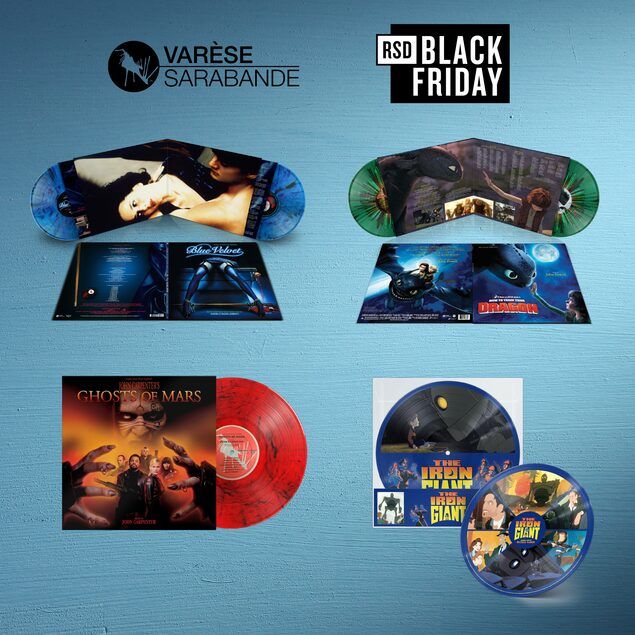
Varèse Sarabande Announces Titles for Record Store Day Black Friday 2021

Varèse Sarabande has announced the following titles will be released on Record Store Day Black Friday 2021: Blue Velvet: Deluxe Edition by Angelo Badalamenti, How to Train Your Dragon by John Powell, Ghosts of Mars by John Carpenter, and The Iron Giant by Michael Kamen.

These special limited-run LP releases will be available on Black Friday, November 26, at participating Record Store Day retailers.

BLUE VELVET (Deluxe Edition 2-LP) – Angelo Badalamenti David Lynch’s dark 1986 masterpiece has a deep and passionate relationship to music, starting with the Bobby Vinton title song that plays a central role in the story (which has been integrated into the original soundtrack for the first time). Angelo Badalamenti was hired by producer Fred Caruso to develop Isabella Rossellini’s version of the song for the film and deliver the tape to David—meeting for the first time. Picture the very moment that Alfred Hitchcock met Bernard Herrmann, or Steven Spielberg met John Williams. The story has now evolved into that kind of legend, often repeated, with the uniquely coiffed director listening to the tape through a pair of headphones and delivering one of his uniquely retro phrases: “That’s peachy keen!”  As part of the Blue Velvet scoring process, Badalamenti recorded lengthy orchestral tracks the pair called “firewood,” which Lynch could use in his distinct sound design. Numerous cues were also created—alternate versions, improvisations, and experimentations that may or may not have been written with a scene in mind, which Lynch could then apply to his film (or not) however he chose. The second LP is full of these cues, mastered from tape and heard for the first time under the title of “Lumberton Firewood.” Generally considered one of the Top 50 soundtracks of all time, the Blue Velvet deluxe edition is pressed on marbleized blue vinyl featuring Enzo Sciotti’s 1986 Italian poster art on the cover and new notes and interviews with David Lynch and Angelo Badalamenti.   

HOW TO TRAIN YOUR DRAGON (2-LP) – John Powell How to Train Your Dragon was composer John Powell’s first solo score for a DreamWorks animated feature and earned him his first Academy Award® nomination. Powell took the Viking milieu literally and started researching Scandinavian folk tunes and musical traditions, which he says are “wonderfully cold and warm at the same time.” Icelandic singer/songwriter Jónsi, of the celebrated band Sigur Rós, is featured on “Sticks and Stones.”  A truncated 11-track LP was part of Record Store Day in 2016, but this is the first-ever pressing of the complete original soundtrack release.  The 25-track album is expanded to two multicolored green splatter LPs and housed in a gatefold jacket. 

GHOSTS OF MARS – John Carpenter In celebration of Ghosts of Mars’ 20th anniversary, the epic soundtrack will be released on “Red Planet” vinyl.  John Carpenter recruited an unbelievable cast of musicians to record the soundtrack to this sci-fi horror film, starring Ice Cube and Natasha Henstridge. Among the featured players are GRAMMY®-winning musician Steve Vai, most of the heavy metal band Anthrax (including Scott Ian), Elliot Easton of The Cars, Buckethead, and Robin Finck of Nine Inch Nails and Guns N’ Roses. This soundtrack is apocalyptic and an important mark in John Carpenter’s unparalleled career as a director and composer.  

THE IRON GIANT (Picture Disc) – Michael Kamen This first-ever picture disc of this heartwarming 1999 animated film celebrates The Robot, his best friend, Hogarth, and a cast of characters. The music is by Academy Award®-nominated composer Michael Kamen (Lethal Weapon, Die Hard), who was well known for his work with Eric Clapton, Metallica and Pink Floyd, in addition to his brilliant theatrical scores.  

See also:

Become a Patron of the blog at patreon.com/musicgamer460

Check out the YouTube channel (and consider hitting the subscribe button)

Don’t forget to like Film Music Central on Facebook 

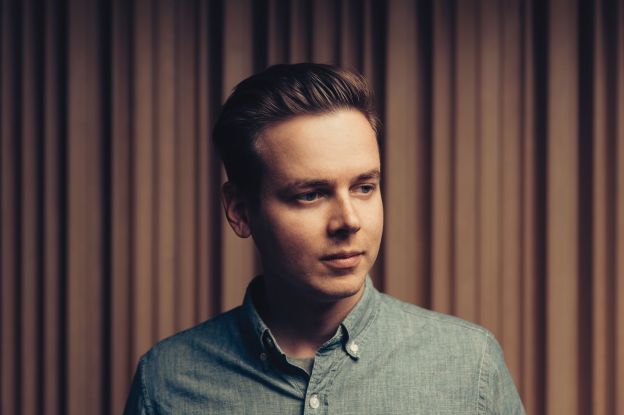
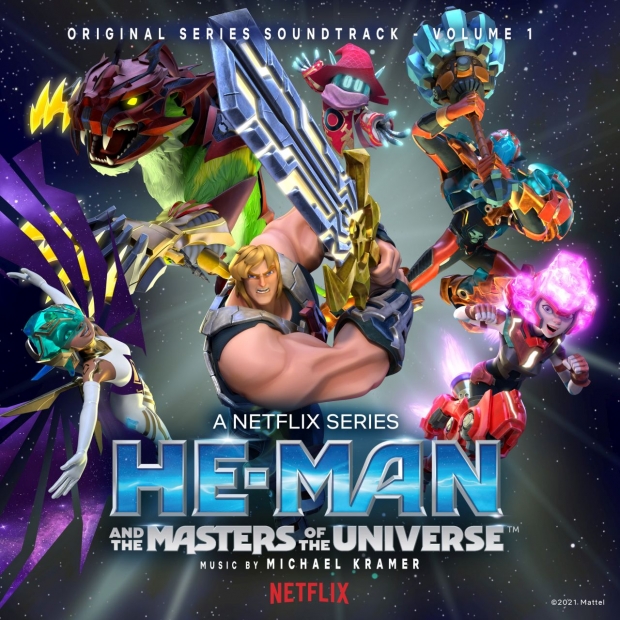
Back to Eternia: Talking with Composer Michael Kramer about Netflix’s ‘He-Man and the Masters of the Universe’ (2021)

Recently I had the opportunity to speak with composer Michael Kramer about his work on the recently released Netflix series He-Man and the Masters of the Universe. (note: this is not to be confused with Masters of the Universe: Revelation that came out this past summer).

Michael Kramer is a two-time Emmy nominated composer who works on film, television, and video games. He studied film scoring at USC and his past credits include LEGO Ninjago: Masters of Spinjitsu, producing music for Star Wars: Galaxy’s Edge, LEGO Star Wars: The Freemaker Adventures and Assassin’s Creed: Black Flag, just to name a few.

In this reimagining of the story of He-Man and the Masters of the Universe, He-Man and his powerful friends Teela, Duncan, and Cringer learn what it means to be a hero while battling the evil forces of Skeletor and his minions.

Please enjoy my discussion with Michael Kramer about He-Man and the Masters of the Universe!

(*warning* plot spoilers for the show can be found below)

How did you get started as a composer?

I’ve always been attracted to music, I would go into the piano room and plunk out the pieces my sisters were playing for their piano lessons. I’ve also always had this love for stories, my mom would read to me so much, and reading was woven into all of our days together. I felt like I had this imagination for storytelling at a very young age. Those two things [music and storytelling] twisted through my life and eventually co-mingled into this thing called film composing. It’s a pretty magical thing, being able to manipulate people’s emotions with music and make them feel one thing or another. I always say it’s the closest thing to feeling like a wizard.

I went to school for music and eventually made my way to USC for their film scoring program. I had amazing teachers and an amazing network to get me started.


How did you get connected with this new Masters of the Universe series?

It was actually a pretty straightforward process this time. I received a brief to do a demo for the show from my agents and thought “Is this what I think it is?” I really swung big and took some chances with the demo. I wasn’t sure if [the showrunners] would be into what I would want to hear in a score for a He-Man remake. However they seemed to be on the same page with me and they picked me to score the show.

When you talk about a “demo”, is that a big thing, little thing, what is that?

That’s a great question. Oftentimes, and I feel this is more common in animation, you [the composer] are given a few test scenes [to score]. Usually they’re pretty rough because it’s early [in production] and you’re working with rough animatics or storyboards. Sometimes this can make it difficult to work out what’s happening on the screen and you have to use your imagination to say “Is this character doing this? Are they jumping up and fighting this character? Sure, I’ll go with that.” You just have to fill in the blanks a little bit.

I had three different scenes to score: one was an action scene, one was more under-dialogue, and one was a comedic scene. [The directors] were testing the different cross-sections of emotions to make sure I could hit all the different tones of the show. And that was [the demo] I submitted.


How familiar were you with Masters of the Universe before working on this series? And what did you think of the reimagined concept for the story?

Growing up, I was born in ’83, the same year the show premiered, so I was a little young to actually watch the show. However, the action figures were a huge part of my play time as a kid. And the show itself wasn’t a big part of my imagination. I watched some of the episodes later, but growing up it was mostly about the action figures. The unique thing about that scenario is, I felt like I had already built up my own conceptions of what these characters were. I had my own unique take on these characters, and this universe and the mythology. That made it easier for me to go on this journey of reimagining the series. Kudos to Mattel for taking a risk and daring to do something different.

When you’re doing a remake of something, the closest analogy I can think of is doing a cover song. I try to think of what makes a really good cover song. It has to be something that stays true to the melody and the lyrics of the original so that it feels like the soul of the original song is intact. It also has to be different with everything else around it or else what’s the point? The most exciting cover songs have this quality and I feel like the most exciting remakes also have this same quality. For us, approaching the series, we wanted to stay true to the lyrics and the melody, the “soul” of MOTU (Masters of the Universe). Everything else…we wanted to dare to do something different. I think it’s a pretty fun and fresh take that a new generation of kids will enjoy.


Since this is a reimagining of He-Man’s story, was any of the music based on the original series, or any iteration of the story, or was it decided to go completely original with the musical score?

It was all original. I went back and listened to a bunch of the original music, to get it in my ears. It’s so specific and of that time, and a lot has changed stylistically. When you think of the amount of film music history, what has come out between 1983 and now…so much has changed.

I did try to take some interesting nuggets, some things that maybe no one would notice but me. One specific example is Adam’s transformation music in the original score. It’s in a specific scale/mode. I wasn’t going to use the same melody, obviously, but I stuck close to that same scale. When you hear the two themes then, they’re different melodies but using the same scale. There’s a similar kind of emotion you feel when you hear that scale of music. Little things like that I tried to use to create some connections. At the end of the day I wanted to do something that felt honest and true to me but also true to the characters and the mythology of the show.


On a related note, was there a specific type of sound the directors wanted you to go for, or was that largely left up to you?

This project was amazing in that the showrunners gave me so much freedom. It’s kind of crazy how much they trusted me to just go out and try crazy stuff. I felt like I could try or do anything and they were always so encouraging. They were great about feedback and would tell me if I was heading in a wrong direction or going down a rabbit hole that they didn’t want to explore. For the most part I felt like I was off in my own sandbox, it was so much fun.

Are there any examples of things you tried that didn’t work out? Without giving anyway?

That’s a great question. The great thing about my job is that a lot of experiments that initially end up on the cutting room floor find their way into the score eventually. I found that if I was respectful of the things we jettisoned and didn’t forget about them, they would often come back in unique and interesting ways. That’s one thing I love about working in the medium of television; it’s such a broad canvas. When you’re working on a film, you have a fairly short story arc. But with television, it’s epic, it’s hours and hours that you’re scoring. The canvas is so large that there are plenty of places to play.


Did you create any specific themes for characters or places for this series?

When I first sat down to map out the thematic universe, it was pretty daunting because there’s so many different characters. There are dozens of themes in the show. One strategy that we decided to go with thematically was that the score would not only represent characters but it would simultaneously represent different ideas and places. A perfect example is in Star Wars with the iconic “Force theme.” Some argue that’s Luke’s theme, other’s that it’s the Force theme, to which I would say “yes.” It operates in a really great way as a character theme and a theme for this concept [of the Force].

For Adam, it’s a similar thing. His theme is also the theme for Castle Greyskull. And the first few notes of that theme is in itself the theme for the “power” of Greyskull. His character and his power all come from the same place, Castle Greyskull, so it’s all wrapped up together. When you start making connections like this to character and concept, the score can then start making interesting connections and opening wormholes to other moments that the viewer might not necessarily think of. That’s my job, as a composer, to try and make all these connections and help point out things that rhyme in the story.

I really wanted to ask about Keldor, who becomes Skeletor, does Keldor’s theme becomes Skeletor’s theme or does one feed into the other?

Skeletor’s theme was one of the first things that I really sank my teeth into. His melody, for Skeletor and Keldor, those melodies are the same. It’s the same person, the same character, the same story arc. However, what’s different is the instrumentation. He has this creepy, slinking, shifting sounds for his Keldor variation. And then, as soon as he transforms into Skeletor, it’s like running the orchestra through an amplifier. There’s tons of distortion, me screaming into a microphone for different shouting sounds. If it didn’t give me the heebie-jeebies then it wasn’t good enough. I really pushed this theme to live up to the “Lord of Darkness” as it were.


How much time did you have to score Masters of the Universe?

Generally it was a couple of weeks per episode. It’s an immense amount of music and really intricate. What makes this music so time consuming is that it’s not just big orchestral, thematic music, which takes forever to write. On top of that, pretty much every character has their own set of colors. Before I started scoring I did a ton of experiments so that each character has a sound that, basically when you hear that sound, it’s that character. Every character has their own iconic sound within the musical landscape. It’s a really colorful score and painting in all those colors is so time consuming. But I hope it supports the storytelling and helps the viewers fall in love with the characters.


Do you have a favorite piece of music for this series?

I think I really love how “We Have the Power” turned out. It’s the track where our MOTU characters power up for the first time. It’s also the first time you get to hear the full MOTU theme. It’s rare to have a really big canvas to write a big melody like that, the visuals in that sequence are just so stunning. I really love how that one came out.

I want to give a huge thank you to Michael Kramer for taking the time to speak with me about his work on Netflix’s He-Man and the Masters of the Universe! I hope you enjoyed this interview and have a great day!

See also:

Composer Interviews

Become a Patron of the blog at patreon.com/musicgamer460

Check out the YouTube channel (and consider hitting the subscribe button)

Don’t forget to like Film Music Central on Facebook 🙂