Author Archives: Film Music Central

Unknown's avatar

About Film Music Central

I'm a 33 year old musicologist and blogger and I've had a lifelong obsession with film music, cartoon music, just about any kind of music!

Bringing the Show to Life: Talking with Ian Eisendrath about ‘Come From Away’

I recently had the chance to talk with Ian Eisendrath about his work as music supervisor for Come From Away. Eisendrath worked on both the Broadway show and oversaw the filmed production that is now on AppleTV+. Come From Away, for those not familiar, recounts the real-life story of when hundreds of passengers were stranded in Newfoundland for a period of time in the immediate aftermath of the September 11 terrorist attacks. It’s a powerful story of people coming together in a time of need and I recommend checking the show out if you get the chance.

I hope you enjoy this interview!

…………………………………………………………………….

Just to start with, can you explain what a music supervisor does?

It’s challenging to describe, and everyone will have their own definition. I have found that the role and responsibilities shift from project to project.   I have also spent the last year and a half working as an executive music producer, collaborating with some very talented music supervisors).  At the end of the day, we take responsibility for managing and bringing together all of the musical elements, from development through post. We support, manage, collaborate, and participate in the realization of the filmmaker, songwriter, studio, producer vision for how music exists and functions specifically and overall in the world of the film or show.  

It’s a bit more detailed than just being the composer for something.

Yes, I  often interact with almost every member of the filmmaking team, production team, and cast. I  get in the trenches with the songwriters, supporting development of the musical language, the musical structures, and overall vibe for how the story is being told through music. On the non-creative side, I often manage (and work closely with other members of the music team and studio) to schedule overall workflow for music development, music production, music rehearsal, on-set music recording, and the final stages of music production that take place during post.  Throughout prep – the period of time before rehearsal and principal photography begin – I interact closely with the director, providing support and feedback to ensure that music is headed in a direction that supports their vision. Wrangle and support the extensive noting/approval/revisions processes that take place between songwriters, directors, choreographers, producers, the studio, and members of the music team. I will often = produce or co-produce the demo sessions, hire and rehearse the demo singers and instrumentalists,  engage arrangers and orchestrators, oversee the creation of the scores that will be used for rehearsal and production, and really…just do what needs to be done to get the material ready for rehearsal and filming.   During rehearsal, I spend a lot of time coaching the actors on their vocal performances (connecting every musical choice to character, dramaturgy, and the acting values that the director and actors are discussing), work closely with the (very talented) vocal coaches brought on to support each specific actor (Eric Vetro, Liz Kaplan, Fiona McDougal), work closely with the songwriters, director and choreographer to ensure that they are getting what the need out of the music and vocal performances being developed, supporting the dance creation process – which often involves adding or shifting music to support what will be happening on camera, and working closely with the entire production team to plan how we’re going to record and playback music and vocals for each camera setup (what are we recording live?, when are we lip-synching to playback?, how do we get in and out of a each section of music?, what will the actors and filmmakers hear?)

During the shoot – principal photography – the entire music team is responsible for making sure that everything goes seamlessly from a musical perspective and that they are never waiting on music. I am also on hand to implement in-the-moment shifts and changes to the music, to coach and oversee  vocal performances. It is so crucial that the performance being captured on camera is both musically and dramatically sound because we will be living with that timing and performance forever!  

During post, I work closely with the music editorial department to support the director’s process throughout their picture cut, manage and oversee the recording and production of the final versions of each cue, and participate in the mixing process for the music in the film.  I am also sometimes lucky enough to conduct the orchestra, which is one of my favorite things in the world to do.

You worked on the Broadway version of Come From Away also right?

I was fortunate to be involved from the beginning and to work closely with David [Hein] and Irene [Sankoff], the writers – who are also the songwriters, the director, Chris Ashley, and the choreographer, Kelly Devine, on the creation and development of the Broadway production. I was engaged as the music supervisor, music director, and arranger, and in addition to my work as a music supervisor, I wrote the musical arrangements, conducted the band, and played keys and accordion. From a musical perspective, our goal was to use songs, themes, and motifs to create (what feels like) a 100-minute, through-composed documentary, something that felt unlike any other show currently playing on Broadway. [ I was so fortunate to be the Music Supervisor, Arranger, and Music Director for almost every phase of development, including readings, workshops, rewrites, out-of-town productions in La Jolla, Seattle, DC, and Toronto, and the original Broadway production.    After a successful opening on Broadway, we ended up opening four additional companies – Toronto, UK, Australia, and the North American tour, telling the story across the globe.   

When and how was it decided that you’re going to make a film version of this show?

The pandemic made this adaptation timely and necessary. There had been an ongoing discussion of adapting it for feature film, but with live theatre shut down, it became necessary. We were in a time when people were in dire need of stories that bring comfort and inspiration, and also in need of anything close to what feels like communal story-telling and music making. So – our producers and creative team decided to create a film version of the live theatrical production that gives people that experience of watching the show in the theater. 

So is the show that you created a single performance? Or were there multiple takes that were compiled together?

It was a combination of a single performance in front of a live audience – I believe it was the first audience that had been assembled in a Broadway theatre since Broadway shut down – and many shorter takes, from various angles and distances. 

So what changes, if any, did you have to make for the production to let it be filmed?

The material remained untouched, but we had to re-approach HOW we filmed and recorded the material.  This is what made my job as music supervisor most interesting on the film.  The show features live music – instrumental and vocal – that runs throughout 95% of the show, underneath intimate dialogue, solo vocals, and featured instrumentals. I really enjoyed working closely with our sound team (Gareth Owen, Sound Designer, Tod Maitland, Production Sound Mixer & Recordist and Russell Godwin, Sound Associate) and our music production team (Wendy Cavett, Scott Wasserman, Derik Lee, Chris Ranney, and many others) to figure out how to playback and record music in a way that would provide as much separation and flexibility for the editing process.

It’s sort of ironic, because, in order to create a film mix that gives the audience the impression of a live experience, we needed to get as clean and separate of an audio capture on the individual elements – solo vocals, group vocals, solo instruments, dialogue, foley/environment, etc… – as possible. We ultimately decided to fit every actor and musician with in-ear monitors, as you would on a film, so that we could keep the theatre as quiet as possible in order to capture live vocal and instrumental elements. We’d sometimes do a pass with the soloists singing out loud while the group vocals and instrumentals would be performed silently, and then we’d get isolated coverage on solo instruments, foley, shouts, etc…. Once we finished filming, all of the raw material that was re-assembled in the music and picture edit process (shoutout to August Eriksmoen, our Associate Music Producer who helped me balance this while working on a couple of other film projects), remixed the music and hopefully ended up with something that feels like a live theatre experience.

It sounds like it was a big job. How long did it take to like complete the adaptation from stage for film?

We found out about this, I think it was November of 2020. And then everyone started working non-stop, working on the changes that needed to be made to make it filmable, many, many discussions with the talented musicians and sound team members about how we were going to record and produce the music. [It also involved] working with the film team and working with general management on, how do we get everyone, an entire company, and film crew, quarantined, living in a hotel, COVID tested and COVID free so that we could all gather in a contained theatre with cast and  members not wearing masks. This was earlier in the pandemic, when we didn’t know how COVID worked, and the rules were constantly changing!  It was a massive undertaking, from many people across many facets of production – from creative to management, to talent, to catering, to transportation, to hotels…everyone had to think way outside the box. And, honestly, it was this beautiful synthesis of the film world coming together with theater world and figuring out how to bring together the people, cultures, and traditions of film and live theatre, because we all need each other to make this happen. Sort of like what the film is about…, all of these people from all over the world ending up together without any warning, during a moment of crisis, figuring out how to survive and make the best of a challenging time. So it feels like we were having our own Come From Away experience while we were filming and telling the story.

Yeah, I did have a more general music question too. I noticed that it said the traditional Newfoundland songs are included. How was it decided which ones to use?

David Hein and Irene Sankoff, the writers, and I immersed ourselves in the music. We fell in love with the music of Newfoundland, had playlists that last four to five days, and just listened and loved the music.  We brought on Bob Hallet (Newfoundlander musician, writer, producer of GREAT BIG SEA fame) to be our music consultant, August Eriksmoen (orchestrator/multi-instrumentalist with a massive background in folk music), and we hired several musicians from the Celtic/folk world to be part of our band from the first out of town production through the closing of our Broadway production.  These incredibly skilled and knowledgeable musicians – Ben Power, Caitlin Warbelow, Romano DiNillo – were great mentors to me throughout the process.  

Our goal was to honor and recreate the incredibly unique sound of that region.  Since the music in the film is almost entirely original music, with the exception of a couple references to pop songs, some traditional prayers, and two folk songs of Newfoundland, we spent a great deal creating and arranging themes and motifs that supported character and story, while also capturing the essence of the music of Newfoundland. In the end, we have a rhythm section (drums, keys, bass, and guitars) plus instruments that are part of the traditional and contemporary music scene in Newfoundland (fiddle, whistles, flutes, button accordion, octave mandolin, mandolin, bodhran, etc…)  I love that the ultimate sound is a mashup of traditional and contemporary, Celtic and pop…best of all worlds.  

……………………………………………….

I’d like to thank Ian Eisendrath for taking the time to talk with me about his work on adapting Come From Away for the small screen. I hope you enjoyed this interview and have a great rest of the day!

See also:

Composer Interviews

Become a Patron of the blog at patreon.com/musicgamer460

Check out the YouTube channel (and consider hitting the subscribe button)

Don’t forget to like Film Music Central on Facebook 🙂

Soundtrack News: Persuasion (Soundtrack From the Netflix Film) is Available Now

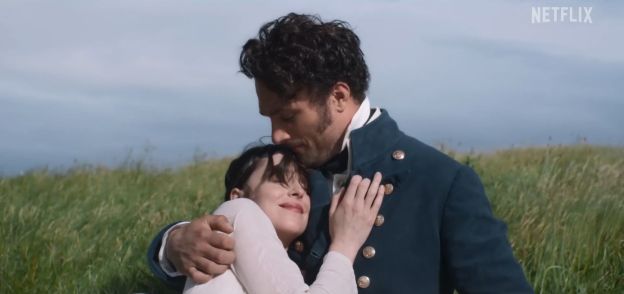
Netflix is excited to announce the release of Persuasion (Soundtrack From the Netflix Film) by composer Stuart Earl. Coinciding with the release of the film, the album is available now, on all major digital streaming platforms and includes the single “Quietly Yours” by Birdy. Stuart Earl is an award-winning, Ivor Novello nominated composer. He’s based in London and works in film, television drama and theatre. 

Living with her snobby family on the brink of bankruptcy, Anne Elliot (Dakota Johnson) is an unconforming woman with modern sensibilities. When Fredrick Wentworth (Cosmo Jarvis), the dashing one she once sent away, crashes back into her life, Anne must choose between putting the past behind her or listening to her heart when it comes to second chances.

Regarding the score for Persuasion, composer Stuart Earl had the following to say:

“Composing the score for Persuasion and the creative process with [director] Carrie Cracknell was a complete joy. I was brought on relatively early in the process, which was great, as it allowed me to work on ideas whilst they were still shooting, including writing the music that they dance to in one of the scenes. But what was really creatively enjoyable, was that some of those very early sketches written to script, went straight into the edit and stayed there.”

He continues, “One of the real challenges with the score for Persuasion was getting the balance of tone between the lighter, comedic material alongside the more emotional journey that spans the film. This was something that definitely evolved over time during the editing process and swung between the extremes until we found a mix that seemed to sit well together and hold and deliver both of these tonal ideas together.”

TRACKLIST:

1. Quietly Yours+ 3:54

2. Clifftop Prelude 1:27

3. Journey to Uppercross 1:35

4. Lanterns 0:59

5. Into The Sea 1:39

6. The Letter 2:15

+Original Song by Birdy

See also:

Become a Patron of the blog at patreon.com/musicgamer460

Check out the YouTube channel (and consider hitting the subscribe button)

Don’t forget to like Film Music Central on Facebook 

Soundtrack News: ‘The Sea Beast’ Original Soundtrack is Available Now

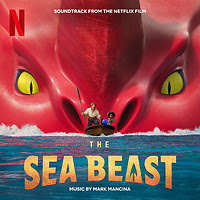
Milan Records has released The Sea Beast (SOUNDTRACK FROM THE NETFLIX FILM) with music by three-time GRAMMY Award-winning composer Mark Mancina. Available everywhere now, the album features music written by Mancina for Netflix’s animated adventure film. The project reunites Mancina with Academy Award-winning filmmaker and The Sea Beast director Chris Williams, the duo having previously worked together on 2016’s Moana. For their latest collaboration, Mancina has crafted an expansive, multilayered soundscape that adds depth and nuance to the seafaring epic while capturing its adventurous spirit.

In an era when terrifying beasts roamed the seas, monster hunters were celebrated heroes – and none were more beloved than the great Jacob Holland. But when young Maisie Brumble stows away on his fabled ship, he’s saddled with an unexpected ally. Together they embark on an epic journey into uncharted waters and make history. From Academy Award winning filmmaker Chris Williams (Moana, Big Hero Six, Bolt), The Sea Beast takes us to where the map ends, and the true adventure begins.

Of the soundtrack, composer Mark Mancina had the following to say:

“How grateful I am for the opportunity to have composed The Sea Beast’s original score. A successful score, in my opinion, is one that deeply enhances the film, yet can stand on its own. I think our team accomplished that with this score. It was also a great pleasure to collaborate once again with the brilliant Chris Williams.” 

Of his collaboration with Mark Mancina, director Chris Williams adds:

“When I started developing The Sea Beast, I knew I wanted to tell an original story that evoked the classic adventure films I grew up with. And I knew, without a doubt, that Mark would be perfect for it. Mark brought his talents to bear, and created a score that acknowledged its influences without feeling trapped in the past. It’s an invigorating blend of the timeless and the new, and it’s everything I could have hoped for.”

Tracklisting
1. Prelude to the Sea – Mark Mancina
2. The Sea Beast – Mark Mancina
3. King and Queen – Mark Mancina
4. Someday – Mark Mancina
5. Jacob Evolving – Mark Mancina
6. Captain Crow – Nell Benjamin & Laurence O’Keefe
7. The Fight of the Giant Crab – Mark Mancina
8. The Hunters Code – Mark Mancina
9. One More Try – Mark Mancina
10. Jacob into the Sea – Mark Mancina
11. Crow’s Betrayal – Mark Mancina
12. Little Blue – Mark Mancina
13. Red – Mark Mancina
14. Gwen Batterbie – Mark Mancina
15. Wear It Down – Mark Mancina
16. Blue and Maisie – Mark Mancina
17. Maisie’s Speech – Mark Mancina
18. Wherever the Wind Takes Us – Mark Mancina

See also:

Become a Patron of the blog at patreon.com/musicgamer460

Check out the YouTube channel (and consider hitting the subscribe button)

Don’t forget to like Film Music Central on Facebook 

Soundtrack News: The ‘Resident Evil’ Soundtrack from the Netflix Series to be Released July 15

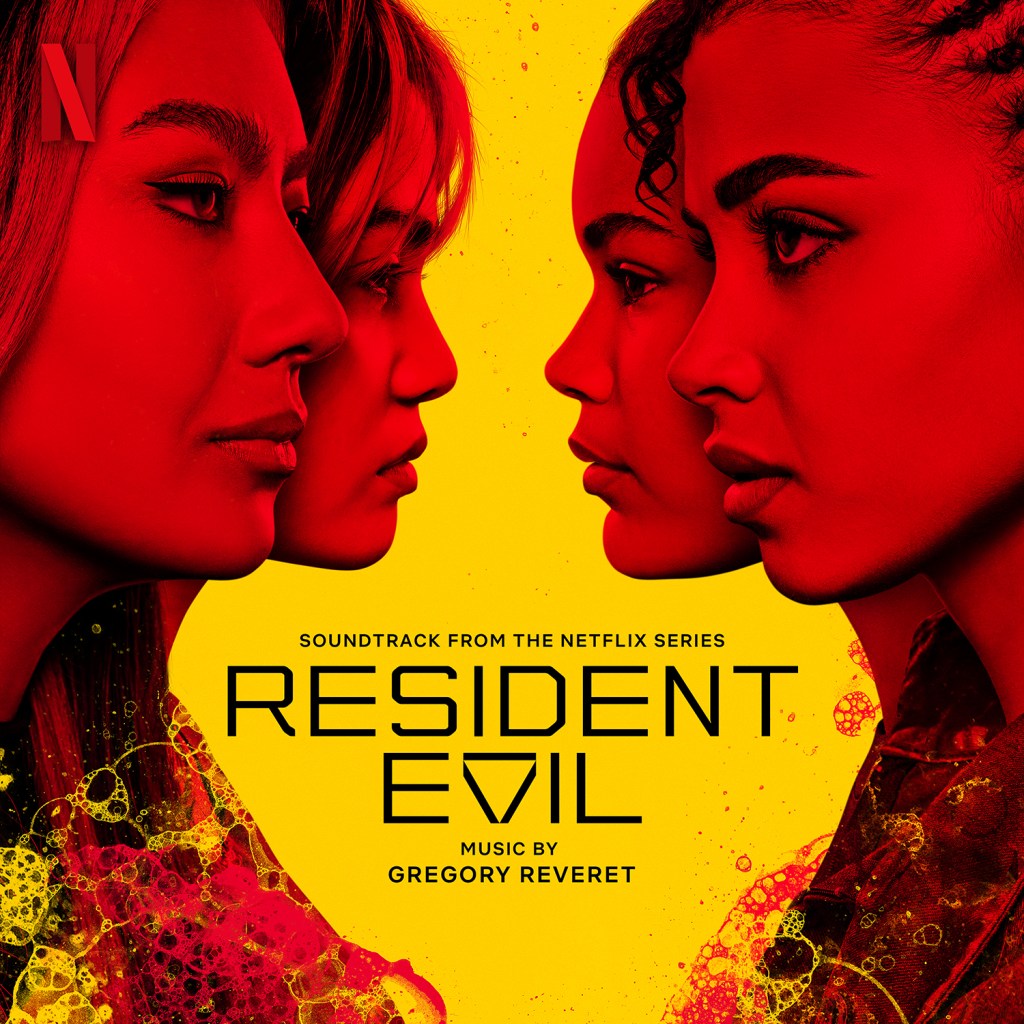
Milan Records has announced the release of RESIDENT EVIL (SOUNDTRACK FROM THE NETFLIX SERIES) with music by composer Gregory Reveret. Available Friday, July 15, the album features score music written by Reveret for Netflix’s Resident Evil, the first live-action series of the global franchise.

A longtime fan of Resident Evil, Reveret crafted an action-adventure-horror score wholly unique to the new series, which unfolds over eight episodes and across two distinct timelines. Recording with a South African orchestra, the multidimensional soundscape incorporates heavy percussion, tribal vocal chants and a sound bed largely produced by vintage laboratory test equipment. At times sweepingly orchestral and others darkly industrial, Reveret’s expansive score straddles the divide between the show’s timelines with a genre-defying sound befitting the brand new story.


The soundtrack also features “My Heart Has Teeth,” a brand-new original song from a long-time fan of the franchise, critically acclaimed electronic musician deadmau5 featuring pop vocalist Skylar Grey. For his soundtrack contribution, deadmau5 drew upon his older JUNO and Jupiter synths forgoing trendy analog synths and sci-fi features, resulting in a grindy, downtempo vibe. “’Dystopian suburbia’ is the kind of vibe I had in mind when making this song.  It’s been pretty cool because I like that weird, corporate overtone of this entity that owns the village if you would. I just imagine what that would be like while roughly composing the song with of course the vocal accoutrement of Ms. Skylar Grey.  She’s an amazing talent to work with and she just nailed the lyrics.”  Look for the song to be available as a single on deadmau5’ label mau5trap soon.G

Of the soundtrack, composer Gregory Reveret had the following to say:

“I wanted to explore and push the boundaries from the earlier sounds of the franchise while delivering a fun, action-packed score that would give fans something they could really enjoy and have fun with. The thematic material needed to be bold, to really serve as a continuous thread between the two timelines in the story. I bought this obscure lab/test-equipment that was originally used in NASA laboratories and is not really supposed to make music, but it sounds really interesting and alive. It gave the music a cool industrial edge and eventually became a main feature of the score. Much of the story is based in my hometown of Cape Town, South Africa, so I also worked with local musicians and recorded a South African orchestra, which is something I’m very proud of.”

ABOUT RESIDENT EVIL

Year 2036 – 14 years after the spread of Joy caused so much pain, Jade Wesker fights for survival in a world overrun by the blood-thirsty infected and mind-shattering creatures. In this absolute carnage, Jade is haunted by her past in New Raccoon City, by her father’s chilling connections to the sinister Umbrella Corporation but mostly by what happened to her sister, Billie.

RESIDENT EVIL (SOUNDTRACK FROM THE NETFLIX SERIES)

TRACKLISTING –

  1. Sea of Zeroes
  2. Plague from God
  3. The Doberman
  4. What is Happening
  5. Evelyn’s Plan
  6. Lab Search
  7. My Son is Dead
  8. Venus Flytrap (Main Theme)
  9. Meet Bert
  10. Humvee Chase
  11. Don’t Eat Cats
  12. Home Safe
  13. Lickers Attack
  14. Final Battle
  15. My Heart Has Teeth – deadmau5 featuring Skylar Grey

See also:

Become a Patron of the blog at patreon.com/musicgamer460

Check out the YouTube channel (and consider hitting the subscribe button)

Don’t forget to like Film Music Central on Facebook 

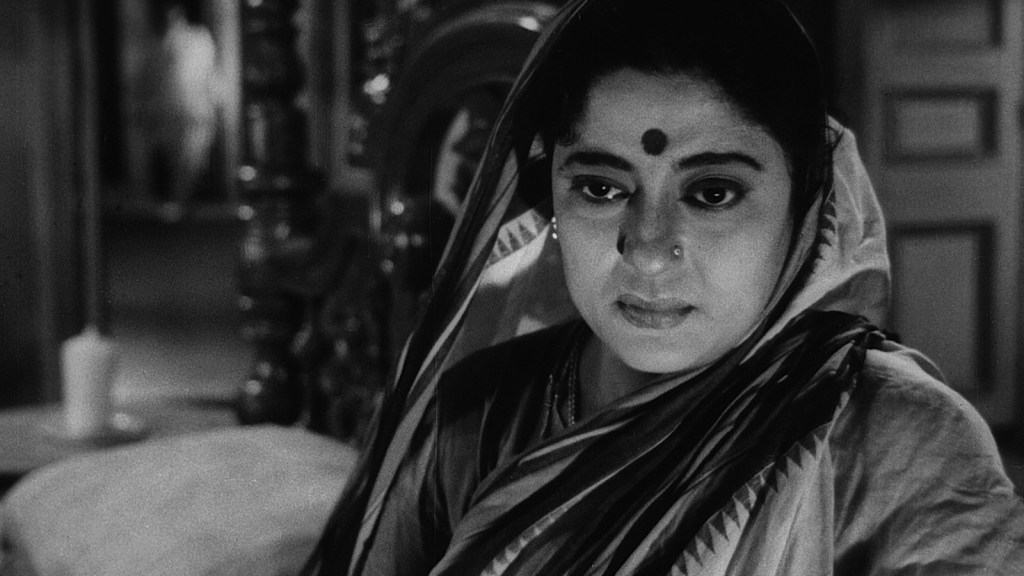
My Thoughts on: The Music Room (1958)

Yesterday, for the first time in a while, I sat down and watched a movie from my collection. I’ve actually seen The Music Room before, but I hadn’t blogged about it, so today I decided to change that.

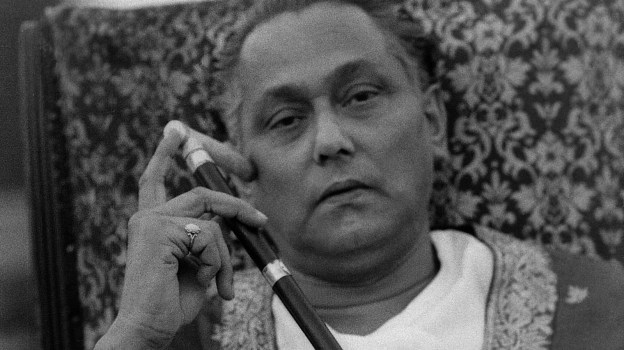
If you’ve never seen Indian cinema, then The Music Room (Jalsaghar) is a pretty good place to start. The film was directed by the legendary Satyajit Ray and was released in 1958. I believe the story is set sometime after India achieved its independence from the British Empire in the late 1940s, a time of great change for millions of people. But for Biswambhar Roy (Chhabi Biswas), the main character of the story, all of these things don’t concern him in the least. He’s a zamindar (landlord) from a noble family and he happily spends his days throwing parties and music recitals instead of managing his lands or his dwindling finances.

Biswambhar Roy’s financial difficulties, and indeed his decline throughout the story are set in direct contrast to the rise, well, the attempted rise, of Mahim Ganguli (Gangapada Bose), the son of a moneylender, who works and invests his way into great wealth by the end of the story. It is made painfully obvious that Mahim is attempting to buy his way into the polite society that Biswambhar Roy belongs to, thinking that money alone is all he needs to get in. But what Mahim fails to understand is that, in this society at least, money is not what makes one noble, but rather one’s background. That’s why, despite eventually being left with no money, Biswambhar Roy still receives more respect from the locals than Mahim can ever dream of getting.

However, don’t think that this is only a story about Mahim Ganguli rising where Biswambhar Roy falls. While that is a significant side plot, the crux of the story is with Roy and the end of life as he knows it. As I said at the beginning, Biswambhar Roy is obsessed with giving music recitals, indeed he’s obsessed with music in general (even his wife comments on it). And it’s this obsession that leads to the downfall of the family. Even though Biswambhar Roy is cautioned that the money is running out, the zamindar is determined to prove that he can still provide the entertainments traditionally expected of men of his status, especially if it shows up upstarts like Mahim Ganguli. This he does….but with tragic consequences that bring Roy’s world crashing down upon him in a scene of pure heartbreak.

Speaking of music, part of what makes The Music Room so notable is that the film highlights Indian music and Indian dance and incorporates both into the story. We are treated to several vocal performances from some of India’s greatest musicians of the time (I particularly highlight Begum Akhtar’s performance as the singer in the film’s first music sequence). The Music Room was the first film to do this and I feel it captures a perfect snapshot of Indian music and dance from that era. Indeed, if I ever found myself teaching a music class again, when the time came to discuss world music I would have my students watch this film because it highlights so much of Indian music so well.

Ultimately, The Music Room is a tragedy of the highest order. No matter how much Biswambhar Roy wishes it, the glory days of his family will never return and watching this man lose everything is a heartbreaking experience that will stick with you long after the credits roll.

Let me know what you think about The Music Room in the comments below and have a great day!

See also:

Film Reviews

Become a Patron of the blog at patreon.com/musicgamer460

Check out the YouTube channel (and consider hitting the subscribe button)

Don’t forget to like Film Music Central on Facebook

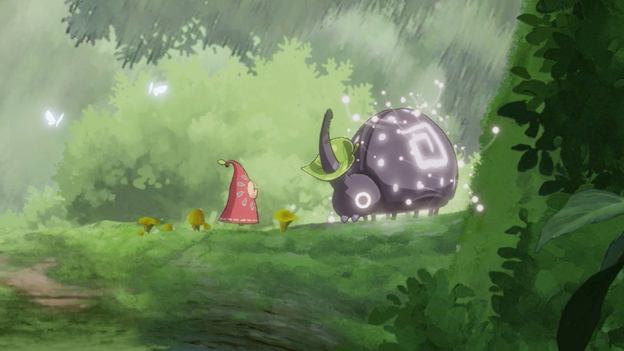
Soundtrack News: HOA (Original Video Game Soundtrack) Available July 15

Sony Music Masterworks today releases the lead single from HOA (ORIGINAL SOUNDTRACK) with music by composer Johnannes Johansson – listen to “Waltz” here. Johannes Johansson is a Swedish composer and pianist. He is best known for his YouTube channel Akmigone where he posts original music, piano arrangements, as well as other creative piano-related content.

Available in full Friday, July 15 and to preorder now, the album features music composed by Johansson for the breathtaking new puzzle-platforming game from PM Studios. Johansson was assisted by an audio team consisting of orchestrator and sound design Lauri Koivisto, who led the soundtrack’s live recording sessions, and sound engineer Simon Evig, whose mixing, editing and recording expertise brought the music of Hoa together. The resulting 17-track collection matches the peaceful, relaxing atmosphere of the game with captivating story-telling and a touch of nostalgia. Hoa is available to play now on PC, Mac and consoles.

Hoa is a beautiful puzzle-platforming game that features breathtaking hand-painted art, lovely music, and a peaceful, relaxing atmosphere. Experience the magic of nature and imagination as you play the main character, Hoa, on her journey through breathtaking environments back to where it all began.

HOA (ORIGINAL SOUNDTRACK): TRACKLISTING –

  1. Intro
  2. Waltz
  3. Hoa
  4. Bouncy Larvas
  5. Dance of the Ladybugs
  6. Hello Rocks
  7. Underwater
  8. The Factory
  9. Rescue
  10. Alarm
  11. RUN!
  12. Remember
  13. Memory
  14. Lullaby
  15. Lullaby (Mirror)
  16. Lullaby (Upside Down)
  17. Lullaby (Reverse)

See also:

Become a Patron of the blog at patreon.com/musicgamer460

Check out the YouTube channel (and consider hitting the subscribe button)

Don’t forget to like Film Music Central on Facebook 

Soundtrack News: ‘Rise’ Original Motion Picture Soundtrack Available Now

Walt Disney Records has released the RISE Original Motion Picture Soundtrack, featuring a stirring score by Ré Olunuga. Ré Olunuga is a Nigerian composer of multi-genre orchestral and experimental music. With a unique approach to instrumentation that imbues his music with an unmistakable sense of engagement and tactility, Ré’s work spans across Film & TV soundtracks to ambitious art pieces and even a dalliance with the mainstream through collaborations with commercial recording artists. 

 RISE is based on the triumphant real-life story about the remarkable family that gave the world the first trio of brothers to become NBA champions in the history of the league – Giannis and Thanasis Antetokounmpo of the Milwaukee Bucks and Los Angeles Laker Kostas Antetokounmpo, and their younger brother Alex. 

TRACK LIST

  1. The Adetokunbos (0:59)
  2. The Whole Family Scores (2:03)
  3. Giannis Discovers Basketball (1:34)
  4. Mama! Police! (1:16)
  5. Charles and Vera’s Escape (3:41)
  6. Bamidele’s Rent (1:05)
  7. This Is Our Home (1:22)
  8. Giannis Wonders About Francis (2:17)
  9. Vera’s Hope (2:58)
  10. Giannis and Thanasis Train in the Rain (1:32)
  11. Like Father, Like Sons Pt. 1 (1:14)
  12. A Difficult Game / Ko Easy! (1:15)
  13. Akin’s BBQ (1:00)
  14. Like Father, Like Sons Pt. 2 (0:56)
  15. The Family Gets Evicted (0:59)
  16. Leading the Team (2:21)
  17. Charles and Vera (1:30)
  18. Tell Them Who We Are (2:35)
  19. RISE MAIN THEME / ADETOKUNBO (5:07)
  20. Rise – Ofili (3:38)
  21. Obago (feat. Obi Iross) – Ofili (3:29)
  22. One Day – Shirazee (3:35)

See also:

Become a Patron of the blog at patreon.com/musicgamer460

Check out the YouTube channel (and consider hitting the subscribe button)

Don’t forget to like Film Music Central on Facebook 

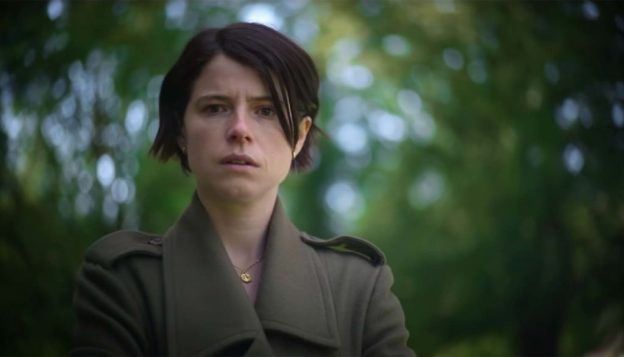
My Thoughts on: Men (2022)

*Note: this review was originally published for subscribers on Patreon in May

*minor spoilers below*

Well, it was bound to happen sometime. After seeing over ten movies in theaters (so far) this year, I’ve finally seen a movie that completely disappointed me and that is Alex Garland’s Men

What really hurts about this is I was genuinely excited, if slightly nervous, about seeing this movie. I’ve been a fan of Garland’s directorial work since his debut with Ex Machina. I also saw Annihilation in theaters and I liked that film quite a bit (though Ex Machina remains his best work). Based on that history, it seemed reasonable to assume that I would enjoy Men to some degree as well.

Well….that didn’t happen.

The biggest issue is, I sat through the entire movie and I still can’t tell you what Men is supposed to be about. This didn’t bother me for most of the runtime, because I figured a last act twist was coming that would explain everything. Well, there were some last act twists all right, but they did absolutely nothing to explain what the BLEEP was going on in that movie. I don’t mind when movies don’t completely spell everything out for you (Garland’s first film Ex Machina is a prime example) but Men doesn’t come close to explaining what is happening or why.

An equally grievous fault is that Men is trying way too hard to be clever about its subject matter (whatever that is). It’s almost like Garland thought that by filling the movie with lewd, disgusting men who are *minor spoiler alert* ultimately defeated by a woman, that he would find a receptive audience. But, if anything, the male characters in this film were a complete turnoff for me. Perhaps if Garland had done a better job explaining what was going on in the story, it might have been more palatable. But as it is, we were subjected to a litany of offensive comments that at times had the audience commenting out loud about how offensive they were (especially when the priest character tried to justify the spousal abuse that the main character suffered). That moment disgusted me and in hindsight I probably should’ve walked out at that point.

For a time, it almost seemed like the film had an interesting premise going. It seemed to me that our heroine was encountering the manifestation of an ancient pagan god (depicted on an ancient basin used as a baptismal font in the village church) who was interested in acquiring a mate because, well, that’s what fertility gods do. But then, as I alluded to earlier, there was a last act twist that not only blew that theory to ribbons, it also completely confused me because it seemed to come completely out of left field.

I will say this much for the film: Rory Kinnear puts on the performance of a lifetime in this movie. I lost count of all the characters he played, but there’s such a wide variety it’s stunning to think that he pulled them all off himself. I also enjoyed Jesse Buckley’s performance as Harper, especially in the latter half of the film when the action starts ramping up.

The only other detail of this film that I thoroughly enjoyed was the music. As with Garland’s previous films, the music was composed by Ben Salisbury and Geoff Barrow and it is superbly done. Indeed, had the music been not so good I don’t think I could’ve made it through the film.

I can’t in good conscience recommend going to see Men. It was overall a complete disappointment for me and it is far from Alex Garland’s best work.

See also:

Film Reviews

Become a Patron of the blog at patreon.com/musicgamer460

Check out the YouTube channel (and consider hitting the subscribe button)

Don’t forget to like Film Music Central on Facebook

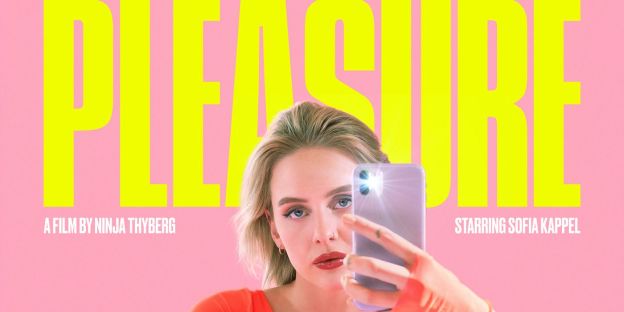
Music for the Female Gaze: Talking with Composer Karl Frid about ‘Pleasure’

Just recently I had the opportunity to speak with composer Karl Frid about his work on the movie Pleasure. Karl Frid studied classical music at the Royal College of Music in London with trombone as his main instrument, before making a musical U-turn. He went to study Afro-Cuban music at the CNSEA in Havana, Cuba before finishing his studies in Afro-American music at the Royal College of Music in Stockholm. Since then, he has worked as a full-time freelance musician, composer, arranger, and producer. His vast knowledge in music ranges from classical and jazz to Latin, hip-hop, and pop music.

Since 2011 Karl has been working closely with his brother, Pär Frid under the name Frid & Frid. They primarily write music for film and TV and have scored several features and TV series of different genres. In 2018 they were nominated in the Best Music category at the Swedish Film Institute “Guldbaggen” Awards for their score for the documentary Citizen Schein

Karl’s latest work for film is the feature Pleasure, by Ninja Thyberg, which was in the official selection of the Cannes Film Festival 2020 and later premiered at the Sundance Film Festival in January 2021, where it received outstanding reviews with special mentions of the score. At the Gothenburg Film Festival, the film was awarded the FIPRESCA Award by the international critic’s jury. The score is a mixture of sacred choral opera and hip-hop. 

I hope you enjoy our conversation about the movie Pleasure!

………………………………………………………………………………………………………………………………………..

  • How did you get started as a film composer?

I’ve always had an interest in film and film music. During my last year of my studies at the Royal College of Music in Stockholm, I took some extracurricular classes in many different fields and one of them was scoring for film and games. I found it very fun, creative, and exciting to be able to create tension and different emotions to picture. But it wasn’t until a few years later when I teamed up with my brother Pär and started Frid & Frid that I really got started with scoring for film. At first, we did some commissions for children’s television and ads, and then we got to do more extensive and challenging projects.

  • How did you get connected with working on this movie? What drew you to it once you saw it?

Pär and I were approached pretty late in the process, about a month from the intended final cut. We had worked with the producers Erik Hemmendorf, Eliza Jones, and Markus Waltå before and they asked us for a meeting with Ninja and sent us a rough cut of the film without any temp music. I remember I was just knocked out by the strength of the film and the fresh and raw look into this special universe. It was so liberating with this obvious and genius take on the female gaze. At the time, Pär was tied up in another project, working on commission for a symphony orchestra, but I was so taken by the film that we decided that I would do the score by myself.

  • How did you come up with the idea to juxtapose sacred opera and hip-hop in the score for Pleasure, that’s not a genre pairing you usually encounter in a soundtrack. What’s the story behind this, I really like how it all turned out.

I had such a great collaboration with Ninja. It was a collective process of problematizing, analyzing, discussing and testing different angles and ideas. We had many long discussions about the patriarchal structures being displayed in the film, about female empowerment, and about our own preconceptions about the porn industry. The idea of mixing sacred choral opera with hip-hop beats came quite early in the process. We talked a lot about finding the inner voice of Bella, and about how she pictures herself, opposed to how the patriarchal society perceives her. This became the musical manifestation of the Harlot vs the Madonna. Heaven or hell. The hip-hop also represents the self-image of the female porn actresses as “bad ass,” with full control over themselves and their surroundings, and we found the clash between the hip-hop and the sacred opera very interesting.

The film has so many layers, and I was constantly reminded and enlightened by Ninja about all the different meanings and details. The film is also changing between many different storytelling techniques – social realism, dark comedy, and elevated scenes in slow motion almost seductive like a music video. We wanted to explore the sounds of the female body and the orgasm, and found this correlation between the fake orgasm and opera, as it’s not a ”normal” way of singing, rather a theatrical, constructed expression. There was also a reference to Hildegard von Bingen, a German nun in the 12th century who composed choral works for nuns. She was also pretty cool since she was pretty outspoken about female sexuality and actually is supposedly the first person to have written the first description of the female orgasm, with her text ”Causae et Curae.” She’s also been known to have had a positive and relaxed view of sex and often opposed to the church’s tendencies to demonize female sexuality.

  • On a related note, are there any themes in the music for specific characters? Or does the music not go in a thematic direction?

Yes, there are. The ”Confutatis” theme, along with “Voca Me Cum Benedictus,” and ”Oro Supplex” are all Bella’s themes – symbolizing her journey in the porn industry and manifesting her innocence and self-image. “Fata Viam Invenient,” is the theme of her antagonist Ava, and “Una Gioia Sempre Viva,” is written as the friendship theme of Bella & Joy, and also works as Joy’s theme.

  • Were you given any specific directions on what to include in the film’s soundtrack?

Not from the start. Ninja wanted an epic score and a unique and special sonic universe for the film. The music should be a statement and a character in itself. It was also very important that the score wasn’t generic or tried to push emotions or judgment on the characters. Music that shouldn’t always go with the emotions but rather be a juxtaposition on what we see on the screen.

  • Were there any musical ideas you tried for the score but ultimately abandoned because they weren’t working out?

Oh yes. The first sketches I made, featuring cello, all turned out too generic. Haha, so I had to restart and find a different angle. But that was great. I think it’s often better to try something out and realize that it doesn’t work, to help you find what does. If you don’t eliminate different options, you’ll have a much harder time finding what you’re looking for. 

  • Did the pandemic affect the recording of the score at all?

Yes, but not necessarily in a bad way. For one, it gave me more time to work on the score. It also limited my resources, which I often find, from a creative perspective, can be really inspiring and force you to explore and push the limitations rather than if you had all the choices in the world. Since so many concerts and events were cancelled during this period, it also meant that Caroline had a lot of time and could be at my disposal in a way that would have been unlikely under normal circumstances as she is often very busy. Which was great for me and the score. It created space for us to go into this creative bubble. Of course, at the same time things were really rough for so many of my fellow colleagues and musicians and times were really uncertain.

  • How much time did you have to work on the music?

At first, not that long, but because of the pandemic, with cancelled festivals etcetera, I got more time to work on the score. I would say that in total I was working on it for about four months.

  • Excluding the voices, is any type of traditional orchestra used in this soundtrack or is it all synthesized?

No, for this score there are no traditional orchestral instruments involved. I basically created the score around the voices of Caroline Gentele and Sofia Kappel. Then, I used those recordings as samples from which I built different voice synthesizers and drums. Apart from that, I basically worked with different 808 samples and drums as well as the Moog Grandmother synthesizer which I find myself returning to for every new project I’ve done since I bought it.

  • Do you have a favorite piece in the score?

I think my favorite piece is “Una Gioia Sempre Viva,” because of its warmth and meaning. But I also like the other pieces a lot. Then, of course, I LOVE the rap tracks I created together with Mapei and Ludvig Klint – “Una Gioia,” “Hard to the Core,” and ”Good Girl/Bad Girl.”

……………………………………………

I wanted to say thank you to Karl Frid for taking the time to speak with me about his work on Pleasure. I hope you enjoyed this interview, and have a great rest of the day!

See also:

Composer Interviews

Become a Patron of the blog at patreon.com/musicgamer460

Check out the YouTube channel (and consider hitting the subscribe button)

Don’t forget to like Film Music Central on Facebook 🙂
Soundtrack News: ‘Mr. Malcolm’s List’ Original Motion Picture Soundtrack to be Released July 1st

 Lakeshore Records is set to release Mr. Malcolm’s List—Original Motion Picture Soundtrack featuring music by award-winning neo-classical composer Amelia Warner (Wild Mountain Thyme), digitally on July 1.  Warner is adept at creating timeless sounding scores for films with expansive stories and for this historical drama, she balances gravitas and grandeur with playful, energetic cues.  The Bleecker Street film directed by Emma Holly Jones and starring Freida Pinto Ṣọpẹ́ Dìrísù and Zawe Ashton exclusively in theaters on July 1st.

Says Warner about Mr. Malcolm’s List:

“I had an incredible time working on Mr. Malcom’s List and was so inspired and excited by Emma’s vision for the film. We wanted the music to feel classic and timeless. We hoped that it would ground the story and give the film weight and grandeur. I really enjoyed playing around with textures, using shimmering harmonics and woodwind trills to create a fizziness and energy. I wanted there to be a fun playfulness and mischief to the score which was achieved with characterful and expressive woodwind. I also wanted the score to feel romantic and sweeping and have hopefully achieved that with the main love theme for Malcom and Selina. I wanted this theme to feel like it was glowing and sparkling surrounding it with magical glittering harmonics and flute trills.”

Breakthrough neo-classical composer Amelia Warner is best known for her stunning soundtrack for the 2018 Irish-American film ‘Mary Shelley’, directed by Haifaa al-Mansour and starring Elle Fanning. It won Amelia the ‘Breakthrough Composer of The Year’ at the International Film Music Critics Association (IFMCA) Awards in 2019, and a nomination in the ‘Discovery of the Year’ category at the World Soundtrack Awards.

Mr. Malcolm’s List is summarized as follows:

When she fails to meet an item on his list of requirements for a bride, Julia Thistlewaite (Zawe Ashton) is jilted by London’s most eligible bachelor, Mr. Malcolm (Ṣọpẹ́ Dìrísù). Feeling humiliated and determined to exact revenge, she convinces her friend Selina Dalton (Freida Pinto) to play the role of his ideal match. Soon, Mr. Malcolm wonders whether he’s found the perfect woman…or the perfect hoax.

TRACK LIST

01. Overture

02. Quite The Reputation

03. Selina

04. Malcolm and Selina

05. A Plan is Hatched

06. Arriving at Hadley Hall

07. A Gift of Friendship?

08. A Trustworthy Gentleman

09. Selina Arrives in London

10. Julia Discovered

11. Croquet

12. The First Meeting

13. A Forgiving Nature

14. Proposal

15. Oh Henry

16. Heartbreak

17. Julia and Selena Make Up

18. The Chase

See also:

Become a Patron of the blog at patreon.com/musicgamer460

Check out the YouTube channel (and consider hitting the subscribe button)

Don’t forget to like Film Music Central on Facebook