Category Archives: Film Composer

Danny Elfman talks Meet the Robinsons (2007)

 There are (unfortunately) a lot of films in the Walt Disney canon that are extremely underrated, and Meet the Robinsons is one of them. I admit, when I saw the previews for this film, I didn’t think it was something I would like. How I ended up watching this film, I really don’t remember, but I do know that I was surprised by how much I enjoyed it.

Danny Elfman talks Meet the Robinsons (2007)

The film follows Lewis (Jordan Fry), a 12-year old orphan who is an aspiring inventor. He’s obsessed with locating his mother, who abandoned him at an orphanage as an infant. Lewis builds a memory scanner that he hopes will show him who his mother is, but in the midst of the science fair, a strange kid named Wilbur Robinson (Wesley Singerman) shows up (claiming to be a ‘time cop’) and before he knows it, Lewis is whisked off to a strange (and pretty wonderful) future.

In this future, there are flying cars, singing frogs and wonderful inventions for every aspect of life. It’s hundreds of times better than anything Lewis has experienced and he very much wants to stay. But first, Wilbur (who actually isn’t a time cop of any kind) needs Lewis’ help to fix one of his dad’s time machines (which crashed when the two boys got into an argument). Lewis agrees, on the condition that Wilbur take him to see his mother afterward. Lewis ends up meeting the rest of the Robinson family, all except Cornelius, the head of the family, who’s away on a business trip. Lewis really wants to be adopted by the Robinsons, but when they learn he’s from the past (and especially when they see his distinctive hair, they suddenly change their minds), upsetting Lewis, who now thinks they don’t really care about him. The truth is…kind of complicated. It turns out that Cornelius IS Lewis and Wilbur is his future son (apparently there’s no lasting harm to the space-time continuum if you meet your future family).

605145c0a76e6f56e2feea39421221cc

At the same time all of this is going on, a strange “Bowler Hat Man” has been seen sneaking around and stealing various items. It turns out that this is Lewis’ former best friend Goob, now grown up. Goob hates Lewis/Cornelius because his projects made him so tired he didn’t make an important catch at a baseball game and he became so bitter over it that he never got adopted. As a result, he ends up working with another abandoned invention of Cornelius’ named DOR-15 (“Doris”) with the aim of stealing Lewis’ very first invention and ruining HIS future. There’s a brief glimpse of a horrifying future where the entire human population is mind-controlled by clones of Doris (Doris appears as a bowler hat but it can clamp down and obscure the eyes when it’s controlling it’s victim). Lewis is able to end this future by promising to never invent Doris in the first place, and after briefly meeting his future self (how does this not disrupt the space-time continuum??), he is returned to his own time, now knowing that the future is going to be beautiful indeed.

Mega_doris

Danny Elfman composed the music for this film and I think he did a brilliant job. The “Making of” video located above looks into how Elfman crafted the score and took inspiration from other cartoon composers like Carl Stalling (who was responsible for most of the music for the original Looney Tunes cartoons). There are some great shots of Elfman in the recording studio (with the work-in-progress film playing on a big screen).

Meet the Robinsons may be nearly 10 years old, but it’s still a fun film that you should definitely try (and the score is great to listen to as well). I hope you enjoy this look into the making of the music for Meet the Robinsons!


See also:

Danny Elfman talks Batman (1989)

Danny Elfman talks Batman Returns (1992)

Danny Elfman “Planet of the Apes” scoring session (2001)

Danny Elfman talks Spider-Man (2002)

Danny Elfman talks Alice in Wonderland (2010)

Danny Elfman talks Fifty Shades of Grey (2015)

Danny Elfman talks Alice Through the Looking Glass (2016)

Film Composer Interviews A-H

Film Composer Interviews K-Z

Become a Patron of the blog at patreon.com/musicgamer460

Check out the YouTube channel (and consider hitting the subscribe button)

Don’t forget to like Film Music Central on Facebook 🙂

Patrick Doyle talks Brave (2012)

Brave is a gorgeous animated film that was created by Pixar and released by Walt Disney Studios in 2012 (Disney acquired Pixar in 2006). The lead character, Princess Merida, has a distinct honor: she is the first Pixar character to be named an official Disney Princess.

hero_EB20120620REVIEWS120629997AR

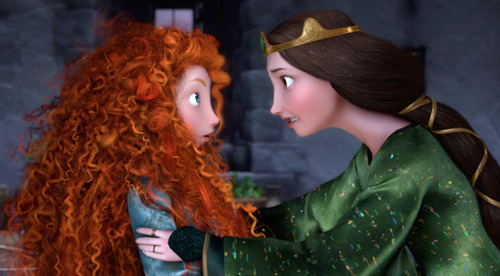
In Brave, Merida, a headstrong princess of the clan Dunbroch and the eldest child of King Fergus and Queen Elinor, is upset to learn that she will be betrothed to a prince from another clan. During an archery tournament that is meant to determine who she will marry, Merida secretly enters and wins the contest, shaming the other princes and infuriating her mother, who desperately wants Merida to act like “a proper princess.”


Wanting to change her fate, Merida defies her family with near-disastrous consequences for all involved. She follows will-o’-the-wisps to the hut of an elderly witch and receives a spell in the form of a cake which she is told to feed to her mother. Upon doing so, Elinor is transformed into a bear and loses her ability to speak. Upon returning to the hut, the pair find the witch gone with a message that explains that “the bond torn by pride” must be repaired by the second sunrise or the transformation will be permanent. Merida must work to repair her relationship with her mother and also prevent war from breaking out between the clans due to Merida’s actions at the tournament. Part of the plot involves respecting tradition while also learning to change for the future. Ultimately, Merida is able to convince the other clans (with subtle help from her mother) that the firstborn of any clan, male or female, should marry in their own time to whoever they choose.

The score for this film was composed by Patrick Doyle, a Scottish film composer best known for his work on several Shakespeare films (Henry V (1989) and Hamlet (1996)) and Harry Potter and the Goblet of Fire (2005). In this five minute interview, Doyle talks about the score and how he created a musical theme for Merida.

tumblr_inline_mwq8ittk6U1qkfkhh

Have you seen Brave? What did you think of it? Did you like the music? Let me know in the comments!

See also:

Film Composer Interviews A-H

Film Composer Interviews K-Z

Patrick Doyle Talks Cinderella (2015)

Become a patron of the blog at: patreon.com/musicgamer460

Check out the YouTube channel (and consider hitting the subscribe button)

Don’t forget to like Film Music Central on Facebook, 🙂

Marco Beltrami talks World War Z (2013)

Wow, I haven’t done one of these in the longest time (would you believe I have about ten interviews in draft form that I’ve been sitting on for the last four months?), so hopefully I still remember how to do this 🙂

This film (in brief), follows a retired UN investigator (Brad Pitt) as he seeks to keep his family safe from a global zombie outbreak. Along the way he works to find a cure (if any) and stop the zombie hordes from overwhelming the human survivors.

World-War-Z-photo-zombies-1

World War Z was never on my list of “must see movies” because I can’t watch zombie films (they’re too real for me), but when I saw that Marco Beltrami had score the picture, I decided it was at least worth investigating to see what the composer had to say. This brief interview I found, while all too short, is enlightening nonetheless. The part that really jumped out at me is when Beltrami describes how he incorporated the tonal sounds of the Emergency Broadcast System (you know, that annoying buzzer/screech that comes on the TV every six months or so when they test the system) into the harmonies of the film score. I haven’t heard it for myself, but it sounds very clever, and would certainly be a great way to heighten the tension in a film like this.

Beltrami also discusses the need for the film to have a main theme, something to ground the story in. And let’s face it, a good theme (or the lack thereof) can make or break a film. If you watched (and liked) World War Z, then you will definitely find this brief video interesting. I only wish I could find a longer interview.

See also:

Marco Beltrami talks Blade II (2002)

Marco Beltrami and Marilyn Manson talk Resident Evil (2002)

Marco Beltrami talks Live Free or Die Hard (2007)

Marco Beltrami talks 3:10 to Yuma (2007)

Marco Beltrami talks The Wolverine (2013)

Film Composer Interviews A-H

Film Composer Interviews K-Z

Become a patron of the blog at: patreon.com/musicgamer460

Check out the YouTube channel (and consider hitting the subscribe button)

Don’t forget to like Film Music Central on Facebook 🙂

The Fellowship of the Ring “Many Meetings” (2001)

After barely (and I mean barely) escaping the clutches of the Black Riders, Frodo awakens after several days in the hidden valley of Rivendell, home of Elrond (Hugo Weaving), the near-legendary son of Earendil, brother to Elros (the first king of Numenor and Aragorn’s distant ancestor), and the father to three children: Elladan, Elrohir and Arwen (Liv Tyler, more on her later).

The visual introduction to Rivendell is stunning, but I am sad to report that the location (with all the waterfalls) does not exist in real life, making Rivendell one of the few locations not to be completely based in a real-life environment. The musical backdrop is full of tranquil choral voices which highlight the fact that Rivendell is a place where one can find peace of mind, no matter what they’ve gone through (and recently Frodo has gone through quite a lot).

As the name of this piece implies, many meetings take place in this scene: Frodo is reunited with Sam, Merry and Pippin, who are all overjoyed to see Frodo recovered, but, to Frodo’s joy, there is one more meeting (more like a reunion), as he sees a considerably aged Bilbo sitting and working on his book (appropriately, there’s a brief refrain of “The Shire” at this moment). The two sit and talk for a while, and Frodo finally accepts that, however much he wanted to be like Bilbo as a child, his own adventure was turning into something completely different.


Keep in mind now that Frodo (at this stage) believes his part in the story is ending. The Ring, so far as he knows, should be safe in Rivendell, therefore he and Sam and the others should be ready to go home to the Shire before long. Unfortunately, the hobbits are soon to discover that they aren’t going home any time soon.

LOTR Fellowship of the Ring 177

Meanwhile, Elrond and Gandalf have been holding their own meeting and Elrond lays out the cold, hard truth: the Ring cannot possibly stay in Rivendell, not with Sauron AND Saruman looking for it. Between the two forces Rivendell would fall sooner or later, and it’s not really up to the Elves to fix the situation anyway. After living in Middle-Earth for thousands of years, most of the Elven peoples are leaving, heading across the Sea to the Undying Lands. Someone else will have to resolve the situation with the Ring.

Gandalf believes he has a solution then “It is in Men, that we must place our hope.” But Elrond is dubious (and in his mind rightfully so). You see, he was there, 3000 years ago, when Isildur defeated Sauron and cut the Ring from his hand. Elrond took the Numenorean prince into the heart of Mount Doom and begged him to destroy the Ring on the spot, and end evil for all time. But even in those few minutes of possessing the One Ring, Isildur’s heart had been corrupted and he refused. Ever since, Elrond has lost faith in any “strength” that Men may possess.

tumblr_inline_n8ox2w4A301rnrk68

A council is being called and delegations from all corners of Middle Earth are arriving: we see Boromir (Sean Bean), riding in from Gondor; Legolas (Orlando Bloom) from the Woodland Elves in Mirkwood; Gloin and Gimli (John Rhys-Davies) to represent the dwarves. Together, hopefully, they will be able to decide what to do with the One Ring.

Tauriel In LOTR

Howard Shore hit the nail on the head when he wrote the music for “Many Meetings.” The piece functions in the same way that “Lothlorien” does after the Moria scenes, since Rivendell immediately follows the frantic chase in “Flight to the Ford.” Now that the danger is (temporarily) passed, everyone has a chance to breathe and relax and the music encourages this feeling. Truthfully, I could listen to this music for several hours and not find it boring. I also love how everything in Rivendell seems to be infused with a golden light (in a similar vein, Lothlorien is predominately silver), and everything feels warm and very much alive.

That’s all for me today, I am beginning to feel better, but still not quite 100%. I hope you enjoyed “Many Meetings”

You can become a patron of the blog at: patreon.com/musicgamer460

Check out the YouTube channel (and consider hitting the subscribe button)

See also: Film Soundtracks A-W

For more Fellowship of the Ring, see also:

The Fellowship of the Ring “The Shire” (2001)

The Fellowship of the Ring “Shadow of the Past” (2001)

The Fellowship of the Ring “The Wood Elves/Passing of the Elves” (2001)

The Fellowship of the Ring “The Treason of Isengard” (2001)

The Fellowship of the Ring “A Knife in the Dark” (2001)

The Fellowship of the Ring “Flight to the Ford” (2001)

The Fellowship of the Ring “The Ring Goes South/Fellowship Main Theme” (2001)

The Fellowship of the Ring “The Bridge of Khazad-Dum” (2001)

The Fellowship of the Ring “Lothlorien” (2001)

The Fellowship of the Ring “In Dreams” (2001)

Don’t forget to like Film Music Central on Facebook  🙂

*all images are the property of New Line Cinema 

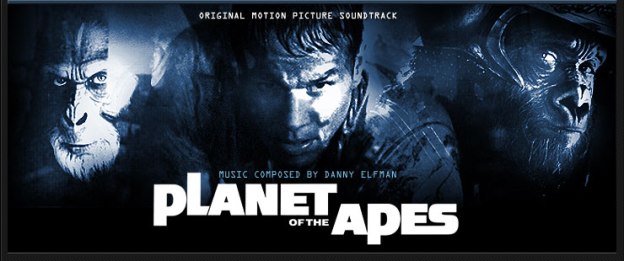
Danny Elfman “Planet of the Apes” scoring session (2001)

*warning, extreme plot spoilers for this film and the 1968 original appear below

Danny Elfman “Planet of the Apes” scoring session

There are two iterations of the Planet of the Apes franchise that most people know very well. The first is the original film series led by Charlton Heston beginning in 1968. This was the first of a series of five films created between 1968 and 1973. The other is the ongoing reboot that began with Rise of the Planet of the Apes in 2011. Inbetween the two is the sometimes forgotten (at least by me) remake Planet of the Apes that launched in 2001.

The 2001 Planet of the Apes was directed by Tim Burton and starred Mark Wahlberg as the astronaut who finds himself stranded on “the planet of the apes,” where apes (gorillas, chimpanzees, etc.) are the dominant species and humans are treated like animals. Unlike the 1968 original, which ends with Charlton Heston’s astronaut discovering that the “planet of the apes” is in fact the planet Earth in the distant future (he finds the twisted remains of the Statue of Liberty on a beach and realizes this is the ruins of Manhattan), the 2001 film ends with Mark Wahlberg’s astronaut using a space pod to launch himself back to his own time. Except, when he crash-lands in Washington D.C., everyone is still an ape (an ending that is never fully explained and was criticized by some for being too confusing).

Though the 2001 film was a financial success, Fox decided to not make any sequels and instead rebooted the series in 2011 with the hit “Rise of the Planet of the Apes” series starring Andy Serkis.

The music for this film was composed by Danny Elfman (of Batman fame), as Tim Burton was directing and the two are well-known for their collaborations. The above clip is a short excerpt from a recording session of the film’s soundtrack. It seems to focus primarily on the brass section, which is great because the music is stunning. I hope you enjoy this brief look at the music of Planet of the Apes (2001)! -Becky

See also:

Danny Elfman talks Batman (1989)

Danny Elfman talks Batman Returns (1992)

Danny Elfman talks Spider-Man (2002)

Danny Elfman talks Meet the Robinsons (2007)

Danny Elfman talks Alice in Wonderland (2010)

Danny Elfman talks Fifty Shades of Grey (2015)

Danny Elfman talks Alice Through the Looking Glass (2016)

Film Composer Interviews A-H

Film Composer Interviews K-Z

Become a Patron of the blog at patreon.com/musicgamer460

Check out the YouTube channel (and consider hitting the subscribe button)

Don’t forget to like Film Music Central on Facebook 🙂

*poster image is the property of 20th Century Fox

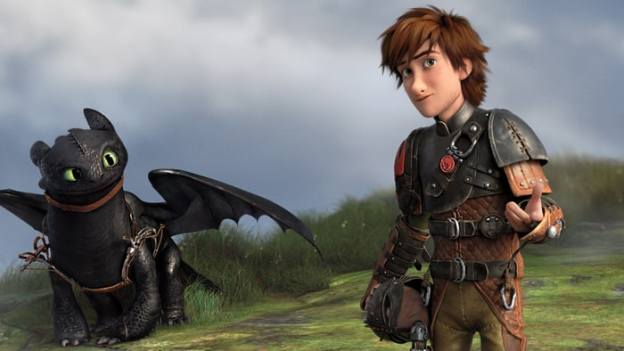
John Powell talks How to Train Your Dragon 2 (2014)

Following the success of the original How to Train Your Dragon (2010), a sequel was released in 2014 to general praise. Five years after the village of Berk made peace with dragons, they live together in harmony and Hiccup is still riding Toothless and exploring new lands.

John Powell talks How to Train Your Dragon 2 (2014)

But there’s an enemy on the horizon: the mad warlord Drago Bludvist is on the move with an enormous dragon army. He seeks to conquer the world with his dragons and it’ll be up to Hiccup and his friends to stop him.

rs-150506-20140612-dragon-x1800-1402590557

Composer John Powell returned to compose the music for this film (having scored the original film and earning an Academy Award nomination in the process). The interview that I have found features the composer speaking in-depth about his score for the film, how he created the various themes and what his creative process was. John Powell is familiar with scoring animated films, having previously worked on such films as Robots, Rio, Happy Feet, Antz and three of the Ice Age sequels (to name a few).

how-to-train-your-dragon-2-poster-full

This is another film series that I haven’t seen due to a lack of free time, but I’ve heard good things about it, so if you haven’t seen it, I recommend it to you. A third film, How to Train Your Dragon 3 is due out in 2018. Enjoy Powell’s talk about How to Train your Dragon 2!

You can become a patron of the blog at patreon.com/musicgamer460

See also:

Film Composer Interviews A-H

Film Composer Interviews K-Z

Don’t forget to like Film Music Central on Facebook 🙂

*poster image is the property of 20th Century Fox

Alan Silvestri “Lilo & Stitch” scoring session (2002)

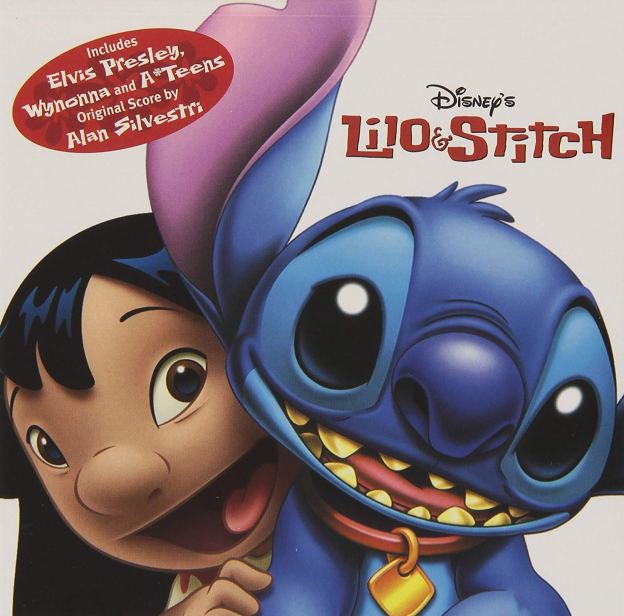
 Lilo and Stitch (2002) was a Disney film released in the early years after the Disney Renaissance ended (Tarzan (1999) is officially held to be the last film of that era). The film takes place in outer space and in Hawaii and follows escaped genetic experiment 626 as he escapes to planet Earth and passes himself off as a dog to the unsuspecting human populace.

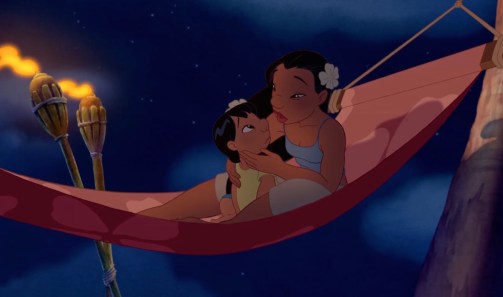
While there, he becomes adopted by a young girl named Lilo (who is having her own social problems while being raised by her older sister Nani) who names him “Stitch.” At the same time, Stitch’s creator, Jumba, is trying to recapture him with the help of Agent Pleakley and various escapades ensue. Captain Gantu (Stitch’s original jailer) is also keen to get him back, and very quickly Lilo finds herself in the middle of a really big situation.

liloandstitchr1reviewpic2

The score for this film was created by Alan Silvestri (of Back to the Future fame) and the video above shows clips from several days of scoring sessions. What’s cool about this video is you get to see the big screen with footage from the film playing while the recording process is going on. Most of the footage here appears to be complete, but this is not always the case. Sometimes the composer is given “rough cuts” to work with, perhaps the special effects are missing or the animation is incomplete.

I liked this movie when I went to see it in the theaters, though I admit it’s been a while since the last time I saw it. Unlike previous Disney films, Lilo & Stitch used watercolor backgrounds, which created a very different visual look.

nani-and-lilo-from-lilo-and-stitch-on-a-hammock

Compared to other Disney films released around this time (like Treasure Planet, Atlantis: The Lost Empire or The Emperor’s New Groove), Lilo & Stitch was relatively well-received by the critics. I hope you enjoy this look at the scoring sessions for Lilo & Stitch!

Become a Patron of the blog at patreon.com/musicgamer460

See also:

Film Composer Interviews A-H

Film Composer Interviews K-Z

Don’t forget to like Film Music Central on Facebook 🙂

*poster image is the property of Walt Disney Studios

James Horner scoring Braveheart (1995)

braveheart

James Horner scoring Braveheart (1995)

As I’ve mentioned before, 1995 was a very good year for James Horner. In that year alone he composed the scores for Casper, Apollo 13, Jumanji, Balto, Jade and Braveheart.

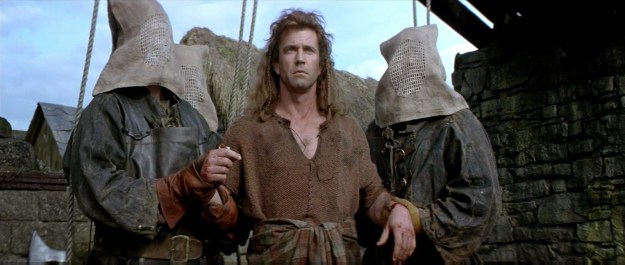
Braveheart was one of the standout films of 1995, eventually winning Best Picture at the Academy Awards. Directed by and starring Mel Gibson, the film tells the story of how William Wallace led the First War of Scottish Independence against King Edward I of England.

Braveheart

Wallace is spurred into action after his new bride Murron is executed by the English after she attempts to flee being raped. The Scots have several victories, including sacking the city of York. King Edward sends his son (also named Edward) to deal with Wallace, but that proves to be a failure. Then Prince Edward’s wife Isabella is sent (in hopes that Wallace will kill her and spur the French to jump into the war), but instead the two become enamored of each other and end up having an affair instead. Ultimately, Wallace is betrayed by would-be ally Robert the Bruce and is painfully executed by the English while Isabella is pregnant with Wallace’s child.

6480cc03-5c5b-43cb-810d-df9be2835bcd

While the film takes numerous liberties with actual history (Isabella and William Wallace never had an affair for example), the film was still very well received and James Horner’s score became one of the most commercially successful soundtracks of all time.

The footage features Mel Gibson’s comments on the music as James Horner leads the scoring sessions. If you’ve never seen Braveheart before, the music is absolutely gorgeous, a perfect example of James Horner at the top of his craft. Since the weekend is here, take some time, sit back, relax and enjoy the sounds of Braveheart.

See also:

James Horner Star Trek II: Wrath of Khan

James Horner talks Aliens (1986)

James Horner talks Field of Dreams (1989)

James Horner talks The Rocketeer (1991)

James Horner talks The Perfect Storm (2000)

James Horner talks A Beautiful Mind (2001)

James Horner talks Windtalkers (2002)

James Horner talks Avatar (2009)

James Horner talks The Amazing Spider-Man (2012)

Film Composer Interviews A-H

Film Composer Interviews K-Z

Become a patron of the blog at: patreon.com/musicgamer460

Check out the YouTube channel (and consider hitting the subscribe button)

Don’t forget to like Film Music Central on Facebook 🙂
*poster image is the property of Paramount Pictures

Nicholas Hooper “Harry Potter and the Half-Blood Prince” scoring session (2009)

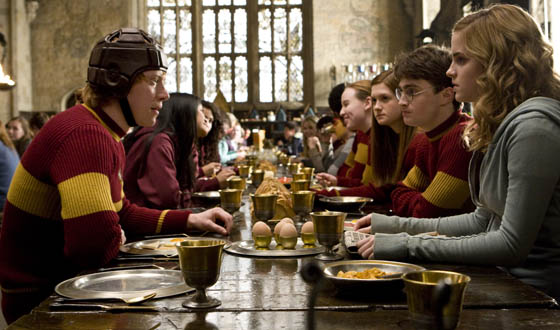
The sixth installment in the Harry Potter film franchise was released in 2009 to general acclaim. Harry, now in his sixth year at Hogwarts, becomes obsessed with a textbook that belonged to someone named “the half-blood Prince” while also falling in love with Ginny Weasley (Ron’s little sister). Voldemort and his Death Eaters are on the move (Draco Malfoy has been assigned a mission by the Dark Lord himself) and Harry and Dumbledore are searching for the key that could destroy Voldemort once and for all.

Harry Potter and the Half-Blood Prince

It turns out that the secret of Voldemort’s power lies in the fact that he constructed Horcruxes: magical objects that contain a portion of a wizard’s soul and thereby prevent death if anything happens to that wizard’s body (this is why Voldemort wasn’t outright killed when his Killing Curse rebounded onto him the night Harry’s parents were killed).

The only way to kill Voldemort once and for all is to first destroy every last Horcrux. It won’t be easy, with Death Eaters lurking everywhere and a new Defense Against the Dark Arts teacher (in the form of Professor Slughorn), it might be impossible even for Harry Potter. One thing is for sure, this story has an ending you’ll never see coming.


The score for this film was composed by Nicholas Hooper, who first provided the music for the fifth film: Harry Potter and the Order of the Phoenix (2007). The footage above comes from one of the scoring sessions held at the famous Abbey Road Studio. There you see one of the conductors, an orchestrator, as well as the composer himself. This particular session involves recording the opening cue of the film, which, as always, features a reprise of “Hedwig’s Theme” (possibly the most famous theme from the entire Harry Potter film series).

Become a Patron of the blog at patreon.com/musicgamer460

Check out the YouTube channel (and consider hitting the subscribe button)

Enjoy this behind the scenes look at recording the score for Harry Potter and the Half-Blood Prince!

And for more Harry Potter, see also:

 Alexandre Desplat talks Harry Potter and the Deathly Hallows Part 1 (2010)

Thoughts on Fantastic Beasts and Where to Find Them (2016)

Don’t forget to like Film Music Central on Facebook 🙂

Danny Elfman talks Batman Returns (1992)

Danny Elfman talks Batman Returns (1992)

It is a sad reality in Hollywood that many times a sequel does not live up to the original and this is the case with Batman Returns (1992) (though it is infinitely better than the two films that followed it). Set sometime after the events of the original film, Gotham City’s new nemesis is Oswald Cobblepot, aka “The Penguin” (Danny DeVito), a deformed child abandoned by his parents and raised by penguins, who seeks to become a respectable member of Gotham society and will employ any means to make that happen.

At the same time, corrupt businessman Max Shreck is plotting to monopolize the city’s electricity supply, a scheme that his secretary, Selina Kyle, stumbles onto. When Shreck tries to have her killed by pushing her out a window, she is mysteriously revived by a swarm of cats and adopts the identity of Catwoman. Batman has to deal with Penguin, Shreck and this mysterious female vigilante, all part of his ongoing efforts to protect Gotham City.

I’m sure I’ve seen this film as many times as the original Batman, but I simply don’t enjoy this one as much. When you’ve grown up with Burgess Meredith’s Penguin, seeing the creepy Danny DeVito Penguin is a real shock. I still like Michael Keaton as Batman/Bruce Wayne though, and I wish he could’ve stayed for the remaining two films (even though I like George Clooney in Batman & Robin). The on-again/off-again romance between Catwoman and Batman is well-known to fans of the comics, and it’s nice to see it play out on the silver screen.

Danny Elfman returned to score this film and was much more confident during the process (because the first Batman had been such a big hit). Knowing that his methods worked, it wasn’t hard to derive a new score for this sequel. Regretfully, this interview isn’t very long, but I was glad to find anything relating to Batman Returns at all (finding info on sequels is relatively hard, especially if they don’t do as well as expected). The different themes for Selina/Catwoman and Penguin are discussed, and if I ever find a more in-depth discussion for this particular film I’ll be sure to add it in. For now though, please enjoy!

See also:

Danny Elfman talks Batman (1989)

Danny Elfman “Planet of the Apes” scoring session (2001)

Danny Elfman talks Spider-Man (2002)

Danny Elfman talks Meet the Robinsons (2007)

Danny Elfman talks Alice in Wonderland (2010)

Danny Elfman talks Fifty Shades of Grey (2015)

Danny Elfman talks Alice Through the Looking Glass (2016)

Film Composer Interviews A-H

Film Composer Interviews K-Z

Become a Patron of the blog at patreon.com/musicgamer460

Check out the YouTube channel (and consider hitting the subscribe button)

Don’t forget to like Film Music Central on Facebook

*film poster is the property of Warner Bros. Pictures