Category Archives: Film Composer

Introducing James Bond: Spectre (2015)

It goes without saying that after the runaway success of Skyfall (2012), anticipation for Spectre was at a near fever pitch, especially since it was assumed (correctly) that the SPECTRE organization would finally be making it’s long awaited return to the franchise for the first time in 44 years. Which automatically led to another question: would Ernst Stavro Blofeld, the villainous leader of SPECTRE (and played by numerous actors in the past) also be making his return? The answer, thankfully, was yes. While Donald Pleasance remains my personal favorite actor to play the part (in You Only Live Twice), Christoph Waltz absolutely nailed the role here in Spectre.

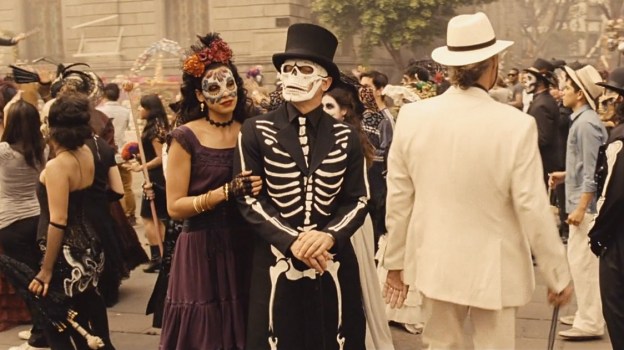
The fourth Daniel Craig film sees Bond in trouble with M, yet again. It would seem in the opening adventure in Mexico City that Bond has gone off on a “mission” of his own choosing (i.e. MI6 didn’t authorize it), to assassinate a terrorist before they can execute a plan to blow up a packed stadium (this takes place during the height of Day of the Dead festivities). M demands an explanation, but Bond refuses to give one, so Bond is officially put on leave until further notice and is banned from leaving the country.

la-seydoux-and-monica-bellucci-are-the-feminist-bond-girls-fighting-hollywoods-sexism-1446034577

Times are changing rapidly for MI6: now as in Skyfall, the organization is being viewed as more obsolete than ever, and Max Denbigh (nicknamed “C” by a not-impressed Bond) seeks to have the agency replaced by the “Nine Eyes” global surveillance network. But there is much more at stake here than anyone realizes (even Bond). Since Casino Royale, a single entity has been manipulating world events, bringing everything to a head at the climax of this story. And if Bond should fail in his mission, there might be no stopping the enemy this time, because SPECTRE has returned.

I’m going to come right out and say it: Spectre is not as good as Skyfall. Now having said that, Spectre is still an awesome film. It has a little bit of everything: car chases, romance, high stakes, and a number of witty one-liners that could only come from a James Bond film. And yet, it doesn’t quite meet the bar that Skyfall set, but that’s no crime, since Skyfall may be the perfect Bond film.


One of my favorite characters has to be Mr. Hinx (Dave Bautista). Hinx is a villain in the mold of the classic Bond henchmen (think of Oddjob and ESPECIALLY Jaws (you know, the tall guy with titanium teeth in The Spy Who Loved Me and Moonraker). I enjoyed watching him so much that I secretly hope they find some way of “resurrecting” the character for the next Bond film. Another element that I loved? The classic “gun-barrel opening” FINALLY returns to its proper place at the beginning of the film.

Thomas Newman talks Spectre (2015)

For the musical score, Thomas Newman returned once again to compose the music for this film. According to director Sam Mendes, the final film contains over 100  minutes of music (and believe me, that is a LOT of music for any film). I really enjoyed the music for this film, it contains an appropriate mix of the classic James Bond theme, while at the same time using new motifs to emphasize the swiftly changing events of the story (the music for the car chase in Rome in particularly good, especially when the cars pass through St. Peter’s Square).

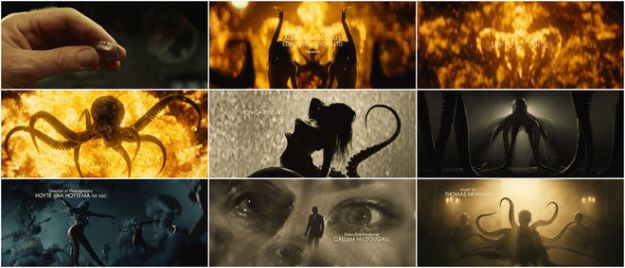
Spectre Title Sequence (2015)

The theme for the title sequence was titled “Writing’s On the Wall” and performed by Sam Smith. The song immediately received mixed reviews, with many comparisons being made with Adele’s “Skyfall” (with the latter being described as a much better Bond song). I don’t think it’s very fair to compare “Writing’s On the Wall” with “Skyfall” because, let’s be honest, “Skyfall” is an excellent piece of music. Certainly this latest Bond song has some flaws, the most noticeable being those moments when Smith goes into falsetto. If this were anything BUT a Bond film, I wouldn’t have an issue with it, but this IS a James Bond film and that makes the falsetto feel out of place. The strongest part of the song (for me) is the brief refrain “If I risk it all/Could you break my fall?” If he kept that quality of voice that he used in that moment throughout the song, I think it would have been better received.
Bond_Spectre_01

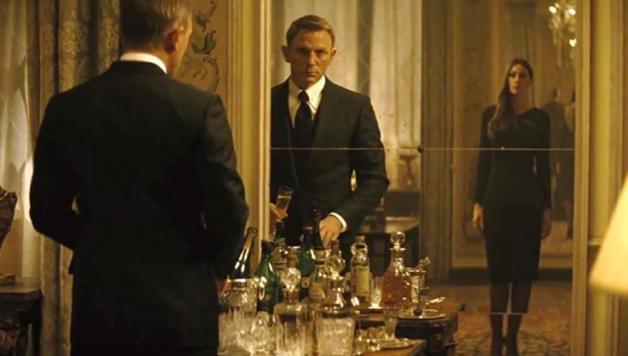
Now on a final note, let’s talk about the ending of the film. Was I the only one who expected Madeleine Swann to be killed out of nowhere as James walked over to her? The tension was so thick, that I kept expecting something to happen. I also can’t forget the fact that Bond let Blofeld live (remember how Blofeld kept his eyes locked on Swann and Bond as they walked away together?) I’d be shocked if the next Bond film didn’t feature Blofeld out for revenge in one way or another (because in four Craig films, this is the first time Bond has let an adversary live). It was rather symbolic actually, that moment when Bond stood over Blofeld on the bridge.

Spectre in London 575

On the one side stood M, representing Bond’s duty as a Double-0 agent. But on the other side stood Madeleine, representing the side of life that Bond had kept locked away ever since Vesper died: the possibility of a life away from murder and death, the possibility of a life filled with love. And in that moment, Bond chooses love, by letting Blofeld live, by throwing his gun in the river, and by steadfastly walking AWAY from M and choosing to go with Madeleine. It will definitely be interesting to see where the story goes from here. Hopefully we don’t have a repeat of On Her Majesty’s Secret Service, but only time will tell.
spectre_c-0-660-0-0

Of course we know James Bond will return, but the big question is, will it be Daniel Craig, or someone new? As much as people (including myself) would like to see him return for a 5th outing as 007, the truth is that Craig is now 48 years old, and assuming it takes at least two years for the next film to begin filming, that would make him 50. Given how physically demanding the role of James Bond has become, I would not be surprised if we see someone new when the 25th Bond film rolls out. And if that was indeed the finale of Craig’s Bond, I can’t think of a better exit than driving off with his lady love in that gorgeous Aston Martin.

And for the time being, that concludes Introducing James Bond.

See also: Film/TV Reviews

Become a Patron of the blog at patreon.com/musicgamer460

Don’t forget to like Film Music Central on Facebook 🙂

*poster and images are the property of Eon Productions

Introducing James Bond: Skyfall (2012)

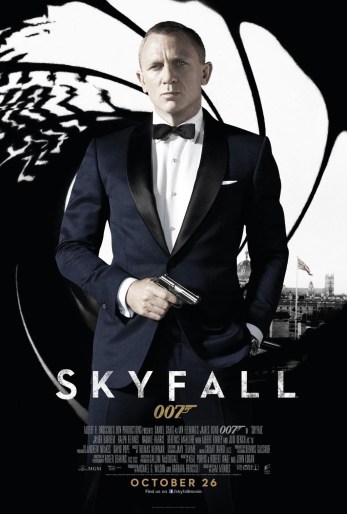
Thus far in the Daniel Craig era of James Bond, we’ve had one good and one not-quite-as-good film. Skyfall, the penultimate film thus far, is for me, the moment where the Daniel Craig Bond finally hit his stride. No more awkwardness, no immaturity, THIS is the Bond we’ve come to know and love over the decades.

skyfall-uk-poster

Skyfall begins with another mission in progress: Bond is in Istanbul accompanied by a female agent (and there’s a good reason we don’t know her name yet). The end of this scene (being the pre-credits) features Bond accidentally shot and presumed dead in the aftermath.

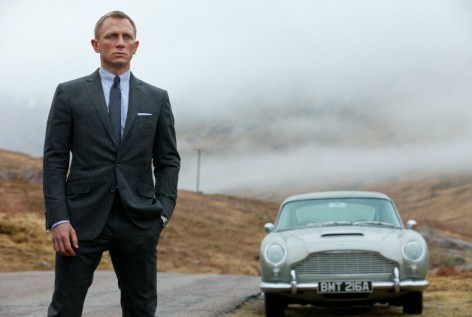
Skyfall-movie-image-daniel-craig

In reality, Bond is alive and well, he decided to use his presumed death as a way to take some much needed time away, but it doesn’t last. Back in London, M (Judi Dench) is facing considerable pressure from Gareth Mallory (Ralph Fiennes) over the continued existence of MI6 in the 21st century and she is being pushed to retire. Out of nowhere, the MI6 servers are hacked and the building is bombed, prompting Bond to return to the city.Bond is up against his most dangerous opponent yet, and not everyone is going to make it out alive.

Unlike the previous two Bond films, I was unable to catch Skyfall in the theater (something I deeply regretted once I did see the movie). If Goldfinger is the perfect classic Bond film, then Skyfall is the perfect Bond film of the new era, I can’t think of any flaws.

Ben Whishaw is PERFECT as the new Q by the way, I didn’t think anyone could ever replace Desmond Llewelyn in that role, but he is perfect (and Bond’s line during their introduction “You’ve still got spots!” always makes me laugh)

*warning: spoilers for the ending of Skyfall follow*

I did not see (or I didn’t want to see) the death of Judi Dench’s M coming, but I also understood her reasons for leaving (she had been playing the role since 1995 after all). Without a doubt, the series won’t be the same without her, but Ralph Fiennes makes a pretty great M too. And speaking of the new M, this is the first time in the cinematic Bond universe that we actually know M’s real name (Gareth Mallory). M’s real name IS mentioned in the books, but that’s a separate thing from the movies.

skyfall-2012-003-bond-in-national-gallery

And before I get to the music, I have to talk about that final scene, where Bond properly gets introduced to Eve Moneypenny (aka that female agent from the pre-title sequence): that was perfect!! I had this overwhelming feeling of: finally, everything is right with the Bond universe again (it just didn’t feel right without Q and Moneypenny, and both were reintroduced in this film). And the last scene where Bond faces the new M in his office, just that moment alone was an homage to classic Bond with the design of the office, Bond’s suit, M’s suit, the painting behind M’s head (go back to the Connery films and check out M’s office, you’ll see what I mean). And for the first time in a long time, when the screen went black, I instantly wanted more!

Skyfall_-_M_confronts_Raoul_Silva

Now on to the music! For the first time in quite a while, David Arnold did NOT return to compose the score to Skyfall; instead the score was written by Thomas Newman (a great film composer in his own right and a frequent collaborator with director Sam Mendes). (It should be noted that Arnold was also busy composing the music for the closing ceremony of the 2012 Olympic and Paralympic Games.) Newman’s score won the BAFTA for Best Film Music. It was also nominated for the Academy Award for Best Original Score (only the second Bond film score to be so honored).

Thomas Newman talks Skyfall (2012)

 Thomas Newman’s score contributed more than a little to the success of this film. In this short making-of segment, Newman talks about how the score was put together, along with a little behind-the-scenes action.

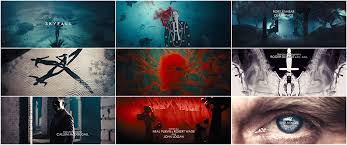
Skyfall Title Sequence (2012)

While the score for Skyfall was well-received, the title song turned the world upside down. “Skyfall” was performed by Adele and received instant critical acclaim from everyone, and is now considered one of the greatest Bond songs ever created. The song was nominated for and won the Academy Award for Best Original Song (the first Bond song to win an Oscar) and it also won a Brit Award for Best British Single (as well as a Critic’s Choice Award and a Golden Globe AND a Grammy Award.)

download

Credit to Art of the Title

I seriously doubt that any film will top Skyfall for quite some time, but Spectre certainly tried to (but more on that next time).

Become a Patron of the blog at patreon.com/musicgamer460

See also: Film/TV Reviews

Up next: Spectre (2015)

Don’t forget to like Film Music Central on Facebook 🙂

*poster and images are the property of Eon Productions
Hans Zimmer talks Sherlock Holmes (2009) and Sherlock Holmes: A Game of Shadows (2011)


With the wonderful news that Sherlock Holmes 3 is in fact happening (*still dancing for joy*) I thought I would find Hans Zimmer’s interviews on the scores he did for Sherlock Holmes (2009) and the sequel Sherlock Holmes: A Game of Shadows (2011).

Hans Zimmer talks Sherlock Holmes (2009)

I love these movies, I really do. Being a fan of the late Jeremy Brett’s interpretation of the famous detective (he played the role on the Granada television series in the 1980s), I wasn’t sure about Robert Downey Jr. playing the role initially. However, once I saw the movies, all my doubts fell away and I was in love!

And being a musicologist, the music jumped out to me almost immediately. That slightly off-tune piano melody does an amazing job of setting the scene for the entire story. My favorite part (one of many) has to be the climactic battle on the unfinished Tower Bridge. Also, the byplay between Irene and Holmes was spot-on perfection (music included, you can tell that Holmes still has rather strong feelings for her, even if he denies it).

The sequel is just as amazing and Hans Zimmer returns to deliver an exceptional score. What’s fascinating here is that for this score, Zimmer traveled to various countries to find musicians with that “ethnic” and “rustic” sound that matched the mood he was looking for.

Hans Zimmer talks Sherlock Holmes: A Game of Shadows (2011)

The big moment here, is when Holmes and Moriarty are playing out their own scenarios as to how this fight between them will go. The very end, when Holmes admits that the only way is for them BOTH to die….is just perfect. There’s a weird imbalance between the music and the scene here, but it works. The only one screaming is Moriarty; Holmes is perfectly serene. At first it would appear to be because he’s come to terms with his life and impending death, but of course, we find out at the end it’s probably because he had no intention of dying at all (I hope Watson slugs him in the next one for faking his death like that).

My biggest wish now is that Zimmer returns for Sherlock Holmes 3, what a pity it doesn’t come out until next year! Argh!!!

*both posters are the property of Warner Bros. Pictures

If you’d like to learn more about the film scores of Hans Zimmer, see here

Don’t forget to like Film Music Central on Facebook 🙂

Miklos Rozsa conducts Ben-Hur suite (1979)

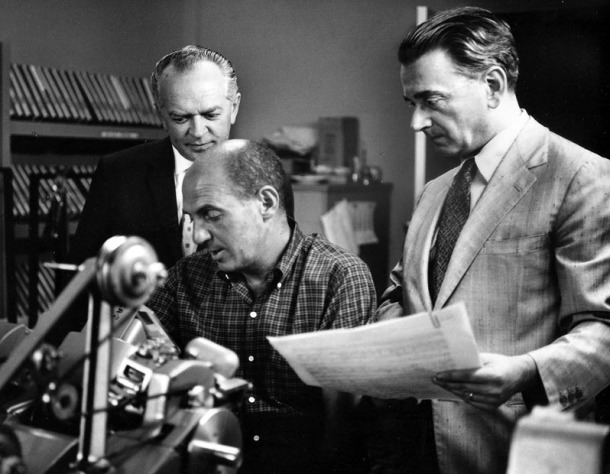
I confess, I still have Ben-Hur on the brain (if you read my little tirade from yesterday then you understand why). And since I can’t stop thinking about the 1959 epic, I thought I would share a concert clip I discovered several years ago. At the time I was studying the different film composers of the Golden Age of Hollywood and I was learning all I could in particular about Miklos Rozsa (1907-1995), the last composer of that era to pass away.

Having lived so long, I was curious to see if there were any film clips of him giving interviews or, even better, conducting some of his work. That’s when I discovered a clip from a 1979 television program that was looking at film music. In this excerpt, Rozsa himself is conducting a suite from his most famous work, Ben-Hur.

Miklos Rozsa conducts Ben-Hur Suite (1979)

The suite is divided into three sections:

  1. Overture and Main Theme(s) (for more on the overture to Ben-Hur, see “Overture” from Ben-Hur by Miklos Rozsa )
  2. Judah and Esther (The Love Theme): One of the many subplots of the film is the love building between Judah (initially a prince of Jerusalem) and Esther (the only daughter of Judah’s steward and technically a slave as a result, though she’s given her freedom early in the story). The theme is first heard when Esther is about to leave for an arranged marriage (that ultimately never takes place) and returns poignantly when Esther and Judah meet again after almost five years have passed.
  3. Parade of the Charioteers: Actually, this piece wasn’t written for Ben-Hur at all. The music that became this piece was originally composed for Quo Vadis, a 1951 Biblical epic that many credit with launching the Biblical epic obsession of the 1950s. The music comes at the end of the film as Gratus, the new emperor, makes a triumphal entry into Rome. 8 years later in Ben-Hur, Rozsa turns the music into a fanfare as the charioteers ceremonially circle the track before the race begins.

I believe that if you ever have the opportunity, you should always listen to the film score as conducted by the composer, because that will give you the best idea of what the music SHOULD sound like (for example, listen to the overture in this clip and then search YouTube for more performances of the same piece, you’ll hear it a slightly different way each time.)

Enjoy the music of Ben-Hur, composed and conducted by Miklos Rozsa and brought to life by the Pittsburgh Symphony Orchestra-Bex

Don’t forget to like Film Music Central on Facebook 🙂

Michael Giacchino talks Mission: Impossible 3 (2006)

I have greatly enjoyed all five Mission Impossible movies (1996-ongoing) but even I will admit that Mission Impossible 2 was not as good as the rest. So, I was so happy to get to Mission Impossible 3 and be like “Wow! This is insane (and fascinating too).” Though I will admit, the opening of the film (with the flash forward sort of thing) threw me for a few minutes. The late Philip Seymour Hoffman plays what is probably the most evil villain Ethan Hunt has ever faced.

Mission Impossible 3 was also Michael Giacchino’s first foray into this franchise (he also composed the score for Ghost Protocol), and I really hope that he can return in the future as this series shows no signs of slowing down. In the meantime, enjoy this interview that looks into the scoring of Mission Impossible 3! Have a good day!

See also:

Michael Giacchino talks The Incredibles (2004)

Michael Giacchino talks Ratatouille (2007)

Michael Giacchino talks Up (2009)

Michael Giacchino talks Star Trek (2009)

Michael Giacchino talks Super 8 (2011)

Michael Giacchino talks John Carter (2012)

Michael Giacchino talks Star Trek: Into Darkness (2013)

Michael Giacchino talks Jupiter Ascending (2015)

Michael Giacchino talks Jurassic World (2015)

Michael Giacchino scoring Rogue One: A Star Wars Story (2016)

Michael Giacchino talks Zootopia (2016)

Michael Giacchino talks Jurassic World: Fallen Kingdom (2018)

Film Composer Interviews A-H

Film Composer Interviews K-Z

Become a patron of the blog at: patreon.com/musicgamer460

Check out the YouTube channel (and consider hitting the subscribe button)

Don’t forget to like Film Music Central on Facebook 🙂

Michael Giacchino talks Ratatouille (2007)

Michael Giacchino talks Ratatouille (2007)

In 2007, a lot was happening in my life, I graduated high school, got accepted to a university, and in the film world, Pixar released its eighth animated feature: Ratatouille. The film tells the story of a French rat named Remy who absolutely loves to cook, and who desperately wants to be a chef (despite the fact that he’s, you know, a rat). Remy ends up crossing paths with the son of his cooking idol and together Remy attempts to realize his dreams.


Director Brad Bird had already worked with composer Michael Giacchino for The Incredibles (2004) and they’d gotten along so well that Bird decided to bring him back for this film as well. Giacchino and Bird have become a rather reliable duo over the years, and to date they have worked together on: The Incredibles, Ratatouille, Mission Impossible: Ghost Protocol and Tomorrowland, with Giacchino slated to score The Incredibles 2.


For Ratatouille, Giacchino created two themes for Remy: the first theme describing his life as a thief (which, for the other rats, is what life is meant to be about), and the other theme describes Remy’s hopes and dreams. The score was so well-received that it gave Giacchino his first Academy Award nomination for Best Original Score (losing out to Atonement. He would finally win with his score for Up.)

781641294_4586ed9892

In the interview clip found above, Giacchino takes us through the process of scoring the film, and as always, there are some wonderful shots of the orchestra in the process of recording, while the director and composer watch a rough cut of the film (I would love to sit in on the scoring process, and with my career aspirations, maybe I will some day!) Enjoy an inside look at Ratatouille!

See also:

Michael Giacchino talks The Incredibles (2004)

Michael Giacchino talks Mission: Impossible 3 (2006)

Michael Giacchino talks Up (2009)

Michael Giacchino talks Star Trek (2009)

Michael Giacchino talks Super 8 (2011)

Michael Giacchino talks John Carter (2012)

Michael Giacchino talks Star Trek: Into Darkness (2013)

Michael Giacchino talks Jupiter Ascending (2015)

Michael Giacchino talks Jurassic World (2015)

Michael Giacchino scoring Rogue One: A Star Wars Story (2016)

Michael Giacchino talks Zootopia (2016)

Michael Giacchino talks Jurassic World: Fallen Kingdom (2018)

Film Composer Interviews A-H

Film Composer Interviews K-Z

Become a patron of the blog at: patreon.com/musicgamer460

Check out the YouTube channel (and consider hitting the subscribe button)

Don’t forget to like Film Music Central on Facebook 🙂

Michael Giacchino talks Up (2009)

So, I have a confession. It took me WAY too long to see Up (2009). All of my friends were raving about it when it came out, but for some reason I was not into the movie at all, so it was years later before I saw it. And then there’s that crazy huge bird, the talking dogs, a half-crazed explorer, etc. etc. But, I digress….

980x

Michael Giacchino talks Up (2009)

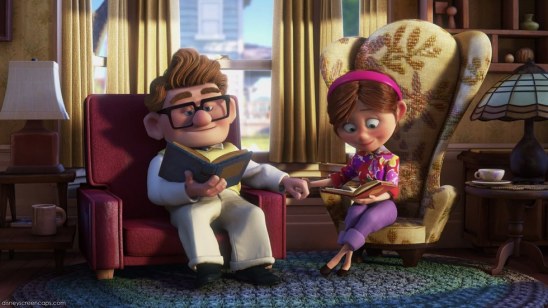
Up tells the story of retired widower Carl Fredrickson (Ed Asner), who turns his old house into a flying machine via thousands of balloons so that he can fulfill the last dream of his deceased wife: to visit Paradise Falls in South America. Almost immediately he picks up a stowaway: a young “Wilderness Explorer” named Russell (Jordan Nagai) who needs to earn his final merit badge for assisting the elderly.

Russell_dug_carl_fredricksen_in_pixars_up-wide

The journey is full of surprises, including an unexpected encounter with Charles F. Muntz (Christopher Plummer), a legendary explorer that Carl idolized as a child. Decades ago, he returned from an expedition claiming he’d discovered a new type of flightless bird, but was ridiculed by the scientific community as a liar. He departed, vowing to bring back a live specimen, and had never returned. As it turns out, Carl and Russell end up encountering a certain flightless bird (dubbed “Kevin” by Russell) which inevitably brings them to Muntz’s attention.

The music for this whimsical (and at the same time, deeply touching) film was composed by Michael Giacchino, whose prior work includes such films as Mission Impossible III, Star Trek and the sequel Into Darkness, The Incredibles, Dawn of the Planet of the Apes and Jurassic World.

The opening of the film is what always sticks with me the most. In it, we see a montage of Carl’s life, from meeting Ellie as a young boy, to falling in love with her, to sadly discovering they can’t have children of their own, to the pair growing old. Over time, they continually save up to make that trip to Paradise Falls, but something always happens to stop them. Finally, Carl has the tickets purchased, but as he prepares to surprise his wife, she collapses and has to go to the hospital. That’s why Carl is so determined to make the trip, he knows it’s what Ellie would have wanted him to do. This part still makes me cry every single time I see it.

In this interview segment, Giacchino, along with the director, discuss how the score came together, and inbetween the moments of talking, there are wonderful scenes showing the orchestra in the recording studio (I love watching moments like these). Giacchino is an immensely talented composer, and Up is a great addition to both film and film music.

Become a Patron of the blog at patreon.com/musicgamer460
Check out the YouTube channel (and consider hitting the subscribe button)

See also:

Michael Giacchino talks The Incredibles (2004)

Michael Giacchino talks Mission: Impossible 3 (2006)

Michael Giacchino talks Ratatouille (2007)

Michael Giacchino talks Star Trek (2009)

Michael Giacchino talks Super 8 (2011)

Michael Giacchino talks John Carter (2012)

Michael Giacchino talks Star Trek: Into Darkness (2013)

Michael Giacchino talks Jupiter Ascending (2015)

Michael Giacchino talks Jurassic World (2015)

Michael Giacchino scoring Rogue One: A Star Wars Story (2016)

Michael Giacchino talks Zootopia (2016)

Michael Giacchino talks Jurassic World: Fallen Kingdom (2018)

Film Composer Interviews A-H

Film Composer Interviews K-Z

Don’t forget to like Film Music Central on Facebook 🙂

*all images are the property of Walt Disney Studios

Jerry Goldsmith talks Lionheart (1987)

While I am generally familiar with all of Jerry Goldsmith’s work, Lionheart (1987) is a film that I admit I have never heard of, and for good reason it turns out. The film received an exceptionally limited release in theaters, a VHS copy was not issued until 1994 and a DVD version was not seen until 2009.

220px-Lionheartposter87

Lionheart is loosely based on the real-life story of the Children’s Crusade. In this film, a young knight named Robert Nerra, who is disillusioned by the death of his brother, leads a band of orphans en route to join King Richard in the Third Crusade, and must also protect them from the Black Prince (who’d like to enslave all the children and sell them to the Muslims).

Lionheart-1987-4

The limited release does not change the fact that Goldsmith’s work was of exceptional quality and the video follows the composer as he works on recording the score in Budapest. I’m pleased to share a rare video of Goldsmith at work with all of you (if only more of these videos existed, what treasures they are!) Have a great weekend!

See also:

Jerry Goldsmith talks The Sand Pebbles (1966)

Jerry Goldsmith talks Chinatown (1974)

Jerry Goldsmith talks about Alien (1979)

Film Composer Interviews A-H

Film Composer Interviews K-Z

Become a Patron of the blog at patreon.com/musicgamer460

Don’t forget to like Film Music Central on Facebook 🙂

*all images and video are property of the film studio and the creator of the interview

Marco Beltrami and Marilyn Manson talk Resident Evil (2002)

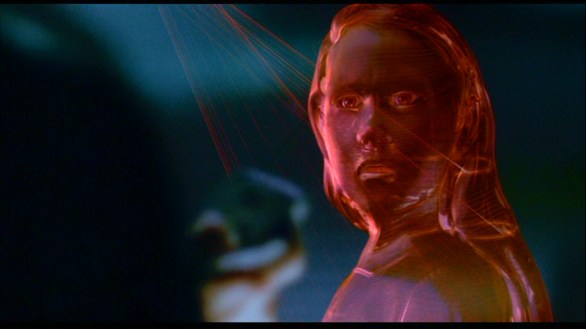
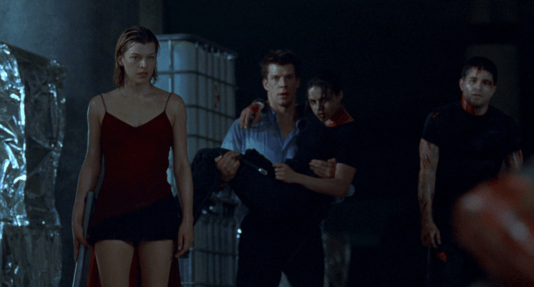
In 2002, the Resident Evil movie franchise launched with the first self-titled film in the series. Based on elements from the video games Resident Evil and Resident Evil 2, the movie Resident Evil follows Alice (Milla Jovovich) as she and a team must break into the Hive, a genetic research facility located underneath Raccoon City, to retrieve an anti-virus to stop a zombie plague. There’s one small complication however: the Hive is crawling with zombified employees and scientists.

125162

Not all of the zombies are alike either: while most are the typical flesh-eating zombie, others have mutated into “Lickers,” a more deadly creature with a monstrous appearance. On top of all this, the Red Queen A.I. that controls the facility is determined to stop them at all costs in order to protect the world above. Another complication in the story is that Alice initially wakes up in a deserted mansion with total amnesia. As the story progresses, she begins to remember bits and pieces (for example, she remembers the anti-virus was located in a specific room).

While this film (and the lengthy series which followed) clearly attempted to capitalize off the popularity of the Resident Evil video game, it is unfortunately remembered as yet another video game-to-film adaptation that did not do its subject material justice. And yet, despite receiving consistently terrible reviews (Roger Ebert put the film on his “Most Hated” list), the franchise spawned five sequels and is currently in the process of being rebooted. For those curious, here is the complete list of Resident Evil films:

  • Resident Evil (2002)
  • Resident Evil: Apocalypse (2004)
  • Resident Evil: Extinction (2007)
  • Resident Evil: Afterlife (2010)
  • Resident Evil: Retribution (2012)
  • Resident Evil: The Final Chapter (2016)

The score for this film was a collaboration between Marco Beltrami and Marilyn Manson (who knew?) and the interview regarding this film score features the two of them. Manson describes the score and overall soundtrack as being more “electronic” than previous works.

Streaming-Resident-Evil-2002

Resident Evil doesn’t rate that high on my list of favorite films (because of the zombies), but it’s definitely worth a try if you’re into straight-out action. I hope you enjoy this interview! Let me know what you think of Resident Evil (both the first film and the series) in the comments below!

See also:

Marco Beltrami talks Blade II (2002

Marco Beltrami talks Live Free or Die Hard (2007)

Marco Beltrami talks 3:10 to Yuma (2007)

Marco Beltrami talks The Wolverine (2013)

Marco Beltrami talks World War Z (2013)

Film Composer Interviews A-H

Film Composer Interviews K-Z

Become a patron of the blog at: patreon.com/musicgamer460

Check out the YouTube channel (and consider hitting the subscribe button)

Don’t forget to like Film Music Central on Facebook 🙂

Balto “Heritage of the Wolf”

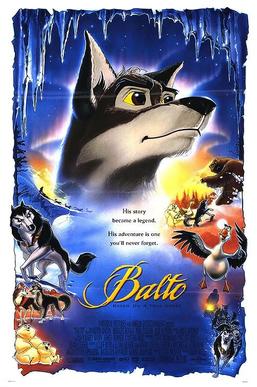
1995 was a very good year for James Horner. In that year alone, he composed the scores for: Jumanji, Braveheart, Casper, Jade, Balto and Apollo 13. “Heritage of the Wolf” from Balto (1995) remains one of my favorite musical moments. Balto recounts the true story of how vital diphtheria medicine had to be relayed from Nenana to Nome, Alaska by rail and then by sled dog, to combat an outbreak of the illness. Being an animated film, the story does take some liberties with the events (for instance, it was multiple teams of sled dogs, not just the one), but the overall event is true (and there IS a statue of Balto in Central Park, I went there myself in 2009).

Balto_movie_poster

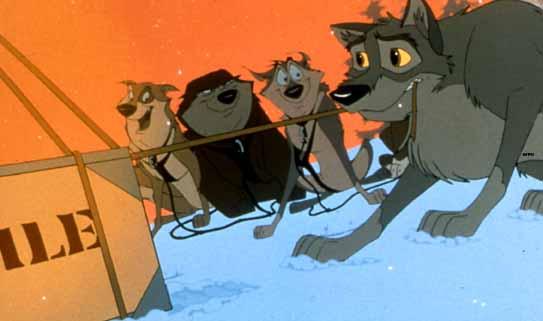
In the film, Balto (voiced by Kevin Bacon) is a Siberian Husky/wolf hybrid, ostracized by the rest of the dogs because he’s a “half-breed” and unwilling to embrace his wolf side. Determined to help, Balto has set out after the missing sled team that was supposed to bring the medicine back to Nome. After a series of events (this film will eventually have a post all to its own), Balto has found the team and the medicine, but has plunged off a cliff (with the medicine box) and his current fate is unknown.

165146_1600x450

As the cue starts, Balto’s friends listen at the door as the other dogs discuss the fact that the children of Nome are likely doomed if the medicine does not arrive soon (there’s no time to send another team). All hope seems to be abandoned as the lights of Nome are one by one turned out. However, Jenna, a female husky (and in love with Balto) has not given up and is dragging out a lantern and creates an artificial aurora by placing the light behind shards of glass (a trick Balto showed her earlier), hoping the light will guide Balto home.

“Heritage of the Wolf” Film Version

“Heritage of the Wolf” Soundtrack Version

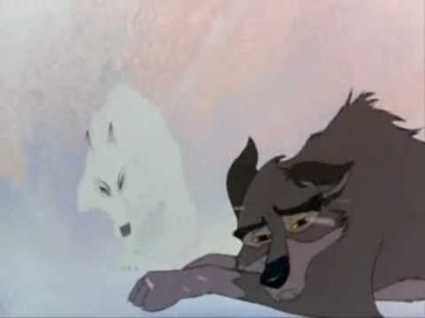
Meanwhile, Balto is shown to be alive, dragging himself out of the snow. This is the main part of the cue, and the part I love the most. Balto is at rock bottom right now, he believes the medicine is gone and that he’s failed. But then, a white wolf appears in front of him (later sequels establish that this is his mother), and invites him to “become a wolf” by howling, but Balto refuses, and the wolf walks away. But then, Balto realizes that the medicine is intact and he remembers the advice his friend gave before he left “A dog, cannot make this journey alone. But maybe…a wolf can.” Inspired, Balto turns in the direction of the wolf and sets one paw down into the print (it matches perfectly). Realizing and finally accepting that he has been a wolf all along, Balto rears up and howls, drawing the white wolf back to him.

hqdefault

For the moments where Balto faces the white wolf, Horner repeats the same melody in strings over and over, it changes registers on almost every iteration. And when it peaks in the high strings (listen to the moment when the wolf turns to walk away), it always makes my eyes tear up. The timbral changes reflect the changing mood of the scene. First: despair (low and almost minor); second, hope (a change to major as the wolf appears); third, denial (a slide back to minor as the wolf walks away, melody high in strings); realization (a mix of major and minor, the ensemble plays together); decision (firm major key, melody in horn).

There’s a few more minutes of music beyond this, but that’s a discussion for another time. For now, I’ll leave you with the triumphant moment where Balto finally finds himself.

Become a patron of the blog at: patreon.com/musicgamer460

Check out the YouTube channel (and consider hitting the subscribe button)

For more Disney and other animated film soundtracks, see here

Don’t forget to like Film Music Central on Facebook 🙂

*All images are the property of the film studio, and are only being used for illustration