Film 101: The Rashomon Effect

japanese-movie-poster-rashomon_u-L-PGF0RP0

poster from Rashomon

It’s been a long time since I updated Film 101, so I decided to pick something that I’ve wanted to cover for a while: the Rashomon effect, which you’ve most likely seen even if you didn’t know it was called that.

First, the definition: The Rashomon effect occurs when the same event is given contradictory interpretations by the different individuals involved. The name derives from Akira Kurosawa’s 1950 film Rashomon, where the murder of a samurai is described in four mutually contradictory ways, with the final description presented as “the truth.”

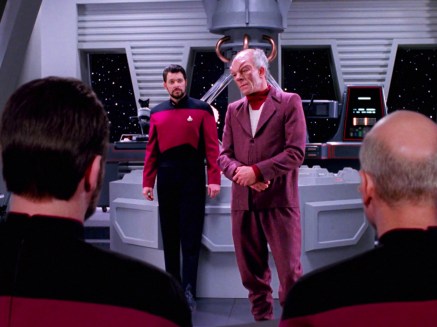
If this sounds familiar, it’s because it appears a lot in crime shows (imagine episodes of CSI where different suspects are being interviewed and they each describe what happened from their perspective, but everything is different each time it is told). Another good example is the third season Star Trek: The Next Generation episode “A Matter of Perspective” where Commander Riker is put on trial for allegedly murdering a scientist. Using the ship’s holodeck, the events are recreated using each person’s testimony, with radically different interpretations of the same events.

Tanuga_Station_simulation_begins.jpg

Still from “A Matter of Perspective”

The Rashomon effect is interesting because it often forces the audience to ask themselves “what is the truth?” and even when the “solution” is given, there is sometimes an implication that there is no correct answer and the truth must be determined for oneself. As a side note, given that the characters involved give contradictory accounts of certain events, they can also be considered unreliable narrators (meaning, unlike certain shows where you have no reason to question what a character says, an unreliable narrator cannot be trusted under any circumstances).

Thinking about the Rashomon effect, do any examples come to mind? List one or two in the comments below, along with what you think about the Rashomon effect (like, is it still a good technique or has it had its day?) Have a good day and thank you again for supporting Film Music Central šŸ™‚

See also:

Film 101

You can become a patron of the blog atĀ patreon.com/musicgamer460

Check out theĀ YouTube channelĀ (and consider hitting the subscribe button)

Don’t forget to likeĀ Film Music CentralĀ on FacebookĀ šŸ™‚

Ā 

My thoughts on: Gate of Hell (1953)

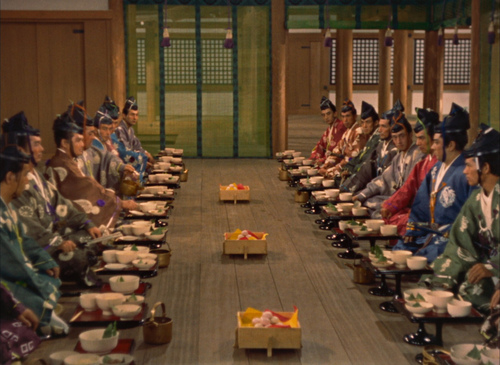
Gate of Hell (Jigokumon) is a 1953 jidaigeki film directed by Teinosuke Kinugasa. It was restored and released on DVD by the Criterion Collection in 2013. The film tells the story of a samurai (Kazuo Hasegawa) who falls in love with a married woman (Machiko Kyō).

I’d honestly never heard of this film before a few weeks ago, so when I found a copy of the film at the local bookstore, I decided to buy it and give it a try. I’ve since learned that this was the first Japanese color film to be released outside Japan and it won the Academy Award for Best Costume Design. Unlike other jidaigeki I’ve seen which are set in the Edo period (1603-1868), Gate of Hell is set during the Heiji Rebellion in 1160. When the palace is attacked by rebels, Morito (Kazuo Hasegawa) is assigned to protect Lady Kesa (Machiko Kyō) who is acting as a decoy for the queen. Morito is clearly smitten by the beautiful lady, and when he is offered a boon in return for his loyal service, Morito asks for Kesa to be his wife. There’s just one small problem: Kesa is already married! Morito refuses to give up however and continues to obsess over making Kesa his, despite the lady making it pointedly clear that she is not interested in him.

71ev1rlfvrl_sl1466

The story definitely plays with your expectations as to who the hero of the story is. Initially, Morito is presented as a heroic figure who refuses to give in to treason and defends Kesa as best he can. But once he’s informed that Kesa is already married and he can’t have her, Morito changes from possibly being a hero to a selfish, unreasonable creep! And what makes the story worse is, for most of the film Kesa seems to be the only one who understands just how much trouble Morito is! Wataru, her husband, and the other court officials seem convinced that all of this will blow over once it sinks in with Morito that Kesa does not love him back, but if anything it makes his obsession with her even stronger.

The film contains some beautiful scenes of Kesa playing the koto, a traditional Japanese stringed instrument. The one I’d like to highlight is when Morito is given one chance to pour out his heart to Kesa and see if she returns his feelings. She is playing the koto when Morito comes into the room and though he asks her to stop playing (so he can talk), she makes her feelings clear by refusing to stop and playing more and more elaborate music that only ends when Morito smashes the instrument.

gate-of-hell

I’m mostly satisfied with how the film ends, though part of me believes Morito should have paid with his life. Let me explain: the story comes to a head when the samurai corners Kesa at her aunt’s home and gives her an ultimatum: either Kesa goes with him or he will kill her husband, her aunt and even Kesa herself. Seemingly defeated, Kesa agrees and a plan is set: Kesa will blow out the light in her husband’s room at midnight, which will be Morito’s signal to run in and kill him. But it’s really a trick, Kesa gets her husband to sleep in her room while she lays down in his. Thus, Morito kills her, removing Kesa from his grasp forever. But instead of getting killed by her husband or even being hauled away for a trial (because he killed an innocent woman for crying out loud), he’s spared because killing him “won’t bring Kesa back.” And so Morito cuts off his top knot and vows to become a monk. I sort of understand why Wataru didn’t kill him, but I still would have liked to see him be punished somehow for killing Kesa (and no, I don’t think losing his samurai status is punishment enough).

The colors in this film are absolutely beautiful, Kesa’s kimonos draw your eye no matter where she is in the shot. There’s also a fabulous horse race scene that is fun to watch. All in all, Gate of Hell was a good purchase and is a worthy addition to my collection of Criterion films.

Have you seen Gate of Hell? If you have, let me know what you thought about it in the comments below and have a great day.

See also:

Film/TV Reviews

You can become a patron of the blog atĀ patreon.com/musicgamer460

Check out theĀ YouTube channelĀ (and consider hitting the subscribe button)

Don’t forget to likeĀ Film Music CentralĀ on FacebookĀ šŸ™‚

My thoughts on: Citizen Kane (1941)

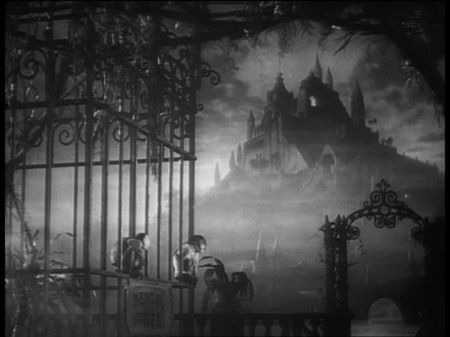
If you look at a list of the greatest films ever made, you will consistently find one title at or very near the top: Citizen Kane (1941), the first feature film from the legendary Orson Welles. The film presents itself as a biography of the unbelievably rich (fictional) tycoon Charles Foster Kane (Welles) who has just died in Xanadu, his lavish estate. His last word was “Rosebud” and the rest of the film follows a reporter piecing together Kane’s life in an attempt to find out what the word means.

53087917.jpg

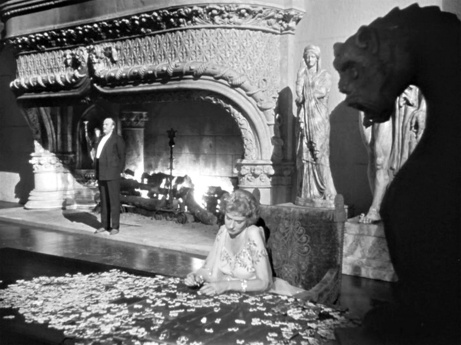
You know the saying “power corrupts and absolute power corrupts absolutely” ? Well, in the case of this film, I think it is also true that “money corrupts and a lot of money corrupts absolutely.” The bulk of Kane’s life is dominated by a massive inheritance that comes after a gold mine is discovered on his mother’s property. The young Kane starts with all the good intentions in the world; for example, when he purchases a newspaper, he’s determined to report the truth and when he later marries the President’s niece and enters politics, he sets himself up as a man above corruption. But one mistake after another gradually pulls Kane down and ultimately costs him everything that really matters: he loses his first wife and child, his second wife ultimately leaves him too; he loses any chance of a political career and by the end of his life doesn’t have any real friends.

As Kane slips into old age, he is clearly operating under the belief that money and/or material possessions can fix any problem. He literally buys an opera career for his second wife and is angry when she doesn’t become an instant success (ignoring the fact that her voice isn’t suited for opera). In fact, Kane tries to give his second wife everything a woman could want, but instead of making her happy, it ultimately drives her away, leaving Kane all alone in a palatial mansion.

Susan-and-Charles-at-Xanadu

It’s such a tragedy to watch Kane slip farther away from everyone around him and wrap himself in a cocoon of money and things. I think the discovery of that gold mine was the worst possible thing that could’ve happened to him. As for the meaning of “Rosebud” well…I can’t bear to spoil that. All I will say is, watch the final sequence very closely, the answer comes right at the end.

Now for some interesting trivia about Citizen Kane:

-The film was one of the first (if not the very first) to shoot scenes angled up at the ceiling, which required ceilings to be created for the sets (because up until then you didn’t need ceilings for sets because the cameras didn’t look up that way).

-For the sequence in which Susan (Kane’s second wife) sings an operatic aria, the music was deliberately written just out of the singer’s range, to better create the impression that she is singing music beyond her skills. It’s not that SusanĀ can’t sing, she just wasn’t meant to perform opera.

-While Kane is an based on several real-life figures, one of the biggest influences came from William Randolph Hearst, a big newspaper tycoon. Hearst was so enraged by his perception of the film mocking him and his life that he banned any and all mention of the film from any of his papers, no advertisements, no reviews, nothing!

If you haven’t watched Citizen Kane before, I highly recommend viewing it at least once. Bernard Herrmann provided a magnificent score for this film: two moments in particular that stick out to me are the opening as the camera slowly travels up to Xanadu and the ending scene as unwanted items are thrown into the furnace to be burned and the camera pans over all the many items Kane acquired throughout his life.

If you’ve seen Citizen Kane, what did you think about it? Let me know your thoughts in the comments below and have a great day!

See also:

Film/TV Reviews

You can become a patron of the blog atĀ patreon.com/musicgamer460

Check out theĀ YouTube channelĀ (and consider hitting the subscribe button)

Don’t forget to likeĀ Film Music CentralĀ on FacebookĀ šŸ™‚

Ā 

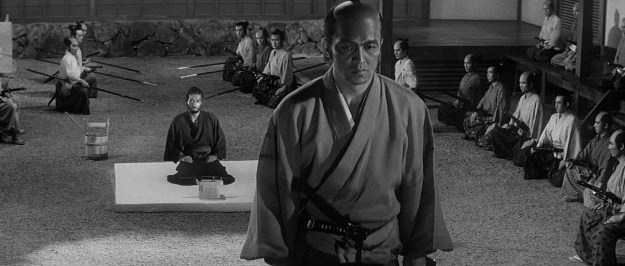
My thoughts on: Harakiri (1962)

While browsing through Criterion films at the bookstore, I came across a copy of Harakiri (1962) (directed by Masaki Kobayashi) and realized this was a film I’d neither seen nor heard of before (and it sounded really good). Fortunately, my library had a copy I could borrow and last night I dove in headfirst and discovered a tragedy in every sense of the word.

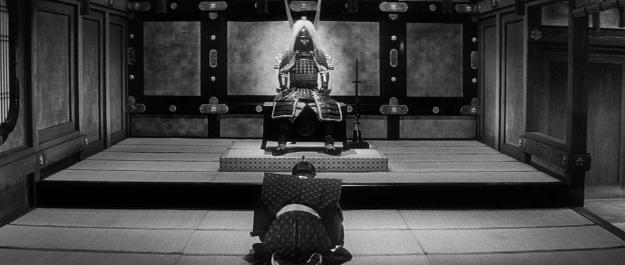
Harakiri is set in 1630 during the Edo period (the rule of the Tokugawa shogunate). It starts simply enough with a ronin namedĀ Tsugumo Hanshirō (Tatsuya Nakadai) approaching the Iyi Clan to formally ask permission to perform harakiri (ritual suicide) in their forecourt as he is tired of living in abject poverty. As it turns out, he is not the first ronin to have approached with this request. Some months prior, another ronin,Ā Chijiiwa Motome had come with the same request. The problem is, at this time, many ronin were approaching various lords to make this request in order to receive alms to make them go away. Fed up with this practice, the Iyi Clan forces Motome to perform harakiri, even though it’s revealed his swords are only made of bamboo.

The scene where Motome slowly kills himself is incredibly painful to watch. The way it’s put together, you literally feel every thrust of that dull bamboo blade as he thrusts it into himself. To compound the nightmare, the clan has determined that his suffering will not end by beheading until he has thoroughly ripped himself open (it’s made clear that theyĀ could have beheaded him straight off, so they’re choosing to make him suffer).

All of this is related to Hanshirō Ā  in an attempt to make him reconsider his request, but the ronin will not be denied. Once he’s settled for the ritual, then the full tragedy comes out.

It turns out that Motome was Hanshirō’s son-in-law, married to his only daughter Miho. They had a son named Kingo and lived happily for a while, even though they were very poor (Hanshirō lost his master and thus his living to harakiri some years prior). Then, in quick succession, Miho becomes ill and not long after so is Kingo (both die not long after Motome’s body is brought back). Motome is unable to find work as his status as a samurai makes him ineligible for common labor but none of the clans are hiring ronin since there have been no wars for many years. Desperate (and having already pawned his blades for money to help his wife and son), Motome departs one day saying he knows of a way to get more money to pay for a doctor, but he never comes back alive.

harakiri-ii-clan1

Your heart will break watching Motome struggle to find ways to support his family. If I understand correctly, samurai are considered to be “above” manual labor, which is why Motome is stopped every time he approaches a work site. He also can’t openly beg for money because that’s considered shameful as well. In effect, this family is completely screwed over by the system, small wonder that Motome resorted to asking to commit harakiri in the courtyard as a means to get alms (a practice that he had previously, in better times, said was shameful and only done by the worst kind of person).

Hanshirō’s point in relating all of this is to point out that no one should criticize another for doing something out of desperation. After all, what wouldĀ youĀ do if you were in their place? Unfortunately, Hanshirō’s lesson falls on deaf ears as the clan firmly believes they did nothing wrong. In fact, they’re so insulted by the ronin’s words that it’s decided they’ll kill him and not let him commit harakiri after all. This leads to an amazing sequence where Hanshiro fends off dozens of samurai as he moves through the building. There’s one or two strikes and then everyone freezes, but you can see them analyzing each and every move. It’s almost like watching a Mexican stand-off: at various points, though they outnumber him, the clan’s samurai stand frozen because Hanshiro has them in such a way that if any of them make a move, he can kill them. Tatsuya Nakadai is mesmerizing in this scene: you can tell he truly wants to die, but since the clan wants to make it difficult, he’ll take as many of them as he can with them.

MV5BOTAwMDFkMTYtYTJkOS00NzEyLTk3NTgtMzAwZDg4Yzg4MWFlXkEyXkFqcGdeQXVyMTQ5ODkzMDk@._V1_.jpg

Though Hanshirō is brutally killed at the end (with guns no less, they couldn’t even kill him with swords), I do think one person learned something from this, even if he won’t admit it.Ā Saitō Kageyu, the senior counselor for the clan, is seen with a very ponderous look on his face while Hanshirō is being pursued and killed. I believe that Hanshirō’s words did have an effect on him, and maybe he is starting to believe that the system is broken. In fact, after learning that one of the samurai who participated in forcing Motome to kill himself has also committed harakiri, he instructs a messenger to order the other two participants to kill themselves also, adding: “Send a squad of men to make sure it is done.”

Ultimately (and this may be the greatest tragedy of all) nothing seems to change as a result of Hanshirō’s actions. The courtyard is cleaned, all signs of the fight are removed, what was the point of all of this? Maybe the point is there IS no point, sometimes sacrificing yourself to prove a point accomplishes nothing. That, at least, is my thought as I consider the ending of a very moving film.

If you’ve seen Harakiri, what did you think about it? Let me know your thoughts in the comments below and have a great day!

See also:

Film/TV Reviews

You can become a patron of the blog atĀ patreon.com/musicgamer460

Check out theĀ YouTube channelĀ (and consider hitting the subscribe button)

Don’t forget to likeĀ Film Music CentralĀ on FacebookĀ šŸ™‚

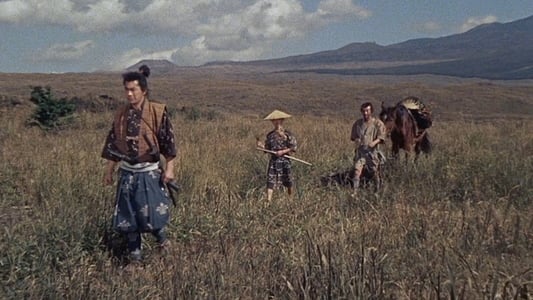
My Thoughts on: The Samurai Trilogy (1954-1956)

Since the first time I watched Throne of Blood (1957) I have been a huge fan of the legendary Japanese actor Toshiro Mifune (1920-1997), particularly his work inĀ jidaigeki or “period dramas.” For the past several years I’ve been working on viewing as many of these films as possible and from the start I knew this would have to include The Samurai Trilogy, a trio of films that dramatize notable incidents in the life of Miyamoto Musashi (1584-1645), arguably the greatest swordsman to ever live. I received the set as a present last year for my birthday, but due to real-life circumstances, I wasn’t able to finish it until last night.

Each film focuses on a major event (or major series of events) in the swordsman’s life:

-In Samurai I, Musashi is a young man named Takezo who dreams of finding wealth and glory far away from the humble village he lives in. His best friend Matahachi also shares dreams of glory and is engaged to Otsu. After being caught on the wrong side of the battle of Sekigahara (which led to the formation of the Tokugawa Shogunate which ruled Japan for nearly 300 years), Takezo and Matahachi are branded outlaws and go on the run. While Matahachi is lured away to Kyoto by a widow and her daughter, Takezo runs wild through the countryside until Takuan, a Buddhist priest, lures him to Himeji Castle (on the premise that Otsu, who has developed feelings for Takezo, is imprisoned there). It’s a trap (of sorts): Takezo is locked into a room inside the castle that is full of books and told he will not be let out until he has bettered himself. Three years later Takezo is released and given the samurai name of Miyamoto Musashi.

530id_110_w1600

Though the film is just over 90 minutes in length, it’s paced in such a way that it feels much longer (such was my impression). Mifune is a delight to watch, as always, and his transformation from the wild Takezo to the stoic Musashi is so extreme you’d almost swear they were played by two different people.

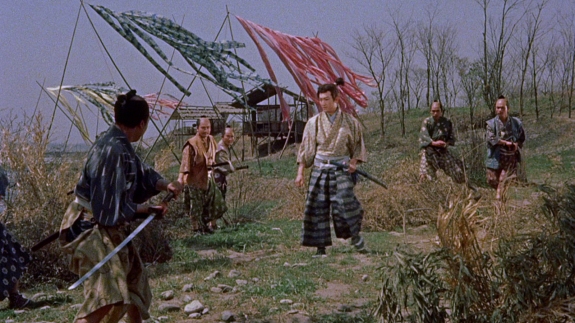
-In Samurai II, the story revolves around Musashi’s conflict with the Yoshioka school, as well as his struggle to fully realize what it means to be a samurai. Initially, Musashi believes that one only needs to be proficient with a sword (which he is), but again and again he is chided for lacking chivalry, compassion and affection. Without these, Musashi is merely a killer, not a samurai. During his journey, Musashi gains his first disciple, an orphan boy named Jotaro. Otsu is still in love with Musashi, but she’s not alone: Akemi, the daughter of the widow from the first film also fancies herself in love with the samurai, though at the moment Musashi himself claims to have chosen “the way of the sword” over the love of any woman. This film also introduces Sasaki Kojiro, another talented swordsman who seeks to build a name for himself by dueling and defeating only the best. He wields a massive longsword nicknamed “Drying Pole.” He badly wants to duel Musashi, but is willing to wait until the samurai has honed his talents further.

eV2HJeLxikDVDHIpYx6LcTVdQQC

I definitely liked this film more than Samurai I. Musashi’s conflict with the Yoshioka school was interesting, considering the students kept stopping the head of the school from meeting Musashi in a fair one-on-one duel. My favorite moments were whenever Musashi faced off with an opponent (or many opponents), sword at the ready. His movements are so precise and artful that I wish there were more moments like this. Koji Tsuruta (1924-1987), who played Sasaki Kojiro, was also a joy to watch. His performance is such that you’re never quite sure what the character is actually thinking.

featured_exhib_film_japaneseff2016_trilogy_duelatganryu

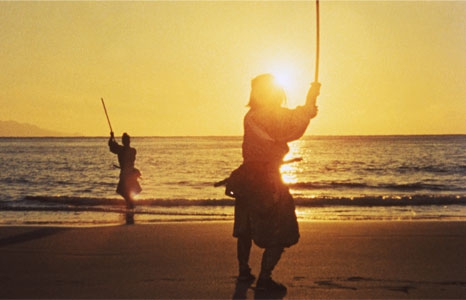
-The story concludes with Samurai III and recounts Musashi’s famous duel with Sasaki Kojiro at Ganryu Island. At the start of this film, Kojiro is frustrated that, despite all his talent, he is still a ronin (a samurai with no master). To remedy this, he applies to become the teacher of Lord Hosokawa, a position that Musashi is also being recruited for. The two swordsman nearly duel one night, but under pressure to accept the offer to become Hosokawa’s teacher, Musashi leaves town and postpones the duel for one year. As a result, Kojiro receives the position and finally receives the status and luxuries that he has always believed to be his due. Finally the duel is set to be held on Ganryu Island. The pair face off on the beach and for a time seem to be equally matched. But then, in a move so quick I honestly can’t describe it, Musashi strikes the fatal blow and Kojiro falls dead. But Musashi takes no joy in the victory.

Maybe I just wasn’t paying attention, or maybe it took a really long time for Musashi to get to the island, but I could’ve sworn the duel took place at sunset. But apparently it was sunrise because the sun kept getting higher in the sky as things went on (cause otherwise it’s a massive continuity error). I found myself pitying Kojiro as the story went on. It is made clear that this duel does notĀ have to happen. Had he said so, Musashi would have happily continued living his life and Kojiro could have spent the rest of his days as an honored teacher and samurai. Kojiro’s downfall comes from wanting to be the very best swordsman in Japan, nothing else will do. One character summed it up perfectly when he observed “This man’s ambitions are too great.”

In conclusion, I greatly enjoyed The Samurai Trilogy, it is a must-see for anyone wishing to learn more about the great samurai films. If you’ve seen this trilogy, let me know what you thought about it in the comments below and have a great day!

See also:

Film/TV Reviews

My Thoughts on Throne of Blood (1957)

My thoughts on: Yojimbo (1961)

You can become a patron of the blog atĀ patreon.com/musicgamer460

Check out theĀ YouTube channelĀ (and consider hitting the subscribe button)

Don’t forget to likeĀ Film Music CentralĀ on FacebookĀ šŸ™‚

Soundtrack Review: Avengers: Infinity War (2018)

*Spoilers for Infinity War below, don’t read if you haven’t seen the film yet*

Alan Silvestri has so far worked on three films in the Marvel Cinematic Universe: Captain America: The First Avenger (2011); The Avengers (2012) and Avengers: Infinity War (2018) (he will also be scoring the currently untitled Avengers 4). Before seeing Infinity War, I didn’t think anything could top the musical excellence that was The Avengers but now I know otherwise. Silvestri has truly outdone himself with his score for Infinity War.

The score contains callbacks to Silvestri’s previous entries in the MCU including a re-appearance of the original Captain America theme (which visibly excited the audience in the theater I sat in). There is also, naturally, several recurrences of the main “Avengers” theme that debuted (so far as I know) in the 2012 film of the same name. But the callbacks don’t stop with Silvestri’s material; there is also a reprise ofĀ Ludwig Gƶransson’s Black Panther theme when the film moves to Wakanda. Even the entrance of the Guardians of the Galaxy is in line with their previous films. While “Rubberband Man”Ā  (performed by The Spinners) does not feature in Vol. 1 or 2 of Guardians of the Galaxy, it did come from a list of compiled songs that could be used in future GoTG entries. So musically the score ties back to the MCU’s past.

As for the new music in Infinity War, I hate to do this but we need to talk about THAT scene on Vormir, because that is the section that drove me to the point of tears. It was all going normally enough until Thanos learned that he needed to sacrifice what he loved most to get the Soul Stone. In the moment when he grabbed Gamora’s arm, the music just exploded into this cacophony of pain and sorrow. I’ve mentioned before that this scene humanized Thanos for me; I should have said it was the music in this scene that did it. The music reflects the pain of Gamora (learning that after all these years Thanos really does love her and because of that she must die) and of Thanos (who must sacrifice the one person he does love in order for his goal to be achieved). This is the kind of music that pierces you like a knife, locking you into the moment so that you can’t look away even if you want to.

landscape-1521469308-gamora-and-thanos-flashback-avengers-infinity-war

And then there’s the ending scene, where everyone starts to disappear. In contrast to the scene on Vormir, here there is a distinct lack of music that I can remember. There may have been some in the background, but if there was, it wasn’t enough to draw my attention. In fact, right after Thanos vanished from Wakanda, it was so quiet I thought the people had already disappeared. I still can’t get the sounds of the ending scene out of my head. If you recall, many MCU films end with a reprise of the main theme, sometimes subtle, sometimes not so much. But here, at the end of Infinity War, there’s no uplifting music to reassure us that all is right with the world again because everything is now very wrong. The music itself feels “shell-shocked” just like the surviving heroes who are realizing that (for the moment at least) they’ve lost.

deewdewd

Honestly, I feel like my words are inadequate to describe how amazing the score for Avengers: Infinity War is, but I hope I did enough to give you a rough idea of how this score impacted me. Truthfully I could go on for several more paragraphs but really the best way to experience this score is to go watch the film as many times as possible and listen to the music. I know that can be hard with all the action on the screen but Silvestri does his best to bring the music to your attention.

Let me know what you thought of the music for Avengers: Infinity War in the comments below and have a great day šŸ™‚

See also:

Film Soundtracks A-W

Avengers: Infinity War-Review (no spoilers)

My thoughts on: Avengers: Infinity War (spoilers!!)

You can become a patron of the blog atĀ patreon.com/musicgamer460

Check out theĀ YouTube channelĀ (and consider hitting the subscribe button)

Don’t forget to likeĀ Film Music CentralĀ on FacebookĀ šŸ™‚

My thoughts on: Avengers: Infinity War (spoilers!!)

Alright, this is it, this is the post where I hold nothing back about Avengers: Infinity War. This means a TON of spoilers are about to come out so if you have no seen the movie yet STOP NOW, do not go any further. You have been warned!!

Still here? Alright, let’s do this!

I have never heard a theater sit so quiet after a Marvel film ended in all my life. In the few minutes it took for the credits to play and reach the post-credits scene you could’ve heard a pin drop. And small wonder! We’d just seen the MCU as we know it completely turned on its head and destroyed!
I already talked about in my previous post how impressed I was with Josh Brolin’s performance as Thanos. I believed going in that Thanos was this completely evil villain that merely wanted to destroy half the universe…just because! But I was wrong, I was very wrong! Thanos is an example of Machiavellianism taken to the extreme. From his point of view, wiping out half the population will lead to more resources and living space for those who remain so everyone left will be much better off. Technically this IS true, however, that does not erase the fact that you have to kill untold trillions of people to make it happen! Despite this, Thanos genuinely seems to believe that he is doing the universe a favor, but I wonder if deep down he has any guilt about what he’s done, especially given what he had to do to get the Soul Stone.

4A40C53D00000578-0-image-a-2_1521206605813

When it came out that the Soul Stone was on the planet Vormir, a planet we’d previously never seen or heard of, I was a little disappointed. It seemed nonsensical that the one Infinity Stone we’d not seen until now would just show up on a random planet. But then Thanos (with Gamora) arrive on the planet and the scene becomes something else when it turns out the guardian of the Soul Stone is none other than…Red Skull!! I’d wondered, like others, if we would ever see this character again after he got sucked into a Tesseract-formed wormhole in Captain America: The First Avenger and it felt awesome to see this plot thread finally resolved. It seems that 70+ years of exile on a distant planet has humbled Red Skull mightily (though I’d love to learn how he found out about what the Soul Stone needs to be unlocked). And speaking of…the moment Red Skull said you needed to sacrifice someone you loved to receive the Soul Stone IĀ knew what was about to happen and Gamora not realizing it at first made it all the more painful. This is the moment that fully humanized Thanos for me, because despite everything he’s ever done, he really does LOVE Gamora and it pains him to do this but he wants this goal more than anything…so she dies. Now whether she’s dead permanently…I don’t know for certain, I’ll get to that argument in a minute.

I need to talk about that ending, that hauntingly perfect ending. I don’t know if I ever mentioned it on here, but for the last several months leading up to the film, I had a suspicion that they might go with the “kill everyone and bring them back with the Infinity Stones” approach but deep down I didn’t think they’d actually do it. Well, they did it alright; granted they didn’t kill everyone, but it was close enough. Actually, after Thanos snapped his fingers (a very awesome moment that caused me to actually cry out “No!!” at the same time as Thor) and then disappeared to parts unknown, I actually thought the people had already disappeared, because it was so quiet!! And then Bucky disintegrated and I realized oh no….we have to watch this happen…and my heart got torn into a million pieces. Because suddenly heroes were dropping left and right: Bucky, Falcon, T’Challa (that one HURT because it was so sudden), Drax, Mantis, Groot (not Groot again!!), Star-Lord, Doctor Strange and…worst of all…Peter (Spider-Man). The moment Peter clung to Tony in absolute terror of his impending death destroyed me inside. And I could tell it destroyed Tony too because he’s the one who got Peter into this in the first place and now he’s had to watch him die. Even when this is undone, it’s probably going to stick with Tony for the rest of his life. And that final shot of the surviving Avengers on Earth sitting there numb with what’s just happened…that was a shock to the system because no Marvel film has ever ended this way, with the villain triumphant and the heroes in disarray. Normally there’s some type of closure, but we haven’t gotten it, and we won’t get it until next year!!

thumbnail_27167

Now then, I said “When this is undone” because you know not all of these characters are going to stay dead. There’s a Black Panther sequel in the works, Spider-Man has a new movie coming, etc. so we know most of these characters are coming back. The big question is, HOW? The last we saw, Thanos has retreated to a distant planet with the Infinity Gauntlet, and as long as he holds it intact, no one can really stop him. Which is why I wonder if some guilt in Thanos will eventually come into play because as things stand, he won’t undo what he’s done. The other question is, who CAN come back? I figure anyone who disintegrated at the end is eligible, but what about those killed before? Like Gamora, Loki, Heimdall, most of the Asgardians (I’m a little confused as to how many survivors there are from Asgard now). I’m pretty sure Loki isn’t coming back as I believe Tom Hiddleston’s contract is up, but at this point anything is possible. And speaking of Loki…what did you think of him dying via Thanos breaking his neck like that? It almost felt…anti-climactic given everything he’s gone through, but then again it’s also fitting as he tried to pull one trick too many with those magic daggers. If that was the last we ever see of Loki, at least he died showing Thor that he really does care about him.

Now for some final thoughts:

-I love that Thor kept calling Rocket Raccoon “rabbit”

-Peter Dinklage’s scenes are perfect

-The fight with Thanos when the Guardians are working with Tony, Spider-Man and Doctor Strange is great and pretty funny considering everyone keeps popping in and out of…time holes? I’m not sure what those are called but I love them.

-It’s interesting that after Hulk gets beat up by Thanos he refuses to come out fully for the rest of the film. Could the Hulk be…scared?

-I want to know how the directors picked which heroes disintegrated and which didn’t. There had to be a rhyme and reason behind it and I want to know what it was!!

And those are my spoiler-filled thoughts on Avengers: Infinity War! What did you think of this film? Were you stunned when the credits rolled? Let me know what you think in the comments below and have a great day!

See also:

Avengers: Infinity War-Review (no spoilers)

You can become a patron of the blog atĀ patreon.com/musicgamer460
Check out theĀ YouTube channelĀ (and consider hitting the subscribe button)

Don’t forget to like Film Music Central on Facebook šŸ™‚

Avengers: Infinity War-Review (no spoilers)

*note: I will try to keep any and all spoilers out of this review but just in case I slip up here is the standard “possible spoilers from the movie may follow, do not read unless you have seen Avengers: Infinity War.”

Wow. Wow. Oh my god they went there. It’s been just over 12 hours since I sat down to watch Avengers: Infinity War, the culmination of a story that began with Iron Man in 2008 and my head is still reeling from everything that happened. This will actually be the first of two reviews I do for the film. This one will just cover my general impressions and try to avoid all spoilers. Later, once it’s safe to discuss the nitty gritty details, I’ll post another review where I discuss everything.

First of all, believe the hype about this movie, this is everything we were promised and more. There are surprises you will not see coming, some are awesome, some…not so much. I’m still in shock over where the movie left us. I mean, I speculated that they might do this, but I didn’t actually think they would, but oh my god they did (and that’s all I can say for now on that).

4A40C53D00000578-0-image-a-2_1521206605813

It was thrilling to see all the different character interactions. Tony’s interactions with Doctor Strange and Star-Lord are everything you’d expect them to be (and are indeed some of my favorite funny moments). And speaking of funny, there are a number of humorous lines in this story that definitely does not feel like a 2 hour and 40 minute film. It was also great to re-visit Wakanda so soon after seeing Black Panther.

thumbnail_27167

What I want to talk about most right now is Josh Brolin’s performance as Thanos because he completely blew me away. There is such a depth to Thanos as he travels to collect the Infinity Stones that I never expected to see. Despite being a mad Titan, in many ways he’s very human and he quickly became a favorite character in the story. Like Loki and Erik Killmonger (two of my favorite Marvel villains), there are layers to Thanos and he has his reasons for being the way he is. The most frightening thing about this villain is he genuinely believes he’s doing the right thing, that the universe will thank him when it’s all over. That’s downright scary (and a complete contrast to Loki who, it was noted by Coulson “lacked conviction” during his assault on New York City). Thanos does not lack conviction.

I think that’s all I can talk about for now, I don’t dare spoil this film for anyone (that would be cruel). All I can say is, go see Avengers: Infinity War as soon as you can and prepare to be amazed. It shouldn’t be too long before I’m able to publish a full review that talks about everything, so for now, do NOT let me know what you thought about the film in the comments (I want to avoid spoilers at all costs) and have a great day!

You can become a patron of the blog atĀ patreon.com/musicgamer460

Check out theĀ YouTube channelĀ (and consider hitting the subscribe button)

Don’t forget to likeĀ Film Music CentralĀ on FacebookĀ šŸ™‚

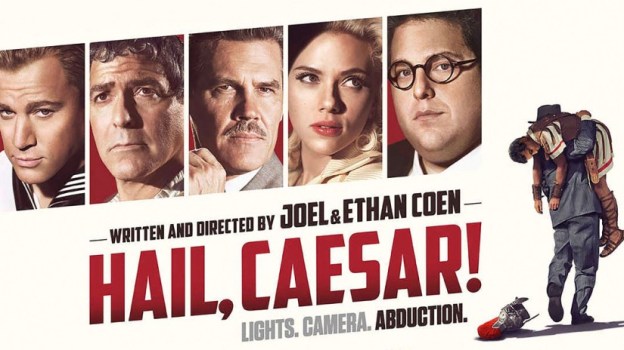
My thoughts on: Hail Caesar! (2016)

Given how expensive going to the movie theater is for me, I do my best to research any upcoming movie I’m not absolutely sure about before I go and plunk down my hard-earned money to go and see it (Star Wars and James Bond are pretty much the only safe bets anymore). Hail Caesar! (2016) is an example of me going in, doing the research beforehand and being oh so very wrong about what I was going to get.

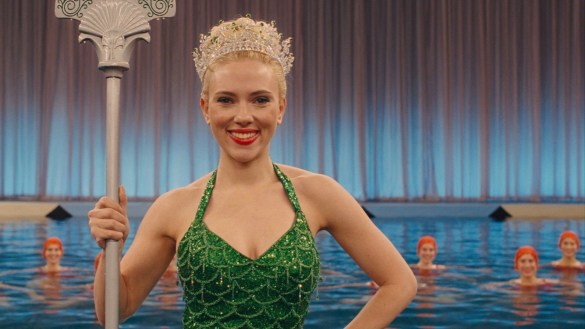
On paper, Hail Caesar! sounds like a great film. Set in the 1950s during the latter years of Hollywood’s golden studio era, the film follows Eddie Mannix (Josh Brolin), a “fixer” who is trying to discover the whereabouts of big movie star Baird Whitlock (George Clooney) after he disappeared from the set of a biblical epic production (the titular Hail Caesar! which is a cross between Ben-Hur (1959) and Quo Vadis (1951). At the same time, unmarried synchronized swimming actress DeeAnna Moran (Scarlett Johannson) discovers she’s pregnant, which would cause a huge scandal if it became known. There’s also the career tribulations of Western star Hobie Doyle (Alden Ehrenreich) who ends up shoehorned into a “classy” drama picture that is totally unsuited for him.

ManxSec

So far so good right? Well…while the opening was pretty good, the rest of the film devolved into a convoluted mess. It turns out that Clooney’s Whitlock was abducted by a group of Communists who spend the rest of the film explaining their doctrines to the actor (said doctrine is explained in mind-numbing detail). And speaking of Communists, it’s also revealed that Burt Gurney (Channing Tatum), one of the studio’s biggest stars is a Communist sympathizer who defects to the Soviet Union via a Russian submarine that arrives just off the shores of Malibu (I couldn’t make this up if I tried).

hail-caesar

Aside from the convoluted plot that practically careens from one crazy moment to the next with little to nothing to connect them (we’re basically getting four separate stories in one film), a lot of the action is cringe-worthy, especially Alden Ehrenreich’s scenes (this is why I’m so nervous about him playing Han Solo in the upcoming Solo film). There’s a particularly bad moment where, in a scene that runs way too long, Ehrenreich’s character Doyle is attempting to enter a room and say a “witty line” in this dramatic picture he’s been forced into. The audience is forced to endure over ten takes of this scene (at least it feels like that many if not more) where he stumbles over his lines over and over again. The only part of this film that I actually enjoyed are the “movie within a movie” moments where we’re treated to scenes from the movies that are being filmed on the Hollywood sets. These include:

  • scenes from Hail Caesar! including one that directly parodies a famous scene in Ben-Hur where a character comes face to face with Christ and is awed by his presence.
  • an Esther Williams-like synchronized swimming scene
  • a Gene Kelly inspired song and dance routine
  • scenes set in a traditional Western film

Outside of those scenes (which perfectly capture life in 1950s Hollywood) there’s really nothing to recommend this film.

What did you think of Hail Caesar! ? Did you enjoy it or do you also think it’s a dud? Let me know your thoughts in the comments below and have a great day šŸ™‚

See also:

Film/TV Reviews

You can become a patron of the blog atĀ patreon.com/musicgamer460

Check out theĀ YouTube channelĀ (and consider hitting the subscribe button)

Don’t forget to like Film Music Central on Facebook šŸ™‚

Alice in Wonderland “The Walrus and the Carpenter” (1951)

When you break Alice in Wonderland down, it’s obvious that the film is really a series of isolated stories tied together by the narrative of Alice exploring Wonderland. One such story is “The Walrus and the Carpenter” as told to the wandering Alice by Tweedle-Dee and Tweedle-Dum. I’ve been tempted several times to include this scene in my Disturbing Disney series because of one particular moment, but for now I’ll let you decide for yourselves if it’s disturbing or not.

As Tweedle-Dee and Tweedle-Dum narrate: A Walrus and a Carpenter are walking along a beach one day, which could be cleared of all its sand in half a year (the carpenter says) as long as you don’t mind the work involved that is.

Alice-disneyscreencaps_com-1751

Work!!? (the Walrus is clearly averse to doing any work whatsoever) In fact, whenever the subject of work (or any kind of labor) is mentioned, the Walrus launches into this tune:

The time has come to talk of other things
Of shoes and ships and sealing wax
Of cabbages and kings
And why the sea is boiling hot
And whether pigs have wings
Calloo-Callay
No work today!
We’re cabbages and kings

The carpenter then spots a bed of oysters in the ocean nearby, and being dreadfully hungry, points them out to the Walrus, who wants them as well. Thus, he marches into the ocean (while the carpenter builds a restaurant from scratch) and entices the oysters to follow him saying:

maxresdefault (1)

Oh, uh, Oysters, come and walk with us
The day is warm and bright
A pleasant walk
A pleasant talk
Would be a sheer delight

Even though Mother Oyster advises all her oyster children to remain in their beds, the Walrus wins out by blustering on:

Yes, yes, of course, of course, but, uh, ha, ha!

The time has come, my little friends
To talk of other things
Of shoes and ships and sealing wax
Cabbages and kings
And why the sea is boiling hot
And whether pigs have wings, ha ha
Callo-Callay
Come, run away
With cabbages and kings!

Alice-disneyscreencaps_com-2031

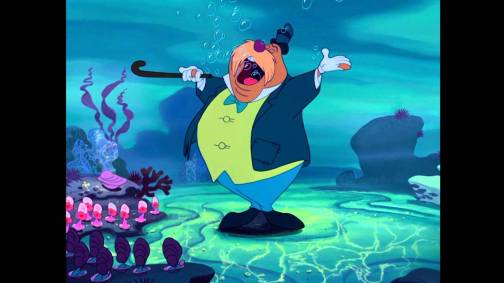
And so the oysters march off behind the Walrus and this is where it starts to get disturbing. For the oysters aren’t just oysters, they now run along the beach like little girls in dresses and bonnets (with happy smiling faces), which makes what happens next all the more menacing. The Walrus marches the oyster girls straight into the ready-made restaurant, and after sending the Carpenter away on a wild goose chase, draws the oyster girls in ever closer

Well, yes, yes, splendid idea, ha ha!
Very good, indeed
Now, if you’re ready, Oysters, dear
We can begin the feed

(Oysters): FEED??

Oh, yes…

The time has come, my little friends
To talk of food and things

We don’t see what happens next but you know what’s going to happen. By the time the Carpenter comes back with the bread and sauce for the oysters, it’s too late, they’ve all been eaten by the Walrus!! This is too much for the Carpenter who chases the Walrus back down the beach in a rage over being swindled out of an oyster dinner. But what I’d like to get back to is this scene with the Walrus alone with the Oysters: it is downright menacing I think! Just go back and look at that picture of the Walrus with his evil grin as it dawns on the oysters what’s about to happen. I think it’s pretty disturbing, but what do you think? Let me know your thoughts in the comments below and have a great day!

Don’t forget to like Film Music Central on Facebook šŸ™‚

You can become a patron of the blog atĀ patreon.com/musicgamer460
Check out theĀ YouTube channelĀ (and consider hitting the subscribe button)

See also:

Disney Soundtracks A-Z

Alice in Wonderland ā€œIn a World of My Ownā€ (1951)

Alice in Wonderland ā€œAll in the Golden Afternoonā€ (1951)

Alice in Wonderland ā€œThe Un-Birthday Songā€ (1951)

Alice in Wonderland ā€œPainting the Roses Redā€ (1951)