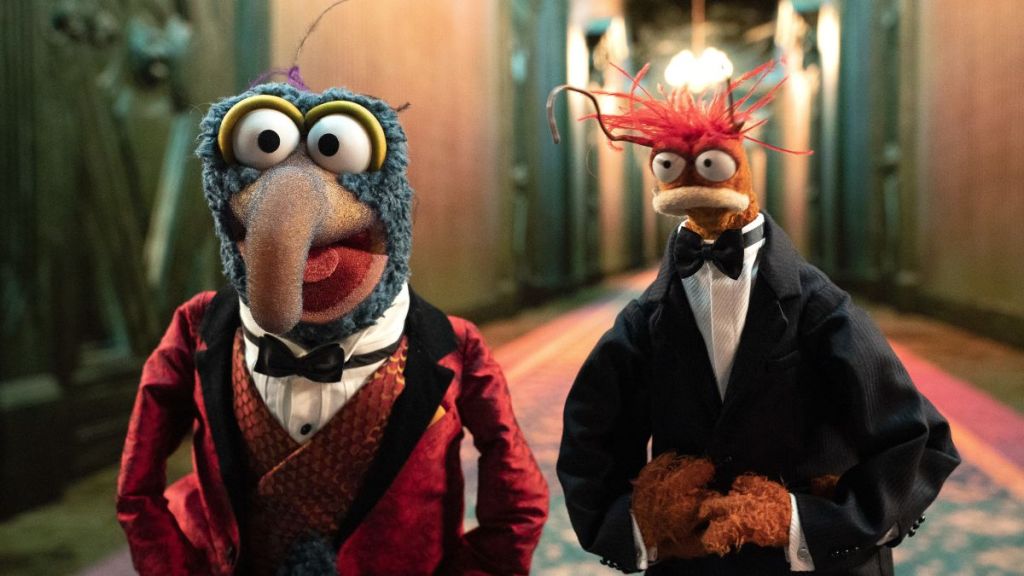
Soundtrack News: ‘Fireheart’ Original Soundtrack is Available Now

The original motion picture soundtrack for the new animated film Fireheart with music by Chris Egan is now available courtesy of Milan Records. This 31-track album is available now on all major streaming platforms and the film is now streaming on Hulu.

Chris Egan is a London based composer & conductor for Film & Television. Recent work includes scoring the feature film Fireheart staring Olivia Cooke, Kenneth Branagh & William Shatner, Apple TV’s ground-breaking nature series Tiny World narrated by Paul Rudd (composed with long-time collaborator and friend, Benjamin Wallfisch) and both series of The Spanish Princess for Starz.

Fireheart stars sixteen-year-old Georgia Nolan, who dreams of being the world’s first-ever female firefighter. When a mysterious arsonist starts burning down Broadway, New York’s firemen begin vanishing. Georgia’s father, Shawn, is called out of retirement by the Mayor of New York to lead the investigation into the disappearances. Desperate to help her father and save her city, Georgia disguises herself as a young man called “Joe” and joins a small group of misfit firefighters trying to stop the arsonist.

TRACKLIST

  1. Untrained and Unstoppable 2:05
  2. The Nolan Family 1:22
  3. Brooklyn 1920 – I Have to Tell Her 3:18
  4. Secret Training 1:20
  5. NYC Firehouse 2:14
  6. Georgia C’mon 1:05
  7. Mayor Jimmy Murray 1:32
  8. Are We There Yet? 2:34
  9. Hose Pipe Games 0:50
  10. Not a Real Fireman Yet 2:15
  11. Theatre Investigation 2:30
  12. Gotta Fly 1:51
  13. I Think You’re Amazing 0:38
  14. Last Minute Change 0:39
  15. Taxi Cab 0:27
  16. Morning Captain 2:01
  17. Fast Learner 2:11
  18. The First Firefighter 0:55
  19. Reaction to Sound 1:50
  20. Great Job Team 0:59
  21. It’s a Trap 1:36
  22. Nooooo 1:18
  23. The Lair of the Arsonist 2:20
  24. Actually Daughter 1:30
  25. Supreme Fury 1:48
  26. Rescuing Dad 1:24
  27. Just Doing My Jon – Mayday Mayday 2:57
  28. Let the Show Begin 2:33
  29. Showtime 4:09
  30. My Dad’s Name is Shaun Nolan 4:18
  31. End Credits 2:29

See also:

Become a Patron of the blog at patreon.com/musicgamer460

Check out the YouTube channel (and consider hitting the subscribe button)

Don’t forget to like Film Music Central on Facebook 

Varèse Sarabande Announces Titles for Record Store Day 2022

Varèse Sarabande Records will be releasing five amazing soundtrack LPs on Record Store Day 2022: Blue Velvet will be released as a 2-LP Deluxe Edition, The Fast and the Furious: Tokyo Drift as a double LP with collector’s edition etching, John Williams’ The Cowboys Deluxe Edition on 2-disc gold vinyl, Mimic on green vinyl in an original triptych jacket and Big Night on crystal clear vinyl.

These Varèse Sarabande Records titles will be available on April 23, 2022, at thousands of independent record stores. For a list of participating stores and more information about these special LPs, visit RecordStoreDay.com.

Blue Velvet – Original Motion Picture Soundtrack (Deluxe Edition) by Angelo Badalamenti

Blue Velvet is David Lynch’s unforgettable 1986 masterwork, starring Kyle MacLachlan as a curious college student, Isabella Rossellini as a tormented lounge singer and Dennis Hopper as an emotional gas-sniffing psychopath. 

TRACK LISTING

Side A

  1. Main Titles (From the Motion Picture “Blue Velvet”) 1:25
  2. Night Streets / Sandy And Jeffrey 3:37
  3. Frank 3:33
  4. Jeffrey’s Dark Side 1:49
  5. Mysteries Of Love 2:10
  6. Frank Returns 4:38
  7. Mysteries Of Love 4:18

Side B

  1. Blue Velvet / Blue Star – Montage 1:49
  2. Lumberton U.S.A. / Going Down To Lincoln – Sound Effects Suite 2:12
  3. Akron Meets The Blues 2:41
  4. Blue Velvet 2:50
  5. Honky Tonk Part I 3:11
  6. In Dreams 2:49
  7. Love Letters 2:44
  8. Mysteries Of Love 4:24

Side C

  1. Alcron Meets The Blues 1:04
  2. Lumberton U.S.A. Radio Ad 0:16
  3. Timpo 0:23
  4. Ribbon Scissor 0:20
  5. Going Down To Lincoln 1:41
  6. Organs And Sirens 1:11
  7. Sandy And Jeffery 0:25
  8. Dorothy Alone 0:19
  9. Mount Frank’s Eruption aka Frank (Film Version Without Clarinet) 3:36
  10. Sloe Club Boys 0:25
  11. High Gentle Memories 1:02
  12. Stalking Out 0:22
  13. Yellow Man 1:03
  14. Sandy And Jeffrey 0:47
  15. Ominously Yours II  0:54
  16. Ominously Yours IV  0:41
  17. Organ (Version 3) / Mysteries Of Love 4:11

Side D

  1. Organ Toots And Sirens  1:17
  2. Cue 61A  1:13
  3. Cue 05  0:54
  4. Cue 09  0:55
  5. Cue 09A  0:29
  6. Cue 13  1:38
  7. Cue 16  0:24
  8. Cue 21 & 24  0:46
  9. Cue 27  1:54
  10. Cue 36  0:34
  11. Cue 46  1:14
  12. Cue 48  0:47
  13. Cue 50  1:04
  14. Cue 56  1:21
  15. Cue 65 PT  0:51 
  16. Cue D  0:56
  17. Cue 65  3:06

The Fast and the Furious: Tokyo Drift – Original Motion Picture Score by Brian Tyler

The Fast and the Furious is the most successful movie franchise of all time, with almost 6.5 billion dollars in box office receipts from ten films over the past 20 years. Tokyo Drift is often cited as one of the best of the lot, and the musical score is definitely one of the most lauded among score fans. Brian Tyler (Scream, Thor, Avengers) scored Tokyo Drift(with an assist from Slash on “Welcome to Tokyo”) and went on to the score four of the five subsequent films.  Never before available on LP, the text-only cover on the CD and digital formats has been replaced with an original design which incorporates Japanese manga art styles. This double album features an orange LP for sides A and B, and a black vinyl record for sides C and D, with side D a stencil of the scarab beetle design from the car belonging to the Drift King. 

TRACK LISTING

Side A:

  1. Touge 0:46
  2. The Fast And The Furious: Tokyo Drift 7:05
  3. Saucin’ 4:28
  4. Neela Drifts 3:27
  5. Preparation 1:10
  6. N2O 0:49
  7. Mustang Nismo 2:21
  8. Underground 1:33

Side B:

  1. Hot Fuji 1:55
  2. This Is My Mexico 1:23
  3. Welcome To Tokyo (written by Slash and Brian Tyler) 1:54
  4. DK VS Han 3:32
  5. Downtown Tokyo Chase 2:33
  6. Aftermath 1:22
  1. Empty Garage 1:01
  2. DK’s Revenge 1:09
  3. Journey Backwards 0:58
  4. Sumo 1:37
  5. Sean’s Crazy Idea 2:24
  6. Dejection 1:12

Side C:

  1. Kamata 1:32
  1. Two Guns 1:29
  2. I Gotta Do This 1:14
  3. Megaton 2:16
  4. Neela Confronts DK 1:47
  5. Winner … Gets … Me 1:21
  6. War Theory 1:54
  7. I Don’t Need You To Save Me 0:57
  8. Neela 1:44
  9. Symphonic Touge 6:50

The Cowboys – Original Motion Picture Soundtrack (Deluxe Edition) by John Williams

This 50th anniversary release celebrates John Wayne and one of his finest twilight westerns with a score composed by the living legend, John Williams. The Cowboys was the maestro’s biggest pre-Star Wars score, and a much-needed restoration job—featuring a complete rebuild, remix, remastering and expansion to 36 tracks (including unearthed alternate takes)—was done for a 3,000-unit, limited-edition CD re-issue that came out in 2018 and has since sold out. The first-ever official LP release, this double-record gatefold includes extensive notes and original photos and is pressed on gold vinyl exclusively for RSD 2022.

TRACK LISTING

Side A

1.         Overture 2:32

2.         The Cowboys – Main Title 3:25

3.         The Hands Quit 1:44

4.         The Boys 1:04

5.         Wil And Ann 2:35

6.         The Kids And Crazy Alice 2:02

7.         Graveyard 0:48

8.         Anybody That Tall 1:13

9.         Training Montage 1:33

10.       Long Hair And The Roundup 2:27

11.       Nightlinger’s Tale 1:48

Side B

2.         To Belle Fourche 1:45

3.         The First Night 1:57

4.         Burning Daylight 1:03

5.         Learning The Ropes (Vivaldi Concerto in D) 1:17

6.         Sour Mash 2:04

7.         Mrs. Collingwood’s Girls 1:41

8.         Long Hair’s Threat 1:20

9.         Entr’acte 2:26

10.       Afraid Of The Dark 1:42

11.       Charlie’s Demise 1:59

12.       Charlie’s Burial 1:37

Side C

1.         Long Hair Trails 4:07

2.         Long Hair And Dan 1:28

3.         Summer’s Over 1:50

4.         Drums Of Manhood And The Execution 5:55

5.         Into The Trap 2:18

6.         The Battle 1:27

7.         End Title And End Cast 2:22

Side D

ADDITIONAL MUSIC

1.         Entr’acte (Segment) 1:01

2.         Nightlinger’s Tale (Alternate) 1:47

3.         Long Hair’s Threat (Alternate) 1:26

4.         The Execution (Alternate) 4:21

5.         Into The Trap (Alternate) 2:17

6.         End Title And End Cast (Alternate) 2:23

7.         Exit Music 1:13

Mimic – Original Motion Picture Soundtrack by Marco Beltrami

Mimic was Guillermo del Toro’s first big budget English language film and the second film composed by Marco Beltrami who had just completed his work on the original Scream. This soundtrack has never been released on vinyl and features fantastic new original artwork that uses a bespoke triptych jacket design to mimic the transformation of the Judas Breed. Pressed on green vinyl just for RSD 2022.

TRACK LISTING

Side A:

  1. Main Title 2:51
  2. Race To The Subway 1:38
  3. Time To Separate 0:58
  4. Chuy Steps Out 3:20
  5. Manny Searches For His Son 1:51
  6. Slow Tango 2:15
  7. Chased By A Bug 1:16

Side B:

  1. Susan Meets Chuy 1:05
  2. Faulty Scaffolding 1:22
  3. Manny’s Tango 1:56
  4. Evil Among Us 1:10
  5. Confronting Terror 2:18
  6. The Lucistic’s Alive 1:28
  7. Reunited 2:51
  8. End Credits 2:01
  9. La Cucaracha 3:35

Big Night – Original Motion Picture Soundtrack by Various Artists

A breakout indie film success in 1996, Big Night has received new attention due to star and director Stanley Tucci’s best-selling book and Italian food-based program on CNN, Searching for Italy. The soundtrack was also a hit with viewers with its large serving of 1950s classics from Rosemary Clooney, Keely Smith and Louis Prima, whose persona plays a major character in the film. This record has never before been released on LP and is pressed on crystal clear vinyl exclusively for RSD 2022.

TRACK LISTING

Side A:

  1. Claudio Villa – Stornelli Amorisi 8:00
  2. Matteo Salvatore – Il Pescivendolo 1:14
  3. Claudio Villa – La Strada Del Bosco 2:33
  4. Gary DeMichele – Art Of Art 2:26
  5. Louis Prima – Oh Marie 2:27
  6. Rosemary Clooney – Mambo Italiano – 02:31

Side B:

  1. Louis Prima And Keely Smith With Sam Butera – Love Of My Life (O Sole Mio) 3:45
  2. Gary DeMichele – Dinner 0:58
  3. Claudio Villa – Tic Ti, Tic Ta 2:42
  4. Louis Prima And The Witnesses – Five Months, Two Weeks, Two Days 2:09
  5. Keely Smith – Don’t Take Your Love From Me 3:05
  6. Louis Prima – Buona Sera 2:58
  7. Gary DeMichele – Angular Dissent 2:06
  8. Matteo Salvatore – Mo Ve’la Bella Mia Da La Muntagna 2:50
  9. Gary DeMichele – Pascal’s Waltz 1:21
  10. Gary DeMichele – Big Night Theme 0:48

Are you excited for these releases for Record Store Day 2022?

See also:

Become a Patron of the blog at patreon.com/musicgamer460

Check out the YouTube channel (and consider hitting the subscribe button)

Don’t forget to like Film Music Central on Facebook 

Soundtrack News: Milan Records to Release ‘Texas Chainsaw Massacre’ Soundtrack on February 18th

Milan Records has announced the February 18th release of TEXAS CHAINSAW MASSACRE (SOUNDTRACK FROM THE NETFLIX FILM) with music by GRAMMY Award®-winning saxophonist, multi-instrumentalist, songwriter and composer Colin Stetson.

Available for preorder now, the album features music written by Stetson for this long-awaited sequel to the 1974 horror classic. The 23-track collection finds Stetson expertly layering a multitude of sounds and instruments to create a hauntingly brutal, industrial soundscape.

Of the album, composer Colin Stetson had the following to say:

“It has been an honor and just way too much fun getting to musically world-build in the Texas Chainsaw Massacre universe.  As with the subject matter and our iconic villain – all sputtering engines, metal scraping metal, faces on faces – the music is the sound of an old and decrepit abattoir, stirring to life and rattling off the dust after a great many years idle; made with Contrabass Saxophones, Tibetan bowls, and a hearty dose of wild turkey hunting calls; all twisted, stretched, and wearing masks of their own.”

Directed by David Blue Garcia, the film centers on Melody (Sarah Yarkin), her teenage sister Lila (Elsie Fisher), and their friends Dante (Jacob Latimore) and Ruth (Nell Hudson), head to the remote town of Harlow, Texas to start an idealistic new business venture. But their dream soon turns into a waking nightmare when they accidentally disrupt the home of Leatherface, the deranged serial killer whose blood-soaked legacy continues to haunt the area’s residents — including Sally Hardesty (Olwen Fouéré), the sole survivor of his infamous 1973 massacre who’s hell-bent on seeking revenge.

TEXAS CHAINSAW MASSACRE (SOUNDTRACK FROM THE NETFLIX FILM)

TRACKLISTING –

  1. Sunflowers
  2. Welcome to Harlow
  3. The House
  4. Taken Away
  5. Death on the Road
  6. Scars
  7. The Call
  8. The Deed
  9. For Your Life
  10. Headless
  11. The Hunter
  12. Every Last One
  13. Lament in Mirrors
  14. Call to Arms
  15. A Valiant Effort
  16. Sledgehammer
  17. Midnight Memorial
  18. Reunited
  19. Through the Floorboards
  20. To the Depths With You
  21. Sunrise
  22. Vengeance
  23. Homecoming

Will you be ordering a copy of the soundtrack for Texas Chainsaw Massacre?

See also:

Become a Patron of the blog at patreon.com/musicgamer460

Check out the YouTube channel (and consider hitting the subscribe button)

Don’t forget to like Film Music Central on Facebook 

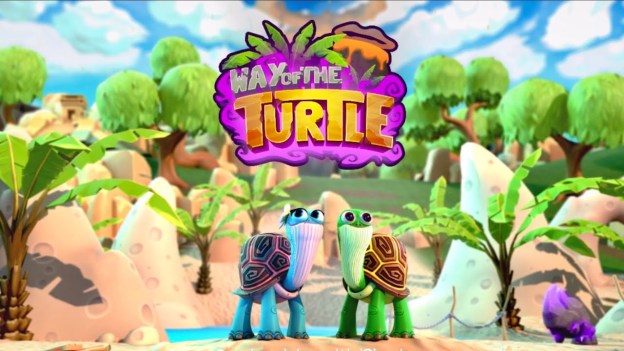
Talking with Composer Shaun Chasin about ‘Way of the Turtle’

Late last year I was presented with the opportunity to speak with composer Shaun Chasin about his work on the expansion of the game Way of the Turtle, a charming platformer game that instantly stole my heart the moment I saw some of the gameplay. Shaun has written music for dozens of video games, as well as film and television works. Shaun studied at Berklee College of Music, where he majored in Film Scoring with a minor in Video Game Music. Upon graduating Berklee, he attended the University of Southern California’s Scoring for Motion Pictures and Television graduate program.

At the time of the interview, the music of the expansion was about to be released and we talked about his work on both the original game and the expansion.

I hope you enjoy this interview!

  • How did you originally get involved with Way of the Turtle and what kind of game would you describe it as?

I worked on a horror game in 2015 called Hector, that was with a super-small team with only five of us. The artist on Hector ended up working for Illusion Labs and he became the main artist for Way of the Turtle. So when it came time for them to talk about music he said “I have a guy!” and they brought me on.

  • Was there any gameplay for you to look at? Or did you compose solely based off still images?

There was pretty quickly gameplay to look at. I was playing a lot of [game] builds along the way. They made a PC build that I could play with and run around and see how things are working. This is because a lot of the time you really don’t know how long it will take to clear a level or area, so if you’re designing a loop it’s hard to know if it’s going to get really annoying. You have to think about “What if the players get stuck, is [the music] going to get annoying?” That’s why you have to get a feel for how long things will take. I like to go through as fast as possible and as slow as possible, to make sure it’s working either way.

The same thing happens with [musical] stingers in-game. Occasionally the gameplay will be interrupted for a scene, for example when you get a turtle shell upgrade, the camera pulls back and torches light up. And I wanted to have music timed to the torches lighting up and the camera movement. The only way to work that out and implement it correctly is to play through the game.

  • Did the game being a platform game affect have any influence on the music? As opposed to the music in an open-world game?

I like to think of it as having the qualities of both, it’s like a pseudo-3D game, so you have a lot opening up with the camera turning as you go down a ramp. There’s also some non-linear aspects like at the gopher hub where you can purchase things and talk to the gopher. But there is some of that [platforming aspect] in the game’s music.

For example, the “low health layer” is really inspired by older game music. It’s not necessarily inspired by platforming games, but more like the N64 version of The Legend of Zelda: Ocarina of Time. [In that game] there’s a little *ding* that happens that I always found anxiety-inducing as a kid but in a really effective way. So, when you’re low-health in Way of the Turtle you get a similar *ding* sound that comes into the music but also works in rhythm and in time with the music. That wouldn’t have happened if I didn’t have my mindset shifted towards older games.

  • You said in the press release that creating the music for Way of the Turtle was uniquely challenging, how so?

It was that unique combination. I’m used to writing for orchestra, that’s my bread and butter with most projects that I do. However, the fact that [the game] needed something extra, a straight traditional orchestral score would not have worked, is why I needed those extra instruments, like the kalimbas and other instruments like that. As soon as I started tinkering with a lot of smaller sounds, little things that made the orchestra feel quirky. This helped it become its own sound.

Once I got that sound together, the rest of the score wasn’t that challenging and I was able to exist in that musical world. It was the first couple things that had a lot of back and forth and I didn’t think I was going to get it. Eventually though, we got into a sound where I was “okay, this is what the game sounds like.” From then on we were able to blast off in a certain direction.

  • Were you getting a lot of direction throughout the process?

There was a lot of direction at the beginning [of the process], with a ton of feedback and revisions. Once we got locked into a sound, most everything got in on version 1, which is unusual for a project. I’m working on a show now where we’re on version 21, for example. And some of that would be from: “This is great, but we changed the edit so now it needs to be updated.” It’s really unusual to see a version 1 in a project, but it happens. I think it’s because we had such a back and forth at the beginning, there was an established vocabulary for the project. Once we all worked to get on the same page, I think that’s why things were able to get through so quickly.

  • What inspired the overall sound of Way of the Turtle? I wasn’t expecting something that sounded so epic and cute all at the same time. Was this inspired by anything specific?

When I did a demo for the game, my first shot at the music was a lot more “cute” and electronic with synthesizers. The developers were like “This is okay but it’s not what we’re thinking of.” They actually gave me a reference, then, from Finding Nemo and said that they wanted the game to sound like a big adventure.

Instead of a cute platformer [sound], they wanted a big Disney adventure sound, which led to the use of a full orchestra. For some of the sounds, I covered the turtles with kalimbas and marimbas, to create the quirkiness of the turtles moving around.

  • What kind of instruments are included for Way of the Turtle? I hear the general orchestral mix but there’s some unique sounds mixed in there too. How did you pick which instruments to include?

So one instrument I included was the kalimba, that’s a little hand percussion instrument. I added little touches with it because it’s such a delicate sound and if you put the microphone right up to it, it’s a very close and intimate sound. But if you mix it with the vastness of a traditional orchestra, they really complement each other, one pulls you out while the other one pulls you in. It creates an interesting balance that I hadn’t really done before.

In the expansion music, there isn’t much oboe, but in the original score that I did for the base game in 2019 there was a ton of oboe. I recorded this amazing oboist and he came over to record and the one part that I thought would be super difficult he just blazed through on his first take and it was absolutely perfect.

For the darker scenes we included a guitarviol, which is a mix between a cello and a guitar. It’s sized and tuned like a guitar, but it has cello strings and it’s played with a bow. This instrument was used a lot in the score for Game of Thrones. It sounds like a cello but it’s also a little bit ancient and harsher in an interesting and cinematic way.

  • How does the music for the expansion build on what you created for the original game?

This expansion actually finishes the story of the base game. The original game ends with a “to be continued” and the first update ends with this big explosion sending purple goo all over the island. This update then, sees you re-exploring the island but it’s been overrun with this evil, magic goo.

The music for the expansion is all fully new stuff, although the challenge there was to make it sound cohesive. Like, it’s still somewhat familiar, but in the base game the music is much lighter. In this last update, you’re trying to clear off this evil goo, so the music I came up with is so much darker and more evil. There’s a lot more brass, more low elements, and a lot more big, deep percussion. We’re getting much lighter on things like the kalimbas. There’s still some moments of hope when you can hear them shine through but in general the direction was to go way darker.

  • What was the process like for scoring this expansion? I’m assuming there was new gameplay footage to look at to give you an idea of what was needed?

Sort of. There were two more “explorer” tracks they needed, both of which came with a corresponding “tension” layer and a corresponding “low health” layer. The “tension” layer is tied to the number of enemies on the screen. The more enemies on the screen, the louder it becomes. So you’ll hear more aggressive percussion, and as you then defeat enemies the music becomes more subdued. This makes the music ebb and flow as you’re fighting.

Then they sent me footage for all the different cut scenes. These included all the puzzle endings and the introduction of the boss. There’s also the music when the boss is defeated and the final cut scene when you can re-explore the island as a peaceful paradise that’s been cleared of all monsters.

  • How much time did you have to work on the expansion music?

A few weeks. I ended up taking a month off work and they came and were like “hey we need music for the expansion” which was perfect because it was music I knew I could nail. It was a perfect first project back because it was music I’d done before. And for the most part everything was approved very quickly after a little back and forth.

I hope you enjoyed this interview and I want to give a big thank you to Shaun Chasin for taking the time to speak with me about Way of the Turtle.

See also:

Composer Interviews

Become a Patron of the blog at patreon.com/musicgamer460

Check out the YouTube channel (and consider hitting the subscribe button)

Don’t forget to like Film Music Central on Facebook 🙂

My Thoughts on: Horror of Dracula (1958)

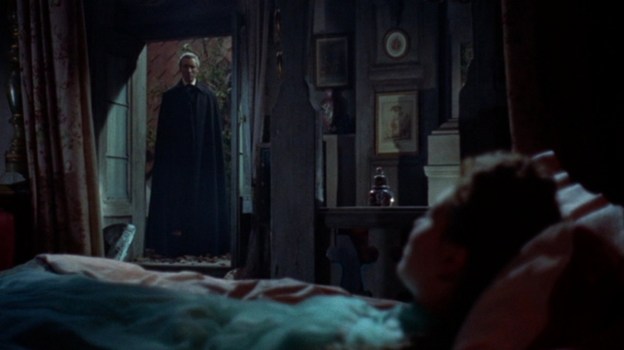
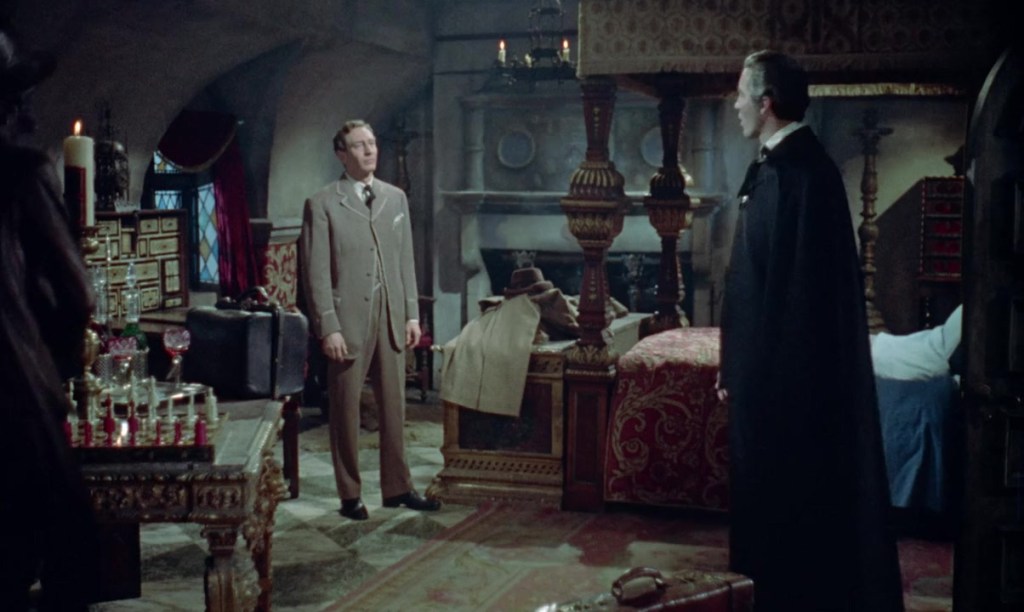
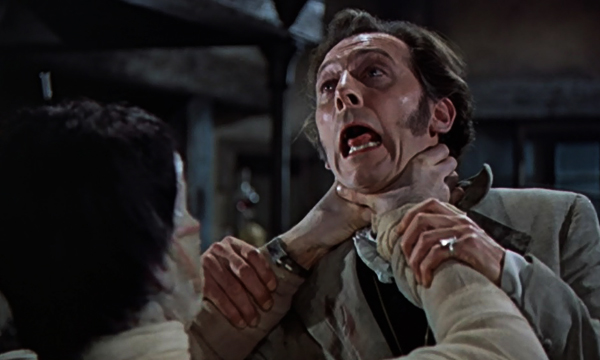
As it was Peter Cushing who drew me into Hammer horror films in the first place, I suppose it was only a matter of time until I got to Horror of Dracula (also released as “Dracula” but I’m going by the title on my copy), the first of Hammer’s Dracula films and the first to feature Christopher Lee as the notorious vampire.

Considering I grew up knowing Christopher Lee primarily for his role as Saruman in The Lord of the Rings/The Hobbit and as Count Dooku in Star Wars, discovering Lee’s horror roles has been eye-opening to say the very least. Oh, to be sure I knew that Christopher Lee had a lengthy history in horror, but it’s one thing to read about it and quite another to watch it on the screen. And one thing I’d heard for several years now is that his portrayal of Count Dracula was must-see.

And is it ever! While I was astonished to learn that Lee is on screen as Dracula in this movie for less than ten minutes, you’d never know it from the way he dominates the screen. I got a cold chill when he appeared for the first time as this looming figure at the top of the stairs. I love how Lee’s Dracula just oozes charm during his introduction. This is how I’ve always imagined Dracula to be: just this overwhelmingly charismatic figure that anyone would find irresistible if you didn’t know he was actually a centuries-old vampire. Also, I love the cape that Lee wears throughout the film, this is definitely what a vampire’s cape should look like.

Now, Lee’s appearance in the film aside, the story of this film did bother me just a little. Unfortunately for this film, I’m quite familiar with Bram Stoker’s original novel and my brain couldn’t help but point out differences between book and film throughout the story. This despite the fact that I know a Dracula movie isn’t beholden to copy Stoker’s novel to the letter. It’s just..this story is in some respects so close to the book and yet so different. I mean, we still have Mina and Lucy, and Dr. Van Helsing of course, but that’s where the similarities pretty much end and I don’t know why but the differences bothered me just a little.

Speaking of Van Helsing, I think I like Peter Cushing in this role just as much as I like him playing Baron Frankenstein. He projects such an air of authority that you have no trouble believing that this is an expert vampire hunter who will stop at nothing to see all vampires eradicated from the face of the earth. In fact, he plays the part so well that I found it legitimately frustrating when certain characters found ways to circumvent his instructions (I felt a similar way while watching The Brides of Dracula).

As for the horror elements in this movie, I was sufficiently scared throughout the movie. Believe it or not there’s at least one jump scare in this movie that had me almost jumping out of my skin. Most of the scares have to do with Christopher Lee and that gorgeous score that accompanies the film. Even before Lee makes his appearances as Dracula, you just know he’s coming from the music alone, which makes the moment he appears so much more terrifying.

There’s so much more I could say about Horror of Dracula but it all essentially boils down to the same thing: this is a great entry in the list of Hammer horror films and one I greatly enjoyed watching. The only way it could’ve improved was with more screen time from Christopher Lee’s Dracula, but I take comfort knowing that Lee returns as the titular vampire in Dracula: Prince of Darkness (a film I hope to review later this year).

Let me know what you think about Horror of Dracula in the comments below and have a great day!

See also:

Film Reviews

Become a Patron of the blog at patreon.com/musicgamer460

Check out the YouTube channel (and consider hitting the subscribe button)

Don’t forget to like Film Music Central on Facebook

My Thoughts on: The Curse of Frankenstein (1957)

Ever since I saw Frankenstein Created Woman and The Evil of Frankenstein last year, I was obsessed with getting to the very beginning of Hammer’s Frankenstein saga by hunting down The Curse of Frankenstein. Well, the recent holidays finally gave me the chance to acquire this film and I finally got the chance to see Peter Cushing’s introduction to the story of Frankenstein.

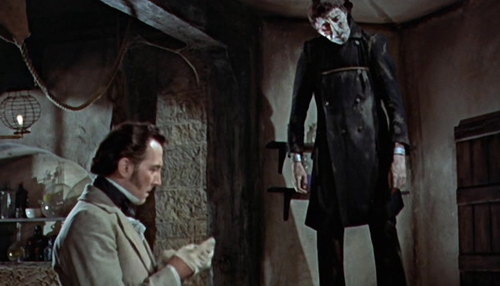
I’ve had quite a bit of time to turn this story over in my brain and I’ve reached some interesting conclusions about it. While the original 1931 Frankenstein is unquestionably superior, there are some good things to be found in Hammer’s interpretation of the story. Most notably, the best thing about The Curse of Frankenstein is Peter Cushing as the titular character. I’ve liked every iteration of Cushing as Baron Frankenstein so far, but this version, obviously the youngest (20 years before Star Wars for context) might just be my favorite. It’s here in The Curse of Frankenstein that we see how Frankenstein’s obsession with creating life got started.

And what’s really interesting about Frankenstein’s obsession is how it grows by degrees. He doesn’t start out immediately wanting to create life in a new body, it all starts as an innocent interest in science and higher learning. When he finds a brilliant tutor to teach him, the pair spend years delving deep into science and medicine until finally they’ve seemingly unlocked the secret of life and death, a huge medical discovery, but it’s at this point that Frankenstein’s devious mind begins to make itself known. Rather than share this discovery with the world, Frankenstein wants to keep it to himself and use it to breach the ultimate boundary: making a body and giving it life, effectively playing God. In this film as in the 1931 Universal film, this is presented as the greatest offense one could possibly commit against nature. It’s made abundantly clear that what Frankenstein is doing is completely immoral, the only one who can’t see that is Frankenstein himself.

It’s rather frightening how Cushing plays Frankenstein. As the story progresses and Frankenstein is pushed again and again to give up his experiments, his obsession with creating a body and proving that he’s right (never mind the question of whether he should to begin with) grows until it dominates every facet of his life. And the most unnerving part is that Frankenstein seemingly can’t see how he’s coming across to those around him. He’s robbing graves, picking up body parts from seedy charnel houses, he spends hours in his laboratory covered in blood putting a body together and he has no idea of how insane this makes him look. In fact, he’s driven so far that he, at one point, commits cold-blooded murder without so much as flinching in the brutal aftermath. A chilling performance indeed.

In fact, the story is so particularly insane that I have a theory. You see, the story of The Curse of Frankenstein is bookended by Frankenstein being in jail about to be executed for a crime he alleges he didn’t commit. The bulk of the film is a long flashback where he explains his side of the story. At the end of his recollection, his former tutor and alleged partner in the bulk of the experiment comes to visit him and Frankenstein begs him to tell the authorities that it’s all true. The tutor coldly denies everything, condemning Frankenstein to the guillotine with his omission and it seems that the tutor has gained the ultimate vengeance by keeping silent and leaving Frankenstein to his fate. However…it’s occurred to me that there’s another solution.

See….back when I was in grad school I learned about this thing in storytelling called unreliable narrators. Now, 99% of the time, when a story is being narrated to us, be it in a book, TV or film, you trust that you, the reader/viewer, are being told the absolute truth. But sometimes, and Game of Thrones (the books, not the show) is a noteworthy example, you get a story where you can NOT trust that the narrator is telling you the truth. And as I watched the closing minutes of The Curse of Frankenstein play out, it occurred to me that Baron Frankenstein might just be an unreliable narrator. Think about it, suppose this entire story of creating a monster is just the ravings of a man gone incurably insane? It’s frighteningly plausible and it really makes you rethink the story as it’s been told to you.

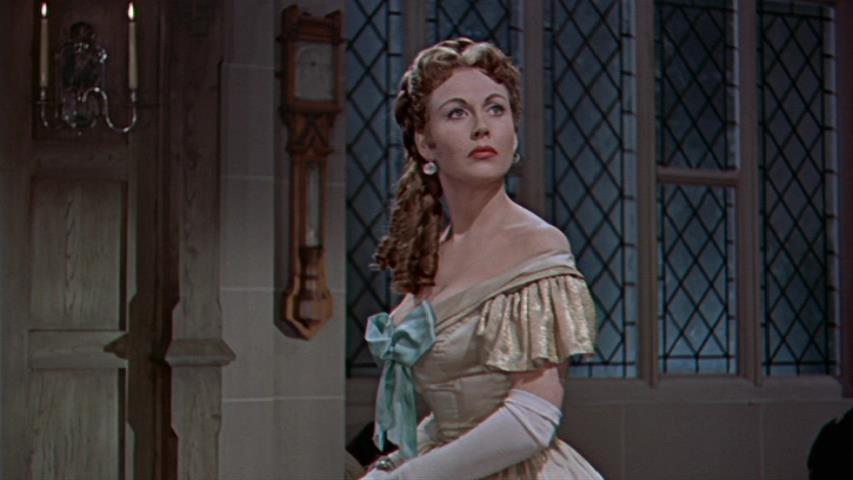
I also really enjoyed Hazel Court’s performance as Elizabeth. I instantly recognized her from her role in The Masque of the Red Death and was delighted to discover that she was in this film opposite Cushing for a decent chunk of the story. Interestingly, those beautiful dresses she wears throughout the film are vintage pieces from the Victorian era. Part of me wants to find it hard to believe that Elizabeth could stay ignorant for as long as she did about what Frankenstein was doing, but then I remember that Cushing’s Baron Frankenstein is such a charmer that it would be quite easy to be distracted from what’s going on.

Finally, I’m still not sure how I feel about Christopher Lee as Frankenstein’s monster. It doesn’t help that I’ve seen all of the Karloff Frankenstein films first and I’m pretty sure that’s colored my reception of Lee in the role. Oh, he certainly does the best he can with the role, it just…it just doesn’t compare to Karloff’s Monster.

If you haven’t seen any of Hammer’s Frankenstein films, I highly recommend starting with The Curse of Frankenstein. I enjoyed it thoroughly and I’m looking forward to watching more Hammer films in the future.

Let me know what you think about The Curse of Frankenstein in the comments below and have a great day!

See also:

My Thoughts on: The Evil of Frankenstein (1964)

My Thoughts on: Frankenstein Created Woman (1967)

Film Reviews

Become a Patron of the blog at patreon.com/musicgamer460

Check out the YouTube channel (and consider hitting the subscribe button)

Don’t forget to like Film Music Central on Facebook

A Strange New World: Speaking with Herdís Stefánsdóttir about Y: The Last Man

Last fall I was blessed with the opportunity to speak with composer Herdís Stefansdottir about her work on the original series Y: The Last Man, adapted from the acclaimed graphic novel series of the same name. This was actually my second time getting to speak with this composer and I was really excited to get some insight into her work on this series, which unfortunately as of January 2022 is still cancelled and has yet to find a new home somewhere else.

Herdís Stefánsdóttir is a composer of music for multimedia, a songwriter, and an electronic musician. Her compositional endeavors — installations in museums, dance, theatre, and a successful electronic music duet she is a part of – are establishing her as an expansive artist. Herdís Stefánsdóttir graduated with an M.A. degree in film scoring from New York University in 2017. Since graduation she has scored two feature films, an HBO series and a few short films.

Her scoring work includes Ry Russo – Young’s MGM/Warner Bros. feature film, The Sun Is Also A Star and the HBO series We’re Here (which I previously interviewed her about).

I hope you enjoy our conversation about Y: The Last Man!

Were you familiar with the story of Y: The Last Man before working on the series? 

Actually I was not, I had never heard of it before. I received an email that had details about [the story] and I was really intrigued by it. It sounded like a very interesting concept, how they decided to adapt [the story] to television and go to those philosophical questions like, how do you decide your identity in a world that has changed so much?

How closely did you collaborate with the producers while working on the music for Y: The Last Man? 

The producers were pretty cool, because they actually left me alone. They didn’t have any idea of what they wanted [the music] to be, they just said “What’s your idea?” When I started writing, there was a music supervisor and music editor working with me on the team. Before sharing [the music] with the producers and the show runner, I would ask them both “What do you think of it? Am I heading in the right direction?” And they both loved it. Having their experience helped a lot.

It doesn’t happen that often to find the musical identity [of the show] so early on, but it happened with this show that they loved [the music] from the beginning. So I was left alone and kept expanding and experimenting, doing something that I found exciting.

Did that make the process easier?

In this case I think it did. I felt really free and inspired and I enjoyed writing like that. Sometimes if you are glued to a temp track or an idea that they decide they really want, then you’re working in a more narrow frame, it can be quite challenging as a composer.

Was it always a given that the music for Y: The Last Man would be centered on the female voice or did that idea come about gradually?

It was my first small idea, like “What is the sound of this world?” When I had seen a rough cut of the first episode and gotten into the first volume of the graphic novel, I’d gotten a feel for the aesthetics they were going for, which involved a lot of realism. I didn’t it feel it was a very sci-fi or futuristic sound. It immediately spoke to me as being organic, in a human way. So my first tiny idea that I went with turned out to work really well with the picture.

Besides the female voice, what other instruments or sounds did you decide to include in the music for Y: The Last Man? How did you decide which instruments to include (or exclude)?

Well, this is during COVID so I was working alone in my studio. I have a stack of synthesizers and I’m an electronic musician apart from film scoring, so I used my own voice and whatever I could record in my own studio. I also got some friends to come over, including one who built a magnetic harp, an electro-acoustic instrument and there’s only three of them in the world. I thought it would be interesting to record that instrument to see what would happen. That ended up becoming the sound for one of the main themes of the show for the Amazons.

What was your general process for scoring Y: The Last Man, as in, which themes were created first and how was the music for the show built up?

I actually didn’t touch individual episodes. I wrote the entire score to script, and I went by inspiration and feeling. I think I wrote 85% of the score in the first couple of months and I’d only read the scripts. The music editor would actually edit [the music] to the episodes. The themes I was developing were longer and bigger than if I would have been writing to the picture. It was a really free experience of creating. I always knew what was happening in the production but I did not write to the picture.

Did the pandemic affect the recording and composing process at all?

I was lucky to be in Iceland, I think it’s one of the few places that allows recording. Well, strings are being recorded but not vocalists, because you’re breathing air, and it wasn’t allowed in a lot of places. I got lucky to be here and up north where there’s an Icelandic film composer called Atli Örvarsson, he founded a film orchestra that’s going well and it’s one of the few places where you can record during Covid. There’s also a beautiful professional choir up there that I recorded with and they became the foundation of the female voices in the score.

I like how there’s almost a tribal sound to the modulated vocal melodies in ‘Kimberly Campbell Cunningham’ and other tracks, was that done on purpose?

What I was doing was imagining the sound of the world and imagining a group of female voices talking to each other in the moment of the world collapsing. I heard this resonance of the female voice, kind of like talking and disharmony kind of clustering together. That became one of the fundamental sounds that I integrated into the themes and melodies [of the soundtrack].

Do you have any thoughts on the show, so far, not being picked up for a second season?

I’m pretty surprised, I think it deserved to finish the story. It was just starting and the fact that it got cancelled mid-first season…it’s not fun. There’s so much more to say.

I want to send a big thank you to Herdís Stefansdottir for taking the time to speak with me about Y: The Last Man!

See also:

Composer Interviews

Become a Patron of the blog at patreon.com/musicgamer460

Check out the YouTube channel (and consider hitting the subscribe button)

Don’t forget to like Film Music Central on Facebook 🙂
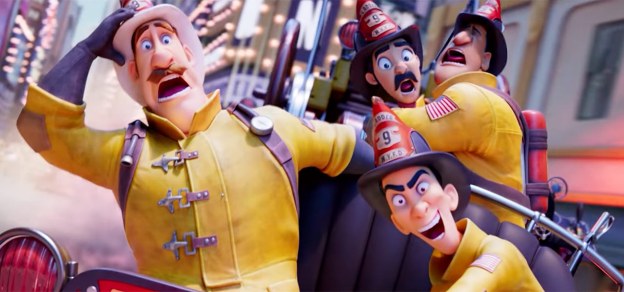
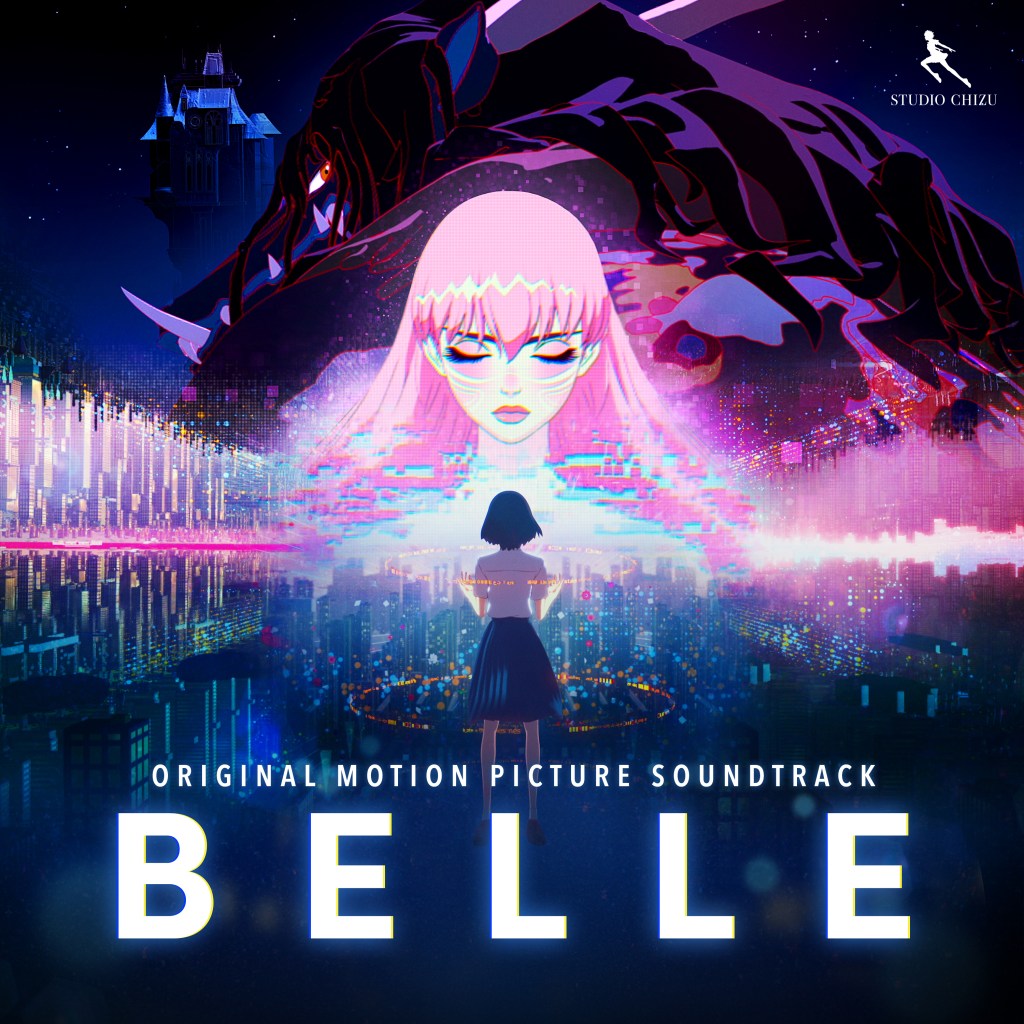
Soundtrack News: Milan Records to release ‘Belle’ Original Motion Picture Soundtrack on January 14th

Milan Records has announced the January 14th release of BELLE (ORIGINAL MOTION PICTURE SOUNDTRACK – ENGLISH EDITION), an English language version of the Original Soundtrack to Oscar®-nominated filmmaker Mamoru Hosoda’s latest feature. Featuring both score and vocal tracks written by a team of composers led by Taisei Iwasaki and including Ludvig Forssell and Yuta Bandoh, the album includes English versions of vocal tracks originally performed in Japanese, newly recorded in English by Kylie McNeill, who voices ‘Belle’ in the English dubbed version of the film. The album follows the massive success of the original Japanese Edition of the soundtrack, which has garnered over 20 million streams globally since its July 2021 debut.

Belle follows shy, everyday high school student Suzu as she escapes into a virtual world, becoming a globally-beloved popstar named Belle and setting out on an emotional and epic quest to find herself.

Ranging from anthemic pop ballads to emotionally-laden instrumentals, the soundtrack includes original vocal songs written and arranged by Taisei Iwasaki, Ludvig Forssell and Yuta Bandoh as performed in the film by both Suzu and her virtual persona Belle, as well as original score music also written by the trio and Grammy-nominated composer Miho Hazama. The film’s main theme and album opener “U” was written and performed by groundbreaking Japanese act millennium parade led by Daiki Tsuneta, and two of the vocal tracks and recurring themes throughout the film, “Lend Me Your Voice” and “A Million Miles Away” also feature lyrics co-written by Mamoru Hosoda. The English album was produced by Taisei Iwasaki and supervised by Taka Chiyo alongside the team of composers and in collaboration with GKIDS and NYAV Post.


BELLE (ORIGINAL MOTION PICTURE SOUNDTRACK – ENGLISH EDITION)

TRACKLISTING –

  1. U – millennium parade, Belle* 
  2. Whispers – Kylie McNeill* 
  3. Slingshot – Miho Hazama, Taisei Iwasaki
  4. Memories of a Sound – Taisei Iwasaki
  5. Blunt Words – ermhoi
  6. Gales of Song – Belle* 
  7. Fleeting Days – Ludvig Forssell
  8. Swarms of Song – Belle*
  9. Alle Psallite Cum Luya – Ryoko Moriyama, Sachiyo Nakao, Fuyumi Sakamoto, Yoshimi Iwasaki, Michiko Shimizu, Kaho Nakamura
  10. Fama Destinata – Belle*
  11. Dragon – Yuta Bandoh
  12. Justin – Yuta Bandoh
  13. Unveil – Yuta Bandoh
  14. Digital Ripples – Ludvig Forssell
  15. Dragon’s Lair – Yuta Bandoh
  16. Lend Me Your Voice (draft) – Kylie McNeill* 
  17. Social Warfare – Ludvig Forssell
  18. Assault – Yuta Bandoh
  19. Lend Me Your Voice – Belle*
  20. #UnveilTheBeast – Ludvig Forssell
  21. Authority and Arrogance – Ludvig Forssell
  22. Scorching the Façade – Yuta Bandoh
  23. The Truth Obscured – Ludvig Forssell
  24. Lend Me Your Voice (humming) – Bentley Griffin
  25. Distrust – Ludvig Forssell
  26. A Million Miles Away – Belle*
  27. Pieces of the Puzzle – Ludvig Forssell
  28. Faces in the Rain – Kylie McNeill* 
  29. Skies of Song – Ludvig Forssell, Kylie McNeill*
  30. A Million Miles Away (reprise) – Belle*

*Denotes vocal track

See also:

Become a Patron of the blog at patreon.com/musicgamer460

Check out the YouTube channel (and consider hitting the subscribe button)

Don’t forget to like Film Music Central on Facebook 

My Thoughts on: Muppets Haunted Mansion (2021)

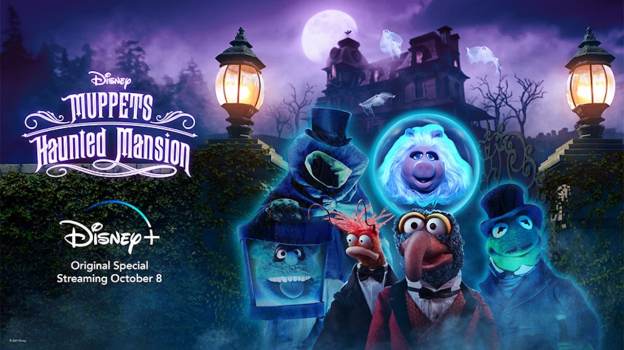
I understand that this is several months late, but to be fair, the last few months of 2021 were a particularly insane time for me, so much so that I’m just now starting to get back on track (that’s why I posted next to nothing the last few months of the year). Part of getting back on track includes posting about some of the things I saw last year that I really liked before I dive into what’s coming in 2022. And one of the things I enjoyed way more than I thought I would was Muppets Haunted Mansion, a special that aired on Disney+ this past October.

Unbelievably, this was the first Halloween special the Muppets have ever done, which is mind boggling to me. How is it the Muppets haven’t covered Halloween before? I suppose better late than never. I set the bar for this special extremely low because I’ve not been the biggest fan of what Disney has done with the Muppets (remember their Disney+ series? Yea, me neither), but to my delight Muppets Haunted Mansion was pretty entertaining.

The setup for the special is relatively simple: instead of celebrating Halloween with the other Muppets, Gonzo and Pepe the King Prawn are going to a special “VIP party” at a famous mansion, which turns out to be none other than the Haunted Mansion. The challenge is for the pair to spend the entire night in the mansion. If they survive they’ll be allowed to leave, but it not…they’ll become permanent residents of the Mansion.

The overriding theme of the special, once the stakes are laid out, is confronting one’s fears and the fact that Gonzo claims to have none, despite being confronted by a number of scary horrors throughout the Mansion. This leads to a legitimately terrifying scene where Gonzo finally confronts his fears in the mysterious Room 999. In a million years I never would’ve thought a Muppets special could create nightmare fuel, but oh my good lord, the moment Gonzo realizes what his particular fear is….that was the stuff of nightmares. I had no idea a Muppets show could be that intense and I never want to see the Muppets go that intense ever again because it was TERRIFYING, even if it did make a good point about spending time with your friends while you can.

The Mansion itself was a lot of fun once Gonzo and Pepe got inside. I loved all of the musical numbers, particularly the “Tie the Knot Tango.” I’d actually forgotten about Constance Hatchaway, the bride who kills all of her husbands, so once I realized who this was, she immediately became my favorite ghost in the mansion, just because Pepe was so oblivious to the danger he was in. I also didn’t mind the big number that ghost-Kermit did to introduce Gonzo to the Mansion. I know a lot of people criticized Matt Vogel’s performance as Kermit the Frog, but honestly I had no trouble accepting his voice as belonging to the character.

I wouldn’t mind seeing the Muppets do more Halloween specials if they’re all going to be this good. Bravo to Muppets Haunted Mansion for brightening up my Halloween.

Let me know what you thought of Muppets Haunted Mansion in the comments below and have a great day!

See also:

TV Reviews

Become a Patron of the blog at patreon.com/musicgamer460

Check out the YouTube channel (and consider hitting the subscribe button)

Don’t forget to like Film Music Central on Facebook 🙂

The Adventure Continues: Talking with Composer Peter McConnell about Psychonauts 2 (2021)

Earlier this year I had the opportunity to speak with composer Peter McConnell about his work on the video game Psychonauts 2, which released earlier this year. In this game, the player controls Raz, a newly graduated Psychonaut with powerful psychic abilities, as he delves into the minds of others. Psychonauts 2 is set in a fictional, alternate world in which psychic powers exist thanks to the fictional element Psitanium – a substance brought to the planet by several meteors. The Psychonauts are an international espionage agency focused on psychic peacekeeping, scientific research of the human mind, and the development of psychic-based technologies.

Peter McConnell has composed award-winning scores for a diverse range of video games including Broken Age, Hearthstone: Heroes of Warcraft, Plants vs. Zombies: Garden Warfare, the Sly Cooper series, Star Wars: The Old Republic, Psychonauts, Brutal Legend and Grim Fandango.

Peter studied music at Harvard with electronic composer Ivan Tcherepnin, graduating with High Honors. He has been nominated for over twenty-five Game Audio Network Guild Awards and won four, including Best Interactive Score and Best Soundtrack.

I hope you enjoy our conversation about Psychonauts 2!

How did you get started as a composer?

The short answer is that I came out to California from Boston a few years after college having made a plan with my friends Michael Land and Clint Bajakian to start a band. By the time I got out here the band kind of fell through, but Michael had gotten a job starting the audio department at LucasArts, and he needed help. But there was some history behind that. I had loved music before I could even talk, taken violin lessons as a youth, taught myself to play banjo and guitar, and in college had an epiphany in electronics class which resulted ending my studies in physics, leaving for a year and a half and returning to graduate in music. So it was less a matter of “getting started” as a composer, and more a matter of continuing a long journey.


Were you excited to return for Psychonauts 2 so many years after scoring the original Psychonauts game? 16 years is a pretty long time to go between installments, was it difficult to get back into the story after so long?

Absolutely. And honestly, it wasn’t really a matter of “going back” to the score, since in a sense I never really left the score to begin with. Those themes were always percolating around in my head. I probably spent a total of 15 minutes  listening to the original  Psychonauts tracks before getting started. The music was already there. I find that is generally true with me, although it was especially true of Psychonauts, since it was my first gig as an independent composer after leaving LucasArts in 2000.


Were you brought in to do the music early in the development process or late? And when you were brought in, was there a lot of collaboration/discussion with the game’s directors on where they wanted the sound/music of this game to go?

I was brought in fairly early. I was on the project for over 4 years, and I think they had done about 9 months of work on it when I started.


How much of the music for Psychonauts 2 is built off the score for the original Psychonauts? Or was it decided to go in a wholly different direction for this sequel?

I would say that the score for Psychonauts 2, like the game itself, is both a continuation and an expansion. As a composer I focus on melody, so the themes in the score are all-important. For this reason the characters that had been in Psychonauts 1 kept their original themes, but there were so many new characters! Each one got a new theme. Even the Main Title theme got a new “bridge” section, based on a significant new character in the game. And the music styles were expanded significantly. We could only afford a few live musicians in the original Psychnonauts, whereas in Psychonauts 2 we had The Melbourne Symphony Orchestra, a live big band, a rhythm section from Nashville, and of course the rock and roll band featuring the voice of the amazing Jack Black. 

What was the general process for creating the sounds and and music for each level of the game?

Each level is about a particular character and each character had a theme. Early on we went through a phase of just focusing on themes in the simplest form: simple piano sketches that, once approved, could be orchestrated into full pieces.


Following up to the last question, what inspired the overall sound world of Psychonauts 2? What groups of instruments did you decide to go with?

The characters inspired the instrumentation. For example, Hollis has an issue with gambling and her level is all about that. So the classic big band sound of Sinatra’s recordings with Nelson Riddle’s band had to figure into that world. Similarly, the Psy King’s level was all about psychedelic music from the ‘60s. It was the same way for all the characters, and each one pretty much called to me with a sound.


How much time did you have to score Psychonauts 2?

The score was done over 4 years, but in a project this size you don’t typically work all the time straight through from beginning to end. It’s safe to say that the entire score probably represents a couple thousand hours of work.


Were any of the game levels more difficult to score than others? For example, did you come to a certain point in the game and feel stumped as to where it was going to go musically? If so, how did you get around it?

There are often moments I run into with individual pieces, but nothing really sticks out. I think it’s safe to say there weren’t any real instances of writer’s block, or being stumped. I find if I do run into a problem, the best thing to do is listen carefully. Sometimes over and over. What comes next usually reveals itself.


Do you have a favorite musical theme/musical moment in the game?

My favorite two are probably the Lady Luctopus Boss and the Psy King music. The Lady Luctopus allowed me to combine the Melbourne Symphony, drums and bass from Nashville, and my friend Andrew Burton’s amazing Hammond organ playing in one piece. And the Psy King music allowed me to have a band reunion with Michael Land and Clint Bajakian—going back to all of our roots—and to create a piece with Tim Schafer for Jack Black to sing.


Is there any musical detail you hope players notice as they work their way through the game?

That’s a great question. There are many details I hope people will notice. For example, a careful listener may note that part of the clarinet melody in the Questionable Area and the Aquato Family Caravan music both come from a tiny little melodic fragment in a dream Raz has about his family in the original Psychonauts.

I hope you enjoyed our conversation about Psychonauts 2 and I want to say thank you to Peter McConnell for taking the time to speak with me.

See also:

Composer Interviews

Become a Patron of the blog at patreon.com/musicgamer460

Check out the YouTube channel (and consider hitting the subscribe button)

Don’t forget to like Film Music Central on Facebook 🙂