Tag Archives: Disney

Dumbo “When I See an Elephant Fly” (1941)

In keeping with the unofficial theme this week of covering Disney’s non-politically correct moments, it wouldn’t do to forget the crows in Dumbo. But first, a quick recap as to how Dumbo meets these characters:

dumbo-99-640x400.png

Things have been going badly for our baby elephant: first his mother his locked away in chains; then a stunt goes awry and Dumbo is turned into a circus clown; third, and most recently, his well-meaning friend Timothy Q. Mouse accidentally gets him drunk and they both hallucinate pink elephants! (It’s amazing what they could put in a film back in 1941!!) The following morning, Dumbo and Timothy wake up….in a tree!! This is where Dumbo and his friend meet the crows.

Dumbo-disneyscreencaps.com-6001.jpg

Oh those crows…to be honest, I didn’t realize for a long time that the crows were a racist depiction. When you’re a little kid, you don’t think about those things, you just see some singing birds and that’s that. But as I got older and learned about the history of these things, I began to see these crows in a whole new light. And one thing I learned is that stereotypes can appear in disguise, for instance using black crows instead of, well, pardon the non-PC reference but using black crows instead of black humans. Another big clue? The leader of these crows is named…Jim Crow (no, seriously, check out the credits on Wikipedia!) A third clue? The birds all speak “jive,” a style of slang well-associated with African-American musicians during this time. They also sing jive too, and that’s where we get to “When I See An Elephant Fly.”


I seen a peanut stand, heard a rubber band
I seen a needle that winked its eye
But I be done seen ’bout ev’rything
When I see an elephant fly

(What d’you say, boy?) 
I said when I see an elephant fly
I seen a front porch swing, heard a diamond ring
I seen a polka-dot railroad tie
But I be done seen ’bout ev’rything
When I see an elephant fly

hqdefault (1).jpg

One thing that is fun about this song is most of the words have a double meaning; it helps if you put quotes around the words with changed meanings: so…a front porch that “swings” (dances); a diamond “ring” (like a bell), a railroad “tie” (necktie), and so on.

(I saw a clothes horse, he r’ar up and buck) 
(And they tell me that a man made a vegetable truck) 
(I didn’t see that, I only heard) 
(But just to be sociable, I’ll take your word)

(I heard a fireside chat, I saw a baseball bat) 
(And I just laughed till I thought I’d die) 
But I be done seen ’bout ev’rything
When I see an elephant fly

Well I be done seen ’bout ev’rything
When I see an elephant fly
(With the wind)

When I see an elephant fly

See, initially, the crows are inclined to tease Dumbo for his ears just like everyone else has throughout the story. But then Timothy sets them all straight by recounting (briefly) all the terrible things that have happened to Dumbo. The shamed crows decide to make it up to the pair by helping Dumbo to fly for real (it’s implied that Dumbo flew to the tree while he was drunk and just doesn’t remember doing so). To help in this process, the head crow presents a feather to Dumbo, calling it a “magic” feather that will help him fly (with a knowing wink to Timothy who catches on quick). Sure enough, with the feather clutched tight, Dumbo CAN fly!! As the crows say (as Dumbo and Timothy return to the circus), “those city boys are in for a big surprise!”

What do you think about “When I See An Elephant Fly”? Were the racist elements obvious or did it also take you a while to catch on? Let me know what you think in the comments below and have a great day!

See also:

Dumbo “Look Out For Mr. Stork” (1941)

Dumbo “Pink Elephants on Parade” (1941)

Dumbo “Song of the Roustabouts” (1941)

Disney Films & Soundtracks A-Z

Become a patron of the blog at: patreon.com/musicgamer460

Check out the YouTube channel (and consider hitting the subscribe button)

Don’t forget to like Film Music Central on Facebook 🙂

Dumbo “Song of the Roustabouts” (1941)

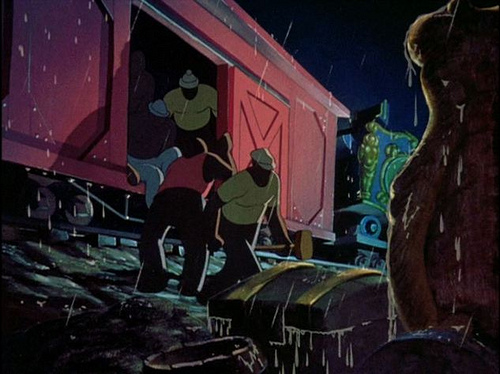
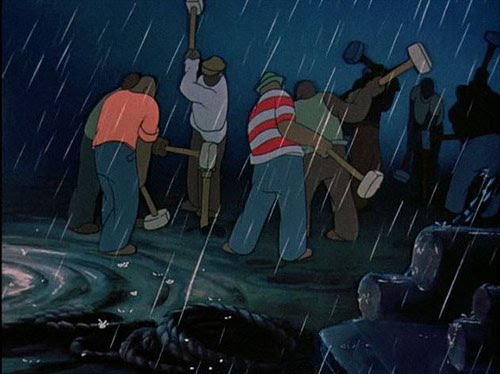
Forgive the pun but I decided it’s time to clear another elephant out of the room. Unfortunately, for everything good that Disney has contributed to film and animation, there are multiple examples of Disney portraying things they probably want to forget about. One example is the “Song of the Roustabouts” from Dumbo (1941). After baby Dumbo arrives on the train (via late delivery from the stork), the train pulls in to where the circus will be held the following day. As a storm breaks out, the elephants and other animals disembark to help set up the big top, accompanied by the roustabouts: these are unskilled laborers, often employed for hard labor.

7450688312_8f2f865864.jpg

It’s hard to tell given this scene takes place at night, but the roustabouts in Dumbo are all African-American, and given that this takes place in 1941 the lyrics are…interesting to say the very least. The song starts off with cries of “Hike! Ugh!” as the singers/workers establish a driving pattern to aid in driving in the tent stakes:

Hike! Ugh! Hike! Ugh! Hike! Ugh! Hike!
We work all day, we work all night
We never learned to read or write
We’re happy-hearted roustabouts

Hike! Ugh! Hike! Ugh! Hike! Ugh! Hike!
When other folks have gone to bed
We slave until we’re almost dead
We’re happy-hearted roustabouts

Just stop and look at these two verses alone: according to the roustabouts they can’t read or write, they work extremely hard and yet despite all this they’re “happy-hearted roustabouts”? It sounds ironic in 2018 but in 1941 they’re being quite serious.

Hike! Ugh! Hike! Ugh! Hike! Ugh! Hike!
We don’t know when we get our pay
And when we do, we throw our pay away
We get our pay when children say
With happy hearts, “It’s circus day today”

This is the verse that disturbs me the most, it implies that when the roustabouts DO get paid, they promptly blow their money on frivolous things (keeping in line with certain stereotypes about African-Americans being lazy, etc. Remember, this was 1941 and these things were considered acceptable then).

hqdefault.jpg

Muscles achin’
Back near breaking
Eggs and bacon what we need (Yes, sir!)
Boss man houndin’
Keep on poundin’
For your bed and feed
There ain’t no let up
Must get set up
Pull that canvas! Drive that stake!
Want to doze off
Get them clothes off
But must keep awake

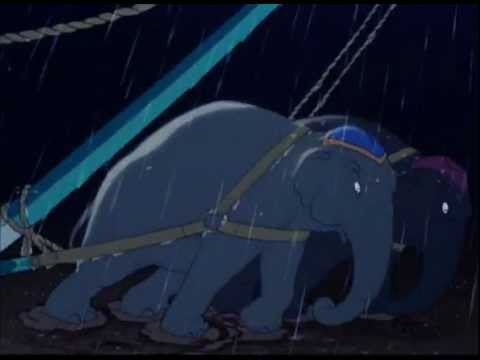
During this long section, the other animals are shown helping in the set up, mostly the elephants moving stakes and poles, but the camels are helping too. It’s funny, when I watched this movie as a young kid, I was convinced that the circus animals really did help in this way. Even Dumbo is seen doing his part alongside his mother.

Hep! Heave! Hep! Heave! Hep! Heave!
Hep! Heave! Hep!

Swing that sledge! Sing that song!
Work and laugh the whole night long
You happy-hearted roustabouts!
Pullin’, poundin’, tryin’, groundin’
Big top roundin’ into shape
Keep on working!
Stop that shirking!
Grab that rope, you hairy ape!
Poundin’! poundin’! poundin’! poundin’!
Oh

dumbo5.jpg

The storm that started when the train arrived has now become a full-on thunderstorm (poor Dumbo hides in fright from the lightning). And the song does throw in one last unbelievable line with “Grab that rope, you hairy ape!” (I really won’t explain that one in further detail since it really speaks for itself). At last, despite the driving rain and winds, the big top is raised and come morning the circus is ready to begin!

It might seem strange to focus on these songs (especially given the issues going on in the country right now), but I can’t let these songs slip away unnoticed. Not writing about them is tantamount to saying they never happened, but they did. So on that note, I hope you found “Song of the Roustabouts” interesting. Let me know what you think of this song in the comments below and have a great day!

See also:

Dumbo “Look Out For Mr. Stork” (1941)

Dumbo “Pink Elephants on Parade” (1941)

Dumbo “When I See an Elephant Fly” (1941)

Disney Films & Soundtracks A-Z

Become a patron of the blog at: patreon.com/musicgamer460

Check out the YouTube channel (and consider hitting the subscribe button)

Don’t forget to like Film Music Central on Facebook 🙂
Peter Pan “What Made the Red Man Red?” (1953)

Before I get started with talking about this song, let’s get the elephant out of the room shall we? Yes, “What Made the Red Man red?” is a highly racist, non-politically correct song that employs multiple Native American stereotypes. That being said, remember that this was 1953 and the world was a very different place from what it is now.

(also, I’m going to refer to the tribe as ‘Indians’ because that’s how they’re described in the film, I know Native American is the correct word to use)

At the start of this song, Wendy, John and Michael are celebrating the safe return of Tiger Lily with Peter Pan, the Lost Boys and the Indian tribe. In gratitude, the Chief dubs Peter “Chief Flying Eagle” and everyone celebrates. As the party gets going, the Lost Boys have three questions:

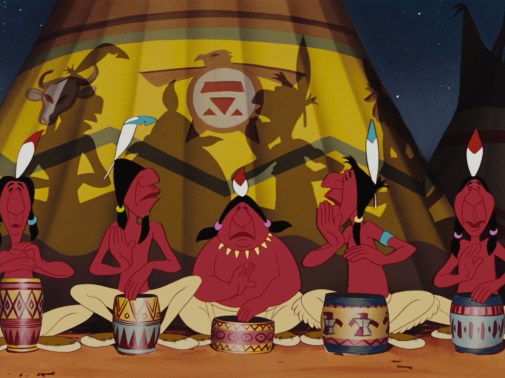
“What made the red man red?” (it should be noted that in this film the Indians, except for Tiger Lily, are almost literally red-skinned, based on the derogatory slang once used to describe them).

“When did he first say ‘ugh’?” (another stereotype, this one contends that Indians say ‘ugh’ in response to a lot of things)

“Why does he ask you ‘how’?” (another stereotype and something of a generalization: there ARE some tribes that use this as a greeting, but the stereotype makes it appear that ALL Indians use this as a greeting, which isn’t true).

Peterpan-disneyscreencaps-5563.jpg

The Chief and his chorus of braves set out to answer these questions, accompanied by the drums:

Why does he ask you, “How?”
Once the Injun didn’t know
All the things that he know now
But the Injun, he sure learn a lot
And it’s all from asking, “How?”
Hana Mana Ganda
Hana Mana Ganda
We translate for you
Hana means what mana means
And ganda means that, too

This scene is also notable because it shows several characters smoking on a peace pipe. While Wendy abstains (and prevents Michael from using it too), John takes a pretty good puff and turns green as a result (in kind of the same way that Pinocchio did over a decade prior).

0fac2d35bc7083f9b0f0fc30838c67fe

In between the verses, everyone starts dancing, including Wendy, though she doesn’t get to enjoy herself for long. Wendy runs headlong into an Indian matriarch who proclaims “Squaw (Wendy) no dance, squaw get firewood!” Wendy is miffed that she can’t have fun like the other boys (and Tiger Lily, more on that in a moment) but she goes off to get the firewood.

When did he first say, “Ugh!”
In the Injun book it say
When first brave married squaw
He gave out with heap big ugh
When he saw his Mother-in-Law

Meanwhile, Wendy is returning with a load of firewood (still trying to have a good time) when she gets a look at Tiger Lily and Peter Pan:

large

What made the red man red?

Let’s go back a million years
To the very first Injun prince
He kissed a maid and start to blush
And we’ve all been blushin’ since

You’ve got it right from the headman
The real true story of the red man
No matter what’s been written or said
Now you know why the red man’s red!

The scene implies that Tiger Lily gave Peter a great big kiss which makes Peter blush with happiness. Wendy is furious that someone else is kissing ‘her’ Peter, and when the matriarch demands she get more firewood, Wendy retorts “Squaw NO getting firewood, squaw go home!” And she marches off to the Lost Boys home, very upset. I always felt bad for Wendy, everyone else got to have fun but her.

Political incorrectness aside, this song marks the turning point in the story for Wendy. Up until this point, she’d been having fun with Peter in Neverland (although the visit to the mermaids didn’t exactly go as planned), but now she’s beginning to realize that she doesn’t belong here, it’s time to go home (as in back to London). Also, no one yet knows that Captain Hook has taken Tinkerbell captive, as he is determined to find the Lost Boys hideout and eliminate his nemesis once and for all!

What do you think of this song? Have you seen this song before? Let me know what you think of it in the comments below, and have a great day!

See also:

Disney Films & Soundtracks A-Z

Peter Pan “You Can Fly!” (1953)

Peter Pan “Following the Leader” (1953)

Peter Pan “The Elegant Captain Hook” (1953)

My Thoughts on: Peter Pan (1953)

Become a patron of the blog at: patreon.com/musicgamer460

Check out the YouTube channel (and consider hitting the subscribe button)

Don’t forget to like Film Music Central on Facebook 🙂
My Thoughts on: Incredibles 2 (2018)

*warning, minor spoilers ahead for Incredibles 2

Wow, Incredibles 2 is simply incredible! (pun intended!!) The long-long-LONG awaited sequel to The Incredibles was fourteen years in the making and I am happy to report that this story is completely worth the wait. Incredibles 2 beats the odds and is a sequel that is not only the equal of its predecessor, it might actually be just a little bit better.

As promised, the story picks up immediately after the first film with the coming of the Underminer. The Parr family (helped by Frozone) work to stop the devious criminal, but it proves to be very difficult and there is a lot of collateral damage. Unfortunately, despite everything, being a superhero is still illegal and the Parr’s aren’t sure what they’re going to do. But then a media tycoon, Winston Deavor and his sister Evelyn come forward with a proposition. Using the technology and resources of DevTech they want to use a series of publicity stunts to create good press for superheroes to create pressure to re-legalize superheroes. And the poster child for this endeavor will be…Elastigirl!!

unnamed-2.jpg

A major plot point in this story is Bob Parr adjusting to life as a stay-at-home dad taking care of three kids while his wife does hero work for DevTech. Bob’s heart is in the right place, though he’s initially frustrated by staying at home, he never tries to shirk his duty towards his children, but at the same time he is painfully unprepared for the amount of work it takes to take care of three kids. Complicating this task is the revelation to the family that Jack-Jack has superpowers (apparently they did not notice what happened when Syndrome had Jack-Jack at the end of the last film), as well as…complications with Violet’s social life.

And speaking of Jack-Jack, that adorable baby steals just about every scene he’s in. One that I can’t resist highlighting is a hysterical scene that takes place between Jack-Jack and a raccoon. The baby sees the raccoon (with his “mask”) and confuses the critter with a bank robber and decides to go attack it. The poor raccoon is subsequently thrown around and terrified as Jack-Jack displays a wide variety of powers.

And on top of all this, there’s the mysterious villain Screenslaver, a mysterious figure that has taken to hijacking the airwaves to cause mayhem (and has a thing against superheroes). Anytime Screenslaver shows up things get weird in a creepy way. Syndrome from the first film was scary in a cartoony sort of way. By contrast, Screenslaver is scary in a genuinely dark and twisted sort of way. And as for the identity of this villain…I had my theories going in but the truth surprised me.

The scene with Bob, Jack-Jack and Edna Mode is everything we’ve ever dreamed of and more. The fashion designer is back in all of her glory and you will not be disappointed.

I am a little disappointed that we didn’t get to see Honey, Frozone’s wife. Hopefully if/when there’s an Incredibles 3 we’ll get to see this character in person.

In conclusion, Incredibles 2 is a great film, possibly the best of the summer and I highly recommend it.

What did you think of Incredibles 2? Let me know your thoughts in the comments below and have a great day!

See also:

Michael Giacchino talks The Incredibles (2004)

Animated Film Reviews

You can become a patron of the blog at patreon.com/musicgamer460

Check out the YouTube channel (and consider hitting the subscribe button)

Don’t forget to like Film Music Central on Facebook 🙂
Alice in Wonderland “The Walrus and the Carpenter” (1951)

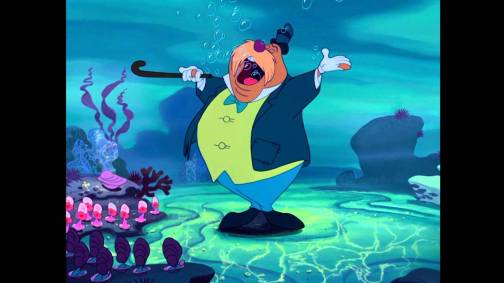
When you break Alice in Wonderland down, it’s obvious that the film is really a series of isolated stories tied together by the narrative of Alice exploring Wonderland. One such story is “The Walrus and the Carpenter” as told to the wandering Alice by Tweedle-Dee and Tweedle-Dum. I’ve been tempted several times to include this scene in my Disturbing Disney series because of one particular moment, but for now I’ll let you decide for yourselves if it’s disturbing or not.

As Tweedle-Dee and Tweedle-Dum narrate: A Walrus and a Carpenter are walking along a beach one day, which could be cleared of all its sand in half a year (the carpenter says) as long as you don’t mind the work involved that is.

Alice-disneyscreencaps_com-1751

Work!!? (the Walrus is clearly averse to doing any work whatsoever) In fact, whenever the subject of work (or any kind of labor) is mentioned, the Walrus launches into this tune:

The time has come to talk of other things
Of shoes and ships and sealing wax
Of cabbages and kings
And why the sea is boiling hot
And whether pigs have wings
Calloo-Callay
No work today!
We’re cabbages and kings

The carpenter then spots a bed of oysters in the ocean nearby, and being dreadfully hungry, points them out to the Walrus, who wants them as well. Thus, he marches into the ocean (while the carpenter builds a restaurant from scratch) and entices the oysters to follow him saying:

maxresdefault (1)

Oh, uh, Oysters, come and walk with us
The day is warm and bright
A pleasant walk
A pleasant talk
Would be a sheer delight

Even though Mother Oyster advises all her oyster children to remain in their beds, the Walrus wins out by blustering on:

Yes, yes, of course, of course, but, uh, ha, ha!

The time has come, my little friends
To talk of other things
Of shoes and ships and sealing wax
Cabbages and kings
And why the sea is boiling hot
And whether pigs have wings, ha ha
Callo-Callay
Come, run away
With cabbages and kings!

Alice-disneyscreencaps_com-2031

And so the oysters march off behind the Walrus and this is where it starts to get disturbing. For the oysters aren’t just oysters, they now run along the beach like little girls in dresses and bonnets (with happy smiling faces), which makes what happens next all the more menacing. The Walrus marches the oyster girls straight into the ready-made restaurant, and after sending the Carpenter away on a wild goose chase, draws the oyster girls in ever closer

Well, yes, yes, splendid idea, ha ha!
Very good, indeed
Now, if you’re ready, Oysters, dear
We can begin the feed

(Oysters): FEED??

Oh, yes…

The time has come, my little friends
To talk of food and things

We don’t see what happens next but you know what’s going to happen. By the time the Carpenter comes back with the bread and sauce for the oysters, it’s too late, they’ve all been eaten by the Walrus!! This is too much for the Carpenter who chases the Walrus back down the beach in a rage over being swindled out of an oyster dinner. But what I’d like to get back to is this scene with the Walrus alone with the Oysters: it is downright menacing I think! Just go back and look at that picture of the Walrus with his evil grin as it dawns on the oysters what’s about to happen. I think it’s pretty disturbing, but what do you think? Let me know your thoughts in the comments below and have a great day!

Don’t forget to like Film Music Central on Facebook 🙂

You can become a patron of the blog at patreon.com/musicgamer460

Check out the YouTube channel (and consider hitting the subscribe button)

See also:

Disney Soundtracks A-Z

Alice in Wonderland “In a World of My Own” (1951)

Alice in Wonderland “All in the Golden Afternoon” (1951)

Alice in Wonderland “The Un-Birthday Song” (1951)

Alice in Wonderland “Painting the Roses Red” (1951)

The Wind in the Willows “The Merrily Song” (1949)

The Adventures of Ichabod and Mr. Toad (1949) is one of those early Disney films that has sadly fallen by the wayside. It came about in the years immediately after World War II when Disney found themselves with a pile of animated segments that were too long to be theatrical shorts but too short to be full length features. As a result, Disney created a series of “package films,” films that consisted of two or more animated segments. Previous installments included: Saludos Amigos (1942), The Three Caballeros (1944), Make Mine Music (1946), Fun and Fancy Free (1947), Melody Time (1948) and also The Many Adventures of Winnie the Pooh (1977).

mr-toad

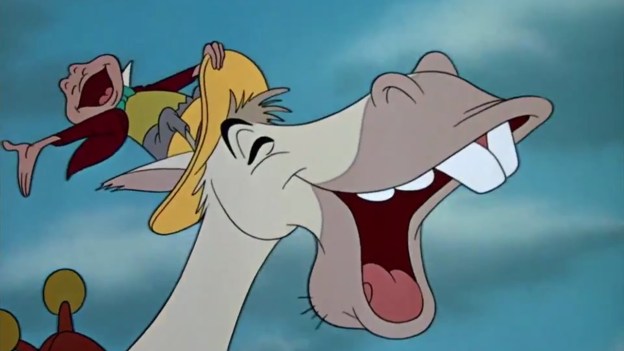
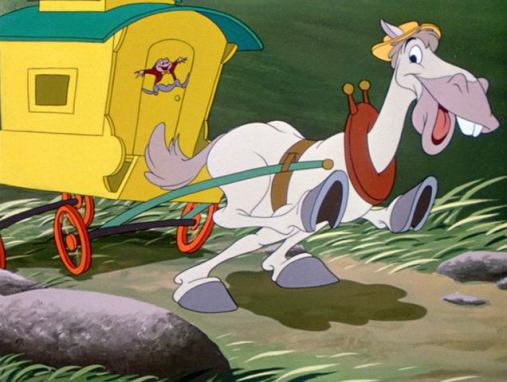
The first segment in this package film adapts Kenneth Grahame’s classic story “The Wind in the Willows” and is narrated by Basil Rathbone. The story follows the misadventures of one J. Thaddeus Toad (Eric Blore), a country squire who is spending his fortune on every fad he comes across. When we first meet him, he’s engaged in his latest mania: driving a gypsy cart across the countryside with his new friend, a Cockney-speaking horse named Cyril Proudbottom (J. Pat O’Malley) and together they are singing the insane “Merrily Song.”

Mr. Toad: Tally Ho! Tally Ho! Tally Ho!
Are we on our way to Nottingham, to Brittingham; to Buckingham
Or any hammy hamlet by the sea? NO!
Cyril: Are we on our way to Devonshire; to Lancashire or Worcestershire?
I’m not so sure, we’ll have to wait and see!
Mr. Toad: NO! Are we on our way to Dover or going merrily over
The jolly road that goes to Plymouth, ho!

Mr. Toad and Cyril: NO! We’re merrily, merrily, merrily, merrily,
merrily on our way to nowhere in particular.
We’re merrily, merrily, merrily, merrily,
merrily on our way where the roads are perpendicular.

imt02-3

Cyril: We’re always in a hurry.
Mr. Toad: We have no time to stall.
Mr. Toad and Cyril: We’ve got to be there, we’ve got to be there,
but where we can’t recall.

Whoo! We’re merrily, merrily, merrily,
merrily, merrily on our way, and we may
be going to Devonshire to Lancashire to Worcestershire.
We’re not so sure, but what do we care, we’re only sure we got to be THERE!
We’re merrily on our way to nowhere at all!

Mr. Toad’s enthusiasm is infectious, or at least it is to me, because every time I watch this scene I’ve got a big grin on my face by the end. And it’s easy to understand why Mr. Toad is so happy: who wouldn’t be excited getting to ramble about the countryside in any direction they wished to go? Never mind all the chaos and destruction he’s leaving in his wake, Mr. Toad can’t help but pursue his mad adventures.

I hope you enjoyed reading about and listening to “The Merrily Song” from The Wind in the Willows. Let me know what you thought about this scene in the comments below and have a great day 🙂

See also: Disney Soundtracks A-Z

The Adventures of Ichabod and Mr. Toad (1949)

You can become a patron of the blog at patreon.com/musicgamer460

Check out the YouTube channel (and consider hitting the subscribe button)

Don’t forget to like Film Music Central on Facebook 🙂

Moana “How Far I’ll Go” (2016)

Moana has nearly convinced herself that she can live happily for the rest of her life on Motonui but fate has a different plan for this chief’s daughter. One day, as Moana is going about helping the people, a group comes up to show her a basket of rotten coconuts. No problem, Moana instructs them to start gathering from a different grove and to remove the diseased trees. But then the fishermen come up and show their empty baskets: there are no fish in the lagoon, nor are there any to be found in any of the other usual fishing spots that Moana suggests they try instead. While her father gets into a heated discussion with the fishermen, Moana is struck by a brilliant idea: why don’t they go beyond the reef to fish? I believe that she is making a sincere suggestion that might help the island (and not just because she wants to go explore herself) but her father does not see it that way at all. He rejects her flatly and insists they will find another way because “no one sails beyond the reef.”

Disheartened (again), Moana remains on the beach and ponders her seemingly unending desire to explore the ocean. This is the setting of “How Far I’ll Go.” There’s a version of this song in almost every animated Disney song that I can think of:

And those are just to name a few! But despite this type of song showing up in so many films, it doesn’t change the fact that I love this song! It resonates with me because I too struggle with wanting to do things that people close to me do not always understand.

Moana-How-Far-Ill-Go

I’ve been staring at the edge of the water
Long as I can remember
Never really knowing why
I wish I could be the perfect daughter
But I come back to the water
No matter how hard I try

Every turn I take, every trail I track
Every path I make, every road leads back
To the place I know where I cannot go
Where I long to be

maxresdefault

See the line where the sky meets the sea
It calls me
And no one knows
How far it goes
If the wind in my sail on the sea
Stays behind me
One day, I’ll know
If I go, there’s just no telling how far I’ll go

I know everybody on this island
Seems so happy on this island
Everything is by design
I know everybody on this island
Has a role on this island
So maybe I can roll with mine

Moana’s argument does make sense: everybody else is perfectly happy with their roles on the island, so why shouldn’t she be content with her role as a chief’s daughter (and future chief in her own right)? She doesn’t understand why she’s drawn back time and time again to the ocean, in fact she wonders if there’s something wrong with her!

MOANA

I can lead with pride
I can make us strong
I’ll be satisfied if I play along
But the voice inside
Sings a different song
What is wrong with me?

All of Moana’s doubts are swept away every time she stares back at the ocean. Deep down, nothing else matters if she can just get out there and explore. That’s why, despite just hearing her father say no one can go beyond the reef, Moana runs back to the beach, grabs a boat and begins paddling out into the lagoon (despite not knowing the first thing about sailing!!)

See the light as it shines on the sea
It’s blinding
But no one knows
How deep it goes
And it seems like it’s calling out to me
So come find me
And let me know
What’s beyond that line?
Will I cross that line?
See the line where the sky meets the sea
It calls me
And no one knows
How far it goes
If the wind in my sail on the sea
Stays behind me
One day, I’ll know
How far I’ll go

The song ends on a high note but almost immediately turns into disaster when Moana’s boat is capsized and she nearly drowns with her foot stuck in the coral reef. This scene subverted a fairly common Disney trope where the hero/heroine gets caught doing something they shouldn’t by the stern authority figure/parent. I fully expected Moana to get caught by her father and get another tongue-lashing, but instead the only one who catches her is her beloved grandmother Tala (who doesn’t mind at all that Moana loves the ocean).

“How Far I’ll Go” was composed and written by Lin-Manuel Miranda (of Hamilton fame) and remains one of my favorite Disney songs almost two years after the film came out in theaters. What do you think of “How Far I’ll Go?” Let me know your thoughts in the comments below and have a great day!

See also:

Moana “Where You Are” (2016)

Moana “How Far I’ll Go (reprise)” (2016)

Moana “We Know the Way” (2016)

Moana “You’re Welcome” (2016)

Moana “Shiny” (2016)

Moana “I am Moana” (2016)

Moana “Know Who You Are” (2016)

Disney Soundtracks A-Z

You can become a patron of the blog at patreon.com/musicgamer460

Check out the YouTube channel (and consider hitting the subscribe button)

Don’t forget to like Film Music Central on Facebook 🙂

Robin Hood “Not in Nottingham” (1973)

Robin-hood-disneyscreencaps.com-6348

Robin Hood “Double the taxes!” (1973)

Prince John is, not surprisingly, infuriated when he hears what the people of Nottingham are singing about him. So, he decides the town should sing “a new tune.”

“Double the taxes,” he cries “triple the taxes! SQUEEZE every last drop out of those insolent, musical peasants.”

It’s left to Alan-a-Dale to explain what happens next. Whereas before the town was merely oppressed by high taxes, now it’s been completely ruined. Anyone who can’t pay their taxes ends up in a dungeon deep inside Nottingham Castle. And since everyone was destitute to begin with, this means the entire population of Nottingham is imprisoned (even the minstrel rooster, who sadly sings about the woes of the town).

Robin-hood-disneyscreencaps_com-6648

Robin Hood “Not in Nottingham” (1973)

Every town…
Has its ups and downs…
Sometimes ups…
Outnumber the downs…
But not in Nottingham

I’m inclined to believe,
If we were so down,
We’d up and leave,
We’d up and fly if we had wings for flyin’…
Can’t you see the tears we’re cryin’?
Can’t there be some happiness for me?
Not in Nottingham.

The song is intermixed with various scenes of the townspeople sleeping in the dungeon. There is even a chain gang of raccoons  being led inside, presumably after a long day of hard labor. It seems the only ones not locked up are Friar Tuck and the two church mice. Tuck is ringing the church bell to announce the evening service, but nobody is coming. Nevertheless, the friar is determined to keep hope alive, even though no one has donated to the church’s poor box in ages. This gives Mrs. Church Mouse an idea; there’s one last farthing saved in their little home in the church wall, but she decides the poor need it more than they do. Cue the arrival of the Sheriff of Nottingham to ruin the moment (it’s almost like he has an internal sensor to let him know when there’s any money around).

Robin Hood “Friar Tuck arrested” (1973)

When the wolf takes the just-donated farthing for “taxes,” Friar Tuck reaches his limit with the fat Sheriff. He forces the wolf outside to give him a good thrashing with a quarterstaff; unfortunately that gives the Sheriff grounds to arrest the badger for high treason and he’s led off to jail to join the rest of the people of Nottingham.

I’ve always liked “Not in Nottingham,” it’s so sad but it also perfectly sums up the desperate situation happening in the town. Roger Miller’s performance is rich, smooth and a joy to listen to. What do you think of the song “Not in Nottingham”? Let me know your thoughts in the comments below and have a great day!

See also:

Robin Hood “Oo-De-Lally” (1973)

Robin Hood “Love” (1973)

Robin Hood “The Phony King of England” (1973)

Disney Soundtracks A-Z

You can become a patron of the blog at patreon.com/musicgamer460

Don’t forget to like Film Music Central on Facebook 🙂
Check out the YouTube channel (and consider hitting the subscribe button)

Robin Hood “The Phony King of England” (1973)

The 30 year period between Disney’s Golden Age (which ended in 1959 with Sleeping Beauty) and the Disney Renaissance (The Little Mermaid (1989)) is often, I feel, unfairly marginalized as a period of sub-par films that aren’t worth remembering compared to what came before and after. Now, I’m not saying every film in this period is a masterpiece, but there are some genuinely good animated films that deserve their just due. And one of these films is Disney’s Robin Hood (1973), an underrated film if ever I saw one.


The story is presented as the “true” version of the Robin Hood story as the residents of the animal kingdom remember it. To that end: Robin Hood (Brian Bedford) and Maid Marian (Monica Evans) are foxes; Little John (Phil Harris) is a bear; Friar Tuck (Andy Devine) is a badger; King Richard and the conniving Prince John (both voiced by Peter Ustinov) are lions; the Sheriff of Nottingham (Pat Buttram) is a wolf; and Alan-a-Dale (Roger Miller) is a singing rooster.

03.jpg

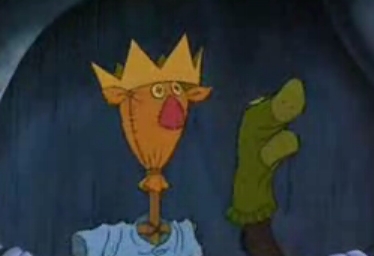
The film has a great soundtrack with some memorable songs,one of my favorites being “The Phony King of England” (lyrics written by Johnny Mercer and performed by Phil Harris). The song takes place after our heroes have escaped from the archery tournament where Prince John attempted to capture and kill Robin Hood. Practically the entire population of Nottingham is gathered in Sherwood Forest to celebrate humiliating the prince and Little John leads the festivities with a whimsical song describing exactly how the people really feel about their would-be king.

Oh the world will sing of an English King
A thousand years from now
And not because he passed some laws
Or had that lofty brow
While bonny good King Richard leads
The great crusade he’s on
We’ll all have to slave away
For that good-for-nothin’ John

Incredible as he is inept
Whenever the history books are kept
They’ll call him the phony king of England!
A pox on the phony king of England!

To say “a pox on…” somebody means you’re basically cursing that person saying “I hope that person shrivels up with a pox and dies” And for someone to curse their ruler that way, well…you’re doing a pretty bad job if your subjects think THAT about you. While Little John leads the singing, some of the others put on a puppet show in the hollow of a tree, mocking Prince John and his advisor Sir Hiss (Terry-Thomas).

He sits alone on a giant throne
Pretendin’ he’s the king
A little tyke who’s rather like
A puppet on a string
And he throws an angry tantrum
If he cannot have his way
And then he calls for Mum
While he’s suckin’ his thumb
You see, he doesn’t want to play

Too late to be known as John the First
He’s sure to be known as John the worst
A pox on that phony king of England!

66618_1207396827609_full

Throughout the film, there’s a running gag of Prince John bursting into childish whining whenever his mother his mentioned (“Ooohhhh, Mommy!!!”). This is a reference to the problems the real Prince John had with his mother Eleanor of Aquitaine. It was no secret that Eleanor favored Richard and John resented it for most of his life. Also, the line “too late to be known as John the first, he’s sure to be known as John the worst” refers to the fact that John is, to this day, regarded as one of the worst (if not the worst) kings that England ever had, so much so that there’s never been a John the Second.

While he taxes us to pieces
And he robs us of our bread
King Richard’s crown keeps slippin’ down
Around that pointed head
Ah! But while there is a merry man
In Robin’s wily pack
We’ll find a way to make him pay
And steal our money back
A minute before he knows we’re there
Ol’ Rob’ll snatch his underwear!

The villagers all dance during this song with animation that is (quite noticeably) reused from The Aristocats (1970), The Jungle Book (1967) and Snow White and the Seven Dwarfs (1937). It’s actually fun to watch and see just how many pieces of animation are borrowed pieces from earlier films (it feels like I find a new example every time I watch).

The breezy and uneasy king of England!
The snivellin’ grovellin’,
Measly weasly,
Blabberin’ jabberin’,
Gibberin’ jabberin’,
Blunderin’ plunderin’,
Wheelin’ dealin’
Prince John, that phony King of England!
Yeah!

I’ve loved this song since I was little. It’s a fun, quirky song that makes you want to smile (and hopefully sing along). I hope you enjoy listening to “The Phony King of England.” Let me know what you think of the song in the comments below and have a great day!

See also:

Robin Hood “Oo-De-Lally” (1973)

Robin Hood “Love” (1973)

Robin Hood “Not in Nottingham” (1973)

You can become a patron of the blog at patreon.com/musicgamer460

You can subscribe to my YouTube channel here

For more Disney songs, see also: Disney Films & Soundtracks A-Z

Don’t forget to like Film Music Central on Facebook 🙂

Hercules “One Last Hope” (1997)

After learning he’s the son of Zeus, Pegasus takes Hercules to a mysterious island to meet the legendary trainer of heroes Philoctetes. And who is this mysterious character? Well…

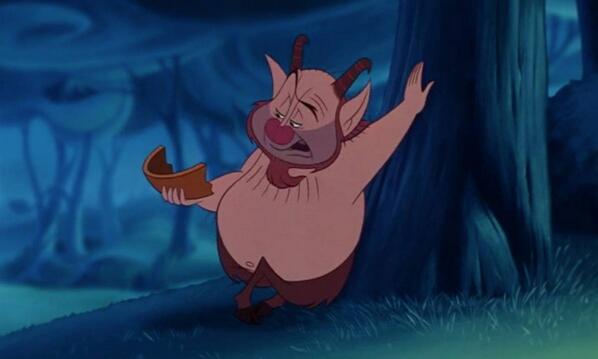
It turns out that Philoctetes or “Phil” is a past-his-prime satyr (half man, half goat) with a passion for flirting with any beautiful woman he sees. Phil is highly upset to find Hercules and Pegasus intruding into his retirement. As far as he’s concerned, he’s long since out of the hero-training business, as he’s seen far too many heroes fall flat without “going the distance.” Apparently he’s trained them all: Odysseus, Perseus, Theseus…and the greatest of them all, Achilles! The satyr can’t bear to be disappointed again but Hercules isn’t giving up: he proudly proclaims himself to be the son of Zeus but Phil is not impressed. In fact, he finds the situation hysterical, as “One Last Hope” begins…

So, ya wanna be a hero, kid?
Well, whoop-dee-doo!
I have been around the block before with blockheads just like you
Each and everyone a disappointment
Pain, for which there ain’t no ointment
So much for excuses
Though a kid of Zeus’, asking me to jump into the fray
My answer is two words….(before Phil can turn Hercules away he’s struck by a bolt of lightning presumably “encouragement” from Zeus)….O.K

Hercules 3

In a similar vein to “I’ll Make a Man Out of You,” “Son of Man,” and “Something There;” “One Last Hope” is a montage song, that is it uses a series of short moments to cover the passage of a lengthy period of time (in this case, several years of training). Initially, as one might expect, the training does not go well:

I’d given up hope that someone would come along
A fellow who’d ring the bell for once
Not the gong
The kind who wins trophies
Won’t settle for low fees
At least semi-pro fees
But no – I get the greenhorn

Part of Hercules’ training involves cleaning up the old training course and making it usable again. Along the way, Phil begins listing off his “hero rules” of which there are 101. A notable example includes: “Rule 95: Concentrate! (Hercules throw goes wide) Rule 96: AIM!!!”

you-re-not-exactly-a-dream-come-true

I’ve been out to pasture pal, my ambition gone
Content to spend lazy days and to graze my lawn
But you need an advisor
A satyr, but wiser
A good merchandiser
And whoa! There goes my ulcer!

I love Danny DeVito’s sarcasm throughout much of this song; he’s so skeptical about Hercules ever completing the training and yet he persists!

I’m down to one last hope and I hope it’s you
Though, kid, you’re not exactly a dream come true
I’ve trained enough turkeys
Who never came through
You’re my one last hope so you’ll have to do

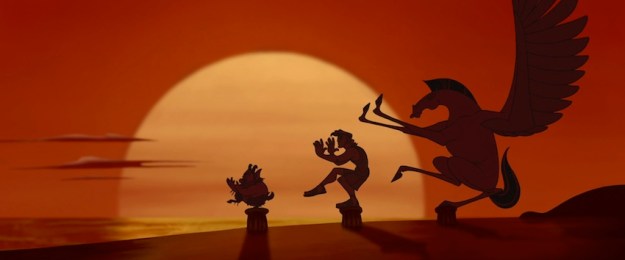
Finally though, the long years of training (how many isn’t made clear) begin to pay off and finally the scene transitions to an adult Hercules that’s mastered all of Phil’s training courses, including a doozy of a finale. In short order, Hercules defeats or evades every obstacle and rescues the “damsel in distress.”

One_Last_Hope

Demigods have faced the odds
And ended up a mockery
Don’t believe the stories that you read on all the crockery
To be a true hero, kid, is a dying art
Like painting a masterpiece, it’s a work of heart
It takes more than sinew
Comes down to what’s in you
You have to continue to grow
Now that’s more like it!

I’m down to one last shot and my last high note
Before that blasted Underworld gets my goat
My dreams are on you, kid
Go make ’em come true
Climb that uphill slope
Keep pushing that envelope
You’re my one last hope and, kid, it’s up to you!

It’s taken years but Hercules has finally finished his basic training with Phil and he is beyond ready to get off the island so he can become a true hero and return to Mount Olympus! Phil isn’t sure that Hercules is ready, but after a little more begging the satyr decides to take the fledgling hero on a “test run” and go to Thebes, a city with a lot of problems, problems that only a hero could fix.

Those are my thoughts on “One Last Hope,” another great song from composer Alan Menken. Let me know what you thought of this song in the comments below and as always, thank you for supporting the blog, it means everything to me. Have a great day!

You can become a patron of the blog at patreon.com/musicgamer460

Check out the YouTube channel (and consider hitting the subscribe button)

See also:

Hercules “Gospel Truth” (1997)

Hercules “Gospel Truth II & III” (1997)

Hercules “Go the Distance” (1997)

Hercules “Zero to Hero” (1997)

Hercules “I Won’t Say I’m in Love” (1997)

Disney Soundtracks A-Z

Don’t forget to like Film Music Central on Facebook 🙂