Tag Archives: Netflix

Soundtrack News: ‘White Lines’ Soundtrack from Tom Holkenborg Available May 15th

Milan Records has announced that the official soundtrack for White Lines, the Netflix original series, will be released on May 15, 2020. The album features music written by Tom Holkenborg (aka Junkie XL). White Lines follows a young woman navigating the island of Ibiza in the wake of her brother’s mysterious death.

Tom Holkenborg, aka Junkie XL, is a Grammy® nominated multi-platinum producer, musician, composer and educator whose versatility puts him on the cutting edge of contemporary music, as well at the vanguard of exciting new film composers. Tom’s film scoring credits have grossed over $2 billion at the box office and include Mad Max: Fury Road, Deadpool, Black Mass, Alita Battle Angel, Divergent, Brimstone, The Dark Tower, Tomb Raider, Terminator: Dark Fate and most recently the record setting Sonic the Hedgehog. He has worked with directors including Peter Jackson, Robert Rodriguez, James Cameron, George Miller, Christopher Nolan, Zack Snyder and Tim Miller among many others.

Of the soundtrack, Tom Holkenborg says:

“It was a delight to dive back into my electronic roots and revisit some amazing Ibiza memories when creating the score for White Lines. Though much of the music I made is not club focused, as they licensed a lot of original tracks from the late ‘90s and early 2000s, I think my work was able to capture some of the magic that makes club culture and the island so special. It was a really fun personal project to work on and I hope people love the series.”

The synopsis for White Lines is below:

When the body of a legendary Manchester DJ is discovered twenty years after his mysterious disappearance from Ibiza, his sister returns to the beautiful Spanish island to find out what happened. Her investigation will lead her through a thrilling world of dance music, super yachts, lies and cover-ups, forcing her to confront the darker sides of her own character in a place where people live life on the edge.

WHITE LINES (MUSIC FROM THE NETFLIX ORIGINAL SERIES)

TRACKLISTING –

  1. Zoe’s Arrival
  2. Times Gone By
  3. Darker Night
  4. Missing You
  5. On The Road
  6. Ibiza Bar
  7. I’m Happy for You
  8. Live Life
  9. Manchester Life
  10. In The Club
  11. Boxer
  12. It Was Ours
  13. Infinity
  14. The Past
  15. Repercussions
  16. Romance
  17. Retrace The Path
  18. My Goddess
  19. New Day
  20. Discoveries
  21. Accident
  22. Closure
  23. Diving for Prizes
  24. Family Troubles
  25. Memories
  26. Zoe

The soundtrack for White Lines will be available the same day the series premieres, on May 15, 2020.

See also:

Become a Patron of the blog at patreon.com/musicgamer460

Check out the YouTube channel (and consider hitting the subscribe button)

Don’t forget to like Film Music Central on Facebook 🙂

Soundtrack Review: The Two Popes (2019)

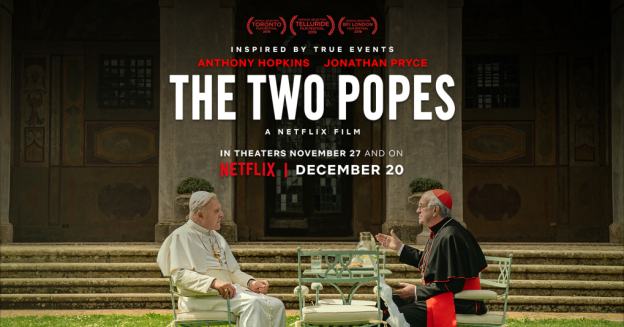
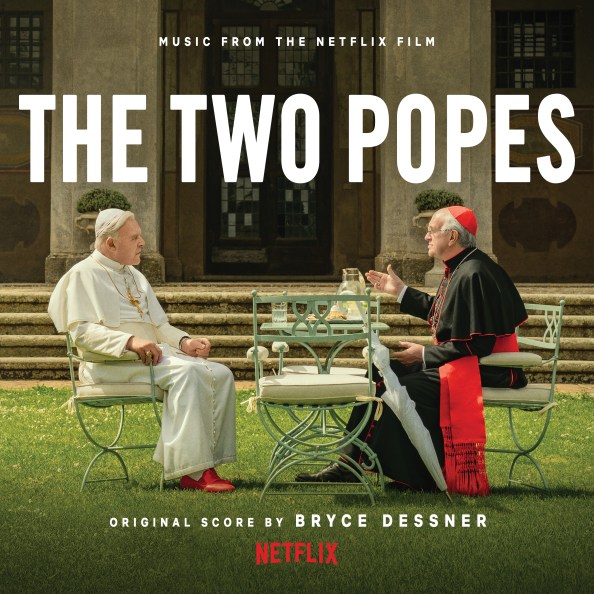
Late last year, Milan Records released the soundtrack for the Netflix original film The Two Popes. Accompanying brilliant direction by Fernando Meirelles and indomitable performances by both Anthony Hopkins and Jonathan Pryce is an entirely charming, playful, and yet robust score devised by multifaceted artist and composer Bryce Dessner whose music soulfully uncovers the individual voices for both Pope Benedict and Cardinal Bergoglio (the future Pope Francis) while still revealing each Pope’s humane vulnerabilities and finding common consonance between them in an oftentimes lonesome Vatican locale.


With an expansive body of work that extends beyond the hugely-successful band, Dessner brings his experience as both a GRAMMY Award-winning classical composer and Golden Globe-nominated film composer to the The Two Popes. Regarding his work on The Two Popes, Dessner had this to say:

“It was an absolute joy to work with such an incredible cast and team on The Two Popes. In particular I have always been a huge fan of director Fernando Mereilles and it was an honor to finally work directly on a film with him. His work is deeply musical and it was a wonderful journey to find the sound world for The Two Popes, which began with the intimate and incredible performances of Anthony Hopkins and Jonathan Pryce. This was the first film I’ve worked on a score where I got to visit the set as they were shooting in Rome for a few days and began composing in the room with the actors and crew.  The score has moments of more abstract minimal and layered orchestral music which I wrote for Benedict’s scenes, and then music inspired by Argentina folk music (in particular Mercedes Sosa and Dino Saluzzi) for which I spent a lot of time composing for the classical guitar again.”

TwoPopes_Cover_RGB300_3000px

Dessner collaborates with some of today’s most creative and respected artists, including Philip Glass, Katia and Marielle Labèque, Paul Simon, Sufjan Stevens, Johnny Greenwood, Bon Iver, Kelley O’Connor, Nico Muhly and Steve Reich, who named Dessner “a major voice of his generation.” His orchestrations can be heard on the new albums of Paul Simon and Bon Iver. Further film score credits include The Kitchen for Warner Bros. (2019) as well as The Two Popes by Oscar-nominated director Fernando Meirelles (2019).

I found the soundtrack for The Two Popes to be deeply relaxing. Dessner seemed intent on creating music that seemed to complement the mood you’d find in the Church and in two such high-ranking officials as Pope Benedict XVI and Cardinal Bergoglio. I have to confess that I was briefly confused by the tracks with classical guitar reminding me of Spain before I remembered that Bergoglio comes from Argentina (a Spanish-speaking country), in which case that style of music makes perfect sense.

Compared to other soundtracks I’ve listened to, the music for The Two Popes is pretty minimalistic, but that makes sense since the emphasis is supposed to be on the dialogue between Benedict XVI and Bergoglio. Too much music would be a distraction, and Dessner seems to have taken great care to not overdo his musical contributions to the film.

If you’re looking for a relaxing soundtrack to listen to, Bryce Dessner’s score for The Two Popes is a good choice. The soundtrack is available now from Milan Records.

THE TWO POPES (MUSIC FROM THE NETFLIX FILM)
TRACKLISTING
Walls
Cuando Tenga la Tierra – Mercedes Sosa
Dialogues
Vote Counting
Ratzinger Election
Garden Dialogues
Was It Something I Said
Shifting Gardens
Cathedral
Bergoglio’s Awakening
Siete de Abril
Dirty War
Taken Away and Tortured
They Took Esther
Another Bergoglio
Walls 2
Pope Francis
Sombras de Buenos Aires
Minguito – Dino Saluzzi
Sastanàqqàm – Tinariwen
Besame Mucho – Ray Conniff & His Orchestra

Let me know what you think about The Two Popes and its soundtrack in the comments below and have a great day!

See also:

Film Soundtracks A-W

Become a Patron of the blog at patreon.com/musicgamer460

Check out the YouTube channel (and consider hitting the subscribe button)

Don’t forget to like Film Music Central on Facebook 🙂


Soundtrack Review: Anne With an “E” (2017-2019)

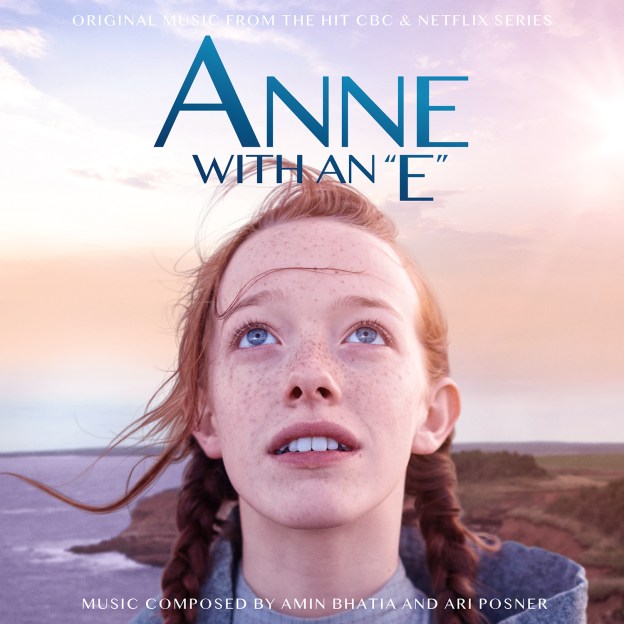
Original Music from the CBC and Netflix series Anne with an “E” is now available on CD exclusively from Varèse Sarabande Records. The soundtrack to Northwood Entertainment’s series can be ordered on VareseSarabande.com and other retailers. The album includes the theme song “Ahead by a Century” by The Tragically Hip and score from the composing duo of Amin Bhatia and Ari Posner.

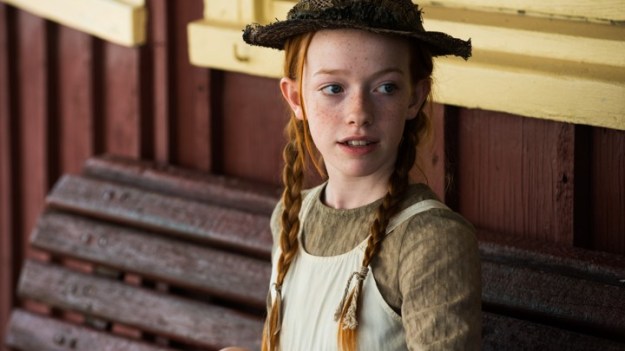
lead_720_405

The series, a reimagining of the classic book Anne of Green Gables, is a coming-of-age story about a young orphan who is seeking love, acceptance and her place in the world. Amybeth McNulty stars as Anne, who has endured an abusive childhood in orphanages and the homes of strangers. Set in the late 1890s, Anne is mistakenly sent to live with aging siblings, Marilla and Matthew Cuthbert (played by Geraldine James and R.H. Thomson), who reside on Prince Edward Island. Anne, who proves to be uniquely spirited, imaginative and smart, transforms the lives of Marilla, Matthew and everyone else in their small town. While Anne with an “E” honors the foundation of L. M. Montgomery’s novel, the series explores contemporary issues of identity, racism, feminism, friendship, bullying, gender parity, and empowerment through the lens of its fierce, starry-eyed, irrepressible protagonist.

Regarding the soundtrack for Anne with an “E” the composers had the following to say:

Doing a soundtrack felt natural because much like an orchestra, the series Anne with an “E” contains a great many components that are all moving in the same direction to tell beautiful and inspiring stories contained within. There were certain instruments and styles of music that we decided on quite early in the process. The Celtic flavor was a natural choice from the very beginning, and this informed the instrumentation that usually includes fiddle, tin whistle, accordion and mandolin. However, we were encouraged to experiment and expand those parameters wherever it felt right for the story, so that brought in other woodwinds and strings, ambient and percussive textures, solo cello and of course piano.

A period piece though it may be, the stories in Anne with an “E” are universal and timeless. Every detail, including the costumes and sets, the writing, the acting and even the live instruments in our score are incredibly accurate to the time. Yet a contemporary light shines on the issues that these characters would have faced back then, issues that are old as time and still as true and meaningful today. In that sense, much like the Tragically Hip’s main title song “Ahead by a Century”, we have always felt that the whole concept behind the show was exactly that

37725-optimized_595e478ce7b5c

With nearly 50 scores to his credit, Emmy nominated composer Amin Bhatia has written music for film, TV and album projects for over 30 years. Versatile in both orchestral and electronic music, Amin’s television projects in addition to the CBC/Netflix/Northwood series Anne with an “E”, include internationally acclaimed series Flashpoint and X Company, the docudrama series Blood and Fury: America’s Civil War, as well as guest compositions on The Handmaid’s Tale. Ari Posner is a fixture in Canadian film and television, in addition to scoring Netflix/CBC/Northwood’s Anne with an “E”, Posner’s series scoring credits include X Company, Blood and Fury: America’s Civil War, and the critically acclaimed TV series Flashpoint, as well as the feature films All the Wrong Reasons, Borealis, and the romantic comedy My Awkward Sexual Adventure. The music composer’s repertoire spans from long-format work to ads to animated series, and everything in between.

TRACK LISTING
1.    Ahead by a Century Performed by The Tragically Hip
2.    Good Morning Anne
3.    Picking Up A Girl
4.    The White Way of Delight
5.    Tree Perspective
6.    A Big Day Ahead
7.    The Power of A Child
8.    Matthew And Anne
9.    Meet Miss Stacey
10.  A Nature Symphony
11.  Passage of Time
12.  Forgiveness
13.  Never Going Back
14.  My Daughter Anne
15.  You Can Ride to Back
16.  Forbidden to Fraternize
17.  Marilla Waits
18.  Unrequited Love
19.  The Growing Storm
20.  It’s All Broken
21.  Fire in The Town
22.  Dr. Gilbert Blythe
23.  Kindred Spirits
24.  My Friend Cole
25.  Mission of Magnitude
26.  Dearest Diana
27.  Simplest of Gifts
28.  We’re Rich Aren’t We
29.  No Regrets
30.  Make Your Own Decision
31.  Goodnight Anne

Let me know what you think about the soundtrack for Anne With an “E” in the comments below and have a great day!

See also:

Film Soundtracks A-W

Become a Patron of the blog at patreon.com/musicgamer460

Check out the YouTube channel (and consider hitting the subscribe button)

Don’t forget to like Film Music Central on Facebook 🙂

Soundtrack Review: The Witcher Season 1 (2019)

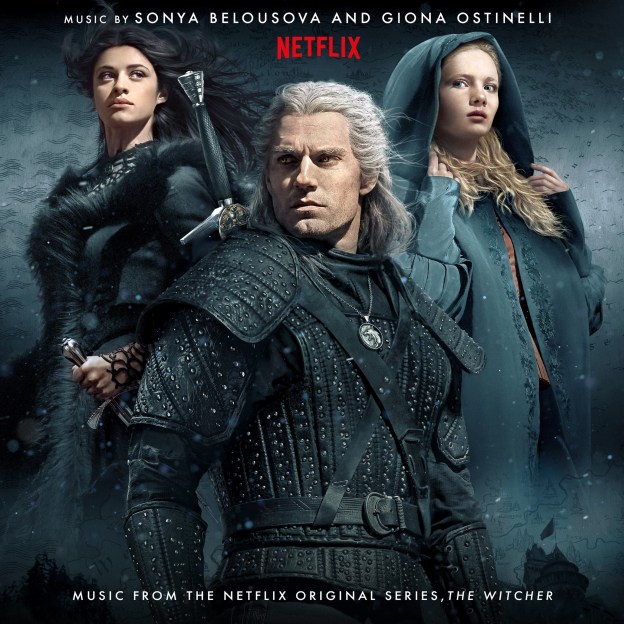
Milan Records has announced that The Witcher (Music From the Netflix Original Series) will be released on January 24, 2020. The soundtrack was composed by award-winning pianist Sonya Belousova and critically-acclaimed composer Giona Ostinelli. The soundtrack album will also include the instant hit “Toss a Coin to Your Witcher.”

Of the soundtrack, the composers had this to say:

The best part of scoring The Witcher is the constant stream of unlimited creative opportunities this unique and vast universe provides. We wrote and produced songs, folk tunes, dances, and score, collaborated with virtuoso soloists and phenomenal artists, recorded unique historical instruments, many of which were crafted specifically for The Witcher, as well as personally performed and recorded over 60 instruments in order to create over 8 hours of an exciting original soundtrack.

The Witcher tells the story of Geralt of Rivia, a mutated monster-hunter for hire, as he journeys toward his destiny in a turbulent world where people often prove more wicked than beasts.

THE WITCHER (MUSIC FROM THE NETFLIX ORIGINAL SERIES)
TRACKLISTING –
1. Geralt of Rivia
2. Toss A Coin To Your Witcher (feat. Joey Batey)*
3. Happy Childhoods Make For Dull Company (feat. Rodion Belousov)
4. The Time of Axe And Sword Is Now (feat. Declan de Barra & Lindsay Deutsch)
5. They’re Alive (feat. Lindsay Deutsch & Burak Besir)
6. Tomorrow I’ll Leave Blaviken For Good
7. Her Sweet Kiss (feat. Joey Batey)***
8. It’s An Ultimatum
9. Round of Applause (feat. Rodion Belousov)
10. Marilka That’s My Name
11. I’m Helping The Idiot (feat. Arngeir Hauksson)
12. The Knight Who Was Taught To Save Dragons (feat. Rodion Belousov)
13. Ragamuffin
14. The Last Rose of Cintra (feat. Declan de Barra)**
15. Late Wee Pups Don’t Get To Bark (feat. Lindsay Deutsch)
16. You Will Rule This Land Someday
17. The Fishmonger’s Daughter (feat. Joey Batey)**
18. Blaviken Inn (feat. Lindsay Deutsch)
19. Man In Black
20. The Great Cleansing (feat. Lindsay Deutsch)
21. The Law of Surprise
22. Battle of Marnadal
23. Pretty Ballads Hide Bastard Truths (feat. Rodion Belousov)
24. Giltine The Artist
25. Everytime You Leave
26. Rewriting History (feat. Rodion Belousov)
27. The End’s Beginning (feat. Declan de Barra)
28. Gold Dragons Are The Rarest (feat. Rodion Belousov)
29. Bonfire (feat. Lindsay Deutsch)
30. Children Are Our Favourite
31. Do You Actually Have What It Takes
32. Point Me To Temeria
33. Djinni Djinn Djinn
34. Here’s Your Destiny
35. Two Vows Here Tonight
36. Bread Breasts And Beer (feat. Lindsay Deutsch)
37. Would You Honor Me With A Dance
38. Four Marks (feat. Rodion Belousov)
39. The Pensive Dragon Inn (feat. Lindsay Deutsch)
40. A Gift For The Princess
41. You’re In Brokilon Forest
42. Today Isn’t Your Day Is It
43. Lovely Rendez-vous à la Montagne
44. Blame Destiny
45. The White Flame Has Brought Us Together
46. He’s One of The Clean Ones (feat. Lindsay Deutsch)
47. You Lost Your Chance To Be Beautiful
48. Yennefer of Vengerberg
49. Shouldn’t You Know When Someone Is Pretending (feat. Lindsay Deutsch)
50. You’ll Have To Fight It Until Dawn
51. I’m The One With The Wishes
52. Chaos Is All Around Us
53. The Curse of The Black Sun
54. Battle of Soden
55. The Song of The White Wolf (feat. Declan de Barra)**
*Lyrics by Jenny Klein
**Lyrics by Declan de Barra
***Lyrics by Haily Hall

Enjoy The Witcher soundtrack when it becomes available and let me know what you think about it in the comments below! Have a great day 🙂

See also:

TV Soundtracks

Become a Patron of the blog at patreon.com/musicgamer460

Check out the YouTube channel (and consider hitting the subscribe button)

Don’t forget to like Film Music Central on Facebook 🙂

Soundtrack Review: The Dragon Prince Season 3 (2019)

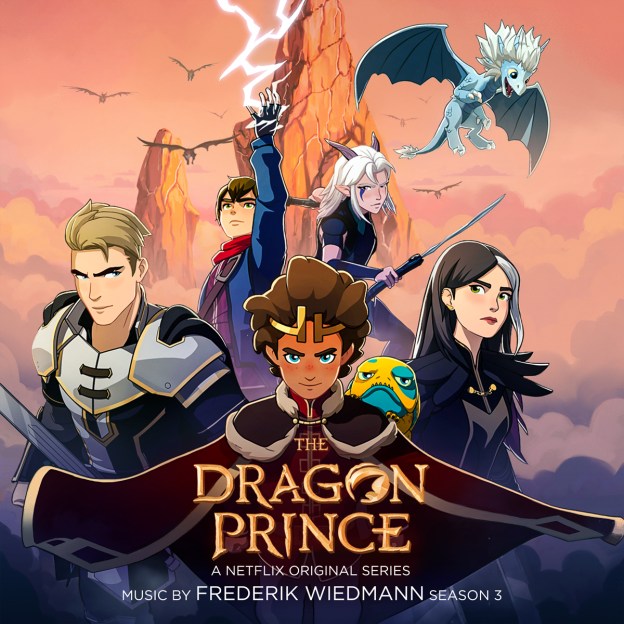
Lakeshore Records will make the soundtrack of season 3 of the hit Netflix original series The Dragon Prince available on digital starting November 22nd. The soundtrack was composed by Frederik Wiedmann (Batman: Hush, Green Lantern: The Animated Series), who is one of the most diverse and cultivated composers working in motion pictures today. With over 140 titles to his name in all realms and genres, Wiedmann has established himself as an insightful artist with an enduring passion for storytelling. Wiedmann has been a main stay in the DC cinematic universe, starting with his work on Green Lantern: The Animated Series, for which he earned two consecutive Annie Awards nominations. His success on the series led to further popular Warner Bros’ DC projects such as Justice League: The Flashpoint Paradox, Son of Batman, Death of Superman, Justice League: Gods and Monsters, and Batman: Gotham by Gaslight among others.

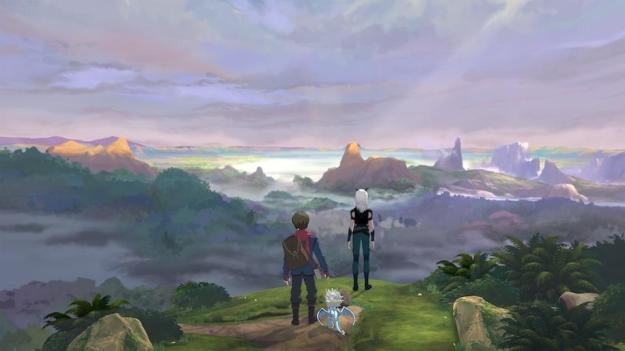
The Dragon Prince Season 3 continues the stories of aspiring mage Callum, crown prince Ezran, the Moonshadow Elf assassin Rayla, and Zym – the infant sky dragon and titular “Dragon Prince.” Having been split apart after the huge events of Season 2, the young heroes continue their separate journeys: Ezran returning to Katolis to assume the throne, and Callum and Rayla taking Zym deeper into the unknown wilds of Xadia. The Dragon Prince is co-created and led by the visionary team of Aaron Ehasz (Avatar: The Last Airbender) and Justin Richmond (Uncharted 3: Drake’s Deception).

Aaron Ehasz and Justin Richmond were ecstatic about collaborating with Frederik Wiedmann for Season 3 praising, “Without question Freddie’s epic and emotional score is what elevates the Dragon Prince storytelling into something that soars and swells our hearts.”

960x0-2.jpg

For Season 3, in approaching how best to build upon the story arcs and emotional threads of the first two chapters of The Dragon Prince, Frederik Wiedmann said:

“The third season of The Dragon Prince offered an amazing opportunity to work with all of our established themes for the characters from Seasons 1 & 2, to take them further, and also to expand them into new ideas as this incredible story continues to unfold. We pushed hard to really dig deep into all the emotional threads in Season 3, as well as amplify the imminent threat and impending darkness that our heroes face during their quest. Once again, we put our best foot forward and recorded a beautiful orchestra for some of the most pivotal scenes in this season to deliver the most emotional impact possible. We also feature again the amazingly unique solo instrumentalists that we introduced in the first two seasons. It was difficult for us to narrow down which tracks deserve to be on the soundtrack, so we decided to make the Season 3 soundtrack a full 1 hour and 40 minutes of music. We hope the fans will enjoy it!”

You can digitally purchase the soundtrack for The Dragon Prince season 3 now! Let me know what you think about The Dragon Prince (and its soundtrack) in the comments below and have a great day!

Track list:

01. Ultimatum
02. The Fall of Sol Regem
03. A Lesson in Stealth
04. Hand in Hand
05. A Stupid Idea
06. The Breach / The Scarf Trick
07. All Hail King Ezran
08. Katolis Sunrise / Everywhere You Look
09. The Prince of Neolandia
10. Hold On Tight
11. The Weight of the Crown
12. Adoraburrs
13. The King’s Verdict
14. Silvergrove
15. Heartbloom
16. A Human With a Pure Heart
17. There You Are
18. Trustworthy Allies
19. Understanding, Love, and Jelly Tarts
20. One Feeling Too Far
21. Bringer of Tarts / Beneath the Sands
22. Shadow of the Ambler
23. Broken Links
24. Because She’s Rayla
25. A Single Drop of Blood
26. Weary Wings
27. Thunderfall
28. His Name Will Be Vengeance
29. Ghost Feather
30. A Way Forward
31. Noble Aims
32. The Eclipse of Lux Aurea
33. Midnight Sun / Draw Your Last Breath
34. Don’t Make Me Choose / Hearts of Cinder
35. The Queen’s Slumber
36. Manus Pluma Volantis
37. Prelude to War
38. Battle of the Storm Spire: Hold the Line
39. Battle of the Storm Spire: Fading Hope
40. Battle of the Storm Spire: The Tide Turns
41. Aftermath
42. How Could You?
43. Nowhere to Run
44. The Leap
45. My Love, My Hope

See also:

TV Soundtracks

Become a Patron of the blog at patreon.com/musicgamer460

Check out the YouTube channel (and consider hitting the subscribe button)

Don’t forget to like Film Music Central on Facebook 🙂

An Interview with Chad Cannon, Composer of American Factory

Recently I had the opportunity to interview Chad Cannon, who composed the score for the Netflix original film American Factory. Composer Chad Cannon has traveled the world drawing inspiration from cultures, history, and human stories to create moving scores for documentaries, animation and live performances. His debut soundtrack for the documentary Paper Lanterns received an IFMCA (International Film Music Critics Awards) nomination for Best Original Score for a Documentary, and was lauded as “haunting, mystical” by The Japan Times; while his soundtrack for Cairo Declaration, co- composed with Xiaogang Ye, received China’s highest film prize, the Golden Rooster Award for Best Music. Chad most recently scored Netflix’s documentary, American Factory, which won the Best Director Award for a Documentary at the 2019 Sundance Film Festival and is the first film released by Barack and Michelle Obama’s production company, Higher Ground. His other recent works include a symphonic Americana score for PBS’ documentary CyberWork and the American Dream, as well as scoring Chris Meledandri and Illumination Studios’ animated short, The Dog Days of Winter.

Chad Cannon 2.jpg


How did you get started with composing for films and documentaries?

So I studied music at Harvard, I was studying music and Japanese there, and then I did my Masters at Julliard, also in composition. But all along I kind of knew…I’ve always like film, I thought it would be really cool to have a career that intersected film and music. So when I graduated from Julliard I moved to L.A. and I started working with this orchestrator named Conrad Pope, he worked for many years with John Williams, and the first project he hired me on was Peter Jackson’s The Hobbit trilogy, so I got kind of dumped right in the middle of a huge film score project, and as an orchestrator it’s a little less pressure then a composer obviously, because the orchestrator’s job is really to help the composer prepare all the conducting scores in time for the recording sessions, so you’re the one putting the notes on the page eventually. So from there, I kind of transitioned into writing more for film, and I had an opportunity to score a couple of feature documentaries with my brother who directed feature films for CrossFit. …My brother just had me write some custom music for those films. And then I had this opportunity to write for a film called Paper Lanterns, which was a Hiroshima documentary about the 12 Americans who had died in the atomic bombing of Hiroshima. So that was my first feature doc(umentary) that was more serious and I had an opportunity to write a more rich, orchestral for that film, and it was also a crossover score where I included some traditional Japanese performers in addition to this American orchestral sound that I was creating. So that led to me being accepted into the Sundance Composer Labs which happen every summer at Skywalker Ranch, and that lab is how I got connected to the American Factory film.

How did you get involved with American Factory

The Sundance Labs people knew I’d done quite a bit of work in Asia and they thought “Oh, since this is a film that is very much connecting Asia with the U.S., maybe he would be a good match” and so they referred me to Julia [Reichert] and Steve [Bognar]  who were the directors of American Factory.

How did you approach scoring the documentary?

Well, anytime I get a new film, the first thing I like to do is experiment with new materials or new instruments, just to sort of develop a sound world that I can draw from as I start getting clips of the film. So I tried two things at first that didn’t actually end up working out very well for the film. One was, because of the glass factory I thought “What if we used glass instruments?” and had glass be the heart of the score. So I got all the glass I could find and recorded myself playing rhythms on them. I got wine glasses, and did a bunch of tones, and I tried a bunch of stuff. And Julia and Steve heard it, and were like “Oh, this is cool but it’s too ‘twinkly.’” And that’s because glass creates a lot of high overtones, which creates a “twinkly” sound. And because there’s quite a few ominous, or dark themes in the film, as well as a huge amount of factory noise, from a sound design perspective this film was very difficult because the sound designer Lawrence Stevenson had to navigate, when you’re recording the audio in the factory and it’s hard to hear, just from the amount of noise. So anyway, the glass approach didn’t really work.

And then the next thing I tried was to include traditional Chinese elements, especially from Fujian Province, which is where the Fuyao headquarters is within China, and I had happened to have been there before…Steve and Julia also considered that, but then they said “We’re Americans,  we’re from Ohio, we don’t want to make this feel like it’s exoticizing the Chinese component of this movie. Make it more universal in the approach.” So ultimately we ended up focusing on a low woodwind sound; so there’s a lot of bassoons, bass clarinets, some lower flutes like alto flutes…and the reason we went in that direction is because Julia had heard a Mozart piece called the “Gran Partita” and this piece is for woodwinds with two horns and a double bass, and it’s just a really unique instrumentation…and ultimately I think she was right in leaning in that direction, because the woodwinds’ timbre goes well against all the metallic glass timbre that you hear in the film. The factory noises are complimented by this woodwind sound, as opposed to competing with it. There’s something about that combination that ended up working nicely, and I ended up writing a lot of music for these slow woodwinds.

Were you inspired by the factory machines, because in several of the manufacturing scenes it feels like the music is mimicking the frenetic action of the glass factory

For sure, there are a lot of moments..there’s one specific moment if you remember near the end of the film, there’s a sequence where Wong is sitting next to this panel of blinking lights in the dark, he’s sitting there and there’s a voiceover where he says “I think the most important thing is mutual understanding” and he expresses this admiration for American workers who can manage having multiple jobs at once…and that sequence…the blinking lights were the trigger for the music in that scene, where if you listen there’s a lot of minimalist patterns. A lot of the American minimalists will come to a pattern and they’ll repeat it for a really long time to create this meditative state and, that’s a very common technique now in film music. That pattern that I have in that scene is very much trying to show…it’s drawing inspiration from the blinking lights on the panel. And it gets you into Wong’s mind about how things are kind of dark at that moment.

And the music when we enter the factory for the first time is also rooted, grounded in a repeating bass note. The cue is actually called “The Resurrection,” …and for me the pillars of the factory, and the weight of this machinery, all of that is finding its way into the score in these heavy bass figures that I’ve been writing.

It feels like there are different themes, or different musical sentiments for the American and Chinese sides of the story, is that so or am I imagining that?

There are no themes that are specifically Chinese or American…Thematically there’s like four or five melodic ideas that spin out, and sometimes it’s the same theme but in a dark variation, sometimes lighter. Pretty much all of the musical material is tied back to that first theme called “The Forge.” There’s a parallel fifth motif that becomes the bed of pretty much everything else that happens after that. There are also themes for the Chairman and Wong. Wong’s theme is what comes back at the very end when we see this sequence between American workers and Chinese workers leaving the factory, and it’s like this fanfare for workers. The point of this theme is that it’s where I’m trying to convey the dualism of two countries coming together. And at the very, very end, there’s a long sequence with the Chairman where all of the themes you’ve heard throughout start to come back very quietly, underneath the dialogue, revisiting the places we’ve been along the way. So there are musical themes that are attached to specific characters.

How did you decide which parts of the documentary need music, because I’ve noticed chunks that have no music at all, and it feels like a very abrupt transition between music and no music.

So the way the film is edited is by chapters, and they’ll create a scene, or a series of scenes which together comprise a chapter. And the filmmakers who are also the writers, you know documentaries are written in the editing room, they don’t have a script, they just go out and film stuff. They get all the footage and then they go back and figure out what story they captured. And they could’ve told many different stories with the footage they had. They had to go through 1200 hours of footage shot over 3 years, so it’s really an incredible feat, what they did to cut it down to the film you see now. So musically, the way this pans out in documentaries is that, first of all, as opposed to feature films, and I personally feel that feature fiction films tend to get over-scored, I’m a fan of leaving space for people to just appreciate the environment that they’re in…the whole world is full of sound and interesting environmental ambience, and there’s music everywhere if you just open up your ears.

And I feel like in film it’s really beautiful when people know not to put music, because then you can be more immersed in the reality of whatever environment you’re in, even more so in a documentary. The challenges of a documentary film composer is that you can’t be too dramatic, you can’t hit things too hard on the nose without it starting to become editorializing. They’re telling true stories and representing real people, and you have to respect that. So the choices about where not to do music were largely where Julia and Steve had told me beforehand, where they said “Oh we don’t need music for this scene, or for here.” If there was music the whole time it would just start to get in the way of what people are saying.

There was one scene where I pushed for there to be no music, which was this scene where there’s no video just the recording, where the Fuyao employee had recorded this audio of the anti-union guy persuading them to vote against the union. And originally that scene had some very ominous music in it and I ultimately told them this is already such a shock where you lose the video, that you don’t need any score there because it’s already such a change from what we’ve been doing. And it’s already so ominous that the picture’s gone.

……….

It was a great honor to be able to talk with Chad Cannon about his work on American Factory, and I hope you enjoyed reading about it. Let me know your thoughts about American Factory (and the soundtrack) in the comments below and have a great day!

American Factory is currently available for streaming on Netflix.

See also:

Composer Interviews

Become a Patron of the blog at patreon.com/musicgamer460

Check out the YouTube channel (and consider hitting the subscribe button)

Don’t forget to like Film Music Central on Facebook 🙂

Soundtrack Review: Stranger Things 3 (2019)

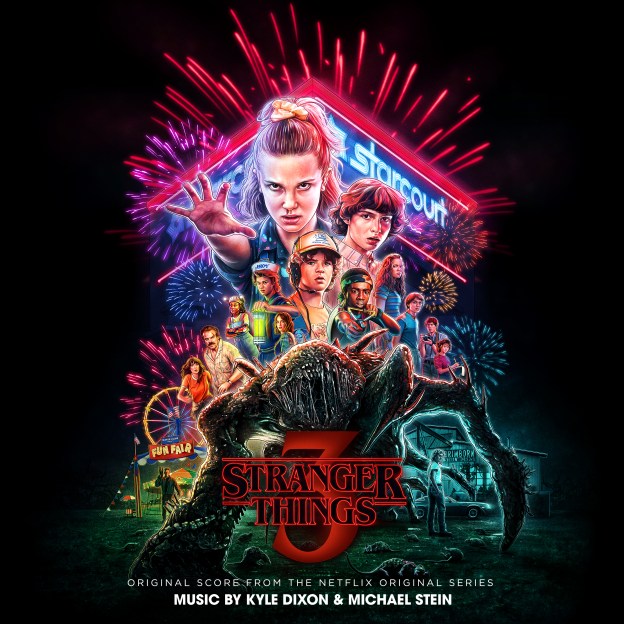
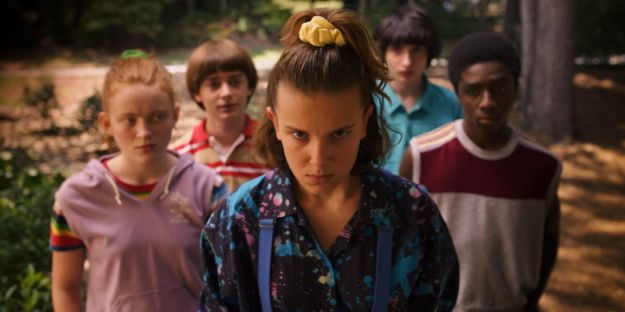
Stranger Things 3 features music by Emmy-winning and two-time Grammy-nominated composers Kyle Dixon and Michael Stein, digitally on June 28. Half of the Austin band      S U R V I V E, Dixon and Stein have been on board with the series since the first season, creating strikingly dynamic music that has become a trademark of the show.  In Season 3 evil has not ended, it has evolved, and the duo has evolved with it as they continue to explore new sonic territory and instrumentation, such as the pop sensibilities and melancholic undertones of 50’s doo-wop, that go beyond the 80’s & 90’s R&B inflections of past seasons. They also return to familiar themes that are elevated by bold stylized reworkings that reflect the growth of the characters and intensity of the new storyline.

With the Season 3 soundtrack, we’ve made an album that doesn’t feel like a ‘score’ necessarily, but one that feels more like a stand-alone record than a collection of brief cues. We’ve incorporated the main narrative elements of the series and stayed true to the original sound while at the same time expanding on our musical palette—we often pushed it to the limit. We’ve really made an effort to curate this album to showcase the moments we think are really special.

stranger-things-season-3-kids-eleven-scrunchie.jpg

The soundtrack for Stranger Things 3 has indeed evolved from where it was two years ago for Stranger Things 2. While the 80s vibe is definitely constant (not a surprise considering the show has reached 1985), there are also tracks that are much, MUCH darker than anything heard before. For example, “The Week is Long” has a very dark undertone to it, while “Rats” sounds like something out of a 1950s sci-fi film.

In terms of the general 80s vibe though, my favorite track has to be “Starcourt” since the entire piece SCREAMS “this is the 1980s and don’t you forget it.” The synth beats are in full effect, it’s peppy, it’s upbeat, it sounds like it was extracted straight out of that decade and brought to the present. I can also hear the resemblance to a stand-alone record that the composers were going for. The soundtrack does indeed sound like a record or tape from the 1980s that would sit down and listen to (well, for the most part anyway).

If you’ve been a fan of Stranger Things all this time, then you will definitely like the soundtrack for Stranger Things 3. Let me know what you think about Stranger Things 3 and its soundtrack in the comments below and have a great day!

See also:

Soundtrack Review: Stranger Things 2 (2017)

TV Soundtracks

Become a Patron of the blog at patreon.com/musicgamer460

Check out the YouTube channel (and consider hitting the subscribe button)

Don’t forget to like Film Music Central on Facebook 🙂

Soundtrack Review: Lost in Space (2018)

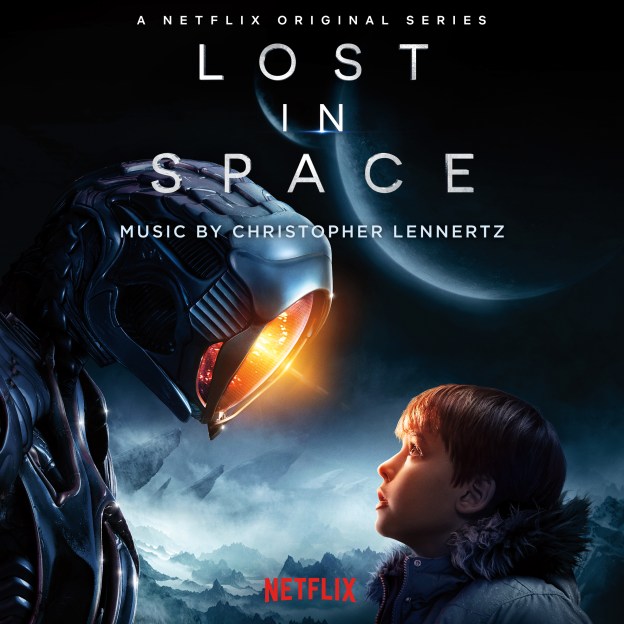
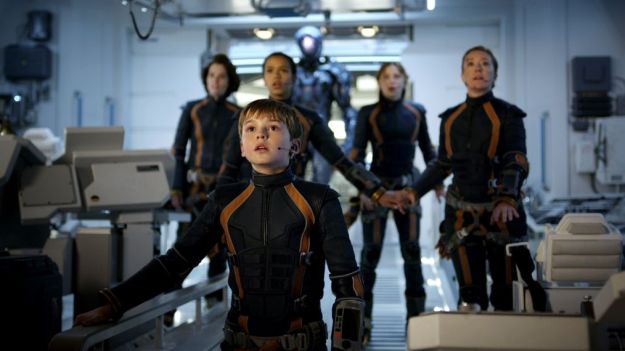
Lost in Space is a Netflix Original dramatic and modern reimagining of the classic 1960’s science fiction series. Set 30 years in the future, colonization in space is now a reality, and the Robinson family is among those tested and selected to make a new life for themselves in a better world. But when the new colonists find themselves abruptly torn off course en route to their new home they must forge new alliances and work together to survive in a dangerous alien environment, lightyears from their original destination. 

Given the impact of the original series, it was very important to approach the musical score in the right way, according to executive producer Zack Estrin:

When we were approaching the score for Lost In Space we knew there was a certain feeling we wanted to create for the viewers,” said Executive Producer Zack Estrin. “Following in the footsteps of the magnificent John Williams, who composed the original iconic series theme, Christopher Lennertz brought to us a vision that fit perfectly. It is full of triumphant brass and soaring strings, where orchestral melody and percussion dance seamlessly from edge of your seat thrills to simple moments of raw emotion.

18-16-4218-1014x570.jpg

Christopher Lennertz was very excited to be a part of this reimagining of the Lost in Space story.

Zack and all the producers wanted the musical language of the title sequence to set up the score for the rest of the story, and hopefully we did just that,” Lennertz explained.  “It’s a big story with family and adventure at the very heart. I tried to be grand and heroic, with a nod to exploration, and a hint of nostalgia. I hope it resonates with fans of the show, both old and new!

The soundtrack itself is a breath of fresh air. It is definitely cast in the mould of John Williams’ style of music, with soaring themes and racing melodies. To me, it genuinely sounds like a callback to a bygone age of composition, and I’m happy to hear that television music like this still exists. The “Main Title,” “Will Exploring” and “Danger Will Robinson” are some of my favorite pieces in the soundtrack. I love how the music feels like it’s literally flying, only to suddenly stop and “skitter” into scary territory with the violins. It’s easy to tell, listening to this music, when something has happened.

I had a lot of fun listening to this soundtrack, and I look forward to hearing more of Christopher Lennertz’s work in the future. I’m also considering checking out Lost in Space, since I’m curious to see a series that has such good music to go with it.

Let me know what you think about Lost in Space (and the soundtrack) in the comments below and have a great day!

See also:

TV Soundtracks

Become a Patron of the blog at patreon.com/musicgamer460

Check out the YouTube channel (and consider hitting the subscribe button)

Don’t forget to like Film Music Central on Facebook 🙂

Daniel Pemberton talks The Dark Crystal: Age of Resistance (2019)

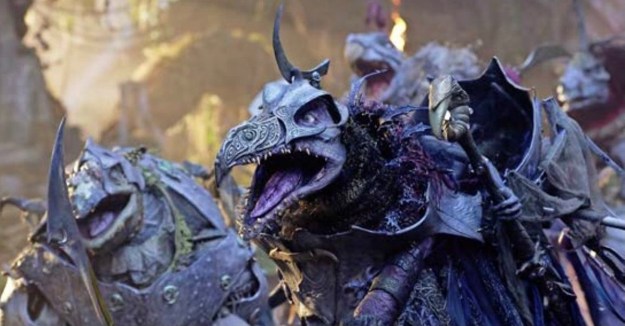
If you weren’t already excited about the imminent release of The Dark Crystal: Age of Resistance on Netflix next week, then this news about the soundtrack should do the trick. The soundtrack, which is being released on August 30th, was composed by Daniel Pemberton (with help from fellow composer Samuel Sim).

For those who may have forgotten, the 10-episode show is a prequel to the groundbreaking 1982 fan favorite The Dark Crystal, and takes place many years before the events of the film. Leading the voice cast in the series will be Kingsman star Taron Egerton, The Witch actress Anya Taylor-Joy and Game of Thrones’ Nathalie Emmanuel, as ‘Gelfling’ heroes Rian, Brea and Deet. Star Wars’ Mark Hamill, Harry Potter’s Helena Bonham-Carter, Tomb Raider star Alicia Vikander and Outlander’s Caitriona Balfe provide additional voice performances in the new fantasy epic.

Dark-Crystal-Age-of-Resistance-Banner.jpg

For director Louis Leterrier, Pemberton was the natural choice:

I approached the music the same way I approached the filming and the puppetry. I wanted somebody to come on this journey that would be willing to take big risks. I wanted something that was almost tribal. I wanted to hear the strings being plucked and the skin wrapped over the drum. At the same time, I wanted somebody who could write beautiful melodies, understood music, and was a lover of beautiful music. I wanted someone who would approach it in a very organic way and who would tell the story through the score. My search led me to Daniel.

Daniel Pemberton is rapidly becoming one of my favorite composers, as he has previously scored The Man from U.N.C.L.E, Spider-Man: Into the Spider-Verse, King Arthur: Legend of the Sword, and Ocean’s 8, just to name a few. Hearing his thoughts on how he approached the score for The Dark Crystal: Age of Resistance, makes me even more excited to experience the prequel series (and I don’t often say that about prequels).

dark-crystal-netflix-dc-unit-25687-r

Daniel had this to say about scoring The Dark Crystal: Age of Resistance:

I wanted the music to be as magical as Thra itself – organic, imperfect, strange, mystical, otherworldly and wonderful. I wanted to create new sounds that felt like they came from the world itself, as well as using thematic large scale orchestral elements to bring an emotion to the journey of the characters. I wanted music and sounds that would fill you with wonder, but also terrify you. It was very important to me that all the sounds felt like they could only be from Thra itself – no grand pianos or overtly electronic elements. Every sound had to feel organic and visceral, from the dark detuned glissando cello sounds made for the Skeksis, to the upbeat flutes from the Podling’s bar. We created noises out of wine glasses, metal chains, wooden drums, metal sculptures on a snow covered mountain and old creaky medieval instruments to try and make a sonic world as unique as the visual one.

The soundtrack will be released in two volumes; volume 1 will have tracks composed only by Pemberton, while volume 2 will have tracks composed by Pemberton and Sim. Both volumes will be available on August 30th, the same day the series becomes available on Netflix.

Let me know if you’re just as excited to see The Dark Crystal: Age of Resistance in the comments below and have a great day!

See also:

Daniel Pemberton talks The Man from U.N.C.L.E (2015)

Daniel Pemberton talks Steve Jobs (2015)

Daniel Pemberton talks Gold (2016)

Daniel Pemberton talks King Arthur: Legend of the Sword (2017)

Film Composer Interviews A-H

Film Composer Interviews K-Z

Become a Patron of the blog at patreon.com/musicgamer460

Check out the YouTube channel (and consider hitting the subscribe button)

Don’t forget to like Film Music Central on Facebook

Soundtrack Review: Altered Carbon (2018)

Based on the classic cyberpunk noir novel by Richard K. Morgan, Altered Carbon is an intriguing story of murder, love, sex, and betrayal, set more than 300 years in the future. In Netflix’s Altered Carbon, Society has been transformed by new technology: consciousness can be digitized; human bodies are interchangeable; death is no longer permanent.

Takeshi Kovacs (Joel Kinnaman) is the lone surviving soldier in a group of elite interstellar warriors who were defeated in an uprising against the new world order. His mind was imprisoned – on ice – for centuries until Laurens Bancroft (James Purefoy), an impossibly wealthy, long-lived man, offers Kovacs the chance to live again. In exchange, Kovacs has to solve a murder … that of Bancroft himself.

The soundtrack is composed by Jeff Russo, who has also composed music for Star Trek: Discovery and Fargo. For the latter, Russo earned a Primetime Emmy Award for Outstanding Music Composition for a Limited Series, Movie, or Special in 2017. Russo began his music career in 1990, after founding his rock band TONIC. The group quickly achieved great success and in 2003, received two Grammy nominations, one for “Best Rock Performance by a Duo or Group with Vocal” for “Take Me As I Am,” and one for “Best Rock Album.” The band was a great showcase for Russo’s guitar work and songwriting that allowed him to branch out and begin his solo career in producing and composing.

altered-carbon-netflix-10

I’d heard that the soundtrack for Altered Carbon was unusual for a story in the cyberpunk genre, and now that I’ve listened to the soundtrack album I can definitely attest that this is true. As a general rule, the music in any show or film set in the future (and particularly in a cyberpunk future like Altered Carbon) has an “edgy futuristic” feel to it. Notable examples of this practice include: Blade Runner and its sequel; Automata; The Machine and Forbidden Planet. These films have soundtracks with weird electronic noises, guitar riffs and descents into heavy rock beats during action sequences.

But the soundtrack for Altered Carbon doesn’t do this. Instead, the music, beginning with the “Main Title” has a mysterious quality to it. There are long, held-out string drones that combine with soft vocals (that are half muttering, half singing) and a cello solo. The opening title has the slightest touch of a drum beat, but it only lasts for a short time and doesn’t dominate the track.

altered-carbon-2

Most of the album: “Consciousness,” “Bancroft Shows Kovacs,” “Her Daughter,” and “Attacked by Troopers” are all variations on the same musical arrangement: strings with a prominent solo cello, combined with female vocalizations and an on-again/off-again background of electronic music. This is not a bad thing: In fact it shows that the world of Altered Carbon has a consistent musical background (and consistency is never a bad thing in film and television music). It’s actually refreshing to listen to a science fiction soundtrack that doesn’t include heavy rock music. Jeff Russo has composed a beautiful soundtrack for an amazing show. If you haven’t watched it yet, the first season is currently available on Netflix. The soundtrack became digitally available from Lakeshore Records as of February 9th, 2018.

Let me know your thoughts on Altered Carbon and its soundtrack in the comments below! My thanks to The Krakower Group for making this soundtrack available for review.

See also:

TV Soundtracks

Become a Patron of the blog at patreon.com/musicgamer460

Check out the YouTube channel (and consider hitting the subscribe button)

Don’t forget to like Film Music Central on Facebook 🙂