Monthly Archives: February 2016

Film Music 101: Borrowing

Borrowing is a tricky subject to discuss in the world of film music. Almost all composers do it, but hardly anyone will talk about it (officially that is). And that’s a shame because borrowing is one of the most interesting things to look at in a film score (or group of scores).

Borrowing is what happens when a composer takes a theme from another score (usually one of their previous works, but not always) and places it in the score they’re presently working on. There are many reasons why this might need to happen. A composer might be working on several scores in a single year (i.e. James Horner in 1995) and instead of creating a wholly original score for each film, it might be more convenient to borrow and re-use several themes, particularly if the music fits in the new film.

As a general rule of thumb, if a composer scores at least two films in the same year, it’s likely you can listen to both soundtracks and find at least several identical cues.

Jerry Goldsmith talks about Alien

Star Trek: The Motion Picture and Alien (both from 1979) both provide a good example as well. In this case, the similarity is slight, but unmistakable. First, watch Alien and listen to the music in the opening of the film (after the opening title), when the camera is panning around the empty ship. Then, go to Star Trek: The Motion Picture and fast forward to the scene where Spock steals a spacesuit. It’s the exact same music!

John Williams is equally guilty in my opinion. While not identical, compare Princess Leia’s theme from Star Wars (1977) to Marian’s theme in Raiders of the Lost Ark (1981); they are suspiciously similar.
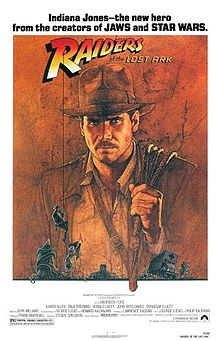
220px-Raiders

Elmer Bernstein (of The Ten Commandments (1956) and The Magnificent Seven (1960) fame) borrowed a fragment of his Magnificent Seven theme and placed it in the opening for The Great Escape (1963) (it can be heard during the opening credits).

But why doesn’t anyone talk about this if everyone does it? Well…while borrowing is a fact of musical life (classical composers have been doing it for centuries), many (outside the industry) view the practice as tantamount to “cheating.” The feeling is that it’s not right to re-use parts of a film score because it “cheapens” the new product. Of particular irritation are the moments when composers borrow themes that they did not originally create. For this reason (I believe), composers choose not to talk about this process very often (though that’s not to say they never talk about it, I just don’t think they discuss it enough).

First of all, I need to point out that this is NOT plagiarism. Once a theme has been written, it belongs to the studio and NOT the artist. So if a composer needs to borrow a certain theme that another composer created, they are free to use it. Case in point: John William’s theme for Superman: The Movie (1978) being reused in Superman Returns (2006) (the first attempt at rebooting the franchise). Also, in a similar vein, John William’s main theme for Jurassic Park (1993) makes a prominent reappearance in Jurassic World (2015).

Become a patron of the blog at patreon.com/musicgamer460

Don’t forget to like Film Music Central on Facebook 🙂

*all images are the property of their respective film studios, they are only being used for illustration

See also:

Film Music 101: Arranger

Film Music 101: Anempathetic sound

Film Music 101: Empathetic Sound

Film Music 101: Foley

Film Music 101: Montage

Film Music 101: Compilation Score

Film Music 101: Leitmotif

Film Music 101: “Stinger” Chords

Film Music 101: Dubbing

Film Music 101: Diegetic vs. Non-Diegetic Music

Film Music 101: Underscore

Film Music 101: Sidelining

Film Music 101: “Test” Lyrics

Film Music 101: The First Film Score

Film Music 101: Orchestration and cues

A Random Thought on “Star Trek: Nemesis” (2002)

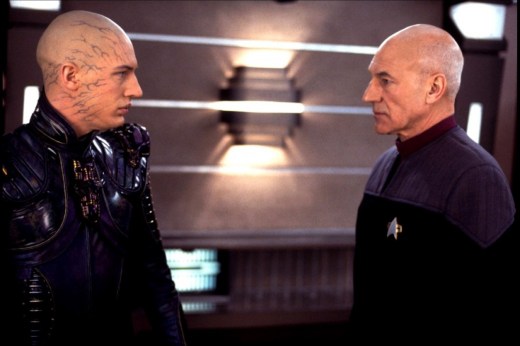
Having the music of Jerry Goldsmith on the brain (yesterday being his birthday), I couldn’t help but think about one of his final film scores: Star Trek: Nemesis (2002). Billed from the outset as the final adventure of the Star Trek: The Next Generation cast (most of whom had been in their roles since 1987), there was a heightened sense of excitement as the release date for this film approached. Everyone wanted to see what would happen, how would the series end, etc. And then the film came out…

star-trek-nemesis-tom-hardy-patrick-stewart

I was only 14 when I saw Nemesis for the first time, and I remember loving it just as much as Insurrection. But as I grew older, I began to read that Star Trek: Nemesis had been rather poorly received, that it was even considered the worst of the films (a strong statement given that Star Trek V: The Final Frontier usually receives that dubious distinction). But what hurt me the most was the criticisms I heard about Jerry Goldsmith’s score for Nemesis. People were saying that this film was “not his best effort” and that the themes were “overly simplistic.”

With all due respect, anyone who says these things about a work of Jerry Goldsmith does not understand how the man worked. By 2002, Goldsmith had been working in Hollywood for over fifty years, his skills honed into a finely tuned art. He knew, more than anyone else I suspect, what kind of music Star Trek: Nemesis needed. Since this film marked the end of an era (the reboot not being planned yet), Goldsmith created a score that was intentionally somber. Of course the music ends on a hopeful note, but the tone is meant to be sad; the long-running adventure is finally ending, companions are parting ways, all of this should evoke a sense of impending loss.

NEMESIS_SCREENSHOT_3

And as for the themes being overly simplistic…listen to the soundtrack album, or even part of the album, without dialogue or sound effects, and try to tell me that the music is “simplistic.” (I particularly recommend “Ideals” from the soundtrack).

Maybe I’m just biased because I grew up watching Star Trek: The Next Generation…but I hear nothing wrong in the scores Goldsmith created. Just some random thoughts.

*Film poster is the property of Paramount and is only being used for illustration

See also: Film/TV Reviews

Become a Patron of the blog at patreon.com/musicgamer460

Check out the YouTube channel (and consider hitting the subscribe button)

Like Film Music Central on Facebook at www.facebook.com/filmmusiccentral


Dimitri Tiomkin talks Giant (1956)

MPW-44556

Credit to Bill Gold

Dimitri Tiomkin talks Giant (1956)

When I first stumbled across this video, I thought I was imagining things. Dimitri Tiomkin (1894-1979) is one of those composers that you don’t necessarily expect to find with a recorded interview. He worked during the late Golden-Age of Hollywood, coming to California after the stock market crashed in 1929, and getting his big break by scoring Lost Horizon in 1937.

In this video, Tiomkin is interviewed and talks about film music and his score for the James Dean picture Giant (1956). Giant follows a single Texas family over the course of a quarter-century, from the 1920s until the post-World War II era. It was also the final film to star James Dean, who tragically died in a car accident before the film’s release.

This is probably one of the oldest interviews of this type that I will ever find, and it provides an invaluable look into classic Hollywood film music. I firmly believe that in order to appreciate film music  being made now, we must look at what has come before, so on that note, I hope you enjoy listening to Tiomkin discuss his work.

You can become a patron of the blog at patreon.com/musicgamer460

See also:

Film Composer Interviews A-H

Film Composer Interviews K-Z

Don’t forget to like Film Music Central on Facebook 🙂

A Random Thought on “The Force Awakens”

star-wars-force-awakens-official-poster

Property of Disney

So considering Star Wars: The Force Awakens came out almost two months ago, I’m fairly certain we’ve all seen it at least once by now (I’ve seen it twice myself). As I eagerly began to discuss the film with my friends, I began to notice a trend in the comments people were making about John William’s score. To get to the point, a lot of the people I talked to didn’t think it was very good.

I know everyone can have their own opinion, but I feel this is something I should address, so here goes: I don’t believe that Williams’ score for The Force Awakens is any weaker than the earlier Star Wars scores. I do admit that Williams hasn’t created the equivalent of “The Imperial March” from The Empire Strikes Back…but I don’t think the film called for such a musical statement.

Here’s my take on the music (and the film in general): As we are being introduced to a new generation of Star Wars characters, The Force Awakens was very much about “passing the torch.” Rey is now flying the Falcon, Kylo Ren is the new bad guy, etc. In that vein, a good chunk of the characters and situations are echoes of what was found before: The First Order is an echo of the old Empire, the Resistance is the Rebellion, etc, and so on. Because all of these things and characters are “echoes” of the original, it makes sense that the music would not be as intense as before, not yet at any rate. Keep in mind that “The Imperial March” was not introduced until The Empire Strikes Back. I firmly believe that Williams has a few musical surprises up his sleeve (unfortunately we have to wait until the end of 2017 to find out what they are.)

See also: Film/TV Reviews

Check out the YouTube channel (and consider hitting the subscribe button)

Don’t forget to like Film Music Central on Facebook 🙂

Star Trek III “Stealing the Enterprise”

star_trek3

Credit to Bob Peak

Having composed two Star Trek films back to back, James Horner was asked once if he preferred one above the other. Horner replied that, for his part, he preferred the score to Star Trek III: The Search for Spock, only because he felt it completed the musical themes he began in The Wrath of Khan.

“Stealing the Enterprise” is the musical cue for the segment where Admiral Kirk and co. well…steal the Enterprise. Right out of Spacedock. In front of everybody. Because they can (and need to).

“Stealing the Enterprise” soundtrack version

“Stealing the Enterprise” Film version

The first part of the cue takes place as Dr. McCoy (DeForest Kelley), the unwitting bearer of Spock’s soul, is rescued from a detention cell (Starfleet is unwilling to believe Kirk’s explanation and believe McCoy is mentally ill.) Meanwhile, Scotty (James Doohan) is seen leaving the prototype ship Excelsior.

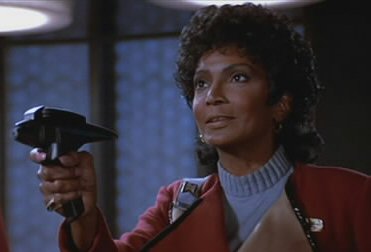
Uhura, in the meantime, is seen working at a communications station in a quiet area of Spacedock, paired with a smarmy lieutenant who only wants “to get in on the action.” Lo and behold, here comes Admiral Kirk and party. When the lieutenant gets suspicious that the admiral has arrived without any orders or advanced notice for that matter, Uhura shows him plenty of “action” (she pulls a phaser on him and forces him to sit in the closet.) The group then beams over (Uhura will follow later and meet them on Vulcan) to the Enterprise, still badly torn up from the battles in The Wrath of Khan, but Scotty has rigged the ship so that it should run smoothly enough to reach the Genesis Planet and Vulcan afterwards (unfortunately it won’t be nearly that simple, but our heroes don’t know that just yet).

uhura-stiii1

“Good…now get in the closet!!”*

The ship then begins departure, rousing the entire station in the process. Orders are sent to the captain of the Excelsior to power up and pursue the Enterprise. The Excelsior carries prototypes of trans-warp engines, which means they could easily catch up to the older Enterprise, so Kirk and co. need to work fast to get out of the station. This leads to a hilarious exchange between with the captain of the Excelsior:

Bridge: “Captain to the bridge, Yellow Alert!”

Captain: “Bridge, this is the captain. How can you have a Yellow Alert in Spacedock?”

Bridge: “Sir, someone is stealing the Enterprise!!”

Captain: *befuddled pause* “I’m on my way.”

MOD - StarTrekIII1

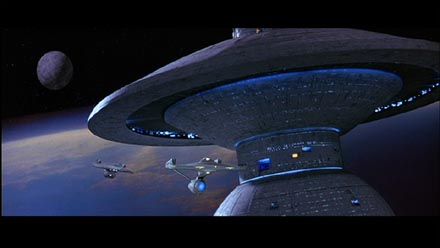
When I say they barely made it out of the station, I mean just barely!!*

After just opening the station doors in the nick of time, the Enterprise makes preparations to jump to warp speed while Excelsior closes in. Just before the jump, the captain reaches out to Kirk, reminding him that “You do this, you’ll never sit in the captain’s chair again.” The look in Kirk’s eyes makes it clear that he doesn’t give a d-mn about the captain’s chair, as long as he can have his friend back, and the order is given to go to warp speed.

searchforspock02

Enterprise makes a run for it*

Excelsior prepares to pursue, but just as the engines begin to revv…nothing happens. Apparently Scotty had been up to no good in the Excelsior’s engine room…and the prototype stops dead in space, providing Enterprise with a clean getaway.

This is one of my favorite Star Trek cues, Horner’s music is so detailed you can almost follow the scene just by listening to the music alone (which is good). My favorite part is when the ship is backing towards the spacedock door and they still haven’t opened. The music builds and builds, and just when it seems they won’t make it through, the doors begin to open and the music almost explodes with released tension as the Enterprise just barely fits through the opening.
 
Another cool technique that Horner uses is, at the very end, when Excelsior is trying to follow, Horner opts for simplicity and holds out a single note as the crew looks around in confusion. Musically, Horner has set up the listener “to wait for the other shoe to drop.” Normally when you hold out a tone like that, you’re going to progress to a new thought, only Horner never gets there and deliberately leaves us hanging (just like the Excelsior.)

*all screencaps taken from the film, property of Paramount

Don’t forget to like Film Music Central on Facebook 🙂

See also: Film Soundtracks A-W

See also:

Star Trek II: “Inside Regula I” (1982)

Star Trek II “Surprise Attack”

“Enterprise Clears Moorings” from Star Trek II: The Wrath of Khan

O, Canada: Howard Shore, Film Composer

This post is part of the O Canada Blogathon hosted by Ruth of Silver Screenings and Kristina of Speakeasy.

Howard_Shore,_Canadian_Film_Centre,_2013-1

Howard Shore was born in Toronto, Ontario, Canada, on October 18th, 1946. Over the course of his career, Shore has composed the music for over eighty films, most notably for The Lord of the Rings and The Hobbit film trilogies.

banners_13-960x350

After learning to play music at an early age, Shore studied music at the Berklee College of Music in Boston. His first film score was created for a low-budget thriller entitled I Miss You, Hugs and Kisses (1978). The next year, he scored David Cronenberg’s first major film The Brood (1979), which established a working relationship between the two (Shore has since composed the music for all but one of Cronenberg’s films).

In the 1990s, Shore composed the music to the breakout hit The Silence of the Lambs (1991), for which he received his first BAFTA nomination. During this decade he also composed the music for Philadelphia (1993) (for which Tom Hanks earned his first Oscar),                   M. Butterfly (1993) and Mrs. Doubtfire (1993) (a film I enjoy and never knew that Shore composed the music for until now!)

the-lord-of-the-rings-the-fellowship-of-the-ring-poster-4

This is the film series that brought Shore to international attention

The composer received international fame with his scores for The Lord of the Rings trilogy (2001-2003). His score for The Lord of the Rings: The Fellowship of the Ring (2001) earned him his first Oscar as well as a Grammy Award (plus BAFTA and Golden Globe nominations). Two years later, Shore received two additional Oscars: one for his score for The Lord of the Rings: The Return of the King (2003) and an Oscar for Best Original Song for “Into the West” (the song that plays over the closing credits of the final film). In the 2000’s, Shore also contributed a score to the Twilight Saga, scoring The Twilight Saga: Eclipse (2010).

Besides his collaboration with Cronenberg, Howard Shore has also collaborated with director  Martin Scorsese on multiple occasions, including writing the scores for: After Hours (1985), The Aviator (2004), The Departed (2006) and Hugo (2011).

hugo-movie-poster-02

Howard Shore is also noted for creating a concert arrangement of his scores for The Lord of the Rings trilogy. Entitled The Lord of the Rings: Symphony in Six Movements, Shore created two movements for each film and since 2004, the production has toured the world (to universal acclaim). Naturally, when Peter Jackson announced that he was adapting The Hobbit to film, Shore was brought in to score that trilogy as well.

Shore has also worked in television music, and is responsible for penning the original theme song for Saturday Night Live, as well as co-writing the theme song for Late Night with Conan O’Brien.

Thus far in his lengthy career, Shore has received four Academy Award nominations (winning three), six Golden Globe nominations (also winning three), three consecutive Grammy Awards, and five BAFTA nominations. Given that Shore is only 69, one hopes that he will be able to compose the scores for many films to come. Thank you Canada for giving us Howard Shore.

See also:

Become a Patron of the blog at patreon.com/musicgamer460

Check out the YouTube channel (and consider hitting the subscribe button)

Don’t forget to like Film Music Central on Facebook

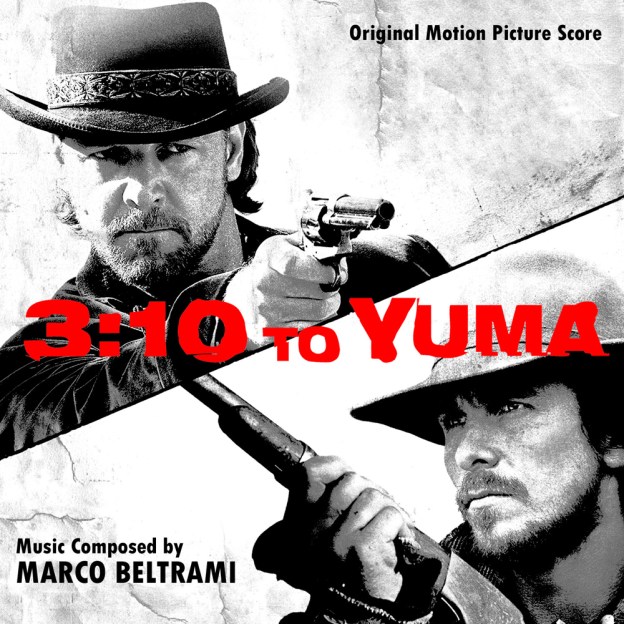
Marco Beltrami talks 3:10 to Yuma (2007)

Marco Beltrami talks 3:10 to Yuma (2007)

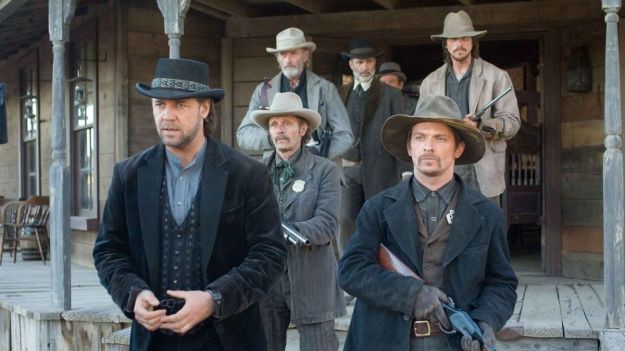
The 2007 film 3:10 to Yuma is a remake of the 1957 film of the same name, and tells the story of impoverished rancher Dan Evans (Christian Bale), who agrees to transport wanted outlaw Ben Wade (Russell Crowe) to the train station so he can board the 3:10 train to Yuma Territorial Prison. This mission is far from simple as Wade’s gang is in hot pursuit of their leader and will kill to free him again.

Evans, on the other hand, is seeking the $200 he will earn for safely delivering Evans to the train because it will greatly help his family. It also comes out that he wants to restore some sense of honor to his life so his sons will have something positive to remember about their father when they’re grown.

310-to-yuma-2007-1200-1200-675-675-crop-000000

By the end of the story, Evans is the only one of Wade’s captors still alive and the outlaw has developed a modicum of respect for the rancher (though an outlaw, Wade does have his own principles and he respects those who also have a firm sense of principles). Evans gets Wade all the way to the train only to be fatally shot by Prince, one of Wade’s men (despite Wade’s order that Prince not shoot).

Disgusted at the loss of a good man, Wade steps off the train and executes his entire gang before cheerfully surrendering to the authorities (thus ensuring that Evan’s contract is fulfilled and Evans’ sons will receive the money). Though he’s on the train to prison, he whistles for his horse, which follows along, implying that he’ll be on the loose again before long.

As a general rule, I am not overly fond of remakes. However, this film is an enjoyable way to pass a few hours, and the score is well done. The interview provides a great insight into how Beltrami put the score together. Enjoy!

See also:

Marco Beltrami talks Blade II (2002)

Marco Beltrami and Marilyn Manson talk Resident Evil (2002)

Marco Beltrami talks Live Free or Die Hard (2007)

Marco Beltrami talks The Wolverine (2013)

Marco Beltrami talks World War Z (2013)

Film Composer Interviews A-H

Film Composer Interviews K-Z

Become a patron of the blog at: patreon.com/musicgamer460

Check out the YouTube channel (and consider hitting the subscribe button)

Don’t forget to like Film Music Central on Facebook 🙂