Monthly Archives: February 2016

Jerry Goldsmith talks Lionheart (1987)

While I am generally familiar with all of Jerry Goldsmith’s work, Lionheart (1987) is a film that I admit I have never heard of, and for good reason it turns out. The film received an exceptionally limited release in theaters, a VHS copy was not issued until 1994 and a DVD version was not seen until 2009.

220px-Lionheartposter87

Lionheart is loosely based on the real-life story of the Children’s Crusade. In this film, a young knight named Robert Nerra, who is disillusioned by the death of his brother, leads a band of orphans en route to join King Richard in the Third Crusade, and must also protect them from the Black Prince (who’d like to enslave all the children and sell them to the Muslims).

Lionheart-1987-4

The limited release does not change the fact that Goldsmith’s work was of exceptional quality and the video follows the composer as he works on recording the score in Budapest. I’m pleased to share a rare video of Goldsmith at work with all of you (if only more of these videos existed, what treasures they are!) Have a great weekend!

See also:

Jerry Goldsmith talks The Sand Pebbles (1966)

Jerry Goldsmith talks Chinatown (1974)

Jerry Goldsmith talks about Alien (1979)

Film Composer Interviews A-H

Film Composer Interviews K-Z

Become a Patron of the blog at patreon.com/musicgamer460

Don’t forget to like Film Music Central on Facebook 🙂

*all images and video are property of the film studio and the creator of the interview

Marco Beltrami and Marilyn Manson talk Resident Evil (2002)

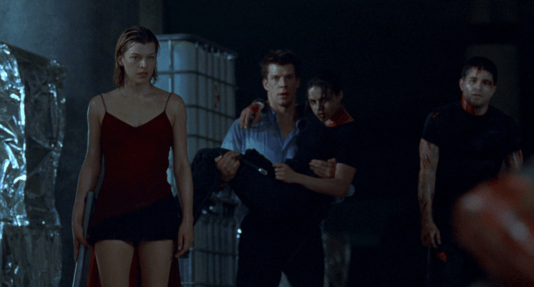
In 2002, the Resident Evil movie franchise launched with the first self-titled film in the series. Based on elements from the video games Resident Evil and Resident Evil 2, the movie Resident Evil follows Alice (Milla Jovovich) as she and a team must break into the Hive, a genetic research facility located underneath Raccoon City, to retrieve an anti-virus to stop a zombie plague. There’s one small complication however: the Hive is crawling with zombified employees and scientists.

125162

Not all of the zombies are alike either: while most are the typical flesh-eating zombie, others have mutated into “Lickers,” a more deadly creature with a monstrous appearance. On top of all this, the Red Queen A.I. that controls the facility is determined to stop them at all costs in order to protect the world above. Another complication in the story is that Alice initially wakes up in a deserted mansion with total amnesia. As the story progresses, she begins to remember bits and pieces (for example, she remembers the anti-virus was located in a specific room).

While this film (and the lengthy series which followed) clearly attempted to capitalize off the popularity of the Resident Evil video game, it is unfortunately remembered as yet another video game-to-film adaptation that did not do its subject material justice. And yet, despite receiving consistently terrible reviews (Roger Ebert put the film on his “Most Hated” list), the franchise spawned five sequels and is currently in the process of being rebooted. For those curious, here is the complete list of Resident Evil films:

  • Resident Evil (2002)
  • Resident Evil: Apocalypse (2004)
  • Resident Evil: Extinction (2007)
  • Resident Evil: Afterlife (2010)
  • Resident Evil: Retribution (2012)
  • Resident Evil: The Final Chapter (2016)

The score for this film was a collaboration between Marco Beltrami and Marilyn Manson (who knew?) and the interview regarding this film score features the two of them. Manson describes the score and overall soundtrack as being more “electronic” than previous works.

Streaming-Resident-Evil-2002

Resident Evil doesn’t rate that high on my list of favorite films (because of the zombies), but it’s definitely worth a try if you’re into straight-out action. I hope you enjoy this interview! Let me know what you think of Resident Evil (both the first film and the series) in the comments below!

See also:

Marco Beltrami talks Blade II (2002

Marco Beltrami talks Live Free or Die Hard (2007)

Marco Beltrami talks 3:10 to Yuma (2007)

Marco Beltrami talks The Wolverine (2013)

Marco Beltrami talks World War Z (2013)

Film Composer Interviews A-H

Film Composer Interviews K-Z

Become a patron of the blog at: patreon.com/musicgamer460

Check out the YouTube channel (and consider hitting the subscribe button)

Don’t forget to like Film Music Central on Facebook 🙂

The Hobbit: The Battle of The Five Armies- Thorin’s Charge!

307453id1_TheHobbit_TBOTFA_Teaser_Intl_27x40_1Sheet.indd

Ok, I didn’t want to admit it, but I will: The Hobbit film trilogy has a LOT of problems (not least of which is the fact that the final product barely resembles its source material, don’t get me started on the liberties they took…)

However, despite its issues, The Hobbit did produce some impressive musical moments (since the films were again scored by Howard Shore). One of my favorites comes at the climax of The Battle of Five Armies (or at least one of the climaxes, like I said, the series had problems.)

The Hobbit- “Thorin’s Charge”

To briefly set the scene: Azog’s huge orc army is descending upon The Lonely Mountain with only Dain’s meager forces to defend it (the Elves are currently refusing to fight). Inside the mountain, Thorin (who has spent most of the film obsessed with finding the Arkenstone) finally comes to his senses and announces to his followers that they WILL go out and fight.

Back outside, Azog’s forces are in position and the order is given to advance. But just then…THIS happens

BomburHorn

Bombur blows a HUGE fanfare on this gigantic horn that brings all sides to a standstill. (The beauty of this horn call is in its simplicity) A huge golden bell blows out the sealed main gate and then….CHARGE!!

thorin-charge

This is one of those perfect film music moments that people like me dream about seeing. Everything is synced together in this moment. Enjoy watching and listening!

See also: Film Soundtracks A-W

Become a patron of the blog at: patreon.com/musicgamer460

Check out the YouTube channel (and consider hitting the subscribe button)

Don’t forget to  like Film Music Central on Facebook 🙂

A 21st-century Pygmalion in Ex Machina

This post is a part of the Movie Scientist Blogathon hosted by Silver Screenings and Christina Wehner

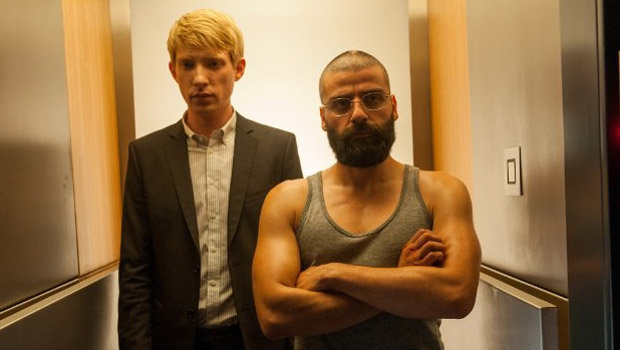
The plot of the 2015 film Ex Machina is set in motion when Caleb (Domhnall Gleeson) wins the opportunity to spend a week at the estate of Nathan (Oscar Isaac, aka Poe Dameron), the inventor of Bluebook (the largest search engine in the world). I was originally going to place Nathan in the “mad scientist” category, but the more I thought about it, the more I realized he really belongs in the “lonely” category (though he is crazy regardless).


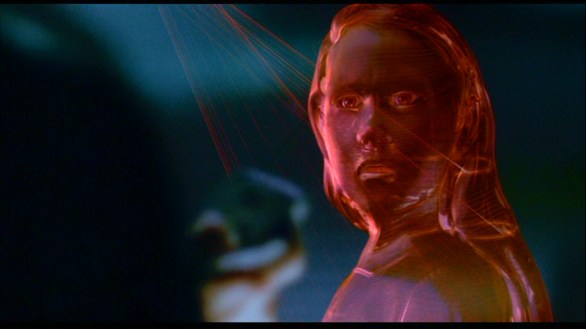
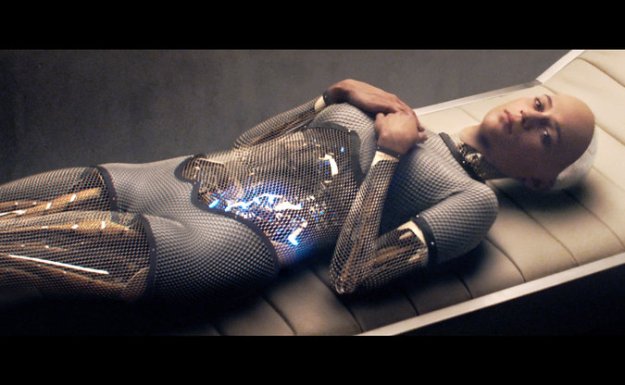
As soon as you see Nathan, you know there is something…off… about him (his estate is set in the midst of hundreds of miles of pristine wilderness, for example). His personality is so blunt it borders on the abrasive, and his wit is razor sharp. He quickly reveals to Caleb that he has been working on something exciting: Artificial Intelligence. He isn’t just working on it, he’s already made one: Ava (Alicia Vikander), a gynoid with a human face and hands, but exposed metal mesh for limbs and a torso.
21DISRUPTIONS-master675

Ava

Nathan, to put it bluntly, has a God complex. Everything in this house is ordered to his exact specifications. This is his empire, his word is absolute law (and once Caleb arrives he is subject to this law). Caleb mentions a line of “If you’ve created artificial intelligence, that’s not the work of a man, that’s the work of gods.” And Nathan happily turns this around and suggests that Caleb is calling him a god, when Caleb meant no such thing.

Nathan makes it seem like Ava is the first prototype, but Caleb eventually discovers that this is not true. There were at least FIVE predecessors to Ava (we see the names of Lily, Jade and Jasmine), and they were all female. Clearly, Nathan is attempting to build the “perfect” woman, and that is why I dub him a 21st-century Pygmalion.

In Ovid’s Metamorphoses, Pygmalion was a sculptor who created a statue of a woman out of ivory. Over time, he fell in love with his creation and Aphrodite brought the statue to life so they could be together. Today, some scholars interpret this story as a very early example of artificial life, and therefore a precursor to robot stories.

So back to Nathan. He’s tried several times to create the “perfect” woman, just as Pygmalion did. This implies that deep down under all of his insane bravado, he is a very lonely man, maybe he feels that the only woman fit for him is one he creates. Only, unlike Galatea (who happily lived with her creator) none of these robots are meeting Nathan’s insanely high standards, not to mention they have all tried to escape (one even put cracks in a glass wall). (Based on his behavior, Nathan expects and wants a woman that is totally submissive to HIS needs, I think that’s why Kyoko (who is, spoiler alert, also a robot) cannot talk (Nathan says that she can’t understand English, but I believe that she can, she just can’t say anything). So thus far, as each one fails the tests, Nathan destroys that model, downloads the information, and tries again. He implies to Caleb that he’s about to do the same thing to Ava. But Nathan does not realize that introducing Caleb into the equation will lead to his permanent downfall. I won’t spoil the ending for you, but if you haven’t seen Ex Machina, I highly recommend getting a copy and checking it out.

On a side note, besides being a 21st-century Pygmalion, Nathan is also a modern-day Bluebeard. For those unfamiliar with the fairy tale, Bluebeard was a wealthy man who had married multiple times. His latest wife is given all of the keys to the house but is told to not enter the last room at the end of the hall. Eventually, curiosity wins out and the wife goes in…only to discover the dead bodies of Bluebeard’s previous wives (Bluebeard’s secret is that he is a serial murderer). In Nathan’s bedroom, Caleb discovers a series of closets containing the broken down bodies of Ava’s predecessors a la Bluebeard. Nathan also tells Caleb that “not all of these rooms are for you.”

I hope you enjoyed this look at Nathan from Ex Machina 🙂

Become a Patron of the blog at patreon.com/musicgamer460

Check out the YouTube channel (and consider hitting the subscribe button)

See also:

Ex Machina “Ava”

Don’t forget to like Film Music Central on Facebook 🙂

Rotwang or, what mad scientists will do for love

This post is a part of the Movie Scientist Blogathon hosted by Silver Screenings and Christina Wehner

There are mad scientists, and then there’s Rotwang.

Rotwang (Rudolf Klein-Rogge) is a scientist and one of the primary antagonists of the 1927 silent film Metropolis (directed by Fritz Lang). All of his life he’s been in a rivalry with Joh Fredersen (Alfred Abel), the “Master of Metropolis” because years ago they both loved the same woman, Hel. And even though Hel chose Joh, married him and bore his child (Freder), Rotwang has lived all his years since then convinced that Hel should have been his.

tumblr_njtqtjYIXf1unt4w0o1_400

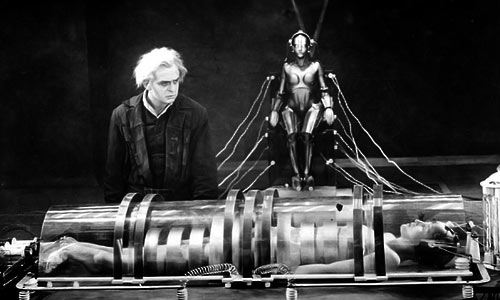
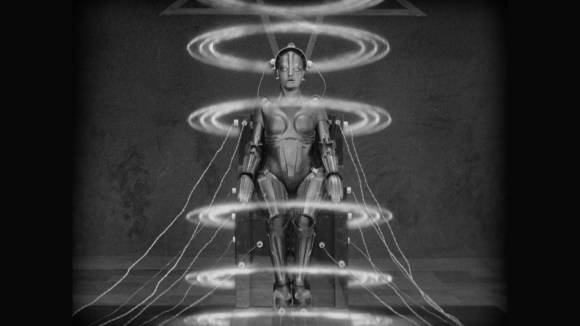
When Joh (reluctantly) comes to visit Rotwang to try and determine what the workers are up to in the catacombs below the city, Rotwang reveals a secret: he has found a way to “resurrect” Hel, and this time she will be his alone! “Hel” is revealed to be a robot with a feminine body (I believe in the end she was meant to resemble Hel, but the process was not finished).

How exactly Rotwang created the robot is not known, but we do find out that Rotwang sacrificed a hand in the process (replacing it with an artificial limb, to Joh’s horror). The science seen here in Metropolis would be categorized as “soft science” (the processes shown are scientific in nature, but the how and why are left unexplained)

metropolis_still

And speaking of science, the entire scene where Maria’s likeness is transferred to the robot is unbelievably brilliant (it makes it hard to believe that this was done in 1927). To create this scene, the film had to be exposed multiple times to create the illusion of multiple rings of light.

Metropolis

Once Rotwang’s robot is turned loose upon the city, the increasingly unstable scientist becomes infatuated with the captured Maria and eventually convinces himself that Maria is actually Hel come back to life. He pursues Maria across the city, culminating in a chase across the roof of a cathedral. Maria’s love Freder finally intervenes and at the climax, Rotwang falls to his death. To the bitter end he believes he is pursuing his beloved Hel.

Next to Dr. Frankenstein, Rotwang is one of my favorite movie scientists. While he is unquestionably brilliant, he is also certifiably insane (and may have always been so, one wonders why Hel rejected him). He’s so convinced that this robot will serve to replace his lost love, the intensity of his passion is terrifying.

Rotwang is a memorable movie scientist, and a good addition to this blogathon, I hope you enjoyed!

Don’t forget to like Film Music Central on Facebook 🙂

Become a Patron of the blog at patreon.com/musicgamer460

See also:

Gottfried Huppertz: The composer behind Metropolis

*All of the images are property of the film studio

Deja Vu: Comparing the Klingon theme in Star Trek: The Motion Picture and Star Trek: First Contact

Star Trek: The Motion Picture has had a bad reputation for years, and some of it is rightfully deserved. The pacing is way off (compared to the later films), the acting is…less than ideal at some points, and the mysterious V’Ger is so large as to border on the absurd (in the original version, the size was given as being larger than our own solar system (80 AUs, it was later dubbed over to 8, which is still very massive).

1_QTeQF_1FtK4uPfT-RzYZ7Q

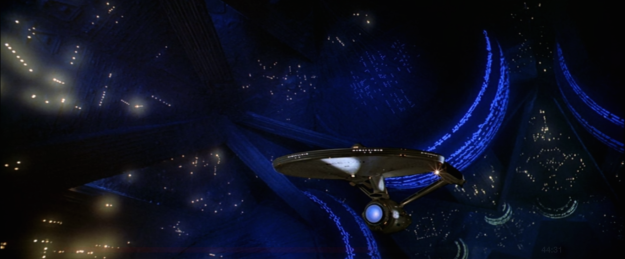
But one component of the film that I will defend to the death is Jerry Goldsmith’s score. Goldsmith introduced musical themes that have remained with the series (at least in the prime universe) ever since. One such theme is the “Klingon theme” that is heard at the beginning of the film when three Klingon ships move in to attack the mysterious cloud passing through their territory. (The theme begins around 0:09 seconds, listen for the brass)

Star Trek: The Motion Picture “Klingon Battle”

This theme set the tone for the Klingons as they would now appear in the Star Trek film universe (this is also the first time we see “proper” Klingons with the distinctive ridges on their foreheads). Brass, horns and trumpets in particular, have long been associated with war and other martial endeavors (as that is where those instruments evolved) and by utilizing them, Goldsmith is reminding the listener that Klingons are a martial race, they always attack first, ask questions later.

star-trek-first-contact-jean-lu-picard-borg-alfre-woodard-patrick-stewart

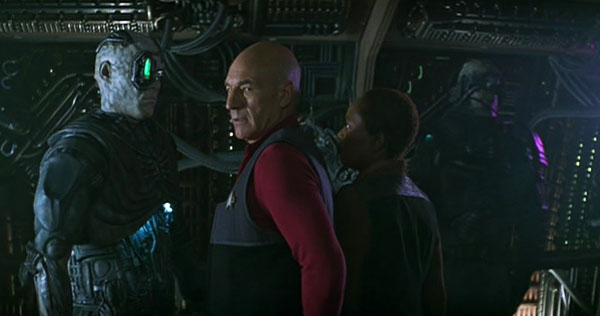
Fast forward almost twenty years to 1996 and the events of Star Trek: First Contact. The Federation’s ultimate nemesis, the Borg, are making another attempt to conquer and assimilate the human race, and all resources are being pulled together to stop this menace. In the midst of the battle, we come across the Defiant (the starship from Deep Space 9) commanded by everyone’s favorite Klingon, Worf (Michael Dorn joined Deep Space 9 after Next Generation went off the air). No sooner does Worf pop up, and the music heard is definitely the same Klingon theme played in The Motion Picture back in 1979 (considerably sped up, but the same theme regardless). The theme begins around 2:25.

Star Trek: First Contact “Klingon Theme”

I will always love how composers reuse musical themes from one film to the next (I also can’t believe it took me as many years as it did to catch this particular example).

Become a Patron of the blog at patreon.com/musicgamer460

Don’t forget to like Film Music Central on Facebook 🙂

Film Music 101: Who owns the music?

In exploring the world of film music, I must now broach one of the sad truths about the industry: film composers do not own their work.

That’s right, once a score is complete, the entire piece belongs not to the composer, who created it, but to the film studio instead. In fact, once the score is done, the studio can do whatever it wants with that score. It can be reused in other films, it can be altered, edited or…destroyed.

It’s actually happened, believe it or not. Back in the 1960s, Maurice Jarre composed the score for the epic Doctor Zhivago. Some time later, Jarre wanted to look at part of the score, so he dutifully asked the studio if he could see it. But as it turns out, when the studio looked, it was discovered that the original score, the master copy, had been destroyed long since when the studio had previously cleaned house! Thankfully, the composer and a team of musicians were able to reconstruct the score by collecting various orchestral editions of the music, but if the score to a great epic like Doctor Zhivago met this fate, what on earth has happened to the scores of ordinary films? I shudder to think of what the studios might have done over the years.

Film scores are almost impossible to see with your own eyes. The studios are (understandably) protective of their property, and will usually only grant permission to other composers or researchers (such as myself) to see the music (and usually there are strict guidelines as to what you can do with it). This is why when music from movies is published in say, a piano book, it’s always in a simplified arrangement. You will never, EVER, find a bound version of a complete film score. In a perfect world, I would create a project devoted to digitizing film scores into an archive (and maybe someday I will get the chance). Until that day… -Bex

For more Film Music 101, see here

You can become a patron of the blog at patreon.com/musicgamer460

Check out the YouTube channel (and consider hitting the subscribe button)

Like Film Music Central on Facebook here

Music as Emotional Expression: Equilibrium (2002)

Not too long ago, I had a slight obsession with dystopian films and literature (to be fair, I still do, just not as much). In my search for films on this topic, I stumbled across Equilibrium (2002) while I was in high school. Imagine every dystopian book you’ve ever read or heard of: 1984, We, The Giver, Fahrenheit 451, etc. Now combine them all into one and that gives you a rough idea of the world in Equilibrium.

220px-Equilibriumposter

In this world, all emotion is forbidden (because it leads to unbalance, war, famine, etc.) and the world is seemingly a utopia as a result. There is no violence, no crime, no…anything! This is because anything that can cause emotion (books, music, art, pets, even the view from a window) are forbidden as well. All of the clothes are in neutral shades of white, beige or black. And to ensure that no emotions are felt, all people are subjected to a dose of medicine taken at a certain hour, that blocks all emotional responses. Failure to take ones “dose” results in being arrested and sentenced to death by incineration (a fate that has already befallen the protagonist’s wife before the story opened).

equilibrium-unpopular-city

The hero turns out to be John Preston (Christian Bale), a high-ranking Cleric and the father of two children. After busting a cell of “sense offenders” (people who refuse to take the “dose” and thus feel emotions), Preston is forced to execute his partner (Sean Bean) when he sees him saving a book of poems instead of destroying it. And after Preston accidentally misses his “dose,” he begins to feel emotions for the first time and his whole life is turned upside down.

Music plays a huge role in this film (Klaus Badelt assembled the score). When the story begins, the music is kept to the bare minimum (like during an action or fight scene). There is initially no background music (aside from generic diegetic music). But as Preston slowly begins to discover his emotions, the music begins to emerge and change the dynamic of the story. There is a pivotal moment when, in the midst of busting another group of “sense offenders,” Preston notices a record player. Ordering everyone out, he puts on a record that plays Beethoven’s 9th symphony and the music thunders through the room (as it does through Preston’s mind).

Equilibrium – Preston hears the 9th Symphony

Then, in one of my favorite moments, Preston wakes up early one morning around sunrise and hears rain falling against the window (which is covered over with paper). Now curious, he slowly tears the paper away to reveal a beautiful sunrise as a quick summer rain falls. The music begins to swell once again as Preston, perhaps for the first time in his life, appreciates the beauty of a sunrise.

Equilibrium – Sunrise

But the most powerful moment comes when Preston arrives too late to save a “sense-offender” woman that he has come to love. As a Cleric, he has the power to stop the execution, but once she is locked inside the death chamber, it’s too late and Preston can only watch powerless as she dies in front of him. He manages to walk out calmly, but then collapses in agony on the steps as emotions finally spill out of him. The music is so powerful here, swelling, bursting, describing a man dealing with emotions he does not know how to handle or express.

Equilibrium – The Execution

While Equilibrium has gotten less-than-favorable reviews in the past, I love how the film uses music to trace Preston’s journey from unfeeling Cleric to loving father. It’s definitely worth sitting through (and listening to) at least once.

See also: Film Soundtracks A-W

Check out the YouTube channel (and consider hitting the subscribe button)

Don’t forget to like Film Music Central on Facebook 🙂

*All images and clips are the property of the film studio

Muppet Treasure Island (1996)

Muppet_Treasure_Island_poster

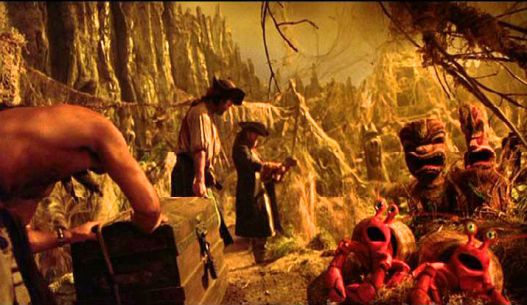
Like the Muppet’s Christmas Carol before it, Muppet Treasure Island tells the story of Jim Hawkins and Long John Silver with the Muppet twist: Captain Smollet is Kermit the Frog; Fozzie Bear is Squire Trelawney Jr.; Mr. Arrow is Sam the Eagle (his character is a total opposite from the book version); the pirates are an assortment of Muppets; Silver has a pet lobster named Polly; Gonzo and Rizzo play Jim’s two friends and, oh yes, Miss Piggy plays BenjaminGunn, marooned on the titular Treasure Island by Captain Flint after Smollet left her waiting at the altar. The film was directed by Brian Henson, the son of Jim Henson, the late creator of the Muppets.

Aside from the original Muppet Movie, this was my favorite film to feature the Muppets growing up. The songs and music are funny and serve to keep the story moving along. The instrumental score was composed by Hans Zimmer (no wonder I love listening to it so much), with additional music by Harry Gregson-Williams. Zimmer certainly did not skimp on musical quality. The opening instrumental melody (before Billy Bones’ narration begins) is just splendid, with a driving horn theme that is reminiscent of sea songs and old films about the high seas.

My favorite songs by far are:

Shiver_My_Timbers

“Shiver My Timbers” : This is the opening song set during the prologue where Billy Bones narrates how Captain Flint brought all of his treasure onto the island, and once it was buried, killed all of the pirates so that only he would know where the treasure was hidden (Billy Bones the first mate, stayed behind on the ship so his life was spared). I just love the men’s chorus as they sing this song, it’s driving, it’s good music.

Propirate

“Professional Pirate” : After kidnapping Jim and revealing himself as a pirate, Long John Silver (and company) sing of the virtues of being a pirate in an attempt to convince young Hawkins into joining them. Tim Curry’s great singing voice is put to good use here and this is a great musical number.

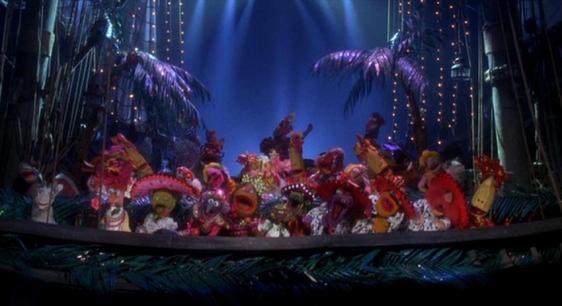
Boom_shakalaka

“Boom Shakalaka” : It turns out that Treasure Island is also the home of a tribe of wild boars (led by Spa’ am, get it?) who have made Miss Piggy their Queen (but of course), and “Boom Shakalaka” is the song they sing to summon her big entrance on an Asian elephant (how an Asian elephant got onto a Caribbean island I shall never know). Boom-Shakalaka is also her name among the tribe.

Cabinfever

“Cabin Fever” : After the voyage to Treasure Island has begun, the Hispaniola is becalmed at sea for almost a week, and the bored-out-of-their-minds crew goes slightly nuts, performing a song and dance routine about how crazy they have all become. It’s pure Muppet hilarity (notably, Silver, Hawkins, Smollett and Arrow are all absent from this number).

Even if you’ve never seen a Muppet movie before, Muppet Treasure Island is a great place to start. At 20 years old, this movie has lost none of its charm.

You can become a patron of the blog at patreon.com/musicgamer460

See also: Film/TV Reviews

Don’t forget to like Film Music Central on Facebook 🙂

Balto “Heritage of the Wolf”

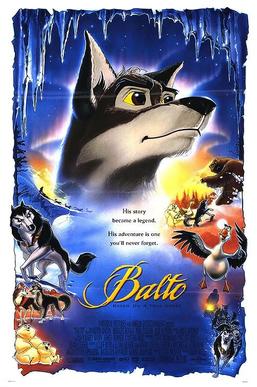
1995 was a very good year for James Horner. In that year alone, he composed the scores for: Jumanji, Braveheart, Casper, Jade, Balto and Apollo 13. “Heritage of the Wolf” from Balto (1995) remains one of my favorite musical moments. Balto recounts the true story of how vital diphtheria medicine had to be relayed from Nenana to Nome, Alaska by rail and then by sled dog, to combat an outbreak of the illness. Being an animated film, the story does take some liberties with the events (for instance, it was multiple teams of sled dogs, not just the one), but the overall event is true (and there IS a statue of Balto in Central Park, I went there myself in 2009).

Balto_movie_poster

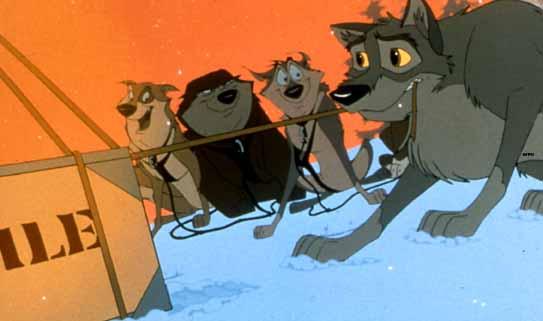
In the film, Balto (voiced by Kevin Bacon) is a Siberian Husky/wolf hybrid, ostracized by the rest of the dogs because he’s a “half-breed” and unwilling to embrace his wolf side. Determined to help, Balto has set out after the missing sled team that was supposed to bring the medicine back to Nome. After a series of events (this film will eventually have a post all to its own), Balto has found the team and the medicine, but has plunged off a cliff (with the medicine box) and his current fate is unknown.

165146_1600x450

As the cue starts, Balto’s friends listen at the door as the other dogs discuss the fact that the children of Nome are likely doomed if the medicine does not arrive soon (there’s no time to send another team). All hope seems to be abandoned as the lights of Nome are one by one turned out. However, Jenna, a female husky (and in love with Balto) has not given up and is dragging out a lantern and creates an artificial aurora by placing the light behind shards of glass (a trick Balto showed her earlier), hoping the light will guide Balto home.

“Heritage of the Wolf” Film Version

“Heritage of the Wolf” Soundtrack Version

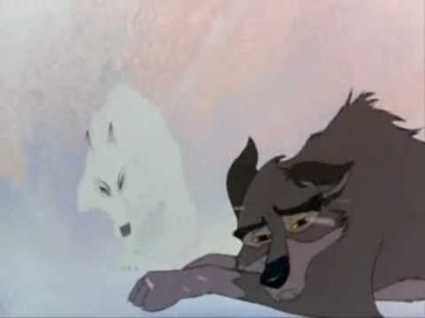
Meanwhile, Balto is shown to be alive, dragging himself out of the snow. This is the main part of the cue, and the part I love the most. Balto is at rock bottom right now, he believes the medicine is gone and that he’s failed. But then, a white wolf appears in front of him (later sequels establish that this is his mother), and invites him to “become a wolf” by howling, but Balto refuses, and the wolf walks away. But then, Balto realizes that the medicine is intact and he remembers the advice his friend gave before he left “A dog, cannot make this journey alone. But maybe…a wolf can.” Inspired, Balto turns in the direction of the wolf and sets one paw down into the print (it matches perfectly). Realizing and finally accepting that he has been a wolf all along, Balto rears up and howls, drawing the white wolf back to him.

hqdefault

For the moments where Balto faces the white wolf, Horner repeats the same melody in strings over and over, it changes registers on almost every iteration. And when it peaks in the high strings (listen to the moment when the wolf turns to walk away), it always makes my eyes tear up. The timbral changes reflect the changing mood of the scene. First: despair (low and almost minor); second, hope (a change to major as the wolf appears); third, denial (a slide back to minor as the wolf walks away, melody high in strings); realization (a mix of major and minor, the ensemble plays together); decision (firm major key, melody in horn).

There’s a few more minutes of music beyond this, but that’s a discussion for another time. For now, I’ll leave you with the triumphant moment where Balto finally finds himself.

Become a patron of the blog at: patreon.com/musicgamer460

Check out the YouTube channel (and consider hitting the subscribe button)

For more Disney and other animated film soundtracks, see here

Don’t forget to like Film Music Central on Facebook 🙂

*All images are the property of the film studio, and are only being used for illustration