Yearly Archives: 2017

Hans Zimmer talks Hannibal (2001)

Sequels are always a risky business; no matter how successful the original, there’s always the chance that a follow-up story will fall totally flat and ruin the story forever. Thankfully, such was not the case with Hannibal (2001), the follow-up to The Silence of the Lambs (1991). Set ten years after the original story, Clarice Starling (now played by Julianne Moore) must locate Hannibal Lecter before a surviving victim (played brilliantly by Gary Oldman) tracks down the serial killer to exact his gruesome revenge. While it’s true that this film was met with mixed reviews by the critics, I found Hannibal to be a very thrilling story, especially the last third. Anthony Hopkins is such a compelling presence when he’s onscreen, and he plays the role with so many layers that you can watch the film multiple times and see a new interpretation each time.

Of course the film wouldn’t be nearly as good without its musical score, which was composed by Hans Zimmer. In this wonderful interview, both Zimmer and director Ridley Scott talk about the music and how it came together. Scott believes that the music is just as important as the dialogue and so the score is crafted accordingly. Hannibal marked the fourth time that the director and composer collaborated on the same project, and you can tell that they’ve developed a good working relationship with each other.

Zimmer describes Hannibal as a “haunting story” and that the music must be haunting as well to match it, and I believe he totally succeeded in accomplishing this. One thing about Hannibal (the character) that always fascinated me is his love of the classical, be it art, poetry or music. The score reflects this to a large degree, as Hans Zimmer wrote several choral pieces in an early classical style for certain scenes involving the titular character. It was amazing to learn about the score for this haunting film, and I hope you enjoy it as well.

You can become a patron of the blog at patreon.com/musicgamer460

Check out the YouTube channel (and consider hitting the subscribe button)

See also:

Film Composer Interviews A-H

Film Composer Interviews K-Z

Hans Zimmer talks The Road to El Dorado (2000)

Hans Zimmer talks The Dark Knight (2008)

Hans Zimmer talks Sherlock Holmes (2009) and Sherlock Holmes: A Game of Shadows (2011)

Hans Zimmer talks Inception (2010)

Hans Zimmer (and Richard King) talk The Dark Knight Rises (2012)

Hans Zimmer talks Man of Steel (2013)

Hans Zimmer talks Interstellar (2014)

Don’t forget to like Film Music Central on Facebook 🙂

Disturbing Disney #4: Dumbo loses his mother (1941)

When I was compiling a list of ‘disturbing’ moments in Disney films, a particular scene in Dumbo (1941) immediately jumped up to almost the top of the list.

The film tells the story of a baby elephant named Dumbo who is born with overly large ears, a feature which earns mocking and scorn from the other circus elephants. Despite this, Dumbo is relatively happy because he has his mother, Mrs. Jumbo, with him.

But this happy pair isn’t going to be together for long, and that is why the following scene is on the list of ‘disturbing’ Disney moments.

The circus has come to a new town, and after taking part in a big parade, the circus animals are on display in a big tent for the curious public, including Mrs. Jumbo and Dumbo. Everything is fine until a goofy kid comes by and takes special interest in Dumbo’s big ears. The baby elephant doesn’t quite understand what’s going on, but his mother certainly does, so she pushes Dumbo away and turns her back to the crowd. From here things only go downhill.

04_dumbo_Bluray

Dumb kid

Against all reason, the kid goes into the enclosure and begins pulling Dumbo out by his tail, further messing with his ears in the process. Now Mrs. Jumbo is getting upset; she takes Dumbo away again, but the kid just won’t let it be (he clearly hasn’t heard the rule that says you must NEVER come between a mother animal and her young). He grabs Dumbo again and THIS time Mrs. Jumbo has had enough. He picks up the kid with her trunk and gives him a good shake and that’s when everything goes to pieces.

034-dumbo-l

The crowd reacts with panic and there are cries of “mad elephant!!!” Instead of the kid getting punished for riling up Mrs. Jumbo in the first place, the circus workers move to tie up Mrs. Jumbo for doing what any mother would do: protecting her baby!! I find this scene so heartwrenching and so horrifying, I eventually found myself unable to watch, because I would get so upset. There’s so much happening at once: Mrs. Jumbo is being tied with ropes from all sides; the ringmaster is WHIPPING her, and worst of all, Dumbo is grabbed by a couple of workers and carried away from his panicked mother. She only wants her baby, but now the ropes are replaced with chains, and it will be a long time before Dumbo sees his mother again.

I find this scene disturbing because of the unfairness of it all. Mrs. Jumbo didn’t do anything wrong, she was simply defending her baby from a dumb kid who was trying to hurt him. If anything, it’s the kid who should’ve been punished, what right did he have to go in the enclosure with the elephants in the first place?? And the whole scene with Mrs. Jumbo being forcibly tied up while her baby is being taken away, it just rips my heart to pieces. It’s a messed up, disturbing moment, and one that is hard to forget.

What do you think of this scene from Dumbo? Let me know in the comments below, have a good rest of the day 🙂

Become a Patron of the blog at patreon.com/musicgamer460

Check out the YouTube channel (and consider hitting the subscribe button)

For more Disturbing Disney see also:

Disturbing Disney #1: The Coachman in Pinocchio (1940)

Disturbing Disney #2: The truth of Pleasure Island in Pinocchio (1940)

Disturbing Disney #3: Escaping Monstro from Pinocchio (1940)

Disturbing Disney #5 The death of Bambi’s Mother

Disturbing Disney #6: Faline vs. the dogs (1942)

Disturbing Disney #7: Cruella wants to do WHAT??

Disturbing Disney #8: The Whale Who Wanted to Sing at the Met (from Make Mine Music, 1946)

Disturbing Disney #9: Dr. Facilier’s Fate (The Princess and the Frog, 2009)

Disturbing Disney #10: The rat in Lady and the Tramp (1955)

Disturbing Disney #11: Clayton’s Death in Tarzan (1999)

Disturbing Disney #12: The Bear from The Fox and the Hound (1981)

Disturbing Disney #13: “Smoking them out” in The Fox and the Hound (1981)

Disturbing Disney #14: The Salt Trap in The Jungle Book (1994)

Disturbing Disney #15: Night on Bald Mountain from Fantasia (1940)

Disturbing Disney #16: King Triton destroys Ariel’s grotto

Disturbing Disney #17: Ratigan becomes a monster in The Great Mouse Detective

Disturbing Disney #18: The Queen’s assignment for her Huntsman

Disturbing Disney #19: Cinderella’s dress is destroyed (1950)

Disturbing Disney #20: Quasimodo is crowned ‘King of Fools’ (1996)

Don’t forget to like Film Music Central on Facebook 🙂

Michael Giacchino talks Zootopia (2016)

Michael Giacchino talks Zootopia (2016)

While I am still profoundly irked that Zootopia beat out Kubo and the Two Strings for Best Animated Feature at the Oscars, I cannot deny that the film has a pretty good musical score. Composed by the talented Michael Giacchino, the music of Zootopia features a world-music vibe to cover the vast array of species (and ways of life) highlighted in the story.


If you haven’t seen Zootopia, the film follows bunny Judy Hopps (Ginnifer Goodwin) as she becomes the first rabbit on the Zootopia police force, in a city where (in theory) any animal can become anything they want to be, regardless of whether they are considered “hunter” or “prey” species. This notion is tested when Judy is put on a (seemingly hopeless) case that she must solve in a very short time or lose her job, and to complicate matters, she must work with Nick Wilde (Jason Bateman), a fox with a history of being a con-artist.

In this behind the scenes clip, Giacchino takes us to the recording studio and introduces five percussionists who helped create Zootopia’s unique sound.

ZOOTOPIA

While the main orchestra is best recognized in any film score, often the percussion is overlooked (or worse, lost in the sound mix), so it’s great to see not only how they used percussion instruments in the score, but also how the percussion ties everything together at key moments.

c82485eec608d966826a619a04946ce8f53b693d

My thanks to Michael Giacchino for giving us this inside look into part of the scoring process for Zootopia, which really is a great film despite my grumblings. I hope you enjoy the video and if you haven’t tried Zootopia before, please take a chance and check it out 🙂

See also:

Michael Giacchino talks The Incredibles (2004)

Michael Giacchino talks Mission: Impossible 3 (2006)

Michael Giacchino talks Ratatouille (2007)

Michael Giacchino talks Up (2009)

Michael Giacchino talks Star Trek (2009)

Michael Giacchino talks Super 8 (2011)

Michael Giacchino talks John Carter (2012)

Michael Giacchino talks Star Trek: Into Darkness (2013)

Michael Giacchino talks Jupiter Ascending (2015)

Michael Giacchino talks Jurassic World (2015)

Michael Giacchino scoring Rogue One: A Star Wars Story (2016)

Michael Giacchino talks Jurassic World: Fallen Kingdom (2018)

Film Composer Interviews A-H

Film Composer Interviews K-Z

You can become a patron of the blog at patreon.com/musicgamer460

Check out the YouTube channel (and consider hitting the subscribe button)

Don’t forget to like Film Music Central on Facebook 🙂

Disturbing Disney #3: Escaping Monstro from Pinocchio (1940)

This will be the final entry for Pinocchio and it involves a moment that deeply disturbed me the older I got. But before I get there, I need to tell you how Pinocchio and company get into this mess in the first place.

Searching for (and escaping from) Monstro, Pinocchio (1940)

So….while Pinocchio is off getting into all kinds of trouble (i.e. Stromboli and Pleasure Island), poor Geppetto has been waiting and waiting (along with Figaro the cat and Cleo the goldfish). Finally, he packs up and goes looking for his wayward son, eventually ending up far out at sea, where his ship is swallowed by Monstro the whale (all of this is relayed to Pinocchio by a message from the Blue Fairy).

pinocchio-42.png

Yup…that’s Monstro (I had to be reassured as a kid that most whales weren’t like this)

Monstro IS a pretty disturbing character if you think about it. He’s a cross between a sperm whale (hence the teeth) and a blue whale (overall size) and possesses a vile temper to boot. Even little Jiminy Cricket has heard of this monster and it’s all bad news: Monstro swallows “entire ships” and is not to be trifled with. Nevertheless, Pinocchio wants his father back, so off the pair goes to take a stroll on the ocean floor in search of Monstro (the very mention of the name sends any and all sea life fleeing for their lives). Since Pinocchio is made of wood, he doesn’t have to worry about breathing underwater (as to why Jiminy can do it, being a cricket and all, well, it IS a Disney movie, so anything is possible).

pinocchio-underwater

Side note: the animator who created these fish is still alive at the ripe old age of 103

After much searching, Pinocchio is reunited with Geppetto when Monstro pursues a school of tuna for a meal, bringing along Pinocchio in the process (but not Jiminy, he’s stuck outside!). It’s a happy reunion, except for the awkward moment when Geppetto finds his son has grown donkey ears and a tail, but since they’re together again, all is forgiven. Pinocchio wants to escape, but even when Geppetto patiently explains that “nothings comes out” once Monstro has eaten, that determined puppet isn’t giving up. He plans to make the whale sneeze by creating lots of smoke, and the sneeze should force out the small raft that Geppetto built a while back.

The plan works!!! Monstro lets out a mighty sneeze and the raft is sent way out into the ocean, but now the great whale is furious (and I do mean FURIOUS!!) that prey has managed to escape him, so he sets off in hot pursuit. The only hope Geppetto, Pinocchio and company have now is to reach the safety of the rocks on shore before Monstro smashes them all to pieces. They nearly make it, but Monstro smashes the raft, forcing Pinocchio to frantically swim the rest of the way, dragging Geppetto along so he doesn’t drown.

monstro-face-coming-right-at-ya

Giant whale incoming: AHHHHHHH!!!!!!

This is the first disturbing moment: in the last part of the chase, Monstro becomes truly frightening (even more so than before), and when you see this shot up above, how can anyone not be terrified, especially if you’re a little kid?

At any rate, Pinocchio makes it to the edge of the rocks mere moments before Monstro comes barrelling in like a freight train, smashing the rocks to pieces and sending everyone flying in separate directions.

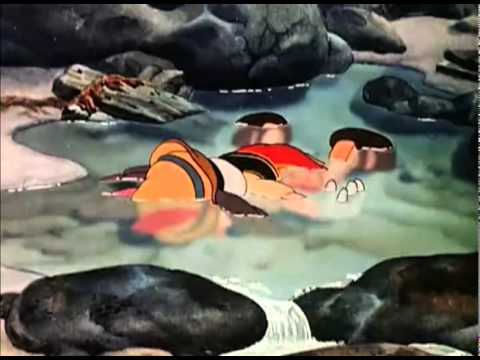
Geppetto, Figaro, Cleo and even Jiminy are all shown on the beach, but where is Pinocchio? Well…the answer is what made me add this to the Disturbing list. Jiminy is searching for Pinocchio when suddenly we hear this terrible gasp and see THIS:
hqdefault

Now I know technically Pinocchio hasn’t drowned (he’s made of wood and all that) and it was the force of Monstro’s impact that likely killed him but COME ON DISNEY!!! This is a disturbing, horrifying image. Granted it only lasts for a moment, but this image has been permanently burned into my brain. It is messed up that they would show a kid (wooden or not) dead like this. And it’s a pretty major shift considering in the previous animated film, when Snow White falls “dead” we only see her arm as she collapses to the floor.

Of course I should mention that we do get our happy ending shortly thereafter. The Blue Fairy determines that Pinocchio has done very well and brings him back to life, but this time as a real flesh and blood human boy, to the overwhelming joy of Geppetto, Jiminy and everyone else.

Despite the happy ending, the entire encounter with Monstro is very disturbing and rightly deserves to be included on this list. Let me know what you think about this scene in the comments below, did you find it disturbing as well?

Become a Patron of the blog at patreon.com/musicgamer460

Check out the YouTube channel (and consider hitting the subscribe button)

For more Disturbing Disney, see also:

Disturbing Disney #1: The Coachman in Pinocchio (1940)

Disturbing Disney #2: The truth of Pleasure Island in Pinocchio (1940)

Disturbing Disney #4: Dumbo loses his mother (1941)

Disturbing Disney #5: The death of Bambi’s Mother (1942)

Disturbing Disney #6: Faline vs. the dogs (1942)

Disturbing Disney #7: Cruella wants to do WHAT??

Disturbing Disney #8: The Whale Who Wanted to Sing at the Met (from Make Mine Music, 1946)

Disturbing Disney #9: Dr. Facilier’s Fate (The Princess and the Frog, 2009)

Disturbing Disney #10: The rat in Lady and the Tramp (1955)

Disturbing Disney #11: Clayton’s Death in Tarzan (1999)

Disturbing Disney #12: The Bear from The Fox and the Hound (1981)

Disturbing Disney #13: “Smoking them out” in The Fox and the Hound (1981)

Disturbing Disney #14: The Salt Trap in The Jungle Book (1994)

Disturbing Disney #15: Night on Bald Mountain from Fantasia (1940)

Disturbing Disney #16: King Triton destroys Ariel’s grotto

Disturbing Disney #17: Ratigan becomes a monster

Disturbing Disney #18: The Queen’s assignment for her Huntsman

Disturbing Disney #19: Cinderella’s dress is destroyed (1950)

Disturbing Disney #20: Quasimodo is crowned ‘King of Fools’ (1996)

 And don’t forget to like Film Music Central on Facebook 🙂

Kong: Skull Island (2017), my thoughts

Well…I liked that a lot more than I thought I might. *various spoilers follow from this point*

This past Saturday afternoon I finally got to see Kong: Skull Island, the second installment in the giant monsters universe established by Godzilla (2014). Set in 1973 at the end of the Vietnam War, Kong follows an expedition led by Bill Randa (John Goodman) to the titular Skull Island, a previously unknown land mass that was only recently discovered by satellites. Randa claims the group (which is being escorted by a section of soldiers led by Col. Packard (Samuel L. Jackson) is there to study the geology of the island, but in truth, they’re also there to flush something out. That something being Kong…King Kong.

Kong destroys most of the expedition after they drop a series of “seismic charges” (i.e. bombs) on the island, unwittingly awakening a number of nasty monsters dubbed “skull-crawlers” by a character we meet later on. The survivors are initially separated over a wide area, but they are soon joined into two groups: one led by Col. Packard, the other led by James Conrad (Tom Hiddleston), a former captain in the SAS. The goal is to make it to the north side of the island where they can signal their ship for a rescue. Naturally things don’t do according to plan.

hero_Kong-Skull-Island-2017-2

A large section of the film is devoted to watching numerous characters get picked off one by one by the various oversized creatures that inhabit the island (one of the most terrifying incidents involving a giant spider with legs that resemble bamboo trees), as well as the skull-crawlers (which are rapidly growing in size). Conrad’s group encounters the Iwi, a tribe that have been living on the island since time immemorial. Among them is a surprise: Lt. Hank Marlow (John C. Reilly), an American pilot shot down in 1944 by a Japanese pilot (who also crashed along with him). For the last 28 years he’s been living with the Iwi, and now he has a chance to leave with Conrad’s group (even though he’s pretty sure the skull-crawlers (the name he gave them because it sounded scary) will get them first). Marlow and Conrad’s group (which includes female photographer Mason Weaver) depart on a boat Marlow and his former Japanese enemy cobbled together from their wrecked planes before a skull-crawler nabbed the latter and head upriver towards their destination. But once they meet up with Col. Packard’s group, Conrad and company realize that something is seriously wrong.

Col. Packard is a very interesting character, and a great case study in how war can change a man for better or worse. Packard has been a soldier for a very long time now, and has earned multiple decorations, but with the end of the Vietnam War, he is struggling to find his place in the world (that’s why he happily accepted the order to escort the group to Skull Island, as it gave him something to do). Seeing Kong wipe out a large portion of the men he’s commanded for several years has given Packard an unbreakable fixation: to kill Kong by whatever means necessary, even if it means they all die in the process. I believe that, in Packard’s eyes, Kong is the living embodiment of the war in Vietnam that never got finished. Against the warnings of Conrad and Marlow (the latter attempting to explain that Kong is the only thing keeping the skull-crawlers at bay), Packard comes up with a plan to trap Kong in a lake filled with napalm while Conrad leads his group to the north. At the last minute, Conrad returns and convinces most of the soldiers to stand down, but not Packard, he simply can’t let go of what happened to his men. As a result, he is the latest victim of Kong’s rage.

KG-ILM-060

The flight to the northern coast is dominated by a massive fight between Kong and the largest of the skull-crawlers (which was awakened by the large napalm explosion). It’s a titanic battle, and very well executed (the CGI doesn’t look fake at all). Ultimately, Kong is successful, the skull-crawler is killed and Conrad and the others rendezvous with their ship, while Kong watches from a distance.

There’s so much more to the story that I’m leaving out, but I don’t want to completely spoil everything. There is a loose connection to Godzilla where M.U.T.O’s are mentioned (the same term is used in the earlier film) and a post-credit scene (that I completely missed) sees two characters informed of the existence of other giant monsters besides King Kong (which is apparently the lead in to Kong and Godzilla squaring off in three years time, still not sure how I feel about that by the way).

My one complaint with the film is that there were too many characters to keep track of. I understand why this is (as most of these side characters end up dead), but as a result most of the people we meet aren’t as fleshed out as they might have been with a slightly smaller ensemble.

KG-ILM-009

Favorite moments include:

Any and all scenes including Tom Hiddleston, especially a scene in the second half of the film where, in the midst of poison gas, he dons a gas mask, grabs a samurai sword (long story about how it got to the island) and goes completely medieval on a bunch of monsters!

The fight between Kong and the giant octopus

Kong’s backstory, as explained by Marlow, which really explains a lot about what Kong is doing on the island (it doesn’t explain EVERYTHING, but it does help)

Kong: Skull Island really is a good movie, especially if you’re looking for a fun two hours filled with action (and the slightest HINT of romance), so I recommend it to anyone who hasn’t seen it yet.

Become a Patron of the blog at patreon.com/musicgamer460

Check out the YouTube channel (and consider hitting the subscribe button)

See also:

My Thoughts on: Godzilla: King of the Monsters (2019)

Film/TV Reviews

Don’t forget to like Film Music Central on Facebook 🙂

John Debney scoring Predators (2010)

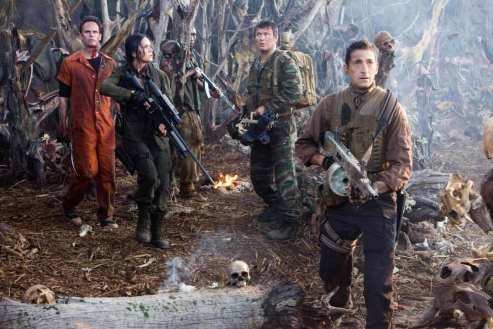
In an age where sequels are being made left and right, it surprised no one when, after a gap of 20 years, a third installment of the Predator franchise was released. Predators (unlike the previous two installments) takes place on an alien planet and follows a group of mercenaries and other “undesirables” that have been abducted and taken to this planet, which we learn serves as a game preserve for the Predator civilization. The group, including Royce (Adrien Brody) and Isabelle (Alice Braga) must evade a group of hunters while also trying to find a way off the planet to get home.


The total group consists of:

  • Royce- ex-Special Forces turned mercenary
  • Isabelle- sniper from Israeli Defense Forces
  • Cuchillo- a Mexican drug cartel enforcer
  • Nikolai- a Spetsnaz soldier
  • Mombasa- a soldier in the Revolutionary United Front
  • Stans- a death row inmate from San Quentin
  • Hanzo- a Yakuza enforcer
  • Edwin- a general practice doctor

Of the entire group, it is Edwin who sticks out, as he is the only member of the group who does not seem to be a lethal killer. Appearances are deceiving however, and it eventually comes out that Edwin is actually a psychopathic murderer (apparently very comfortable with poisons) who feels “right at home” on this alien planet filled with “monsters.”

Predators-2010

Most of the story centers around the plan of freeing a trapped Predator (who is being held prisoner by a rival clan of larger Predators) in the hopes that it will use his ship to take them back to Earth. Unfortunately, not only are Royce and Isabelle the lone human survivors (so far as we know), but the ship self-destructs, leaving the pair stranded on the alien planet for the time being.

The film was released with mixed to positive reviews, with some saying the sequel finally hit the mark set by the original film and others saying it still lacks the quiet suspense that made the first film so good.

Predators-film-images-30b80769-2fc3-4baf-a099-e7121a98bfd

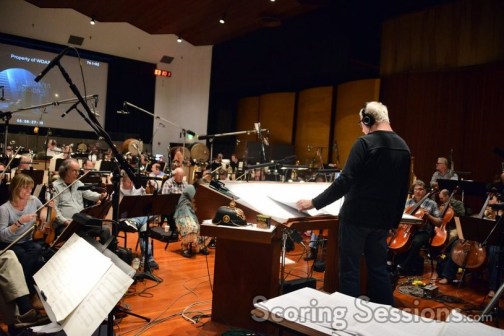
The score was composed by John Debney, although it was briefly speculated that Alan Silvestri would return to the franchise (having scored Predator and Predator 2). The clip I found is from a scoring session for the film and provides a tantalizing glimpse of the recording process. The one thing that will always amaze me about film music is how many details you can hear when the dialogue and sound effects are removed from the mix. Hearing this brief excerpt of music makes me wish I’d seen this film when it was released (it’s been on my “to watch” list for the last seven years).

Have you seen Predators? Did you think it was worth seeing? Let me know in the comments below, and I hope you enjoy watching this brief excerpt from the scoring session for the film.

See also:

John Debney talks The Scorpion King (2002)

John Debney talks The Passion of the Christ (2004)

John Debney (and Tom Morello) talk Iron Man 2 (2010)

John Debney talks The Jungle Book (2016)

Film Composer Interviews A-H

Film Composer Interviews K-Z

You can become a patron of the blog at patreon.com/musicgamer460

Check out the YouTube channel (and consider hitting the subscribe button)

Don’t forget to like Film Music Central on Facebook 🙂

John Debney talks The Scorpion King (2002)

Let’s face it: you either love The Scorpion King or you hate it, there is no middle ground.

This spin-off of The Mummy Returns is set 5,000 years before the original Mummy films and tells the story of how Mathayus (Dwayne “The Rock” Johnson in his first film as a leading man) rose to power as the “Scorpion King.” Mathayus is initially part of a small group of Akkadians contracted by King Pheron to kill a sorcerer working for a tyrannical king named Memnon. They are betrayed by Pheron’s son Takmet (who murdered his own father and joined Memnon after they left on their mission) but Mathayus is still able to reach the sorcerer’s tent…only to find that it’s actually a beautiful sorceress named Cassandra.

Mathayus hesitates long enough to be captured and after his companions are killed, he is left to die a slow agonizing death buried up to his neck in the desert. Thereafter, Mathayus seeks vengeance on Memnon for killing his companions (one of whom was his half-brother) and also information from the sorceress (for example, why she persuaded Memnon to not kill him on the spot as he did the others).

scorpion-king

Along the way, Mathayus meets various allies, including the Nubian king Balthazar (who initially does not like Mathayus because he despises Akkadians). When Cassandra returns to Memnon after being with Mathayus for some time, the latter organizes an all-out assault on Memnon’s stronghold Gomorrah to save Cassandra and kill Memnon once and for all.

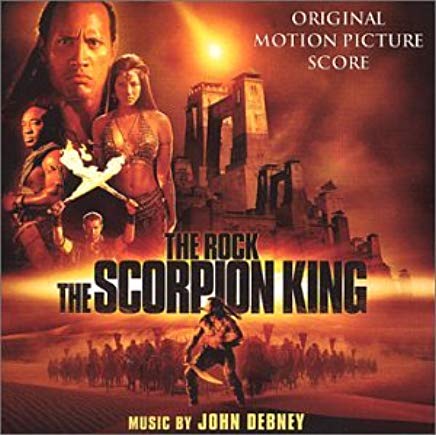
The orchestral score for this film was composed by John Debney; this music was mixed in with various rock songs (the latter are what appear on the soundtrack album for the film). In the extended “making of the score” video which you can access in the link above, there are numerous shots of the orchestra in the recording studio with the in-progress film playing on a large screen for the conductor’s reference. As I’ve said before, this is the stage of film music production that I love the best, and I hope to witness it in person one day.

The-Scorpion-King-images-33fb21c0-fe01-4c0c-b6f3-31caa4e84c5

Debney (and the film’s director) discuss how various parts of the score came together, including the overall sound of the music. Since this is meant to take place long before any recorded history, Debney did not want to invoke one culture above another, but instead wanted to create a sense of something new and unfamiliar. The director also discussed including a touch of rock music, and thus giving the film something of a more contemporary feel in certain places. This is really one of the better interviews I’ve found for the making of a film score and even if you’ve never seen The Scorpion King, I really think you will enjoy it.

Become a Patron of the blog at patreon.com/musicgamer460

Check out the YouTube channel (and consider hitting the subscribe button)

See also:

Film Composer Interviews A-H

Film Composer Interviews K-Z

See also:

John Debney (and Tom Morello) talk Iron Man 2 (2010)

John Debney scoring Predators (2010)

John Debney talks The Passion of the Christ (2004)

John Debney talks The Jungle Book (2016)

Don’t forget to like Film Music Central on Facebook 🙂

John Debney talks The Passion of the Christ (2004)

The Passion of the Christ (2004) is a film that is not easily forgotten once you’ve seen it. This was the first R-rated film I ever saw in theaters (the youth group I was in went to see it one weekend, we all had to get our parents to sign waivers since we were under 18) and it’s a film that physically impacted me for weeks afterward.

For those who haven’t seen it, The Passion of the Christ details the final twelve hours of the life of Jesus, from his arrest to his crucifixion (with a short epilogue on the day of his resurrection). The entire film is subtitled, with the primary languages being Aramaic, Hebrew and Latin (to make the story feel more authentic). The film was directed by Mel Gibson and was a huge hit upon release, although many criticized the extreme graphic violence in certain scenes (I personally have only been able to see this film three times since 2004).

The  score that accompanies this film was composed by John Debney (The Jungle Book) and it is widely regarded as a masterpiece of film music. In the extended video which you can reach via the link above, Debney (and Mel Gibson) discuss how various themes came together, primarily Satan’s theme and the theme for Mary, the mother of Jesus. Interestingly, instead of using a traditional ensemble, or using only instruments that might have been heard in ancient Jerusalem, Debney opted to use a more global sound (Satan’s theme, for instance, is created with a traditional Chinese instrument), as this is a story that Gibson wanted to be accessible to everyone.

The music for The Passion of the Christ really is beautiful, and I do recommend this film as well, but with one major caveat: if graphic violence disturbs you, do NOT watch this film. The torture segments (particularly the flogging scene) are very bloody, and could easily be traumatizing.

Have you seen The Passion of the Christ? What did you think of it, or the music? Let me know in the comments 🙂

See also:

John Debney talks The Scorpion King (2002)

John Debney (and Tom Morello) talk Iron Man 2 (2010)

John Debney scoring Predators (2010)

John Debney talks The Jungle Book (2016)

Film Composer Interviews A-H

Film Composer Interviews K-Z

Become a Patron of the blog at patreon.com/musicgamer460

Check out the YouTube channel (and consider hitting the subscribe button)

Don’t forget to like Film Music Central on Facebook 🙂

Patrick Doyle Talks Cinderella (2015)

In 2015 Cinderella became the latest Disney animated film to undergo the live-action remake treatment and the results were….okay (depending on who you ask). The biggest change between the 1950 original and this version is that the latter is not a musical (which I think is a real shame).

Unlike Maleficent, which told the Sleeping Beauty story from the perspective of the titular character, Cinderella basically retold the story straight (with various changes here and there, but nothing too extreme). And as beautiful as it looked in the previews, I couldn’t bring myself to watch it, as I grew up watching the animated film. Also, no offense, but Cate Blanchett has NOTHING on Eleanor Audley when it comes to playing Lady Tremaine (I watched a few clips to get an idea of the film).

54ff2b803d33425a57fc69d4_cinderella-lily-james-richard-lawson

One bright spot is Patrick Doyle’s score, created with an emphasis on romance. Doyle frequently collaborates with director Kenneth Branagh (including Hamlet and Thor) and the resulting music was well-received by critics. Doyle briefly mentions the score in a red carpet interview I was able to find for the film’s premiere (available in the link above). Doyle enjoyed creating the music for this film and described it as being “very eclectic.”

Cinderella-2015-Ella-and-stepsisters

Unfortunately it is a very short interview, but I hope you enjoy it (if anyone can point me to a longer interview regarding this film, I will happily add it) 🙂

I’m glad everyone is enjoying Disturbing Disney so far; I just wanted to let you know that the next installment will come next week. Right now the university is on spring break and I’m working extra hours so I don’t have a lot of time to work on that series right now (that’s why I’ve been doing smaller posts thus far).

See also:

Film Composer Interviews A-H

Film Composer Interviews K-Z

Patrick Doyle talks Brave (2012)

You can become a patron of the blog at patreon.com/musicgamer460

Check out the YouTube channel (and consider hitting the subscribe button)

Don’t forget to like Film Music Central on Facebook 🙂

The King and I “The March of the Siamese Children” (1956)

maxresdefault

Rodgers and Hammerstein’s classic musical The King and I is one of my favorite Broadway musicals. The story is based in part on the memoirs of Anna Leonowens, a widow who served as a governess to the children of King Mongkut of Siam (now Thailand) in the early 1860s. The 1951 musical was adapted into a film in 1956, both starring Yul Brynner as the titular King (he’s one of my favorite characters).

The King and I has many wonderful musical moments; one of my favorites is “The March of the Siamese Children” which takes place relatively early in the story. Anna (Deborah Kerr) is upset that she must stay in the royal palace next to the harem (instead of in a little house of her own as she’d been promised) and is on the verge of returning to England straight away. However, before she goes, the King insists that Anna meet his children first. If she still wants to leave after meeting them, he won’t stop her.

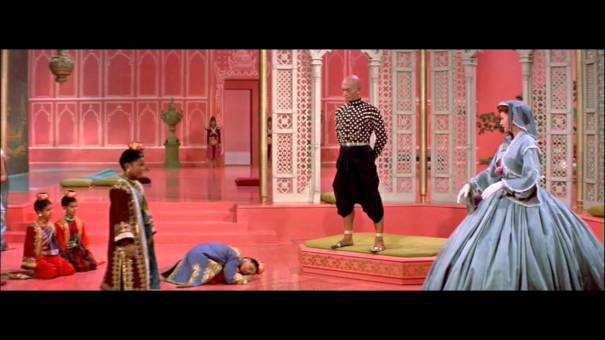
The march then begins with children being led in one by one by their nurses. Each child comes forward, bows to their father, greets Anna by touching their forehead to her hands and then backs away to sit with the royal wives (their respective mothers).

The music is a beautiful theme and variations that repeats over and over, altering slightly for certain children. The most notable change is when Crown Prince Chulalongkorn, the King’s heir marches in; the music here changes to a stirring brass fanfare as befits the heir to the throne. Unlike the other children, Chulalongkorn and the King bow to each other and Anna is told to curtsy to the Crown Prince.

There are some other humorous moments, some of my favorites being:

  • The twins: The two boys (not surprisingly) are dressed identically and the King seems quite pleased with them.
  • The forgetful princess: one of the younger daughters accidentally turns her back on her father and when he reminds her with a mock gasp of shock/horror, she quickly turns around with a look of surprise (the King isn’t all that angry with her, as she is still young)
  • The curious prince: one prince comes out looking very curiously at Anna the entire time and it quickly becomes clear why: he’s never seen someone with Anna’s huge skirts before. He’s curious to see exactly what’s under there…but the King quickly stops that idea.
  • “I want a hug!”: One daughter forgets where she is and runs to the King for a hug, only to be stopped with a stern look. When the dejected princess begins to back away, she is reassured by the King with a warm smile (which she returns).
  • The littlest princess: Possibly the most adorable moment comes at the very end when the youngest daughter comes out. She is so small that the King doesn’t see her until she tugs on his pant leg for attention. He then guides her through what she needs to do (it’s adorable!)

BAMkidsMovieMatinee_2015_King_and_I_1956_11_613x463

Once all the children are assembled, Anna realizes she can’t possibly leave them to return to England (which is what the King thought would happen) and she agrees to stay after all, to the delight of the royal children.

“The March of the Siamese Children” is a delightful moment from a wonderful film and I hope you enjoy it.

Become a Patron of the blog at patreon.com/musicgamer460
Check out the YouTube channel (and consider hitting the subscribe button)

See also: Film Soundtracks A-W

The King and I “Shall We Dance?” (1956)

Don’t forget to like Film Music Central on Facebook 🙂