Category Archives: Film Composer

Michael Kamen talks The Iron Giant (1999)

images

Credit to Warner Bros.

Part One

Part Two

Part Three

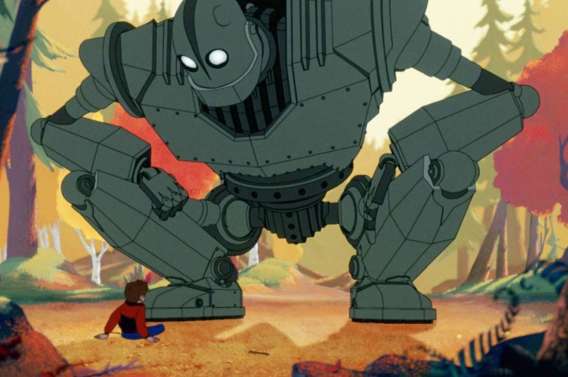
At the close of the old century, Warner Bros. Studio released The Iron Giant. The feature starred Eli Marienthal as Hogarth Hughes, Christopher McDonald as Agent Kent Mansley, Harry Connick Jr. as Dean, Jennifer Aniston as Hogarth’s mother and Vin Diesel (yes, THAT Vin Diesel) as the voice of the Giant. This film marked the directorial debut of Brad Bird (The Incredibles, Mission Impossible: Ghost Protocol).

The composer, Michael Kamen, was initially given a temp score of science-fiction music composed by Bernard Herrmann, but the music “scared him completely.” As a result, Kamen traveled to Prague for inspiration and eventually found it listening to the Czech Philharmonic.

the_iron_giant_hed

Rather unusually, Kamen not only recorded the score over a single week (as opposed to a month), it was also recorded without synchronizing the music to the picture. By that I mean, Kamen did not have a visual of the film present during the recording process (very unusual). Kamen visualized the score as something that could be recorded and listened to as a single piece of concert music.

The score went on to win an Annie Award for Music in an Animated Feature Production on November 6th, 1999.

The interview is broken into three parts (hence the three links) and I hope you enjoy Kamen’s talk about creating the score for this adorable film.

You can become a patron of the blog at patreon.com/musicgamer460

See also:

Film Composer Interviews A-H

Film Composer Interviews K-Z

Don’t forget to like Film Music Central on Facebook 🙂

James Horner talks The Perfect Storm (2000)

220px-Perfect_storm_poster

James Horner talks The Perfect Storm (2000)

In 2000, Wolfgang Petersen directed The Perfect Storm, a biographical disaster film that recounts the true story of the Andrea Gail, a fishing vessel lost with all hands during the “Perfect Storm” of 1991.

In the film, George Clooney plays Billy Tyne, captain of the Andrea Gail, a commercial fishing boat. Needing money, Tyne convinces his crew to join him on one last fishing trip, even though it’s already very late in the season. They proceed past their usual fishing grounds on the Grand Banks of Newfoundland and gain a large catch in the Flemish Cap. But just as the ship is fully loaded with fish, the ship’s ice machine breaks, making it imperative for the Andrea Gail to race back to port with their catch before it spoils.

However, in their absence, the “Perfect Storm” has been developing in the waters between the ship and the port. The “Perfect Storm” evolved from a nor-easter that absorbed the remnants of Hurricane Grace (briefly a category 2 hurricane) and ultimately became a small hurricane in its own right. The storm generated huge waves, with one buoy off Nova Scotia measuring one wave at 100.7 feet.

1513781404_xl

Learning of this storm, Tyne and the crew have a choice: wait out the storm (but lose their catch and all potential profits), or risk the storm and make for home as quickly as possible. Not wanting all their work to be for nothing, the decision is made to head for home and they sail into the storm. Even though this film is based on a true story, everything that happens after the Andrea Gail’s final radio contact is pure speculation since the ship (and the crew) has never been found.

Nevertheless, the film makes an effort to portray how the ship’s last hours might have gone: the ship is mercilessly battered by gigantic waves before finally capsizing and sinking, taking all hands down with it (except for rookie fisherman Bobby Shatford who briefly escapes to the surface before being carried away by the swells).

la-tormenta-perfecta-foto-critica

I have a love-hate relationship with movies based on true events, especially the ones where you know going in that the outcome won’t be good (like watching Titanic, that story has to end badly). I say love-hate because, while I love watching the movie and seeing the drama play out, deep down I hate knowing that, despite everything, the characters are doomed to failure and (in some cases) certain death. For me, it’s hard to cheer on characters that I know will die by the end of the story. That being said, The Perfect Storm, while heart-wrenching, is still told extremely well.

The score was composed by James Horner, and in this interview he discusses how he “created emotion” with this score, because so much of this story is driven by emotion and raw passion.

See also:

James Horner Star Trek II: Wrath of Khan

James Horner talks Aliens (1986)

James Horner talks Field of Dreams (1989)

James Horner talks The Rocketeer (1991)

James Horner scoring Braveheart (1995)

James Horner talks A Beautiful Mind (2001)

James Horner talks Windtalkers (2002)

James Horner talks Avatar (2009)

James Horner talks The Amazing Spider-Man (2012)

Film Composer Interviews A-H

Film Composer Interviews K-Z

Become a patron of the blog at: patreon.com/musicgamer460

Check out the YouTube channel (and consider hitting the subscribe button)

Don’t forget to like Film Music Central on Facebook 🙂

Jerry Goldsmith talks Chinatown (1974)

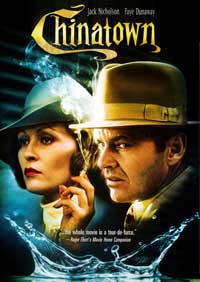
chinatown-movie-poster-1974-1010433311

Chinatown is one of those post-Golden Age of Hollywood movies that perfectly emulates that lost era of filmmaking. Starring Jack Nicholson and directed by Roman Polanski, the film tells the story of private investigator J.J “Jake” Gittes (Nicholson) who is hired by a woman calling herself Evelyn Mulwray (Faye Dunaway), ostensibly because her husband Hollis is having an affair with another woman and she wants the evidence. But the story is fake and Jake finds himself entangled in a story that is more complex and tragic than anything he could have ever imagined.


The score for this neo-noir film was composed by legendary composer Jerry Goldsmith (1929-2004). Goldsmith composed AND recorded the film’s music in only ten days, after the producer rejected an earlier score from composer Philip Lambro at the last minute. The score was nominated for an Academy Award (though it didn’t win). The score is notable for containing several haunting trumpet solos performed by Uan Rasey, that perfectly encapsulate that era of old Hollywood.

Please enjoy Goldsmith’s thought on this amazing score and if you haven’t had a chance to see the movie, I encourage you to give it a try (but I feel obliged to warn you, the plot twist is rather shocking).

See also:

Jerry Goldsmith talks The Sand Pebbles (1966)

Jerry Goldsmith talks about Alien (1979)

Jerry Goldsmith talks Lionheart (1987)

Film Composer Interviews A-H

Film Composer Interviews K-Z

Become a Patron of the blog at patreon.com/musicgamer460

Check out the YouTube channel (and consider hitting the subscribe button)

Like Film Music Central on Facebook at www.facebook.com/filmmusiccentral

Hans Zimmer talks Interstellar (2014)

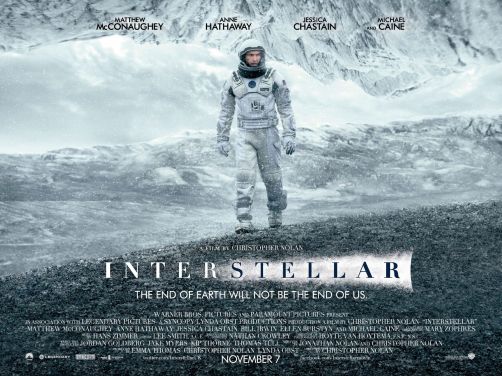
Interstellar

Question, who watched Interstellar when it came out? *hand shoots up* Who thought it was awesome? *hand shoots up again* Who freaked out when Matt Damon accidentally blew himself out of an airlock into the void of space never to be seen again? (I liked this movie, can you tell?)

Hans Zimmer talks Interstellar (2014)

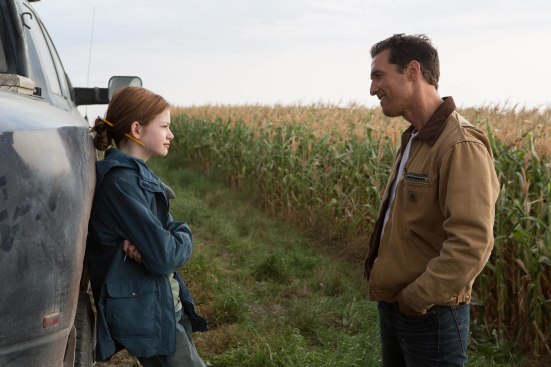
The plot of Interstellar is rather complicated at certain points but the main gist is as follows: in the future (no year is ever specified), the Earth has suffered from a string of blights that has rendered most crops ungrowable. When the film opens, corn is the major food supply of the world and even that is quickly growing vulnerable. As a result, the world has suffered a major technological regression.

interstellar3-xlarge

There appears to be no TV, no Internet, no advanced medical equipment (it is openly stated that MRI machines are not available anymore), and man’s great technological achievements (such as landing on the Moon) are regarded as mere propaganda, not historical fact. To put it bluntly, the Earth is one generation away from being uninhabitable and it will mean the extinction of the human race…unless we can find a new home, and the story continues from there. (I will have to write about this movie in full some time in the future).

INTERSTELLAR

The score of this magnificent film was composed by film music giant Hans Zimmer (born 1957). Zimmer is responsible for such great scores as: The Last Samurai (2003), The Lion King (1994), Gladiator (2000), The Dark Knight Trilogy (2005-2012) and Inception (2010) (and these are just a few, he’s a prolific composer).

In this interview, Hans Zimmer talks about how he developed the score for Interstellar, including how they decided to use an organ. Please watch and enjoy.

See also:

Film Composer Interviews A-H

Film Composer Interviews K-Z

Don’t forget to like Film Music Central on Facebook 🙂

Michael Kamen talks Robin Hood: Prince of Thieves (1991)

Michael Kamen- Robin Hood: Prince of Thieves

1991’s Robin Hood: Prince of Thieves was one of my favorite movies growing up. I never tired of watching the fearless Robin Hood (played very well by Kevin Costner in my opinion) finally defeat the vile Sheriff of Nottingham (played by the late Alan Rickman, RIP), to rescue his true love, the lady Marian (Mary Elizabeth Mastrantonio)

Robin-Hood-Prince-of-Thie-001

Marian and Robin

As I grew older, however, I found myself more and more drawn to the music of this film, and how it enhanced the drama on the screen (as all good film scores do). Michael Kamen gives a relatively short talk about the score, how he developed it, and there’s some neat insight into the recording process. I was so sad to learn that this gifted composer died in 2003. Please enjoy.

You can become a patron of the blog at patreon.com/musicgamer460

See also:

Film Composer Interviews A-H

Film Composer Interviews K-Z

Don’t forget to like Film Music Central on Facebook 🙂

*Everything is copyright to Warner Bros.

Gottfried Huppertz: The composer behind Metropolis

In the world of silent film, Metropolis is rightfully considered a masterwork. Released in 1927 by UFA, the film was directed by Fritz Lang and told the story of a great city called Metropolis, set in the distant year 2000. The film is notable for containing the earliest intact appearance of a robot on the silver screen (an earlier example from L’uomo meccanico (1921) does exist, but only in a 21 minute fragment.)

loozxtwoohktxqxovfhu

The “Machine Man” was invented by Rotwang (on the right) as a secret means to overthrow Joh Fredersen (on the far left).

The score for this amazing film was composed by Gottfried Huppertz, a composer who wrote the music for several of Fritz Lang’s films.

1918

Huppertz was born in Koln, Germany on March 11, 1887. His first composition was published in 1905 and the composer worked as an opera singer during the first World War. In 1922 while in Berlin, Huppertz met Thea von Harbou, a close friend of Fritz Lang, and the two became introduced. Huppertz first composed a score for Lang’s film Die Nibelungen (1924).

Metro

Huppertz on the set of Metropolis

The score for Metropolis, written and recorded in 1926, is seen today as Huppertz’s greatest work. During the filming process, Huppertz would actually visit the set and play music to help set the mood for a scene (this was very unusual at the time). At the film’s premiere, the score was performed by a 66 piece orchestra, and was very well received. Though the film was heavily cut shortly thereafter, with major chunks lost for decades (a situation that would not be resolved until 2010), Huppertz’s full score has always been available and has remained an invaluable source for outlining the pieces of the film that remain missing.

You can find a suite arrangement of Huppertz’s score here: Metropolis: Soundtrack Suite

After Metropolis, Huppertz continued to write film music, even composing for several sound films: Der Judas von Tirol (1933), Elisabeth und der Narr (1933), Hanneles Himmelfahrt (1934) and Le Domino Vert (1935).

The composer died of a heart attack on February 7, 1937 and became forgotten for over forty years, until Metropolis and Die Nibelungen came back to the attention of the cinematic and musical world.

Become a Patron of the blog at patreon.com/musicgamer460

Check out the YouTube channel (and consider hitting the subscribe button)

Don’t forget to like Film Music Central on Facebook 🙂

“Overture” from Ben-Hur by Miklos Rozsa (1959)

One thing that must be understood about “classic” Hollywood films (usually anything made before 1960) is that in those days, the large epic films were constructed very much like an opera or a play would be. By this I mean, they would have separate screens labelled “overture” (as Ben-Hur does above), “Intermission” and also “Exit Music” (music that would play while the audience left the theatre).

This overture was composed by the Hungarian composer Miklos Rozsa for the 1959 epic Ben-Hur. He won the Academy Award for Best Score and many cite it as being one of the greatest film scores of all time. The image is an extreme close-up of the figures of Adam and God on the ceiling of the Sistine Chapel.

Above is the first eight measures from the beginning of the overture (from the original score)

I love this overture because of how it begins, with this attention-grabbing fanfare from the brass and woodwinds. The call repeats three times and swells at the last moment before the brass breaks through with the immortal “Hallelujah” motif (my term for it), the timpani thundering in the background. The motif repeats again, and again, building and swelling and then…dying away into the main love theme and other side themes that recur throughout the film. That’s a technique seen multiple times in film overtures: beginning with a brassy motif and transferring to strings (*cough* think of Star Wars *cough*)

The overture ends as it began, with the brass and woodwind trumpet call, more firm this time. This signals that the overture is ending and the main story is about to begin.

Become a Patron of the blog at patreon.com/musicgamer460

Don’t forget to like Film Music Central on Facebook 🙂

See also:

Miklos Rozsa conducts Ben-Hur suite (1979)

James Horner talks Star Trek II: The Wrath of Khan

Star-Trek-II-The-Wrath-of-Khan-theatrical-poster

It is always invaluable to hear a composer speak about why he created a film score in a certain way. Just imagine if it had been possible to videotape Beethoven or Mozart speaking about THEIR works.

Resources like this become all the more valuable (and poignant) when the composer passes away suddenly. While many of the greats (including James Horner) have passed on, at least we have a portion of their thoughts set down and recorded.


In this interview, James Horner (who is greatly missed) talks about his thought process behind writing the genius score for one of the greatest Star Trek films of all time. After the critical failure of Star Trek: The Motion Picture, director Nicholas Meyer wanted to create a totally different feel and sound for the sequel. The director had a particular vision of “Horatio Hornblower in space,” which inspired Horner to create a distinctly nautical sound in the music for The Wrath of Khan.

star-trek-soundtracks-1-1367508911-view-0

The score is also more heavily based on leitmotif’s, with very few “hummable” themes, a direct contrast to Goldsmith’s score for The Motion Picture (think of Ilia’s Theme or the Klingon’s Theme). There are a few subtle homages to Goldsmith’s score for The Motion Picture however: during Khan’s surprise attack, Horner employs the “blaster beam” which was used in the previous film as a notable sound effect for the V’Ger alien.

Horner’s score for The Wrath of Khan is widely considered to be the greatest score found in a Star Trek film, though some prefer Eidelman’s score for The Undiscovered Country. Again, I hope you enjoy listening to this interview from the late, great, James Horner.

See also:

James Horner talks Aliens (1986)

James Horner talks Field of Dreams (1989)

James Horner talks The Rocketeer (1991)

James Horner scoring Braveheart (1995)

James Horner talks The Perfect Storm (2000)

James Horner talks A Beautiful Mind (2001)

James Horner talks Windtalkers (2002)

James Horner talks Avatar (2009)

James Horner talks The Amazing Spider-Man (2012)

Film Composer Interviews A-H

Film Composer Interviews K-Z

Become a Patron of the blog at patreon.com/musicgamer460

Check out the YouTube channel (and consider hitting the subscribe button)

Don’t forget to like Film Music Central on Facebook 🙂
The Empire Strikes Back: “The Imperial March” by John Williams

The famous Imperial March a.k.a Darth Vader’s theme. This music never fails to send a chill down my spine. What’s interesting is the contrast between the main “Imperial March” that everyone knows and the softer “B” melody, that’s played in the middle. The woodwinds create an unbelievable sense of tension that sets the listener up for the return of the primary “A” melody which quickly modulates into a different key.

The theme is first heard in The Empire Strikes Back when we cut away from the Rebel base to get our first look at the Imperial fleet, but it is also notably used to herald Vader’s arrival in the ruins of Hoth base, and as the remaining heroes rush for the Millennium Falcon, the camera repeatedly comes back to Vader striding through the ice caverns.
Later on in the film, during the climactic lightsaber duel between Luke and Vader on Cloud City, the theme comes back rather menacingly as Vader begins to use the Force to hurl objects at Luke to distract him.
Though there are other instances after this one, I would like to highlight one final time we hear the Imperial March and that is, ironically enough, at the end of Vader’s death scene at the end of Return of the Jedi. Just after Vader/Anakin dies, listen very carefully to the music in the background.
Right there on the harp, is the last iteration of the melody, so soft you can barely hear it, and nothing like the strident march first heard in The Empire Strikes Back. Fitting for a villain who was successfully brought back to the side of good.

See also: Film Soundtracks A-W

Become a Patron of the blog at patreon.com/musicgamer460

Check out the YouTube channel (and consider hitting the subscribe button)

Don’t forget to like Film Music Central on Facebook 🙂

"Ride of the Firemares" by James Horner


Krull is one of the first films to feature a score by James Horner and is personally one of my favorite pieces of film music period. The movie was a combination of science-fiction and high fantasy and attempted to cash in on the popularity of sci-fi after the debut of Star Wars in 1977. The plot centers on Prince Colwyn gathering allies to rescue his betrothed, Princess Lyssa, from the clutches of the extraterrestrial Beast, who wants to marry her himself. “Ride of the Firemares” is set in the latter part of the film when the heroes are riding to the rescue of the princess on “firemares”; horses that can travel incredibly fast and leave trails of fire in their wake. They have to arrive quickly because the fortress Lyssa is being held in changes location every 24 hours, and firemares are the only way to reach the fortress’s location in time.

Krull “Ride of the Firemares”

The heroes on firemares

In truth the “firemares” were large draft horses with fake fur attached to their legs, but the scene is enjoyable nonetheless. I especially enjoy the little detail where the horses move so fast that they can actually run on the air (essentially they can fly). If you like quirky science-fiction/fantasy from the early 1980s, this is definitely the movie for you. Is the plot perfect? No. It’s blatantly obvious in some points that the film is borrowing from Star Wars, but if you take the film as it is, it’s very enjoyable.

Colwyn and Lyssa
Check out the YouTube channel (and consider hitting the subscribe button)
Don’t forget to like Film Music Central on Facebook 🙂