Category Archives: Film Composer

Has Gladiator’s Music Score Been Unfairly Forgotten?

“Are you not entertained?” boomed Russell Crowe in Gladiator, a movie that hit the headlines again recently, 18 years after it first hit our screens. It was after Mr. Crowe decided that it was time to sell off some of his personal effects, including a jockstrap from one of his movies and a fake Roman chariot used in Gladiator. Well, to answer your question, Mr. Crowe, we were entertained (as you can see from our review), but while we remember the classic quotes from the movie and the stunning landscape that provided a backdrop to the action, one aspect has been lost slightly in any discussions about the movie which won the 73rd Academy Award for Best Picture. That aspect is the music for the movie, which was created by a legend in his industry: Hans Zimmer.

Do casino games represent a sign of the times?

Zimmer won awards at the Golden Globes, but the critical legacy seems to have revolved around the graphics used in the movie, with more awards for the likes of best costume design picked up by Gladiator than plaudits for the score. The visual effects and costumes at the time were stand-out, but looking back, they don’t seem like anything special, especially compared to costumes and backdrops from the stunning period dramas we’ve seen from the past decade (think Downton Abbey or Versailles for good examples of this).
The music, meanwhile, when you watch the movie again, hasn’t aged at all, despite the raft of technological changes which have emerged since the movie’s production. It is the look of the movie that has arguably had the biggest impact on pop culture as well; one look at the details about this fantastic game shows that there is far more of a focus on the aesthetics of the game rather than the music, which focuses primarily on sound effects like beeps and chimes.


This Platinum Play casino review shows that the Gladiator slot reached new heights of popularity, becoming one of the most popular games from that particular operator, highlighting how the music has become something of the forgotten element of the award-winning movie.

Not the only snub to Hans

For as much as it may seem unfair, Zimmer perhaps won’t have been overly surprised by his snub. After all, he has already seen his score for Hannibal be horribly underrated. With tracks like The Battle and Now We Are Free significant pieces of music, it is still a tragedy that the blood and guts is what sticks in the mind all these years later, and that the selling off of items by Russell Crowe can still be what grabs the headlines, rather than the inspirational work of a great movie soundtrack composer.

The CV and the awards that Hans Zimmer has earned throughout his career highlight that he is a man who has clearly earned appreciation in the world of music, even if he hasn’t been able to remain memorable in public consciousness. For the time being, if you want to enjoy Hans Zimmer, you just need to watch movies as diverse as The Lion King, Inception, and, of course, Gladiator, to hear him at his finest. 

See also:

My thoughts on: Gladiator (2000)

Film/TV Reviews

Don’t forget to like Film Music Central on Facebook 🙂

Soundtrack Review: I Kill Giants (2018)

27867519_2014494652147449_8846451403807245772_n
I Kill Giants is a 2017 fantasy thriller film directed by Anders Walter based on the graphic novel of the same name written by Kelly and Ken Nimura. The film follows young Barbara Thorson (Madison Wolfe) as she escapes into a fantasy world to fight giants in order to avoid her problems in the real world.
The soundtrack for I Kill Giants was composed by Laurent Perez del Mar. He is critically acclaimed for his work on the score for the Academy Award®-nominated feature film The Red Turtle, produced by the famous studios Ghibli. His score has earned numerous accolades, including an award from the prestigious International Films Music Critics Association in 2017, and nominations by the Annie Awards and from the Prix Lumières in the best music category. He became a member of the Academy of Motion Picture Arts and Science in 2017.
Perez del Mar is as comfortable composing for animated films (he wrote scores for Zarafa, nominated for the César in 2012 and Wolfy, The Incredible Secret which won the César in 2014), as he is for feature films (My Son by Christian Carion, featuring Guillaume Canet and Melanie Laurent, Antigang featuring Jean Reno, Carole Matthieu featuring Isabelle Adjani, and Mrs. Mills by Sophie Marceau).
This score is full of some beautiful moments. As you might expect in a fantasy film, there are elements of mystery and whimsy as well as suspense (because Barbara is killing giants after all). Parts of the score, particularly “I Kill Giants” and “Giants” reminded me of elements from the score for Ex Machina and The Machine. Especially in the former piece, there’s an almost music box quality to the melody that is loosely similar to Ava’s theme in Ex Machina.
i-kill-giants-2
One of my favorite parts of the soundtrack is “Gift of Gold.” I’m not sure where it falls in the story but the melody is absolutely gorgeous. It starts out relatively innocent, a warm, quick-paced melody that slowly turns dark as minor-keyed notes begin to slip in. It’s like when someone is presenting a happy front to the world but the sad reality slips out over time (which is really similar to what Barbara is doing, though her front isn’t really a “happy” one).

The tracks that make reference to the titular giants surprised me. Given the trailer I saw, I thought the music that involved or referenced the giants would be a lot scarier or more intense. But “Another Giant is Coming,” “Giants,” “I Kill Giants,” and even “Fight the Forest Giant” were more sad in tone than anything else. This could *spoiler alert* be attributed (at least in part) to the giants being symbolic of Death and Barbara’s desire to keep Death away. “Fight the Forest Giant” is a minor exception as it devolves somewhat into the expected “scary fight music” towards the middle of the piece.

I Kill Giants has one of the best scores I’ve heard this year so far (and only Red Sparrow and Annihilation rank higher at the moment) and I highly recommend you go listen to it as soon as possible. Let me know what you thought of I Kill Giants and its soundtrack in the comments below and have a great day!

See also:

Film Soundtracks A-W

You can become a patron of the blog at patreon.com/musicgamer460

Check out the YouTube channel (and consider hitting the subscribe button)

Don’t forget to like Film Music Central on Facebook 🙂

Soundtrack Review: Tomb Raider (2018)

Tomb Raider is a 2018 action-adventure film directed by Roar Uthaug and is based on the 2013 video game of the same name. This film officially reboots the Tomb Raider film series and stars Alicia Vikander (Ex Machina, The Man from UNCLE) as Lara Croft while she journeys to the last-known location of her father, a mysterious island in the “devil’s sea.”

The score for Tomb Raider was composed by Tom Holkenborg, aka Junkie XL, who is a Grammy® nominated and multi-platinum producer, musician, and composer whose versatility puts him on the cutting edge of contemporary music, as well at the vanguard of exciting new film composers. His film scoring credits include Mad Max Fury Road, Deadpool, Black Mass, Divergent, Brimstone and The Dark Tower. Tom says about the soundtrack: “We spend a lot of time on the ‘island‘ in the movie. It is otherworldly and wild, and I wanted to get people out of their comfort zones with some eerie crescendo moments. I spent months having custom pacific drums built, which I played myself to create insane adrenaline inducing rhythms. I also distorted our orchestral recordings, which yielded some unsettling qualities within the score.

The soundtrack is typical action-adventure fare, though this isn’t a bad thing as it makes for good listening. “Return to Croft Manor” is a traditional, orchestral introduction to the soundtrack with a repeating theme that overlaps and recurs throughout. The early pieces in the score are refined and somewhat elegant, rather fitting with the film’s opening set in London. Once the story moves to the island of Yamatai however, the music becomes very wild and unruly indeed.

“The Devil’s Sea” perfectly encapsulates the nightmarish behavior of the waters surrounding Yamatai. The music twists, turns, and practically writhes in contortions of agony that keep you on the edge of your seat. This is by far my favorite piece in the soundtrack.

“What Lies Underneath Yamatai” has traces of mystery in it, but largely consists of synthesized tones (accented by strings) that rise and fall in the same way you’ve heard in a dozen action films when the hero/heroine gets close to their objective.

In conclusion, the soundtrack doesn’t bring anything particularly new to the table, but it is good listening, which is never a bad thing.
What do you think of the soundtrack for Tomb Raider? Let me know your thoughts in the comments below and have a great day!

See also:

Film Soundtracks A-W

You can become a patron of the blog at patreon.com/musicgamer460

Check out the YouTube channel (and consider hitting the subscribe button)

Don’t forget to like Film Music Central on Facebook 🙂

Soundtrack Review: Red Sparrow (2018)

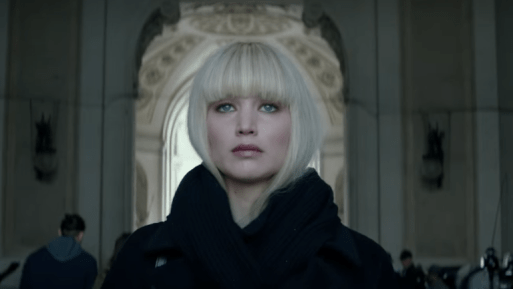
Red Sparrow is an American spy thriller film directed by Francis Lawrence and based on the 2013 novel of the same name by Jason Matthews. The film tells the story of a Russian intelligence officer, Dominika Egorova (Jennifer Lawrence), who is sent to make contact with a CIA agent and possible mole. The film also stars Joel Edgerton, Charlotte Rampling, Mary-Louise Parker and Jeremy Irons. It released to theaters on March 2nd, 2018.
The score for Red Sparrow was composed by James Newton Howard, one of the film industry’s most versatile and honored composers, with a career spanning over thirty years and encompassing more than 130 film and television projects. His myriad film credits include the Oscar®-nominated scores for Defiance, Michael Clayton, The Village, The Fugitive, The Prince of Tides, and My Best Friend’s Wedding, as well as Oscar® nominated songs for Junior and One Fine Day. Howard also received Golden Globe nominations for his scores for Peter Jackson’s blockbuster remake of King Kong and Defiance, as well as the aforementioned songs.

James Newton Howard’s score for Red Sparrow is, in a word, beautiful. Howard’s scores have always been among my favorites, but this one might just be one of his best. For a start, the score begins with a proper overture which came as a very pleasant surprise to me. Overtures in film music are typically, in my experience, associated with the golden age of cinema, when many films contained an overture and an intermission like a stage play or an opera. And like those overtures, Howard’s overture sets the tone for the entire soundtrack: it’s a haunting string melody, mixed with woodwinds, that gently draws you into itself until you’re lost in the rising and falling sounds. Appropriately enough, there are faint overtones of Russian-styled music in the melody, which makes sense given where the film is set. However, this sound does not dominate the overture, it is a hint of “Russian-ness” and nothing more.

Most of the score follows the lyrical example of the overture, especially the last track before the end titles which is listed as “Didn’t I Do Well.” This last piece is more upbeat than the overture and actually put me in mind of a ballet number, which may be deliberate since Jennifer Lawrence’s character is *minor spoiler* a former ballerina. I say it reminds me of ballet because the leaps and quick changes in the melody are reminiscent of the steps a ballet dancer takes.

Red-Sparrow

However, some of the tracks in the score depart from the style featured in the overture and “Didn’t I Do Well” and lean closer to a more modern feel, with electronic sounds and a faster paced, more “jagged” melody. Examples of this include “Take Off Your Dress” and “The Steam Room.” The latter especially could be considered the most “violent” sounding piece in the entire soundtrack (I have my theories as to why but I’ll need to see the film to know for certain) but I enjoyed listening to it because it stood in marked contrast to the other pieces surrounding it in the score.

In conclusion, Howard’s score for Red Sparrow is a gorgeous listening experience and I can already tell it will be the highlight of the film (even if the rest of the film disappoints, which I hope it doesn’t). I think you will definitely enjoy it.

Let me know what you thought of Red Sparrow’s soundtrack in the comments below. 🙂

You can become a patron of the blog at: patreon.com/musicgamer460

Check out the YouTube channel (and consider hitting the subscribe button)

See also: Film Soundtracks A-W

My thoughts on: Red Sparrow (2018)

Don’t forget to like Film Music Central on Facebook 🙂

Soundtrack Review: Maze Runner-The Death Cure (2018)

images

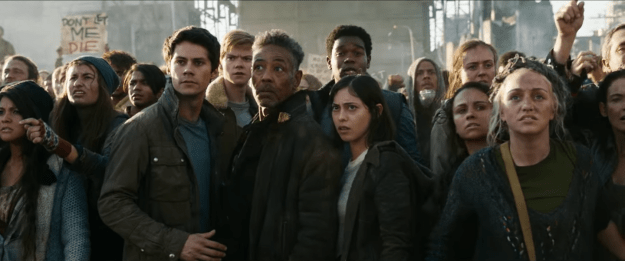
Maze Runner: The Death Cure is a 2018 American dystopian science fiction film based on the third novel in the Maze Runner trilogy written by James Dashner. It was originally meant to be released in 2017 but had to be delayed when series star Dylan O’Brien suffered injuries while filming and required extensive time to recover. In The Death Cure, the surviving “Gladers” must infiltrate WCKD headquarters in order to rescue their friend Minho who is being tortured by WCKD in hopes of developing a cure for the Flare virus that has turned most of the population into “Cranks” (zombie-like beings that have an overwhelming urge to kill anyone who isn’t a Crank). The film and soundtrack released on January 26th, 2018.

The score for The Death Cure was composed by John Paesano, a composer with a lengthy list of film credits to his name. Paesano received an Annie Award for Best Music for his work on DreamWorks’ animated series Dragons: Riders of Berk, which is based on the Academy Award® winning film How To Train Your Dragon. He won a World Soundtrack Award for his score to the hugely successful young adult adaptation, The Maze Runner.

He has now completed the trilogy, which includes The Scorch Trials and The Death Cure. His other credits include Universal Picture’s Almost Christmas and Sony Animation’s The Star. He’s currently scoring both Marvel’s hit series Daredevil and Defenders. Forthcoming in 2018 is Spider-Man PS4, which will be released featuring John’s huge orchestral score.

maze-runner-the-death-cure-clips

Listening to Maze Runner: The Death Cure was a refreshing change of pace compared to the other science fiction works I’ve been listening to as of late (i.e. Annihilation and Altered Carbon). Unlike those works, The Death Cure’s score uses a more traditional orchestra, mostly strings, though there is a healthy dose of synthesizer used as well (in the 21st century, it’s next-to-impossible to find a film score that doesn’t use synthesized music at some point).

Two tracks that stood out to me were “The Virus” and “The Last City.” With “The Virus,” it was very interesting, given the track’s title, how it actually sounded. I was expecting to hear something sinister and dark, but it actually sounded very pleasant. With layered orchestral chords and synthetic drones, the music is actually rather serene at times, which makes me wonder what part of the film this music is attached to with a title like “The Virus.” I really do enjoy listening to this track, it’s simple and direct and hopefully gets its point across in the film.

Last_City

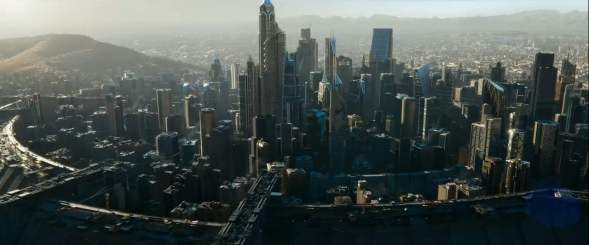
“The Last City” can only be referring to the city that holds WCKD headquarters (and is presumed to be the last functioning city of its kind on Earth). Appropriately enough, given the post-apocalyptic setting, the music for this track is sad, with a mournful horn melody accompanied by strings. I have to imagine that even for those living inside the city things must seem completely hopeless, given how close humanity is to extinction, no wonder the music is so sad. I like how Paesano has written this piece, especially how the strings swell up with a theme of their own and weave in and out with the horn. Like “The Virus,” this track is relatively simple but effective.

And those are my thoughts on the soundtrack of Maze Runner: The Death Cure. Reviews of the film have been mixed, but I think Paesano’s soundtrack is good, and I hope you enjoy listening to it. My thanks to The Krakower Group for making this soundtrack available for review. The soundtrack is available via Sony Classical.

Don’t forget to like Film Music Central on Facebook 🙂

Become a Patron of the blog at patreon.com/musicgamer460

Check out the YouTube channel (and consider hitting the subscribe button)

See also: Film Soundtracks A-W

Soundtrack Review: Annihilation (2018)

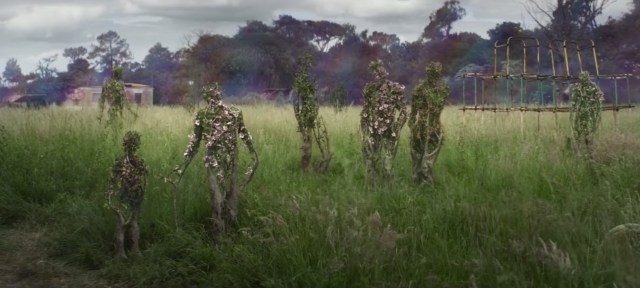
Annihilation is a science fiction horror film written and directed by Alex Garland in his second outing as a film director. The film is based on the novel of the same name by Jeff VanderMeer and follows a group of military scientists who enter “the Shimmer,” a mysterious quarantined zone that is full of mutating landscapes and creatures. Annihilation stars Natalie Portman, Oscar Isaac, Jennifer Jason Leigh, , Gina Rodriguez, Tessa Thompson and Tuva Novotny and was released on February 23rd, 2018.

The soundtrack of Annihilation was scored by composing duo Ben Salisbury and Geoff Barrow, who previously worked with Alex Garland on the Academy Award winning film Ex Machina (2015). Ben Salisbury is an Emmy-nominated composer with over 100 film and television composing credits to his name, including Beyonce Knowles’ self-directed documentary feature Beyonce: Life Is But A Dream and the last 3 series of David Attenborough’s acclaimed Life Of… strand for the BBC. Geoff Barrow, known for his extensive body of work as a music producer and founding member of the band Portishead, first began his film music career as the music supervisor and original score writer for graffiti artist Banksy’s Oscar-nominated documentary Exit Through The Gift Shop. He recently worked on the band Arcade Fire’s latest album Everything Now in addition to producing a cover of ABBA’s “SOS” with Portishead for Ben Wheatley’s film adaption of High-Rise.

The first thing I noticed about this soundtrack is that it is clearly related to the music of Ex Machina. It is not identical, per se, but it clearly comes from the same tonal family as the previous film. I don’t say this as a bad thing, in fact, it’s not uncommon for multiple soundtracks from the same composer (or group of composers) to retain similarities across each film. I also think the resemblance has something to do with Annihilation being considered the “spiritual” successor to Ex Machina.

22-annihilation-2.w710.h473

That being said, if you liked Ex Machina and its soundtrack, then you will love the soundtrack for Annihilation. Like the soundtrack for Altered Carbon, most of the tracks contain the same elements: long synthesized tones, metallic wind chimes, and vocal tones. Despite the similarities, some of the tracks did stand out to me.

“Shimmer Reveal” is only 38 seconds long but it catches the ear because it starts very soft and steadily grows in volume. As the volume increases, the melody “thickens” with a deeper synthesized tone. It feels like we start looking at a small picture which quickly expands into a panoramic landscape (in fact this is probably when we get our first in-depth look at the “shimmer” which can only be that mysterious thing that Natalie Portman’s character is seen walking into in the previews).

annihilation-plant-evolution-elements

“Abandoned Army Base” is half-mystical and half-sinister in the way it combines a synthesized drone with “creaking” metallic tones that sound like metal being ripped apart and metallic chimes that put me in mind of a monastery. Given that this is a science fiction horror film, I can only presume the sinister component I hear is due to someone or something hiding at this abandoned base, just waiting to snatch an unsuspecting victim (of course I could be wrong, but that’s what it sounds like). And going back to Ex Machina, this track in particular reminds me of Ava’s theme.

I have to bring attention to “In All of Us” simply because this track breaks the overall pattern and includes a melody from a guitar, which is so unexpected that it jars the ear when it arrives. “We Are Headed That Way” which follows that track, is interesting to me because of its title. Given the trailer’s hints that “the Shimmer” is causing a mutation of some kind, I wonder if this title refers to the idea that everything on Earth will eventually be affected by this mutation. Truthfully I can’t wait to find out what “the Shimmer” is actually doing, the visuals in the previews looked amazing.

annihilation_deer

And those are my thoughts on the soundtrack for Annihilation. The soundtrack is currently available via Lakeshore Records and I hope you enjoy listening to it. My thanks to The Krakower Group for making this soundtrack available for review.

If you’ve seen Annihilation, what did you think of the film and its soundtrack? Let me know your thoughts in the comments below, but please no spoilers, I’m seeing the film on Wednesday night 🙂

Become a Patron of the blog at patreon.com/musicgamer460

Check out the YouTube channel (and consider hitting the subscribe button)

Don’t forget to like Film Music Central on Facebook 🙂

See also: Film Soundtracks A-W

My thoughts on: Annihilation (2018)

Soundtrack Review: The Alienist (2018)

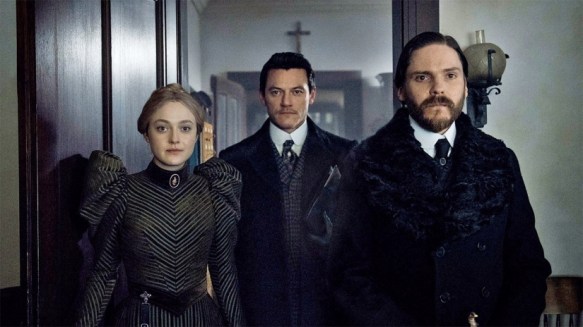
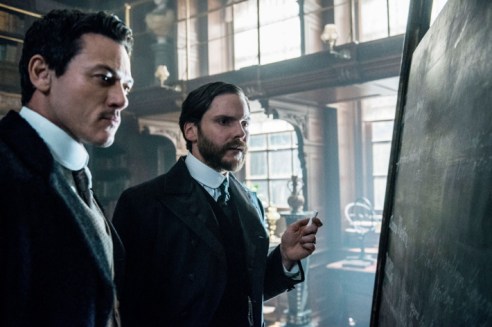
The Alienist is an American television period drama mystery series based on the novel of the same name by Caleb Carr. The ten episode series currently running on TNT stars Daniel Brühl, Luke Evans and Dakota Fanning as a team assembled in late 1890s New York City to investigate a ritualistic serial killer who is murdering street children. The title comes from a late-19th century belief about mental illness. At that time, the mentally ill were considered to be “alienated” from their true nature. Those who studied mental illness were therefore known as “alienists.”

The titular alienist is Dr. Laszlo Kreizler (Daniel Brühl), a criminal psychologist hired to secretly conduct an investigation into the case by police commissioner Theodore Roosevelt (the future President of the United States). Kreizler is aided in his task by newspaper illustrator John Moore (Luke Evans) and Sarah Howard (Dakota Fanning), the police commissioner’s secretary.

alienist

The music for The Alienist was composed by Rupert Gregson-Williams. A truly versatile composer, Gregson-Williams has written a wide range of scores for many feature films, including the Oscar-winning Hotel Rwanda for which he was awarded the European Film Award for Best Composer, the blockbuster DreamWorks animated films Over The Hedge and Jerry Seinfeld’s Bee Movie, for which Rupert was nominated for an Annie Award for his original score and the independent BBC Films’ Love + Hate, for which he was awarded the Reims International Composer Award.

Most recently, Gregson-Williams scored the blockbuster and critically acclaimed Wonder Woman directed by Patty Jenkins and starring Gal Gadot and Chris Pine; the award-winning war drama Hacksaw Ridge, starring Andrew Garfield and directed by Mel Gibson, and the international hit The Legend of Tarzan. His upcoming film projects include “Terminal,” starring Margot Robbie and written and directed by Vaughn Stein.

Having cut the cable cord several years ago, I haven’t been able to watch the show yet, but based on the soundtrack, I think I need to. From the very start with “The Streets of New York” and “Brooklyn Bridge,” there is an old-time sound that is meant to recall the late-19th century. In fact, I was strongly put in mind of the soundtrack to Sherlock Holmes (2009) which is set in a similar time period (albeit in London and not New York City).

05-the-alienist-103.w710.h473

The cue titled “Dr. Laszlo Kreizler,” which I assume is his theme, intrigued me. Given that he’s the titular character, it struck me how sinister his theme sounds with a descending three note motif that recurs in strings and piano. This could be because he studies the mentally ill and crimes committed by people who suffer from mental illness and as a result he’s “tainted” for lack of a better word by what he’s seen. Of course it could also be a musical hint that Kreizler is a villain in disguise, but I can’t say for certain (though now I want to read the book and watch the show to find out if I’m right or not).

Another cue that caught my attention is “Madness of the City” which literally starts with a growl that briefly settles back before exploding into a mad cacophony that literally sounds like someone trying to break through a locked door (which may have been what they were going for) with repeated “banging” sounds. The entire track is underlaid with raging strings (primarily the cello) that continually make their presence known. This is definitely one of my favorite tracks. “Alienated Mind” is also an interesting piece because it consists of long musical drones that remind me of a Buddhist monk chanting “Ommm…”

Alienist-Promo-Still-16-The-Main-Investigators

Finally, I’ll talk about the main title theme for the show, which is very short (only 35 seconds) but contains a wealth of detail. Instead of possessing a distinct theme as most shows do (for example Penny Dreadful, Game of Thrones, Star Trek and NCIS just to name a few), the main theme for The Alienist more closely resembles what music theorists call a “sound cloud,” that is to say a mashup of music that is loosely organized (otherwise it would just be noise) but has no distinct melody. It contains elements from several of the tracks I’ve looked at already, and it carries an air of mystery about it.

And those are my thoughts on the soundtrack for The Alienist. The soundtrack is currently available via Lakeshore Records. My thanks to The Krakower Group for making this soundtrack available for review. Let me know what you think of The Alienist and its soundtrack in the comments below!

See also:

TV Soundtracks

Become a Patron of the blog at patreon.com/musicgamer460

Check out the YouTube channel (and consider hitting the subscribe button)

Don’t forget to like Film Music Central on Facebook 🙂


Soundtrack Review: Altered Carbon (2018)

Based on the classic cyberpunk noir novel by Richard K. Morgan, Altered Carbon is an intriguing story of murder, love, sex, and betrayal, set more than 300 years in the future. In Netflix’s Altered Carbon, Society has been transformed by new technology: consciousness can be digitized; human bodies are interchangeable; death is no longer permanent.

Takeshi Kovacs (Joel Kinnaman) is the lone surviving soldier in a group of elite interstellar warriors who were defeated in an uprising against the new world order. His mind was imprisoned – on ice – for centuries until Laurens Bancroft (James Purefoy), an impossibly wealthy, long-lived man, offers Kovacs the chance to live again. In exchange, Kovacs has to solve a murder … that of Bancroft himself.

The soundtrack is composed by Jeff Russo, who has also composed music for Star Trek: Discovery and Fargo. For the latter, Russo earned a Primetime Emmy Award for Outstanding Music Composition for a Limited Series, Movie, or Special in 2017. Russo began his music career in 1990, after founding his rock band TONIC. The group quickly achieved great success and in 2003, received two Grammy nominations, one for “Best Rock Performance by a Duo or Group with Vocal” for “Take Me As I Am,” and one for “Best Rock Album.” The band was a great showcase for Russo’s guitar work and songwriting that allowed him to branch out and begin his solo career in producing and composing.

altered-carbon-netflix-10

I’d heard that the soundtrack for Altered Carbon was unusual for a story in the cyberpunk genre, and now that I’ve listened to the soundtrack album I can definitely attest that this is true. As a general rule, the music in any show or film set in the future (and particularly in a cyberpunk future like Altered Carbon) has an “edgy futuristic” feel to it. Notable examples of this practice include: Blade Runner and its sequel; Automata; The Machine and Forbidden Planet. These films have soundtracks with weird electronic noises, guitar riffs and descents into heavy rock beats during action sequences.

But the soundtrack for Altered Carbon doesn’t do this. Instead, the music, beginning with the “Main Title” has a mysterious quality to it. There are long, held-out string drones that combine with soft vocals (that are half muttering, half singing) and a cello solo. The opening title has the slightest touch of a drum beat, but it only lasts for a short time and doesn’t dominate the track.

altered-carbon-2

Most of the album: “Consciousness,” “Bancroft Shows Kovacs,” “Her Daughter,” and “Attacked by Troopers” are all variations on the same musical arrangement: strings with a prominent solo cello, combined with female vocalizations and an on-again/off-again background of electronic music. This is not a bad thing: In fact it shows that the world of Altered Carbon has a consistent musical background (and consistency is never a bad thing in film and television music). It’s actually refreshing to listen to a science fiction soundtrack that doesn’t include heavy rock music. Jeff Russo has composed a beautiful soundtrack for an amazing show. If you haven’t watched it yet, the first season is currently available on Netflix. The soundtrack became digitally available from Lakeshore Records as of February 9th, 2018.

Let me know your thoughts on Altered Carbon and its soundtrack in the comments below! My thanks to The Krakower Group for making this soundtrack available for review.

See also:

TV Soundtracks

Become a Patron of the blog at patreon.com/musicgamer460

Check out the YouTube channel (and consider hitting the subscribe button)

Don’t forget to like Film Music Central on Facebook 🙂

Soundtrack Review: Ben-Hur (1959)

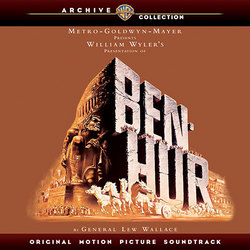
Longtime readers of this blog know that I am a huge fan of composer Miklos Rozsa’s film scores. Rozsa (1907-1995) was a titan of film music and his epic score for Ben-Hur (1959) remains a benchmark that few have ever equalled (let alone surpassed).

13255

I am pleased to announce that Tadlow Music is releasing a completely new recording of this 157 minute score on October 3rd, one that will feature previously unrecorded music. The music has been recorded by the City of Prague Philarmonic and is conducted by Nic Raine.

If you haven’t seen the 1959 epic, it is NOTHING like the travesty that came out in 2016 (in fact, forget that movie even exists). The 1959 version of Ben-Hur is still considered to be one of the greatest films ever made, winning a record 11 Academy Awards (a feat that has only been equaled twice and NEVER surpassed) as it tells the story of a Judean prince (played brilliantly by Charlton Heston) whose life is thrown into turmoil at the same time that a strange carpenter begins preaching a new message to the people.

When you listen to this soundtrack, I highly recommend starting with the Overture. While it may seem strange now for a film to have an “overture” like an opera, back in the day it was fairly common for an epic film to start with a musical overture of some kind (there was also intermission music and exit music) that would play as the audience took their seats.

Another track that I absolutely recommend is the “Parade of the Charioteers” (this is usually preceded by a series of fanfares). This is the music that precedes the climactic chariot race (where Ben-Hur and Messala settle their differences once and for all) and is rightly considered one of the greatest sequences ever put on film. Curiously, the race itself has no music, something I’ve talked at length about.

Another track that I must recommend is the music that accompanies the “Lepers!” scene. As I’ve said previously, this scene features some amazing musical work, as Rozsa must convey with music alone that something terrible has happened to Ben-Hur’s mother and sister without the audience actually seeing what it is.

Truthfully, I could recommend this entire soundtrack, as it is a beautiful masterpiece, whose importance to film music cannot be overstated. In fact, parts of the score were used as temporary music for Star Wars (1977) (and it is said you can still hear its influence in certain places). If you want to hear some fantastic music, please pick up this new recording when it comes out in October. My thanks to The Krakower Group for making this information available.

Become a Patron of the blog at patreon.com/musicgamer460

Check out the YouTube channel (and consider hitting the subscribe button)

Don’t forget to like Film Music Central on Facebook 🙂 Have a great day!
Soundtrack Review: American Assassin (2017)

I was fortunate enough to be able to experience the soundtrack for the upcoming film American Assassin, due to be released next week in theaters. Directed by Michael Cuesta, American Assassin follows the rise of Mitch Rapp, a CIA black ops recruit, after losing his parents in a car accident and his girlfriend to a terrorist attack shortly after they were engaged.

The soundtrack was composed by Steve Price and is simply amazing. This review will look at several pieces from the soundtrack, to give you an idea of what is to come. The opening track is titled “The Proposal” and begins with a quiet melody, partially played on piano. This is later mixed with a cello; it is simple but romantic at the same time. The twist comes halfway through the track: the music suddenly turns dark (emphasized by very low tones on the piano) and the tension is slowly turned up as the mood turns from light and happy to dark and unsure. Even though the film hasn’t come out yet, the music allows me to visualize what is likely happening: Mitch has just proposed to his girlfriend (or maybe he is getting ready for it), when, according to the music, something terrible happens.

The fifth track is titled “Plutonium” and is not so much a melody as it is a cluster of sound  waves that rise and fall in volume. The opening moments are dripping with menace (appropriate for plutonium, which can be deadly in the wrong hands), and for most of the track there is no motion in the sound, but this begins to change toward the end. I don’t mean to imply that lack of motion is a bad thing because it isn’t. Sometimes the soundtrack just needs to convey the threat of something, it doesn’t necessarily have to move the audience along, so to speak.

The tenth track is titled “I Trusted You” and it might just be my favorite in the soundtrack. The first minute is pure frenetic energy, but then it slides back into a contemplative mode, as if the scene began with a burst of action and then tapered off, perhaps into dialogue. I loved the mix of energy between the different instruments, and how seamlessly it transitioned from action to drama (fast-paced to slow-paced, it’s a slight oversimplification, but it gets my point across).

And that is my brief preview into the music for American Assassin. I absolutely loved everything I heard and I believe Steve Price has done a magnificent job. I apologize deeply for not getting these music reviews out sooner, the dissertation has taken over a large chunk of my life and I was forced to place these reviews on the back burner. But now I promise that if I blog on nothing else for the near future, I will get some reviews out to you every week. I hope you enjoyed this one, there’s plenty to come I promise. My thanks to The Krakower Group for making the soundtrack of American Assassin available. Have a good weekend everyone!

Become a Patron of the blog at patreon.com/musicgamer460

Check out the YouTube channel (and consider hitting the subscribe button)

See also: Film Soundtracks A-W

Don’t forget to like Film Music Central on Facebook 🙂