Category Archives: Interview

John Debney talks The Scorpion King (2002)

Let’s face it: you either love The Scorpion King or you hate it, there is no middle ground.

This spin-off of The Mummy Returns is set 5,000 years before the original Mummy films and tells the story of how Mathayus (Dwayne “The Rock” Johnson in his first film as a leading man) rose to power as the “Scorpion King.” Mathayus is initially part of a small group of Akkadians contracted by King Pheron to kill a sorcerer working for a tyrannical king named Memnon. They are betrayed by Pheron’s son Takmet (who murdered his own father and joined Memnon after they left on their mission) but Mathayus is still able to reach the sorcerer’s tent…only to find that it’s actually a beautiful sorceress named Cassandra.

Mathayus hesitates long enough to be captured and after his companions are killed, he is left to die a slow agonizing death buried up to his neck in the desert. Thereafter, Mathayus seeks vengeance on Memnon for killing his companions (one of whom was his half-brother) and also information from the sorceress (for example, why she persuaded Memnon to not kill him on the spot as he did the others).

scorpion-king

Along the way, Mathayus meets various allies, including the Nubian king Balthazar (who initially does not like Mathayus because he despises Akkadians). When Cassandra returns to Memnon after being with Mathayus for some time, the latter organizes an all-out assault on Memnon’s stronghold Gomorrah to save Cassandra and kill Memnon once and for all.

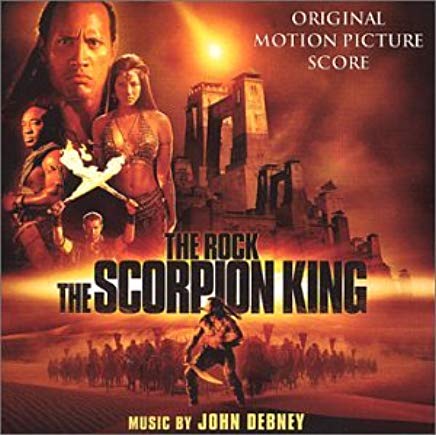
The orchestral score for this film was composed by John Debney; this music was mixed in with various rock songs (the latter are what appear on the soundtrack album for the film). In the extended “making of the score” video which you can access in the link above, there are numerous shots of the orchestra in the recording studio with the in-progress film playing on a large screen for the conductor’s reference. As I’ve said before, this is the stage of film music production that I love the best, and I hope to witness it in person one day.

The-Scorpion-King-images-33fb21c0-fe01-4c0c-b6f3-31caa4e84c5

Debney (and the film’s director) discuss how various parts of the score came together, including the overall sound of the music. Since this is meant to take place long before any recorded history, Debney did not want to invoke one culture above another, but instead wanted to create a sense of something new and unfamiliar. The director also discussed including a touch of rock music, and thus giving the film something of a more contemporary feel in certain places. This is really one of the better interviews I’ve found for the making of a film score and even if you’ve never seen The Scorpion King, I really think you will enjoy it.

Become a Patron of the blog at patreon.com/musicgamer460

Check out the YouTube channel (and consider hitting the subscribe button)

See also:

Film Composer Interviews A-H

Film Composer Interviews K-Z

See also:

John Debney (and Tom Morello) talk Iron Man 2 (2010)

John Debney scoring Predators (2010)

John Debney talks The Passion of the Christ (2004)

John Debney talks The Jungle Book (2016)

Don’t forget to like Film Music Central on Facebook 🙂

John Debney talks The Passion of the Christ (2004)

The Passion of the Christ (2004) is a film that is not easily forgotten once you’ve seen it. This was the first R-rated film I ever saw in theaters (the youth group I was in went to see it one weekend, we all had to get our parents to sign waivers since we were under 18) and it’s a film that physically impacted me for weeks afterward.

For those who haven’t seen it, The Passion of the Christ details the final twelve hours of the life of Jesus, from his arrest to his crucifixion (with a short epilogue on the day of his resurrection). The entire film is subtitled, with the primary languages being Aramaic, Hebrew and Latin (to make the story feel more authentic). The film was directed by Mel Gibson and was a huge hit upon release, although many criticized the extreme graphic violence in certain scenes (I personally have only been able to see this film three times since 2004).

The  score that accompanies this film was composed by John Debney (The Jungle Book) and it is widely regarded as a masterpiece of film music. In the extended video which you can reach via the link above, Debney (and Mel Gibson) discuss how various themes came together, primarily Satan’s theme and the theme for Mary, the mother of Jesus. Interestingly, instead of using a traditional ensemble, or using only instruments that might have been heard in ancient Jerusalem, Debney opted to use a more global sound (Satan’s theme, for instance, is created with a traditional Chinese instrument), as this is a story that Gibson wanted to be accessible to everyone.

The music for The Passion of the Christ really is beautiful, and I do recommend this film as well, but with one major caveat: if graphic violence disturbs you, do NOT watch this film. The torture segments (particularly the flogging scene) are very bloody, and could easily be traumatizing.

Have you seen The Passion of the Christ? What did you think of it, or the music? Let me know in the comments 🙂

See also:

John Debney talks The Scorpion King (2002)

John Debney (and Tom Morello) talk Iron Man 2 (2010)

John Debney scoring Predators (2010)

John Debney talks The Jungle Book (2016)

Film Composer Interviews A-H

Film Composer Interviews K-Z

Become a Patron of the blog at patreon.com/musicgamer460

Check out the YouTube channel (and consider hitting the subscribe button)

Don’t forget to like Film Music Central on Facebook 🙂

Patrick Doyle Talks Cinderella (2015)

In 2015 Cinderella became the latest Disney animated film to undergo the live-action remake treatment and the results were….okay (depending on who you ask). The biggest change between the 1950 original and this version is that the latter is not a musical (which I think is a real shame).

Unlike Maleficent, which told the Sleeping Beauty story from the perspective of the titular character, Cinderella basically retold the story straight (with various changes here and there, but nothing too extreme). And as beautiful as it looked in the previews, I couldn’t bring myself to watch it, as I grew up watching the animated film. Also, no offense, but Cate Blanchett has NOTHING on Eleanor Audley when it comes to playing Lady Tremaine (I watched a few clips to get an idea of the film).

54ff2b803d33425a57fc69d4_cinderella-lily-james-richard-lawson

One bright spot is Patrick Doyle’s score, created with an emphasis on romance. Doyle frequently collaborates with director Kenneth Branagh (including Hamlet and Thor) and the resulting music was well-received by critics. Doyle briefly mentions the score in a red carpet interview I was able to find for the film’s premiere (available in the link above). Doyle enjoyed creating the music for this film and described it as being “very eclectic.”

Cinderella-2015-Ella-and-stepsisters

Unfortunately it is a very short interview, but I hope you enjoy it (if anyone can point me to a longer interview regarding this film, I will happily add it) 🙂

I’m glad everyone is enjoying Disturbing Disney so far; I just wanted to let you know that the next installment will come next week. Right now the university is on spring break and I’m working extra hours so I don’t have a lot of time to work on that series right now (that’s why I’ve been doing smaller posts thus far).

See also:

Film Composer Interviews A-H

Film Composer Interviews K-Z

Patrick Doyle talks Brave (2012)

You can become a patron of the blog at patreon.com/musicgamer460

Check out the YouTube channel (and consider hitting the subscribe button)

Don’t forget to like Film Music Central on Facebook 🙂

James Newton Howard talks The Village (2004)

village_ver3

Like practically every M. Night Shyamalan film ever created, The Village is a strange film. An isolated village in the middle of the forest lives in fear of strange “monsters” that inhabit the woods all around them, but (as you might expect from a Shyamalan film), things are not exactly what they appear to be.

I’ve never actually seen this film all the way through, but I do recall my jaw smacking the floor when I read a synopsis and found out what the big twist in the story was. Depending on who’s watching, you either see the twist coming a mile away or you have no idea what’s coming at all (I’m definitely the latter).

What I DO know about this film is its soundtrack. This is another example of the work of James Newton Howard (Atlantis: The Lost Empire), in fact his work on this score earned him his fourth Academy Award nomination for Best Original Score (unfortunately he lost to Finding Neverland). This short video takes us into the scoring process for The Village and highlights the contributions of Hilary Hahn, the violinist whose solo work is one of the best parts of the soundtrack. It’s always fun to learn about the scoring process of a film, and even though I’m not the biggest fan of M. Night Shyamalan’s work, I did enjoy watching how the score for The Village came together, and I hope you enjoy it too.

If you’ve seen The Village, let me know what you thought of the film in the comments below 🙂

You can become a patron of the blog at: patreon.com/musicgamer460

Check out the YouTube channel (and consider hitting the subscribe button)

See also:

James Newton Howard talks Dinosaur (2000)

James Newton Howard talks Atlantis: The Lost Empire (2001)

James Newton Howard talks Signs (2002)

James Newton Howard scoring King Kong (2005)

Film Composer Interviews A-H

Film Composer Interviews K-Z

Don’t forget to like Film Music Central on Facebook 🙂

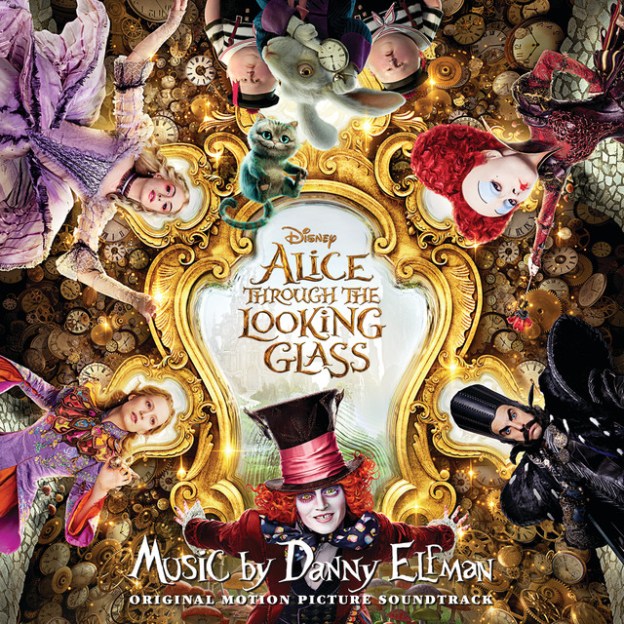
Danny Elfman talks Alice Through the Looking Glass (2016)

Danny Elfman talks Alice Through the Looking Glass (2016)

Oh dear…I actually had some hope for this sequel at first. When Alice Through the Looking Glass was announced, I felt excited because I’d enjoyed Alice in Wonderland and I was initially up for a return to this crazy world. And then the previews started and things got…weird (and I don’t mean weird in a good way).

The more I watched and learned, the more this felt like a re-hash of the first film (with Sasha Baron Cohen thrown into the mix). I’m not ALWAYS opposed to sequels, but if the best they can do is remix the original plot…then forget it!!

hero_Alice-Through-the-Looking-Glass-2016

The basic plot is as follows: Alice has spent the last three years sailing on the high seas (as she said she would do at the end of the first film) but finds upon returning home that her ex-fiance has bought her father’s company and wants her ship in exchange for the family home. The Butterfly leads Alice back into Underland where things are in a right mess: the Mad Hatter is “madder” than usual, convinced his family is still alive. The White Queen asks Alice to visit Time to see if he can save the Hatter’s family in the past and from there…things get slightly screwy (okay things get royally screwy).

There are several trips back into time; we learn why the Red Queen has an abnormally shaped head (because apparently she wasn’t always like that); we learn why the White Queen is the rightful ruler and we also learn why the two sisters hate each other so much. At the end of it all, time is restored, the Hatter is reunited with his family and the White Queen and the Red Queen are friends again while Alice returns home and now sails on the high seas with her mother (somehow retaining the company? or the ship? It’s confusing…)

thumbnail_24404

That being said, Danny Elfman DID return to score the film, so that is one positive in a film that largely disappointed. I hope you enjoy this brief interview with the composer.

See also:

Film Composer Interviews A-H

Film Composer Interviews K-Z

Danny Elfman talks Batman (1989)

Danny Elfman talks Batman Returns (1992)

Danny Elfman “Planet of the Apes” scoring session (2001)

Danny Elfman talks Spider-Man (2002)

Danny Elfman talks Meet the Robinsons (2007)

Danny Elfman talks Alice in Wonderland (2010)

Danny Elfman talks Fifty Shades of Grey (2015)

Become a Patron of the blog at patreon.com/musicgamer460

Check out the YouTube channel (and consider hitting the subscribe button)

Don’t forget to like Film Music Central on Facebook (please!!) 🙂

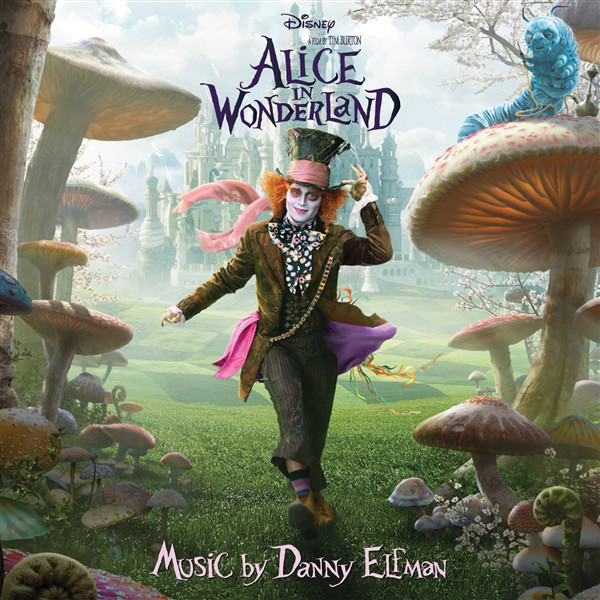
Danny Elfman talks Alice in Wonderland (2010)

Danny Elfman talks Alice in Wonderland (2010)

If I’m perfectly honest, Alice in Wonderland (2010) should be included in my “Didn’t Think I’d Like it (But I did!)” series because, well, I really didn’t think I would like it when the previews arrived. But during my spring break that year I went to see the film because a friend of mine wanted to see it and I actually enjoyed it.

This film is actually something of a sequel to the first Alice in Wonderland (1951) because Alice is now grown up and has all but forgotten her childhood adventure in Wonderland (renamed here as “Underland”), believing it all to be just some fanciful dream she had. Finding herself on the cusp of being forcefully pushed into a marriage she doesn’t want, Alice unexpectedly returns to Wonderland/Underland, where, as it turns out, she must slay the Jabberwocky, defeat the Red Queen and return the White Queen to power. Mayhem and insanity ensues, including a hilarious sub-plot where Alice accidentally grows into a larger person and briefly joins the Red Queen’s court as a woman named “Um” (due to a misunderstanding when the Queen asked her name and she was fidgeting on how to answer).

One of the highlights of this film is the musical score by Danny Elfman. The composer is well known for his collaborations with Tim Burton, and this effort is one of their more memorable efforts in recent years. The film is also notable for using the voice of Alan Rickman (RIP) as the voice of the Caterpillar.

In the brief interview I found, Elfman briefly talks about his work on the film’s score (I always love watching interviews like this one, I just wish they could be longer!). I hope you enjoy this interview clip.

See also:

Danny Elfman talks Batman (1989)

Danny Elfman talks Batman Returns (1992)

Danny Elfman “Planet of the Apes” scoring session (2001)

Danny Elfman talks Spider-Man (2002)

Danny Elfman talks Meet the Robinsons (2007)

Danny Elfman talks Fifty Shades of Grey (2015)

Danny Elfman talks Alice Through the Looking Glass (2016)

Film Composer Interviews A-H

Film Composer Interviews K-Z

Become a Patron of the blog at patreon.com/musicgamer460

Check out the YouTube channel (and consider hitting the subscribe button)

Don’t forget to like Film Music Central on Facebook 🙂

An Interview with Adam Blau

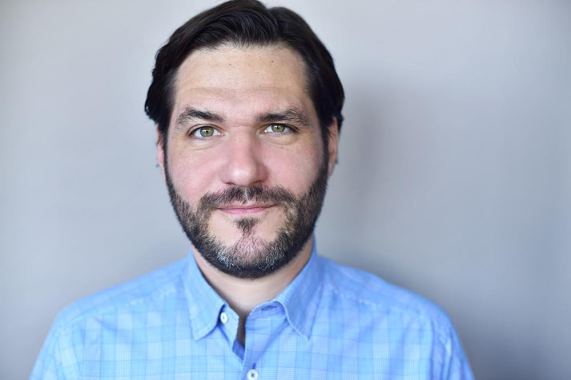
(From Adam’s official bio): Adam is a rising star in the comedy world, with many directors entrusting his musical talents to bolster their projects, often working closely with writers and performers to lend a strong and humorous musical sensibility to their projects. His music has uplifted projects by some of the world’s most popular comedians, including truTV’s Billy on the Street, starring Billy Eichner; NBC’s Mulaney, starring John Mulaney; several Funny or Die shorts; and IFC’s upcoming Brockmire starring Hank Azaria. In addition to composing score, Adam regularly collaborates with the showrunners and writers of projects to create and develop a variety of songs for special episodes – songs ranging from “serious” to intentionally over-the-top satires.

Adam has also scored music and written songs for celebrated films like Warner Bros.’ License to Wed, starring Robin Williams, Mandy Moore and John Krasinski; SXSW favorite The Overbrook Brothers; Phoebe in Wonderland, starring Elle Fanning; and Indian Pictures’ Fuzz Track City. Known for his expertise in percussion, Adam has spearheaded specialty drumline sessions for high profile projects, including Christophe Beck’s We Are Marshall and Mark Isham’s The Express, as well as arranging and producing world percussion for Joel McNeely’s scores to Disney’s popular Tinker Bell films.
unnamed

What got you interested in composing for film and television?
Well, I had been a musician to some extent for most of my life…I started playing when I was very young, and I’ve always been involved with music in some capacity. And while I was living in New York I was pretty active in theater, music directing and accompanying, that kind of thing. As part of that, I had some friends who were writing comedy shows and they needed some interstitial music between scenes, or maybe they needed a song, and so I would help them out and it was really fun. And as an extension of that I wrote some songs for a friends show in Los Angeles, and while I was visiting LA I met a couple of people who needed some extra music for a film they were working on, they’d had a composer drop out of the production and so from New York I experimented with some music for this film and I ended up really enjoying it. In fact, I ended up being “bitten by the bug” and picked everything up and moved from New York to LA and it seems to have worked out pretty well so far.
Are you inspired by any particular composer?
In general sure, I have those (soundtracks) I like to listen to independent of the film, but being so involved in multiple facets of music production, it’s rare these days for me to be listening to any current film scores while I’m composing, because I do so much of that as part of my actual work. But Carter Burwell’s score for Adaptation is a big one, it really got me in tune with what a film score could be/should be…in terms of what I’m writing, so much of the scoring process is dependent on the material and who I’m working with. There is an extent to which it’s a bit of a service industry because I’m writing music for what is essentially someone else’s vision. I think a huge part of the job is finding out what the vision is for the director and seeing how the music can best manifest that idea for them. Now I’m going to put my on thumbprint on it one way or the other, but especially in writing for television comedy, it’s writing in a particular style, usually to form the “punchline.” So I do listen to works by several composers, but in terms of my current writing, they don’t really influence/inspire me in that sort of way, because it’s dependent on what the director needs.

What’s it like working on You’re The Worst ? How is the music composed for each episode: do you get to see any footage or is everything done in advance?
It’s a blast, the show itself…especially in seasons 2 and 3, goes in a very interesting direction. It’s a fairly racy comedy, but they really start talking about some more significant issues. The characters are very well conceived and written and that’s a testament to the show’s creator. The characters can be assholes at times, but over time you can understand why they might be that way. As that goes on, the show shifts tonally, there’s a spectrum of comedy to emotional stuff.
It’s a really great thing, as a composer, to be able to work in the comedic realm but also to work with the more serious, dramatic stuff, or spoofing a genre, like the ‘Sunday Funday’ episodes. And the other part that is really rewarding, is writing actual songs for the characters. Gretchen is a music publicist and she represents this one group, and Stephen (the show’s creator) and I co-wrote all of the songs that they do; and in the PTSD episode we wrote a song that serves as a “relief” for this one character. It’s an original song that we wrote together, and the song is currently being sold as a benefit for the Wounded Warriors organization. The variety is thrilling for me.
How long do you have to put a particular score together? Is there less time for television?
The schedule, for television, is just ridiculous, there is a very quick turn-around between when the picture is locked, like when they’re done editing and when the episode is released, so we have maybe a week, maybe…to get the music finished. Now, I ask for scripts very early in the process, just so I can look through and see if there are song moments or other moments to keep an eye out for. If there’s music within the show, I write it in advance and then go to the set, which is really rare, but I go and teach it to them. I prepare as much as I can in advance though, but by the time it starts being cut, and by the time the show gets to the producers, there is already temporary music in place, either composed by me or someone else, to prompt discussion about what should be in place there. And by the time we come to a spotting session where we meet to discuss how the episode should be scored, either I’ve already written a couple of pieces OR we will discuss if something is working or if we want to go in a different direction. It’s a quick process, sometimes it feels too quick but other times that quick turn-around is a blessing.

How would you describe your compositional style? More orchestral or electronic/synthetic?

It’s totally a case by case basis, I’ve written for full orchestra, like with License to Wed, which had a jazz, swingy feel for the most part. So we wrote it for a huge orchestra. And the other end of the spectrum then is the electronic stuff that I do for You’re the Worst, it is totally case by case. And with percussion stuff, my first stint with that was for a film called We Are Marshall, and there was also Yours, Mine and Ours as well.

The genre is really dictated by the material and also the budget. I would prefer to work with a live orchestra, but with most tv it is simply not in the cards (except for maybe Game of Thrones which has the budget to do it.)
What’s your favorite genre to work with? Why?

I am happy working in any genre, but I like working in comedies because it allows for working in a lot of ways, I admit I am a huge comedy junkie and I love sitcoms. But these days, if you’re doing comedy, you get to write in a number of genres and run the gamut, because writing comedy can also mean writing in a serious moment or a song, so you can try a lot of different things. One of my strengths has been being able to wear a number of different hats, learning a new genre or figuring out the core elements of a particular style and working in that new style, it’s a fun challenge trying to do that. I also enjoy the collaborative process with comedy as well.
Does one score/project stand out as your favorite?

It’s truly hard to pick a single project that I would call my favorite. I would have a hard time sitting here working day after day on shows that I don’t like so much, so I try to find something enjoyable about the project itself or the music for that project, or the people I work with, or otherwise it’s a long hard slog. But there are some standouts for me, You’re The Worst is definitely a highlight. And the people are just so spectacular to work with as well.

Me: Well thank you so much for meeting with me to talk about You’re The Worst and your work as a composer

Adam: Thank you!

You can follow Adam Blau on Twitter @adamblau .

Don’t forget to like Film Music Central on Facebook 🙂

James Newton Howard talks Atlantis: The Lost Empire (2001)

I can’t say it often enough: Atlantis: The Lost Empire is one of the most underrated films that Disney has ever made. Seriously, the animation is beautiful, the story is great, and the MUSIC is one of the best parts! (See Atlantis: The Lost Empire “The Crystal Chamber” for more of my thoughts on this score).

If you haven’t seen the film, the story follows a young cartographer and linguist named Milo Thatch (Michael J. Fox), who is determined to prove the lost city of Atlantis (whose destruction we witness in the beginning of the film) exists and thereby clear his grandfather’s name (his late grandfather was a famous explorer who lost his reputation when he insisted that Atlantis was real). According to Thatch’s research, the key to discovering the location of the sunken city can be found in a mysterious artifact known as The Shepherd’s Journal. But as it turns out, his grandfather had already found the Journal in a previous expedition and left it to his friend, eccentric millionaire Preston B. Whitmore, to be held in his possession until Milo was “ready” to find Atlantis himself. Whitmore wants to help Milo because of a bet he made with his grandfather over whether or not Atlantis existed. Since Milo’s grandfather found the Journal, Whitmore agreed to finance any future expedition with the best materials and the best crew. To that end, Milo is introduced to mostly the same crew that helped Milo’s grandfather find the Journal in Iceland.

The most notable members include:

  • Tiberius Roarke: Commander and secretly a snake in the grass who wants to rob Atlantis of its treasures for huge profits
  • Helga Sinclair: Roarke’s lieutenant (and possibly some-time lover?) who is also in this for the profits (though she does express brief reservations when they discover Atlantis is still inhabited)
  • Vinny Santorini: a demolitions expert obsessed with making things go BOOM! Previously worked in a flower shop (though he’d prefer you didn’t know that)
  • Gaeton Moliere (better known as “Mole”), a geologist with an unhealthy dirt obsession. A line in the direct-to-video sequel implies he was raised by naked mole rats.
  • Dr. Joshua Strongbear: a doctor of African-American/Native American descent. He talks a lot but has a really good heart when push comes to shove.
  • Audrey Ramirez: A teenage mechanic from Puerto Rico and the youngest member on the expedition. If it has an engine, she can make it run. Her sister is a famous boxer.
  • “Cookie”: The expedition cook (though that term is used very loosely) who believes in HIS basic food groups: “beans, bacon, whiskey and lard.”

After numerous hurdles (including having their main ship blown to pieces by a mechanical Leviathan), the surviving crew arrive at Atlantis and are stunned to discover a living city inhabited by hundreds (if not more) of people. The surviving Atlanteans are still ruled by King Kashekim Nedakh (who was king when Atlantis sank under the sea) and his only daughter Kidagakash or “Kida” is heir to the throne. Roarke successfully bargains for the crew to stay the night in the city and Milo goes off to explore with Kida, who is fascinated to meet someone from the surface. Predictably, things go sour when it turns out that Roarke and the rest of the crew are actually mercenaries that have a taste for pillaging ancient treasures for profit. In this case, they’re after the semi-mystical “Heart of Atlantis,” the crystal that is currently keeping the city and its inhabitants alive. Kida is absorbed into the Crystal after Roarke deduces its location and Milo gives chase to bring her back before the entire city dies. After a lengthy battle (in which Roarke, Helga and the rest of the crew who didn’t side with Milo are killed), Milo decides to stay in Atlantis with Kida while Audrey, Cookie, and the rest of our heroes return to the surface (with an Atlantean ship filled to the brim with treasure as their reward for doing the right thing).

This film was my first exposure to James Newton Howard (The Hunger Games series, Maleficent), and I will defend this score forever. That being said, I was beyond happy when I stumbled across this interview on YouTube where Howard talks about his work on this film. And as Howard puts it, there are really two films going on in this story: there’s the action/adventure of finding Atlantis, and once our hero Milo arrives, a totally new story begins (with a new score to match). To help distinguish Atlantis musically, Howard used a variety of Balinese instruments (which favor bells and gongs) to create a very unique sound.

I hope you enjoy listening to this interview with James Newton Howard! If you also enjoy this film, let me know what you like about it 🙂

You can become a patron of the blog at patreon.com/musicgamer460

Check out the YouTube channel (and consider hitting the subscribe button)

See also:

James Newton Howard talks Dinosaur (2000)

James Newton Howard talks Signs (2002)

James Newton Howard talks The Village (2004)

James Newton Howard scoring King Kong (2005)

Film Composer Interviews A-H

Film Composer Interviews K-Z

Don’t forget to like Film Music Central on Facebook 🙂
John Debney talks The Jungle Book (2016)

It’s no secret that I have mixed feelings about the live-action Disney remakes. It just so happens that The Jungle Book (2016) is one I dislike, only because I have very strong feelings for the animated original. My own feelings for the work aside, I have heard that the score was well done, not surprising since it was composed by John Debney (his musical magnum opus remains the score for The Passion of the Christ (2004)).

In this short interview, Debney talks about how he came to work on the score for the film, what kind of vision the director had and how Mowgli needed a theme of his own. But that’s not all I discovered. I also found a B-roll of footage from the scoring sessions, and I’m pleased to share it with you here. Please note around 1:58-2:00 the giant score that the composer is flipping through. You can also see a beat counter next to his head at the beginning of the video.

The Jungle Book scoring session B-Roll (2016)

I love watching scoring sessions, it’s something I really hope to witness firsthand someday in the future. I hope you enjoy this interview and the footage from the soundstage. I have a lot more interviews queued up and I can’t wait to finally get them published!

See also:

Film Composer Interviews A-H

Film Composer Interviews K-Z

John Debney (and Tom Morello) talk Iron Man 2 (2010)

John Debney talks The Scorpion King (2002)

John Debney scoring Predators (2010)

John Debney talks The Passion of the Christ (2004)

Become a Patron of the blog at patreon.com/musicgamer460

Check out the YouTube channel (and consider hitting the subscribe button)

Don’t forget to like Film Music Central on Facebook 🙂

Patrick Doyle talks Brave (2012)

Brave is a gorgeous animated film that was created by Pixar and released by Walt Disney Studios in 2012 (Disney acquired Pixar in 2006). The lead character, Princess Merida, has a distinct honor: she is the first Pixar character to be named an official Disney Princess.

hero_EB20120620REVIEWS120629997AR

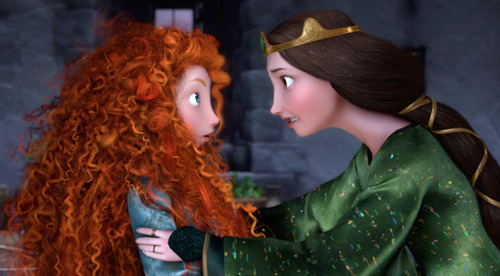
In Brave, Merida, a headstrong princess of the clan Dunbroch and the eldest child of King Fergus and Queen Elinor, is upset to learn that she will be betrothed to a prince from another clan. During an archery tournament that is meant to determine who she will marry, Merida secretly enters and wins the contest, shaming the other princes and infuriating her mother, who desperately wants Merida to act like “a proper princess.”


Wanting to change her fate, Merida defies her family with near-disastrous consequences for all involved. She follows will-o’-the-wisps to the hut of an elderly witch and receives a spell in the form of a cake which she is told to feed to her mother. Upon doing so, Elinor is transformed into a bear and loses her ability to speak. Upon returning to the hut, the pair find the witch gone with a message that explains that “the bond torn by pride” must be repaired by the second sunrise or the transformation will be permanent. Merida must work to repair her relationship with her mother and also prevent war from breaking out between the clans due to Merida’s actions at the tournament. Part of the plot involves respecting tradition while also learning to change for the future. Ultimately, Merida is able to convince the other clans (with subtle help from her mother) that the firstborn of any clan, male or female, should marry in their own time to whoever they choose.

The score for this film was composed by Patrick Doyle, a Scottish film composer best known for his work on several Shakespeare films (Henry V (1989) and Hamlet (1996)) and Harry Potter and the Goblet of Fire (2005). In this five minute interview, Doyle talks about the score and how he created a musical theme for Merida.

tumblr_inline_mwq8ittk6U1qkfkhh

Have you seen Brave? What did you think of it? Did you like the music? Let me know in the comments!

See also:

Film Composer Interviews A-H

Film Composer Interviews K-Z

Patrick Doyle Talks Cinderella (2015)

Become a patron of the blog at: patreon.com/musicgamer460

Check out the YouTube channel (and consider hitting the subscribe button)

Don’t forget to like Film Music Central on Facebook, 🙂