Category Archives: Soundtracks

Peter Pan “Following the Leader” (1953)

*note, this song refers to Native Americans as Indians and “Injuns” which is politically incorrect now, but was considered okay then.

Peterpan-disneyscreencaps-3374.jpg

Now that Wendy and her brothers have safely arrived in Neverland and met the Lost Boys, it’s time to set off on the adventures Peter promised them. While Peter takes Wendy to meet the mermaids, John and Michael and the Lost Boys set off to locate the Indian tribe (with John assuming the role of leader). As the Lost Boys march off, they sing a song about “following the leader.”

Following the leader, the leader, the leader
We’re following the leader
Wherever he may go

Tee dum, tee dee, a teedle ee do tee day
Tee dum, tee dee it’s part of the game we play
Tee dum, tee dee, the words are easy to say
Just a teedle ee dum a teedle ee do tee day

Tee dum, tee dee, a teedle ee do tee dum
We’re one for all, and all of us out for fun
We march in line and follow the other one
With a teedle ee do a teedle ee do tee dum

vlcsnap-204945.png

Following the leader, the leader, the leader
We’re following the leader
Wherever he may go
We’re out to fight the Injuns, the Injuns, the Injuns
We’re out to fight the Injuns
Because he told us so

Tee dum, tee dee a teedle ee do tee day
We march along and these are the words we say:
Tee dum, tee dee, a teedle de dum dee-day
Oh, a teedle ee dum a teedle ee do tee day

Oh, a teedle ee dum a teedle ee-do-tee-day

hqdefault.jpg

The boys traveling through Neverland is like any adventure you ever dreamed of having as a child. They cross rivers, swing down vines and unwittingly pass by several animals (a hippo, monkeys, a rhinoceros and even a large bear). Neverland is full of all kinds of terrain, from the jungle, to the savannah and ending in a forest filled with pine trees.

The song comes to an abrupt end when John discovers a pair of “Indian tracks” in the middle of a clearing. Looking back, it seems obvious that this was a trap for the Lost Boys from the start because how else could their be two footprints side-by-side? If someone is walking normally, one footprint should be in front of the other. But instead they’re next to each other like someone was just standing still. Clearly this is meant to be a trap to delay the Lost Boys until the tribe can close in and capture them (which they do).

I’ve always liked “Following the Leader,” it’s a fun interlude before the drama with Captain Hook and Tiger Lily. What do you think of this song? Let me know your thoughts in the comments below and have a great day!

See also:

My Thoughts on: Peter Pan (1953)

Peter Pan “You Can Fly!” (1953)

Peter Pan “What Made the Red Man red?” (1953)

Peter Pan “The Elegant Captain Hook” (1953)

Disney/Dreamworks/Pixar/etc. Soundtracks A-Z

Become a Patron of the blog at patreon.com/musicgamer460

Check out the YouTube channel (and consider hitting the subscribe button)

Don’t forget to like Film Music Central on Facebook 🙂

The Legend of Sleepy Hollow “Katrina” (1949)

In The Legend of Sleepy Hollow, Ichabod Crane is the awkward yet likable enough school teacher in the village of Sleepy Hollow. He leads a contented life teaching the children while shamelessly flirting with most of the women in town when, one day…he happens to notice the beautiful Katrina van Tassel. Katrina is described as the most beautiful woman in town and she has every unmarried man in Sleepy Hollow wrapped around her finger (without even trying). Naturally Ichabod promptly falls head over heels for the young heiress (though the narrator states he’s equally interested in her fortune as much as her looks), but the short song about Katrina indicates that she’s not as innocent as she looks:


Oo oo oo oo
Ah ah ah ah ah ah ah
Once you have met that little coquette Katrina
You won’t forget Katrina
But nobody yet has ever upset Katrina
That cute coquette Katrina
You can do more with Margaret or Helena
Or Anne or Angelina
But Katrina will kiss and run
To her a romance is fun
With always another one to start
And then when you’ve met that little coquette Katrina
You’ve lost your heart

130.jpg

Katrina is described as “that little coquette,” meaning she loves to flirt. There’s nothing wrong with that, but a later line forebodes that Ichabod’s quest for Katrina’s hand will end badly: “but Katrina will kiss and run/To her a romance is fun/With always another one to start…” I take this line to mean that Katrina has no problem playing with men’s feelings and doesn’t take declarations of love seriously, which can be hurtful if the person expressing those feelings is genuine. And believe me Katrina is taking full advantage of men’s feelings for her, like having them assemble a picnic or carrying all of her packages. It IS funny though to see how quickly Ichabod is smitten by Katrina: one look and he puts a chicken on his head and starts eating his hat!

What do you think of “Katrina”? Let me know your thoughts in the comments below and have a great day!

See also:

The Legend of Sleepy Hollow “Headless Horseman” (1949)

The Adventures of Ichabod and Mr. Toad (1949)

Disney/Dreamworks/Pixar/etc. Soundtracks A-Z

Become a Patron of the blog at patreon.com/musicgamer460

Check out the YouTube channel (and consider hitting the subscribe button)

Don’t forget to like Film Music Central on Facebook 🙂

The Legend of Sleepy Hollow “Headless Horseman” (1949)


In Disney’s The Legend of Sleepy Hollow (sometimes billed as The Adventures of Ichabod), the story follows lanky schoolmaster Ichabod Crane as he attempts to woo the beautiful (and very rich) Katrina van Tassel, to the increasing chagrin of Brom Bones, the town hero. In truth, Katrina is only paying attention to Ichabod to make Brom work harder to secure her affections, but neither man knows this.


Things come to a head when a Halloween party is held at the van Tassel residence. After being upstaged by Ichabod most of the evening, Brom notices that Ichabod is superstitious (he throws salt over his shoulder after spilling some) and decides to use this knowledge to his advantage. He gathers the company around and begins to sing the story of the Headless Horseman, a terrifying ghost reputed to wander Sleepy Hollow.

Just gather ’round
and I’ll elucidate
on what goes on outside when it gets late.
Long about midnight,
The ghosts and banshees,
They get together for their nightly jamboree. 
There’s things with horns and saucer eyes
some with fangs about this size.

Oh When the spooks have a midnight jamboree,
they break it up with fiendish glee.
Ghosts are bad,
but the one that’s cursed
is the Headless Horseman,
he’s the worst.

ich37.jpg

Ichabod pays rapt attention to the song, his terror growing with every verse. “Headless Horseman” is considered one of the darkest songs ever created for a Disney film (right up there with “Hellfire” from The Hunchback of Notre Dame). According to Brom (performed by Bing Crosby), the Headless Horseman rides one night each year to search for a new head. However, if you can cross the bridge at the end of the Hollow, you’ll be safe from the Horseman’s power.

Now, if you doubt this tale is so,
I met that spook just a year ago.
Now, I didn’t stop for a second look,
but made for the bridge that spans the brook.
For once you cross that bridge, my friends,

The ghost is through, his power ends.

So, when you’re riding home tonight,
make for the bridge with all your might.
He’ll be down in the Hollow there.
He needs your head.
Look out! Beware!

Of course we’re meant to find Ichabod’s terror funny because, so far as we know, Brom is making this story up. After all, there’s no such thing as ghosts…or is there? Given how Ichabod’s encounter with the Horseman plays out, it seems possible that Brom might have been telling the truth after all (but that’s a story for another time).

Personally, I don’t remember being scared by this song as a kid (though I don’t think I saw this particular film very often), but I can see how it would be scary for some. Brom can look quite menacing when he chooses and he brings all his talent to bear on scaring Ichabod before he leaves the party. If I heard a song like that, I’d be nervous about riding home in the dark too.

What do you think of the song “Headless Horseman”? Let me know your thoughts in the comments below and have a great day!

See also:

The Legend of Sleepy Hollow “Katrina” (1949)

The Adventures of Ichabod and Mr. Toad (1949)

Disney/Dreamworks/Pixar/etc. Soundtracks A-Z

Become a Patron of the blog at patreon.com/musicgamer460

Check out the YouTube channel (and consider hitting the subscribe button)

Don’t forget to like Film Music Central on Facebook 🙂

The Hunt for Red October “Hymn to Red October” (1990)

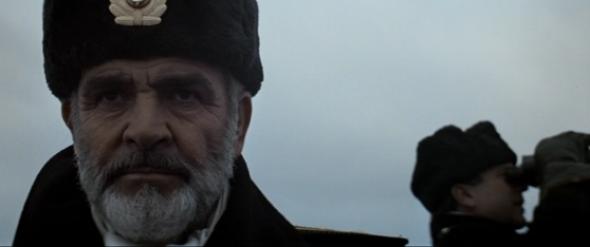
My favorite iteration of author Tom Clancy’s Jack Ryan character has always been Alec Baldwin’s portrayal in The Hunt for Red October (1990), in which the CIA analyst finds himself thrust into an escalating situation when a decorated Soviet submarine captain (Sean Connery) takes off with the Soviet Union’s newest submarine.

The Hunt for Red October Opening Credits (1990)

Besides the great performances from Baldwin and Connery, this has always been my favorite Tom Clancy film because of the score, composed by Basil Poledouris (1945-2006). His piece, “Hymn to Red October” is one of my favorite film pieces to listen to. The piece comes at the beginning of the film, just after an on-screen narration (in summary: what you are about to see, according to the government, never officially happened) sets the scene. It begins as the Red October submarine is heading out to see and Captain Ramius (Connery) agrees with his first officer (Sam Neill) that it is “Time indeed (for their plan to begin).”

redoctober.jpg.CROP.promovar-mediumlarge.jpg

The hymn is orchestral with a male Russian chorus that begins very softly, matching Ramius’ thoughts (“Cold and hard.”) As the chorus grows louder, the orchestra swells up with it, as we see a gorgeous shot of the submarine that morphs into the film’s title before the opening credits roll (it seems weird now but it used to be common for films to open with the title and main credits). As the lyrics reveal, the singers are bidding the Motherland (Russia) farewell and answering the call of the sea. With the power of Red October, nothing can stand in their way.

I find the first few lines of the hymn to be most interesting as they directly reflect a plot point in the film. The line: “Light that has left me/How could I know that you would die?” seems to reflect the untimely death of Ramius’ wife, the event which helped to spur on his defection to the West. The rest of the hymn is styled as typical Soviet propaganda (note the line about “Our Motherland’s victorious march”) that extols the greatness of the Soviet Union.

Cold, hard, empty.
Light that has left me,
How could I know that you would die?
Farewell again, our dear land.
So hard for us to imagine that it’s real, and not a dream.
Motherland, native home,
Farewell, our Motherland.
Let’s go; the sea is waiting for us.
The vastness of the sea is calling to us, and the tides!
Hail to our fathers and forefathers.
We are faithful to the covenant made with the past.
Now nothing can stop
Our Motherland’s victorious march.
Sail on fearlessly,
Pride of the Northern Seas.
Hope of the Revolution, you are the burst of faith of the people.
In October, in October,
We report our victories to you, our Revolution.
And to the heritage left by you for us

What do you think of “Hymn to Red October”? Let me know your thoughts in the comments below and have a great day!

See also:

Film Soundtracks A-W

Become a Patron of the blog at patreon.com/musicgamer460

Check out the YouTube channel (and consider hitting the subscribe button)

Don’t forget to like Film Music Central on Facebook 🙂

First Man “The Landing” (2018)

Ever since I finished watching First Man in the IMAX theater, one piece of music will not leave my mind: the music for “The Landing.” While a more thorough soundtrack review is likely coming in the near future, I’d like to highlight this piece in its own article because it is that good.


“The Landing” comes at what I feel is the true climax of the film; this is the moment we’ve been waiting for since the film started, watching Neil (Ryan Gosling) and Buzz (Corey Stoll) land on the moon. From the moment the LM (Lunar Module) detaches to head down to the surface, a melodic ostinato begins to play (an ostinato is a relatively brief melody that repeats over and over again). Remember in my review of the film how I said parts of First Man reminded me of Interstellar? This scene is one such example, as I saw a definite similarity to the docking scene in “No Time For Caution.” Both scenes have music with a repeating melody that also serves to ramp up the tension as the scene moves forward. In First Man, even though it’s the same notes, Justin Hurwitz subtly alters the theme by making it louder; emphasizing certain notes; interweaving horns and inserting an overlaying melody that comes and goes; with the effect that as the LM comes closer and closer to the surface, you are subconsciously inching to the edge of your seat, driven on by the music you’re hearing.

First Man “The Landing” (2018)

With the landing scene itself, I really like how, in the latter part, the camera flips back and forth between Neil, the surface and the gauge marking how much fuel is left. Working with the music, all of those elements together make for a riveting scene that is one of the best in the film.

What did you think of the landing scene in First Man? Let me know your thoughts in the comments below and have a great day!

See also:

Film Soundtracks A-W

Become a Patron of the blog at patreon.com/musicgamer460

Check out the YouTube channel (and consider hitting the subscribe button)

Don’t forget to like Film Music Central on Facebook 🙂

Film Music 101: Automated Dialogue Replacement (ADR)

In the process of filmmaking, Automated Dialogue Replacement (usually credited as ADR) is the process of re-recording sound or dialogue in post-production to correct any errors or add in any alterations made after production has concluded. This can also include recording various minor sounds that wouldn’t show up during filming (a good example of this can be found in a video of Hugh Jackman recording grunts and growls as his character runs through the woods in Logan).

Hugh Jackman ADR for Logan (2017)

ADR has to be finished before the soundtrack can be mixed into its final form. This is because, for the film, the soundtrack consists not just of the music but also the Foley sound effects and the dialogue and the sound editors then have to blend it all together in a way that will sound coherent to the audience. This is why, if you ever watch a film where the sound effects drown out the dialogue, you might hear people say “they got the mix wrong.”

The ADR process can also include re-recording parts of the music; for example if there was a last-minute cut to the film, part of the score might have to be done over to reflect these changes (otherwise it won’t fit).

And that, in brief, is how ADR works. Thanks for stopping by the blog and have a great day!

See also:

Film Music 101

Become a Patron of the blog at patreon.com/musicgamer460

Check out the YouTube channel (and consider hitting the subscribe button)

Don’t forget to like Film Music Central on Facebook 🙂

Soundtrack Review: Peppermint (2018)

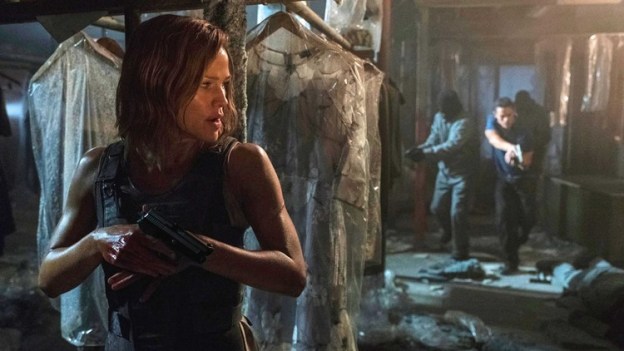
Peppermint is a 2018 American vigilante action film directed by Pierre Morel and stars Jennifer Garner who plays Riley North, a woman who sets out on a path of revenge after her family is gunned down in a drive-by shooting. The score for Peppermint was composed by Simon Franglen.

Simon Franglen is a Grammy-winning and Golden Globe-nominated composer and producer. He received a Grammy Award for Record of the Year as producer of “My Heart Will Go On” from James Cameron’s “Titanic,” and received Golden Globe, Grammy Award and World Soundtrack Award nominations for his work on Cameron’s “Avatar.” His recent work includes composing music for two films with Terrence Malick, including his stunning “Voyage of Time,” multiple projects with Jean-Jacques Annaud and Antoine Fuqua, including “The Magnificent Seven” and working with Pink Floyd, producing 3D mixes for “Their Mortal Remains” which was recently experienced by 400,000 people in London.

la-1536000585-9jve3m6wzk-snap-image

The first thing that comes to mind when I listen to the soundtrack for Peppermint is…emotion. Raw, visceral emotion bleeds out of this score and it’s not surprising given what the plot is about. Franglen has dutifully assembled a collection of strings and electronic instruments to create a score filled with tension, angst and a heavy dose of brooding (brought to glorious fruition by the cello section of the orchestra).

One track that stands out in particular is ‘Drive By Shooting.’ Just from the title you can guess that this will have some particularly dark musical moments, but I’m impressed with how Franglen brought the tension out in this piece. In the first sixty seconds, you are literally put on edge by a screeching, grinding sound which is then replaced by a misleading cello melody. I say misleading because I feel it’s designed to put the audience at ease before the shooting happens, to make the event more shocking.

PEPPERMINT

Another track I want to highlight is ‘Justice for the Judge.’ This piece is brought to life with synthesizers and strings which climax in a moment of pure angst before abruptly (and tellingly) cutting off.

These strings are what help to make the score of Peppermint special, in my opinion. With only the synthesizer portion of the soundtrack, you have a generic score that’s been heard in hundreds of action films over the last several decades (going back at least to the 1980s when synthesized music became a serious ‘thing’ in the film industry). But Franglen doesn’t stick to just synthesizers, no, he mixes them in with strings both high and low (there is also a piano and possibly some woodwinds mixed in but I’ve yet to hear any brass in the soundtrack). It’s an effective combination to be sure; I’m not against wholly electronic film scores but there is something to be said for old-fashioned instruments being included.

maxresdefault-2.jpg

There are also moments where the score takes a moment to breathe and moves in a sentimental direction. The clearest case in point is the track ‘You Have to Wake up Now.’ Unlike many of the pieces in this soundtrack, this one doesn’t start with a bass line laid down by the synthesizer (though it does appear about halfway through). Instead, the audience is treated to a soft piano melody mixed in with the strings. Given the rawness of most of the score prior to this moment, it’s refreshing to hear something so light, even if the moment is brief (about sixty seconds in length).

I know Peppermint has received mixed reviews, but I urge you to give the soundtrack a chance, there are some truly good moments in it. If it has one weakness it’s that it does rely a little too much on the synthesizer, but as I said, this is compensated for somewhat by the presence of the strings and the piano.

Let me know what you think of the soundtrack to Peppermint (or the film itself) in the comments below and have a great day!

See also:

Become a Patron of the blog at patreon.com/musicgamer460

Check out the YouTube channel (and consider hitting the subscribe button)

See also: Film Soundtracks A-W

Don’t forget to like Film Music Central on Facebook 🙂

Soundtrack Review: The Predator (2018)

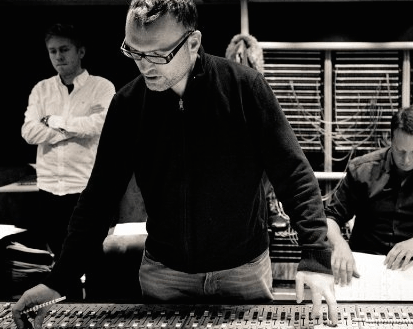
The Predator (2018) is the latest entry in the Predator franchise, serving as a direct sequel to Predator 2 (the film ignores Predators (2010)). The score for this film was composed by Henry Jackman, who has established himself as one of today’s top composers by fusing his classical training and his experience as a successful record producer and creator of electronic music. His work includes Captain PhillipsX-Men: First Class and Captain America: Winter Soldier; Kingsman: The Golden Circle; Wreck-It-Ralph, and Oscar-winner Big Hero 6. His most recent work can be heard in Jumanji: Welcome to the Jungle, Captain America: Civil War, and Kong; Skull Island.

Given that this is a Predator film, some of the musical elements are predictable. There is a notable martial quality to a lot of the music, exemplified by heavy brass and fast, driving rhythms (not quite to the level that Hans Zimmer has been known to employ, but similar) during the action sequences. However next to this is a level of delicacy that you would not expect to find. Jackman makes a healthy use of the strings and woodwinds throughout the score and it provides for some refreshing musical ‘breathers’ in between the bombastic moments.

newsEngin.22967228_3predator

Two examples include ‘Arrival’ (the opening cue) and ‘Rory’ (the theme for McKenna’s son). I remember it surprised me greatly, sitting in the theater, when the film started with the sound of strings (I was expecting a musical ‘bang’ right from the start). To be sure, the music quickly moves into more energetic territory, but I do feel that it says something that the score started with a quieter melody (somewhat fitting as the film opens with a view of space). And ‘Rory’ might just be the cue I like best out of the entire soundtrack. Beginning with the piano and moving into strings and woodwinds, ‘Rory’ is a perfect theme for McKenna’s autistic son. It begins hesitantly (as Rory as just been tormented by some bullies) but then grows with confidence as the young kid demonstrates his abilities by resetting multiple chess boards.

henry-jackman.png

Two more cues that I’d like to highlight briefly are ‘Project Stargazer’ and ‘Beautiful Specimen.’ Both cues take place when Dr. Bracket  (Olivia Munn) is taken to see the captured Predator and contain that martial quality I referred to earlier. My favorite moment from these two comes in ‘Project Stargazer’; the music notably peaks at the moment when Bracket views the captured alien for the first time (a nice example of how the music can reflect plot developments).

Listening to the soundtrack apart from the film has reaffirmed one thing for me: Henry Jackman’s score makes The Predator a better film than it would have been without it. Of course good music can only take a film so far, but Jackman certain put in a very good effort.

What do you think of the score for The Predator? Let me know your thoughts in the comments below and have a great day!

See also:

Become a Patron of the blog at patreon.com/musicgamer460

Check out the YouTube channel (and consider hitting the subscribe button)

See also: Film Soundtracks A-W

Don’t forget to like Film Music Central on Facebook 🙂

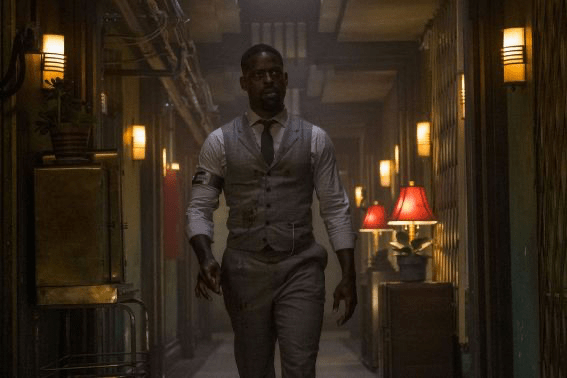
Soundtrack Review: Hotel Artemis (2018)

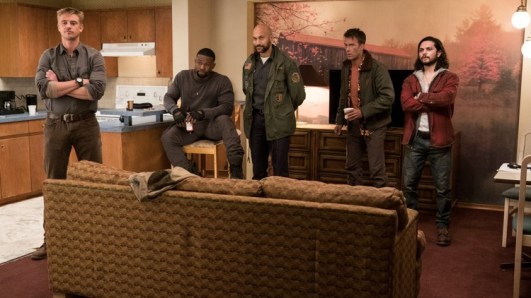
Released on June 8th, 2018, Hotel Artemis is a near-future dystopian film that takes place in a secret hospital for criminals (the titular hotel). The hotel is run by The Nurse (Jodie Foster) and Everest (Dave Bautista), an orderly. Services offered include 3D-printed organs and top of the line care, provided you follow the rules of the establishment. This status quo is upended one night during a riot when a notorious kingpin (Jeff Goldblum) is rushed to the hotel with serious injuries.

The score for Hotel Artemis was composed by Cliff Martinez, whose approach to scoring is nontraditional.  His scores tend towards being stark and sparse, utilizing a modern tonal palette to paint the backdrop for films that are often dark, psychological stories like Pump Up the Volume (1990), The Limey (2009) Wonderland (2003), Wicker Park (2004), and Drive (2011).  Martinez has been nominated for a Grammy Award (Steven Soderbergh’s Traffic), a Cesar Award (Xavier Giannoli’s A L’origine), and a Broadcast Film Critics Award (Drive).  His score for The Neon Demon was awarded Best Soundtrack at the 2016 Cannes International Film Festival.

Not only is the soundtrack of Hotel Artemis sparse, it also suffers greatly from being overly homogeneous. I thought I was imagining it at first, but as I listened to track after track, I realized that most of the music sounded exactly the same: deep synthesized bass tones mixed in with a synthesized drone. There are minor variations to be sure, but the elements are the same throughout. No wonder this score hasn’t stuck in my mind, there was nothing memorable about it.

Synthesizers can be great for film scores when they’re utilized properly (Blade Runner and Blade Runner 2049 are excellent cases in point), but that is not the case here. The drones don’t lead anywhere, there’s no musical development. This can make a potentially great film average and in this case, it makes an average film mediocre.

In conclusion: the score of Hotel Artemis is mostly forgettable, just like the film, which is a real shame. I do my best to find the positives in any score I listen to, but I just couldn’t find them here. What did you think of the score for Hotel Artemis? Let me know your thoughts in the comments below.

See also:

Become a Patron of the blog at patreon.com/musicgamer460

Check out the YouTube channel (and consider hitting the subscribe button)

See also: Film Soundtracks A-W

Don’t forget to like Film Music Central on Facebook 🙂

Moana “I am Moana” (2016)

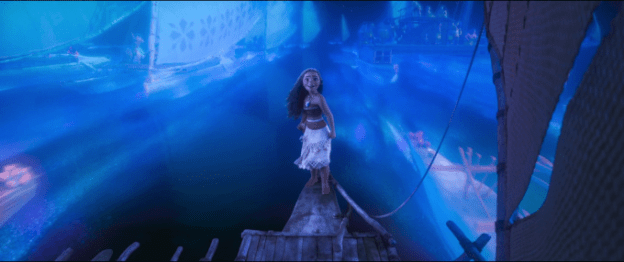
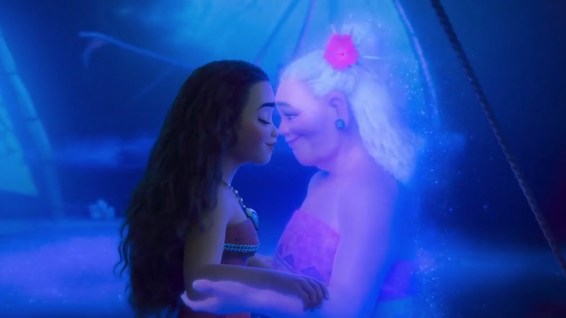
Like many animated Disney films, there comes a point in Moana when it seems like all hope is lost. The first encounter with Te Ka ended in near catastrophe; the boat is badly damaged; worst of all, Maui has abandoned Moana and the quest to restore the Heart of Te Fiti entirely. However unlike earlier films, where the hero/heroine simply steels themselves and keeps on going, Moana has a heart to heart with the spirit of her grandmother and admits that she can’t do this, the ocean needs to choose someone else. And her grandmother agrees! The Heart is given back to the ocean and Moana is told that she can leave for home whenever she wants. This moment is huge because how often do you see a Disney heroine saying “I can’t do it” in this way? Oh granted other Disney heroines have had their down moments, but none of them have so thoroughly set up the idea that the quest won’t be completed like this one has.

maxresdefault.jpg

But of course, since this IS Disney, Moana hesitates to return home, though she doesn’t understand why. Wanting to help her granddaughter, Grandma Tala has a song to help her discover, at long last, who she really is:

I know a girl from an island
She stands apart from the crowd
She loves the sea and her people
She makes her whole family proud

Sometimes, the world seems against you
The journey may leave a scar
But scars can heal and reveal just
Where you are

The people you love will change you
The things you have learned will guide you
And nothing on Earth can silence
The quiet voice still inside you

And when that voice starts to whisper,
“Moana, you’ve come so far”
“Moana, listen”
“Do you know who you are?”


This is it, the pivotal moment for our heroine: Moana must reach down inside herself and discover who she really is.

Who am I?
I am a girl who loves my island
I’m the girl who loves the sea
It calls me

I am the daughter of the village chief
We are descended from voyagers
Who found their way across the world
They call me

Screen-Shot-2016-11-15-at-11.14.45-AM.png

As Moana acknowledges her lineage and her continuing connection to the ocean, suddenly on the horizon she sees dozens of ships approaching. It’s her ancestors who used to sail the oceans, including the one we saw in “We Know the Way.” They acknowledge each other and Moana finally understands that she is a wayfinder like her ancestors before her, this is who she is and always has been!

I’ve delivered us to where we are
I have journeyed farther
I am everything I’ve learned and more
Still it calls me

And the call isn’t out there at all
It’s inside me
It’s like the tide
Always falling and rising
I will carry you here in my heart
You remind me
That come what may
I know the way
I am Moana!

Now completely encouraged, Moana dives after the Heart of Te Fiti, repairs her boat and heads back to the island to face off with Te Ka one more time.

I love “I am Moana” it literally makes me cry every time I listen to it. Discovering your identity is such an important moment and it’s stirring to hear Moana fully embrace who she is. In this song are echoes of two earlier pieces: “Where You Are” and “How Far I’ll Go.” It’s great to hear portions of earlier melodies come together into something new. But please let me know what you think about “I am Moana” in the comments below and have a great day!

Become a Patron of the blog at patreon.com/musicgamer460

Check out the YouTube channel (and consider hitting the subscribe button)

Don’t forget to like Film Music Central on Facebook 🙂

See also:

Moana “Where You Are” (2016)

Moana “How Far I’ll Go” (2016)

Moana “How Far I’ll Go (reprise)” (2016)

Moana “We Know the Way” (2016)

Moana “You’re Welcome” (2016)

Moana “Shiny” (2016)

Moana “Know Who You Are” (2016)

Disney/Dreamworks/Pixar/etc. Soundtracks A-Z