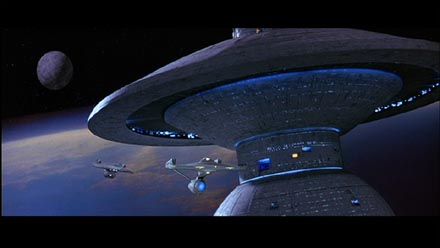
Category Archives: Soundtracks

Introducing James Bond: Skyfall (2012)

Thus far in the Daniel Craig era of James Bond, we’ve had one good and one not-quite-as-good film. Skyfall, the penultimate film thus far, is for me, the moment where the Daniel Craig Bond finally hit his stride. No more awkwardness, no immaturity, THIS is the Bond we’ve come to know and love over the decades.
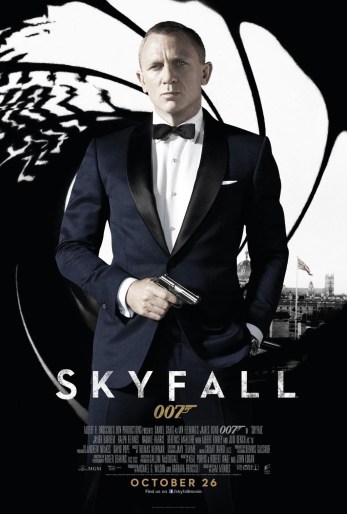
skyfall-uk-poster

Skyfall begins with another mission in progress: Bond is in Istanbul accompanied by a female agent (and there’s a good reason we don’t know her name yet). The end of this scene (being the pre-credits) features Bond accidentally shot and presumed dead in the aftermath.
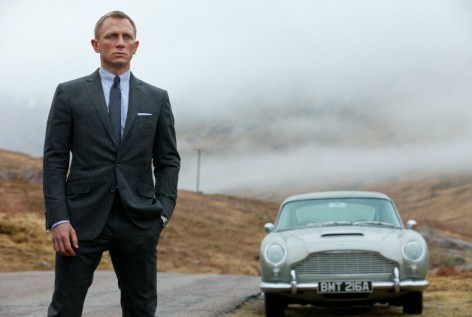
Skyfall-movie-image-daniel-craig

In reality, Bond is alive and well, he decided to use his presumed death as a way to take some much needed time away, but it doesn’t last. Back in London, M (Judi Dench) is facing considerable pressure from Gareth Mallory (Ralph Fiennes) over the continued existence of MI6 in the 21st century and she is being pushed to retire. Out of nowhere, the MI6 servers are hacked and the building is bombed, prompting Bond to return to the city.Bond is up against his most dangerous opponent yet, and not everyone is going to make it out alive.

Unlike the previous two Bond films, I was unable to catch Skyfall in the theater (something I deeply regretted once I did see the movie). If Goldfinger is the perfect classic Bond film, then Skyfall is the perfect Bond film of the new era, I can’t think of any flaws.

Ben Whishaw is PERFECT as the new Q by the way, I didn’t think anyone could ever replace Desmond Llewelyn in that role, but he is perfect (and Bond’s line during their introduction “You’ve still got spots!” always makes me laugh)

*warning: spoilers for the ending of Skyfall follow*

I did not see (or I didn’t want to see) the death of Judi Dench’s M coming, but I also understood her reasons for leaving (she had been playing the role since 1995 after all). Without a doubt, the series won’t be the same without her, but Ralph Fiennes makes a pretty great M too. And speaking of the new M, this is the first time in the cinematic Bond universe that we actually know M’s real name (Gareth Mallory). M’s real name IS mentioned in the books, but that’s a separate thing from the movies.

skyfall-2012-003-bond-in-national-gallery

And before I get to the music, I have to talk about that final scene, where Bond properly gets introduced to Eve Moneypenny (aka that female agent from the pre-title sequence): that was perfect!! I had this overwhelming feeling of: finally, everything is right with the Bond universe again (it just didn’t feel right without Q and Moneypenny, and both were reintroduced in this film). And the last scene where Bond faces the new M in his office, just that moment alone was an homage to classic Bond with the design of the office, Bond’s suit, M’s suit, the painting behind M’s head (go back to the Connery films and check out M’s office, you’ll see what I mean). And for the first time in a long time, when the screen went black, I instantly wanted more!

Skyfall_-_M_confronts_Raoul_Silva

Now on to the music! For the first time in quite a while, David Arnold did NOT return to compose the score to Skyfall; instead the score was written by Thomas Newman (a great film composer in his own right and a frequent collaborator with director Sam Mendes). (It should be noted that Arnold was also busy composing the music for the closing ceremony of the 2012 Olympic and Paralympic Games.) Newman’s score won the BAFTA for Best Film Music. It was also nominated for the Academy Award for Best Original Score (only the second Bond film score to be so honored).

Thomas Newman talks Skyfall (2012)

 Thomas Newman’s score contributed more than a little to the success of this film. In this short making-of segment, Newman talks about how the score was put together, along with a little behind-the-scenes action.

Skyfall Title Sequence (2012)

While the score for Skyfall was well-received, the title song turned the world upside down. “Skyfall” was performed by Adele and received instant critical acclaim from everyone, and is now considered one of the greatest Bond songs ever created. The song was nominated for and won the Academy Award for Best Original Song (the first Bond song to win an Oscar) and it also won a Brit Award for Best British Single (as well as a Critic’s Choice Award and a Golden Globe AND a Grammy Award.)
download

Credit to Art of the Title

I seriously doubt that any film will top Skyfall for quite some time, but Spectre certainly tried to (but more on that next time).

Become a Patron of the blog at patreon.com/musicgamer460

See also: Film/TV Reviews

Up next: Spectre (2015)

Don’t forget to like Film Music Central on Facebook 🙂

*poster and images are the property of Eon Productions

Atlantis: The Lost Empire “The Crystal Chamber” (2001)

I think there is no Disney film so underrated as Atlantis: The Lost Empire (2001). Released in the first few years after the Disney Renaissance (which most will say concluded with Tarzan in 1999), Atlantis featured an all-star voice cast and was also the first animated Disney film with no songs whatsoever. Despite gorgeous animation and a sublime musical score (more on that in a minute), the film under-performed at the box office, causing a planned animated series to be scrapped (it was reworked as Atlantis II: Milo’s Return), an Atlantis-themed ride at Disney World to be cancelled and furthermore, it led to Princess Kida NOT being recognized as an official “Disney Princess” (seriously, she has never appeared at the theme parks, any of them). (And on a further note, remember how everyone says Elsa from Frozen was the first Disney Princess to become a Queen onscreen? I hate to be the one to burst that bubble, but that honor actually belongs to Kida, who is QUEEN as the film ends!!) But I digress…

The music, as I said, is exceptional and was composed by James Newton Howard (he’s composed for many films, including the remake of King Kong in 2005).


“The Crystal Chamber” takes place about 2/3 of the way through the film and begins when bad guy Roarke (James Gardner) discovers that the powerful “Heart of Atlantis” crystal has literally been underneath their feet the entire time. But as hero Milo (Michael J. Fox) has been trying to tell everyone, the Crystal is not some giant diamond, it’s alive, it feels and it currently knows that it is in danger so it moves into “protection mode” by seeking out the closest person of royal blood, in this case: Princess Kida.

The music begins to move forward in earnest when the Crystal (speaking through Kida) reassures Milo that everything is going to be okay.

Howard has constructed a slowly building melody that begins with a single voice and builds to a huge orchestral moment as Kida (Cree Summer) begins walking on top of the bottomless lake to immediately below where the Crystal is hovering. A single beam of light converges on the princess and as it completely disappears the music vanishes for a moment. And then…Kida rises!!! And the music matches her ascent, this beautiful hovering melody that lifts you up in the air along with her!

Atlantis: The Crystal Chamber Soundtrack Version (2001)

The best part though, comes when Kida is joined with the Crystal. As the orbiting stones move around them, the music reflects this sense of motion. Listen to the same moment in the soundtrack version of this scene and you’ll hear what I’m talking about: the music “moves” closer and then farther away, giving the impression of movement.

As the scene ends, the music slowly winds down, allowing the audience to admire the Kida-Crystal that has now formed (I love the animation for that).

I remember seeing this in the theaters and being enraptured by this scene. This is the epitome of a good movie moment, the sound and visuals just work together to pull you in to the story. If you haven’t seen this movie, find a copy and don’t let it go, because it is worth it. (I secretly hope that Disney will include this in the list of live-action remakes so the story can FINALLY get the attention it deserves).

*poster image is the property of Walt Disney Studios

Become a patron of the blog at: patreon.com/musicgamer460

Check out the YouTube channel (and consider hitting the subscribe button)

For more great Disney songs and films, check out the main page here: Disney Films & Soundtracks A-Z

Don’t forget to like Film Music Central on Facebook 🙂

See also:

James Newton Howard talks Atlantis: The Lost Empire (2001)

Hans Zimmer talks Sherlock Holmes (2009) and Sherlock Holmes: A Game of Shadows (2011)


With the wonderful news that Sherlock Holmes 3 is in fact happening (*still dancing for joy*) I thought I would find Hans Zimmer’s interviews on the scores he did for Sherlock Holmes (2009) and the sequel Sherlock Holmes: A Game of Shadows (2011).

Hans Zimmer talks Sherlock Holmes (2009)

I love these movies, I really do. Being a fan of the late Jeremy Brett’s interpretation of the famous detective (he played the role on the Granada television series in the 1980s), I wasn’t sure about Robert Downey Jr. playing the role initially. However, once I saw the movies, all my doubts fell away and I was in love!

And being a musicologist, the music jumped out to me almost immediately. That slightly off-tune piano melody does an amazing job of setting the scene for the entire story. My favorite part (one of many) has to be the climactic battle on the unfinished Tower Bridge. Also, the byplay between Irene and Holmes was spot-on perfection (music included, you can tell that Holmes still has rather strong feelings for her, even if he denies it).

The sequel is just as amazing and Hans Zimmer returns to deliver an exceptional score. What’s fascinating here is that for this score, Zimmer traveled to various countries to find musicians with that “ethnic” and “rustic” sound that matched the mood he was looking for.

Hans Zimmer talks Sherlock Holmes: A Game of Shadows (2011)

The big moment here, is when Holmes and Moriarty are playing out their own scenarios as to how this fight between them will go. The very end, when Holmes admits that the only way is for them BOTH to die….is just perfect. There’s a weird imbalance between the music and the scene here, but it works. The only one screaming is Moriarty; Holmes is perfectly serene. At first it would appear to be because he’s come to terms with his life and impending death, but of course, we find out at the end it’s probably because he had no intention of dying at all (I hope Watson slugs him in the next one for faking his death like that).

My biggest wish now is that Zimmer returns for Sherlock Holmes 3, what a pity it doesn’t come out until next year! Argh!!!

*both posters are the property of Warner Bros. Pictures

If you’d like to learn more about the film scores of Hans Zimmer, see here

Don’t forget to like Film Music Central on Facebook 🙂

The Jungle Book “Trust in Me” (1967)

Wow, there certainly are a LOT of songs in this film, but we’ve come at last to the final one, Kaa’s immortal song “Trust in Me.”

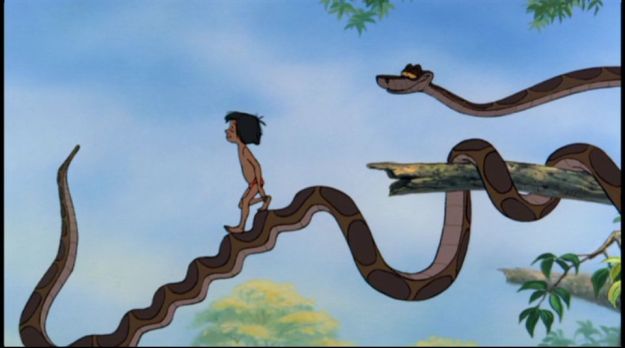
Mowgli is feeling pretty down at this point in the story. He’s just run away from Baloo after finding out his “papa bear” wants to take him to the Man-Village as well (never mind that it’s for his own safety). He runs off and ends up straight in the coils of Kaa, the incredibly long python with bad sinuses (and brought to life by Sterling Holloway, aka Winnie the Pooh).

This isn’t the first time Mowgli and Kaa have met. Their first encounter comes just after Bagheera announces that he’s taking the man-cub away. It almost doesn’t end well for Mowgli then and there, but thankfully Bagheera stepped in. Now though, it’s just Kaa and Mowgli. The latter rightfully doesn’t trust Kaa, which seemingly hurts the snake’s feelings. He says that if Mowgli would only trust him, then he could stay in the jungle forever. Of course it’s all a trick to get Mowgli hypnotized so he can be Kaa’s afternoon snack.


Trust in me
Just in me
Shut your eyes
and trust in me

You can sleep
Safe and sound
Knowing I
Am around

Slip into silent slumber
Sail on a silver mist
Slowly and surely your senses
Will cease to resist

Trust in me
And just in me
Shut your eyes
And trust in me…

The entire song is full of double meanings. While on the surface it sounds like a friend reassuring another friend of his trustworthiness, it also has a deeper meaning of “all this will be true because I’ll have eaten you.”

For example “You can sleep, safe and sound, knowing I am around.” Yeah, Mowgli will sleep alright, he’ll sleep eternally. Mowgli is oblivious to this for pretty much the entire song and is blissfully sleepwalking in and around Kaa’s neverending coils.

The Jungle Book “Trust in Me”

Junglebook488

Kaa assumes a wide variety of shapes throughout the song

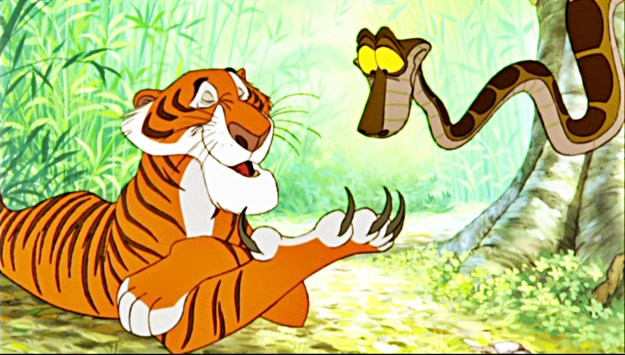
Once again though, Kaa is foiled. Just as he has Mowgli right where he wants him, who should come by but Shere Khan!! I absolutely love how the tiger pulls on Kaa’s tail like it’s a doorbell (brilliant!) If Kaa hadn’t wasted all that time playing with his “food” he might have gotten away with it.

Walt-Disney-Screencaps-Shere-Khan-Kaa-walt-disney-characters-31443684-2560-1458

I had to share this last picture by the way, those claws and the look on Kaa’s face!!

Now I haven’t seen the new version of this film yet, and I’m sure Scarlett Johansson did a great job, but for me, Kaa will always be Sterling Holloway. And that’s The Jungle Book! Let me know your thoughts in the comments below!

*all images are the property of Walt Disney Studios

Become a Patron of the blog at patreon.com/musicgamer460

Check out the YouTube channel (and consider hitting the subscribe button)

For earlier entries in The Jungle Book, see:

The Jungle Book “Colonel Hathi’s March”

The Jungle Book “The Bear Necessities”

The Jungle Book “I Wanna Be Like You”

The Jungle Book “My Own Home”

The Jungle Book “That’s What Friends Are For/The Vulture Song”

For more great Disney songs, check out the main page here: Disney A-Z

Don’t forget to like Film Music Central on Facebook 🙂


The Jungle Book “I Wanna Be Like You” (1967)

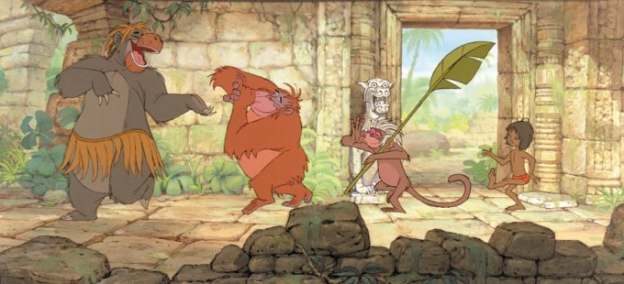
The Jungle Book is one of those movies where every song is my favorite (they’re just that good). “I Wanna Be Like You” takes place close to the halfway point of the story. Mowgli, having run off from Bagheera, finds himself in the company of Baloo. The unlikely pair hit it off straight-away and Bagheera grudgingly lets them go off together. Not long after the panther leaves, Mowgli is swiped by a troop of monkeys and taken away to a ruined city where King Louie, a large orangutan, holds court.

Now I’m the king of the swingers, hooo–
The jungle VIP
I’ve reached the top and had to stop
And that’s what botherin’ me
I wanna be a man, mancub
And stroll right into town
And be just like the other men
I’m tired of monkeyin’ around!

Oh, ooh-bee-doo, (Oop-dee-wee)
I wanna be like you-hu-hu (Hop-dee-doo-bee-do-bow)
I wanna walk like you (Cheep)
Talk like you (Cheep)
To-o-oo! (Wee-bee-dee-bee-dee-boo)
You’ll see it’s tru-u-ue (Shoo-be-dee-doo)
An ape like me-e-e (Scooby-doo-bee-doo-bee)
Can learn to be
Hu-u-uman
To-o-oo!

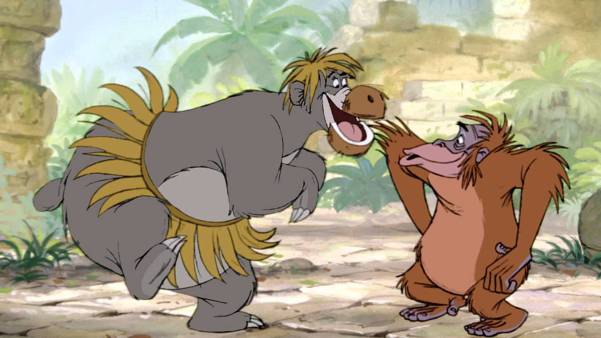
“I Wanna Be Like You” spells out the “plan” that King Louie wants to put into action (I put in quotation marks because it’s not really explained all that well. King Louie isn’t as bright as he thinks he is). The gist of the song is this: King Louie, while being king of the monkeys in the jungle, is not content with being a monkey anymore, he wants to be a MAN, like Mowgli.

d32cd92d1252408fabb6998079b105c4

To accomplish this, Louie has come to the conclusion that he needs “Man’s Red Flower” (what the jungle animals call fire) and he wants Mowgli to make it for him, or at least reveal how it is done. If Mowgli can do this, then Louie will let Mowgli stay in the jungle forever. Unfortunately, having been raised by wolves his whole life, Mowgli has no idea how fire is made.

Now don’t try to kid me, mancub
I made a deal with you
What I desire is man’s red fire
To make my dream come true!
Now give me the secret, mancub
Come on, clue me what to do
Give me the power of man’s red flower
So I can be like you!

For years growing up, I believed that King Louie was voiced by Louis Armstrong, since he played the trumpet during the song. Actually, the orangutan is brought to life by the voice of Louis Prima (1910-1978) and was originally accompanied by his backup band, Sam Butera and The Witnesses, but their instrumental work was replaced later by music composed by George Bruns. A good portion of the song involves King Louie and his band of monkeys parading around the ruined courtyard while Louie “plays the trumpet.” The story I once heard is that Louis Prima and his band did the exact same thing while recording the song and the animators were standing by to sketch the details and incorporate them into the animation.

Behind the scenes of “I Wanna Be Like You”

For the last section, Louie’s song becomes a duet when Baloo (clumsily disguised as a giant monkey) crashes the party to serve as a distraction while Bagheera tries to rescue an oblivious Mowgli. The pair end up “scat singing” with each other. Scat singing is when a vocal artist sings using nonsense syllables that have no real meaning, they just sound good. Believe it or not, Louis Prima and Phil Harris (the voice of Baloo) recorded their lines at two completely different times (as Harris was unavailable when Prima recorded the song). The original plan was for Harris to parrot back the same scat syllables that Prima used, but when the latter arrived, he refused to do it and made up his own on the spot.

I hope you enjoy “I Wanna Be Like You.” Tomorrow (promise!!) will be “The Bear Necessities.” Have a great day!

*all images are the property of Walt Disney Studios

Become a Patron of the blog at patreon.com/musicgamer460

Check out the YouTube channel (and consider hitting the subscribe button)

For more of The Jungle Book, see:

The Jungle Book “Colonel Hathi’s March”

The Jungle Book “The Bear Necessities”

The Jungle Book “Trust in Me” (1967)

The Jungle Book “That’s What Friends Are For/The Vulture Song”

The Jungle Book “My Own Home”

For more great Disney songs, check out the main page here: Disney A-Z

Don’t forget to like Film Music Central on Facebook 🙂

Ex Machina “Ava”

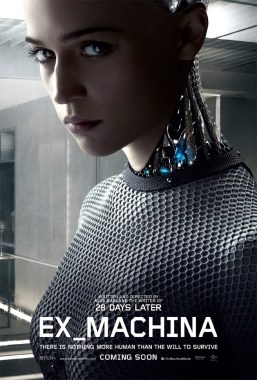
posters-image-4

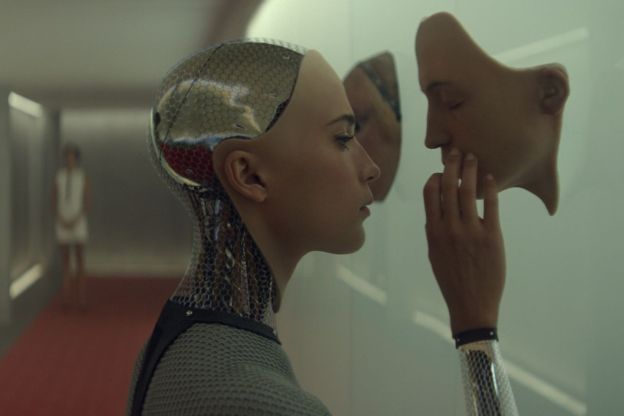
Compared to other films, Ex Machina features a fairly light score (light as in there’s not much music to listen to). But what IS there…ahhh, that’s what really drew me in when I watched the movie the first time. Very often the simplest film score is one of the best, and this is true in Ex Machina.

The music was composed by the duo of Ben Salisbury and Geoff Barrow (they’d previously collaborated on Dredd (2012)) and though I love the entire soundtrack, my favorite piece by far is “Ava,” the theme of the robot played by Alicia Vikander (she should’ve gotten an Oscar for that performance, just saying).

The theme of “Ava” first appears when Caleb (Domhnall Gleeson) sees Ava for the first time. It begins the moment Ava steps into view. The melody is simple, and most likely played on a metallophone (think of a xylophone but with metal bars). And if the music sounds familiar…there’s a very good reason.

Ex Machina – Meet Ava

Remember the famous 5 tone theme from Close Encounters of the Third Kind (1977)? If that doesn’t ring a bell, look it up, give it a listen, then come back to “Ava” and listen to that again.

…….

Do you hear it? I nearly fell over when I recognized “Ava” contained the 5 tone theme (slightly modified, but recognizable). The question I want to answer now is….why did the composers choose THAT particular theme to insert into Ava’s theme? I’m not sure yet, but it’ll be fun to find out why!

Become a Patron of the blog at patreon.com/musicgamer460

Check out the YouTube channel (and consider hitting the subscribe button)

See also: Film Soundtracks A-W

A 21st-century Pygmalion in Ex Machina

Don’t forget to like Film Music Central on Facebook  🙂

*poster image is the property of Universal Pictures

The Hobbit: The Battle of The Five Armies- Thorin’s Charge!

307453id1_TheHobbit_TBOTFA_Teaser_Intl_27x40_1Sheet.indd

Ok, I didn’t want to admit it, but I will: The Hobbit film trilogy has a LOT of problems (not least of which is the fact that the final product barely resembles its source material, don’t get me started on the liberties they took…)

However, despite its issues, The Hobbit did produce some impressive musical moments (since the films were again scored by Howard Shore). One of my favorites comes at the climax of The Battle of Five Armies (or at least one of the climaxes, like I said, the series had problems.)

The Hobbit- “Thorin’s Charge”

To briefly set the scene: Azog’s huge orc army is descending upon The Lonely Mountain with only Dain’s meager forces to defend it (the Elves are currently refusing to fight). Inside the mountain, Thorin (who has spent most of the film obsessed with finding the Arkenstone) finally comes to his senses and announces to his followers that they WILL go out and fight.

Back outside, Azog’s forces are in position and the order is given to advance. But just then…THIS happens

BomburHorn

Bombur blows a HUGE fanfare on this gigantic horn that brings all sides to a standstill. (The beauty of this horn call is in its simplicity) A huge golden bell blows out the sealed main gate and then….CHARGE!!

thorin-charge

This is one of those perfect film music moments that people like me dream about seeing. Everything is synced together in this moment. Enjoy watching and listening!

See also: Film Soundtracks A-W

Become a patron of the blog at: patreon.com/musicgamer460

Check out the YouTube channel (and consider hitting the subscribe button)

Don’t forget to  like Film Music Central on Facebook 🙂

Balto “Heritage of the Wolf”

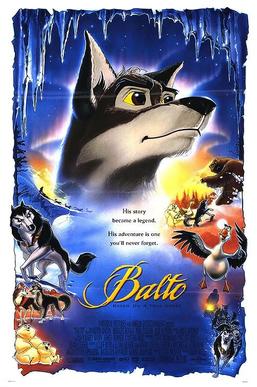
1995 was a very good year for James Horner. In that year alone, he composed the scores for: Jumanji, Braveheart, Casper, Jade, Balto and Apollo 13. “Heritage of the Wolf” from Balto (1995) remains one of my favorite musical moments. Balto recounts the true story of how vital diphtheria medicine had to be relayed from Nenana to Nome, Alaska by rail and then by sled dog, to combat an outbreak of the illness. Being an animated film, the story does take some liberties with the events (for instance, it was multiple teams of sled dogs, not just the one), but the overall event is true (and there IS a statue of Balto in Central Park, I went there myself in 2009).

Balto_movie_poster

In the film, Balto (voiced by Kevin Bacon) is a Siberian Husky/wolf hybrid, ostracized by the rest of the dogs because he’s a “half-breed” and unwilling to embrace his wolf side. Determined to help, Balto has set out after the missing sled team that was supposed to bring the medicine back to Nome. After a series of events (this film will eventually have a post all to its own), Balto has found the team and the medicine, but has plunged off a cliff (with the medicine box) and his current fate is unknown.

165146_1600x450

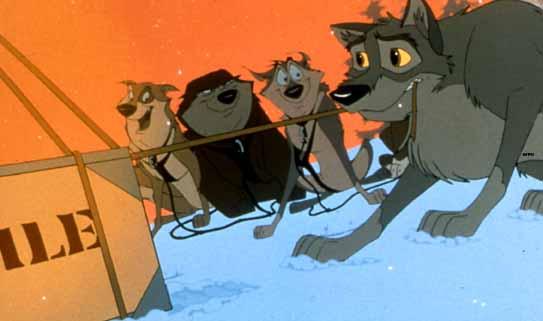
As the cue starts, Balto’s friends listen at the door as the other dogs discuss the fact that the children of Nome are likely doomed if the medicine does not arrive soon (there’s no time to send another team). All hope seems to be abandoned as the lights of Nome are one by one turned out. However, Jenna, a female husky (and in love with Balto) has not given up and is dragging out a lantern and creates an artificial aurora by placing the light behind shards of glass (a trick Balto showed her earlier), hoping the light will guide Balto home.

“Heritage of the Wolf” Film Version

“Heritage of the Wolf” Soundtrack Version

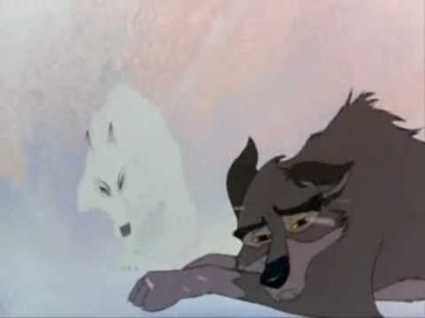
Meanwhile, Balto is shown to be alive, dragging himself out of the snow. This is the main part of the cue, and the part I love the most. Balto is at rock bottom right now, he believes the medicine is gone and that he’s failed. But then, a white wolf appears in front of him (later sequels establish that this is his mother), and invites him to “become a wolf” by howling, but Balto refuses, and the wolf walks away. But then, Balto realizes that the medicine is intact and he remembers the advice his friend gave before he left “A dog, cannot make this journey alone. But maybe…a wolf can.” Inspired, Balto turns in the direction of the wolf and sets one paw down into the print (it matches perfectly). Realizing and finally accepting that he has been a wolf all along, Balto rears up and howls, drawing the white wolf back to him.

hqdefault

For the moments where Balto faces the white wolf, Horner repeats the same melody in strings over and over, it changes registers on almost every iteration. And when it peaks in the high strings (listen to the moment when the wolf turns to walk away), it always makes my eyes tear up. The timbral changes reflect the changing mood of the scene. First: despair (low and almost minor); second, hope (a change to major as the wolf appears); third, denial (a slide back to minor as the wolf walks away, melody high in strings); realization (a mix of major and minor, the ensemble plays together); decision (firm major key, melody in horn).

There’s a few more minutes of music beyond this, but that’s a discussion for another time. For now, I’ll leave you with the triumphant moment where Balto finally finds himself.

Become a patron of the blog at: patreon.com/musicgamer460

Check out the YouTube channel (and consider hitting the subscribe button)

For more Disney and other animated film soundtracks, see here

Don’t forget to like Film Music Central on Facebook 🙂

*All images are the property of the film studio, and are only being used for illustration

Film Music 101: Borrowing

Borrowing is a tricky subject to discuss in the world of film music. Almost all composers do it, but hardly anyone will talk about it (officially that is). And that’s a shame because borrowing is one of the most interesting things to look at in a film score (or group of scores).

Borrowing is what happens when a composer takes a theme from another score (usually one of their previous works, but not always) and places it in the score they’re presently working on. There are many reasons why this might need to happen. A composer might be working on several scores in a single year (i.e. James Horner in 1995) and instead of creating a wholly original score for each film, it might be more convenient to borrow and re-use several themes, particularly if the music fits in the new film.

As a general rule of thumb, if a composer scores at least two films in the same year, it’s likely you can listen to both soundtracks and find at least several identical cues.

Jerry Goldsmith talks about Alien

Star Trek: The Motion Picture and Alien (both from 1979) both provide a good example as well. In this case, the similarity is slight, but unmistakable. First, watch Alien and listen to the music in the opening of the film (after the opening title), when the camera is panning around the empty ship. Then, go to Star Trek: The Motion Picture and fast forward to the scene where Spock steals a spacesuit. It’s the exact same music!

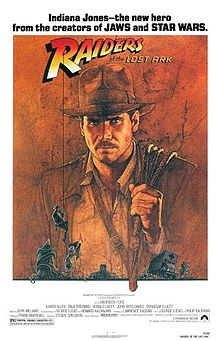
John Williams is equally guilty in my opinion. While not identical, compare Princess Leia’s theme from Star Wars (1977) to Marian’s theme in Raiders of the Lost Ark (1981); they are suspiciously similar.

220px-Raiders

Elmer Bernstein (of The Ten Commandments (1956) and The Magnificent Seven (1960) fame) borrowed a fragment of his Magnificent Seven theme and placed it in the opening for The Great Escape (1963) (it can be heard during the opening credits).

But why doesn’t anyone talk about this if everyone does it? Well…while borrowing is a fact of musical life (classical composers have been doing it for centuries), many (outside the industry) view the practice as tantamount to “cheating.” The feeling is that it’s not right to re-use parts of a film score because it “cheapens” the new product. Of particular irritation are the moments when composers borrow themes that they did not originally create. For this reason (I believe), composers choose not to talk about this process very often (though that’s not to say they never talk about it, I just don’t think they discuss it enough).

First of all, I need to point out that this is NOT plagiarism. Once a theme has been written, it belongs to the studio and NOT the artist. So if a composer needs to borrow a certain theme that another composer created, they are free to use it. Case in point: John William’s theme for Superman: The Movie (1978) being reused in Superman Returns (2006) (the first attempt at rebooting the franchise). Also, in a similar vein, John William’s main theme for Jurassic Park (1993) makes a prominent reappearance in Jurassic World (2015).

Become a patron of the blog at patreon.com/musicgamer460

Don’t forget to like Film Music Central on Facebook 🙂

*all images are the property of their respective film studios, they are only being used for illustration

See also:

Film Music 101: Arranger

Film Music 101: Anempathetic sound

Film Music 101: Empathetic Sound

Film Music 101: Foley

Film Music 101: Montage

Film Music 101: Compilation Score

Film Music 101: Leitmotif

Film Music 101: “Stinger” Chords

Film Music 101: Dubbing

Film Music 101: Diegetic vs. Non-Diegetic Music

Film Music 101: Underscore

Film Music 101: Sidelining

Film Music 101: “Test” Lyrics

Film Music 101: The First Film Score

Film Music 101: Orchestration and cues

Star Trek III “Stealing the Enterprise”

star_trek3

Credit to Bob Peak

Having composed two Star Trek films back to back, James Horner was asked once if he preferred one above the other. Horner replied that, for his part, he preferred the score to Star Trek III: The Search for Spock, only because he felt it completed the musical themes he began in The Wrath of Khan.

“Stealing the Enterprise” is the musical cue for the segment where Admiral Kirk and co. well…steal the Enterprise. Right out of Spacedock. In front of everybody. Because they can (and need to).

“Stealing the Enterprise” soundtrack version

“Stealing the Enterprise” Film version

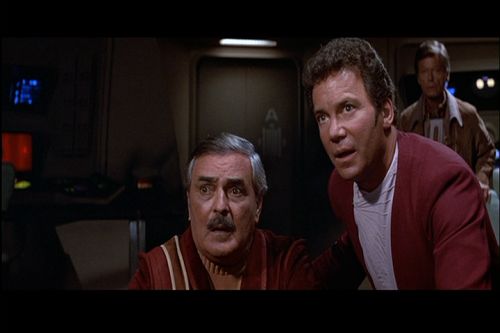
The first part of the cue takes place as Dr. McCoy (DeForest Kelley), the unwitting bearer of Spock’s soul, is rescued from a detention cell (Starfleet is unwilling to believe Kirk’s explanation and believe McCoy is mentally ill.) Meanwhile, Scotty (James Doohan) is seen leaving the prototype ship Excelsior.

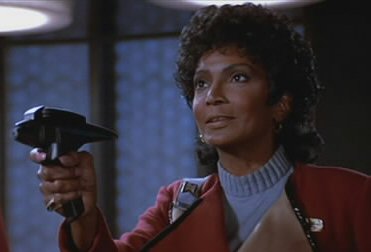
Uhura, in the meantime, is seen working at a communications station in a quiet area of Spacedock, paired with a smarmy lieutenant who only wants “to get in on the action.” Lo and behold, here comes Admiral Kirk and party. When the lieutenant gets suspicious that the admiral has arrived without any orders or advanced notice for that matter, Uhura shows him plenty of “action” (she pulls a phaser on him and forces him to sit in the closet.) The group then beams over (Uhura will follow later and meet them on Vulcan) to the Enterprise, still badly torn up from the battles in The Wrath of Khan, but Scotty has rigged the ship so that it should run smoothly enough to reach the Genesis Planet and Vulcan afterwards (unfortunately it won’t be nearly that simple, but our heroes don’t know that just yet).

uhura-stiii1

“Good…now get in the closet!!”*

The ship then begins departure, rousing the entire station in the process. Orders are sent to the captain of the Excelsior to power up and pursue the Enterprise. The Excelsior carries prototypes of trans-warp engines, which means they could easily catch up to the older Enterprise, so Kirk and co. need to work fast to get out of the station. This leads to a hilarious exchange between with the captain of the Excelsior:

Bridge: “Captain to the bridge, Yellow Alert!”

Captain: “Bridge, this is the captain. How can you have a Yellow Alert in Spacedock?”

Bridge: “Sir, someone is stealing the Enterprise!!”

Captain: *befuddled pause* “I’m on my way.”

MOD - StarTrekIII1

When I say they barely made it out of the station, I mean just barely!!*

After just opening the station doors in the nick of time, the Enterprise makes preparations to jump to warp speed while Excelsior closes in. Just before the jump, the captain reaches out to Kirk, reminding him that “You do this, you’ll never sit in the captain’s chair again.” The look in Kirk’s eyes makes it clear that he doesn’t give a d-mn about the captain’s chair, as long as he can have his friend back, and the order is given to go to warp speed.

searchforspock02

Enterprise makes a run for it*

Excelsior prepares to pursue, but just as the engines begin to revv…nothing happens. Apparently Scotty had been up to no good in the Excelsior’s engine room…and the prototype stops dead in space, providing Enterprise with a clean getaway.

This is one of my favorite Star Trek cues, Horner’s music is so detailed you can almost follow the scene just by listening to the music alone (which is good). My favorite part is when the ship is backing towards the spacedock door and they still haven’t opened. The music builds and builds, and just when it seems they won’t make it through, the doors begin to open and the music almost explodes with released tension as the Enterprise just barely fits through the opening.
 
Another cool technique that Horner uses is, at the very end, when Excelsior is trying to follow, Horner opts for simplicity and holds out a single note as the crew looks around in confusion. Musically, Horner has set up the listener “to wait for the other shoe to drop.” Normally when you hold out a tone like that, you’re going to progress to a new thought, only Horner never gets there and deliberately leaves us hanging (just like the Excelsior.)

*all screencaps taken from the film, property of Paramount

Don’t forget to like Film Music Central on Facebook 🙂

See also: Film Soundtracks A-W

See also:

Star Trek II: “Inside Regula I” (1982)

Star Trek II “Surprise Attack”

“Enterprise Clears Moorings” from Star Trek II: The Wrath of Khan