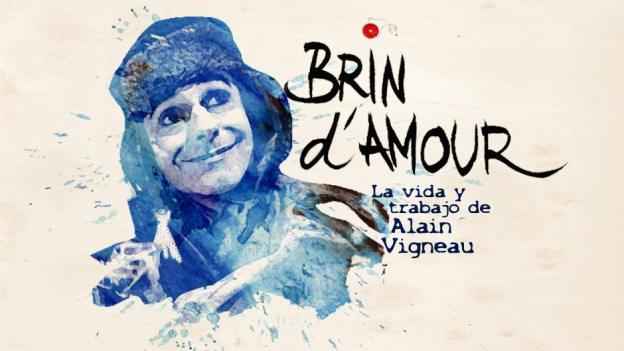
Soundtrack Review: Brin d’amour (2019)

Earlier this summer I was invited to check out the documentary Brin d’amour, about the life and work of Alain Vigneau, with music composed by Andre Barros. The documentary is fascinating in and of itself, as it follows not only Vigneau’s life, but also how he uses being a clown as a form of therapy. But what really pulled me in was Barros’ music for the documentary, which reminded me more than once why I fell in love with film music in the first place.

More than once, as I sat listening to the music of Brin d’amour, I thought I was merely out of practice because I kept losing the thread of the music because I was paying attention to the documentary at the same time. But it finally dawned on me that I wasn’t getting distracted, it was simply that the music is interwoven so well with the story that you don’t realize it’s there, and that’s how it’s supposed to be. I’ve said before and I’ll say it again, the best film music is the kind you don’t notice. It should blend in with the visuals and that’s exactly what happens here.

The score for this documentary is based on a small ensemble: piano, a string trio, and several electronic instruments and synthesizers. A small group of instruments, to be sure, but they are used to great effect. I really love how Barros’ music draws you into the story, and not just the funny moments when you see Alain doing clownish things, but also the more deeply serious moments when some truly dark topics are touched upon. My favorite part is the music during the time when Alain and other members of his family talk about his late mother. You really get the feeling that this was a wonderful woman who was lost. Equally compelling is Barros’ ability to know when not to use any music, like during a therapy session when Alain is having one woman work out her feelings over the death of her grandmother. Moments like that, the music would distract from the experience, so using silence is those moments makes them resonate even more.

I’m happy I finally had the time to sit down and listen to Andre Barros’ music for Brin d’amour. It’s really good and I had a lot of fun listening to it.

See also:

Film Soundtracks A-W

Become a Patron of the blog at patreon.com/musicgamer460

Check out the YouTube channel (and consider hitting the subscribe button)

Don’t forget to like Film Music Central on Facebook 

My Thoughts on: Frankenstein Created Woman (1967)

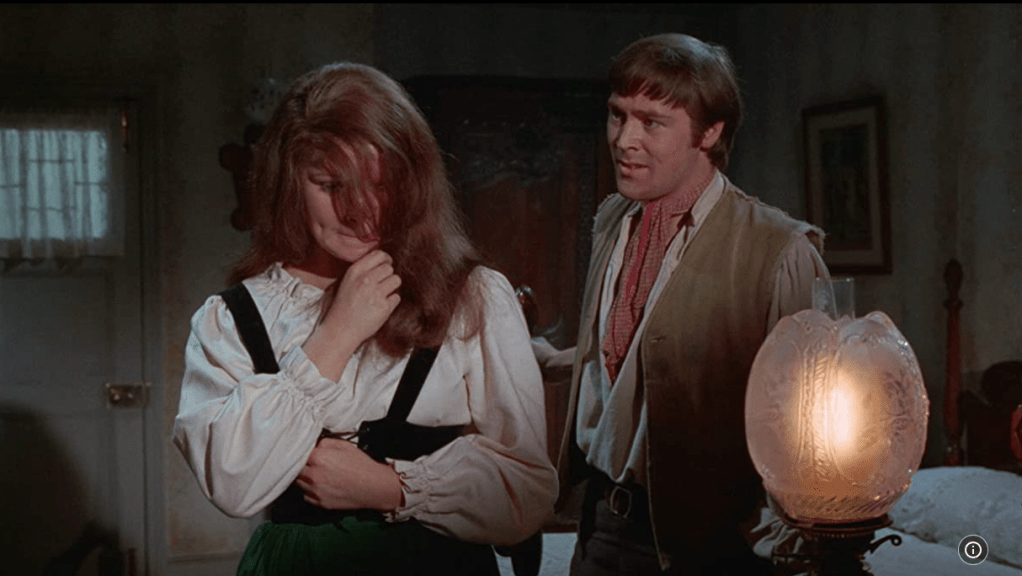
I think I was in high school the first time I encountered Hammer’s Frankenstein films that starred Peter Cushing as Baron Frankenstein. I forget how many of them I saw, but I know I saw Frankenstein Created Woman and the memory of that film had dwelled in the back of my brain ever since. So, some months back, when I got the chance to own the film on blu-ray (courtesy of Scream! Factory) I took it, and just the other day I finally had the chance to watch this film again.

Before I get to my thoughts on Frankenstein Created Woman, a quick overview as to what this film is. Hammer released seven Frankenstein films between 1957 and 1974, and this was the fourth film in that series. In Frankenstein Created Woman, the story focuses more on the metaphysical, as Baron Frankenstein is now obsessed with capturing and transferring a human soul from one body to another. He gets his chance when Hans (Robert Morris) is executed for a crime he didn’t commit and his lover Christina (Susan Denberg) commits suicide by drowning shortly thereafter. At first Frankenstein’s work appears to be a total success, but even a brilliant man like Frankenstein can’t realize the dangers involved in placing Hans’ soul in Christina’s body until it’s far too late.

It’s funny to me now, but while I was watching Frankenstein Created Woman, it occurred to me that my memory must not be as good as I thought (I usually have a good head for remembering movies) because except for the ending most of this film felt completely new to me. That’s not a bad thing, but it makes me wonder if perhaps I saw a different cut all those years ago, I’ve heard of things like that being done with Hammer films before, so maybe that’s why some of the scenes felt completely new to me.

A lack of memory aside, I really enjoyed Frankenstein Created Woman as much as I thought I would. Its message is a little heavy-handed (i.e. don’t put a vengeful soul inside a new body because there will be dire consequences) but overall it is a lot of fun to watch. Cushing’s Frankenstein is almost hilariously oblivious to the fact that he’s helped create this beautiful woman. To him Christina is only an experiment, but to everyone else she is pure woman, and it’s only at the very end of the film that the full extent of her monstrousness is revealed.

I really do like how the film goes about revealing what the human soul might look like outside of its body. I don’t quite agree with the explanation the film goes for as to how a soul could be trapped and contained but the visual of this glowing ball of light representing the soul is quite beautiful and is one of my favorite shots in the film.

There’s also an interesting lesson to be gleaned from this film, that being that it is dangerous to tamper with something as powerful as the human soul. Of course it is, as I said before, presented in a rather forceful manner, but it’s still a good point to be made. One can’t mess with the human soul in a purely scientific manner as Frankenstein attempts to do, that won’t work any more than building and animating a body from scratch will, as Frankenstein learns by the end. Additionally, there’s an equally poignant lesson about the injustice of condemning someone simply because their father was a criminal.

I would still probably recommend starting with The Curse of Frankenstein if you’re going to watch the Hammer Frankenstein films, but be sure to watch Frankenstein Created Woman not long after, because it’s really good.

Let me know what you think about Frankenstein Created Woman in the comments below and have a great day!

See also:

Film Reviews

Become a Patron of the blog at patreon.com/musicgamer460

Check out the YouTube channel (and consider hitting the subscribe button)

Don’t forget to like Film Music Central on Facebook

Soundtrack News: Hildur Guðnadóttir & Sam Slater Announced as Composers for EA’s Battlefield 2042

Electronic Arts and DICE has announced that two-time Grammy Award, Academy Award, Golden Globe, Emmy, and BAFTA Award-winning composer Hildur Guðnadóttir (JokerChernobyl) alongside composer Sam Slater (score producer JokerChernobyl) will score the latest entry in the Battlefield™ franchise, Battlefield 2042. Worldwide digital release of the album will be via Lakeshore Records. Lakeshore Records and Invada Records will co-release the vinyl edition.

Hildur Gudnadóttir is an Academy Award-, Golden Globe-, Emmy-, two-time Grammy-, and BAFTA-winning Icelandic artist, who has been manifesting herself at the forefront of experimental pop and contemporary music. In her solo works, she draws out a broad spectrum of sounds from her instrumentation, ranging from intimate simplicity to huge soundscapes.

Two-time Grammy Award-winning composer, sound designer and music producer Sam Slater is known for his roles as both score producer and musical sound designer for Joker and Chernobyl. In addition to his two Grammy Award wins for Joker and Chernobyl, he has also won an Icelandic Music Award as “Producer of the Year” and a MASA Award for “Best Sound Design in Television Program”.

President of Music for Electronic Arts, Steve Schnur, is no stranger to securing A-list Hollywood composers to create epic original scores for landmark EA games, having previously worked with the likes of Hans Zimmer (The Dark Knight), Mark Mothersbaugh (Nick & Nora’s Infinite Playlist), Paul Oakenfold (The Bourne Identity), Bill Conti (Rocky), Chris Lennertz (Hop), Sean Callery (24), Christopher Young (Spider-Man 3), Tyler Bates (300, Watchmen), Steve Jablonsky (Transformers), John Debney (Iron Man 2) and Oscar winner Mike Giacchino (Star Trek, Up, Lost).

“From the very beginning, Hildur and Sam set out to craft a score like no other, in which music and sound design meld to create an extraordinary soundscape experience,” says Schnur. “I can say unequivocally that the original score for Battlefield 2042 is the most significant cinematic achievement in the franchise and an absolute game changer for the medium.”

Battlefield 2042 is a groundbreaking first-person shooter set to revolutionize the modern multiplayer sandbox. Powered by cutting-edge technology that pushes the capabilities of next generation hardware, the game drops players into a near-future, all-out-war experience. Featuring matches filled with up to 128 players on the latest consoles* and PCs, this unprecedented scale adds a new dimension to multiplayer battles. Battlefield 2042 also ups the action with the inclusion of real-time events that reshape the battlefield and tactical combat. All-new weapons, vehicles, and gadgets give players the freedom to be strategic and create jaw-dropping, only-in-Battlefield moments.

The biggest, most ambitious title in the franchise, Battlefield 2042 offers a depth of multiplayer across three distinct experiences:

  • All-Out Warfare – The next generation of fan-favorite modes Conquest and Breakthrough. Experience the intensity of All-Out Warfare in large-scale battles like never before on maps filled with dynamic weather, dangerous environmental hazards, and spectacular world events that see tornadoes rip across the map and sandstorms block out the sun.
  • Battlefield Portal – An all-new community-driven experience that gives players the power to discover, create and share unexpected battles from Battlefield 2042, and reimagined classics from Battlefield 1942, Battlefield Bad Company 2 and Battlefield 3
  • Battlefield Hazard Zone – An all-new, high-stakes, squad-based game-type for the Battlefield franchise that is a modern take on the multiplayer experience that is distinctly DICE but very different from All-Out Warfare’s Conquest or Breakthrough modes.

Battlefield 2042 is set to release on October 22, 2021.

See also:

Become a Patron of the blog at patreon.com/musicgamer460

Check out the YouTube channel (and consider hitting the subscribe button)

Don’t forget to like Film Music Central on Facebook 

Soundtrack News: Vinyl Edition of ‘The Green Knight’ Score by Daniel Hart Available for Pre-Order from A24

 Following last month’s digital release of THE GREEN KNIGHT (ORIGINAL MOTION PICTURE SOUNDTRACK) with music by composer and performer Daniel Hart, the album’s vinyl edition is now available for preorder exclusively on the A24 shop. Available digitally to stream and download, the album features score music written by Hart for director David Lowery’s latest fantasy adventure film based on the classic Arthurian tale of Sir Gawain and The Green Knight. Newly pressed on emerald-green marbled vinyl, the soundtrack arrives as a 2-LP gatefold set featuring liner notes from Hart and Lowery – preorder exclusively via the A24 shop hereThe Green Knight is currently available to watch in theaters and will be available to watch on PVOD anywhere your rent movies starting Thursday, August 19.

Available everywhere now, Daniel Hart’s soundtrack to The Green Knight is both as epic and unique as the film itself, a sweepingly dramatic and expansive body of music that straddles the divide between medieval and modern. Hart’s work has already garnered acclaim from critics, with the Los Angeles Times writing, “These fateful encounters draw lyricism and gravity from the singsong interludes and delicately plucked strings of Daniel Hart’s enveloping, ever-present score,” and eventually determining the film to be a “ravishing triumph.” The soundtrack is the latest in a longstanding creative partnership between Lowery and Hart, the duo having worked together previously on Ain’t Them Bodies SaintsPete’s DragonA Ghost Story and The Old Man & the Gun.

Of the soundtrack, composer Daniel Hart says:

“Making this music was somehow both like running from a pack of hyenas and wading through a river of chocolate mud. It has never taken David [Lowery] and I this long to find what we were looking for musically on any of his films, so to listen back now and actually love what we made is all the more satisfying, especially when I think about how many late nights and hair pullings went into it. Much like Gawain himself, I was stumbling through the wilderness most of the time and found little moments of good fortune here and there, often through stubborn dumb luck. I hope that when you listen to the soundtrack, you’ll think about things other than me sitting in my studio, endlessly fretting. But if you do, then your imagination is very accurate.”

An epic fantasy adventure based on the timeless Arthurian legend, The Green Knight tells the story of Sir Gawain (Dev Patel), King Arthur’s reckless and headstrong nephew, who embarks on a daring quest to confront the eponymous Green Knight, a gigantic emerald-skinned stranger and tester of men. Gawain contends with ghosts, giants, thieves, and schemers in what becomes a deeper journey to define his character and prove his worth in the eyes of his family and kingdom by facing the ultimate challenger. From visionary filmmaker David Lowery comes a fresh and bold spin on a classic tale from the knights of the round table.

See also:

Become a Patron of the blog at patreon.com/musicgamer460

Check out the YouTube channel (and consider hitting the subscribe button)

Don’t forget to like Film Music Central on Facebook 

Loneliness, Hope, and Old Gods: Talking with Sergio Ronchetti About the Music of Eldest Souls (2021)

Last month I got the opportunity to speak with composer Sergio Ronchetti about his work on the recently released video game Eldest Souls. London-based, Spanish & Italian composer and sound designer Sergio Ronchetti boldly crafts scores dwelling within realms of dusky depth, mercurial mood, and aggressive execution, drawing upon his background in heavy metal and combining his lyrical tastes with more traditional, orchestral compositional techniques for a truly singular signature style.

Sergio’s debut score for the 2021 pixel-art, boss-rush, “Souls-like” video game Eldest Souls captures the lonely and desolate melancholy of the game world while also providing vigorous, combative battle music matching the intensity of the challenging gameplay and capturing the personality and essence of each iconic boss fight. He cites artists like Trivium, Machine Head, and Gojira as direct references to his Eldest Souls score – even if his instrumentations are far removed from theirs.

I hope you enjoy our conversation about Ronchetti’s work on Eldest Souls!

How did you get started as a composer?
I left high-school with the sole intention of joining a metal band and becoming a touring musician: which is what i did! I had been playing in bands ever since i was 15, using every spare minute at school to jam with friends in the music rooms. I guess during this time i picked up a lot of DAW production skills without knowing, which gave me a little head start when i decided to pursue media composing after about 4 years of touring. University was then the best place for me to learn exactly what kind of composer/musician i wanted to be, but I learned how to compose behind a computer around my degree. I took short course, extra classes and spoke to as many of my lecturers as possible to understand how to get my career started during my studies, not after. Combine this with saying yes to every opportunity that came my way and everything slowly built up from there.

How did you get involved with Eldest Souls?
I met Jon and Francesco at a free workshop in London hosted by Intel. They were showcasing a super early version of the game whilst taking a gap year during their studies to work on it. Initially they just wanted music for a trailer they were putting out. I sent them a track i thought could work and to my amazement they loved it! Pretty clear from then on that I was a good fit for their project, which is important when collaborating. I don’t think I was anything special, especially back then, but both parties were in the perfect position in terms of experience and skills to work together.

Were you given any specific directions by the game’s creators when working on the score?
The stylistic decisions were made very early on. This meant that I had a direction right from the get go, in terms of style, placement in the game and the scope of the game. The best part as that Jon and Francesco created a very stress-free and flexible workflow, which gave us all the chance to fail and learn moving forward. Sometimes they had reference tracks that they really wanted to hear in the game, other times i just asked for 3-4 words describing the mood, setting and emotions they wanted out of each boss fight.

A related question: was there a lot of collaboration with the game’s director/creators on the score?
As an indie studio, there’s often a lot of crossover within our individual roles. With the music and more so the sound design, we worked very closely and generated as much feedback and testing as possible to get the ideal work out of me. Similarly, I’d always offer to help out at conventions and managing other areas like the socials and marketing, so it really was a collaborative effort from all of us. And I loved every minute of it! We’ve all grown an attachment to this project and we’re all the more happy to see it finally out there for people to enjoy.

I’ve heard Eldest Souls described as “Souls-like” which I assume means it’s similar to the Dark Souls series of games. Is the music for Eldest Souls similar in any way to Dark Souls or did you take a different approach with the music?
In terms of gameplay you could say so. We limited the music to the combat sequences in the game, which left ambience and sound design to govern the travelling in-between. Really this was to reinforce the narrative of the game which is my sole purpose as a game audio professional. I am constantly asking myself “what story am I telling here?” before designing any sounds or music. So when the music hits, you know it’s go time, and everything springs into action. When it’s over, you’re left with the residual consequences of your action adding to the already desolate environment. But in terms of musical sound I wouldn’t say my music is anywhere close to DS or Bloodborne. We felt that overtly gothic and dark style was perhaps a little overkill for the art-style and pace of Eldest Souls. But I love those soundtracks and getting familiar with them during development was super inspiring.

In general, how did you approach scoring Eldest Souls? Were you able to play through early builds of the game or at least observe early gameplay footage for inspiration?
It was very hands on. Again, all praise to the boys from Rome for allowing me to be as involved as I was. I could quite literally jump into the game, test and mix my audio live using Fmod. Then once i was fairly happy, i’d send it over to them for review. It saved a lot of time and effort in the long-run. Being able to experience the gameplay first-hand is invaluable. It’s like scoring a film and getting to play the main character as you do.

Given how important the game’s boss fights are, how did you specifically go about creating music for those moments? Since each “Old God” encounter is different, I can only assume that would affect the music for each fight. Was there any extra pressure to get the music “just right”?
Really, since this was the first project for all of us, there was no pressure at all! Haha. We just wanted to do the best we could, and learn from the process. That being said, some boss fights came together very quickly, others needed more revisions. It was all about focusing on anticipating player emotions and the mini-narratives within each fight: was it fast-paced? How intimidating was it? What are the boss’ unique characteristics? Questions like that. I also often asked Jon and Franco for just 3-4 words describing the scene, and went from there. Each boss had its own personality that needed matching and enhancing with my music.

Did you make specific musical themes for the main character and the Old Gods? Or other aspects of the game?
Eldest Souls had 2 messages which needed conveying: the brutal combat and the idea of loneliness and hope. The former was expressed by each fight being narrated by a unique boss theme to match the style and personality of each God and beast you encounter. The latter is portrayed via the Main Theme. This title track was my way of tying the whole soundtrack together. Since each boss fight was so different, re-working one theme throughout didn’t end up making much sense from a gameplay experience perspective. It also gave me a chance to write in a totally different genre with my post-minimalist interests coming through with the repeating live vocals and haunting solo cello recordings. It was a lot of fun writing that track and for that reason it holds a special interest to me.

What was your process for deciding which instruments to use in the game’s score?
Keeping with the Souls-like vibe, i took a touch of inspiration from the From Software games. I remember a few years back going to a video games exhibit at the V&A museum here in London. There was a fabulous insight into the Bloodborne music and even previews of the score they used during recordings! The likes of Cris Velasco and Yuka Kitamura decided to cut out any typically high frequency or bright instruments, like trumpets or high violin lines. All with the intention of keeping it as dark sounding as possible. Aside from that, I still take great inspiration from my days of writing and playing heavy metal music which is hugely reliant on rhythmic ideas. For that reason the percussion in my tracks is always front and foremost. Metal drummers like Mario Duplantier and Joey Jordison are huge inspirations to me, even when i’m writing for melodic instruments.

How much time did you have to score Eldest Souls?
The project was initially meant to be a 13 month stint. But through the process we picked up a lot of momentum from wishlists and conventions that we ended up scaling the scope of the game up as we went to about 3 years of development. For that reason I had the opportunity to go back and re-write some of the initial tracks that weren’t quite up to scratch by the end of it. You can improve a lot as a composer in the space of just a year, so after 3 I was at a totally different level. However, I’m not a fan of going back and constantly re-writing and improving work. I’d rather just finish a project and move on to the next. Being prolific is the only way to progress as an artist.

Are there any musical details in the game you hope players notice?
If there are, they are VERY well hidden haha. But for example, towards the end of the project I started to lean into my metal roots even more. I even exercised taking my favourite metal songs and re-arranging the rhythms and melodies. It might be most obvious in The Imperator, if there are any fans of Machine Head out there. Also the intro to that track was super fun to write too. I often like taking classical and romantic pieces of music and re-orchestrating and arranging them. It’s a great way to use existing material and create something totally new by the end of it. The final boss intro had to be epic, so I used epic material. In my opinion it doesn’t get much bigger and grander than Carl Orff’s, O Fortuna.

Do you have a favorite musical theme in the game?
I’m quite partial to ‘Ov Fire and Water’ which I think came out great. Equally ‘Main Theme’ and ‘Lunar Descending’ are still some of my favourites.

I want to say a big thank you to Sergio Ronchetti for taking the time to speak with me about his work on Eldest Souls.

See also:

Composer Interviews

Become a Patron of the blog at patreon.com/musicgamer460

Check out the YouTube channel (and consider hitting the subscribe button)

Don’t forget to like Film Music Central on Facebook 🙂

Behind the Music of Action and Comedy: Talking with Atli Örvarsson about ‘The Hitman’s Wife’s Bodyguard’

Recently I had the chance to speak with Atli Örvarsson about his work on The Hitman’s Wife’s Bodyguard. Atli’s credits include composing and orchestrating music for some of Hollywood’s biggest projects, including the Pirates of the Caribbean series, Angels & Demons, The Holiday, The Eagle, Vantage Point, Babylon A.D., Thick as Thieves, The Fourth Kind, and Season of the Witch.

Atli’s accolades include winning the HARPA Nordic Film Composer Award for his acclaimed score to Rams, several ASCAP and BMI Film and TV Music Awards, a “Breakthrough of the Year” nomination with the IFMCA Awards in 2009, plus he was nominated for the prestigious World Soundtrack Academy’s “Discovery of the Year Award” for his score for Babylon A.D in 2009 and his score for Ploey: You Never Fly Alone was nominated for a “Public Choice Award” in 2018.

I hope you enjoy the discussion we had about this film!

Thank you for taking the time to speak with me! My first question is, how did you get started as a composer?
I have been writing music since childhood but got “serious” about composition when I was attending Berklee College of Music and found out they had a film music program. I had always been interested in film music, as far back as the first Star Wars film when I was just a little kid, so this field of study really appealed to me and has been my path ever since.

I know you previously composed the music for The Hitman’s Bodyguard in 2017, was it always assumed that you would return to score the music for the sequel?
Yes. Patrick Hughes, the director of these films, started discussing a possible sequel with me right after the first film came out.

Speaking of, what did you think of getting to return to the world of The Hitman’s Bodyguard to create more music for it? Was it easier scoring this film because you’d also written the music for the first film?
I don´t know if easier is the right word but perhaps it was a bit of a luxury to have a lot of themes from the original film to work with and it just made sense to reuse these.

On a similar note, what was the discussion with the director like when it came to putting the score together? Were you building on the first film’s musical themes in the sequel or did you create something wholly new?
A bit of both. There is a new bad guy in this film who needed a new theme, obviously along with some other new characters and storylines. Salma Hayek’s character also plays a bigger role here so that called for some new music. At the same time the two main characters are the same so there is a lot of reusing and reinventing themes from the original film.

Speaking of themes, are there musical themes for specific characters?
Yes.


I know this film is considered an action-comedy. How did you balance the music in the score between action and comedy?
It’s usually pretty clear cut whether a scene is primarily an action scene or a comedy scene but there are certainly scenes in this movie that combine both. In these cases, I usually choose to score the scenes very much like serious action scenes as the comedy sort of speaks for itself but to be honest, there’s no hard and fast rule. It just depends on the scene and what feels right.

How much time did you have to score The Hitman’s Wife’s Bodyguard?
I had quite a bit of time as the Covid pandemic kept interrupting the schedule, but once we got started “for real” it went quite fast. I’d say about 2 months from the start of scoring to recording with the orchestra.

How much did the previous score for The Hitman’s Bodyguard influence the music for the sequel?
Quite a bit! As I mentioned earlier, I did reuse themes from the first movie but perhaps the biggest difference between the two is that there’s more score and less songs in the sequel.

Do you have a favorite musical moment in the score?
It’s hard to say… I really enjoyed writing some of the comedy cues around Bryce’s personal backstory where the music plays very serious over the comedy, e.g. when we first meet his step father and for the flashback about his mom.

Finally, is there any musical detail you hope viewers notice when they go to see this movie in theaters?
There are many places where I geeked out and tried to sneak in my themes in disguises. Hopefully someone picks up on that!

I hope you enjoyed this interview about the music of The Hitman’s Wife’s Bodyguard.

See also:

My Thoughts on: The Hitman’s Wife’s Bodyguard (2021)

Composer Interviews

Become a Patron of the blog at patreon.com/musicgamer460

Check out the YouTube channel (and consider hitting the subscribe button)

Don’t forget to like Film Music Central on Facebook 🙂
Soundtrack News: Composer Inon Zur to score ‘Starfield’ video game

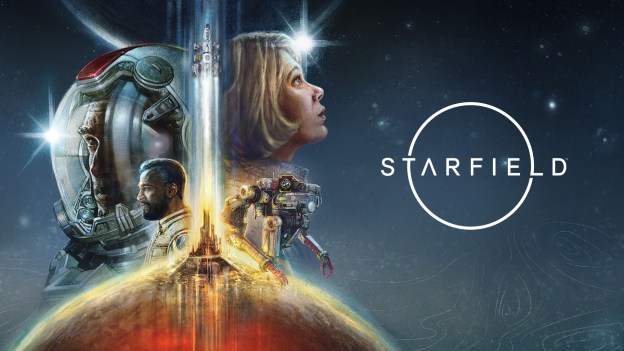
EMMY award-winner and 3-time BAFTA nominated composer Inon Zur (‘Fallout’, ‘Dragon Age’, ‘Prince of Persia’) is scoring ‘STARFIELD’, the first new universe in 25 years from Bethesda Game Studios, the award-winning creators of ‘The Elder Scrolls V: Skyrim’ and ‘Fallout 4’. Set hundreds of years in our future, STARFIELD is an epic about hope, our shared humanity, and answering our greatest mystery. In this next generation role-playing game set amongst the stars, create any character you want and explore with unparalleled freedom.

Inon Zur is internationally renowned for his emotionally dynamic original music scores for blockbuster video game franchises including ‘Fallout’, ‘Dragon Age’, ‘Prince of Persia’, and ‘The Elder Scrolls’, as well as the EMMY-winning documentary ‘Saber Rock’ and animated television shows including ‘Power Rangers’, ‘Digimon’ and ‘Escaflowne’.


Zur’s iconic themes and avant garde scores for the ‘Fallout’ video game series have been described as “Sophisticated and atmospheric” (Classic FM) and received two BAFTA nominations. His best-selling soundtrack for ‘Fallout 4’ is celebrated as one of the best original video game scores by BAFTA, The Game Awards, and Classic FM. Recently his original score for ‘The Elder Scrolls: Blades’ received top honors at the Hollywood Music In Media Awards.

Zur previously scored the ‘Fallout’ series and ‘The Elder Scrolls: Blades’ for the studio. The official teaser trailer for STARFIELD was released at a joint Microsoft Xbox and Bethesda Games showcase held during E3 2021, followed by a video introduction entitled ‘Into the Starfield: The Journey Begins’ – both featuring original music compositions by Zur. ‘STARFIELD’ will release November 11, 2022.

Are you excited to see what Inon Zur creates for Starfield?

See also:

Become a Patron of the blog at patreon.com/musicgamer460

Check out the YouTube channel (and consider hitting the subscribe button)

Don’t forget to like Film Music Central on Facebook 

Soundtrack News: ‘The Green Knight’ Original Soundtrack to be Released July 30, lead single “One Year Hence” Available Now

Milan Records announces the July 30 release of THE GREEN KNIGHT (ORIGINAL MOTION PICTURE SOUNDTRACK) with music by composer and performer Daniel Hart. Available for preorder now, the album features music written by Hart for director David Lowery’s latest fantasy adventure film based on the classic Arthurian tale of Sir Gawain and The Green Knight. The resulting 29-track collection is both as epic and unique as the film itself, a sweepingly dramatic and expansive body of music that straddles the divide between medieval and modern.

Making its debut alongside album preorder is soundtrack lead single “One Year Hence,” a darkly foreboding number underscored by a haunting, heavy synth and punctuated with jittery recorders and dissonant choral bursts – listen here. The soundtrack is the latest in a longstanding creative partnership between Lowery and Hart, the duo having worked together previously on Ain’t Them Bodies SaintsPete’s DragonA Ghost Story and The Old Man & the Gun. Starring Dev Patel as Sir Gawain, The Green Knight makes its theatrical debut Friday, July 30 from A24. 

An epic fantasy adventure based on the timeless Arthurian legend, The Green Knight tells the story of Sir Gawain (Dev Patel), King Arthur’s reckless and headstrong nephew, who embarks on a daring quest to confront the eponymous Green Knight, a gigantic emerald-skinned stranger and tester of men. Gawain contends with ghosts, giants, thieves, and schemers in what becomes a deeper journey to define his character and prove his worth in the eyes of his family and kingdom by facing the ultimate challenger. From visionary filmmaker David Lowery comes a fresh and bold spin on a classic tale from the knights of the round table.

Of the soundtrack, composer Daniel Hart says:

“Making this music was somehow both like running from a pack of hyenas and wading through a river of chocolate mud. It has never taken David [Lowery] and I this long to find what we were looking for musically on any of his films, so to listen back now and actually love what we made is all the more satisfying, especially when I think about how many late nights and hair pullings went into it. Much like Gawain himself, I was stumbling through the wilderness most of the time and found little moments of good fortune here and there, often through stubborn dumb luck. I hope that when you listen to the soundtrack, you’ll think about things other than me sitting in my studio, endlessly fretting. But if you do, then your imagination is very accurate.”

THE GREEN KNIGHT (ORIGINAL MOTION PICTURE SOUNDTRACK)
TRACKLISTING –

1. In Stori Stif And Stronge
2. Christ Is Born Indeed
3. You Do Smell Like You’ve Been At Mass All Night
4. Tell Me A Tale Of Yourself, So That I Might Know Thee
5. Shaped By Your Hands
6. O Greatest Of Kings
7. Remember It Is Only A Game
8. One Year Hence
9. I Promise You Will Not Come To Harm
10. Child Thou Ert A Pilgrim
11. Rest Them Bones My Brave Little Knight
12. A Meeting With St. Winifred
13. Your Head Is On Your Neck, My Lady
14. Are You Real, Or Are You A Spirit?
15. I Will Strike Thee Down With Every Care That I Have For Thee
16. Aiganz O Kulzphazur (feat. Emma Tring)
17. The Giant’s Call
18. Brave Sir Gawain Come To Face The Green Knight
19. Should Not A Knight Offer A Lady A Kiss In Thanks?
20. Hold Very Still
21. Do You Believe In Witchcraft?
22. You Are No Knight
23. I Never Asked For Your Help Anyway
24. Gawain Runs And Runs (feat. Bobak Lotfipour and Katinka Vindelev)
25. Blome Swete Lilie Flour
26. Excalibur
27. O Nyghtegale (feat. Atheena Frizzell)
28. Now I’m Ready, I’m Ready Now
29. Be Merry, Swete Lorde (feat. Katinka Vindelev)

See also:

Become a Patron of the blog at patreon.com/musicgamer460

Check out the YouTube channel (and consider hitting the subscribe button)

Don’t forget to like Film Music Central on Facebook 

Soundtrack Review: Gunpowder Milkshake (2021)

Milan Records today releases GUNPOWDER MILKSHAKE (ORIGINAL MOTION PICTURE SOUNDTRACK) by composer Frank Ilfman (Big Bad WolvesThe OperativeRory’s Way ). Available everywhere now, the album features music written by Ilfman for Navot Papushado’s Gunpowder Milkshake. The film is a female-driven, high-concept thriller with a rich mythology and multi-generational narrative that give it a fresh, 21st century perspective on the traditional assassin film. Directed and co-written by Navot Papushado (Big Bad Wolves), Gunpowder Milkshake debuts on Netflix in the US, Canada and Nordics today, with theatrical releases rolling out everywhere else worldwide from July 15.

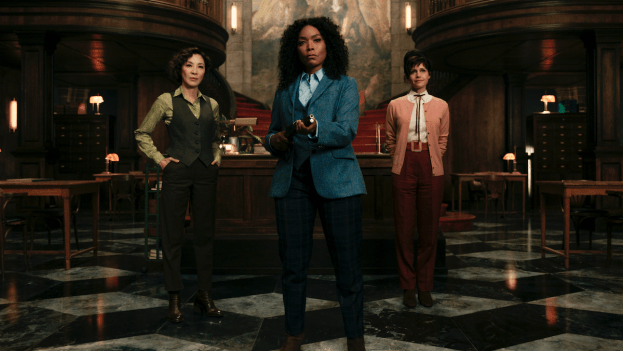
In Gunpowder Milkshake, Sam (Karen Gillan) was only 12 years old when her mother Scarlet (Lena Headey), an elite assassin, was forced to abandon her. Sam was raised by The Firm, the ruthless crime syndicate her mother worked for. Now, 15 years later, Sam has followed in her mother’s footsteps and grown into a fierce hit-woman. She uses her “talents” to clean up The Firm’s most dangerous messes. She’s as efficient as she is loyal. But when a high-risk job goes wrong, Sam must choose between serving The Firm and protecting the life of an innocent 8-year-old girl – Emily (Chloe Coleman). With a target on her back, Sam has only one chance to survive: Reunite with her mother and her lethal associates, The Librarians (Michelle Yeoh, Angela Bassett and Carla Gugino). These three generations of women must now learn to trust each other, stand up to The Firm and their army of henchmen, and raise hell against those who could take everything from them. 

Of the soundtrack, Gunpowder Milkshake director Navot Papushado says:

“Because this movie mixes so many different genres and so many ideas, the music was always going to be the glue. When I started talking to composer Frankie (Haim Frank Ilfman), I said I had the Western vibe of Ennio Morricone, the Italian chic of Stelvio Cipriani, and the violent suspense of Bernard Herrmann in mind. The end result is Western mixed with Italian retro chic and the suspense of Bernard Hermann with an electronic vibe that came from Frankie. The soundtrack is retro but modern, it could be played on vinyl or Spotify.”

Due to a busy schedule, I’ve not yet had the chance to watch Gunpowder Milkshake on Netflix (though I plan on fixing that in the next few days) but when I saw the soundtrack had arrived in my inbox, I couldn’t wait to check it out and get a hint of what I was in for.

Oh my goodness this music is so good!

The director really does sum it up perfectly by describing this music as Western mixed with Italian retro chic with the suspense of Bernard Hermann thrown in for good measure. The music for Gunpowder Milkshake is a delightful mish-mash of all of those things and more, it’s the kind of soundtrack you can sink your teeth into and find something different every time. In fact, I would go so far as to call this a “neo-classical” film score, in that it appears to be a modern take on a classical film score. Or, put another way, imagine if someone took a classic film score from the 1930s or 40s and redid it for the modern era, that’s what this music reminds me of.

This may be one of the best movie soundtracks I’ve heard in 2021, as I can hear influences all over the place. Even without the director mentioning it, I can hear the influence of Ennio Morricone the most, especially in “Goonfight at Gutterball Corral.” There’s also, as I said before, definitely a decent sampling of Bernard Hermann in this score too. But there’s also a lot in this music, and it may be coincidental, that reminds me of Daniel Pemberton’s score for The Man From UNCLE. I can’t put my finger on a specific cue, but more than once I found myself thinking of that film while listening to this soundtrack. That’s not a bad thing by the way, Pemberton’s scores are among my favorite, and if Frank Ilfman’s score for Gunpowder Milkshake reminds me of that style of film music, so much the better.

I can also say that the soundtrack for Gunpowder Milkshake is very easy to listen to, as many of the tracks are relatively short and therefore you can go through them at a relatively quick pace. I like how “bite-sized” some of these themes are. You get a feel for the music rather quickly and it didn’t take me a lot of time to take the measure of this film’s score.

Listening to the music for Gunpowder Milkshake has me more eager than ever to watch the movie itself, and I can only hope that the film is just as good as the music that was written for it.

GUNPOWDER MILKSHAKE (ORIGINAL MOTION PICTURE SOUNDTRACK)
TRACKLISTING –

  1. Opening Titles
  2. Home Sweet Home?
  3. Scarlet’s Theme
  4. Gunpowder Milkshake
  5. Big Bad Mommy
  6. New Books and Clean Guns
  7. Dressed To Kill
  8. Le Bonbon
  9. A Careless Whisper
  10. The Firm
  11. The Rollin Roars
  12. Goonfight at Gutterball Corral
  13. The Monsters
  14. Rock Monster
  15. Yankee and the Goons
  16. Redemption Is For The Careless
  17. 13:8 In 60 Seconds
  18. La Balada de los Charros
  19. Are You a Serial Killer?
  20. 944 Bullets
  21. The Sam and Emily Story
  22. Escape Route
  23. Fudge you!
  24. Bare Knuckles and Gold Bars
  25. The Library Fight
  26. The Big Gundown
  27. To The Death
  28. Madeleine’s Adagio
  29. McAlester’s Theme
  30. The Standoff
  31. Red Dot Marks The Spot
  32. Sam’s Theme
  33. Ensemble pour toujours

See also:

Film Soundtracks A-W

Become a Patron of the blog at patreon.com/musicgamer460

Check out the YouTube channel (and consider hitting the subscribe button)

Don’t forget to like Film Music Central on Facebook 

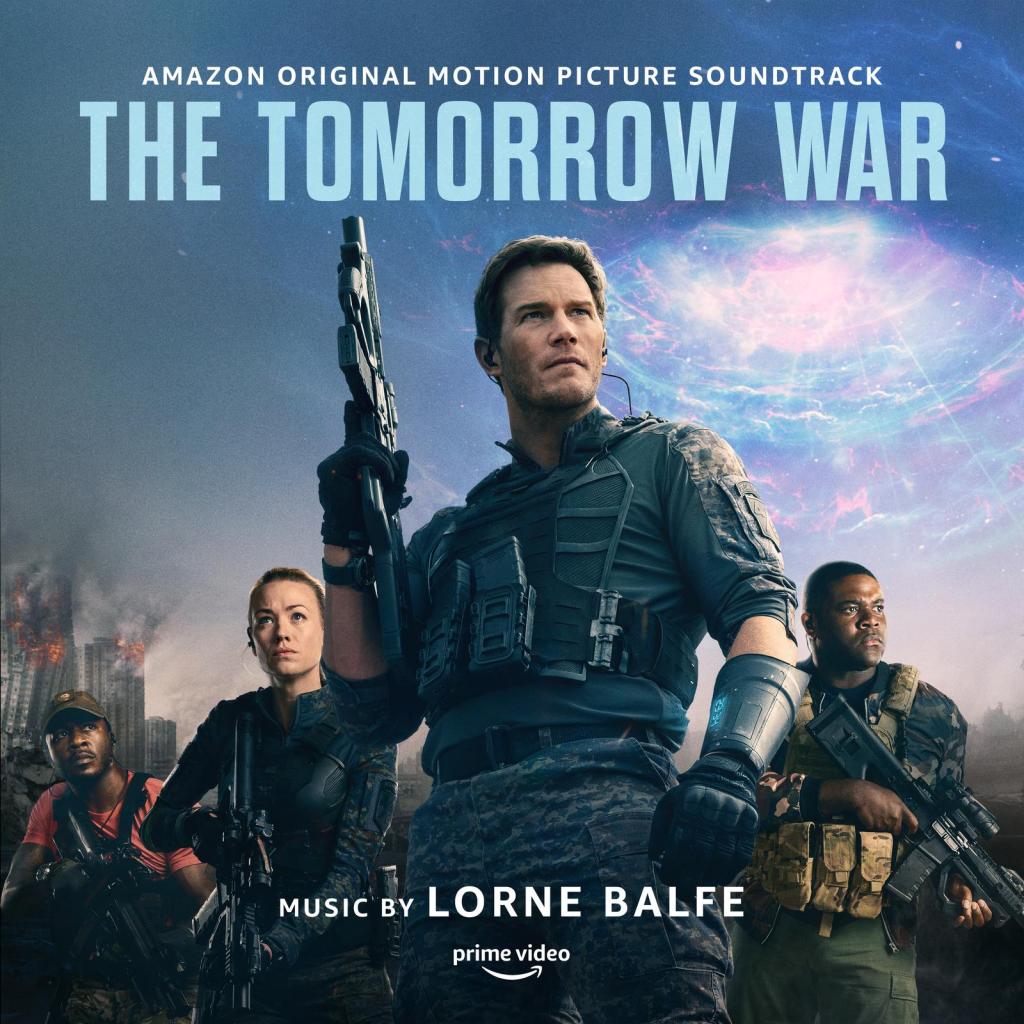
Soundtrack Review: The Tomorrow War (2021)

Milan Records has released THE TOMORROW WAR (AMAZON ORIGINAL MOTION PICTURE SOUNDTRACK) with music by GRAMMY Award®-winning and Emmy®- and BAFTA-nominated producer and composer Lorne Balfe.  Available everywhere now, the album features music written by Balfe for the futuristic action film directed by Chris McKay and marks the second collaboration between the composer and director, who previously worked together on McKay’s directorial debut The Lego Batman Movie

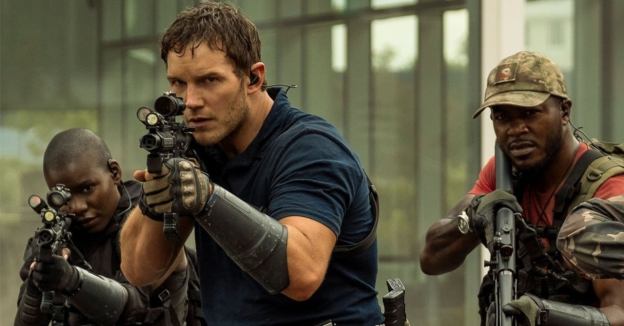
In The Tomorrow War, the world is stunned when a group of time travelers arrive from the year 2051 to deliver an urgent message: Thirty years in the future mankind is losing a global war against a deadly alien species. The only hope for survival is for soldiers and civilians from the present to be transported to the future and join the fight. Among those recruited is high school teacher and family man Dan Forester (Chris Pratt). Determined to save the world for his young daughter, Dan teams up with a brilliant scientist (Yvonne Strahovski) and his estranged father (J.K. Simmons) in a desperate quest to rewrite the fate of the planet.

Of the soundtrack, composer Lorne Balfe says:

“On the surface this is an action movie, but what stood out for me when writing the score was the family dynamics between the main characters. Being able to write themes and music around these relationships and people, both as their future and present-day selves was a unique experience. It was a delight to be able to work with Chris [McKay] again having previously worked with him on the Lego Batman movies, his creativity and versatility as a director is exceptional.”

After listening to Lorne Balfe’s work on Black Widow yesterday, I felt in the mood for more of his work and I decided to check out his score for The Tomorrow War. And after listening to his music for this recently released film, I’m so glad I did.

Balfe’s score for The Tomorrow War is beautiful! Predictably, there is a lot of synthesized music, which I would expect for a science-fiction film that revolves around time traveling 30 years into the future to fight aliens that are destroying planet Earth. But what really gets my attention is how Balfe contrasts the synthesized music with the orchestra, giving you a full range of music that is never once boring.

Another detail I liked? Balfe mixes in a range of sound effects: whooshes, vocalizations and what almost sounds like moaning in “Multiply.” This, combined with the music, creates a very unsettling effect and I really liked it. Given that this film deals with jumping 30 years into the future, the music makes you feel like you’re now in a time and place where you don’t belong, where you don’t fit, and that’s what you’d expect to feel if you’re suddenly pushed forward into the future.

Finally, I have to mention “The Tomorrow War” my favorite piece in the entire score. This gorgeous piece features an uplifting theme that recurs throughout the score, giving the music a big blockbuster feeling that I confess I did not expect given this film was released as an Amazon Original. I say “The Tomorrow War” is uplifting but there’s also hints of danger mixed in the latter half, reminding you that there’s a lot at stake in this unique conflict.

Whether you see the actual film or not, you need to take the time to listen to the music of The Tomorrow War, it is definitely worth it.

Track List

  1. Multiply (2:54)
  2. Spikes Attack (1:57)
  3. Who’s With Us? (4:04)
  4. Reunited (3:07)
  5. Back to the Past (4:03)
  6. The Tomorrow War (5:33)
  7. The Whitespikes (4:01)
  8. The Draft (4:41)
  9. Goodbye (4:15)
  10. So It Begins (8:21)
  11. Fight (2:47)
  12. Message From the Future (2:28)
  13. The Nest (2:08)
  14. Test Tubes (3:19)
  15. The Cube (2:51)
  16. Pushing (6:24)
  17. Miami Dolphins Still Suck (1:52)
  18. Colonel Forester (5:09)
  19. Dan Forester (3:16)
  20. Homecoming (2:17)

See also:

Film Soundtracks A-W

Become a Patron of the blog at patreon.com/musicgamer460

Check out the YouTube channel (and consider hitting the subscribe button)

Don’t forget to like Film Music Central on Facebook