Cinderella “Bibbidi-Bobbidi-Boo” (1950)

Cinderella-disneyscreencaps.com-5150

Cinderella “Bibbidi-Bobbidi-Boo” (1950)

After having her dress destroyed, poor Cinderella has finally reached her breaking point and just when she is on the verge of giving up, *POOF* here is her Fairy Godmother! And with the power of magic, Cinderella will be able to go to the ball after all! The Fairy Godmother was voiced by Verna Felton, who played a number of roles in Disney films during her career, including the Queen of Hearts, Aunt Sarah (in Lady and the Tramp), Flora in Sleeping Beauty, and Winifred the elephant in The Jungle Book (a posthumous role as she passed away before the film was released).

Listening to this song brings back all the good memories of childhood. The melody practically bounces from one note to the next, this is because the primary melody is a string of triplets (groups of three notes, see the number three under or above each group, that signifies a triplet.) Also, it’s really fun to try and say the nonsense words! During the song, some of Cinderella’s mice friends become horses, while her dog and horse become a coachman and a footman.

Salago-doola
Menchicka boola
Bibbidi-bobbidi-boo
Put ’em together
And what have you got?
Bibbidi-bobbidi-Boo

Salago-doola
Menchicka boola
Bibbidi-bobbidi-boo
It’ll do magic
Believe it or not
Bibbidi-bobbidi-boo

Now salago-doola means
Menchicka boole-roo
But the thingmabob
That does the job
Is bibbidi-bobbidi-boo

Oh…

Salago-doola
Menchicka boola
Bibbidi-bobbidi-boo
Put ’em together
And what have you got?
Bibbidi-bobbidi…
Bibbidi-bobbidi…
Bibbidi-bobbidi-boo

While all of this looks lovely, there’s still the matter of Cinderella’s dress, which the Fairy Godmother almost forgets. Allegedly, Walt Disney’s favorite piece of animation is the moment Cinderella receives her ball gown (which was always one of my favorites as well). Of course, with any bit of magic, there is always a catch: the spell that created her carriage, her dress and everything else, will break at the last stroke of midnight “and all will be as it was before.” Essentially, the Fairy Godmother is giving Cinderella her one chance to make her dreams come true, so she needs to make the most of it. That being said, I always wondered why Cinderella had to leave before the spell broke, surely if the Prince really loved her she could tell him the truth (I’m probably missing the point, I know).

As I’ve gotten older, I can’t help but notice the irony in this situation. If Lady Tremaine had let Cinderella come to the ball in her homemade dress, it’s possible the Prince would’ve never noticed her in the first place. But because she had to be spiteful, Cinderella receives a magical gown that guarantees she will be noticed.

Let me know what you think about “Bibbidi-Bobbidi-Boo” in the comments below and have a great day!

See also:

Cinderella “A Dream is a Wish Your Heart Makes” (1950)

Cinderella “Sing Sweet Nightingale” (1950)

Cinderella “The Work Song/Cinderelly, Cinderelly” (1950)

Cinderella “So This is Love” (1950)

Disney/Dreamworks/Pixar/etc. Soundtracks A-Z

Become a Patron of the blog at patreon.com/musicgamer460

Check out the YouTube channel (and consider hitting the subscribe button)

Don’t forget to like Film Music Central on Facebook


Cinderella “The Work Song/Cinderelly, Cinderelly” (1950)

Cinderella247

Cinderella “The Work Song” (1950)

The message Cinderella gets at the end of “Sing Sweet Nightingale” is the one announcing a royal ball where “every eligible maiden is to attend” so that the Prince may select a bride. This does include Cinderella and Lady Tremaine knows that perfectly well. However, as she herself says, “IF Cinderella can finish all the chores, get her sisters ready AND have a suitable dress to wear, THEN she may indeed come with them.” The key word in that entire sentence, is IF (as a kid it took me years to understand that Lady Tremaine never intended for Cinderella to come with them at all).

The mice and birds, hearing the stepsisters and Lady Tremaine keeping Cinderella busy by running all over the house, are furious and decide to work on her mother’s dress so that she can go to the ball in spite of her stepfamily. This leads to “The Work Song.” I personally love this song, especially the opening part where Jaq is imitating the nagging voices of the family.

“Poor Cinderelly. Every time she find a minute, that’s the time that they begin it! Cinderelly! Cinderelly!”
“CINDERELLLLLLA!!!” (Jaq kicks the door shut in disgust)

Cinderelly Cinderelly
Night and day it’s Cinderelly
Make the fire!
Fix the breakfast!
Wash the dishes!
Do the mopping!
And the sweeping and the dusting!
They always keep her hopping!
She go around in circles till she very, very dizzy
Still they holler…
keep-a busy Cinderelly!

“Yeah, keep-a busy. You know what? Cinderelly’s not goin to the ball.”
“What?”
“Not goin?”
“What did you say?”
“You see. They fix her. Work, work, work. She’ll never get her dress done.”
“P-P-P-Poor Cinderelly.”

02.jpg

“Hey! We can do it!”
We can do it, we can do it,
We can help-a Cinderelly
We can make a dress so pretty
There’s nothing to it really.
We’ll tie a sash around it
Pull a ribbon through it
When dancing at the ball
She’ll be more beautiful than all
In the lovely dress we’ll make for Cinderelly

Hurry, hurry, hurry, hurry
Gotta help-a Cinderelly
Got no time to dilly dally
We gotta get-a going

I’ll cut it with these scissors
And I can do the sewing
Leave the sewing to the women
You go get some trimming
And we’ll make a lovely dress for Cinderelly
Yes, we’ll make a lovely dress for Cinderelly!

Of course, to finish the dress on time, the mice end up…borrowing…a few things that Anastasia and Drizella threw away (particularly a necklace and a sash (the ribbon that ties around the waist). You can’t blame the mice for taking them since the two sisters clearly don’t want these items (deriding them as “worthless” and “trash.”) However, you also have to know that incorporating some of her stepsister’s belongings into the dress practically guarantees that this isn’t going to end well for Cinderella (even though she knows nothing about it). Despite knowing the fate of this dress, it’s still fun to watch the mice and birds come together to make a nice dress for Cinderella.

Let me know what you think about “The Work Song/Cinderelly, Cinderelly” in the comments below and have a great day!

See also:

Cinderella “A Dream is a Wish Your Heart Makes” (1950)

Cinderella “Sing Sweet Nightingale” (1950)

Cinderella “Bibbidi-Bobbidi-Boo” (1950)

Cinderella “So This is Love” (1950)

Disney/Dreamworks/Pixar/etc. Soundtracks A-Z

Become a Patron of the blog at patreon.com/musicgamer460

Check out the YouTube channel (and consider hitting the subscribe button)

Don’t forget to like Film Music Central on Facebook


Cinderella “Sing Sweet Nightingale” (1950)

Evolution of Disney: Cinderella Part 1

Cinderella “Sing Sweet Nightingale” (1950)

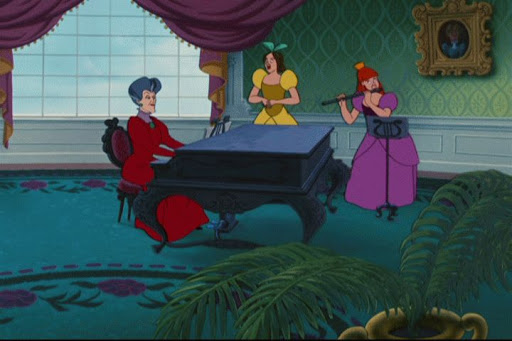
Anastasia and Drizella are taking music lessons from their mother and we are “treated” to the sound of Drizella’s…..talents….followed in contrast by Cinderella’s take on the same melody. This song is special because in it, Walt Disney pioneered the use of double tracked vocals (years before the Beatles did the same thing). A double tracked vocal is when you record an artist singing a song, then record it again and have the artist sing in harmony with the first recording. Ilene Woods did this at least four times, to create a four part harmony with her own voice, and the results are spectacular.

Oh, sing sweet nightingale
Sing sweet nightingale
High above me
Oh, sing sweet nightingale
Sing sweet nightingale

High above
Oh, sing sweet nightingale
Sing sweet nightingale, high
Oh, sing sweet nightingale
Sing sweet nightingale
Oh, sing sweet nightingale
Sing sweet
Oh, sing sweet nightingale, sing
Oh, sing sweet nightingale
Oh, sing sweet
Oh, sing

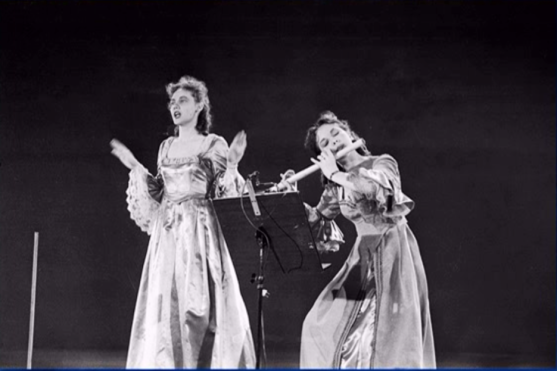
One of my favorite animations in Cinderella comes when all the different “bubble Cinderellas” sing together. This song also highlights Cinderella’s beautiful singing voice (in comparison to the Drizella’s singing voice and Anastasia’s questionable ability on the flute). You know I think this scene is further proof that Lady Tremaine is completely blind to the realities of her daughters. Anyone with half an ear can see that these two have no musical talent whatsoever, but does Lady Tremaine chastise them for being off-key? Nope!

Like most of the scenes in Cinderella, this scene was also filmed in live action before it was animated and I love looking at the picture of the actresses playing Drizella and Anastasia because it’s almost exactly like the final animated version.

cindy-62.png

Let me know what you think about “Sing Sweet Nightingale” in the comments below and have a great day!

See also:

Cinderella “A Dream is a Wish Your Heart Makes” (1950)

Cinderella “The Work Song/Cinderelly, Cinderelly” (1950)

Cinderella “Bibbidi-Bobbidi-Boo” (1950)

Cinderella “So This is Love” (1950)

Disney/Dreamworks/Pixar/etc. Soundtracks A-Z

Become a Patron of the blog at patreon.com/musicgamer460

Check out the YouTube channel (and consider hitting the subscribe button)

Don’t forget to like Film Music Central on Facebook

Cinderella “A Dream is a Wish Your Heart Makes” (1950)

f1182-e4b2d886768d8949b43856570e5fa8d9

Cinderella “A Dream is a Wish Your Heart Makes” (1950)

A lot has happened since Walt Disney released Snow White and the Seven Dwarfs to worldwide acclaim. World War II has come and gone, along with a string of several flops at the box office. Heavily in debt, Disney agreed to produce another animated feature film, this time using the classic fairy tale Cendrillon by Charles Perrault as the inspiration. Begun in 1948 and released in 1950, Cinderella was hailed as the greatest animated film since Snow White and the Seven Dwarfs and is widely considered to be one of the greatest animated films ever made. The future princess was voiced by singer Ilene Woods. She had become friends with songwriters Mack David and Jerry Livingston, and one day they called her over to record demo tracks for three songs: “Bibbidi-Bobbidi-Boo,” “A Dream is A Wish Your Heart Makes,” and “So This Is Love.” When Disney heard the recordings, he hired Woods immediately to voice Cinderella, choosing her over 300 other girls who had auditioned.

Like Snow White before her, Cinderella is living life under the whim of her brutal stepmother Lady Tremaine and her mean stepsisters, Anastasia and Drizella. They also have a devious black cat named Lucifer, who is always trying to catch the mice and birds that are Cinderella’s friends and helpers. While her stepfamily enjoys a luxurious life, Cinderella is forced to do all the chores in her own home. It’s during this time that she rescues a new mouse from Lucifer and names him Gus.

Cinderella sings at the start of another day about how important dreams are, that “dreams are wishes your heart makes.” This is how Cinderella goes through life. Compare the opening of this song to any song that Snow White sings and you’ll see the difference. Whereas Snow White was a high soprano (Adriana Caselotti was an opera singer later in life), Cinderella’s vocal range is closer to that of a contralto (lower than a soprano, but still with a fairly wide range of notes). Keep in mind that over a decade has passed since Snow White was released, and musical styles have changed greatly since then.

A dream is a wish your heart makes
When you’re fast asleep
In dreams you will lose your heartaches
Whatever you wish for, you keep
Have faith in your dreams and someday
Your rainbow will come smiling through
No matter how your heart is grieving
If you keep on believing
The dream that you wish will come true

(Speaking)
Oh, that clock!
Old killjoy.
I hear you! “Come on, get up,” you say!
“Time to start another day!”
Even he orders me around.
Well, there’s one thing.
They can’t order me to stop dreaming.
And perhaps someday…

(Singing)
The dreams that I wish
Will come true

La-da-da-da-da-da-da-da
La-da-da-da-da-da-da-da-da
Hmm-hmm-hmm-hmm-hmmm-hmm-hmm-hmm
La-da-la-da-da-da-da-da-dee
Hmm-mm-hm-mm-mm-hmm-hmm-hmm
La-da-da-da-da-da-da-da-dee
La-da-da-da-daaa-da-da-da
Hmm-hmm-hmm-hm-hmm-hmm-hm-hmm

No matter how your heart is grieving
If you keep on believing
The Dream that you wish
Will come true

This song does a good job in establishing what Cinderella is like, she’s the eternal optimist (she has to be, given the circumstances). Let me know what you think about “A Dream is a Wish Your Heart Makes” in the comments below and have a great day!

See also:

Cinderella “Sing Sweet Nightingale” (1950)

Cinderella “The Work Song/Cinderelly, Cinderelly” (1950)

Cinderella “Bibbidi-Bobbidi-Boo” (1950)

Cinderella “So This is Love” (1950)

Disney/Dreamworks/Pixar/etc. Soundtracks A-Z

Become a Patron of the blog at patreon.com/musicgamer460

Check out the YouTube channel (and consider hitting the subscribe button)

Don’t forget to like Film Music Central on Facebook


Snow White and the Seven Dwarfs “Some Day My Prince Will Come” (1937)

Snow-white-disneyscreencaps.com-6725.jpg

Snow White “Some Day My Prince Will Come” (1937)

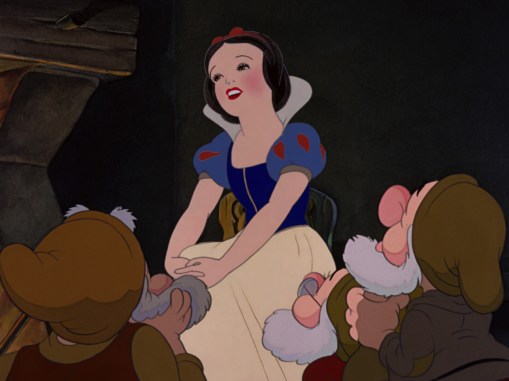
“The Silly Song” is immediately followed by Snow White’s final song in the film “Some Day My Prince will Come,” where she sings to the dwarfs about how she’ll be reunited with her Prince someday and all will live happily ever after. Apparently there was supposed to be a dream sequence to accompany the song but the production either ran out of money or it wasn’t coming up to Disney’s standards, so it was cut. Musically, the song is a gentle waltz (in 3/4 time).

Some day my prince will come
Some day we’ll meet again
And away to his castle we’ll go
To be happy forever, I know

Some day when spring is here
We’ll find a love anew
And the birds will sing,
And wedding bells will ring
Someday when my dreams come true

While “Some Day My Prince Will Come” is a beautiful song, I have a big problem with Snow White being in love with the Prince at all. Leaving aside the fact that Snow White is  only 14 years old (yes, really, that’s how old she’s supposed to be), there’s no getting away from the reality that Snow White has seen the Prince once. And that wasn’t even a proper conversation, it consisted of one “Hello” and a brief love song. Even Aurora and Prince Philip spent more time together! Still, despite all that, it is a nice last song from Snow White.

Let me know what you think about “Some Day My Prince Will Come” in the comments below and have a great day!

See also:

Snow White and the Seven Dwarfs “I’m Wishing/One Song” (1937)

Snow White and the Seven Dwarfs “With a Smile and a Song” (1937)

Snow White and the Seven Dwarfs “Whistle While You Work” (1937)

Snow White and the Seven Dwarfs “Heigh Ho” (1937)

Snow White and the Seven Dwarfs “Bluddle-Uddle-Um-Dum/The Washing Song” (1937)

Snow White and the Seven Dwarfs “The Silly Song” (1937)

Disney/Dreamworks/Pixar/etc. Soundtracks A-Z

Become a Patron of the blog at patreon.com/musicgamer460

Check out the YouTube channel (and consider hitting the subscribe button)

Don’t forget to like Film Music Central on Facebook
Snow White and the Seven Dwarfs “The Silly Song” (1937)

Snowwhite-disneyscreencaps_com-9617

While the Queen plots her revenge against Snow White (having discovered she’s still alive), we return to the dwarf’s cottage where a very “Silly Song” is taking place. Also known as the “Yodel song,” it features Snow White and all the dwarves dancing and singing with the animals watching. Bashful is playing an accordion, Doc is playing what looks like a cross between a bass and a dulcimer, Grumpy is playing the organ, Sleepy is occasionally playing a recorder (it’s shaped like a fish too), Sneezy is playing a small ukelele and Dopey is playing the drums while the others sing and dance. The entire song is a great example of a rustic folk melody, with two nonsensical verses (performed by Happy and Bashful respectively) in between.

Ho-la-la-ee-ay
Ho-la-la-ee-ay
Ho-la-la-ee-ay-ee-la-ee-ay-ee-lee-ay
Ho-la-la-ee-ay
Ho-la-la-ee-ay
Ho-la-la-ee-ay-ee-la-lee-ay-lee-o-lee-ay

I’d like to dance and tap my feet
But they won’t keep in rhythm
You see, I washed them both today
And I can’t do nothing with ’em

Ho hum, the tune is dumb
The words don’t mean a thing
Isn’t this a silly song
For anyone to sing?

When the time comes for Bashful to sing a verse, he’s quite reluctant to begin and it takes two false starts (plus a forceful nudge from Grumpy’s organ) to get him going:

I chased a polecat up a tree
Way out upon a limb
And when he got the best of me
I got the worst of him

As Snow White enjoys the song, Dopey (who is very smitten with the princess) and Sneezy work together to they can dance with her. Where they got a regular sized coat I don’t know, but to everyone’s amusement, Dopey comes out standing on Sneezy’s shoulders so that he looks like a regular-sized person. Snow White finds it funny, but also agrees to dance and everyone is having a grand time…until Sneezy feels a sneeze coming. Something you should know about Billy Gilbert (the voice of Sneezy) is that he was well-known for his comic sneeze routines (in fact that’s how he got the job, he called Walt Disney and performed his act over the telephone). And these sneezes are something else, the minute he starts hemming and hawwing as the sneeze builds up, everyone runs for cover until suddenly…Ah-CHOO!! The party dissolves into laughter as Dopey is blown clear up to the ceiling by the sneeze.

This scene is one of the most copied segments in Disney history, appearing most notably in Robin Hood (during “The Phony King of England” song). Also, you  might be interested to know that Marge Champion, the dancing model for Snow White, is still alive as of March 2019 (and will turn 100 this September). Let me know what you think about “The Silly Song” in the comments below and have a great day!

See also:

Snow White and the Seven Dwarfs “I’m Wishing/One Song” (1937)

Snow White and the Seven Dwarfs “With a Smile and a Song” (1937)

Snow White and the Seven Dwarfs “Whistle While You Work” (1937)

Snow White and the Seven Dwarfs “Heigh Ho” (1937)

Snow White and the Seven Dwarfs “Bluddle-Uddle-Um-Dum/The Washing Song” (1937)

Snow White and the Seven Dwarfs “Some Day My Prince Will Come” (1937)

Disney/Dreamworks/Pixar/etc. Soundtracks A-Z

Become a Patron of the blog at patreon.com/musicgamer460

Check out the YouTube channel (and consider hitting the subscribe button)

Don’t forget to like Film Music Central on Facebook
Snow White and the Seven Dwarfs “Bluddle-Uddle-Um-Dum/The Washing Song” (1937)

Dwarfs-hiding-behind-bed-in-Snow-white-1200x878

Snow White and the Seven Dwarfs “Bluddle-Uddle-Um-Dum” (1937)

Of course, once the dwarfs get home, they quickly realize that something is amiss because their entire house is CLEAN!! (To which Grumpy retorts: “There’s dirty work afoot!!”) There follows a hilarious comedy of errors where the dwarfs become convinced that their house is inhabited by a multi-headed monster and the seven sneak inside to slay this “beast.”

Finally though, Snow White and the dwarfs formally meet and everyone takes to the princess at once (except Grumpy). The others are completely won over when Snow White promises to cook all of their favorite foods, especially gooseberry pie (“Gooseberry pie? Hooray! She stays!”) But orginally Grumpy wasn’t going to be won over that easily. If you pay close attention to the scene, you’ll notice that Grumpy is actually getting ready to say something when the scene cuts away to the pot boiling over. In a deleted scene (even Snow White had a few), Grumpy was going to go on a tirade about how ridiculous it was for them to let Snow White stay merely because of a gooseberry pie. That’s when the princess stops the argument by pretending she’s going to leave. Meanwhile, the other dwarfs remind Grumpy of how good gooseberry pie is, which leads Grumpy to allow that Snow White can stay at least until he gets the pie (this explains why Snow White is working on the pie for Grumpy after the dwarfs leave).

Snow White and the Seven Dwarfs Deleted Scene (1937)

dwarfswash.jpg

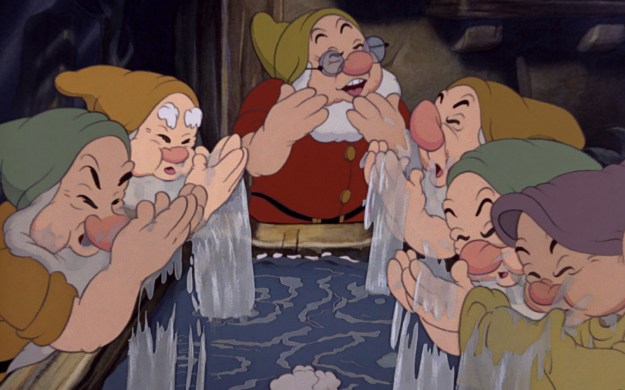
The matter being settled, the dwarfs are ready to eat the soup Snow White has made. But before they can eat, the princess insists that everyone has to go wash up for dinner (since the dwarfs have only washed their hands “recently.” “The Dwarfs Washing Song” or “Bluddle-Uddle-Um-Bum” is early Disney silly at its finest. The song (led by Doc) is juxtaposed against the stubborness of Grumpy (who notably refuses to sing and speaks his lines during this sequence). Actually, compared to the other songs in the movie, this almost isn’t a “song” at all, as the dwarfs aren’t actually “singing” so much as “speak-singing” the lyrics with musical accompaniment.

Step up to the tub
‘Tain’t no disgrace
Just pull up your sleeves
And get ’em in place
Then scoop up the water
And rub it on your face
And go brrr, brrr, brrr

Pick up the soap
Now don’t try to bluff
Work up a lather
An’ when ya got enough
Get your hands full of water
Ya snort and ya snuff
And go brrr, brrr, brrr

Ya douse and douse
Ya scrub and scrub
Ya sputter and splash all over the tub
You may be cold and wet when you’re done
But ya gotta admit it’s good clean fun
So splash all ya like
‘Tain’t any trick
As soon as you’re through
You’ll feel mighty slick

This has nothing to do with music, but one of my favorite scenes is when the other dwarfs ambush Grumpy after the main song ends and drag him to the wash tub. Be honest now, at some time or other you’ve fantasized about getting to do that to someone. Once Grumpy is in the midst of being forcibly cleaned, the rest of the dwarfs sing their one final verse.

Now scrub good and hard
It can’t be denied
That he’ll look mighty cute
As soon as he’s dried

But it’s good for the soul
And it’s good for the hide
To go brrr, brrr, brrr

Poor Grumpy, I almost feel bad watching him get forcibly cleaned (but it’s so much fun to watch!) Let me know what you think about “Bluddle-Uddle-Um-Dum” in the comments below and have a great day!

See also:

Snow White and the Seven Dwarfs “I’m Wishing/One Song” (1937)

Snow White and the Seven Dwarfs “With a Smile and a Song” (1937)

Snow White and the Seven Dwarfs “Whistle While You Work” (1937)

Snow White and the Seven Dwarfs “Heigh Ho” (1937)

Snow White and the Seven Dwarfs “The Silly Song” (1937)

Snow White and the Seven Dwarfs “Some Day My Prince Will Come” (1937)

Disney/Dreamworks/Pixar/etc. Soundtracks A-Z

Become a Patron of the blog at patreon.com/musicgamer460

Check out the YouTube channel (and consider hitting the subscribe button)

Don’t forget to like Film Music Central on Facebook

Snow White and the Seven Dwarfs “Heigh Ho” (1937)

Snow White and the Seven Dwarfs Part 2

Appropriately enough, as we meet the dwarfs in their incredibly sparkly mine, they’re singing about….digging!!! This cute little ditty actually doesn’t have too much in the way of melody going on, as the notes are mostly in sync with their picks. What is cool though is the introduction before the song starts (the first four measures): it’s musically recreating the sound of the dwarfs mining!

We dig dig dig dig dig dig dig 
In our mine the whole day through
To dig dig dig dig dig dig dig
Is what we like to do

It ain’t no trick to get rich quick
If you dig dig dig with a shovel or a pick
In a mine! In a mine! In a mine! In a mine!
Where a million diamonds shine!

We dig dig dig dig dig dig dig 
From early morn till night
We dig dig dig dig dig dig dig up 
Everything in sight

We dig up diamonds by the score
A thousand rubies, sometimes more
Though we don’t know what we dig ’em for
We dig dig dig a-dig dig

aa37f70e-3847-47fe-939a-912c15cce8c4

Through this song, we are visually introduced to all of the dwarfs and begin to get an idea of what they are like. In particular, we learn that Dopey isn’t all that bright, as he likes to mess around by putting diamonds in his eyes (much to Doc’s annoyance). I also find the scene where Dopey throws away “defective” jewels by tossing them over a cliff incredibly funny. There’s probably a fortune’s worth of jewels in that dust pan and he just tosses it away like it’s nothing (also, note how the jewels are coming out of the ground fully cut like finished gems). As the work continues, the clock announces it’s 5pm and time to go home, which announces the proper start of “Heigh Ho.”


“Heigh Ho” technically begins with a call and response as it is Doc who sings out the first “Heigh Ho!!” And all the dwarfs (minus Dopey who doesn’t talk) respond with their own “Heigh Ho!” which leads into the beginning of the song where they all sing and whistle in unison, basically singing the same verse over and over again (I’ve said it before and I’ll say it again, Disney songs at this point are designed to be relatively simplistic in terms of melody and lyrics). Sound film had only existed for about ten years at this point so filmmakers and animators were still showing off how closely they could synchronize sound to movement.

Heigh-ho, Heigh-ho
Heigh-ho, Heigh-ho
Heigh-ho
[Chorus]: Heigh-ho, Heigh-ho
It’s home from work we go
[Whistle]
Heigh-ho, Heigh-ho, Heigh-ho
[Chorus]: Heigh-ho, Heigh-ho
[Whistle]
Heigh-ho, Heigh-ho
Heigh-ho, Heigh-ho
Heigh-ho, Heigh-ho
Heigh-ho hum

“Heigh Ho” remains one of the most popular songs from this film and is considered one of the iconic Disney songs. Let me know what you think of “Heigh Ho” in the comments below and have a great day!

See also:

Snow White and the Seven Dwarfs “I’m Wishing/One Song” (1937)

Snow White and the Seven Dwarfs “With a Smile and a Song” (1937)

Snow White and the Seven Dwarfs “Whistle While You Work” (1937)

Snow White and the Seven Dwarfs “Bluddle-Uddle-Um-Dum/The Washing Song” (1937)

Snow White and the Seven Dwarfs “The Silly Song” (1937)

Snow White and the Seven Dwarfs “Some Day My Prince Will Come” (1937)

Disney/Dreamworks/Pixar/etc. Soundtracks A-Z

Become a Patron of the blog at patreon.com/musicgamer460

Check out the YouTube channel (and consider hitting the subscribe button)

Don’t forget to like Film Music Central on Facebook

Snow White and the Seven Dwarfs “Whistle While You Work” (1937)

6e644-1184136_1361628309987_full

Snow White and the Seven Dwarfs “Whistle While You Work” (1937)

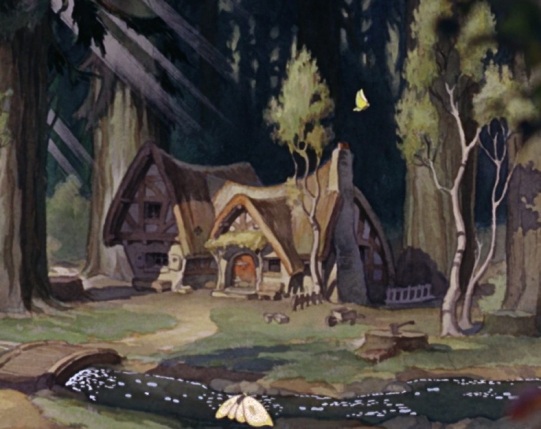
Previously, Snow White had just escaped to the forest and made friends with the animals therein. Now she needs a place to stay and the animals are more than happy to help out. Unbeknownst to everyone (including the animals apparently), this cottage is actually the home of the seven dwarfs: Doc, Happy, Sneezy, Sleepy, Bashful, Grumpy and Dopey. Based on the evidence, that house was never cleaned a day in its life. Snow White, of course, has a plan to fix all that so she and the animals decide to clean the house for the “children” so that when they come back, maybe they’ll let her stay. This idea serves as the introduction for “Whistle While You Work.”

Just whistle while you work
And cheerfully together we can tidy up the place
So hum a merry tune
It won’t take long when there’s a song to help you set the pace

And as you sweep the room
Imagine that the broom is someone that you love
And soon you’ll find you’re dancing to the tune
(Spoken: Oh, no, no, no, no! Put them in the tub)
When hearts are high the time will fly so whistle while you work

dd7b7-snow-white

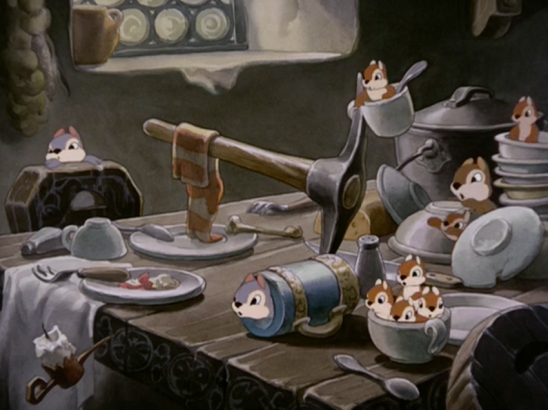
I can’t tell you how many times I sang this song to myself as a child while I cleaned my room or did a chore. It was funny because at the time I couldn’t whistle so I’d sing the verse and then blow air frantically to try and whistle the tune (but I digress…). Of course in the movie the song is accompanied by funny scenes of the animals (along with Snow White) cleaning the filthy cottage. My particular favorite is seeing the chipmunk winding up the spider’s web like a ball of yarn only to have the spider come down to object! This is where we leave Snow White for now, as it’s finally time to meet the seven dwarfs.

Let me know what you think of “Whistle While You Work” in the comments below and have a great day!

See also:

Snow White and the Seven Dwarfs “I’m Wishing/One Song” (1937)

Snow White and the Seven Dwarfs “With a Smile and a Song” (1937)

Snow White and the Seven Dwarfs “Heigh Ho” (1937)

Snow White and the Seven Dwarfs “Bluddle-Uddle-Um-Dum/The Washing Song” (1937)

Snow White and the Seven Dwarfs “The Silly Song” (1937)

Snow White and the Seven Dwarfs “Some Day My Prince Will Come” (1937)

Disney/Dreamworks/Pixar/etc. Soundtracks A-Z

Become a Patron of the blog at patreon.com/musicgamer460

Check out the YouTube channel (and consider hitting the subscribe button)

Don’t forget to like Film Music Central on Facebook

Snow White and the Seven Dwarfs “With a Smile and a Song” (1937)

Evolution of Disney : Snow White and the Seven Dwarfs Part 1

Of course for the Queen, seeing the Prince in love with Snow White is the last straw and she arranges to have the young Princess murdered out in the countryside. Fortunately for us, the Huntsman has a conscience and Snow White runs deep into the forest where she encounters a large group of forest animals (interesting how they can understand humans, isn’t it?) Now trying to cheer herself up, Snow White sings “With a Smile and a Song” to remind herself (and her new animal friends) about how being positive can help you get through tough times. As with the earlier songs, the vocal part is relatively simple.

With a smile and a song
Life is just a bright sunny day
Your cares fade away
And your heart is young

With a smile and a song
All the world seems to waken anew
Rejoicing with you
As the song is sung

There’s no use in grumbling
When raindrops come tumbling
Remember, you’re the one
Who can fill the world with sunshine

When you smile and you sing
Everything is in tune and it’s spring
And life flows along
With a smile and a song

I enjoy this song as much as the others, but something about it has always bothered me. Caselotti’s voice is so high-pitched in this song that, to my ears, some of the words come across as unintelligible. It still sounds beautiful but it would be nice to understand all of the lyrics. It’s also interesting to compare the animation of the animals in this film to their super-realistic appearance in Bambi. While it’s true that Disney wasn’t going for realism in Snow White, everything is still recognizable (deer look like deer, rabbits like rabbits, etc.)

“With a Smile and a Song” is a nice, peaceful interlude after Snow White’s terrifying run through the forest (which really needs to be covered in Disturbing Disney) and easily sets up a transition for the princess to travel to the cottage of the seven dwarfs. Let me know what you think about “With a Smile and a Song” in the comments below and have a great day!

See also:

Snow White and the Seven Dwarfs “I’m Wishing/One Song” (1937)

Snow White and the Seven Dwarfs “Whistle While You Work” (1937)

Snow White and the Seven Dwarfs “Heigh Ho” (1937)

Snow White and the Seven Dwarfs “Bluddle-Uddle-Um-Dum/The Washing Song” (1937)

Snow White and the Seven Dwarfs “The Silly Song” (1937)

Snow White and the Seven Dwarfs “Some Day My Prince Will Come” (1937)

Disney/Dreamworks/Pixar/etc. Soundtracks A-Z

Become a Patron of the blog at patreon.com/musicgamer460

Check out the YouTube channel (and consider hitting the subscribe button)

Don’t forget to like Film Music Central on Facebook