Snow White and the Seven Dwarfs “I’m Wishing/One Song” (1937)

Evolution of Disney : Snow White and the Seven Dwarfs Part 1

Snow White “I’m Wishing/One Song” (1937)

It’s hard to imagine, but there was a time when Disney did not completely rule the world of animation and children’s movies. Back in the 1930s, Disney was seen as a small studio that created funny cartoons, but little else. Of course Walt Disney had bigger plans, including an idea for making a full-length film that was completely animated (something unheard of at the time). What was once known as “Disney’s Folly” became known to history as Snow White and the Seven Dwarfs.

Released in 1937, the titular character is voiced by the singer Adriana Caselotti. She sings several songs over the course of the film, the first of which is “I’m Wishing,” sung to her bird friends as she gets water from the well in the castle courtyard. The melody is relatively simplistic, with many leaps from the tonic to the dominant (D to A) and back again. Before the melody returns for a final reprise (just before the Prince interjects), there is a lovely interlude where Caselotti shows off her vocal prowess and sings a call and response with her “echo” in the well.

Evolution of Disney : Snow White and the Seven Dwarfs Part 1

The song serves as a good introduction for the character: she’s a young (at least teenage) girl who’s clearly done her best to be happy, but still dreams of finding true love (and probably getting away from her stepmother the Queen). The music for this song (and most of the others) was composed by Frank Churchill, who’s last work would prove to be the score for Bambi in 1942.

You wanna hear a secret?
Promise not to tell?
(sung)
We are standing by a wishing well
Make a wish into the well
That’s all you have to do
And if you hear it echoing
Your wish will soon come true

I’m wishing
(I’m wishing)
For the one I love
To find me
(To find me)
Today
(Today)

I’m hoping
(I’m hoping)
And I’m dreaming of
The nice things
(The nice things)
He’ll say
(He’ll say)

I’m wishing
(I’m wishing)
For the one I love
To find me
(To find me)
Today

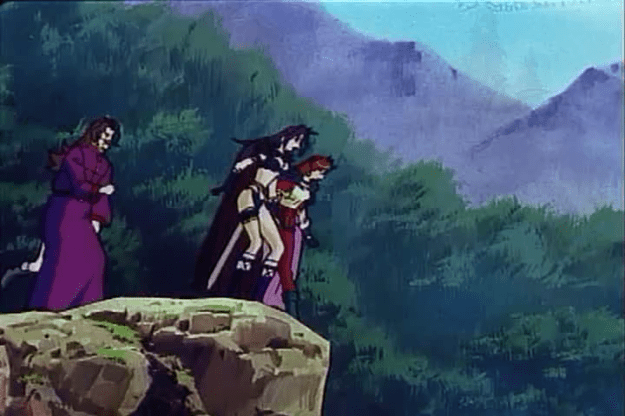
It’s amazing how lifelike Snow White looks (and remember this was 1937, before computers, all of this was done BY HAND). By the way, look at the Prince below, doesn’t he remind you just a little of Prince Philip from Sleeping Beauty? This charming song is immediately followed by “One Song” sung by the unnamed Prince (his role was supposed to be larger but Disney wasn’t entirely convinced that his animators could bring a male character to life convincingly so this is the first and last time we see him until the end of the movie, where he again sings “One Song”).

Evolution of Disney : Snow White and the Seven Dwarfs Part 1

Like “I’m Wishing,” “One Song” is a simple melody, well-suited for a tenor’s voice, that clearly sets out what the Prince is saying (i.e. I’ve fallen in love with you at first sight). The melody is again very simple, with a medium range of notes. Disney songs have a tendency to be very simple melodically (the idea was that this made them more appealing to children).

Now that I’ve found you
Here’s what I have to say

One Song
I have but one song
One song
Only for you

One heart
Tenderly beating
Ever entreating
Constant and true

One love
That has possessed me
One love
Thrilling me through

One song
My heart keeps singing
Of one love
Only for you

 The only question I have is, if the Prince really loves Snow White that much, why didn’t he just take her away right then and there? Where did he go after this song ends? Nevertheless, it is a sweet moment (and the look on the Queen’s face when she sees the Prince wooing her stepdaughter is priceless!) Originally, there was going to be an idea that the Prince was supposed to be coming to court the Queen, which would also explain her outrage at seeing him woo Snow White, but the idea was ultimately dropped.

What do you think of “I’m Wishing” and “One Song”? Let me know your thoughts in the comments below and have a great day! This is going to be the start of me re-formatting my earliest blog posts. When I first started, I wasn’t sure what the blog would look like, so I experimented with some different formats. Now I’m going to fix my early work to match what I do now. Hope you enjoy!

See also:

Snow White and the Seven Dwarfs “With a Smile and a Song” (1937)

Snow White and the Seven Dwarfs “Whistle While You Work” (1937)

Snow White and the Seven Dwarfs “Heigh Ho” (1937)

Snow White and the Seven Dwarfs “Bluddle-Uddle-Um-Dum/The Washing Song” (1937)

Snow White and the Seven Dwarfs “The Silly Song” (1937)

Snow White and the Seven Dwarfs “Some Day My Prince Will Come” (1937)

Disney/Dreamworks/Pixar/etc. Soundtracks A-Z

Become a Patron of the blog at patreon.com/musicgamer460

Check out the YouTube channel (and consider hitting the subscribe button)

Don’t forget to like Film Music Central on Facebook

Michael Giacchino scoring Rogue One: A Star Wars Story (2016)

Rogue One: A Star Wars Story, was a first in several ways for Star Wars. Not only was it the first anthology film, telling the story of how the Death Star plans were stolen by the Rebel Alliance, but it was also the first Star Wars film to be scored by someone other than John Williams. Instead, scoring duties went to Michael Giacchino (after Alexandre Desplat had to pull out), which had me excited but very nervous. While I’m a big fan of Giacchino’s work, the music of Star Wars has always had a special place in my heart and I was very nervous that the soundtrack wouldn’t live up to the high bar set by John Williams in the past.


I shouldn’t have worried because, as the scoring session linked above shows, quite a bit of care went into putting the score for Rogue One together. Giacchino was careful (for the most part) to interweave Williams’ famous music with his own creations, creating a sound that is definitely Star Wars, but also new. I’ve always enjoyed watching videos of scoring sessions, I have a goal that someday I’ll be able to watch one (or at least part of one) in person. I hope you enjoy this behind-the-scenes look at the scoring of Rogue One: A Star Wars Story. Let me know what you think about Rogue One in the comments below and have a great day!

See also:

Michael Giacchino talks The Incredibles (2004)

Michael Giacchino talks Mission: Impossible 3 (2006)

Michael Giacchino talks Ratatouille (2007)

Michael Giacchino talks Up (2009)

Michael Giacchino talks Star Trek (2009)

Michael Giacchino talks Super 8 (2011)

Michael Giacchino talks John Carter (2012)

Michael Giacchino talks Star Trek: Into Darkness (2013)

Michael Giacchino talks Jupiter Ascending (2015)

Michael Giacchino talks Jurassic World (2015)

Michael Giacchino talks Zootopia (2016)

Michael Giacchino talks Jurassic World: Fallen Kingdom (2018)

Film Composer Interviews A-H

Film Composer Interviews K-Z

Become a Patron of the blog at patreon.com/musicgamer460

Check out the YouTube channel (and consider hitting the subscribe button)

Don’t forget to like Film Music Central on Facebook

Michael Giacchino talks Jurassic World: Fallen Kingdom (2018)

I’ve been suffering from franchise fatigue as of late, which is why I didn’t go see Jurassic World: Fallen Kingdom when it came to theaters in the summer of 2018. However, I have heard good things about Michael Giacchino’s score for this film (he’s one of my favorite film composers since he is almost incapable of composing a bad film score). In looking through the behind-the-scenes videos linked at the top of this post, I was pleasantly surprised to learn that Giacchino took inspiration from the scores that Bernard Herrmann wrote for several Ray Harryhausen films (among them Jason and the Argonauts and The 7th Voyage of Sinbad). Given that those are some of my favorite film scores, I almost feel bad that I didn’t give this film a chance.

Behind the scenes of Jurassic World: Fallen Kingdom Part 1

Behind the scenes of Jurassic World: Fallen Kingdom Part 2

Behind the scenes of Jurassic World: Fallen Kingdom Part 3

Michael Giacchino also discusses how he pushed the envelope in how little he could get away with musically. The best film composers can do a lot with minimal music and Giacchino is good at drawing you in with a series of low, minimal notes before suddenly BOOM! the music explodes and you’re literally jumping in your seat. While I’m still not 100% sure how I feel about the Jurassic World franchise as a whole, I do think they made the right choice in picking Michael Giacchino as the composer. His scores retain the sense of wonder (and extreme danger) that John Williams established with the original Jurassic Park film. I hope you enjoy watching these behind-the-scenes videos looking at the score of Jurassic World: Fallen Kingdom.

Let me know what you think about Jurassic World: Fallen Kingdom in the comments below and have a great day!

See also:

Michael Giacchino talks The Incredibles (2004)

Michael Giacchino talks Mission: Impossible 3 (2006)

Michael Giacchino talks Ratatouille (2007)

Michael Giacchino talks Up (2009)

Michael Giacchino talks Star Trek (2009)

Michael Giacchino talks Super 8 (2011)

Michael Giacchino talks John Carter (2012)

Michael Giacchino talks Star Trek: Into Darkness (2013)

Michael Giacchino talks Jupiter Ascending (2015)

Michael Giacchino talks Jurassic World (2015)

Michael Giacchino scoring Rogue One: A Star Wars Story (2016)

Michael Giacchino talks Zootopia (2016)

Film Composer Interviews A-H

Film Composer Interviews K-Z

Become a Patron of the blog at patreon.com/musicgamer460

Check out the YouTube channel (and consider hitting the subscribe button)

Don’t forget to like Film Music Central on Facebook

Michael Giacchino talks John Carter (2012)

Few Disney films have flopped harder in the last decade than John Carter, an adaptation of Edgar Rice Burrough’s Barsoom novel A Princess of Mars. The film follows the titular character, a Civil War veteran, as he finds himself flung to the dying planet of Barsoom (Mars) and the conflicts taking place therein. The film was meant to be the first of a trilogy, but when John Carter bombed at the box office (costing Disney $200 million in the process), all future sequels were cancelled.

The score for John Carter was composed by Michael Giacchino, who routinely turns in good work, including for this film. While many aspects of the film were criticized, Giacchino’s score was praised for sounding “fresh and adventurous.” In this interview (I apologize for the audio cutting in and out), Giacchino discusses a few details of how the score came together, including the director’s desire to express emotions through the music and which characters should get their own themes. I’d really hoped to find some scoring sessions from this score, and if I ever find some I’ll make sure to attach the links, because it sounds like some good music.

I hope you enjoyed this short interview about the music of John Carter. Let me know what you think about John Carter in the comments below and have a great day!

See also:

Michael Giacchino talks The Incredibles (2004)

Michael Giacchino talks Mission: Impossible 3 (2006)

Michael Giacchino talks Ratatouille (2007)

Michael Giacchino talks Up (2009)

Michael Giacchino talks Star Trek (2009)

Michael Giacchino talks Super 8 (2011)

Michael Giacchino talks Star Trek: Into Darkness (2013)

Michael Giacchino talks Jupiter Ascending (2015)

Michael Giacchino talks Jurassic World (2015)

Michael Giacchino scoring Rogue One: A Star Wars Story (2016)

Michael Giacchino talks Zootopia (2016)

Michael Giacchino talks Jurassic World: Fallen Kingdom (2018)

Film Composer Interviews A-H

Film Composer Interviews K-Z

Become a Patron of the blog at patreon.com/musicgamer460

Check out the YouTube channel (and consider hitting the subscribe button)

Don’t forget to like Film Music Central on Facebook
My Thoughts on: Slayers Great (1997)

2631l.jpg

*warning: spoilers below!

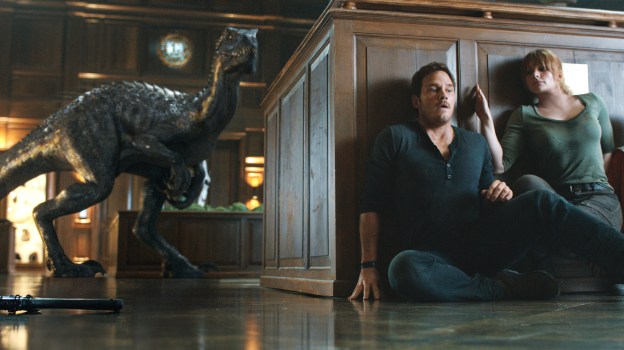
Slayers Great is the third Slayers movie and was released in 1997. Of all the Slayers films I watched this past weekend, this might just be my favorite. In this story, Lina and Naga find themselves in a town where golems (artificial creatures of clay animated by magic) are common place and the skill to make them is highly prized. As fate would have it, Lina and Naga end up on opposites sides of a conflict between two nobles who want to take control of this particular town. Each wants to secretly build an army of golems to help them rule the world, but they need to gain power first. That’s where our sorceresses come in. Each is coerced into helping a golem maker (who happen to be father and son) with a special golem that will be used in a contest to see which noble has the more powerful creation. But things quickly get complicated.

The awesome eternally bickering dynamic between Lina and Naga is back in full swing and I love watching every minute of it. As I think I’ve mentioned before, Lina and Naga will fight for the smallest of reasons (particularly if Naga points out Lina’s flat chest) and it’s fun to watch Lina when she gets angry.

Slayers-Great-images-3bb2ae1d-c843-47dd-9977-7bd407dc884.jpg

The boiling feud between the two sorceresses culminates in a hilarious golem battle where Lina and Naga find themselves each trapped in a golem based on…well, them! But here’s where it gets funny: Naga’s golem is an almost perfect (albeit giant sized) depiction of herself (skimpy outfit and all). While Lina’s golem is….well, picture a cute Chibi-Lina and you’ve just about got it. Lina’s reaction to being trapped inside a super-cute version of herself is super fun to watch (she’s FURIOUS!). Things get dialed up to eleven when the sorceresses discover they can cast magic through their golems as well and destructive mayhem ensues. Also, I should mention that seeing a giant golem version of Naga is somewhat terrifying, especially when she starts up with that laugh.

In conclusion, Slayers Great is really, really funny. Fans of the series will definitely enjoy this movie. Let me know what you think about Slayers Great in the comments below and have a great day!

See also:

My Thoughts on: Slayers Return (1996)

My Thoughts on: Slayers (season 1) (1995)

My Thoughts on: Slayers NEXT (Season 2) (1996)

My Thoughts on: Slayers TRY (season 3) (1997)

Animated Film Reviews

Become a Patron of the blog at patreon.com/musicgamer460

Check out the YouTube channel (and consider hitting the subscribe button)

Don’t forget to like Film Music Central on Facebook

My Thoughts on: Slayers Return (1996)

Slayers_Return.png

*warning: spoilers follow

Aside from running for five seasons, Slayers also spawned five animated films, the second of which is Slayers Return. Unlike the anime series, none of the movies (except for the last one) feature Gourry, Amelia, Zelgadis, or most of the characters Lina meets during the show. Instead, Lina teams up with another sorceress named Naga the Serpent (who DOES have a connection to the show but I won’t spoil how). Naga is…interesting. Like Martina in Slayers NEXT, Naga dresses in incredibly revealing outfits (she’s very confident in herself) and has a laugh that is memorable for being nightmare-inducing for Lina and other characters because it can literally come out of nowhere. That being said, I LOVE Naga and her constant bickering with Lina is a joy to watch.

Now, on to the movie. In Slayers Return, after getting into yet ANOTHER fight over food (because how dare Naga take the last piece of Lina’s steak??) the two sorceresses find themselves hired to save the village of Biaz from an evil organization. Lina only agrees because she remembers that this village is supposedly the sight of a legendary treasure (and Lina will do just about anything if treasure is involved) and Naga tags along because she suspects that Lina is after said treasure (and if so she wants her fair share). One thing I love about watching Lina and Naga is that they will argue over anything (but particularly about food and treasure), and when these two argue, inevitably things get blown up (which always makes me laugh for some reason).

fl07S.png

From this point on, most of the movie’s humor comes from subverted expectations. For example, we are led to believe that this Zein Organization that has enslaved Biaz is this huge group ensconced in some hidden fortress. But the truth is…there’s only two members in the group, their leader is a third-rate magician (and I suspect also a con artist) and they operate out of a run-down shack in the woods. What makes it even funnier is that Galev (Zein’s would be leader) maintains this “pompous evil lord” attitude even after he’s mostly exposed as a fraud. It’s almost disappointing that the supposed villain of this story is a dud, but the humor pretty much makes up for it. And it turns out the story does have a proper villain (sort of) after all.

Remember the “treasure” that Lina was hoping to collect? Well…it turns out it wasn’t so much a treasure as it was a giant golem capable of destroying everything in its path that’s incapable of being controlled. And oh yes, Naga just happens to be wearing a bracelet that acts as a homing beacon for the golem (and it can’t be taken off). The remainder of the film is devoted to an extended chase as everyone flees from the golem while trying to figure out how to stop it. The dialogue between Lina and Naga is hysterically funny, as is the comeuppance that Galev receives at the end of the film. I should mention that this is one ugly golem: it looks like a giant chicken crossed with a turtle, with extended claws coming out of its back (and it says “Yo!” all the time).

If you enjoy the Slayers anime, you will love Slayers Return. It is a little jarring at first to not have Lisa Ortiz voicing Lina, but Cynthia Martinez does a great job. The animation is on point, though I should also point out the spells are a little different than what you see in the regular anime (in particular, Lina’s incantation for Dragon Slave is noticeably different). It’s really a fun movie to watch and I hope you get the chance to check it out.

Let me know what you think about Slayers Return in the comments below and have a great day!

See also:

My Thoughts on: Slayers (season 1) (1995)

My Thoughts on: Slayers NEXT (Season 2) (1996)

My Thoughts on: Slayers TRY (season 3) (1997)

My Thoughts on: Slayers Great (1997)

Animated Film Reviews

Become a Patron of the blog at patreon.com/musicgamer460

Check out the YouTube channel (and consider hitting the subscribe button)

Don’t forget to like Film Music Central on Facebook

James Newton Howard talks Dinosaur (2000)

Dinosaur-disneyscreencaps_com-1307_-1024x538.jpg

I remember Dinosaur being a really big deal back in the year 2000. Not only was it a leap in CGI animation, it was also filmed against mostly live-action backgrounds (which I believe was a first). The film follows the story of a dinosaur named Alladar who travels with his adoptive lemur family to find a new home after the island he grew up on is destroyed by a meteor.

James Newton Howard composed the score for Dinosaur and I remember the music standing out to me right away due to the extended preview that the film had in trailers. Howard gave the score this huge, symphonic sound to highlight the live-action background and the various dinosaurs seen in the preview. I was really excited to find this video clip because “making of” clips with James Newton Howard are relatively hard to come by and he’s worked on some of my favorite childhood films.


As the interview clip explains, Howard uses the music in Dinosaur to direct emotional feelings, be it fear, wonder, or humor. And there is a full range of emotions to be found in the film, which shows just how talented this composer is. It was also emphasized that they wanted to make the music sound primal but not ethnic. That is, they didn’t want any music that could be traced back to a particular human culture (since this movie is set way before humans existed).

I really hope you enjoy this behind the scenes video with James Newton Howard. Let me know what you think about Dinosaur (and the music for Dinosaur) in the comments below and have a great day!

See also:

James Newton Howard talks Atlantis: The Lost Empire (2001)

James Newton Howard talks Signs (2002)

James Newton Howard talks The Village (2004)

James Newton Howard scoring King Kong (2005)

Film Composer Interviews A-H

Film Composer Interviews K-Z

Become a Patron of the blog at patreon.com/musicgamer460

Check out the YouTube channel (and consider hitting the subscribe button)

Don’t forget to like Film Music Central on Facebook

Daniel Pemberton talks Steve Jobs (2015)

Steve Jobs (2015) marked the first collaboration between director Danny Boyle and composer Daniel Pemberton (their second team-up, Yesterday, comes out in June). In this behind-the-scenes video, the composer discusses how he divided the film’s score into three distinct parts, each one corresponding to one of the three acts of the film. The first act (he explains) is full of synthesizers to match the vibe of 1984. The second act (and the one I like best) is purely orchestral. Not just orchestral, it’s more of a miniature opera (complete with singers). And the third act is squarely placed in the digital medium, referencing how just about everything in our lives has gone digital, thanks in large part to the real Steve Jobs.


I’m fascinated at how Pemberton essentially created three different scores for this film, that’s not something you come across very often (in fact I’m hard pressed to name another example). Daniel Pemberton is very quickly becoming one of my favorite film composers and I for one am excited to learn more about him. I hope you enjoyed the video! Let me know what you think about Steve Jobs (and it’s score) in the comments below and have a great day!

See also:

Daniel Pemberton talks The Man from U.N.C.L.E (2015)

Daniel Pemberton talks Gold (2016)

Daniel Pemberton talks King Arthur: Legend of the Sword (2017)

Film Composer Interviews A-H

Film Composer Interviews K-Z

Become a Patron of the blog at patreon.com/musicgamer460

Check out the YouTube channel (and consider hitting the subscribe button)

Don’t forget to like Film Music Central on Facebook
Daniel Pemberton talks King Arthur: Legend of the Sword (2017)

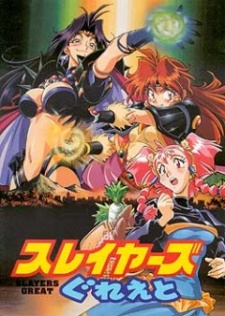
While it’s no secret that Guy Ritchie’s retelling of the King Arthur legend was a colossal flop at the box office, that shouldn’t stop you from learning about what went into making the film’s soundtrack. King Arthur: Legend of the Sword marked the second collaboration between Guy Ritchie and Daniel Pemberton and just like he did with The Man from U.N.C.L.E, the composer went all out in putting the music together.

Daniel Pemberton employed a variety of musical instruments both ancient and modern. As he says in the video, he sought to make the score visceral and gritty, something that felt distinctly unpolished. If the excerpts heard in this video are any indication, I think the composer succeeded in that aspect. It’s a shame the film flopped so badly, it sounds like Pemberton’s score for the film is really good (and it’s not that uncommon to find a great score hiding in a terrible film). I find myself hoping that Ritchie and Pemberton will collaborate again (hopefully on The Man from U.N.C.L.E 2), though hopefully the resulting film will do much better than this one did.

Let me know what you think of this behind the scenes look at the music for King Arthur: Legend of the Sword in the comments below and have a great day!

See also:

Daniel Pemberton talks The Man from U.N.C.L.E (2015)

Daniel Pemberton talks Gold (2016)

Daniel Pemberton talks Steve Jobs (2015)

Film Composer Interviews A-H

Film Composer Interviews K-Z

Become a Patron of the blog at patreon.com/musicgamer460

Check out the YouTube channel (and consider hitting the subscribe button)

Don’t forget to like Film Music Central on Facebook

Daniel Pemberton talks The Man from U.N.C.L.E (2015)

I’m fairly certain that The Man from U.N.C.L.E served as my introduction to the film music of Daniel Pemberton. I first watched the film about three years ago and while the story took some time to grow on me, the score immediately grabbed my attention. Pemberton (I’ve since discovered), has this talent for creating quirky and memorable scores that stick in your mind. Such is the case with the score for The Man from U.N.C.L.E.


In the making of featurette which you can access above, Daniel explains that director Guy Ritchie requested a score in which every cue feels iconic. And on that point alone I think the composer succeeded, because none of the music in this film feels “throwaway,” it all feels very necessary. You’ll also learn that Pemberton employed a lot of unique instruments to create the film’s distinctive 1960s-like sound. While there are traditional orchestral elements in certain places, the lion’s share of the music comes from non-traditional instruments, which is really cool.

I hope watching this behind-the-scenes video gives you an even deeper appreciation of Daniel Pemberton’s score for what I consider a highly underrated film. Let me know what you think of the music for The Man from U.N.C.L.E in the comments below and have a great day!

See also:

Daniel Pemberton talks Steve Jobs (2015)

Daniel Pemberton talks Gold (2016)

Daniel Pemberton talks King Arthur: Legend of the Sword (2017)

Film Composer Interviews A-H

Film Composer Interviews K-Z

Become a Patron of the blog at patreon.com/musicgamer460

Check out the YouTube channel (and consider hitting the subscribe button)

Don’t forget to like Film Music Central on Facebook