Reviewing Looney Tunes: Bugs’ Bonnets (1956)

Bugs-Bonnets

Released: January 14th, 1956

Directed by: Chuck Jones

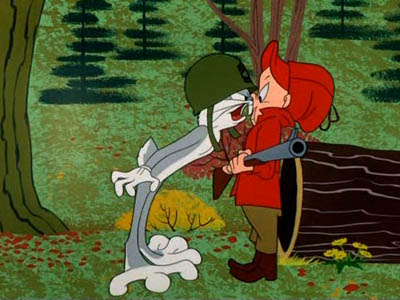
Bugs’ Bonnets is a cartoon that isn’t as well known as some of the other Jones classics (like the Rabbit Season trilogy for example), but it is still a great cartoon in my opinion. The scenario for this cartoon is half-story (Elmer hunting Bugs) and half-documentary (looking at how different hats can change your personality). Since this is a cartoon, the hats instantly change Elmer and Bugs’ personalities, with hilarious results. One interesting piece of trivia: in this cartoon Elmer suddenly knows how to pronounce his “R’s” correctly. My favorite examples in this cartoon include:
download.png

-Bugs wears an Army sergeant’s helmet and gives Elmer a chewing out (“Alright dog face, how come every other private in this man’s army’s got a rifle and YOU’VE got a gun?”) In response, Elmer ends up wearing a hat reminiscent of General MacArthur, announcing “I have returned.”

-Bugs (in a game warden’s hat) chides Elmer for “shooting sergeants out of season.”

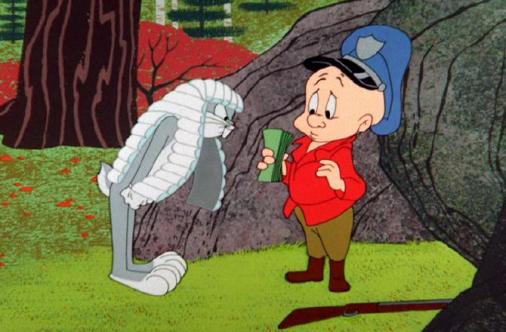
-Elmer (in a cop’s hat) threatens Bugs (in a “gangster” fedora) while the latter tries to buy Elmer off with a bribe. Before he can give the money back, Bugs’ hat is replaced with a judge’s wig, prompting Bugs to believe Elmer is trying to bribe HIM!
MV5BZTBhMDc0OTktMzE0ZS00YjU2LTg5YTMtYmJmYTA4NjNkMGRlXkEyXkFqcGdeQXVyNDgyODgxNjE@._V1_

While this cartoon is more a string of gags than anything else, that doesn’t stop it from being really funny. What do you think of Bugs’ Bonnets? Let me know your thoughts in the comments below and have a great day!

See also:

Reviewing Looney Tunes

Become a Patron of the blog at patreon.com/musicgamer460

Check out the YouTube channel (and consider hitting the subscribe button)

Don’t forget to like Film Music Central on Facebook 🙂

Reviewing Looney Tunes: Bully for Bugs (1953)

Bully_for_Bugs_Title_Card.png

Released August 8th, 1953

Directed by: Chuck Jones

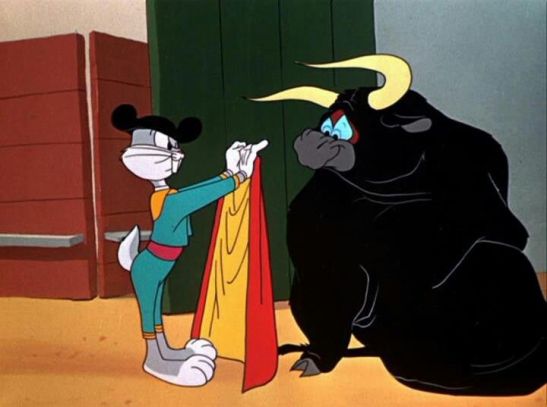
Half of the reason I love Bully for Bugs so much is the crazy story behind how it got made in the first place. According to the late, great Chuck Jones, the idea came to him when producer Eddie Selzer, out of the blue, came to his work area and proclaimed “cartoons about bullfighting are NOT funny, so don’t make any!” Upon Selzer leaving to go back to his office, a bewildered Jones turned to his fellow animator and wondered aloud “WOULD a bullfighting cartoon be funny?” The funny thing is, according to Jones, since Selzer proved to be wrong on just about anything involving cartoons, they figured a bullfighting cartoon would actually be hilarious. So, to get some research done (as nobody in the department had ever seen a bullfight in person), Jones flew down to Mexico City to watch a bullfight for himself.

Bully for Bugs (27).jpg

Up until the fight started, Jones had the idea that the matador would be the villain of the story, while the bull would be the sympathetic character. This notion flew straight out the window when Jones saw a massive bull come charging into the arena to face off against this itty bitty matador who was maybe 100 lbs soaking wet. From that moment, Jones knew exactly how the story needed to play out. (The story comes from Jones’ autobiography Chuck Amuck and commentary for Bully for Bugs found in the Looney Tunes Golden Collection).

aeeb699234b73a12495f2bd1f46a1dd2.jpg

This cartoon is another example of Bugs taking a wrong turn at Albuquerque and winding up in the middle of a bullfighting ring instead of the Coachella Valley Carrot Festival. In the ring, a hapless matador is being chased around by a huge bull (much to the displeasure of the crowd. And speaking of the crowd, that’s a real bullfighting crowd you’re hearing in the cartoon, they recorded some audio in Barcelona, Spain and looped it into the final product). Being oblivious to the fact that he’s way off target, Bugs ends up on the wrong side of the bull, who promptly knocks him clean out of the arena (inspiring Bugs to proclaim “Of course you realize THIS means war!”) The enraged rabbit returns as a matador to give the bull his comeuppance as only Bugs can deliver it. For a while it’s an even back and forth between the two (and one of Bugs’ tricks actually backfires on him in spectacular fashion). Finally, just when Bugs seems cornered, he gets the upper hand and eliminates the bull once and for all by building an elaborate trap that sets the bull up to encounter some TNT.

Bully for Bugs is another classic Chuck Jones cartoon that never gets old no matter how many times you watch it. Let me know what you think about this cartoon in the comments below and have a great day!

See also:

Reviewing Looney Tunes

Become a Patron of the blog at patreon.com/musicgamer460

Check out the YouTube channel (and consider hitting the subscribe button)

Don’t forget to like Film Music Central on Facebook 🙂
Reviewing Looney Tunes: Ali Baba Bunny (1957)

Ali_Baba_Bunny_Title_Card.png

Released: February 9th, 1957

Directed by: Chuck Jones

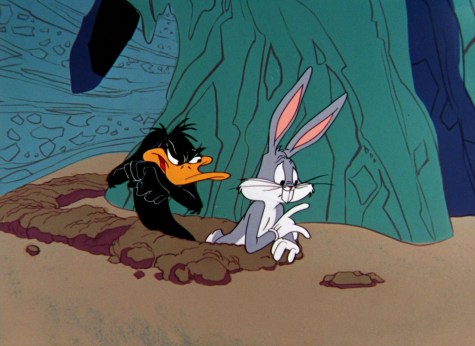
Of the many achievements Chuck Jones accomplished during his lengthy career, one of them was raising the pairing of Bugs Bunny and Daffy Duck into a comedic art form that has yet to be truly matched in animation. Ali Baba Bunny is a famous example of this pairing and one of my many personal favorite cartoons.

Ali Baba Bunny (6)

In Ali Baba Bunny, Bugs and Daffy are en route to Pismo Beach (California) and somehow end up tunneling through the Arabian desert, where a wealthy sultan has just finished sealing his treasure inside a magic cave. Having set the burly Hassan to guard the treasure (“Or the jackal shall grow fat on thy carcass!”) the sultan departs, shortly before Bugs and Daffy unwittingly break into the cave by tunneling under the entrance. This cartoon features Daffy during his “greedy beyond all reason” phase and it is used to great comedic effect. For example, when the pair emerge from the burrow and realize this is NOT Pismo Beach, Daffy is almost instantly mesmerized by the giant pile of treasure in front of him, while Bugs is completely oblivious. This leads to one of my favorite Daffy Duck lines:

Daffy: It’s mine you understand? Mine, mine, ALL MINE! Get back in there! Down! Down! Down! Go! Go! Go! Mine! Mine! Mine! Mwahahahahahahaha!! *zooms off to the treasure*

Bugs (still oblivious): Ehhhhh, what’s up Duck?

alibababunny.jpg

Only Bugs would be oblivious to all THIS

Of course there is the small matter of Hassan who is quite angry that someone is trying to take his master’s treasure. Despite Bugs’ best efforts to keep Daffy out of trouble (which include masquerading as a genie who “gives” Hassan the treasure for HIS own), Daffy keeps getting on the guard’s bad side, especially when he makes a run for it with a giant diamond! This leads Bugs to finally corner Daffy and demand to know (“What is it with you anyway?” to which Daffy replies “I can’t help it, I’m a greedy slob, it’s my hobby.”) This is probably one of the most honest answers Daffy has ever given regarding his greed (a fit of honesty likely brought on by the fact that Hassan wants to chop him to pieces).

I also love this cartoon because it has one of the greatest twist endings ever seen in a cartoon: Daffy appears to have it made. Hassan is gone, the treasure is loaded up ready to go, when the greedy duck finds a mysterious lamp in the back of the cave. For some reason, when a genie appears (and even calls Daffy “Master”!!) The duck explodes with rage and accuses the genie of wanting his treasure. This is why I say Daffy is greedy beyond all reason, because wouldn’t you think the duck would be happy to have a magic genie at his disposal? I suppose not, and boy does the duck pay for it!

Daffy-Pearl

“I’m rich! I’m a happy miser!”

Ali Baba Bunny, as I’ve said before, is one of my favorite Chuck Jones cartoons, and I hope you’ve enjoyed reading about it. Let me know what you think about this cartoon in the comments below and have a great day!

See also:

Reviewing Looney Tunes

Become a Patron of the blog at patreon.com/musicgamer460

Check out the YouTube channel (and consider hitting the subscribe button)

Don’t forget to like Film Music Central on Facebook 🙂

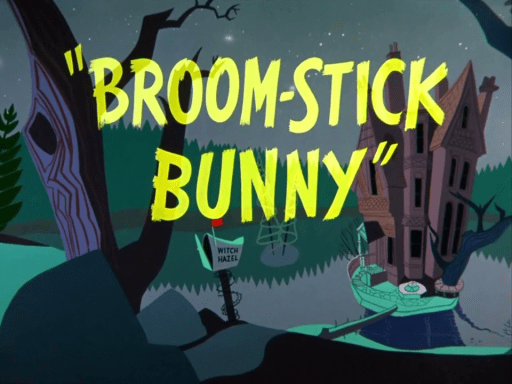
Reviewing Looney Tunes: Broom-Stick Bunny (1956)

Broom-Stick_Bunny_Title_Card.png

Released February 25th, 1956

Directed by: Chuck Jones

Broom-Stick Bunny has long been one of my favorite Looney Tunes cartoons, as it features the debut of June Foray in the role of Witch Hazel (Bea Benaderet performed the voice in Hazel’s first appearance in Bewitched Bunny). This is actually Foray’s second time playing a character by this name (with this voice no less) as she originated the character in the 1952 Donald Duck cartoon Trick or Treat (and in truth she was initially reluctant when Chuck Jones invited her to play his version of Witch Hazel, but she eventually came around to the idea).

In this cartoon, it’s Halloween night and Bugs Bunny is out trick-or-treating disguised as a witch (complete with a green mask). Meanwhile, Witch Hazel is brewing up a potion while frequently consulting her magic mirror to make sure she’s still the “ugliest of them all” as she’s terribly afraid of getting pretty as she gets older. One of my favorite running gags in this cartoon is Witch Hazel’s obsession with ugliness and talking about beauty in opposite terms (examples include: “Who undoes your hair?” “I’m going to worm all your ugly secrets out of you” and my personal favorite “LIKE it? Why it’s practically HIDEOUS!!”)

850334de4989258e7fff223c5f9edd68

The story starts as a comedy of errors when Bugs Bunny appears at Witch Hazel’s door and the befuddled witch thinks the rabbit is a REAL witch (leading to my other favorite line: “Witch? I don’t remember seeing HER at any of the union meetings.”) but it quickly turns serious when Hazel realizes that not only is Bugs a rabbit, but he’s also the last ingredient needed to complete her potion, leading to a wild chase throughout the house.

70ba51fdea340d481a1e09787ac6f99a.jpg

In the end, of course, Bugs gets the upper hand and we’re treated to seeing what a pretty Witch Hazel looks like (fun fact: according June Foray’s commentary, the animators modeled the pretty Hazel on her actual appearance, particularly in the hairstyle as it was one she liked to wear at the time). It’s so funny to hear the now-pretty witch say in the sweetest sounding voice “Magic mirror on the wall, who’s the ugliest one of all?” The gag is heightened when the genie in the magic mirror gives chase on a flying carpet and the pair go flying off into the night.

Of all the Witch Hazel cartoons, Broom-Stick Bunny remains my favorite, and I hope you’ve enjoyed reading about it. Let me know your thoughts about this cartoon in the comments below and have a great day!

See also:

Reviewing Looney Tunes

Become a Patron of the blog at patreon.com/musicgamer460

Check out the YouTube channel (and consider hitting the subscribe button)

Don’t forget to like Film Music Central on Facebook 🙂


My Thoughts on: Robin Hood (2018)

Okay, right from the beginning I should clarify that I haven’t actually seen Robin Hood (and I probably won’t until it hits Redbox) but given what I know about this film, I HAVE to talk about it. I first heard about this film months ago when I heard that there was a really bad trailer circulating on the Internet. When I first saw it for myself, I was half convinced it had to be a joke; there’s no way they could have made a Robin Hood film THIS bad…right? Well, actually yes they did and the more previews I saw the worse it got.

1_DDGP-QVCfdkVGOn7vjhQEw.jpeg

The Middle Ages looked NOTHING like this

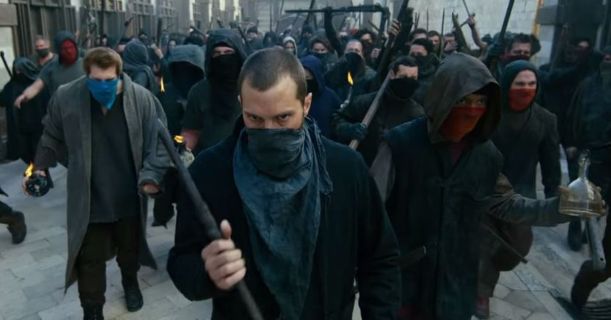
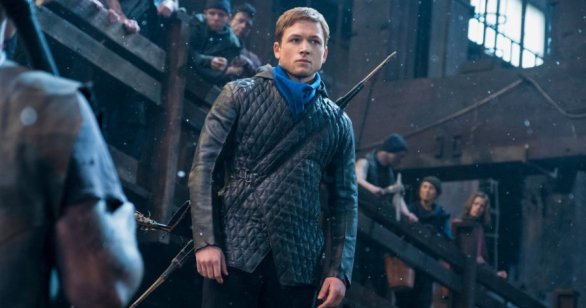
First let’s talk about the setting. As most people know, Robin Hood is traditionally set in or around the reign of King Richard the Lionheart (so between 1189 and 1200 CE give or take a few years), which places the story firmly in the Middle Ages. Knowing that, take a look at those previews again and tell me with a straight face that this film even loosely resembles that time period. Nottingham bears no resemblance to a medieval city, in fact in the previews it looks more like something from a post-apocalyptic future (or a generic fantasy film). I’m not saying a Robin Hood film has to be 100% period-authentic, but they’re not even trying with these locations OR the costumes. The machine-stitching is painfully obvious and nothing remotely resembles the era they should be in. I groaned aloud when I saw the footage from a party that Robin attended in his public persona as a nobleman. The costumes the ladies are wearing are totally inappropriate for the era (no woman would be caught dead in anything so revealing). I referenced the location looking post-apocalyptic before, I find myself wondering if they meant to make this a futuristic post-apocalypse retelling of the story and just forgot to tell the audience?

Robin-Hood-2JPG.jpg

As cool as it looks, Molotov cocktails were NOT a thing in the Middle Ages

Second, we need to talk about those arrows. It goes without saying that arrows do NOT work like that! They’re not that powerful (not at that size anyway) and you can’t fire them THAT quickly (I don’t care if it is a Robin Hood movie, no one is THAT good). This was another thing that really bothered me about the film, and that’s the pacing, it’s much too fast. A Robin Hood story can be many things, but a fast-paced action thriller is not typically one of them.

Third, where is Prince John in all of this? One of the key components of the Robin Hood legend has always involved the outlaw fighting against the tyranny of Prince John until King Richard can return. The only reason Robin Hood: Prince of Thieves got away with excluding the character is because they had Alan Rickman playing the Sheriff of Nottingham. I’m not saying Ben Mendelsohn isn’t a good actor, it’s just I’ve seen him play this kind of role several times before and no offense but it’s starting to wear thin.

f90208d6-2c02-414e-bfe3-58d2fd883402

Lastly, I have to comment on something I heard from reviews of the film. I read that Robin is sent to the Crusades via a “draft notice” pinned to his front gate. Are you KIDDING me?? This is not how the Crusades worked! There was no draft for noblemen in the Middle Ages, either you went on Crusade or you didn’t! It’s like they did no research whatsoever for this film and didn’t think anyone would notice (spoiler alert: we’ve definitely noticed). All reports indicate that Robin Hood is going to be the biggest box office bomb of the year and I’m not surprised in the slightest. I knew this film would bomb the moment I saw the first teaser. Hopefully I’ll get my own turn to eviscerate the film once I can rent it from Redbox sooner rather than later (and as it’s bombing badly that shouldn’t be a long wait). For now, those are my thoughts on Robin Hood but I’m very curious to know what you think about it. Have you gone to see it? Let me know your thoughts in the comments below and have a great day!

See also:

Film Reviews

Become a Patron of the blog at patreon.com/musicgamer460

Check out the YouTube channel (and consider hitting the subscribe button)

Don’t forget to like Film Music Central on Facebook 🙂

My Thoughts On: Batman: The Animated Series (1992-1995)

I was over the moon to receive Batman: The Complete Animated Series as an early birthday present. I’ve wanted to add the series to my collection for years as it holds a very special place in my childhood (it’s one of the first cartoons I can remember watching on television). Batman: The Animated Series is rightly held to be one of the greatest animated series ever made. It is sometimes referred to as cartoon noir as it borrows many conventions from film noir (for example most of the cars and buildings evoke the 1940s). The series is also responsible for jump starting the DC Animated Universe (which included Superman: The Animated Series; Justice League; Batman Beyond and Justice League Unlimited to name a few).

batman-the-animated-series

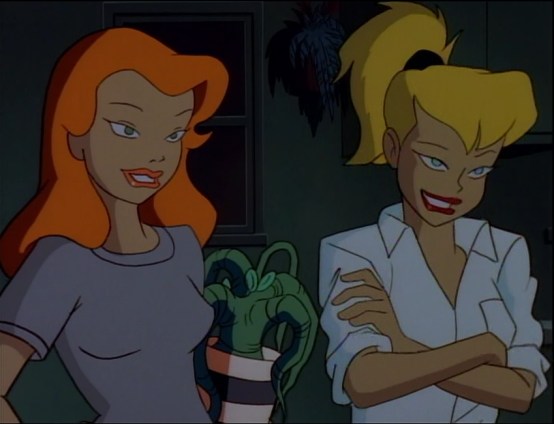
The show also featured an all star voice cast, including Mark Hamill (Luke Skywalker himself) as the voice of the Joker. Even though I’ve seen video of Mark doing the Joker voice, it’s still hard for me to imagine that voice and Luke’s voice coming out of the same person (but then again that just shows how talented he really is as a voice actor). The series is also responsible for introducing Harley Quinn (voiced by the brilliant Arleen Sorkin) to the Batman canon. The besotted Harley was created exclusively for the show before eventually being written into the comic canon (one of the first times that’s ever happened for any character). There are also origins given for many of Batman’s most infamous enemies, including Two-Face (“Two Face” parts I and II), Clayface (“Feat of Clay” parts I and II) and Mr. Freeze (“Heart of Ice” which is widely considered to be the best episode of the series).

Harley and Ivy.jpg

I’ve been asked before which episode is my favorite and the honest truth is I can’t pick just one, because they’re all so good. However, I can pick a few to highlight:

  • “Heart of Ice” rewrites the origins of Mr. Freeze and turns him into what is probably the most sympathetic villain in the series.
  • “Harley and Ivy”: Having been kicked out of Joker’s gang, Harley Quinn goes into business for herself, eventually joining forces with Poison Ivy and the duo prove to be very skilled in the world of crime (to the growing consternation of the Joker).
  • “Lock-Up”: Lyle Bolton, head of security at Arkham Asylum, is dismissed from his job after it comes out that he’s brutalizing the prisoners. This is one episode where you feel complete sympathy for the villains as they literally quake in terror at Bolton’s mere presence (especially Jonathan Crane, aka The Scarecrow, who practically begs Batman not to take him back).

I’m excited to continue watching this amazing series and I highly recommend it to anyone who hasn’t seen it (or perhaps hasn’t watched in a long time). Over 25 years after its debut, Batman: The Animated Series continues to impress.

See also:

Animated Film Reviews

Become a Patron of the blog at patreon.com/musicgamer460

Check out the YouTube channel (and consider hitting the subscribe button)

Don’t forget to like Film Music Central on Facebook 🙂

Film Music Central turns 3!

Okay technically the anniversary was two days ago but since I was laid up with a bad cold (stupid virus), I haven’t been able to celebrate until now.

bg643-640x480

Wow, can you believe Film Music Central is THREE years old? When I started this blog, I never dreamed that it would grow as big as it has (in fact I had a crippling fear that no one would be interested in anything I had to say). Several milestones have been hit this year: we’re past 500 followers (and are actually 9 away from 600); I passed 7K monthly views for the first time and I’ve also gotten more views this year than the last two years combined. It’s definitely safe to say that 2018 has been the best year yet for Film Music Central and I’m very excited to see where things go in 2019.

I just want to thank everyone who’s helped to support my blog. Your encouragement, your comments have done a lot to keep me going in this endeavor. I know I haven’t really blogged much in the last couple weeks, but I’m hoping to return after the Thanksgiving holiday.

Once more, thank you everyone for supporting Film Music Central and here’s to another year of blogging! Cheers!

Become a Patron of the blog at patreon.com/musicgamer460

Check out the YouTube channel (and consider hitting the subscribe button)

Don’t forget to like Film Music Central on Facebook 🙂
My Thoughts on: The Ballad of Narayama (1958)

The Ballad of Narayama (1958) is a film I’d not heard of before yesterday, but as I was searching for Criterion films to add to my collection, the film’s plot caught my attention. The film, directed by Keisuke Kinoshita, is modeled after a kabuki play (classic Japanese dance-drama) and tells the story of a remote village where anyone who reaches the age of 70 must be taken to Narayama (a distant mountain) and left there to die of exposure. Orin (Kinuyo Tanaka) is a 69 year old grandmother who has resolved to make the journey to Narayama when the new year comes, but first she wants to make sure her family’s affairs are in order.

MV5BMGUwNTZkOGMtNjQ4ZS00ZjViLWE5NmYtYWZjZDljNDIxOTQ2XkEyXkFqcGdeQXVyNDU0ODY2MzM@._V1_.jpg

From the start the film looks like it’s a stage play: a narrator introduces the story and narrates various sections through song. I was worried at first that I would find a narrator distracting, but it flows in and out of the film so seamlessly that after a while you don’t even notice. I also like how there’s not even a pretense of realism: the action is clearly taking place on a stage and when a scene is done, the background will literally fall away to reveal the next scene.


While the film shows various aspects of village life throughout the year, I feel that most of all the film displays the contrast between Orin, who happily accepts her fate, and Mata  (Seiji Miyaguchi), a man past 70 who refuses to journey to Narayama, even though he shames his family (and himself) by refusing to go. The difference in how they meet their ends couldn’t be more different: while Orin is left serenely awaiting death on the mountain, Mata is dragged kicking and screaming by his son, and finally resists so much that he falls off a cliff. The message couldn’t be more clear: not following tradition only leads to heartbreak and pain. You’re also left feeling nothing but contempt for Mata after seeing how calmly Orin accepts what must be done.

81su9XAfi5L._SL1500_.jpg

The one thing about this film that confuses me however, is the ending. After Orin is left on Narayama, her son returns to his new wife and she consoles him with the knowledge that they can travel to Narayama together someday (as they are the same age). The scene abruptly cuts to a black and white shot of a train pulling in at a station, presumably where the old village used to stand. I’m sure we’re meant to gather something from this transition to the present, but I’m not sure what that message is supposed to be.

The Ballad of Narayama is a beautiful film that tells a very sad story. You’ll definitely be in tears by the end. Let me know what you think about this film in the comments below and have a great day!

See also:

Film/TV Reviews

Become a Patron of the blog at patreon.com/musicgamer460

Check out the YouTube channel (and consider hitting the subscribe button)

Don’t forget to like Film Music Central on Facebook 🙂


Peter Pan “Following the Leader” (1953)

*note, this song refers to Native Americans as Indians and “Injuns” which is politically incorrect now, but was considered okay then.

Peterpan-disneyscreencaps-3374.jpg

Now that Wendy and her brothers have safely arrived in Neverland and met the Lost Boys, it’s time to set off on the adventures Peter promised them. While Peter takes Wendy to meet the mermaids, John and Michael and the Lost Boys set off to locate the Indian tribe (with John assuming the role of leader). As the Lost Boys march off, they sing a song about “following the leader.”

Following the leader, the leader, the leader
We’re following the leader
Wherever he may go

Tee dum, tee dee, a teedle ee do tee day
Tee dum, tee dee it’s part of the game we play
Tee dum, tee dee, the words are easy to say
Just a teedle ee dum a teedle ee do tee day

Tee dum, tee dee, a teedle ee do tee dum
We’re one for all, and all of us out for fun
We march in line and follow the other one
With a teedle ee do a teedle ee do tee dum

vlcsnap-204945.png

Following the leader, the leader, the leader
We’re following the leader
Wherever he may go
We’re out to fight the Injuns, the Injuns, the Injuns
We’re out to fight the Injuns
Because he told us so

Tee dum, tee dee a teedle ee do tee day
We march along and these are the words we say:
Tee dum, tee dee, a teedle de dum dee-day
Oh, a teedle ee dum a teedle ee do tee day

Oh, a teedle ee dum a teedle ee-do-tee-day

hqdefault.jpg

The boys traveling through Neverland is like any adventure you ever dreamed of having as a child. They cross rivers, swing down vines and unwittingly pass by several animals (a hippo, monkeys, a rhinoceros and even a large bear). Neverland is full of all kinds of terrain, from the jungle, to the savannah and ending in a forest filled with pine trees.

The song comes to an abrupt end when John discovers a pair of “Indian tracks” in the middle of a clearing. Looking back, it seems obvious that this was a trap for the Lost Boys from the start because how else could their be two footprints side-by-side? If someone is walking normally, one footprint should be in front of the other. But instead they’re next to each other like someone was just standing still. Clearly this is meant to be a trap to delay the Lost Boys until the tribe can close in and capture them (which they do).

I’ve always liked “Following the Leader,” it’s a fun interlude before the drama with Captain Hook and Tiger Lily. What do you think of this song? Let me know your thoughts in the comments below and have a great day!

See also:

My Thoughts on: Peter Pan (1953)

Peter Pan “You Can Fly!” (1953)

Peter Pan “What Made the Red Man red?” (1953)

Peter Pan “The Elegant Captain Hook” (1953)

Disney/Dreamworks/Pixar/etc. Soundtracks A-Z

Become a Patron of the blog at patreon.com/musicgamer460

Check out the YouTube channel (and consider hitting the subscribe button)

Don’t forget to like Film Music Central on Facebook 🙂

The Legend of Sleepy Hollow “Katrina” (1949)

In The Legend of Sleepy Hollow, Ichabod Crane is the awkward yet likable enough school teacher in the village of Sleepy Hollow. He leads a contented life teaching the children while shamelessly flirting with most of the women in town when, one day…he happens to notice the beautiful Katrina van Tassel. Katrina is described as the most beautiful woman in town and she has every unmarried man in Sleepy Hollow wrapped around her finger (without even trying). Naturally Ichabod promptly falls head over heels for the young heiress (though the narrator states he’s equally interested in her fortune as much as her looks), but the short song about Katrina indicates that she’s not as innocent as she looks:


Oo oo oo oo
Ah ah ah ah ah ah ah
Once you have met that little coquette Katrina
You won’t forget Katrina
But nobody yet has ever upset Katrina
That cute coquette Katrina
You can do more with Margaret or Helena
Or Anne or Angelina
But Katrina will kiss and run
To her a romance is fun
With always another one to start
And then when you’ve met that little coquette Katrina
You’ve lost your heart

130.jpg

Katrina is described as “that little coquette,” meaning she loves to flirt. There’s nothing wrong with that, but a later line forebodes that Ichabod’s quest for Katrina’s hand will end badly: “but Katrina will kiss and run/To her a romance is fun/With always another one to start…” I take this line to mean that Katrina has no problem playing with men’s feelings and doesn’t take declarations of love seriously, which can be hurtful if the person expressing those feelings is genuine. And believe me Katrina is taking full advantage of men’s feelings for her, like having them assemble a picnic or carrying all of her packages. It IS funny though to see how quickly Ichabod is smitten by Katrina: one look and he puts a chicken on his head and starts eating his hat!

What do you think of “Katrina”? Let me know your thoughts in the comments below and have a great day!

See also:

The Legend of Sleepy Hollow “Headless Horseman” (1949)

The Adventures of Ichabod and Mr. Toad (1949)

Disney/Dreamworks/Pixar/etc. Soundtracks A-Z

Become a Patron of the blog at patreon.com/musicgamer460

Check out the YouTube channel (and consider hitting the subscribe button)

Don’t forget to like Film Music Central on Facebook 🙂