Michael Giacchino talks Jupiter Ascending (2015)

Michael Giacchino talks Jupiter Ascending (2015)

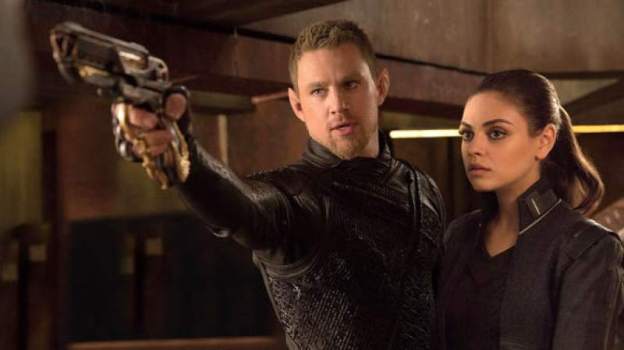
Oh Jupiter Ascending….if I could describe this movie in one word it would be potential. This movie had the potential to be so incredibly awesome. Think about it: in a world where reboots, remakes, sequels and franchises are the norm in Hollywood, it’s very rare to find a film with a wholly original concept.

And the concept sounds great on paper: the galaxy is ruled by a group of alien royal dynasties, who harvest the life forces of evolved planets in order to remain perpetually young themselves.

JUPITER ASCENDING

An ordinary human girl, Jupiter Jones, finds out that due to her genetic makeup, she is actually the heiress to the planet Earth. However, the alien Balem, one of the sons of the previous owner of the planet, wants Earth for himself, as Earth is meant to be harvested next.Jupiter finds herself plunged into interstellar intrigue with the fate of planet Earth at stake.

It sounds really good, it SHOULD have been really good, and yet….despite amazing visuals and a gorgeous score from Michael Giacchino (more on that in a minute), this film fell FLAT and I mean really flat!!! Portions of the dialogue were cringe-worthy, and the performance of several actors was criticized as wooden, flat and generally not as good as it could have been. In other words, Jupiter Ascending launched into theaters and then was quietly never heard of again.

Jupiter Ascending Soundtrack

One of the few bright spots in this film was the score, written as I said by Michael Giacchino. In this interview that I discovered, Giacchino explained that when the Wachowskis approached him about scoring this film, they actually asked him to write the music BEFORE the film had been shot, so they could edit the film around the music.

020315-jupiter-ascending-mila-kunis-costume-594

This is rarely seen in the world of film music, as normal practice is to make the film first and THEN create the musical score. In effect then, the Wachowski’s were asking Michael Giacchino to create a “symphony” for Jupiter Ascending that would then be edited into a proper film score.

JUPITER ASCENDING

While I can’t necessarily recommend the film itself, I do recommend checking out the soundtrack to this film (see the link above) and take a few moments to enjoy the music that Giacchino worked so hard to create. It always hurts when a great score is attached to a less-than-stellar film. But, such are the risks of being a film composer. Enjoy the interview!

(I apologize for the background noise, it sounds like they filmed in a restaurant)

See also:

Michael Giacchino talks The Incredibles (2004)

Michael Giacchino talks Mission: Impossible 3 (2006)

Michael Giacchino talks Ratatouille (2007)

Michael Giacchino talks Up (2009)

Michael Giacchino talks Star Trek (2009)

Michael Giacchino talks Super 8 (2011)

Michael Giacchino talks John Carter (2012)

Michael Giacchino talks Star Trek: Into Darkness (2013)

Michael Giacchino talks Jurassic World (2015)

Michael Giacchino scoring Rogue One: A Star Wars Story (2016)

Michael Giacchino talks Zootopia (2016)

Michael Giacchino talks Jurassic World: Fallen Kingdom (2018)

Film Composer Interviews A-H

Film Composer Interviews K-Z

Become a patron of the blog at: patreon.com/musicgamer460

Check out the YouTube channel (and consider hitting the subscribe button)

Like Film Music Central on Facebook here

*film poster is the property of Warner Bros. Pictures

Michael Giacchino talks Star Trek: Into Darkness (2013)

I’m still not sure what J.J. Abrams was thinking about when he was working on this movie. Everyone who knows about Star Trek knows that Star Trek II: The Wrath of Khan is considered to be the greatest film in the classic franchise, and that it would be downright suicidal to tamper with it in any way. Well…tamper they did, because Into Darkness, the follow up to Star Trek (2009) is nothing less than a poorly disguised remake of Wrath of Khan, and suffice it to say it did not improve on the original. To sum up the plot in brief: Kirk and his crew must stop the brilliant Khan, along with a renegade Admiral, from causing a full-scale war to break out between the Federation and the Klingon Empire. This includes engaging the superior USS Vengeance and stopping Khan from using it as a means to destroy Starfleet Headquarters! This is also the final film to feature Leonard Nimoy in his role as the original Spock (also known as Spock Prime).

To be fair, Benedict Cumberbatch turns in an excellent performance as the villain, and the main cast performs admirably, but still, the fact remains that the producers chose to rehash old territory, instead of making something new. But I digress…

(for my full thoughts on this film, see: On this day in Film History: Into Darkness? More like a rip-off of Khan )

I was beginning to despair of ever finding an interview for this film when suddenly, out of nowhere, I spotted a video with Giacchino’s name and Into Darkness put together. It seems that while promoting the film, Giacchino gave an interview on the film for a German media site/group (I’m not sure which), and the best part is the interview is nearly ten minutes long! It is so rare to find any lengthy interviews with film composers, so I knew I had to share this one with you.

Giacchino is asked several questions about the process of creating the score for Into Darkness (I apologize in advance because the displayed questions are in German), whether certain characters have their own theme (he discusses Khan’s theme in particular) and what it was like to work on such a legendary franchise. This is not just a regular interview though, there are cuts to footage from the film to show certain themes that the composer is talking about, which makes this interview even more valuable.

See also:

Michael Giacchino talks The Incredibles (2004)

Michael Giacchino talks Mission: Impossible 3 (2006)

Michael Giacchino talks Ratatouille (2007)

Michael Giacchino talks Up (2009)

Michael Giacchino talks Star Trek (2009)

Michael Giacchino talks Super 8 (2011)

Michael Giacchino talks John Carter (2012)

Michael Giacchino talks Jupiter Ascending (2015)

Michael Giacchino talks Jurassic World (2015)

Michael Giacchino scoring Rogue One: A Star Wars Story (2016)

Michael Giacchino talks Zootopia (2016)

Michael Giacchino talks Jurassic World: Fallen Kingdom (2018)

Film Composer Interviews A-H

Film Composer Interviews K-Z

Become a patron of the blog at: patreon.com/musicgamer460

Check out the YouTube channel (and consider hitting the subscribe button)

Like Film Music Central on Facebook here

King Arthur (2004) tells the old story in a new way

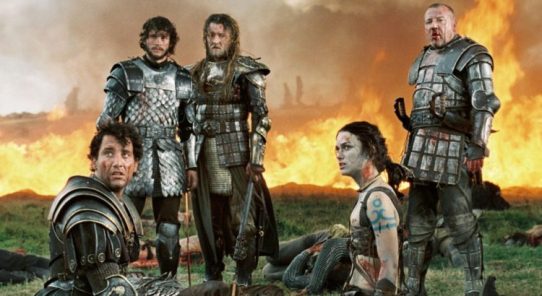
On July 7th, 2004, the adventure film King Arthur was released into theaters. Rather than showing a traditional portrayal of the fabled king of legend, Arthur (Clive Owen) is shown here as a Roman officer in the waning years of the Roman Empire, with his “knights” of the Round Table (Bors, Gawain, Lancelot, Tristan, Galahad and Dagonet) being fellow officers under his command.

kingarthur-still-750x410

For the last fifteen years, Arthur and his fellow soldiers have been guarding Hadrian’s Wall and preventing the Woads from crossing into Roman territory. However, now that Rome is officially abandoning Britain, they all expect to receive their freedom (as their length of service to Rome is set to expire the very next day).

However, at the last possible moment, Bishop Germanus arrives and insists that Arthur and his knights travel past the wall to rescue a wealthy Roman family, as their son is the favorite godson of the Pope. The mission is nearly suicidal in nature, but they won’t receive their freedom unless they go.

6CwMSFXd9jZ9WMTLxz1y9FEl5Nl

At the same time as Arthur and a company set out to rescue the Roman family, the Saxons, led by Cedric and his son Cynric, are seen landing on another coast, set to plunder and destroy as they go. In the course of the mission, Arthur rescues a Woad woman named Guinevere (Keira Knightley rocks in this role), who has been trapped alive inside a wall. Her father is a Woad chieftain named Merlin, and he desires to join forces with Arthur’s so that they can fight the coming Saxon incursion.

karthur3x

A lot of this film revolves around Arthur accepting who and what he really is: that he’s not really a Roman (his mother was Celtic) and that the Rome he dreams of doesn’t really exist. In the end, the Saxons are defeated and Arthur and Guinevere marry, with Arthur being proclaimed king by Merlin.

At the time this film came out, I was deeply obsessed with the legend of King Arthur and Merlin and anything remotely connected to them, so I naturally took this movie in like a sponge. I recognize now that the story is deeply flawed, but if you forget about historical accuracy (and the blatant lack thereof that exists in this film), you can spend an enjoyable two hours watching this film.

King Arthur “Knight’s March” (2004)

One positive the film does have is a great score composed by Hans Zimmer, who once again proved why he is a master of writing scores for action and adventure films. The music for the Woads is particularly well-done, fitting their mysterious nature.

Sadly, the film wasn’t very well-received (it’s currently rated “Rotten” at Rotten Tomatoes), which is a shame, because there are some great moments in this film, and the score as I said is another Hans Zimmer gem.If you haven’t seen this film, I recommend borrowing a copy and checking it out.

*film poster is the property of Buena Vista Pictures

Become a Patron of the blog at patreon.com/musicgamer460

Check out the YouTube channel (and consider hitting the subscribe button)

See also: Film/TV Reviews

Like Film Music Central on Facebook here

Michael Giacchino talks Star Trek (2009)

It’s no secret that I’m not exactly the biggest fan of the rebooted Star Trek franchise. However, I can’t deny that Michael Giacchino’s score for the film was well done. I was delighted to find a short interview given by the composer regarding his work on this film as part of a “Star Trek in concert” event. Giacchino, like many, grew up watching the original Star Trek series and films, and now here he is with the task of continuing that legacy!

For anyone not familiar with the story: Star Trek takes place in an alternate universe created when the Romulan Nero (Eric Bana) travels back in time to destroy the planet Vulcan in revenge for his home planet of Romulus (which was destroyed in the future when a star went supernova). As a result, the original crew of the Enterprise that we’ve come to know so well (Kirk, Spock, McCoy and company) end up leading different lives and come together under much different circumstances. The question is, can they learn to work together quickly enough to stop Nero?

Whether you’re a fan of the new Star Trek or not, Giacchino’s music is definitely worth a few moments of your time. Here’s hoping that Star Trek Beyond also features an enjoyable score.

See also:

Michael Giacchino talks The Incredibles (2004)

Michael Giacchino talks Mission: Impossible 3 (2006)

Michael Giacchino talks Ratatouille (2007)

Michael Giacchino talks Up (2009)

Michael Giacchino talks Super 8 (2011)

Michael Giacchino talks John Carter (2012)

Michael Giacchino talks Star Trek: Into Darkness (2013)

Michael Giacchino talks Jupiter Ascending (2015)

Michael Giacchino talks Jurassic World (2015)

Michael Giacchino scoring Rogue One: A Star Wars Story (2016)

Michael Giacchino talks Zootopia (2016)

Michael Giacchino talks Jurassic World: Fallen Kingdom (2018)

Film Composer Interviews A-H

Film Composer Interviews K-Z

Become a Patron of the blog at patreon.com/musicgamer460

Check out the YouTube channel (and consider hitting the subscribe button)

Like Film Music Central on Facebook here

Marco Beltrami talks The Wolverine (2013)

MV5BNzg1MDQxMTQ2OF5BMl5BanBnXkFtZTcwMTk3MjAzOQ@@._V1_SX640_SY720_

Marco Beltrami talks The Wolverine (2013)

The Wolverine opened in 2013 as the sixth installment overall in the X-Men film franchise. This was not the first film to give an origin story for Hugh Jackman’s Wolverine. The studio had tried to tell this story once before in 2009 with X-Men Origins: Wolverine, and even though that film was a financial success, it fell flat with fans and critics. This time however, the studio succeeded and The Wolverine was praised by all.

The film follows Logan as he is taken to Japan to meet a Japanese businessman whose life he saved during the bombing of Nagasaki in 1945. Now dying, the elderly man, named Yashida, offers Logan a deal: transfer his healing factor to Yashida’s body, a process that would restore Yashida’s youth and turn Logan mortal (and Logan had previously expressed that he considered his immortality a curse). Logan refuses, but Yashida will not let him go just like that. The Wolverine must fight for his life, and battle some internal demons along the way.

THE WOLVERINE

Marco Beltrami was brought in to score the film and the brief interview clip above gives some insight into the scoring process that took place for this film. It’s always amazing to hear the music as it is being recorded, because often many sounds are lost in the muddle of the completed film (between sound effects, dialogue and other background noises), you rarely get the chance to hear the pure sound of the music.

Since most of this film is set in Japan, Beltrami used traditional Japanese instruments, but not in a “traditional” way. He wanted to stay away from the stereotype of hearing soft, traditional Japanese music when the scene is set in Japan. From what I’ve heard, I believe he did an excellent job. Please enjoy!

See also:

Marco Beltrami talks Blade II (2002)

Marco Beltrami and Marilyn Manson talk Resident Evil (2002)

Marco Beltrami talks Live Free or Die Hard (2007)

Marco Beltrami talks 3:10 to Yuma (2007)

Marco Beltrami talks World War Z (2013)

Film Composer Interviews A-H

Film Composer Interviews K-Z

Become a patron of the blog at: patreon.com/musicgamer460

Check out the YouTube channel (and consider hitting the subscribe button)

Like Film Music Central on Facebook here

John Ottman talks X-Men: Days of Future Past (2014)

xmen_days_of_future_past_ver5

John Ottman talks X-Men: Days of Future Past

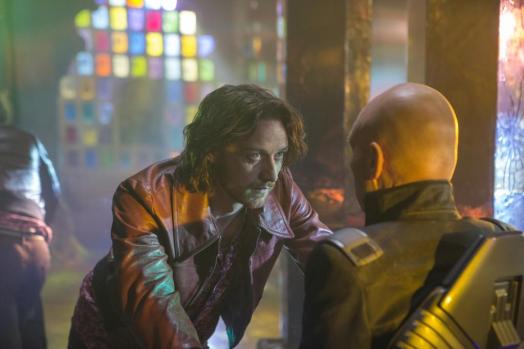
After the success of X-Men: First Class (2011), 20th Century Fox launched production on X-Men: Days of Future Past, a film that served as a sequel not only to First Class, but also to The Last Stand (2006).

Beginning in the future, Days of Future Past shows a world in chaos. Near invincible Sentinel machines are exterminating mutants and any humans helping them. A group of mutants hiding in China include Professor Xavier, Magneto, Wolverine, Storm and Kitty Pryde. With it being only a matter of time before this last hideout is overrun by Sentinels, a plan is made to send Wolverine’s consciousness back in time fifty years to prevent Mystique from assassinating Dr. Bolivar Trask and thereby stop the eventual development of the Sentinels, saving the future in the process.

537e13b7ecad04770ef0af62-750-375

This film combined the original X-Men cast with the younger cast introduced in First Class (Wolverine, being essentially immortal, serves as a kind of go-between).

For the music, the score was composed by John Ottman, a longtime collaborator with director Bryan Singer. Ottman became the first composer to work on more than one X-Men film (having scored X2 in 2003) and retained the main theme of X2 for Days of Future Past. As the composer states in the interview, Singer asked that Ottman create something that sounded “more modern” (in the vein of other current superhero films) and move away from the more traditional sounds created by Henry Jackman in the score for First Class.

IH7A1365.CR2

I haven’t seen much of the new X-Men films (though I have seen the original trilogy), but the more I see and hear of the music, the more interested I become. Fans of the new trilogy should enjoy this look at how the music of Days of Future Past was created. Enjoy!

*film poster is the property of 20th Century Fox

You can become a patron of the blog at patreon.com/musicgamer460

See also:

John Ottman talks X2 (2003)

See also:

Film Composer Interviews A-H

Film Composer Interviews K-Z

Like Film Music Central on Facebook at www.facebook.com/filmmusiccentral

My Thoughts on: The Legend of Tarzan (2016) w/spoilers

*warning: there are full and almost complete spoilers for the film below, turn back now if you don’t want the film to be spoiled for you!!!

Although I am familiar with the story of Tarzan, the only film version I had seen prior to Saturday was Disney’s 1999 animated version. The Legend of Tarzan was my first time seeing a live-action version of the Tarzan story and I have to say, it was completely worth it!

First, I have to say that this is not quite the traditional version of the story because, when the film opens, Tarzan and Jane have been living in London for almost ten years. Tarzan has claimed his “human” identity of John Clayton, Earl of Greystoke, and has worked very hard to forget that he was ever Tarzan. He puts on a good front, but in the opening scene where we first see Tarzan, it was clear to me that the man was miserable. He seemed bored with everything, and was totally in denial about who he really was, on the inside.

That’s the big theme of this movie: accepting who you really are, not what society expects you to be. In this case, Tarzan/John Clayton is attempting to live up to the wishes of his late father, who, in a letter to his then-infant son, repeatedly expressed the point that “London is your home, not this place.”

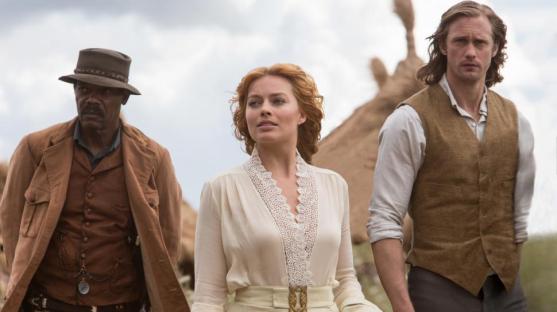
Tarzan’s wife Jane (Margot Robbie) however, is not in denial and when an invitation to visit the African Congo is extended to Tarzan, Jane insists on coming along, as she wants to go “home” to where she grew up.
margot-robbie-alexander-skarsgard-the-legend-of-tarzan-4K-wallpaper-middle-size

Even here in England though, in the vast expanse of Greystoke manner, Tarzan shows subtle signs that he has not quite forgotten the jungle. For one, he still enjoys eating raw eggs. And for another, he is still shown to be quite comfortable climbing trees, as he effortlessly pulls himself up to a branch where Jane is sitting. Reluctantly, he agrees that Jane can come along with him. Accompanying them is Dr. George Williams, played brilliantly by Samuel L. Jackson. His role is clearly that of comic relief, and it absolutely works.

However, the invitation to visit the Congo is a trap. The entire story takes place at a time when Leopold of Belgium is seeking to strengthen his hold on the Congo as a colony. But he’s running out of money to pay his troops so he dispatches Captain Rom (Christoph Waltz) to find the legendary diamonds of Ophar, which he does. But the diamonds are guarded by the tribe led by Chief Mbonga, and he has reason to see Tarzan dead. So the two make a deal: if Rom brings Tarzan, Mbonga will let him have as many diamonds as he needs. So Tarzan is lured to Africa, accompanied by Jane, and while visiting the local tribe that once hosted Jane and her father, both are captured by Rom and his men. But before they can reach the boat, Tarzan manages to break free while Jane remains a prisoner.

Tarzan-4

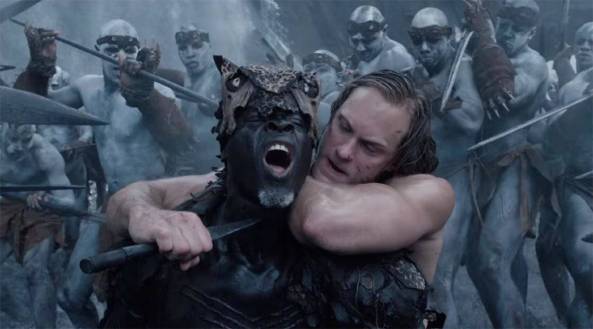
From this point on, the story revolves around Tarzan shedding his civilized skin and slowly working back to his jungle roots. It’s a fascinating process to watch, and one of my favorite parts of the movie. There are several fights along the way: fighting a train car full of soldiers, and fighting his former ape “brother” who grew up alongside him years ago. While it’s true that Jane spends most of this time as a captive, she is hardly a “damsel-in-distress.” She does what she can to undermine Rom’s progress toward Mbonga’s territory, but she’s limited because her friends from the tribe are being held hostage and will be killed if she makes too much trouble.

Eventually, the two groups (Tarzan and George and Rom, Jane and his men) converge where Mbonga is waiting and things come to a head, which is where my one real gripe comes in. Through a series of flashbacks that tell the story of Tarzan’s childhood in the jungle, we learn that Mbonga’s son killed Tarzan’s ape mother Kala during a rite of passage where the men of the tribe had to hunt gorillas. In revenge, Tarzan chased the young man down and killed him, leaving Mbonga to swear vengeance if he ever got his hands on Tarzan. Considering that a good part of the film revolves around this plot of vengeance, the actual fight between Tarzan and Mbonga…is kind of short. It almost felt anti-climactic, because the big action climax comes a little later. I wish they would have spent a little more time on the tension between Tarzan and Mbonga, but what follows makes up for it fairly well.
legend-tarzan-conquer-trailer

Jane is still a prisoner of Rom, but the latter has his diamonds now and the mercenary army they will pay for is getting ready to land at the port. If they come ashore, the Congo will stand no chance against them. But Tarzan has a plan: using his lion and ape friends, he causes a huge wildebeest stampede that storms the port town and collapses most of the buildings. It reminded me very much of a series of events in the original Jungle Book stories where Mowgli commanded the elephants to “let the jungle in” at a particular village. Seeing the town overrun by the wild animals of Africa reminded me of that moment.

Jane is finally saved, but there’s still the matter of Rom to settle. If there’s one thing you don’t do, it’s mess with Tarzan’s wife, so you’ve known for most of the film that there’s no way Rom is getting out of this alive. While fighting on a sinking boat, there comes a moment when Rom seemingly has Tarzan finished, with a strangling cord around his neck. But Tarzan begins to make a strange sound, and Rom asks him what he’s doing. Being raised around the animals of the jungle, Tarzan is a master of mimicking various animal calls, particularly mating calls. And in this case, he’s using the mating call of the crocodile to summon crocodiles to the boat. Large hungry crocodiles plus a defenseless Rom…you do the math on how it ends for the villain.

f3ed99dd456b497307f10bf9ebe314073d0dfcb1

One year later, it’s revealed that Tarzan and Jane have stayed in the jungle, apparently making their home with the same tribe that Jane grew up with. Tarzan is with the men, waiting for something. At last, a commotion comes from the big hut where all the women are gathered and a tribeswoman comes out with a little bundle in her hands: Tarzan and Jane’s child! At the beginning of the story, Tarzan let it slip that he and Jane recently lost a child, whether it was a miscarriage or a young child that died from illness is never specified. Now that they are back “home”, the birth of their child cements that this is where they truly belong.

I’m not sure if there’s a hook for a sequel or not, but I wouldn’t mind if a sequel was made. Overall, this was a very enjoyable film. A handful of moments could’ve been built up more than they were, but I still recommend this film if you like action and adventure.

maxresdefault (1)

Also, the musical score by Rupert Gregson-Williams is very well done. This composer is not familiar to me, but I will be sure to keep an eye out for his name in the future. The cinematography is absolutely gorgeous, with a lot of shooting done on location in Africa. The contrast between the drabness of Greystoke manor and the vivid life found in the jungle is striking.

Final Thoughts: The Legend of Tarzan is a really good movie, Alexander Skarsgard does great justice to the role and Margot Robbie absolutely slays her role as Jane. Christoph Waltz is very believable as the villainous Captain Rom (although for some reason he kept reminding me of Aidan Gillen, who plays “Littlefinger” on Game of Thrones).

Have you seen The Legend of Tarzan? What did you think of it? Let me know in the comments below.

*poster image is the property of Warner Bros. Pictures

Become a Patron of the blog at patreon.com/musicgamer460

Check out the YouTube channel (and consider hitting the subscribe button)

See also: Film Soundtracks A-W

Don’t forget to like Film Music Central on Facebook 🙂

Michael Giacchino talks The Incredibles (2004)

Michael Giacchino talks The Incredibles (2004)

In 2004, Pixar Animation Studios released The Incredibles, the story of a family of superheroes who are forced to hide their powers and live normal lives (after a series of events forces all superheroes to retire).

Bob Parr/Mr. Incredible, his wife Helen/Elasti-Girl, their son Dash (super-speed) and daughter Violet (invisibility/forcefields) and youngest son Jack-Jack (revealed to potentially have multiple powers at the end of the film), are doing their best to blend in when the former Mr. Incredible, extremely dissatisfied with living life as an “ordinary person” is given an offer to destroy a robot on a distant island. But there’s a lot more at play here than just a runaway robot, and soon the entire family will find themselves embroiled in a huge conflict with a strange figure from Mr. Incredibles’ past.

TheIncredibles_Web_Still2_756_426_81_s

As it turns out, The Incredibles was the first major film commission for composer Michael Giacchino (known today for such works as Star Trek, Star Trek Into Darkness and Zootopia). Director Brad Bird noticed Giacchino after hearing his work on the tv show Alias (2001-2006). Prior to this, Pixar had only used the music of Thomas or Randy Newman in their films, so Giacchino’s jazzy style was a significant departure for the studio. To help give the score that “old-style” feel of the 1960s, Giacchino deliberately recorded the score on analog tapes (as opposed to digital recording).

The featurette linked above gives an in-depth look at the recording process of the film’s score, as well as how Giacchino initially developed the music on the piano. It’s always interesting to see where a major film composer first got their start, and I bet there are some people who don’t realize that Giacchino’s first film score was for an animated family film.

Syndrome_revealing_his_plan_to_the_Incredibles

I hope you enjoy this behind the scenes look at the score for The Incredibles. With news of a sequel due out in 2019 , I am happy to report that Michael Giacchino will return to score that film as well. It will be very interesting to hear how the composer’s style has evolved over the years since the first film came out. Have a good Friday!

See also:

Michael Giacchino talks Mission: Impossible 3 (2006)

Michael Giacchino talks Ratatouille (2007)

Michael Giacchino talks Up (2009)

Michael Giacchino talks Star Trek (2009)

Michael Giacchino talks Super 8 (2011)

Michael Giacchino talks John Carter (2012)

Michael Giacchino talks Star Trek: Into Darkness (2013)

Michael Giacchino talks Jupiter Ascending (2015)

Michael Giacchino talks Jurassic World (2015)

Michael Giacchino scoring Rogue One: A Star Wars Story (2016)

Michael Giacchino talks Zootopia (2016)

Michael Giacchino talks Jurassic World: Fallen Kingdom (2018)

Film Composer Interviews A-H

Film Composer Interviews K-Z

Become a patron of the blog at: patreon.com/musicgamer460

Check out the YouTube channel (and consider hitting the subscribe button)

*poster image is the property of Walt Disney Studios

Like Film Music Central on Facebook at www.facebook.com/filmmusiccentral

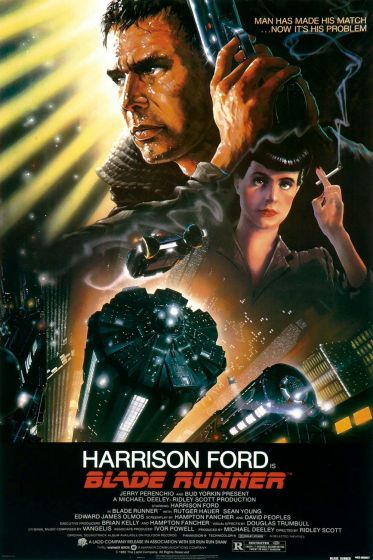
Blade Runner (1982): A misunderstood gem

blade_runner_xlg

On June 25th, 1982, the world was introduced to the dystopian world of Blade Runner. Starring Harrison Ford and set in the “distant future” of 2019 Los Angeles, the film tells the story of Rick Deckard, a “blade runner” whose job is to hunt down and “retire” replicants (i.e. robots that look identical to humans in appearance) that have illegally returned to Earth from the distant space colonies.

For many years, the only thing I knew about Blade Runner was: don’t watch it, it’s a mess, great concept, bad execution, etc. And then the “Final Cut” of the film was released in 2007, and suddenly (as far as I could perceive), everyone’s opinion of the film began to change. It went from being an awkward cult film to one of the greatest films ever. Or maybe it was always that way and I didn’t notice until now. I think it’s been about two years since I saw Blade Runner the first time (my first copy was the “Director’s Cut”, I only got the “Final Cut” last year) and I remember sitting slack-jawed the entire time.

Really, what I feel the film boils down to is: what makes a human a “human” ? That is, what separates organic human beings like you or I from the “artificial” replicants like Roy Batty, Pris or Zhara, who resemble human beings in every way except they possess unnatural physical abilities (like extreme strength or the ability to touch hot liquids without being burned). It’s clear that the replicants have their own loves, wants and desires, just like humans do. In fact, the replicants appear to want life MORE than regular humans because replicants are only given a four-year lifespan before they die.

Deckard initially regards hunting down this particular group of replicants as a routine job, until he meets Rachael that is. Initially presented as the niece of Mr. Tyrell, the inventor of the replicants, Deckard is stunned to discover that SHE is a replicant also (and what’s more, she doesn’t know it). Over the course of the film, Deckard finds himself increasingly drawn to the enigmatic Rachael, until he finally realizes that, replicant or not, he’s in love with her and he’ll protect her at all costs.

I won’t go any further into the plot of the film, because I really feel that if you go in knowing what’s going to happen, you won’t enjoy the film as much (but seriously, everyone should see Blade Runner at least once in their lives, just don’t watch the theatrical cut with the voice-over narration). There is, however, one point I will address, and that is the question as to whether or not Deckard is a replicant himself. It seems like a question out of left field, because, why should that even be a question? Here’s the thing about the world of Blade Runner: all replicants are implanted with false memories so that when they wake up, they believe that they are regular people, with a past, loved ones, old friends, etc. By the time they figure out otherwise (and not all do), the four year life-span is up and they’re dead. Knowing this, it is distinctly possible that everyone we see on the screen is a programmed replicant, living their daily lives and not knowing that they’re artificial beings grown in a series of factories. And if you say “that’s ridiculous”, keep in mind that Rachael lived quite a long time believing that she was human until Deckard told her the truth.

Despite anything Ridley Scott has said in the years after Blade Runner was released, I believe that the question is never truly resolved one way or another. Deckard might be a replicant, he might be human too. As the one police man tells him, “It’s a pity she won’t live, but then again who does?” I take that to mean that, replicant or human, we’re all going to die some day anyhow, so why not live life to the fullest while we’re still here?

I know that the sequel to Blade Runner is being worked on right now, it might even be filming for all I know, and I’m not happy about it at all. Blade Runner was NOT designed to have a sequel, and I believe that creating one ruins the integrity of the original story.

Have you seen Blade Runner? What do you think of it, if you have seen it? Are you excited (nor not) about the sequel?

*poster image is the property of Warner Bros. Studios

see also:

Blade Runner 2049: A Masterpiece

Thinking about Blade Runner 2049

Check out the YouTube channel (and consider hitting the subscribe button)

Like Film Music Central on Facebook at www.facebook.com/filmmusiccentral

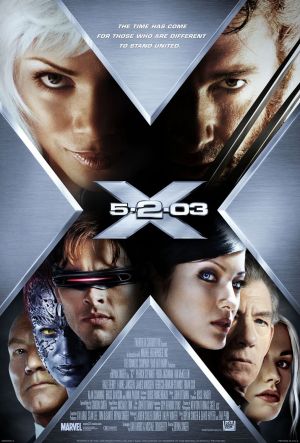
John Ottman talks X2 (2003)

X2_X-Men_United_movie_poster

John Ottman talks X2 (2003)

After the success of X-Men (2000), 20th Century Fox immediately gave the green-light to a sequel. X-2 (also known as X2: X-Men United) was released in 2003 and focused on the growing war between Professor Xavier (Patrick Stewart) and his X-Men, their enemies, led by Magneto (Ian McKellen), and their mutual enemy William Stryker (Brian Cox), who is seeking to destroy all mutants on Earth.

The score for this film was composed by John Ottman, a composer who frequently collaborates with director Bryan Singer (not always successfully, one such collaboration was Superman Returns (2006)). Of the X-Men films that I have seen, X2 is generally my favorite. I admit that Ottman’s work isn’t among my favorites, but he did an admirable job here.

I wanted to share this short documentary on the making of the score for X2 because it is uncommon to find such a long video for film music of any kind. If you liked the original X-Men films, you’ll probably find this short documentary (10-11 minutes) very interesting indeed. Enjoy!

You can become a patron of the blog at patreon.com/musicgamer460

See also:

Film Composer Interviews A-H

Film Composer Interviews K-Z

See also:

John Ottman talks X-Men: Days of Future Past (2014)

*poster image is the property of 20th Century Fox

Like Film Music Central on Facebook at www.facebook.com/filmmusiccentral