Marco Beltrami talks Blade II (2002)

In the early 2000s (before The Twilight Saga set itself up as the vampire saga), there was another vampire of note appearing on the silver screen: Blade. Adapted from a comic book, Blade is a half-vampire who spends his days waging a behind-the-scenes war against vampires and the humans allied with them. Being a half-vampire himself, Blade suffers from a growing thirst for blood, but also has none of the weaknesses of regular vampires.

Blade (1998), introduced us to the character and his war against vampires, while Blade II (2002), continues the story. In the sequel, two years after the original story took place, Blade is forced to join forces with his hated rivals to combat a new strain of vampirism that turns those infected into “Reapers”, a mutation that is immune to all vampire weaknesses except for bright light.

blade_ii_2_758_426_81_s_c1

Reapers kill all humans that they come into contact with, while any vampires they feed on also become Reapers. Blade is brought in to help with the situation as the vampires have found themselves unable to contain the Reapers. Ironically, the team of vampires Blade is forced to work with (known as ‘the Bloodpack’) were actually trained for the sole purpose of killing Blade. (Also interesting to note: this film features a pre-Walking Dead Norman Reedus as seen in the picture below.)

Reedus-in-Blade-II-norman-reedus-25978012-853-480

The orchestral score for this film was composed by Marco Beltrami, and I was delighted to find this interview where he describes the process of creating the score for Blade II. One of the drawbacks of an action film is that the fights and mayhem usually drown out the score, so this interview provides a rare opportunity to hear pieces of the music without any interference.

I used to be really into movies like Blade II, and I feel it’s a good example of a comic adapted to film (and significant since this takes place before Marvel and DC began saturating the market in 2008). There have been whispers of Blade being rebooted into the Marvel Cinematic Universe, though I’m not sure where the character would fit in (it would be pretty huge to introduce the existence of vampires).

What did you think of Blade II? Did Marco Beltrami’s score stand out at all? Let me know your thoughts in the comments below.

See also:

Marco Beltrami and Marilyn Manson talk Resident Evil (2002)

Marco Beltrami talks Live Free or Die Hard (2007)

Marco Beltrami talks 3:10 to Yuma (2007)

Marco Beltrami talks The Wolverine (2013)

Marco Beltrami talks World War Z (2013)

Film Composer Interviews A-H

Film Composer Interviews K-Z

Become a patron of the blog at: patreon.com/musicgamer460

Check out the YouTube channel (and consider hitting the subscribe button)

Don’t forget to like Film Music Central on Facebook too 🙂

*film poster is the property of New Line Cinema

Mulan “Mulan’s Decision” (1998)

Note: This moment has also been known as “Short Hair”

Mulan has already had a pretty bad day: she’s been humiliated by the matchmaker, her future is uncertain and now…soldiers have ridden into town, led by the sniveling Chi Fu (one of the advisers to the Emperor) and they bring news: the Huns have invaded China! By order of the Emperor, one man from each family must leave to serve in the Imperial Army. Though suffering from some type of illness (or perhaps injury, or both), Mulan’s father steps forward to receive the scroll giving him orders to report to military duty.

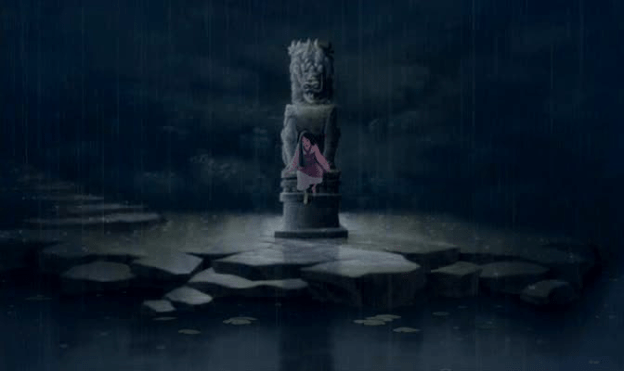
Unable to restrain herself, Mulan attempts to intervene and is publicly rebuffed by her father, upsetting things even more. That night, Mulan and her father get into an argument over whether someone should “die for honor” and Mulan’s father snaps “I KNOW my place, it’s time you learned YOURS.” Mulan flees the house in tears and a storm eventually breaks out.

As the music begins, Mulan sits and watches while her parents bid each other good night (Mulan’s mother is visibly upset). There is no dialogue, but as her father blows out the lights, you can see a decision has been made in Mulan’s eyes as she rushes off to the family temple. Jerry Goldsmith uses his full musical talents in this sequence as Mulan prepares for what is essentially a suicide mission: in ancient China, women were strictly forbidden from combat; if Mulan is caught, the sentence will be death.

Despite knowing this, Mulan cannot let her father go and gives her parents a last look as she grabs her father’s orders and leaves to finish her tasks (being observed by the “lucky” cricket that she released during “Reflection”)

Mulan “Mulan’s Decision” (1998) Alternate Goldsmith Score

900971_1323764095492_full

The biggest change that must be made is, Mulan’s long hair needs to go. Taking her father’s sword, she hesitates only a moment before cutting most of her tresses away; now she’s passed the point of no return. The next step is to put on her family armor, and by the time she is finished, Mulan is the very image of a young man dressed for war. So complete is the transformation that her horse, Khan, initially doesn’t recognize her.

749334_1308347804753_full

Mulan leaves, knowing that she may very well never see her home or her family again. In this entire scene not a word is spoken, the music tells us everything we need to know. And speaking of the music, I was surprised to discover that there are actually TWO pieces of music written for this scene. The film version that we all know and recognize is not the original piece that Jerry Goldsmith composed. THAT version is completely orchestral and more traditional Chinese in sound (for lack of a better description), whereas the film version features a synthesizer for most of the sequence (used to great effect I might add). Personally, I enjoy both versions, and if I prefer the synthesizer score, it’s only because it’s the version I’m used to.

This really is my favorite scene in the entire movie, the art, the music, everything combines together and nothing is lacking or overdone.

Become a Patron of the blog at patreon.com/musicgamer460

Check out the YouTube channel (and consider hitting the subscribe button)

See also:

Mulan “Honor to Us All” (1998)

Mulan “Reflection” (1998)

Mulan “I’ll Make a Man Out of You” (1998)

Mulan “A Girl Worth Fighting For” (1998)

Mulan “The Huns Attack” (1998)

Mulan “I’ve Heard a Great Deal About You Fa Mulan…” (1998)

For more great Disney songs and films, check out the main page here: Disney Films & Soundtracks A-Z

And don’t forget to like Film Music Central on Facebook

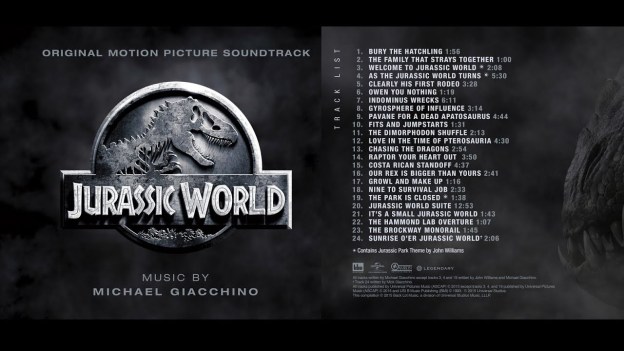
Michael Giacchino talks Jurassic World (2015)

I’m probably stretching things just a bit because this is from a red carpet interview, but he does speak about how he got the job of scoring Jurassic World, which is exciting.

Jurassic World was the long awaited sequel to Jurassic Park (it ignores the events of The Lost World and Jurassic Park 3, essentially erasing them from continuity), set over twenty years after the original story. Isla Nublar is now home to a massively successful dinosaur theme park, based on the original dream envisioned by John Hammond, who has sadly passed on and left the park in the charge of Simon Masrani.

hero_JurassicWorld-2015-1

Business couldn’t be better, but the corporations that ultimately control the park want to see even bigger profits. To that end, they commission a new dinosaur to be created using various strains of dino DNA. All of this is overseen by Claire Dearing, operations manager for the park. As the new dinosaur, dubbed “Indominus Rex” becomes prepped for its debut to the public, concerns are raised by Owen Grady, an ex-Navy SEAL and expert on Velociraptors (his job is to train the raptors to obey human commands).

As Owen sees it, breeding regular dinosaurs is dangerous enough, but creating a NEW one from scratch is opening up a whole new world of problems. To complicate matters, Dr. Wu refuses to disclose which strands of DNA were used to create Indominus Rex, meaning Owen initially has no idea what sort of abilities the dinosaur will have. During an inspection of the enclosure, Indominus Rex manages to escape, and Claire is suddenly faced with a rampaging dinosaur loose on an island full of thousands of unsuspecting guests…

jurassic-world.jpg.653x0_q80_crop-smart

According to Michael Giacchino, he was offered the job of scoring Jurassic World after he created some music for The Lost World video game and Steven Spielberg contacted him (after hearing the music) and said “This is great, when can you score this?” Spielberg was in fact so impressed with what Giacchino created that when the time came to pick a composer, he was the first person considered.

That being said, since John Williams score for the original film is so iconic, there are a number of references to the main theme of Jurassic Park throughout the film (this serves to tie the two films together musically). I think it’s really cool that Giacchino got the opportunity to score the film because he worked on the music for a video game first.

This little interview is pretty short, if I find a longer one I’ll be sure to add it, but for now, enjoy!

See also:

Michael Giacchino talks The Incredibles (2004)

Michael Giacchino talks Mission: Impossible 3 (2006)

Michael Giacchino talks Ratatouille (2007)

Michael Giacchino talks Up (2009)

Michael Giacchino talks Star Trek (2009)

Michael Giacchino talks Super 8 (2011)

Michael Giacchino talks John Carter (2012)

Michael Giacchino talks Star Trek: Into Darkness (2013)

Michael Giacchino talks Jupiter Ascending (2015)

Michael Giacchino scoring Rogue One: A Star Wars Story (2016)

Michael Giacchino talks Zootopia (2016)

Michael Giacchino talks Jurassic World: Fallen Kingdom (2018)

Film Composer Interviews A-H

Film Composer Interviews K-Z

Become a patron of the blog at: patreon.com/musicgamer460

Check out the YouTube channel (and consider hitting the subscribe button)

And don’t forget to like Film Music Central on Facebook


Brian Tyler “Alien vs. Predator: Requiem” scoring session (2007)

Note: I apologize for the blurry quality of the video, but the sound quality is perfect)

“Alien vs. Predator: Requiem” scoring session (2007)

It seemed like genius when Hollywood conceived the idea to do a crossover between the Alien and Predator franchises. Think about it: two “ultimate” alien species meeting each other, it’s potential movie GOLD! And to be fair, the first Alien vs. Predator did reasonably well, well enough for a sequel to be commissioned at any rate. Unfortunately, Alien vs. Predator: Requiem was….not so good (to put it politely). In fact, one of the few things praised about the film was Brian Tyler’s score (one of his earlier works).

u4S3eIGmG3LWEdPucNlEcFXv3Ng

If you haven’t seen the film, you’re not missing much. It basically picks up about five minutes after the first Alien vs. Predator film ends, with a hybrid Alien/Predator (known as a Predalien) bursting from a slain Predator, damaging their spaceship and sending it hurtling back to Earth. It sounds like it should be a great story (but trust me, it isn’t). Despite the film’s many, MANY flaws, Brian Tyler’s score does what it can to add some suspense to the story, and in the recording session footage that I found, you can hear the complexity that was woven into the material by the composer. I hope you enjoy listening to an example of Brian Tyler’s earlier work (he’d only been working on film scores for 10 years at this stage) and I apologize again for the blurry video quality.

You can become a patron of the blog at patreon.com/musicgamer460

See also:

Film Composer Interviews A-H

Film Composer Interviews K-Z

Brian Tyler scoring Partition (2007)

Brian Tyler talks War (2007)

Brian Tyler talks Rambo (2008)

Brian Tyler “Law Abiding Citizen” scoring sessions (2009)

Brian Tyler “Dragonball Evolution” scoring session (2009)

Brian Tyler talks The Expendables (2010) 

Brian Tyler talks Fast Five (2011)

Brian Tyler “Battle: Los Angeles” (2011) scoring session

Brian Tyler scoring session for Iron Man 3 (2013)

Brian Tyler “Teenage Mutant Ninja Turtles” (2014) scoring session

Brian Tyler conducting and scoring Now You See Me 2 (2016)

Brian Tyler “Power Rangers” scoring session (2017)

Brian Tyler conducts The Mummy (2017)

And don’t forget to like Film Music Central on Facebook

Mulan “Reflection” (1998)

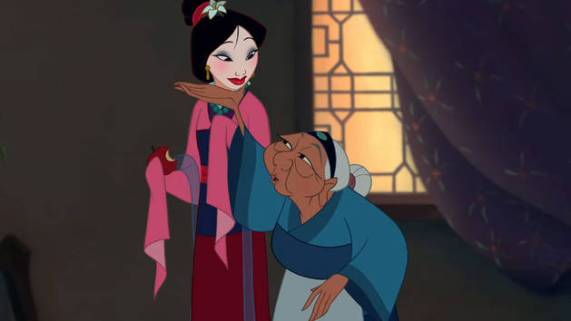
To say that Mulan’s visit with the matchmaker went badly would be an understatement: it was an unmitigated disaster. And what’s more, the matchmaker pronounced these words of doom: “You may look like a bride, but you will NEVER bring your family honor!” In other words, Mulan has been deemed incapable of making a good marriage, and considering she’s the only child of her family, that’s nothing short of catastrophic. Upset because she’s let everyone down, Mulan heads home to think about where her place in life really is. This is the song “Reflection” and it touches close to my heart because I’ve been where Mulan is at times.


In “Reflection” Mulan expresses how she is suffering from an identity crisis. Her whole life she’s been prepared to be the “perfect bride”, and now that she’s failed, where does she go from here? She can’t really be herself, because that upsets her family. In her guise as a perfect young lady, Mulan doesn’t even recognize herself:

Look at me, I will never pass for a perfect bride, or a perfect daughter.

Can it be, I’m not meant to play this part?

Now I see, that if I were truly to be myself, I would break my family’s heart…

I think this song speaks to everyone, male or female, that is struggling to discover who they really are, not what society dictates they should be. I find the chorus to be very powerful.

Reflection-mulan-32957031-1904-1071

Who is that girl I see? Staring straight, back at me? Why is my reflection someone I don’t know? 

Somehow I cannot hide, who I am, though I’ve tried,

When will my reflection show, who I am inside?

Mulan-Reflection-6

And this image of Mulan with half the makeup on is really striking: this is the visual evidence that she is caught between two worlds: a world where she can be herself, and the traditional world where everyone wants her to live.

I also really like the conversation Mulan has with her father under the cherry tree. He doesn’t yell or rant, he doesn’t even act angry. Instead he talks about how beautiful the cherry blossoms are this year. One blossom, however, hasn’t bloomed with the others. But when it does bloom, it will be the most beautiful blossom of all. This is a beautiful analogy: as her father sees it, Mulan is simply a late-bloomer, and someday he’s sure she’ll make him very proud (despite what the matchmaker said).

One last note: people keep trying to tell me that this is Christina Aguilera singing in this scene and it is NOT. Christina Aguilera sings the pop version of “Reflection” while Lea Salonga sings in the movie version. What do you think of “Reflection?” Leave a comment below and tell me what you think 🙂 Next time, we’ll take a break and look at an orchestral selection with “Mulan’s Decision.”

Become a patron of the blog at: patreon.com/musicgamer460

Check out the YouTube channel (and consider hitting the subscribe button)

See also:

Mulan “Honor to Us All” (1998)

Mulan “Mulan’s Decision” (1998)

Mulan “I’ll Make a Man Out of You” (1998)

Mulan “A Girl Worth Fighting For” (1998)

Mulan “The Huns Attack” (1998)

Mulan “I’ve Heard a Great Deal About You Fa Mulan…” (1998)

And don’t forget to like Film Music Central on Facebook

Mulan “Honor to Us All” (1998)

Mulan was the 36th entry in Disney’s Animated Classics series. The film is based on the legend of Hua Mulan, a woman who lived during the Han Dynasty. For twelve years she practiced kung fu and fought in the army, becoming a well-respected soldier before retiring to her hometown. The score was composed and conducted by the legendary Jerry Goldsmith, while the songs were written by Matthew Wilder and David Zippel.

I remember seeing the trailers for Mulan in the theater, and this film certainly didn’t disappoint me once I saw it for myself. The animation is stunningly gorgeous, the colors are vibrant and the story is very well done. After nearly a decade of churning out great animated films, Disney was in peak form and it really shows here.

In Disney’s Mulan, the story starts at the Great Wall of China. While the guards patrol, invaders suddenly appear: it’s the Huns, led by the feared warrior leader Shan Yu! The Hun leader sees the Great Wall as a personal challenge from the Emperor and he’s more than happy to invade and prove that his army is superior. News of the Hun invasion is brought to the Imperial Palace, and the Emperor commands that all reserves be called up, as he puts it: “A single grain of rice can tip the scales; one man, may be the difference, between victory and defeat.”

At the same time, Mulan is practicing for some type of examination (she’s painting cheat notes on her forearm). Today is a very big day: this is the day Mulan is presented to the local matchmaker to determine what sort of husband she will have. Being a girl in ancient China, making a good marriage is the only way that Mulan can bring honor to her family. Well, for such a big day, it’s not getting off to a great start, because Mulan is LATE!!

maxresdefault (1)

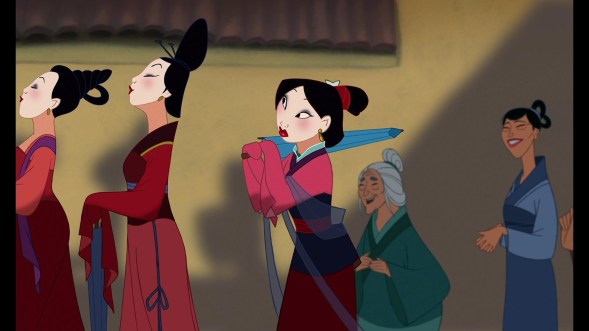
Racing into town on her horse Khan, Mulan is ushered into a series of rooms where she is bathed, dressed and painted to look like a beautiful, traditional Chinese lady from a good family. This is the setting of “Honor to Us All.” Each section of Mulan’s preparation constitutes a different verse of the song, and each verse sings of how obedient girls should be, how finding a great husband is everything, and being the best wife one can be brings great honor to the family and honor is EVERYTHING.

This is what you give me to work with?
Well, honey, I’ve seen worse
We’re gonna turn this sow’s ear
Into a silk purse

We’ll have you washed and dried
Primped and polished till you glow with pride
Trust my recipe for instant bride
You’ll bring honor to us all

Wait and see
When we’re through
Boys will gladly go to war for you
With good fortune
And a great hairdo
You’ll bring honor to us all

During this sequence, there are already hints that Mulan is not your average girl. For one, she has no qualms about riding a horse into town, hair all askew. For another, she appears to have a mind for strategy: in between rooms, she passes by two men playing a game called Go. After observing the board, she makes a move that apparently wins the game for one of the players (though neither of the men could see the move themselves).

image_367787bc

A girl can bring her family
Great honor in one way
By striking a good match
And this could be the day

Men want girls with good taste
Calm, Obedient, who work fast paced

With good breeding (and a tiny waist)

You’ll bring honor to us all

When we’re through, you can’t fail
Like a lotus blossom soft and pale
How could any fellow say “No sale”
You’ll bring honor to us all

Mulan looks distinctly uncomfortable while being dressed up, and deep down she is terrified of disappointing her family. Mulan is barely finished in time and must go racing after the other girls who are already en route to the matchmaker.

maxresdefault

Scarier than the undertaker
We are meeting our matchmaker

Destiny
Guard our girls
And our future as it fast unfurls
Please look kindly on these cultured pearls
Each a perfect porcelain doll

Please bring honor to us
Please bring honor to us all!

In the nick of time, Mulan is able to join the other girls and comport herself so that she too looks like a perfectly behaved young lady. But while the other girls in line seem quite happy to be meeting the matchmaker, Mulan still isn’t quite sure about the whole affair, but it’s too late to back out now, because they’ve arrived at the matchmaker’s house.

Random thoughts and trivia!

  • I LOVE the reveal of who “Little Brother” really is. You absolutely expect a human, only to find that it’s….a dog!
  • Mulan’s singing voice is provided by Lea Salonga, who was also the singing voice of Princess Jasmine.
  • Mulan’s SPEAKING voice is provided by Ming-Na Wen, aka Melinda May in Agents of SHIELD
  • Grandmother Fa is voiced by June Foray, better known for voicing Granny and Witch Hazel in the Looney Tunes cartoons, among many other roles
  • Mulan is the final film in the Disney Renaissance to be presented in the format of a musical.

I hope you enjoy listening to “Honor to Us All”!

Become a Patron of the blog at patreon.com/musicgamer460

Check out the YouTube channel (and consider hitting the subscribe button)

For more great Disney songs and films, check out the main page here: Disney Films & Soundtracks A-Z

See also:

Mulan “Reflection” (1998)

Mulan “Mulan’s Decision” (1998)

Mulan “I’ll Make a Man Out of You” (1998)

Mulan “A Girl Worth Fighting For” (1998)

Mulan “The Huns Attack” (1998)

Mulan “I’ve Heard a Great Deal About You Fa Mulan…” (1998)

Like Film Music Central on Facebook here

*all images are the property of Walt Disney Studios

My thoughts on: Contact (1997)

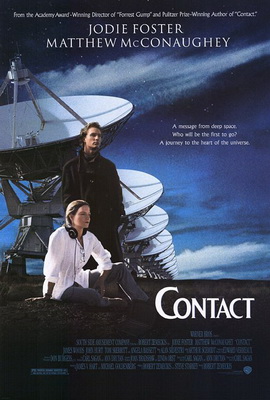
Contact_ver2

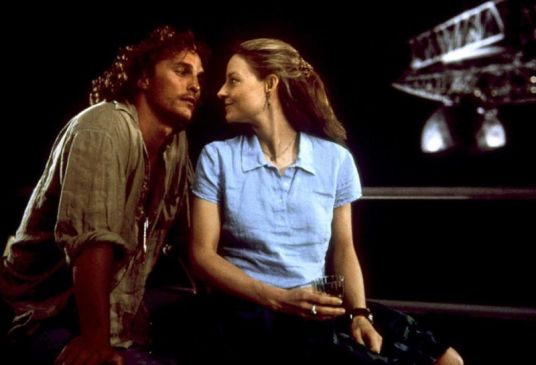
I’ve seen Contact several times and I distinctly remember being royally confused by it when I was younger. The first part of the plot is fairly straightforward: Dr. Ellie Arroway (Jodie Foster), working for the SETI program, discovers a transmitted signal being sent from the star system Vega. Using help from a reclusive billionaire named S.R Hadden, Arroway discovers that the information in the signal are instructions on how to build a machine that would allow a single person to apparently travel to meet the aliens transmitting the signal.

WpGIFbv8cUg7UgEkwoUToWiWnfs

A machine is duly built at Cape Canaveral, and while Arroway is a frontrunner to go, because she is an atheist, she is passed over for David Drumlin (Tom Skerrit), Science advisor to the President instead. But on the day of launch, the machine is bombed moments before launch and Drumlin is killed as a result. Hadden informs Arroway that a second machine was built in Japan and this time she is going to be the one to go.

From this point on, things get weird, and I mean REALLY weird. Arroway is in a pod-like structure, dangling above the whirling machine that is apparently generating a wormhole for her capsule to pass into. Upon launch, Arroway passes through a long series of wormholes and experiences a lot of strange phenomena, including distant starscapes and planets that appear to contain intelligent life.

Last of all, Arroway finds herself standing on a beach that exactly resembles one in South Florida from her childhood (only a look up at the sky gives away that she’s not on Earth). An alien appears in the form of her deceased father and the two have a brief conversation. Apparently, all of this (the signal, the machine, Arroway’s visit), was only the first step in helping humanity become a spacefaring race. The visit abruptly ends and suddenly Arroway is back in her capsule on the other side of the machine.

0a0b86f719e3edcda2c19bf1143169dd

As if things weren’t already weird enough, the situation turns on its head when everyone informs Ellie that her trip never happened. As far as they could tell, she simply dropped from the top of the machine to the bottom in a matter of seconds. Yet Ellie swears she was gone for 18 hours, but the video footage she recorded is only static, leaving no proof to verify what she saw. After a long hearing, Ellie returns to work at SETI, still believing in what occurred, despite the fact that almost no one believes her, and hopeful that they will be contacted again someday. Meanwhile, in one last strange conversation, two government officials discuss the question of, if the mission was a failure, why did the recording devices record 18 HOURS of static? Hmmmmmm, a good question.

The film is based on a book written by astronomer Carl Sagan and depicts how he thinks a first contact between humanity and aliens might go. Like I said before, this film gets really weird in some places, but if you’re okay with that, this is the film for you.

Like Film Music Central on Facebook here

Check out the YouTube channel (and consider hitting the subscribe button)

*film poster is the property of Warner Bros. Pictures

Jason and the Argonauts (1963): Ray Harryhausen Blogathon

This post is part of the Ray Harryhausen Blogathon hosted by Wolffian Classics Movie Digest

MPW-62170

To the best of my knowledge, Jason and the Argonauts is the first film I ever saw with special effects done by Ray Harryhausen. I’d known what stop motion animation was before I saw this film (having seen the Rudolph the Red-Nosed Reindeer Christmas special dozens of times), but I’d never seen it rendered so lifelike before.

To  summarize: Jason and the Argonauts is an adaptation of the ancient Greek epic of the same name, and it tells the story of Jason, the rightful king of Thessaly, who seeks the magical Golden Fleece (which brings good fortune to whichever country possesses it) as a means to unite the people behind him against the evil rule of King Pelias (who killed Jason’s father at the beginning of the film). To do this, Jason has a great ship, called the Argo, built, and holds an athletic competition to select the bravest and strongest warriors to join him on this dangerous quest (because the Golden Fleece lies on the other side of the known world). Among the “Argnonauts” are Hercules, Argus (the builder of the Argo), Hylas (who wins his place by besting Hercules in a contest, and seemingly had the help of the gods in doing it) and Acastus (who is actually the son of Pelias and out to get the Golden Fleece for himself).
 

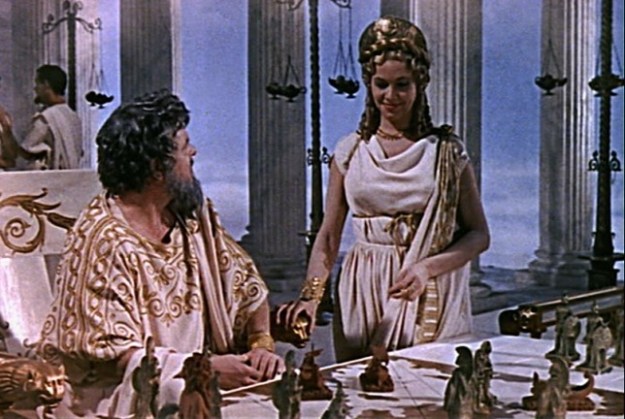
Speaking of the Greek gods, we see a great deal of them in the story too: Hera sets herself up as Jason’s protector, and with the permission of Zeus is allowed to help Jason five times during his quest. In their palace on Mt. Olympus, Hera and Zeus are seen playing a “game” on a huge board depicting the world. It is implied that they are subtly manipulating events in a sort of contest against one another, though neither bears any real malice towards Jason.

clip_image003

During their trip to Colchis, the Argonauts have three adventures: they come to the isle of Bronze to re-supply, and inadvertently disturb the bronze giant Talos (which guards the treasure of the gods hidden on the island). Jason defeats Talos by removing a plug in his heel that keeps the magic liquid powering him inside his body.

talos

Jason and the Argonauts “Talos Awakens” (1963)

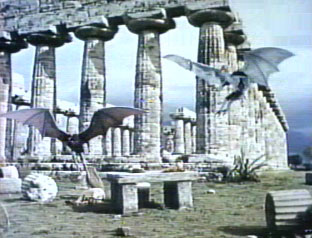
They then visit a blind seer named Phineas, who is tormented daily by the Harpies because he blasphemed against Zeus many years ago. In return for the Argonauts capturing them, Phineas tells Jason how to get the rest of the way to Colchis, but warns him of the “clashing rocks”, giving him an amulet to protect him along the way.

Harpies

Jason and the Argonauts “The Harpies” (1963)

At the clashing rocks, they first see a ship from Colchis get destroyed by the rocks, and then slowly make their way themselves. The ship is nearly destroyed and in a fit of anger Jason throws the amulet into the sea, unwittingly summoning a huge merman (implied to be the sea god Triton) that holds the rocks in place until the ship passes through. On the other side, they find the priestess Medea, barely clinging to life and they bring her with them to Colchis.

Triton

Jason and the Argonauts “Clashing Rocks” (1963)

Even though the Argonauts have safely arrived in Colchis, their troubles aren’t over yet. Acastus showed his true colors and in the course of a fight went missing and was presumed dead. In reality, Acastus made it to the royal palace first and told King Aeetes his version of the truth, painting Jason and his friends as mere robbers. Upon arrival, Jason and company are taken prisoner, but Medea (who is already in love with Jason), breaks them out of jail and promises to lead them to where the Golden Fleece lies. Acastus is already on his way there, and Aeetes is in pursuit with his soldiers. When Jason and Medea arrive at the tree holding the fleece, they are greeted by the seven-headed Hydra, which already holds a badly wounded Acastus in its coils.

Jason_and_the_argonauts_1963_852x480_694343

Jason and the Argonauts “Jason vs. The Hydra” (1963)

Jason fights and eventually kills the Hydra, but it is too late for Acastus. Taking the fleece and running, Medea is shot by an arrow and badly wounded, but the fleece is used to heal her wounds and she is taken to safety by some of Jason’s men. The rest stay behind with Jason, as Aeetes has one more trump card to play: calling upon the goddess Hecate, Aeetes takes the teeth of the slain Hydra and sows them into the ground, calling upon the “children of the Hydra” to rise up and avenge them. One by one, living skeletons rise from the ground, and on the king’s order, move to attack Jason and his men. It’s a vicious battle, but Jason and company have no hope of winning, as the only way to defeat a skeleton is to completely smash it into pieces, otherwise it will just keep fighting. The final solution is to dive into the sea far below the cliff that they were fighting on (the skeletons smashing into pieces on the rocks).

Jason and the Argonauts “Skeleton Fight” (1963)

Jason has the fleece, and Medea, but will they be able to regain the kingdom of Thessaly for Jason? Sadly, the film doesn’t tell us as it ends right there. I remember hearing somewhere that there were some plans for a sequel that would’ve finished the story, but it ultimately never came to fruition. Jason and the Argonauts is full of spectacular monsters that only Harryhausen could’ve brought to life. My favorites are Talos, the Hydra and especially the skeletons. Harryhausen actually first did a skeleton fight in The 7th Voyage of Sinbad (1958), only that fight was one on one between Sinbad and a skeleton. The movements of the skeletons are so smooth, it’s easy to forget that Jason and the other actors are fighting things that aren’t really there.

Talos is another exciting creation. He’s meant to be an impossibly huge statue of bronze that comes to life to defend the treasure (and he wields a huge sword too). The music for this entire sequence that Talos appears in is absolutely menacing! Bernard Herrmann composed the score for this film and he did such an amazing job of conveying the fact that Talos is big and terrifying and greatly to be feared!!

My one big frustration with this film is that it technically doesn’t finish the story it started telling. The movie starts as a conflict between King Pelias and Jason, the man who will eventually kill him. You would think that the story would end with Jason confronting Pelias with news of his son’s death and that he has the Golden Fleece, but we never get that closure. Regardless, I love watching this movie, as I love watching all films where Ray Harryhausen was involved.

Hope you enjoyed my contribution to the Ray Harryhausen Blogathon, have a good rest of the day!

Check out the YouTube channel (and consider hitting the subscribe button)

Like Film Music Central on Facebook here

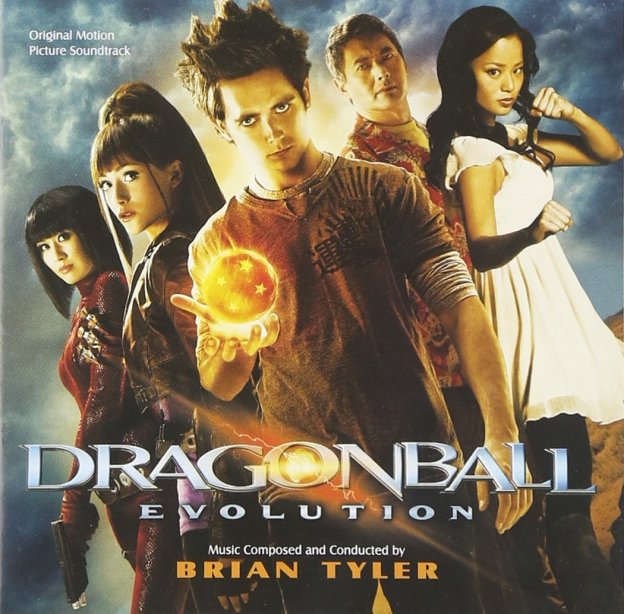
Brian Tyler “Dragonball Evolution” scoring session (2009)

“Dragonball Evolution” scoring session (2009)

I bet I know what you’re thinking: WHAT? They made a live-action movie based on Dragon Ball? Where, when and how can I get it???

Not.so.fast.

There’s a reason you likely haven’t heard of this film (and if you have seen it, you know what I’m about to say): it SUCKS. Badly. I mean REALLY badly. So badly that Akira Toriyama, the creator of the Dragon Ball manga, practically disowned the film. Yea, that’s pretty bad.

Based on the titular Dragon Ball manga, the film follows Goku and Bulma as they travel together to gather the seven Dragon Balls in a race to stop the demon Lord Piccolo before he can gather them first. Several of the major characters from the series are encountered: Goku, Chi-Chi, Bulma, Master Roshi, Piccolo and Yamcha. Shen Long, the legendary wish-granting dragon who only appears when the seven dragon balls are gathered, makes an appearance as well.

dragonball-evolution-poster

Despite the film being an overwhelming failure, there is one bright spot: the musical score, composed and conducted by Brian Tyler. The score was very well received and positively compared to other contemporary film scores.

dragon-ball-evolution-1013099

I found this short clip from a recording session for the film uploaded in February of 2009. What I love about Brian Tyler’s musical style, is that he doesn’t completely abandon classical conventions, the way some 21st century composers do. Instead, he works to blend the traditional orchestral sound with more “modern” themes using synthesizers and electronic instruments. He essentially goes for the best of both worlds and so far he has nailed it every time.

 Enjoy this look at the recording of the Dragonball Evolution soundtrack, and if you’re interested in the series, try the Dragon Ball and Dragon Ball Z anime instead of this film.

You can become a patron of the blog at patreon.com/musicgamer460

See also:

Film Composer Interviews A-H

Film Composer Interviews K-Z

Brian Tyler “Alien vs. Predator: Requiem” scoring session (2007)

Brian Tyler scoring Partition (2007)

Brian Tyler talks War (2007)

Brian Tyler talks Rambo (2008)

Brian Tyler “Law Abiding Citizen” scoring sessions (2009)

Brian Tyler talks The Expendables (2010) 

Brian Tyler talks Fast Five (2011)

Brian Tyler “Battle: Los Angeles” (2011) scoring session

Brian Tyler scoring session for Iron Man 3 (2013)

Brian Tyler “Teenage Mutant Ninja Turtles” (2014) scoring session

Brian Tyler conducting and scoring Now You See Me 2 (2016)

Brian Tyler “Power Rangers” scoring session (2017)

Brian Tyler conducts The Mummy (2017)

Like Film Music Central on Facebook here

*film poster is the property of 20th Century Fox

Quo Vadis (1951): Sword and Sandal Blogathon

This post is part of the Sword and Sandal blogathon hosted by Moon in Gemini

Poster_-_Quo_Vadis_(1951)_01.jpg

The 1950s were known for many things, but in Hollywood, they were primarily known as the decade of the Biblical epic. A number of great epics including Quo Vadis were made in this ten year span, films such as The Ten Commandments (1956), Ben Hur (1959), David and Bathsheba (1951), Solomon and Sheba (1959), etc. Quo Vadis is considered one of the greats of this era, and rightfully so.

Quo Vadis- Marcus and Lygia first meet

Based on the best selling novel Quo Vadis: A Narrative of the Time of Nero (1895) by Henryk Sienkiewicz, the film follows the Roman tribune Marcus Vinicius (Robert Taylor) as he encounters a mysterious sect called “Christians” after falling in love with a captive woman named Lygia (who belongs to this mysterious cult). Marcus, who holds token respect for the Roman gods at the beginning of the story, initially cannot fathom this Christ that the Christians hold in great reverence. In his mind, he loves Lygia (Deborah Kerr), therefore Lygia should love him back and that should be the end of it. But even though Lygia DOES love Marcus in return, her faith in God is too strong to permit her to leave her faith for the love of one man.

Peter Ustinov Quo Vadis

Ustinov’s portrayal of Nero is quite chilling at times

All of this takes place during the reign of the Emperor Nero (Peter Ustinov), a spoiled, full-of-himself ruler, who believes he is a god on Earth (and is worshipped as such), capable of doing no wrong, a veritable genius (though his musical skills are mediocre at best). His wife, the Empress Poppaea, has eyes only for Marcus, and sees Lygia as a rival that should be eliminated. Attempting to keep the half-mad Emperor in line is Gaius Petronius, Nero’s “arbiter of elegance” (and also the uncle of Marcus). Petronius maintains his place in court by simultaneously mocking and then praising Nero to the heavens in such a witty fashion that Nero cannot bear to part with him.

shotimg48268_3

Lygia is not happy with Marcus

Impatient to have Lygia, Marcus decides to have her kidnapped from her foster home (since she is technically a Roman hostage, being the daughter of a pagan king who fought against Rome and therefore belongs to Nero) and brought to the palace, to be given to Marcus at a feast, as a reward for being so successful in recent combat. Lygia manages to escape though, and goes into hiding with other Christians. Marcus tracks her to a secret gathering led by the apostle Paul and Peter himself, newly arrived in Rome. While he is intrigued by the Christian teachings, Marcus cannot (as yet) believe in them, but he understands enough to let Lygia go and promises not to follow her anymore.

Quo Vadis- Nero sings while Rome burns

At the same time though, the Christians are becoming an annoying thorn in Nero’s side, as is the city of Rome itself. The former bothers him because they deny his divinity, and the latter bothers him because of its overwhelming corruption. Petronius unwittingly gives Nero an idea when he mocks the emperor’s epic about “burning Troy” because the emperor had never seen a burning city himself. After moving the imperial court safely to Antium, Nero makes plans to have the city (barring the Palatine area where the wealthy live) set ablaze, while he returns to compose his greatest epic. When the arson backfires (thanks to the intervention of Marcus) and many people end up escaping with their lives, the emperor needs a scapegoat to divert attention from himself. Against the protests of Petronius, Nero writes an edict pronouncing the Christians are responsible for burning Rome and are henceforth enemies of the state. In despair, Petronius commits suicide several days later (but not before endorsing the Roman general Galba as a replacement ruler for Nero).

Quo Vadis- Marcus looks for Lygia

maxresdefault

Peter is successfully smuggled out of Rome along with a young boy named Nazarius. But along the way, Christ comes to Peter (speaking through the boy) and when Peter asks “Quo Vadis Domine?/Where are you going Lord?, Christ answers “My people in Rome have need of thee, if thou deserts my people, I shall go and be crucified a second time.” By which Peter understood that he needed to go back to Rome, because it was time that he gave his life while preaching the Word.

The Empress Poppaea, seeing Marcus really is in love with Lygia after he rescues her from the fire, arranges to have him arrested and thrown in jail with the other Christians, among whom are Peter and Lygia’s foster parents. Over the course of several days, the Christians are systematically killed, some by lion, some by crucifixion while being burned alive. But Nero finds no joy in the spectacle, because, instead of screaming in terror, the Christians go singing to their deaths, proclaiming the world that is to come with their words. Nero decides to have Peter crucified upside down as an example, but still the Christians go singing as they die. Poppaea has one final spectacle planned: while Marcus stands bound at her side, Lygia will be tied to a post in the arena, while a wild bull is let loose. Only her giant protector, Ursus, will be able to stop the bull from killing Lygia. As the fight goes on, Marcus struggles to get free, and in a visible leap of faith, begins to pray for Christ to give Ursus strength to kill the bull, which happens!! In the chaos, Marcus breaks his bonds and jumps to the arena floor, telling the people of Rome the truth: that NERO burned Rome and it is Nero who should die, with General Galba set up in his place. Nero flees for his life, but ultimately commits suicide, urged on by Acte, a former wife (who still loves Nero despite everything and doesn’t want to see the crowds rip him apart).

For now, Rome is safe again, as General Galba rides triumphant into Rome, while Marcus, Lygia, Nazarius, and Ursus, ride away from the city, to places unknown.

The score for this film is one of my favorites and was composed by Miklos Rozsa. Rozsa is probably best known for his work on Ben-Hur (1959), and not many know that several themes heard in that film were created for Quo Vadis eight years earlier. Rozsa spent a great deal of time researching ancient music and instruments for this film, and assisted the props team in creating highly detailed replicas of ancient musical instruments that were seen all over the film.

The “Quo Vadis” of the title comes from the pivotal moment when Peter encounters Christ while fleeing Rome and asks him “Quo Vadis Domine?” Where are you going Lord? The story can be found in the Apocrypha of the Bible.

Biblical epics can be hard to get through because of their sheer length, but Quo Vadis is worth watching at least once if you’ve never seen it before. Made in an era long before CGI, the hand-built models and miniatures give scenes (especially the burning of Rome sequence) a sense of reality that you would be hard pressed to find today.

This is my entry for the Sword and Sandal blogathon, and I hope you enjoyed it!

You can become a patron of the blog at patreon.com/musicgamer460

Check out the YouTube channel (and consider hitting the subscribe button)

Like Film Music Central on Facebook here

*film poster and images are the property of MGM