Tag Archives: film

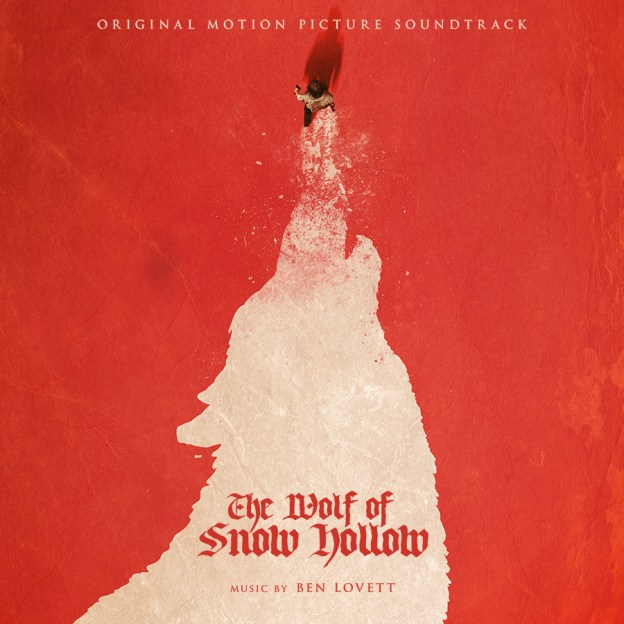
Soundtrack Review: The Wolf of Snow Hollow (2020)

So just the other day I shared the news that the original soundtrack for The Wolf of Snow Hollow (by Ben Lovett) is now available. Today, I actually got the chance to sit down and listen to that soundtrack and present my thoughts on it below.

My god…..this soundtrack is beautiful. Even in this severely truncated year of films, I’ve been able to listen to my fair share of soundtracks this year, and I can sincerely say that The Wolf of Snow Hollow is one of the best, if not THE best soundtrack I’ve heard in 2020. The music was composed by Ben Lovett, who has also scored the likes of Synchronicity (2015), The Ritual (2017), and The Night House (2020), just to name a few examples.

From beginning to end, this soundtrack is amazing. It feels very much like a throwback to the kind of soundtrack you’d hear during the Golden Age of Cinema (approximately 1933-1960, the exact years vary depending on who you ask). And this is a very good thing! Film scores like this are filled with rich musical layers, the strings in particular range from menacing to thoughtful (but still full of tension). I also like how Lovett doesn’t give too much away with the music. Some scores, this year’s The Invisible Man comes to mind, openly project where and when certain moments (like jump scares) happen. The Wolf of Snow Hollow doesn’t do that. You feel a certain rise and fall fo tension to be sure, but if any one specific moment happens, the music doesn’t give it away.

And that music….Lovett openly admits that he wanted the music of The Wolf of Snow Hollow to be referential and is it ever! The influence of Bernard Herrmann is all over this score, in particular I heard multiple references to his iconic score for Psycho (1960). Not, I should clarify, anything that references the iconic “shower scene” moment that the film is most famous for. Instead, I swear I heard hints of Hermmann’s score from the opening of the film, particularly in the track “Third Crime Scene.” I love that this score pays such direct homage to one of Herrmann’s best film scores, and it makes me very excited to eventually watch this film and hear the music in context with the story. If I get the chance to speak with the composer, I plan on asking about this score’s connection with Herrmann and Psycho because that is a story I need to hear.

It would be impossible to overstate how happy listening to this soundtrack made me. From the opening track, the music sucked me in, and it never lets up. This is one of the best use of strings that I’ve heard in years, I know I’ve said that before but it’s done so well I have to mention it again.

I could go on and on, but honestly it all boils down to this: you need to listen to the original soundtrack for The Wolf of Snow Hollow at your earliest opportunity. This music is so beautiful, with a great homage to Bernard Herrmann, and I think you’ll be hard pressed to find a score that surpasses this one in what little remains of 2020. Ben Lovett has knocked it out of the park with this one.

Let me know what you think about the music for The Wolf of Snow Hollow in the comments below and have a great day!

See also:

Soundtrack News: ‘The Wolf of Snow Hollow’ Soundtrack Available Now

Film Soundtracks A-W

Become a Patron of the blog at patreon.com/musicgamer460

Check out the YouTube channel (and consider hitting the subscribe button)

Don’t forget to like Film Music Central on Facebook 🙂

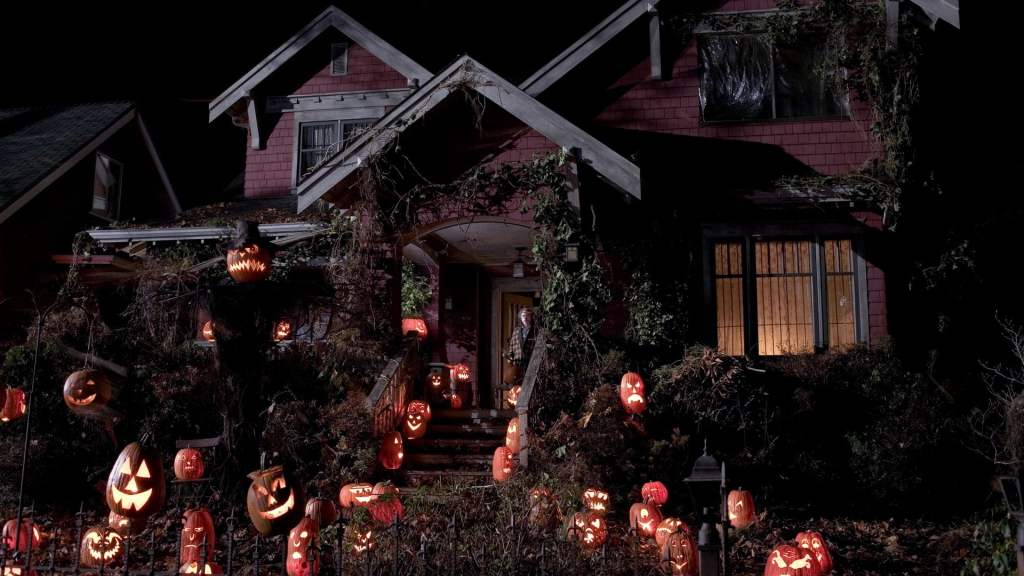
My Thoughts on: Trick r Treat (2007)

I honestly don’t remember how I first learned about Trick r Treat. But somehow, a few years back, I found a copy of the film online and watched it out of curiosity, not sure what to expect (and you know my general feelings on scary horror films if you’ve been following this blog for a while).

To my complete and utter surprise, I was HOOKED! Enough that the film remained in the back of my mind for years, until I finally decided to watch it for a second time this month to set down my thoughts on it.

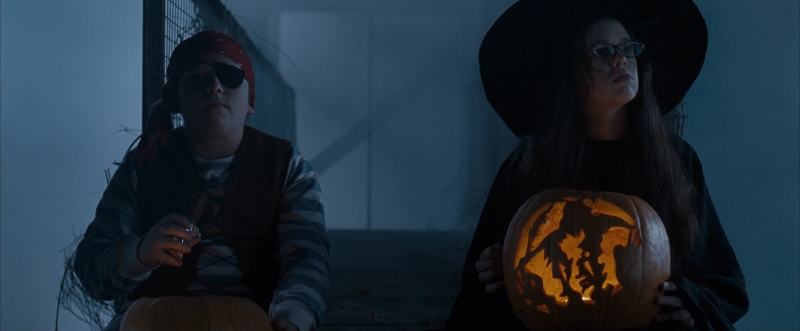
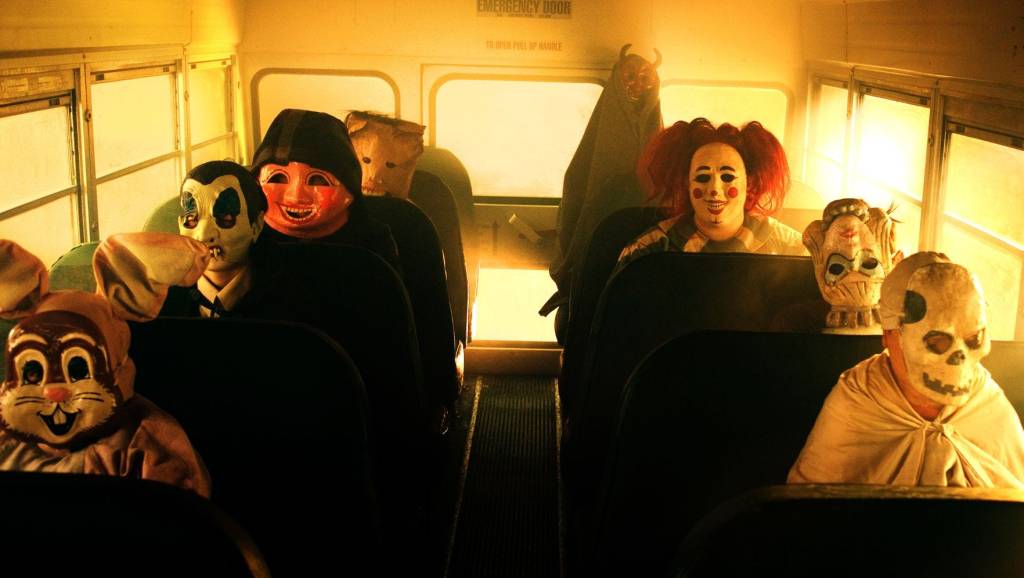
If you haven’t seen it, Trick r Treat takes place over the course of a single Halloween night in Warren Valley, Ohio, and features four separate stories that overlap in a number of ways. The four stories in a nutshell are: Principal Wilkins carves a jack o lantern with his son; Rhonda and a group of bullies revisit the Halloween School Bus Massacre at a rock quarry; Laurie loses her “virginity” at a bonfire party; and old Mr. Kreeg learns the true meaning of Halloween.

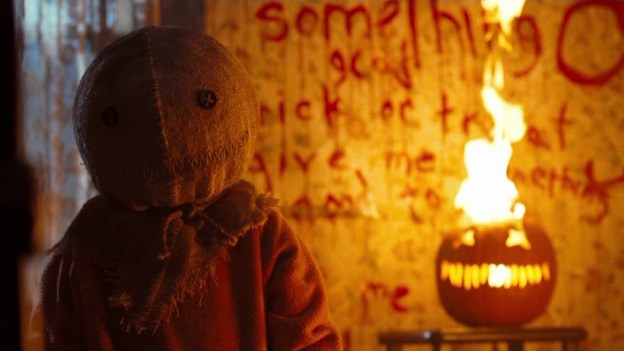
That’s a big part of the film’s appeal for me. Because the stories intersect at numerous points, every time you watch the film you’re going to notice a new background detail that connects one story to another. And of course I have to mention Sam, the most pivotal character of the story. Sam is, for lack of a better word, the personification of Halloween. He is there to enforce the rules of Halloween, those including: Wear a costume, give out candy, and NEVER blow out your jack o lantern before midnight. Throughout the night those who disregard the rules of Halloween are punished in a horrifyingly brutal fashion.

And yet….that is also part of the film’s appeal. The victims, for the most part, are all assholes who deserved what they got (Principal Wilkins is by far the most notable example). There are naturally exceptions, but I don’t find myself feeling particularly bad for the victims at any given point (not even the asshole kids in the rock quarry, as far as that goes I identify with Rhonda all the way). My second favorite moment in this film is the climax of the rock quarry sequence when the bullies get what’s coming to them. I wasn’t pranked as badly as Rhonda was at that age, but I know exactly how she felt at times, so I was in full sympathy with her actions at the climax of that story.

My favorite moment, and the one I’d like to discuss in detail is the segment with Laurie and the bonfire party. This is the part that’s always stuck in my brain. From the start, you know that something is up with Laurie, her sister, and her friends. My initial guess was that they were all secretly vampires (and based on how their transformation starts can you blame me for thinking so?) but the truth was so much better. Watching Laurie and the others transform into werewolves to the tune of Marilyn Manson singing “Sweet Dreams (Are Made of This)” is just spine-chilling and mesmerizing. The fact that their last victim, Principal Wilkins, is alive to watch this happen (and clearly about to die) just makes the payoff all the sweeter to experience.

And then there’s Sam, who I will keep coming back to given enough time to talk about this film. For most of the film Sam is a mostly adorable figure (in a creepy sort of way), who is clearly dangerous based on his actions in the prologue, but you don’t really see how until the last segment. Seeing what Sam really is underneath his burlap mask is, quite frankly, terrifying. I’d almost prefer the mask to stay on and preserve the illusion that Sam is this cute (but terrifying) Halloween creature, but I also kinda get why Sam would get unmasked (for that extra scare).

In conclusion, Trick r Treat is one of the best films to watch for Halloween. I guarantee by the time it’s over that you’ll never look at this holiday the same way ever again. (And you’ll definitely think twice about destroying jack o lanterns).

Let me know what you think about Trick r Treat in the comments below and have a great day!

See also:

Film Reviews

Become a Patron of the blog at patreon.com/musicgamer460

Check out the YouTube channel (and consider hitting the subscribe button)

Don’t forget to like Film Music Central on Facebook

My Thoughts on: Frankenstein (1931)

When I decided that I was going to embrace the Halloween spirit and watch “Halloween-ish” movies during the month of October, I knew that Frankenstein (1931) had to be somewhere on that list. This film, to me, is essential viewing for the Halloween season, as I consider it to be the most iconic film ever made about Frankenstein and his Monster (here portrayed brilliantly by Boris Karloff).

As you might expect, Frankenstein sets out to tell the story of Henry Frankenstein (renamed from Victor for some reason and also played brilliantly by Colin Clive), and his quest to imbue a body of his own creation (Boris Karloff) with life. While the experiment works, things quickly go sideways and soon the Monster is terrorizing the countryside (though whether or not he’s aware that he’s doing so is something I’ll address later). At the same time, Frankenstein is also hoping to get married to his long-suffering sweetheart Elizabeth (Mae Clarke) to ease the mind of his equally long-suffering father (Frederick Kerr).

Truthfully, having read the original Frankenstein novel, I can tell you that this film only bears a superficial resemblance to Mary Shelley’s story about “the modern Prometheus.” Most of the book’s plot, in fact, is excised to allow the film to center around the Monster being given life and the chaos that follows. Possibly the biggest difference between book and film is that the loquacious Monster in the book is almost completely silent in the film, his speech being limited to grunts and cries of pain and anger. It’s somewhat disappointing, as Karloff had a beautiful voice and I believe would’ve done justice to the Monster’s lines in the book. However, I understand what director James Whale was going for in this film, and also support the notion of a Monster that cannot talk, at least at the beginning (this changes in the sequel film The Bride of Frankenstein).

However, despite all these differences from the source novel, Frankenstein is a wonderful film and remains an iconic take on the story of Frankenstein and his Monster. While bearing a different name, Colin Clive’s Henry Frankenstein remains for me the iconic take on the titular character. He’s filled with a nervous energy that becomes especially palpable during the scene of the Monster’s creation. I’ve yet to see anyone else play the role of Frankenstein and top this performance.

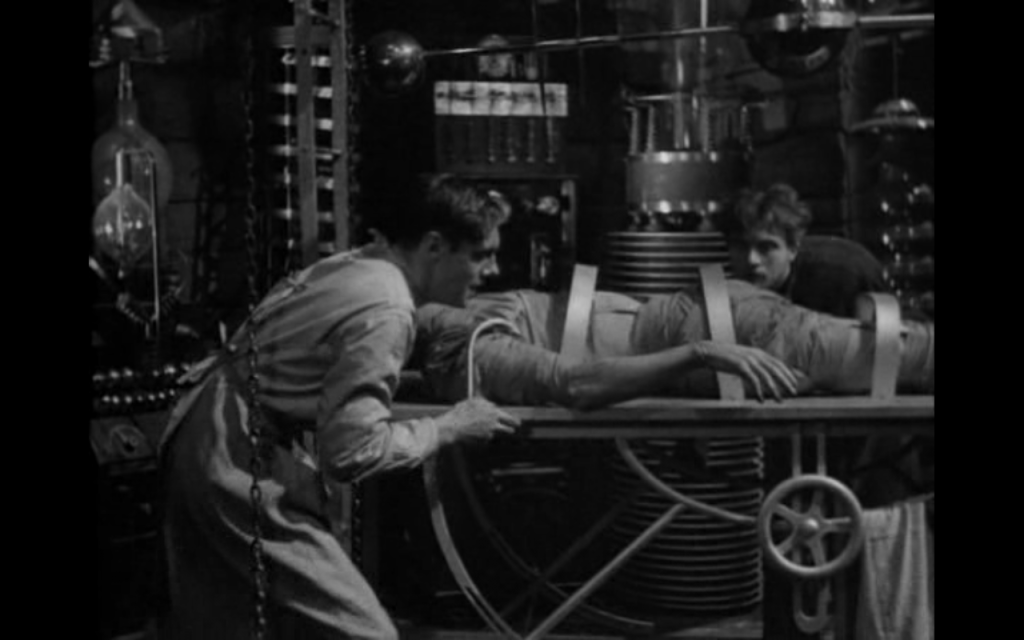
I think my favorite scene in the film is the Monster’s creation scene. This is what I always imagined the creation scene looked like in the Frankenstein story (and I was so disappointed to discover the book does NOT tell you how Frankenstein brought the Monster to life) and it’s spine-tingling to hear Frankenstein howling with joy “It’s alive….IT’S ALIVE!!!” Surrounded by the crackling electricity, it’s an exciting moment that’s just pure in its intentions.

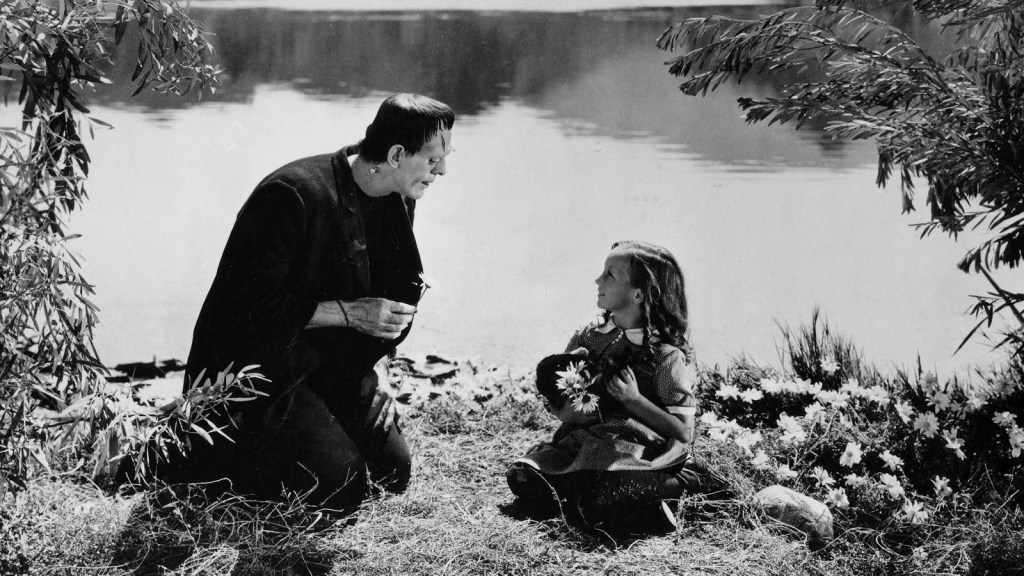
The biggest element the film gets right is the doubt it sows throughout about the Monster’s intentions. While the Monster of the book is undoubtedly a cunning creature inclined to villainy once it experiences rejection on multiple levels, the Monster of this film is another matter entirely. While the story almost immediately sets up the idea that the Monster will be and MUST be evil because an abnormal brain was used in its creation, the Monster’s action throughout the film suggest something else. Think about it…what evil did the Monster do and in what context? Yes, he did kill Frankenstein’s assistant Fritz but only after the latter tormented him with fire (the thing he hates above all else) even after being told to stop. True, he also killed Dr. Waldman but to be fair the latter was about to euthanize him and the Monster, being a living being, naturally wanted to continue living. Waldman somewhat brought his fate on itself by not being open at any time to the idea that the Monster was anything but evil. And after that, the scene with little Maria, anyone can see that her death was a tragic accident. The Monster was clearly enjoying playing with the little girl, and only threw her into the pond because he’d run out of things to throw and thought she would float like the pretty flower boats. This version of the Monster, I believe, is not inherently evil at all, but is only acting the best way he knows how, and it’s only through a series of errors that the entire village is stirred up against him.

Speaking of getting stirred up, I find it so interesting that no one in the village ever finds out that the monster Frankenstein is helping to hunt down was created by Frankenstein himself. You’ll notice Frankenstein never publicly volunteers the information that he created this monster that he’s working to destroy. Sure, he feels guilty about what he’s done, but not enough to publicly confess. I’m not sure if that’s hypocritical or selfish on Frankenstein’s part (or maybe both), but it is interesting.

And I think the biggest clue of all that the Monster in this film is not evil is how he reacts when the mill is set on fire. Fearing fire above all else, the Monster is clearly afraid, in pain, and just wanting to be left alone. It’s heartrending to watch, and it makes me wonder how the story could’ve been so different if Frankenstein had taken more care with his creation instead of immediately chaining him up the instant he wasn’t 100% obedient to him.

One more interesting detail I wanted to point out is that there’s really no music in this film except for the opening and closing titles of the film. In some scenes (like the Monster’s creation), this could probably be argued as a creative decision. However, I also know that in 1931 many films didn’t have proper musical soundtracks as we understand them today. This is largely because, while the technology of making a “talking film” had largely been figured out, the technology of making a “talking film with music in the background” had not. Hence, except for the village celebration scenes (and the opening/closing titles), there is no background music in Frankenstein. You’ll note, however, that this issue was corrected by the time of The Bride of Frankenstein in 1935.

I know it’s an older film, but I highly recommend adding Frankenstein (1931) to your Halloween viewing list. It’s classic horror in every sense of the word and really you should watch it for Boris Karloff’s performance alone.

Let me know what you think about Frankenstein (1931) in the comments below and have a great day!

See also:

My Thoughts on: Bride of Frankenstein (1935)

My Thoughts on: Son of Frankenstein (1939)

My Thoughts on: The Ghost of Frankenstein (1942)

Film Reviews

Become a Patron of the blog at patreon.com/musicgamer460

Check out the YouTube channel (and consider hitting the subscribe button)

Don’t forget to like Film Music Central on Facebook

My Thoughts on: Halloween (1978)

*deep breath* I did it. I’m scared out of my mind but I did it, I watched the original Halloween from beginning to end without stopping.

I should explain: I’ve had a fixation with horror/slasher movies for years, by which I mean I’m fascinated by them but I’ve always been too scared to watch them (being the kind that scares quite easily). However, this year, with everything that’s been going on in the world, I decided that now was the perfect time to dive in and check out some of the films that I’ve always been too scared to try in the past (YOLO right?). The original Halloween seemed like the perfect place to start (and also like the one I’d be most likely to get through given my other options were A Nightmare on Elm Street and Friday the 13th).

If you haven’t seen it, Halloween is the first film to feature the silent killer Michael Myers (Nick Castle), who might be the Boogeyman given how callous he is when it comes to killing people. Fifteen years after committing a brutal murder (in a first person sequence that had me scared to death), Michael escapes from an asylum to return to the scene of the crime…and it’s on Halloween night. Michael is pursued by his doctor, Dr. Loomis (Donald Pleasance), who hopes to stop Michael before it’s too late. Unfortunately, Laurie Strode (Jamie Lee Curtis) is in for a Halloween she will never forget.

I knew going in that I’d be scared, but my God…..from the moment the film started I was neck deep in a sea of tension. And why? Because of that iconic music!!! You know what I’m talking about: that spooky piano melody that permeates the film. As soon as I hear it, it sends chills up my spine and puts me completely on edge. And that music can start at ANY time, you never know when it’s going to start up again, and it just makes things so scary! Speaking of music, I was also spooked by the sudden “moan” that comes into the music whenever Michael lunges out for the kill. It’s almost just as terrifying as the iconic theme. This is definitely one of those films where the music 100% contributes to the terror.

Despite this feeling, it actually takes most of the film for things to get messy (i.e. violent). Except, by that point (when Michael finally comes after Laurie), the tension has become completely unbearable. By this point (when Laurie finds out what’s happened to her friends), I’ve been watching Michael stalk (and kill) for over an hour, and I’m thoroughly spooked. So much so, in fact, that when Michael’s face slowly appears out of a darkened doorway behind Laurie, I swear to God I nearly screamed in terror. THAT is how you do a scary horror movie, build the tension to by-God-unimaginable levels of terror and then turn the scary killer loose on whoever’s left standing. I’m not sure I’ll be able to sleep tonight, but by God I can admit when a film is well done, and that was well done indeed! (Also, I had no idea the sound of breathing could be made to sound so scary!)

Donald Pleasance is a joy to watch in this film. The way he talks about Michael speaks volumes about the silent character, how soulless and evil he is. Which is quite helpful since, as Michael himself never speaks, we have no way of knowing anything about him other than what Dr. Loomis tells us. I think what got to me the most though, was how calm Dr. Loomis was about it all, like he expected all of this would happen sooner or later. Then again, there was a pretty blatant hint about “unescapable fate” early in the film….

I identify so strongly with Laurie Strode it scared me to death. Like Laurie, I was the goody-two-shoes who focused on her studies, babysat, and wasn’t really interested in boys. I could easily see myself in her place and it was scaaaaary (particularly when Laurie was hiding in the closet). Even though I knew Laurie would come out of this alive (I always read plot summaries for films that I know will scare me so I know where most of the jump scares are), the film does such a good job of making it scary that I was freaked out the whole time.

Honestly, I have no idea how I’m going to sleep soundly tonight. I haven’t been this scared in I don’t know how long. Halloween was just as scary as I always thought it would be, but it wasn’t quite for the reasons I thought. The terror comes from the tension and anticipation of what Michael will do, less on what he actually does (although that’s just as scary too).

Am I glad I watched Halloween? Ultimately, yes, yes I am. I got through it, and even though I was really scared I didn’t turn it off. Will I be watching the movie again anytime soon? Ehh…..I wouldn’t hold my breath on that (it’ll probably be a yearly thing….maybe). I am really proud of myself though, for finally watching what everyone told me was an iconic horror film (and they were right!)

Let me know what you think about Halloween in the comments below and have a great day!

See also:

My Thoughts on: Halloween II (1981)

My Thoughts on: Halloween III: Season of the Witch (1982)

My Thoughts on: Halloween 4: The Return of Michael Myers (1988)

My Thoughts on: Halloween (2018)

My Thoughts on: Halloween Kills (2021)

Film Reviews

Become a Patron of the blog at patreon.com/musicgamer460

Check out the YouTube channel (and consider hitting the subscribe button)

Don’t forget to like Film Music Central on Facebook

My Thoughts on: The Blues Brothers (1980)

Unbelievably, one of my favorite childhood films turned 40 this year. I grew up watching The Blues Brothers and it’s remained one of my favorite comfort movies to watch (the kind that I’ve seen so many times I can quote most of it). Not too long ago I rewatched the film for the first time in a long time and I thought I’d put down my thoughts on it.

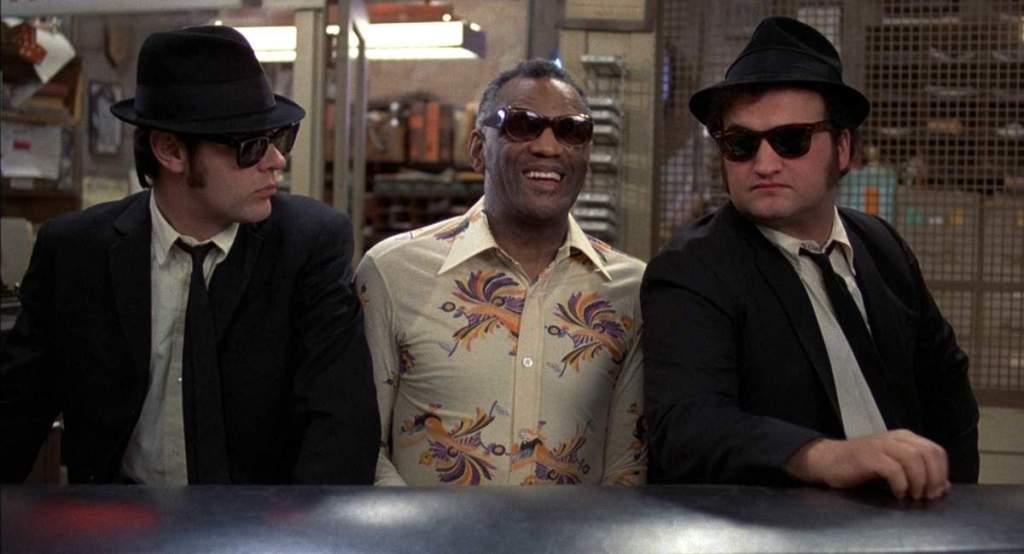
The Blues Brothers is based on the comedy duo and titular band created by Dan Akroyd and the late John Belushi. They originally debuted their act on Saturday Night Live (yes, really) in 1976 before creating a rhythm and blues band (that you see in the film) that became so legitimately popular that the idea was spawned to create a movie about them.

The entire plot of the film borders on the ridiculous, but as it’s played completely straight it works! Here’s the plot in a nutshell: Jake (who’s just gotten out of prison) and Elwood Blues find themselves tasked by the Penguin (the nun who runs the orphanage they grew up in) to find $5000 to help bail out the orphanage or it will be closed down. Jake is inspired by a wild church service (led by James Brown) to get their old band back together and raise the money with a few concerts. Things quickly go sideways (Nazis, crazy ex-girlfriends, LOTS of cops), but as Elwood says “They’ll never catch us, we’re on a mission from God.”

I’m glossing over some details but the entire story is comedy gold as most of the film is one long, extended chase with musical interludes. The chase starts early on when Elwood gets nabbed for allegedly running a red light, and doesn’t fully stop until the final scene of the movie. And as the chase continues it gets bigger, and bigger, and funnier. By the end of the film, the Blues Brothers are being chased by (in no particular order): over a hundred cops, the Army, Nazis, a SWAT team, and a tank! It’s wild watching all of these forces gather to hunt down two guys who are legitimately trying to do the right thing for an orphanage but the way the film builds it up it just feels like the natural climax to everything that’s happened.

Yes, it’s true, there really are Nazis in this film by the way but don’t worry, they’re all portrayed as buffoons that no one likes. They all receive their comeuppance in glorious fashion (but not before they get their own chase segment with “Ride of the Valkyries” playing in the background, a sequence that never fails to get a laugh out of me).

And of course, I have to mention the great music that fills this movie. Every number is iconic and features so many musical greats: James Brown, Aretha Franklin, Cab Calloway, Ray Charles, just to name a few. Each song is so much fun to listen to (I love watching Aretha Franklin sing “Respect”), and very memorable. Of all the musical segments in this film, my absolute favorite is Cab Calloway’s rendition of “Minnie the Moocher.” It feels like a throwback to an earlier era of movies, which I think might be the point of the segment, but still, I love it. Of course, this film is also a reminder that most of these musical legends aren’t with us anymore (but that’s to be expected with a 40 year old film).

Also, I have to mention that I love that Carrie Fisher is in this movie. Growing up, it used to be the weirdest experience for me to see her in this film (because all I knew her from was Star Wars), so the first few times I saw her, I would always think “Why is Princess Leia in this film?” The way the film waits until late in the story to explain who she is and WHY she’s doing what she’s doing is just hysterically funny to me, because her actions feel like the most random of all until you get that explanation.

What I’m trying to say is that The Blues Brothers is one of the funniest movies I’ve ever seen, and remains so 40 years after it first came out. You definitely need to see this film if you haven’t already.

Let me know what you think about The Blues Brothers in the comments below and have a great day!

See also:

Film Reviews

Become a Patron of the blog at patreon.com/musicgamer460

Check out the YouTube channel (and consider hitting the subscribe button)

Don’t forget to like Film Music Central on Facebook

My Thoughts on: Casper (1995)

For the first time in perhaps, ever, I’ve decided to fully embrace the spirit of Halloween by watching (and reviewing) a number of “Halloween-ish” movies, many of which I haven’t watched in a long time (and some I haven’t watched at all). At the top of this list was Casper, a film I’ve watched many times over the years, but hadn’t seen in a while. I previously watched The Wicker Man and The Adventures of Ichabod Crane, but as I’ve already reviewed those films, I decided to start my coverage with Casper.

Casper, as the name implies, is based on the comic book character “Casper the Friendly Ghost” and expands on that character’s backstory. In this film, Casper lives at the condemned Whipstaff Manor (a gorgeous mansion that I would totally live at if it were real), along with his three ill-mannered (and disgusting) uncles: Stretch, Stinkie, and Fatso (I’ve never liked them). His lonely existence turns upside down when Kat (Christina Ricci) arrives with her father Dr. James Harvey (Bill Pullman) at the request of spoiled-brat-heiress Carrigan Crittenden (Cathy Moriarty), who wants the ghosts removed from the house so she can claim the “treasure” that supposedly lies inside.

For being 25 years old (yes, really!!) Casper holds up extremely well. The CGI is impressively convincing (especially when you consider this movie was made in 1995 with the appropriate level of technology). Casper, in particular, is very well done, even with an upgrade to the Blu-Ray format. I really enjoyed re-watching the scene where Casper makes breakfast for Kat. And the scene where human Casper dances with Kat is still one of my favorites.

The story of Casper is pretty entertaining too. It’s a cross between a comedy that borders on raunchy (with pretty much anything involving the Ghostly Trio) and a young teen comedy (for anything involving Kat and Casper). Except, of course, for the scenes that involve Casper’s death or that little detail where we find out Casper’s dad was locked up in an asylum when he was on the cusp of bringing his son back to life. There’s some definite mood whiplash in Casper, but it doesn’t distract from the quality of the film in the slightest.

Even knowing all that, I still forgot how emotional this movie is. I don’t know if I’ve mentioned it on here or not, but I lost my grandmother this summer, and as a result the scene where Dr. Harvey reunites with Amelia (albeit briefly) hits me in a completely different way than it ever did before. This is also helped along by James Horner’s gorgeous score, which is truly one of the highlights of the film. “Casper’s Lullaby” (that haunting melody you hear when Amelia appears or is referenced) legitimately makes me cry every time I hear it. And, on a slightly petty note, I was reminded how much I HATE Amber (that snobby blonde who doesn’t like Kat), and it is so satisfying when she gets what’s coming to her from the Ghostly Trio.

There are, however, two plot points that have always bothered me about this film, and I want to mention them here. First, it is heavily implied that Amelia is now an angel in Heaven. If that’s the case, how in the world do the Ghostly Trio know her, never mind have access to her? Amelia crossed over and didn’t become a ghost, so shouldn’t it be impossible for them to contact her period? Also, how unfair is it that Amelia appears to Casper and Dr. Harvey, but not Kat?? I kinda hope Kat never found out about this meeting because how would you feel if your untimely departed mother came back to Earth for one night and didn’t come see you?? Though, now that I think about it, maybe she didn’t have to because Kat had already made peace with her mother’s passing? It still bothers me though.

Other random notes:

-I love ALL of the stained glass in Whipstaff Manor, if I were independently wealthy I would totally build a house based on Whipstaff (secret passages and all).

-Carrigan’s comeuppance at the end of the film is so, so, SO satisfying. I’m positively gleeful when she gets tricked into crossing over.

-One other Carrigan note: it’s kinda scary how quickly she warms up to the idea of killing Dibs (she definitely has issues). Also, what kind of name is Carrigan??

-I’m pretty sure Dibs dies in this movie (the lawyer last seen being thrown out a window). After all, after he’s thrown through the window he’s never seen or heard from again.

In conclusion, I had a great time watching Casper again, and it will definitely be a regular part of my Halloween viewing lineup from here on out.

Let me know what you think about Casper in the comments below and have a great day!

See also:

Film Reviews

Become a Patron of the blog at patreon.com/musicgamer460

Check out the YouTube channel (and consider hitting the subscribe button)

Don’t forget to like Film Music Central on Facebook

Dune “Main Theme” (1984)

With the Denis Villeneuve adaptation of Dune on the way, it only makes sense that I’d have all things “Dune” on the brain as of late, and that includes the music of the 1984 film that did its best but ultimately fell short of being a satisfying adaptation. Despite its flaws, I maintain that the 1984 adaptation of Dune is a fairly satisfying film, not least because of its musical score from Toto and Brian Eno.

One of my favorite musical moments in Dune is the main theme, which opens the story and recurs at pivotal moments. Take a moment and listen to the main theme of Dune below:

I love this theme because of how effective it is. It’s a simple enough melody but by thrumming up in the strings and brass it communicates the idea of power and growing tension, both themes that can be found throughout the story of Dune (as controlling Arrakis and the spice grants power and there’s unending tension between the Atreides/Fremen and the Harkonnens throughout the story).

It also, as I said before, recurs at pivotal moments throughout the film, and I’ll look at two of those moments as examples. The first example comes when Paul is summoning a sandworm for the Fremen. The theme begins when the massive sandworm is first seen rising up from the endless dunes. The placement of the music and visual image is pretty brilliant here, as the music rises up in conjunction with the worm, really making you feel the appearance of shai-hulud (the Fremen name for sandworms).

Notably, the main theme continues in a higher register once Paul has control of the sandworm, ending on a triumphant tone as the scene ends. This is one of my favorite scenes in the entire movie, and it’s all because of this wonderful music.

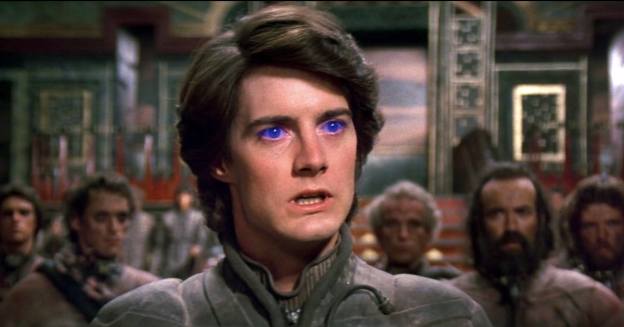
The second example I’d like to look at is at the end of the film, when Paul demonstrates his power as the Kwisatz Haderach. As Paul exerts all his power to cause rain to fall on Arrakis, the main theme recurs yet again. Now, instead of the sandworm’s power being highlighted, it’s Paul and his power that we’re being drawn to by the music. He’s doing something that no human has ever done before, he’s causing rain to fall on a desert planet that likely hasn’t seen a rainstorm in a hundred generations, if ever. It’s set up as a fairly powerful moment and I feel the music is what makes it so. Check it out below:

Now, unlike the first example with the sandworm, this example uses the music in an entirely different way. The scene with the sandworm almost vibrated with raw power. Here, at the end of the film as Paul assumes absolute power, the music assumes a higher register, even including a choir at one point to highlight the awesomeness of what Paul is doing. This is a profound moment, so the music, though the melody is the same, has to be that much different to carry the point across to the audience. This is the ultimate expression of the main theme, nothing will ever surpass this (or at least that’s the intention).

Yes, it’s true, Dune has many, MANY flaws, but the music is not one of them, as I hope these examples with the main theme show. I really believe this score is underrated and should be given more attention. I hope you enjoyed listening to some examples of Dune’s main theme.

Let me know what you think about the main theme of Dune in the comments below and have a great day!

See also:

Film Soundtracks A-W

Become a Patron of the blog at patreon.com/musicgamer460

Check out the YouTube channel (and consider hitting the subscribe button)

Don’t forget to like Film Music Central on Facebook 🙂
Soundtrack News: ‘The Nest’ Original Soundtrack Available September 18th

Milan Records has announced that the original motion picture soundtrack for The Nest (composed by Richard Reed Parry) will be released on September 18th, 2020. Available for preorder now, the album features music written by Parry for the thriller and marks Parry’s debut feature film score as solo composer.

Of the soundtrack for The Nest, composer RICHARD REED PARRY has this to say:

“When I watched the very first rough cut of The Nest without any music, I could feel right away what I wanted the score to be: Music that sounded like it was written and played somewhere within the massive old manor house that so much of the film centers around… I am very grateful to my fantastic musical collaborators, and for Sean Durkin’s trust in my own intuitive musical process and the artistic space and freedom he gave me to explore the musical landscape of his film.”

“Long before Richard was the composer for the film I was listening to his Music for Heart and Breath album while writing the script, so for him to come on to the project was very exciting for me,” adds The Nest director SEAN DURKIN. “It’s been an incredible collaboration working with him. He’s created a stunning score that captures the atmosphere and emotion I wanted the film to encompass.”

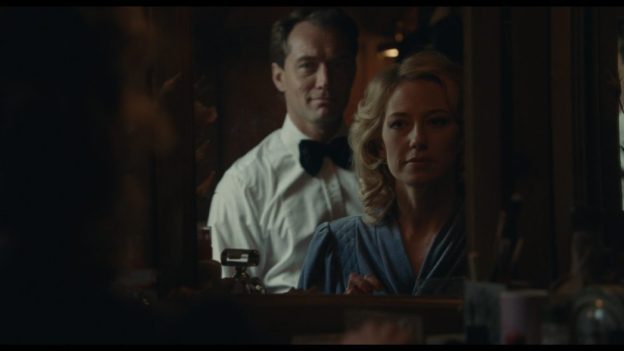
In The Nest, Rory (Jude Law), an ambitious entrepreneur and former commodities broker, persuades his American wife, Allison (Carrie Coon), and their children to leave the comforts of suburban America and return to his native England during the 1980s. Sensing opportunity, Rory rejoins his former firm and leases a centuries-old country manor, with grounds for Allison’s horses and plans to build a stable. Soon the promise of a lucrative new beginning starts to unravel, the couple have to face the unwelcome truths lying beneath the surface of their marriage.

THE NEST (ORIGINAL MOTION PICTURE SOUNDTRACK)

TRACKLISTING – 

1. Drone Beast
2. Symphony Brew
3. Base Motives 
4. Murky Half
5. What We’ve Always Wanted
6. Base Motives II
7. New Descent
8. The House
9. Dark Tumbling
10. Drone Beast: UK
11. Symphony Brew Redux
12. Slow Descent
13. Drone Beast: In the Air


See also:

Become a Patron of the blog at patreon.com/musicgamer460

Check out the YouTube channel (and consider hitting the subscribe button)

Don’t forget to like Film Music Central on Facebook

My Thoughts on: Land of the Pharaohs (1955)

I came across Land of the Pharaohs in a somewhat backwards fashion: I saw the ending first. Somehow, I forget the exact circumstances, I saw a clip of how Land of the Pharaohs ends, and it intrigued me so much that I was determined, someday, to see the movie in full. At last, I tracked down a copy, and I definitely have some thoughts about it. For those who might not have seen or heard of this film, Land of the Pharaohs was directed by Howard Hawks and starred Jack Hawkins, Joan Collins, Dewey Mertain, and Alexis Minotis. It is set in ancient Egypt in the time of Khufu (Hawkins), a pharaoh obsessed with building a robber-proof tomb to protect his treasure for “the second life.” To this end, he enlists the skills of Vashtar (James Robertson Justice), a slave who is also a brilliant architect, to design the tomb in what will become known to history as the Great Pyramid.

First, let’s start with one of the big positives of Land of the Pharaohs and that’s the music. Dimitri Tiomkin created a gorgeous score for this film, and for me is that one detail that makes the bulk of the film watchable. From the strange chants hinting at ancient Egyptian religion, to the joyful singing as work on the pyramid begins, Tiomkin’s score flows through every scene, rich and vibrant with strings, brass, and choral chants. The music helps to move the story along, and serves as a good distraction from the, er, slower moments in the story.

3c578728f35117046b641ea62c740f68

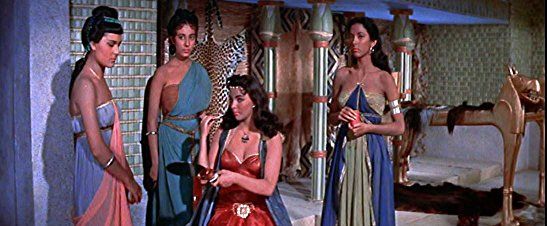
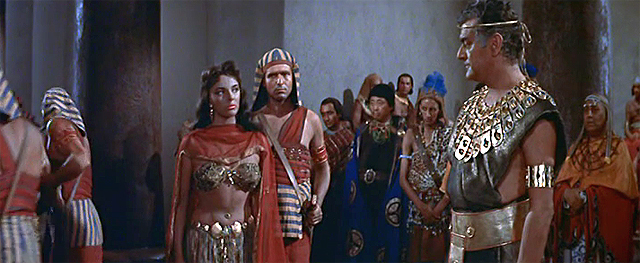
Another positive in this story are the costumes. While not quite as vibrant as those of The Ten Commandments (another story largely set in ancient Egypt), the costume design in Land of the Pharaohs is quite fetching. You can tell there was great attention to detail when putting these designs together, and a decent attempt made at historical accuracy (some of the outfits resemble those seen in Egyptian tombs).

As for the rest….oh boy. I should make it clear that Land of the Pharaohs is a generally enjoyable film, but it does have its fair share of weak points that detract from the experience. One of the big sticking points for me comes with all the time spent watching the pyramid being built. The initial montage starts fine, but then it goes on…and on…and ON. And during this never-ending sequence, all of the major characters disappear, it’s just a scene of nameless extras. I found myself squirming towards the end, more than eager to get back to the story of Khufu, Nellifer, and all that treasure. And speaking of…Nellifer is one of the most frustrating characters I’ve ever seen in an epic film of this kind.

Land-of-the-Pharaohs

I understand what they were going for with Nellifer, the devious princess from Cyprus, but her character has all the subtlety of a rock being thrown through a window. It’s painfully obvious what she’s after (gold and power), so much so that it’s a wonder Khufu and Hamar (his loyal high priest) don’t figure it out sooner. Not only that, but for all her scheming, Nellifer is shown to be rather stupid too. A good example comes towards the end of the film: Nellifer has decided that Khufu must die so she can rule Egypt while nominally serving as regent for his minor son. To do this, she sends her personal slave (one KNOWN to Khufu) to do the deed. Wouldn’t you think the smarter thing would have been to send an unknown slave so that Khufu couldn’t instantly trace the plot back to Nellifer if it went wrong? The one thing they get right about Nellifer is that she’s designed to be very unlikable, so much so that by the end of the film you’re secretly cheering when her comeuppance finally arrives in dramatic fashion.

That comeuppance comes from a plot detail that I find fascinating. From listening to the commentary, I learned that Howard Hawks was fascinated by the ongoing puzzle of how the Great Pyramid was built. A student of engineering himself, the director decided to puzzle out a theoretically feasible means that might explain how the pyramid was built so perfectly. The solution came in the form of a system that used sand to slide the remaining blocks into place (to both seal the tomb and give it a finished look). While there’s no way to know if the ancient Egyptians actually used a system like this, I’d like to think it’s plausible.

maxresdefault-8

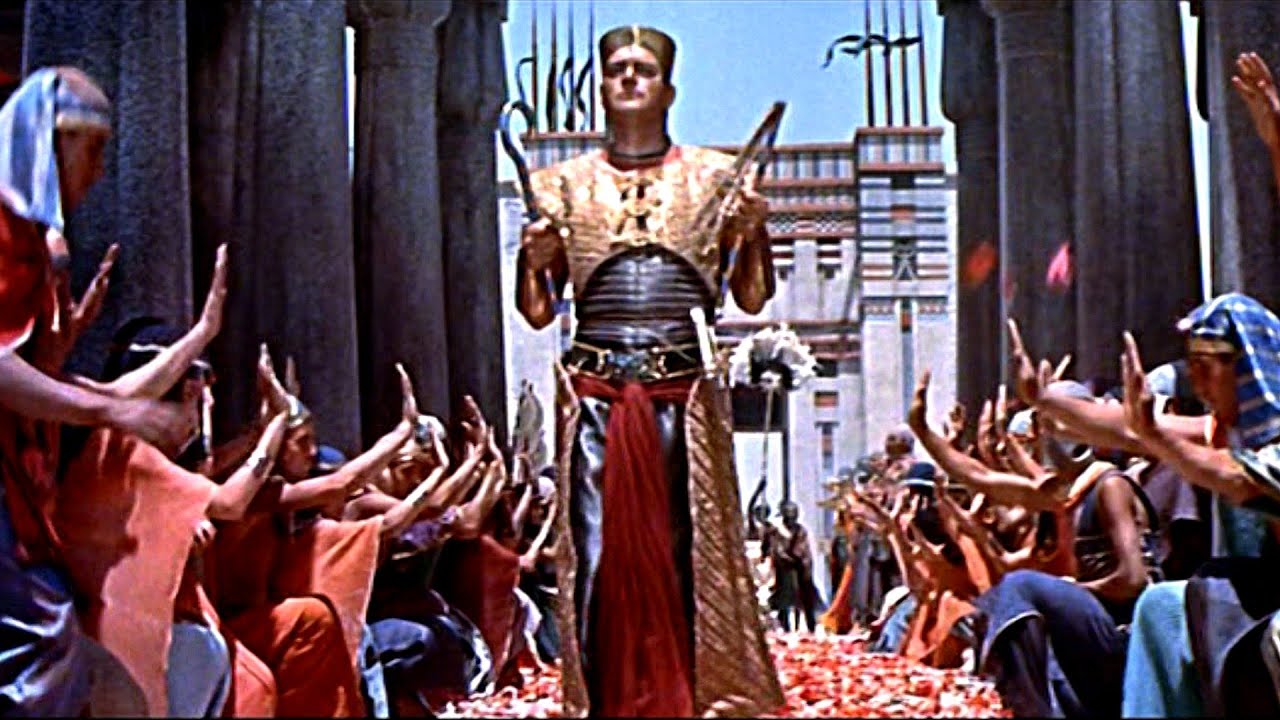
One other detailed that bothered me: the wide shots, or should I say the lack thereof. When an epic film is shot in CinemaScope, you expect scenes packed with action and pageantry (a la The Ten Commandments and especially Ben-Hur). However, many of the scenes in Land of the Pharaohs struck me as feeling…cramped. To be sure, there is a grand parade with Khufu at the start of the film, but it doesn’t feel like the space is used properly with the format. Many of the shots feel much too close up, and I feel that CinemaScope wasn’t used to its greatest advantage.

As I said before though, despite these issues, Land of the Pharaohs is pretty enjoyable; the plot is basic, but watchable, and great satisfaction can be derived from watching the fate of Nellifer (that I won’t dare spoil because it’s something you just have to see for yourself).

Let me know what you think about Land of the Pharaohs in the comments below and have a great day!

See also:

Film Reviews

Become a Patron of the blog at patreon.com/musicgamer460

Check out the YouTube channel (and consider hitting the subscribe button)

Don’t forget to like Film Music Central on Facebook

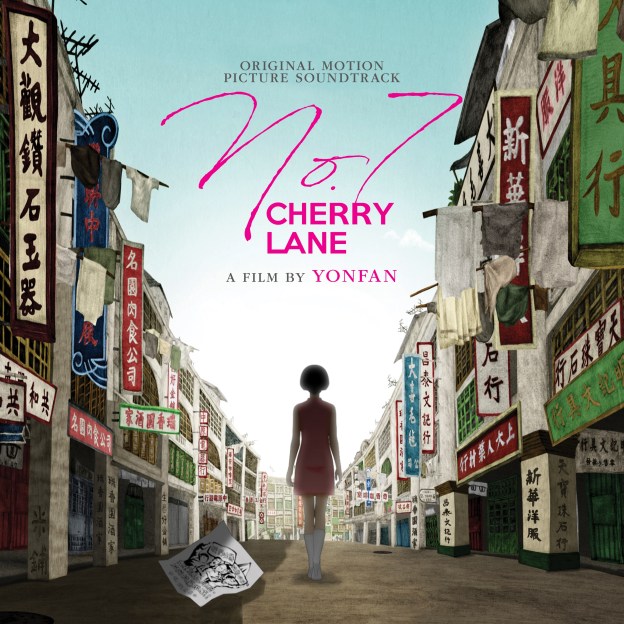
Soundtrack News: ‘No. 7 Cherry Lane’ Original Motion Picture Soundtrack Available Now

Milan Records has release the original motion picture soundtrack for No. 7 Cherry Lane, an album of music from iconic director & writer Yonfan’s new animated film composed by Yonfan himself, Yu Yat-Yiu and Chapavich Temnitikul. Set in 1967 Hong Kong, No.7 Cherry Lane originally debuted at the 76th Venice Film Festival in 2019, where it was awarded Best Screenplay, and has since toured film festivals around the world in advance of its opening in Hong Kong later this summer.


Described by the director as “my love letter to Hong Kong and cinema”, No.7 Cherry Lane is Yonfan’s 14th motion picture – all of which he has written, directed and produced – and his first since 2009. It is also his first animated feature.  The eclectic score of lush orchestral music was composed by artists including Yonfan himself, Yu Yat-Yiu and Chapavich Temnitikul and recorded live in Prague.

YONFAN states that his motion pictures share an underlying theme of passion. A true auteur, his films are entirely self-produced, directed, written, and distributed. Yonfan began directing features in 1984, often for his own production company Far Sun Film, and has worked in Hong Kong, Singapore, China and Japan. He has made a total of fourteen movies, set in various periods and locales, first receiving international notice at the Berlin International Film Festival with the gay-themed drama Bishonen. His subsequent film, the Chinese opera-based Peony Pavilion, was named one of the year’s ten best by Time magazine in 2002, and garnered Rie Miyazawa the Best Actress award at the Moscow International Film Festival. His previous feature, Prince of Tears, was Hong Kong’s selection to compete in the Oscar race for Best Foreign Language Film, and was selected for competition at the 2009 Venice Film Festival

The theme song “Southern Cross” was composed by Yonfan and the rapper BOYoung, fusing together a 1940s, Shanghai-style melody sung by legendary Taiwanese singer CHYI YU, with a contemporary style performed by BOYoung and ZOE YU. This bold juxtaposition represents the collision of yesterday, today and tomorrow at the heart of the movie.

No.7 Cherry Lane tells the tale of Ziming, a Hong Kong University undergraduate, entangled between his amorous feelings for a self-exiled mother, Mrs Yu from Taiwan in the White Terror period, and her beautiful daughter Meiling. He takes them to different movies and through a series of magical moments on the big screen, forbidden passions are revealed. And the era coincides with Hong Kong’s turbulent times of 1967.

NO.7 CHERRY LANE (ORIGINAL MOTION PICTURE SOUNDTRACK)

TRACKLISTING –

1.          Behind the Cherry Lane

2.          Rhythm of the Breeze

3.          Sunset Whispers

4.          Room at the Top

5.          Into the Red Chamber Featuring Wang Fang, Zhao Wenlin

6.          Night Rider

7.          A Love Story

8.          Southern Cross Featuring Chyi Yu, BOYoung, Zoe Yu, Kenneth Tsang, Zhao Wei

9.          Descending the Stairs

10.       A Dream Charade Featuring Sylvia Chang

11.       Winter Cometh

12.       Last Romance Featuring Chyi Yu

See also:

Become a Patron of the blog at patreon.com/musicgamer460

Check out the YouTube channel (and consider hitting the subscribe button)

Don’t forget to like Film Music Central on Facebook 🙂