Tag Archives: film

My Thoughts on: Candyman (1992)

I’m going to be honest right at the start and just admit that the only reason this film came on my radar at all is because I saw the trailer for the upcoming Candyman film when I went to see Spiral. That trailer intrigued me so much, I got curious and asked the Internet if I needed to see the original Candyman film first. As most of them said yes, I picked up a copy of the film, have just finished watching it and let me tell you that film is an experience I will not soon forget.

Honestly, I’m not sure where to start with Candyman, there’s so many parts of it that are incredible. I might as well start with Philip Glass’ score for the film. Had I known that Philip Glass composed the music for Candyman, I probably would’ve attempted this film years ago, as I have the highest respect for his work. This won’t surprise many of you who’ve been following my work, but the music was undoubtedly one of my favorite things about this film. It gives the story of Candyman an almost sacred feeling in some places, which is fitting given the titular character is a supernatural being and the hapless Helen is forced to join that realm by the film’s end. The thing is, I can’t imagine this film being scored any other way, that’s how good the music is! The air of solemnity it gives to the story in just the right moments, that’s what you want in film music, something that elevates the story.
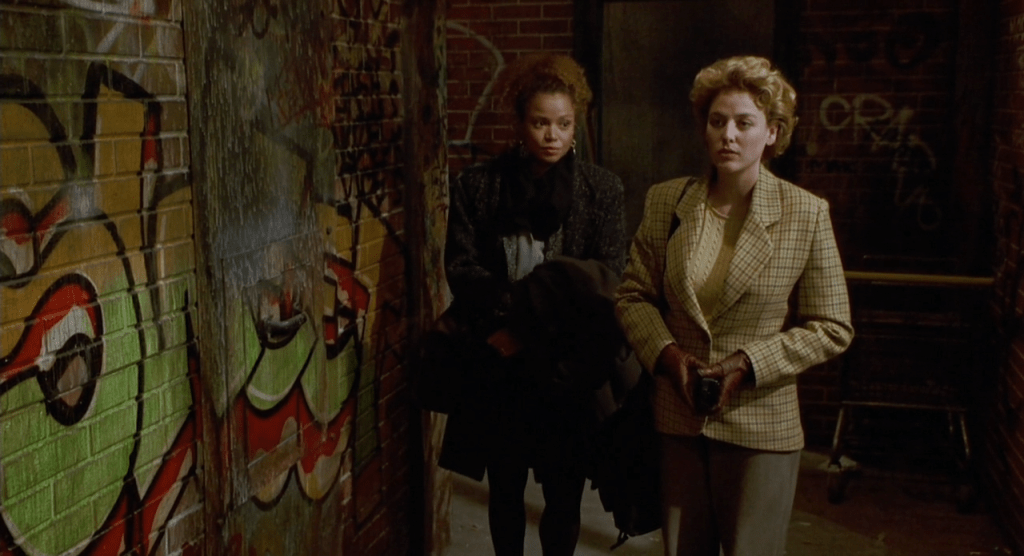
Apart from the music, the story itself is equal parts enthralling and horrifying. Like, this is the stuff of my nightmares horrifying. After invoking Candyman and then attempting to disprove his legend, Helen is literally forced to watch as her life is systematically torn apart and destroyed beyond all hope of repair. The emotional angst and trauma in this film is so palpable that it will be a long time before I can watch this film again. You can feel Helen’s pain as she tries to comprehend what is happening to her. You can definitely feel Ann Marie’s pain in a scene that I found so distressing I’m scared to see what the unrated version of the scene looks like. If the goal of this film was to make me deeply uncomfortable, it worked. My mind was taken places it didn’t want to go, but the story was so compelling I literally could not look away.

And then there’s Candyman himself. I was completely mesmerized by Tony Todd’s performance as the titular character. Once he properly arrives in the film after being teased several times, you literally can’t look away whenever he’s on the screen. Between his deep voice and the sheer presence with which he plays the role of Candyman…I don’t know what to say other than I was enthralled. What really drew me in were the hints at Candyman’s hidden depths. He’s not just some random killing being, there’s a purpose to what he does and it makes a twisted amount of sense if you think about it long enough. And that scene with the bees, yes THAT scene, that pretty much put me over the edge (and that’s all I can say about that).

Was there anything I didn’t like in this film? Well, not exactly. I was uncomfortable with some of the more bloody moments, but that’s because I’m a generally squeamish person. It can’t be a complaint against the film because if I’m watching a rated R horror film, I know I’m going to be in for something messy. However, I do think that sub-plot with Helen’s husband was almost unnecessary. I kind of get why it’s in there, since it provides the final push Helen needs to realize she needs to give in to the Candyman (and it helps set up a fantastic closing sequence to the film), but it still feels like almost an afterthought given everything else going on. That’s really nitpicking though, as I loved pretty much everything else in this film.

Now that I’ve made it through the original Candyman film, I’m more excited than ever to see Nia DaCosta’s take on the story (especially since I’ve seen that Tony Todd will be in that film as well). I am also definitely adding Candyman to my list of must-see Halloween films that has slowly been growing since I managed to watch Halloween (1978) last year.

Let me know what you think about Candyman (1992) in the comments below and have a great day!

See also:

Film Reviews

Become a Patron of the blog at patreon.com/musicgamer460

Check out the YouTube channel (and consider hitting the subscribe button)

Don’t forget to like Film Music Central on Facebook 

My Thoughts on: The New Mutants (2020)

So when I announced that I was finally watching The New Mutants, the reaction was so mixed that I was genuinely nervous when I put the blu-ray in to watch it, even though I’d promised to go in with as open a mind as possible.

As it turns out, I shouldn’t have worried because, believe it or not, I liked The New Mutants!

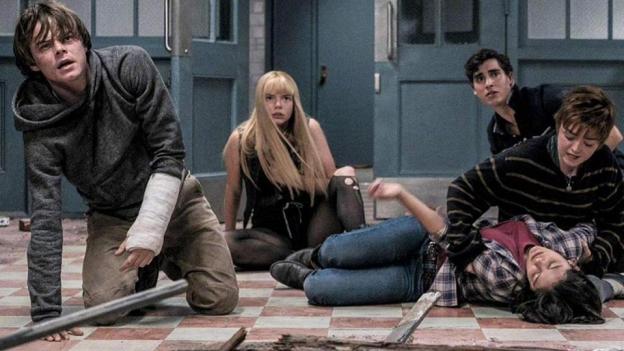
Now, to be sure, the film does have its flaws (and I’ll be getting to them) but they don’t negate the fact that I found The New Mutants to be an overall enjoyable experience. The film is based on the Marvel comics team of the same name and focuses on Dani Moonstar, Rahne, Ilyana, Roberto and Sam, five young mutants who are allegedly being treated at a hospital until they can control their powers. The truth proves to be slightly more complicated, and Dani’s arrival at the facility brings events to a head.

First of all, I love all of the mutant powers featured in this movie, especially Ilyana’s. The idea that you can visit a magic dimension that you made real….I just love that. She’s also a total badass with that sword. I really hate that I know that there aren’t any plans to make a sequel of this film, because I want/need to see more of Ilyana and what her powers can do. Also, no surprise since I’m still a big fan of Game of Thrones, Maisie Williams as Rahne was one of my favorite parts of the movie (though am I the only one who finds it ironic what her mutant power is given Arya Stark’s connection to wolves in Game of Thrones?). Her chemistry with Blu Hunt (who played Dani) was so much fun to watch and is the exact kind of friendship/relationship I like to see form in movies between characters.

There are however, as I said, some flaws in this film that keep it from being a truly great film. The biggest issue for me is that Dani’s connection to the demon bear isn’t explained to my satisfaction. I kind of get what the film is trying to tell me about how it works, but a more straightforward explanation would have helped. Don’t get me wrong though, I ultimately love that demon bear for what it does to a certain character. At the same time, Dani’s powers in general could have used a slightly better explanation. I’m also a little confused by Ilyana’s past trauma; like, I initially thought she’d been kidnapped by aliens and it wasn’t until later that it dawned on me that they might’ve been a symbol for something much, much worse.

I also feel like the film could’ve gone into the horror part of the story a little more (though it’s my understanding that was due to events outside of the director’s control). The horror elements that ARE there are fantastic, I just want more of it! The overall tone is also uneven in places. One minute it’s a semi-serious story, the next I’m vividly reminded of a 90s flick where the teens are all goofing off (complete with peppy rock music). It’s almost like the story can’t make up its mind what genre it’s in.

The one character I actually don’t like at all is Dr. Reyes (and not just because she’s an antagonist). For most of the film she came off as very one note. At least towards the end she finally begins to show some emotion, if she’d been that way earlier in the story I might have liked the character better.

Even with those flaws, I still love The New Mutants. It’s the very definition of a fun popcorn film, whose flaws don’t (or at least shouldn’t) get in the way of enjoying it. I’m glad I finally sat down to watch it and I can’t wait to see it again in the future.

Let me know what you think about The New Mutants in the comments below and have a great day!

See also:

Film Reviews

Become a Patron of the blog at patreon.com/musicgamer460

Check out the YouTube channel (and consider hitting the subscribe button)

Don’t forget to like Film Music Central on Facebook 
My Thoughts on: Army of the Dead (2021)

warning: minor spoilers below for Army of the Dead

I was originally going to skip this film altogether because I normally avoid zombie films (I’m scared to death of zombies and the undead in general). However, after I was able to successfully get through Spiral earlier this week, I decided to give Army of the Dead a try because after all, why not? I’ve been proven wrong before with scary films (the Saw franchise being a notable example), so maybe Army of the Dead would be a similar case where finally, FINALLY, I would find a zombie film I could get into.

Unfortunately it didn’t quite work out that way.

Don’t get me wrong, Army of the Dead does have some good moments in it (I’ll get to them shortly) but as a whole….I just don’t like it. I don’t know if I went in with the wrong expectations or I’m just not that familiar with how Zack Snyder makes movies, but Army of the Dead by and large was nothing like what I expected it would be. For one, it’s much too long and worse, it begins with a first act that, after a killer opening, is almost dead on arrival afterward. I feel like if you’re going to do a big zombie heist film, you should get to the zombie action part sooner rather than later and the movie just took way too long to get to where it needed to go.

Thank goodness there were some fun moments along the way. The zombie tiger is one of my favorite parts of the whole movie and I love the role it plays within the story as a source of karma. I also love that I was right about the tiger being one of Siegfried and Roy’s (well who else in Las Vegas would have white tigers?).

And then there’s Dieter (the safecracker, played by Matthias Schweighöfer). To quote Looney Tunes, I like him, he’s silly. Seriously, Dieter is my favorite non-zombie character as he’s probably the closest you’ll ever come to seeing how I would act in a zombie apocalypse situation. It was genuinely fun to watch his character arc develop from beginning to end. Also, his chemistry with Vanderohe (Omari Hardwick) is genuinely funny. It’s an odd couple pairing that totally works (if only the rest of the film had clicked so well as those two).

On the zombie side of things (outside of the tiger), I was really intrigued by the film’s presentation of “Alpha” zombies. I’m pretty sure the concept of “smart zombies” has been explored before, but I like what Snyder was going for, the idea of there being a type of zombie that still continues to have some form of functional society and order, even if it’s taken on a cruder form. There’s even a mention of “trading” being done with the zombies, which is something you really don’t encounter that often (or ever??) in zombie films and it’s a plot point I wouldn’t mind seeing explored further. I really did enjoy the performances of the two lead zombies. Since we can’t understand zombie speak, most of their performances is channeled through their movements and body language and that was all very well done.

Oh, and on a quick note: I LOVE Tig Notaro, you’d never guess she’d been digitally inserted into the film after the fact.

But these good things don’t change the fact that most of the film rubbed me the wrong way, particularly in how it ends. I had a feeling early on that things wouldn’t end well for most everyone going in to Las Vegas because it’s a zombie film and that’s how zombie films work. But for the love of all things holy in cinema, one of the film’s primary subplots was rendered absolutely moot by how the ending pans out. What was the point of trying to rescue that one character if they die in the end? I get that not all stories have a happy ending but that plot trope in particular drives me crazy. As for the ending scene itself (not THAT scene with Vanderohe, the one before that), I get it, I do. It tugs at all the right heartstrings and is downright heart wrenching. But…I might have felt it even more if the preceding hour hadn’t bummed me out with disappointment.

If you enjoy Army of the Dead, I am genuinely happy for you and I’m glad you enjoyed the ride. But for me, it just felt wrong for the most part, and I felt more disappointment than satisfaction by the time the credits rolled.

Let me know what you think about Army of the Dead in the comments below and have a great day!

See also:

Film Reviews

Become a Patron of the blog at patreon.com/musicgamer460

Check out the YouTube channel (and consider hitting the subscribe button)

Don’t forget to like Film Music Central on Facebook 
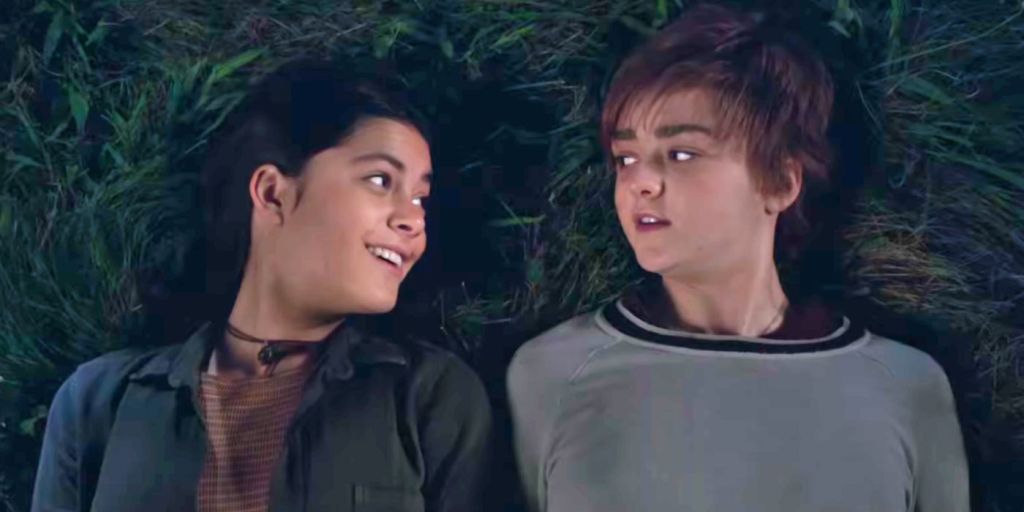
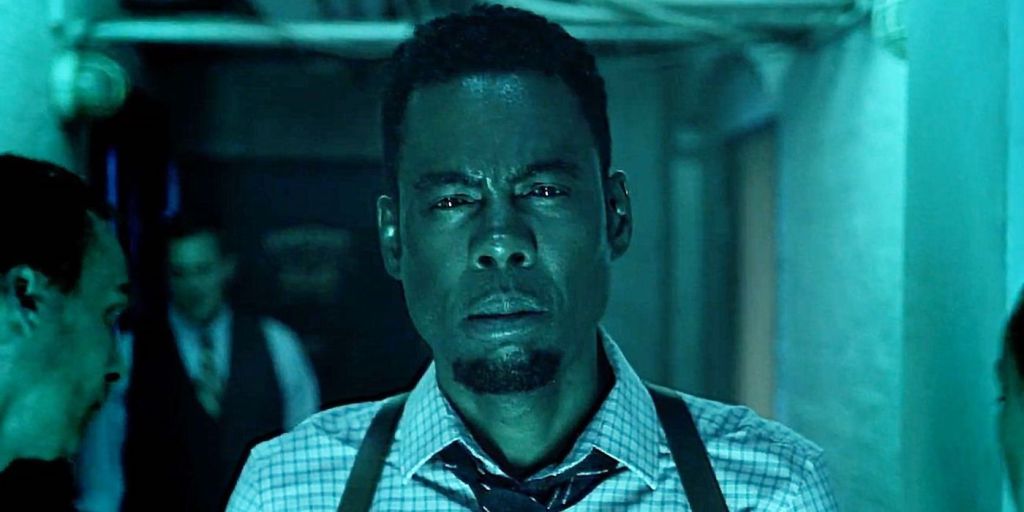
My Thoughts on: Spiral: From the Book of Saw (2021)

I finally did it.

After years and YEARS of hemming and hawing and chickening out of watching a new Saw film in theaters when I had the chance, I finally summoned my courage and went to see Spiral: From the Book of Saw in theaters.

Here’s the good news: I did make it through the entire film without bailing out. Since this was my first time watching a Saw film in theaters, that was huge for me and I’m so proud of myself for making it all the way through.

However….is the film any good? Well, I’m not entirely sure and that’s a big part of what I wanted to talk about in this review.

Here’s the thing about the story of Saw: after the conclusion of Saw: The Final Chapter, I thought the long and twisted story of the Jigsaw Killer had finally come to an emphatic end, rendering the need for any future sequels nonexistent. That’s why I ignored the Jigsaw film when it came out, it didn’t seem necessary. After all, in-story the Jigsaw Killer died a LONG time ago, what more could the story possibly tell us?

As it turns out, Spiral: From the Book of Saw decided there was in fact more to be told. But not, and I cannot emphasize this enough, NOT in the way you might expect if you’ve watched the previous 8 films. For most of its runtime, Spiral: From the Book of Saw does not play like a Saw film, even the trap sequences feel different in a way that I can’t quite put my finger on. Oh, the classic “Saw death trap” look is there, but if you compare these traps to the ones in, say, Saw II or Saw III, there’s a distinct difference in how they play out. I can’t decide if that’s good or bad, but it was disappointing, because even in the midst of my fear and discomfort, I could tell that the earlier films would’ve scared me MORE than what this film was doing.

However, there were promising glimmers in this story that spent most of its time trying to decide what type of film it wanted to be. It felt like Spiral was yo-yo’ing between being a twisted cop drama and a traditional Saw film. Which is to say, outside of the trap sequences, it doesn’t feel like a Saw film at all (even the references to John Kramer didn’t help). But as I said, there was a glimmer of promise that came in the last 5-10 minutes of the film when the story finally came together as only a Saw film can. Once all of the puzzle pieces were assembled and the true diabolical plot laid bare, I was enraptured (if utterly terrified). There is the potential for a fantastic new villain here, one that I desperately want to see explored in a sequel.

I didn’t think anyone could top the twisted logic of John Kramer’s Jigsaw, but THIS new villain, oh they proved me wrong. If a sequel is permitted to go forward, I would love to see what this character could do now that we know who and what they are. Plus, given how the film ends, it’s fairly obvious the door is wide open for this sequel to happen. But will we get that sequel? I’m not sure, like I said most of the film is pretty uneven and can’t decide what type of film it wants to be. I think it might have worked slightly better if they’d leaned a little more into the traditional ‘Saw movie’ mold, but I also understand why the filmmakers would want to try a different format too.

If the goal of Spiral: From the Book of Saw was to scare and terrify, then congratulations it succeeded with me, because I stumbled out of the theater an absolute wreck (though I admit I do scare easily). For that alone, I have to call this film at the very least a passable success.

But was it GOOD? Well, no, not really. Now that the adrenaline has worn off, I can admit that much. It had its enjoyable moments, and I was never bored, but there was too much back and forth in tone to make this film “good.”

Maybe I’m wrong though. Let me know what YOU think about Spiral: From the Book of Saw in the comments below and have a great day!

See also:

Film Reviews

Become a Patron of the blog at patreon.com/musicgamer460

Check out the YouTube channel (and consider hitting the subscribe button)

Don’t forget to like Film Music Central on Facebook 
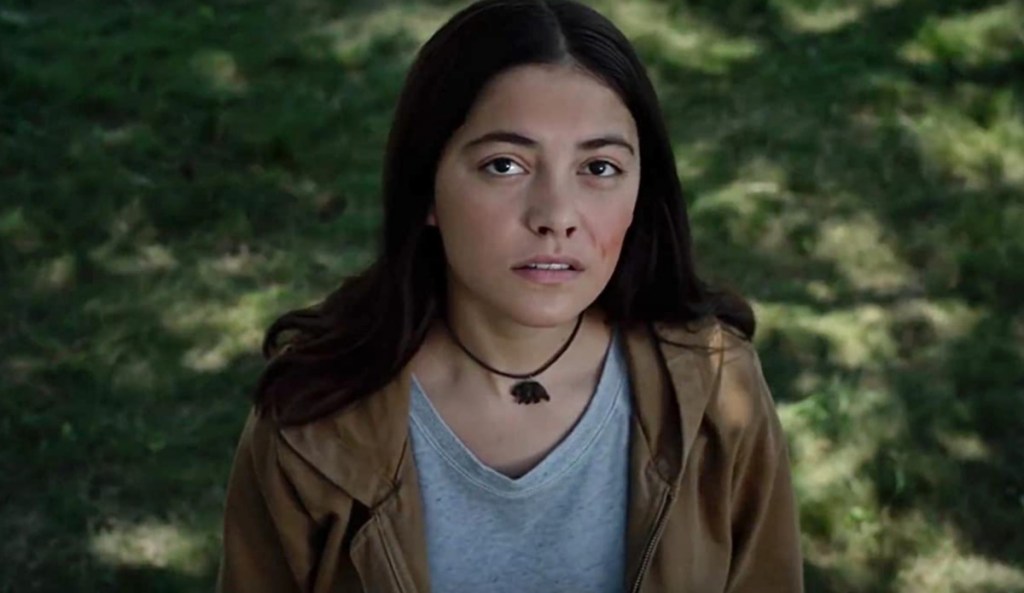
My Thoughts on: Demon Slayer: Kimetsu no Yaiba the Movie: Mugen Train (2020)

I was so excited when my local movie theater opened back up that I started booking tickets for pretty much everything, including Demon Slayer: Kimetsu no Yaiba the Movie: Mugen Train. Given how popular the movie has been, I was excited to check it out, even though I haven’t seen any of the Demon Slayer anime before.

As it turns out, maybe I should have checked out the anime and/or the manga first because I feel like that would have really helped me enjoy the movie more. Don’t get me wrong, it’s not a bad movie, it’s just….it’s not really my style if that makes sense. Some of the fighting animations were spectacular, but the story overall, I just didn’t like it. It felt too uneven, especially the last part.

No, really, the last fight scene of the film feels like it should belong to a completely separate story. Just when I thought the movie was drawing to an end, a completely DIFFERENT character steps in and all I can think is “Who is this guy and why are they introducing him NOW when the story is almost over?” Sure, the fight itself was pretty dramatic, but it didn’t feel like it belonged to the movie as a whole.

Maybe I’ll appreciate the movie better if/when I check out the anime. However, right now I have to admit I’m pretty disappointed. I feel like they could’ve done a better job of making the movie enjoyable for viewers who perhaps haven’t seen the anime yet.

Let me know what you think about Demon Slayer: Kimetsu no Yaiba the Movie: Mugen Train in the comments below and have a great day!

See also:

Animated Film Reviews

Become a patron of the blog at: patreon.com/musicgamer460

Check out the YouTube channel (and consider hitting the subscribe button)

Don’t forget to like Film Music Central on Facebook 
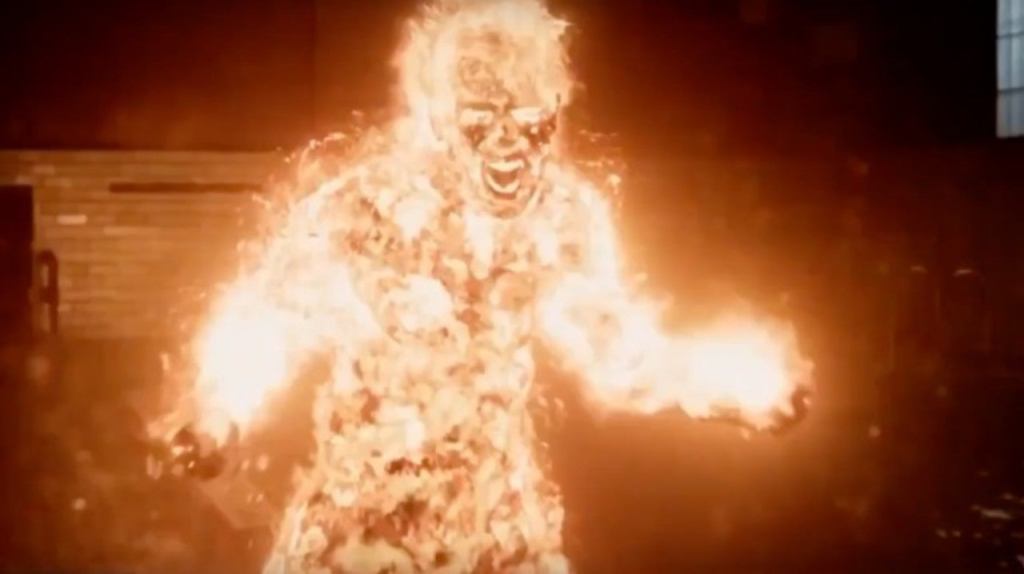
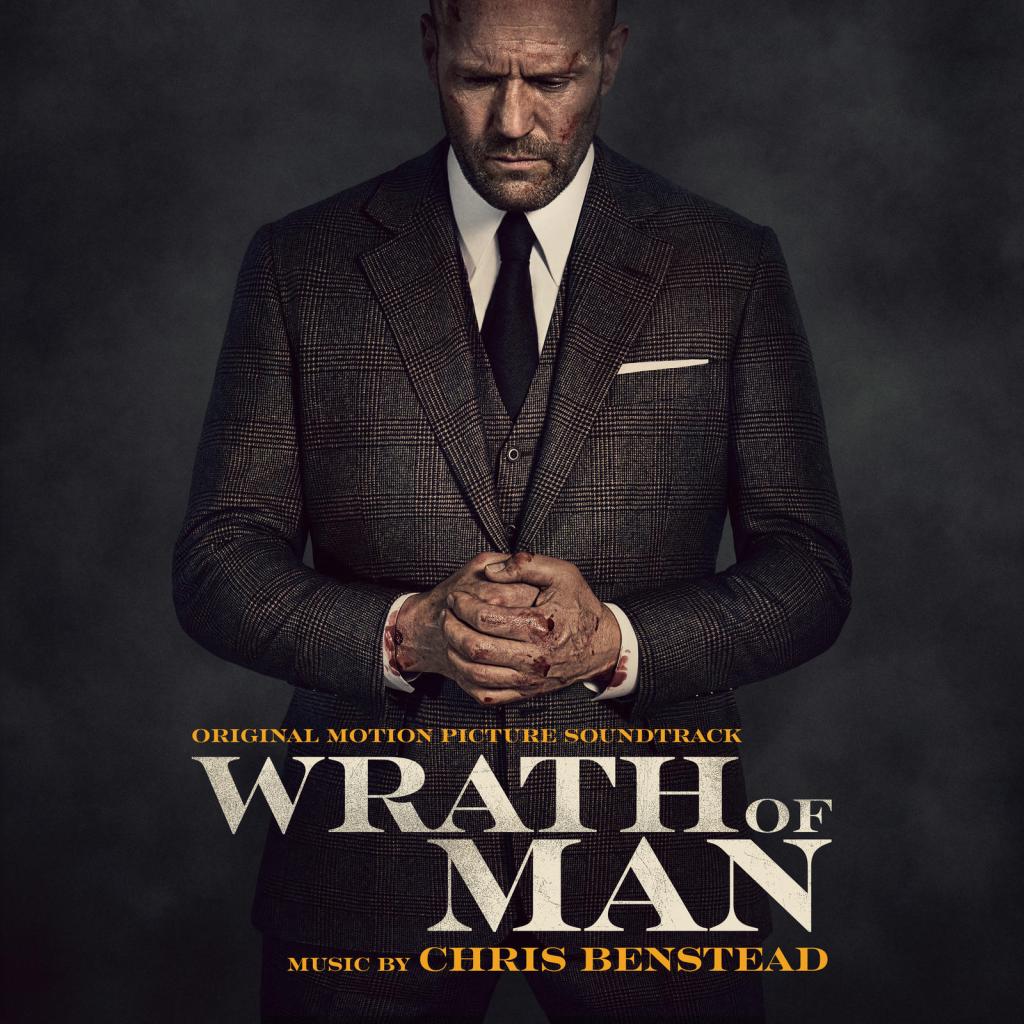
My Thoughts on: Wrath of Man (2021)

Before today, the last film I saw in theaters was Onward, all the way back in March 2020 (right before everything locked down). Fourteen LONG months later, I finally sat down in my local movie theater to watch Wrath of Man, starring Jason Statham, and I couldn’t have been happier with my choice.

Wrath of Man, directed by Guy Ritchie, is a revenge film that is admittedly a bit by rote in terms of the plot points it hits, but please don’t let that stop you from checking this film out. The story may be predictable but it is still entertaining. The film’s story follows “H” (Jason Statham), a man on a mission that unfolds a little unevenly (as the film does skip backwards and forwards in time) in the wake of a robbery gone bad. Statham is great in this film playing a man on the edge of going completely psychotic. It’s not the most action filled role he’s ever done (it’s nothing like his role in The Expendables series or his work in The Fast Saga for instance) but there’s enough to satisfy any fan of Statham’s previous work.

Rote plot aside, the part of this film I enjoyed the most (and I suspected I would) was the film’s soundtrack, which I’ve already reviewed. Composed by Chris Benstead, the music for Wrath of Man, as I’d hoped, really does reach out and grab you by the throat, forcing you to pay attention to it. I love this soundtrack even MORE now, because of how much it elevates the film. It raises the tension, it makes you feel every pulse-pounding moment, soundtracks like this are why I love talking about film music so much.

Going back to the plot, while it is very by-the-numbers, I think there is an important message in there. If you look at who the ultimate culprits are, I think Ritchie was trying, on some level, to say something about how screwed up the US is. Maybe if a certain part of society were better taken care of, this entire plot situation might have been avoided. As it is, it felt entirely too plausible given how messed up the news has been in recent months.

I also have to say I really like how the film is split up into individual acts (denoted with title cards). It helps measure the progression of the story, and I like how the title card is quoted in each section of the film. I don’t know why, but that’s a film element I’ve always liked.

Is Wrath of Man a masterpiece? Well, no, it’s too rote for that. But it is a good popcorn film and I wouldn’t say no if someone asked me to watch it again. Acting-wise, Jason Statham is the best part of this movie. Scott Eastwood is pretty good too (though I admit I didn’t work out which character he was until after the movie when I got home). Outside of that, the music is the single greatest part of this movie and I hope everyone checks out Chris Benstead’s great soundtrack.

Let me know what you think about Wrath of Man in the comments below and have a great day!

See also:

Soundtrack Review: Wrath of Man (2021)

Film Reviews

Become a Patron of the blog at patreon.com/musicgamer460

Check out the YouTube channel (and consider hitting the subscribe button)

Don’t forget to like Film Music Central on Facebook 

Soundtrack Review: Wrath of Man (2021)

Sony Music Masterworks has released the Wrath of Man (Original Motion Picture Soundtrack) by composer Chris Benstead. Available everywhere now, the album features score music written by Benstead for director Guy Ritchie’s latest action thriller starring Jason Statham. The score is the latest collaboration between Benstead and Ritchie, the duo having previously worked together on The Gentleman and Aladdin

Chris Benstead is a British film composer, arranger and Academy Award®-winning re-recording mixer. Chris received Oscar® and BAFTA awards for his work as re-recording mixer on Alfonso Cuaron’s masterpiece Gravity, starring Sandra Bullock and George Clooney. Chris’ unique skillset allowed him to mix and sculpt the music in an extremely immersive way, pushing the limits of surround sound and exploiting the new ‘Dolby Atmos’ standard.

Of the soundtrack for Wrath of Man, composer Chris Benstead had the following to say:

“The score for Wrath of Man is centered around the cold and mysterious character ‘H’. Super close-mic’d cellos and double basses were used (and abused) to created awkward and jarring stabs as well as angry and unnervingly dark textures. A stoic main ‘hook’ is constantly repeated in different guises to help amplify the sense of impending unease and, ultimately, revenge. Sometimes only percussion was needed to create the brutal and exigent action cues. It was an amazing experience to collaborate with the utterly brilliant Guy Ritchie once again.”

I’m probably guilty of saying this too often, but I really enjoyed listening to the soundtrack for Wrath of Man. This is the kind of soundtrack I live for hearing, because it’s the type of music you feel in the very depths of your soul (yes it really is that good). Benstead uses the cello and double bass in a way that is pure genius. Normally, I think of those two instruments as producing warm and gentle music. Not here, not this soundtrack. Benstead turns the cello and double bass into weapons, making sharp, jagged sounds that cut through everything else and demand your attention. This is not the type of soundtrack that just fades into the background, you’re going to notice this music.

I also absolutely love how Benstead utilizes percussion throughout the soundtrack. It sounds like gunshots in a lot of places (and I’m certain that was done on purpose) and gives the music a distinctly prickly feeling. It’s a nice contrast to the harsh sounds of the cello and double bass and serves as a reminder that this is not ‘comfortable’ music in any sense of the word. Once this music gets started, you are on edge and I love that so much about this soundtrack.

There isn’t too much more to say about this music without sounding repetitive. Chris Benstead has created a soundtrack that doesn’t pretend to be anything other than what it is: the music for (what is hopefully) a badass action film. This is one of the most purely enjoyable soundtracks I’ve heard this year so far, and I think all of you will like it.

Track List

1. Coffee Frother (3:29)
2. Wrath of Man (2:14)
3. Dangerous Job (2:17)
4. Tooling Up (3:09)
5. Bullet Taken Hostage (3:04)
6. F**king Lunatic (1:57)
7. Coroners Report (1:22)
8. China Town (0:55)
9. Dark F**king Spirit (3:58)
10. Know The Route (1:45)
11. Dougie (3:20)
12. Idolised You (3:40)
13. Built for Combat (2:03)
14. Porn Factory (3:34)
15. Precious Ornaments (3:24)
16. Staples Center (2:38)
17. Go to Work (1:44)
18. Number 1 Loses It (3:58)
19. 120 Million (2:04)
20. The Inside Man (4:42)
21. Wanna be Hero (5:36)
22. Come Out Little Piggy (4:16)
23. Bullet Executions (3:31)
24. The Victor (4:48)
25. Liver Lungs Spleen Heart (4:13)

Let me know what you think about Wrath of Man (and its soundtrack) in the comments below and have a great day!

See also:

My Thoughts on: Wrath of Man (2021)

Film Soundtracks A-W

Become a Patron of the blog at patreon.com/musicgamer460

Check out the YouTube channel (and consider hitting the subscribe button)

Don’t forget to like Film Music Central on Facebook 

Heartfelt Music for a Heartfelt Story: Talking with Composer Peter Baert About ‘The Water Man’ (2021)

Just recently I had the opportunity to talk with composer Peter Baert about his work on the upcoming film The Water Man, which is directed by David Oyelowo. In the film, a young boy named Gunner (Lonnie Chavis) sets out on a quest to save his ill mother (Rosario Dawson) by searching for a mythic figure who possesses the secret to immortality, the Water Man. This score marks Peter Baert’s major Hollywood feature debut and will release in theaters on May 7, 2021.

I hope you enjoy my conversation with Peter Baert about The Water Man.

How did you get started as a film composer?
I grew up in a musical family , a kind of Belgian sea-side Von Trapp setting. My Dad was a principal at a music school, and also an organist. He definitely nudged us towards classical music careers. However, I diverted slightly from that path and went into sound design and avant-garde electronic music. When my mother died of pancreatic cancer I reconnected with my classical upbringing and started to study classical music and film scoring. That was in 2008.


How did you get involved with The Water Man?
My wife and I own and run a commercial sound studio together in Brussels. One day we were booked for a Penguin audiobooks recording with David Oyelowo. That day, one of our engineers called in sick so I had to jump in to engineer. During the breaks, David and I talked about his work, and about my ambition to compose film music. We stayed in touch afterwards and at some point I asked him if I could pitch on this project that he was producing. He sent me the script and I made 8 cues based on a number of scenes.Long afterwards, David called me to say that they kept coming back to my demo, so I flew out to LA to sit with David and editor Blu Murray in the edit room and eventually I got hired.


Where did you start with putting the score together?
This heartfelt story of The Water Man took me back to two periods in my life. The first reminded me of being in my early teens, always playing in the neighborhood with my friends and going on adventures in a nearby forest. The second transported me back to a day in 2008 when my mom and I found out the diagnosis of her pancreatic cancer. She would be gone in 6 months. At some moment during the composing process the music found me and it glued to the screen. So, it started there, with that feeling and with the script that I’d received to base my demo on. The themes that I wrote for the demo pretty much evolved into the final score.

How much collaboration was there, if any, with director David Oyelowo?
I have a feeling that David kindly guided me through this process. He is an amazing man, very kind and generous. He even invited me into his home when I first came to LA. The Brussels – LA time difference worked well for us, I miss waking up with David’s notes on a cue. Later, when he was shooting in London for the Netflix film The Midnight Sky, he sent me notes from his trailer on set.


What type of music would you classify this score as? Is it adventure film music, YA drama music, or (and I ask this after watching the trailer) a bit of horror music? Or a combination of all of the above?

It’s a bit all of the above, without being a multi-headed animal. I consciously worked with a definite set of sounds throughout the movie. That’s why I used a lot of wooden percussion, some African Marimba in addition to a Concert Marimba, prepared piano..There is an emotional part of the score that blends well with the more adventurous parts.


Are there musical themes for specific characters? I have to imagine there’s some kind of motif for The Water Man himself.

When I read the Water Man Rhyme in the script, I instantly wrote a melody fitting the lines. I recorded that in my demo and later, in the movie that piece was interpreted by Amiah Miller who plays Jo. That rhyme became the Water Man theme and is used throughout the film in different forms.When Gunner is in a happy place we’ll hear Gunner’s Theme, a simple piano melody line based on a simple scale. There is a theme for Mary, that I blended with Gunner’s theme in the final score cue “Prayer.” The relationship between Gunner and Jo has a more playful theme. Amos, the father in the movie played by David, has a more texture approach, like Col Legno cello and electric distorted cello lines.

Were there any types of specific instruments that you focused on in the overall mix? Or specific instruments/sounds for specific characters or ideas?
One of the first things I did when I first saw the film, was ask the assistant editor Kevin Murray for all the non-dialogue takes of the actor who played the Water Man. So, back in Belgium, we’ve manipulated all these cries, and whispers, sighs,… through tape delays, modular synths and so on, to create a Water Man Synth. Later on in the proces, when David proposed to have some Motherly presence in the Forest scene, we also created a Mother Synth.I recorded long notes, and a number of little vocalizations with vocalist Judith Okon… and processed this as well.So in the film I could always use either some Water Man energy or Mother energy.


How much time did you have to score the film?
About 4 months. David called me near the end of October 2019 and we were planning to record in Budapest in March of 2020. However the global pandemic complicated everything and we ended up recording at Galaxy Studios in Belgium in a Covid safe setup with 9 players around mid May 2020. Cues got revised until the very end, as the edit was adapted during lockdown.


Are there any musical details you hope stand out to the audience?
There’s a Swirly Tube somewhere in the score and I played the recorder in the more funny parts between Jo and Gunner. ;-)I hope people will enjoy my style, which is a unique blend of classical and electronics.


Do you have a favorite part of the score?
I like the opening cue “Gunner’s Theme” because it has been with me since the demo. My daughters aged 5 & 7 sang it at home while I was working on it. And when Gunner finds the Water Man’s Hut and draws his Samurai sword, that’s also one of my favourite cues.

I’d like to say thank you to Peter Baert for taking the time to speak with me about his work on The Water Man.

See also:

Composer Interviews

Become a Patron of the blog at patreon.com/musicgamer460

Check out the YouTube channel (and consider hitting the subscribe button)

Don’t forget to like Film Music Central on Facebook 🙂

Writing Music for Planet Earth: Talking with Composer Ilan Eshkeri About ‘A Perfect Planet’ (2021)

Earlier this year I had the opportunity to speak with composer Ilan Eshkeri about his work on the documentary series A Perfect Planet. This is my second interview with this composer, as we’d previously talked about his work on the hit video game Ghost of Tsushima. Eshkeri attended Leeds University, where he studied music and English literature. During this time he also worked with fellow film composers Edward Shearmur, Michael Kamen and music producer Steve McLaughlin. His extensive catalogue of film and TV scores include Still Alice, Stardust, The Young Victoria, Doctor Thorne, Shaun The Sheep and David Attenborough’s Natural History Museum Alive.

I hope you enjoy my conversation with Ilan Eshkeri about the music of this spectacular documentary.

Have you worked on documentaries like ‘A Perfect Planet’ before now?
Yes, this is my fourth collaboration with David Attenborough. What made me to work with him again was the focus of this series on climate which is an issue that is also close to my heart. Silverback, the production team making the programme were also very supportive of my creative approach so the which made the project creatively very satisfying as well as feeling like I was getting an important message out to the world. 

Is scoring a documentary like this very different from working on a film? Or is it mostly the same?
It’s quite different because you are writing 40 short films. You have a sequence about ants that’s a heist or a sequence about whales that’s a love story or a sequence about monkeys that’s about guarding territory and protecting family and so you have to think of each story on its own terms, they have their own completely new themes and instrumentation/sound-world, so it is much more work than writing a film score where you would have a handful of themes or motifs that you re-use. 


Where did you start with the scoring process for ‘A Perfect Planet’? I hear what sounds like a recurrent theme that reappears from time to time, but I wasn’t sure if it was a central or main theme or something else.
My writing process was varied because there were so many stories, I decided to take a hit and run approach… look at a scene and pick up a guitar and put an idea down and immediately move on to another scene pick up another instrument and so on… if I couldn’t come up with an idea immediately I’d leave it out, then I would go back around the whole episode again. 
You are right that there is a recurring theme. I’ve noticed that these kinds of shows tend to go from one piece of music to another without a musical anchor and I wanted to keep taking the audience back to a theme that represented the planet / Mother Nature. The theme comes at the beginning the end and in-between all the set animal sequences. Typically it has voices and piano, voices because it’s connected to nature and humanity and piano because it’s an instrument of the home and I wanted to reinforce the idea of the whole of our planet being collectively our home. 


So, this may be the same question over again but, how did the overall process for scoring this work? Were you given any guidelines for what each segment should sound like or was it pretty much a free rein? 
The film and TV making process always and has always used guide music, it helps the director producer and editor work out what kind of music they need, which can often inform how they’re going to cut the scene. For composers the guide music can be helpful too, music is very hard to describe in words so examples are useful. For a perfect planet I had a very set approach on how I wanted to approach the music and so after th first watch though I worked without reference to the guide in the first instance, and then there were a couple of times where we needed to refer back but not often. I am grateful to the team for supporting my process and believing in it. 


Did you have footage of the animals to watch while you worked or was it described in storyboards? 
I was brought on at an early stage before there was much to see so I could think about it early on but I did a lot of my recording to early clips so this way the music and the editing could evolve together 


How did you decide on which instruments to use for the different animals featured in ‘A Perfect Planet’?
We all have a sense of what is appropriate, there is an unspoken semiotic language that both film makers and audience are aware of, for example, a harp might seem an inappropriate choice for an elephant and a trombone might jar for a butterfly.  As a film maker and a composer you need to take these things into consideration, but rules are there to be broken!


How long did you have to work on the music? Was the process impacted by the pandemic at all?
I recorded the first 2 episodes before the pandemic but recording became very difficult. Orchestras couldn’t come together obviously, especially not wind and brass because of all the blowing. This meant that the post production process had to expand. I was able to put a small amount of strings together in Iceland and then brass and woodwinds individually in the player’s living rooms. It was extremely time consuming to prep, but fortunately the technology exists where we can place those recordings inside of digital acoustic spaces which meant we could make the recording sound very real. I also had to take these limitations into consideration in the writing. It was fortunate that I had taken a more contemporary approach, not straight symphonic, and I like to think that that creativity comes out of limitations, so I enjoyed the challenge. In the end my producer / engineer Steve McLaughlin made it all sound incredible and I think anyone would be hard pushed to tell the difference, It was just incredibly labour intensive.


Was it hard to write for any particular animal?
Yes, one scene in particular at the end of the sunlight episode where there was a huge feeding frenzy in the Ocean with birds, whales and fish, the music I had written was good but something about it was not quite right and the day before recording the director and I decided that to do something completely new it was incredibly difficult to write a 7 minute sequence to end an episode. It is such a short time whilst also prepping for the recording but somehow I managed to make it happen. 

I want to say thank you to Ilan Eshkeri for taking the time to speak with me about his work on A Perfect Planet.

I hope you enjoyed reading this interview and have a great day!

See also:

Composer Interviews

Become a Patron of the blog at patreon.com/musicgamer460

Check out the YouTube channel (and consider hitting the subscribe button)

Don’t forget to like Film Music Central on Facebook 🙂
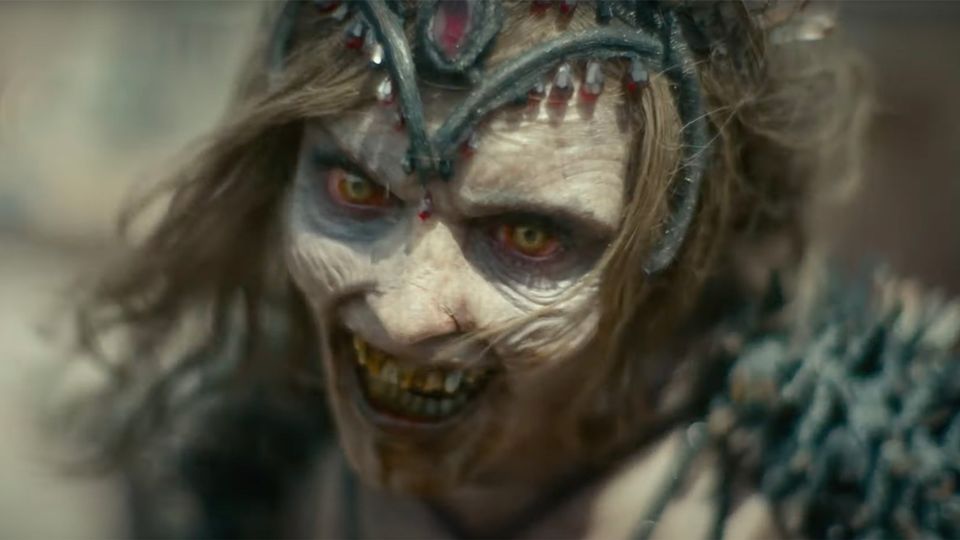
Soundtrack Review: Stowaway (2021)

With Netflix recently releasing the soundtrack for their new film Stowaway, I had the opportunity to sit down and listen to the film’s official soundtrack. The music was composed by Volker Bertelmann (The Old Guard, Lion) and recently made available digitally.

The film’s synopsis is as follows:

In Stowaway, on a mission headed to Mars, an unintended stowaway accidentally causes severe damage to the spaceship’s life support systems. Facing dwindling resources and a potentially fatal outcome, the crew is forced to make an impossible decision.

Says Bertelmann of the Stowaway soundtrack:

“Working on Stowaway and collaborating with director Joe Penna was a special experience in many respects: Joe, who is a musician himself, gave me a lot of freedom to explore different sounds and we had a joint understanding of the purposes the music should serve. This facilitated the compositional process, which was extremely helpful given the considerable amount of music the film needed. The music for Stowaway is one of my favorite scores so far.”

Given what’s at stake in Stowaway, I was surprised at how low-key and passive a lot of the music is. There’s an underlying sense of tension of course, most notably in ‘How Much Oxygen’ but for the most part Bertelmann’s soundtrack is almost perfectly serene. The biggest exception to this comes in ‘Solar Flare’ which covers what is undoubtedly one of the climax points of the film. But even then, there’s still a polished smoothness lingering in the music that takes some of the edge off what might otherwise be a raw piece of action music.

All of this smoothness and serenity in the music confused me until I considered where the film is set. Stowaway is set entirely in space, aboard a ship bound for Mars, and it could be that Bertelmann had it in his mind to back up the interstellar background of the film with music that fit the location. After all, there’s something about space that can generate a lot of musical grace and beauty, and this film is surely no exception. It could also be that the composer wanted to remind viewers that in the grand scheme of things this conflict is barely a blip in the cosmos (or I could be overthinking it entirely). Most likely of all the options is the possibility that Bertelmann wanted the score to backup the story, but not overwhelm it with sheer depth of volume, as some film scores have been known to do.

I really enjoyed listening to the soundtrack for Stowaway. It really subverted my expectations for what I thought this movie would sound like but in the end it was really enjoyable. In some places it actually reminded me a little bit of 2001: A Space Odyssey with some of the more quiet tracks. If you get the chance to listen to the Stowaway soundtrack separate from the movie, I highly recommend doing so.

Track List

  1. Earth Rise
  2. Regaining Consciousness
  3. Favorite Spot on the Ship
  4. How Much Oxygen
  5. Setting Up the Algae
  6. It’s Literally My Job
  7. Can I Take His Place?
  8. I Was in the Fire
  9. Can You Talk?
  10. What Did You Do?
  11. The Algae Are Dead
  12. Climbing the Tethers
  13. On the Kingfisher
  14. More Than Enough Oxygen
  15. Solar Flare
  16. I Will Go
  17. Climbing the Tethers Alone
  18. Into the Solar Storm

Let me know what you think of Stowaway’s soundtrack (and the film) in the comments below and have a great day!

See also:

Film Soundtracks A-W

Become a Patron of the blog at patreon.com/musicgamer460

Check out the YouTube channel (and consider hitting the subscribe button)

Don’t forget to like Film Music Central on Facebook