Tag Archives: film

My Thoughts on: Mortal Kombat (2021)

This time last year I never would’ve dreamed that I’d be so excited to sit down and watch a movie based on the Mortal Kombat video games. But these are strange times we live in and as it turns out Mortal Kombat was quite an enjoyable experience.

As the name implies, Mortal Kombat is based on the iconic video game series of the same name and sees Earthrealm under threat from Outworld. After losing 9 Mortal Kombat tournaments, if Earthrealm loses once more, they’ll belong to Outworld forever. Quite the high stakes wouldn’t you say? While the film does try to explain the ramifications of everything, I couldn’t help wondering more than once if my understanding of the movie would have been greatly enhanced if I’d played more of the games (my exposure is currently limited to Mortal Kombat X).

That’s not to say that you can’t follow the movie if you haven’t played the games at all. The film does a pretty good job in explaining who is who and why they’re important. It’s just that some of the bigger aspects could have used a bit more exposition, like why Outworld wants to rule Earthrealm so badly. Or why, and this was my biggest issue with the film, a certain character is able to engage Sub-Zero in the fight that dominates the trailers promoting the movie. Don’t get me wrong, that fight (you all know the one I’m talking about) is beautifully shot and is a lot of fun to watch, but I legitimately do not understand how it was able to happen. There’s the loosest explanation given, but it wasn’t quite enough to satisfy me. Sometimes it’s best to include that extra five minutes of exposition, even if it does risk slowing the plot down a little, and part of me wishes Mortal Kombat had done that.

Aside from those issues, Mortal Kombat really is a lot of fun to watch. My favorite part has to be the sequence that emulates the video game (you can’t miss it), right down to the different combat arenas and fatality sequences. While it is a little cheesy how they would duplicate the game’s performance (one character even proclaims “Flawless Victory”), you can tell it’s all done in good fun. I mean, if you’re going to adapt a video game to film, an homage like this is probably the best way to go. A word of warning though about those fatalities: they really are as gory as you’ve been led to believe. So if that bothers you….you’ve been warned.

Of all the characters in the film, my two favorites are definitely Lewis Tan as Cole Young and Jessica McNamee as Sonya Blade (with an honorable mention to Joe Taslim as Sub-Zero). Watching these two get thrown into the world of Mortal Kombat was a lot of fun, and I feel like Tan perfectly played Cole Young as someone who is initially disbelieving but quick to buy in once he realizes his family is at risk. Part of me was disappointed the film didn’t include Kitana (my favorite Mortal Kombat character) but there IS an Easter Egg reference to her if you look closely. I also have to briefly mention Taslim’s performance as Sub-Zero which is one of the best in the film. The only real complaint I have is that I feel like we don’t know enough about him, his motivations and why he is what he is.

The music, which I’ve already reviewed, is just as amazing with the film as it is without it. I stand by my previous thought that in terms of music, the Mortal Kombat soundtrack is one of the best that’s come out this year. Especially during the fights in the latter half of the film, the music sucks you into the drama and adds that extra layer of detail that makes the film fun to watch.

One last note: the film ends with a blatant tease for a sequel and despite the many flaws I would be more than happy to see a sequel happen. There’s so much more they could do with the Mortal Kombat story and I’d like to see the filmmakers given an opportunity to keep the story going. This has the potential to be a really fun popcorn film franchise, so I’ll be waiting eagerly to see if a sequel gets greenlit.

While deeply flawed with some aspects of its storytelling, Mortal Kombat is a really enjoyable experience that does its best to faithfully bring the story of Mortal Kombat to the big screen. There are more than enough Easter Eggs and references to satisfy any fans of the video games and the teased sequel left me begging for more. My final verdict: Go see Mortal Kombat, it’s worth it.

Let me know what you think about Mortal Kombat in the comments below and have a great day!

See also:

Soundtrack Review: Mortal Kombat (2021)

Film Reviews

Become a Patron of the blog at patreon.com/musicgamer460

Check out the YouTube channel (and consider hitting the subscribe button)

Don’t forget to like Film Music Central on Facebook 

My Thoughts on: Godzilla vs Kong (2021)

After delays and delays, I finally sat down this afternoon to watch Godzilla vs Kong, the fourth entry in the MonsterVerse that also includes Godzilla, Kong: Skull Island and Godzilla: King of the Monsters. As the title implies, this film centers around an epic clash between Godzilla and Kong, the two most dominant Titans left on Earth after the events of Godzilla: KOTM.

Given that there are currently no concrete plans for a fifth entry in the MonsterVerse, it would not be unreasonable to look at Godzilla vs Kong as the ending for the story that started in 2014 with Godzilla. Even if the story does continue, there’s no denying that Godzilla vs Kong gets almost everything right and blows every expectation away. Everyone who comes in hoping for that epic kaiju fight is going to get exactly what they wanted. The action is huge, explosive, and was definitely made with an IMAX screen in mind (indeed, I found myself cursing several times throughout the film that I was limited to my TV screen at home because i could tell how this was meant to look in a theater).

Due to wanting to avoid major spoilers, I’m not going to go too in depth with my analysis, but I do want to try and cover some things that I liked. That being said, you should be warned that spoilers of varying sizes may be found after this point.

One of my biggest gripes in Godzilla: King of the Monsters was that the ‘Hollow Earth’ concept (first broached in Kong: Skull Island) wasn’t touched on enough. Well, to put it bluntly, Godzilla vs Kong gave me everything and more that I ever wanted of the Hollow Earth. Not only was it beautifully rendered, it was presented in a way that felt completely believable and, most tantalizingly, it feels like a location that could be visited in future films. And not just in sequels either, I could easily visualize a prequel (or series of prequels even) that details certain events hinted at in this film but set completely in the Hollow Earth. I would pay big money to see that happen.

The best part of the entire film is the conflict between Godzilla and Kong, which as you might expect spans most of the film. I admit to being skeptical about how the filmmakers would pull this fight off, but by god not only did they DO it, they also made it completely believable. I have no trouble believing that Godzilla and Kong are equal combatants (more or less), and while I won’t say who comes out on top, it is presented like a fight that could have gone either way. And that’s how it SHOULD be, you would never sell me on the idea that one opponent far outclasses the other. This was a nail-biting fight to the bitter end and that’s what I got and that’s what I loved about it.

And then there’s MechaGodzilla. I almost considered not mentioning this but I figured at this point I think we all pretty much knew about him being in the film (thanks Internet). I was almost disappointed about this character being in the film, but then I saw how it was presented and I was enraptured by the entire sequence. That was the best way possible to introduce MechaGodzilla to American audiences.

If I had one gripe about Godzilla vs Kong, it’s that there seems to be a clear divide between the characters we met in Godzilla: KOTM and those associated with Kong. It gave me the faint feeling of two films spliced together, but then I remembered that this is the kind of film where, we’re not really here to see the human characters, we’re here strictly for the giant monster fight. And at the end of the day, I’m okay with that because the monster action rocked!

That being said, I need to give a shout out to Kaylee Hottle, a deaf actress that appears in the film as Jia. Deaf characters still don’t get highlighted in major films as much as they should be (John Wick Chapter 2 features Ares (Ruby Rose) signing ASL), and it was refreshing to see not only a character that was acknowledged to be deaf, but also played by an actor that’s deaf too (in John Wick Chapter 2, Ares might have been deaf but Ruby Rose is not). That was one of my favorite parts of the film and I hope future films use this as an example for how they can include deaf characters moving forward.

Finally, it wouldn’t be a proper review on Film Music Central if I didn’t mention the music for a moment. While I feel that Bear McCreary’s score for Godzilla: KOTM is superior, I did enjoy Hans Zimmer’s music for Godzilla vs Kong, even if the parts I liked best were the amalgamations of past Godzilla and Kong themes joined together. If you listen carefully, you can hear musical excerpts from all the past MonsterVerse films throughout the story. And, rather cleverly, I think a big portion of the Kong “musical homage” was including songs in the musical score, a la Kong: Skull Island in 2017. It heightened the idea that all of the past MonsterVerse films were leading to this moment.

In case it wasn’t obvious, I really enjoyed Godzilla vs Kong, it’s the fun big action movie I’ve been wanting to see since the pandemic madness started. Whether you go see it in theaters (please be safe if you do) or on HBO Max, please go see it, it really is worth the time. If this is how the MonsterVerse ends, then I am content with the story it has told. But I wouldn’t say no to more entries either. I guess only time will tell if the story of Godzilla and Kong (and more) continues.

Let me know what you think about Godzilla vs Kong in the comments below and have a great day!

See also:

Kong: Skull Island (2017), my thoughts

My Thoughts on: Godzilla: King of the Monsters (2019)

Film Reviews

Become a Patron of the blog at patreon.com/musicgamer460

Check out the YouTube channel (and consider hitting the subscribe button)

Don’t forget to like Film Music Central on Facebook 

My Thoughts on: Raya and the Last Dragon (2021)

I have been super excited about Raya and the Last Dragon for so long, a part of me felt like the movie would never actually come. But at last, the movie became available on Premiere Access on Disney+ and against all the odds I found myself paying up the $30 to check it out on release day because the film looked that good in the previews.

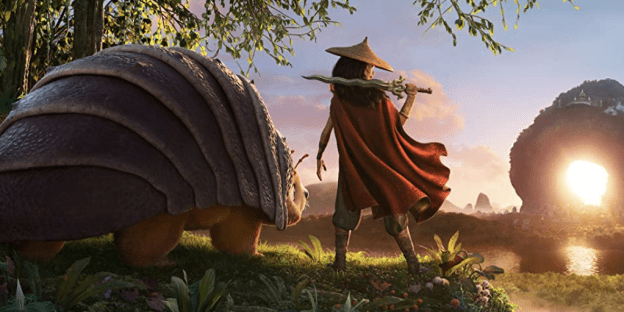
As it turns out, this was a great decision to make, because Raya and the Last Dragon is amazing. Seriously, believe the hype you hear about this movie because this is some of Disney’s best work. The story is set in the fictional world of Kumandra, which is based on various parts of Southeast Asia. With her world threatened, Raya (Kelly Marie Tran) sets out to find Sisu, the Last Dragon (Awkwafina) and save the world.

With a premise like that, you might think you know how the story is going to play out, I know I did. And I was completely okay with how I thought the story was going to go: girl goes on an adventure, girl finds dragon, girl saves the world. However….that’s not what ended up happening because the movie is about so much more. To be sure, there is a LOT of girl power in Raya and the Last Dragon, and I loved every minute. But at the end of the day, the story isn’t just about a heroine saving the world, or even two or three heroes getting together to save the day. The real story is about coming together and trusting people, and building a better world on that basis. Given how messed up the world has been with racism and similar issues, the message in Raya and the Last Dragon couldn’t be more timely. There’s also a strong message about taking responsibility for one’s actions. I admit to being resistant about this particular message, but the character pointing this thing out was right: you need to admit when something is equally your fault and not just blame the other person.

Along with this amazing story is an equally awesome voice cast. Kelly Marie Tran absolutely kills it as Raya, it doesn’t take much and you’re completely hooked into her character. This is the type of Disney princess I’ve been dreaming about for years, even Queen Elsa (despite her awesomeness) didn’t quite hit the nail on the head for me as much as Raya does. She’s a badass warrior, but also sweet and compassionate. Watching her grow from beginning to end of the story is a fun experience.

And pairing her with Awkwafina’s Sisu makes one of the best parts of the movie. Sisu is nothing like what I was expecting, but that’s okay because I loved every minute of screen time she had. I’ve never seen a dragon like Sisu (I’m used to large scaled dragons like Smaug) before but she’s beautifully animated and she feels alive, which is a sign that you’ve nailed the CGI.

Then there’s the music (you know I had to mention that part). James Newton Howard, one of my favorite composers, has put together an amazing score that helps bring the different areas of Kumandra completely to life. As you might expect, it’s tinged with elements of Southeast Asia as well, I’m sure a behind the scenes look would confirm that a number of traditional instruments were used in the instrumental mix. The music definitely helps create the idea that the different areas of Kumandra are their own separate and unique places.

All of this is to say that Raya and the Last Dragon was not only worth the wait, it was also worth the $30 I paid to see it now instead of waiting until June. Disney has put together a story that honors its Southeast Asian inspiration, while also creating a new world that I would be more than happy to visit again. And the story will take you by surprise in the best way possible. I would love to go into more detail than that, but to say literally anything else would be giving too much away. You really do need to see this for yourself.

Go watch Raya and the Last Dragon (available now through Premiere Access on Disney+) and then let me know what you think about it in the comments below and have a great day!

See also:

 Animated Film Reviews

Become a patron of the blog at: patreon.com/musicgamer460

Check out the YouTube channel (and consider hitting the subscribe button)

Don’t forget to like Film Music Central on Facebook 

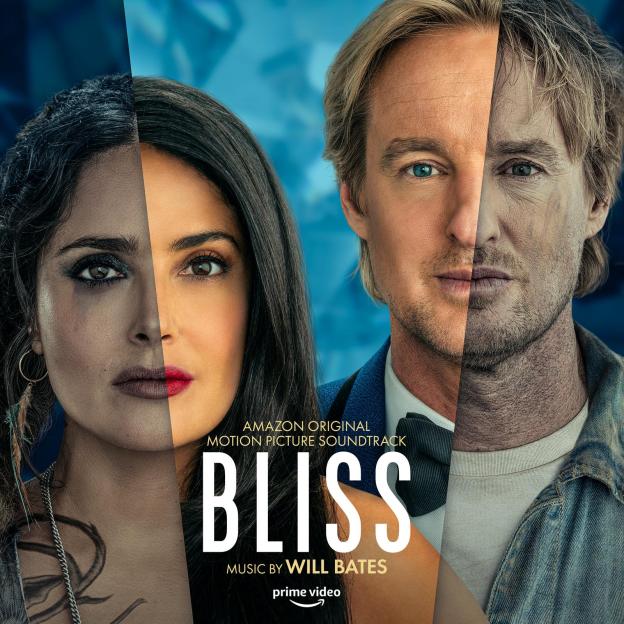
Soundtrack Review: Bliss (2021)

Milan Records has released the Bliss (Original Motion Picture Soundtrack) with music by composer, multi-instrumentalist, and Fall On Your Sword founder Will Bates. Bliss is a mind-bending love story following Greg (Owen Wilson) who, after recently being divorced and then fired, meets the mysterious Isabel (Salma Hayek), a woman living on the streets and convinced that the polluted, broken world around them is just a computer simulation. Doubtful at first, Greg eventually discovers there may be some truth to Isabel’s wild conspiracy.

Will Bates is an award-winning composer, multi-instrumentalist and founder of music production company Fall On Your Sword. He has composed original scores for a myriad of filmmakers including acclaimed directors Mike Cahill (Another Earth, I Origins), Alex Gibney (We Steal Secrets: The Story of Wikileaks, Going Clear: Scientology and the Prison of Belief, Zero Days), Ry Russo-Young (You Won’t Miss Me, Nobody Walks) and Fisher Stevens (Mission Blue, Bright Lights).

Of the soundtrack for Bliss, Will Bates had the following to say:

“Collaborating with Mike Cahill continues to be one of my greatest joys. He is a visionary, and he’s always pushing the boundaries of what is possible. There’s so much mutual trust when we work together. He has the ability of putting everyone he works with in this safe, magical environment that really encourages experimentation. I find myself being challenged in new ways and, despite having worked on so many projects together, it seems as if I’m always trying something new with him… The key was to find the tonal balance that the story has; this mind-bending almost absurdist reality against Greg’s heartbreaking journey. The scale of the movie let me really stretch the palette. Along with all sorts of mangled analogue synths, this was my first experience with a full orchestra, and also one that allowed me to dip into my background as a jazz saxophonist.”

Regarding “You and I,” he adds, “As we were nearing the end of the process, we had the idea of there being a song that melodically incorporated the love theme. I’ve known Skye Edwards for years, since my London days (my old band once opened for Morcheeba.) Mike and I agreed it just had to be her voice, so I wrote the song for her to sing. It was going to be just in the end credits, but when Mike heard it, he recut one of the other scenes in the movie and used it there too. As with so many projects in 2020, COVID caused a significant delay in the post-production process. But the song may not have happened without that delay.”

Listening to the soundtrack for Bliss is an experience, let me tell you. There’s this mixture of synthesized sound and orchestral sound that just pulls you in and keeps your attention once it gets going. I’ve heard music similar to this in other science-fiction soundtracks, especially with stories that blur the line between the “synthetic” and the “real,” but for the most part those soundtracks feature stories about robots. Bliss, on the other hand, involves a concept more similar to The Matrix (but kind of in reverse, since the “real” life is implied to be much better than the fake life).

There’s not much more I can say about the soundtrack for Bliss. It’s fun to listen to, but it doesn’t inspire many thoughts in me. That’s not a bad thing, some soundtracks are just like that.

BLISS (ORIGINAL MOTION PICTURE SOUNDTRACK)
TRACKLISTING –

  1. You And I
  2. This Is Real Life
  3. The Inside Of Your Head Must Be Amazing
  4. Rabbit Hole
  5. Trying To Reach You
  6. Kendo
  7. Light Bouncing Around Your Neurons
  8. You Have To See It For Yourself
  9. Great Overwhelming
  10. The Thought Visualizer
  11. Home
  12. Let’s Go For A Swim
  13. Are You Really Here
  14. It Would Be My honor
  15. The Telekinetic Warrior
  16. My Braids Dad
  17. The Scenic Route
  18. Hotel Pleiades
  19. Blues Here We Come
  20. We’re Back In
  21. Go
  22. Safe Harbor
  23. You’re Here
  24. You And I (Fall On Your Sword Remix)

Let me know what you think about Bliss (and its soundtrack) in the comments below and have a great day!

See also:

Film Soundtracks A-W

Become a Patron of the blog at patreon.com/musicgamer460

Check out the YouTube channel (and consider hitting the subscribe button)

Don’t forget to like Film Music Central on Facebook 
Creating Music Good Enough to Eat: Speaking with Composer Enis Rotthoff about ‘Love Sarah’

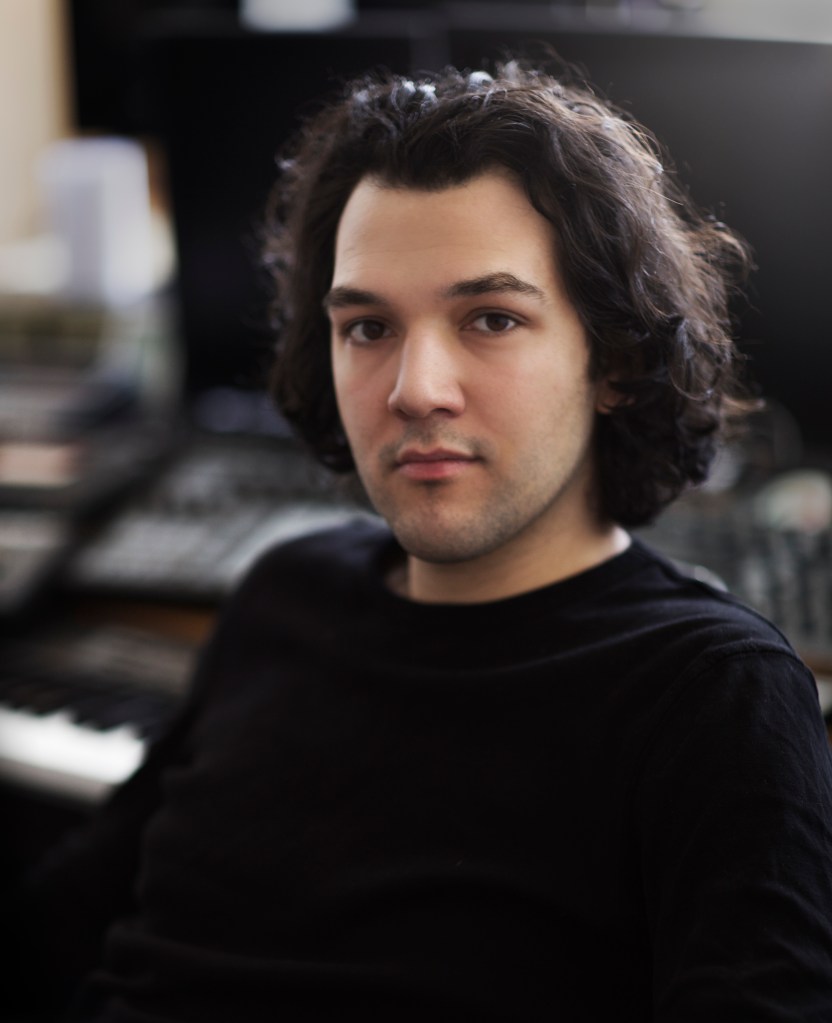
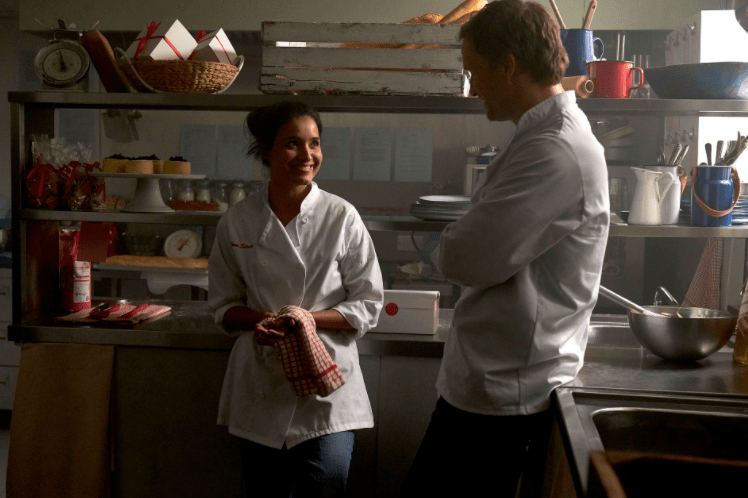
I recently had the opportunity to talk with composer Enis Rotthoff about his work on Love Sarah, a touching film about a daughter who works to open the bakery her mother always wanted with the help of her grandmother. Rotthoff’s composer credits include “Guns Akimbo” starring Daniel Radcliffe and Samara Weaving, “The Sunlit Night” starring Gillian Anderson, Jenny Slate, and Zach Galifianakis, as well as Sundance’s Grand Jury Prize nominee “Wetlands.” Rotthoff started his musical career working under Academy Award-winning composer Jan A.P. Kaczmarek (Finding Neverland). Rotthoff’s soundtrack album for Love Sarah will be available January 22, 2021.

Enjoy!

First, could you tell me about how you became a film composer?

As a ten-year-old I was fascinated by the music in films. I would memorize the melodies of the film scores in order to try to play them at the piano later. It was an early love for film music in a very playful way. At some point I started improvising on the piano and began journaling my emotions into little piano pieces which turned into my first compositions.

As a teenager I was so passionate about film music that I tried to learn as much as I could about films and their scores. A scholarship for young composers during my high school years is what gave me the foundation to study the works of classical composers and film composers. After high school, I studied Film Scoring at the Film University Babelsberg and Audiovisual Communication at the University of Arts Berlin. What really added to my journey was being an assistant to Academy Award-Winning Composer Jan A.P. Kaczmarek. With all of these experiences I felt ready to start this life-long adventure of composing for films and to enjoy the beauty in that.

How did you get connected to Love Sarah and what did you think of the film’s premise? It actually took me by surprise what the film was about, I misread it first and when I realized what it was about, I was very surprised.

The director Eliza Schroeder and I had met a decade before to work on a short film together. Because of scheduling conflicts, our collaboration did not happen back then. I was amazed to hear from her so many years later and she asked me if I was interested in scoring her debut feature Love Sarah.

The first thing she shared with me was a little teaser trailer about the film with first impressions of some scenes. When I saw the tasty desserts, the beautiful dancing scenes, the deep felt emotions and the uplifting energy of the film I was immediately drawn to it.

The story is about a daughter who wants to realize her deceased mother’s dream of opening a bakery in Notting Hill (London) with the help of her grandmother and her mother’s best friend.

The film has elements of drama, comedy, romance and a sense of presence in the scenes that I found refreshingly positive.

How did the collaboration process with director Eliza Schroeder work? Was it mostly a discussion before scoring began or was it a collaboration throughout, from beginning to end?

Our collaboration was very close and at the same time I had lots of space to experiment and come up with ideas. 

The film is directed in a way that every scene moves towards something. Even in moments of a feeling of emptiness the film moves forward. I was inspired by that.

In our conversations, Eliza gave me many emotional directions for the film but did not tell me how to achieve it with the music. Once I presented my musical ideas in connection with the film’s scenes, we discussed in more detail what to adjust and what to highlight. Eliza is an amazing filmmaker to work with.

How did you approach scoring a film like Love Sarah? Did you start with an over-arching theme, or a musical concept? In general, where did the score start and how did it grow as it came together?

The opening sequence connects all of our main characters, so the complexity of the beginning was high. We took a lot of time to adjust and fine-tune that sequence. Usually the Opening Titles (Album Track: Meet Sarah) would not be the first thing I´d approach on a film but we took the opportunity to create themes for all story lines and characters and incorporated them in the Opening Titles. 

In a way, the first music you hear in the film is like an Overture introducing the many emotional layers of the film. All themes are related to each other and to Sarah, whose passing away is the reason for all these characters to meet. So there is an idea of hope built into the concept.

Interestingly if I think of growing a score I’d think that it might build towards the end of the film. In the case of Love Sarah the music starts very energetically and builds over the course of the film. But the very end is reflective, healing and leaves lots of space. I love that, because for me clarity and healing can happen in calm moments.

On a possibly related note, how was it decided to make the music so whimsical? It sounds like a lot of fun in so many places, something I wasn’t expecting in a film that starts like it does. What was the thought process behind that? (I really like the whimsy, it makes the music a lot of fun to listen to).

I am glad that it transpires. Eliza early on said that she wanted the film to be hopeful. I liked that a lot and could also see it in the performances of the actors. It was a fine line to find the balance between deep felt emotions and a life-affirming sense of positivity. 

Since the film is also about the magic of baking and the adventure of opening up a bakery, this gave room to make the emotional journey fun and inspiring on the musical side. It is a message of the film, to stay positive in the face of painful events and experiences. 

For this one scene where the music is composed to this character who is dancing (instead of the other way around), how did that come about? It’s very rare for film music to be written in that fashion, was that decided from the beginning? Or was it tried the other way (dance moves choreographed to music) and it just wasn’t working out?

This was one of the gifts of the film. The scene of the character dancing did not have any music. It was a free dance performance. Beautifully done by actress Shannon Tarbet. That scene represented a moment of reflection, self expression, healing and the feeling of being in charge of your own destiny. Something very positive.

We decided that I´d compose music to her performances which was truly inspiring. I found myself studying and channeling every move of her dance. Sometimes I was going with the body movement, sometimes with the flow, sometimes with the overarching energy of that movement. I found myself creating a choreography on top of a choreography where the music and the dancer sometimes precisely meet and sometimes divert. It was a wonderful experience for me as a composer which I hope to build on in the future. 

What were the challenges of scoring a film in the midst of a global pandemic? Did this negatively impact the process or were you able to work around it fairly well?

The film was luckily finished before the pandemic. However, the release was delayed because of the pandemic.

Do you have a favorite part of the score?

My favorite parts are the dance sequence (Album track: The Final Dance), the moment where the bakery opens (Album track: Opening The Bakery) and the moment Mimi has an idea for how to create the right desserts. (Album track: A Home Away from Home)

What do you hope listeners take away with them when they hear the music to Love Sarah?

I wish that the music gives them a sense of hope. And that there is beauty both in sad and hopeful moments. That’s how I feel about the film and its music. That all feelings and experiences in the film can be enjoyed. And maybe that’s something to take with us into our lives.

One last thing, thank you so much for taking the time to talk about your work on this film! The music is gorgeous!

Thank you so very much. It was my pleasure and thank you for the great interview.

I hope you enjoyed my interview with composer Enis Rotthoff about his work on Love Sarah. Just as a reminder, the OST for Love Sarah will be coming out tomorrow January 22, 2021.

See also:

Composer Interviews

Become a Patron of the blog at patreon.com/musicgamer460

Check out the YouTube channel (and consider hitting the subscribe button)

Don’t forget to like Film Music Central on Facebook 🙂

The Curious Case of Apollo 13 (1995) and Art Garfunkel’s “All I Know” (1973)

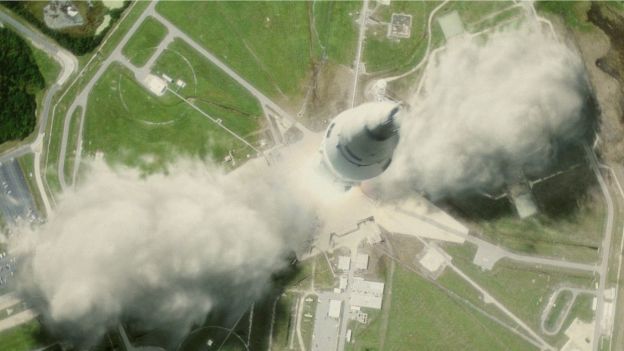
Of the many film scores that James Horner worked on during his career, Apollo 13 (1995) remains one of my favorites. Horner’s music leaves you on the edge of your seat as you watch the highs and lows of the infamous Apollo 13 mission. A notable example is a cue titled “The Launch”, which covers the scene where Apollo 13 blasts off into space. It’s classic James Horner; a stirring melody that slowly grows until it fairly explodes with the moment of launch. And yet…this particular cue hid a secret that I was unaware of for many years, and that’s what this article will be talking about.

I really should give credit for this to my mother, since she’s the one who made the connection first. Growing up, almost every time we reached the launch scene in Apollo 13 she’d pause and say something to the effect of “I know I’ve heard that melody somewhere else.” But she could never remember where, and so the matter would always drop. Then, a few years ago, when we were on a trip together, it finally hit my mom where she’d heard this particular piece before: it formed the base of an Art Garfunkel song from 1973 titled “All I Know.” I was understandably skeptical of this assertion, until I located the song in question and hit the play button, James Horner’s music fresh in my mind for a comparison.

Almost immediately, my jaw dropped to the floor. The melody of “All I Know” and a particular section of “The Launch” were more than similar, they were practically identical. Here are the respective pieces for comparison:

First, “The Launch” from Apollo 13 (relevant section starts at 6:11)

And now, “All I Know” from Art Garfunkel’s album Angel Clare (relevant section begins at 0:25)

This is undoubtedly the same melody, which begs the question, why did James Horner seemingly appropriate it? That’s what the bulk of this discussion will be about. As it stands, there are several possibilities for why James Horner would have chosen to incorporate the melody of “All I Know” into his score for Apollo 13. These include:

  1. The song was popular at the time the film’s events took place
  2. The lyrics of the song expressed a sentiment appropriate for the film and therefore Horner included it.
  3. Horner simply liked the melody and appropriated it for the film’s score.

The first possibility can be discarded almost immediately. While “All I Know” was released in 1973, the events of Apollo 13 took place in April of 1970. Therefore, this song would’ve been unknown at the time the incident took place. It is, however, plausible that Horner was looking for songs from that general time period to incorporate into the score, and may have included it even though there’s three years separation between the song and the film’s events.

The second possibility shows a little more promise, that being that perhaps James Horner chose to incorporate this song because the lyrics of the song expressed a sentiment appropriate for the film.

I bruise you
You bruise me
We both bruise too easily
Too easily to let it show
I love you and that’s all I know

All my plans
Have fallen through
All my plans depend on you
Depend on you to help them grow
I love you and that’s all I know

When the singer’s gone
Let the song go on

But the ending always comes at last
Endings always come too fast
They come too fast
But they pass too slow
I love you and that’s all I know

When the singer’s gone
Let the song go on
It’s a fine line between the darkness and the dawn

I could almost make the argument that this song bears the tiniest bit of relevance to the plot, that being the unending love between James and Marilyn Lovell. However, I can’t quite make it work because the times the melody shows up in the film doesn’t work.

That leaves the third possibility, and the likely answer: James Horner at some point heard this song, liked what he heard, and wrote it into the film’s score. It’s not unheard of for film composers to do such a thing, it happens way more often than you might think and Horner was particularly notorious for doing it. With that being said, one thing still puzzles me: why wasn’t the song cited in the end credits? I’ve double and triple checked the credits for Apollo 13, just to make sure I wasn’t missing it, and “All I Know” isn’t cited at any point. Unfortunately, fate has conspired to make sure that Horner isn’t here to ask about it, though I’d like to think he left some notes somewhere that would explain how “All I Know” ended up in the score of Apollo 13.

This is only a preliminary look at this interesting example, hopefully someday I’ll have the chance to analyze this example in full and find out the whole story.

See also:

Become a Patron of the blog at patreon.com/musicgamer460

Check out the YouTube channel (and consider hitting the subscribe button)

Don’t forget to like Film Music Central on Facebook

My Thoughts on: First Blood (1982)

I’m a sucker for movie deals, so when the opportunity came up to get all 5 Rambo films on blu-ray (despite never seeing any of them before) I took it. And I decided to kick off 2021 by watching a series of movie franchises that should take me through to the end of May, and I decided to start with the Rambo films, the first of which is First Blood from 1982.

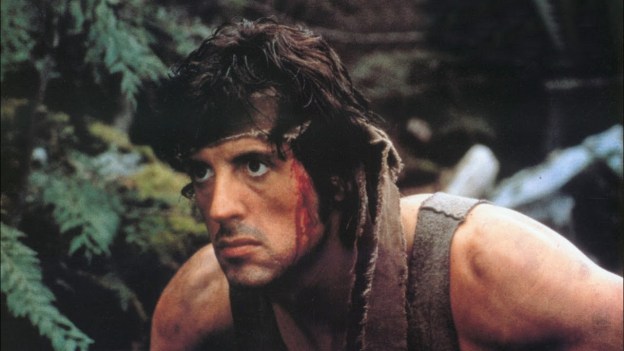
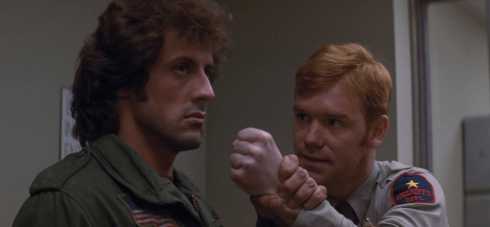
I must’ve read the summary for First Blood a dozen times, but in no way did it prepare me for what I saw. Considering this film is almost 40 years old, the plot feels scarily relevant given how 2020 saw a major reckoning take place regarding police brutality. Seriously, the opening scenes with the deputies roughing up Rambo (especially after it’s hinted in brief flashbacks that the former soldier was tortured in Vietnam) are extremely hard to watch and I came this close to bailing on the film altogether. What really sticks with me though? The fact that not so long ago I would’ve found it hard to believe that police officers could act this way, but after the last few years…now it feels all too real. The people meant to protect us can be monstrous. I know that doesn’t excuse everything Rambo does in retaliation, but come on, have you seen what they did to Rambo? It’s so messed up!

The entire film is a not-so-subtle message about PTSD and what happens when you finely tune a man to be a killing machine for the military only to turn them loose into a civilian life that (seemingly) doesn’t care about them or what they endured during their service. Knowing that, my sympathy was with Rambo from pretty much the beginning, especially since he makes it clear he just wants to move on his way and be left alone. To think, all of the chaos that happens in the climax of the film happens because a smarmy sheriff just couldn’t let Rambo be. I have no sympathy for Teasle, he brought all this upon himself even after receiving numerous warnings to let it go.

And then there’s the character of Col. Trautman, the one who recruited and trained Rambo into what he became. He seems to be the lone voice of reason in this crazy story, but I do think Teasle was right about one thing: Trautman knows he’s partially responsible because he trained Rambo in the first place, so I think subconsciously he is there to cover himself before anything else happens. But at the same time I also think Trautman is sincere in his desire to help Rambo and if you want to see some good acting, watch Trautman’s reactions to Rambo’s breakdown at the end of the film.

I also really liked the scene where Rambo takes out (more or less) the deputies trying to hunt him down in the woods (the ones Rambo filled with booby traps). It’s actually quite scary and intense, with the lightning storm going on and never quite knowing when Rambo is going to pop up or when a trap will be triggered.

First Blood is an intense film, but one I ultimately enjoyed watching. It will be interesting to see where the series goes from here.

Let me know what you think about First Blood in the comments below and have a great day!

See also:

Film Reviews

Become a Patron of the blog at patreon.com/musicgamer460

Check out the YouTube channel (and consider hitting the subscribe button)

Don’t forget to like Film Music Central on Facebook 
My Thoughts on: Spartacus (1960)

Thanks to my parents I watched my fair share of epic films growing up. The big three that we would watch at least once a year were Ben-Hur (1959), The Ten Commandments (1956) and Spartacus (1960). The latter is set out as a (very loose) retelling of the story of Spartacus (a real person by the way), who led a slave revolt in Capua that became known to history as the Third Servile War.

I used to have very mixed feelings about Spartacus. When I was little, the first half of this film used to bore me to tears because it was a lot of talking about things I didn’t understand while the “fun part” (all the fighting) didn’t happen until later. Now that I’m older, of course, I can appreciate the politics and intrigue that take up a big chunk of Spartacus. I particularly appreciate the political wrangling that takes place between Gracchus (Charles Laughton) and Crassus (Laurence Olivier). It’s especially amusing to watch them fight over the loyalty of Julius Caesar, as if both of them seem to realize how important the man will become in the future (keep in mind, at THIS point in history Caesar isn’t all that important just yet).

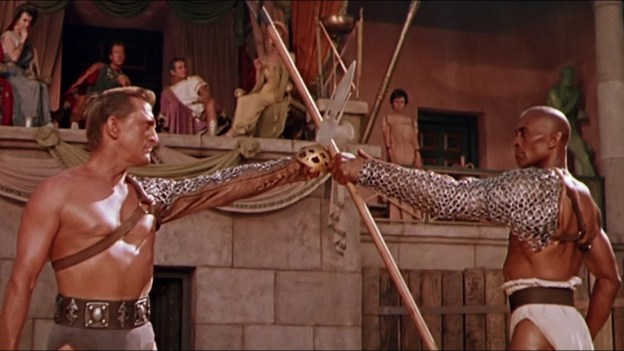
The story of Spartacus himself is always one of my favorite parts to watch. Watching him get trained to be a gladiator, it’s clear early on that something is going to give eventually, since Spartacus is singled out for particularly abusive treatment. And when the last straw is finally reached, everything explodes in epic fashion. If you’ve been paying attention, you feel like cheering when Spartacus’ primary tormentor gets what is coming to him. And after that, watching Spartacus organize the rebels into a pretty efficient army is fun to watch also. In fact, things go so well that (if you didn’t know your history) you’d be forgiven for thinking this story has a happy ending for the slaves, because they come within a whisker of reaching freedom forever. But…history went differently and when the climactic battle sequence comes, Stanley Kubrick did not shy away from showing the awful aftermath.

Seriously, the ending when all of the surviving slaves are crucified is difficult to watch. And yes, for the record, that really happened. The real Crassus, wanting to set an example for any other slaves who might be getting ideas, had all of the survivors crucified along the Appian Way and the crosses stood by the side of the road for YEARS afterward. Despite the horrifically dark ending, there is one bright spot in the form of Varinia (Jean Simmons) slipping away to Aquitania with the newborn son of Spartacus. What’s more, Spartacus gets to see his son (who will grow up free) just for a moment before he dies, which is one of the things he wanted most in the world. At least he can go to his grave knowing his son and the woman he loves will live their lives in freedom.

I should mention the version of the film I saw is the most recently restored version released on blu-ray and 4K. This means that this film includes a scene restored in the early 1990s, where Crassus talks to Antoninus (Tony Curtis) about “oysters and snails” which is apparently a metaphor for sexual preferences, though for my part the analogy went over my head for years until someone explained it to me. The thing is, when they reinserted that scene, the audio track had been lost and Laurence Olivier had died in 1989. So….for that scene only, the voice of Crassus is provided by Anthony Hopkins, as Olivier’s widow remembered that Hopkins had once done a dead-on impression of her husband. That being said, if you listen close, you can hear the difference. It’s a good impression, but it’s not quite the same. Still, I can appreciate that it allowed an important scene to be restored to the film.

It doesn’t even bother me that the film gets a number of historical details wrong. For instance, that whole thing about Crassus becoming First Consul of Rome? Nah, it didn’t happen like that. Gracchus (one of my favorite characters) wasn’t even a real person, he was an amalgamation of several people that lived DECADES before the Third Servile War ever happened. And of course, the famous “I’m Spartacus” scene didn’t happen either, as it happens the body of the real Spartacus was never found. However, as I’ve said, I’ve never let these issues bother me because the storytelling is so good I’m more than willing to just enjoy myself.

Spartacus is definitely one of those films you must see before you die, and that remains true over 60 years later.

Let me know what you think about Spartacus in the comments below and have a great day!

See also:

Film Reviews

Become a Patron of the blog at patreon.com/musicgamer460

Check out the YouTube channel (and consider hitting the subscribe button)

Don’t forget to like Film Music Central on Facebook 

My Thoughts on: Portrait of a Lady on Fire (2019)

Knowing that I was going into 2021 with a massive movie backlog, I decided to start the year off right: by watching Portrait of a Lady on Fire. I’ve had this film on blu-ray since it was released by the Criterion Collection last summer, but the time never felt right to put it in and watch it…until now.

Set in the 18th century, Portrait of a Lady on Fire follows a painter, Marianne (Noémie Merlant), as she is hired to surreptitiously paint a portrait of Héloïse (Adèle Haenel) prior to her arranged marriage to a Milanese nobleman. Over the course of two weeks, Marianne and Héloïse come to know each other very well, and a relationship forms between them, all while a “proper” portrait of Héloïse is put together.

I can’t overstate how much Portrait of a Lady on Fire blew me away. This isn’t like any film I’ve ever seen before. For one, there’s no musical score, though at the same time this isn’t a film without music. All of the music in this film is diegetic, meaning it occurs completely within the film world. And brilliantly, the few times the music is employed in the film means it is used for maximum effect, like when Marianne is playing a piece for Héloïse or that final scene with the orchestra.

It’s the relationship between Marianne and Héloïse that forms the crux of the story however, and it left me spellbound from the moment it started. With no musical score to otherwise distract you, you are painfully aware of each woman’s gaze upon the other, something that only grows more acute as the story goes on. So much of this story is based in looks and silence, with entire portions passing by with no real dialogue. And yes, it is completely heartbreaking to see these two fall for each other, since anyone who knows a fraction of anything about 18th century France knows that this relationship has no chance of succeeding since same sex relationships (especially between women) were taboo.

Something I didn’t expect? A really cool tie in to the story of Orpheus and Eurydice, with the former being a legendary musician who went into the depths of Hades to reclaim his lost love Eurydice only to lose her once and for all at the last moment. I didn’t fully understand why the film wandered into this territory until Marianne said her last goodbye to Héloïse and I realized, with a start, that in this context Marianne is Orpheus and Héloïse is Eurydice. This is like a modern take on the story of Orpheus, only with art instead of music! Learning that made me love this story so much more than I already did.

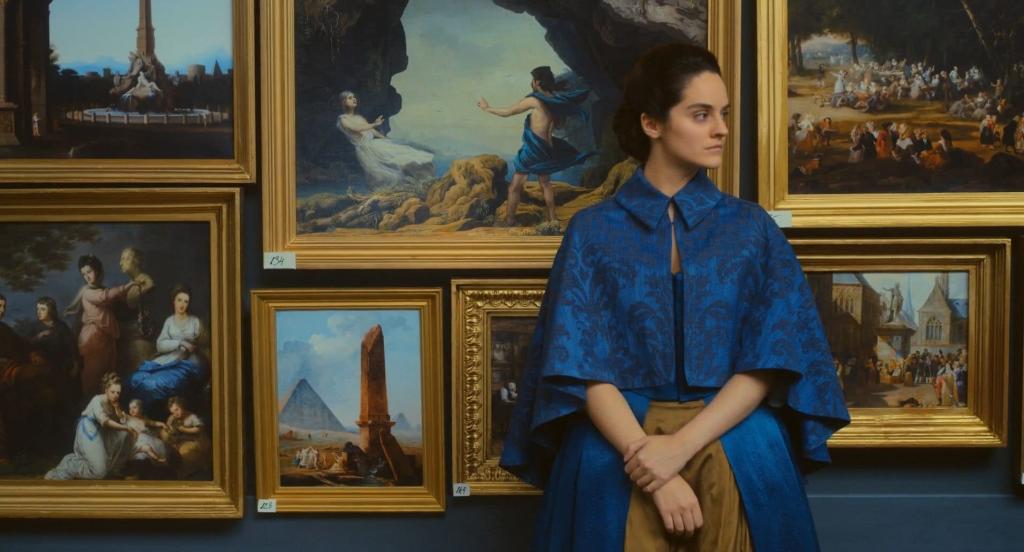
Also, I have to compliment the film’s setting. This remote island the story takes place on, with the vibrant blue ocean, is beautiful in a primal sort of way (and maybe that was the point). Also, the house most of the film takes place in is really beautiful too, it feels ancient and modern all at the same time if that makes sense. I really love the space Marianne sets up as her studio, so much of the action takes place there, it’s a space I wish I could visit in real life. Speaking of seeing in real life, I wish I could see those paintings as well. On a final note, I also like the brief period of domestic bliss set up between Marianne, Héloïse and Sophie (the maid). It’s a tantalizingly brief glimpse of how peaceful a life could be when set up between women. It’s so refreshing that it’s physically jarring when a man shows up towards the end of the film, like a spell was broken.

What I’m attempting to say is that Portrait of a Lady on Fire is one of the most beautiful films I’ve ever seen. Everyone needs to see this film at least once before they die, and that is a fact.

Let me know what you think about Portrait of a Lady on Fire in the comments below and have a great day!

See also:

Film Reviews

Become a Patron of the blog at patreon.com/musicgamer460

Check out the YouTube channel (and consider hitting the subscribe button)

Don’t forget to like Film Music Central on Facebook 

My Thoughts on: Blade (1998)

Some of the people who knew me growing up might be surprised to hear this, but I was a HUGE fan of Blade back in the day (around my early teens). I have vague memories of stumbling across this film on TV (along with Blade II) and being spellbound by what I saw. Didn’t understand half of it, didn’t even know that Blade came from Marvel comics, but I did know I was watching something amazing!

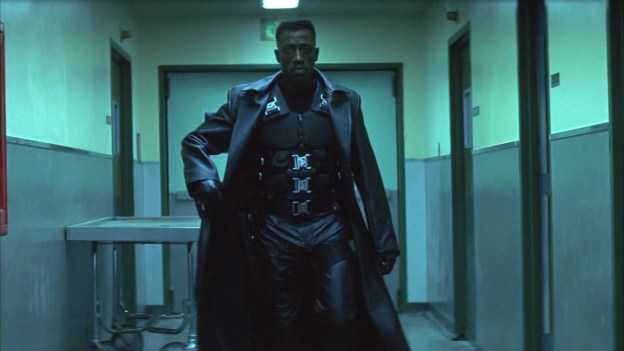
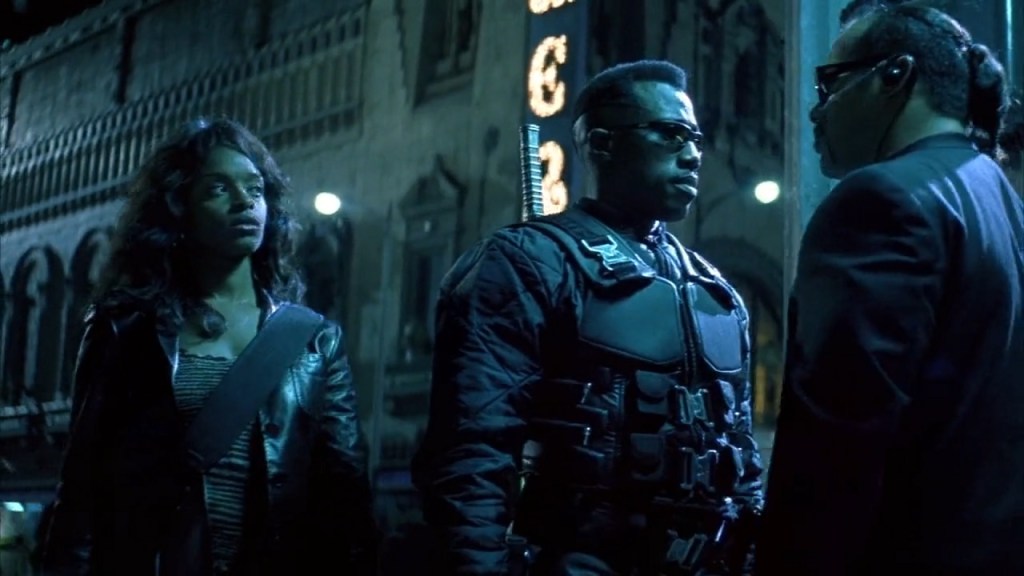
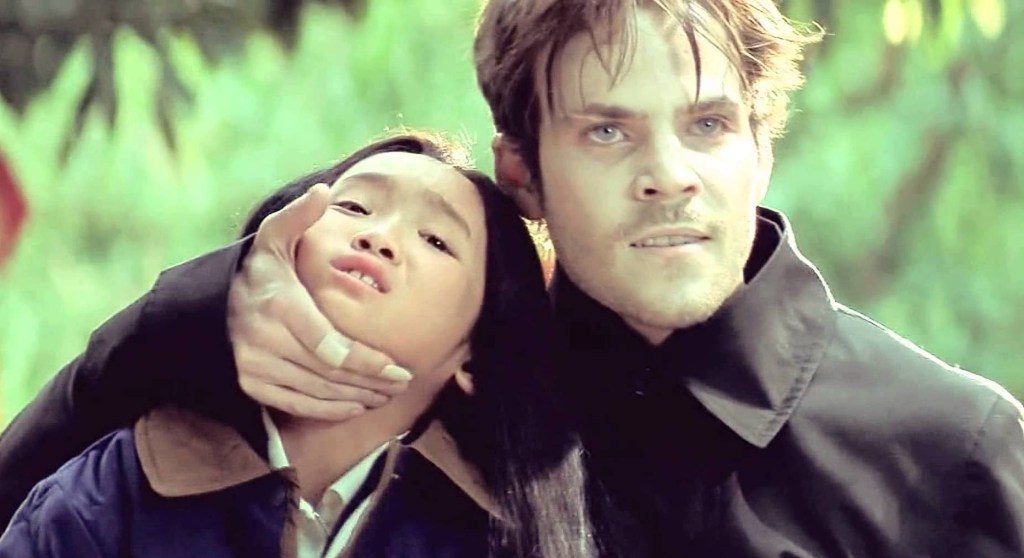
As I understand it, Blade was the first Marvel movie to be successful, setting the stage for the X-Men films, the Fantastic Four films, and, many years later one could argue, the Marvel Cinematic Universe. It all started with Blade. For those not familiar, Blade is a Daywalker, a half-vampire who spends his nights hunting down and killing every vampire he can find. Unlike regular vampires, Blade can move about in daylight, and he has some nasty weapons in his arsenal. The movie sees Blade come up against Deacon Frost (Stephen Dorff) who has plans of his own for the vampire world. Along the way, Blade is forced to take Dr. Karen Jenson (N’Bushe Wright) under his wing (so to speak) and teach her the basics of vampire fighting after she’s assaulted and bitten by a vampire herself.

When I sat down to watch Blade again, it had easily been fifteen or sixteen years since I’d last seen it, so I’d completely forgotten how badass this film is. Despite being 22 years old, the film doesn’t feel dated in the slightest, though I will concede some of the CGI effects haven’t aged that well. Even then, it’s a “blink and it’s over” sort of issue, and I feel like I’m nitpicking by even mentioning it. Seriously, the CGI for the most part looks pretty good for being created in the late 1990s, which is a testament to how hard the filmmakers worked on this film at the time. As good as it must have looked then, it looks so much better upgraded to Blu-Ray (and I can only imagine how it looks in 4K).

Wesley Snipes OWNS every scene he’s in. As soon as he appeared in full Daywalker mode, I instantly realized why everyone had been campaigning to have Snipes reprise his role in the MCU somehow. I mean, my God….the presence he has as Blade is unreal. You don’t see his fangs until very late in the film (unless I missed it), but there’s no mistaking that Blade is something more than human from the moment he’s introduced. He’s also such a badass with that sword, I loved watching every single fight scene. Also, while I have no doubt Mahershala Ali will make an AMAZING Blade, I sincerely hope that Wesley Snipes appears in the MCU Blade film in some way, shape, form or fashion. This is something I NEED to happen.

I love that the “everyman” role in the film is taken up by a woman. I think that’s why I found it so easy to watch this film as a teenager, I could identity with Karen, and that fear of confronting a world that is suddenly nothing like what you expected it to be. N’Bushe Wright turns Karen into a complete and total badass by the end of the film, even when she’s taken captive, she doesn’t lay down and take it. She fights back, and for that reason alone I will defend Blade as one of the best comic book movies ever made forever.

I also have to praise Blade for creating a vampire society that feels frighteningly plausible. The gist is that vampires have permeated every layer of human society imaginable. In fact, it’s quietly implied that vampires are well on their way to running human society as a whole, albeit from the shadows. Once this fact is laid bare in the film, you start to look twice at every person our heroes pass, and it’s actually enough to make you slightly paranoid.

And again, I have to go back to the intensity that permeates this film. This might come out wrong, but there’s a rawness about Blade that isn’t present in the MCU, and it sets Blade apart in a good way. What I mean to say is, because they were still sussing out how to turn Marvel stories into good films, there’s a raw, immense crudeness about Blade that leaves one with the impression of something much larger lurking in the shadows (the MCU by comparison is much more finely tuned). It was just so refreshing to see a film like this again, and I hope the new Blade film carries over some of this intensity and rawness (which is possible since this is the film that’s introducing vampires to the MCU, assuming Morbius doesn’t count).

Having seen Blade upgraded to blu-ray, all I can do now is hope and pray that a similar upgrade is being done for Blade II and, yes, even Blade Trinity (I’m a completionist, it’ll bug me if I don’t upgrade the whole trilogy).

Let me know what you think about Blade in the comments below and have a great day!

See also:

Film Reviews

Become a Patron of the blog at patreon.com/musicgamer460

Check out the YouTube channel (and consider hitting the subscribe button)

Don’t forget to like Film Music Central on Facebook