Yearly Archives: 2016

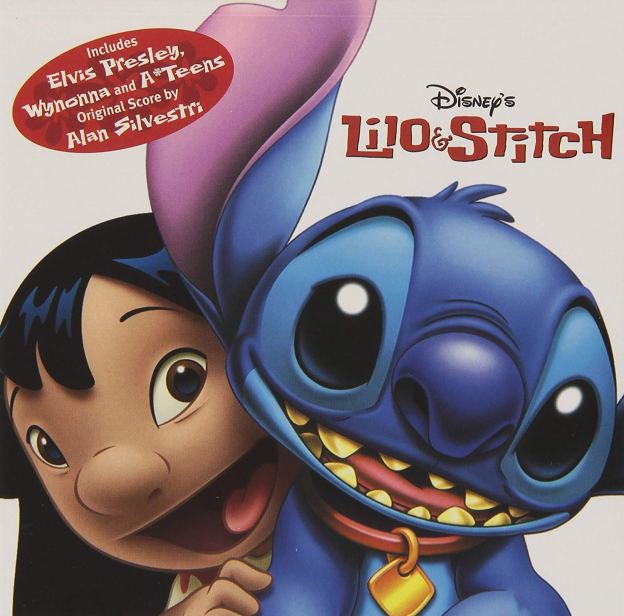
Alan Silvestri “Lilo & Stitch” scoring session (2002)

 Lilo and Stitch (2002) was a Disney film released in the early years after the Disney Renaissance ended (Tarzan (1999) is officially held to be the last film of that era). The film takes place in outer space and in Hawaii and follows escaped genetic experiment 626 as he escapes to planet Earth and passes himself off as a dog to the unsuspecting human populace.

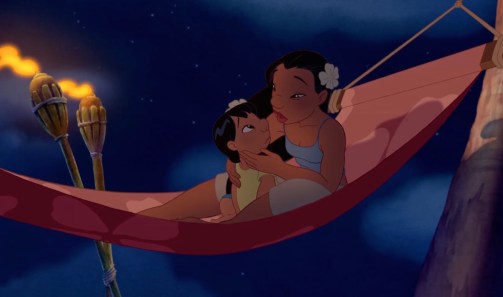
While there, he becomes adopted by a young girl named Lilo (who is having her own social problems while being raised by her older sister Nani) who names him “Stitch.” At the same time, Stitch’s creator, Jumba, is trying to recapture him with the help of Agent Pleakley and various escapades ensue. Captain Gantu (Stitch’s original jailer) is also keen to get him back, and very quickly Lilo finds herself in the middle of a really big situation.

liloandstitchr1reviewpic2

The score for this film was created by Alan Silvestri (of Back to the Future fame) and the video above shows clips from several days of scoring sessions. What’s cool about this video is you get to see the big screen with footage from the film playing while the recording process is going on. Most of the footage here appears to be complete, but this is not always the case. Sometimes the composer is given “rough cuts” to work with, perhaps the special effects are missing or the animation is incomplete.

I liked this movie when I went to see it in the theaters, though I admit it’s been a while since the last time I saw it. Unlike previous Disney films, Lilo & Stitch used watercolor backgrounds, which created a very different visual look.

nani-and-lilo-from-lilo-and-stitch-on-a-hammock

Compared to other Disney films released around this time (like Treasure Planet, Atlantis: The Lost Empire or The Emperor’s New Groove), Lilo & Stitch was relatively well-received by the critics. I hope you enjoy this look at the scoring sessions for Lilo & Stitch!

Become a Patron of the blog at patreon.com/musicgamer460

See also:

Film Composer Interviews A-H

Film Composer Interviews K-Z

Don’t forget to like Film Music Central on Facebook 🙂

*poster image is the property of Walt Disney Studios

James Horner scoring Braveheart (1995)

braveheart

James Horner scoring Braveheart (1995)

As I’ve mentioned before, 1995 was a very good year for James Horner. In that year alone he composed the scores for Casper, Apollo 13, Jumanji, Balto, Jade and Braveheart.

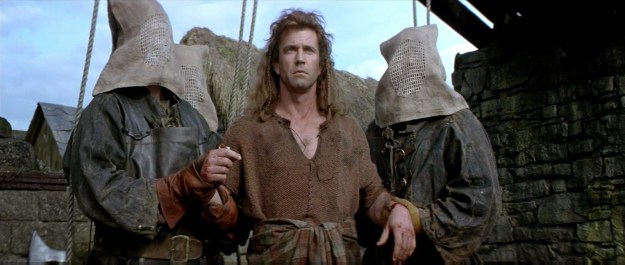
Braveheart was one of the standout films of 1995, eventually winning Best Picture at the Academy Awards. Directed by and starring Mel Gibson, the film tells the story of how William Wallace led the First War of Scottish Independence against King Edward I of England.

Braveheart

Wallace is spurred into action after his new bride Murron is executed by the English after she attempts to flee being raped. The Scots have several victories, including sacking the city of York. King Edward sends his son (also named Edward) to deal with Wallace, but that proves to be a failure. Then Prince Edward’s wife Isabella is sent (in hopes that Wallace will kill her and spur the French to jump into the war), but instead the two become enamored of each other and end up having an affair instead. Ultimately, Wallace is betrayed by would-be ally Robert the Bruce and is painfully executed by the English while Isabella is pregnant with Wallace’s child.

6480cc03-5c5b-43cb-810d-df9be2835bcd

While the film takes numerous liberties with actual history (Isabella and William Wallace never had an affair for example), the film was still very well received and James Horner’s score became one of the most commercially successful soundtracks of all time.

The footage features Mel Gibson’s comments on the music as James Horner leads the scoring sessions. If you’ve never seen Braveheart before, the music is absolutely gorgeous, a perfect example of James Horner at the top of his craft. Since the weekend is here, take some time, sit back, relax and enjoy the sounds of Braveheart.

See also:

James Horner Star Trek II: Wrath of Khan

James Horner talks Aliens (1986)

James Horner talks Field of Dreams (1989)

James Horner talks The Rocketeer (1991)

James Horner talks The Perfect Storm (2000)

James Horner talks A Beautiful Mind (2001)

James Horner talks Windtalkers (2002)

James Horner talks Avatar (2009)

James Horner talks The Amazing Spider-Man (2012)

Film Composer Interviews A-H

Film Composer Interviews K-Z

Become a patron of the blog at: patreon.com/musicgamer460

Check out the YouTube channel (and consider hitting the subscribe button)

Don’t forget to like Film Music Central on Facebook 🙂

*poster image is the property of Paramount Pictures

Nicholas Hooper “Harry Potter and the Half-Blood Prince” scoring session (2009)

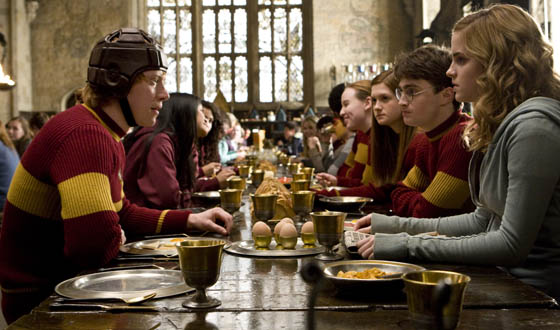
The sixth installment in the Harry Potter film franchise was released in 2009 to general acclaim. Harry, now in his sixth year at Hogwarts, becomes obsessed with a textbook that belonged to someone named “the half-blood Prince” while also falling in love with Ginny Weasley (Ron’s little sister). Voldemort and his Death Eaters are on the move (Draco Malfoy has been assigned a mission by the Dark Lord himself) and Harry and Dumbledore are searching for the key that could destroy Voldemort once and for all.

Harry Potter and the Half-Blood Prince

It turns out that the secret of Voldemort’s power lies in the fact that he constructed Horcruxes: magical objects that contain a portion of a wizard’s soul and thereby prevent death if anything happens to that wizard’s body (this is why Voldemort wasn’t outright killed when his Killing Curse rebounded onto him the night Harry’s parents were killed).

The only way to kill Voldemort once and for all is to first destroy every last Horcrux. It won’t be easy, with Death Eaters lurking everywhere and a new Defense Against the Dark Arts teacher (in the form of Professor Slughorn), it might be impossible even for Harry Potter. One thing is for sure, this story has an ending you’ll never see coming.


The score for this film was composed by Nicholas Hooper, who first provided the music for the fifth film: Harry Potter and the Order of the Phoenix (2007). The footage above comes from one of the scoring sessions held at the famous Abbey Road Studio. There you see one of the conductors, an orchestrator, as well as the composer himself. This particular session involves recording the opening cue of the film, which, as always, features a reprise of “Hedwig’s Theme” (possibly the most famous theme from the entire Harry Potter film series).

Become a Patron of the blog at patreon.com/musicgamer460

Check out the YouTube channel (and consider hitting the subscribe button)

Enjoy this behind the scenes look at recording the score for Harry Potter and the Half-Blood Prince!

And for more Harry Potter, see also:

 Alexandre Desplat talks Harry Potter and the Deathly Hallows Part 1 (2010)

Thoughts on Fantastic Beasts and Where to Find Them (2016)

Don’t forget to like Film Music Central on Facebook 🙂

Mulan “A Girl Worth Fighting For” (1998)

Mulan_274

Mulan “A Girl Worth Fighting For” (1998)

Believe it or not, this is the last song in the film (though I plan to cover several more orchestral moments to round out the film). Here’s the set up: while Mulan’s training is now going very well, there have been no orders for the soldiers to move out to battle, making it very possible that they won’t see any combat at all. This goes against Mushu’s plans of making Mulan into a hero (to improve his reputation back home) so he conspires with Lucky Cricket to create some fake orders that are ostensibly from Shang’s father General Li. According to the “urgent news”, Shang and his troops are needed at the front, so they quickly head out on the march.

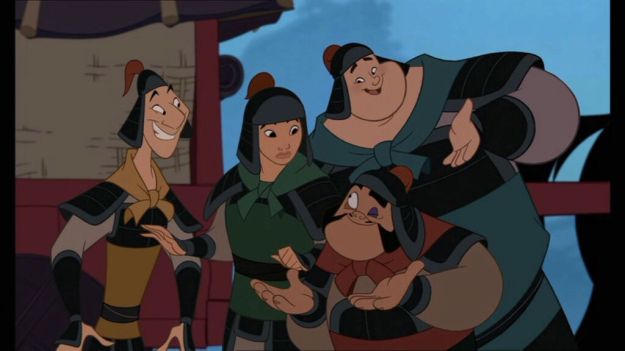
During the long march, the soldiers begin to complain about the never-ending boredom of marching along, but Ling has an idea to keep their minds occupied: talking about girls! Specifically, the dream girls that they’d love to have waiting for them when they get home after the war.

For a long time, we’ve been marching off to battle
In our thund’ring herd,
We feel a lot like cattle
Like the pounding beat,
Our aching feet aren’t easy to ignore
 Hey, think of instead
A girl worth fighting for

mulan-81

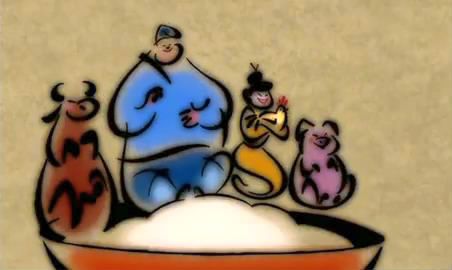
The “dream girls” are animated in a style similar to traditional Chinese art

That’s what I said: a girl worth fighting for

I want her paler than the moon
With eyes that shine like stars
My girl will marvel at my strength, adore my battle scars
I couldn’t care less what she’ll wear or what she looks like
It all depends on what she cooks like
Beef, pork, chicken…
Mmm…

Bet the local girls thought you were quite the charmer
And I’ll bet the ladies love a man in armor
You can guess what we have missed the most since we went off to war
What do we want?
A girl worth fighting for

My girl will think I have no faults
That I’m a major find
Uh… How ’bout a girl who’s got a brain
Who always speaks her mind?
Nah!
My manly ways and turn of phrase are sure to thrill her
He thinks he’s such a lady killer

Ling, Yao and Chien-Po each have their idea of the “perfect woman,”: Ling wants a really pretty girl; Yao wants a girl that admires his physical strength; and Chien-Po (predictably enough), would like a girl that can cook really well. When pressed on the type of girl Mulan/Ping would like, she lamely sings about a girl with “lots of brains, who always speaks her mind” but that idea is rejected as being “unrealistic.” Chi-Fu (the stuck up advisor from the Emperor’s court) claims to have a girl waiting for him back home (but Yao is of the opinion that the only girl who could love Chi-Fu is his own mother).

 But when we come home in victory they’ll line up at the door
 What do we want?
A girl worth fighting for

Wish that I had
A girl worth fighting for
A girl worth fighting-

all-depends-on-what-she-cooks-like-beef-pork-chicken

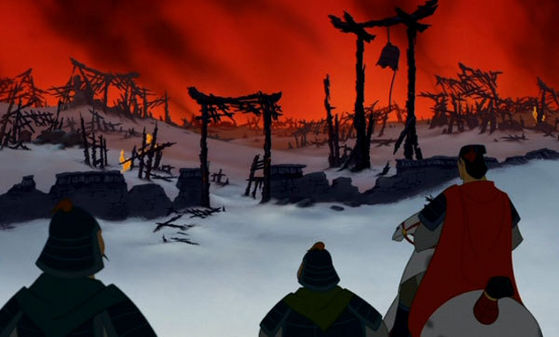
Now approaching the mountains, the men continue to whistle about “girls worth fighting for” and everything seems about to break down into a snowball fight when suddenly-the song abruptly ends (this is one of the few Disney songs to end this way). The reason for the song ending is frighteningly clear: the small army has encountered a burned out village in the mountains. Incredibly, while Mushu’s news was meant to be fake, there really IS danger up at the front, because this is where General Li is supposed to be with the bulk of the Imperial Army.

f226f6f4-2582-4768-9451-c8de90bedb6d

But the bad news isn’t over. Just over a rise, Chi-Fu sees the full extent of what’s happened: the entire Imperial Army has been slaughtered, including Shang’s father. Heartbroken, Shang sets up a small memorial to honor his father’s memory and then makes ready to pursue the Hun army. With the Imperial Army wiped out, the only thing standing between the Huns and the Imperial Palace are Shang and his men (and one dragon and a cricket).

mulan-corpses

What should have been an easy mission to support General Li’s forces has now turned into a life or death scenario: Shang’s forces are hopelessly outnumbered by the Hun Army, how are they possibly going to defeat them? It’s going to take a lot of ingenuity on the part of a certain soldier named Ping….

Next time: the Huns begin their attack!!!

Become a Patron of the blog at patreon.com/musicgamer460

Check out the YouTube channel (and consider hitting the subscribe button)

See Also:

Mulan “Honor to Us All” (1998)

Mulan “Reflection” (1998)

Mulan “Mulan’s Decision” (1998)

Mulan “I’ll Make a Man Out of You” (1998)

Mulan “The Huns Attack” (1998)

Mulan “I’ve Heard a Great Deal About You Fa Mulan…” (1998)

And for more great Disney songs and films, check out the main page here: Disney Films & Soundtracks A-Z

Don’t forget to like Film Music Central on Facebook 🙂

*all images are the property of Walt Disney Studios

Danny Elfman talks Batman Returns (1992)

Danny Elfman talks Batman Returns (1992)

It is a sad reality in Hollywood that many times a sequel does not live up to the original and this is the case with Batman Returns (1992) (though it is infinitely better than the two films that followed it). Set sometime after the events of the original film, Gotham City’s new nemesis is Oswald Cobblepot, aka “The Penguin” (Danny DeVito), a deformed child abandoned by his parents and raised by penguins, who seeks to become a respectable member of Gotham society and will employ any means to make that happen.

At the same time, corrupt businessman Max Shreck is plotting to monopolize the city’s electricity supply, a scheme that his secretary, Selina Kyle, stumbles onto. When Shreck tries to have her killed by pushing her out a window, she is mysteriously revived by a swarm of cats and adopts the identity of Catwoman. Batman has to deal with Penguin, Shreck and this mysterious female vigilante, all part of his ongoing efforts to protect Gotham City.

I’m sure I’ve seen this film as many times as the original Batman, but I simply don’t enjoy this one as much. When you’ve grown up with Burgess Meredith’s Penguin, seeing the creepy Danny DeVito Penguin is a real shock. I still like Michael Keaton as Batman/Bruce Wayne though, and I wish he could’ve stayed for the remaining two films (even though I like George Clooney in Batman & Robin). The on-again/off-again romance between Catwoman and Batman is well-known to fans of the comics, and it’s nice to see it play out on the silver screen.

Danny Elfman returned to score this film and was much more confident during the process (because the first Batman had been such a big hit). Knowing that his methods worked, it wasn’t hard to derive a new score for this sequel. Regretfully, this interview isn’t very long, but I was glad to find anything relating to Batman Returns at all (finding info on sequels is relatively hard, especially if they don’t do as well as expected). The different themes for Selina/Catwoman and Penguin are discussed, and if I ever find a more in-depth discussion for this particular film I’ll be sure to add it in. For now though, please enjoy!

See also:

Danny Elfman talks Batman (1989)

Danny Elfman “Planet of the Apes” scoring session (2001)

Danny Elfman talks Spider-Man (2002)

Danny Elfman talks Meet the Robinsons (2007)

Danny Elfman talks Alice in Wonderland (2010)

Danny Elfman talks Fifty Shades of Grey (2015)

Danny Elfman talks Alice Through the Looking Glass (2016)

Film Composer Interviews A-H

Film Composer Interviews K-Z

Become a Patron of the blog at patreon.com/musicgamer460

Check out the YouTube channel (and consider hitting the subscribe button)

Don’t forget to like Film Music Central on Facebook

*film poster is the property of Warner Bros. Pictures

Alice in Wonderland (1951) takes us down the rabbit hole

On July 26th, 1951, Disney’s Alice in Wonderland was released in theaters. The 13th Disney Animated Feature was based on Lewis Carroll’s 1865 children’s novel Alice’s Adventures in Wonderland.

21060113

Alice (Kathryn Beaumont, perhaps better known as the voice of Wendy in Peter Pan (1953)), finds herself drawn into an adventure in the topsy-turvy Wonderland after following a White Rabbit down a rabbit hole and falling down into the magical place.

While seeking a way out, Alice encounters a wide variety of crazy creatures, from singing flowers, a caterpillar that smokes a hookah, Tweedle-Dee and Tweedle-Dum, the Mad Hatter and the March Hare and perhaps most importantly, the semi-deranged Queen of Hearts, who has a thing for shouting “off with their heads!!”

hqdefault

Alice in Wonderland failed spectacularly at the box office and unlike other Disney films, was not re-released to theaters during Walt Disney’s lifetime. At the time of release, critics (and fans of the books) did not appreciate the liberties Disney had taken with the story and felt that he was trying to “Americanize” a great piece of British literature. The film’s reputation has improved in the following decades, but (in my opinion) it still remains one of the lesser known (and somewhat under-appreciated) entries in Disney’s animated film series.

One flaw that I’ve come to recognize in the film is that it is not so much a unified story as it is a series of vignettes (short scenes) ostensibly tied together by the presence of Alice. A notable exception is “The Walrus and the Carpenter” which, being a story told by Tweedle Dee and Tweedle Dum, doesn’t feature Alice at all and really feels like it’s from another story entirely.

Alice in Wonderland “Painting the Roses Red” (1951)

Interestingly, during the production process, almost the entire film was shot live-action for reference, and the footage that survives is a fascinating look into how the earlier Disney films were put together. This was actually a common practice for the Disney studio, though unfortunately not all of the footage has survived to the present day. Some films that I know had live-action footage shot include: Snow White and the Seven Dwarfs; Sleeping Beauty; Peter Pan (particularly for scenes involving Tinker Bell interacting with the drawer in the Darling home); Cinderella and Pinocchio.

One of my favorite pieces involves the Un-Birthday Party/The Mad Hatter’s Tea Party. Broadway Classixs on YouTube synched up the live-action footage with the animated result and it’s amazing to watch the voice actors at work.

Alice in Wonderland Tea Party: Live action vs. animation

What do you think of the animated Alice in Wonderland? Do you think it’s been neglected compared to other Disney films? Let me know your thoughts in the comments below.

Become a patron of the blog at: patreon.com/musicgamer460

Check out the YouTube channel (and consider hitting the subscribe button)

See also: Animated Film Reviews

Alice in Wonderland “In a World of My Own” (1951)

Alice in Wonderland “The Un-Birthday Song” (1951)

Alice in Wonderland “All in the Golden Afternoon” (1951)

Alice in Wonderland “Painting the Roses Red” (1951)

Don’t forget to like Film Music Central on Facebook 🙂

*all images are the property of Walt Disney Studios

Danny Elfman talks Batman (1989)

With the exception of Superman: The Movie, I’m hard pressed to think of a superhero film more iconic than Tim Burton’s Batman (no offense to fans of the Christopher Nolan trilogy). Based in part on The Killing Joke and The Dark Knight Returns comics, Batman helped to establish the modern superhero film genre and also helped ignite the DC Animated Universe (launched with the premiere of Batman: The Animated Series). The Caped Crusader was portrayed by Michael Keaton, and his eternal nemesis the Joker was brought to memorable life by Jack Nicholson.

Batman-1989-Batman-Bruce-Wayne-Michael-Keaton-and-girlfriend-Vicki-Vale-Kim-Basinger-800x450

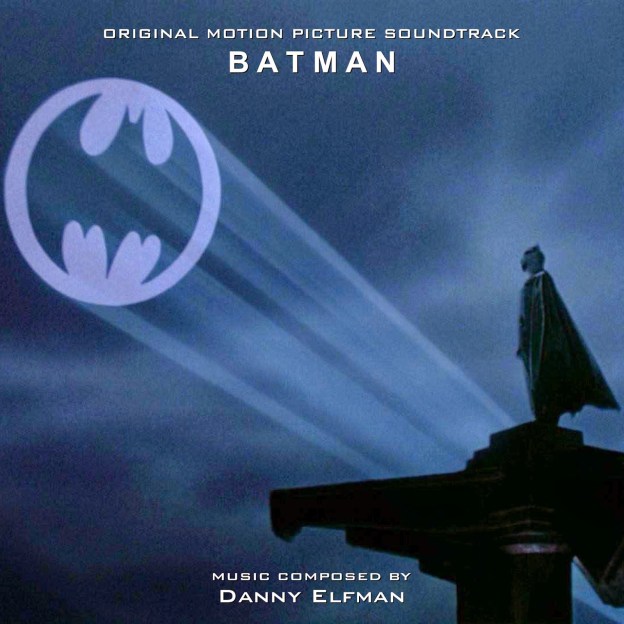
Several factors contributed to make this film so iconic: one is the amazing sets and backgrounds that make up Gotham City. The second is Danny Elfman’s awe-inspiring score for this film. Elfman was brought in by Burton after the two had previously collaborated for Beetlejuice (1988), this despite the fact that Elfman knew very little about the current state of Batman in comics (he was given a copy of The Dark Knight Returns for reference).

Having grown up watching re-runs of “campy Batman” starring Adam West and Burt Ward on television, I initially didn’t like this “dark” Batman at all, but as I grew older and learned about the comics history of the character, I grew to appreciate what Tim Burton had done (and there’s no denying that Jack Nicholson’s performance as The Joker is one for the ages).

Jack_Nicholson_joker_040917

I was pleased to find this interview and “making of” for the Batman score and I hope you enjoy listening to it too (Elfman shares a funny story about how he came up with the iconic main theme for the film). Let me know your thoughts on Batman in the comments below!

See also:

Danny Elfman talks Batman Returns (1992)

Danny Elfman “Planet of the Apes” scoring session (2001)

Danny Elfman talks Spider-Man (2002)

Danny Elfman talks Meet the Robinsons (2007)

Danny Elfman talks Alice in Wonderland (2010)

Danny Elfman talks Fifty Shades of Grey (2015)

Danny Elfman talks Alice Through the Looking Glass (2016)

Film Composer Interviews A-H

Film Composer Interviews K-Z

Become a Patron of the blog at patreon.com/musicgamer460

Check out the YouTube channel (and consider hitting the subscribe button)


Don’t forget to like Film Music Central on Facebook

*poster image is the property of Warner Bros. Pictures

Mulan “I’ll Make a Man Out of You” (1998)

2bfa1d60-b950-0132-9a57-0e01949ad350

Mulan “I’ll Make a Man out of You” (1998)

Disguising yourself as a man and then running off in the middle of the night to take your father’s place in the Imperial Army is all well and good, but unfortunately Mulan really hadn’t thought out what to do after that. Despite looking like a man, she has no idea how to act like one, and is therefore skulking in the woods outside camp, unsure of how to get inside without being found out as a girl. Enter Mushu!

No sooner was Mulan gone than her ancestors held a little conference to decide what to do with her. All agreed that Mulan had to be forced to come back, lest catastrophic damage be done to the family name. Mushu (Eddie Murphy), a small red dragon, offered to go, but seeing as the last time he tried to help that person lost their head, he is soundly rejected. Instead, Mushu is ordered to wake The Great Stone Dragon and have HIM bring Mulan back. After convincing the Great Ancestor Spirit that the Great Stone Dragon is on the way, he heads off himself to instead make Mulan a big war hero and thereby put himself back in the good graces of Mulan’s ancestors.

just-hear-me-out-why-disney-should-cut-mushu-out-of-mulan-339543

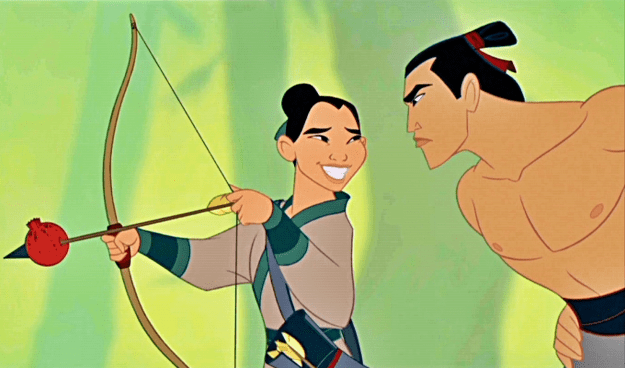
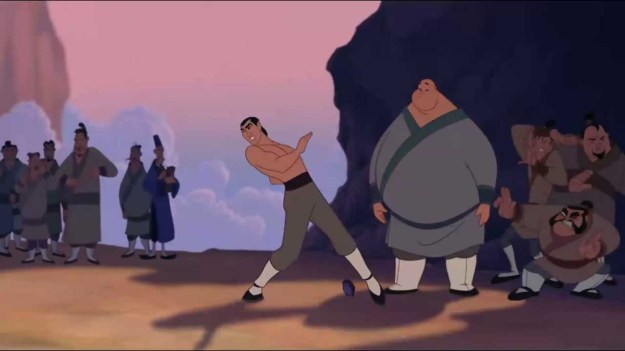
Which brings us back to where Mulan is hiding outside camp and Mushu puts his plan into action. Convincing Mulan that he was indeed sent by her ancestors to help her, the pair make their way into camp. Due to a series of errors, Mulan causes a huge brawl in camp, and she also falls afoul of two guys named Yao and Ling (a third guy, Chien-Po, is friendly to everybody). The fight is broken up by the camp commander, Captain Li Shang (son of General Li, the head of the imperial army), who demands to know who Mulan is. Introducing herself as Ping, the training begins with a lesson. Shang shoots an arrow into the top of a tall pole, and challenges Yao to climb up and get it. But there’s a catch: he has to do it using two heavy weights. Yao makes it halfway up, but the weights pull him back down, and one by one everyone fails in the task. This failure prompts the training song “I’ll Make a Man out of You” which follows Mulan in her attempts to train for war.
maxresdefault

Let’s get down to business to defeat the Huns
Did they send me daughters when I asked for sons?
You’re the saddest bunch
I ever met
But you can bet before we’re through
Mister, I’ll make a man out of you

Tranquil as a forest
But on fire within
Once you find your center
You are sure to win
You’re a spineless, pale pathetic lot
And you haven’t got a clue
Somehow I’ll make a man out of you

To say that her training goes badly at first is a massive understatement. In fact, no one is doing well in the beginning. Various skills are shown: shooting arrows through tomatoes before they hit the ground, deflecting rocks with a staff while balancing a bucket of water, launching primitive rockets at a target, hand to hand combat, etc. Finally, after Mulan falls behind in an endurance walk, Shang brings Mulan her horse and tells her to go home, she’ll never be a soldier. At this point, Mulan could go home, but having come this far, she’s not ready to give up.

I’m never gonna catch my breath
Say goodbye to those who knew me
Boy, was I fool in school for cutting gym
[spoken] This guy’s got ’em scared to death
Hope he doesn’t see right through me
Now I really wish that I knew how to swim

(Be a man)
We must be swift as the coursing river
(Be a man)
With all the force of a great typhoon
(Be a man)
With all the strength of a raging fire
Mysterious as the dark side of the moon

big_1446948139_image

Time is racing toward us
Till the Huns arrive
Heed my every order
And you might survive
You’re unsuited for the rage of war
So pack up, go home
You’re through
How could I make a man out of you?

(Be a man)
We must be swift as the coursing river
(Be a man)
Shang: With all the force of a great typhoon
(Be a man)
With all the strength of a raging fire
Mysterious as the dark side of the moon

She sees the arrow at the top and makes another try for it, and then it hits her: everyone has been letting the weights hang at their sides, but if one ties the weights TOGETHER, you can use them to pull you up to the top. Doing this, Mulan sends the arrow down to Shang at sunrise, and is allowed to stay. Not only do Mulan’s fighting skills improve , she is now accepted as “one of the guys” and is quickly becoming an accomplished warrior.


I really like this song: Shang’s singing voice is performed by Donny Osmond and it’s really awesome to watch the training montages as everyone progresses from clumsy to skilled. Next time: Everyone is thinking of “A Girl Worth Fighting For.”

Become a patron of the blog at: patreon.com/musicgamer460

Check out the YouTube channel (and consider hitting the subscribe button)

See also:

Mulan “Honor to Us All” (1998)

Mulan “Reflection” (1998)

Mulan “Mulan’s Decision” (1998)

Mulan “A Girl Worth Fighting For” (1998)

Mulan “The Huns Attack” (1998)

Mulan “I’ve Heard a Great Deal About You Fa Mulan…” (1998)

For more great Disney songs and films, check out the main page here: Disney Films & Soundtracks A-Z

And don’t forget to like Film Music Central on Facebook 🙂

*all images are the property of Walt Disney Studios

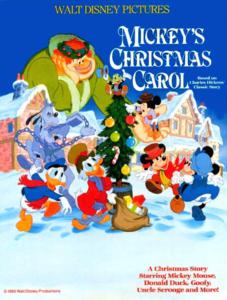
Mickey’s Christmas Carol Review: Christmas in July Blogathon 2016

This was my entry to Drew’s Christmas in July Blogathon 2016 🙂

Drew's avatarDrew's Movie Reviews

Last up for today is Bex, the gal behind Film Music Central, and her review of the 80s Disney holiday special Mickey’s Christmas Carol.  Bex examines all sorts of songs and scores in films on her site. So if you enjoy film music, be sure to give her site a look. Now, here’s what she has to say about her favorite holiday special.


Mickey's Christmas Carol

When I was growing up, I’m pretty sure I watched every animated Christmas special ever made (and that’s not a bad thing). One of my favorites was Mickey’s Christmas Carol, released by Walt Disney Studios in 1983. Growing up, the only copy of this story that we had was recorded onto a blank VHS tape from a live television program, which was fine until the VCR went bust and the family switched to DVD only. You can imagine my joy when I spotted a DVD copy…

View original post 638 more words

Hans Zimmer talks Man of Steel (2013)

Hans Zimmer talks Man of Steel (2013)

After Superman Returns (2006) fell flat at the box office, Warner Bros. made the decision to reboot the Superman film franchise and cast Henry Cavill in the title role. Like Superman: The Movie decades before, Man of Steel begins on the doomed planet Krypton, where Jor-El has learned of the planet’s imminent destruction and has his infant son Kal-El sent away in a small rocket ship shortly before the planet explodes.

57c01647b8312a5be660f9576dbd8ae7e4250b1f

Before he is sent away, however, Jor-El takes steps to infuse the genetic codes of Krypton into Kal-El’s DNA (codes that are also sought by General Zod, a former friend of Jor-El). Growing up on Earth, Kal-El, now living under the name Clark Kent, wanders the country seeking a purpose in life after his foster father is killed in a tornado (he’d forbidden Clark to use his powers to save him).

Man of Steel “Sculptural Percussion” (2013)

Man of Steel “Percussion” (2013)

Clark is forced into action when General Zod and his compatriots escape the Phantom Zone and land on Earth, around the same time that Clark enters a Kryptonian scout ship discovered in the Arctic. Inside, Clark finds an AI of his real father, Jor-El, who gives him a Kryptonian uniform bearing the family symbol. Meanwhile, Zod intends to terraform Earth into a new Krypton (which would kill most if not all of Earth’s human inhabitants) and Clark must stop him before it’s too late.

Man-of-Steel-General-Zod-s

Man of Steel “Strings of Steel” (2013)

Man of Steel “Solo Violinist” (2013)

As I remember it, this film got mixed reviews, and was heavily criticized for the scene where Superman kills General Zod.

The music for Man of Steel was created by veteran composer Hans Zimmer, who had initially denied rumors that he would be scoring the film. To make sure that Man of Steel stood out from previous Superman films, Zimmer did not use John Williams’ iconic “Superman March” in any way, instead creating his own original themes for the character. The five links I’ve located concern the score in general (top link) and how the various instrumental parts were devised for the score (two for the percussion and two for the strings).

Man-of-Steel-screenshot1

 I still prefer Christopher Reeve’s interpretation of Superman (and the “Superman March” will always be a favorite piece of mine), but I’ve also heard that Henry Cavill has done a good job in the role. I hope, therefore, that you enjoy listening to Hans Zimmer talking about the score for Man of Steel.

See also:

Hans Zimmer talks The Road to El Dorado (2000)

Hans Zimmer talks Hannibal (2001)

Hans Zimmer talks The Dark Knight (2008)

Hans Zimmer talks Sherlock Holmes (2009) and Sherlock Holmes: A Game of Shadows (2011)

Hans Zimmer talks Inception (2010)

Hans Zimmer (and Richard King) talk The Dark Knight Rises (2012)

Hans Zimmer talks Interstellar (2014)

Become a Patron of the blog at patreon.com/musicgamer460

Check out the YouTube channel (and consider hitting the subscribe button)

Don’t forget to like Film Music Central on Facebook 🙂

*poster image is the property of Warner Bros. Pictures