Monthly Archives: November 2020

Behind the Score of ‘I Am Greta’: Talking with Rebekka Karijord About the Documentary’s Music

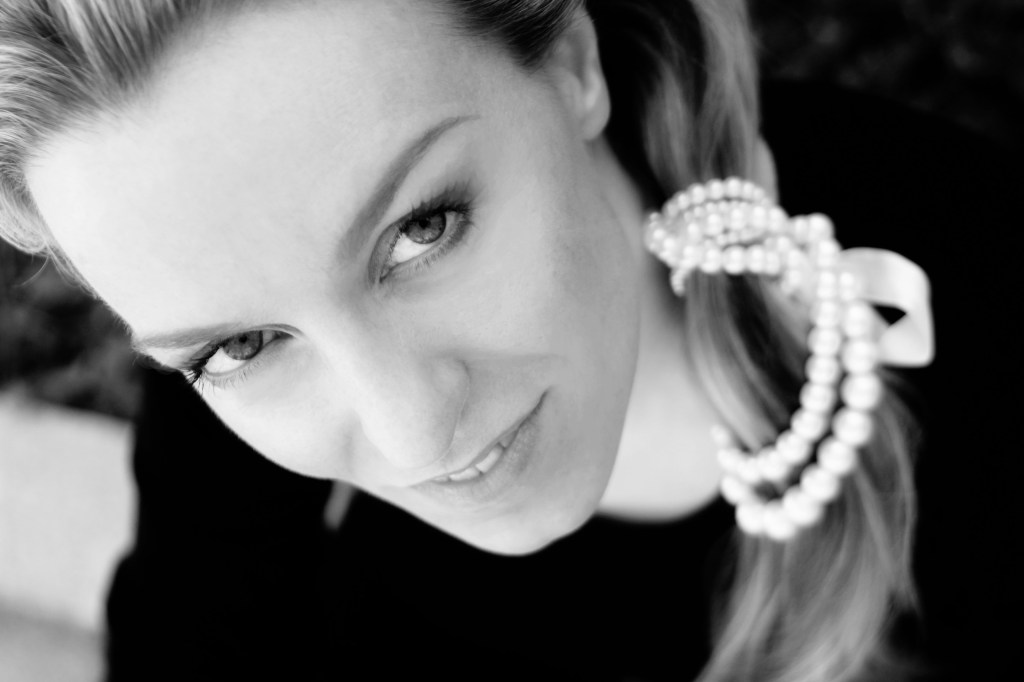
I recently got the opportunity to speak with composer Rebecca Karijord about her work with composer Jon Ekstrand on the recently released documentary I am Greta. Rebekka Karijord is a composer, musician, and playwright originally from Sandnessjøen in northern Norway. Over the course of her early career, she developed her unique voice by experimenting as a musician, actor, playwright and composer, working alongside directors including Joachim Trier, Margreth Olin and Nina Wester. She also began recording and releasing solo records. Her first album, Neophyte, arrived in 2003, a collaboration between Rebekka, Mattias Petterson and Malin Bång, and was followed up in 2005 by Good or Goodbye.

It was really exciting to get to talk with Rebekka about her work on I am Greta, and I hope you enjoy this interview.

How Did You Get Started With Composing for Film?

I’ve been writing for film, theatre and modern ballet for more than 15 years now. I worked as an actor from when I was 12 years old, but the music took over more and more in my life and work. When I decided to stop acting in films, the directors I had worked with started asking to use my music in their projects. So, it was a very organic, safe transition. And a career shift I have never regretted.

 How did you get connected with I am Greta?

Jon invited me in to the job with him, after the producer reached out to him. We had done one project together from before that, an HBO series. 

How did you and Jon approach scoring this documentary? Is it very different from scoring a film or are they more similar?

The most significant difference between scoring a documentary and a fiction film is usually regarding when in the process the editor and director wants the music. A lot of documentary film makers want to edit the whole film to a final score, or close to complete sketches. With a fiction film, I usually write the music after picture lock. With Greta, we actually decided to start writing once the editing was locked, since we wanted the score to have a homogenous, “big film” feel to it. 


Were you and Jon given a lot of time to work on I am Greta?


No, due to covid everything was pushed and the post production time was very slim. So, I think we had six weeks to write the whole score. There is a lot of music, so that was quite challenging. 


How did you decide on which instruments to use to symbolize the Earth, Greta herself, and other important elements? Was there some experimenting with different sounds before you and Jon settled on the final result?

Yes, for sure we tried out different things. But when Linnea Olsson (our solo cellist) came in the studio, everything fell in place. Her tone really matches the energy of the natural world in the film. As for Greta herself, I think it might be the piano. I feel the synthesizers and the voices stand for the movement. 


I’m curious, why does it say in the PR that the music “couldn’t take too much sentimentality.”?

Well, Greta is not a very sentimental person. She is super focused and clear when it comes to the climate questions. Emotional, yes, but never sentimental or self-conscious. She is also a very present person in people’s brains right now, and there are many strong opinions about her, and that made this film a bit tricky to score. Music is a really strong tool, and can be very leading. We wanted the music to be more observing and underlining, than leading. Therefore, we tried to work more with energy, tempo and repetition, than melody. There are melodic elements, but they are more in the background. 


Which part of the score do you hope audiences notice the most?

 I’m not sure, but I hope the music makes the audience feel more, think more, reflect more. I hope it can help to inspire change, I hope it lifts Greta’s message. 


Speaking of, do you or Jon have a favorite part of the score?

We have two favorite spots; One is at the cue called “Fridays for Future,” which was long called “Viral.” There is a collage of the children all over the world joining in, and especially one girl really touches me. She sits in her bedroom with a raised fist and says, “Today we stand behind you, and on Friday we will stand next to you!” It really melds well with the music right there, and actually still touches me every time. 

The other place is a music cue called “Trolls,” a part where we see a lot of the internet trolls’ comments and threats that Greta is receiving. It’s absurd with these older, white, male world leaders bullying her. Trump, Putin, Bolsonaro, and then at the end of the scene she starts dancing, carefree, liberated, as if to her very own internal melody. We had a long, drony sequence written to that scene and felt something was missing, and I sat down and improvised by the piano without seeing the images. When I stopped, Jon, who had been in the control room, came out with tears in his eyes. The piano totally married her movements. It was art by accident for sure, and is still our favorite musical spot in the film. 

I’d like to say thank you to Rebekka Karijord for taking the time to speak with me about her work on I am Greta.

Let me know what you think about I am Greta (and its music) in the comments below and have a great day!

See also:

Composer Interviews

Become a Patron of the blog at patreon.com/musicgamer460

Check out the YouTube channel (and consider hitting the subscribe button)

Don’t forget to like Film Music Central on Facebook 🙂

Soundtrack News: ‘The Crown’ Season 4 Original Soundtrack Available November 20

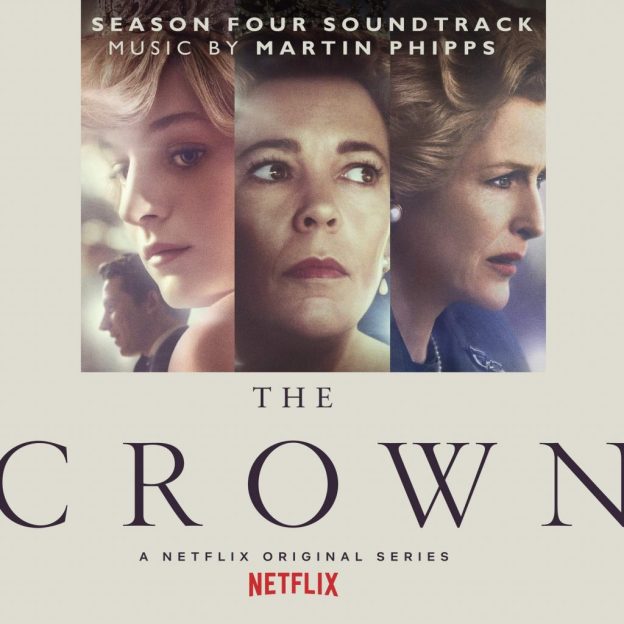
Sony Music has announced that the original soundtrack for The Crown Season 4 will be available on November 20, 2020. The music for this soundtrack was composed by Martin Phipps (Black Mirror). Phipps reprises his role as the show’s composer following a successful third season in 2019, for which he notably garnered his sixth career Emmy® Award nomination in the category of Music Composition for a Series.”

Of the soundtrack, composer MARTIN PHIPPS has the following to say:

“In Season 4, the world of our middle aged characters is blown apart by the arrival of Princess Diana. I wanted to represent this bombshell in the music, culminating in Episode 5 when Australia goes nuts for Diana and the score switches to a brash, technicolor electronic palette. We are also in the ‘80s throughout the season, so the score is sprinkled with retro synth elements. Peter Morgan (showrunner/general maestro) was clear that he also wanted a strong sense of musical continuity with Season 3, so I updated many of our familiar, more orchestral themes from previous episodes. One of my favorite scenes is the reuse of the Simple Harp theme, as Diana returns triumphant from shooting a stag during her ‘Balmoral tests.’  I hope you enjoy the new series, and its score, as much as I enjoyed writing it.”

Available everywhere now, Martin Phipps’ Season 3 Soundtrack received widespread critical acclaim, with The Los Angeles Times noting, “He accompanied Queen Elizabeth’s middle-age years, and the national tragedies and personal tribulations she encountered, with pulsing electronics, men’s choir and opulent orchestration that was simultaneously grave and groovy.” Phipps has continued to expand his influence and sound with each subsequent score.

ABOUT THE CROWN – SEASON 4

As the 1970s are drawing to a close, Queen Elizabeth (Olivia Colman) and her family find themselves preoccupied with safeguarding the line of succession by securing an appropriate bride for Prince Charles (Josh O’Connor), who is still unmarried at 30. As the nation begins to feel the impact of divisive policies introduced by Britain’s first female Prime Minister Margaret Thatcher (Gillian Anderson), tensions arise between her and the Queen which only grow worse as Thatcher leads the country into the Falklands War, generating conflict within the Commonwealth. While Charles’ romance with a young Lady Diana Spencer (Emma Corrin) provides a much-needed fairytale to unite the British people, behind closed doors, the Royal family is becoming increasingly divided.

Be sure to check out the season 4 soundtrack of The Crown when it releases on November 20!

See also:

Become a Patron of the blog at patreon.com/musicgamer460

Check out the YouTube channel (and consider hitting the subscribe button)

Don’t forget to like Film Music Central on Facebook

Into the Realm of Kafka: Talking with Mikolai Stroinski & Garry Schyman about their Score for Metamorphosis (2020)

Earlier this year, I got the chance to check out the soundtrack for the uniquely scored video game Metamorphosis, inspired by the work of Franz Kafka and scored in a very atypical style for a video game. The plot follows you, the protagonist, after you are turned into a bug and forced to explore a suddenly unfamiliar world from that perspective. The music for Metamorphosis was composed by Mikolai Stroinski, whose past credits include The Witcher 3 and Age of Empires IV, and Garry Schyman whose past works include scoring BioShock, Destroy All Humans! and Dante’s Inferno, just to name a few.

Not long after listening to the soundtrack, I received a follow up opportunity to speak with the composers themselves. Due to my day job, I’ve only just finished putting the interview together, and I’m really excited for you to check it out. Here is my interview with Mikolai Stroinski and Garry Schyman about their work on Metamorphosis.

How did the two of you get your start in composing for video games?

Mikolai: It was 2012 when I was asked to compose music for the Dark Souls 2 trailer. Both the trailer and the music itself gathered a strong fanship and soon after some independent studios asked me to compose music for their games. The Witcher 3 followed not that long afterwards.

Garry: Pure serendipity – My agent in 2004 sent my resume over to THQ, which, at the time was a big game publisher.  It sat on the fax machine (remember that technology?) and an executive happened to see it and she just happened to be my girlfriend’s (from college) roommate.  That started a series of events that led me to scoring Destroy All Humans! which I loved working on and it led me to pursue scoring for games very seriously.  And as the audio director for DAH! became the audio director for Bioshock she hired me without question, which was a huge boost to my career. 

How did you come to be involved with Metamorphosis?


Mikolai: I think it was mid-2018 when I was giving a presentation on video game music in Warsaw. Afterwards I was invited for drinks by the organizers and joined in by some people from the audience. At some point a group of people approached me wanting to show me a game they had been working on and asked if I would be interested in scoring it. It looked very original and interesting so I said I would do it with pleasure. After just under a year later I started working on it and it was during the very early process of planning the music that it became quite apparent it was going to be utilizing a symphonic palette with primarily atonal music. I somehow felt obliged to invite Garry because I knew he would enjoy it immensely – as much as I would. Garry said “yes” and the rest is history.
Garry: I have been friends with Mikolai for a few years and he contacted me one day and asked if I’d be interested in scoring the game with him.  When he described it as a Kafka game, I was YES for sure interested. 

What was behind the decision to have Metamorphosis scored in the style of composers like Alban Berg, Arnold Schoenberg and other Expressionist composers? 

Mikolai: Choosing the music style that we did, allowed us to be dark but not horrifying. I don’t think the score ever crosses that line when it becomes horrifying. It’s also interesting how combining the gameplay with this music brings out a subtle sense of humor, which was our goal.

Garry: It was my idea initially because Kafka was an Expressionist author who wrote during that turbulent time in German history.  Though he was Czech he wrote in German and was part of that movement. The absurdist aspects of the game reminded me of the Expressionist music of that era. Mikolai immediately agreed and we were off and running.  We also decided to include the vocal style invented by Schoenberg called Sprechstimme (half spoken half sung) which perfectly complemented the game’s ironic humor. 

Once you decided on composing in that style, how did you approach scoring the game? That is to say, what was your starting point?

Mikolai: I think we both started to sketch our themes pretty early on. Sharing them between each other and applying them to the score was an important factor which helped the cohesiveness of the score. Once the pieces were instrumentally sketched out, we invited singer Joanna Freszel for a recording session. She did a fantastic job!

Garry: The developer, Ovid Works, is a Polish company and Mikolai, who was living in Warsaw at that time, was in touch with them and sort of divvying up the music between us.  I scored most of the below ground insect music and Mikolai, the above ground score.  That had an advantage as each of us created a slightly different sound for each area which worked well.  Though I must say our score was very unified and most people can’t tell who wrote which cues until we tell them.  There was a wonderful synchronicity that did not require much conversation or planning between us. 

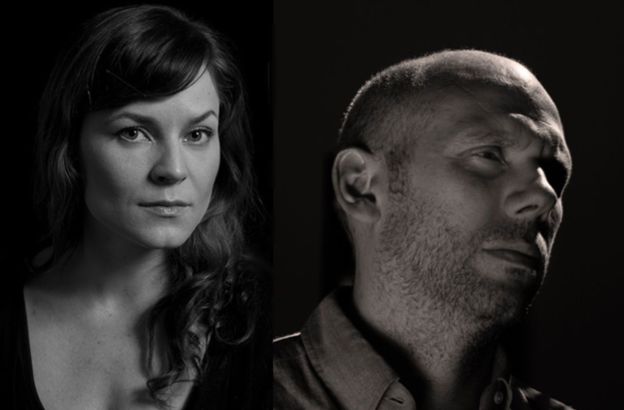
Joanna Freszel

I’m curious, what is the singer performing Sprechgesang singing out in the soundtrack? Does it relate at all to the player’s predicament of being turned into a bug? 

Mikolai: The lyrics I chose are about the world perceived by an insect, possibly one that used to be a human in a distant past. The singing technique is so uncommon, it might as well be the way bugs sing in their heads. Or it might be, from a strictly sonic point of view, the mirroring of the crazy world that doesn’t make sense as it had before.

Garry: We each had a different approach to lyrics for Joanna; I had a former student of mine who speaks German set the actual lines from Kafka’s book for my music.  It turned out really well and is at least intellectually unifying, though I doubt anyone will know we used Kafka for lyrics.   Mikolai went in a different direction.   My lyrics do not deal directly with the player’s predicament as far as I know.  Maybe it does but that would be pure serendipity. 

How much time did you have to score the game?

Mikolai: I think it was about 6 weeks of work plus getting things ready for the recording session and overseeing the mixing process.

Garry: I think I wrote the music over a period of a month or so.  I had plenty of time, as the writing went so smoothly and the ideas just poured out.  We then had the music recorded with live players, which we did with an orchestra in Macedonia.  We conducted that remotely (meaning we were at our home studios while the orchestra played at the remote studio) and it went very well!  We got an excellent performance.  Everything flowed on this gig, at least in retrospect, it all went so easily, and I loved writing this music.  Of course, the singer Joanna Freszel brought so much with her amazing vocal performance.  I have to credit Mikolai for directing her as she came to his studio in Warsaw to record and it just turned out spectacularly. 

Do you have a favorite track in the score?

Mikolai: I like all the music that we both did. However, the favorite would be “The Final Run” or “The Tower”.

Garry: I have a couple of favorite tracks, “Corridors” and “Bug village”.  I am also very pleased with the “Menu Theme”.  Really, I dig it all.  I don’t mean to sound conceited but I just had such a great time writing this music and I feel it turned out so unique and fits the game so well. 

What do you hope players take away with them when they hear the music in this game?

Mikolai: I silently hope that it would open some players to music that, at times, might be a bit more demanding. I hope they will also notice that there is something different about it – hopefully “good different”. But that’s not our main goal. We are happy that our music helped the game have its unique color.

Garry: Well the music should underscore and set a mood and create a unique vibe for this really cool, unusual game.  I mean, how cool to make a game based on Kafka.  I would love for the players to be curious about the music and especially the vocal and perhaps explore Expressionist music.  Maybe a few will really enjoy it and that would be lovely!  I don’t write music for games or films for that matter to get the player or viewer to listen to certain types of music, but if it happens, I consider that a real contribution. 

Once again I need to give a huge thank you to Mikolai Stroinski and Garry Schyman for taking the time to talk with me about their work on Metamorphosis. Let me know what you think about Metamorphosis in the comments below and have a great day!

See also:

Soundtrack Review: Metamorphosis (2020)

Composer Interviews

Become a Patron of the blog at patreon.com/musicgamer460

Check out the YouTube channel (and consider hitting the subscribe button)

Don’t forget to like Film Music Central on Facebook 🙂
Soundtrack Review: Godfall (2020)

As crazy as 2020 has been (and it has been wild in more ways than I care to remember), one thing that has been pretty awesome is all the great soundtracks I’ve gotten to listen to. This year I’ve gotten to check out more video game soundtracks than ever before, and this is something I hope to continue into 2021 and beyond. To my delight, with the year winding down I was given the opportunity to check out the soundtrack for PS5 launch title Godfall, with the music composed by Ben MacDougall.

Ben MacDougall is a prolific composer for film, TV and video games, who most recently wrote the original fantasy score for Sony PlayStation 5 launch title, Godfall. His rich and diverse portfolio enjoys airtime on prime-time networks and has been featured on high-profile global TV events such as the Olympics and Academy Awards as well as countless franchises, campaigns and AAA studio projects.

MacDougall’s score for Godfall is described as follows:

Ben MacDougall’s modern fantasy score for GODFALL blends orchestra, synths processed with organic sound sources, and featured soloists, as well his own string instrument which produces a unique pulsing sound thread throughout the score. The soundtrack comprises of sweeping cinematic moments, heart-pounding combat sequences and world-exploring ambient music to accompany and immerse players in the luminous, mysterious world of Aperion.

Now I’ve gotten to listen to some absolutely gorgeous soundtracks this year (Ghost of Tsushima and The Wolf of Snow Hollow come to mind), and the music for Godfall is right up there with the best of them. Ben MacDougall really has gone all out here, and does everything that I love in a video game soundtrack. For one, from beginning to end, the music feels epic and cinematic in scope (enforcing my growing belief that the line separating video games from cinema is slowly but surely fading away).

Another element I really like in the music for Godfall is how MacDougall varies up the music between the different areas of Aperion (the game world). “Land of the Valorians” is different from “Alluvial Plains”, which in turn is different from “Waters of Aperion.” But what really makes it brilliant is that, while each region is differentiated by its own sound, you can tell that they’re all still connected by an overarching theme that places them all in the same “world” together. That is not easy to do without being obvious about it, and it’s lovely to hear how the music slowly shifts as a new area of the world is being explored.

It’s also really fun to look at the track list (the very LENGTHY track list) and try to work out the plot of the game. As with many film score track lists, I suspect there are some minor spoilers to be found if you think about some of these track titles. Also, the length of the track list has to be a sign of how long this game is (which makes sense since this doesn’t strike me as a quick game to get through). And one last positive to mention: the music is indeed beautiful, but it’s not too over the top, meaning it won’t (or at least it shouldn’t) distract you from the gameplay.

Track List

  1. Aperion’s Champion 1:51
  2. The Fall 2:49
  3. Land of the Valorians 1:51
  4. Temple of the Ancients 2:04
  5. The Warden 2:05
  6. Guardian 2:08
  7. Sanctuary 2:24
  8. A New World 2:45
  9. Crimson Glades 2:26
  10. The Vargul Tribes 1:34
  11. Prismatic Falls 1:35
  12. Alluvial Plains 1:51
  13. Bygone Ruins 1:31
  14. Ravenous Hunter 1:38
  15. Quiescent Dreams 2:28
  16. Sorcerer’s End 2:27
  17. Ascending the Tower 1:45
  18. Master of the Tower 1:44
  19. Waters of Aperion 2:32
  20. Cobalt Caldera 3:07
  21. Call to Action 2:00
  22. Leviathan’s Rest 2:25
  23. Abyssian Gaze 1:51
  24. Wisdom of the Deep Ones 2:01
  25. Warriors of Darkness 2:05
  26. The Ancient Depths 1:18
  27. The Silver Moon 2:32
  28. Song of Aperion 2:27
  29. Realm of the Nyak 2:00
  30. King of the Hunt 1:38
  31. Song of the Kindred 3:40
  32. The Storm 1:45
  33. The High Places 1:39
  34. Lords of Dawn and Dusk 1:40
  35. Aetheric Hymn 2:21
  36. Sunsteel 3:26
  37. Triumph of Air 1:37
  38. The False Archon 2:14
  39. Apotheosis 1:26
  40. Change

While it will (unfortunately) be a long, LONG time before I get my hands on a PS5 (or a copy of Godfall), listening to this gorgeous soundtrack has me convinced that the game is worth trying out. Yet again I’ve found another contender for Best Video Game Soundtrack of 2020.

Let me know what you think of Godfall (and its soundtrack) in the comments below and have a great day!

See also:

Video Game Soundtracks

Become a Patron of the blog at patreon.com/musicgamer460

Check out the YouTube channel (and consider hitting the subscribe button)

Don’t forget to like Film Music Central on Facebook

My Thoughts on: The Mummy (1932)

Having made my way through most of the Frankenstein films, I decided to take a detour into a film series I hitherto knew very little about: the Mummy! Oh sure, I’m very well acquainted with The Mummy (1999) and its sequel (I don’t acknowledge the existence of Tomb of the Dragon Emperor), but until this past month I’d never seen the film that started it all, the 1932 film starring Boris Karloff as the titular Mummy.

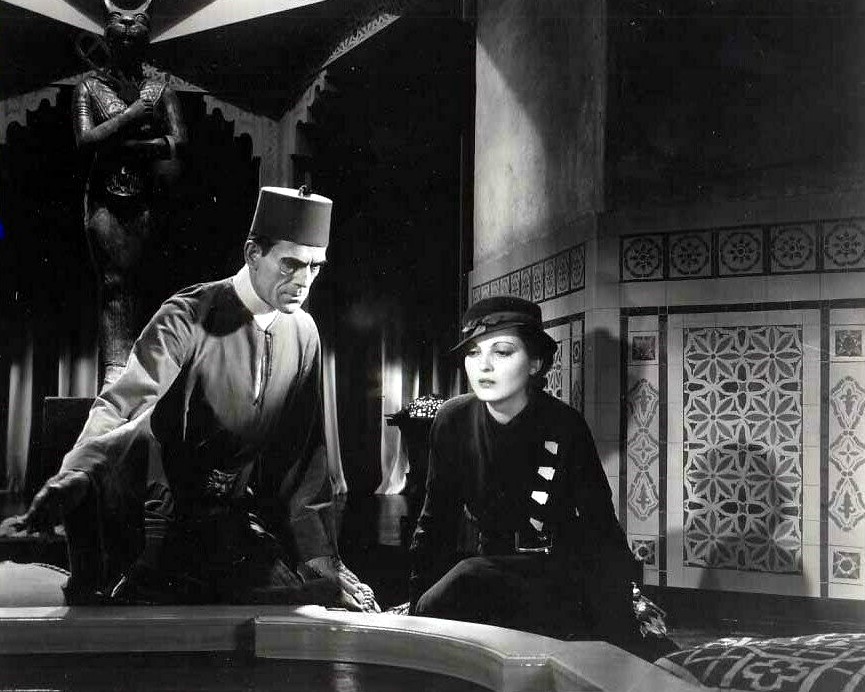
First I have to say that every assumption I had about this movie turned out to be wrong. This is NOT one of those movies that has the Mummy shambling through the countryside wreaking havoc as he goes (that’s all of the sequels), and really the film only bears the loosest of resemblances to the 1999 remake. But speaking of, I was surprised at how identical the core premises of each film are. In this film, as in the remake, Imhotep is a high priest cursed to be mummified alive for attempting to revive his love from the dead. Here it’s the Scroll of Thoth that gives the Mummy his power instead of the Book of the Dead (no Book of Amun-Ra in sight either), but otherwise it’s the same basic principle.

My initial disappointment at not seeing more of Karloff in his Mummy bandages was quickly melted away when I saw his performance for the bulk of the film as Ardeth Bey (bet that name sounds familiar if you’ve seen the 1999 film). Even if you weren’t paying attention at the beginning, the film leaves no doubt to the viewer that Ardeth Bey is the rejuvenated Mummy. His walk is unnaturally stiff, and he speaks very slowly and carefully, as if used to speaking a language very different form those found in the modern world. I’m beginning to understand why Karloff was so acclaimed. You’d never think that just a year before Karloff had played Frankenstein’s monster. He completely embodies the Mummy with no hint of that other role, and that’s not something all actors can do.

Now on to something I found really cool. Inevitably, the film flashed back to how the Mummy came to be. It only took a few minutes for me to realize that this entire flashback to Ancient Egypt is essentially a silent film, exaggerated acting and all, spliced into the middle of a sound film.This blew my mind until I considered that The Mummy was made in 1932, silent films had been made on a fairly regular basis until just a few years prior. It wouldn’t have been that hard to put together, and it was a fairly ingenious way to make it clear that we are in the past (by using a now-outdated filming style). And that flashback is the most consistent with the 1999 remake: Imhotep steals the Scroll of Thoth to resurrect Anck-su-namum but is caught before he can finish. That’s pretty much beat for beat how the prologue of the remake plays out (minus the Pharaoh being murdered, that doesn’t happen in this one).

I really like Zita Johann as Helen/Anck-su-namum. I was fascinated to learn that Zita was a firm believer in reincarnation, which I think really helped her performance as the ramifications of reincarnation are hinted at here. See, at one point it’s hinted that Helen and Anck-su-namun are both inhabiting the same body, and feeling very confused about it. You really feel for Helen’s suffering, as she clearly doesn’t understand what’s happening to her. You also, believe it or not, feel for Anck-su-namun once she awaken’s in Helen’s body. Here’s an ancient priestess briefly living in the 20th century, and handling it pretty well if I’m honest (though being surrounded by ancient Egyptian relics int he museum probably helped). I loved how ancient magic came into play at the climax of the film. The idea that these ancient spells can still work if only the right words are spoken fascinates me.

Also, I have to talk about how amazing the Mummy makeup is. I’m referring to the Mummy as he’s seen lying in his coffin at the start of the film. In black and white, it looks for all the world like a desiccated Mummy, perfectly preserved. But then…the magic words are spoken….and the Mummy’s eyes blink open! That’s the moment that sticks with me the most out of this whole film, seeing those living eyes open in the middle of an otherwise dead face. Now THAT is horror, something that sends a chill down your spine no matter how old the film is. Also, the moment at the end when Imhotep turns into dust is very well done. I’m a little sad that Imhotep didn’t get some final words, but I understand why they didn’t go that route. Since the Scroll of Thoth is all that was keeping him alive, I can see that its destruction would ensure his immediate demise.

One last thought: I’m glad The Mummy was made pre-Code because otherwise those scenes with Anck-su-namun in her quite revealing Egyptian outfit would never have happened (and I shudder to think what might’ve appeared in its place). It’s still wild to me that such things were considered improper, why Helen looks almost modern in that outfit (yes I know, it was a different time, I just can’t help commenting on it).

The Mummy (1932) has quickly become one of my favorite horror films, and I highly recommend it to anyone who wants to experience a horror classic. Just for fun, follow up a watching of this film with the 1999 remake (it’s a fun experience I promise!)

Let me know what you think about The Mummy (1932) in the comments below and have a great day!

See also:

Film Reviews

Become a Patron of the blog at patreon.com/musicgamer460

Check out the YouTube channel (and consider hitting the subscribe button)

Don’t forget to like Film Music Central on Facebook

The Music of Snow Hollow: Talking with Composer Ben Lovett about ‘The Wolf of Snow Hollow’ (2020)

After getting to check out the soundtrack for The Wolf of Snow Hollow, I knew I had to speak with composer Ben Lovett about his work on this soundtrack. Fortunately for me, the moment came and I took it! It was so exciting to get to ask Ben Lovett about his work on this score and I can’t thank him enough for taking the time to answer my questions about the music for The Wolf of Snow Hollow.

Ben Lovett is an American recording artist, songwriter and composer known for crafting unconventional scores to a diverse range of films including the Netflix original The Ritual, Independent Spirit Award nominee The Signal, the Duplass Brothers’ survival thriller Black Rock, Amy Seimetz’s award-winning noir Sun Don’t Shine, Emma Tammi’s avant-garde western The Wind, and the time travel sci-fi noir Synchronicity which earned Ben a nomination for “Discovery of the Year” at the prestigious World Soundtrack Awards. Lovett’s latest work includes scores for the Hulu series Into the Dark, the colorful taxidermy documentary Stuffed, Orion Pictures tragicomedy The Wolf of Snow Hollow from director Jim Cummings, and a new collaboration with Ritual director David Bruckner on the Searchlight Pictures thriller, The Night House.

How did you get started with being a film composer?

I was tricked.  Someone convinced me I could do it even though I tried to argue otherwise.  Or more specifically, they convinced me I had no good reason not to try, and of course they were right.  That was in college at the University of Georgia in the late 90’s and I’ve been doing it ever since.

How did you get connected with The Wolf of Snow Hollow?

The producers at Vanishing Angle reached out early in post production. I scored “American Folk” for them a few years back and had a good rapport there. Jim is part of a great community of filmmakers that all share an orbit with Vanishing Angle and he was familiar with some of the scores I’d done. I watched “Thunder Road” and absolutely loved it. I knew after about the first 10 minutes that I had to be part of whatever he was doing next.

I saw in the PR announcing the release of the soundtrack, that you said that you and the director talked together and some big names came up, like Herrmann and Prokofiev, in regards to the music. How big an influence did they play in the film’s score? What other names came up in the discussion that ended up having an influence on the score?

When I came onboard Jim sent me a YouTube clip of a 75 piece orchestra performing Prokofiev’s “Romeo & Juliet” and said “The score needs to be like this!” The budget was very modest and there wasn’t a lot of time so as reference points go that one was exciting and hilarious and terrifying all at once. Jim was super enthusiastic about the score though and I could tell he wasn’t afraid to swing big. He referenced Jon Brion’s score to “Magnolia”, and the Jerry Goldsmith score for “The Burbs” as spiritual reference points as well. So I dove in with this sort of Mt Rushmore of influences in the background and tried to just channel the spirit of all that into some kind of hybrid, low budget, horror comedy appropriate, musical jambalaya.

More specifically, how big an influence did Bernard Herrmann’s music have? I swear I can hear parts resembling Psycho (1960), especially in “Third Crime Scene.” Are there direct musical homages in there? If so, was that a thing decided on from the beginning or did it just evolve as the scoring process continued?

That evolved along the way. It was more a sense of feeling like that was a common language where all those other references crossed paths. There weren’t direct homages or specific Herrmann scores I was referencing, it was more channelling the spirit of his style as a general point of inspiration. There’s something very signature in the way his scores operate melodically, and some intangible quality about the nature of their relationship to the picture and how his music informs the overall aesthetic of those films.

“Third Crime Scene” is kind of a thought experiment of me going, “What if Bernard Herrmann had scored “Peter & the Wolf’? I was never afraid of landing anywhere in the vicinity of his talent so it felt like a safe exercise to swing for something with a similar mentality, or whatever I’d interpreted that to mean. I didn’t get too academic about it, it just seemed like a fun sandbox to play in and one that seemed appropriate for this film.

How did you approach scoring The Wolf of Snow Hollow? Did you have a lot of time to work on the music?

Definitely not. I’m not sure I’d know what to do with a lot of time, does that exist? It was a small window from start to finish, very much your classic race the clock, down to the write, 11th hour, head first slide into home plate kind of finish. But that’s also the job, honestly, so I’m no stranger to that.

In terms of the approach, I knew I would have a limited number of crayons to draw with so I made a decision to just pick just the boldest flavor of each color that I needed. I guess that’s where the Herrmann thing comes in – I wasn’t going to have a lot of instruments so I needed to make sure the parts could carry a lot of water for us. It was figuring out how to pack big ideas into small packages, in that sense. How to deliver on the ambition of the director within the logistical limitations of the schedule and budget. I felt like the film had the capacity to hold something pretty audacious, it’s just something in how Jim directs movies. The score needed a distinct musical personality that could address the horrible reality of the things going on in this town, but specifically in how they’re related to this manic central character trying to put a stop to them – to find both the comedy and humanity in his struggle, because that’s really where the movie takes place thematically.

On a related note, are there leitmotifs in the score or did you approach it another way?

There are certainly some thematic, recurring melodies and variations in there that map out the arc of the main character, but we weren’t too dogmatic about those always accompanying specific situations or thematic moments. You routinely have characters in the film that are introduced then promptly killed off, so it became more about the recurrence of certain instruments and sounds than melodies, and what those sounds might represent to the viewer. Because I was working to locked picture with a new director and very much doing both at full sprint, sometimes the process influences decisions as much as any sort of creative intention. You’re trying to do your best to help make the movie as good as you can, while you can, with what you have.

Do you have a favorite track in the score?

Nah. Once they’re done you love em all, because you no longer have to feed them and change their diaper and they’re not keeping you up all night. I don’t have kids so I don’t know if that analogy works but, it’s sorta like that I imagine. Once they’re grown and leave home you forgive them for all they put you through. Maybe that’s where the analogy breaks down, I don’t know. More to your point, I think I’m more likely to listen back to ones that either took an unexpected turn along the way or endured some interesting metamorphosis by way of film scoring being a naturally collaborative process. Generally the ones that are the hardest to nail are usually my favorites in the end. I think the progression of the three crime scenes is a pretty fun journey. If you play those in a row you really get a sense of the variety of ground we needed to cover. “Detectives” and “Returning Evidence” maybe best capture the overall spirit and intention of the score, and are both thematic pieces that contain recurring elements.

What do you hope listeners notice when they listen to this music?

Well I always hope the album provides the means to re-experience the story in a way that reveals another level to what you might have enjoyed or experienced in the film. I feel like there are elements of any story that only music can describe, or that it best describes, in some strange innate way that we experience things as humans. Once you have a reference point for the characters and the story, my hope is that people can throw on the album and revisit Snow Hollow and uncover some new clues about what was going on there the whole time.

Again, I’d like to thank Ben Lovett for taking the time to speak with me about his work on The Wolf of Snow Hollow. Please check this film and soundtrack out if you haven’t already.

See also:

Soundtrack Review: The Wolf of Snow Hollow (2020)

Composer Interviews

Become a Patron of the blog at patreon.com/musicgamer460

Check out the YouTube channel (and consider hitting the subscribe button)

Don’t forget to like Film Music Central on Facebook 🙂