Category Archives: Interview

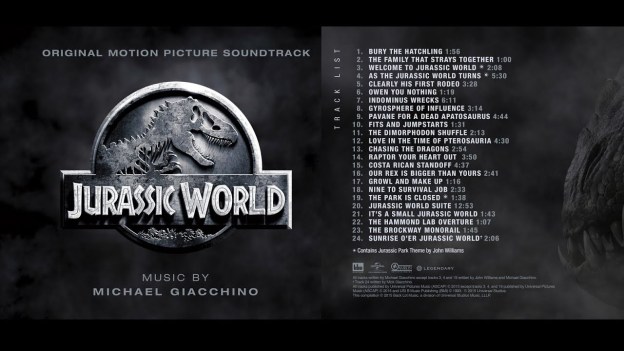
Michael Giacchino talks Jurassic World (2015)

I’m probably stretching things just a bit because this is from a red carpet interview, but he does speak about how he got the job of scoring Jurassic World, which is exciting.

Jurassic World was the long awaited sequel to Jurassic Park (it ignores the events of The Lost World and Jurassic Park 3, essentially erasing them from continuity), set over twenty years after the original story. Isla Nublar is now home to a massively successful dinosaur theme park, based on the original dream envisioned by John Hammond, who has sadly passed on and left the park in the charge of Simon Masrani.

hero_JurassicWorld-2015-1

Business couldn’t be better, but the corporations that ultimately control the park want to see even bigger profits. To that end, they commission a new dinosaur to be created using various strains of dino DNA. All of this is overseen by Claire Dearing, operations manager for the park. As the new dinosaur, dubbed “Indominus Rex” becomes prepped for its debut to the public, concerns are raised by Owen Grady, an ex-Navy SEAL and expert on Velociraptors (his job is to train the raptors to obey human commands).

As Owen sees it, breeding regular dinosaurs is dangerous enough, but creating a NEW one from scratch is opening up a whole new world of problems. To complicate matters, Dr. Wu refuses to disclose which strands of DNA were used to create Indominus Rex, meaning Owen initially has no idea what sort of abilities the dinosaur will have. During an inspection of the enclosure, Indominus Rex manages to escape, and Claire is suddenly faced with a rampaging dinosaur loose on an island full of thousands of unsuspecting guests…

jurassic-world.jpg.653x0_q80_crop-smart

According to Michael Giacchino, he was offered the job of scoring Jurassic World after he created some music for The Lost World video game and Steven Spielberg contacted him (after hearing the music) and said “This is great, when can you score this?” Spielberg was in fact so impressed with what Giacchino created that when the time came to pick a composer, he was the first person considered.

That being said, since John Williams score for the original film is so iconic, there are a number of references to the main theme of Jurassic Park throughout the film (this serves to tie the two films together musically). I think it’s really cool that Giacchino got the opportunity to score the film because he worked on the music for a video game first.

This little interview is pretty short, if I find a longer one I’ll be sure to add it, but for now, enjoy!

See also:

Michael Giacchino talks The Incredibles (2004)

Michael Giacchino talks Mission: Impossible 3 (2006)

Michael Giacchino talks Ratatouille (2007)

Michael Giacchino talks Up (2009)

Michael Giacchino talks Star Trek (2009)

Michael Giacchino talks Super 8 (2011)

Michael Giacchino talks John Carter (2012)

Michael Giacchino talks Star Trek: Into Darkness (2013)

Michael Giacchino talks Jupiter Ascending (2015)

Michael Giacchino scoring Rogue One: A Star Wars Story (2016)

Michael Giacchino talks Zootopia (2016)

Michael Giacchino talks Jurassic World: Fallen Kingdom (2018)

Film Composer Interviews A-H

Film Composer Interviews K-Z

Become a patron of the blog at: patreon.com/musicgamer460

Check out the YouTube channel (and consider hitting the subscribe button)

And don’t forget to like Film Music Central on Facebook


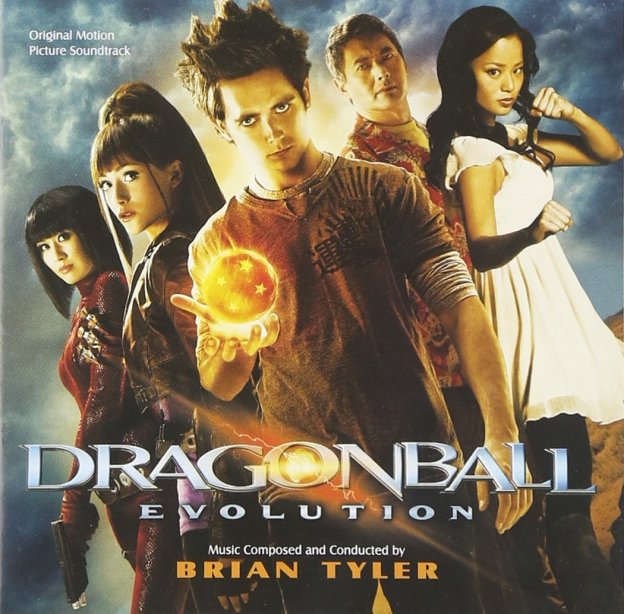
Brian Tyler “Dragonball Evolution” scoring session (2009)

“Dragonball Evolution” scoring session (2009)

I bet I know what you’re thinking: WHAT? They made a live-action movie based on Dragon Ball? Where, when and how can I get it???

Not.so.fast.

There’s a reason you likely haven’t heard of this film (and if you have seen it, you know what I’m about to say): it SUCKS. Badly. I mean REALLY badly. So badly that Akira Toriyama, the creator of the Dragon Ball manga, practically disowned the film. Yea, that’s pretty bad.

Based on the titular Dragon Ball manga, the film follows Goku and Bulma as they travel together to gather the seven Dragon Balls in a race to stop the demon Lord Piccolo before he can gather them first. Several of the major characters from the series are encountered: Goku, Chi-Chi, Bulma, Master Roshi, Piccolo and Yamcha. Shen Long, the legendary wish-granting dragon who only appears when the seven dragon balls are gathered, makes an appearance as well.

dragonball-evolution-poster

Despite the film being an overwhelming failure, there is one bright spot: the musical score, composed and conducted by Brian Tyler. The score was very well received and positively compared to other contemporary film scores.

dragon-ball-evolution-1013099

I found this short clip from a recording session for the film uploaded in February of 2009. What I love about Brian Tyler’s musical style, is that he doesn’t completely abandon classical conventions, the way some 21st century composers do. Instead, he works to blend the traditional orchestral sound with more “modern” themes using synthesizers and electronic instruments. He essentially goes for the best of both worlds and so far he has nailed it every time.

 Enjoy this look at the recording of the Dragonball Evolution soundtrack, and if you’re interested in the series, try the Dragon Ball and Dragon Ball Z anime instead of this film.

You can become a patron of the blog at patreon.com/musicgamer460

See also:

Film Composer Interviews A-H

Film Composer Interviews K-Z

Brian Tyler “Alien vs. Predator: Requiem” scoring session (2007)

Brian Tyler scoring Partition (2007)

Brian Tyler talks War (2007)

Brian Tyler talks Rambo (2008)

Brian Tyler “Law Abiding Citizen” scoring sessions (2009)

Brian Tyler talks The Expendables (2010) 

Brian Tyler talks Fast Five (2011)

Brian Tyler “Battle: Los Angeles” (2011) scoring session

Brian Tyler scoring session for Iron Man 3 (2013)

Brian Tyler “Teenage Mutant Ninja Turtles” (2014) scoring session

Brian Tyler conducting and scoring Now You See Me 2 (2016)

Brian Tyler “Power Rangers” scoring session (2017)

Brian Tyler conducts The Mummy (2017)

Like Film Music Central on Facebook here

*film poster is the property of 20th Century Fox

Michael Giacchino talks Jupiter Ascending (2015)

Michael Giacchino talks Jupiter Ascending (2015)

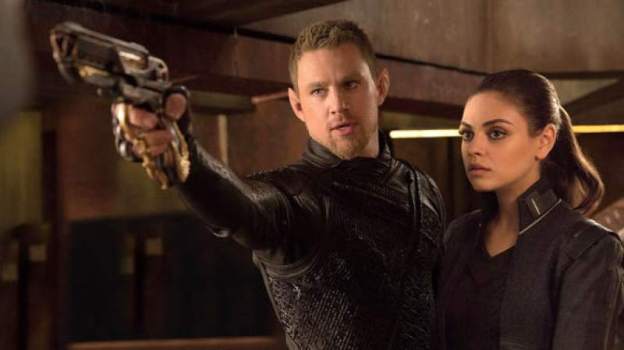
Oh Jupiter Ascending….if I could describe this movie in one word it would be potential. This movie had the potential to be so incredibly awesome. Think about it: in a world where reboots, remakes, sequels and franchises are the norm in Hollywood, it’s very rare to find a film with a wholly original concept.

And the concept sounds great on paper: the galaxy is ruled by a group of alien royal dynasties, who harvest the life forces of evolved planets in order to remain perpetually young themselves.

JUPITER ASCENDING

An ordinary human girl, Jupiter Jones, finds out that due to her genetic makeup, she is actually the heiress to the planet Earth. However, the alien Balem, one of the sons of the previous owner of the planet, wants Earth for himself, as Earth is meant to be harvested next.Jupiter finds herself plunged into interstellar intrigue with the fate of planet Earth at stake.

It sounds really good, it SHOULD have been really good, and yet….despite amazing visuals and a gorgeous score from Michael Giacchino (more on that in a minute), this film fell FLAT and I mean really flat!!! Portions of the dialogue were cringe-worthy, and the performance of several actors was criticized as wooden, flat and generally not as good as it could have been. In other words, Jupiter Ascending launched into theaters and then was quietly never heard of again.

Jupiter Ascending Soundtrack

One of the few bright spots in this film was the score, written as I said by Michael Giacchino. In this interview that I discovered, Giacchino explained that when the Wachowskis approached him about scoring this film, they actually asked him to write the music BEFORE the film had been shot, so they could edit the film around the music.

020315-jupiter-ascending-mila-kunis-costume-594

This is rarely seen in the world of film music, as normal practice is to make the film first and THEN create the musical score. In effect then, the Wachowski’s were asking Michael Giacchino to create a “symphony” for Jupiter Ascending that would then be edited into a proper film score.

JUPITER ASCENDING

While I can’t necessarily recommend the film itself, I do recommend checking out the soundtrack to this film (see the link above) and take a few moments to enjoy the music that Giacchino worked so hard to create. It always hurts when a great score is attached to a less-than-stellar film. But, such are the risks of being a film composer. Enjoy the interview!

(I apologize for the background noise, it sounds like they filmed in a restaurant)

See also:

Michael Giacchino talks The Incredibles (2004)

Michael Giacchino talks Mission: Impossible 3 (2006)

Michael Giacchino talks Ratatouille (2007)

Michael Giacchino talks Up (2009)

Michael Giacchino talks Star Trek (2009)

Michael Giacchino talks Super 8 (2011)

Michael Giacchino talks John Carter (2012)

Michael Giacchino talks Star Trek: Into Darkness (2013)

Michael Giacchino talks Jurassic World (2015)

Michael Giacchino scoring Rogue One: A Star Wars Story (2016)

Michael Giacchino talks Zootopia (2016)

Michael Giacchino talks Jurassic World: Fallen Kingdom (2018)

Film Composer Interviews A-H

Film Composer Interviews K-Z

Become a patron of the blog at: patreon.com/musicgamer460

Check out the YouTube channel (and consider hitting the subscribe button)

Like Film Music Central on Facebook here

*film poster is the property of Warner Bros. Pictures

Michael Giacchino talks Star Trek (2009)

It’s no secret that I’m not exactly the biggest fan of the rebooted Star Trek franchise. However, I can’t deny that Michael Giacchino’s score for the film was well done. I was delighted to find a short interview given by the composer regarding his work on this film as part of a “Star Trek in concert” event. Giacchino, like many, grew up watching the original Star Trek series and films, and now here he is with the task of continuing that legacy!

For anyone not familiar with the story: Star Trek takes place in an alternate universe created when the Romulan Nero (Eric Bana) travels back in time to destroy the planet Vulcan in revenge for his home planet of Romulus (which was destroyed in the future when a star went supernova). As a result, the original crew of the Enterprise that we’ve come to know so well (Kirk, Spock, McCoy and company) end up leading different lives and come together under much different circumstances. The question is, can they learn to work together quickly enough to stop Nero?

Whether you’re a fan of the new Star Trek or not, Giacchino’s music is definitely worth a few moments of your time. Here’s hoping that Star Trek Beyond also features an enjoyable score.

See also:

Michael Giacchino talks The Incredibles (2004)

Michael Giacchino talks Mission: Impossible 3 (2006)

Michael Giacchino talks Ratatouille (2007)

Michael Giacchino talks Up (2009)

Michael Giacchino talks Super 8 (2011)

Michael Giacchino talks John Carter (2012)

Michael Giacchino talks Star Trek: Into Darkness (2013)

Michael Giacchino talks Jupiter Ascending (2015)

Michael Giacchino talks Jurassic World (2015)

Michael Giacchino scoring Rogue One: A Star Wars Story (2016)

Michael Giacchino talks Zootopia (2016)

Michael Giacchino talks Jurassic World: Fallen Kingdom (2018)

Film Composer Interviews A-H

Film Composer Interviews K-Z

Become a Patron of the blog at patreon.com/musicgamer460

Check out the YouTube channel (and consider hitting the subscribe button)

Like Film Music Central on Facebook here

Marco Beltrami talks The Wolverine (2013)

MV5BNzg1MDQxMTQ2OF5BMl5BanBnXkFtZTcwMTk3MjAzOQ@@._V1_SX640_SY720_

Marco Beltrami talks The Wolverine (2013)

The Wolverine opened in 2013 as the sixth installment overall in the X-Men film franchise. This was not the first film to give an origin story for Hugh Jackman’s Wolverine. The studio had tried to tell this story once before in 2009 with X-Men Origins: Wolverine, and even though that film was a financial success, it fell flat with fans and critics. This time however, the studio succeeded and The Wolverine was praised by all.

The film follows Logan as he is taken to Japan to meet a Japanese businessman whose life he saved during the bombing of Nagasaki in 1945. Now dying, the elderly man, named Yashida, offers Logan a deal: transfer his healing factor to Yashida’s body, a process that would restore Yashida’s youth and turn Logan mortal (and Logan had previously expressed that he considered his immortality a curse). Logan refuses, but Yashida will not let him go just like that. The Wolverine must fight for his life, and battle some internal demons along the way.

THE WOLVERINE

Marco Beltrami was brought in to score the film and the brief interview clip above gives some insight into the scoring process that took place for this film. It’s always amazing to hear the music as it is being recorded, because often many sounds are lost in the muddle of the completed film (between sound effects, dialogue and other background noises), you rarely get the chance to hear the pure sound of the music.

Since most of this film is set in Japan, Beltrami used traditional Japanese instruments, but not in a “traditional” way. He wanted to stay away from the stereotype of hearing soft, traditional Japanese music when the scene is set in Japan. From what I’ve heard, I believe he did an excellent job. Please enjoy!

See also:

Marco Beltrami talks Blade II (2002)

Marco Beltrami and Marilyn Manson talk Resident Evil (2002)

Marco Beltrami talks Live Free or Die Hard (2007)

Marco Beltrami talks 3:10 to Yuma (2007)

Marco Beltrami talks World War Z (2013)

Film Composer Interviews A-H

Film Composer Interviews K-Z

Become a patron of the blog at: patreon.com/musicgamer460

Check out the YouTube channel (and consider hitting the subscribe button)

Like Film Music Central on Facebook here

John Ottman talks X-Men: Days of Future Past (2014)

xmen_days_of_future_past_ver5

John Ottman talks X-Men: Days of Future Past

After the success of X-Men: First Class (2011), 20th Century Fox launched production on X-Men: Days of Future Past, a film that served as a sequel not only to First Class, but also to The Last Stand (2006).

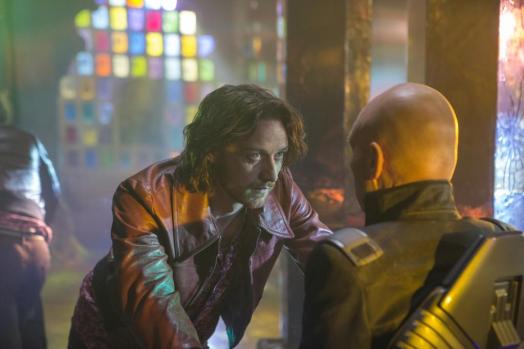
Beginning in the future, Days of Future Past shows a world in chaos. Near invincible Sentinel machines are exterminating mutants and any humans helping them. A group of mutants hiding in China include Professor Xavier, Magneto, Wolverine, Storm and Kitty Pryde. With it being only a matter of time before this last hideout is overrun by Sentinels, a plan is made to send Wolverine’s consciousness back in time fifty years to prevent Mystique from assassinating Dr. Bolivar Trask and thereby stop the eventual development of the Sentinels, saving the future in the process.

537e13b7ecad04770ef0af62-750-375

This film combined the original X-Men cast with the younger cast introduced in First Class (Wolverine, being essentially immortal, serves as a kind of go-between).

For the music, the score was composed by John Ottman, a longtime collaborator with director Bryan Singer. Ottman became the first composer to work on more than one X-Men film (having scored X2 in 2003) and retained the main theme of X2 for Days of Future Past. As the composer states in the interview, Singer asked that Ottman create something that sounded “more modern” (in the vein of other current superhero films) and move away from the more traditional sounds created by Henry Jackman in the score for First Class.

IH7A1365.CR2

I haven’t seen much of the new X-Men films (though I have seen the original trilogy), but the more I see and hear of the music, the more interested I become. Fans of the new trilogy should enjoy this look at how the music of Days of Future Past was created. Enjoy!

*film poster is the property of 20th Century Fox

You can become a patron of the blog at patreon.com/musicgamer460

See also:

John Ottman talks X2 (2003)

See also:

Film Composer Interviews A-H

Film Composer Interviews K-Z

Like Film Music Central on Facebook at www.facebook.com/filmmusiccentral

John Ottman talks X2 (2003)

X2_X-Men_United_movie_poster

John Ottman talks X2 (2003)

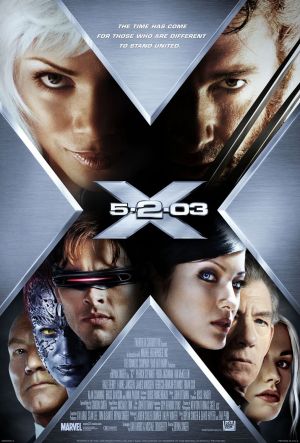
After the success of X-Men (2000), 20th Century Fox immediately gave the green-light to a sequel. X-2 (also known as X2: X-Men United) was released in 2003 and focused on the growing war between Professor Xavier (Patrick Stewart) and his X-Men, their enemies, led by Magneto (Ian McKellen), and their mutual enemy William Stryker (Brian Cox), who is seeking to destroy all mutants on Earth.

The score for this film was composed by John Ottman, a composer who frequently collaborates with director Bryan Singer (not always successfully, one such collaboration was Superman Returns (2006)). Of the X-Men films that I have seen, X2 is generally my favorite. I admit that Ottman’s work isn’t among my favorites, but he did an admirable job here.

I wanted to share this short documentary on the making of the score for X2 because it is uncommon to find such a long video for film music of any kind. If you liked the original X-Men films, you’ll probably find this short documentary (10-11 minutes) very interesting indeed. Enjoy!

You can become a patron of the blog at patreon.com/musicgamer460

See also:

Film Composer Interviews A-H

Film Composer Interviews K-Z

See also:

John Ottman talks X-Men: Days of Future Past (2014)

*poster image is the property of 20th Century Fox

Like Film Music Central on Facebook at www.facebook.com/filmmusiccentral

James Horner talks Windtalkers (2002)


In 2002 MGM released the war film Windtalkers, based on the true story of the Navajo Code Talkers, who used a code based on the Navajo language to send encoded transmissions that the Japanese couldn’t understand or decode as they had no direct knowledge of the Navajo language. The film follows two code talkers, Pvt. Ben Yahzee and Pvt. Charlie Whitehorse, and their “chaperones,” Sgt. Enders and Sgt. Henderson, who are ordered to protect these Navajo soldiers with their lives (as only a handful of people know how to use the code).

windtalkers-0224

Though the Japanese tried many times, they were never able to break the code. In fact, due to evidence that the Japanese are brutally torturing any Navajo soldiers they can capture in order to get the code, Enders and Henderson are given particular orders that they are to kill their respective “windtalker” if they are in danger of being captured by the enemy. Enders is later forced to kill Whitehorse with a grenade when he sees the Japanese capturing him (Whitehorse himself gives a stiff nod when he sees Enders preparing the grenade, signalling that he knows what must be done and he is prepared to die).

The score for this film was created by the late James Horner, and the clip above is part interview and part scoring session, showing Horner at work in the recording studio. As beautiful as the music sounds, it’s a shame that the film wasn’t better received at the box office (I don’t think having Nicolas Cage as the main star helped much). This just reinforces the sad truth that a film can have a beautiful score but still be ruined by other factors, the biggest of which being that the titular “windtalkers” were relegated to secondary character status, despite being pivotal to the plot.

Having just finished the James Horner blogathon, I still had his music very much on my mind, and I was glad I could find another recording of the composer at work (there aren’t as many out there as you might think). I hope you enjoy watching and listening.

See also:

James Horner Star Trek II: Wrath of Khan

James Horner talks Aliens (1986)

James Horner talks Field of Dreams (1989)

James Horner talks The Rocketeer (1991)

James Horner scoring Braveheart (1995)

James Horner talks The Perfect Storm (2000)

James Horner talks A Beautiful Mind (2001)

James Horner talks Avatar (2009)

James Horner talks The Amazing Spider-Man (2012)

Film Composer Interviews A-H

Film Composer Interviews K-Z

Become a patron of the blog at: patreon.com/musicgamer460

Check out the YouTube channel (and consider hitting the subscribe button)

Don’t forget to like Film Music Central on Facebook 🙂
*poster image is the property of MGM

Brian Tyler talks Fast Five (2011)

Of the seven Fast and Furious films that have been released, Fast Five (2011) remains the first and only film in the series that I have watched. It was my senior year of college, and the local movie theater was having a “Free Movie Night” for all the students of the university, and I’d never seen a Fast and Furious film before, so I decided to check it out. I remember enjoying it and laughing a lot! This was before I discovered my calling for film music, so I didn’t really pay any attention to the score at the time, but I was delighted years later to discover that Brian Tyler was the composer for that film.

Brian Tyler may not be an immediately recognizable name, but it surely will be in years to come: he has already composed the music for Thor: The Dark World, Avengers: Age of Ultron; Constantine; The Fast and Furious: Tokyo Drift, among many, many others.

This interview gives a great look at Brian Tyler in his recording space. As a film music scholar, it’s so exciting for me to be able to see his computer layout where he records and then synthesizes all these melodies together (I still have a dream of meeting some of these film composers some day).

I hope you enjoy this interview!

You can become a patron of the blog at patreon.com/musicgamer460

See also:

Film Composer Interviews A-H

Film Composer Interviews K-Z

My Thoughts on: Fast Five (2011)

Brian Tyler scoring Furious 7 (2015)

Brian Tyler scoring The Fate of the Furious (2017)

Brian Tyler “Alien vs. Predator: Requiem” scoring session (2007)

Brian Tyler scoring Partition (2007)

Brian Tyler talks War (2007)

Brian Tyler talks Rambo (2008)

Brian Tyler “Law Abiding Citizen” scoring sessions (2009)

Brian Tyler “Dragonball Evolution” scoring session (2009)

Brian Tyler talks The Expendables (2010) 

Brian Tyler “Battle: Los Angeles” (2011) scoring session

Brian Tyler scoring session for Iron Man 3 (2013)

Brian Tyler “Teenage Mutant Ninja Turtles” (2014) scoring session

Brian Tyler conducting and scoring Now You See Me 2 (2016)

Brian Tyler “Power Rangers” scoring session (2017)

Brian Tyler conducts The Mummy (2017)

Like Film Music Central on Facebook at www.facebook.com/filmmusiccentral

Hans Zimmer (and Richard King) talk The Dark Knight Rises (2012)

the-dark-knight-rises-final-poster

Hans Zimmer (and Richard King) talk The Dark Knight Rises (2012)

The finale of The Dark Knight film trilogy saw composer Hans Zimmer return to score the film. Co-composer James Newton Howard declined to return for this film (as he felt Zimmer and Nolan would work better together) but the main theme that he helped create still remains in the film.

Zimmer admits that he kept Selina Kyle’s theme ambiguous and also that he took Bane’s theme in a completely different direction than what had been seen in the previous installments of the series.

This interview clip that I found features not only Zimmer, but Richard King as well, as they talk about the various sounds and musical themes heard in the film.

Like The Dark Knight (2008), I admit that I haven’t actually seen this film, but I’ve heard from so many that it is good, that I’ve placed the entire trilogy on my “to watch” list. Please enjoy this interview for The Dark Knight Rises (2012).

*all images are the property of Warner Bros. Studios

Become a Patron of the blog at patreon.com/musicgamer460

See also:

Film Composer Interviews A-H

Film Composer Interviews K-Z

Don’t forget to like Film Music Central on Facebook 🙂