Category Archives: Soundtracks

Star Trek VI: The Undiscovered Country “Main Theme” (1991)

images

After Star Trek V: The Final Frontier went FLOP at the box office, it was very nearly the end of the Star Trek films. But the studio managed to persevere and plans were laid to make a sixth film. Initially, Star Trek VI was going to be a prequel, featuring Kirk and co. at the Academy (which later became the basic plot of Star Trek (2009)), but that was scrapped in favor of a final adventure with the original Enterprise crew.

Star Trek VI: The Undiscovered Country “Main Theme” (1991)

Now when it came to scoring Star Trek VI, director Nicholas Meyer had some trouble finding a composer. Jerry Goldsmith was so disappointed after Star Trek V that he currently wanted nothing to do with the project. James Horner felt that his career had advanced beyond Star Trek, so he declined as well. With no other alternatives, Meyer looked to a pile of demo tapes sent in by other composers wishing to work on the project and he ultimately selected a tape sent in by composer Cliff Eidelman, as he felt his music best captured the “spirit of Star Trek”.

1_z2UOsN_zJ3FXzU77Ww2FTw

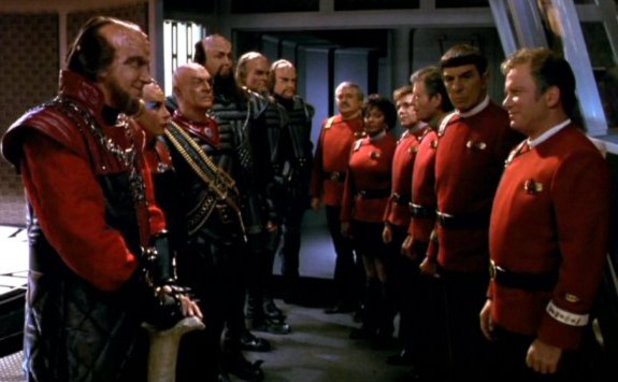
Eidelman’s music is a big part of why I love The Undiscovered Country so much. It’s dark, occasionally eerie, and chock full of tension at all the right moments. And the main theme is a perfect introduction to this score. The music plays over the opening credits before the story proper begins and instantly lets you know that this isn’t like the other Star Trek films. Jerry Goldsmith’s bright fanfare is absent, Horner’s beautiful strings aren’t there. What we have instead is a dark motif that will recur throughout the film.

MSDSTTR EC068

As the credits move on towards the end, the music becomes more and more tense, and it will later come out that what we are hearing is the music from the final battle between Captain Kirk and General Chang. The tension builds higher and higher, until finally the music ends on almost a literal cliffhanger, as the music cuts off just before a huge explosion fills the screen (talk about starting a story off with a bang!)

I really enjoy the main theme of Star Trek VI: The Undiscovered Country, it is an underrated gem in the musical canon of Star Trek. I hope you enjoy listening to this theme as well.

See also: Film Soundtracks A-W

You can become a patron of the blog at patreon.com/musicgamer460

Check out the YouTube channel (and consider hitting the subscribe button)

See also:

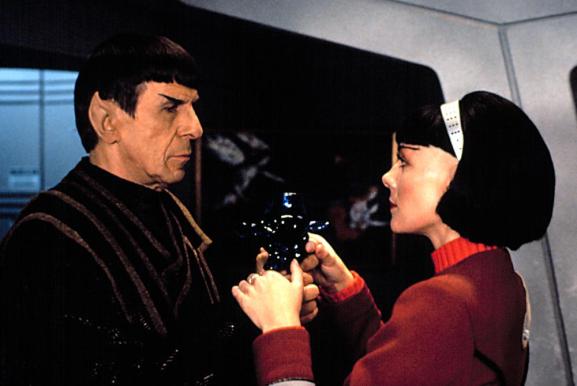
A Tale of Two Spocks: Spock’s Theme in Wrath of Khan and The Undiscovered Country

Don’t forget to like Film Music Central on Facebook 🙂

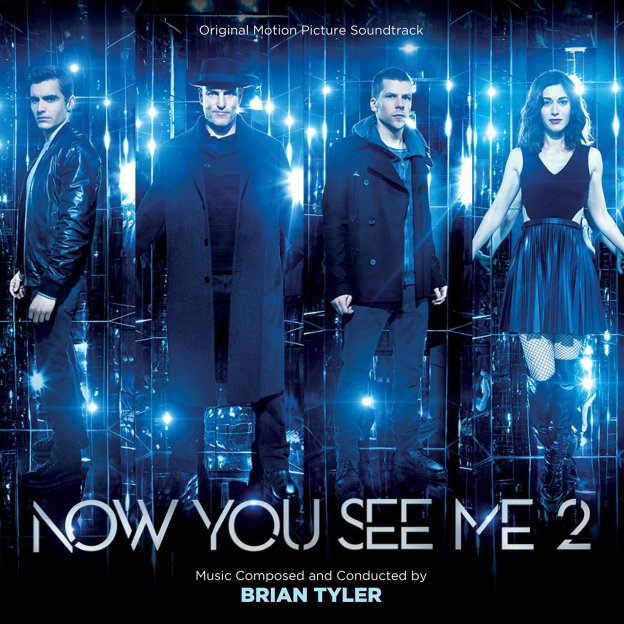
Brian Tyler conducting and scoring Now You See Me 2 (2016)

Main Theme from Now You See Me 2 (2016)

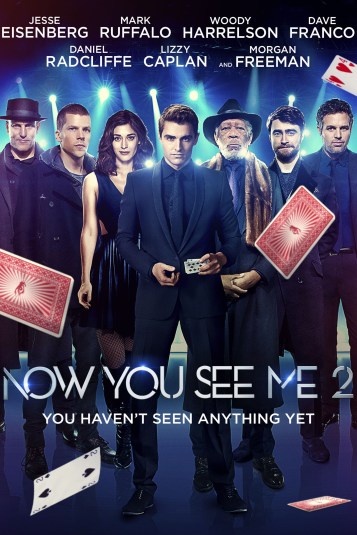
I have not seen Now You See Me (2013) or its sequel Now You See Me 2, though I have heard plenty about both films. Both films feature a group of stage magicians who use their talents to pull off huge and daring heists. The scores for both films were composed by Brian Tyler, and what I have here is two clips relating to the sequel, Now You See Me 2, which came out last year. The top link takes you to a concert performance of the film’s main theme, which I found very beautiful. I will never stop loving the experience of hearing movie music in a concert environment.

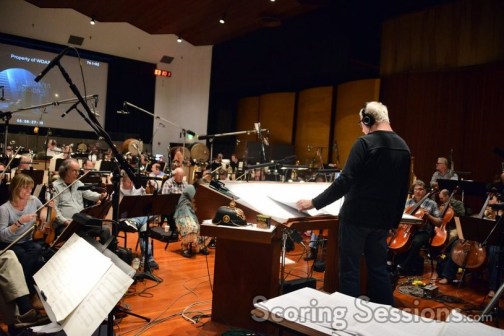
The bottom link comes from a scoring session led by Tyler at the famous Abbey Road studio in London. There is something enthralling about watching Brian Tyler at work; when he is on the podium, you can tell he is 100% into the music.

838522ccb86bde6ee59df3909dbea63b

I know Now You See Me 2 got mixed reviews upon its release, but surely the music was not a part of any problems the film had. I hope you enjoy the recording session and the performance.

You can become a patron of the blog at patreon.com/musicgamer460

Check out the YouTube channel (and consider hitting the subscribe button)

See also:

Film Composer Interviews A-H

Film Composer Interviews K-Z

Brian Tyler “Alien vs. Predator: Requiem” scoring session (2007)

Brian Tyler scoring Partition (2007)

Brian Tyler talks War (2007)

Brian Tyler talks Rambo (2008)

Brian Tyler “Law Abiding Citizen” scoring sessions (2009)

Brian Tyler “Dragonball Evolution” scoring session (2009)

Brian Tyler talks The Expendables (2010) 

Brian Tyler talks Fast Five (2011)

Brian Tyler “Battle: Los Angeles” (2011) scoring session

Brian Tyler scoring session for Iron Man 3 (2013)

Brian Tyler “Teenage Mutant Ninja Turtles” (2014) scoring session

Brian Tyler “Power Rangers” scoring session (2017)

Brian Tyler conducts The Mummy (2017)

Don’t forget to like Film Music Central on Facebook 🙂

Brian Tyler “Power Rangers” scoring session (2017)

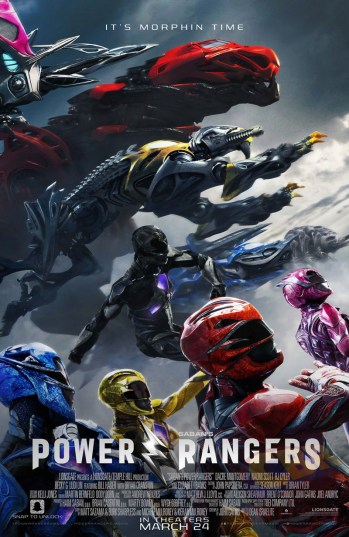
This may be the fastest I’ve ever released a scoring session of a film relative to the film’s premiere (the film came out five days ago). In the hype leading up to the release of Power Rangers, and the endless debate of “will this be any good?”, I somehow missed that Brian Tyler would be composing the score for this film. Tyler has been a rising force in the world of film music for the last decade and I was immediately curious to hear what his work for this film sounded like.

Lo and behold….I found a scoring session for the film. It’s tantalizingly short, only sixty seconds in length, but what I can hear is beautiful! I have no idea where in the film this music comes from, but it is very well-crafted and it is clear that Tyler is in his element as a composer and conductor.

exclusive-final-power-rangers-poster-zords

Despite this, I still don’t think I will see Power Rangers anytime soon. Of course, I grew up watching Mighty Morphin’ Power Rangers way back in the 90s, and I saw a few of the later series on occasion (Mystic Force is still my favorite), but my tastes have greatly changed since then and the film simply holds no interest for me (though I AM pleased that one of the rangers is on the autistic spectrum). However, I may have to get my hands on the soundtrack to hear the rest of this gorgeous music.

I hope you enjoy watching Brian Tyler score a section of Power Rangers, and get ready: this is only the first of many Brian Tyler sessions that I’ve found (I really think you’re going to like them too).

You can become a patron of the blog at patreon.com/musicgamer460

Check out the YouTube channel (and consider hitting the subscribe button)

See also:

Film Composer Interviews A-H

Film Composer Interviews K-Z

Brian Tyler “Alien vs. Predator: Requiem” scoring session (2007)

Brian Tyler scoring Partition (2007)

Brian Tyler talks War (2007)

Brian Tyler talks Rambo (2008)

Brian Tyler “Law Abiding Citizen” scoring sessions (2009)

Brian Tyler “Dragonball Evolution” scoring session (2009)

Brian Tyler talks The Expendables (2010) 

Brian Tyler talks Fast Five (2011)

Brian Tyler “Battle: Los Angeles” (2011) scoring session

Brian Tyler scoring session for Iron Man 3 (2013)

Brian Tyler “Teenage Mutant Ninja Turtles” (2014) scoring session

Brian Tyler conducting and scoring Now You See Me 2 (2016)

Brian Tyler conducts The Mummy (2017)

Don’t forget to like Film Music Central on Facebook 🙂

Michael Giacchino talks Zootopia (2016)

Michael Giacchino talks Zootopia (2016)

While I am still profoundly irked that Zootopia beat out Kubo and the Two Strings for Best Animated Feature at the Oscars, I cannot deny that the film has a pretty good musical score. Composed by the talented Michael Giacchino, the music of Zootopia features a world-music vibe to cover the vast array of species (and ways of life) highlighted in the story.


If you haven’t seen Zootopia, the film follows bunny Judy Hopps (Ginnifer Goodwin) as she becomes the first rabbit on the Zootopia police force, in a city where (in theory) any animal can become anything they want to be, regardless of whether they are considered “hunter” or “prey” species. This notion is tested when Judy is put on a (seemingly hopeless) case that she must solve in a very short time or lose her job, and to complicate matters, she must work with Nick Wilde (Jason Bateman), a fox with a history of being a con-artist.

In this behind the scenes clip, Giacchino takes us to the recording studio and introduces five percussionists who helped create Zootopia’s unique sound.

ZOOTOPIA

While the main orchestra is best recognized in any film score, often the percussion is overlooked (or worse, lost in the sound mix), so it’s great to see not only how they used percussion instruments in the score, but also how the percussion ties everything together at key moments.

c82485eec608d966826a619a04946ce8f53b693d

My thanks to Michael Giacchino for giving us this inside look into part of the scoring process for Zootopia, which really is a great film despite my grumblings. I hope you enjoy the video and if you haven’t tried Zootopia before, please take a chance and check it out 🙂

See also:

Michael Giacchino talks The Incredibles (2004)

Michael Giacchino talks Mission: Impossible 3 (2006)

Michael Giacchino talks Ratatouille (2007)

Michael Giacchino talks Up (2009)

Michael Giacchino talks Star Trek (2009)

Michael Giacchino talks Super 8 (2011)

Michael Giacchino talks John Carter (2012)

Michael Giacchino talks Star Trek: Into Darkness (2013)

Michael Giacchino talks Jupiter Ascending (2015)

Michael Giacchino talks Jurassic World (2015)

Michael Giacchino scoring Rogue One: A Star Wars Story (2016)

Michael Giacchino talks Jurassic World: Fallen Kingdom (2018)

Film Composer Interviews A-H

Film Composer Interviews K-Z

You can become a patron of the blog at patreon.com/musicgamer460

Check out the YouTube channel (and consider hitting the subscribe button)

Don’t forget to like Film Music Central on Facebook 🙂

The King and I “The March of the Siamese Children” (1956)

maxresdefault

Rodgers and Hammerstein’s classic musical The King and I is one of my favorite Broadway musicals. The story is based in part on the memoirs of Anna Leonowens, a widow who served as a governess to the children of King Mongkut of Siam (now Thailand) in the early 1860s. The 1951 musical was adapted into a film in 1956, both starring Yul Brynner as the titular King (he’s one of my favorite characters).

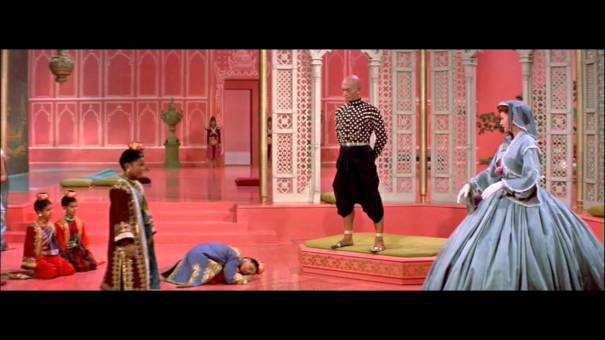
The King and I has many wonderful musical moments; one of my favorites is “The March of the Siamese Children” which takes place relatively early in the story. Anna (Deborah Kerr) is upset that she must stay in the royal palace next to the harem (instead of in a little house of her own as she’d been promised) and is on the verge of returning to England straight away. However, before she goes, the King insists that Anna meet his children first. If she still wants to leave after meeting them, he won’t stop her.

The march then begins with children being led in one by one by their nurses. Each child comes forward, bows to their father, greets Anna by touching their forehead to her hands and then backs away to sit with the royal wives (their respective mothers).

The music is a beautiful theme and variations that repeats over and over, altering slightly for certain children. The most notable change is when Crown Prince Chulalongkorn, the King’s heir marches in; the music here changes to a stirring brass fanfare as befits the heir to the throne. Unlike the other children, Chulalongkorn and the King bow to each other and Anna is told to curtsy to the Crown Prince.

There are some other humorous moments, some of my favorites being:

  • The twins: The two boys (not surprisingly) are dressed identically and the King seems quite pleased with them.
  • The forgetful princess: one of the younger daughters accidentally turns her back on her father and when he reminds her with a mock gasp of shock/horror, she quickly turns around with a look of surprise (the King isn’t all that angry with her, as she is still young)
  • The curious prince: one prince comes out looking very curiously at Anna the entire time and it quickly becomes clear why: he’s never seen someone with Anna’s huge skirts before. He’s curious to see exactly what’s under there…but the King quickly stops that idea.
  • “I want a hug!”: One daughter forgets where she is and runs to the King for a hug, only to be stopped with a stern look. When the dejected princess begins to back away, she is reassured by the King with a warm smile (which she returns).
  • The littlest princess: Possibly the most adorable moment comes at the very end when the youngest daughter comes out. She is so small that the King doesn’t see her until she tugs on his pant leg for attention. He then guides her through what she needs to do (it’s adorable!)

BAMkidsMovieMatinee_2015_King_and_I_1956_11_613x463

Once all the children are assembled, Anna realizes she can’t possibly leave them to return to England (which is what the King thought would happen) and she agrees to stay after all, to the delight of the royal children.

“The March of the Siamese Children” is a delightful moment from a wonderful film and I hope you enjoy it.

Become a Patron of the blog at patreon.com/musicgamer460
Check out the YouTube channel (and consider hitting the subscribe button)

See also: Film Soundtracks A-W

The King and I “Shall We Dance?” (1956)

Don’t forget to like Film Music Central on Facebook 🙂

101 Dalmatians “Cruella de Vil” (1961)

“Cruella de Vil” is one of those memorable Disney songs that tends to stick in the brain long after you’ve seen the movie it belongs to. It is also a villain song that is not actually performed by the villain. (The song was composed by Mel Leven and is the major song moment of the film).

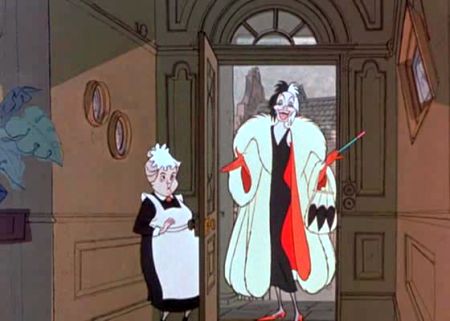
To set up some context, 101 Dalmatians centers on two Dalmatians, Pongo and Perdita and their human “pets”, Roger and Anita Radcliffe (Pongo belonged to Roger and Perdita belonged to Anita before the two married). Some time after their pets marry, Perdita is expecting puppies when an unexpected visitor drops by; Cruella de Vil was Anita’s school mate and she has apparently dropped by on occasion in the past (considering Roger recognizes the car when it pulls up).

21

Anita DARLING!

Roger has spent the last several days working on a new song, but he’s struggled to come up with appropriate lyrics. Suddenly, while mulling over Cruella’s name, he realizes its the perfect inspiration for the song! (Cruella de Vil is an obvious play on the words “Cruel Devil”)

roger-and-anita-disney-couples-8488040-500-375

“Cruella de Vil” mockingly paints Cruella as this devilish figure that inspires fear and terror wherever she goes. Roger takes great delight in performing this number while a slightly anxious Anita tries to hush him up (as Cruella is moments away from stepping through the door). Roger eventually retreats to his music room to continue (literally) banging the song out while Cruella comes through like a fur-lined whirlwind. Cruella SEEMS nice enough at first, if a little eccentric (she has an unhealthy obsession with furs) but noticeably, Pongo and Perdita react negatively to her presence. While Cruella has a very one-sided conversation with Anita, Roger plays variations on his song with the piano, a trumpet and a slightly obnoxious trombone (to Cruella’s annoyance; she has no idea what Anita sees in Roger).

For some reason, Cruella is fixated on knowing when Perdita’s puppies will arrive (she initially thinks they’ve already been born). After promising to return when the puppies are born (in approximately three weeks), Cruella leaves as abruptly as she arrived and a teasing Roger returns to continue his song. As mocking as the song is, it’s all meant in good fun (for now anyways).

This is a song I’ve always loved to dance around to, it’s short, fun and a classic example from the early post-Golden Age of Disney films.

You can become a patron of the blog at patreon.com/musicgamer460

Check out the YouTube channel (and consider hitting the subscribe button)

To find more awesome animated songs, check out the main page here: Disney/Dreamworks/Pixar/Etc. Soundtracks A-Z

Don’t forget to like Film Music Central on Facebook 🙂

“Jyn Erso and Hope” from Rogue One, my thoughts…

I can’t believe it’s been nearly two months since I saw Rogue One. Since then, I have been turning over portions of the score in my mind, particularly “Jyn Erso and Hope”, the main theme for our badass heroine.

From the moment I first heard it, something wiggled in the back of my mind and said “I’ve heard something like this before.” But for the longest time I couldn’t think of what that something was.

Then I went back and listened again, and finally it dawned on me: I know EXACTLY where I’ve heard this melody before (granted it wasn’t the exact same, but the core is still intact).

“Jyn Erso and Hope” is, to put it simply, a variation on “Across the Stars”, the love theme for Padme and Anakin from Episode II/III. Here, let the music speak for itself:

Here is “Jyn Erso and Hope”

and here is “Across the Stars”

To my ears, it sounds like Giacchino took components from “Across the Stars” and rearranged a few notes. But if enough of a similarity remains, the mind will remember and try to supply the missing parts (that’s how I knew I’d heard the theme somewhere else).

I don’t think there’s any hidden symbolism behind this, as it makes no sense for there to be any connection between Anakin/Padme and Jyn (though part of me does wonder if Jyn’s mother was a Jedi, she DID have a kyber crystal after all).

I’m not particularly surprised that Giacchino borrowed from another piece of Star Wars music; this is a practice that dates back to the dawn of film music (they don’t really talk about it, but everyone knows about it), but a part of me wishes that he had done a better job of disguising the theme if he wanted to do something like that.

I’m interested to hear what all of you think about this: do you hear the similarity? Or do you hear a connection to another piece? I love discussing film music like this 🙂

See also:

Film Soundtracks A-W

Become a patron of the blog at: patreon.com/musicgamer460

Check out the YouTube channel (and consider hitting the subscribe button)

Don’t forget to like Film Music Central on Facebook 🙂

See also:

Rogue One: A Star Wars Story, My Thoughts!!

Pocahontas “Savages, Part II” (1995)

At the conclusion of “Savages, Part I”, the English settlers and the warriors led by Powhatan were preparing for battle (with the latter planning to execute John Smith first thing in the morning). Meanwhile, Pocahontas has fled to Grandmother Willow, upset and depressed that everything is falling apart and the man she’s so recently fallen in love with is going to be executed and there’s nothing she can do to stop it.

Pocahontas “Savages, Part II” (1995)

Grandmother Willow tries to give some advice, reminding Pocahontas of her dream, but she isn’t in the mood to hear it. Meeko, however, is inspired to dig inside his hole in the tree for something.

This “something” turns out to be John Smith’s compass, which contains a large arrow shaped needle inside (Meeko had swiped it during an earlier meeting and Smith had let the raccoon keep it). Pocahontas watches the compass and realizes that as she turns it in her hands, the arrow/needle spins, just like the arrow in her dream!!

maxresdefault

From the moment Pocahontas picked the compass up, the music has begun to pick up in intensity (clearly signalling that something big is about to happen). When she makes the connection between the compass needle and her dream, it picks up a little more. At the peak, there is a short, instrumental refrain of “Listen With Your Heart” as several things happen at once: the sun rises (it’s time for the execution) and the compass needle comes to a stop pointing directly east. The meaning is clear: Pocahontas needs to stop the execution.
Savages.png

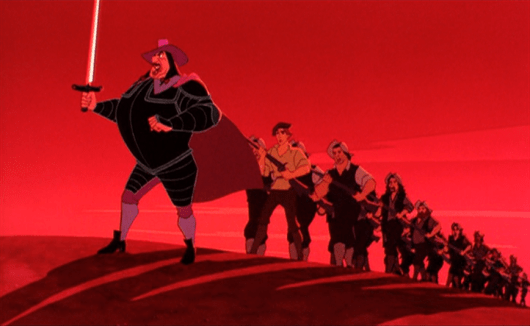
With this decision made, the song resumes with an abrupt cut to Ratcliffe literally walking out of the sunrise, cutting a villainous figure in his black armor. At the same time, Powhatan and his warriors begin the march to the execution site (with Smith in tow) while, in a THIRD musical thread, Pocahontas begins her run to stop an all-out war!

maxresdefault-1

And, according to the song, Pocahontas truthfully doesn’t know if she can stop this war from happening, but with the power of the spirits (which she invokes along the way), she’s certainly going to try. This semi-hopeful verse is sharply contrasted with the two warring sides who are basically singing the same words (so I’m copying the verse in full):

(Them:)This will be the day/This will be the morning/We will see them dying in the dust

(Pocahontas): I don’t know what I can do/still I know I have to try

(Them):Now we make them pay!

(Pocahontas): Eagle help my feet fly!/(Them): Now without a warning

(Pocahontas): Mountain help my heart be great/(Them): Now we leave ’em blood and bone and dust

(Pocahontas):Spirits of the Earth and Sky/(Them): It’s them, or us

(Pocahontas): Please don’t let it be too late!!/Them: They’re just a bunch of filthy, stinking…

(Them): Savages, savages/demons, devils (kill them!)/savages, savages, what are we waiting for? Destroy their evil race, until there’s no a trace left!

(Pocahontas): How loud are the drums of war!!/Them: Now we see what comes, of trying to be chums/ Pocahontas: Is this the death of all I love, carried in the drumming of…

(All): WAR!!!

Towards the end, all three groups converge at a cliff where the tribe has assembled to execute Smith as revenge for Kocuom’s death. While the approaching settlers watch in horror, Powhatan prepares to crush Smith’s skull with a war hammer (a club with a large stone set in it). At the last moment, Pocahontas darts forward and throws herself over Smith before the hammer can fall.

Saved!!! For now anyway. Pocahontas has an ultimatum: if Powhatan wants to kill John Smith, he has to kill her too, and also she loves him (to the surprise of her father). All of this, Pocahontas says, is the result of walking a path of anger. She, meanwhile, will choose love.

Moved by what his daughter has said, and seeing the slaughter that will come if they continue, Powhatan swears that if there will be any more killing “it will not start with me” and he orders Smith to be released. Everyone begins to lower their weapons, and war seems to have been averted…which is great…right?

Ratcliffe doesn’t think so. This was his big chance to take the Indians out and now the battle isn’t happening at all!. He tries to take advantage by shouting for his men to fire, but the settlers aren’t having it. The whole point of attacking was to rescue Smith, but the tribe has let him go so clearly they don’t want to fight (and therefore neither should they). Seeing his control slip away, Ratcliffe decides to force the issue, grabbing a musket and taking aim at Powhatan. Smith sees this and shoves the chief out of the way just as Ratcliffe fires, taking the bullet instead. Instead of sparking a new conflict, this backfires horribly and Ratcliffe finds him at the receiving end of the settlers’ wrath (a great comeuppance for Ratcliffe by the way, since he ends up being hog-tied by the end).

So on the one hand, the day is saved, but on the other, John is badly injured. This is one Disney film that won’t have the typical ending. How do I mean? Well, you’ll have to check out the finale to find out 🙂

It nearly goes without saying that “Savages, Parts I and II” are one of my favorite Disney songs and I hope you enjoyed reading about it and listening to it.

You can become a patron of the blog at: patreon.com/musicgamer460

Check out the YouTube channel (and consider hitting the subscribe button)

For more Pocahontas, see also:

Pocahontas “The Virginia Company” (1995)

Pocahontas “Steady as the Beating Drum” (1995)

Pocahontas “Just Around the Riverbend” (1995)

Pocahontas “Listen With Your Heart” (1995)

Pocahontas “Mine, Mine, Mine!” (1995)

Pocahontas “Savages, Part I” (1995)

Don’t forget to like Film Music Central on Facebook 🙂

Patrick Doyle talks Brave (2012)

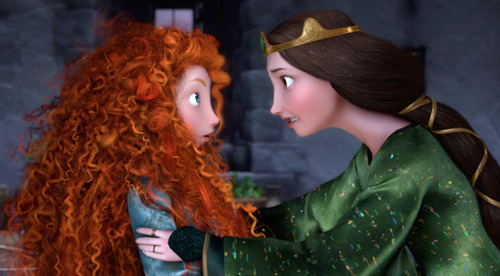
Brave is a gorgeous animated film that was created by Pixar and released by Walt Disney Studios in 2012 (Disney acquired Pixar in 2006). The lead character, Princess Merida, has a distinct honor: she is the first Pixar character to be named an official Disney Princess.

hero_EB20120620REVIEWS120629997AR

In Brave, Merida, a headstrong princess of the clan Dunbroch and the eldest child of King Fergus and Queen Elinor, is upset to learn that she will be betrothed to a prince from another clan. During an archery tournament that is meant to determine who she will marry, Merida secretly enters and wins the contest, shaming the other princes and infuriating her mother, who desperately wants Merida to act like “a proper princess.”


Wanting to change her fate, Merida defies her family with near-disastrous consequences for all involved. She follows will-o’-the-wisps to the hut of an elderly witch and receives a spell in the form of a cake which she is told to feed to her mother. Upon doing so, Elinor is transformed into a bear and loses her ability to speak. Upon returning to the hut, the pair find the witch gone with a message that explains that “the bond torn by pride” must be repaired by the second sunrise or the transformation will be permanent. Merida must work to repair her relationship with her mother and also prevent war from breaking out between the clans due to Merida’s actions at the tournament. Part of the plot involves respecting tradition while also learning to change for the future. Ultimately, Merida is able to convince the other clans (with subtle help from her mother) that the firstborn of any clan, male or female, should marry in their own time to whoever they choose.

The score for this film was composed by Patrick Doyle, a Scottish film composer best known for his work on several Shakespeare films (Henry V (1989) and Hamlet (1996)) and Harry Potter and the Goblet of Fire (2005). In this five minute interview, Doyle talks about the score and how he created a musical theme for Merida.

tumblr_inline_mwq8ittk6U1qkfkhh

Have you seen Brave? What did you think of it? Did you like the music? Let me know in the comments!

See also:

Film Composer Interviews A-H

Film Composer Interviews K-Z

Patrick Doyle Talks Cinderella (2015)

Become a patron of the blog at: patreon.com/musicgamer460

Check out the YouTube channel (and consider hitting the subscribe button)

Don’t forget to like Film Music Central on Facebook, 🙂

Alice in Wonderland “In a World of My Own” (1951)

If Alice in Wonderland could be summed up in one sentence, it would be: Be careful what you wish for, you just might get it!

The incredibly naive Alice is bored to death listening to a history lesson read by her sister. She’d much rather live in a nonsensical world she dubs “Wonderland”, where “cats and rabbits would reside in fancy little houses, and be dressed in shoes and hats and trousers…” Alice also imagines that all the flowers could talk and sing and that they would talk with her for hours and hours. Alice’s cat Dinah (who clearly understands her mistress), isn’t so sure about this idea of “Wonderland” (smart kitty).

It’s a neat trick on Disney’s part to have this song foreshadow a good deal of what’s to come in the film: Alice ends up exploring the White Rabbit’s house, and even later she does in fact get to talk to (and sing with) the flowers.

mn0057587

“In a World of My Own” is a beautiful little song and the picture it paints sounds charming, but poor Alice finds out that dreaming about Wonderland and actually LIVING in it, are two entirely separate things!

Become a patron of the blog at: patreon.com/musicgamer460

See also:

Alice in Wonderland “The Un-Birthday Song” (1951)

Alice in Wonderland “All in the Golden Afternoon” (1951)

Alice in Wonderland “Painting the Roses Red” (1951)

Don’t forget to like Film Music Central on Facebook 🙂

And for more animated film music, check out the main page here: Disney/Dreamworks/Pixar/etc. Soundtracks A-Z