The Music of Snow Hollow: Talking with Composer Ben Lovett about ‘The Wolf of Snow Hollow’ (2020)

After getting to check out the soundtrack for The Wolf of Snow Hollow, I knew I had to speak with composer Ben Lovett about his work on this soundtrack. Fortunately for me, the moment came and I took it! It was so exciting to get to ask Ben Lovett about his work on this score and I can’t thank him enough for taking the time to answer my questions about the music for The Wolf of Snow Hollow.

Ben Lovett is an American recording artist, songwriter and composer known for crafting unconventional scores to a diverse range of films including the Netflix original The Ritual, Independent Spirit Award nominee The Signal, the Duplass Brothers’ survival thriller Black Rock, Amy Seimetz’s award-winning noir Sun Don’t Shine, Emma Tammi’s avant-garde western The Wind, and the time travel sci-fi noir Synchronicity which earned Ben a nomination for “Discovery of the Year” at the prestigious World Soundtrack Awards. Lovett’s latest work includes scores for the Hulu series Into the Dark, the colorful taxidermy documentary Stuffed, Orion Pictures tragicomedy The Wolf of Snow Hollow from director Jim Cummings, and a new collaboration with Ritual director David Bruckner on the Searchlight Pictures thriller, The Night House.

How did you get started with being a film composer?

I was tricked.  Someone convinced me I could do it even though I tried to argue otherwise.  Or more specifically, they convinced me I had no good reason not to try, and of course they were right.  That was in college at the University of Georgia in the late 90’s and I’ve been doing it ever since.

How did you get connected with The Wolf of Snow Hollow?

The producers at Vanishing Angle reached out early in post production. I scored “American Folk” for them a few years back and had a good rapport there. Jim is part of a great community of filmmakers that all share an orbit with Vanishing Angle and he was familiar with some of the scores I’d done. I watched “Thunder Road” and absolutely loved it. I knew after about the first 10 minutes that I had to be part of whatever he was doing next.

I saw in the PR announcing the release of the soundtrack, that you said that you and the director talked together and some big names came up, like Herrmann and Prokofiev, in regards to the music. How big an influence did they play in the film’s score? What other names came up in the discussion that ended up having an influence on the score?

When I came onboard Jim sent me a YouTube clip of a 75 piece orchestra performing Prokofiev’s “Romeo & Juliet” and said “The score needs to be like this!” The budget was very modest and there wasn’t a lot of time so as reference points go that one was exciting and hilarious and terrifying all at once. Jim was super enthusiastic about the score though and I could tell he wasn’t afraid to swing big. He referenced Jon Brion’s score to “Magnolia”, and the Jerry Goldsmith score for “The Burbs” as spiritual reference points as well. So I dove in with this sort of Mt Rushmore of influences in the background and tried to just channel the spirit of all that into some kind of hybrid, low budget, horror comedy appropriate, musical jambalaya.

More specifically, how big an influence did Bernard Herrmann’s music have? I swear I can hear parts resembling Psycho (1960), especially in “Third Crime Scene.” Are there direct musical homages in there? If so, was that a thing decided on from the beginning or did it just evolve as the scoring process continued?

That evolved along the way. It was more a sense of feeling like that was a common language where all those other references crossed paths. There weren’t direct homages or specific Herrmann scores I was referencing, it was more channelling the spirit of his style as a general point of inspiration. There’s something very signature in the way his scores operate melodically, and some intangible quality about the nature of their relationship to the picture and how his music informs the overall aesthetic of those films.

“Third Crime Scene” is kind of a thought experiment of me going, “What if Bernard Herrmann had scored “Peter & the Wolf’? I was never afraid of landing anywhere in the vicinity of his talent so it felt like a safe exercise to swing for something with a similar mentality, or whatever I’d interpreted that to mean. I didn’t get too academic about it, it just seemed like a fun sandbox to play in and one that seemed appropriate for this film.

How did you approach scoring The Wolf of Snow Hollow? Did you have a lot of time to work on the music?

Definitely not. I’m not sure I’d know what to do with a lot of time, does that exist? It was a small window from start to finish, very much your classic race the clock, down to the write, 11th hour, head first slide into home plate kind of finish. But that’s also the job, honestly, so I’m no stranger to that.

In terms of the approach, I knew I would have a limited number of crayons to draw with so I made a decision to just pick just the boldest flavor of each color that I needed. I guess that’s where the Herrmann thing comes in – I wasn’t going to have a lot of instruments so I needed to make sure the parts could carry a lot of water for us. It was figuring out how to pack big ideas into small packages, in that sense. How to deliver on the ambition of the director within the logistical limitations of the schedule and budget. I felt like the film had the capacity to hold something pretty audacious, it’s just something in how Jim directs movies. The score needed a distinct musical personality that could address the horrible reality of the things going on in this town, but specifically in how they’re related to this manic central character trying to put a stop to them – to find both the comedy and humanity in his struggle, because that’s really where the movie takes place thematically.

On a related note, are there leitmotifs in the score or did you approach it another way?

There are certainly some thematic, recurring melodies and variations in there that map out the arc of the main character, but we weren’t too dogmatic about those always accompanying specific situations or thematic moments. You routinely have characters in the film that are introduced then promptly killed off, so it became more about the recurrence of certain instruments and sounds than melodies, and what those sounds might represent to the viewer. Because I was working to locked picture with a new director and very much doing both at full sprint, sometimes the process influences decisions as much as any sort of creative intention. You’re trying to do your best to help make the movie as good as you can, while you can, with what you have.

Do you have a favorite track in the score?

Nah. Once they’re done you love em all, because you no longer have to feed them and change their diaper and they’re not keeping you up all night. I don’t have kids so I don’t know if that analogy works but, it’s sorta like that I imagine. Once they’re grown and leave home you forgive them for all they put you through. Maybe that’s where the analogy breaks down, I don’t know. More to your point, I think I’m more likely to listen back to ones that either took an unexpected turn along the way or endured some interesting metamorphosis by way of film scoring being a naturally collaborative process. Generally the ones that are the hardest to nail are usually my favorites in the end. I think the progression of the three crime scenes is a pretty fun journey. If you play those in a row you really get a sense of the variety of ground we needed to cover. “Detectives” and “Returning Evidence” maybe best capture the overall spirit and intention of the score, and are both thematic pieces that contain recurring elements.

What do you hope listeners notice when they listen to this music?

Well I always hope the album provides the means to re-experience the story in a way that reveals another level to what you might have enjoyed or experienced in the film. I feel like there are elements of any story that only music can describe, or that it best describes, in some strange innate way that we experience things as humans. Once you have a reference point for the characters and the story, my hope is that people can throw on the album and revisit Snow Hollow and uncover some new clues about what was going on there the whole time.

Again, I’d like to thank Ben Lovett for taking the time to speak with me about his work on The Wolf of Snow Hollow. Please check this film and soundtrack out if you haven’t already.

See also:

Soundtrack Review: The Wolf of Snow Hollow (2020)

Composer Interviews

Become a Patron of the blog at patreon.com/musicgamer460

Check out the YouTube channel (and consider hitting the subscribe button)

Don’t forget to like Film Music Central on Facebook 🙂

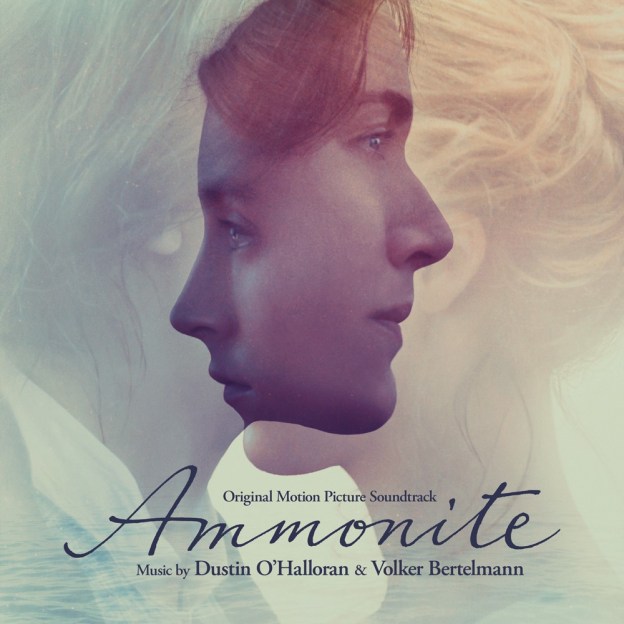
Soundtrack News: ‘Ammonite’ Original Motion Picture Soundtrack Available November 13

Milan Records today announces the November 13 release of Ammonite (Original Motion Picture Soundtrack) with music by Dustin O’Halloran and Volker Bertelmann. Available for preorder now, the album features music written by the duo for director Francis Lee’s critically-acclaimed film starring Kate Winslet and Saoirse Ronan. The nine-track album features music co-composed by O’Halloran and Bertelmann, who previously teamed on the Academy® Award, BAFTA, and Golden Globe® Award-nominated score for 2016’s LionA Christmas Carol and more.

Of the soundtrack, composers O’Halloran and Bertelmann had the following to say:

 “Writing music for Ammonite was a smooth and natural process. We already knew from director Francis Lee’s previous work this would be a score full of emotion and restraint. Because the film is a period piece, it also meant finding a tone and instrumentation that would work in this world. The overall length of music recorded is somewhat shorter than our other scores; therefore, we used many natural sounds, so when the pieces arrive, it feels meaningful. We decided for a small chamber group of strings and piano as our palette and worked from there. Francis’s original idea was to find a single piece of music playing in parts and come to a full suite at the end. In some ways, this was how we approached it, save for a few moments of score specific to the scene. We found the strong acting that both Kate and Saoirse brought meant we needed to offer space, and try not to overstep. The last piece of music in the film, during the museum scene, represented a full understanding of the emotions that played out between the two characters.”

Ammonite tells the story of acclaimed self-taught paleontologist Mary Anning, who works alone on the wild and brutal Southern English coastline of Lyme Regis in the 1840s. The days of her famed discoveries behind her, she now hunts for common fossils to sell to rich tourists to support herself and her ailing widowed mother. When one such tourist, Roderick Murchison, arrives in Lyme on the first leg of a European tour, he entrusts Mary with the care of his young wife Charlotte, who is recuperating from a personal tragedy. Mary, whose life is a daily struggle on the poverty line, cannot afford to turn him down but, proud and relentlessly passionate about her work, she clashes with her unwanted guest. They are two women from utterly different worlds. Yet despite the chasm between their social spheres and personalities, Mary and Charlotte discover they can each offer what the other has been searching for: the realization that they are not alone. It is the beginning of a passionate and all-consuming love affair that will defy all social bounds and alter the course of both lives irrevocably.

AMMONITE (ORIGINAL MOTION PICTURE SOUNDTRACK)TRACKLISTING – 

  1. Fossils
  2. Strong Enough
  3. Dig
  4. Leave
  5. Boat
  6. Post
  7. Beach
  8. End
  9. Aria – Peter Gregson

The soundtrack for Ammonite is available for preorder now and will be released on November 13, 2020.

See also:

Become a Patron of the blog at patreon.com/musicgamer460

Check out the YouTube channel (and consider hitting the subscribe button)

Don’t forget to like Film Music Central on Facebook 🙂
Soundtrack Review: Archive (2020)

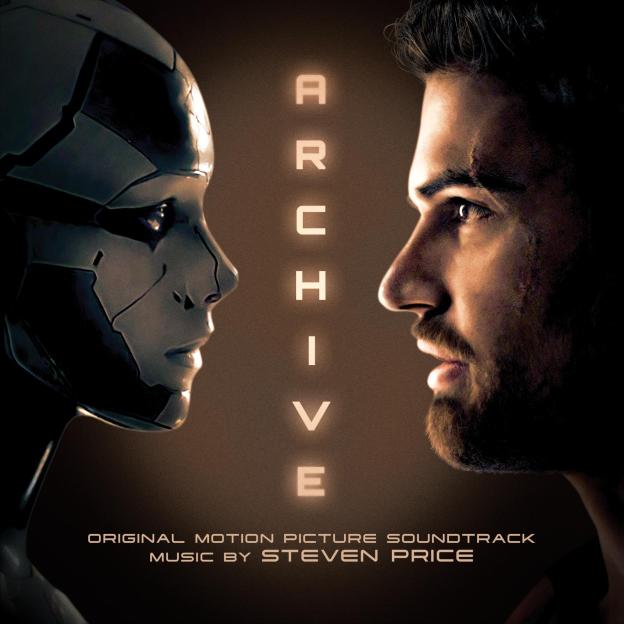
Milan Records released the original motion picture soundtrack for Archive back on July 10th, but I only recently got the chance to check it out. The music was composed by Academy Award-winning composer Steven Price (Gravity, Baby Driver, Suicide Squad). In Archive, set in 2038, George Almore is working on a true human-equivalent AI. His latest prototype is almost ready. This sensitive phase is also the riskiest. Especially as he has a goal that must be hidden at all costs: being reunited with his dead wife.

Of the soundtrack, composer STEVEN PRICE had the following to say:

“My favourite projects are the ones where the story leads me into new musical areas, and exploring the world of Archive, a movie where technology and humanity meet in a near future Kyoto, proved to be a brilliant challenge. I’d been looking for the opportunity to create a largely electronic score for the first time in a long while and the story of George Almore, his secretive AI project and the mysterious Archive let me do just that… The music follows the developments in George’s work as it progresses, and as he gets closer to achieving his hopes and dreams it was a lot of fun to blur the lines between the electronic and organic, trying to find the sound of his creations. From the moment I read writer / director Gavin Rothery’s ambitious script I wanted to be involved, and throughout the process he proved to be a great collaborator and true supporter of music. I’m looking forward to people experiencing the movie Gavin has created, and it was a real pleasure to be a part of it.”

“Archive was always going to need a killer score, but when I was writing the script, I had no idea how that was all going to happen,” says the film’s director and writer GAVIN ROTHERY, adding, “I wanted the film to be big and cinematic. But I also needed it to feel tight and personal. I wanted some parts to be epic and bold, but others intimate and close. Some parts needed energy and power but others needed space and quiet. Technology needed to fuse with humanity. And it all needed to feel unified and whole. Basically, as is probably true with most directors, I wanted everything.  Steven gave me everything. He delivered the perfect score to Archive. I’m not quite sure how he does what he does. Maybe he’s a secret telepath. Maybe he’s from the future. Maybe he’s a robot. There is one thing that I am absolutely certain of is that he most definitely is. The best.”

The soundtrack for Archive intrigues me. It’s what I like to call a “quiet” soundtrack. It’s not big and “loud” like, oh, for example, the music for Blade Runner 2049 comes to mind. I find “quiet” soundtracks to be very refreshing, because it allows me to actually relax while I’m listening to them.

As Steven Price mentions in the extended quote above, there is a distinct blurring of lines between the electronic and organic music. That is to say, a piece might start with the synthesizer but suddenly switch over to the cello. What I find fascinating is how the tone of a piece will completely shift when either side, electronic or organic, takes over. It’s a subtle change, mind you, but it is there. What I mean is, when the cello takes over from the synthesizer, some subconscious tension releases, because it’s almost more relaxing to hear the organic music.

If I had to pick one piece as my favorite, it would have to be “First Steps.” I really like in particular how this piece ends. It’s clearly building toward a climactic moment (based on the title I would have to guess that the robotic AI is taking its literal first steps) when the music suddenly cuts off. The sudden end to the music catches you off guard, and makes you wonder what happened in the story to make things end so abruptly, especially as things were getting interesting with the music.

Some people might deride the music of Archive, calling it it “too slow.” But I maintain that soundtracks like this can be some of the best music you’ll ever hear. I think too often the science fiction genre is conflated with action films, but this music serves as a reminder that they are not (always) the same thing.

TRACKLISTING –
1. So Sorry for Your Loss
2. The Archive
3. You Need to Trust Me
4. This Involves Her
5. Target Out of Reach
6. What Do You Need to Know?
7. First Steps
8. J2
9. Priority One
10. Answering the Call
11. I Didn’t Build You Well Enough
12. I Had That Dream Again Last Night

Let me know what you think about Archive (and its soundtrack) in the comments below and have a good day!

See also:

Film Soundtracks A-W

Become a Patron of the blog at patreon.com/musicgamer460

Check out the YouTube channel (and consider hitting the subscribe button)

Don’t forget to like Film Music Central on Facebook 🙂

My Thoughts on: The Ghost of Frankenstein (1942)

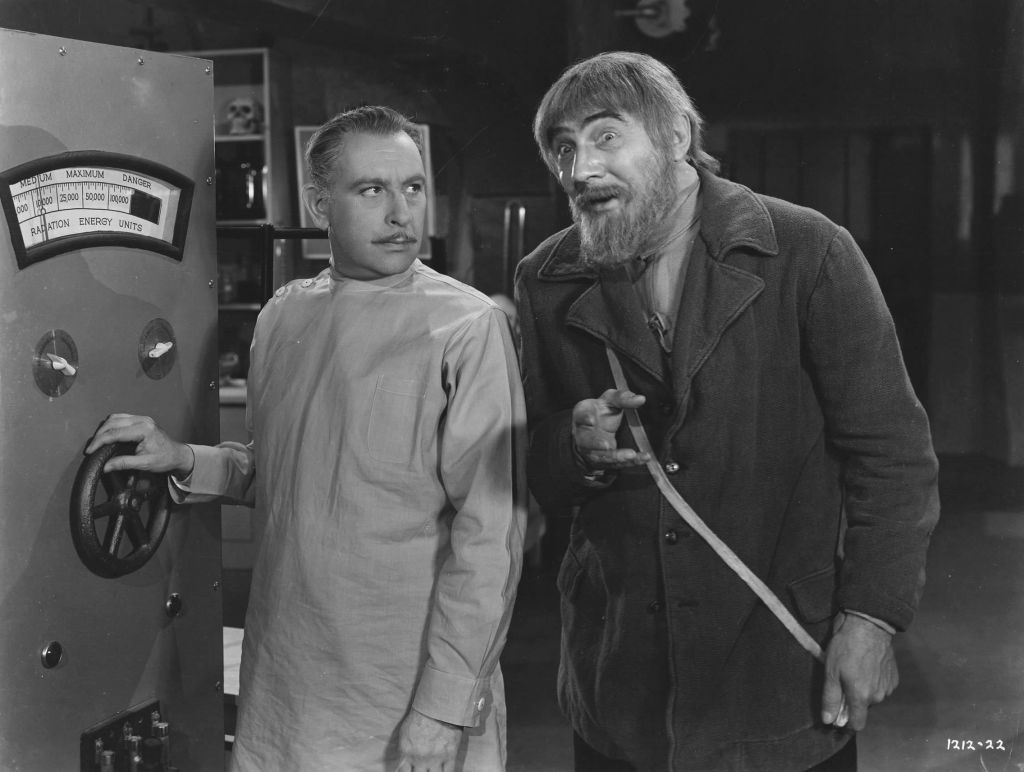
Continuing the Frankenstein marathon, I promptly moved on to the fourth film in the series, The Ghost of Frankenstein (1942), a decent enough film, though it’s more than obvious that the story is starting to go off the rails just slightly. This is not only the first Frankenstein film without Boris Karloff involved in any way, it also stretches credulity by now following Frankenstein’s second son Ludwig (Sir Cedric Hardwicke), yet another doctor-scientist who has mostly managed to escape the stigma attached to the name of Frankenstein.

Here’s the thing about The Ghost of Frankenstein: surely we must assume that a number of years have passed since Son of Frankenstein because that is the only way I can believe that Sir Cedric Hardwicke is the younger brother of Wolf Frankenstein (Basil Rathbone). If I didn’t know better, I’d think it was the other way around. Forgetting the noticeable age difference between the alleged brothers, there’s also the not-so-minor-detail of Lon Chaney Jr. now playing the Monster. It’s not that he does a bad job, he’s actually quite believable. It’s just….I can tell it’s not the same person, and that bothers me every time I see this film. Also, is it just me or does Lon Chaney spend most of the film with his eyes closed?

Speaking of recasting, the one element of this film I dislike is that Hardwicke is used to play the ghost of his father Henry (originally played in two films by Colin Clive). I sort of get why they did so, but you’re telling me they couldn’t find anyone to serve as a sound alike for Colin Clive? I feel like they missed a big opportunity by not casting in a way that made it appear the ghost of Colin Clive’s Henry Frankenstein was really present and it’s the one detail I would change if I could.

Those issues aside, the film is otherwise a direct sequel to Son of Frankenstein, with Ygor (Bela Lugosi) still leading the Monster around in an attempt to fulfill his longterm goals. This is the film where the explanations for how the Monster survives from one film to the next start to become ridiculous. I can believe that the Monster dropped down into a cavern when the mill burned down in the first film, I can believe he survived the lab blowing up at the end of Bride of Frankenstein. However, you want me to believe that the Monster survived being dropped into boiling hot sulfur that then hardened around him? Nope, that’s one step too far (it gets more ridiculous from here).

Also, how is it that all of the Frankenstein children manage to get their hands on electrical equipment necessary for reviving the Monster? I can sort of understand how Wolf pulled it off by rebuilding the laboratory on the estate, but explain to me how and why Ludwig also has the right tools when it’s implied he’s a brain surgeon? Funny how that works isn’t it.

The Ghost of Frankenstein also starts the recurring subplot of giving the Monster a new brain to “fix” him (a plot point that will return in House of Frankenstein). It’s an interesting thought, though I notice no one ever explains to the Monster that this would essentially erase him from existence (since the brain is what makes everything work). I was suitably impressed by how the combination of Ygor and the Monster came off (the Monster is perfectly dubbed with Ygor’s voice). The explanation for why it doesn’t work is also perfectly simple and, it makes sense.

The Ghost of Frankenstein isn’t a bad film by any stretch of the imagination, but it is definitely below the three films that came before it. A significant stretching of the imagination is required to enjoy this film without asking any questions about how it works (I particularly roll my eyes when the Monster is “recharged” by bolts of lightning). Your mileage will definitely vary on how much you enjoy this film.

Let me know what you think about The Ghost of Frankenstein in the comments below and have a great day!

See also:

My Thoughts on: Frankenstein (1931)

My Thoughts on: Bride of Frankenstein (1935)

My Thoughts on: Son of Frankenstein (1939)

Film Reviews

Become a Patron of the blog at patreon.com/musicgamer460

Check out the YouTube channel (and consider hitting the subscribe button)

Don’t forget to like Film Music Central on Facebook


My Thoughts on: Son of Frankenstein (1939)

Once I got my hands on the Universal Classic Monster 30 film collection (on blu-ray, it’s excellent and I highly recommend it), I was briefly stymied as to where I should start with so many classic horror films to choose from. And then it dawned on me: I’d already watched Frankenstein (1931) and Bride of Frankenstein (1935), it follows that I should continue the pattern with Son of Frankenstein (1939).

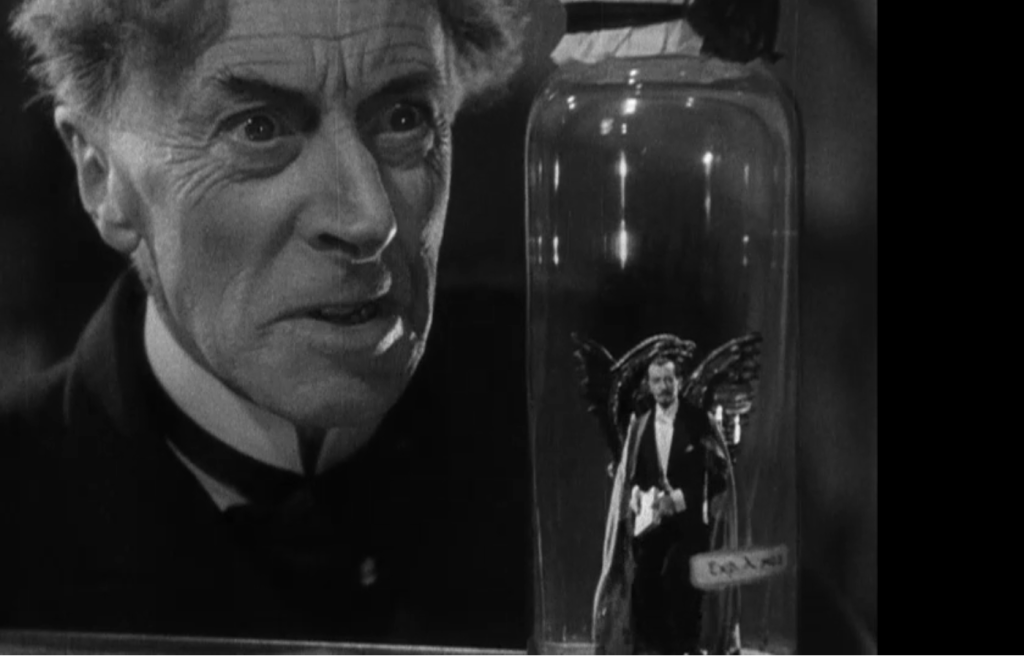
As the title implies, Son of Frankenstein follows the adventures of Henry Frankenstein’s eldest son Wolf (an almost neurotic Basil Rathbone), a plot development likely necessitated by the death of Colin Clive two years earlier in 1937. There is, however, a delightful homage to the actor in the form of a gorgeous oil painting that hangs in the main hall of Castle Frankenstein. In a way then, Clive literally looms over the story, though he is not physically present. I also like that the film reveals, in part, what happened to Henry after Bride of Frankenstein. Far from getting off scot-free in regards to creating these monsters, it seems that the truth came out and Henry spent the rest of his life shunned by the community and deep down never gave up his dreams of creating life. Unfortunately, one can only imagine what Clive would have brought to a third Frankenstein film, but these homages and references really are a nice touch.

In a further nod to continuity, Frankenstein’s laboratory is in ruins from the explosion that decimated it in the conclusion of Bride of Frankenstein (we’re meant to forget the fact that the building was completely demolished at the end of that film). Wolf Frankenstein has returned with his family in an attempt to make a new life there, but due to all the events with Frankenstein’s monster, the welcome is less than warm. Matters become unbelievably complicated when the hideous Ygor (Bela Lugosi in a brilliant performance) reveals to Wolf that the Monster is in fact alive, but injured. For the record, I believe these injuries are why the Monster can no longer speak (having learned to do so in Bride of Frankenstein).

This is the first Frankenstein film I saw that made it perfectly clear where Young Frankenstein (the Mel Brooks spoof) got a big chunk of its source material from (The Ghost of Frankenstein being the other). There’s something that makes it different from the two films that came before it, and I’m still struggling to put a finger on exactly what it is. Basil Rathbone, as I mentioned before, puts in a somewhat neurotic performance as Wolf Frankenstein, but it’s still an enjoyable performance, especially as you watch him get drawn into his father’s work bit by bit.

And speaking of Wolf….Son of Frankenstein has an unintentionally hilarious (at least I think it’s unintentional) moment where Wolf basically gives the Monster a complete physical in order to find out how he functions. There’s something surreal about watching the Monster’s blood pressure get taken, blood drawn, X-rays given, just like he’s a normal person (though one can argue the Monster is hardly normal). It’s also interesting, by the way, to watch Wolf and the Monster interact. When they first meet, I think it’s implied that the Monster mistakenly believes Wolf to be his father, hence his initial reaction to strangle Wolf. And then, most interesting, the Monster stops mid-action, as if it dawns on him that “this isn’t my creator, this is someone else.” It’s one of my favorite moments in the entire film.

I was also surprised to learn that THIS is the film where Ygor first appears. I grew up believing that Ygor was always a part of the Frankenstein story but that is simply not true. In the book, Frankenstein has no assistant at all, and in the first film his assistant is named Fritz. It’s well worth the wait though to finally see Ygor. Bela Lugosi is brilliant as the hunchbacked friend of the monster with a hideously disformed neck (they tried to hang him but it didn’t stick). I still haven’t figured out yet if I like Ygor or hate him, because Lugosi plays him so well, you’re not sure what to think about him.

One other detail I have to mention that is the presence of Wolf’s son Peter (Donnie Dunagan). First of all, cool trivia point: if Donnie’s voice sounds familiar that’s because he’s the voice of young Bambi in the 1942 film of the same name. He’s so adorable, and I love how any time he enters the scene, all the action briefly pivots to center on him (he was all of 4 at the time). Peter is also part of my second favorite scene in the film, when he innocently tells his father about the “friendly giant” that’s been visiting him in his bedroom (re: the Monster). The moment when little Peter imitates the Monster’s walk (making it crystal clear whose been visiting him), complete with a snipped of the Monster’s musical theme, is one of my favorite moments in the film, not least because of the complete panic in Wolf’s reaction to it.

Son of Frankenstein is, unfortunately, not quite up to the level of Frankenstein or Bride of Frankenstein, but it remains an enjoyable film, the last to feature Boris Karloff in the role of Frankenstein’s Monster. I would recommend watching this film once you make your way through the first two Frankenstein films.

Let me know what you think about Son of Frankenstein in the comments below and have a great day!

See also:

My Thoughts on: Frankenstein (1931)

My Thoughts on: Bride of Frankenstein (1935)

My Thoughts on: The Ghost of Frankenstein (1942)

Film Reviews

Become a Patron of the blog at patreon.com/musicgamer460

Check out the YouTube channel (and consider hitting the subscribe button)

Don’t forget to like Film Music Central on Facebook

Soundtrack Review: Metamorphosis (2020)

Earlier this year, I was given the opportunity to check out the soundtrack to a new game called Metamorphosis, with the soundtrack composed by Mikolai Stroinski (The Witcher 3) and Garry Schyman (BioShock). In this game, the player finds themselves transformed into a tiny bug and must navigate a suddenly unfamiliar world in that form in order to find out what has happened and how they can regain their former shape again.

Regarding their work on the game’s soundtrack, Mikolai Stroinski and Garry Schyman had the following to say:

“This very unique game, inspired by Franz Kafka’s famous novel, takes place in a bizarre and nightmarish world inhabited by insects and a corrupt bureaucracy. The game gave us an astonishing opportunity to write music inspired by the expressionist era of art and music in the early 20th century. Composers Arnold Schoenberg and Alban Berg, as well later composers such as Bernard Herrmann were inspirations. We incorporated techniques of the era such as Sprechgesang (half spoken half sung), 12 tone, aleatoric, tonal and atonal harmonies to invoke a past age that worked perfectly for the world of Metamorphosis.”

I knew going in that this soundtrack was inspired by the works of Schoenberg and Berg, that alone told me this was going to be an unusual soundscape. But I still wasn’t prepared for just how expressionist and atonal this music was. If you haven’t experienced expressionist and atonal music before, then the music for Metamorphosis is going to hit you like a bolt out of the blue. This isn’t like the rich, orchestral music that accompanies games like God of War or Horizon Zero Dawn. This is music that is eccentric, off-kilter, and will keep you constantly on edge from beginning to end. For any of my readers who may have studied music theory as I have, imagine a video game with the soundtrack of Wozzeck and you’ll have a pretty good idea of what Metamorphosis sounds like.

It’s actually a really bold choice to go in this direction with a video game soundtrack. If you’re meant to go into this game feeling lost and unsure as to what’s going on (which is bound to happen if you suddenly wake up in the game as a bug), then the music is only going to help make that happen. I also really like that the soundtrack has Sprechgesang (speak-singing that sounds really demented when combined with atonal music). It’s a constant reminder that you are not in a normal environment. I would have to imagine that this music combined with seeing everything from a bug’s perspective would be quite the mind-bending experience.

I was also struck by how short some of these tracks are. In fact, some of them are barely 30 seconds long. There isn’t a set length for tracks in a score, for video games or otherwise by any means, but I’m more used to tracks being several minutes long at minimum. Having these tracks be so short is also startling, as they can end without warning and I can only imagine how that plays out during gameplay.

The soundtrack for Metamorphosis definitely ranks as the most unusual soundtrack (for film, television or video games) that I’ve listened to this year. And quite frankly I think that’s a good thing. It’s nice to listen to something completely different every now and then.

Let me know what you think about Metamorphosis in the comments below and have a great day!

See also:

Video Game Soundtracks

Become a Patron of the blog at patreon.com/musicgamer460

Check out the YouTube channel (and consider hitting the subscribe button)

Don’t forget to like Film Music Central on Facebook

My Thoughts on: Bride of Frankenstein (1935)

Having watched Frankenstein (1931) already for this year’s Halloween celebrations, it goes without saying that I had to watch the equally famous follow up Bride of Frankenstein (1935) as well. This is the film you’ll always hear about when people mention sequels that are superior to the original film, and boy does Bride of Frankenstein fall into this category. It’s not that Frankenstein is a bad film (it isn’t), it’s just that Bride of Frankenstein improves on the original in so many areas that it makes the original film look primitive in comparison.

While a sequel to Frankenstein, Bride of Frankenstein is still based on plot concepts found in the Frankenstein novel. In fact, the entire concept of a “bride of Frankenstein” comes from the second half of the book when the Monster demands Victor Frankenstein build a mate for him, so that he can live the rest of his life apart from human society (which he has sworn off for rejecting him), but with the company of one of his own kind so he won’t be lonely. That attempt ends badly as Frankenstein rejects the idea, destroying the “bride” just as he’s about to give her life. In the film, of course, this doesn’t happen and we get to see the Bride of Frankenstei (Elsa Lanchester) n take her first steps on screen (though don’t expect too much, the Bride only gets about 3 minutes of screen time).

What makes the plot of Bride of Frankenstein really interesting is that Henry Frankenstein (played one last time by Colin Clive) isn’t the mad scientist villain of the story this time around. That dubious honor goes to Dr. Septimus Pretorius (Ernest Thesiger), one of Frankenstein’s old professors, who has dabbled with the power of life in his own twisted way and now wants to use Frankenstein’s talents to build a female equivalent to the Monster (why is never made quite clear). Frankenstein, for his part, wants nothing to do with it, but Pretorius coerces him into it and the plot proceeds from there.

Unlike Frankenstein, which is pure horror and drama straight through, Bride of Frankenstein has a touch of comedy about it, mostly in the scenes with Minnie (Una O’Connor). I’ve never quite known how to feel about this, as I feel that it doesn’t always fit. Take, for example, the scene at the beginning of the film when Minnie comes face to face with the not-dead-after-all Monster and runs away gibbering down the mountainside. It’s funny, but it’s a complete 180 from what we just saw (the Monster killing Maria’s parents). However, the dry humor of Dr. Pretorius is most welcome, as it helps to highlight just how evil he is, especially when you compare it to Frankenstein’s manic joy (and despair) when he created his own monster in the first film. Frankenstein feels the consequences of his actions, Dr. Pretorius does not. In fact, sometimes I get the feeling the mad doctor views all of this as a colossal joke.

This film does have one of the most beautiful (and heartbreaking) moments in the story of Frankenstein’s monster, and that’s when the Monster comes across the blind hermit. Every time I see this sequence I think “if only there had been a way to leave these two in peace together.” It’s not only touching to see the two become friends, with the Monster learning to more or less talk in simple sentences, it’s also further proof that, given the opportunity, the Monster would prefer to live in peace and not engage in wanton destruction. In other words, he has the capacity for good somewhere inside him, but almost no one can see it because they’re distracted by his appearance. Of course it wouldn’t be much of a horror film if it ended that way, so the Monster is conveniently forced away from the hermit so the story can continue.

I find it interesting that Boris Karloff didn’t want the Monster to speak. It seems the actor felt the performance of the Monster was far more effective when it was all pantomime (like in the first film). I enjoyed that performance, but I don’t agree with Karloff’s thoughts on the matter. It seems to me the logical next step in the Monster’s development would be for him to develop speech. After all, the book version of the Monster could speak quite well, why not the film version also? Besides, without the Monster learning to talk, we wouldn’t have gotten one of the best lines in horror film history:

The Monster (to Frankenstein & Elizabeth): Yes! Go! You live!

(To Pretorius & The Bride): You stay. We belong dead.

More on the ending in a little bit…..

Considering she’s on screen for less than five minutes, I find the Bride of Frankenstein to be utterly fascinating. Given that she’s Frankenstein’s second creation, it makes sense that she’d be far more glamorous and beautiful than the first Monster. After all, the second time you do something is usually easier and you can fix any mistakes you might’ve made the first time. Hence the reason the Bride has perfect proportions, and except for some scars around her chin and neck looks completely human. I love that after her reveal, the camera cuts around to different angles highlighting how beautiful the Bride is.

I’ve also long thought that the Bride’s reaction to the Monster isn’t what you think. Remember in the first film how the Monster reacted badly to the fire and he ended up chained up because of it? Well, I think the Bride is only reacting to Frankenstein in fear because she was a) just created a matter of moments ago and b) doesn’t know how to talk or express her feelings yet. If there had been more time, maybe the Bride could have been made to understand but the problem is that Pretorius clearly promised the Monster that the Bride would love him. Once the Monster feels he’s been rejected, that brings out the end of the story.

Now back to the ending that I referenced before. I love how, in just a few sentences, the Monster is able to sum up how Frankenstein deserves to live while the rest (including himself) deserve to die. Frankenstein deserves life because he has Elizabeth who needs him and, I’m pretty sure the Monster has observed that Frankenstein was only involved in the Bride’s creation because Pretorius forced him too. For that alone, the Monster is willing to let his creator go. Pretorius, on the other hand, has no excuse. He dragged the Monster into this, and the Monster has already admitted before now that he “hates living.”

I also need to stop and mention Franz Waxman’s gorgeous score for Bride of Frankenstein, the biggest difference between this film and the original Frankenstein. If you’ll remember, the 1931 film, apart from some opening and closing music, has no score at all. The music in Bride of Frankenstein is practically wall to wall and I love every minute of it. Each of the major characters has their own leitmotif, and it just helps to propel Bride of Frankenstein to even greater heights. Honestly, the music is so good it deserves a blog post of its own, so I’ll pause on the discussion of the music for now.

One interesting final detail I want to mention: if you watch the ending when the laboratory explodes very closely, you’ll notice that Frankenstein is still in there (he’s pressed against the wall on the left hand side of the room). This is because originally Frankenstein was supposed to die with the rest of them. But Universal insisted on a “happy ending” so the scene was hastily rewritten for Frankenstein to escape with Elizabeth just before the building exploded. But there was no money in the budget to reshoot the destruction scene, so the error remains.

Bride of Frankenstein is, in my opinion, the best Frankenstein film ever made, and one of the enduring highlights of Universal’s Classic Monsters era. 85 years later, they haven’t come close to topping this film (and I hope they never do).

Let me know what you think about Bride of Frankenstein in the comments below and have a great day!

See also:

My Thoughts on: Frankenstein (1931)

My Thoughts on: Son of Frankenstein (1939)

My Thoughts on: The Ghost of Frankenstein (1942)

Film Reviews

Become a Patron of the blog at patreon.com/musicgamer460

Check out the YouTube channel (and consider hitting the subscribe button)

Don’t forget to like Film Music Central on Facebook

Soundtrack Review: The Wolf of Snow Hollow (2020)

So just the other day I shared the news that the original soundtrack for The Wolf of Snow Hollow (by Ben Lovett) is now available. Today, I actually got the chance to sit down and listen to that soundtrack and present my thoughts on it below.

My god…..this soundtrack is beautiful. Even in this severely truncated year of films, I’ve been able to listen to my fair share of soundtracks this year, and I can sincerely say that The Wolf of Snow Hollow is one of the best, if not THE best soundtrack I’ve heard in 2020. The music was composed by Ben Lovett, who has also scored the likes of Synchronicity (2015), The Ritual (2017), and The Night House (2020), just to name a few examples.

From beginning to end, this soundtrack is amazing. It feels very much like a throwback to the kind of soundtrack you’d hear during the Golden Age of Cinema (approximately 1933-1960, the exact years vary depending on who you ask). And this is a very good thing! Film scores like this are filled with rich musical layers, the strings in particular range from menacing to thoughtful (but still full of tension). I also like how Lovett doesn’t give too much away with the music. Some scores, this year’s The Invisible Man comes to mind, openly project where and when certain moments (like jump scares) happen. The Wolf of Snow Hollow doesn’t do that. You feel a certain rise and fall fo tension to be sure, but if any one specific moment happens, the music doesn’t give it away.

And that music….Lovett openly admits that he wanted the music of The Wolf of Snow Hollow to be referential and is it ever! The influence of Bernard Herrmann is all over this score, in particular I heard multiple references to his iconic score for Psycho (1960). Not, I should clarify, anything that references the iconic “shower scene” moment that the film is most famous for. Instead, I swear I heard hints of Hermmann’s score from the opening of the film, particularly in the track “Third Crime Scene.” I love that this score pays such direct homage to one of Herrmann’s best film scores, and it makes me very excited to eventually watch this film and hear the music in context with the story. If I get the chance to speak with the composer, I plan on asking about this score’s connection with Herrmann and Psycho because that is a story I need to hear.

It would be impossible to overstate how happy listening to this soundtrack made me. From the opening track, the music sucked me in, and it never lets up. This is one of the best use of strings that I’ve heard in years, I know I’ve said that before but it’s done so well I have to mention it again.

I could go on and on, but honestly it all boils down to this: you need to listen to the original soundtrack for The Wolf of Snow Hollow at your earliest opportunity. This music is so beautiful, with a great homage to Bernard Herrmann, and I think you’ll be hard pressed to find a score that surpasses this one in what little remains of 2020. Ben Lovett has knocked it out of the park with this one.

Let me know what you think about the music for The Wolf of Snow Hollow in the comments below and have a great day!

See also:

Soundtrack News: ‘The Wolf of Snow Hollow’ Soundtrack Available Now

Film Soundtracks A-W

Become a Patron of the blog at patreon.com/musicgamer460

Check out the YouTube channel (and consider hitting the subscribe button)

Don’t forget to like Film Music Central on Facebook 🙂
Soundtrack News: ‘Tower of God’ (Original Series Soundtrack) Available Now!

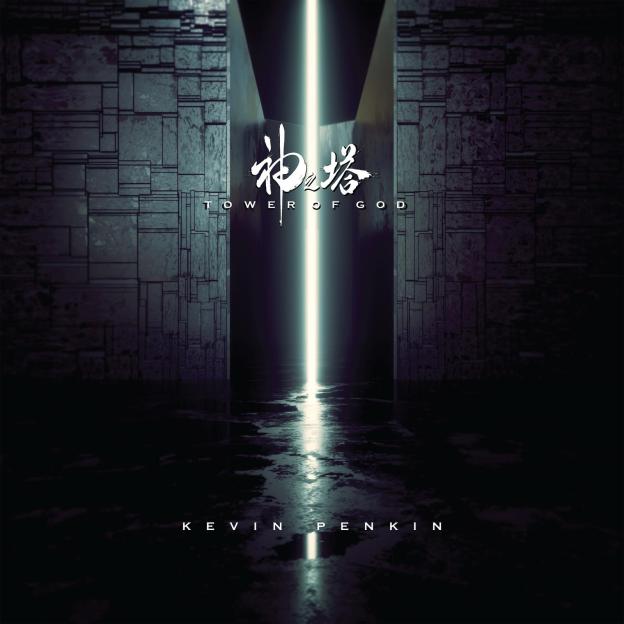
Milan Records has released the Tower of God (Original Soundtrack) with music by Kevin PenkinAvailable everywhere now, the album features music from the critically acclaimed Japanese anime series Tower of God based on the South Korean action fantasy web manhwa of the same name created by S.I.U.  The soundtrack consists of 44 original tracks by Penkin. He crafts an expansive, ethereal, and engaging sonic journey to mirror the adventures of the series protagonists Rachel and Bam. 

Kevin Penkin, based in Melbourne, is a BAFTA-nominated composer for Japanese animation and video games. He is best known for composing the award-winning score to ‘Made in Abyss’, and the music to the BAFTA award-winning game ‘Florence’. Kevin moved to London in 2013 to complete a Masters degree in Composition for Screen at the Royal College of Music. During this time, Kevin collaborated with legendary video game composer Nobuo Uematsu on a number of Japanese video game titles, which eventually led him to break into the Anime industry. After releasing his breakthrough score for Made in Abyss, Penkin continued to compose music for Japanese animation, with scores for both The Rising of the Shield Hero and Tower of God.

Of the soundtrack, composer Kevin Penkin says:

“Tower of God has been an extraordinary challenge, with an even more extraordinary reward. I’d like to thank and acknowledge the co-composers, musicians and staff—all of whom I call friends—that helped make this soundtrack what it is. This has been a once-in-a-decade project, and it’s an honor to compose for this series.”

Reach the top, and everything will be yours. At the top of the tower exists everything in this world, and all of it can be yours. You can become a god. Tower of God tells the story of the beginning and the end of Rachel, the girl who climbed the tower so she could see the stars, and Bam, the boy who needed nothing but her.

See also:

Become a Patron of the blog at patreon.com/musicgamer460

Check out the YouTube channel (and consider hitting the subscribe button)

Don’t forget to like Film Music Central on Facebook 🙂

Soundtrack News: ‘The Wolf of Snow Hollow’ Soundtrack Available Now

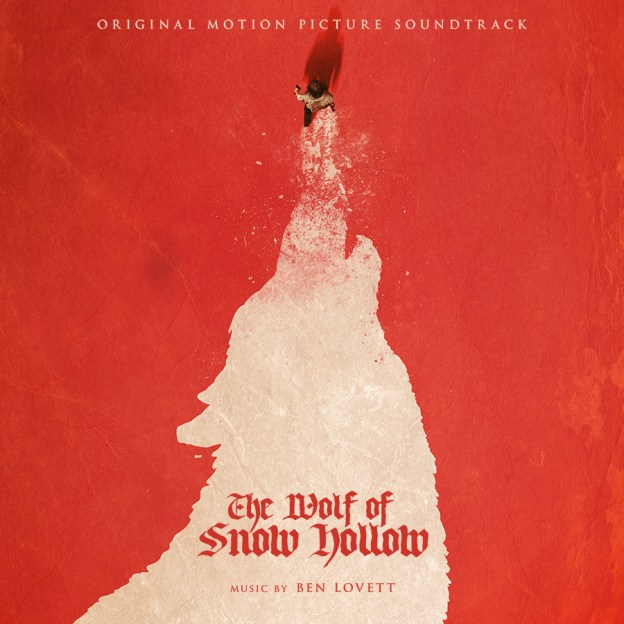
Lakeshore Records released The Wolf of Snow Hollow—Original Motion Picture Soundtrack digitally on October 9th. Composed by Ben Lovett (The Ritual, The Wind), the album is a strikingly orchestrated, multi-faceted work inspired by old school Bernard Herrmann-era suspense thrillers reflecting all the dimensions of the offbeat horror film—from darkly comedic to tension-fueled terror to oddball mystery caper.

In The Wolf of Snow Hollow, a small-town sheriff, struggling with a failed marriage, a rebellious daughter, and a lackluster department, is tasked with solving a series of brutal murders that are occurring on the full moon. As he’s consumed by the hunt for the killer, he struggles to remind himself that there’s no such thing as werewolves…

The Wolf of Snow Hollow is written and directed by Jim Cummings (Thunder Road) who stars alongside Riki Lindhome (Knives Out, “Garfunkel and Oates”), Jimmy Tatro (“American Vandal,” Bad Education), Chloe East (“Kevin (Probably) Saves the World”) and the late Academy Award nominee Robert Forster (Jackie Brown, The Descendants) in his final feature role.

Speaking about working with the director Cummings, Lovett noted: “After seeing Thunder Road I leapt at the opportunity to collaborate with Jim and tried to match his energy every step of the way.  Jim is a big music fan and had tremendous enthusiasm for the process. We talked about everything from Prokofiev to Bernard Herrmann and I could tell he wanted to go big.  We had a tiny budget but a lot of ambition, and I wanted to see if we could pack big ideas into small packages.”

Expanding on the score, Lovett adds: “On a score like this the aim is to be referential without being derivative, to celebrate the influences instead of trying to hide them.  I like folding a love letter into what I’m doing but try to keep from getting too caught up in that, ultimately I’m just chasing an instinct about a sound and feel that hopefully expands on the personality and character of the film.”

Track List

  1. The Werewolf
  2. Welcome to Snow Hollow
  3. Little Red Riding Hood
  4. First Full Moon
  5. First Crime Scene
  6. Snow Hollow Mystery
  7. Second Full Moon
  8. Second Crime Scene
  9. Slopes
  10. Relapse
  11. Werewolf Stories
  12. Third Crime Scene
  13. Utah
  14. Detectives
  15. Second Relapse
  16. Full Moon Fever
  17. Snow Hollow Killer
  18. Returning Evidence
  19. For Protection
  20. New Sheriff

See also:

Become a Patron of the blog at patreon.com/musicgamer460

Check out the YouTube channel (and consider hitting the subscribe button)

Don’t forget to like Film Music Central on Facebook 🙂