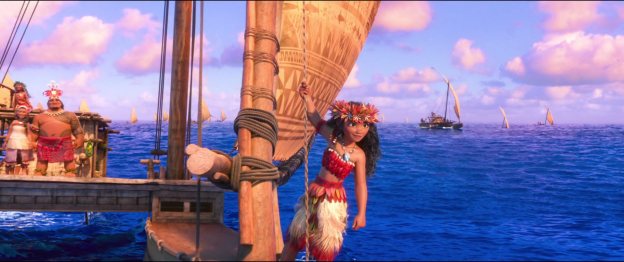
Thoughts on Moana (2016)

WARNING! WARNING!: What follows is a full and complete summary of the film with every kind of spoiler under the sun!!!! DO NOT CONTINUE if you have not seen the film and don’t want to know what happens!!!

From the moment I saw the first teaser, I knew that Moana would knock the ball out of the park. Everything about this film felt right, but knowing that in advance still didn’t prepare me for seeing this gorgeous masterpiece (which I did on Saturday night).

Moana could very easily be the perfect Disney film (it’s at least equal to Beauty and the Beast, and you know what high regard I hold THAT film in), I could probably find a flaw if I nitpicked, but really nothing jumped out at me.
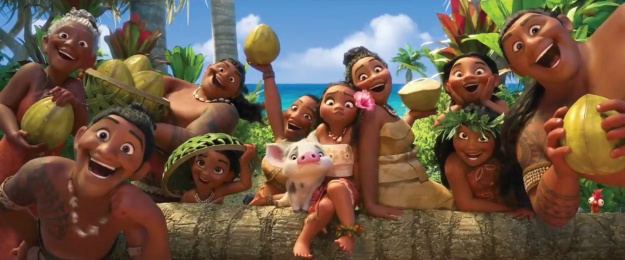
Moana-131

Moana “Where you Are” (2016)

The young Moana is the daughter of the village chief and will someday lead her people on the island of Motonui. Since she was a toddler, she has been fascinated by the ocean, but it’s a fruitless desire because her father (who means well), forbids anyone to sail beyond the reef at the edge of the island’s lagoon. This is because years ago, he and his friend snuck out beyond the reef in a small boat to explore and were caught in a storm. Moana’s father came back…his friend didn’t. As Moana gets older, she actually does a great job of suppressing her love of the ocean because she understands her responsibility as a future chief and she might have happily lived the rest of her days on the island….except things are starting to go wrong.

Need-a-chief-where-you-are

First the coconuts begin to spoil even before they’re harvested, and even worse, no one can find any fish in the lagoon, or anywhere within the reef. Moana believes she understands why this is happening: for years her grandmother has told the story of how the demi-god Maui stole the mystical heart of Te Fiti (a goddess considered the mother of all islands) and as a result, a dark blight has been spreading across the ocean, destroying everything it touches. And now, this blight has come to Motonui, but Moana’s father doesn’t want to believe it.

Moana “How Far I’ll Go” (2016)

Moana wants to help her people, but she’s not sure how, until her grandmother tells her a secret…her people didn’t always live on Motonui. A long time ago, they were sea voyagers, travelling the ocean in HUGE boats, sailing using only their knowledge of the stars and sea currents. But, due to the blight, boats eventually stopped returning, and it was decided to hide the boats away forever. But now, with the island in danger, the only way to save Motonui is to return the heart of Te Fiti, and the only way to do that is to sail far past the reef. Moana’s father won’t listen and actually wants to burn the boats, but then Moana’s grandmother (his mother) becomes deathly ill, and with some of her last words she urges Moana to go and do what must be done.

maxresdefault (2)

Moana “You’re Welcome” (2016)

Taking a small canoe, Moana grabs some supplies and sets off to find Maui, and boy does she find him. Maui is a cocky demi-god, rather full of himself because in ages past he helped the humans by giving them fire, coconuts, various islands and other gifts. After much arguing, Moana convinces Maui to come with her to restore Te Fiti’s heart, but first they need to find Maui’s magic fish hook, a weapon that Maui uses to shapeshift into any form he chooses. Maui is certain his hook can be found in the realm of monsters, and it is…it just happens to be in the possession of a giant crab with a penchant for all things shiny and valuable. Moana and Maui do manage to retrieve the hook, but not before the crab reveals that Maui was abandoned by his family.

Tamatoa_meets_Moana

Moana “Shiny” (2016)

It turns out that Maui wasn’t born a demi-god, he was actually born a normal human to human parents. But for whatever reason, as soon as he was born, they abandoned him by throwing him into the sea. But he didn’t die…the gods found him and raised him, giving him the magic fish hook when he was grown.
Fish hook found, the pair sails on to Te Fiti, and along the way Maui teaches Moana all about how to sail. (I forgot to mention, before this, there was a hilarious encounter with Kakamora, basically pygmy sprites that resemble little coconuts. It’s hilarious and a little freaky all at the same time, but I loved it!!!) It’s not as simple as sailing up to the island and restoring the heart…there happens to be a fire demon named Te Kaa in the way.

Moana “I am Moana” (2016)

The first attempt to reach Te Fiti ends very badly. Moana believes she can slip the boat past Te Kaa before he swipes them out of the water, but Maui really wants to turn back. When Moana doesn’t listen, Maui is forced to use his fish hook directly against Te Kaa’s body: the resulting explosion blasts the boat far out to see, and critically damages the fish hook in the process. Believing his entire worth is wrapped up in the fish hook, Maui refuses to have anything more to do with Moana or the quest and takes off (literally, he turns himself into a giant hawk). Initially despondent, Moana resolves to continue on alone after an inspiring meeting with her grandmother and a vision of her seafaring ancestors (in a sequence that made me cry, but in a good way).

I_Am_Moana

Moana makes it to the island (with a late assist from Maui who changed his mind), but while Maui is keeping Te Kaa distracted, she makes an earth-shattering discovery: Te Fiti isn’t there!! Maui told her that the heart belongs in the center of a spiral on Te Fiti’s chest, and when Moana looks back, she notices that Te Kaa has a spiral on HIS chest. And that’s when it dawns on her…Te Kaa isn’t just some fire demon…he, actually she, is Te Fiti without her heart!!! Knowing this, she calls Te Kaa over and reminds the goddess who she really is while restoring the heart to her. Rejuvenated, the blight is destroyed and Te Fiti thanks the pair by restoring Maui’s fish hook and making Moana’s boat good as new before returning to her slumber.

085c0c_5a0cd41d48484dc9bdf13a3bb47ba52f_mv2

Moana returns to Motonui, and having seen the benefits of sailing firsthand, the great boats are retrieved from their cavern and the entire village is off on a sailing adventure with Moana leading the way!

I literally cannot praise this film enough, it left me in tears by the closing scene and I’m already making plans to see this film at least one more time in the theater (and I almost never do that). If you haven’t seen this film yet, please go, and if you have and your friends haven’t, take them with you and go see it again!

Final verdict: Moana is a masterpiece that rivals the greatest of the Disney classics.

Become a patron of the blog at: patreon.com/musicgamer460

Check out the YouTube channel (and consider hitting the subscribe button)

Don’t forget to like Film Music Central on Facebook 🙂

See also:

Animated Film Reviews

Moana “Where You Are” (2016)

Thoughts on Fantastic Beasts and Where to Find Them (2016)

WARNING: Spoilers abound especially towards the end so if you haven’t seen this film and DON’T want to know…turn back now!!!

Well…of all the surprises I was expecting/hoping for this year, Fantastic Beasts and Where to Find Them was definitely the biggest! I say this because I originally had no plans to see this film at all. With all due respect to the legions of Harry Potter fans, this is one film franchise I just couldn’t get into. But then, due to a podcast commitment, I decided to give this film a chance and wow!!! I’m so glad I did!

The magical world in 1920s America is beautifully realized, with one of my favorite parts being the magical speakeasy (with a house elf singer no less, at least, I think she was a house elf, please correct me if I’m wrong). My only complaint is the insistence on calling non-magical people “no-maj’s”. I mean, seriously, that just sounds stupid. Can’t Muggle just be the universal term for people with no magic? But really, that was my only major complaint (well, there is one other minor issue, but I’ll come to that momentarily).

FANTASTIC BEASTS AND WHERE TO FIND THEM

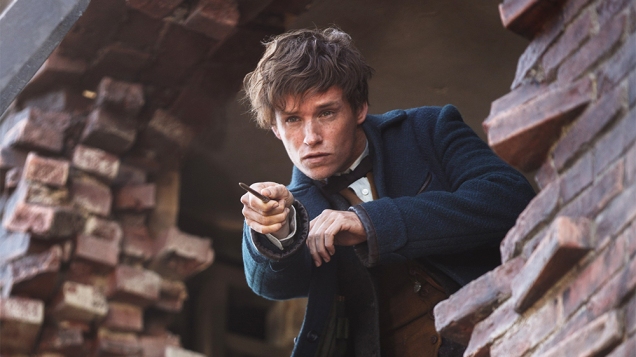
The Beasts are beautifully rendered, and their home inside the magical suitcase is one of the highlights of the film (James Newton Howard outdid himself with a beautiful score). For most of the film, my favorite Beast was the Niffler, a creature that somewhat resembles a mole, and has an insatiable desire for all things shiny and valuable (to put it bluntly, he’s a kleptomaniac who likes to swipe gold and jewelry). In fact, there’s a hilarious sequence where Newt Scamander (a brilliant Eddie Redmayne) attempts to get the Niffler out of a jewelry store with “bull in the china shop” consequences.

But then Newt introduces us to the Thunderbird and I knew I’d found my favorite magical creature. The Thunderbird is a huge, gorgeous creature with gold and silver in its feathers (and according to Newt is a native of Arizona) that has the power to generate thunderstorms, hence its name. Seeing a bird like that made me wish (again) that this magical world really did exist. The other beasts are also well-done (one creature had to be tracked down in a zoo, leading to a funny moment where Newt has to imitate a mating ritual to lure the beast back into the suitcase).

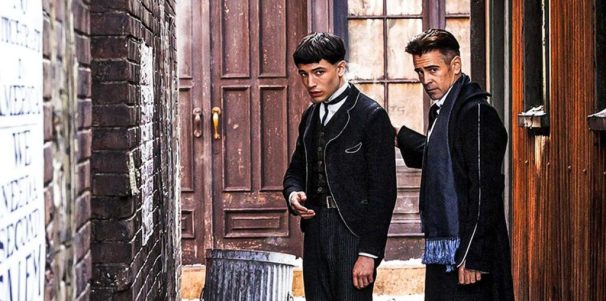
And then there’s the American wizards and witches….Tina and Queenie are an interesting pair of sisters (I love Queenie, I really do), and it was cool to see how life went on in their apartment (with all the magical activity). The President of MACUSA (Magical Congress of the United States of America) is a reasonably good person who just wants to protect her fellow witches and wizards from a populace that would most likely lynch them all if the truth ever got out. And then there’s Percival Graves (Colin Farrell), a high-ranking Auror with his own agenda. He’s initially presented as a stern, but reasonable man. If someone presents him with firm evidence of something, he’ll act on it. But there’s a lot more to Graves than meets the eye (more on that shortly).

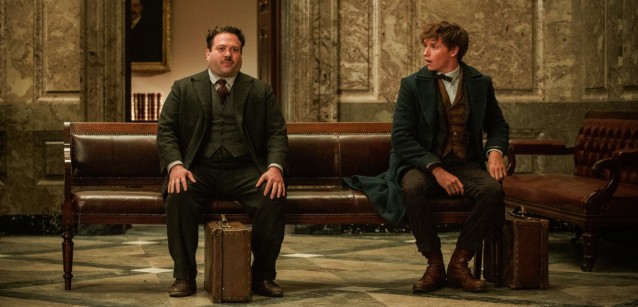
FB-Newt&Jacob

And I can’t forget Jacob Kowalski, the “No-maj” of the story who becomes tangled up in this magical adventure (to his growing delight). He simply wants to open a bakery because that’s what he loves to do, but a chance encounter with Newt changes everything. He really steals the show at several points throughout the story, and I hope he turns up in the sequel, I really do.

Credence-Barebone-and-Percival-Graves-1024x509

Back to Percival Graves: it turns out he’s hunting through New York City for a certain child, one that contains incredible power that’s been repressed into what’s known as an “Obscurious.” Graves is desperate to find this individual and is using a young man named Credence to help him do it. It turns out that Credence had magical parents (at least his mother was magical) but his mother died giving birth to him and he was adopted by a cruel no-Maj woman who beats him every chance she gets. Graves has promised Credence that if he can find this child, Graves will take him away to the magical world and teach him magic. But once Credence believes the child in question is his foster sister Modesty, Graves abandons him, believing Credence to be a Squib (child of magical parents but with no talent for it themselves).

Well…as it turns out, Credence had the repressed power all along (much to Graves’ surprise) and though Graves (and Newt) attempt to save Credence, other Aurors swoop in and kill him. Newt had been suspicious of Graves for a while and after binding the Auror with one of his creatures, he uses a revealing spell and…surprise surprise, Graves is actually the notorious wizard Grindelwald played by Johnny Depp!! I’m not sure how I feel about this casting choice to be honest, I mean it COULD be okay, but he’s onscreen for maybe five minutes maximum so you can’t really gauge how he’s going to play the character yet. I’m actually a little disappointed because I’d gotten used to Colin Farrell and I would’ve been intrigued to see him continue in the role.

Final verdict: Fantastic Beasts and Where To Find Them was an enjoyable ride that’s left me excited for the sequels that are sure to follow.

See also:

Nicholas Hooper “Harry Potter and the Half-Blood Prince” scoring session (2009)

Alexandre Desplat talks Harry Potter and the Deathly Hallows Part 1 (2010)

Live-Action Films/TV

You can become a patron of the blog at patreon.com/musicgamer460

Check out the YouTube channel (and consider hitting the subscribe button)

Don’t forget to like Film Music Central on Facebook 🙂

Marco Beltrami talks World War Z (2013)

Wow, I haven’t done one of these in the longest time (would you believe I have about ten interviews in draft form that I’ve been sitting on for the last four months?), so hopefully I still remember how to do this 🙂

This film (in brief), follows a retired UN investigator (Brad Pitt) as he seeks to keep his family safe from a global zombie outbreak. Along the way he works to find a cure (if any) and stop the zombie hordes from overwhelming the human survivors.

World-War-Z-photo-zombies-1

World War Z was never on my list of “must see movies” because I can’t watch zombie films (they’re too real for me), but when I saw that Marco Beltrami had score the picture, I decided it was at least worth investigating to see what the composer had to say. This brief interview I found, while all too short, is enlightening nonetheless. The part that really jumped out at me is when Beltrami describes how he incorporated the tonal sounds of the Emergency Broadcast System (you know, that annoying buzzer/screech that comes on the TV every six months or so when they test the system) into the harmonies of the film score. I haven’t heard it for myself, but it sounds very clever, and would certainly be a great way to heighten the tension in a film like this.

Beltrami also discusses the need for the film to have a main theme, something to ground the story in. And let’s face it, a good theme (or the lack thereof) can make or break a film. If you watched (and liked) World War Z, then you will definitely find this brief video interesting. I only wish I could find a longer interview.

See also:

Marco Beltrami talks Blade II (2002)

Marco Beltrami and Marilyn Manson talk Resident Evil (2002)

Marco Beltrami talks Live Free or Die Hard (2007)

Marco Beltrami talks 3:10 to Yuma (2007)

Marco Beltrami talks The Wolverine (2013)

Film Composer Interviews A-H

Film Composer Interviews K-Z

Become a patron of the blog at: patreon.com/musicgamer460

Check out the YouTube channel (and consider hitting the subscribe button)

Don’t forget to like Film Music Central on Facebook 🙂

Pocahontas “Listen With Your Heart” (1995)

Pocahontas has been having some interesting dreams as of late. Actually she’s been having the same dream over and over again: she’s running through the woods when she comes across an arrow lying across the path in front of her. As she watches, it begins spinning around and around, until suddenly, it stops! Pocahontas has no idea what it means, so she’s been eagerly waiting for her father to return home so she can share her dream with him (and hopefully he can interpret it for her).

Except, Pocahontas never gets the chance to share her dream with Powhatan, as he has news of his own: Kocuom has asked permission to marry Pocahontas (and Powhatan has said yes). The free spirited Pocahontas is not exactly thrilled with this idea: Kocuom, while handsome, is a very serious man, and wouldn’t mesh very well with Pocahontas, who loves to dream and follow her heart. Powhatan advises his daughter that Kocuom would make an excellent husband for her, and she should strive to be “steady” in her life, like the large river that runs next to their village.

Pocahontas knows her father means well, but she can’t shake the feeling that she’s meant to do something else, so she travels to visit Grandmother Willow, an ancient talking willow tree that has guided both her and her mother before her (having lived for several hundred years at least).

17-reasons-why-meeko-from-pocahontas-is-the-best-2-13571-1418226839-9_dblbig

What Pocahontas wants essentially boils down to the question: What is my path (in life)? How do I find it? As it turns out, her mother asked Grandmother Willow the very same question years before. And the answer, was to listen! Listen to the spirits that dwell all around her. And Pocahontas does listen, and she begins to hear strange voices in the wind (I love the voices of the spirits), but she can’t understand what they’re saying. This is how Grandmother Willow’s song begins: if Pocahontas listens “with her heart” she’ll be able to understand anything the spirits tell her.

Que que na-to-ra
You will understand

Listen with your heart
You will understand

Let it break upon you
Like a wave upon the sand

Listen with your heart
You will understand

And it turns out they have a pretty important message to share. Something is coming, something with “strange clouds”. To investigate, Pocahontas climbs to the top of Grandmother Willow, and she does indeed see “strange clouds”, those clouds being the sails of the English ship now approaching the shore.

strange-clouds-pocahontas

Strange clouds indeed!

I find myself wishing this song was longer. Linda Hunt’s voice is soothing and very rich, just the sort of voice you’d expect a centuries-old tree to possess. Thankfully, there is a reprise later on once Pocahontas and John Smith meet up. Hope you enjoyed this peek at one of the shorter songs in this film.

You can become a patron of the blog at: patreon.com/musicgamer460

Check out the YouTube channel (and consider hitting the subscribe button)

Don’t forget to like Film Music Central on Facebook 🙂

See also:
Pocahontas “The Virginia Company” (1995)

Pocahontas “Steady as the Beating Drum” (1995)

Pocahontas “Just Around the Riverbend” (1995)

Pocahontas “Mine, Mine, Mine!” (1995)

Pocahontas “Savages, Part I” (1995)

Pocahontas “Savages, Part II” (1995)

And if you’d like to read more about animated film music, check out the main page here: Disney/Dreamworks/Pixar/etc. Soundtracks A-Z

Pocahontas “Steady as the Beating Drum” (1995)

As the battered English ship continues on its way, the action zooms ahead to the tranquil shores of the New World, where life continues on, oblivious to the fact that it will soon change forever. We’re taken to a returning war party, led by Chief Powhatan, that is heading for home after engaging in a long fight with the Massawomecks.

One of the great things about Pocahontas is that it is one of the most realistic animated depictions of a Native American community ever created (as opposed to a more stereotypical representation like the one seen in Peter Pan). We’re given a sweeping overview of daily life: we see women picking corn, young boys playing lacrosse (I’m not sure what their name for the game was), people of all ages, from toddlers to the elderly all living in a fairly organized village.

Hega hega ya-hi-ye-hega
Ya-hi-ye-ne-he hega
Hega hega ya-hi-ye-hega
Ya-hi-ye-ne-he hega

Steady as the beating drum
Singing to the cedar flute
Seasons go and seasons come
Bring the corn and bear the fruit.

steady_as_the_beating_drum

The song tells about the regulated order of daily life; all has been the same for generations. The streams are full of fish, there is plenty of game in the woods, and all life is grounded by a firm belief in the Great Spirit and its power in their lives. All of this is provided to show that these people, while different from the arriving settlers, are hardly “savages” (as Ratcliffe continuously refers to them throughout the film).

By the waters sweet and clean
Where the mighty sturgeon lives
Plant the squash and reap the bean
All the earth our mother gives
O great spirit, hear our song
Help us keep the ancient ways
Keep the sacred fire strong
Walk in balance all our days
Seasons go and seasons come
Steady as the beating drum
Plum to seed to bud to plum.
(Hega hega ya-hi-ye hega)
Steady as the beating drum. 
Hega hega ya-hi-ye-hega.
Ya-hi-ye-ne-he hega.

1059476_1340490844863_full

In an earlier version of this song, Kocuom (a warrior who would like to marry Pocahontas) had a verse of his own ( where he sang about how he would build Pocahontas “a sturdy house with sturdy walls” (a line referenced later in “Just Around the Riverbend”). Actually, it may have been an entire song in its own right (“Dancing to the Wedding Drum”, but in a behind the scenes feature playing the song, it has nearly the same melody as this song, so I consider them one and the same). I believe this song/verse was cut because Kocuom has a very different personality (he smiles!!!) from what we see in the final film. This is a shame because Kocuom gets very little character development overall and it would have been nice to see this moment between them.

As word spreads that the war party is nearly home, everyone begins to gather at the shore to welcome them. Clearly this is a greatly anticipated homecoming. Chief Powhatan is very happy to be home, but there is one face missing from the crowd…his own daughter Pocahontas! (Go figure the titular character is missing, a similar thing happens in The Little Mermaid, only Pocahontas isn’t in trouble for not being present).

Don’t forget to like Film Music Central on Facebook 🙂

You can become a patron of the blog at: patreon.com/musicgamer460

Check out the YouTube channel (and consider hitting the subscribe button)

And for more great animated film music, check out the main page here: Disney Films & Soundtracks A-Z

See also:

Pocahontas “The Virginia Company” (1995)

Pocahontas “Mine, Mine, Mine!” (1995)

Pocahontas “Just Around the Riverbend” (1995)

Pocahontas “Listen With Your Heart” (1995)

Pocahontas “Savages, Part I” (1995)

Pocahontas “Savages, Part II” (1995)

Pocahontas “Mine, Mine, Mine!” (1995)

After a treacherous sea voyage, John Smith and company have arrived on the shores of the New World (what is now part of the state of Virginia). Governor Ratcliffe dispatches Smith to scout the terrain and see if any Indians are about the area. Meanwhile, the rest of the settlers are going to start digging, wait…digging??

The gold of Cortes
The jewels of Pizarro
Will seem like mere trinkets
By this time tomorrow
The gold we find here
Will dwarf them by far
Oh, with all ya got in ya, boys
Dig up Virginia, boys

Mine, boys, mine ev’ry mountain
And dig, boys, dig ’til ya drop
Grab a pick, boys
Quick, boys
Shove in a shovel
Uncover those lovely
Pebbles that sparkle and shine
It’s gold and it’s mine, mine, mine

Yes, that’s right. Ratcliffe (the greedy lout) is convinced that Virginia, like the Spanish New World (Mexico) is full of gold and precious gems. Barely scratch the surface and they’ll all be rich as kings! Of course, Ratcliffe (David Ogden Stiers) has no intention of sharing any of this wealth; his plan (revealed in the following song) is to return to England filthy rich and be ennobled by King James, and then become the envy of the entire court.

Mine_Mine_Mine.png

My rivals back home
It’s not that I’m bitter
But think how they’ll squirm
When they see how I glitter!
The ladies at court
Will be all a-twitter
The king will reward me
He’ll knight me… no, lord me!

It’s mine, mine, mine
For the taking
It’s mine, boys
Mine me that gold!
With those nuggets dug…

It’s glory they’ll gimme
My dear friend, King Jimmy
Will probably build me a shrine
When all of the gold… is mine!

All of this is the basis for the song “Mine, Mine, Mine!” Ratcliffe draws a beautiful picture of the treasures that could be discovered, convincing the settlers to begin a digging and mining operation on a grand scale; leveling trees and digging deep pits in search of treasures that actually don’t exist (in real life, the natives of this area primarily had metal decorations made of copper). Ratcliffe is unwittingly sending the settler’s on a fool’s errand by having them dig up the land for something they’ll never find. The song (for the most part) perfectly highlights how greedy and selfish Ratcliffe really is.

grid-cell-30379-1421200866-24

Meanwhile, John Smith is out exploring the pristine countryside (while a curious Pocahontas follows at a distance). He’s a man of adventure, and he believes he’s finally found the perfect land to explore. Smith isn’t really interested in gold or treasure of any kind, he’s in this for the glory of the adventure. This leads to the rival statements of “mine”: Smith says, “the greatest adventure is mine” while Ratcliffe boasts “all of the gold is mine!”

 All of my life, I have searched for a land
Like this one
A wilder, more challenging country
I couldn’t design
Hundreds of dangers await
And I don’t plan to miss one
In a land I can claim
A land I can tame
The greatest adventure is mine!

Two adventures have been started now: John Smith is out exploring (and soon to meet Pocahontas) while Ratcliffe supervises the settlers with their endless digging. So here begins my return to regular posts on Disney film music, I hope everyone had a good Thanksgiving 🙂 This post was relatively short but I think they’ll get longer as I get more comfortable writing again

Don’t forget to like Film Music Central on Facebook 🙂

Become a patron of the blog at patreon.com/musicgamer460

Check out the YouTube channel (and consider hitting the subscribe button)

See also:

Pocahontas “The Virginia Company” (1995)

Pocahontas “Steady as the Beating Drum” (1995)

Pocahontas “Just Around the Riverbend” (1995)

Pocahontas “Listen With Your Heart” (1995)

Pocahontas “Savages, Part I” (1995)

Pocahontas “Savages, Part II” (1995)

And for more great Disney songs and other animated film music, check out the main page here: Disney Films & Soundtracks A-Z

Thinking about The Emperor’s New Groove (2000)

(You know, I could’ve sworn I covered this film already, but I can’t find it anywhere in the archive so I guess I didn’t, lol!)

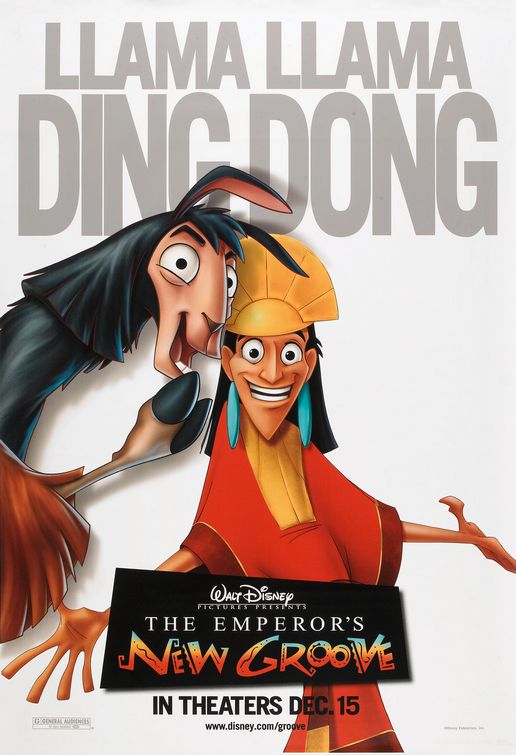
emperors_new_groove_ver4

Over this past weekend, I as I was celebrating my 28th birthday, I managed to pick up a copy of The Emperor’s New Groove (2000) from Best Buy (seriously, if you get the chance, go see what they have, there are a lot of great movies on sale right now before Black Friday). I saw this movie in theaters sixteen LONG years ago, but it’s been a while since I watched it on DVD.

Truthfully, I’d forgotten how FUNNY this film is! While this film takes place after the end of the Disney Renaissance, the animation is well done and the voice acting is hilarious!

The Emperor’s New Groove is set in ancient Peru, in the Incan Empire and follows Emperor Kuzco (David Spade) as he gets the biggest serving of humble pie EVER. See, 17 year old Kuzco’s tiniest whim has been satisfied since the day he was born, meaning that he’s the biggest entitled, egotistical, spoiled BRAT on the face of the Earth. He does what he wants and has no means of understanding the consequences. For example, he summons Pacha (John Goodman), a village leader, to the palace, only to inform him that his home for the last six generations will be demolished the very next day (Kuzco’s birthday) to make room for the emperor’s new summer palace. But there’s a big problem coming for Kuzco….

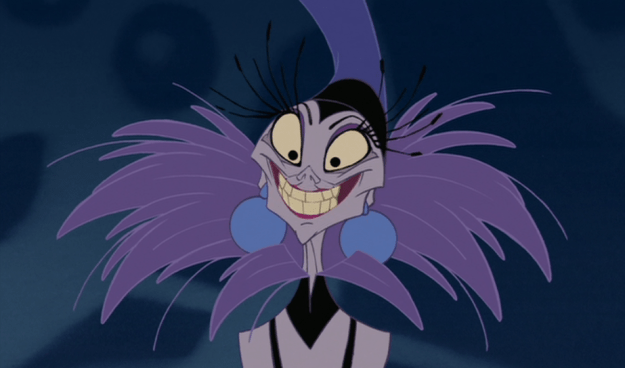
Yzma_42.PNG

Everyone, meet Yzma

Earlier that day, Kuzco had fired his royal adviser Yzma (Eartha Kitt) for playing “empress” one time too many. The infuriated Yzma decides (with help from an unwitting Kronk, her latest henchman) to get rid of Kuzco herself. Since Kuzco is barely 18, not married and certainly no children to succeed him, Yzma can easily take over the empire and rule herself. To that end, she tells Kronk to prepare a poison that will kill Kuzco almost instantly at dinner that evening. But instead of poisoning Kuzco, Kronk instead slips in extract of llama, which (you guessed it), turns the spoiled emperor into a llama!!! A subsequently botched attempt by Kronk to “finish the job” leaves Kuzco way out in the distant countryside with Pacha, and the two must find a way to work together so that a) Pacha and his family keep their home b) Kuzco can return to the palace and become human again and c) Kuzco can figure out what it means to actually be a proper ruler!!

The Emperor’s New Groove “Pull the lever Kronk!”

Yzma is played brilliantly by Eartha Kitt (who also played Catwoman in the 1966 Batman television series). The way she’s animated, she clearly has the air of a woman who was once a great beauty back in the day (at least she thinks of herself that way) and stubbornly holds onto that idea in the present.

Kuzco is also well-done, his transformation from spoiled brat to understanding young adult is believable. Kuzco and Yzma easily have my favorite lines in the entire film:

Yzma: “Pull the lever Kronk…WRONG LEVER!!!!

Kuzco: “Don’t tell me…we’re about to go over a huge waterfall…(Pacha: Yup!) Sharp rocks at the bottom? (Pacha: Most likely.) Bring it on!”

If you’ve never seen this film before, go check it out, you’ll have a great time 🙂

Become a patron of the blog at: patreon.com/musicgamer460

Check out the YouTube channel (and consider hitting the subscribe button)

See also: Animated Film Reviews

Don’t forget to like Film Music Central on Facebook 🙂

My Thoughts on: The Adventures of Ichabod and Mr. Toad (1949)

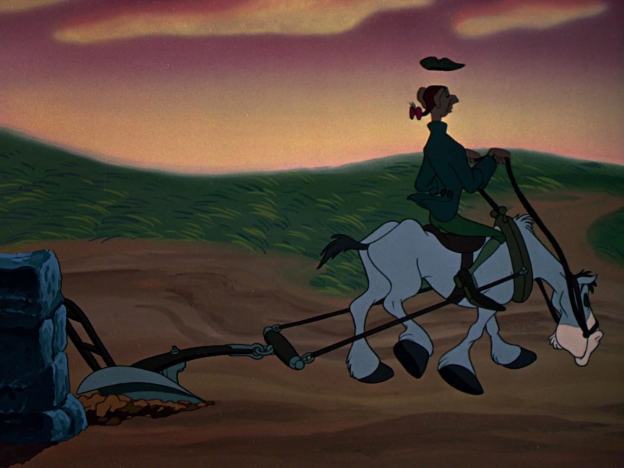
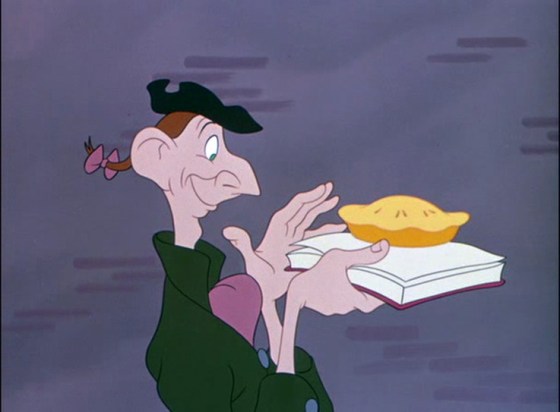
So yesterday was my birthday!! I had a wonderful day (though the visit from the family was too short) and got some great gifts. Among which, I finally got a copy of The Adventures of Ichabod and Mr. Toad (1949), one of my favorite Disney films from childhood! Although, I should say the Ichabod Crane segment was my favorite. I’d never actually seen the entire feature (with The Wind in the Willows segment) until last night. But the story of Ichabod and the Headless Horseman, that I’d seen, and when I saw it on sale yesterday, I snatched it up!

The Story of Ichabod Crane is narrated by Bing Crosby (crooner extraordinare) and tells the story of how a lanky, gluttonous (and very superstitious) schoolteacher named Ichabod Crane came to Sleepy Hollow and fell in love with the gorgeous Katrina von Tassel, daughter and heiress of the richest man in the county.

Ichabod-mr-toad-disneyscreencaps_com-4493

The Legend of Sleepy Hollow “Ichabod” (1949)

But Ichabod isn’t the only suitor, the burly and fun-loving Brom Bones is in love with Katrina too! Poor Brom does everything he can think of to impress Katrina, but somehow it always backfires with Ichabod around.

109

The Legend of Sleepy Hollow “Katrina” (1949)

Actually, Katrina does prefer Brom (you can tell by the way she looks at him), but she continues to flirt with Ichabod to make Brom jealous (because she wants to make sure that Brom really wants her, enough to fight for her that is). Then, on Halloween night, during a party at the von Tassel farm, Brom remembers that Ichabod is deeply superstitious and he decides to regale the guests with the story of the Headless Horseman, a specter said to haunt Sleepy Hollow.

The Legend of Sleepy Hollow “The Tale of the Headless Horseman” (1949)

The song “The Tale of the Headless Horseman” is regarded as one of the darkest Disney songs ever created, and nearly didn’t make the final cut of the film. According to the song, if you should encounter the Horseman, ride for the covered bridge, because the Horseman has no power past that point. By the end of the song, poor Ichabod is scared out of his mind as he rides for home. The hollow is full of crickets, frogs and owls, all seemingly whispering the name of “Ichabod.” The poor man (and his horse) become even more terrified when they think a horse is galloping towards them, but it turns out to only be cattails banging against a log. But just as they begin to laugh in relief…the REAL Headless Horseman appears!!

Ichabod-01

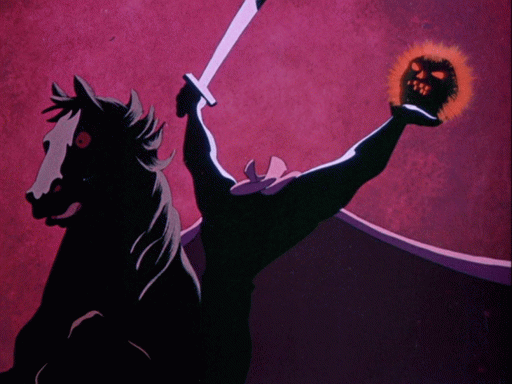
The Legend of Sleepy Hollow “The Horseman appears!!!” (1949)

This part scared me silly when I was little, and why not? This guy has a diabolical laugh, a big sword, and a black, red-eyed horse that’s every bit as scary as the rider! Ichabod makes a run for it, and after several scary-but-kinda-funny mishaps, he clears the bridge, so he should be safe! But the Horseman has one trick left to play: though he can’t cross the bridge, he sends a flaming Jack-o-lantern hurling at the schoolmaster! The next morning, all that remains of Ichabod is his hat (and the pumpkin). He’s never seen in Sleepy Hollow again. Shortly thereafterward, Katrina and Brom get married, and it’s common speculation that Brom was in disguise as the Headless Horseman. I’ve thought so for years, except there’s one detail that wrecks the theory: during the chase, Ichabod clearly peeks down where the Horseman’s head should be and finds nothing there. If it was Brom in disguise, shouldn’t he have seen Brom’s head?

Regardless of whether the Horseman was real or not, I enjoyed getting to see this story again after so long. It’s a little known Disney gem that I think you will enjoy.

Become a patron of the blog at: patreon.com/musicgamer460

Check out the YouTube channel (and consider hitting the subscribe button)

See also: Animated Film Reviews

Don’t forget to like Film Music Central on Facebook 🙂

Lady and the Tramp “The Siamese Cat Song” (1955)

I just realized it’s been forever since I actually covered a piece of film music, so I thought I’d ease myself back in with one of the less well-known pieces of Disney music: “The Siamese Cat Song” from Lady and the Tramp (1955). Sadly, Lady and the Tramp is not very high on the radar of kids today, which is a shame, as the film is a gem with its animation and songs.

“The Siamese Cat Song”, although one of my favorite pieces, is rather controversial, because it contains a blatant Asian stereotype in the form of Si and Am, the two Siamese cats introduced by Aunt Sarah (after Lady’s owners leave for a short vacation). In keeping with their Asian origins, the song is built around a pentatonic (five tone) melody and begins with the ominous ringing of a gong (also strongly associated with Asian cultures in general).


When Si and Am speak (in unison a lot of the time), they have visible buck teeth. And the way they talk/sing is overly formal with bad English (a parody of Asians speaking in English). For example, here is the first verse:

We are Siamese, if you please

We are Siamese if you *don’t* please

Now we lookin’ over our new domicile

If we like we stay for maybe quite a while

The language is overly formal (note the “if you please”), and the grammar…bad! But stereotypes aside, I really like this song, because while the cats remain very polite in tone throughout their song, their actions reveal that they are nothing but trouble!

siamese-cats

Do you seeing that thing swimming round and round?
Yes. Maybe we can reaching in and make it drown.
If we sneaking up upon it carefully
There will be a head for you, a tail for me.

Do you hear what I hear?
A baby cry?
Where we finding baby there be milk nearby.

If we look in baby buggy there could be
Plenty milk for you and also some for me.

In short order, the two cats: topple a vase of flowers, shred the curtains, terrorize the goldfish (narrowly saved from being eaten by Lady), attempt to eat the pet bird, and in general make a huge mess. And then…the baby starts crying upstairs. Being clever cats, Si and Am deduce that there must be fresh milk nearby for the baby (and if so they will gladly help themselves). However, Lady has had enough of these two, and she makes a stand at the top of the stairs. Realizing they’ve gone too far, Si and Am run for it, and all three collide in a heap back in the sitting room, where the two devious felines make it look like Lady started it as soon as Aunt Sarah enters the room. I always hated this part because I knew none of this was Lady’s fault and yet here’s mean Aunt Sarah blaming everything on Lady.

I hope you liked this brief look at “The Siamese Cat Song”

See also:

Lady and the Tramp “Bella Notte” (1955)

Lady and the Tramp “He’s a Tramp” (1955)

Don’t forget to like Film Music Central on Facebook 🙂

Become a Patron of the blog at patreon.com/musicgamer460

Check out the YouTube channel (and consider hitting the subscribe button)

For more classic Disney songs, check out the main page: Disney Films & Soundtracks A-Z

My Neighbor Totoro (1988): One of My All Time Favorite Cartoons Blogathon

my_neighbor_totoro_-_tonari_no_totoro_movie_poster

This post is part of the One of My All Time Favorite Cartoons Blogathon hosted by MovieMovieBlogBlog

My Neighbor Totoro is set in post-World War II Japan (presumably in the 1950s based on the types of cars and technology visible in the story) and follows the Kusakabe family as they move to a new house in the countryside because the mother is in a nearby hospital. Mr. Kusakabe is a professor at a university in Tokyo; eldest daughter Satsuki is in grade school, while youngest daughter Mei is only four.The girls encounter a variety of spirits, starting with dust sprites (black puff balls with eyes), and forest spirits collectively known as “totoro”. Mei sees them first, in a hilarious sequence that has me giggling every time. The two smaller totoro she meets end up leading her to the magical home of Totoro, THE forest spirit of the local area. Totoro is a huge grey spirit, with a big fluffy belly, long rabbit ears and the biggest smile you ever saw (and he also loves to sleep a lot).Satsuki is initially skeptical, but once she meets Totoro at a bus stop one night, both of them become good friends with the forest spirit.

I love the bus stop scene; the smile that grows on Totoro’s face is just infectious. He doesn’t have an umbrella of his own at first, so Satsuki offers him the umbrella she brought for her father. When Totoro hears the sounds the rain makes on the umbrella, it makes him really happy, like, super happy! And the Catbus….well, I love it, but you can’t really describe it. The Catbus must be experienced 🙂

Their mom has been in the hospital for what is implied to be a long time. Her illness is never disclosed, but it is believed to be tuberculosis (as Miyazaki’s own mother spent a long time in the hospital for that reason). Towards the end of the film, the girls receive news that their mother will be allowed home for a short visit, but shortly before the visit, Satsuki receives word that her mother actually can’t come home after all due to a small relapse of her illness. The older Satsuki does her best to take this news in stride, but little Mei won’t have it. Frustrated with having to hold in her feelings for so long, Satsuki finally snaps and yells at Mei, asking if she wants their mother to die. A horribly upset Mei ends up running away to bring some fresh corn to her mother (she gets the idea after hearing a neighbor tell her and her sister earlier that if their mom ate some fresh vegetables she would get better right away). The little girl soon becomes lost and the whole village turns out to look for her. Satsuki is guilt-ridden, but she knows what to go to for help: Totoro!! She finds Totoro in his tree and begs for help, and Totoro is more than happy to oblige! He summons the Catbus who takes an astounded Satsuki to where Mei is sitting lost. And once the sisters are reunited, Catbus offers to take them both to see their mother (and of course they agree!)

The story ends shortly thereafterward, with the girls being brought back home. A series of still images during the end credits reveals that their mother finally does come home for a visit (or possibly for good) and alls well that ends well.

My Neighbor Totoro is one of the greatest animated films I’ve ever seen. For me, it embodies what childhood should be, and I highly recommend it for anyone who hasn’t seen it yet!

I also love all the spirits: the dust sprites, the mini Totoros, and of course Totoro himself, they’re all so beautifully animated, I find myself wishing things like them existed in real life.

Thanks to MovieMovieBlogBlog for hosting this great blogathon! -Becky

Become a patron of the blog at: patreon.com/musicgamer460

Check out the YouTube channel (and consider hitting the subscribe button)

See also: Animated Film Reviews

Don’t forget to like Film Music Central on Facebook 🙂