Tag Archives: Film Composer

Brian Tyler “Teenage Mutant Ninja Turtles” scoring session

Today I’m going to try something a little different. Normally, when I post about a scoring session for a particular film score, there’s an interview accompanying it. However, for Teenage Mutant Ninja Turtles (2014), I found a sound-only clip showing composer Brian Tyler conducting a scoring session.

Brian Tyler scoring “Teenage Mutant Ninja Turtles” (2014)

A scoring session is when the composer and the orchestra sit down and record the music piece by piece for the film. As a general rule the finished film (or nearly finished in some cases) is playing on a screen in front of the conductor, with the current scene corresponding to the music being recorded.

TeenageMutantNinjaTurtles_8926700_35618._V344532344_RI_SX940_

I thought I would share this clip with you because, even though I have never seen Teenage Mutant Ninja Turtles, I immediately found myself drawn into the music (it helps that Brian Tyler is a very energetic composer). This is partly why I chose to study film music: when you separate the music from the film, you can hear some very beautiful and wonderful things, and these are things I think everyone should hear at least once.

The music here is energetic, dynamic and surprisingly symphonic (I found myself reminded of Howard Shore’s style in some places) for an action film produced in 2014. Tyler’s style has clearly evolved since his work on Alien vs Predator: Requiem (yes, I actually sat through that movie, no I don’t know what I was thinking).


Teenage-Mutant-Ninja-Turtles-Poster

If Brian Tyler’s name is not familiar, then I think it will be in the next five years, he’s a very prolific film composer with an extensive filmography already. He’s already composed for a handful of MCU films (his score for Thor: The Dark World is half the reason I love that film so much) and he’s scheduled to compose the score for the live-action Power Rangers film due out next year.

This selection is only three minutes long, so if you have a spare minute this weekend, sit back, pop the headphones on, and give this a listen. I also dare you to listen with your eyes closed (by far the best way to listen to film music) and see what you think/feel. As I said, I thought I would try something new 🙂 Enjoy the music!

You can become a patron of the blog at patreon.com/musicgamer460

Check out the YouTube channel (and consider hitting the subscribe button)

See also:

Film Composer Interviews A-H

Film Composer Interviews K-Z

See also:

Brian Tyler conducts The Mummy (2017)

Brian Tyler scoring Partition (2007)

Brian Tyler talks The Expendables (2010)

Brian Tyler scoring session for Iron Man 3 (2013)

Brian Tyler conducting and scoring Now You See Me 2 (2016)

Brian Tyler talks War (2007)

Brian Tyler “Alien vs. Predator: Requiem” scoring session (2007)

Brian Tyler “Law Abiding Citizen” scoring sessions (2009)

Brian Tyler “Dragonball Evolution” scoring session (2009)

Brian Tyler talks Fast Five (2011)

Brian Tyler “Battle: Los Angeles” (2011) scoring session

Brian Tyler talks Rambo (2008)

Brian Tyler “Power Rangers” scoring session (2017)

*poster image is the property of Paramount Pictures

Miklos Rozsa conducts Ben-Hur suite (1979)

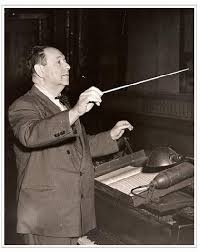
I confess, I still have Ben-Hur on the brain (if you read my little tirade from yesterday then you understand why). And since I can’t stop thinking about the 1959 epic, I thought I would share a concert clip I discovered several years ago. At the time I was studying the different film composers of the Golden Age of Hollywood and I was learning all I could in particular about Miklos Rozsa (1907-1995), the last composer of that era to pass away.

Having lived so long, I was curious to see if there were any film clips of him giving interviews or, even better, conducting some of his work. That’s when I discovered a clip from a 1979 television program that was looking at film music. In this excerpt, Rozsa himself is conducting a suite from his most famous work, Ben-Hur.

Miklos Rozsa conducts Ben-Hur Suite (1979)

The suite is divided into three sections:

  1. Overture and Main Theme(s) (for more on the overture to Ben-Hur, see “Overture” from Ben-Hur by Miklos Rozsa )
  2. Judah and Esther (The Love Theme): One of the many subplots of the film is the love building between Judah (initially a prince of Jerusalem) and Esther (the only daughter of Judah’s steward and technically a slave as a result, though she’s given her freedom early in the story). The theme is first heard when Esther is about to leave for an arranged marriage (that ultimately never takes place) and returns poignantly when Esther and Judah meet again after almost five years have passed.
  3. Parade of the Charioteers: Actually, this piece wasn’t written for Ben-Hur at all. The music that became this piece was originally composed for Quo Vadis, a 1951 Biblical epic that many credit with launching the Biblical epic obsession of the 1950s. The music comes at the end of the film as Gratus, the new emperor, makes a triumphal entry into Rome. 8 years later in Ben-Hur, Rozsa turns the music into a fanfare as the charioteers ceremonially circle the track before the race begins.

I believe that if you ever have the opportunity, you should always listen to the film score as conducted by the composer, because that will give you the best idea of what the music SHOULD sound like (for example, listen to the overture in this clip and then search YouTube for more performances of the same piece, you’ll hear it a slightly different way each time.)

Enjoy the music of Ben-Hur, composed and conducted by Miklos Rozsa and brought to life by the Pittsburgh Symphony Orchestra-Bex

Don’t forget to like Film Music Central on Facebook 🙂

Before John Williams, there was…Korngold!

Korngold2

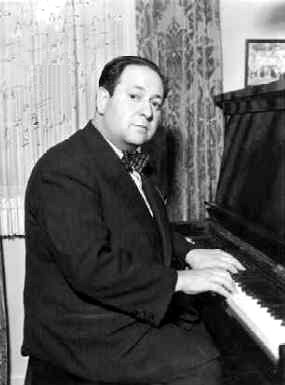
People have asked me before who my favorite film composer is. And I usually answer with “Jerry Goldsmith” or “James Horner” because it’s true, their scores rank among my absolute favorites. But…if I were to be completely honest, the film composer I love the most, above all others, is Erich Wolfgang Korngold.

Adventures of Robin Hood Suite

If film music were a religion, Korngold would be a god, that is the influence his work made in the industry. And yet…for all that, there are many people who have no idea who this man is! I can understand that, since he passed away in 1957. His film score output is relatively small…but when you look at the scores he did, especially compared to his concert and operatic output, this man was a genius!

download

The composer at work

He truly was a genius, a prodigy in fact. The story goes that the young Korngold was brought to play before the great Gustave Mahler (1860-1911) and after hearing his piece the aging composer declared “A genius!” At one time, Korngold was the toast of Vienna, even performing before the Emperor’s Court. He loved opera, and his 1920 opera Die Tote Stadt made him an international success at the age of 23.

Captain Blood Main Theme

Korngold actually came into film music quite by chance. In the early 1930s, Warner Bros. needed an arrangement of Mendelssohn’s “An Overture to A Midsummer Night’s Dream” for a film based on Shakespeare’s play of that name. Someone brought up Korngold’s name, and he was invited to come to California to do the work. Intrigued, Korngold accepted, did the score and went back to Vienna. He was asked to do another score, Captain Blood (1935), again agreed, but then returned because another opera was nearing completion. Just at this time though, Hitler was rising to power (and keep in mind, Korngold was Jewish). Just before Austria was joined to Germany, Korngold received an invitation to score The Adventures of Robin Hood (1938) and the composer did not want to accept. He asked some of his friends and one finally told him to “take it as a sign from God and go!” So he went…and the next week Austria joined Germany and Korngold did not see his home again until after the end of the Second World War.

Since he had to reside in the United States for the time being, Korngold passed the years by working in Hollywood (he found it enjoyable work, as he saw great similarities between film and opera).

robinhood

During the war years, Korngold composed: The Adventures of Robin Hood (1938); The Private Lives of Elizabeth and Essex (1939); The Sea Hawk (1940); The Sea Wolf (1941); King’s Row (1942); and Deception in 1946. After 1946, Korngold did not write film music ever again.

At last, after the war, he was able to return home, but to his unending sorrow, he discovered that the times had changed greatly in the years he had been gone, and his music, once hailed as genius, was now considered old-fashioned and “boring.” The knowledge broke his heart, and he died in 1957 at the age of 60.

While in Hollywood, Korngold was treated as no composer has been, before or since. Because he was already a composer of such renown, he was allowed to, among other things, dictate his own contract. He could choose to score whatever films he wished, and however many (or few) he wished. And one of the biggest impacts came from Korngold’s request to have solo credit (meaning having only his name appear on the credit page for the music). This was unheard of at the time: go and look at the credits as they appear in any movie before The Adventures of Robin Hood and you will see, if the music is credited at all, it is one line in a page full of other credits. Korngold changed that.

And the reason Korngold is so special to me? It was by listening to his music, I mean really listening to it, that I realized that film music really could (and did) stand on its own, by its own merits. Listening to those film scores is what pushed me to specialize in film music, and I have never regretted it.

Overture to The Sea Hawk

Overture to Star Wars

In the title of this post, I linked John William’s name to that of Korngold. I did this because William’s style has been referred to as “neo-Korngoldian,” meaning he writes in a manner similar to Korngold’s, but reinvented for this era. In fact, listen to Korngold’s overture for The Sea Hawk (1940) and then the overture for Star Wars (1977) and hear for yourself the similarities: a loud brass fanfare followed by a romantic melody in strings (it’s not a coincidence).

If you have a favorite Korngold score, I would love to hear about it! Have a great day!

Become a patron of the blog at patreon.com/musicgamer460

Check out the YouTube channel (and consider hitting the subscribe button)

Don’t forget to like Film Music Central on Facebook 🙂

Michael Kamen talks The Iron Giant (1999)

images

Credit to Warner Bros.

Part One

Part Two

Part Three

At the close of the old century, Warner Bros. Studio released The Iron Giant. The feature starred Eli Marienthal as Hogarth Hughes, Christopher McDonald as Agent Kent Mansley, Harry Connick Jr. as Dean, Jennifer Aniston as Hogarth’s mother and Vin Diesel (yes, THAT Vin Diesel) as the voice of the Giant. This film marked the directorial debut of Brad Bird (The Incredibles, Mission Impossible: Ghost Protocol).

The composer, Michael Kamen, was initially given a temp score of science-fiction music composed by Bernard Herrmann, but the music “scared him completely.” As a result, Kamen traveled to Prague for inspiration and eventually found it listening to the Czech Philharmonic.

the_iron_giant_hed

Rather unusually, Kamen not only recorded the score over a single week (as opposed to a month), it was also recorded without synchronizing the music to the picture. By that I mean, Kamen did not have a visual of the film present during the recording process (very unusual). Kamen visualized the score as something that could be recorded and listened to as a single piece of concert music.

The score went on to win an Annie Award for Music in an Animated Feature Production on November 6th, 1999.

The interview is broken into three parts (hence the three links) and I hope you enjoy Kamen’s talk about creating the score for this adorable film.

You can become a patron of the blog at patreon.com/musicgamer460

See also:

Film Composer Interviews A-H

Film Composer Interviews K-Z

Don’t forget to like Film Music Central on Facebook 🙂

When silence speaks volumes: The chariot race in Ben-Hur (1959)

Film composers have the difficult task of choosing music that correctly fits the intended mood of a particular scene or action sequence. But on a rare occasion, the composer will make the decision to give a scene no music at all, because doing so would actually detract from the moment.

b-h-stones_horiz_a

Credit to Metro-Goldwyn-Mayer (MGM)

A good case in point comes in William Wyler’s 1959 epic Ben-Hur. Scored by film composing legend Miklos Rozsa (1907-1995), the film broke a record for winning 11 Oscars at the Academy Awards, a feat that has never been surpassed (though Titanic and Return of the King have since matched it).

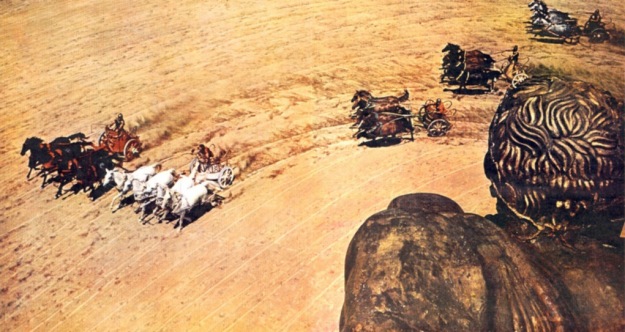
Rozsa’s score contains a number of musical moments: the “Overture” (covered in Soundtracks); the “Rowing of the Galley Slaves”; “Parade of the Charioteers”; and the ever beautiful “Nativity.” However, what many consider the action climax of the film, the chariot race in Part II, has no music at all after the initial “Parade of the Charioteers.”

Rozsa considered for a long time whether or not he should give the actual race any music, but he quickly determined that the action itself would be “music” enough.

02-Chariot-Race-Ben-Hur

The chariot race of Ben-Hur was an event over two years in the making. Not only did the race track have to be built from the ground up, but also the horses had to be trained to run in groups of three and four, the various stunts had to be planned out, and the chariots had to be built and tested to make sure they would hold up under stress. Once everything was ready and the cameras were rolling, the entire race was filmed in one take. The production had become so expensive that it was only possible to do the entire race once.

The entire clip runs for about ten minutes, but it is well worth it to watch all the way through. One moment in particular that always stands out to me comes at 5:35 when Ben-Hur’s (Charlton Heston) horses (in white) and Messala’s (Stephen Boyd) horses (the blacks) are running stride for stride down the track. And on a quick side note, the moment when Ben-Hur nearly falls out of his chariot was NOT scripted. The jump over the fallen chariot was planned, but Heston’s stunt double refused to wear a harness, insisting that he could ride the jump without it (oh was he ever wrong).

Please watch the race here: Ben-Hur Chariot Race and note the complete lack of music, diegetic or otherwise until the race is over. In my opinion, the true test of a film composer’s talent comes when they have to decide when NOT to use the music. Enjoy!

Check out the YouTube channel (and consider hitting the subscribe button)

Don’t forget to like Film Music Central on Facebook 🙂

See also:

When the music says everything: The “Lepers!” scene from Ben-Hur (1959)

“Overture” from Ben-Hur by Miklos Rozsa

Miklos Rozsa conducts Ben-Hur suite (1979)

*Everything is copyright to MGM Studio

Gottfried Huppertz: The composer behind Metropolis

In the world of silent film, Metropolis is rightfully considered a masterwork. Released in 1927 by UFA, the film was directed by Fritz Lang and told the story of a great city called Metropolis, set in the distant year 2000. The film is notable for containing the earliest intact appearance of a robot on the silver screen (an earlier example from L’uomo meccanico (1921) does exist, but only in a 21 minute fragment.)

loozxtwoohktxqxovfhu

The “Machine Man” was invented by Rotwang (on the right) as a secret means to overthrow Joh Fredersen (on the far left).

The score for this amazing film was composed by Gottfried Huppertz, a composer who wrote the music for several of Fritz Lang’s films.

1918

Huppertz was born in Koln, Germany on March 11, 1887. His first composition was published in 1905 and the composer worked as an opera singer during the first World War. In 1922 while in Berlin, Huppertz met Thea von Harbou, a close friend of Fritz Lang, and the two became introduced. Huppertz first composed a score for Lang’s film Die Nibelungen (1924).

Metro

Huppertz on the set of Metropolis

The score for Metropolis, written and recorded in 1926, is seen today as Huppertz’s greatest work. During the filming process, Huppertz would actually visit the set and play music to help set the mood for a scene (this was very unusual at the time). At the film’s premiere, the score was performed by a 66 piece orchestra, and was very well received. Though the film was heavily cut shortly thereafter, with major chunks lost for decades (a situation that would not be resolved until 2010), Huppertz’s full score has always been available and has remained an invaluable source for outlining the pieces of the film that remain missing.

You can find a suite arrangement of Huppertz’s score here: Metropolis: Soundtrack Suite

After Metropolis, Huppertz continued to write film music, even composing for several sound films: Der Judas von Tirol (1933), Elisabeth und der Narr (1933), Hanneles Himmelfahrt (1934) and Le Domino Vert (1935).

The composer died of a heart attack on February 7, 1937 and became forgotten for over forty years, until Metropolis and Die Nibelungen came back to the attention of the cinematic and musical world.

Become a Patron of the blog at patreon.com/musicgamer460

Check out the YouTube channel (and consider hitting the subscribe button)

Don’t forget to like Film Music Central on Facebook 🙂