Monthly Archives: September 2020

Talking With Composer Ilan Eshkeri about Ghost of Tsushima (2020)

This past summer I had the tremendous opportunity to speak with composer Ilan Eshkeri about his score for the video game Ghost of Tsushima. Eshkeri attended Leeds University where he studied music and English literature. He also worked at this time with fellow composers Edward Shearmur and Michael Kamen. Notable film scores from his career include (but are far from limited to): Coriolanus (2011), The Young Victoria (2009), 47 Ronin (2013), and The White Crow (2018). He’s collaborated on several films with actor/director Ralph Fiennes.

How did you get started with being a composer?

Well, really I wanted to be a guitarist in a rock band. While pursuing that dream I ended up working for a composer and not long after became close to Michael Kamen. And then I got my first break writing film music. And I really enjoy having such an exciting career that developed from many different directions all at once. It takes me in all sorts of directions.

How did you get connected with Ghost of Tsushima?

Playstation actually reached out and contacted me about this game. I was initially reluctant because I don’t really like violent, action games, that’s not really my thing. I don’t have any great, moral objection to it, I just don’t know how I can connect emotionally to that. Or, as an artist what can I say about that in my music? What peaked my interest is they’d been using music from an art house film that I had done a few years ago, a Shakespeare film called Coriolanus. The score for it is, I think, very unusual, quite extreme and uncompromising. Typically my work with Ralph [Fiennes, the director] is like that. It was amazing to me that this mass entertainment AAA game and video game studio would be coming to me and referencing this extremely unusual art house music that I’d created.

Then I went to Seattle for a meeting with Playstation and they spent 45 minutes to an hour with this incredible multimedia presentation that talked me through the entire plot of the video game. By the end of that I was completely blown away and sucked into it. It wasn’t what I thought. This is a game about a young man who is in a state of emotional conflict because he has been brought up and trained in a certain moral code. However, in order to save his home and the people he loves he has to go against all of that. This was, therefore, a rich place to write emotional and powerful music.

Was it different, working on the score for a video game as opposed to film or television?

No, I don’t think so, because to me it’s all storytelling. It’s the oldest of human art forms. If we look back at the history of humanity, the earliest form of art we have is cave painting. What were they doing in a cave painting? They were telling a story. We moved from cave paintings to songs, the Iliad, the Odyssey, to theater. That developed into dance and acting with operas and plays; you have all these different forms of storytelling and in the last hundred years we’ve had cinema and that came from the invention of new technologies. Since then, the next step in my eyes is video games. A new technology was invented and humans decided to tell their stories through that medium. And the story of Ghost is about the new ways versus the old ways. So really, Ghost is telling a very old story but through a new medium. To answer your question, my job is exactly the same. I tell the emotional narrative of the story through the creation of music. Whether that be theater or ballet or video games, whatever the medium, eventually I’m doing the same thing.

How did you approach scoring Ghost of Tsushima? Was there a lot of research involved in the type of music and sounds that would be appropriate for such a locale and era?

Yes, absolutely. This was inspired by Sucker Punch, they wanted to bring a sense of authenticity to the game, to the extent that they got reeds from the island of Tsushima in order to make it look more naturalistic. I was inspired by this search for authenticity and I wanted to apply the same thing to the music. I found a professor of Japanese music, Professor David Hughes, who is fortunately one of the leading experts here in London and he was very kind to talk to me and explain things and tell me where to look. I was learning about Japanese scales and harmony and how the instruments worked. Then I worked with a lot of amazing musicians and they inspired me a lot. These musicians were very patient and taught me how to write naturalistic music for the instruments.

So I used a lot of instruments that we know here in the West, like the koto and shakuhachi. But my explorations also took me to another instrument called the biwa. In fact it’s called the Satsuma biwa, there being several types of biwas, but the Satsuma biwa was the instrument that the samurai learned to play. And I’d never heard of it before. What happened is that towards the middle of the last century, the art of playing the biwa had been virtually lost. As I understand it there was one master of this instrument left and had taught a handful of people. One of those is a very inspiring lady called Junko Ueda. And she, fortunately for me, lived in Spain so it was easy to get her to come to London. She spent a lot of time explaining about the instrument, she played a lot and you can really hear about the instrument solos in the opening of the piece on the album. She’s a special performer and I was really lucky to be able to include her on the soundtrack.

When was it decided to blend the sounds of traditional Japanese music with a full orchestra?

That was always the plan. The thing was, how do we keep the focus on the traditional Japanese instruments, how do we highlight them? And for me, how do I use the orchestra within that language? All of the music in the orchestra, all the melodies and scales are all based on Japanese scales and I used two of those. And any Japanese instrument could play virtually any orchestral part. I also built my own system of chords using the notes from the pentatonic (five tone) scale. Everything in the orchestra is based on a foundation of Japanese tonality. Where I needed to, for effect, I broke the rules absolutely, but not often. That was the plan behind the orchestra.

How much time did you have to score Ghost of Tsushima? Did you have any game footage to work off of? Or was it more like storyboards?

There was a mixture, because I came on in 2018. When I started working on it there were storyboards, bits of footage. There was some crude gameplay where I got a feel for the character. It was a lot of different things, many bits of inspirational material. I worked on the game on and off for about a year and a half.

I’d like to give a big thank you to Ilan Eshkeri for taking the time to speak with me about his work on the music for Ghost of Tsushima.

Let me know what you think about Ghost of Tsushima’s music (and the game itself) in the comments below and have a great day!

See also:

Soundtrack Review: Ghost of Tsushima (2020)

Composer Interviews

Become a Patron of the blog at patreon.com/musicgamer460

Check out the YouTube channel (and consider hitting the subscribe button)

Don’t forget to like Film Music Central on Facebook 🙂

Soundtrack Review: Enola Holmes (2020)

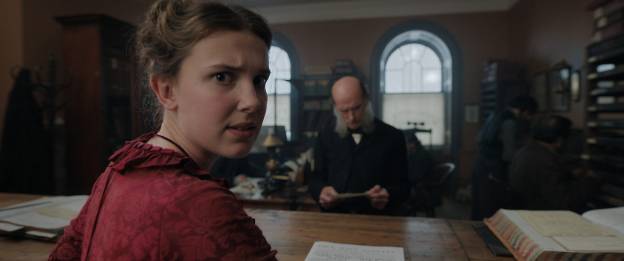
Milan Records today releases ENOLA HOLMES (MUSIC FROM THE NETFLIX FILM) with music by award-winning composer Daniel Pemberton (Birds of PreySpider-Man: Into the SpiderVerse).  Available everywhere now, the album features music from Netflix’s newest mystery film starring Millie Bobby Brown, Sam Claflin, Fiona Shaw and Louis Partridge with Henry Cavill and Helena Bonham Carter.   Based on the series of young adult novels written by Nancy Springer, Enola Holmes will premiere on Netflix Wednesday, September 23

Daniel Pemberton is a multi-Golden Globe, Emmy and BAFTA Award-nominated composer who has been regularly cited as one of the most exciting and original new voices working in modern film scoring today. Constantly working with some of the most renowned names in the industry Pemberton has already scored projects for the likes of Danny Boyle (Steve Jobs, Yesterday), Ridley Scott (All The Money In The World, The Counsellor), Aaron Sorkin (Molly’s Game, The Trial Of The Chicago 7), Darren Aronofsky (One Strange Rock), Edward Norton (Motherless Brooklyn) and Guy Ritchie (The Man From UNCLE, King Arthur: Legend Of The Sword).

Of the soundtrack, composer Daniel Pemberton has this to say:

“It’s been a real joy to write music for Enola Holmes and to go back to writing some unashamedly melodic and emotional orchestral music – coupled with a nice level of messy quirky oddness thrown in as well. From my first meeting with Harry Bradbeer the director, we talked about trying to create a score full of themes, mystery and surprise that both encapsulated her character but also took you on her journey. I hope this soundtrack allows anyone listening to it to re-live the first amazing adventures of one Enola Holmes…”

This soundtrack is, without a doubt, an incredible adventure to listen to, hardly surprising given that Daniel Pemberton is one of my favorite film composers. A lot of the music is bright and bouncy, and I’m fairly certain I’ve identified Enola’s specific theme within the score. It recurs frequently throughout, which is why I’m so certain it belongs to Enola. Also, it’s a short motif that skips and jumps around, much like the titular character who is free spirited and doesn’t act in a traditional “ladylike” manner.

I was actually surprised to hear how dark the soundtrack gets in places, there are a few places (I won’t name any track titles because I don’t want to accidentally spoil anything) where the music gets quite ominous. Though in hindsight, maybe I shouldn’t be that surprised, this IS the younger sister of Sherlock Holmes after all, no doubt trouble finds Enola all the time.

And, true to form with Daniel Pemberton’s work, I’m delighted to report that the soundtrack for Enola Holmes is filled with all kinds of non-traditional sounds. My personal favorite has to be “Tick Tock”, so named because the music is framed around, that’s right, the ticking of clocks. I like the entire soundtrack, but this piece immediately stuck in my mind the moment it began, and I love how the composer is interweaving the tick-tock of a clock and the “clip-clop” of shoes walking across a floor with more traditional instruments (the most hair-raising strings I’ve heard in months) to create something so mind-bending I’m dying to know its full context in the film. I should note, you can hear unusual sounds in other portions of the soundtrack, but “Tick Tock” really does stick out from the rest.

I sadly won’t be able to watch Enola Holmes until this weekend, but listening to this soundtrack has me more than excited to check the movie out on Netflix.

When Enola Holmes—Sherlock’s teen sister—discovers her mother missing, she sets off to find her, becoming a super-sleuth in her own right as she outwits her famous brother and unravels a dangerous conspiracy around a mysterious young Lord.

The soundtrack for Enola Holmes is available now, and you can also (as of today) check the film itself out on Netflix.

Let me know what you think about the soundtrack for Enola Holmes in the comments below and have a great day!

See also:

Become a Patron of the blog at patreon.com/musicgamer460

Check out the YouTube channel (and consider hitting the subscribe button)

Don’t forget to like Film Music Central on Facebook 🙂
Soundtrack News: Soundtrack Album for Netflix Original Series ‘Away’ Available Now

Back Lot Music has digitally released an album from the Netflix Original Series Away (produced by Universal Television) by composer Will Bates (I OriginsAnother Earth). The sci-fi drama’s score is full of electronic atmospheric soundscapes with an intense emotional undercurrent. Bates takes listeners on a beautifully diverse sonic journey with this 22-track album.

Will Bates has scored a number of television series: Golden Globe & Emmy-nominated Netflix series Unbelievable, SyFy’s hit The Magicians, Hulu’s The PathChance and The Looming Tower, the Hilary Swank-led drama Away for Netflix, as well as NBC’s Rise. Other projects include Sweetbitter on Starz, the George R.R. Martin series Nightflyers on Netflix, and the Hulu biographical documentary Hillary. Will’s recent features include Michael Tyburski’s The Sound of Silence, the HBO documentary The Inventor: Out for Blood in Silicon Valley, and the horror-thriller Depraved. Upcoming features include Michael Haussman’s Rajah set in 19th century Borneo, Mike Cahill’s Bliss and Alex Gibney’s Crazy, Not Insane.

Regarding the music for Away, Will Bates had the following to say:

“I had an amazing experience scoring Away. Having worked with the showrunners on several projects together before, including The Path and Rise, there was already a shared language and a real mutual sense of trust…Sharing that explorer’s sense of wonder and aspiration, space itself can be something of an exciting blank canvas for a composer. And the showrunners were always keen to try something a little different. I found myself experimenting with all sorts of unusual instrumentation; from dulcimers, prepared pianos and dusty old parlor organs to modular synths, timpani and manipulated live strings. Identifying the human themes whilst capturing the vast distances of space. And of course, having one of the lead actor’s play pieces I’d written for him was thrilling in its own right,”

TRACKLISTING
01 Lunar Base Alpha
02 The Atlas Crew
03 I Love You Shithead
04 Launch
05 Making My Way Back To You
06 Reaching For Mars
07 How’s The View?
08 Calligraphy
09 Cracking Up
10 Spacewalk
11 Open The Hatch
12 I Just Need My Wife
13 Going Home
14 Anything Is Possible
15 I Need You To Go
16 Etude De Main Droit
17 Ice Harvest
18 Last Words
19 Forgetting
20 Descent
21 Anyone Wanna Go Again?
22 Atlas

You can enjoy the soundtrack album for Netflix’s Away now 🙂

See also:

Become a Patron of the blog at patreon.com/musicgamer460

Check out the YouTube channel (and consider hitting the subscribe button)

Don’t forget to like Film Music Central on Facebook 🙂

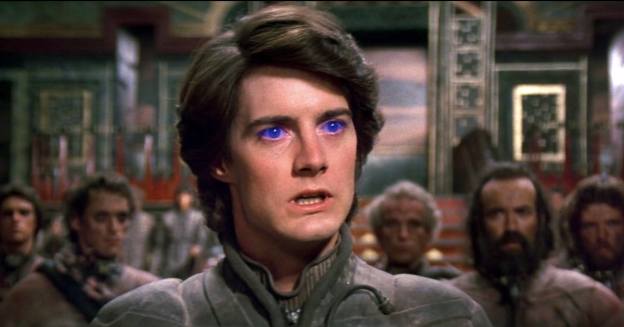
Dune “Main Theme” (1984)

With the Denis Villeneuve adaptation of Dune on the way, it only makes sense that I’d have all things “Dune” on the brain as of late, and that includes the music of the 1984 film that did its best but ultimately fell short of being a satisfying adaptation. Despite its flaws, I maintain that the 1984 adaptation of Dune is a fairly satisfying film, not least because of its musical score from Toto and Brian Eno.

One of my favorite musical moments in Dune is the main theme, which opens the story and recurs at pivotal moments. Take a moment and listen to the main theme of Dune below:

I love this theme because of how effective it is. It’s a simple enough melody but by thrumming up in the strings and brass it communicates the idea of power and growing tension, both themes that can be found throughout the story of Dune (as controlling Arrakis and the spice grants power and there’s unending tension between the Atreides/Fremen and the Harkonnens throughout the story).

It also, as I said before, recurs at pivotal moments throughout the film, and I’ll look at two of those moments as examples. The first example comes when Paul is summoning a sandworm for the Fremen. The theme begins when the massive sandworm is first seen rising up from the endless dunes. The placement of the music and visual image is pretty brilliant here, as the music rises up in conjunction with the worm, really making you feel the appearance of shai-hulud (the Fremen name for sandworms).

Notably, the main theme continues in a higher register once Paul has control of the sandworm, ending on a triumphant tone as the scene ends. This is one of my favorite scenes in the entire movie, and it’s all because of this wonderful music.

The second example I’d like to look at is at the end of the film, when Paul demonstrates his power as the Kwisatz Haderach. As Paul exerts all his power to cause rain to fall on Arrakis, the main theme recurs yet again. Now, instead of the sandworm’s power being highlighted, it’s Paul and his power that we’re being drawn to by the music. He’s doing something that no human has ever done before, he’s causing rain to fall on a desert planet that likely hasn’t seen a rainstorm in a hundred generations, if ever. It’s set up as a fairly powerful moment and I feel the music is what makes it so. Check it out below:

Now, unlike the first example with the sandworm, this example uses the music in an entirely different way. The scene with the sandworm almost vibrated with raw power. Here, at the end of the film as Paul assumes absolute power, the music assumes a higher register, even including a choir at one point to highlight the awesomeness of what Paul is doing. This is a profound moment, so the music, though the melody is the same, has to be that much different to carry the point across to the audience. This is the ultimate expression of the main theme, nothing will ever surpass this (or at least that’s the intention).

Yes, it’s true, Dune has many, MANY flaws, but the music is not one of them, as I hope these examples with the main theme show. I really believe this score is underrated and should be given more attention. I hope you enjoyed listening to some examples of Dune’s main theme.

Let me know what you think about the main theme of Dune in the comments below and have a great day!

See also:

Film Soundtracks A-W

Become a Patron of the blog at patreon.com/musicgamer460

Check out the YouTube channel (and consider hitting the subscribe button)

Don’t forget to like Film Music Central on Facebook 🙂

Soundtrack News: ‘The Nest’ Original Soundtrack Available September 18th

Milan Records has announced that the original motion picture soundtrack for The Nest (composed by Richard Reed Parry) will be released on September 18th, 2020. Available for preorder now, the album features music written by Parry for the thriller and marks Parry’s debut feature film score as solo composer.

Of the soundtrack for The Nest, composer RICHARD REED PARRY has this to say:

“When I watched the very first rough cut of The Nest without any music, I could feel right away what I wanted the score to be: Music that sounded like it was written and played somewhere within the massive old manor house that so much of the film centers around… I am very grateful to my fantastic musical collaborators, and for Sean Durkin’s trust in my own intuitive musical process and the artistic space and freedom he gave me to explore the musical landscape of his film.”

“Long before Richard was the composer for the film I was listening to his Music for Heart and Breath album while writing the script, so for him to come on to the project was very exciting for me,” adds The Nest director SEAN DURKIN. “It’s been an incredible collaboration working with him. He’s created a stunning score that captures the atmosphere and emotion I wanted the film to encompass.”

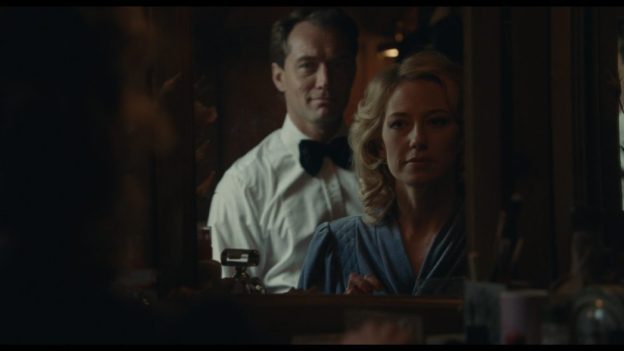
In The Nest, Rory (Jude Law), an ambitious entrepreneur and former commodities broker, persuades his American wife, Allison (Carrie Coon), and their children to leave the comforts of suburban America and return to his native England during the 1980s. Sensing opportunity, Rory rejoins his former firm and leases a centuries-old country manor, with grounds for Allison’s horses and plans to build a stable. Soon the promise of a lucrative new beginning starts to unravel, the couple have to face the unwelcome truths lying beneath the surface of their marriage.

THE NEST (ORIGINAL MOTION PICTURE SOUNDTRACK)

TRACKLISTING – 

1. Drone Beast
2. Symphony Brew
3. Base Motives 
4. Murky Half
5. What We’ve Always Wanted
6. Base Motives II
7. New Descent
8. The House
9. Dark Tumbling
10. Drone Beast: UK
11. Symphony Brew Redux
12. Slow Descent
13. Drone Beast: In the Air


See also:

Become a Patron of the blog at patreon.com/musicgamer460

Check out the YouTube channel (and consider hitting the subscribe button)

Don’t forget to like Film Music Central on Facebook

Soundtrack Review: Transformers: War for Cybertron: Siege (2020)

Hasbro has digitally released Transformers: War for Cybertron – Siege Original Anime Series Soundtrack by Alexander Bornstein. The soundtrack features 17 electro-charged tracks from the hit Netflix Original Series, in partnership with Rooster Teeth. I had the opportunity to interview Alexander Bornstein about his work on this series earlier this summer and I’m thrilled that everyone will have the chance to listen to this great soundtrack apart from the series.

Bornstein had this to say about the incredible task of creating new music for the beloved franchise:

“Being brought on to compose an entirely new musical world for the ‘Transformers: War for Cybertron Trilogy’ on Netflix has been both a dream job and huge creative responsibility. The world of the Autobots and Decepticons has been part of my pop culture psyche for a long time, going all the way back to watching G1 reruns on the Sci-Fi Channel in the early 90s.  I’m very excited fans will now have a chance to delve deeper into the music of the trilogy’s first chapter ‘Siege’, and hear the show’s themes for characters like Elita-1, extensive use of analog synthesizers, and amazing solo players.”

If you haven’t gotten the chance to experience Transformers: War for Cybertron: Siege, check out the synopsis below to get an idea of what the story is about:

TRANSFORMERS: WAR FOR CYBERTRON TRILOGY – SIEGE begins in the final hours of the devastating civil war between the Autobots and Decepticons. The war that has torn apart their home planet of Cybertron is at a tipping point. Two leaders, Optimus Prime and Megatron, both want to save their world and unify their people, but only on their own terms. In an attempt to end the conflict, Megatron is forced to consider using the Allspark, the source of all life and power on Cybertron, to “reformat” the Autobots, thus “unifying” Cybertron. Outnumbered, outgunned, and under SIEGE, the battle-weary Autobots orchestrate a desperate series of counterstrikes on a mission that, if everything somehow goes right, will end with an unthinkable choice: kill their planet in order to save it.

Getting to hear the soundtrack by itself was an absolute delight. The tracks I was most interested in hearing were the first three on the list: “Autobots”, “Decepticons”, and “Cybertron.” I remembered from my conversation with Alexander Bornstein that these tracks were the starting point of the score and I was very curious to see how they played out and related to each other. Sure enough, there is a definite relation between “Autobots” and “Decepticons.” Even though they’re themes for opposite sides of the conflict, you can definitely tell they’re two halves of the same coin, which is a brilliant decision since it recasts the conflict on Cybertron in an entirely new light.

The other theme I was particularly interested in listening to was “Elita’s Theme,” since the composer related to me that it was one he really liked it. It is, indeed, a beautiful theme to listen to, and not surprisingly there’s a strong connection to the “Autobots” theme. It’s always interesting to hear how themes are connected to one another, using the same melodies but twisting them slightly to fit different characters. These similarities actually expand into most of the soundtrack, since, as the composer explained, the first three themes on the list serve as the base for pretty much every other melody in the soundtrack. It’s one thing to hear about this but it’s another to see it in action without the rest of the TV episode to distract me.

TRACK LISTING

  1. “Autobots” (3:22)
  2. “Decepticons” (3:34)
  3. “Cybertron” (2:04)
  4. “Optimus Steps In” (4:21)
  5. “The Ark” (3:15)
  6. “Optimus And Elita-1 (Elita’s Theme)” (2:14)
  7. “We Are Not Decepticons” (2:09)
  8. “Traitor” (2:37)
  9. “Metal Vortex” (2:45)
  10. “Megatron’s Speech” (3:44)
  11. “Alpha Trion Protocols” (4:11)
  12. “Sea Of Rust/Virus Attack” (4:13)
  13. “The Ark Takes Flight” (4:04)
  14. “Battle Of The Space Bridge” (3:08)
  15. “For Cybertron” (4:00)
  16. “A New Leader” (1:24)
  17. “Siege End (Autobots Theme Reprise)” (1:20)

In a year that’s been turned upside down, the soundtrack for Transformers: War for Cybertron: Siege has been a sorely needed bright spot. Fans of Transformers both old and new will love this music. I can’t reiterate enough how happy I am that the soundtrack is now available, since now everyone can take the time to listen to some gorgeous music.

Let me know what you think about the music for Transformers: War for Cybertron: Siege in the comments below and have a great day!

See also:

My Thoughts on: Transformers: War for Cybertron: Siege (2020)

For Cybertron! Talking with Alexander Bornstein about ‘Transformers: War for Cybertron: Siege’

TV Soundtracks

Become a Patron of the blog at patreon.com/musicgamer460

Check out the YouTube channel (and consider hitting the subscribe button)

Don’t forget to like Film Music Central on Facebook

Soundtrack Review: Marvel’s Avengers (2020)

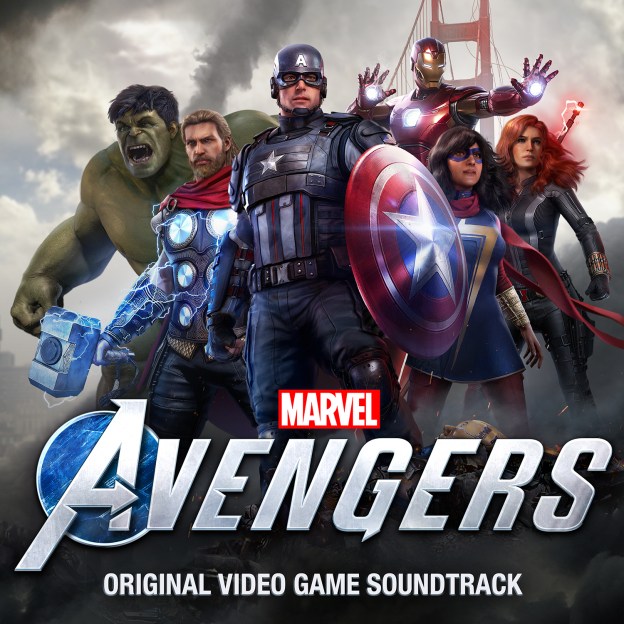
Hollywood Records has released the complete soundtrack for the recently released video game Marvel’s Avengers, with music composed by Bobby Tahouri. Born and raised in Los Angeles, California, Bobby Tahouri comes from a musical family, and began playing piano at the age of seven. He studied piano and composition at the San Francisco Conservatory of Music and also at the California Institute of the Arts, where he received his bachelor’s degree in Music Composition.

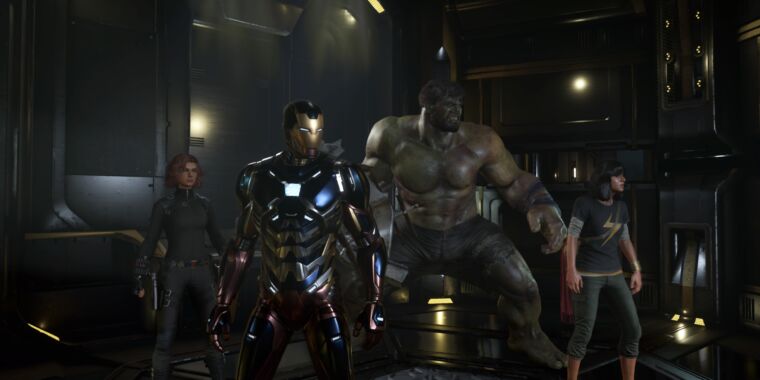
Marvel’s Avengers allows you to take control of earth’s mightiest heroes in an all new original playable story. Crafting original music for these iconic characters is no easy task, but Bobby Tahouri (Rise Of The Tomb Raider) has composed an epic, sweeping score deserving of the massive playable roster of Marvel heroes.

Epic and sweeping are certainly two good words to describe Bobby Tahouri’s score for Marvel’s Avengers. It also, to my ears, sounded strikingly familiar. Starting with the first track, “Every Hero Has to Start Somewhere”, it occurred to me that what I was hearing sounded quite similar to the Avengers main theme as composed by Alan Silvestri in The Avengers (2012). Well, maybe that’s not quite the right way to put it. Tahouri’s music isn’t identical to Silvestri’s theme, but they do sound to me like they could easily belong in the same musical family, there is definitely a thematic relationship present. Given that the game centers on the Avengers, this is appropriate.

Another detail I like about this soundtrack is how dynamic it is. As you might expect with a soundtrack for an action-adventure game, most of the music is loud, bombastic, and clearly following video game-style fighting. However, Tahouri does take the time to slow down in a few places (parts of “New Normal” and “No More Heroes” are prime examples). These tracks are refreshing to hear because they give your ears a brief rest from the frenetic pace that makes up most of the soundtrack.

As video game soundtracks go, Marvel’s Avengers sounds pretty good. I like that it sounds similar in certain respects to the 2012 film (and the Avengers films in general). I haven’t gotten to see the game in action, but this feels like the kind of music you’d want to have in an action game like this.

Let me know what you think about the music for Marvel’s Avengers in the comments below and have a great day!

TRACK LISTING

1. “Every Hero Has to Start Somewhere” (8:45)

2. “The Light That Failed” (2:48)

3. “God of Thunder” (3:13)

4. “They Played Us” (1:22)

5. “New Normal” (2:27)

6. “I Am Iron Man” (3:00)

7. “Am I Alone?” (2:13)

8. “No More Heroes” (2:14)

9. “To Stand Alone” (2:06)

10. “Some Things Haven’t Changed” (2:10)

11. “We Are Dangerous” (1:38)

12. “Hulk Smash” (1:41)

13. “Perfect Landing” (2:01)

14. “Old Friend” (1:33)

15. “By Force of Mind” (3:08)

16. “It’s a Thing Your Do” (3:18)

See also:

Video Game Soundtracks

Become a Patron of the blog at patreon.com/musicgamer460

Check out the YouTube channel (and consider hitting the subscribe button)

Don’t forget to like Film Music Central on Facebook

Soundtrack Review: Stargirl (season 1) (2020)

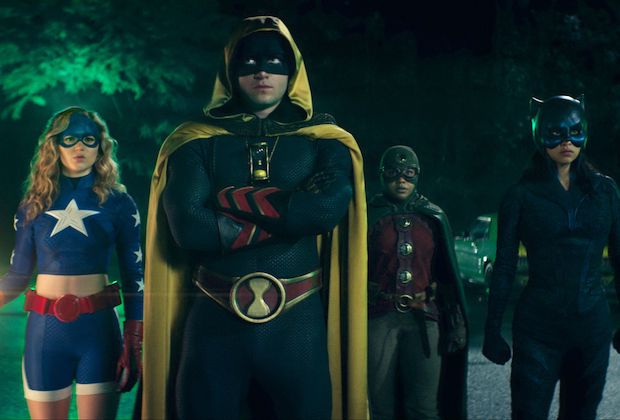
WaterTower Music is pleased to announce that the Season 1 soundtrack for DC’s Stargirl is now available on all platforms.

DC’s Stargirl: Season 1 (Original Television Score) features 22 tracks from the debut season of the hit series. Recently wrapping its first season on both The CW and DC UNIVERSE, DC’s Stargirl was recently renewed for a second season exclusively on The CW. Based on the character created by Geoff Johns, DC’s Stargirl features an epic score by the award-winning film and television composer Pinar Toprak, who received her first Primetime Emmy® nomination this year for her work on HBO’s McMillions.

Toprak was born and raised in Istanbul, Turkey, where she began her classical music education at the age of five. After studying composition and multiple instruments at the conservatory, she moved to Chicago to study jazz, before continuing on to Boston for a degree in film scoring from Berklee College of Music. She then moved to Los Angeles, earned a master’s degree at CSUN in composition at age 22. In addition to DC’s Stargirl, she has composed for major Super Hero sagas like Captain Marvel, and Warner Horizon Scripted Television’s Superman prequel series Krypton. She also scored HBO’s six-part docuseries McMillions, which premiered at the 2020 Sundance Film Festival and earned her a 2020 Emmy® nomination. In addition, she has written music for Epic Games’ massively popular online video game Fortnite.

Regarding season 1 of Stargirl, composer Pinar Toprak had the following to say:

“I’m a huge fan of show creator Geoff Johns and everything he’s done,” remarked Toprak. “When we met, the way he talked about Courtney, the character, and his vision for DC’s Stargirl really touched my heart. Obviously, I love this genre to begin with, so it was a no-brainer to compose the score. Working with Geoff was just one of the best experiences of my career, to be honest.”

From a purely musical standpoint (I have yet to see the actual show), I love Stargirl. I loved it even before I heard it because I knew that Pinar Toprak would be scoring the series, and I’m a big fan of her work on Krypton (an underrated series with a severely underrated soundtrack and, of course, Captain Marvel. And the music of Stargirl is just as amazing as her previous works in the genre. Pinar Toprak has this amazing ability, that I first noticed in Krypton’s first season soundtrack, to take a television series and give it a “big screen” feel with the powerful themes she creates. Such is the case with Stargirl. If you didn’t know better, you’d swear this was a movie soundtrack, and that’s not a bad thing. I feel like any work in the superhero genre, be it film or television, should have a certain sound to it. You almost need that brassy, heroic sound to chart the adventures of the fledgling heroine (there are exceptions of course, the short-lived Constantine and Swamp Thing come to mind).

On a side note, speaking of Krypton, it may be my imagination but a few of the tracks in Stargirl sound similar to that earlier show. This isn’t necessarily a bad thing, as any string of works by the same composer are bound to sound similar in certain areas. I just find it interesting that Krypton (a series based on Superman’s home planet), and Stargirl (another DC comics series) have a similar sound.

Another detail I really enjoyed about the soundtrack of Stargirl is its almost symphonic quality. That is to say, the main theme that Pinar Toprak introduces at the beginning of the soundtrack album recurs throughout, but in slightly different ways, exactly as it would be if this music were in a symphony played in the concert hall. I feel like the superhero genre is ideally suited to symphonic music (similar to the Star Wars films), and listening to this great music just reinforces how well the two fit together.

I highly recommend checking out the soundtrack for Stargirl’s first season. It’s a stirring soundtrack from a great composer and one that any fan of superhero music should check out. On one final note, I’ve seen Stargirl get some mixed reviews here and there. Whatever your thoughts are on the series itself, don’t let that stop you from checking out the soundtrack. There’s a world of difference between hearing a soundtrack during the actual show and listening to the music with no distractions. So please, give the soundtrack a chance, you won’t regret it.

Let me know what you think about the soundtrack for Stargirl season 1 and have a great day!

See also:

TV Soundtracks

Become a Patron of the blog at patreon.com/musicgamer460

Check out the YouTube channel (and consider hitting the subscribe button)

Don’t forget to like Film Music Central on Facebook