Category Archives: Film Composer

Michael Giacchino talks Jupiter Ascending (2015)

Michael Giacchino talks Jupiter Ascending (2015)

Oh Jupiter Ascending….if I could describe this movie in one word it would be potential. This movie had the potential to be so incredibly awesome. Think about it: in a world where reboots, remakes, sequels and franchises are the norm in Hollywood, it’s very rare to find a film with a wholly original concept.

And the concept sounds great on paper: the galaxy is ruled by a group of alien royal dynasties, who harvest the life forces of evolved planets in order to remain perpetually young themselves.

JUPITER ASCENDING

An ordinary human girl, Jupiter Jones, finds out that due to her genetic makeup, she is actually the heiress to the planet Earth. However, the alien Balem, one of the sons of the previous owner of the planet, wants Earth for himself, as Earth is meant to be harvested next.Jupiter finds herself plunged into interstellar intrigue with the fate of planet Earth at stake.

It sounds really good, it SHOULD have been really good, and yet….despite amazing visuals and a gorgeous score from Michael Giacchino (more on that in a minute), this film fell FLAT and I mean really flat!!! Portions of the dialogue were cringe-worthy, and the performance of several actors was criticized as wooden, flat and generally not as good as it could have been. In other words, Jupiter Ascending launched into theaters and then was quietly never heard of again.

Jupiter Ascending Soundtrack

One of the few bright spots in this film was the score, written as I said by Michael Giacchino. In this interview that I discovered, Giacchino explained that when the Wachowskis approached him about scoring this film, they actually asked him to write the music BEFORE the film had been shot, so they could edit the film around the music.

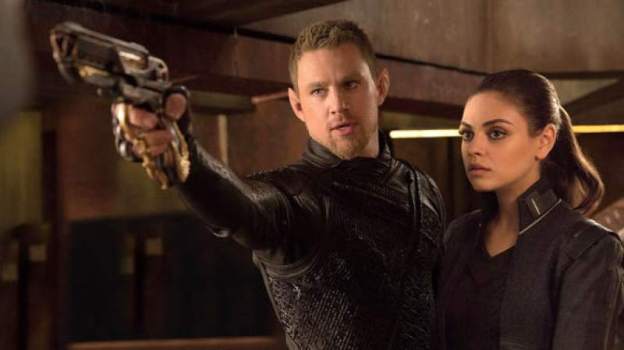
020315-jupiter-ascending-mila-kunis-costume-594

This is rarely seen in the world of film music, as normal practice is to make the film first and THEN create the musical score. In effect then, the Wachowski’s were asking Michael Giacchino to create a “symphony” for Jupiter Ascending that would then be edited into a proper film score.

JUPITER ASCENDING

While I can’t necessarily recommend the film itself, I do recommend checking out the soundtrack to this film (see the link above) and take a few moments to enjoy the music that Giacchino worked so hard to create. It always hurts when a great score is attached to a less-than-stellar film. But, such are the risks of being a film composer. Enjoy the interview!

(I apologize for the background noise, it sounds like they filmed in a restaurant)

See also:

Michael Giacchino talks The Incredibles (2004)

Michael Giacchino talks Mission: Impossible 3 (2006)

Michael Giacchino talks Ratatouille (2007)

Michael Giacchino talks Up (2009)

Michael Giacchino talks Star Trek (2009)

Michael Giacchino talks Super 8 (2011)

Michael Giacchino talks John Carter (2012)

Michael Giacchino talks Star Trek: Into Darkness (2013)

Michael Giacchino talks Jurassic World (2015)

Michael Giacchino scoring Rogue One: A Star Wars Story (2016)

Michael Giacchino talks Zootopia (2016)

Michael Giacchino talks Jurassic World: Fallen Kingdom (2018)

Film Composer Interviews A-H

Film Composer Interviews K-Z

Become a patron of the blog at: patreon.com/musicgamer460

Check out the YouTube channel (and consider hitting the subscribe button)

Like Film Music Central on Facebook here

*film poster is the property of Warner Bros. Pictures

Michael Giacchino talks Star Trek: Into Darkness (2013)

I’m still not sure what J.J. Abrams was thinking about when he was working on this movie. Everyone who knows about Star Trek knows that Star Trek II: The Wrath of Khan is considered to be the greatest film in the classic franchise, and that it would be downright suicidal to tamper with it in any way. Well…tamper they did, because Into Darkness, the follow up to Star Trek (2009) is nothing less than a poorly disguised remake of Wrath of Khan, and suffice it to say it did not improve on the original. To sum up the plot in brief: Kirk and his crew must stop the brilliant Khan, along with a renegade Admiral, from causing a full-scale war to break out between the Federation and the Klingon Empire. This includes engaging the superior USS Vengeance and stopping Khan from using it as a means to destroy Starfleet Headquarters! This is also the final film to feature Leonard Nimoy in his role as the original Spock (also known as Spock Prime).

To be fair, Benedict Cumberbatch turns in an excellent performance as the villain, and the main cast performs admirably, but still, the fact remains that the producers chose to rehash old territory, instead of making something new. But I digress…

(for my full thoughts on this film, see: On this day in Film History: Into Darkness? More like a rip-off of Khan )

I was beginning to despair of ever finding an interview for this film when suddenly, out of nowhere, I spotted a video with Giacchino’s name and Into Darkness put together. It seems that while promoting the film, Giacchino gave an interview on the film for a German media site/group (I’m not sure which), and the best part is the interview is nearly ten minutes long! It is so rare to find any lengthy interviews with film composers, so I knew I had to share this one with you.

Giacchino is asked several questions about the process of creating the score for Into Darkness (I apologize in advance because the displayed questions are in German), whether certain characters have their own theme (he discusses Khan’s theme in particular) and what it was like to work on such a legendary franchise. This is not just a regular interview though, there are cuts to footage from the film to show certain themes that the composer is talking about, which makes this interview even more valuable.

See also:

Michael Giacchino talks The Incredibles (2004)

Michael Giacchino talks Mission: Impossible 3 (2006)

Michael Giacchino talks Ratatouille (2007)

Michael Giacchino talks Up (2009)

Michael Giacchino talks Star Trek (2009)

Michael Giacchino talks Super 8 (2011)

Michael Giacchino talks John Carter (2012)

Michael Giacchino talks Jupiter Ascending (2015)

Michael Giacchino talks Jurassic World (2015)

Michael Giacchino scoring Rogue One: A Star Wars Story (2016)

Michael Giacchino talks Zootopia (2016)

Michael Giacchino talks Jurassic World: Fallen Kingdom (2018)

Film Composer Interviews A-H

Film Composer Interviews K-Z

Become a patron of the blog at: patreon.com/musicgamer460

Check out the YouTube channel (and consider hitting the subscribe button)

Like Film Music Central on Facebook here

Michael Giacchino talks Star Trek (2009)

It’s no secret that I’m not exactly the biggest fan of the rebooted Star Trek franchise. However, I can’t deny that Michael Giacchino’s score for the film was well done. I was delighted to find a short interview given by the composer regarding his work on this film as part of a “Star Trek in concert” event. Giacchino, like many, grew up watching the original Star Trek series and films, and now here he is with the task of continuing that legacy!

For anyone not familiar with the story: Star Trek takes place in an alternate universe created when the Romulan Nero (Eric Bana) travels back in time to destroy the planet Vulcan in revenge for his home planet of Romulus (which was destroyed in the future when a star went supernova). As a result, the original crew of the Enterprise that we’ve come to know so well (Kirk, Spock, McCoy and company) end up leading different lives and come together under much different circumstances. The question is, can they learn to work together quickly enough to stop Nero?

Whether you’re a fan of the new Star Trek or not, Giacchino’s music is definitely worth a few moments of your time. Here’s hoping that Star Trek Beyond also features an enjoyable score.

See also:

Michael Giacchino talks The Incredibles (2004)

Michael Giacchino talks Mission: Impossible 3 (2006)

Michael Giacchino talks Ratatouille (2007)

Michael Giacchino talks Up (2009)

Michael Giacchino talks Super 8 (2011)

Michael Giacchino talks John Carter (2012)

Michael Giacchino talks Star Trek: Into Darkness (2013)

Michael Giacchino talks Jupiter Ascending (2015)

Michael Giacchino talks Jurassic World (2015)

Michael Giacchino scoring Rogue One: A Star Wars Story (2016)

Michael Giacchino talks Zootopia (2016)

Michael Giacchino talks Jurassic World: Fallen Kingdom (2018)

Film Composer Interviews A-H

Film Composer Interviews K-Z

Become a Patron of the blog at patreon.com/musicgamer460

Check out the YouTube channel (and consider hitting the subscribe button)

Like Film Music Central on Facebook here

Marco Beltrami talks The Wolverine (2013)

MV5BNzg1MDQxMTQ2OF5BMl5BanBnXkFtZTcwMTk3MjAzOQ@@._V1_SX640_SY720_

Marco Beltrami talks The Wolverine (2013)

The Wolverine opened in 2013 as the sixth installment overall in the X-Men film franchise. This was not the first film to give an origin story for Hugh Jackman’s Wolverine. The studio had tried to tell this story once before in 2009 with X-Men Origins: Wolverine, and even though that film was a financial success, it fell flat with fans and critics. This time however, the studio succeeded and The Wolverine was praised by all.

The film follows Logan as he is taken to Japan to meet a Japanese businessman whose life he saved during the bombing of Nagasaki in 1945. Now dying, the elderly man, named Yashida, offers Logan a deal: transfer his healing factor to Yashida’s body, a process that would restore Yashida’s youth and turn Logan mortal (and Logan had previously expressed that he considered his immortality a curse). Logan refuses, but Yashida will not let him go just like that. The Wolverine must fight for his life, and battle some internal demons along the way.

THE WOLVERINE

Marco Beltrami was brought in to score the film and the brief interview clip above gives some insight into the scoring process that took place for this film. It’s always amazing to hear the music as it is being recorded, because often many sounds are lost in the muddle of the completed film (between sound effects, dialogue and other background noises), you rarely get the chance to hear the pure sound of the music.

Since most of this film is set in Japan, Beltrami used traditional Japanese instruments, but not in a “traditional” way. He wanted to stay away from the stereotype of hearing soft, traditional Japanese music when the scene is set in Japan. From what I’ve heard, I believe he did an excellent job. Please enjoy!

See also:

Marco Beltrami talks Blade II (2002)

Marco Beltrami and Marilyn Manson talk Resident Evil (2002)

Marco Beltrami talks Live Free or Die Hard (2007)

Marco Beltrami talks 3:10 to Yuma (2007)

Marco Beltrami talks World War Z (2013)

Film Composer Interviews A-H

Film Composer Interviews K-Z

Become a patron of the blog at: patreon.com/musicgamer460

Check out the YouTube channel (and consider hitting the subscribe button)

Like Film Music Central on Facebook here

John Ottman talks X-Men: Days of Future Past (2014)

xmen_days_of_future_past_ver5

John Ottman talks X-Men: Days of Future Past

After the success of X-Men: First Class (2011), 20th Century Fox launched production on X-Men: Days of Future Past, a film that served as a sequel not only to First Class, but also to The Last Stand (2006).

Beginning in the future, Days of Future Past shows a world in chaos. Near invincible Sentinel machines are exterminating mutants and any humans helping them. A group of mutants hiding in China include Professor Xavier, Magneto, Wolverine, Storm and Kitty Pryde. With it being only a matter of time before this last hideout is overrun by Sentinels, a plan is made to send Wolverine’s consciousness back in time fifty years to prevent Mystique from assassinating Dr. Bolivar Trask and thereby stop the eventual development of the Sentinels, saving the future in the process.

537e13b7ecad04770ef0af62-750-375

This film combined the original X-Men cast with the younger cast introduced in First Class (Wolverine, being essentially immortal, serves as a kind of go-between).

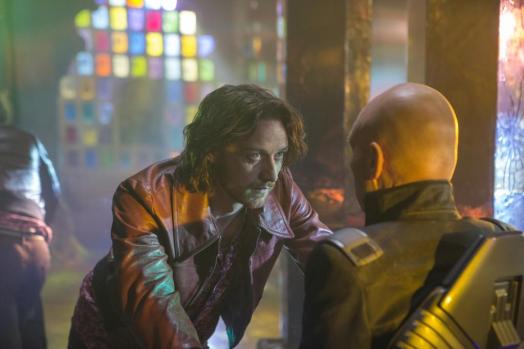
For the music, the score was composed by John Ottman, a longtime collaborator with director Bryan Singer. Ottman became the first composer to work on more than one X-Men film (having scored X2 in 2003) and retained the main theme of X2 for Days of Future Past. As the composer states in the interview, Singer asked that Ottman create something that sounded “more modern” (in the vein of other current superhero films) and move away from the more traditional sounds created by Henry Jackman in the score for First Class.

IH7A1365.CR2

I haven’t seen much of the new X-Men films (though I have seen the original trilogy), but the more I see and hear of the music, the more interested I become. Fans of the new trilogy should enjoy this look at how the music of Days of Future Past was created. Enjoy!

*film poster is the property of 20th Century Fox

You can become a patron of the blog at patreon.com/musicgamer460

See also:

John Ottman talks X2 (2003)

See also:

Film Composer Interviews A-H

Film Composer Interviews K-Z

Like Film Music Central on Facebook at www.facebook.com/filmmusiccentral

Michael Giacchino talks The Incredibles (2004)

Michael Giacchino talks The Incredibles (2004)

In 2004, Pixar Animation Studios released The Incredibles, the story of a family of superheroes who are forced to hide their powers and live normal lives (after a series of events forces all superheroes to retire).

Bob Parr/Mr. Incredible, his wife Helen/Elasti-Girl, their son Dash (super-speed) and daughter Violet (invisibility/forcefields) and youngest son Jack-Jack (revealed to potentially have multiple powers at the end of the film), are doing their best to blend in when the former Mr. Incredible, extremely dissatisfied with living life as an “ordinary person” is given an offer to destroy a robot on a distant island. But there’s a lot more at play here than just a runaway robot, and soon the entire family will find themselves embroiled in a huge conflict with a strange figure from Mr. Incredibles’ past.

TheIncredibles_Web_Still2_756_426_81_s

As it turns out, The Incredibles was the first major film commission for composer Michael Giacchino (known today for such works as Star Trek, Star Trek Into Darkness and Zootopia). Director Brad Bird noticed Giacchino after hearing his work on the tv show Alias (2001-2006). Prior to this, Pixar had only used the music of Thomas or Randy Newman in their films, so Giacchino’s jazzy style was a significant departure for the studio. To help give the score that “old-style” feel of the 1960s, Giacchino deliberately recorded the score on analog tapes (as opposed to digital recording).

The featurette linked above gives an in-depth look at the recording process of the film’s score, as well as how Giacchino initially developed the music on the piano. It’s always interesting to see where a major film composer first got their start, and I bet there are some people who don’t realize that Giacchino’s first film score was for an animated family film.

Syndrome_revealing_his_plan_to_the_Incredibles

I hope you enjoy this behind the scenes look at the score for The Incredibles. With news of a sequel due out in 2019 , I am happy to report that Michael Giacchino will return to score that film as well. It will be very interesting to hear how the composer’s style has evolved over the years since the first film came out. Have a good Friday!

See also:

Michael Giacchino talks Mission: Impossible 3 (2006)

Michael Giacchino talks Ratatouille (2007)

Michael Giacchino talks Up (2009)

Michael Giacchino talks Star Trek (2009)

Michael Giacchino talks Super 8 (2011)

Michael Giacchino talks John Carter (2012)

Michael Giacchino talks Star Trek: Into Darkness (2013)

Michael Giacchino talks Jupiter Ascending (2015)

Michael Giacchino talks Jurassic World (2015)

Michael Giacchino scoring Rogue One: A Star Wars Story (2016)

Michael Giacchino talks Zootopia (2016)

Michael Giacchino talks Jurassic World: Fallen Kingdom (2018)

Film Composer Interviews A-H

Film Composer Interviews K-Z

Become a patron of the blog at: patreon.com/musicgamer460

Check out the YouTube channel (and consider hitting the subscribe button)

*poster image is the property of Walt Disney Studios

Like Film Music Central on Facebook at www.facebook.com/filmmusiccentral

John Ottman talks X2 (2003)

X2_X-Men_United_movie_poster

John Ottman talks X2 (2003)

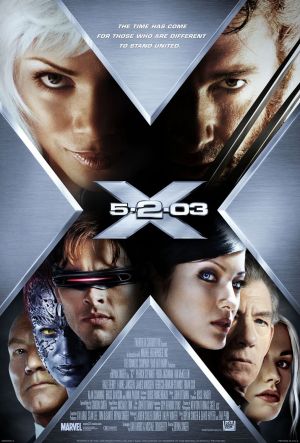
After the success of X-Men (2000), 20th Century Fox immediately gave the green-light to a sequel. X-2 (also known as X2: X-Men United) was released in 2003 and focused on the growing war between Professor Xavier (Patrick Stewart) and his X-Men, their enemies, led by Magneto (Ian McKellen), and their mutual enemy William Stryker (Brian Cox), who is seeking to destroy all mutants on Earth.

The score for this film was composed by John Ottman, a composer who frequently collaborates with director Bryan Singer (not always successfully, one such collaboration was Superman Returns (2006)). Of the X-Men films that I have seen, X2 is generally my favorite. I admit that Ottman’s work isn’t among my favorites, but he did an admirable job here.

I wanted to share this short documentary on the making of the score for X2 because it is uncommon to find such a long video for film music of any kind. If you liked the original X-Men films, you’ll probably find this short documentary (10-11 minutes) very interesting indeed. Enjoy!

You can become a patron of the blog at patreon.com/musicgamer460

See also:

Film Composer Interviews A-H

Film Composer Interviews K-Z

See also:

John Ottman talks X-Men: Days of Future Past (2014)

*poster image is the property of 20th Century Fox

Like Film Music Central on Facebook at www.facebook.com/filmmusiccentral

James Horner talks Windtalkers (2002)


In 2002 MGM released the war film Windtalkers, based on the true story of the Navajo Code Talkers, who used a code based on the Navajo language to send encoded transmissions that the Japanese couldn’t understand or decode as they had no direct knowledge of the Navajo language. The film follows two code talkers, Pvt. Ben Yahzee and Pvt. Charlie Whitehorse, and their “chaperones,” Sgt. Enders and Sgt. Henderson, who are ordered to protect these Navajo soldiers with their lives (as only a handful of people know how to use the code).

windtalkers-0224

Though the Japanese tried many times, they were never able to break the code. In fact, due to evidence that the Japanese are brutally torturing any Navajo soldiers they can capture in order to get the code, Enders and Henderson are given particular orders that they are to kill their respective “windtalker” if they are in danger of being captured by the enemy. Enders is later forced to kill Whitehorse with a grenade when he sees the Japanese capturing him (Whitehorse himself gives a stiff nod when he sees Enders preparing the grenade, signalling that he knows what must be done and he is prepared to die).

The score for this film was created by the late James Horner, and the clip above is part interview and part scoring session, showing Horner at work in the recording studio. As beautiful as the music sounds, it’s a shame that the film wasn’t better received at the box office (I don’t think having Nicolas Cage as the main star helped much). This just reinforces the sad truth that a film can have a beautiful score but still be ruined by other factors, the biggest of which being that the titular “windtalkers” were relegated to secondary character status, despite being pivotal to the plot.

Having just finished the James Horner blogathon, I still had his music very much on my mind, and I was glad I could find another recording of the composer at work (there aren’t as many out there as you might think). I hope you enjoy watching and listening.

See also:

James Horner Star Trek II: Wrath of Khan

James Horner talks Aliens (1986)

James Horner talks Field of Dreams (1989)

James Horner talks The Rocketeer (1991)

James Horner scoring Braveheart (1995)

James Horner talks The Perfect Storm (2000)

James Horner talks A Beautiful Mind (2001)

James Horner talks Avatar (2009)

James Horner talks The Amazing Spider-Man (2012)

Film Composer Interviews A-H

Film Composer Interviews K-Z

Become a patron of the blog at: patreon.com/musicgamer460

Check out the YouTube channel (and consider hitting the subscribe button)

Don’t forget to like Film Music Central on Facebook 🙂

*poster image is the property of MGM

Remembering James Horner: Star Trek II: The Wrath of Khan (1982)

*This is part of the Remembering James Horner blogathon to remember the late composer James Horner (1953-2015)

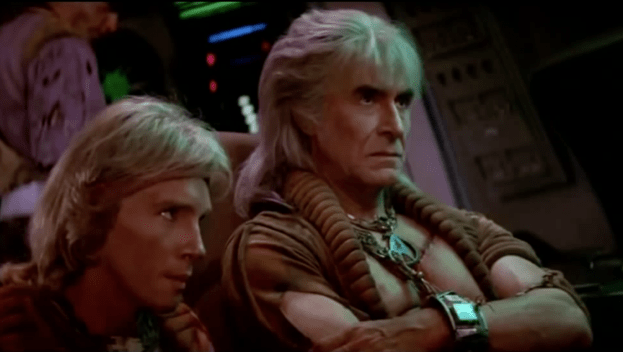
Star Trek II: The Wrath of Khan is (rightly) regarded as one of the best, if not THE best Star Trek film ever created. The film continues a story told in the Original Series episode “Space Seed” and brings back the villain Khan Noonien Singh (as played by Ricardo Montalban) to face off with Kirk and his crew once more.

Given how Star Trek: The Motion Picture suffered at the box office, Paramount greatly reduced the budget for the sequel and removed series creator Gene Roddenberry from the active production process. The music for the first film had been scored by Jerry Goldsmith, but with less money in the budget, he was no longer available. Nor was the second choice, Miklos Rozsa for that matter (though it would have been interesting to hear him score a Star Trek film). James Horner (who was only 28 at the time) was ultimately chosen because his demo music stood out from the group; this was Horner’s first big break into major motion pictures (his first credits after leaving film school begin in 1980). Horner stated once that the producers wanted a completely different score than what Goldsmith had given for The Motion Picture; it couldn’t be John Williams-like, but it still had to be different: more modern, more nautical. Horner did his best to oblige and the results are unforgettable.

In place of the grand theme created by Jerry Goldsmith for the first film, Horner created an entirely original theme and overture first heard in the opening credits of the film. This theme is repeated as the Enterprise leaves Spacedock (a theme I briefly discussed in the “Enterprise Clears Moorings” post below). What I love about this piece is the way the music audibly “ripples” as it builds to the climactic sounding of the main theme. I could literally visualize Horner conducting this music, and at times, I like to pretend that I’m conducting it as well. There’s a huge swelling of enthusiasm that wells up as the music grows and grows; which makes sense since the Enterprise is currently full of young cadets who have never been on a major space voyage before.

“Enterprise Clears Moorings” from Star Trek II: The Wrath of Khan

Another theme from this film that I love is “Surprise Attack” (originally covered in the post linked below). Horner related in several interviews that he created Khan’s musical theme to reflect the villain’s increasingly unstable mental state. For over fifteen years, Khan has obsessed over getting revenge on James Kirk, and now that he has his prey in sight, nothing and no one is going to stand in his way. “Surprise Attack” takes place when the Enterprise is being approached by the U.S.S. Reliant (which has been hijacked by Khan and his followers). From the opening notes, this theme is full of tension, created by contrasting Khan’s theme with that of the Enterprise (in a sense this could be considered Kirk’s theme as well). Khan’s theme is full of tension, rage and a thirst for war (lots of drumbeats and high shrilly strings and woodwinds), while the Enterprise/Kirk theme is dominated by lower, calmer strings and minimal percussion. Horner knew that in the upcoming battle scenes it would be vital to have two themes that were noticeably different from each other, to make it easier for the audience to keep up with which ship they were seeing (since there would be some very fast scene changes).

Star Trek II “Surprise Attack”

James Horner’s theme for Spock is also extremely beautiful and simple at the same time. It was created using a glass instrument that is something of a bowl and a chime, put together (think of how a crystal goblet will ring if you fill it with water and rub your finger on the rim). The theme highlights Spock’s devotion to Vulcan logic with it’s simplicity, there is not one note out of place. It is just the sort of music you might expect to find for a Vulcan. After Leonard Nimoy’s death, and again after Horner passed away, I played this theme several times a day for several days, as a way of saying goodbye to them both.

Star Trek II: The Wrath of Khan “Spock” (1982)

Another theme that always tugs at my heartstrings is the conclusion of the “Genesis Countdown” (probably the last two minutes of the piece), which takes place when the crew is observing the formation of the Genesis Planet, unaware that Spock has given his life to save the ship. The moment when Kirk races down to Engineering (because deep down he KNOWS what has happened, even though McCoy won’t tell him) always makes my heart hurt, because I think we can all imagine the horror of that moment: racing down to find our closest, dearest friend, whoever that may be, already dead or nearly dead, and there’s nothing we can do to stop it. This moment remains one of the most iconic in Star Trek history, because this is SPOCK we’re talking about, one of the most important characters in the series. Typically, there’s an unwritten rule that says these major characters never die; to see this happen sent shock waves through the Star Trek Universe. Actually, Spock’s death was originally going to happen at the beginning of the film, but news of this leaked out so to preserve the surprise it was switched to the end of the film. I know that after Nimoy’s death, viewership of this scene spiked, because so many people associated Nimoy with Spock, that it seemed like a good way to say goodbye. I did a similar thing when James Horner passed away. I didn’t just listen to the Spock theme, and various other themes, I also listened to this part as well, because in my mind, I needed to let the pain of Horner’s untimely death go (film composers mean a great deal to me).

Star Trek II: The Wrath of Khan “Genesis Countdown” (1982)

Star Trek II: The Wrath of Khan “Spock (dies)” (1982)

Star Trek II: The Wrath of Khan “Spock’s Death” (Film Version) (1982)

I could keep going about James Horner and Star Trek II for thousands of more words, but I think this will do. I will say that I highly recommend the full soundtrack of this film to anyone who has not heard it before. The entire soundtrack can be found on YouTube, so if you have a spare afternoon or evening one weekend, give it a try, you will not be disappointed. And if you’ve never seen The Wrath of Khan, definitely give that film a look as well, you won’t be disappointed.

We lost James Horner over a  year ago, and I don’t believe the void he left will ever be truly filled. But remembering him in this blogathon was the best way I could think of to honor his legacy, and I think that if he were here he would like that very much. James Horner, you are truly missed. Keep making music up in Heaven!

*The Remembering James Horner Blogathon has begun today! Several great posts have already appeared and I’m excited to see what the rest of the weekend will bring. Thanks again for contributing, this means a lot to me. -Bex

Brian Tyler talks Fast Five (2011)

Of the seven Fast and Furious films that have been released, Fast Five (2011) remains the first and only film in the series that I have watched. It was my senior year of college, and the local movie theater was having a “Free Movie Night” for all the students of the university, and I’d never seen a Fast and Furious film before, so I decided to check it out. I remember enjoying it and laughing a lot! This was before I discovered my calling for film music, so I didn’t really pay any attention to the score at the time, but I was delighted years later to discover that Brian Tyler was the composer for that film.

Brian Tyler may not be an immediately recognizable name, but it surely will be in years to come: he has already composed the music for Thor: The Dark World, Avengers: Age of Ultron; Constantine; The Fast and Furious: Tokyo Drift, among many, many others.

This interview gives a great look at Brian Tyler in his recording space. As a film music scholar, it’s so exciting for me to be able to see his computer layout where he records and then synthesizes all these melodies together (I still have a dream of meeting some of these film composers some day).

I hope you enjoy this interview!

You can become a patron of the blog at patreon.com/musicgamer460

See also:

Film Composer Interviews A-H

Film Composer Interviews K-Z

My Thoughts on: Fast Five (2011)

Brian Tyler scoring Furious 7 (2015)

Brian Tyler scoring The Fate of the Furious (2017)

Brian Tyler “Alien vs. Predator: Requiem” scoring session (2007)

Brian Tyler scoring Partition (2007)

Brian Tyler talks War (2007)

Brian Tyler talks Rambo (2008)

Brian Tyler “Law Abiding Citizen” scoring sessions (2009)

Brian Tyler “Dragonball Evolution” scoring session (2009)

Brian Tyler talks The Expendables (2010) 

Brian Tyler “Battle: Los Angeles” (2011) scoring session

Brian Tyler scoring session for Iron Man 3 (2013)

Brian Tyler “Teenage Mutant Ninja Turtles” (2014) scoring session

Brian Tyler conducting and scoring Now You See Me 2 (2016)

Brian Tyler “Power Rangers” scoring session (2017)

Brian Tyler conducts The Mummy (2017)

Like Film Music Central on Facebook at www.facebook.com/filmmusiccentral