Category Archives: Film Composer

Brian Tyler Battle: Los Angeles scoring session (2011)

Brian Tyler scoring Battle: Los Angeles (2011)

You know that old expression “You can’t judge a book by it’s cover?” Well, I think a similar expression is also true: “You can’t judge a soundtrack by the film it’s attached to.” This was my thought after listening to a five minute scoring session from Battle: Los Angeles, a 2011 sci-fi action film which depicts Los Angeles (and the rest of the world) under attack from hostile alien forces. The film stars Aaron Eckhart, Michelle Rodriguez and Ramon Rodriguez, and was directed by Jonathan Liebesman.

The film itself received very negative reviews (it was notably panned by Roger Ebert), but the soundtrack, composed by Brian Tyler, received some positive mentions. For example, on Wikipedia, one review called it “…a highly entertaining, old-fashioned orchestral soundtrack that should appeal to fans of Hans Zimmer…”*

I have to agree with Mr. Monger (the author of that review): the music does indeed have that old-fashioned feel to it, but in the world of film music I believe that is a good thing. To call a film score “old-fashioned” is to say that the composer is using a traditional orchestra and not simply synthesizing everything.

As you watch the scoring session, take note of the computer screen immediately behind Brian Tyler: you’ll see two sets of numbers, like this 12 l 1 . That is a measure/beat counter that is timing the recording according to the measure and particular beat of said measure. That way, if Mr. Tyler wants to go back to, say, measure 100, he can select that on the computer and the recording will automatically transfer to that point.
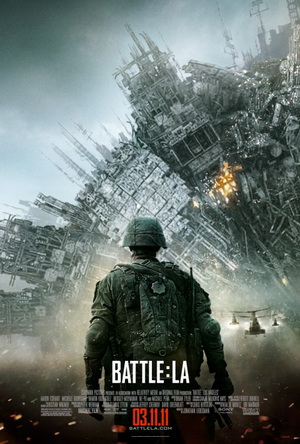
Battle_Los_Angeles_Poster

Given how wonderful the music sounds, it is such a shame that Brian Tyler’s hard work is attached to a film that was so badly received (I haven’t seen it myself, but Roger Ebert was never one to pan a film without good reason). It is obvious to me that Tyler puts a great deal of his heart and soul into this music, and I hope that someday his music will receive the proper appreciation (hopefully in the form of an Academy Award).

Please enjoy this scoring session from Battle: Los Angeles (2011)

You can become a patron of the blog at patreon.com/musicgamer460

See also:

Film Composer Interviews A-H

Film Composer Interviews K-Z

*review taken from https://en.wikipedia.org/wiki/Battle:_Los_Angeles_(soundtrack)

** poster image is the property of Columbia Pictures

Don’t forget to like Film Music Central on Facebook 🙂

Brian Tyler “Teenage Mutant Ninja Turtles” scoring session

Today I’m going to try something a little different. Normally, when I post about a scoring session for a particular film score, there’s an interview accompanying it. However, for Teenage Mutant Ninja Turtles (2014), I found a sound-only clip showing composer Brian Tyler conducting a scoring session.

Brian Tyler scoring “Teenage Mutant Ninja Turtles” (2014)

A scoring session is when the composer and the orchestra sit down and record the music piece by piece for the film. As a general rule the finished film (or nearly finished in some cases) is playing on a screen in front of the conductor, with the current scene corresponding to the music being recorded.

TeenageMutantNinjaTurtles_8926700_35618._V344532344_RI_SX940_

I thought I would share this clip with you because, even though I have never seen Teenage Mutant Ninja Turtles, I immediately found myself drawn into the music (it helps that Brian Tyler is a very energetic composer). This is partly why I chose to study film music: when you separate the music from the film, you can hear some very beautiful and wonderful things, and these are things I think everyone should hear at least once.

The music here is energetic, dynamic and surprisingly symphonic (I found myself reminded of Howard Shore’s style in some places) for an action film produced in 2014. Tyler’s style has clearly evolved since his work on Alien vs Predator: Requiem (yes, I actually sat through that movie, no I don’t know what I was thinking).


Teenage-Mutant-Ninja-Turtles-Poster

If Brian Tyler’s name is not familiar, then I think it will be in the next five years, he’s a very prolific film composer with an extensive filmography already. He’s already composed for a handful of MCU films (his score for Thor: The Dark World is half the reason I love that film so much) and he’s scheduled to compose the score for the live-action Power Rangers film due out next year.

This selection is only three minutes long, so if you have a spare minute this weekend, sit back, pop the headphones on, and give this a listen. I also dare you to listen with your eyes closed (by far the best way to listen to film music) and see what you think/feel. As I said, I thought I would try something new 🙂 Enjoy the music!

You can become a patron of the blog at patreon.com/musicgamer460

Check out the YouTube channel (and consider hitting the subscribe button)

See also:

Film Composer Interviews A-H

Film Composer Interviews K-Z

See also:

Brian Tyler conducts The Mummy (2017)

Brian Tyler scoring Partition (2007)

Brian Tyler talks The Expendables (2010)

Brian Tyler scoring session for Iron Man 3 (2013)

Brian Tyler conducting and scoring Now You See Me 2 (2016)

Brian Tyler talks War (2007)

Brian Tyler “Alien vs. Predator: Requiem” scoring session (2007)

Brian Tyler “Law Abiding Citizen” scoring sessions (2009)

Brian Tyler “Dragonball Evolution” scoring session (2009)

Brian Tyler talks Fast Five (2011)

Brian Tyler “Battle: Los Angeles” (2011) scoring session

Brian Tyler talks Rambo (2008)

Brian Tyler “Power Rangers” scoring session (2017)

*poster image is the property of Paramount Pictures

Hans Zimmer (and Richard King) talk The Dark Knight Rises (2012)

the-dark-knight-rises-final-poster

Hans Zimmer (and Richard King) talk The Dark Knight Rises (2012)

The finale of The Dark Knight film trilogy saw composer Hans Zimmer return to score the film. Co-composer James Newton Howard declined to return for this film (as he felt Zimmer and Nolan would work better together) but the main theme that he helped create still remains in the film.

Zimmer admits that he kept Selina Kyle’s theme ambiguous and also that he took Bane’s theme in a completely different direction than what had been seen in the previous installments of the series.

This interview clip that I found features not only Zimmer, but Richard King as well, as they talk about the various sounds and musical themes heard in the film.

Like The Dark Knight (2008), I admit that I haven’t actually seen this film, but I’ve heard from so many that it is good, that I’ve placed the entire trilogy on my “to watch” list. Please enjoy this interview for The Dark Knight Rises (2012).

*all images are the property of Warner Bros. Studios

Become a Patron of the blog at patreon.com/musicgamer460

See also:

Film Composer Interviews A-H

Film Composer Interviews K-Z

Don’t forget to like Film Music Central on Facebook 🙂

Hans Zimmer talks The Dark Knight (2008)

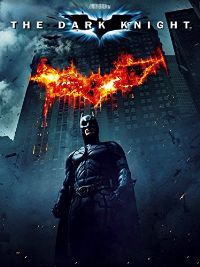
51ZapaPtV2L._SX200_QL80_

Hans Zimmer talks The Dark Knight (2008)

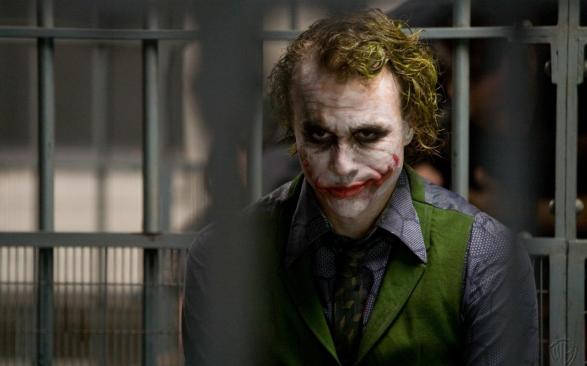
In 2008 Warner Bros. Studios released The Dark Knight, the highly successful sequel to Batman Begins (2005), continuing the story of Batman (Christian Bale) as he faces his most legendary foe: The Joker (Heath Ledger in his final screen role).

Oddly enough, though I was fascinated by Batman around this time, I never got around to watching this movie, or any other movie in the Dark Knight Trilogy to be perfectly honest. I’m not sure if it was because Heath Ledger had died or something else, but I know from reputation that they are an excellent set of films, with a great trilogy of scores co-composed by Hans Zimmer and James Newton Howard.

007-the-dark-knight-theredlist

It’s interesting to note that Zimmer created the Joker’s theme while Howard created the theme for Two-Face (to serve as musical contrasts to each other). The score was, for the most part, well-received, though like most films there were those who disliked it as well. I’ve had the score recommended to me for some time, so I should probably get my own copy sooner rather than later.

The interview linked above contains an extensive look at the score of the film and as always provides a valuable insight into how a film composer works. If you’re a fan of The Dark Knight (and even if the film is new to you), I believe you will enjoy this.

*poster image is the property of Warner Bros. Studios

You can become a patron of the blog at patreon.com/musicgamer460

See also:

Hans Zimmer (and Richard King) talk The Dark Knight Rises (2012)

See also:

Film Composer Interviews A-H

Film Composer Interviews K-Z

Don’t forget to like Film Music Central on Facebook 🙂

James Horner talks The Rocketeer (1991)

2a66400590931db334f0a593146167d6

James Horner talks The Rocketeer (1991)

In 1991, Walt Disney Studios released The Rocketeer, a period film set in 1938, which told the story of how a stunt pilot named Cliff Secord discovered a prototype jetpack that could enable him to fly without a plane. He uses this device to become “The Rocketeer”, a hero and a media sensation. Before the story is over, Cliff will have to use all his skills to save the girl he loves from some Nazi spies, including one hidden right in their midst!

While the movie was favorably received, it didn’t perform well enough to justify continuing the story and plans for a set of sequels were cancelled (which is a shame, I remember enjoying this movie very much, though I found a hard time accepting Timothy Dalton as a villain).

James Horner was selected to compose and conduct the score for this film and the score is still highly praised as one of the stronger elements of the film. I think it’s interesting to listen to how he composed music before his big successes in 1995 and 1997 respectively. I hope you enjoy this all too brief interview with James Horner regarding his work on this film. Please enjoy!

See also:

James Horner Star Trek II: Wrath of Khan

James Horner talks Aliens (1986)

James Horner talks Field of Dreams (1989)

James Horner scoring Braveheart (1995)

James Horner talks The Perfect Storm (2000)

James Horner talks A Beautiful Mind (2001)

James Horner talks Windtalkers (2002)

James Horner talks Avatar (2009)

James Horner talks The Amazing Spider-Man (2012)

Film Composer Interviews A-H

Film Composer Interviews K-Z

Become a patron of the blog at: patreon.com/musicgamer460

Check out the YouTube channel (and consider hitting the subscribe button)

Don’t forget to like Film Music Central on Facebook 🙂

*poster image is the property of Walt Disney Studios

James Newton Howard talks Signs (2002)

Signs (2002) was actually the third collaboration between composer James Newton Howard and director M. Night Shyamalan (the others being The Sixth Sense (1999) and Unbreakable (2000)). For this film, in which a family is terrorized by mysterious aliens, Howard created a score that drips with tension almost from the start.

This musical trend is inspired by Shyamalan’s  approach to telling the story, a story that keeps the audience hooked until that last moment (which I think is one of the biggest WTF? moments in all of cinema, let’s just say that the payoff to all this tension isn’t exactly what you’d expect).

It’s hard to believe this film is 14 years old already, I remember when all my classmates in school were talking about it. Please enjoy James Newton Howard’s discussion of the film score.

See also:

James Newton Howard talks Dinosaur (2000)

James Newton Howard talks Atlantis: The Lost Empire (2001)

James Newton Howard talks The Village (2004)

James Newton Howard scoring King Kong (2005)

Film Composer Interviews A-H

Film Composer Interviews K-Z

Become a Patron of the blog at patreon.com/musicgamer460

Check out the YouTube channel (and consider hitting the subscribe button)

Don’t forget to like Film Music Central on Facebook 🙂

*poster is the property of Buena Vista Pictures

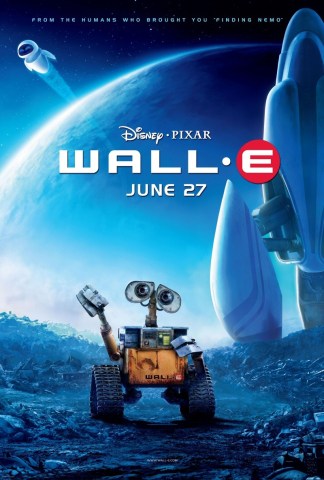
Thomas Newman talks Wall-E (2008)

wallefinal

In 2008 Pixar made the leap into outer space and released a film named WALL-E, a touching tale about a waste-cleaning robot named WALL-E who works all alone on a garbage covered Earth in 2805. Having spent so many years alone (the other robots having long since broken down), WALL-E has developed an individual consciousness and identity of his own: he salvages items he deems “special” and keeps them in his “home” (such items include an ancient tape copy of Hello, Dolly). The monotony of WALL-E’s life changes dramatically when he discovers a plant seedling; not long afterward, a strange ship arrives bearing a feminine robot named EVE. WALL-E (being very lonely) falls in love and embarks on a huge adventure that, ultimately, will save the long absent human race once and for all.


Composer Thomas Newman had worked very well with director Andrew Stanton on Finding Nemo (2003) and began working on the score as early as 2005 (EVE’s theme was first arranged in 2007). Newman found the score to be a good challenge, as the first portion of the film is largely silent (with no dialogue in the traditional sense). Stanton had originally envisioned a purely orchestral score, but Newman eventually included electronic elements as well. Several scenes also include selections from previously composed works, most notably Hello Dolly! and La vie en rose (as performed by Louis Armstrong) during a sequence between EVE and WALL-E on Earth. Newman’s score was nominated at the Academy Awards for Best Original Score and Best Original Song, but it lost to Slumdog Millionaire (2008).

Interestingly, with the film making several references to Hello Dolly!, it’s cool to note that Thomas Newman’s uncle Lionel Newman (1916-1989) worked on that production.

WALL-E is such an adorable film, and it’s commentary on society (most notably how it deals with consumerism) makes it a must-see for all ages. Please enjoy this behind the scenes look at the score of this film.

You can become a patron of the blog at: patreon.com/musicgamer460

See also:

Thomas Newman talks Lemony Snicket’s A Series of Unfortunate Events (2004)

Film Composer Interviews A-H

Film Composer Interviews K-Z

Don’t forget to like Film Music Central on Facebook 🙂

*poster image is the property of Walt Disney/Pixar

James Horner talks A Beautiful Mind (2001)

A_Beautiful_Mind_Poster

Unbelievably, it’s been 15 years since A Beautiful Mind took the cinematic world by storm. Based on the real-life story of mathematician John Nash (1928-2015), the film follows Nash from his days at Princeton, through his diagnosis with paranoid schizophrenia and the struggles that came with dealing with an illness that was not well understood yet. It’s not even clear for a good portion of the film that Nash is seeing things that aren’t there. A good case in point comes with Nash’s roommate at Princeton Charles. He’s introduced the way any other character would be, he talks with Nash and even walks in public with him and later introduces his young niece. I remember being totally shocked when it was revealed that only Nash could see Charles (it put certain episodes at Princeton in a completely different light).

b75361412994015015

A Beautiful Mind took home four Academy Awards: Best Adapted Screenplay, Best Picture, Best Director and Best Supporting Actress. It also received four additional nominations for Best Actor, Best Film Editing, Best Makeup and Best Original Score.

I don’t remember exactly when I saw this movie for the first time, but I do remember it had something to do with school (we might have been learning about mental illness). I should also mention that I knew nothing about Nash before watching this film, so the revelation that so many of Nash’s “friends” were delusions came as a huge surprise to me, and it made me question every interaction Nash had for the rest of the film.

For this film, director Ron Howard called upon composer James Horner to assemble the musical score and oh did he ever! Horner gives an eloquent description of how he assembled the musical themes for this film and not only that, he also described his thought process for creating a film score in general (he compares it to painting, which is just beautiful!) Considering it’s been just under a year since he passed away, I felt a few tears come to my eyes, knowing that a talent like this was gone from the world.

Please enjoy listening to how the music for A Beautiful Mind was put together!

See also:

James Horner Star Trek II: Wrath of Khan

James Horner talks Aliens (1986)

James Horner talks Field of Dreams (1989)

James Horner talks The Rocketeer (1991)

James Horner scoring Braveheart (1995)

James Horner talks The Perfect Storm (2000)

James Horner talks Windtalkers (2002)

James Horner talks Avatar (2009)

James Horner talks The Amazing Spider-Man (2012)

Film Composer Interviews A-H

Film Composer Interviews K-Z

My Thoughts on: A Beautiful Mind (2001)

Become a patron of the blog at: patreon.com/musicgamer460

Check out the YouTube channel (and consider hitting the subscribe button)

Don’t forget to like Film Music Central on Facebook 🙂

*the film poster is the property of Universal Pictures

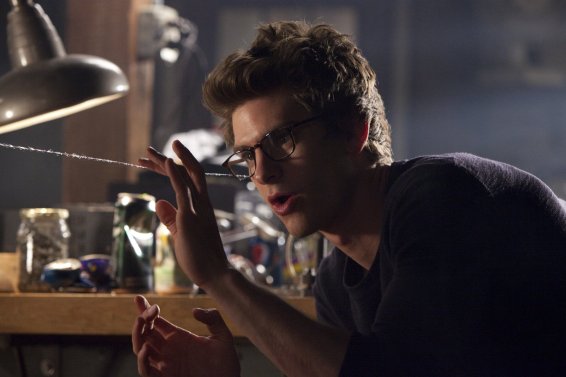
James Horner talks The Amazing Spider-Man (2012)

amazing_spiderman_ver14

Beginning in 2010, Columbia Pictures decided to reboot the Spider-Man franchise (that had previously starred Tobey Maguire from 2002-2007) and recast the title role with Andrew Garfield. The film was very well received, with Garfield’s performance being highly praised.

The film, being a reboot, starts the story of Peter Parker over again, showing how he develops from a bullied teen into a superhero after a genetically modified spider bites him. Parker begins using his abilities to hunt down criminals, and eventually must stop a rampaging villain known as the Lizard (who has also discovered that Spider-Man is Peter Parker!) The story was continued in The Amazing Spider-Man 2 (2014).

James Horner was brought in to compose the musical score for the film. On that merit alone, I would recommend this soundtrack to anyone (because by this stage in his career, Horner had writing film music down to a fine art).

the-amazing-spider-man-andrew-garfieldjpg-b303ca1296025aa1

I admit I haven’t actually seen the reboot of Spider-Man, but the general consensus is that it is a good film worth seeing. Please enjoy this behind the scenes look at the scoring of The Amazing Spider-Man, featuring the one and only James Horner (it sends chills down my spine to see him conducting the orchestra, he was surely a master of his craft), enjoy!!


See also:

James Horner Star Trek II: Wrath of Khan

James Horner talks Aliens (1986)

James Horner talks Field of Dreams (1989)

James Horner talks The Rocketeer (1991)

James Horner scoring Braveheart (1995)

James Horner talks The Perfect Storm (2000)

James Horner talks A Beautiful Mind (2001)

James Horner talks Windtalkers (2002)

James Horner talks Avatar (2009)

Film Composer Interviews A-H

Film Composer Interviews K-Z

Become a patron of the blog at: patreon.com/musicgamer460

Check out the YouTube channel (and consider hitting the subscribe button)

Don’t forget to like Film Music Central on Facebook 🙂
*the film poster is the property of Columbia Pictures

Brian Tyler talks The Expendables (2010)

The basis behind The Expendables is so simple and at the same time so crazy, I’m surprised they didn’t try it sooner: create a film starring every single action star you can get your hands on and have a story where they all have to work together against a common foe. It’s insanely brilliant when you think about it. (I haven’t gotten the chance to see it all the way through yet, but the parts I have seen, I loved!!)


The plot follows an elite group of mercenaries led by Barney Ross (Stallone) and the chaos that ensues as a routine contract to overthrow a dictator becomes anything and everything but. Aside from the all-star cast, Bruce Willis and Arnold Schwarzenegger have small cameos as well.

Brian Tyler was hired to compose the score for The Expendables, having previously worked with Sylvester Stallone on Rambo (2008). Please enjoy this behind the scenes look at how Tyler assembled the score.

You can become a patron of the blog at patreon.com/musicgamer460

See also:

Film Composer Interviews A-H

Film Composer Interviews K-Z

See also:

Brian Tyler conducts The Mummy (2017)

Brian Tyler scoring Partition (2007)

Brian Tyler conducting and scoring Now You See Me 2 (2016)

Brian Tyler talks War (2007)

Brian Tyler “Alien vs. Predator: Requiem” scoring session (2007)

Brian Tyler “Law Abiding Citizen” scoring sessions (2009)

Brian Tyler “Dragonball Evolution” scoring session (2009)

Brian Tyler talks Fast Five (2011)

Brian Tyler “Battle: Los Angeles” (2011) scoring session

Brian Tyler scoring session for Iron Man 3 (2013)

Brian Tyler “Teenage Mutant Ninja Turtles” (2014) scoring session

Brian Tyler “Power Rangers” scoring session (2017)

Don’t forget to like Film Music Central on Facebook 🙂
* the poster is property of Lionsgate Films