Category Archives: Film Composer

John Lunn talks Downton Abbey, Soundtrack Will Release Next Week

Decca Records/Decca Gold has announced the upcoming release of the Original Motion Picture Soundtrack to the highly-anticipated feature film, Downton Abbey, scored by composer John Lunn. Composed in a similar style to the two-time Emmy Award-winning music from the series, the score is richly orchestrated, with the familiar title theme making an appearance throughout. In a throwback to the ‘Roaring Twenties’, upbeat jazz arrangements appear alongside lavish waltzes, reflecting the popular styles of the day.

The original television series first aired on PBS Masterpiece in the US in 2011 and has enjoyed six critically-acclaimed seasons. Downton Abbey is scheduled for cinematic release on September 13th in the UK, and September 20th in the United States. The film picks up where the story left off in the autumn of 1927, joining Lord and Lady Grantham and the extended Crawley family as they prepare for a visit from the reigning King George V. With a script by Julian Fellowes, original cast members including Hugh Bonneville, Elizabeth McGovern and Dame Maggie Smith star alongside new cast members Imelda Staunton, David Haig and Geraldine James.

Scottish composer John Lunn writes music that possesses a unique voice and spans a wide spectrum of musical styles. He received two Primetime Emmy Awards for his music for Downton Abbey, and two BAFTA nominations in 2012 and 2016. Other recent television work includes The White Queen (Starz), Grantchester (ITV), Shetland (BBC One), The Last Kingdom (BBC Two) and Jamestown (Sky). Lunn received critical acclaim for his scores for three BBC Charles Dickens adaptations: The Mystery of Edwin Drood, Little Dorrit, and Bleak House.

Lunn was the first choice to score the film and recalls when the project was first proposed:

“I was delighted to be approached to create the feature-length film score to a series which has had a huge impact on audiences and fans all over the world. At first it was like discovering a long-lost friend, but gradually I realized that we’d never really been apart; by the end it was just such a joy to revisit this material and have the opportunity to take it to a whole new level.”

Downton Abbey: The Original Motion Picture Soundtrack will be released by Decca Records/Decca Gold on September 13th, 2019.

Tracklist

1. A Royal Command
2. Pillar of the Establishment
3. Gleam and Sparkle
4. God Is a Monarchist
5. Two Households
6. Incident at A Parade
7. Sabotage
8. Maud
9. Honour Restored
10. Never Seen Anything Like It
11. Not Entirely a Bad Night
12. May I?
13. Taking Leave
14. Resolution
15. You Are the Best of Me
16. Sunset Waltz
17. One Hundred Years of Downton

Once it comes out, let me know what you think about the Downton Abbey movie and its soundtrack in the comments below and have a great day!

See also:

Film Soundtracks A-W

Become a Patron of the blog at patreon.com/musicgamer460

Check out the YouTube channel (and consider hitting the subscribe button)

Don’t forget to like Film Music Central on Facebook 🙂

David Buckley Talks Angel Has Fallen (2019)

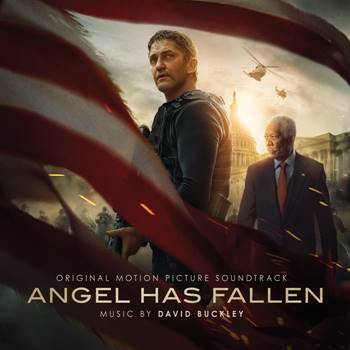
The soundtrack for Angel Has Fallen is available as of August 23rd, and it was composed by David Buckley. He has previously worked on such projects as The Good Wife, Jason Bourne, and The Nice Guys. The soundtrack is available from Milan Records, an imprint of Sony Music Masterworks.

Angel Has Fallen is the follow up to Olympus Has Fallen (2013) and London Has Fallen (2016). When there is an assassination attempt on U.S. President Allan Trumbull (Morgan Freeman), his trusted confidant, Secret Service Agent Mike Banning (Gerard Butler), is wrongfully accused and taken into custody. After escaping from capture, he becomes a man on the run and must evade his own agency and outsmart the FBI in order to find the real threat to the President. Desperate to uncover the truth, Banning turns to unlikely allies to help clear his name, keep his family from harm and save the country from imminent danger.

angel-has-fallen-ahf_05528_r_rgb-h_2019.jpg

Of the soundtrack, David Buckley had this to say:

When Ric (Director) and I first discussed the direction for this score, he was keen for the music to remain in a dark space as our hero becomes a fugitive. There is some light and shade as the drama enfolds, but for a lot of the film my job was to portray a man not only on the run, but one who is fast approaching mental and physical breaking point. But there is a theme that represents light and hope, for Mike Banning’s wife, for his child, for the President and for his country.

ANGEL HAS FALLEN (ORIGINAL MOTION PICTURE SOUNDTRACK)

TRACK LISTING –

1.       The Kill Zone

2.       Drone Attack

3.       Swallowed by Trees

4.       Home Life

5.       Fishing Trip

6.       Death Threats

7.       Semi Chase

8.       Deep Regrets

9.       Resurrection

10.    Into the Abyss

11.    Hospital Breach

12.    Accepting Betrayal

13.    Atrium Firefight

14.    Final Chess Match

15.    Coup de Grace

16.    No More Secrets

17.    Angel Has Fallen

Angel Has Fallen is directed by Ric Roman Waugh from a screenplay by Robert Mark Kamen and Matt Cook & Ric Roman Waugh, story by Creighton Rothenberger & Katrin Benedikt, and based on characters created by Creighton Rothenberger & Katrin Benedikt.

Let me know what you think about Angel Has Fallen (and its soundtrack) in the comments below and have a great day!

See also:

Film Composer Interviews A-H

Film Composer Interviews K-Z

Become a Patron of the blog at patreon.com/musicgamer460

Check out the YouTube channel (and consider hitting the subscribe button)

Don’t forget to like Film Music Central on Facebook


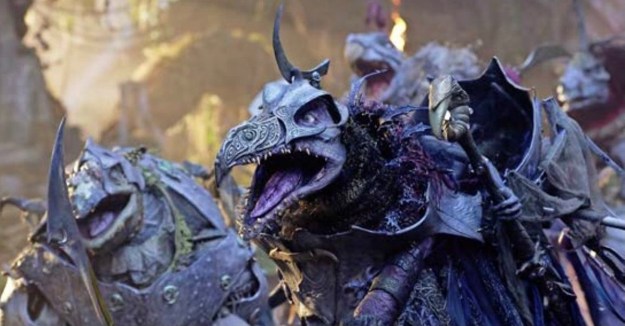
Daniel Pemberton talks The Dark Crystal: Age of Resistance (2019)

If you weren’t already excited about the imminent release of The Dark Crystal: Age of Resistance on Netflix next week, then this news about the soundtrack should do the trick. The soundtrack, which is being released on August 30th, was composed by Daniel Pemberton (with help from fellow composer Samuel Sim).

For those who may have forgotten, the 10-episode show is a prequel to the groundbreaking 1982 fan favorite The Dark Crystal, and takes place many years before the events of the film. Leading the voice cast in the series will be Kingsman star Taron Egerton, The Witch actress Anya Taylor-Joy and Game of Thrones’ Nathalie Emmanuel, as ‘Gelfling’ heroes Rian, Brea and Deet. Star Wars’ Mark Hamill, Harry Potter’s Helena Bonham-Carter, Tomb Raider star Alicia Vikander and Outlander’s Caitriona Balfe provide additional voice performances in the new fantasy epic.

Dark-Crystal-Age-of-Resistance-Banner.jpg

For director Louis Leterrier, Pemberton was the natural choice:

I approached the music the same way I approached the filming and the puppetry. I wanted somebody to come on this journey that would be willing to take big risks. I wanted something that was almost tribal. I wanted to hear the strings being plucked and the skin wrapped over the drum. At the same time, I wanted somebody who could write beautiful melodies, understood music, and was a lover of beautiful music. I wanted someone who would approach it in a very organic way and who would tell the story through the score. My search led me to Daniel.

Daniel Pemberton is rapidly becoming one of my favorite composers, as he has previously scored The Man from U.N.C.L.E, Spider-Man: Into the Spider-Verse, King Arthur: Legend of the Sword, and Ocean’s 8, just to name a few. Hearing his thoughts on how he approached the score for The Dark Crystal: Age of Resistance, makes me even more excited to experience the prequel series (and I don’t often say that about prequels).

dark-crystal-netflix-dc-unit-25687-r

Daniel had this to say about scoring The Dark Crystal: Age of Resistance:

I wanted the music to be as magical as Thra itself – organic, imperfect, strange, mystical, otherworldly and wonderful. I wanted to create new sounds that felt like they came from the world itself, as well as using thematic large scale orchestral elements to bring an emotion to the journey of the characters. I wanted music and sounds that would fill you with wonder, but also terrify you. It was very important to me that all the sounds felt like they could only be from Thra itself – no grand pianos or overtly electronic elements. Every sound had to feel organic and visceral, from the dark detuned glissando cello sounds made for the Skeksis, to the upbeat flutes from the Podling’s bar. We created noises out of wine glasses, metal chains, wooden drums, metal sculptures on a snow covered mountain and old creaky medieval instruments to try and make a sonic world as unique as the visual one.

The soundtrack will be released in two volumes; volume 1 will have tracks composed only by Pemberton, while volume 2 will have tracks composed by Pemberton and Sim. Both volumes will be available on August 30th, the same day the series becomes available on Netflix.

Let me know if you’re just as excited to see The Dark Crystal: Age of Resistance in the comments below and have a great day!

See also:

Daniel Pemberton talks The Man from U.N.C.L.E (2015)

Daniel Pemberton talks Steve Jobs (2015)

Daniel Pemberton talks Gold (2016)

Daniel Pemberton talks King Arthur: Legend of the Sword (2017)

Film Composer Interviews A-H

Film Composer Interviews K-Z

Become a Patron of the blog at patreon.com/musicgamer460

Check out the YouTube channel (and consider hitting the subscribe button)

Don’t forget to like Film Music Central on Facebook

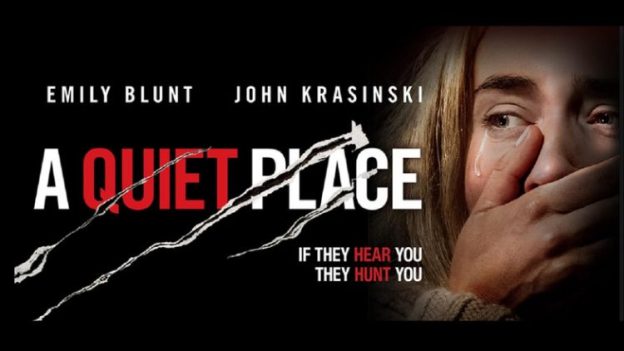
Marco Beltrami talks A Quiet Place (2018)

I have a mixture of thoughts about A Quiet Place, and its soundtrack. Regarding the movie itself, I’m slightly ashamed that I haven’t seen it yet (but most of you know my feelings on horror by now, and the entire premise of this film terrifies me). As for the soundtrack…believe it or not part of me finds it funny that the film has a soundtrack at all, as given the premise, it would almost be appropriate for the film to have no non-diegetic music at all. But have a soundtrack it does, and Marco Beltrami did the honors.

In this fantastic interview (full credit to Ashton Gleckman), Marco Beltrami discusses how he came to work on the score for this film, and talks about some of the things he did to give the film its unique sound.

(again, I give full credit to Ashton Gleckman, whose video this is, for this awesome interview with Marco Beltrami)

Having listened to the interview, I have to agree with Beltrami: having a film with almost no dialogue would be a golden opportunity for a film composer. Think about it, most of the time the film score is structured around dialogue, which means the music mostly stays in the background while characters are talking (this isn’t always true, but it usually is). However, in a film like A Quiet Place, with almost no talking, you basically have a blank slate to work with, and it sounds like Beltrami took full advantage.

Another detail I liked from this interview is when Beltrami talked about how he arranged parts of the music to reflect the terrifying world the family of A Quiet Place live in. It was something to the effect of “they’ve been living in silence so long that any sounds they do hear will sound wonky to them.” And that makes sense. If you get used to silence, sounds will start to sound abnormal. To that end, one thing Beltrami did was de-tune the black keys on a piano (to de-tune means to deliberately put something out of tune), which would automatically create a weird sound when you play the instrument.

I’ll leave you to enjoy the rest of the interview, and I hope you enjoy this behind-the-scenes look at how the score to A Quiet Place was created. Let me know what you think of  A Quiet Place (and its soundtrack) in the comments below and have a great day!

See also:

Marco Beltrami talks Blade II (2002)

Marco Beltrami and Marilyn Manson talk Resident Evil (2002)

Marco Beltrami talks Live Free or Die Hard (2007)

Marco Beltrami talks 3:10 to Yuma (2007)

Marco Beltrami talks The Wolverine (2013)

Marco Beltrami talks World War Z (2013)

Film Composer Interviews A-H

Film Composer Interviews K-Z

Become a Patron of the blog at patreon.com/musicgamer460

Check out the YouTube channel (and consider hitting the subscribe button)

Don’t forget to like Film Music Central on Facebook

Brian Tyler scoring Constantine (2005)

I’m always on the lookout for good videos of film scoring sessions, and today I hit the jackpot (in a manner of speaking) with an excellent video showing Brian Tyler working on Constantine (2005) in the recording studio. Being a firm devotee of Matt Ryan’s portrayal of the iconic master of the dark arts, I’ve generally ignored this film’s existence. But now that I’ve heard some excerpts of the film’s score while watching this video, I’m wondering if I need to go back and re-evaluate my position on this film.

This particular video is especially good because it shows a great view of the entire studio, with the composer/conductor and the orchestra at one end, while the work-in-progress film is projected on the far wall. As I’ve mentioned before, seeing the film during the recording process is necessary (for most) because this helps the composer sync the music to the film in the best way possible. To help with this, I believe there is a timer (of sorts) projected onto the screen for the composer’s benefit (for example, at 1:30 see the “0278+8” in the bottom right of the screen, that looks like a timing tool I’ve heard of film composers using).

Another great thing about this video is that it shows several different recording sessions that focus on different scenes. My favorite example in the whole video is the sequence starting at 1:32 that zooms in close on the film being projected. Watching that and hearing the music shows how hard Tyler has to work to create music that matches up with the visuals. As the video also shows, the director can sit in on these sessions, that way if he/she sees something that doesn’t work for them, they can let the composer know so it can be fixed right away.

I really hope you enjoy this video of Brian Tyler working on scoring Constantine (this is also the earliest video of the composer at work that I’ve found to date). Let me know what you think about Constantine (and its soundtrack) in the comments below and have a great day!

See also:

Film Composer Interviews A-H

Film Composer Interviews K-Z

Become a Patron of the blog at patreon.com/musicgamer460

Check out the YouTube channel (and consider hitting the subscribe button)

Don’t forget to like Film Music Central on Facebook

Brian Tyler scoring The Fate of the Furious (2017)

The Fate of the Furious is, as of 2017, the most recent film in the Fast & Furious franchise to be scored by Brian Tyler (there’s no word as yet as to whether he will score Fast & Furious 9). The Fate of the Furious continued the franchise trend of pushing the boundaries of storytelling, and the music gladly rises to the occasion.

The video I was able to find relating to this soundtrack shows segments of various scoring sessions, with the video quickly moving through several themes. Unlike the video clip for Furious 7, which focused a little more on the electronic and percussion aspects, this clip only shows the orchestra at work under Tyler’s direction. That’s fine by me, as I love watching Brian Tyler make unconventional sounds with a regular orchestra.

I apologize for the video being so short, but even though the video is only a minute long, it’s obvious just how powerful Brian Tyler’s music is. And as I say every time I cover this composer, it is so much fun to watch Tyler conduct the orchestra, he is clearly into the music, and I really do feel that this comes across in the final score as well.

Let me know what you think about this glimpse of Brian Tyler scoring the soundtrack of The Fate of the Furious in the comments below and have a great day!

See also:

Brian Tyler talks Fast Five (2011)

Brian Tyler scoring Furious 7 (2015)

My Thoughts on: Fast Five (2011)

My Thoughts on: Furious 7 (2015)

My Thoughts on: The Fate of the Furious (2017)

Film Composer Interviews A-H

Film Composer Interviews K-Z

Become a Patron of the blog at patreon.com/musicgamer460

Check out the YouTube channel (and consider hitting the subscribe button)

Don’t forget to like Film Music Central on Facebook

Brian Tyler scoring Furious 7 (2015)

You might not have realized this, but Brian Tyler has been heavily involved in the Fast & Furious franchise for quite some time. His current scoring credits for the franchise include: The Fast and the Furious: Tokyo Drift; Fast & Furious; Fast Five; Furious 7; and The Fate of the Furious.

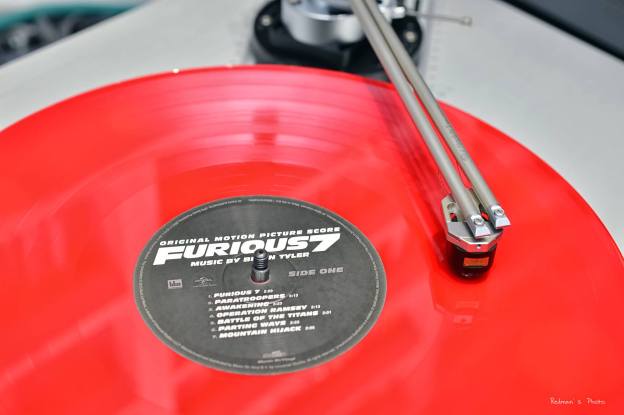
Tyler’s impressive composition abilities bring a high-octane feeling to every score he’s worked on (or at least the three I’ve listened to, I haven’t seen the 3rd and 4th films yet), and Furious 7 is no exception. The behind-the-scenes video I found for Furious 7 shows snippets of scoring sessions for the film, as well as a glimpse into the mixing process. As you might expect for a film like Furious 7, filled with fast cars and windows into the world of the super-rich, the music is full of electronic tweaks, with remixes, reverbs, and a lot of percussion (provided by Tyler himself no less).

The music of the Fast & Furious films occupies an interesting space in my head. Given how loud these films are (with all the cars and chases), it’s not uncommon to forget this film has music at all. And here’s the genius of that: the music fits into the film so neatly that you don’t notice it. However, I guarantee that if someone made an edit of the film that took the music away, it wouldn’t take you long to notice the difference. That’s one of the things I love about Brian Tyler’s music, it just fits into the film, and that’s not an easy thing to do.

I would literally give an arm and a leg to hear Brian Tyler’s thoughts about how he went and put this score together, especially since it’s the last film to feature Paul Walker (six years later and his loss still hurts). However, until such time as I can find some more footage to share, I hope you enjoy this peek into the scoring of Furious 7.

Let me know what you think about Furious 7 (and it’s soundtrack) in the comments below and have a great day!

See also:

My Thoughts on: Fast Five (2011)

Brian Tyler talks Fast Five (2011)

Brian Tyler scoring The Fate of the Furious (2017)

My Thoughts on: Furious 7 (2015)

My Thoughts on: The Fate of the Furious (2017)

Film Composer Interviews A-H

Film Composer Interviews K-Z

Become a Patron of the blog at patreon.com/musicgamer460

Check out the YouTube channel (and consider hitting the subscribe button)

Don’t forget to like Film Music Central on Facebook

Soundtrack Review: Men in Black: International (2019)

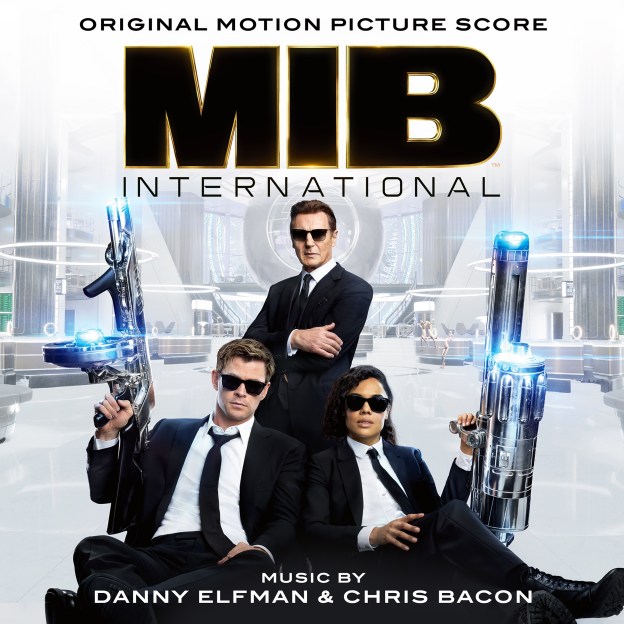
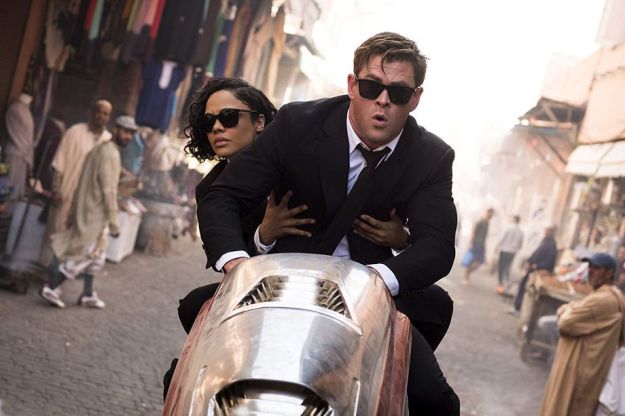
The soundtrack for Men in Black: International became available in June 2019. Composer Danny Elfman returned to work on the score, having also scored the first three Men in Black films as well. This time, Elfman co-composed the score with Chris Bacon. Unlike the earlier MIB films, MIB: International is set in Europe and follows Agent M (Tessa Thompson) as she worms her way into the MIB organization and sets off on a wild adventure with aliens and intrigue galore.

Regarding the soundtrack, Danny Elfman had this to say:

I have always loved scoring the Men in Black series.  It allows me to enter a weird quirky unique musical world that only exists in the MIB universe. Revisiting and updating is always a joy. And sharing this chapter with co-composer Chris Bacon was also a great experience.

MV5BMGU4MTY4MmMtMjUwZi00NDFkLWE3YmQtYzQxNzZmNzIzMDQxXkEyXkFqcGdeQXVyNjg2NjQwMDQ_._V1_SY1000_SX1500_AL_.0.jpg

I have a mixed history with the original Men in Black trilogy. I watched the first two films when they were relatively new, but I don’t remember much about the music (understandable since I was going on 9 when the first MIB came out). I certainly didn’t know that Danny Elfman had been working on the franchise from the beginning, one of these days I’ll have to compare the score for MIB: International to the original trilogy to see how they compare. But I digress, let’s get on to the score itself.

One of the things that immediately jumped out at me about the score to MIB: International is how the music can seamlessly jump from traditional orchestral music to electronic music. It happens more times than I can count, and the effect is that it gives the music a ‘quirky’ sound that fits very well with the unique world all of the MIB films have created, a world where aliens are hiding in plain sight and most people never know it.

While most of the music fits the “action film” genre (fast-paced melodies, quick crescendos, and percussion when appropriate), I was surprised by how tender some of the cues sounded. A prime example is “Promotions” which appears towards the end of the soundtrack. The music in that theme is quite thoughtful (I’m guessing it comes as the story is winding down if the cue title is anything to go by), and almost wholly orchestral, which is completely different from how the soundtrack starts. The early tracks jump back and forth between orchestral and electronic music so frequently I half-expected it to continue for the entire soundtrack.

men-in-black-international.jpg

And actually, I have a theory for why that might be (though I warn you that I’m working off my knowledge of the plot summary without having actually seen the film itself). Keeping in mind that the story starts with M literally breaking into the world of the Men in Black, I think the early quirkiness of the music alludes to M leaving her normal life (represented by the orchestral music) behind and jumping into the quirky, alien-filled world of MIB (represented by electronic music). That’s my thought anyway, it could be an oversimplification, but it makes sense.

I’ve heard that MIB: International disappointed quite a lot of people, but the soundtrack itself is quite lovely from what I’ve heard to it. I think it’s great that Danny Elfman returned to work on this would-be reboot, and if you get the chance, definitely check the soundtrack out, it’s worth it.

Let me know what you think about Men in Black: International (and its soundtrack) in the comments below and have a great day!

See also:

Film Soundtracks A-W

Become a Patron of the blog at patreon.com/musicgamer460

Check out the YouTube channel (and consider hitting the subscribe button)

Don’t forget to like Film Music Central on Facebook 🙂


James Newton Howard scoring King Kong (2005)

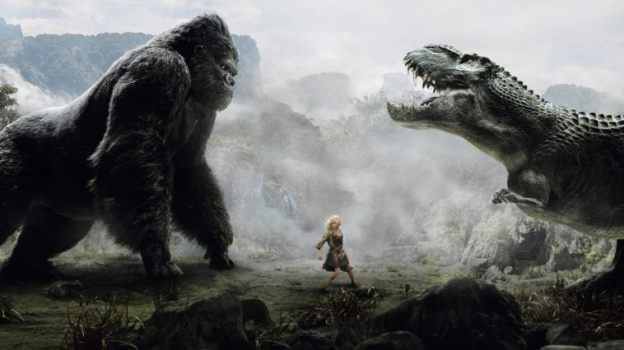
One movie and film score that I am slowly growing to appreciate is the 2005 remake of King Kong, which was scored by James Newton Howard. As much as I love the original King Kong (which everyone should see at least once), I have to admit this remake is better than most.

I found, some time ago, a wonderful video that gives some insight into how the score was put together, and it’s available here below.

Unlike some of the videos I’ve found, this video isn’t just a look into the recording studio, it also gives a brief overview of what has to be done to get the score made. James Newton Howard and those of his team essentially lay out the process from composing and blocking out the themes to getting it recorded, to having the sound mixed into a final arrangement.

I wish this video talked more about the score’s themes, but I did learn one cool thing from this video. At one point, during the recording process, the orchestra reached 100 decibels, that’s how loud they were playing. You also get a clear look at “the board” that most, if not all film composers, use during the recording process. This is a board that lists every single cue that appears in the score, and the marks next to it indicate where the cue is in the recording process, up until the cue has been finalized and approved. This is an easy way to look and see how much of the score remains to be worked on.

I hope you like watching this behind the scenes look at James Newton Howard working on King Kong. Let me know your thoughts on the film and its score in the comments below and have a great day!

See also:

James Newton Howard talks Dinosaur (2000)

James Newton Howard talks Atlantis: The Lost Empire (2001)

James Newton Howard talks Signs (2002)

James Newton Howard talks The Village (2004)

Film Composer Interviews A-H

Film Composer Interviews K-Z

Become a Patron of the blog at patreon.com/musicgamer460

Check out the YouTube channel (and consider hitting the subscribe button)

Don’t forget to like Film Music Central on Facebook


Remembering James Horner: The Magnificent Seven (2016)

Unbelievably, tomorrow will mark four years since we lost composer James Horner in a plane crash. I established the Remembering James Horner Blogathon to celebrate his beautiful film scores and in my own small way keep his memory alive.

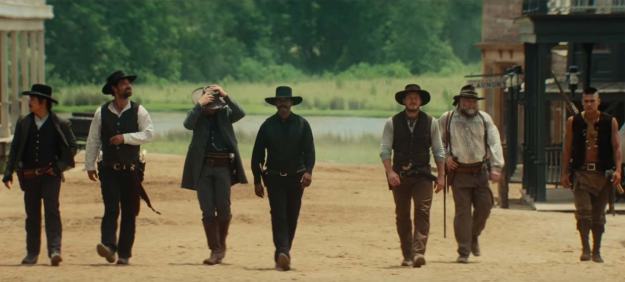
For this year’s blogathon, I decided to look at one of Horner’s final works, his score for the 2016 remake of The Magnificent Seven. There’s actually a pretty sad story behind this score. You’ll note the film was released in 2016, after Horner had passed away. Well, he’d been attached to score the film, but at the time of his death, the impression was the score hadn’t been started. But then, when his things were being cataloged in his old studio, someone discovered the entire store written and saved on his computer. It turns out that Horner had secretly scored the entire film as a surprise for the director, but of course had never gotten the chance to tell him about it. Now technically this score isn’t 100% Horner’s work. Simon Franglen was brought in to adjust and tweak the score after it was discovered, but I believe the vast majority remains Horner’s original work, the last of his scores to ever be released.

The-Magnificent-Seven-2016.jpg

The soundtrack for The Magnificent Seven features Horner working at his peak, as always. Since this is a Western, there’s a noted “twang” in the strings, with I believe a mix of guitar thrown in to emphasize the Old West setting.

I was actually against this film at first (being a huge fan of the original), even after Horner’s passing, until I listened to the soundtrack in preparation for the blogathon and realized that Horner had taken the time to quote Elmer Bernstein’s original theme for The Magnificent Seven (1960). You can hear it particularly in “Volcano Springs” and in other places, but it isn’t quoted in full until the end credits. I love that Horner took the time to quote that iconic melody, since it really doesn’t feel like a “Magnificent Seven” film without it, not to me at any rate. This shows me that Horner, at some level, wanted to connect this film back to the iconic 1960 film, which is something he didn’t have to do, but I’m glad he did.

Horner definitely put his own stamp on this film score. I normally wouldn’t think of hearing drawn out vocals in a Western (“Street Slaughter”), but Horner makes it work as only he can (he was known for using drawn out vocals in his film scores, Troy is a good example).

It makes me sad, even now, that this was James Horner’s last film score, but I’m glad it was found in time to be used for the film. I honestly think this score is one of the best parts of the film, it sounds beautiful.

What do you think of the remake of The Magnificent Seven and its score? Does the fact that this is James Horner’s final film score change your impression of it in anyway? Let me know your thoughts in the comments below and have a great day! Be sure to check out the official recap page of the blogathon to see the other entries as they’re posted.

See also:

Remembering James Horner: Troy (2004)

The magic of James Horner: Casper (1995)

Remembering James Horner: Star Trek II: The Wrath of Khan (1982)

The 4th Annual Remembering James Horner Blogathon has Arrived!

Become a patron of the blog at: patreon.com/musicgamer460

Check out the YouTube channel (and consider hitting the subscribe button)

Don’t forget to like Film Music Central on Facebook