Soundtrack Review: The Goldfinch (2019)

The soundtrack for The Goldfinch is now available for digital purchase through WaterTower Music. The score for this film was composed by Trevor Gureckis, whose past scores include Brooklyn and Vice.

The Goldfinch is the film adaptation of Donna Tartt’s globally acclaimed best-selling novel, which won the 2014 Pulitzer Prize for Fiction and the Andrew Carnegie Medal for Excellence in Fiction. In the story, Theo Decker was 13 years old when his mother was killed in a bombing at the Metropolitan Museum of Art. The tragedy changes the course of his life, sending him on a stirring odyssey of grief and guilt, reinvention and redemption, and even love. Through it all, he holds on to one tangible piece of hope from that terrible day…a painting of a tiny bird chained to its perch. The Goldfinch.

Regarding the film, Trevor Gureckis had this to say:

“Writing The Goldfinch was thrilling not only because of the huge orchestral forces at hand, but also for the opportunity to explore rich textural details with the use of electronics in service of the story. There are moments of vivid impressionism in the orchestra, as well as tapestries of glowing and burning synth textures. A real turning point in figuring out this score, was when John Crowley realized we needed The Goldfinch to appear in the music itself, not just visually in the film. It would be our North Star. So, the opening cue sets the theme that returns in many different transformations depicting anything for the painting to Theo’s traumatized state of mind, as the two are so intertwined. Just like the painting of the bird chained to its post, this theme is suspended harmonically throughout the entire score resolving only in the final moments of the film,”

The soundtrack is very beautiful. I particularly enjoy the piano melodies that appear throughout the score. Having listened to so many scores that bombard me with rich, orchestral melodies, it’s a nice change of pace to hear something more delicate, and that’s definitely what this soundtrack is. It’s delicate, it’s intricate, and surprisingly moody at times (I haven’t read the book this film is based on, so my knowledge of the story is limited). It might be a bit too simple for some people’s tastes, but as I said before, sometimes a simpler score is just the thing for a film.

I’m not sure what the movie will be like, but the music shouldn’t be a disappointment. Let me know what you think about the soundtrack for The Goldfinch in the comments below and have a great day!

Tracklist:
  1. The Goldfinch
  2. Mrs. Barbour
  3. Interrogation
  4. Hobart and Blackwell
  5. Goldfinch Reveal
  6. Letter to Pippa
  7. Theo’s Burden
  8. Return to the Barbours
  9. Lucius Reeves
  10. Boris’ Father
  11. Theo and Pippa
  12. Las Vegas
  13. Desolation
  14. Civics Book
  15. Amsterdam
  16. The Story of the Goldfinch
  17. Boris Rescues Theo
  18. Beautiful Things
  19. The Goldfinch Theme – Solo Piano
  20. Currents – Solo Piano

See also:

Film Soundtracks A-W

Become a Patron of the blog at patreon.com/musicgamer460

Check out the YouTube channel (and consider hitting the subscribe button)

Don’t forget to like Film Music Central on Facebook 🙂

An Interview with Chad Cannon, Composer of American Factory

Recently I had the opportunity to interview Chad Cannon, who composed the score for the Netflix original film American Factory. Composer Chad Cannon has traveled the world drawing inspiration from cultures, history, and human stories to create moving scores for documentaries, animation and live performances. His debut soundtrack for the documentary Paper Lanterns received an IFMCA (International Film Music Critics Awards) nomination for Best Original Score for a Documentary, and was lauded as “haunting, mystical” by The Japan Times; while his soundtrack for Cairo Declaration, co- composed with Xiaogang Ye, received China’s highest film prize, the Golden Rooster Award for Best Music. Chad most recently scored Netflix’s documentary, American Factory, which won the Best Director Award for a Documentary at the 2019 Sundance Film Festival and is the first film released by Barack and Michelle Obama’s production company, Higher Ground. His other recent works include a symphonic Americana score for PBS’ documentary CyberWork and the American Dream, as well as scoring Chris Meledandri and Illumination Studios’ animated short, The Dog Days of Winter.

Chad Cannon 2.jpg


How did you get started with composing for films and documentaries?

So I studied music at Harvard, I was studying music and Japanese there, and then I did my Masters at Julliard, also in composition. But all along I kind of knew…I’ve always like film, I thought it would be really cool to have a career that intersected film and music. So when I graduated from Julliard I moved to L.A. and I started working with this orchestrator named Conrad Pope, he worked for many years with John Williams, and the first project he hired me on was Peter Jackson’s The Hobbit trilogy, so I got kind of dumped right in the middle of a huge film score project, and as an orchestrator it’s a little less pressure then a composer obviously, because the orchestrator’s job is really to help the composer prepare all the conducting scores in time for the recording sessions, so you’re the one putting the notes on the page eventually. So from there, I kind of transitioned into writing more for film, and I had an opportunity to score a couple of feature documentaries with my brother who directed feature films for CrossFit. …My brother just had me write some custom music for those films. And then I had this opportunity to write for a film called Paper Lanterns, which was a Hiroshima documentary about the 12 Americans who had died in the atomic bombing of Hiroshima. So that was my first feature doc(umentary) that was more serious and I had an opportunity to write a more rich, orchestral for that film, and it was also a crossover score where I included some traditional Japanese performers in addition to this American orchestral sound that I was creating. So that led to me being accepted into the Sundance Composer Labs which happen every summer at Skywalker Ranch, and that lab is how I got connected to the American Factory film.

How did you get involved with American Factory

The Sundance Labs people knew I’d done quite a bit of work in Asia and they thought “Oh, since this is a film that is very much connecting Asia with the U.S., maybe he would be a good match” and so they referred me to Julia [Reichert] and Steve [Bognar]  who were the directors of American Factory.

How did you approach scoring the documentary?

Well, anytime I get a new film, the first thing I like to do is experiment with new materials or new instruments, just to sort of develop a sound world that I can draw from as I start getting clips of the film. So I tried two things at first that didn’t actually end up working out very well for the film. One was, because of the glass factory I thought “What if we used glass instruments?” and had glass be the heart of the score. So I got all the glass I could find and recorded myself playing rhythms on them. I got wine glasses, and did a bunch of tones, and I tried a bunch of stuff. And Julia and Steve heard it, and were like “Oh, this is cool but it’s too ‘twinkly.’” And that’s because glass creates a lot of high overtones, which creates a “twinkly” sound. And because there’s quite a few ominous, or dark themes in the film, as well as a huge amount of factory noise, from a sound design perspective this film was very difficult because the sound designer Lawrence Stevenson had to navigate, when you’re recording the audio in the factory and it’s hard to hear, just from the amount of noise. So anyway, the glass approach didn’t really work.

And then the next thing I tried was to include traditional Chinese elements, especially from Fujian Province, which is where the Fuyao headquarters is within China, and I had happened to have been there before…Steve and Julia also considered that, but then they said “We’re Americans,  we’re from Ohio, we don’t want to make this feel like it’s exoticizing the Chinese component of this movie. Make it more universal in the approach.” So ultimately we ended up focusing on a low woodwind sound; so there’s a lot of bassoons, bass clarinets, some lower flutes like alto flutes…and the reason we went in that direction is because Julia had heard a Mozart piece called the “Gran Partita” and this piece is for woodwinds with two horns and a double bass, and it’s just a really unique instrumentation…and ultimately I think she was right in leaning in that direction, because the woodwinds’ timbre goes well against all the metallic glass timbre that you hear in the film. The factory noises are complimented by this woodwind sound, as opposed to competing with it. There’s something about that combination that ended up working nicely, and I ended up writing a lot of music for these slow woodwinds.

Were you inspired by the factory machines, because in several of the manufacturing scenes it feels like the music is mimicking the frenetic action of the glass factory

For sure, there are a lot of moments..there’s one specific moment if you remember near the end of the film, there’s a sequence where Wong is sitting next to this panel of blinking lights in the dark, he’s sitting there and there’s a voiceover where he says “I think the most important thing is mutual understanding” and he expresses this admiration for American workers who can manage having multiple jobs at once…and that sequence…the blinking lights were the trigger for the music in that scene, where if you listen there’s a lot of minimalist patterns. A lot of the American minimalists will come to a pattern and they’ll repeat it for a really long time to create this meditative state and, that’s a very common technique now in film music. That pattern that I have in that scene is very much trying to show…it’s drawing inspiration from the blinking lights on the panel. And it gets you into Wong’s mind about how things are kind of dark at that moment.

And the music when we enter the factory for the first time is also rooted, grounded in a repeating bass note. The cue is actually called “The Resurrection,” …and for me the pillars of the factory, and the weight of this machinery, all of that is finding its way into the score in these heavy bass figures that I’ve been writing.

It feels like there are different themes, or different musical sentiments for the American and Chinese sides of the story, is that so or am I imagining that?

There are no themes that are specifically Chinese or American…Thematically there’s like four or five melodic ideas that spin out, and sometimes it’s the same theme but in a dark variation, sometimes lighter. Pretty much all of the musical material is tied back to that first theme called “The Forge.” There’s a parallel fifth motif that becomes the bed of pretty much everything else that happens after that. There are also themes for the Chairman and Wong. Wong’s theme is what comes back at the very end when we see this sequence between American workers and Chinese workers leaving the factory, and it’s like this fanfare for workers. The point of this theme is that it’s where I’m trying to convey the dualism of two countries coming together. And at the very, very end, there’s a long sequence with the Chairman where all of the themes you’ve heard throughout start to come back very quietly, underneath the dialogue, revisiting the places we’ve been along the way. So there are musical themes that are attached to specific characters.

How did you decide which parts of the documentary need music, because I’ve noticed chunks that have no music at all, and it feels like a very abrupt transition between music and no music.

So the way the film is edited is by chapters, and they’ll create a scene, or a series of scenes which together comprise a chapter. And the filmmakers who are also the writers, you know documentaries are written in the editing room, they don’t have a script, they just go out and film stuff. They get all the footage and then they go back and figure out what story they captured. And they could’ve told many different stories with the footage they had. They had to go through 1200 hours of footage shot over 3 years, so it’s really an incredible feat, what they did to cut it down to the film you see now. So musically, the way this pans out in documentaries is that, first of all, as opposed to feature films, and I personally feel that feature fiction films tend to get over-scored, I’m a fan of leaving space for people to just appreciate the environment that they’re in…the whole world is full of sound and interesting environmental ambience, and there’s music everywhere if you just open up your ears.

And I feel like in film it’s really beautiful when people know not to put music, because then you can be more immersed in the reality of whatever environment you’re in, even more so in a documentary. The challenges of a documentary film composer is that you can’t be too dramatic, you can’t hit things too hard on the nose without it starting to become editorializing. They’re telling true stories and representing real people, and you have to respect that. So the choices about where not to do music were largely where Julia and Steve had told me beforehand, where they said “Oh we don’t need music for this scene, or for here.” If there was music the whole time it would just start to get in the way of what people are saying.

There was one scene where I pushed for there to be no music, which was this scene where there’s no video just the recording, where the Fuyao employee had recorded this audio of the anti-union guy persuading them to vote against the union. And originally that scene had some very ominous music in it and I ultimately told them this is already such a shock where you lose the video, that you don’t need any score there because it’s already such a change from what we’ve been doing. And it’s already so ominous that the picture’s gone.

……….

It was a great honor to be able to talk with Chad Cannon about his work on American Factory, and I hope you enjoyed reading about it. Let me know your thoughts about American Factory (and the soundtrack) in the comments below and have a great day!

American Factory is currently available for streaming on Netflix.

See also:

Composer Interviews

Become a Patron of the blog at patreon.com/musicgamer460

Check out the YouTube channel (and consider hitting the subscribe button)

Don’t forget to like Film Music Central on Facebook 🙂

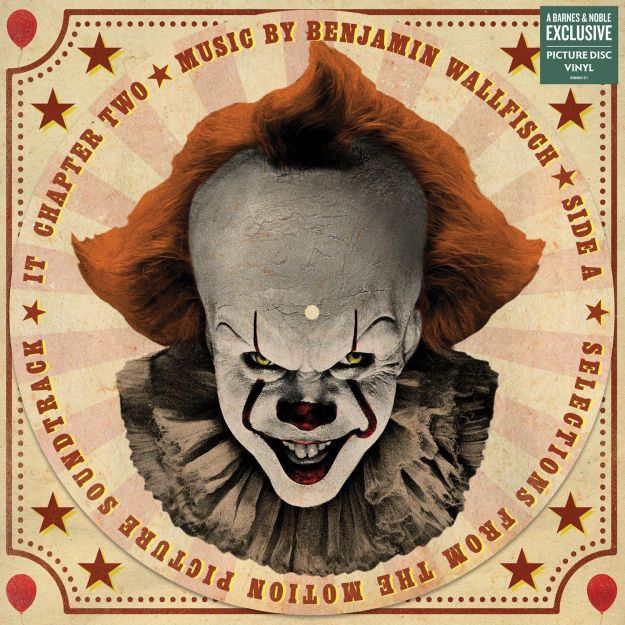
Soundtrack Review: It: Chapter Two (2019)

*note: there may be potential spoilers in the few score cues I mention, so keep that in mind as you read this review

As the thrilling conclusion to It (2017) approaches in a matter of days, the soundtrack for It: Chapter Two has been made available for those who wish to hear it in advance of seeing the film. Benjamin Wallfisch, who also scored the first film, returns to complete the musical story he began telling two years ago. In It: Chapter Two, evil resurfaces in Derry as director Andy Muschietti reunites the Losers Club in a return to where it all began. Twenty-seven years after the Losers Club defeated Pennywise, he has returned to terrorize the town of Derry once more. Now adults, the Losers have long since gone their separate ways. However, people are disappearing again, so Mike, the only one of the group to remain in their hometown, calls the others home. Damaged by the experiences of their past, they must each conquer their deepest fears to destroy Pennywise once and for all…putting them directly in the path of the shape-shifting clown that has become deadlier than ever

Regarding the soundtrack, Wallfisch had quite a lot to say:

Andy [Muschietti] has created such an ambitious and extraordinary movie in IT Chapter Two, with an incredible scope on every level.  One of our earliest discussions for the new score was how we could take what we did for the first movie and give it more scale and ambition – to reflect the scope of the film. To start with, we used a much larger orchestra and choir and also created several new themes; when we occasionally reprise moments from the first score, we re-recorded them with more complex and ambitious arrangements, like the music itself had gone through 27 years of maturing. But the most exciting challenge was how to develop the original themes and create new ones that fit alongside them. There was a lot more music required, which really allowed room for the original themes to develop and evolve in a way driven by the emotional complexity of how The Losers Club grapple with inner demons from the past and painful memories and ultimately unite to confront their biggest fears. Pennywise is even more vengeful and flagrant this time, and the music had to also reflect that increased darkness, whilst never losing sight of the adventure and emotion that are at the core of the movie. It was such a joy to reunite with my good friend Andy Muschietti to help bring this story home – the movie is a true masterpiece from the filmmakers and I’m so honored to have had the opportunity to be involved.

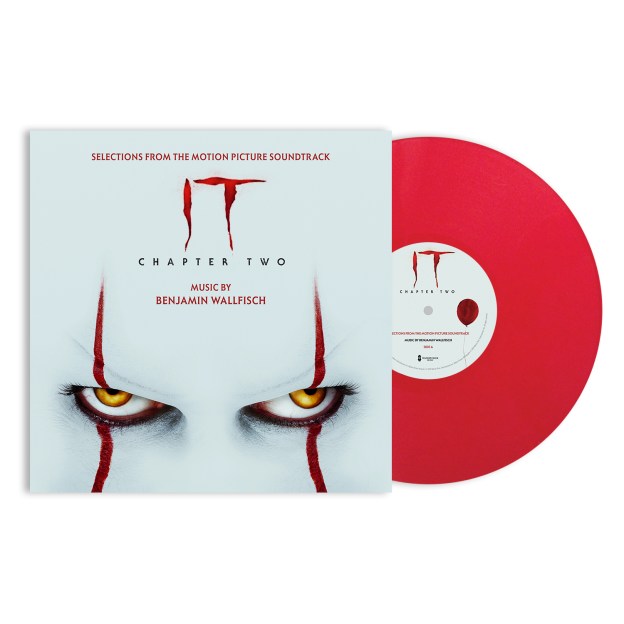
WTM40317_IT_CH2_2LP_FYE_Vinyl_packshot_01.jpg

The soundtrack is, in a word, terrifying. Benjamin Wallfisch had a 100 piece orchestra and a 40 person choir to work with when putting this score together, and I assure you he used it all to great effect. If you follow me on Twitter, you’ll know that as a general rule I avoid most horror films, and the music (if done properly) is a big reason why. Wallfisch has filled the score with “jump” moments, where out of nowhere the music will surge up and almost literally snap at you. You can’t even relax during the “brighter” moments because there’s an undercurrent of tension and fear with almost every piece (“Losers Reunited” being an exception to the rule).

Musical jump scares aside, the part that freaks me out the most about this soundtrack is what Wallfisch has done with the choir (at least, I assume it’s the choir). Throughout the soundtrack, and without warning, there are sections where you hear garbled voices, kind of like if you were listening through a static-filled radio, and the voices all sound like they’re screaming in terror. Sometimes these voices act as their own music, sometimes they come in with music, but it’s without a doubt one of the most terrifying things I’ve heard in a soundtrack this year (and probably in the last few years if I’m honest).

GtYs56zs.jpeg

And another thing that Wallfisch is doing in the soundtrack that really scares me is how he manipulates the violins throughout the score. This is something I’ve heard in a lot of scary movies; it’s a technique where a group of violins plays at their highest register and quickly increases in volume and pitch, ending with an almighty shriek that has you instinctively backing up against the wall, even though you know there’s nothing there (well, at least that’s what it does to me). I can only imaging the visual context for those moments, and given this is a movie with Pennywise in it, I’m afraid to find out the answer.

Benjamin Wallfisch clearly put a lot of work into this score, and if it’s this scary by itself, I shudder to think what it would be like to hear this music with the film it was written to accompany. If you liked the score for the first It, then you will love the music for It: Chapter Two.

Let me know what you think about the soundtrack for It: Chapter Two in the comments below and have a great day!

See also:

Film Soundtracks A-W

Become a Patron of the blog at patreon.com/musicgamer460

Check out the YouTube channel (and consider hitting the subscribe button)

Don’t forget to like Film Music Central on Facebook 🙂

Rik Schaffer (briefly) talks Vampire: The Masquerade-Bloodlines, Soundtrack to release in October

Milan Records, an imprint of Sony Music Masterworks, has announced an original soundtrack recording from Vampire: The Masquerade-Bloodlines will be released on October 25th, 2019 with music by composer Rik Schaffer (Elder Scrolls Online, Dark Age of Camelot). Vampire: The Masquerade-Bloodlines is the 2004 cult classic roleplaying game from Troika Games. Based on the White Wolf tabletop roleplaying game Vampire: The Masquerade, Bloodlines follows a character who is killed and subsequently revived as a fledgling vampire. The game depicts the fledgling’s journey through early 21st-century Los Angeles as they navigate the grimy underworld of vampire politics in the City of Angels.

The soundtrack features previously unreleased music from the first installment of the role-playing video game, which will return for its much-anticipated second installment in 2020. It should be noted that the soundtrack for Bloodlines 2 will also feature music composed by Schaffer.  The vinyl edition of the album will include a digital download card that includes both the entire album as well as eight special bonus tracks not available anywhere else.

9490fa66def4a3237d813a73204b38e9e707199ba7d44db5bc592dea7e788d4d_product_card_v2_mobile_slider_639.jpg

Of the soundtrack for the original Bloodlines, composer Rik Schaffer had this to say:

Of all the games I have scored over my career, Vampire: The Masquerade – Bloodlines was the best because I was given free rein to write music without censor, and drawing from my own life experiences. This is where the best music comes from for an artist.

Fans of Vampire: The Masquerade-Bloodlines, should have plenty to look forward to when the soundtrack releases on October 25th, 2019.

VAMPIRE: THE MASQUERADE – BLOODLINES (ORIGINAL SOUNDTRACK)
CD / Vinyl Tracklisting –
1. Bloodlines Main Theme
2. Hollywood Main Theme
3. Wolf Spirit Map
4. Disturbed Combat
5. Santa Monica Theme
6. Chinatown Theme
7. China Boss Battle
8. Nosferatu Warrens
9. Downtown Theme
10. Disturbed and Twisted
11. Disturbed and Twisted Combat
12. Edward’s Theme
13. Crypts Combat
14. Moldy Old World
15. Dark Asia
16. The Prince’s Dream
17. All That Could Ever Be

Digital Tracklisting –
1. Bloodlines Main Theme
2. Hollywood Main Theme
3. Wolf Spirit Map
4. Disturbed Combat
5. Santa Monica Theme
6. Chinatown Theme
7. China Boss Battle
8. Nosferatu Warrens
9. Downtown Theme
10. Disturbed and Twisted
11. Disturbed and Twisted Combat
12. Edward’s Theme
13. Crypts Combat
14. Moldy Old World
15. Dark Asia
16. The Prince’s Dream
17. All That Could Ever Be
18. Main Theme Aggro Mix
19. Mission Impossible
20. Creepy Ambiance 2
21. Mission Impossible Combat
22. Crypts
23. Sewer Enter Lair

Let me know what you think about the news that a soundtrack for Vampire: The Masquerade-Bloodlines will be releasing this fall, and have a great day!

See also:

Film Soundtracks A-W

Become a Patron of the blog at patreon.com/musicgamer460

Check out the YouTube channel (and consider hitting the subscribe button)

Don’t forget to like Film Music Central on Facebook 🙂


John Lunn talks Downton Abbey, Soundtrack Will Release Next Week

Decca Records/Decca Gold has announced the upcoming release of the Original Motion Picture Soundtrack to the highly-anticipated feature film, Downton Abbey, scored by composer John Lunn. Composed in a similar style to the two-time Emmy Award-winning music from the series, the score is richly orchestrated, with the familiar title theme making an appearance throughout. In a throwback to the ‘Roaring Twenties’, upbeat jazz arrangements appear alongside lavish waltzes, reflecting the popular styles of the day.

The original television series first aired on PBS Masterpiece in the US in 2011 and has enjoyed six critically-acclaimed seasons. Downton Abbey is scheduled for cinematic release on September 13th in the UK, and September 20th in the United States. The film picks up where the story left off in the autumn of 1927, joining Lord and Lady Grantham and the extended Crawley family as they prepare for a visit from the reigning King George V. With a script by Julian Fellowes, original cast members including Hugh Bonneville, Elizabeth McGovern and Dame Maggie Smith star alongside new cast members Imelda Staunton, David Haig and Geraldine James.

Scottish composer John Lunn writes music that possesses a unique voice and spans a wide spectrum of musical styles. He received two Primetime Emmy Awards for his music for Downton Abbey, and two BAFTA nominations in 2012 and 2016. Other recent television work includes The White Queen (Starz), Grantchester (ITV), Shetland (BBC One), The Last Kingdom (BBC Two) and Jamestown (Sky). Lunn received critical acclaim for his scores for three BBC Charles Dickens adaptations: The Mystery of Edwin Drood, Little Dorrit, and Bleak House.

Lunn was the first choice to score the film and recalls when the project was first proposed:

“I was delighted to be approached to create the feature-length film score to a series which has had a huge impact on audiences and fans all over the world. At first it was like discovering a long-lost friend, but gradually I realized that we’d never really been apart; by the end it was just such a joy to revisit this material and have the opportunity to take it to a whole new level.”

Downton Abbey: The Original Motion Picture Soundtrack will be released by Decca Records/Decca Gold on September 13th, 2019.

Tracklist

1. A Royal Command
2. Pillar of the Establishment
3. Gleam and Sparkle
4. God Is a Monarchist
5. Two Households
6. Incident at A Parade
7. Sabotage
8. Maud
9. Honour Restored
10. Never Seen Anything Like It
11. Not Entirely a Bad Night
12. May I?
13. Taking Leave
14. Resolution
15. You Are the Best of Me
16. Sunset Waltz
17. One Hundred Years of Downton

Once it comes out, let me know what you think about the Downton Abbey movie and its soundtrack in the comments below and have a great day!

See also:

Film Soundtracks A-W

Become a Patron of the blog at patreon.com/musicgamer460

Check out the YouTube channel (and consider hitting the subscribe button)

Don’t forget to like Film Music Central on Facebook 🙂

Iconic James Bond Locations Around the World That You Can Visit

James Bond is everyone’s favourite British spy. Since the first film in 1962 Dr. No was aired, the Bond fandom has grown year on year. Now with the release of the 25th film looming and the franchise approaching 60 years of production – we have come to expect a certain level of danger and glamour when it comes to James Bond, including his gambling ways. If you want to be more like Bond, you can find plenty of games to play online at Paddy Power https://games.paddypower.com/

Throughout the years we have seen Bond in numerous glamorous location across the world. From a very long list we have handpicked some of our favourites all around the globe. You can visit these locations and even holiday in some, so be sure to consider them when choosing your next destination!

Screen Shot 2019-09-04 at 5.15.05 PM.png

Thunderball

The locations for the 1965 film are heavily varied, you’ll find some scenes shot in the heart of Buckinghamshire, England and then others in The Bahamas. As one of the first James Bond films, Thunderball has all the glamour and luxury you would expect. 

Head over the Atlantic to the Caribbean where you can take a James Bond Wrecks dive package to discover the remains of Thunderball’s Avro Vulcan Bomber. Be sure to check out Clifton Pier in Nassau Harbour, you can find stunning views from the likes of Largo’s Palmyra Lair. 

Live and Let Die

Another Caribbean location but this time for the 1973 film, Live and Let Die. This time Roger Moore was the man who would get to film in such stunning locations. You can actually stay in the Couples San Souci in Ocho Rios which was a hotel and nightclub in the film. While you holiday in luxury you can explore the other locations on the island including the Green Grotto Caves where Bond took out Doctor Kananga or visit the Louisiana crocodile farm known as Jamaica Swamp Safari Village, where the first owner ran across the top of the crocs for the film’s unforgettable stunt.

For Your Eyes Only

This time the Bond adventures remain in Europe for the 1981 film, For Your Eyes Only. In Corfu, just off the shore of mainland Greece we can find the Achilleion Palace. The casino which is located on the top floor of the palace is in the scenes where Bond intends to meet up with Kristatos and play a game of chemmy, we also see Bond playing Baccarat here against Bunky before dinner. You can visit the Palace via many different organised tours or head to the town of Gastouri and explore it for yourself.

License to Kill 

Timothy Dalton stars as James Bond in this 1989 film, it is one of his two appearances as the British spy. In Key West, Florida, USA we find Dalton filming scenes in the Ernest Hemingway home and museum. Possibly one of the most famous scenes of Dalton’s career is when his character Bond is told his license to kill has been revoked. 

The building was named a historic US landmark in 1968, but to this day still accepts visitors from all around the world. Here you can book weddings and tours or even just discover more about the man himself. Book ahead or simply turn up, the surrounding areas are stunning so there is plenty to do in the local area as well.

The World Is Not Enough

In the more recent film of 1999 we see Pierce Brosnan play James Bond in the 21st film of the franchise. This film has one of the most iconic London scenes in it where we see Bond in a high speed boat chase. If you head to the O2 Arena in London you can stand next to the Thames and witness where the chase took place, as well as ride a cable cart over the river. If you really want to check out the views in London you can book in advance and walk over the O2 Arena.

Skyfall

One of the most recent films with possibly the most personal storyline Bond has ever had is Skyfall. The film reaches into the past of James Bond, with his family and childhood home. Daniel Craig, who plays Bond, travels all over the world in this film, from Macau and Shanghai to the highlands of Scotland.

The Scottish highlands are where we see the depiction of the Bond family home, Skyfall Lodge, although the house and church were actually built for the purpose of the film in Elstead, Surrey England. Much of the films scenic shots were filmed in Scotland, especially that iconic scene with Bond driving up to his family mansion through the valleys of Glencoe. The stunning scenery is the perfect backdrop for the haunting scenes of M dying and Bond reminiscing on the memories of his childhood.

See also:

Become a Patron of the blog at patreon.com/musicgamer460

Check out the YouTube channel (and consider hitting the subscribe button)

Don’t forget to like Film Music Central on Facebook 🙂

Soundtrack Review: Stranger Things 3 (2019)

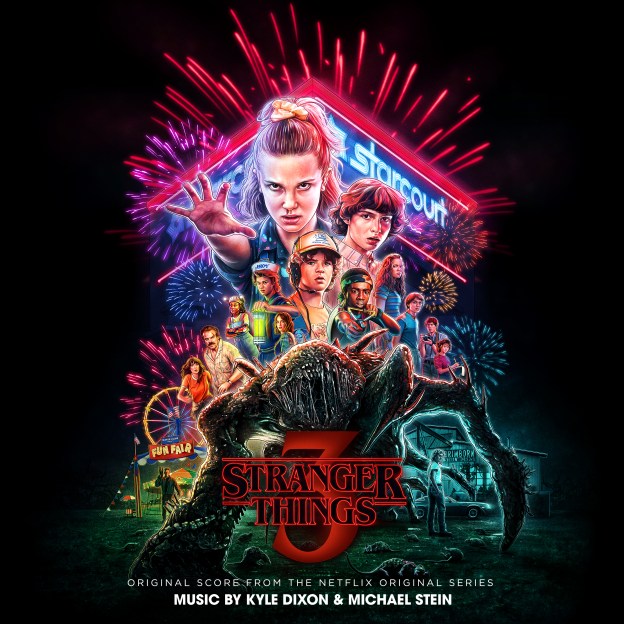
Stranger Things 3 features music by Emmy-winning and two-time Grammy-nominated composers Kyle Dixon and Michael Stein, digitally on June 28. Half of the Austin band      S U R V I V E, Dixon and Stein have been on board with the series since the first season, creating strikingly dynamic music that has become a trademark of the show.  In Season 3 evil has not ended, it has evolved, and the duo has evolved with it as they continue to explore new sonic territory and instrumentation, such as the pop sensibilities and melancholic undertones of 50’s doo-wop, that go beyond the 80’s & 90’s R&B inflections of past seasons. They also return to familiar themes that are elevated by bold stylized reworkings that reflect the growth of the characters and intensity of the new storyline.

With the Season 3 soundtrack, we’ve made an album that doesn’t feel like a ‘score’ necessarily, but one that feels more like a stand-alone record than a collection of brief cues. We’ve incorporated the main narrative elements of the series and stayed true to the original sound while at the same time expanding on our musical palette—we often pushed it to the limit. We’ve really made an effort to curate this album to showcase the moments we think are really special.

stranger-things-season-3-kids-eleven-scrunchie.jpg

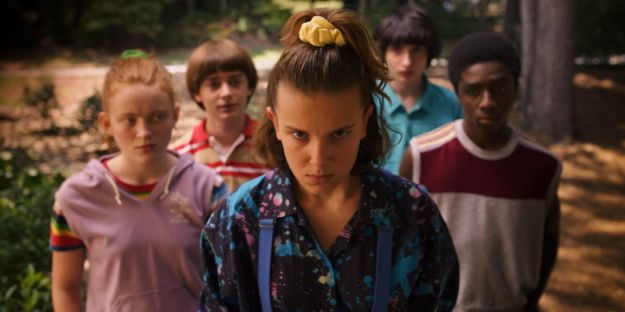
The soundtrack for Stranger Things 3 has indeed evolved from where it was two years ago for Stranger Things 2. While the 80s vibe is definitely constant (not a surprise considering the show has reached 1985), there are also tracks that are much, MUCH darker than anything heard before. For example, “The Week is Long” has a very dark undertone to it, while “Rats” sounds like something out of a 1950s sci-fi film.

In terms of the general 80s vibe though, my favorite track has to be “Starcourt” since the entire piece SCREAMS “this is the 1980s and don’t you forget it.” The synth beats are in full effect, it’s peppy, it’s upbeat, it sounds like it was extracted straight out of that decade and brought to the present. I can also hear the resemblance to a stand-alone record that the composers were going for. The soundtrack does indeed sound like a record or tape from the 1980s that would sit down and listen to (well, for the most part anyway).

If you’ve been a fan of Stranger Things all this time, then you will definitely like the soundtrack for Stranger Things 3. Let me know what you think about Stranger Things 3 and its soundtrack in the comments below and have a great day!

See also:

Soundtrack Review: Stranger Things 2 (2017)

TV Soundtracks

Become a Patron of the blog at patreon.com/musicgamer460

Check out the YouTube channel (and consider hitting the subscribe button)

Don’t forget to like Film Music Central on Facebook 🙂
Soundtrack Review: Lost in Space (2018)

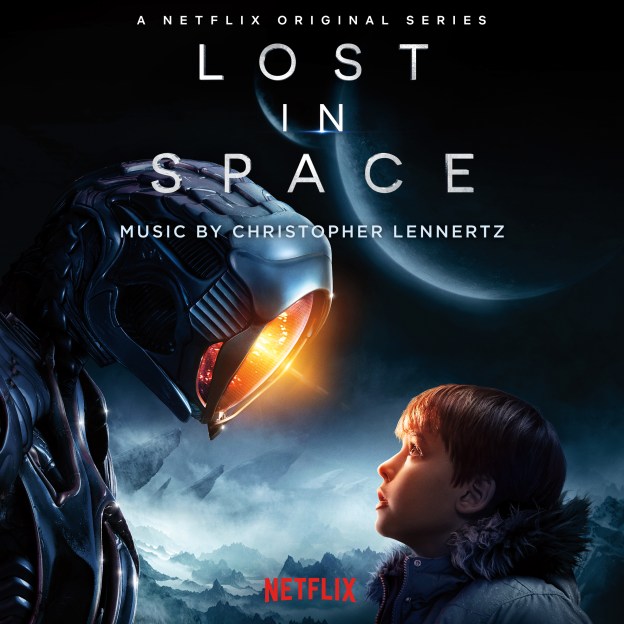
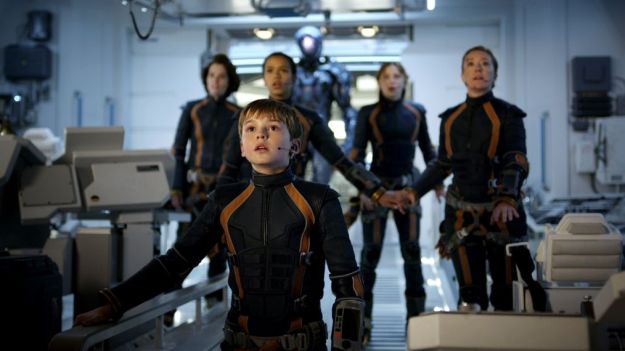
Lost in Space is a Netflix Original dramatic and modern reimagining of the classic 1960’s science fiction series. Set 30 years in the future, colonization in space is now a reality, and the Robinson family is among those tested and selected to make a new life for themselves in a better world. But when the new colonists find themselves abruptly torn off course en route to their new home they must forge new alliances and work together to survive in a dangerous alien environment, lightyears from their original destination. 

Given the impact of the original series, it was very important to approach the musical score in the right way, according to executive producer Zack Estrin:

When we were approaching the score for Lost In Space we knew there was a certain feeling we wanted to create for the viewers,” said Executive Producer Zack Estrin. “Following in the footsteps of the magnificent John Williams, who composed the original iconic series theme, Christopher Lennertz brought to us a vision that fit perfectly. It is full of triumphant brass and soaring strings, where orchestral melody and percussion dance seamlessly from edge of your seat thrills to simple moments of raw emotion.

18-16-4218-1014x570.jpg

Christopher Lennertz was very excited to be a part of this reimagining of the Lost in Space story.

Zack and all the producers wanted the musical language of the title sequence to set up the score for the rest of the story, and hopefully we did just that,” Lennertz explained.  “It’s a big story with family and adventure at the very heart. I tried to be grand and heroic, with a nod to exploration, and a hint of nostalgia. I hope it resonates with fans of the show, both old and new!

The soundtrack itself is a breath of fresh air. It is definitely cast in the mould of John Williams’ style of music, with soaring themes and racing melodies. To me, it genuinely sounds like a callback to a bygone age of composition, and I’m happy to hear that television music like this still exists. The “Main Title,” “Will Exploring” and “Danger Will Robinson” are some of my favorite pieces in the soundtrack. I love how the music feels like it’s literally flying, only to suddenly stop and “skitter” into scary territory with the violins. It’s easy to tell, listening to this music, when something has happened.

I had a lot of fun listening to this soundtrack, and I look forward to hearing more of Christopher Lennertz’s work in the future. I’m also considering checking out Lost in Space, since I’m curious to see a series that has such good music to go with it.

Let me know what you think about Lost in Space (and the soundtrack) in the comments below and have a great day!

See also:

TV Soundtracks

Become a Patron of the blog at patreon.com/musicgamer460

Check out the YouTube channel (and consider hitting the subscribe button)

Don’t forget to like Film Music Central on Facebook 🙂

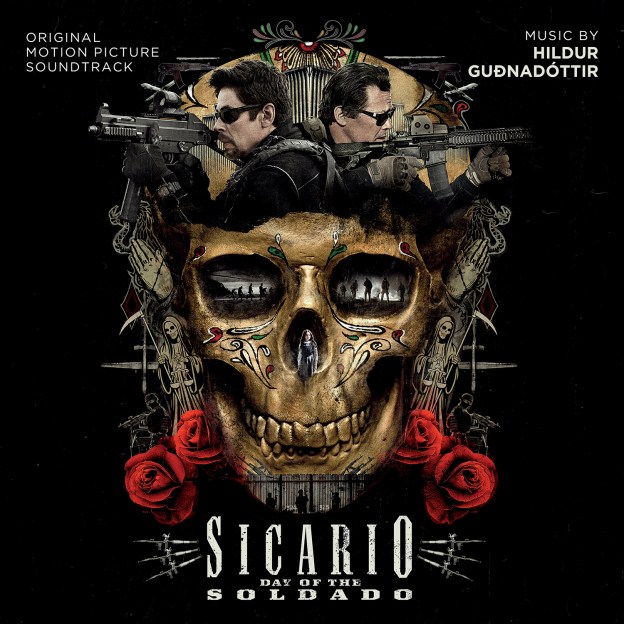
Soundtrack Review: Sicario: Day of the Soldado (2018)

I find the soundtrack of Sicario: Day of the Soldado to be an interesting case. All things being equal, I feel certain that Jóhann Jóhannsson would have returned to score the followup to Sicario, but his untimely death made that impossible. Instead, Hildur Guðnadóttir (who worked with Jóhannsson on the first film) scored the sequel.

Hildur Guðnadóttir is an Icelandic cello player, composer and singer who has manifested herself at the forefront of experimental pop and contemporary music (e.g. with the band Múm). In her solo works she draws out a broad spectrum of sounds from her instrument, ranging from intimate simplicity to huge soundscapes. Her career as a film composer is soaring, having recently scored HBO’s limited series, Chernobyl.

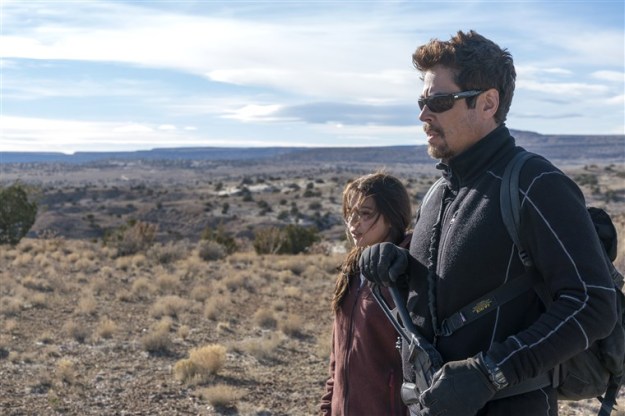
180629-sicario-2-ac-1059p_3db53cba4f4b4669fd18a8e8fac0464d.fit-760w.jpg

Regarding the soundtrack for Sicario: Day of the Soldado, Guðnadóttir had this to say:

I think SOLDADO is more emotional than the previous film, and the score follows that direction. This one is a bit more of a ‘classical’ score, with musical themes that follow certain emotional landscapes. That is something that was important to Stefano [Sollima, director],” Guðnadóttir explained that Sicario: Day of the Soldado has “a bit of a different feel as a score because the function of it is different. That is also a direction that was important to Stefano. He was also very vocal about the fact that he did not want to recreate the Sicario soundtrack, so he often wanted to go in very different directions from Sicario.

With all due respect, I feel inclined to disagree with the above statement. Having listened to the soundtrack, this score feels very similar to the original Sicario, and I confess I didn’t get the feeling of a classical score. However, I actually don’t mind the similarities to the original score, because I felt a great sense of musical continuity listening to the soundtrack. As with the first Sicario, the music was simple, concise, reflecting the tension and angst that both of these films are known for. The music is very “lean” which is totally appropriate for this kind of film. In a film like Sicario: Day of the Soldado, a lush orchestral score would feel totally out of place. This is a story dominated by violence and the “kill or be killed” mentality. Everything is stripped down to the bare minimum, including the music, and I really like that because of how well it fits.

Perhaps I’ve misinterpreted the score (it has been a while since I watched the first Sicario), but that’s my impression of the score for Sicario: Day of the Soldado. Please don’t misunderstand, I enjoy listening to it very much, and I feel that it is very much in line with the score for the original Sicario. If there are musical departures, I’m simply not noticing them.

Let me know what you think of Sicario: Day of the Soldado and the soundtrack in the comments below and have a great day!

See also:

My thoughts on: Sicario (2015)

Film Soundtracks A-W

Become a Patron of the blog at patreon.com/musicgamer460

Check out the YouTube channel (and consider hitting the subscribe button)

Don’t forget to like Film Music Central on Facebook 🙂
 

Soundtrack Review: Dora and the Lost City of Gold (2019)

There’s a part of me that still can’t believe that a live-action movie based on Dora the Explorer exists, and yet, there it is. I’ve largely felt ambivalent about Dora and the Lost City of Gold ever since it was announced, but that’s probably due in large part to the fact that I was far too old for the Dora cartoon when it first came out in 2000, so I don’t have that connection to it that younger adults (not to mention children) might have. That being said, I couldn’t turn down the opportunity to check out the film’s soundtrack, which was co-composed by John Debney and Germaine Franco.

Debney is well known in the film music world, composing music for The Princess Diaries, Sin City, Liar Liar, Spy Kids, No Strings Attached, The Emperor’s New Groove, I Know What You Did Last Summer and Hocus Pocus, just to name a few. I admit that Germaine Franco is less well-know to me personally, but her resume is also impressive. She is the first female composer to be hired by DreamWorks Animation and Pixar and is a Sundance Music Sound Design Fellow. She previously scored the feature film Little for Universal Pictures with Tina Gordon Chism, which was released in theaters in April 2019, as well as working on Tag and Life-Size 2.

v1.bjsyMjkwODk4O2o7MTgyMDY7MTIwMDsyNjkyOzIwMTk

As for the soundtrack itself, it’s pretty enjoyable to listen to for the most part. Any score that has John Debney involved is going to have some good music in it, and the soundtrack is full of a number of these, one of my favorites being “Camino Real de Parapata.” On the other hand, there are a few tracks that are clearly meant to pay homage to the music of the Dora the Explorer cartoons, and these, for me, clash terribly with the rest of the soundtrack. I understand wanting to pay homage, but those musical moments aren’t my favorite compared to the more orchestral segments.

As good as the music sounds (for the most part), this soundtrack didn’t really resonate with me the way others have. As mentioned earlier, I think that’s partially because I don’t have a prior connection to Dora the Explorer to help me connect to the music. I do appreciate the work that went into the orchestral segments. They do a good job of creating a feeling of action, that sense of a chase that helps the music and the film bind more closely together. My conclusion is this soundtrack is good, but not mind-blowing.

Let me know what you think about Dora and the Lost City of Gold (and the soundtrack) in the comments below and have a great day!

See also:

Film Soundtracks A-W

Become a Patron of the blog at patreon.com/musicgamer460

Check out the YouTube channel (and consider hitting the subscribe button)

Don’t forget to like Film Music Central on Facebook 🙂