In 2002 MGM released the war film Windtalkers, based on the true story of the Navajo Code Talkers, who used a code based on the Navajo language to send encoded transmissions that the Japanese couldn’t understand or decode as they had no direct knowledge of the Navajo language. The film follows two code talkers, Pvt. Ben Yahzee and Pvt. Charlie Whitehorse, and their “chaperones,” Sgt. Enders and Sgt. Henderson, who are ordered to protect these Navajo soldiers with their lives (as only a handful of people know how to use the code).
Though the Japanese tried many times, they were never able to break the code. In fact, due to evidence that the Japanese are brutally torturing any Navajo soldiers they can capture in order to get the code, Enders and Henderson are given particular orders that they are to kill their respective “windtalker” if they are in danger of being captured by the enemy. Enders is later forced to kill Whitehorse with a grenade when he sees the Japanese capturing him (Whitehorse himself gives a stiff nod when he sees Enders preparing the grenade, signalling that he knows what must be done and he is prepared to die).
The score for this film was created by the late James Horner, and the clip above is part interview and part scoring session, showing Horner at work in the recording studio. As beautiful as the music sounds, it’s a shame that the film wasn’t better received at the box office (I don’t think having Nicolas Cage as the main star helped much). This just reinforces the sad truth that a film can have a beautiful score but still be ruined by other factors, the biggest of which being that the titular “windtalkers” were relegated to secondary character status, despite being pivotal to the plot.
Having just finished the James Horner blogathon, I still had his music very much on my mind, and I was glad I could find another recording of the composer at work (there aren’t as many out there as you might think). I hope you enjoy watching and listening.
I have a confession to make: I have never seen Frozen in its entirety. At the time the film came out, I was buried head over heels in graduate studies and barely had time to notice the film’s release, let alone go see it in the theater. Two years after this hit film became a phenomenon, I finally decided to check out clips of the film online, which is how I (finally) discovered “Let it Go.”
“Let it Go” is also known as the Disney song that little girls and boys have been obsessed with for nearly three years and counting. It’s true that “Let it Go” is one of those songs that can easily get stuck inside your head, but it remains a beautiful song regardless.
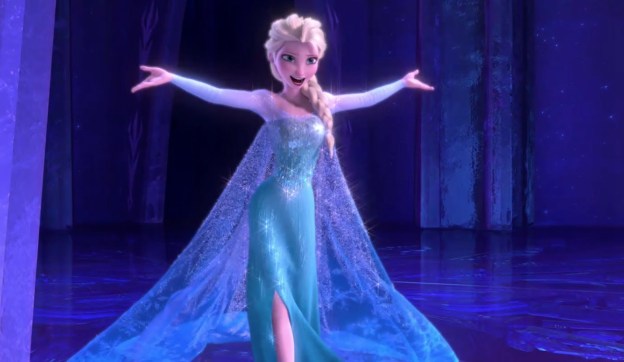
To set up the context, “Let it Go” takes place after Queen Elsa has accidentally revealed her ice powers to the people of Arendelle (her kingdom, or queendom I supposed I should say). Embarrassed and humiliated, Elsa flees the city, causing a deep winter to fall as she does so. Now wandering alone in the mountains, Elsa decides that she is sick and tired of hiding who she truly is and lets her powers loose.
The snow glows white on the mountain tonight Not a footprint to be seen A kingdom of isolation, and it looks like I’m the Queen The wind is howling like this swirling storm inside Couldn’t keep it in, Heaven knows I tried
Don’t let them in, don’t let them see Be the good girl you always have to be Conceal, don’t feel, don’t let them know Well, now they know!
Let it go! Let it go! Can’t hold it back anymore! Let it go! Let it go! Turn away and slam the door! I don’t care what they’re going to say! Let the storm rage on The cold never bothered me anyway
Before this song was created, Elsa was going to be the villain of this story. I believe it was going to be along the lines of Anna was the good sister and Elsa became evil, or always was evil, something like that. However, after songwriters Kristen Anderson-Lopez and Robert Lopez created the song and brought it to Disney, the writers looked at each other and said “We can’t make Elsa a villain now, not with a song like this!” So the story was changed.
It’s funny how some distance makes everything seem small And the fears that once controlled me can’t get to me at all!
It’s time to see what I can do To test the limits and break through No right, no wrong, no rules for me I’m free!
Let it go! Let it go! I’m one with the wind and sky Let it go! Let it go! You’ll never see me cry Here I stand, and here I stay! Let the storm rage on
It’s fascinating to watch how quickly Elsa’s powers expand in scope. She goes from creating whisps of snow and ice, to creating a snowman (Olaf), to a stairway of ice, and finally, the ice castle. With each successful creation, you can see confidence (and joy) growing in Elsa’s face. At last she is free to use her powers without anyone to tell her she can’t. And really, the song is only “sad” for the first verse, starting with verse two “It’s funny how some distance…” the background music becomes happy, and almost playful, matching Elsa’s rising spirits.
My power flurries through the air into the ground My soul is spiraling in frozen fractals all around! And one thought crystallizes like an icy blast! I’m never going back, the past is in the past!
Let it go! Let it go! And I’ll rise like the break of dawn Let it go! Let it go! That perfect girl is gone! Here I stand in the light of day! Let the storm rage on!!! The cold never bothered me anyway
Once the stairway is created, the tempo really begins to pick up and the scene quickly changes to the creation of the castle, beginning with that giant snowflake rapidly spreading over the ground below Elsa. And then, as Elsa raises her arms, the camera cuts back to show this HUGE ice palace rising from the ground; that moment is pure Disney magic!! Watching the palace complete itself, I felt like a little kid again after watching Cinderella’s gown appear for the first time. Disney doesn’t always succeed in creating these moments, but when they do, they really do! After her palace is finished, Elsa has one last change to make: she manipulates her powers to create a brand new dress after literally letting her hair down and proclaims an eternal winter from the completed stronghold of ice.
I am a huge fan of Idina Menzel by the way (I’ve listened to RENT and Wicked hundreds of times each), and she absolutely slays this song with her awesome voice. She actually auditioned for the role of Rapunzel in Tangled (2010) and while she didn’t get it, Disney remembered her and looked Idina up when Frozen was in pre-production.
It’s not surprising that Frozen is receiving a sequel and this time I will make sure to watch it in the theater.
That’s all I have for “Let it Go,” the song is so amazing that it really speaks for itself as to how brilliant it is. I hope you enjoy listening to it!
Wow! I can’t believe the Remembering James Horner Blogathon is already here! I’ve seen some great posts so far, here is a recap of Day One:
Film Music Central (that’s me!) talks about Horner’s amazing work for Star Trek II: The Wrath of Khan (1982) , this film is considered James Horner’s big break into Hollywood.
The Cinematic Frontier reviews the Ron Howard-directed fantasy film Willow (1988), featuring a memorable score by James Horner
Movierob looks at The Perfect Storm (2000) and samples some of James Horner’s pieces from that film
Christina Wehner looks at the ever poignant Cocoon (1985) , the first collaboration between director Ron Howard and James Horner
Rhyme and Reason gives an interesting review of For Greater Glory (Cristiada) (2012), featuring one of Horner’s much later scores. I honestly hadn’t heard of this one, but I’m sure the music was spectacular.
Last but not least, Riley Central looks at the majesty of Braveheart (1995)
More will be added as they come, but it’s been a great blogathon so far! Thank you so much for participating and making this so much fun! See you on day 2 and day 3! -Bex
*This is part of the Remembering James Horner blogathon to remember the late composer James Horner (1953-2015)
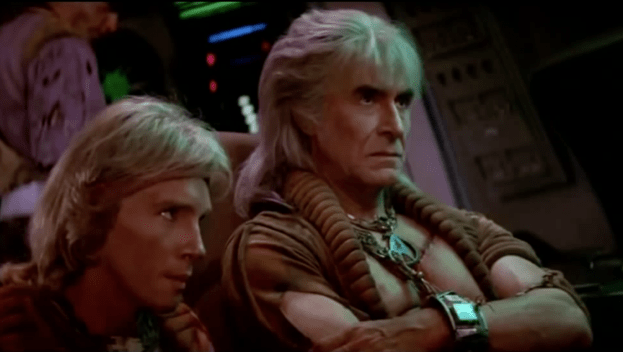
Star Trek II: The Wrath of Khan is (rightly) regarded as one of the best, if not THE best Star Trek film ever created. The film continues a story told in the Original Series episode “Space Seed” and brings back the villain Khan Noonien Singh (as played by Ricardo Montalban) to face off with Kirk and his crew once more.
Given how Star Trek: The Motion Picture suffered at the box office, Paramount greatly reduced the budget for the sequel and removed series creator Gene Roddenberry from the active production process. The music for the first film had been scored by Jerry Goldsmith, but with less money in the budget, he was no longer available. Nor was the second choice, Miklos Rozsa for that matter (though it would have been interesting to hear him score a Star Trek film). James Horner (who was only 28 at the time) was ultimately chosen because his demo music stood out from the group; this was Horner’s first big break into major motion pictures (his first credits after leaving film school begin in 1980). Horner stated once that the producers wanted a completely different score than what Goldsmith had given for The Motion Picture; it couldn’t be John Williams-like, but it still had to be different: more modern, more nautical. Horner did his best to oblige and the results are unforgettable.
In place of the grand theme created by Jerry Goldsmith for the first film, Horner created an entirely original theme and overture first heard in the opening credits of the film. This theme is repeated as the Enterprise leaves Spacedock (a theme I briefly discussed in the “Enterprise Clears Moorings” post below). What I love about this piece is the way the music audibly “ripples” as it builds to the climactic sounding of the main theme. I could literally visualize Horner conducting this music, and at times, I like to pretend that I’m conducting it as well. There’s a huge swelling of enthusiasm that wells up as the music grows and grows; which makes sense since the Enterprise is currently full of young cadets who have never been on a major space voyage before.
Another theme from this film that I love is “Surprise Attack” (originally covered in the post linked below). Horner related in several interviews that he created Khan’s musical theme to reflect the villain’s increasingly unstable mental state. For over fifteen years, Khan has obsessed over getting revenge on James Kirk, and now that he has his prey in sight, nothing and no one is going to stand in his way. “Surprise Attack” takes place when the Enterprise is being approached by the U.S.S. Reliant (which has been hijacked by Khan and his followers). From the opening notes, this theme is full of tension, created by contrasting Khan’s theme with that of the Enterprise (in a sense this could be considered Kirk’s theme as well). Khan’s theme is full of tension, rage and a thirst for war (lots of drumbeats and high shrilly strings and woodwinds), while the Enterprise/Kirk theme is dominated by lower, calmer strings and minimal percussion. Horner knew that in the upcoming battle scenes it would be vital to have two themes that were noticeably different from each other, to make it easier for the audience to keep up with which ship they were seeing (since there would be some very fast scene changes).
James Horner’s theme for Spock is also extremely beautiful and simple at the same time. It was created using a glass instrument that is something of a bowl and a chime, put together (think of how a crystal goblet will ring if you fill it with water and rub your finger on the rim). The theme highlights Spock’s devotion to Vulcan logic with it’s simplicity, there is not one note out of place. It is just the sort of music you might expect to find for a Vulcan. After Leonard Nimoy’s death, and again after Horner passed away, I played this theme several times a day for several days, as a way of saying goodbye to them both.
Another theme that always tugs at my heartstrings is the conclusion of the “Genesis Countdown” (probably the last two minutes of the piece), which takes place when the crew is observing the formation of the Genesis Planet, unaware that Spock has given his life to save the ship. The moment when Kirk races down to Engineering (because deep down he KNOWS what has happened, even though McCoy won’t tell him) always makes my heart hurt, because I think we can all imagine the horror of that moment: racing down to find our closest, dearest friend, whoever that may be, already dead or nearly dead, and there’s nothing we can do to stop it. This moment remains one of the most iconic in Star Trek history, because this is SPOCK we’re talking about, one of the most important characters in the series. Typically, there’s an unwritten rule that says these major characters never die; to see this happen sent shock waves through the Star Trek Universe. Actually, Spock’s death was originally going to happen at the beginning of the film, but news of this leaked out so to preserve the surprise it was switched to the end of the film. I know that after Nimoy’s death, viewership of this scene spiked, because so many people associated Nimoy with Spock, that it seemed like a good way to say goodbye. I did a similar thing when James Horner passed away. I didn’t just listen to the Spock theme, and various other themes, I also listened to this part as well, because in my mind, I needed to let the pain of Horner’s untimely death go (film composers mean a great deal to me).
I could keep going about James Horner and Star Trek II for thousands of more words, but I think this will do. I will say that I highly recommend the full soundtrack of this film to anyone who has not heard it before. The entire soundtrack can be found on YouTube, so if you have a spare afternoon or evening one weekend, give it a try, you will not be disappointed. And if you’ve never seen The Wrath of Khan, definitely give that film a look as well, you won’t be disappointed.
We lost James Horner over a year ago, and I don’t believe the void he left will ever be truly filled. But remembering him in this blogathon was the best way I could think of to honor his legacy, and I think that if he were here he would like that very much. James Horner, you are truly missed. Keep making music up in Heaven!
*The Remembering James Horner Blogathon has begun today! Several great posts have already appeared and I’m excited to see what the rest of the weekend will bring. Thanks again for contributing, this means a lot to me. -Bex
Hercules was Disney’s take on the legendary demi-god of Greek myth. Originally the son of Zeus and a mortal woman, Hercules is now presented as a full god, the son of Zeus and Hera. Unfortunately, his godhood is short-lived, as the jealous Hades (who secretly wants to overthrow Zeus, go figure), having been informed that a grown Hercules would ruin his plans, decides to have the baby god turned mortal and then killed. Thankfully, his (un)reliable henchmen Pain and Panic botch the job and thus Hercules grows up as an awkward mortal with incredible strength.
But before we get to all of that, there’s a short prologue that begins in what appears to be an old museum filled with the relics of Ancient Greece. The narrator should sound familiar: that’s the legendary Charlton Heston in one of his final roles before he retired from acting in 2003.
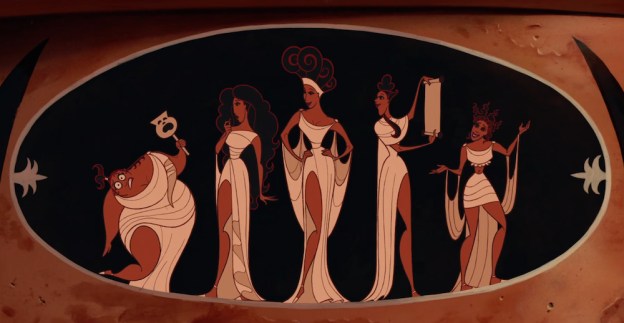
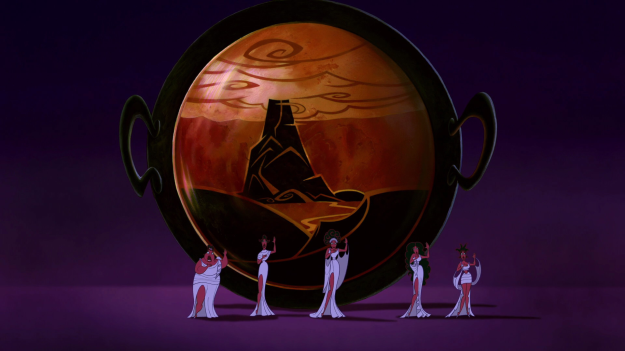
There are actually nine Muses in Greek mythology, but I’m guessing that the animators wanted to simplify things and cut the number down to five.
With Heston’s voice, the first section of the prologue has a very serious tone until…the Muses (on the Greek vase) interrupt him and inform him that “we’ll take it from here darling.” After that, the entire feel of the prologue changes from serious to…well, a “Disney” feel.
Back when the world was new The planet Earth was down on its luck And everywhere gigantic brutes called Titans ran amok
It was a nasty place There was a mess wherever you stepped Where chaos reigned and earthquakes and volcanoes never slept
And then along came Zeus He hurled his thunderbolt (He zapped) Locked those suckers in a vault (They’re trapped) And on his own stopped chaos in its tracks And that’s the gospel truth The guy was too type “A” to just relax
And that’s the world’s first dish Zeus tamed the globe while still in his youth Though, honey, it may seem impossible That’s the gospel truth On Mt. Olympus life was neat and smooth as sweet vermouth Though, honey, it may seem impossible That’s the gospel truth
“Gospel Truth” serves multiple purposes: It introduces the Muses (who narrate various portions of the film), it summarizes how Zeus came into power (by defeating the Titans and imprisoning them) and finally it describes how all the gods live on Mount Olympus. The picture then shifts from a painted image of Mount Olympus to a “live” image that quickly zooms the audience up to the fantastic dwelling of the Greek gods.
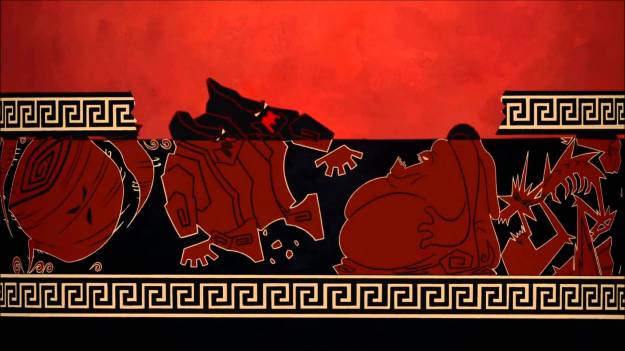
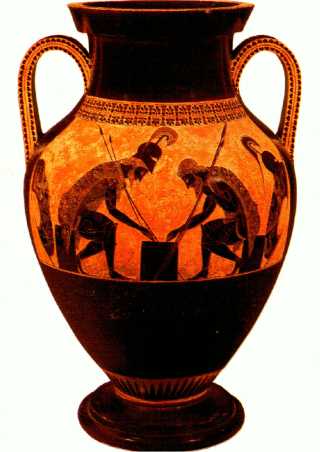
I love this song a lot. Given that this is a film about Ancient Greece, you would not expect to hear songs performed in the “Gospel” style, but it works! It gets a lot of story exposition across without boring the audience. I also love how the song is narrated through art “come to life” that’s done in the style of actual Greek pottery.
Art like this inspired the animators
Trivia Time!
After the dark tone presented in The Hunchback of Notre Dame (1996), the studio practically demanded that the next film be lighter and happier, and so that’s why Hercules is filled with so many comedic moments.
James Woods (the voice of Hades) allegedly enjoyed playing the character so much that he and Disney put a standing arrangement in place where anytime they needed him to voice the character, he would come do it.
Rip Torn (the voice of Zeus) was married to Geraldine Page, who voiced Madame Medusa in The Rescuers (1977).
And that’s my look at the beginning of Disney’s Hercules! Let me know your thoughts about this awesome song in the comments below!
*all images are the property of Walt Disney Studios
Disney villains have come in many different varieties over the years. Some have been downright scary (The Horned King from The Black Cauldron (1985) comes to mind), some have been rather funny (Captain Hook from Peter Pan (1953) is one of those) and then there’s Ursula from The Little Mermaid (1989): she has moments of humor combined with moments of extreme scariness and pure evil. All of which is showcased in her song “Poor Unfortunate Souls.” This song was created by Alan Menken and Howard Ashman.
The setup is simple: After seeing her precious grotto destroyed by her father, King Triton, Ariel is persuaded to visit “the sea witch” Ursula, because (according to her eel minions Flotsam and Jetsam), she can give Ariel what she wants: the ability to get to Prince Eric. Extremely bitter for what her father did, Ariel agrees to go (much to the horror of Sebastian and Flounder, who follow along to see what will happen).
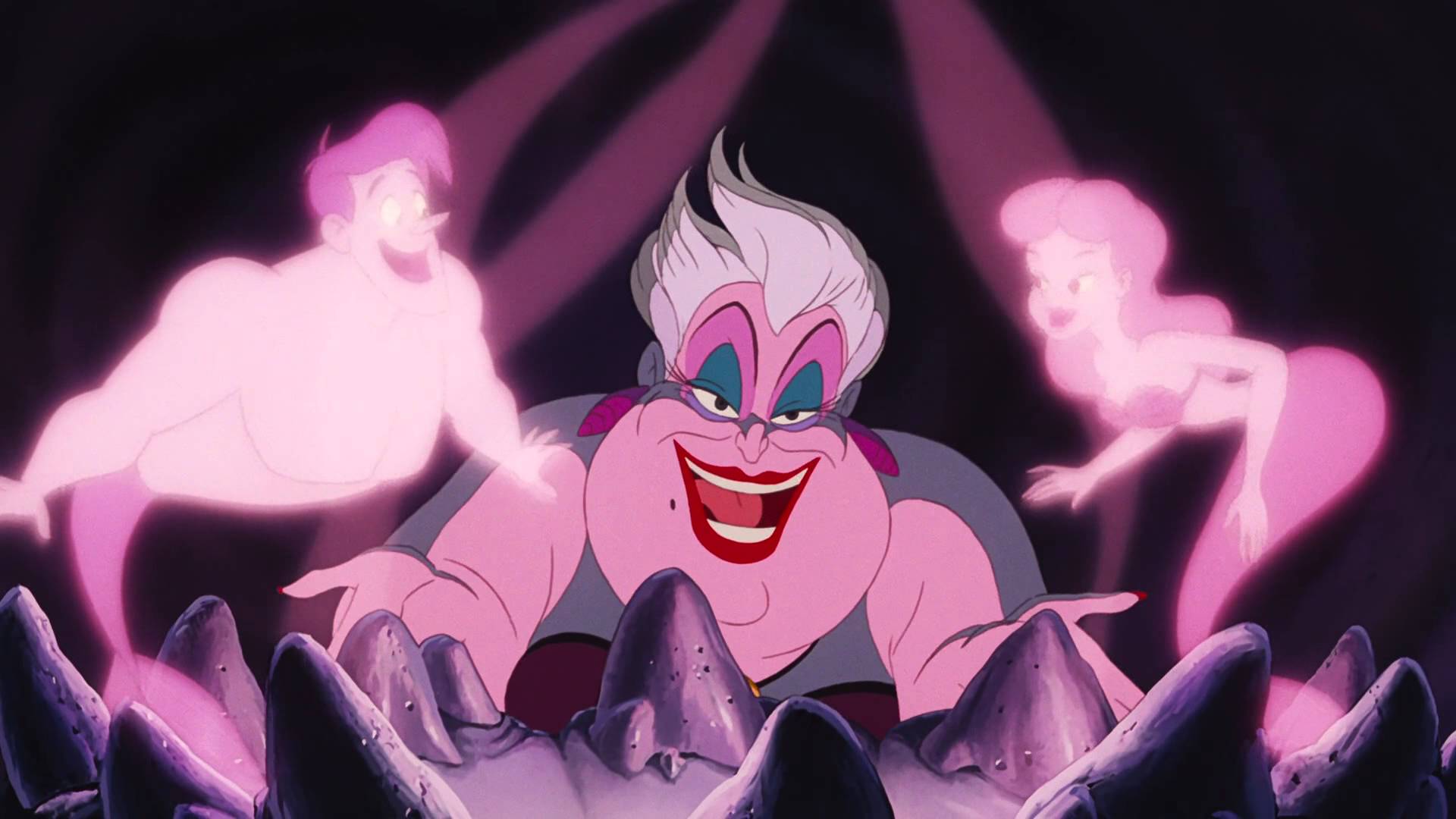
Ursula lives far away from the city of Atlantica in a cave/reef that looks reminiscent of dinosaur bones. The sea witch herself is not, as many believe, half octopus. If you count her tentacles, you’ll see she has only six, which would make her half-squid (it was done this way on purpose because six tentacles were easier to animate than eight).
The witch assures Ariel that she can give the little mermaid exactly what she wants…for a price of course. As the song begins, she explains that the only way Ariel can get Prince Eric is to become a human herself.
My dear, sweet child, that’s what I do It’s what I live for To help unfortunate merfolk like yourself Poor souls with no one else to turn to
I admit that in the past I’ve been a nasty They weren’t kidding when they called me, well, a witch But you’ll find that nowadays I’ve mended all my ways Repented, seen the light, and made a switch True? Yes
And I fortunately know a little magic It’s a talent that I always have possessed And here lately, please don’t laugh I use it on behalf Of the miserable, the lonely, and depressed (Pathetic)
Poor unfortunate souls In pain, in need This one longing to be thinner That one wants to get the girl And do I help them? Yes, indeed Those poor unfortunate souls So sad, so true They come flocking to my cauldron Crying, “Spells, Ursula, please!” And I help them Yes I do
I really love “Poor Unfortunate Souls.” Pat Carroll delivers a thrilling performance as the villain-disguised-as-helper to “those poor unfortunate souls.” As Ursula tells it, she USED to be a bad person, but now she’s turned her life around and spends all her time helping less fortunate merfolk by giving them their heart’s desires.
Of course, “once or twice” these poor merpeople couldn’t pay her price so she “had to rake ’em cross the coals” (i.e. she turned them into those seaweed creatures trapped at the entrance of her home) but other than that she’s this great do-gooder. (Actually, I think Ursula can’t possibly have cheated EVERYONE she’s helped, because if everyone who went to see her disappeared, people still wouldn’t be going).
what IS it with Disney villains and the scary eyes!!??
Now it’s happened once or twice Someone couldn’t pay the price And I’m afraid I had to rake ’em ‘cross the coals Yes I’ve had the odd complaint But on the whole I’ve been a saint To those poor unfortunate souls
I’m not asking much, just a token really, a trifle What I want from you is your voice But without my voice, how can I- You’ll have your looks, your pretty face And don’t underestimate the importance of body language, ha!
The men up there don’t like a lot of blabber They think a girl who gossips is a bore Yes on land it’s much preferred for ladies not to say a word And after all dear, what is idle prattle for? Come on, they’re not all that impressed with conversation True gentlemen avoid it when they can
But they dote and swoon and fawn On a lady who’s withdrawn It’s she who holds her tongue who gets a man
Come on you poor unfortunate soul Go ahead Make your choice I’m a very busy woman and I haven’t got all day It won’t cost much Just your voice!
You poor unfortunate soul It’s sad but true If you want to cross the bridge, my sweet You’ve got the pay the toll Take a gulp and take a breath And go ahead and sign the scroll Flotsam, Jetsam, now I’ve got her, boys The boss is on a roll This poor unfortunate soul!
Ariel is very tempted by all of this, and her lingering concerns over never seeing her family again are quickly brushed over by Ursula because in return she says “you’ll have your man.” Of course, there’s still the matter of payment, and Ursula really isn’t asking all that much. All she wants from Ariel is…her voice! Now, that doesn’t sound like too much, but keep in mind part of what made Prince Eric fall in love with Ariel at first sight was that song she was singing to him. Without her voice, how is Eric going to know it’s really her? Ariel is wondering the same thing, but Ursula again brushes this off, saying that all Ariel needs is some “body language” and she’ll be fine, because women aren’t expected to talk on the surface anyways (it’s a total lie, but Ariel doesn’t know that).
Beluga sevruga Come winds of the Caspian Sea Larengix glaucitis Et max laryngitis La voce to me
Now, sing Aa-aa-aah, a-aa-aah Keep singing! Aa-aa-aah, a-aa-aah
Oh yes, there is one other detail. Once Ariel is made human, she will have three days to get Prince Eric to give her “the kiss of true love.” If this happens, the transformation will be permanent, but if not, then Ariel will turn back into a mermaid and belong to Ursula forever! (Talk about killer fine print!)
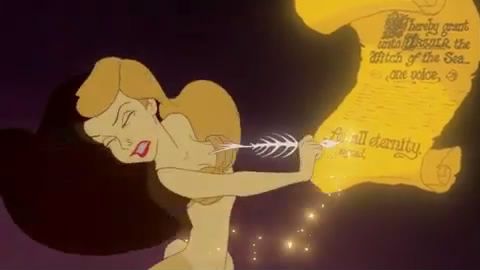
A contract magically appears, wherein Ariel would grant Ursula her voice “for all eternity.” To Ursula’s delight, Ariel signs the contract and the deal is done! Now comes my favorite part, the transformation! Ursula sings/chants this powerful spell that sends chills down my spine. As she finishes, a pair of ghostly hands appears and she commands Ariel to sing. And as the little mermaid sings, the hands come closer and ease Ariel’s voice out of her and into Ursula’s magical shell. With payment granted, Ariel is seized and given a pair of human legs (all the while Ursula laughs maniacally, because in her mind Ariel is as good as hers, you know she has no intention of letting that “kiss of true love” happen). Of course, now that she’s human, Ariel can’t breathe underwater anymore, so it’s up to Sebastian and Flounder to race her to the surface.
Trivia Time!
Ursula herself was based on the appearance of a drag queen named Divine (1945-1988).
There were originally a few lines inserted to insinuate that Ursula was King Triton’s sister (and therefore Ariel’s aunt) but this was deemed one subplot too many and the lines were removed.
During the recording, Pat Carroll adlibbed a few words throughout the song (I know her use of “pathetic” early on is a definite adlib), and Menken and Ashman liked her rendition so much that they kept it as is.
And that’s “Poor Unfortunate Souls,” definitely my favorite song from The Little Mermaid. I hope you enjoyed reading about it and listening to it 🙂
At the conclusion of the reprise of “Prince Ali”, Aladdin, Abu and the magic carpet were whisked away to the ends of the Earth via a palace tower turned rocket. There, lost in the frozen wilderness, Aladdin finally comes to understand that a lot of this happened because he didn’t tell Jasmine the truth about who he really was. Vowing to set things right, he and Abu free the magic carpet from underneath the tower (which nearly crushes them in the process) and begin the race back to Agrabah.
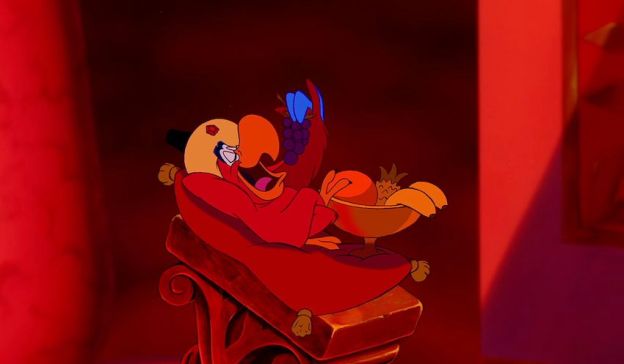
And speaking of Agrabah, it seems that Jafar has been thoroughly enjoying himself. The elephant throne has been replaced by a cobra. The room itself is filled with huge piles of treasure; Jasmine is wearing a red version of her usual outfit (while chained) and Iago is having the time of his life stuffing the Sultan’s face with crackers (Iago had hated how the Sultan always made him eat crackers).
Now here’s the crazy thing: Jafar literally has anything anyone could possibly want: he’s the Sultan, he’s the most powerful sorcerer EVER, he has more wealth than he could spend in a lifetime, a lovely Princess at his beck and call, but is that enough for him? NOPE! He still has one wish left to use: he wants the Genie to make Jasmine fall in love with him (Jafar). The Genie tries to explain (as he did with Aladdin) that there are certain things a Genie can’t do, but Jafar won’t listen. While the two are arguing, Jasmine spots Aladdin behind a curtain trying to sneak up on the lamp so he can get it back. Knowing a distraction is required, Jasmine puts on the performance of a lifetime and pretends that the Genie really has made her fall in love with him. Jafar is (disgustingly) thrilled and while Jasmine flatters him to the moon, Aladdin sneaks closer and closer, when suddenly a gagged-by-Abu Iago (who has already spotted Aladdin) knocks over a fruit dish! Jafar turns to see where the noise is coming from but Jasmine pulls him back with a kiss! (YUCK!!!) It nearly works too, except Jafar then sees Aladdin reflected in Jasmine’s tiara!!!
Now the final battle begins, and suffice to say, Aladdin is heavily outmatched. Jafar begins to systematically destroy all of is friends: the magic carpet is unwound, Abu is turned into a toy monkey and Jasmine is trapped in a rapidly filling hourglass. It’s a race for Aladdin to get the lamp and free Jasmine, but things are about to get a lot more difficult.
When Jafar continues to hold Aladdin off via his sorcery, the ex-Prince shouts “Aren’t you brave enough to fight me yourself, you cowardly snake!” Aladdin really shouldn’t have used the word snake, because Jafar decides to answer Aladdin with “A snake am I?Perhaps you’ll see how snake-like I can be!” while he turns into a gigantic cobra!! While in this form, Aladdin does get a few strikes in, but it’s not long before Jafar has Aladdin wrapped firmly in his coils.Everything has come to a head: Jasmine is moments away from being buried alive, none of Aladdin’s friends can help him, not even the Genie…or can he? Aladdin has one last gamble and it’s a big one:
Aladdin: The Genie, The genie! The Genie has more power than you’ll ever have!
Jafar: What?
Aladdin: He GAVE you your power, he can TAKE it back! Face it Jafar, you’re STILL just second best!
Based on Jafar’s dialogue about power, Aladdin has figured out that Jafar is obsessed with becoming the most powerful there ever was, he can’t live with the idea that something somewhere is more powerful than he! So, he plays on the fact that the Genie possesses more power than Jafar does: this IS true, but what Aladdin is leaving out is the fact that a Genie’s near omnipotent power is always constrained by a lamp. Completely unaware of this, Jafar uses his final wish: to become an all-powerful Genie! This done, Jafar transforms into a terrifyingly huge red genie, all the power he ever wanted is finally his! But there’s a big catch: a black lamp has appeared, which Aladdin now takes possession of.
Aladdin: Hey Jafar, aren’t you forgetting something?
(Jafar looks down in puzzlement)
Aladdin: You wanted to be a Genie? You got it!
Jafar: (golden wrist bands appear) WHAT??
Aladdin: And everything that goes with it! (the lamp begins to suck Jafar inside as he screams in rage) Phenomenal cosmic powers….itty bitty living space!
With Jafar safely trapped inside the lamp, everything goes back to normal, only there’s still a big dilemma. Jasmine is still very much in love with Aladdin, but the law forbids her to marry anyone who isn’t a prince! However, in the Sultan’s eyes, Aladdin has proved himself to be more than worthy of Jasmine’s hand, so he decides to change the law. From now on, the princess may marry “whomever she deems worthy.” Which means Jasmine and Aladdin can get married after all! All that leaves now is the Genie, who is more than happy to use Aladdin’s final wish to make him a Prince again, but Aladdin has a better idea: he’s going to give the Genie his freedom! The golden bands disappear and the Genie is ecstatic to discover that no one can command him to do anything! The Genie is going to leave and explore the world now that he’s free, but you get the feeling that he’ll be back eventually.
At the end now, the sky explodes in fireworks as Aladdin and Jasmine proclaim their love for each other once more. The two ride off into the night sky, but there’s one last surprise: the moon is revealed to have the Genie’s face and then:
Genie: Made you look!!
And that’s the end!! I hope you enjoyed visiting the world of Aladdin, like I said at the top, I’m going to focus on individual Disney songs and other film music moments for a while.
*all images are the property of Walt Disney Studios
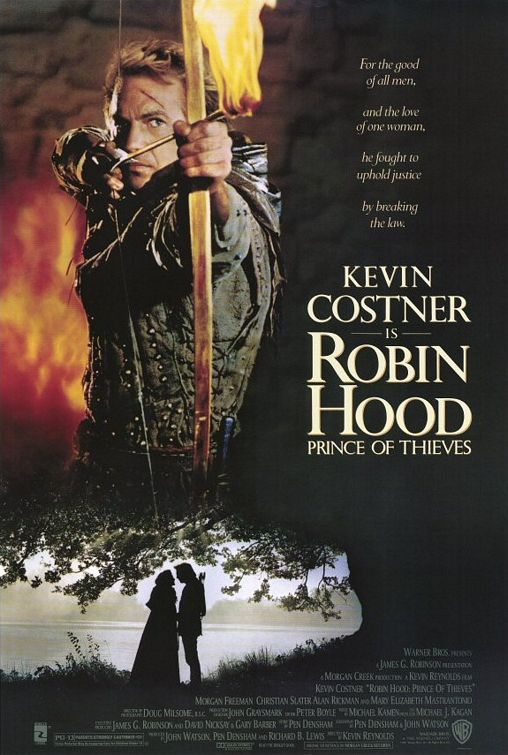
I can’t believe this movie is 25 years old, but it’s true! On this day in film history, Robin Hood: Prince of Thieves was released to theaters. Starring Kevin Costner, the film sought to re-tell the classic story of Robin Hood and his Merry Men, but in a much darker fashion than its predecessors. If you’re looking for the bright spectacle as seen in The Adventures of Robin Hood (1938), then keep looking because this is not the film for you.
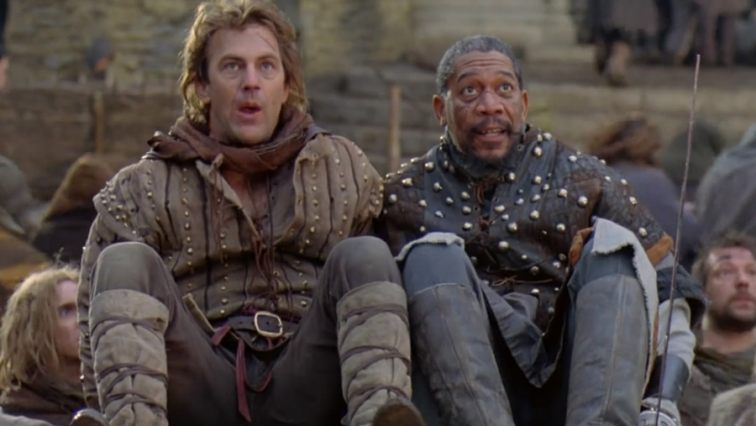
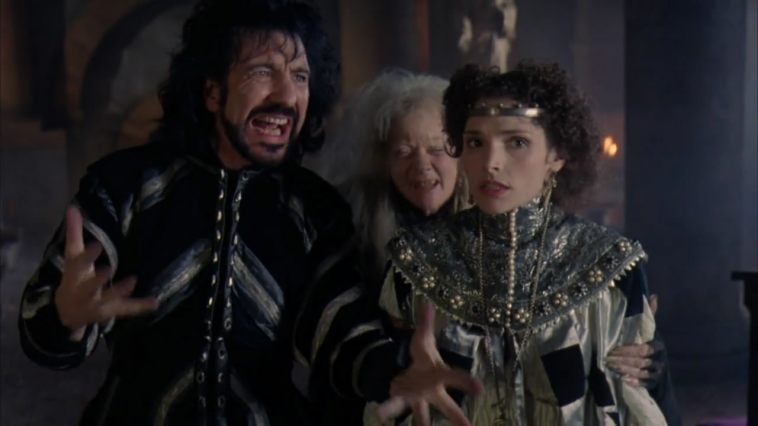
Robin (Kevin Costner) escapes captivity in Jerusalem with a condemned Moor named Azeem (Morgan Freeman). He returns to England, only to find that his father (Brian Blessed) has been murdered, his family castle burned to the ground and his lands claimed by the utterly corrupt Sheriff of Nottingham (Alan Rickman). This telling of the Robin Hood story is unusual in that Prince John (typically the villain of the story) does not appear nor is he mentioned.
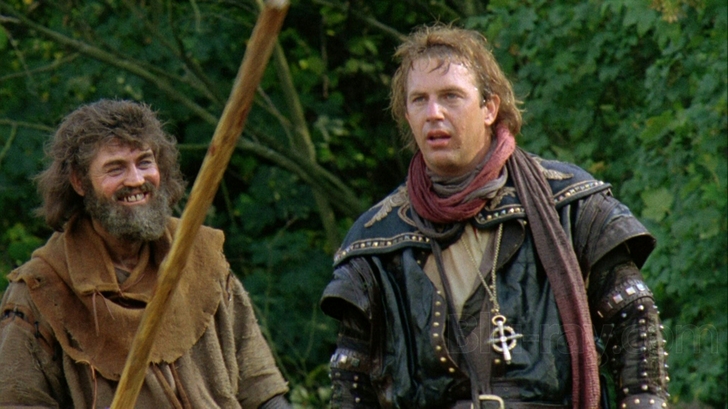
Robin becomes reacquainted with Lady Marian (Mary Elizabeth Mastrantonio), a childhood friend (and also a cousin to King Richard). After killing some of the Sheriff’s men, Robin, Azeem and the blind servant Duncan are forced to take refuge in Sherwood Forest, where they encounter a sizable band of outlaws, led by John Little and the brash Will Scarlett (Christian Slater), the latter taking an instant dislike to Robin, even after he beats John Little in a fight and renames him “Little John.”
Robin declares war on the Sheriff and proceeds to rob every rich man passing through the forest, organizing the outlaws into a rather prosperous community along the way. Desperate, the Sheriff (goaded on by the witch Mortiana) hires Celtic mercenaries to track Duncan to the outlaws hideout after Marian is kidnapped by the Sheriff’s men (Duncan having been sent to live with Marian due to his failing health). A vicious battle ensues, and Robin is missing, presumed dead. The devastated Marian learns that the Sheriff wishes to marry her (as he seeks the throne for himself and marrying the king’s cousin would give him a semi-legitimate claim) and believing Robin dead, she has no choice but to accept.
But Robin isn’t dead, and while they plan their next move, a captured-then-released Will Scarlett appears and informs everyone that a large number of prisoners taken during the battle (including Little John’s oldest son) are to be hanged the very next day. Will also drops a veritable bombshell: he is the half-brother to Robin, the son of a woman that their father loved for a time after Robin’s mother died. The woman was sent away because Robin didn’t like her, therefore Will holds Robin responsible for the rough life he has led.
The next day, just as the prisoners are to be hung, Robin and his men appear, and chaos erupts. The prisoners are saved just in time, while the Sheriff drags a screaming Marian away to be married (he intends to claim his “marital rights” as soon as the ceremony is completed). Robin and Azeem give chase and just as the ceremony is finished, Robin literally crashes the wedding by entering through a stained glass window.
A huge sword fight follows between Robin and the Sheriff. The fight is largely equal, until the Sheriff’s sword breaks Robin’s blade into pieces, leaving him pinned against a wall. But just as the Sheriff lunges for the killing blow, Robin reveals his last weapon: a dagger given to him by Marian (who received it from the Sheriff) plunged straight into the villain’s heart! With the Sheriff dead (and Mortiana the witch dying soon afterward), Marian and Robin are reunited and shortly thereafter, married, with the returning King Richard (Sean Connery) in attendance.
I’ve seen this movie get a lot of flak because of Costner’s performance, but personally I enjoyed it very much. It’s a different spin on the Robin Hood story and it’s full of humorous little moments. Alan Rickman in particular slays the role of the Sheriff (he allegedly refused the role three times until the director offered him carte blanche in how he played the character). Another favorite character is Friar Tuck (played by Mike McShane), a hilariously funny character, with a big booming laugh and an obsession with beer!
If you haven’t seen this film, it is definitely worth seeing at least once. It also features a great score by the late Michael Kamen.
*poster image is the property of Warner Bros. Studios
So to recap, after Prince Ali/Aladdin abruptly arrives to court Princess Jasmine, the evil Jafar attempts to have the fake prince murdered so that *he* can marry Jasmine instead and become Sultan. Luckily for our hero, Genie is able to save Aladdin via his second wish and take him back to the palace. After informing the Sultan about the truth: that Jafar a) tried to have Prince Ali killed and b) has been manipulating the Sultan with his cobra staff for years , Jafar is ordered to be arrested, but just before the vizier escapes, he notices the lamp resting in Ali’s turban, which for him can mean only one thing: Ali is Aladdin and HE has the lamp that Jafar has been after this entire time!
As soon as Jafar sees the lamp, you just KNOW he’s going to get his hands on it at some point. The devious parrot Iago is dispatched to get the lamp away from Aladdin. This proves easier than one might think, because at the same time, Aladdin is suffering from a tremendous amount of guilt. The good news is that Princess Jasmine is in love with him and the Sultan approves. The bad news (in Aladdin’s mind) is that once they get married he (Aladdin) will become Sultan, and he doesn’t feel like he’s up to the task, especially if he keeps his promise and uses his last wish to free the Genie. So…Aladdin not-so-gently breaks the news that he won’t be freeing the Genie after all, which upsets everybody.
Aladdin finally decides that he has to tell Jasmine the truth, that he’s not really a Prince. Great decision, too bad it comes just as Iago is out to get the lamp. He mimics Jasmine’s voice to lure Aladdin out of his room and quickly swipes the lamp away. The Genie is less than thrilled to find himself in Jafar’s hands, but he doesn’t have the ability to refuse Jafar’s first wish: to become Sultan!!
Just as this happens, the real Sultan is getting ready to proclaim to all of Agrabah the joyous news: Princess Jasmine has finally chosen a suitor, Prince Ali! Before Aladdin can tell anyone the truth, the sky grows dark and Jafar appears out of nowhere, now clothed in the robes of a Sultan (even Iago has a little Sultan hat!) No one is quite sure how this happened, but Aladdin finally figures it out when he goes to get the lamp and finds it gone! Now comes the second part of Jafar’s first wish (He phrased it as “I wish to rule on high, as Sultan). The only way to rule “on high” is to have a palace HIGH in the air, so…Genie appears to lift the royal palace to a high cliff.
Now that he is Sultan, Jafar expects to receive the proper respect, but both Jasmine and her father refuse. Enraged, Jafar uses his second wish: to be the most powerful sorcerer in the world! With this wish granted, Jafar decides it’s time to tell Jasmine how things really are: enter the reprise of “Prince Ali.”
The all-too-brief song is performed in a mocking style of the original “Prince Ali” and serves to show everyone the truth. While Jasmine is held in a magical beam, she is forced to watch as Jafar magically transforms Aladdin’s princely outfit back into the rags he wore in the marketplace. Abu is changed back into a monkey; Rajah is turned into a tiny kitten and all are held helpless. But before Aladdin can tell Jasmine anything, Jafar continues! This next verse really explains it all:
“So Ali turns out to be merely Aladdin/Just a con, need I go on? Take it from me!
His personality flaws/give me adequate cause/to send him packing on a one-way trip,
Where his prospects take a terminal dip/his assets frozen, the venue chosen is the ends of the Earth, WHOOPEE!!! So long! Ex-Prince Ali!!”
Jafar uses his magic to send Aladdin and Abu flying into a tower (the magic carpet secretly follows) and with all watching (including the unhappy Genie), the tower is sent flying away like a rocket towards “the ends of the Earth.”
I think all that power has gone to Jafar’s head…
Waving Aladdin farewell, Jafar descends into maniacal, psychotic laughter, as his shadow looms over the ex-Sultan and Jasmine. Hearing this song really makes me wish that Jafar had a full-length song of his own (but sadly he does not).
Ok, I WAS going to make this the last Aladdin post, but remembering how this song ends, I realized I just can’t leave things hanging like this, so there will be one more Aladdin post after this one to cover the climax of the film. I also wanted to let you know that I’m going to cut back a little more on the amount of posting I do during the week (it will probably go down to one a day) because I need to focus some more on my dissertation. I promise I’m not going to disappear, just write a little less (for a while anyways).
Enjoy the reprise of “Prince Ali”, and enjoy the weekend!
*all images are the property of Walt Disney Studios
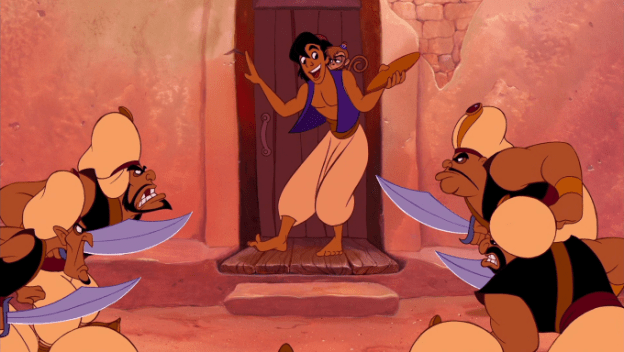
When we first meet him, Aladdin doesn’t appear to be Jafar’s “diamond in the rough” or a future prince for that matter. That’s because when we meet him in “One Jump Ahead”, Aladdin is fleeing the city guards after stealing a loaf of bread for himself and his pet monkey Abu.
The song takes Aladdin and Abu all over the market place of Agrabah. In fact, based on the lyrics in “One Jump Ahead”, Aladdin’s gotten so good at evading and eluding that he doesn’t seem overly concerned about whether or not he’ll get away.
Gotta keep One jump ahead of the breadline One swing ahead of the sword I steal only what I can’t afford And that’s everything!
One jump ahead of the lawmen That’s all, and that’s no joke These guys don’t appreciate I’m broke
Riffraff! Street rat! Scoundrel! Take that!
Just a little snack, guys
Rip him open! Take it back, guys! I can take a hint, Gotta face the facts You’re my only friend, Abu!
Aladdin and Abu try to hide in several places, the most notable being what appears to be a brothel (you know, the room full of pretty girls dressed in bright clothes that sing about “oh it’s just Aladdin again?”)
Who? Oh, it’s sad, Aladdin’s hit the bottom He’s become a one-man rise in crime I’d blame parents except he hasn’t got ’em Gotta eat to live, Gotta steal to eat Tell you all about it when I got the time!
One jump ahead of the slowpokes One skip ahead of my doom Next time gonna use a nom de plume
One jump ahead of the hitmen One hit ahead of the flock I think I’ll take a stroll around the block
At least that’s what someone claims it is on Tumblr, but another possible (maybe) explanation is that it’s a family of pretty girls, they’re all sisters and Aladdin just annoys them? (I really don’t want the brothel explanation to be true, because it weirds me out that Disney would put anything like this in one of their movies!!)
A recurring theme in the song is Aladdin being derided as “rif-raff….street rat…scoundrel…” etc. It’s clear the “respectable” people of Agrabah think very little of a poor kid like Aladdin. This point comes up again in the reprise to this song, after Prince Achmed informs Aladdin “You were born a street rat, you will die a street rat, and only your fleas will mourn you!”
Stop, thief! Vandal! Outrage! Scandal!
Let’s not be too hasty Still I think he’s rather tasty! Gotta eat to live, Gotta steal to eat Otherwise, we’d get along Wrong!
One jump ahead of the hoofbeats (Stop, thief!) One hop ahead of the hump (Street rat!) One trick ahead of disaster (Scoundrel!) They’re quick, but I’m much faster (Take that!) Here goes: Better throw my hand in Wish me happy landin’ All I gotta do is jump!
Meanwhile, Aladdin continues to dodge and evade, but the guards are slowly closing in from all directions, forcing Aladdin and Abu to climb higher and higher, until finally, all they can do is “JUMP!” They get away safely, and the guards end up falling into a stinky pile of camel poo (ewwwwwwww, gross!)
However, after spending all that time and effort to acquire a loaf of bread to eat, Aladdin ends up giving it to two little kids who clearly need more than he does, showing that despite being a thief, Aladdin is a good guy at heart. After being insulted by Prince Achmed, Aladdin begins the long walk home, singing a sad reprise of “One Jump Ahead.” This part always got to me when I was younger (having been teased a great deal), because it talks about how all the people Aladdin knows judge him and put him down, but they wouldn’t if they really KNEW him. I really liked the last line “they’d find out/there’s so much more, to me…”
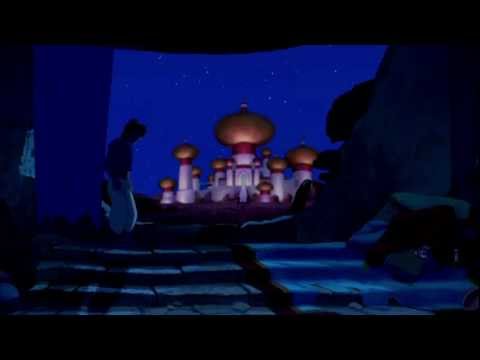
At the end, we get to see that Aladdin lives in a half ruined building that has a great view of the palace. Aladdin dreams about being rich someday, imagining that when he lives in a palace he “won’t have any problems at all.” Of course the complete opposite happens to be true, as Princess Jasmine knows all too well.
“One Jump Ahead” was one of the songs created by Alan Menken and Tim Rice after Howard Ashman passed away. Originally, this part of the film had a completely different number entitled “Proud of Your Boy”, a song that Aladdin sings to his mother (who is disappointed in how he’s living his life). This song was ultimately cut (but later restored to the Broadway play adaptation of the story) and temporarily replaced by a song entitled “Count on Me” before “One Jump Ahead” was finally selected. The song serves as a good introduction to Aladdin and his mischievous nature, and I enjoy listening to it.
So that’s it for “One Jump Ahead” and would you believe there’s only one song left? All that remains is “Prince Ali (reprise)” and that’ll do it for Aladdin!




















 Film Music Central