Tag Archives: film music

Brian Tyler talks War (2007)

War is a film that I have not seen but I’m sure I would like, given that it stars Jet Li and Jason Statham. The film is the directorial debut of Philip G. Atwell and tells the story of FBI agent John Crawford (Statham) who becomes obsessed with hunting down an assassin named Rogue (Li) after he brutally murders his partner. But, as it turns out, the story isn’t nearly as straightforward as it seems, there are some mind-blowing twists involved.

2007_war_008

Unbelievably, it comes out that the assassin Crawford has been hunting down is none other than his supposed-to-be-dead partner! It turns out that after being supposedly killed, he tracked down and murdered the real Rogue in order to work his way into the Yakuza to find out who ordered the assassin to take out his family. But there’s another twist: it comes out that Crawford is the one responsible for giving out his partner’s address to Rogue (albeit under heavy duress) because he’s been in the Yakuza’s pocket for quite some time. Talk about twists upon twists!

The film was produced under the working title of  Rogue (named for Jet Li’s character) but it was changed to avoid conflicting with an Australian horror film of the same name that was released the same year.

In the interview (which can be accessed in the link above), Tyler explains that he was approached to work on War after the premiere of The Fast and the Furious: Tokyo Drift (2006), and after watching some footage from the film-in-progress, he begged for the chance to score the film. Additional music for the film was provided by RZA, Mark Batson and Machines of Loving Grace.


OneSheet (Page 1)

A major element of the story involves the Chinese Triad going to war with the Japanese Yakuza. As a result, Tyler created a musical blend using Chinese and Japanese instruments against one another to symbolize the growing conflict between the two groups.

I have to say, looking at Brian Tyler’s work has given me a completely new appreciation for action films and their music. A lot of people write off action films as being “mindless” or somehow “less than” bigger dramatic films, but I think action films can be just as good as any other film genre if they’re done properly.

It was really exciting learning how Brian Tyler created the score for War and I hope you enjoy the interview too.

You can become a patron of the blog at patreon.com/musicgamer460

Check out the YouTube channel (and consider hitting the subscribe button)

See also:

Film Composer Interviews A-H

Film Composer Interviews K-Z

Brian Tyler “Alien vs. Predator: Requiem” scoring session (2007)

Brian Tyler scoring Partition (2007)

Brian Tyler talks Rambo (2008)

Brian Tyler “Law Abiding Citizen” scoring sessions (2009)

Brian Tyler “Dragonball Evolution” scoring session (2009)

Brian Tyler talks The Expendables (2010) 

Brian Tyler talks Fast Five (2011)

Brian Tyler “Battle: Los Angeles” (2011) scoring session

Brian Tyler scoring session for Iron Man 3 (2013)

Brian Tyler “Teenage Mutant Ninja Turtles” (2014) scoring session

Brian Tyler conducting and scoring Now You See Me 2 (2016)

Brian Tyler “Power Rangers” scoring session (2017)

Brian Tyler conducts The Mummy (2017)

Don’t forget to like Film Music Central on Facebook 🙂

Brian Tyler “Law Abiding Citizen” scoring sessions (2009)

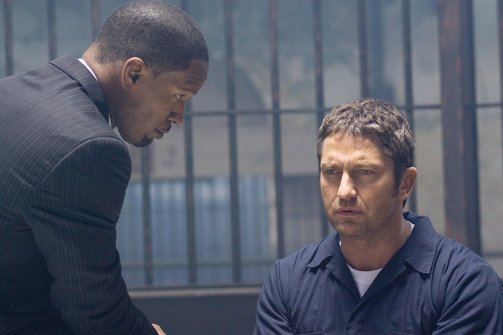
I actually remember seeing trailers for Law Abiding Citizen (2009), it caught my attention as it had Gerard Butler in it. For the life of me, I could not tell you what the movie was actually about until I looked the summary up. Law Abiding Citizen tells the story of the lengths Clyde Shelton (Butler), a hitherto ordinary citizen, will go to avenge his murdered wife and daughter when the justice system fails to dispense an appropriate punishment to their killer.

MV5BMTc3Njk0MTE2NV5BMl5BanBnXkFtZTcwMDM4NDE4Mg@@._V1_SY1000_CR0,0,1499,1000_AL_

After subsequently murdering the killer himself (ten years after the fact) and being locked up in prison, it turns out that Clyde formerly worked for the CIA and created highly imaginative assassination devices which make him capable of killing anyone, anywhere, at any time (even while locked up in prison). He proceeds to kill the judge, district attorney and several other people associated with the case, but the prosecuter Nick Rice (Jamie Foxx) proves to be his undoing.

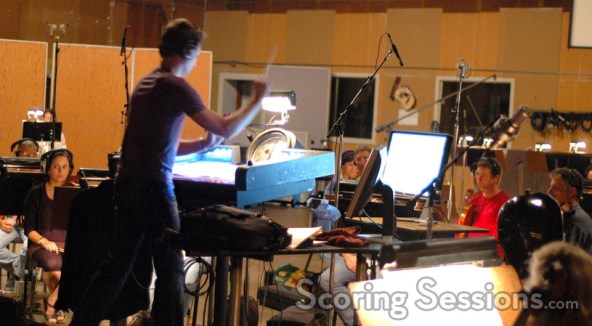
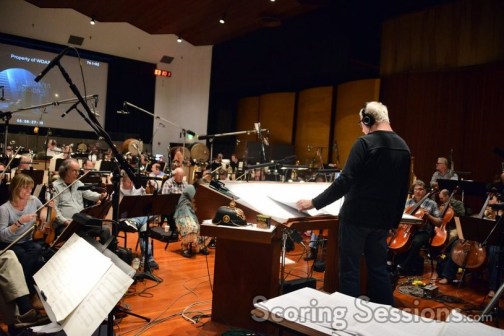
I have found two scoring sessions for this particular film. The first (above) is entitled “Methodology” while the second piece(below) is entitled “Mechanical Mind.” I actually like the second piece better because you can see more of the set-up in the recording studio. Tyler is surrounded by a bank of monitors that show the musical beat, the score and also a working print of the film (watch the monitors on the conductor’s right). There is also a large screen playing footage from the film which is occasionally reflected in the glass behind the conductor.

The 52-piece ensemble that Brian Tyler is conducting comes from the Hollywood Studio Symphony, an orchestra that has worked in the production of many film soundtracks (including Jurassic Park 3, The Last Samurai, Sucker Punch and The Bourne Supremacy.)

dsc_0961

I really think you will enjoy listening to these two pieces; they are both prime examples of the fact that an average film can still contain fantastic music. Let me know what you think of the music in the comments below 🙂

You can become a patron of the blog at patreon.com/musicgamer460

Check out the YouTube channel (and consider hitting the subscribe button)

See also:

Film Composer Interviews A-H

Film Composer Interviews K-Z

Brian Tyler “Alien vs. Predator: Requiem” scoring session (2007)

Brian Tyler scoring Partition (2007)

Brian Tyler talks War (2007)

Brian Tyler talks Rambo (2008)

Brian Tyler “Dragonball Evolution” scoring session (2009)

Brian Tyler talks The Expendables (2010) 

Brian Tyler talks Fast Five (2011)

Brian Tyler “Battle: Los Angeles” (2011) scoring session

Brian Tyler scoring session for Iron Man 3 (2013)

Brian Tyler “Teenage Mutant Ninja Turtles” (2014) scoring session

Brian Tyler conducting and scoring Now You See Me 2 (2016)

Brian Tyler “Power Rangers” scoring session (2017)

Brian Tyler conducts The Mummy (2017)

Don’t forget to like Film Music Central on Facebook 🙂
Brian Tyler “Power Rangers” scoring session (2017)

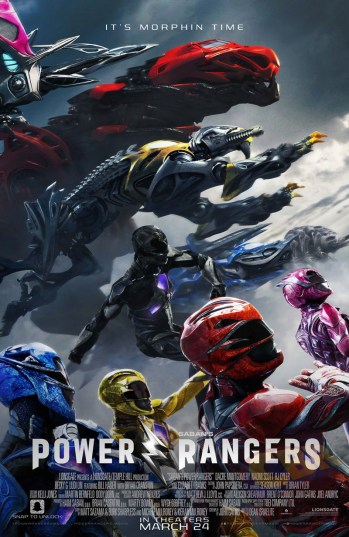
This may be the fastest I’ve ever released a scoring session of a film relative to the film’s premiere (the film came out five days ago). In the hype leading up to the release of Power Rangers, and the endless debate of “will this be any good?”, I somehow missed that Brian Tyler would be composing the score for this film. Tyler has been a rising force in the world of film music for the last decade and I was immediately curious to hear what his work for this film sounded like.

Lo and behold….I found a scoring session for the film. It’s tantalizingly short, only sixty seconds in length, but what I can hear is beautiful! I have no idea where in the film this music comes from, but it is very well-crafted and it is clear that Tyler is in his element as a composer and conductor.

exclusive-final-power-rangers-poster-zords

Despite this, I still don’t think I will see Power Rangers anytime soon. Of course, I grew up watching Mighty Morphin’ Power Rangers way back in the 90s, and I saw a few of the later series on occasion (Mystic Force is still my favorite), but my tastes have greatly changed since then and the film simply holds no interest for me (though I AM pleased that one of the rangers is on the autistic spectrum). However, I may have to get my hands on the soundtrack to hear the rest of this gorgeous music.

I hope you enjoy watching Brian Tyler score a section of Power Rangers, and get ready: this is only the first of many Brian Tyler sessions that I’ve found (I really think you’re going to like them too).

You can become a patron of the blog at patreon.com/musicgamer460

Check out the YouTube channel (and consider hitting the subscribe button)

See also:

Film Composer Interviews A-H

Film Composer Interviews K-Z

Brian Tyler “Alien vs. Predator: Requiem” scoring session (2007)

Brian Tyler scoring Partition (2007)

Brian Tyler talks War (2007)

Brian Tyler talks Rambo (2008)

Brian Tyler “Law Abiding Citizen” scoring sessions (2009)

Brian Tyler “Dragonball Evolution” scoring session (2009)

Brian Tyler talks The Expendables (2010) 

Brian Tyler talks Fast Five (2011)

Brian Tyler “Battle: Los Angeles” (2011) scoring session

Brian Tyler scoring session for Iron Man 3 (2013)

Brian Tyler “Teenage Mutant Ninja Turtles” (2014) scoring session

Brian Tyler conducting and scoring Now You See Me 2 (2016)

Brian Tyler conducts The Mummy (2017)

Don’t forget to like Film Music Central on Facebook 🙂
Michael Giacchino talks Super 8 (2011)

Michael Giacchino talks Super 8 (2011)

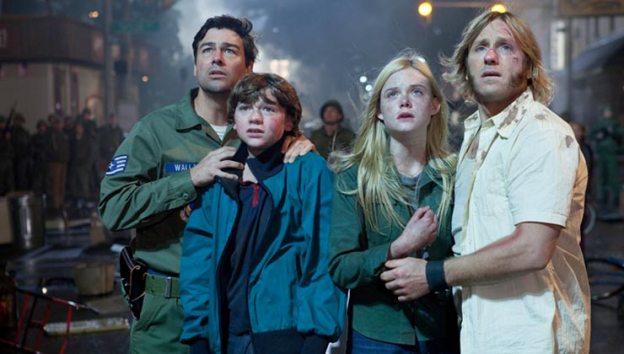
What do you get when J.J. Abrams and Steven Spielberg collaborate together on a film? In the case of Super 8, we got a science-fiction thriller film about a strange alien invading a town in Ohio while a group of kids are shooting a movie on Super 8 film. The film did well (despite some comparisons to E.T.), though I didn’t watch it myself (I was distracted by graduating from college at the time). As with all J.J. Abrams films (except for The Force Awakens), the score was composed by Michael Giacchino, who talks with us in the behind-the-scenes clip for the making of the score of Super 8.

What’s cool about this clip is that we get to hear Giacchino talking about his memories of shooting home movies on Super 8 film back in the day, and we even get to see a few clips from said films.

It’s always great to listen to Michael Giacchino discussing his work, and I hope you enjoy his talk about Super 8.

I know this is shorter than what I usually do, but I’m still recovering from a really busy weekend and I really wanted to give you something to enjoy until tomorrow 🙂

And speaking of…Disturbing Disney returns tomorrow with my first entry from Bambi (1942), a film that pioneered the “horrifying death of a parent” decades before The Lion King ripped our hearts out with the death of Mufasa.

Also, I wanted to share that Film Music Central has gained 2,000+ hits in a month for the first time ever and I wanted to say thank you to everyone who comes to visit the blog, this is a milestone I’ve been hoping to hit for a long time 🙂

See also:

Michael Giacchino talks The Incredibles (2004)

Michael Giacchino talks Mission: Impossible 3 (2006)

Michael Giacchino talks Ratatouille (2007)

Michael Giacchino talks Up (2009)

Michael Giacchino talks Star Trek (2009)

Michael Giacchino talks John Carter (2012)

Michael Giacchino talks Star Trek: Into Darkness (2013)

Michael Giacchino talks Jupiter Ascending (2015)

Michael Giacchino talks Jurassic World (2015)

Michael Giacchino scoring Rogue One: A Star Wars Story (2016)

Michael Giacchino talks Zootopia (2016)

Michael Giacchino talks Jurassic World: Fallen Kingdom (2018)

Film Composer Interviews A-H

Film Composer Interviews K-Z

You can become a patron of the blog at patreon.com/musicgamer460

Check out the YouTube channel (and consider hitting the subscribe button)

Don’t forget to like Film Music Central on Facebook 🙂

Hans Zimmer talks Hannibal (2001)

Sequels are always a risky business; no matter how successful the original, there’s always the chance that a follow-up story will fall totally flat and ruin the story forever. Thankfully, such was not the case with Hannibal (2001), the follow-up to The Silence of the Lambs (1991). Set ten years after the original story, Clarice Starling (now played by Julianne Moore) must locate Hannibal Lecter before a surviving victim (played brilliantly by Gary Oldman) tracks down the serial killer to exact his gruesome revenge. While it’s true that this film was met with mixed reviews by the critics, I found Hannibal to be a very thrilling story, especially the last third. Anthony Hopkins is such a compelling presence when he’s onscreen, and he plays the role with so many layers that you can watch the film multiple times and see a new interpretation each time.

Of course the film wouldn’t be nearly as good without its musical score, which was composed by Hans Zimmer. In this wonderful interview, both Zimmer and director Ridley Scott talk about the music and how it came together. Scott believes that the music is just as important as the dialogue and so the score is crafted accordingly. Hannibal marked the fourth time that the director and composer collaborated on the same project, and you can tell that they’ve developed a good working relationship with each other.

Zimmer describes Hannibal as a “haunting story” and that the music must be haunting as well to match it, and I believe he totally succeeded in accomplishing this. One thing about Hannibal (the character) that always fascinated me is his love of the classical, be it art, poetry or music. The score reflects this to a large degree, as Hans Zimmer wrote several choral pieces in an early classical style for certain scenes involving the titular character. It was amazing to learn about the score for this haunting film, and I hope you enjoy it as well.

You can become a patron of the blog at patreon.com/musicgamer460

Check out the YouTube channel (and consider hitting the subscribe button)

See also:

Film Composer Interviews A-H

Film Composer Interviews K-Z

Hans Zimmer talks The Road to El Dorado (2000)

Hans Zimmer talks The Dark Knight (2008)

Hans Zimmer talks Sherlock Holmes (2009) and Sherlock Holmes: A Game of Shadows (2011)

Hans Zimmer talks Inception (2010)

Hans Zimmer (and Richard King) talk The Dark Knight Rises (2012)

Hans Zimmer talks Man of Steel (2013)

Hans Zimmer talks Interstellar (2014)

Don’t forget to like Film Music Central on Facebook 🙂
Michael Giacchino talks Zootopia (2016)

Michael Giacchino talks Zootopia (2016)

While I am still profoundly irked that Zootopia beat out Kubo and the Two Strings for Best Animated Feature at the Oscars, I cannot deny that the film has a pretty good musical score. Composed by the talented Michael Giacchino, the music of Zootopia features a world-music vibe to cover the vast array of species (and ways of life) highlighted in the story.


If you haven’t seen Zootopia, the film follows bunny Judy Hopps (Ginnifer Goodwin) as she becomes the first rabbit on the Zootopia police force, in a city where (in theory) any animal can become anything they want to be, regardless of whether they are considered “hunter” or “prey” species. This notion is tested when Judy is put on a (seemingly hopeless) case that she must solve in a very short time or lose her job, and to complicate matters, she must work with Nick Wilde (Jason Bateman), a fox with a history of being a con-artist.

In this behind the scenes clip, Giacchino takes us to the recording studio and introduces five percussionists who helped create Zootopia’s unique sound.

ZOOTOPIA

While the main orchestra is best recognized in any film score, often the percussion is overlooked (or worse, lost in the sound mix), so it’s great to see not only how they used percussion instruments in the score, but also how the percussion ties everything together at key moments.

c82485eec608d966826a619a04946ce8f53b693d

My thanks to Michael Giacchino for giving us this inside look into part of the scoring process for Zootopia, which really is a great film despite my grumblings. I hope you enjoy the video and if you haven’t tried Zootopia before, please take a chance and check it out 🙂

See also:

Michael Giacchino talks The Incredibles (2004)

Michael Giacchino talks Mission: Impossible 3 (2006)

Michael Giacchino talks Ratatouille (2007)

Michael Giacchino talks Up (2009)

Michael Giacchino talks Star Trek (2009)

Michael Giacchino talks Super 8 (2011)

Michael Giacchino talks John Carter (2012)

Michael Giacchino talks Star Trek: Into Darkness (2013)

Michael Giacchino talks Jupiter Ascending (2015)

Michael Giacchino talks Jurassic World (2015)

Michael Giacchino scoring Rogue One: A Star Wars Story (2016)

Michael Giacchino talks Jurassic World: Fallen Kingdom (2018)

Film Composer Interviews A-H

Film Composer Interviews K-Z

You can become a patron of the blog at patreon.com/musicgamer460

Check out the YouTube channel (and consider hitting the subscribe button)

Don’t forget to like Film Music Central on Facebook 🙂
John Debney scoring Predators (2010)

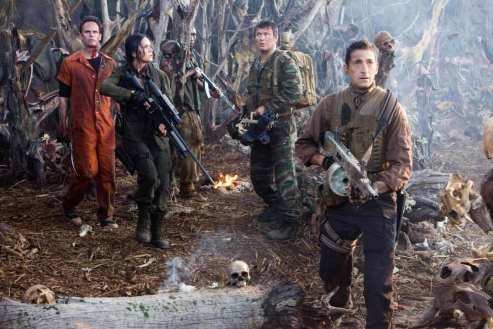
In an age where sequels are being made left and right, it surprised no one when, after a gap of 20 years, a third installment of the Predator franchise was released. Predators (unlike the previous two installments) takes place on an alien planet and follows a group of mercenaries and other “undesirables” that have been abducted and taken to this planet, which we learn serves as a game preserve for the Predator civilization. The group, including Royce (Adrien Brody) and Isabelle (Alice Braga) must evade a group of hunters while also trying to find a way off the planet to get home.


The total group consists of:

  • Royce- ex-Special Forces turned mercenary
  • Isabelle- sniper from Israeli Defense Forces
  • Cuchillo- a Mexican drug cartel enforcer
  • Nikolai- a Spetsnaz soldier
  • Mombasa- a soldier in the Revolutionary United Front
  • Stans- a death row inmate from San Quentin
  • Hanzo- a Yakuza enforcer
  • Edwin- a general practice doctor

Of the entire group, it is Edwin who sticks out, as he is the only member of the group who does not seem to be a lethal killer. Appearances are deceiving however, and it eventually comes out that Edwin is actually a psychopathic murderer (apparently very comfortable with poisons) who feels “right at home” on this alien planet filled with “monsters.”

Predators-2010

Most of the story centers around the plan of freeing a trapped Predator (who is being held prisoner by a rival clan of larger Predators) in the hopes that it will use his ship to take them back to Earth. Unfortunately, not only are Royce and Isabelle the lone human survivors (so far as we know), but the ship self-destructs, leaving the pair stranded on the alien planet for the time being.

The film was released with mixed to positive reviews, with some saying the sequel finally hit the mark set by the original film and others saying it still lacks the quiet suspense that made the first film so good.

Predators-film-images-30b80769-2fc3-4baf-a099-e7121a98bfd

The score was composed by John Debney, although it was briefly speculated that Alan Silvestri would return to the franchise (having scored Predator and Predator 2). The clip I found is from a scoring session for the film and provides a tantalizing glimpse of the recording process. The one thing that will always amaze me about film music is how many details you can hear when the dialogue and sound effects are removed from the mix. Hearing this brief excerpt of music makes me wish I’d seen this film when it was released (it’s been on my “to watch” list for the last seven years).

Have you seen Predators? Did you think it was worth seeing? Let me know in the comments below, and I hope you enjoy watching this brief excerpt from the scoring session for the film.

See also:

John Debney talks The Scorpion King (2002)

John Debney talks The Passion of the Christ (2004)

John Debney (and Tom Morello) talk Iron Man 2 (2010)

John Debney talks The Jungle Book (2016)

Film Composer Interviews A-H

Film Composer Interviews K-Z

You can become a patron of the blog at patreon.com/musicgamer460

Check out the YouTube channel (and consider hitting the subscribe button)

Don’t forget to like Film Music Central on Facebook 🙂

John Debney talks The Scorpion King (2002)

Let’s face it: you either love The Scorpion King or you hate it, there is no middle ground.

This spin-off of The Mummy Returns is set 5,000 years before the original Mummy films and tells the story of how Mathayus (Dwayne “The Rock” Johnson in his first film as a leading man) rose to power as the “Scorpion King.” Mathayus is initially part of a small group of Akkadians contracted by King Pheron to kill a sorcerer working for a tyrannical king named Memnon. They are betrayed by Pheron’s son Takmet (who murdered his own father and joined Memnon after they left on their mission) but Mathayus is still able to reach the sorcerer’s tent…only to find that it’s actually a beautiful sorceress named Cassandra.

Mathayus hesitates long enough to be captured and after his companions are killed, he is left to die a slow agonizing death buried up to his neck in the desert. Thereafter, Mathayus seeks vengeance on Memnon for killing his companions (one of whom was his half-brother) and also information from the sorceress (for example, why she persuaded Memnon to not kill him on the spot as he did the others).

scorpion-king

Along the way, Mathayus meets various allies, including the Nubian king Balthazar (who initially does not like Mathayus because he despises Akkadians). When Cassandra returns to Memnon after being with Mathayus for some time, the latter organizes an all-out assault on Memnon’s stronghold Gomorrah to save Cassandra and kill Memnon once and for all.

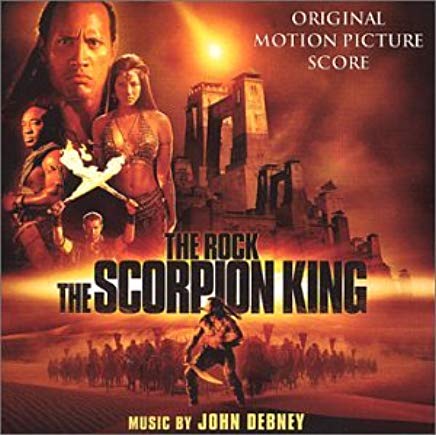
The orchestral score for this film was composed by John Debney; this music was mixed in with various rock songs (the latter are what appear on the soundtrack album for the film). In the extended “making of the score” video which you can access in the link above, there are numerous shots of the orchestra in the recording studio with the in-progress film playing on a large screen for the conductor’s reference. As I’ve said before, this is the stage of film music production that I love the best, and I hope to witness it in person one day.

The-Scorpion-King-images-33fb21c0-fe01-4c0c-b6f3-31caa4e84c5

Debney (and the film’s director) discuss how various parts of the score came together, including the overall sound of the music. Since this is meant to take place long before any recorded history, Debney did not want to invoke one culture above another, but instead wanted to create a sense of something new and unfamiliar. The director also discussed including a touch of rock music, and thus giving the film something of a more contemporary feel in certain places. This is really one of the better interviews I’ve found for the making of a film score and even if you’ve never seen The Scorpion King, I really think you will enjoy it.

Become a Patron of the blog at patreon.com/musicgamer460

Check out the YouTube channel (and consider hitting the subscribe button)

See also:

Film Composer Interviews A-H

Film Composer Interviews K-Z

See also:

John Debney (and Tom Morello) talk Iron Man 2 (2010)

John Debney scoring Predators (2010)

John Debney talks The Passion of the Christ (2004)

John Debney talks The Jungle Book (2016)

Don’t forget to like Film Music Central on Facebook 🙂

John Debney talks The Passion of the Christ (2004)

The Passion of the Christ (2004) is a film that is not easily forgotten once you’ve seen it. This was the first R-rated film I ever saw in theaters (the youth group I was in went to see it one weekend, we all had to get our parents to sign waivers since we were under 18) and it’s a film that physically impacted me for weeks afterward.

For those who haven’t seen it, The Passion of the Christ details the final twelve hours of the life of Jesus, from his arrest to his crucifixion (with a short epilogue on the day of his resurrection). The entire film is subtitled, with the primary languages being Aramaic, Hebrew and Latin (to make the story feel more authentic). The film was directed by Mel Gibson and was a huge hit upon release, although many criticized the extreme graphic violence in certain scenes (I personally have only been able to see this film three times since 2004).

The  score that accompanies this film was composed by John Debney (The Jungle Book) and it is widely regarded as a masterpiece of film music. In the extended video which you can reach via the link above, Debney (and Mel Gibson) discuss how various themes came together, primarily Satan’s theme and the theme for Mary, the mother of Jesus. Interestingly, instead of using a traditional ensemble, or using only instruments that might have been heard in ancient Jerusalem, Debney opted to use a more global sound (Satan’s theme, for instance, is created with a traditional Chinese instrument), as this is a story that Gibson wanted to be accessible to everyone.

The music for The Passion of the Christ really is beautiful, and I do recommend this film as well, but with one major caveat: if graphic violence disturbs you, do NOT watch this film. The torture segments (particularly the flogging scene) are very bloody, and could easily be traumatizing.

Have you seen The Passion of the Christ? What did you think of it, or the music? Let me know in the comments 🙂

See also:

John Debney talks The Scorpion King (2002)

John Debney (and Tom Morello) talk Iron Man 2 (2010)

John Debney scoring Predators (2010)

John Debney talks The Jungle Book (2016)

Film Composer Interviews A-H

Film Composer Interviews K-Z

Become a Patron of the blog at patreon.com/musicgamer460

Check out the YouTube channel (and consider hitting the subscribe button)

Don’t forget to like Film Music Central on Facebook 🙂
The King and I “The March of the Siamese Children” (1956)

maxresdefault

Rodgers and Hammerstein’s classic musical The King and I is one of my favorite Broadway musicals. The story is based in part on the memoirs of Anna Leonowens, a widow who served as a governess to the children of King Mongkut of Siam (now Thailand) in the early 1860s. The 1951 musical was adapted into a film in 1956, both starring Yul Brynner as the titular King (he’s one of my favorite characters).

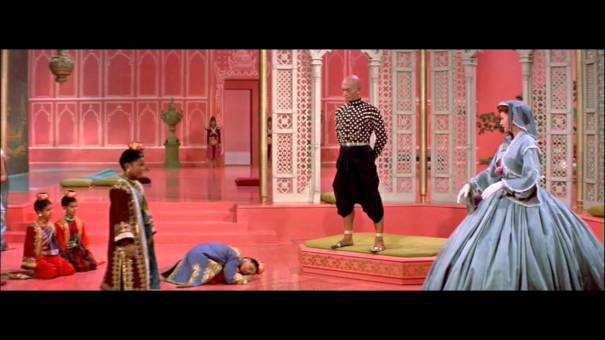
The King and I has many wonderful musical moments; one of my favorites is “The March of the Siamese Children” which takes place relatively early in the story. Anna (Deborah Kerr) is upset that she must stay in the royal palace next to the harem (instead of in a little house of her own as she’d been promised) and is on the verge of returning to England straight away. However, before she goes, the King insists that Anna meet his children first. If she still wants to leave after meeting them, he won’t stop her.

The march then begins with children being led in one by one by their nurses. Each child comes forward, bows to their father, greets Anna by touching their forehead to her hands and then backs away to sit with the royal wives (their respective mothers).

The music is a beautiful theme and variations that repeats over and over, altering slightly for certain children. The most notable change is when Crown Prince Chulalongkorn, the King’s heir marches in; the music here changes to a stirring brass fanfare as befits the heir to the throne. Unlike the other children, Chulalongkorn and the King bow to each other and Anna is told to curtsy to the Crown Prince.

There are some other humorous moments, some of my favorites being:

  • The twins: The two boys (not surprisingly) are dressed identically and the King seems quite pleased with them.
  • The forgetful princess: one of the younger daughters accidentally turns her back on her father and when he reminds her with a mock gasp of shock/horror, she quickly turns around with a look of surprise (the King isn’t all that angry with her, as she is still young)
  • The curious prince: one prince comes out looking very curiously at Anna the entire time and it quickly becomes clear why: he’s never seen someone with Anna’s huge skirts before. He’s curious to see exactly what’s under there…but the King quickly stops that idea.
  • “I want a hug!”: One daughter forgets where she is and runs to the King for a hug, only to be stopped with a stern look. When the dejected princess begins to back away, she is reassured by the King with a warm smile (which she returns).
  • The littlest princess: Possibly the most adorable moment comes at the very end when the youngest daughter comes out. She is so small that the King doesn’t see her until she tugs on his pant leg for attention. He then guides her through what she needs to do (it’s adorable!)

BAMkidsMovieMatinee_2015_King_and_I_1956_11_613x463

Once all the children are assembled, Anna realizes she can’t possibly leave them to return to England (which is what the King thought would happen) and she agrees to stay after all, to the delight of the royal children.

“The March of the Siamese Children” is a delightful moment from a wonderful film and I hope you enjoy it.

Become a Patron of the blog at patreon.com/musicgamer460
Check out the YouTube channel (and consider hitting the subscribe button)

See also: Film Soundtracks A-W

The King and I “Shall We Dance?” (1956)

Don’t forget to like Film Music Central on Facebook 🙂