Tag Archives: film

My Thoughts on: Solo: A Star Wars Story (with spoilers!) (2018)

*warning, spoilers abound, turn back if you don’t want to know!

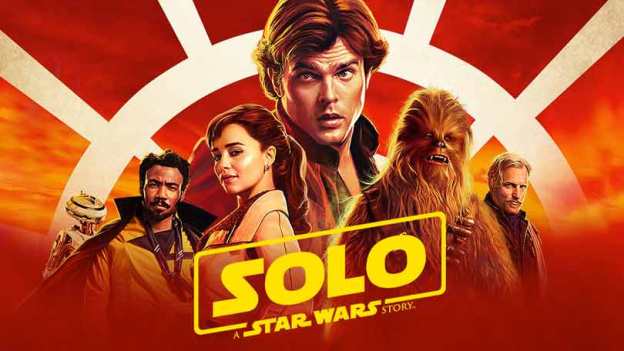
Considering I went in with absolutely zero expectations, Solo: A Star Wars Story was much better than I thought it would be. As expected from the previews, the film explains how Han Solo first met Chewbacca, Lando Calrissian and how he came into possession of the Millennium Falcon.

The bulk of the story revolves around Han making the famous “Kessel Run” in order to help smuggler and thief Tobias Beckett pay a debt to the fearsome crime syndicate Crimson Dawn. The situation becomes slightly complicated when he finds out his some-time girlfriend Qi’ra is now a top lieutenant in the organization.

Let’s start this review off by getting the parts I didn’t like out of the way:

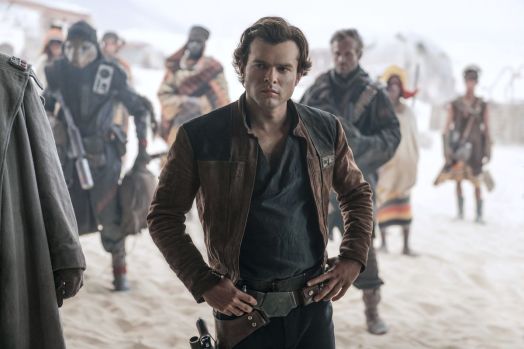
-Lady Proxima: As cool as it was to see Corellia onscreen for the first time, the more I thought about the opening sequence, the more I realized it was completely unnecessary. Han’s entire escape from the planet could have been easily narrated in an opening crawl and we could’ve jumped straight into that mud planet scene where Han meets Beckett and his crew. Not only that, but why bother introducing a character like Lady Proxima (who DID look pretty cool in a gruesome way) if she’s only going to be onscreen for less than five minutes and then never be seen or heard from for the rest of the film?
solo_ew_han_1_ed4568fc.0

-Han running his mouth: the film pulls this stunt one time too many. If you’ve seen any of the original trilogy then you already know Han is in the habit of making boasts or promises he can’t possibly keep. The film practically beats the audience over the head with this concept and it really wasn’t necessary.

-Rio and Val: Does anyone else think we didn’t get to know these characters nearly well enough before they met their respective ends? I mean Rio’s death was hard to watch but at the same time we’d just barely gotten to know him.

Now for what I liked:

Lando Calrissian: Oh my goodness, they weren’t kidding when they said Donald Glover stole the show with his performance. From his first scene to his last, any time Lando is onscreen you can’t help but notice him. If Disney wants to do a stand-alone film about Lando then I am now perfectly okay with it (so long as Glover keeps the role). It also thrilled me to see Han and Lando playing sabaac, as that is a scene that’s played out several times in the old EU books.

180522085814-03-donald-glover-lando-solo-exlarge-169

THAT scene with Lando and L3: This is one of the best scenes in the entire film and you will not be able to change my mind. L3 may have just been a droid that drove Lando crazy most of the time, but he really did care about her. Also, what happened afterward was a perfect explanation for why the Falcon’s computer is so….colorful with its language choices.

Han speaks “Wookie”: I actually liked the scene where Han speaks Wookie to Chewbacca in order to convince him that he’s a friend. I’d honestly never thought about whether he could speak it or not, but it makes sense that Han would have at least a small grasp of the language. That being said…he looked so funny speaking the language!

Dryden Vos: Vos is one of my favorite types of villain: he’s kind, courteous, the perfect gentleman right up until he stabs you in the back. At the same time he also reeks of charisma that can easily trick you into forgetting how dangerous he is. I really enjoyed Paul Bettany’s performance, I wish we’d gotten more of it (though who knows, he could always reappear in another anthology film set before this one).

qira-han-solo-a-star-wars-story

THAT cameo at the end (warning, if you don’t want to know who it is stop reading NOW!!):

Going in to the film, I was positive I’d narrowed the cameo down to two people: Boba Fett and/or Jabba the Hutt. It made sense to me that young Han would run into one of these two characters. And while the Hutt crime lord is heavily alluded to at the end of the film (there’s no other reason for going to Tatooine), he doesn’t actually appear. After Qi’ra kills Vos and assumes command of Crimson Dawn, she uses a ring to speak with Dryden’s boss who appears in a hologram. The moment this character started speaking, I perked up in my seat because I KNEW that voice and it only belonged to one character. And sure enough, the hood was eventually lifted back to reveal Maul, formerly Darth Maul (embodied by Ray Park, voiced by Sam Witwer), he who got bisected at the end of The Phantom Menace all the way back in 1999.

Now, if you’ve only seen the films, I know this cameo was very confusing for you. Here’s how Darth Maul is alive and well: George Lucas almost immediately regretted killing Maul and kept looking for a way to bring him back. During the Clone Wars animated series (2008-2013) he finally got his chance. Maul reappears in the 4th season where it is revealed that he didn’t die on Naboo but instead clung to life through the Dark Side of the Force and was eventually rescued by his brother (yes Maul had a brother) where he was given mechanical legs. There’s a lot more but that’s the gist of it. Bringing Maul back to the films is HUGE: now the door is wide open for a stand alone film about the former Sith apprentice and I couldn’t be more excited.

While there are several hooks left for a direct sequel, I don’t see it happening anytime soon. Thus far Solo isn’t turning a huge profit so Disney may not see it as worth their while to follow up on this story. I do hope though that Maul’s cameo means that a standalone Maul film is in the works. Only time will tell.

What did you think about Solo: A Star Wars Story? Let me know your thoughts in the comments below and have a great day!

You can become a patron of the blog at patreon.com/musicgamer460

Check out the YouTube channel (and consider hitting the subscribe button)

Don’t forget to like Film Music Central on Facebook 🙂


Film 101: False endings

*warning, I’m discussing the endings of multiple films so I suppose I should include a spoiler warning

You’ve seen it before: after a long and arduous battle, the bad guy (or group of bad guys) is defeated/killed and the surviving heroes all breathe a sigh of relief as they prepare to return to their mostly normal lives. But wait…what’s that noise? Oh no one of the bad guys isn’t dead and here he comes again!! That, in a nutshell, is the essence of a false ending in film. For a few minutes it seems like the story is wrapping up but it’s actually the prelude to another fight (or in some cases another full act of the story).

False endings are extremely common in horror films and are usually employed to lure the audience into a false sense of security (believing the danger is passed) before using a final jump scare that often takes the last surviving character. In non-horror examples, false endings are usually employed as an excuse to stretch out the ending of a film, either for dramatic or comedic reasons. There are far too many examples for an exhaustive list, but I will do my best to list some of the most notable examples from film history:

The Ten Commandments (1956): There’s a scene towards the end of the film when Rameses returns after his army is destroyed in the Red Sea. He vowed to kill his wife when he returned but when she points out that he failed to kill Moses, he flings the sword down and slumps onto his throne, his only explanation being “His god…IS God.” The way this scene ends, it could almost be viewed as the end of the film, as Moses and his people have safely crossed the Red Sea and Rameses has been thoroughly chastised for his hubris. But then the scene shifts back to the desert and the final act of the film truly begins.

hqdefault

Alien (1979): This is probably one of the more famous examples. Ripley (Sigourney Weaver) has destroyed the Nostromo, escaping with her cat into a small shuttle. The danger seemingly passed, she prepares to put herself back into stasis to await rescue when OMG the Alien’s hand shoots out from a wall revealing it had stowed away on the escape ship. This leads to a final battle where a terrified Ripley must blow the Alien into space.

Aliens (1986): An equally notable example: the colony on LV-426 was blasted into oblivion with only Bishop, Hicks, Newt and Ripley escaping alive. They make it back to the Sulacco and prepare to get medical help for Hicks before setting a course for home when suddenly…Bishop is impaled from behind, revealing the fearsome Alien Queen stowed away and she’s madder than ever!

Alien2

The Lord of the Rings: The Return of the King (2003): As anyone who has seen this film knows, the end of this film has multiple false endings, with it seemingly taking forever to reach the true ending of Frodo sailing away into the West while Sam returns home to his family.

The Descent (2005): This is possibly one of the cruelest false endings ever made. Sarah barely manages to escape the cave with her life and speeds away in her car. Suddenly she sees Juno, one of her dead companions sitting in the passenger seat which causes Sarah to snap awake and realize…it was all a dream, she’s still in the cave and the monsters are closing in.

John Wick (2014): A notable recent example comes in the first John Wick film. After fulfilling his mission and killing Iosef in revenge for killing his dog, the weary assassin prepares to return home. He’s even given a new car as ‘compensation’ for everything. All seems to be well…until Viggo learns that Marcus could’ve killed Wick several times before this and chose not too. When he informs Wick that he’s going after Marcus, the film shifts back into action and we get almost a full act of action and violence before finally reaching the true ending (Wick saves a dog from being put down and limps for home).

Atomic Blonde (2017): It could be argued that the ending sequence of this movie contains several false endings. For a few minutes it seems like the film is going to end with the revelation that Lorraine was Satchel all the time only to shift into an attempted assassination by her Russian handlers (which she escapes), leading to the shock revelation that Lorraine is actually American CIA (and there’s no way of knowing if that’s the actual truth but it’s where the film ends).

Other films with notable false endings include: Spectre (2015); A Nightmare on Elm Street (1984); 47 Meters Down (2017) and Final Destination 2 (2003).

What do you think of these false endings? Are there any examples you can think of that I didn’t list? Please let me know your thoughts in the comments below and have a great day!

See also:

Film 101

You can become a patron of the blog at patreon.com/musicgamer460

Check out the YouTube channel (and consider hitting the subscribe button)

Don’t forget to like Film Music Central on Facebook 🙂

Film 101: Unreliable Narrator

Yesterday in talking about the Rashomon effect I mentioned the term ‘unreliable narrator’ and I thought I would go into more detail about it today. This concept is one that has grown incredibly popular in recent years and is responsible for one of the biggest television hits of the 21st century.

The concept is simple enough at first glance: an unreliable narrator is any character who relays information about the story (either to the audience or another character (often serving as the audience surrogate)) that is untrue or a series of half-truths mixed together. In short, you cannot trust what this character says to be the truth. And as this character often serves as THE narrator (more or less) of the film/series/book, it makes the story that much more interesting because (assuming you are aware they are unreliable) the entire time you are wondering if you can believe anything being told to you.

To really understand this concept though, you have to keep in mind that the unreliable narrator is, in my opinion, a relatively recent development. For most of film history, the narrator (if there is one) is a figure above reproach, one that will consistently let us (the audience) know what is really going on and who is doing what. It seems that the studios discovered that having an unreliable narrator made for a good story. Of course they weren’t the first: the big television hit I referred to at the beginning was none other than HBO’s Game of Thrones, which of course is based on George R.R. Martin’s A Song of Ice and Fire series (that may or may not ever see completion, I finished reading A Dance with Dragons almost FIVE years ago). The books are notorious for having no overarching narrator that you might find in other book series. Instead, each chapter is told from one character’s point of view, meaning everything we see is biased by the perceptions of that character. Since none of the characters know the full picture (except for maybe Varys and I’m not sure even he knows about what’s going on north of the Wall), you can’t fully trust (and in the case of some like Littlefinger, not at all) what these characters see/know/think they know. And this mostly carries over to the TV show.

Other good examples of an unreliable narrator in film include:

  • Fight Club (1999): It turns out that only one of the two main protagonists actually exists, the other is in the main character’s head.
  • A Beautiful Mind (2001): The main character is eventually diagnosed with paranoid schizophrenia and it turns out several characters we’ve come to know are not real.
  • Atomic Blonde (2017): It could be said this film has several examples as the “true” story does not come out towards the end. Lorraine, being the main character, is probably the chief example as her search for “Satchel” is revealed to be based on a lie

And that’s pretty much what an unreliable narrator is 🙂 What are some examples of an unreliable narrator that you can think of? Let me know your thoughts in the comments below and have a great day 🙂

See also:

Film 101

You can become a patron of the blog at patreon.com/musicgamer460

Check out the YouTube channel (and consider hitting the subscribe button)

Don’t forget to like Film Music Central on Facebook 🙂

Film 101: The Rashomon Effect

japanese-movie-poster-rashomon_u-L-PGF0RP0

poster from Rashomon

It’s been a long time since I updated Film 101, so I decided to pick something that I’ve wanted to cover for a while: the Rashomon effect, which you’ve most likely seen even if you didn’t know it was called that.

First, the definition: The Rashomon effect occurs when the same event is given contradictory interpretations by the different individuals involved. The name derives from Akira Kurosawa’s 1950 film Rashomon, where the murder of a samurai is described in four mutually contradictory ways, with the final description presented as “the truth.”

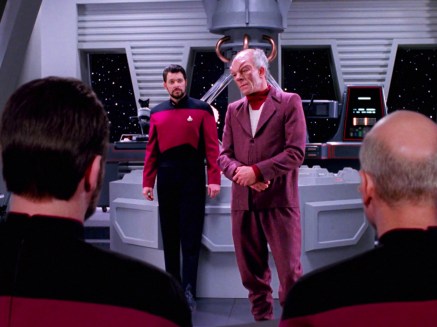
If this sounds familiar, it’s because it appears a lot in crime shows (imagine episodes of CSI where different suspects are being interviewed and they each describe what happened from their perspective, but everything is different each time it is told). Another good example is the third season Star Trek: The Next Generation episode “A Matter of Perspective” where Commander Riker is put on trial for allegedly murdering a scientist. Using the ship’s holodeck, the events are recreated using each person’s testimony, with radically different interpretations of the same events.

Tanuga_Station_simulation_begins.jpg

Still from “A Matter of Perspective”

The Rashomon effect is interesting because it often forces the audience to ask themselves “what is the truth?” and even when the “solution” is given, there is sometimes an implication that there is no correct answer and the truth must be determined for oneself. As a side note, given that the characters involved give contradictory accounts of certain events, they can also be considered unreliable narrators (meaning, unlike certain shows where you have no reason to question what a character says, an unreliable narrator cannot be trusted under any circumstances).

Thinking about the Rashomon effect, do any examples come to mind? List one or two in the comments below, along with what you think about the Rashomon effect (like, is it still a good technique or has it had its day?) Have a good day and thank you again for supporting Film Music Central 🙂

See also:

Film 101

You can become a patron of the blog at patreon.com/musicgamer460

Check out the YouTube channel (and consider hitting the subscribe button)

Don’t forget to like Film Music Central on Facebook 🙂


My thoughts on: Gate of Hell (1953)

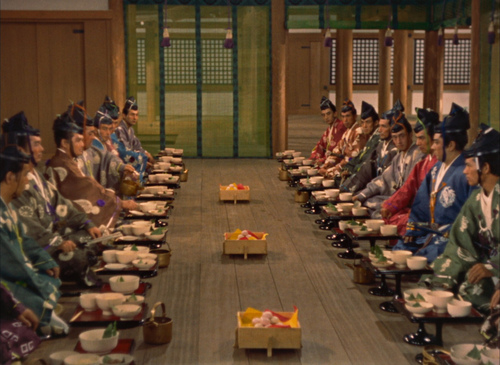
Gate of Hell (Jigokumon) is a 1953 jidaigeki film directed by Teinosuke Kinugasa. It was restored and released on DVD by the Criterion Collection in 2013. The film tells the story of a samurai (Kazuo Hasegawa) who falls in love with a married woman (Machiko Kyō).

I’d honestly never heard of this film before a few weeks ago, so when I found a copy of the film at the local bookstore, I decided to buy it and give it a try. I’ve since learned that this was the first Japanese color film to be released outside Japan and it won the Academy Award for Best Costume Design. Unlike other jidaigeki I’ve seen which are set in the Edo period (1603-1868), Gate of Hell is set during the Heiji Rebellion in 1160. When the palace is attacked by rebels, Morito (Kazuo Hasegawa) is assigned to protect Lady Kesa (Machiko Kyō) who is acting as a decoy for the queen. Morito is clearly smitten by the beautiful lady, and when he is offered a boon in return for his loyal service, Morito asks for Kesa to be his wife. There’s just one small problem: Kesa is already married! Morito refuses to give up however and continues to obsess over making Kesa his, despite the lady making it pointedly clear that she is not interested in him.

71ev1rlfvrl_sl1466

The story definitely plays with your expectations as to who the hero of the story is. Initially, Morito is presented as a heroic figure who refuses to give in to treason and defends Kesa as best he can. But once he’s informed that Kesa is already married and he can’t have her, Morito changes from possibly being a hero to a selfish, unreasonable creep! And what makes the story worse is, for most of the film Kesa seems to be the only one who understands just how much trouble Morito is! Wataru, her husband, and the other court officials seem convinced that all of this will blow over once it sinks in with Morito that Kesa does not love him back, but if anything it makes his obsession with her even stronger.

The film contains some beautiful scenes of Kesa playing the koto, a traditional Japanese stringed instrument. The one I’d like to highlight is when Morito is given one chance to pour out his heart to Kesa and see if she returns his feelings. She is playing the koto when Morito comes into the room and though he asks her to stop playing (so he can talk), she makes her feelings clear by refusing to stop and playing more and more elaborate music that only ends when Morito smashes the instrument.

gate-of-hell

I’m mostly satisfied with how the film ends, though part of me believes Morito should have paid with his life. Let me explain: the story comes to a head when the samurai corners Kesa at her aunt’s home and gives her an ultimatum: either Kesa goes with him or he will kill her husband, her aunt and even Kesa herself. Seemingly defeated, Kesa agrees and a plan is set: Kesa will blow out the light in her husband’s room at midnight, which will be Morito’s signal to run in and kill him. But it’s really a trick, Kesa gets her husband to sleep in her room while she lays down in his. Thus, Morito kills her, removing Kesa from his grasp forever. But instead of getting killed by her husband or even being hauled away for a trial (because he killed an innocent woman for crying out loud), he’s spared because killing him “won’t bring Kesa back.” And so Morito cuts off his top knot and vows to become a monk. I sort of understand why Wataru didn’t kill him, but I still would have liked to see him be punished somehow for killing Kesa (and no, I don’t think losing his samurai status is punishment enough).

The colors in this film are absolutely beautiful, Kesa’s kimonos draw your eye no matter where she is in the shot. There’s also a fabulous horse race scene that is fun to watch. All in all, Gate of Hell was a good purchase and is a worthy addition to my collection of Criterion films.

Have you seen Gate of Hell? If you have, let me know what you thought about it in the comments below and have a great day.

See also:

Film/TV Reviews

You can become a patron of the blog at patreon.com/musicgamer460

Check out the YouTube channel (and consider hitting the subscribe button)

Don’t forget to like Film Music Central on Facebook 🙂

My thoughts on: Citizen Kane (1941)

If you look at a list of the greatest films ever made, you will consistently find one title at or very near the top: Citizen Kane (1941), the first feature film from the legendary Orson Welles. The film presents itself as a biography of the unbelievably rich (fictional) tycoon Charles Foster Kane (Welles) who has just died in Xanadu, his lavish estate. His last word was “Rosebud” and the rest of the film follows a reporter piecing together Kane’s life in an attempt to find out what the word means.

53087917.jpg

You know the saying “power corrupts and absolute power corrupts absolutely” ? Well, in the case of this film, I think it is also true that “money corrupts and a lot of money corrupts absolutely.” The bulk of Kane’s life is dominated by a massive inheritance that comes after a gold mine is discovered on his mother’s property. The young Kane starts with all the good intentions in the world; for example, when he purchases a newspaper, he’s determined to report the truth and when he later marries the President’s niece and enters politics, he sets himself up as a man above corruption. But one mistake after another gradually pulls Kane down and ultimately costs him everything that really matters: he loses his first wife and child, his second wife ultimately leaves him too; he loses any chance of a political career and by the end of his life doesn’t have any real friends.

As Kane slips into old age, he is clearly operating under the belief that money and/or material possessions can fix any problem. He literally buys an opera career for his second wife and is angry when she doesn’t become an instant success (ignoring the fact that her voice isn’t suited for opera). In fact, Kane tries to give his second wife everything a woman could want, but instead of making her happy, it ultimately drives her away, leaving Kane all alone in a palatial mansion.

Susan-and-Charles-at-Xanadu

It’s such a tragedy to watch Kane slip farther away from everyone around him and wrap himself in a cocoon of money and things. I think the discovery of that gold mine was the worst possible thing that could’ve happened to him. As for the meaning of “Rosebud” well…I can’t bear to spoil that. All I will say is, watch the final sequence very closely, the answer comes right at the end.

Now for some interesting trivia about Citizen Kane:

-The film was one of the first (if not the very first) to shoot scenes angled up at the ceiling, which required ceilings to be created for the sets (because up until then you didn’t need ceilings for sets because the cameras didn’t look up that way).

-For the sequence in which Susan (Kane’s second wife) sings an operatic aria, the music was deliberately written just out of the singer’s range, to better create the impression that she is singing music beyond her skills. It’s not that Susan can’t sing, she just wasn’t meant to perform opera.

-While Kane is an based on several real-life figures, one of the biggest influences came from William Randolph Hearst, a big newspaper tycoon. Hearst was so enraged by his perception of the film mocking him and his life that he banned any and all mention of the film from any of his papers, no advertisements, no reviews, nothing!

If you haven’t watched Citizen Kane before, I highly recommend viewing it at least once. Bernard Herrmann provided a magnificent score for this film: two moments in particular that stick out to me are the opening as the camera slowly travels up to Xanadu and the ending scene as unwanted items are thrown into the furnace to be burned and the camera pans over all the many items Kane acquired throughout his life.

If you’ve seen Citizen Kane, what did you think about it? Let me know your thoughts in the comments below and have a great day!

See also:

Film/TV Reviews

You can become a patron of the blog at patreon.com/musicgamer460

Check out the YouTube channel (and consider hitting the subscribe button)

Don’t forget to like Film Music Central on Facebook 🙂


My thoughts on: Harakiri (1962)

While browsing through Criterion films at the bookstore, I came across a copy of Harakiri (1962) (directed by Masaki Kobayashi) and realized this was a film I’d neither seen nor heard of before (and it sounded really good). Fortunately, my library had a copy I could borrow and last night I dove in headfirst and discovered a tragedy in every sense of the word.

Harakiri is set in 1630 during the Edo period (the rule of the Tokugawa shogunate). It starts simply enough with a ronin named Tsugumo Hanshirō (Tatsuya Nakadai) approaching the Iyi Clan to formally ask permission to perform harakiri (ritual suicide) in their forecourt as he is tired of living in abject poverty. As it turns out, he is not the first ronin to have approached with this request. Some months prior, another ronin, Chijiiwa Motome had come with the same request. The problem is, at this time, many ronin were approaching various lords to make this request in order to receive alms to make them go away. Fed up with this practice, the Iyi Clan forces Motome to perform harakiri, even though it’s revealed his swords are only made of bamboo.

The scene where Motome slowly kills himself is incredibly painful to watch. The way it’s put together, you literally feel every thrust of that dull bamboo blade as he thrusts it into himself. To compound the nightmare, the clan has determined that his suffering will not end by beheading until he has thoroughly ripped himself open (it’s made clear that they could have beheaded him straight off, so they’re choosing to make him suffer).

All of this is related to Hanshirō   in an attempt to make him reconsider his request, but the ronin will not be denied. Once he’s settled for the ritual, then the full tragedy comes out.

It turns out that Motome was Hanshirō’s son-in-law, married to his only daughter Miho. They had a son named Kingo and lived happily for a while, even though they were very poor (Hanshirō lost his master and thus his living to harakiri some years prior). Then, in quick succession, Miho becomes ill and not long after so is Kingo (both die not long after Motome’s body is brought back). Motome is unable to find work as his status as a samurai makes him ineligible for common labor but none of the clans are hiring ronin since there have been no wars for many years. Desperate (and having already pawned his blades for money to help his wife and son), Motome departs one day saying he knows of a way to get more money to pay for a doctor, but he never comes back alive.

harakiri-ii-clan1

Your heart will break watching Motome struggle to find ways to support his family. If I understand correctly, samurai are considered to be “above” manual labor, which is why Motome is stopped every time he approaches a work site. He also can’t openly beg for money because that’s considered shameful as well. In effect, this family is completely screwed over by the system, small wonder that Motome resorted to asking to commit harakiri in the courtyard as a means to get alms (a practice that he had previously, in better times, said was shameful and only done by the worst kind of person).

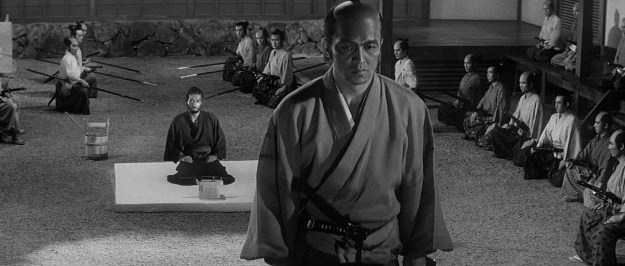
Hanshirō’s point in relating all of this is to point out that no one should criticize another for doing something out of desperation. After all, what would you do if you were in their place? Unfortunately, Hanshirō’s lesson falls on deaf ears as the clan firmly believes they did nothing wrong. In fact, they’re so insulted by the ronin’s words that it’s decided they’ll kill him and not let him commit harakiri after all. This leads to an amazing sequence where Hanshiro fends off dozens of samurai as he moves through the building. There’s one or two strikes and then everyone freezes, but you can see them analyzing each and every move. It’s almost like watching a Mexican stand-off: at various points, though they outnumber him, the clan’s samurai stand frozen because Hanshiro has them in such a way that if any of them make a move, he can kill them. Tatsuya Nakadai is mesmerizing in this scene: you can tell he truly wants to die, but since the clan wants to make it difficult, he’ll take as many of them as he can with them.

MV5BOTAwMDFkMTYtYTJkOS00NzEyLTk3NTgtMzAwZDg4Yzg4MWFlXkEyXkFqcGdeQXVyMTQ5ODkzMDk@._V1_.jpg

Though Hanshirō is brutally killed at the end (with guns no less, they couldn’t even kill him with swords), I do think one person learned something from this, even if he won’t admit it. Saitō Kageyu, the senior counselor for the clan, is seen with a very ponderous look on his face while Hanshirō is being pursued and killed. I believe that Hanshirō’s words did have an effect on him, and maybe he is starting to believe that the system is broken. In fact, after learning that one of the samurai who participated in forcing Motome to kill himself has also committed harakiri, he instructs a messenger to order the other two participants to kill themselves also, adding: “Send a squad of men to make sure it is done.”

Ultimately (and this may be the greatest tragedy of all) nothing seems to change as a result of Hanshirō’s actions. The courtyard is cleaned, all signs of the fight are removed, what was the point of all of this? Maybe the point is there IS no point, sometimes sacrificing yourself to prove a point accomplishes nothing. That, at least, is my thought as I consider the ending of a very moving film.

If you’ve seen Harakiri, what did you think about it? Let me know your thoughts in the comments below and have a great day!

See also:

Film/TV Reviews

You can become a patron of the blog at patreon.com/musicgamer460

Check out the YouTube channel (and consider hitting the subscribe button)

Don’t forget to like Film Music Central on Facebook 🙂
My Thoughts on: The Samurai Trilogy (1954-1956)

Since the first time I watched Throne of Blood (1957) I have been a huge fan of the legendary Japanese actor Toshiro Mifune (1920-1997), particularly his work in jidaigeki or “period dramas.” For the past several years I’ve been working on viewing as many of these films as possible and from the start I knew this would have to include The Samurai Trilogy, a trio of films that dramatize notable incidents in the life of Miyamoto Musashi (1584-1645), arguably the greatest swordsman to ever live. I received the set as a present last year for my birthday, but due to real-life circumstances, I wasn’t able to finish it until last night.

Each film focuses on a major event (or major series of events) in the swordsman’s life:

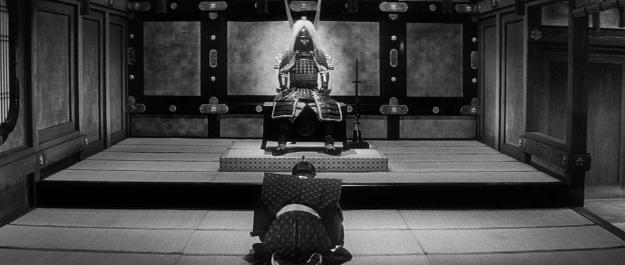
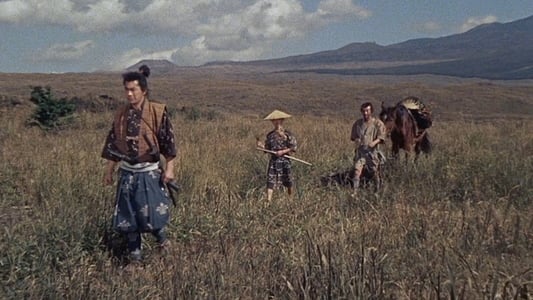
-In Samurai I, Musashi is a young man named Takezo who dreams of finding wealth and glory far away from the humble village he lives in. His best friend Matahachi also shares dreams of glory and is engaged to Otsu. After being caught on the wrong side of the battle of Sekigahara (which led to the formation of the Tokugawa Shogunate which ruled Japan for nearly 300 years), Takezo and Matahachi are branded outlaws and go on the run. While Matahachi is lured away to Kyoto by a widow and her daughter, Takezo runs wild through the countryside until Takuan, a Buddhist priest, lures him to Himeji Castle (on the premise that Otsu, who has developed feelings for Takezo, is imprisoned there). It’s a trap (of sorts): Takezo is locked into a room inside the castle that is full of books and told he will not be let out until he has bettered himself. Three years later Takezo is released and given the samurai name of Miyamoto Musashi.

530id_110_w1600

Though the film is just over 90 minutes in length, it’s paced in such a way that it feels much longer (such was my impression). Mifune is a delight to watch, as always, and his transformation from the wild Takezo to the stoic Musashi is so extreme you’d almost swear they were played by two different people.

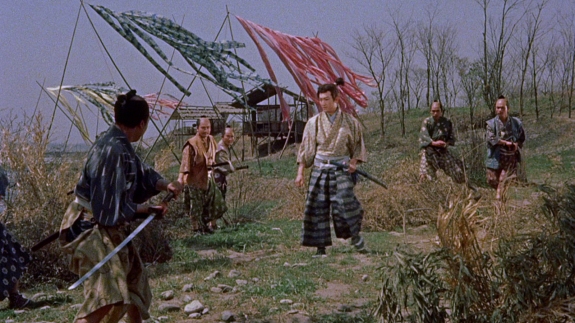
-In Samurai II, the story revolves around Musashi’s conflict with the Yoshioka school, as well as his struggle to fully realize what it means to be a samurai. Initially, Musashi believes that one only needs to be proficient with a sword (which he is), but again and again he is chided for lacking chivalry, compassion and affection. Without these, Musashi is merely a killer, not a samurai. During his journey, Musashi gains his first disciple, an orphan boy named Jotaro. Otsu is still in love with Musashi, but she’s not alone: Akemi, the daughter of the widow from the first film also fancies herself in love with the samurai, though at the moment Musashi himself claims to have chosen “the way of the sword” over the love of any woman. This film also introduces Sasaki Kojiro, another talented swordsman who seeks to build a name for himself by dueling and defeating only the best. He wields a massive longsword nicknamed “Drying Pole.” He badly wants to duel Musashi, but is willing to wait until the samurai has honed his talents further.

eV2HJeLxikDVDHIpYx6LcTVdQQC

I definitely liked this film more than Samurai I. Musashi’s conflict with the Yoshioka school was interesting, considering the students kept stopping the head of the school from meeting Musashi in a fair one-on-one duel. My favorite moments were whenever Musashi faced off with an opponent (or many opponents), sword at the ready. His movements are so precise and artful that I wish there were more moments like this. Koji Tsuruta (1924-1987), who played Sasaki Kojiro, was also a joy to watch. His performance is such that you’re never quite sure what the character is actually thinking.

featured_exhib_film_japaneseff2016_trilogy_duelatganryu

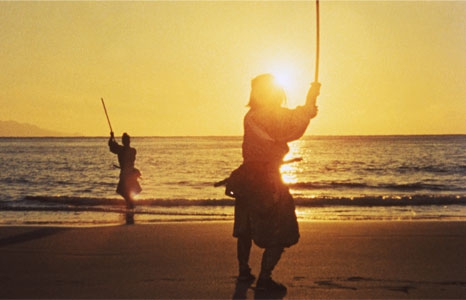
-The story concludes with Samurai III and recounts Musashi’s famous duel with Sasaki Kojiro at Ganryu Island. At the start of this film, Kojiro is frustrated that, despite all his talent, he is still a ronin (a samurai with no master). To remedy this, he applies to become the teacher of Lord Hosokawa, a position that Musashi is also being recruited for. The two swordsman nearly duel one night, but under pressure to accept the offer to become Hosokawa’s teacher, Musashi leaves town and postpones the duel for one year. As a result, Kojiro receives the position and finally receives the status and luxuries that he has always believed to be his due. Finally the duel is set to be held on Ganryu Island. The pair face off on the beach and for a time seem to be equally matched. But then, in a move so quick I honestly can’t describe it, Musashi strikes the fatal blow and Kojiro falls dead. But Musashi takes no joy in the victory.

Maybe I just wasn’t paying attention, or maybe it took a really long time for Musashi to get to the island, but I could’ve sworn the duel took place at sunset. But apparently it was sunrise because the sun kept getting higher in the sky as things went on (cause otherwise it’s a massive continuity error). I found myself pitying Kojiro as the story went on. It is made clear that this duel does not have to happen. Had he said so, Musashi would have happily continued living his life and Kojiro could have spent the rest of his days as an honored teacher and samurai. Kojiro’s downfall comes from wanting to be the very best swordsman in Japan, nothing else will do. One character summed it up perfectly when he observed “This man’s ambitions are too great.”

In conclusion, I greatly enjoyed The Samurai Trilogy, it is a must-see for anyone wishing to learn more about the great samurai films. If you’ve seen this trilogy, let me know what you thought about it in the comments below and have a great day!

See also:

Film/TV Reviews

My Thoughts on Throne of Blood (1957)

My thoughts on: Yojimbo (1961)

You can become a patron of the blog at patreon.com/musicgamer460

Check out the YouTube channel (and consider hitting the subscribe button)

Don’t forget to like Film Music Central on Facebook 🙂

Soundtrack Review: Avengers: Infinity War (2018)

*Spoilers for Infinity War below, don’t read if you haven’t seen the film yet*

Alan Silvestri has so far worked on three films in the Marvel Cinematic Universe: Captain America: The First Avenger (2011); The Avengers (2012) and Avengers: Infinity War (2018) (he will also be scoring the currently untitled Avengers 4). Before seeing Infinity War, I didn’t think anything could top the musical excellence that was The Avengers but now I know otherwise. Silvestri has truly outdone himself with his score for Infinity War.

The score contains callbacks to Silvestri’s previous entries in the MCU including a re-appearance of the original Captain America theme (which visibly excited the audience in the theater I sat in). There is also, naturally, several recurrences of the main “Avengers” theme that debuted (so far as I know) in the 2012 film of the same name. But the callbacks don’t stop with Silvestri’s material; there is also a reprise of Ludwig Göransson’s Black Panther theme when the film moves to Wakanda. Even the entrance of the Guardians of the Galaxy is in line with their previous films. While “Rubberband Man”  (performed by The Spinners) does not feature in Vol. 1 or 2 of Guardians of the Galaxy, it did come from a list of compiled songs that could be used in future GoTG entries. So musically the score ties back to the MCU’s past.

As for the new music in Infinity War, I hate to do this but we need to talk about THAT scene on Vormir, because that is the section that drove me to the point of tears. It was all going normally enough until Thanos learned that he needed to sacrifice what he loved most to get the Soul Stone. In the moment when he grabbed Gamora’s arm, the music just exploded into this cacophony of pain and sorrow. I’ve mentioned before that this scene humanized Thanos for me; I should have said it was the music in this scene that did it. The music reflects the pain of Gamora (learning that after all these years Thanos really does love her and because of that she must die) and of Thanos (who must sacrifice the one person he does love in order for his goal to be achieved). This is the kind of music that pierces you like a knife, locking you into the moment so that you can’t look away even if you want to.

landscape-1521469308-gamora-and-thanos-flashback-avengers-infinity-war

And then there’s the ending scene, where everyone starts to disappear. In contrast to the scene on Vormir, here there is a distinct lack of music that I can remember. There may have been some in the background, but if there was, it wasn’t enough to draw my attention. In fact, right after Thanos vanished from Wakanda, it was so quiet I thought the people had already disappeared. I still can’t get the sounds of the ending scene out of my head. If you recall, many MCU films end with a reprise of the main theme, sometimes subtle, sometimes not so much. But here, at the end of Infinity War, there’s no uplifting music to reassure us that all is right with the world again because everything is now very wrong. The music itself feels “shell-shocked” just like the surviving heroes who are realizing that (for the moment at least) they’ve lost.

deewdewd

Honestly, I feel like my words are inadequate to describe how amazing the score for Avengers: Infinity War is, but I hope I did enough to give you a rough idea of how this score impacted me. Truthfully I could go on for several more paragraphs but really the best way to experience this score is to go watch the film as many times as possible and listen to the music. I know that can be hard with all the action on the screen but Silvestri does his best to bring the music to your attention.

Let me know what you thought of the music for Avengers: Infinity War in the comments below and have a great day 🙂

See also:

Film Soundtracks A-W

Avengers: Infinity War-Review (no spoilers)

My thoughts on: Avengers: Infinity War (spoilers!!)

You can become a patron of the blog at patreon.com/musicgamer460

Check out the YouTube channel (and consider hitting the subscribe button)

Don’t forget to like Film Music Central on Facebook 🙂

My thoughts on: Avengers: Infinity War (spoilers!!)

Alright, this is it, this is the post where I hold nothing back about Avengers: Infinity War. This means a TON of spoilers are about to come out so if you have no seen the movie yet STOP NOW, do not go any further. You have been warned!!

Still here? Alright, let’s do this!

I have never heard a theater sit so quiet after a Marvel film ended in all my life. In the few minutes it took for the credits to play and reach the post-credits scene you could’ve heard a pin drop. And small wonder! We’d just seen the MCU as we know it completely turned on its head and destroyed!
I already talked about in my previous post how impressed I was with Josh Brolin’s performance as Thanos. I believed going in that Thanos was this completely evil villain that merely wanted to destroy half the universe…just because! But I was wrong, I was very wrong! Thanos is an example of Machiavellianism taken to the extreme. From his point of view, wiping out half the population will lead to more resources and living space for those who remain so everyone left will be much better off. Technically this IS true, however, that does not erase the fact that you have to kill untold trillions of people to make it happen! Despite this, Thanos genuinely seems to believe that he is doing the universe a favor, but I wonder if deep down he has any guilt about what he’s done, especially given what he had to do to get the Soul Stone.

4A40C53D00000578-0-image-a-2_1521206605813

When it came out that the Soul Stone was on the planet Vormir, a planet we’d previously never seen or heard of, I was a little disappointed. It seemed nonsensical that the one Infinity Stone we’d not seen until now would just show up on a random planet. But then Thanos (with Gamora) arrive on the planet and the scene becomes something else when it turns out the guardian of the Soul Stone is none other than…Red Skull!! I’d wondered, like others, if we would ever see this character again after he got sucked into a Tesseract-formed wormhole in Captain America: The First Avenger and it felt awesome to see this plot thread finally resolved. It seems that 70+ years of exile on a distant planet has humbled Red Skull mightily (though I’d love to learn how he found out about what the Soul Stone needs to be unlocked). And speaking of…the moment Red Skull said you needed to sacrifice someone you loved to receive the Soul Stone I knew what was about to happen and Gamora not realizing it at first made it all the more painful. This is the moment that fully humanized Thanos for me, because despite everything he’s ever done, he really does LOVE Gamora and it pains him to do this but he wants this goal more than anything…so she dies. Now whether she’s dead permanently…I don’t know for certain, I’ll get to that argument in a minute.

I need to talk about that ending, that hauntingly perfect ending. I don’t know if I ever mentioned it on here, but for the last several months leading up to the film, I had a suspicion that they might go with the “kill everyone and bring them back with the Infinity Stones” approach but deep down I didn’t think they’d actually do it. Well, they did it alright; granted they didn’t kill everyone, but it was close enough. Actually, after Thanos snapped his fingers (a very awesome moment that caused me to actually cry out “No!!” at the same time as Thor) and then disappeared to parts unknown, I actually thought the people had already disappeared, because it was so quiet!! And then Bucky disintegrated and I realized oh no….we have to watch this happen…and my heart got torn into a million pieces. Because suddenly heroes were dropping left and right: Bucky, Falcon, T’Challa (that one HURT because it was so sudden), Drax, Mantis, Groot (not Groot again!!), Star-Lord, Doctor Strange and…worst of all…Peter (Spider-Man). The moment Peter clung to Tony in absolute terror of his impending death destroyed me inside. And I could tell it destroyed Tony too because he’s the one who got Peter into this in the first place and now he’s had to watch him die. Even when this is undone, it’s probably going to stick with Tony for the rest of his life. And that final shot of the surviving Avengers on Earth sitting there numb with what’s just happened…that was a shock to the system because no Marvel film has ever ended this way, with the villain triumphant and the heroes in disarray. Normally there’s some type of closure, but we haven’t gotten it, and we won’t get it until next year!!

thumbnail_27167

Now then, I said “When this is undone” because you know not all of these characters are going to stay dead. There’s a Black Panther sequel in the works, Spider-Man has a new movie coming, etc. so we know most of these characters are coming back. The big question is, HOW? The last we saw, Thanos has retreated to a distant planet with the Infinity Gauntlet, and as long as he holds it intact, no one can really stop him. Which is why I wonder if some guilt in Thanos will eventually come into play because as things stand, he won’t undo what he’s done. The other question is, who CAN come back? I figure anyone who disintegrated at the end is eligible, but what about those killed before? Like Gamora, Loki, Heimdall, most of the Asgardians (I’m a little confused as to how many survivors there are from Asgard now). I’m pretty sure Loki isn’t coming back as I believe Tom Hiddleston’s contract is up, but at this point anything is possible. And speaking of Loki…what did you think of him dying via Thanos breaking his neck like that? It almost felt…anti-climactic given everything he’s gone through, but then again it’s also fitting as he tried to pull one trick too many with those magic daggers. If that was the last we ever see of Loki, at least he died showing Thor that he really does care about him.

Now for some final thoughts:

-I love that Thor kept calling Rocket Raccoon “rabbit”

-Peter Dinklage’s scenes are perfect

-The fight with Thanos when the Guardians are working with Tony, Spider-Man and Doctor Strange is great and pretty funny considering everyone keeps popping in and out of…time holes? I’m not sure what those are called but I love them.

-It’s interesting that after Hulk gets beat up by Thanos he refuses to come out fully for the rest of the film. Could the Hulk be…scared?

-I want to know how the directors picked which heroes disintegrated and which didn’t. There had to be a rhyme and reason behind it and I want to know what it was!!

And those are my spoiler-filled thoughts on Avengers: Infinity War! What did you think of this film? Were you stunned when the credits rolled? Let me know what you think in the comments below and have a great day!

See also:

Avengers: Infinity War-Review (no spoilers)

You can become a patron of the blog at patreon.com/musicgamer460

Check out the YouTube channel (and consider hitting the subscribe button)

Don’t forget to like Film Music Central on Facebook 🙂